
Recent Trend in Artificial Intelligence
Navita Gupta1, Sonia Suneja2
1,
Department of Computer Applications, Indira Ghandhi Mahila Mahavidyalaya, KUK
2
Department of Computer Applications, CGC Landran
Abstract: We are living in the midst of a surge of interest and research into Artificial Intelligence (hereby A.I.). It can seem like every week there is a new breakthrough in the field and a new record set in some task previously done by humans. Not too long ago, A.I. seemed a distant dream for especially interested researchers. Today it is all around us. We carry it in our pockets, it's in our cars and in many of the web services we use throughout the day. As this technology matures, every business must ask itself the central question: how will this disrupt my industry?
Keywords: - Artificial Intelligence, Innovations, Advancements, Automated, Trends.
I. INTRODUCTION
This document is a template. For questions on paper guidelines, please contact us via e-mail.
The leap [11] of scientific developments become in progress from recent years. The impression and rough guide of Artificial Intelligence in our lives has taken the world to a new scale. The acceleration of innovations and new trends in this 21st century has ever more uses in all the fields, boosting the economic growth and development. The future of AI is basically a programmed of physical and digital convening as well as showcasing [1]. The market of AI is flourishing day- by- day. The most important component of AI is the machines that exhibit intelligence which make them smarter than humans. Due to all these inventions, it becomes necessary to understand Artificial Intelligence in depth.
The prospect [2] of creating intelligent computers has fascinated many people for as long as computers have been around and, as we shall see in the historic overview, the first hints in the direction of Artificial Intelligence date even before that. But what do we mean by Artificial Intelligence, if even the term intelligence itself is difficult to define? The precise definition and meaning of the word intelligence, and even more so of Artificial Intelligence, is the subject of much discussion and has caused a lot of confusion. One dictionary alone, for example, gives four definitions of Artificial Intelligence:
An area of study in the field of computer science. Artificial intelligence is concerned with the development of computers able to engage in human-like thought processes such as learning, reasoning, and self-correction. ƒ
The concept that machines can be improved to assume some capabilities normally thought to be like human intelligence such as learning, adapting, self- correction, etc.
The extension of human intelligence through the use of computers, as in times past physical power was extended through the use of mechanical tools. ƒ In a restricted sense, the study of techniques to use computers more effectively by improved programming technique.
II. THEERAOF1990’SAND2000’S
A. These two Eras were the golden Era of AI, as we had developed so many things for ourselves. In 1990’s [3]
1) Major advances in all areas of AI, with significant demonstrations in machine learning, intelligent tutoring, case-based reasoning, multi-agent planning, scheduling, uncertain reasoning, data mining, natural language understanding and translation, vision, virtual reality, games, and other topic
2) Rod Brooks' COG Project at MIT, with numerous collaborators, makes significant progress in building a humanoid robot D-Gammon, a backgammon program written by Gerry Tesauro, demonstrates that reinforcement learning is powerful enough to create a championship-level game-playing program by competing favorably with world-class players.
3) EQP theorem proved at Argonne National Labs proves the Robbins Conjecture in mathematics (October-November,
1996).e Deep Blue Wins). (May 11th, 1997).NASA’s pathfinder mission made a successful landing and the first autonomous robotics system, Sojourner, was deployed on the surface of Mars. (July 4, 1997)
4) Web crawlers and other AI-based information extraction programs become essential in widespread use of the world-wide-web.
5) Demonstration of an Intelligent Room and Emotional Agents at MIT's AI Lab. Initiation of work on the Oxygen Architecture,
B. In 2000's
1) Interactive robot pets (a.k.a. "smart toys") become commercially available, realizing the vision of the 18th cen. novelty toy makers.
2) Cynthia Brea zeal at MIT publishes her dissertation on Sociable Machines, describing KISMET, a robot with a face that expresses emotions.
3) Stanford's autonomous vehicle, Stanley, wins DARPA Grand Challenge race. (October 2005).
4) The Nomad robot explores remote regions of Antarctica looking for meteorite samples.
III.LATESTTECHNOLOGIESBASEDONAI
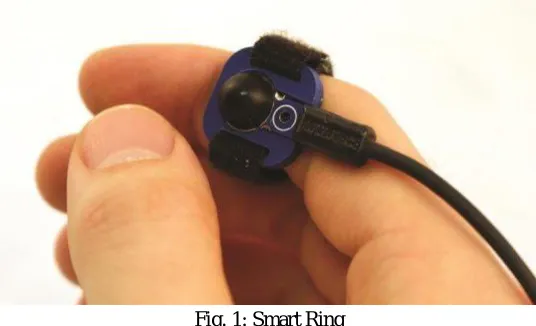
A. Smart Ring: Mobile on-body devices can be precisely and discreetly controlled using a tiny sensor.[4]
[image:3.612.177.445.308.471.2]"With mobile devices such as the smart watch, the interactive screens are so small that only a few control commands can be triggered by individual touches," explains Jürgen Steimle, professor of human-computer interaction at Saarland University. With his research group in the Cluster of Excellence "Multimodal Computing and Interaction," he is searching for new ways to operate small body-worn mobile devices as discreetly and quickly as possible. In an earlier research project, Steimle, together with his colleague Martin Weigel, already showed that human skin can also work as an input device. During this study, the idea for the current project came to him. "We found out that our study participants did not just use the already-known smartphone gestures on their skin, but also pushed it to the side or even pinched it with two fingers, in order to control mobile devices," reports Martin Weigel.
Fig. 1: Smart Ring
Further investigations led to a sensor that was actually intended to make robot hands more sensitive. "Although the sensor was developed for robotics, we found its small form factor promising for body-worn mobile devices," explains Weigel. The small form factor, in this case, describes a sensor that has a diameter of only 10 millimetres -- about the size of a pea -- and that can be deformed like a balloon. From the inside, an infrared light-emitting diode illuminates the deformable membrane. The light is reflected, and measured by four photodiodes. These measurements can then be used to calculate how the sensor is being deformed. To test their idea, the researchers integrated this sensor into a ring, a bracelet and a charm, which was hardly larger than a 50-cent piece. The challenge was to develop gestures and use them to control mobile devices. The researchers did this for a smartwatch and for virtual reality glasses. They also defined motion sequences to control a television and to play music without having to look at the device. The Saarbrücken computer scientists then had 24 people test these, a total of 18,141 times. Their results are clear. "Despite the tiny surface, the interactions are precise and expressive, since they make use of the fine motor control of the fingertips and of the three primitives pressing, pushing, and pinching," says Weigel. Professor Jürgen Steimle is convinced that "when only a tiny sensor needs to be deformed for input, mobile devices can be worn at places on the body that enable quick and discreet input. This will help the industry bring even smaller control devices to the market."
B. Innovative smart watch and smart ring [5]
A watch that works in multiple dimensions and a smart ring that provides calendar alerts are among the top technology Dartmouth College will bring to the 30th ACM User Interface Software and Technology Symposium (UIST 2017).
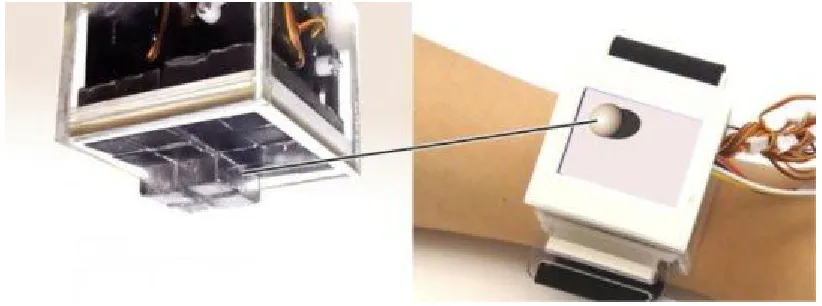
Fig. 2: Innovative smart watch and smart ring
The research projects, products of Dartmouth's human computer interface lab, have been chosen by UIST 2017 to feature alongside some of the world's most innovative technology.
"Understanding and improving how humans interact with computers are essential parts of technology development," said Xing-Dong Yang, assistant professor of computer science at Dartmouth. "We look forward to UIST as a unique opportunity to share ideas on innovation."
C. Retro Shape: A Smart Watch that Takes Users into Another Dimension
Imagine viewing a video or playing a game on a smart watch and having the device provide feedback that allows you to feel a ball bounce or an asteroid explode. Dartmouth's Retro Shape does just that.
Seeking to improve the user experience with smart watches, Retro Shape uses a shape-deforming watch back that allows the user to view and feel virtual objects.
Each pixel on Retro Shape's screen has a corresponding tactile pixel -- or taxel -- on the back of the watch face, allowing the virtual world to be extended to the 2.5D physical space on its back. The construction allows watch developers to use the wearer's skin under the watch face for feeling output that matches the visual content being displayed on the watch.
The back to the watch face is constructed using 16 independently moving pins that allows for the real-life rendering of shapes and movement.
D. Frictio: A Smart Ring That Focuses on Output
While most designs use smart rings to receive instructions from the wearer, Dartmouth's Frictio is the first of its kind to provide useful feedback.
Frictio, composed of a ring, a braking-system and electronics, provides sensory feedback through six separate force profiles that provide information to the user. If a wearer has plenty of time before the next meeting, the ring calendar reminder could be set to rotate freely. Only five minutes left before that meeting, the ring could be made to move with heavy resistance or forced to stop completely.
"Designing a smart ring that provides information rather than just receiving inputs can unlock the true potential of these devices," said Yang.
Pyro: Intricate Computer Tasks at the Tips of Your Fingers Moving the thumb tip against the index finger is an optimal method for performing computing inputs. The gesture is natural, subtle, fast and unobtrusive. The input method requires little effort from users and introduces minimal fatigue over other input methods that require more extreme gestural movements.
Dartmouth researchers also participated in other technology being featured at UIST 2017, including a modular mobile phone that is tailor-made for lending to friends, family members or even strangers.
E. Future smart watches could sense hand movement using ultrasound imaging [6]
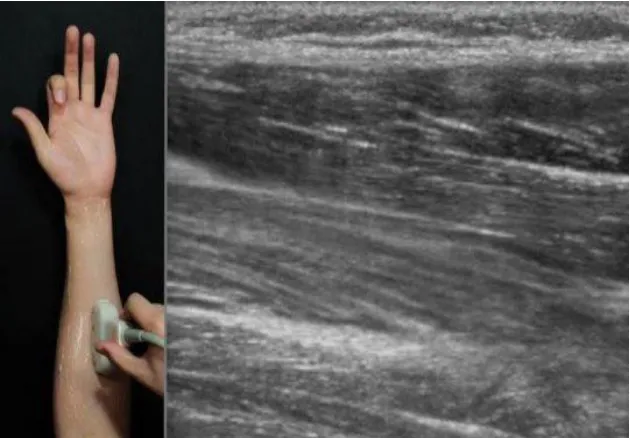
[image:5.612.154.469.194.413.2]New research has shown future wearable devices, such as smart watches, could use ultrasound imaging to sense hand gestures. The research team led by Professor Mike Fraser, Asier Marzo and Jess McIntosh from the Bristol Interaction Group (BIG) at the University of Bristol, together with University Hospitals Bristol NHS Foundation Trust (UH Bristol), presented their paper this summer [8-11 May] at one of the world's most important conferences on human-computer interfaces, ACM CHI 2017 held in Denver, USA.
Fig. 3: This is ultrasonic imaging of the forearm.
Computers are growing in number and wearable computers, such as smartwatches, are gaining popularity. Devices around the hme, such as Wi-Fi light bulbs and smart thermostats, are also on the increase. However, current technology limits the capability to interact with these devices. Hand gestures have been suggested as an intuitive and easy way of interacting with and controlling smart devices in different surroundings. For instance, a gesture could be used to dim the lights in the living room, or to open or close a window. Hand gesture recognition can be achieved in many ways, but the placement of a sensor is a major restriction and often rules out certain techniques. However, with smartwatches becoming the leading wearable device this allows sensors to be put in the watch to sense hand movement.
The research team propose ultrasonic imaging of the forearm could be used to recognise hand gestures. Ultrasonic imaging is already used in medicine, such as pregnancy scans along with muscle and tendon movement, and the researchers saw the potential for this to be used as a way of understanding hand movement.
The team used image processing algorithms and machine learning to classify muscle movement as gestures. The researchers also carried out a user study to find the best sensor placement for this technique.
The team's findings showed very high recognition accuracy, and importantly this sensing method worked well at the wrist, which is ideal as it allows future wearable devices, such as smartwatches, to combine this ultrasonic technique to sense gestures.
Jess McIntosh, PhD student in the Department of Computer Science and BIG Group, said: "With current technologies, there are many practical issues that prevent a small, portable ultrasonic imaging sensor integrated into a smartwatch. Nevertheless, our research is a first step towards what could be the most accurate method for detecting hand gestures in smartwatches."
F. Forget about it: A material that mimics the brain[7]
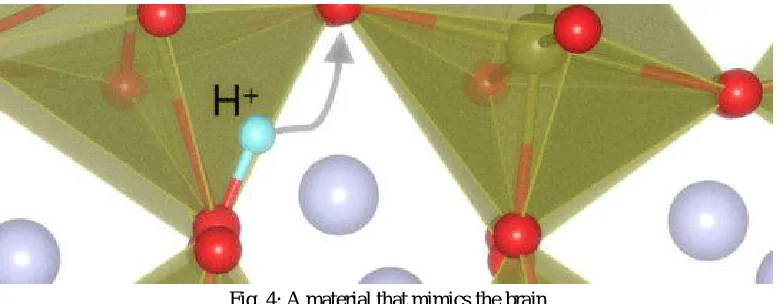
Fig. 4: A material that mimics the brain
Inspired by human forgetfulness -- how our brains discard unnecessary data to make room for new information -- scientists at the U.S. Department of Energy's (DOE) Argonne National Laboratory, in collaboration with Brookhaven National Laboratory and three universities, conducted a recent study that combined supercomputer simulation and X-ray characterization of a material that gradually "forgets." This could one day be used for advanced bio-inspired computing.
"The brain has limited capacity, and it can only function efficiently because it is able to forget," said Subramanian Sankaranarayanan, an Argonne nano scientist and study author. "It's hard to create a non-living material that shows a pattern resembling a kind of forgetfulness, but the specific material we were working with can actually mimic that kind of behaviour." The material, called a quantum perovskite, offers researchers a simpler non-biological model of what "forgetfulness" might look like on an electronic level. The perovskite shows an adaptive response when protons are repeatedly inserted and removed that resembles the brain's desensitization to a recurring stimulus.
When scientists initially add or remove a proton (H+) from the perovskite (SmNiO3 (SNO)) lattice, the material's atomic structure expands or contracts dramatically to accommodate it in a process called "lattice breathing." But when this happens over and over again, the material's behaviour evolves such that the lattice breathing is reduced -- the proton "threat" no longer causes the material to hyperventilate.
"Eventually, it becomes harder to make the perovskite 'care' if we are adding or removing a proton," said Hua Zhou, a physicist involved in characterizing the behavior of the material using X-rays provided by Argonne's Advanced Photon Source (APS), a DOE Office of Science User Facility. "It's like when you get very scared on a water slide the first time you go down, but each time after that you have less and less of a reaction."
As the material responds to protons that scientists add and subtract, its ability to resist an electrical current can be severely affected. This behavior allows the material to be effectively programmed, like a computer, by the proton doping. Essentially, a scientist could insert or remove protons to control whether or not the perovskite would allow a current.
Researchers have recently pushed to develop non-silicon-based materials, like perovskites, for computing because silicon struggles to use energy as efficiently. Scientists may use perovskites in learning machines down the line. But scientists can also take advantage of perovskite properties by using them as the basis for computational models of more complex biological learning systems.
"These simulations, which quite closely match the experimental results, are inspiring whole new algorithms to train neural networks to learn," Zhou said.
The perovskite material and the resulting neural network algorithms could help develop more efficient artificial intelligence capable of facial recognition, reasoning and human-like decision-making. Scientists are continuing the research to discover other materials with these brain-like properties and new ways to program these materials.
Finally, unlike in silicon, whose electronic structure can be easily described using simple computer models, understanding the perovskite material requires computationally intensive simulations to capture how its structure reacts to proton doping.
This type of comprehensive research is a unique capability of Argonne's interdisciplinary campus, where scientists at can easily share ideas and resources.
A study based on the research, "Habituation based synaptic plasticity and organismic learning in a quantum perovskite," appeared in the August 14 online issue of Nature Communications.
The research is affiliated with the Center for Spintronic Materials, Interfaces and Novel Architecture (C-SPIN), one of six centres funded by the Semiconductor Research Corporation and the Defense Advanced Research Projects Agency.
Funding for the research was provided by the U.S. Army Research Office, U.S. Air Force Office of Scientific Research, C-SPIN, Intel Corporation and by the Vannevar Bush Faculty Fellowship.
The team included researchers from Argonne, Brookhaven National Laboratory, MIT, Purdue University and Rutgers University.
G. Seeing the next dimension of computer chips [8]
A research collaboration between Osaka University and the Nara Institute of Science and Technology for the first time used scanning tunnelling microscopy (STM) to create images of atomically flat side-surfaces of 3D silicon crystals. This work helps semiconductor manufacturers continue to innovate while producing smaller, faster, and more energy-efficient computer chips for computers and smartphones.
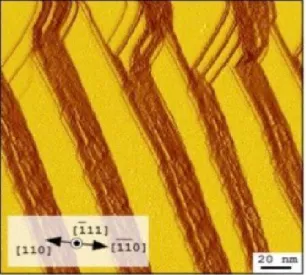
[image:7.612.156.462.341.616.2]Our computers and smartphones each are loaded with millions of tiny transistors. The processing speed of these devices has increased dramatically over time as the number of transistors that can fit on a single computer chip continues to increase. Based on Moore's Law, the number of transistors per chip will double about every 2 years, and in this area it seems to be holding up. To keep up this pace of rapid innovation, computer manufacturers are continually on the lookout for new methods to make each transistor ever smaller.
Fig. 5: Spatial-derivative STM images with 200x200 nm^2 at Vs = +1.5 V. Flat terraces become brighter and edges darker. The downstairs direction runs from left ((110) top-surface) to right ((-1-10) back-surface).
Now, researchers at Osaka University and the Nara Institute of Science and Technology report that they have used STM to image the side-surface of a silicon crystal for the first time. STM is a powerful technique that allows the locations of the individual silicon atoms to be seen. By passing a sharp tip very close to the sample, electrons can jump across the gap and create an electrical current. The microscope monitored this current, and determined the location of the atoms in the sample.
"Our study is a big first step toward the atomically resolved evaluation of transistors designed to have 3D-shapes," study coauthor Azusa Hattori says.
To make the side-surfaces as smooth as possible, the researchers first treated the crystals with a process called reactive ion etching. Coauthor Hidekazu Tanaka says, "Our ability to directly look at the side-surfaces using STM proves that we can make artificial 3D structures with near-perfect atomic surface ordering."
H. Tesla’s Autopilot[9]
Tesla’s Autopilot is one of the great examples of the automated revolution. It is the world’s first AI powered driving experience. It is the semi- autonomous driving feature that includes speed adjusting, lane- change, automatic braking, collision and accidents prevention. In this advanced technology car using Artificial Intelligence, the person in the driver’s seat is there only for the legal reasons. He doesn’t have to do anything because the car is driven itself.
For autopilot, Tesla takes data from each cars using the new automated steering or lane change system and the uses it to train its algorithms.
[image:8.612.207.418.340.486.2]Tesla then takes these algorithms, tests them out and incorporates them into operating software.. So, Machine learning is the way by which the computers can become artificially intelligent and Tesla’s Autopilot is an important technology coming in front in the form of AI.
Fig. 6: Tesla’s Autopilot [9]
I. Boxever [10]
It is an intelligent customer cloud that depends heavily on machine learning to improve the customer’s experience in travel industry. So it can reimagine the customer’s experience through machine learning and usage of Artificial Intelligence. Boxever activates the states around each customer clearly. It gives single contextual view of all the customers. Boxever is a brand based on AI using 1 to 1 personalization.
[image:8.612.191.414.578.724.2]IV.CONCLUSIONS
From last few decades, a drastic advancement is seen in world of Artificial Intelligence not in only a specific field but almost all the fields. It has completely revolutionized the world. Thus it is providing an automated path leading to a bright future. But it has disadvantages too if incorrectly used. It is also very costly, difficult to manage, unemployment, etc. So, along with advantages of AI, it also can be dangerous if not properly handle with care.
REFERENCES
[1] http://www.biginnovationcentre.com/entrepreneurial-co-creation
[2] ARTIFICIAL INTELLIGENCE – Artificial Intelligence: Definition, Trends, Techniques and Cases - Joost N. Kok, Egbert J. W. Boers, Walter A. Kosters,
Peter van der Putten and Mannes Poel, ©Encyclopedia of Life Support Systems (EOLSS)
[3] https://aitopics.org/misc/brief-history
[4] University Saarland. "Smart Ring: Mobile on-body devices can be precisely and discreetly controlled using a tiny sensor." ScienceDaily. ScienceDaily, 24 October 2017. www.sciencedaily.com/releases/2017/10/171024104853.htm
[5] Dartmouth College. "Innovative smart watch and smart ring." ScienceDaily. ScienceDaily, 20 October 2017.
www.sciencedaily.com/releases/2017/10/171020101715.htm
[6] University of Bristol. "Future smartwatches could sense hand movement using ultrasound imaging." ScienceDaily. ScienceDaily, 11 October 2017.
www.sciencedaily.com/releases/2017/10/171011131657.htm
[7] DOE/Argonne National Laboratory. "Forget about it: A material that mimics the brain." ScienceDaily. ScienceDaily, 10 October 2017.
www.sciencedaily.com/releases/2017/10/171010124057.htm
[8] Osaka University. "Seeing the next dimension of computer chips." ScienceDaily. ScienceDaily, 10 October 2017.
www.sciencedaily.com/releases/2017/10/171010114606.htm
[9] https://www.technologyreview.com/s/600772/10- breakthrough-technologies-2016-tesla-autopilot/
[10] https://techcrunch.com/2014/03/05/boxever-a- personalization-platform-for-airlines-raises-6m-led-by- polaris/
![Fig. 6: Tesla’s Autopilot [9]](https://thumb-us.123doks.com/thumbv2/123dok_us/8302100.854758/8.612.191.414.578.724/fig-tesla-s-autopilot.webp)
