© 2016, IRJET | Impact Factor value: 4.45 | ISO 9001:2008 Certified Journal | Page 505
Image Retrieval Based on its Contents Using Features Extraction
Priyanka Shinde
1, Anushka Sinkar
2, Mugdha Toro
3, Prof.Shrinivas Halhalli
4123
Student, Computer Science, GSMCOE,Maharashtra, Pune, India
4
Professor, Computer Science, GSMCOE, Maharashtra, Pune, India
---***---Abstract -
With the increase in popularity of the network and development of multimedia technologies, users are not satisfied with the traditional information retrieval techniques so there should be an appropriate system to efficiently manage these collections. Due to the enormous increase in image database sizes, as well as its vast deployment in various applications, the need forContent-Based Image Retrieval(CBIR) development arose.
Goal of CBIR system is to support image retrieval based on visual content of image. Searching of relevant images from a large database has been a serious problem in the field of data management. CBIR involves searching of relevant images based on the features extracted from a query image. The process involves extraction of image features such as color, texture, shape. Therefore, images are represented as a vector of extracted visual features
instead of just pure textual annotations. This paper
presents a technique for CBIR by exploiting the advantage of low complexity ordered-dither block truncation coding (ODBTC) for the generation of image content descriptor. Two image features are proposed to index an image, namely, color co-occurrence feature (CCF) and bit pattern features (BPF), which are generated directly from the ODBTC encoded data streams. The ODBTC scheme is not only suited for image compression, because of its simplicity, but also offers a simple and effective descriptor to index images in CBIR system. In this survey paper the techniques used for content based image retrieval are
discussed. It also introduced the combination of features like color, texture for accurate and effective CBIR.
Key Words: CBIR, ODBTC, CCF, BPF, Color, Texture.
1. Introduction
© 2016, IRJET | Impact Factor value: 4.45 | ISO 9001:2008 Certified Journal | Page 506 comparative study between several CBIR tasks, etc.,
become relatively easy to be conducted using these standard features. The standard also offers a great benefit in the distributed system, in which the image content descriptor can be remotely modified by the user. In this scenario, the original image is not necessary transferred over different locations, but only the image descriptor is required for modification and recalculation. A new type of CBIR approach is presented in [7], in which the spatial
pyramid and order-less bag-offeatures image
representation were employed for recognizing the scene categories of images from a huge database. The method in [8] presented the holistic representation of spatial envelop with a very low dimensionality for representing the scene image. As reported in [1], this method achieved the best classification performance with much lower feature dimensionality compared to that of the former schemes in image classification task. The CBIR system which extracts an image feature descriptor from the compressed data stream has become an important issue. Since most of the images are recorded in the storage device in compressed format for reducing the storage space requirement. The Block Truncation Coding (BTC) is an image compression method which requires simple process on both encoding and decoding stages. The BTC produces high and low quantizers, and a bitmap image at the end of the decoding process. The first CBIR system developed using the BTC can be found in [11]. The method exploits the nature of BTC to generate the image feature in which an image block is merely represented using two quantized values and the corresponding bitmap image. The dithering-based BTC, namely Ordered Dither Block Truncation Coding (ODBTC) [7], [8], involves the low-pass nature of the Human Visual System (HVS) for achieving an acceptable perceptual image quality. ODBTC are simply obtained from the minimum and maximum value found in the image blocks. This indexing technique can be extended for CBIR. ODBTC compresses an image into a set of color quantizers and a
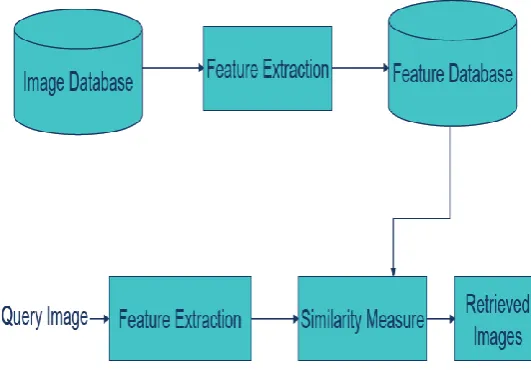
[image:2.595.308.574.176.361.2]bitmap image. As documented in the experimental results, the proposed CBIR can provide promising results in terms of the retrieval accuracy compared to the state-of-the-arts.
Fig -1: CBIR SYSTEM ARCHITECTURE
2. Materials and Methods
The CBIR divided into following modules for design and development.
Module 1: Add new module Module 2: Color Histogram module
2.1 Add New Module
In this module Administrator add the images to the database. The images to database are added individually or the folder of images can be added simultaneously. The dialog box of image insertion successful will be displayed. Later the user can select the query image from any of the folder which is a real world entity. If administrator go ahead with future process before adding the query image a dialog box indicating that query image is to be inserted.
2.2. Color Histogram Module
Here in this module features are extracted based on
© 2016, IRJET | Impact Factor value: 4.45 | ISO 9001:2008 Certified Journal | Page 507
Local Color Histogram
Global Color Histogram
2.2.1 Average RGB
The red, green and blue color intensity of query image is calculated and compared with the RGB values of database images and related images are displayed as output.
2.2.2 Local Color Histogram
The image will segmented into and color histogram of each blockwill be obtained. We calculate the distance, using their histograms, between a region in one image and a region at same location in the other image in database.
2.2.3 Global Color Histogram
Global color histogram of each block will be obtained. We
calculate the distance, using their histograms, between a region in one image and a region at same location in the other image in database. Same as the local color histogram but considers all the regions of the image.3. Results
Extensive experiments were conducted to examine the performance of the proposed method. The image descriptors are obtained from the ODBTC encoded data stream which is already stored in the database. First, CCF and BPF are computed over all images in the database. Subsequently, thesystem returns a set of similar images from the databasebased on their similarity distance. Finally, the image retrieval performance is tested when several images are turned asqueries. Many databases are involved in the experiments.Four quantitative
evaluations are used to examine the performance of proposedmethod, i.e., precision, recall, Average Retrieval Rate (ARR),and Average Normalized Modified Retrieval Rank (ANMRR).In the image classification task, the proposed method performanceis measured with the
proportion correct classification(accuracy) from the nearest neighbor classifier. The classifierassigns a class
label of testing set using the similarity
distancecomputation as used in the image retrieval task. Formally, the average precision P(q) and average recall
R(q) measurements for describing the image retrieval performanceare defined.
4. Discussion
4.1 Ordered-Dither Block Truncation Coding
The motivation of adopting the Ordered Dithered Block Truncation Coding (ODBTC) and its effectiveness in generating representative image features.In this paper, the ODBTC algorithm is generalized for color images in coping with the CBIR application. The main advantage of the ODBTC image compression is on its low complexity in generating bitmap image.The traditional BTC derives the low andhigh mean values by preserving the first-order moment and second-order moment over each image block, which requires additional computational time. Conversely, ODBTC identifies the minimum and maximum values each image block as opposed to the former low and high mean values calculation, which can further reduce the processing time in the encoding stage.
4.2 ODBTC Indexing
© 2016, IRJET | Impact Factor value: 4.45 | ISO 9001:2008 Certified Journal | Page 508 Color Co-occurrence Feature (CCF) and Bit Pattern
Feature (BPF). The CCF is derived from the two color quantizers, and the BPF is from the bitmap image.
Fig.-2: BLOCK DIAGRAMOF IMAGE RETRIEVAL METHOD
5. CONCLUSIONS
The need for Content- Based image retrieval is to retrieve images that are more appropriate, along with multiple features for better retrieval accuracy.“Content-based” means that the search makes use of the contents of image themselves, rather than relying on human-inputted metadata such as captions or keywords. The similarity measurements and the representation of the visual features are two important tasks in CBIR.Given a query image, with single object present in it; mission of this work is to retrieve similar kind of images from the database based on the features extracted from the query image. We use content- based search, for high accuracy multiple features like color, texture and shape is incorporated. In this project, we implemented a CBIR system based on multiple features representations. For the further studies, image retrieval scheme can be applied to video retrieval. The video can be treated as sequence of image in which the proposed ODBTC indexing can be applied directly in this image sequence. The ODBTC indexing scheme can also be extended to another color space as opposed to the RGB triple space. Another feature can be added by extracting
the ODBTC data stream, not only CCF and BPF, to enhance the retrieval performance.
REFERENCES
[1] J.-M. Guo and M.-F. Wu, “Improved block truncation coding based onthe void-and-cluster dithering approach,”
IEEE Trans. Image Process.,vol. 18, no. 1, pp. 211–213, Jan. 2009.
[2] J.-M. Guo, “High efficiency ordered dither block truncation coding withdither array LUT and its scalable coding application,” Digit. SignalProcess., vol. 20, no. 1, pp. 97–110, Jan. 2010.
[3] G. Qiu, “Color image indexing using BTC,” IEEE Trans. Image Process.,vol. 12, no. 1, pp. 93–101, Jan. 2003. [4] T. Prathiba, N. M. Mary Sindhuja, S. Nisharani“Content Based Image Retrieval Based On Spatial Constraints Using Lab view” International Journal of Engineering Research & Technology (IJERT), ISSN: 2278-0181.
[5] B. S. Manjunath and W. Y. Ma, “Texture features for
browsing andretrieval of image data,” IEEE Trans. Pattern
Anal. Mach. Intell., vol. 18,no. 8, pp. 837–842, Aug. 1996. [7] T. Ojala, M. Pietikäinen, and D. Harwood, “A
comparative study oftexture measures with classification based on featured distributions,”Pattern Recognit., vol. 29, no. 1, pp. 51–59, 1996.
[8] S. Lazebnik, C. Schmid, and J. Ponce, “Beyond bags of features:Spatial pyramid matching for recognizing natural scene categories,” inProc. IEEE Comput. Soc. Conf. Comput. Vis. Pattern Recognit., vol. 2.
Jun. 2006, pp. 2169–2178.
[9] A. Oliva and A. Torralba, “Modeling the shape of the scene: A holisticrepresentation of the spatial envelope,”
Int. J. Comput. Vis., vol. 42, no. 3, pp. 145–175, 2001. [10]MIT-Vision Texture (VisTex) Image Database. [Online]. Available:http://vismod.media.mit.edu/vismod/imagery/ VisionTexture/vistex.html,accessed 2002.
[11]Outex Texture Image Database. [Online].
© 2016, IRJET | Impact Factor value: 4.45 | ISO 9001:2008 Certified Journal | Page 509
BIOGRAPHIES
Prof. Shrinivas Halhalli working as Assistant professor in Dept. of Computer Engineer , GSMCOE , Balewadi , Pune , India
Priyanka Sunil Shinde studying B.E. Computer from GSMCOE , Balewadi in Pune University , Pune , India
Anushka Vijay Sinkar studying
B.E. Computer from GSMCOE Balewadi in Pune University. Pune , India
Mugdha Vinayak Toro
studying B.E. Computer from GSMCOE , Balewadi in Pune University , Pune , India