1
Relations between Infant Sleep Quality, Physiological Reactivity, and Emotional Reactivity to Stress at 3 and 6 Month1
Archita Chandra Senior Honors Thesis
Department of Psychology and Neuroscience University of North Carolina at Chapel Hill
4/25/17
Approved:
___________________ Dr. Cathi Propper, Thesis Advisor Dr. Martha Cox, Reader Marie Camerota, Reader
2
Acknowledgements
I would like to thank Dr. Cathi Propper for her supportive guidance and mentorship as my thesis advisor and throughout my time at the Propper Lab. I am grateful for the opportunities that Dr. Propper gave me as a volunteer and an honors thesis student at the lab. All of my
experiences have enhanced my knowledge of the research process and further developed my passion for research in developmental psychology. Thank you, Dr. Propper, for understanding my joys and frustrations over my results and for providing instrumental feedback and reviews of my thesis. I also want to thank Dr. Martha Cox for encouraging my interest in research by guiding me to Dr. Propper’s lab and for being on my thesis committee. Thank you to Marie Camerota for introducing me to the world of actigraphy, helping me in data editing and in better understanding infant sleep, and for being on my thesis committee. And thank you to Noa Gueron-Sela for introducing me to the still-face paradigm and respiratory sinus arrhythmia and for helping me with my data editing and coding, despite being halfway across the world. I would also like to thank Dr. Beth Kurtz-Costes and Dr. Peter Ornstein for being such supportive Honors Thesis Directors and instructors and for providing all of us honors thesis students with amazing resources and opportunities to practice presenting our work.
Next, I would like to thank my family and friends for their incredible support throughout this journey. Thank you to my parents, Meenal and Akhilesh Chandra, for constantly
3
Finally, thank you to the parents and children who participated in the Neonatal and Pediatric Sleep Study, without whom this project would not be possible. And thank you to the Office of Undergraduate Research at UNC-Chapel Hill for providing me with the Summer Undergraduate Research Fellowship that helped facilitate this thesis.
Abstract
4
Introduction
It is well known that early childhood experiences affect later developmental outcomes. What is relatively unclear, however, is how these experiences influence each other early in life to predict later development. This study explores the association between infant physiological reactivity during calm and stressful situations (via respiratory sinus arrhythmia) and infant sleep quality, concurrently and over time, and the subsequent relationship between early sleep quality and emotional reactivity during a stressful situation at 6 months. Understanding sleep
development is important given that poor childhood sleep has been associated with behavioral problems, poor school and work performance, and poorer health in later development (Hinnant et al., 2011; Grazanio et al., 2011). Moreover, the current study focuses on African American mother-infant dyads, due to previous findings that African American children get less sleep than their counterparts and experience a greater prevalence of sleep disorders such as insomnia and sleep apnea (Lichstein et al., 2004). To date, no study has looked at the early origins of these disparities. Therefore, studying the determinants of early sleep quality and emotional reactivity has critical implications for behavioral and emotional development in later childhood and into adulthood.
Respiratory Sinus Arrhythmia
5
environmentally challenging scenarios so that the body can mobilize and focus on external demands (Propper et al., 2008). Thus, lower levels of RSA are typical in situations that require coping. When normal environmental conditions reemerge, the typical response is for RSA to increase and return to baseline levels followed by decreased heart rate, and less mobilization (Porges, 1995). Given that RSA is a non-invasive measure of one’s internal state, RSA can be used to assess nonverbal infants’ changes in internal state and coping to changing environments and interactions with mothers.
Individual differences in RSA change during challenging situations have been implicated in long-term developmental outcomes. A recent meta-analysis (of 44 studies) on the effects of RSA on future outcomes in children was conducted by Graziano and Derefinko (2013). One critical finding revealed that increased RSA withdrawal (i.e., lower RSA levels) in challenging situations was correlated with decreased externalizing and internalizing behaviors and reduced issues in cognitive and academic performance. For example, children who exhibited problematic externalizing behaviors also showed impaired RSA withdrawal in stressful scenarios, suggesting inadequate emotional and physiological self-regulation. Moreover, lower baseline and RSA withdrawal was found in children comprising clinical and at-risk populations as compared to children in healthy populations (Graziano & Derefinko, 2013). The results further showed that moderate RSA withdrawal in stressful scenarios was correlated with better emotional and developmental outcomes, suggesting that perhaps too much withdrawal, or not enough withdrawal, could be problematic.
6
system may predict sleep quality (a process that is dependent on being able to calm down, relax, and self-soothe). Thus, the current study will examine both baseline RSA as well as RSA change across the normal and still-face episodes of the still-face paradigm (SFP) as potential predictors of sleep quality. This experimental paradigm may be particularly interesting due to the physical and emotional separation from mother that occurs during the still-face episode that may mimic bedtime practices where mothers have to physically separate themselves from infants to allow the infants to fall asleep.
RSA and Sleep
Problems in sleep have been associated with inadequate emotion regulation and therefore higher levels of reactivity (Dahl, 1996). Due to the association between RSA and child
neurodevelopmental outcomes, as described above, the existing literature has examined RSA as a predictor of sleep in preschool children (Elmore-Staton et al., 2012). Findings revealed that higher levels of baseline RSA predicted less restlessness during sleep (as indicated by less activity and movement during sleep) and more sleep efficiency, as measured by actigraphy, as well as more minutes asleep. However, while RSA has been associated with certain aspects of sleep, it is still not possible to identify causation between RSA and sleep quality measures given that sleep quality and RSA can impact each other such that atypical RSA levels may lead to poor sleep quality, which in turn may further alter parasympathetic (RSA) functioning (Elmore-Staton et al., 2012). It is also possible that early sleep patterns in the first months of life may shape RSA functioning by 6 months.
7
problems, similar to the preschool age group. Interestingly, children exhibiting more emotional intensity also exhibit problems in sleep quality and quantity (El-Sheikh & Buckhalt, 2005), supporting Dahl’s (1996) claim that problems in emotion regulation could affect sleep
development. Due to the known associations between RSA and emotional reactivity (Gentzler et al., 2009; Fox, 1989), this suggests that RSA may play a role in sleep development. The current study is novel in that it expands on these findings by examining the physiological correlates of reactivity and regulation, rather than the behavioral ones, as predictors of infant sleep quality. While previous studies have examined the relationship between emotion reactivity and regulation and infant sleep quality, the current study will be the first to examine how infants’ physiological
reactivity and regulation are implicated in future sleep quality. This study will also be the first to look at these questions so early in life, starting at 3 months of age. Researchers further explain that RSA can be affected by environmental changes, which can influence the child via
disruptions in sleep quality (El-Sheikh & Buckhalt, 2005). Thus, due to the plasticity of physiological systems across childhood, it is critical to look at these factors early in life. RSA and Emotional Reactivity during the Still Face Paradigm
8
play and reunion episodes of SFP (Moore & Calkins, 2004). Therefore, RSA withdrawal throughout the paradigm appears to be a meaningful measure of emotional reactivity.
Additionally, another study conducted by Bosque et al. (2014) found similar RSA and emotional fluctuations such that the still-face episodes were associated with increased negative/distressed infant affect while reunion episodes were associated with somewhat decreased negative affect. Furthermore, RSA decreases were seen during the still-face episode and although they increased again during the reunion episode, they still did not reach baseline levels.
Sleep and Emotional Reactivity
Sleep has been implicated in many adult studies as a significant influencer of mood and emotional reactivity. In particular, Pilcher and Huffcutt (1996) conducted a meta-analysis of existing studies on adult sleep and emotional reactivity. They found that of cognitive, motor, and emotion development, emotion and mood were the most affected by sleep deprivation in adults. Additionally, partial sleep deprivation had the most detrimental effects on emotion and emotion regulation than long or short-term sleep deprivation.
9
deprivation in clinically depressed adolescents decreased depressive severity in these subjects. As such, the literature on the relationship between sleep quality and emotion regulation suggests that lack of sleep or poorer sleep quality may have mixed effects on mood and emotion. The current study attempts to examine whether these effects of sleep on emotion are seen in infancy, an earlier time-point than those in the literature discussed. This can help to identify if early sleep quality has significant implications for emotional development later in life.
RSA in African American Populations
10
Current Study
This study examines the relationships between RSA and sleep quality at 3 and 6 months of age. In addition, we examine the relationship between sleep and emotional reactivity in the still-face paradigm, as a first step towards understanding the complex relationships between RSA, sleep, and emotional reactivity. Moreover, this study is the first to look at these
relationships in an African-American sample. The three specific questions and hypotheses are as follows:
1. Is baseline RSA at 3 months of age related to sleep quality at 3 and 6 months of age? We hypothesize that baseline RSA at 3 months will be positively associated with measures of sleep quality at 3 and 6 months (i.e., the amount of sleep minutes, sleep efficiency, and night-sleep ratio).
2. Is RSA change from the normal episode to the still-face episode of the SFP
(indicating physiological reactivity) associated with sleep quality at 6 months? We hypothesize that higher levels of RSA withdrawal (indicating higher levels of
reactivity) during the still-face episode will be associated with worse sleep quality at 6 months.
3. Is sleep quality at 3 and 6 months associated with behavioral indices of emotion reactivity (i.e., positive, negative, and neutral affect and self-regulatory behaviors) during the SFP at 6 months? We hypothesize that better sleep quality at 3 and 6 months (i.e., amount of sleep minutes, sleep efficiency, and night-sleep ratio) will predict less emotional reactivity (i.e., positive, negative, and neutral affect and self-regulatory behaviors) during the SFP at 6 months.
11
Participants
This study is comprised of 89 African American mother-infant dyads from the Neonatal and Pediatric Sleep (NAPS). Families were recruited via public birth records and through advertisements in the community, and families were included only if they intended to remain in the study region (the Raleigh-Durham-Chapel Hill research triangle in North Carolina) for the following 12 months. Full term healthy infants with no known developmental disorders were enrolled; 49 were male (55.1%) and 40 were female (44.9%) with a mean age of 108.4 days (SD
= 13.87) at the 3 month visit and 195.62 days (SD = 13.95) at the 6 months visit. Sixty-one mothers were employed (68.5%); 27 had some amount of college experience but no degree (30.0%), 20 had a graduate degree (22.2%), and 15 had a bachelor’s degree (16.7%). 38 mothers were married (42.7%), 33 were never married (37.1%), and 10 were living with someone but were not married (11.2%). The average income level of the participating families was $55,348.88 (SD = $41,916.56).
Procedures
12
continued to wear monitors throughout the visit during several video-recorded infant assessments and dyadic interactions (the ones included in the current study are described below).
Sleep assessments were conducted during the week following the 3 and 6 month home visits. For these, infants wore a lightweight actigraph on their leg for seven nights. Sleep diaries were conducted by phone, with mother, every day of the sleep assessment week in order to record patterns in mother and infant sleep over 24 hours. Participating families were reimbursed with gift cards at each time point.
Measures and Materials
Actigraphy. Actigraphy is an objective measure of sleep that records amount of activity in 15-second epochs. Actigraphy data was obtained via Actiwatch 2 motion watches, which infants wore on their ankles, continuously for 7 days. Data was analyzed using Phillips Respironics software (version 6.0.7).
Actogram Editing. Editing of actograms require changes to the actogram’s algorithm
settings depending on the purpose of individual research and the age at which data was collected (So et al, 2005). In addition, editing actograms required the researcher to include custom
intervals when the software failed to include an appropriate interval. Additionally, only one coder coded actogram data at each time-point of 3 and 6 months. Comparisons between
behavioral bedtime videos and actogram editing ensured a correspondence between included or excluded sleep and wake intervals in the actogram with what was behaviorally observed.
At 3 months, the number of Immobile Minutes for Sleep Onset and the Immobile Minutes for Sleep End were both set to 5 and the Wake Threshold was set to the automatic setting. The
13
programmed by researchers to Automatically Set Minor Intervals rather than the system’s standard to Detect only one Rest Interval per day.
Existing rest intervals were modified if the software erroneously incorporated large amounts of activity in the rest interval. Rest intervals were added if sporadic activity indicative of restless sleep was seen in a time period of at least 20 minutes. Sporadic activity was defined as periods of activity less than five minutes long, not clustered within 5 minutes of each other, and of less intensity than activity characteristic of wake states. Activity was considered as indicative of a wake state if the activity period in question was longer than five minutes and if the average amount of activity within the interval surpassed 40. In such cases, forced wake intervals were added.
Actigraphy Data Reduction. The following variables are included in analyses: amount of
sleep minutes and sleep efficiency. Sleep efficiency reflects the total amount of time spent in the sleep context (any place where a baby is put to sleep, such as the crib, bassinet, or in mothers arms) where the infant is asleep; in other words, the ratio of sleep intervals to rest intervals that may act as an index of how easily infants fall asleep and stay asleep. In contrast, amount of sleep minutes relays the length of time that infants were asleep. These variables are
14
Still-Face Paradigm (SFP). The Still Face Paradigm (SFP) was recorded for later coding. During this task, mothers and infants sat facing each other for three two-minute
episodes. In the first episode (the “normal episode”), the dyads interacted normally. In the next episode (the “still-face episode”), the mothers stared at infants with an expressionless face and were told to be unresponsive to infant cues. In the final episode (the “reunion episode”), the mothers resumed normal interaction. Note that any episode of the SFP (normal, still-face, or reunion) could be cut short if the infant displayed extreme distress.
Interactions were coded for infants and mothers across all 3 episodes of the SFP in 5 second intervals. For each interval, infant affect was coded as positive, negative, and neutral
expressions. Infant self-regulation was coded only during the still-face and reunion episodes and included any rhythmic and purposeful action done by the infant on another object or on itself in order to soothe itself or direct attention away from a stressor. Examples of behaviors coded as self-regulatory include feet-grabbing, thumb-sucking, self-stroking, self-clasping, fidgeting with the car-seat or other item, rhythmic body rocking, or rhythmic arm motions. Behaviors would not be considered as self-regulatory if the mother initiated the behavior by presenting an object to the infant that it used to self-regulate. Additionally, composite ratios for infant affective expression and self-regulatory behavior codes were calculated for analyses. Composite ratios were created for each episode by dividing the total number of instances of each of the codes described above by 24 (total number of possible intervals in each of the 3 episodes).
Respiratory sinus arrhythmia (RSA). Respiratory sinus arrhythmia (RSA) is a
15
RSA was collected during the SFP at 6 months. Once downloaded onto lab computers, the data was segmented into baseline episode and the multiple episodes of the SFP. Prior to RSA calculation, waves were identified by a computer algorithm and any missing or incorrect R-waves were edited manually using the CardioEdit software (Porges, 1985). Incorrect R-R-waves were identified by outliers that were far above or far below the typical pattern of points that surrounded the outliers and that made up the wave. Incorrect R-waves were edited by summing, dividing, or averaging the outliers with each other or with adjacent points so as to make the outliers consistent with the typical pattern of the surrounding points of the R-wave. Outliers creating incorrect R-waves could be due to excess noise picked up by the heart rate monitors, which could be caused by a range of factors including infants or mothers tampering with the monitors and accidental removal of the monitors. RSA was calculated in 30 second epochs over the 4 minute baseline and each two-minute episode of the SFP using the Porges method (1985). Average RSA values across all epochs were then obtained per episode via CardioBatch Plus software for further analyses. Additionally, change in RSA between the normal and still-face episodes of the SFP was calculated as follows:
RSAchange = RSA6mSFPnormal - RSA6mSFPstillface Results
Descriptive Data
16
procedure (i.e., SFP or overnight actigraphy) or withdraw from the study at any time. Mothers could also refuse to report certain demographic data or may have incorrectly reported
demographic data in questionnaires. Finally, infants were sometimes very distressed, resulting in the SFP either being cut short or not being conducted at all and RSA files that could not be edited or used due to excessive movement or pressure on monitor. For these reasons, there are variations in sample size for each of the individual study variables.
Correlations between demographic variables and primary study variables
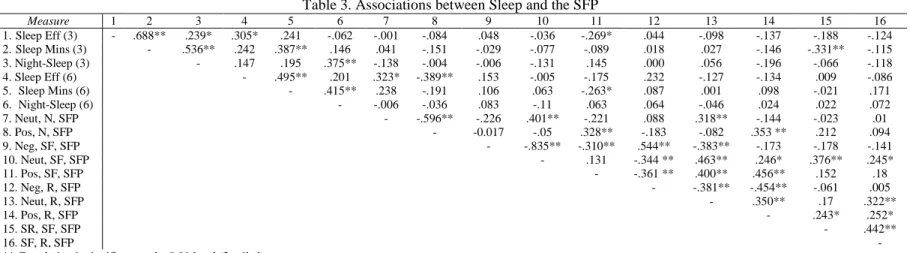
Correlations were examined between years of education, infant sex, and primary study variables (sleep, SFP, and RSA variables; see Tables 2 – 3). Independent samples t-tests and correlations were run to analyze the relationship between potential covariates and primary study variables. With regards to infant sex, males displayed significantly more negative affect during the reunion episode of the SFP at 6 months, (t(60) = -2.296, p <.025). Although maternal years of education was not significantly correlated with primary study variables, it will be included as a covariate in subsequent models acting as a proxy for current socioeconomic status (rather than family income, which was more likely to be missing or inaccurate, perhaps due to the sensitivity of this question). Therefore, maternal years of education and infant sex will be included as covariates in all regression models.
Hypothesis 1: Associations between 3 month baseline RSA and 3 and 6 month sleep quality
Linear regressions were conducted to predict 3 and 6 month sleep measures (i.e., sleep efficiency, amount of sleep minutes, and night-sleep ratio) from infants’ 3 month baseline RSA. After controlling for infant sex and maternal education, there were no significant relationships. Hypothesis 2: Associations between 6 month RSA change during the SFP and 6 month sleep
17
Linear regressions were conducted to predict infant RSA change during the SFP from concurrent sleep measures (i.e., sleep efficiency, amount of sleep minutes, and night-sleep ratio) at 6 months. After controlling for infant sex and maternal education, sleep efficiency marginally predicted RSA change from normal to still-face episodes in the SFP (β = -.295, p < .059). Hypothesis 3: Associations between 3 and 6 month sleep quality and 6 month SFP emotional
reactivity
Linear regressions were conducted to predict emotional reactivity during the SFP (i.e., neutral, negative, and positive affect and self-regulation) at 6 months from infants’ sleep quality (i.e., sleep efficiency, amount of sleep minutes, and night-sleep ratio) at both 3 and 6 months. Amount of sleep minutes at 3 months significantly predicted self-regulation during the still-face episode of the SFP at 6 months (β = -.316, p < .014) above and beyond maternal years of school. In addition, 6 month sleep efficiency significantly predicted neutral affect (β = .299, p < .040) and positive affect (β = -.384, p < .007) during the normal episode of the SFP. Finally, amount of sleep minutes at 6 months of age marginally predicted positive affect in the still-face episode of the SFP (β = -.268, p < .060).
Discussion
18
following discussion will summarize these findings and provide potential interpretations, limitations, and future directions.
For the first hypothesis, we expected a positive relationship between baseline RSA at 3 months of age and sleep quality at 3 and 6 months (as measured by sleep efficiency, amount of sleep minutes, and night-sleep ratio). No significant correlations were found. One possible reason for this is that 3 months may be a time in which physiological processes (both RSA and sleep) may not yet be consolidated, and thus are highly variable without clear patterns. RSA functioning may still be developing and thus may not yet have a direct relationship with concurrent or future sleep quality. The extant literature that has found relationships between early RSA and other measures of development, such as sleep, have looked at preschool and elementary-school age children (Elmore-Staton et al., 2012; El-Sheikh & Buckhalt, 2005), suggesting that earlier measures of RSA may not be reliably related to later developmental outcomes, which supports the current study’s findings. It may be the case that 3 months of age is still too young to see this type of predictive relationship. Of course, an additional possibility is that RSA and sleep at this age are independent processes and do not, in fact, influence one another as we had expected. Thus, future studies on RSA should focus more on disentangling other aspects of infant physiological functioning to determine which ones play a role in sleep development, and at what point in development this begins to happen.
19
decrease in RSA between the normal and still-face episodes of the SFP indicates that infants are more physiologically reactive to the highly potent stressor of maternal emotional separation. Our findings revealed that increased sleep efficiency at 6 months predicted less RSA change between the normal and still face episodes of the SFP. Recall that sleep efficiency represents the ratio of time spent asleep during a rest interval. For example, an infant may be laid down in their crib or bed, but remains awake for several minutes in a restful state; this variable provides an estimate of the proportion of time sleeping once in a rested state, which may provide some information about an infant’s ability to soothe to sleep. The current study’s findings suggest that more sleep
efficiency at 6 months is associated with less RSA decrease during the still-face episodes of the SFP (an episode that typically elicits distress and subsequent RSA decreases).
Several possible explanations could account for this finding. One explanation could be that improved sleep leads to decreased physiological reactivity to stress. Infants who sleep more efficiently (as measured by more time spent asleep as opposed to simply resting) may be less reactive and irritable to stressors in general due to the fact that they are well rested. In contrast, another explanation may be that infants who are less reactive to stress (as indicated by less RSA withdrawal between normal and still-face episodes of the SFP) may be less aroused or better able to self-soothe than infants who are more physiologically reactive to stress, resulting in these infants being better able to soothe themselves to sleep more easily. Note that RSA change from the normal to the still-face episodes of the SFP was used because this maternal separation may elicit physiological and emotional responses in infants similar to those elicited by maternal physical separation at bedtime.
20
influencing the given findings, such that a calm, easily soothed, less negative infant may just be easier across all contexts. Indeed, the positive correlation found between 3 month baseline RSA and 6 month RSA in both the normal and still-face episodes of the SFP suggests that the
physiological underpinnings of temperament may be stable over time. Another explanation may be early adjustments to fluctuations in family environment. It is possible that maternal
sensitivity and emotional responsiveness to infants throughout the day fluctuate given family socioeconomic status. For example, mothers with less education likely have less income and may be working multiple jobs in order to support the family, which may result in mothers being less physically and emotionally available to infants’ distress. In response, infants of these mothers may develop more efficient mechanisms of self-soothing and less reactivity as a coping mechanism, resulting in these infants potentially being less reactive to maternal emotional separation at bedtime and during the still-face episode of the SFP.
21
much distress (2005). Moreover, the current study’s findings are at odds with El-Sheikh et al.’s (2012) results given that the current study found that improved sleep quality was associated with less RSA withdrawal in stressful situations. As such, future studies should replicate the current study paradigm and control for the possible confounds, outlined above, that may have influenced or mediated the findings for this hypothesis.
Finally, the third hypothesis suggested a negative association between 3 and 6 month sleep quality (as measured by sleep efficiency, amount of sleep minutes, and night-sleep ratio) and emotional reactivity during the SFP at 6 months (as measured by neutral, positive, and negative affect and self-regulation). The first significant relationship that emerged was that increased sleep efficiency at 3 months negatively predicted self-regulatory behaviors in the still-face episode of the SFP at 6 months. In other words, sleep efficiency at 3 months (as measured by time spent asleep during a rest interval) predicted less self-regulation during stress at 6 months. One explanation for this finding could be that sleep may have beneficial protective effects that could buffer the effects of negative stressors, leading to a more calm state with less arousal or reactivity, thus making it unnecessary for infants to behaviorally self-regulate. Another possibility is that the same characteristics that help some infants easily soothe to sleep may also lead to a generally calmer and less reactive state, such that the SFP does not elicit the same distress, or need to self-regulate, as it does for other babies.
22
efficiency) may not be as reactive in general and may tend to be more neutral or calm. It makes sense, then, that because there is more neutral affect associated with sleep efficiency, that there would be less emotional reactivity. In this case we only found this to be the case with positive affect, not negative affect. It also could be that infants who are very positive during interactions with their mothers have a good dyadic relationship which brings them joy and comfort. For those infants, it may be harder to separate from mothers at bedtime and it may take them longer to fall asleep. Our finding of less sleep efficiency in more positive infants during normal episode of the SFP fits with this conclusion. However, what is ambiguous about this explanation is the source of variation in infant reactivity, which could again be either temperamental differences or the effects of socioeconomic factors influencing maternal presence and sensitivity to infant distress (thus influencing the quality of the mother-infant relationship). As such, future studies should aim to more conclusively determine the directionality and causality of the relationship between infant sleep quality and concurrent emotional reactivity.
23
understand the mechanisms at play in these results. Additionally, given this marginal significance, future studies are needed to replicate these findings with a larger sample size.
These findings add to the existing literature on the relationship between sleep and emotional reactivity. Adult studies on sleep and emotion regulation show a strong relationship between sleep and mood (Pilcher & Huffcutt, 1996). However, studies on children have not found many causal relationships between sleep and emotion regulation. Of the correlative studies, less sleep and more restless sleep has been associated with inadequate emotion regulation, negative emotionality, and depressive or anxious tendencies (Smaldone, Honig, Byrne, 2007; Wolfson & Carskadon, 1998). Interestingly, one study found an association where less sleep resulted in a decrease in depressive symptoms in children who were clinically
depressed (King et al., 1987; Naylor et al., 1993). Thus, the existing literature seems inconclusive regarding the effects of poor infant sleep on future or concurrent emotion regulation.
Although this study revealed interesting findings, some limitations must also be taken into account. First, the current study includes variation in sample size for each of the sleep, physiological reactivity, and behavioral variables. Not all subjects of the larger sample
underwent all the procedures and activities during home visits at both time-points due to various factors, including infant temperament issues as well as problems in equipment and data
collection. Some of this missingness may not be random, as the infants who are most distressed may have had the most problems with “messy” data or trouble completing tasks. As such, future research should aim for a larger sample size across all primary study variables.
Another key limitation would be the lack of contextual variables during sleep
24
well as infants who were placed into cribs to fall asleep on their own. Both scenarios have significant implications for data interpretation. If infants were still being rocked by mothers, then efficiency variables would be inflated because infants are given a lot of help and are not necessarily self-soothing. In contrast, if efficiency was calculated once mothers had placed infants in the crib, then results may be deflated given that many infants might experience distress due to maternal separation. We did not take these various scenarios into account for this study, thus future research should corroborate efficiency data with behavioral videos.
25
References
Bosquet Enlow, M., King, L., Schreier, H. M., Howard, J. M., Rosenfield, D., Ritz, T., & Wright, R. J. (2014). Maternal sensitivity and infant autonomic and endocrine stress responses. Early Human Development, 90(7), 377–385.
https://doi.org/10.1016/j.earlhumdev.2014.04.007
Dahl, R. E. (1996). The regulation of sleep and arousal: Development and psychopathology.
Development and Psychopathology, 8(1), 3–27. https://doi.org/10.1017/S0954579400006945
Elmore-Staton, L., El-Sheikh, M., Vaughn, B., & Arsiwalla, D. D. (2012). Preschoolers’ daytime respiratory sinus arrhythmia and nighttime sleep. Physiology & Behavior, 107(3), 414–417. https://doi.org/10.1016/j.physbeh.2012.07.005
El-Sheikh, M., Erath, S. A., & Bagley, E. A. (2012). Parasympathetic nervous system activity and children’s sleep. Journal of Sleep Research, 22(3), 282–288. Retrieved from
http://onlinelibrary.wiley.com/doi/10.1111/jsr.12019/full
El-Sheikh, M., & Buckhalt, J. A. (2005). Vagal regulation and emotional intensity predict children’s sleep problems. Developmental Psychobiology, 46(4), 307–317.
https://doi.org/10.1002/dev.20066
Fox, N. A. (1989). Psychophysiological correlates of emotional reactivity during the first year of life. Developmental Psychology, 25(3), 364-372. doi:10.1037/0012-1649.25.3.364
Fracasso, M. P., Porges, S. W., Lamb, M. E., & Rosenberg, A. (1994). Cardiac Activity in Infancy: Reliability and stability of individual differences. Infant Behavior and Development, 17(3), 277–284. Retrieved from
26
lity_and_stability_of_individual_differences
Gentzler, A. L., Santucci, A. K., Kovacs, M., & Fox, N. A. (2009). Respiratory Sinus
Arrhythmia Reactivity Predicts Emotion Regulation and Depressive Symptoms in At-risk and Control Children. Biological Psychology, 82(2), 156–163. Retrieved from
https://www.ncbi.nlm.nih.gov/pmc/articles/PMC2848485/
Graziano, P. A., Calkins, S. D., Keane, S. P., & O’Brien, M. (2011). Cardiovascular Regulation Profile Predicts Developmental Trajectory of BMI and Pediatric Obesity. Obesity, 19(9), 1818–1825. https://doi.org/10.1038/oby.2011.98
Graziano, P., & Derefinko, K. (2013). Cardiac vagal control and children’s adaptive functioning: a meta-analysis. Biological Psychology, 94(1), 22–37.
https://doi.org/10.1016/j.biopsycho.2013.04.011
Hinnant, J. B., Elmore-Staton, L., & El-Sheikh, M. (2011). Developmental trajectories of respiratory sinus arrhythmia and preejection period in middle childhood. Developmental Psychobiology, 53(1), 59–68. https://doi.org/10.1002/dev.20487
King, B. H., Baxter, L., Stuber, M., & Fish, B. (1987). Therapeutic Sleep Deprivation for Depression in Children. Journal of the American Academy of Child & Adolescent Psychiatry, 26(6), 928–31. Retrieved from
https://www.researchgate.net/publication/19727752_Therapeutic_Sleep_Deprivation_for_D epression_in_Children
27
Moore, G. A., & Calkins, S. D. (2004). Infants’ Vagal Regulation in the Still-Face Paradigm Is Related to Dyadic Coordination of Mother–Infant Interaction. Retrieved from
http://www.apa.org/journals/dev/
Naylor, M. W., King, C. A., Kathleen, A., Lindsay, B. A., Evans, T., Armelagos, J., Shain, B. N., et al. (1993). Sleep Deprivation in Depressed Adolescents and Psychiatric Controls. Journal of the American Academy of Child & Adolescent Psychiatry, 32(4), 753–759. Retrieved from http://www.sciencedirect.com/science/article/pii/S0890856709648644
Pilcher, J. J., & Huffcutt, A. I. (1996). Effects of sleep deprivation on performance: a meta-analysis. Sleep, 19(4), 318–326. Retrieved from
https://www.researchgate.net/publication/14425620_Pilcher_JJ_Huffcutt_AI_Effects_of_sl eep_deprivation_on_performance_a_meta-analysis_Sleep_19_318-326
Porges, S. W. (2007). The polyvagal perspective. Biological Psychology, 74(2), 116–43. https://doi.org/10.1016/j.biopsycho.2006.06.009
Porges, S. W. (1985). Method and apparatus for evaluating rhythmic oscillations in a periodic physiological response system (U.S. Patent No. 4,510,944). Washington, DC: U.S. Patent Office
Porges, S. W. (1995). Orienting in a defensive world: mammalian modifications of our
evolutionary heritage. A Polyvagal Theory. Psychophysiology, 32, 301–318. Retrieved from http://onlinelibrary.wiley.com/doi/10.1111/j.1469-8986.1995.tb01213.x/epdf
Propper, C., Mills-Koonce, W. R., Halpern, C. T., Hill-Soderlund, A. L., Carbone, M. A., Moore, G. A., … Cox, M.. (2008). Gene - Environment Contributions to the Development of Infant Vagal Reactivity: The Interaction of Dopamine and Maternal Sensitivity. Child
28
Sadeh, A. (2007). Consequences of Sleep Loss or Sleep Disruption in Children. Sleep Medicine Clinics, 2(3), 513–520. Retrieved from
https://www.researchgate.net/profile/Avi_Sadeh/publication/228935534_Consequences_of_ Sleep_Loss_or_Sleep_Disruption_in_Children/links/56b868fe08ae44bb330cef03.pdf Smaldone, A., Honig, J., & Byrne, M. W. (2007). Sleepless in America: Inadequate Sleep and
Relationships to Health and Well-being of Our Nation’s Children. Pediatrics, 119(1), S29– 37. Retrieved from
https://www.researchgate.net/publication/6531243_Sleepless_in_America_Inadequate_Slee p_and_Relationships_to_Health_and_Well-being_of_Our_Nation’s_Children
So, K., Buckley, P., Adamson, T. M., & Horne, R. S. C. (2005). Actigraphy Correctly Predicts Sleep Behavior in Infants Who Are Younger than Six Months, When Compared with Polysomnography. Pediatric Research, 58, 761–765. Retrieved from
http://www.nature.com/pr/journal/v58/n4/full/pr2005737a.html
Wolfson, A. R., & Carskadon, M. A. (1998). Sleep Schedules and Daytime Functioning in Adolescents. Child Development, 69(4), 875–87. Retrieved from
29
Appendix
Table 1. Descriptive Statistics
Measure N Mean Std. Deviation Min Max
Demographics
Maternal Years of School 84 14.70 2.194 12 18
Age of Infants at 3 Month Time-Point (Days) 89 108.4 13.87 80 155
Age of Infants at 6 Month Time-Point (Days) 79 195.6 13.95 168 254 Sleep Quality
3 Month Sleep Efficiency 79 84.89 5.481 68.79 93.55
3 Month Amount of Sleep Minutes 79 473.9 65.06 292.0 603.1
3 Month Night-Sleep Ratio 79 .7308 .0789 .5078 .9103
6 Month Sleep Efficiency 70 80.35 4.537 68.63 89.29
6 Month Amount of Sleep Minutes 70 448.0 49.86 297.6 563.6
6 Month Night-Sleep Ratio 70 .7751 .0666 .5624 .9761
SFP Emotional Reactivity
Neutral, Normal Ep, SFP 70 .4292 .2675 0 1
Positive, Normal Ep, SFP 70 .4279 .2919 0 .9583
Negative, Still-Face Ep, SFP 70 .4250 .3821 0 1
Neutral, Still-Face Ep, SFP 70 .4095 .3778 0 1
Positive, Still-Face Ep, SFP 70 .0655 .1169 0 .5
Negative, Reunion Ep, SFP 70 .2946 .3441 0 1
Neutral, Reunion Ep, SFP 70 .2113 .2235 0 .875
Positive, Reunion Ep, SFP 70 .2607 .2728 0 .7917
Self-Regulation, Still-Face Ep, SFP 70 .5226 .3043 0 1
Self-Regulation, Reunion Ep, SFP 70 .2304 .2956 0 1
RSA
3 Month Baseline RSA 67 3.440 .8739 1.87 5.54
6 Month RSA, Normal Ep, SFP 59 3.855 .8896 1.56 5.47
6 Month RSA, Still-Face Ep, SFP 56 3.782 1.004 .87 5.69
6 Month RSA, Reunion Ep, SFP 50 3.803 .9274 1.64 5.93
30
Table 2. Associations between Sleep and RSA
Measure 1. 2. 3. 4. 5. 6. 7. 8. 9. 10. 11.
1. Sleep Eff (3) - .688** .239* .305* .241 -.062 .022 -.175 -.004 -.023 -.127 2. Sleep Mins (3) - .536** .242 .387** .146 .023 .012 .032 .139 -.021
3. Night-Sleep (3) - .147 .195 .375** .029 .257 .212 .28 .046
4. Sleep Eff (6) - .495** .201 .137 -.061 .147 -.063 -.303*
5. Sleep Mins (6) - .415** .092 .014 .079 .021 -.134
6. Night-Sleep (6) - -.028 .227 .14 .219 .018
7. Baseline RSA (3) - .409** .487** .303 -.257
8. N, SFP, RSA (6) - .718** .775** .154
9. SF, SFP, RSA (6) - .859** -.577**
10. R, SFP, RSA (6) - -.337*
11. cRSA: N SF (6) -
** Correlation is significant at the 0.01 level (2-tailed). * Correlation is significant at the 0.05 level (2-tailed).
31
Table 4. Regression Analysis for Sleep Efficiency Predicting Concurrent Change in RSA in the SFP
Measure B Std. Error β P-value
Constant 2.913 2.106 .174
Maternal Years of School .039 .049 .12 .432
Infant Sex .156 .22 .107 .482
6 Month Sleep Efficiency -.045 .023 -.295 .059
Table 5. Regression Analysis for Amount of Sleep at 3 Months Predicting Self-Regulation in the Still-Face Episode of the SFP
Measure B Std. Error β P-value
Constant 1.998 .363 .000
Maternal Years of School -.041 .015 -.317 .011
Infant Sex -.115 .071 -.199 .113
3 Month Amount of Sleep -.001 .001 -.316 .014
Table 6. Regression Analysis for 6 Month Sleep Efficiency Predicting Neutral Affect in the Normal Episode of the SFP
Measure B Std. Error β P-value
Constant -.889 .715 .219
Maternal Years of School -.01 .016 -.084 .530
Infant Sex .022 .077 .041 .773
6 Month Sleep Efficiency .018 .009 .299 .040
Table 3. Associations between Sleep and the SFP
Measure 1 2 3 4 5 6 7 8 9 10 11 12 13 14 15 16
1.Sleep Eff (3) - .688** .239* .305* .241 -.062 -.001 -.084 .048 -.036 -.269* .044 -.098 -.137 -.188 -.124 2.Sleep Mins (3) - .536** .242 .387** .146 .041 -.151 -.029 -.077 -.089 .018 .027 -.146 -.331** -.115 3. Night-Sleep (3) - .147 .195 .375** -.138 -.004 -.006 -.131 .145 .000 .056 -.196 -.066 -.118 4. Sleep Eff (6) - .495** .201 .323* -.389** .153 -.005 -.175 .232 -.127 -.134 .009 -.086 5. Sleep Mins (6) - .415** .238 -.191 .106 .063 -.263* .087 .001 .098 -.021 .171 6. Night-Sleep (6) - -.006 -.036 .083 -.11 .063 .064 -.046 .024 .022 .072 7. Neut, N, SFP - -.596** -.226 .401** -.221 .088 .318** -.144 -.023 .01 8. Pos, N, SFP - -0.017 -.05 .328** -.183 -.082 .353 ** .212 .094 9. Neg, SF, SFP - -.835** -.310** .544** -.383** -.173 -.178 -.141
10. Neut, SF, SFP - .131 -.344 ** .463** .246* .376** .245*
11. Pos, SF, SFP - -.361 ** .400** .456** .152 .18
12. Neg, R, SFP - -.381** -.454** -.061 .005
13. Neut, R, SFP - .350** .17 .322**
14. Pos, R, SFP - .243* .252*
15. SR, SF, SFP - .442**
16. SF, R, SFP -
** Correlation is significant at the 0.01 level (2-tailed). * Correlation is significant at the 0.05 level (2-tailed).
32
Table 7. Regression Analysis for 6 Month Sleep Efficiency Predicting Positive Affect in the Normal Episode of the SFP
Measure B Std. Error β P-value
Constant 2.017 .730 .008
Maternal Years of School .022 .017 .169 .195
Infant Sex .037 .079 .063 .646
6 Month Efficiency -.025 .009 -.384 .007
Table 8. Regression Analysis for 6 Month Amount of Sleep Predicting Positive Affect in the Still-Face Episode of the SFP
Measure B Std. Error β P-value
Constant .453 .165 .008
Maternal Years of School -.006 .007 -.112 .413
Infant Sex -.015 .032 -.064 .648