
TOOLKIT TO IMPROVE PROVIDER ADHERENCE TO METABOLIC MONITORING OF ATYPICAL ANTIPSYCHOTICS FOR YOUTHS
Lindsey M. Carpenter
A dissertation submitted to the faculty at the University of North Carolina at Chapel Hill in partial fulfillment of the requirements for the degree of Doctor of Nursing Practice in the School
of Nursing.
Chapel Hill 2018
ii © 2018
iii ABSTRACT
Lindsey M. Carpenter: Toolkit to Improve Provider Adherence to Metabolic Monitoring of Atypical Antipsychotics for Youths
(Under the direction of Grace Hubbard)
Problem: The use of atypical antipsychotic medications (AAPs) to treat bipolar and other mood disorders has increased in pediatric populations. The potential metabolic side effects of these medications increase the risk of negative health outcomes. Providers are aware of practice guidelines regarding these medications but fail to adhere to them. Practice toolkits are quality-improvement interventions aimed at improving guideline compliance.
Purpose: The purpose of this project was to implement a toolkit to increase adherence to guidelines for metabolic measures in patients aged 5-18 with a bipolar disorder taking an atypical antipsychotic.
iv
Results: Outcome measures showed improved adherence rates to monitoring vital signs, ordering appropriate labs, and performing a metabolic assessment. These improvements varied among providers.
v
TABLE OF CONTENTS
LIST OF TABLES ... VIII LIST OF GRAPHS ... IX LIST OF ABBREVIATIONS ... X
CHAPTER 1: PROBLEM ... 1
CHAPTER 2: LITERATURE SEARCH PROCESS ... 4
CHAPTER 3: REVIEW OF LITERATURE ... 5
Bipolar Spectrum Disorder Diagnosis In Children And Adolescents ... 5
Treatment Using Atypical Antipsychotic Medication ... 8
Metabolic Side Effects of Atypical Antipsychotic Medications... 9
Monitoring of Metabolic Side Effects ... 11
Recommendations for Management of Metabolic Side Effects ... 11
Practice Guideline Recommendations ... 13
Barriers to Use of Practice Guidelines ... 17
Provider Barriers. ... 17
Organizational Barriers. ... 18
Patient Barriers... 19
Practice Change Interventions ... 20
Practice Toolkits. ... 22
Strengths and Weaknesses of Existing Research and Utility of Research ... 23
vi
CHAPTER 5: METHODOLOGY ... 27
Setting ... 27
Practice Change Participants... 28
Stakeholders ... 28
Ethics and Human Subjects Permissions ... 29
Recruitment ... 29
Toolkit Development ... 30
Provider and Staff Education ... 31
Outcomes and Outcome Measures... 32
Implementation Process ... 33
CHAPTER 6: DATA COLLECTION AND DATA ANALYSIS ... 35
CHAPTER 7: DISCUSSION AND IMPLICATIONS FOR PRACTICE ... 38
CHAPTER 8: STRENGTHS AND LIMITATIONS OF THE PROJECT ... 43
CHAPTER 9: SUSTAINABILITY ... 45
CHAPTER 10: RECOMMENDATIONS FOR THE FUTURE ... 46
APPENDIX A: MONITORING PROTOCOL FOR PATIENTS ON SGAS ... 48
APPENDIX B: DATABASE SEARCH STRATEGY ... 49
APPENDIX C: SUMMARY OF FOUR PRACTICE GUIDELINES SUMMARY FOR CHILDREN AND ADOLESCENTS WITH BIPOLAR DISORDER ... 50
APPENDIX D: METABOLIC ASSESSMENT FORM... 51
APPENDIX E: PROVIDER DOCUMENTATION FORM ... 52
APPENDIX F: VITAL SIGN DOCUMENTATION FORM ... 53
vii
APPENDIX H: METABOLIC LAB VALUE REFERENCES TABLE ... 56
APPENDIX I: REFERAL FORM ... 57
APPENDIX J: PATIENT EDUCATION HANDOUT ... 58
APPENDIX K: STAFF ROLES AND RESPONSIBILITIES ... 60
APPENDIX L: AUDIT TOOL ... 61
APPENDIX M: COMMUNICATION DOCUMENTATION FORM ... 63
APPENDIX N: ATYPICAL ANTIPSYCHOTIC TREATMENT CHECKLIST AND INTERVENTION DOCUMENTATION FORM... 64
APPENDIX O: PROJECT IMPLEMENTATION TIMELINE ... 65
APPENDIX P: MEASUREMENT GUIDE FOR VITAL SIGNS ... 66
APPENDIX Q: SUMMARY TABLES OF CHART AUDIT DATA ... 67
APPENDIX R: PHASE II AND PHASE III OUTCOME MEASURES ... 68
viii
LIST OF TABLES
ix
LIST OF GRAPHS
x
LIST OF ABBREVIATIONS AAP Atypical Antipsychotic
AACAP American Academy of Child and Adolescent Psychiatry AACE American Association of Clinical Endocrinologists ADA American Diabetes Association
APA American Psychiatric Association BSD Bipolar Spectrum Disorders BMI Body Mass Index
DMDD Disruptive Mood Dysregulation Disorder DNP Doctor of Nursing Practice
DO Doctor of Osteopathic Medicine
DSM Diagnostic and Statistical Manual of Mental Disorders
ECT Electroconvulsive Therapy ECG Electrocardiogram
FDA Food and Drug Administration IRB Institutional Review Board
NAASO North American Association for the Study of Obesity PA Physician Assistant
PCP Primary Care Provider PDSA Plan-Do-Study-Act
PMHNP Psychiatric-Mental Health Nurse Practitioner RCT Randomized Controlled Trial
1
CHAPTER 1: PROBLEM
The diagnosis of bipolar spectrum disorders, Disruptive Mood Dysregulation Disorder (DMDD), and use of atypical antipsychotic medications (AAPs) or second-generation
antipsychotics (SGAs) to treat these disorders have increased in the pediatric population in recent years. A common and potentially serious side effect of these medications is a condition called metabolic syndrome (De Hert, Dobbelaere, Sheridan, Cohen, & Correll, 2011; Haddad & Sharma, 2007; Koch & Scott, 2012; G. M. Reeves et al., 2013; Walter et al., 2008). To combat this growing epidemic of iatrogenic side effects, resources and treatment suggestions have been developed for providers who treat this population.
Professional organizations have developed practice guidelines that promote evidence-based practice to deliver the best care for these patients, however, these guidelines are severely underused in practice. The guideline formulated by a collaboration of the American Diabetes Association (ADA), the American Psychiatric Association (APA), the American Association of Clinical Endocrinologists (AACE), and the North American Association for the Study of Obesity (NAASO) (2004) provides recommendations for the monitoring of metabolic
2
compliance with these practice guidelines vary widely, the general consensus supports that these evidence-based recommendations are often not utilized in clinical practice as evidenced in studies of managed care and commercial insurance databases (Koch & Scott, 2012; Velligan et al., 2013). The findings of several studies reveal that most providers are familiar with these guidelines; however, awareness of these guidelines does not translate into performance of the recommended assessment, treatment, and monitoring (Jeffrey, 2015; Khan, Shaikh, & Ablah, 2010; Laugharne, Waterreus, Castle, & Dragovic, 2016; Sugawara et al., 2014; Walter et al., 2008; Wiechers et al., 2012). Researchers have also found that providers may be compliant with some of the recommendations, but not all of them, or do not adhere to the recommended
schedule for monitoring (Khan et al., 2010; Walter et al., 2008). Suppes, McElroy, and
Hirschfield (2007) found that providers believe metabolic syndrome is a significant health risk that requires monitoring and treatment yet, few diagnosed it in their patients and even fewer could identify the correct components for diagnosis of metabolic syndrome, even though they had diagnosed it in their patients. The findings of these studies support the pervasiveness of this gap in evidence-based care delivery using AAPs that can have serious physical and psychiatric implications.
Mental health providers at an outpatient mental health practice in Western North Carolina prescribes AAPs for children and adolescents without the benefit of consistent use of practice guidelines. This practice treats approximately fifty children ages 5-18 per year who are diagnosed with bipolar spectrum disorders or DMDD.
3
4
CHAPTER 2: LITERATURE SEARCH PROCESS
Searches for relevant articles were conducted across three electronic databases, CINAHL, PsychInfo, and PubMed. (Appendix B). The sampling frame of the study included research articles that focused on AAP use, the metabolic side effects of AAPs in children and adolescents, toolkit use in quality improvement, evidence-based guidelines, and barriers to the use of practice guidelines. Inclusion criteria included full-text articles published in English between 2007-2017.
5
CHAPTER 3: REVIEW OF LITERATURE Bipolar Spectrum Disorder Diagnosis in Children and Adolescents
Due to increased awareness, assessment, and treatment options, there has been a surge in the diagnosis of bipolar spectrum disorders (BSD) in younger patients in the United States (Birmaher, 2013; Crowley et al., 2014). The diagnosis of bipolar disorders in youth in the outpatient setting has increased 40-fold in the past 10 years and inpatient hospitalizations for these patients have increased 4-fold (Singh, Ketter, & Chang, 2010). Specifically, approximately 2.7% of persons 12-21 years old have a bipolar disorder with the percentage increasing to 5-6.7% when including those with subsyndromal manic symptoms (Birmaher, 2013; Crowley et al., 2014).
The introduction of the fifth edition of the Diagnostic and Statistical Manual of Mental
Disorders (DSM-5) by the American Psychiatric Association (APA) in 2013 introduced
significant changes to bipolar spectrum and depressive disorder diagnoses including the addition of the Disruptive Mood Dysregulation Disorder (DMDD) diagnosis for children and adolescents. The DMDD diagnosis was created in response to concerns about the potential over-diagnosis of bipolar disorders in the pediatric population (APA, 2013). This diagnosis can be used in children ages 6 to 18 years who exhibit “Persistent irritability and frequent episodes of extreme behavior dyscontrol (APA, 2013, p. 156).” The age of onset of DMDD symptoms should be before age 10 years. APA (2013, p. 156) diagnostic criteria include:
6
- The outbursts are inconsistent with developmental level and occur an average of three or more times a week
- The mood between outbursts is persistently irritable or angry, most of the day, nearly every day, and is observable
- The symptoms are present for 12 or more months in at least two settings and symptoms are not absent for more than three consecutive months
- Symptoms should not be better explained by another disorder, substance abuse, medical, or neurological condition
- The person has never experienced a hypomanic or manic episode and the symptoms occur at other times besides a major depressive episode
- It cannot coexist with Oppositional Defiant Disorder, Intermittent Explosive Disorder, or a bipolar disorder.
In the DSM-5 (2013), bipolar and related disorders include: Bipolar I Disorder, Bipolar II Disorder, Cyclothymic Disorder, Substance/Medication-Induced Bipolar and Related Disorders, Bipolar and Related Disorders Due to Another Medical Condition, Other Specified Bipolar and Related Disorders, and Unspecified Bipolar and Related Disorders. These disorders are based on diagnostic criteria using three episodes of symptoms – major depressive, hypomanic, and manic. Differences among the disorders are based on the presence of certain episodes, severity, length of the episode, and cause.
The diagnostic criteria for a major depressive episode includes five or more of the
7
psychomotor retardation/agitation, fatigue, feelings of worthlessness or extreme guilt, problems with concentration or decision-making, or suicidal thoughts or actions (APA, 2013). A
hypomanic episode is a period of abnormally and persistently elevated, expansive, or irritable mood and increased activity or energy, lasting at least four consecutive days for most of the day, nearly every day (APA, 2013). Three or more (four if the mood is irritable) of the symptoms that must be present in hypomania include: inflated self-esteem or grandiosity, decreased need for sleep, more talkative, flight of ideas or racing thoughts, distractibility, increase in goal-directed activity, and/or excessive involvement in risky behaviors. A manic episode is similar to a hypomanic episode in criteria but the symptoms are more severe and lasts for at least a week (or less if hospitalization is necessary due to the severity of symptoms) (APA, 2013).
To meet diagnostic criteria for bipolar I disorder, a manic episode is required where as a major depressive or hypomanic episode is not required. For bipolar II disorder, the person must have experienced at least one hypomanic and at least one major depressive episode, but cannot have experienced a manic episode. In cyclothymic disorder, hypomanic and depressive
symptoms that do not meet criteria for full episodes must be present for at least two years for adults and one year for children and adolescents with persistent symptoms for more than two months at a time. For the diagnosis of substance/medication-induced bipolar and related
8
short-duration cyclothymia. Unspecified Bipolar and Related Disorders is diagnosed when symptoms that are characteristic of a bipolar disorder that cause significant distress or impairment that do not meet full criteria for any other bipolar and related disorder. As with DMDD, symptoms of these disorders cannot be explained by another psychiatric disorder, substance abuse, medical or neurological condition (unless otherwise specified) (APA, 2013).
According to the APA (2013), children and adolescents with a BSD are more likely to have increased familial rates of a BSD. Onset of symptoms during childhood or adolescence may be associated with a more severe lifetime course of the illness. In Cyclothymic Disorder, the mean age of onset is 6.5 years of age for children (APA, 2013).
Treatment Using Atypical Antipsychotic Medication
Options are limited for the treatment of bipolar disorders in children and adolescents. Currently, the only AAP medications that are approved by the Food and Drug Administration (FDA) for the treatment of Bipolar I Disorder Mixed/Manic in children and adolescents are: aripiprazole (Abilify) (ages 10-17), risperidone (Risperdal) (ages 10-17), olanzapine (Zyprexa) (ages 13-17), quetiapine (Seroquel) (ages 10-17), and lithium (ages 12+) (Stahl, 2014).
9
Another factor contributing to their use is that randomized controlled trials (RCTs) have been conducted in this age group and show they are superior to valproic acid and lithium in treating mania in this population (Crowley et al., 2014). RCTs on newer AAPs that have shown efficacy in adults are now being conducted in the pediatric population. AAPs also have a lower propensity for causing bothersome, acute and chronic extrapyramidal side effects than typical antipsychotics (Olfson et al., 2012). Other efforts have encouraged the use of AAPs including: greater acceptance of mental illness and treatment in general, greater public acceptance of psychiatric medications, and marketing by pharmaceutical companies (Olfson et al., 2012). Their use remains controversial due to the lack of population-specific data, ongoing debate about the prevalence of bipolar illness in children and adolescents, and the potential side effects
(Crowley et al., 2014).
Metabolic Side Effects of Atypical Antipsychotic Medications
Atypical antipsychotics (AAPs) are widely used due to their overall efficacy and tolerability, especially when compared to their older counterparts. However, AAPs have a unique side effect profile. Due to their strong binding affinity to the 5-HT2 serotonin receptor,
they can cause metabolic side effects generally not seen in their predecessors (Ronsley,
10
dyslipidemia, hypertension, diabetes mellitus, stroke, coronary heart disease, and earlier mortality (Koch & Scott, 2012; G. M. Reeves et al., 2013; Walter et al., 2008). Weight gain is growing as one of the most troubling side effects and is a significant factor in treatment
adherence (Kumra et al., 2008; R. Reeves, Kaldany, Lieberman, & Vyas, 2009). This iatrogenic weight gain can be rapid, profound and may not plateau even after one year on the medication (Kumra et al., 2008). Children and adolescents in the hospital setting who are receiving AAPs are three times more likely to be overweight than unaffected peers (Martinez-Ortega et al., 2013). Adolescents may be more vulnerable to metabolic side effects and are more likely to experience cardiovascular and metabolic disturbances as adults (De Hert, Dobbelaere, Sheridan, et al., 2011; Harvard Medical School, 2009; Jeffrey, 2015).
These metabolic side effects not only lead to physical comorbidities, but also
psychosocial comorbidities. These sides effects decrease quality of life, proliferate the stigma associated with mental illness, exacerbate depression and anxiety, negatively influence self-esteem and body image, impact the therapeutic relationship with the prescriber, and lead to decreased treatment adherence despite symptom improvement (Haddad & Sharma, 2007; Harvard Medical School, 2009). Obesity increases the likelihood that the young person will experience bullying, discrimination, achieve lesser educational and employment goals, and have lower incomes as adults (The Joanna Briggs Institute, 2007). The failure to adhere to treatment with AAPs can result in destabilization of psychiatric symptoms and related sequelae of
11 Monitoring of Metabolic Side Effects
The presence of potential metabolic side effects is still severely under-recognized by providers, despite the seriousness of the consequences (Velligan et al., 2013). Patients who suffer from mental illness are less likely to receive the appropriate health screenings in the primary care setting (Velligan et al., 2013). Furthermore, mental health providers may be the only healthcare provider the patient uses for care of any kind (Sernyak, 2007; Suppes, McElroy, & Hirschfeld, 2007; Velligan et al., 2013). These facts further underline the importance of adherence to metabolic monitoring recommendations by psychiatric healthcare providers.
Monitoring of metabolic side effects for patients on AAPs includes: assessment of height, weight, body-mass index (BMI), waist circumference, blood sugar, and cholesterol values. It is of particularly important to monitor these symptoms from day one of treatment as the side effects can be dramatic and may occur early, especially the onset of weight gain (R. Reeves et al., 2009). Failure to monitor for these side effects can lead to increased mortality caused by diabetic
ketoacidosis and cardiovascular disease (Owen et al., 2013). Patients diagnosed with a bipolar spectrum disorder or schizophrenia are more likely to die of cardiovascular disease than of suicide (R. Reeves et al., 2009).
Recommendations for Management of Metabolic Side Effects
Numerous studies have been conducted to determine the most effective ways to handle metabolic side effects that may occur with AAP treatment. Both pharmacological and
12
adults, thus, the efficacy of these approaches for managing AAP side effects in children is limited. (G. M. Reeves et al., 2013). Further, the addition of another medication to the regimen to decrease appetite or to promote weight loss also introduces the risk of destabilizing the child’s psychiatric symptoms and introduces the possibility of even more side effects that will need to be managed (Kumra et al., 2008).
Early intervention to mitigate potential side effects is imperative as pediatric patients who have never taken atypical antipsychotic medications in the past are more prone to gain weight rapidly (Correll, Sheridan, & DelBello, 2010; De Hert, Dobbelaere, Sheridan, Cohen, & Correll, 2011). Early intervention programs to prevent weight gain that combine diet, physical activity, and behavioral therapy are shown to be more effective, but do decline in efficacy over time (The Joanna Briggs Institute, 2007; Lowe & Lubos, 2008). Evidence-based behavioral interventions that focus on diet and activity level have been developed for obese children without a mental health disorder, but these have not been tested in children and adolescents taking AAPs (Kumra et al., 2007). Psychoeducational interventions alone to do not seem to impact weight loss (Lowe & Lubos, 2008).
The Stoplight or Traffic Light diet that reduces total energy consumption while teaching smarter food choices has been shown to be successful with improving healthy eating habits in families with children and adolescents (The Joanna Briggs Institute, 2007). Specific
13
demonstrated weight loss and increased physical activity by implementation of the following: reduction of intake of sugar-sweetened beverages, increased fruit and vegetable consumptions, limited screen time to two hours, reduction of trips to restaurants, appropriate portion sizes, limited intake of energy-dense foods, and encouragement of participation in moderate to vigorous exercise for sixty minutes a day (Gephart & Loman, 2013). Another successful study utilized group interventions that focused on: adherence to diet, improved food choices, meal planning, choice of healthier options while eating out, and healthy snack options (Centorrino et al., 2006). Group members made trips to the grocery store together, sampled healthy, easy-to-prepare meals, and participated in individualized fitness training (Centorrino et al., 2006). Mindful eating is another technique that has been studied in families and focuses on slowing the pace of eating, removal of distractions while eating, awareness of internal cues of hunger and satiety, removal of positive and negative judgements from food, and reduction of emotional eating (Knol et al., 2016).
Practice Guideline Recommendations
Evidence-based guidelines can assist psychiatric healthcare providers in the assessment, treatment, and monitoring of metabolic side effects in children and adolescents diagnosed with a BSD who are taking AAPs. Implementation of guidelines can increase the accuracy of
14
There are four practice guidelines in publication that relate to the population affected by this practice problem (Appendix C). These particular guidelines were selected due to their relevance to the assessment, treatment, and management of metabolic side effects. The guidelines were reviewed and critiqued based on their content, grounding in evidence-based research, and feasibility and applicability to this particular patient population. Though some guidelines have not been updated recently, the foundational information contained in these guidelines is still relevant and pertinent to the purpose of this project. Interventions based on these guidelines can improve practice and thereby improve outcomes for this vulnerable population.
The Practice Parameter for the Assessment and Treatment of Children and Adolescents
with Bipolar Disorder by the American Academy of Child and Adolescent Psychiatry
(McClellan, et al., 2007) outlines recommendations for the assessment and treatment of pediatric patients diagnosed with a bipolar disorder. This guideline includes a synthesis of the literature, epidemiological statistics, disease prevalence and a definition of key terms in regard to the DSM-IV-TR. Included in these guidelines are the risk factors for the development of a bipolar disorder, its clinical presentation, and the controversy surrounding use of this diagnostic label in the
15
The second guideline reviewed was the Practice Parameter for the Use of Atypical Antipsychotic Medications in Children and Adolescents by the American Academy of Child and
Adolescent Psychiatry (Findling et al., 2011). This practice guideline is specific to pediatric
patients who have been prescribed AAPs and provides recommendations for treatment and monitoring. Each AAP medication is described and includes the findings of studies conducted on that medication, approved indications, target symptoms, and possible side effects (Findling et al., 2011). Although the consistency of information for each medication is lacking, specific side effects and safety concerns are delineated and defined. Other medication information provided includes: suggestions for baseline and continuous monitoring and assessments, dosing
recommendations, steps to take if side effects occur, the use of multiple AAPs and other
psychotropic medications simultaneously, treatment trajectory and discontinuation, and what to do in cases of treatment failure. This guideline gives special attention to the monitoring of body mass index (BMI), weight, blood glucose, lipids, movement disorders, prolactin levels, heart rate, blood pressure, and electrocardiogram (ECG) changes. While this guideline is more recent and specific than the first guideline above, it does not give specific recommendations for the timing of lab work and vital signs. Again, because of the age of the literature, recent studies and evidence for newer AAPs is not included. Drug-specific recommendations are given for
clozapine, quetiapine, and ziprasidone (Findling et al., 2011).
The third guideline was developed by the Consensus Development Conference on
Antipsychotic Drugs and Obesity and Diabetes by the ADA, APA, AACE, and NAASO (2004).
16
this guideline include assessing personal and family history of cardiac and metabolic disorders, weight, BMI, waist circumference, blood pressure, fasting blood glucose, and a fasting lipid panel at baseline and at regular intervals. Providers are also encouraged to educate patients and family members on signs and symptoms of diabetes (ADA et al., 2004). Nutrition and physical activity counseling in general are recommended and possible alternative treatments are suggested (ADA et al., 2004). The limitations of the guidelines and future research needs are also
described (ADA et al., 2004). This guideline does not include specific interventions for dealing with metabolic side effects other than referral to a specialist and/or switching to another
antipsychotic. It is also does not provide recommendations specific to the pediatric population. The taskforce does recognize that more research is needed to show that early metabolic changes are precursors to long-term implications and whether or not the metabolic changes are due to the medications or the disease process itself (ADA et al., 2004). The age of this guideline and the arrival of new medications can be factors in the lack its implementation by providers.
The fourth practice parameter reviewed was the Prevention and Management of Obesity
for Children and Adolescents by the Institute for Clinical Systems Improvement (Fitch et al.,
2013). While this guideline does not directly address cases of pediatric bipolar disorders and weight gain related to the use of AAPs, it provides comprehensive and specific interventions for prevention, assessment, and management of obesity. Recommendations are grouped by
intervention level and the quality and strength of the recommendation. Specific points of
17
techniques are broken down by age group and body system and identification of comorbidities is discussed with symptoms, potential consequences, and assessment findings (Fitch et al., 2013). Algorithms for laboratory monitoring provide clear instructions for assessment and follow-up of patients on AAPs (Fitch et al., 2013). A section on assessing the patient’s readiness for change using the Transtheoretical Model of Change is included (Fitch et al., 2013). Strategies for implementation address patient, provider, and system barriers (Fitch et al., 2013). Links to high quality Web resources such as HealthPeople.gov and ChooseMyPlate.gov and growth charts are given as well (Fitch et al., 2013). The comprehensiveness of this guideline and its extensive length are both facilitators and barriers to its feasibility. While much information is included that could aid mental health providers in assisting patients with weight loss, the lack of perceived responsibility to provide this education could prevent its implementation. This guideline is quite lengthy, which could impact the feasibility of implementation.
Barriers to Use of Practice Guidelines
There are numerous individual and organizational factors that contribute to the gap between the actual care delivered and the recommended care in a practice guideline. Individual barriers for providers to implement a guideline includes time constraints, personal attitudes, and years of practice experience. Organizational factors that may limit the implementation of guidelines includes the lack of referral systems and appropriate equipment. Finally, patient characteristics may be a barrier to implementation due to embarrassment, co-pay requirements, and transportation needs (Fagiolini, 2008; Jeffrey, 2015; Ronsley et al., 2011; Suppes et al., 2007; Taba et al., 2012; Teeluckdharry et al., 2013).
18
inadequate time to review guidelines, perform assessments, interpret lab values, and educate patients on possible metabolic side effects, monitoring guidelines, diet, exercise, and lifestyle changes (Fagiolini, 2008; Jeffrey, 2015; Ronsley et al., 2011; Suppes et al., 2007; Taba et al., 2012; Teeluckdharry et al., 2013). Provider comfort level with conducting assessments, particularly with measurement of waist circumference is another important factor (Fagiolini, 2008; Jeffrey, 2015; Sernyak, 2007; Sugawara et al., 2014; Walter et al., 2008).
The provider’s opinion about the guidelines and experience level can impact adherence (Khan et al., 2010; Teeluckdharry et al., 2013). Some find the recommendations impractical, wasteful, expensive, not applicable to their patients, inconvenient and/or too involved or
complex (Khan et al., 2010; Sernyak, 2007; Taba et al., 2012; Walter et al., 2008). Some mental health providers do not feel that it is their responsibility to monitor metabolic parameters or that the psychiatric symptom management take precedent over physical health problems (Khan et al., 2010; Ronsley et al., 2011; Teeluckdharry et al., 2013; Walter et al., 2008). Other providers are concerned that providing more education on potential metabolic side effects to their patients will have a negative effect on treatment adherence (Ronsley et al., 2011). Providers with less
experience are more likely to adhere to practice guidelines, possibly due to the inclusion of practice guidelines in their education program (Suppes et al., 2007; Taba et al., 2012). Younger providers are also more likely to have a positive outlook regarding guidelines and find them easy to access and use (Taba et al., 2012)
19
Limited access to appropriate anthropometric equipment can also be an issue, especially for smaller offices (Jeffrey, 2015; Ronsley et al., 2011). Others site lack of reimbursement, staff availability, and resistance to change as reasons for noncompliance (Jeffrey, 2015; Sernyak, 2007; Velligan et al., 2013).
Large facilities may have access to additional resources needed to implement practice guidelines, including staff members and technology, for intervention development,
implementation, data collection, and compliance auditing (Khan et al., 2010). It is labor-intensive to follow metabolic monitoring guidelines and involves the completion of multiple steps (Velligan et al., 2013). It may be difficult for offices that are under-staffed with limited working capital to comply with the practice recommendations (Sernyak, 2007; Velligan et al., 2013).
The evidence is contradictory regarding the use of practice guidelines in hospital settings as compared with private practice settings. There is some support for greater use by providers in hospital settings who were more likely to measure metabolic parameters, prescribe medications for metabolic derangements, and discontinue medications if metabolic side effects occurred (Suppes et al., 2007). There is some evidence that outpatient offices are more likely to
experience barriers related to lack of resources including time and lack of established protocols (Sernyak, 2007; Taba et al., 2012). Yet, in contrast, Perlis (2007) found that community mental health practices were more likely to use practice guidelines and that those in the hospital setting were more likely to cite lack of time as a barrier to their use.
20
waist circumference measured can also be a barrier. Difficulties with access to transportation to appointments or to the lab can impact patient adherence to recommendations. The patient may also lack access to a PCP, specialist, nutritious food, and/or exercise facilities.
Practice Change Interventions
Metabolic monitoring recommendations have been developed and studied by several researchers to improve provider compliance with practice guidelines. While the
recommendations vary in the extent of their development, content, and delivery, most focus on increased frequency of monitoring of vital signs and metabolic-related laboratory values. Velligan et al. (2013) argued that knowledge of guidelines and expectations of compliance with guidelines are not enough to change practice. Strategies to facilitate use of practice guidelines include: focusing on early intervention and wellness, accounting for possible barriers to their implementation, improving awareness of the symptoms of diabetes and cardiovascular disease, and increasing awareness of the guideline recommendations through the use of evidence-based standards (Sernyak, 2007).
21
Researchers at the New Jersey Department of Corrections incorporated an evidence-based monitoring protocol for inmates receiving AAPs (R. Reeves et al., 2009). The protocol included a revised progress note with designated sections for documenting personal and family history of risk factors, frequency intervals for specific metabolic monitoring protocols, clickable boxes for easy ordering of tests, and a user-friendly flowsheet to show changes in values over time (R. Reeves et al., 2009). The program developers utilized key factors that proved to be essential to the success of the project which included support of facility leadership, program prioritization and management, clear roles and assignments, deliberate implementation of the program, collaboration with nursing staff, and individual and management-level follow-up (R. Reeves et al., 2009).
A study at Veteran Affairs facilities in the United States utilized computer-based reminders, a poster display of monitoring and management recommendations, an automated computer system to identify patients due for initial metabolic monitoring, and a
psychoeducational weight management program for patients (Owen et al., 2013). Assessment of organizational climate and readiness to change, identification of key staff members and
stakeholders to facilitate the implementation of the program, and provider feedback regarding performance were included in the program (Owen et al., 2013).
A program evaluation in Texas employed the development of a new position called the
Medical Assistant for Metabolic Monitoring who was responsible for ensuring that lab work and
22
their computer system to identify patients who were in need of metabolic monitoring who also had appointments within the next week (Velligan et al., 2013).
Practice Toolkits. Care bundles or practice toolkits are quality improvement interventions that focus on improved quality of care through utilization of evidence-based practices and improved compliance with the guidelines (Clarkson, 2013; Yamada, Shorkey, Barwick, Widger, & Stevens, 2015). Use of guidelines and practice bundles have been shown to improve quality of care in other areas of medicine such as ventilator care, care of central lines, and treatment of sepsis (Taba et al., 2012; Wiechers et al., 2012). There are very few studies that critique the effectiveness of the practice toolkit as a quality improvement intervention (Yamada et al., 2015).
23
The findings of two recently published systematic reviews recognized that many of the individual studies failed to attribute the success of the intervention to the toolkit itself (Barac, Stein, Bruce, & Barwick, 2014; Yamada et al., 2015). In some of the studies, the toolkits were a part of a larger intervention and the impact of the toolkit alone may not have been reflected in the outcome measures. Additionally, the individual pieces of the toolkit were not consistently
analyzed so the success or failure of that part of the toolkit could have affected the overall outcome (Barac et al., 2014; Yamada et al., 2015).
Strengths and Weaknesses of Existing Research and Utility of Research
There are several strengths in the existing research. Multiple studies have rendered similar results when comparing the level of knowledge of monitoring recommendations to actual practice. There have been studies across different settings and with providers who treat various age groups. Study participants are diverse in training and years of experience, giving a more comprehensive sample. Existing research can be used to tailor interventions to increase use of monitoring guidelines to fit the local setting. Barriers discussed in existing studies can be used preemptively to identify possible solutions.
24
abnormalities, and/or presence of polycystic ovarian syndrome should be included or excluded (R. Reeves et al., 2009). Some question whether these symptoms are as or more significant collectively than the individual measures.
The results of studies about provider adherence to metabolic monitoring
recommendations vary widely. There is also inconsistency in the variables studied. Some look at baseline monitoring at the time of treatment initiation and at regular intervals during treatment. These intervals differ in their frequency across studies. Other studies also look at other factors such as if the labs ordered by the physician were completed, documented in the chart, and viewed by the physician at completion. Inclusion of all these steps is important because it is not enough to order the labs, but to also follow through and take the necessary steps to ensure proper intervention. (Velligan et al., 2013). Many of the studies use self-report of monitoring practices by the providers which data suggests may be an overestimation when compared to actual
practices (Suppes et al., 2007).
While the research findings can be useful, there are also concerns related to the feasibility of interventions to increase use of guidelines. High variability in practice sites can make
implementation of these programs difficult. In a study conducted in the outpatient setting in Texas, staff members of the intervention clinic could not keep up with the demands of the
metabolic monitoring program and also continue to complete other duties (Velligan et al., 2013). For a program to be successful it should be financially feasible and expectations of staff
25
CHAPTER 4: CONCEPTUAL MODEL
Ronald Havelock’s (1970) Theory of Planned Change Model guides the design and implementation of this project. Havelock’s model involves change agents to facilitate change. This model identifies four roles of a change agent – catalyst, solution giver, process helper, resource linker (Havelock, 1970). Identification of change agents who can fulfill these roles fosters the success of the project. These change agents will encourage the intervention, offer solutions to problems that arise, aid in the flow of the implementation, and who have access to the necessary resources provide critical support. This may take the form of one or more people within the setting. Additionally, the presence of these change agents at different levels of the organization further increases the potential for success of the project.
This model is comprised of six steps: build relationships, diagnose the problem, acquire resources, choose a solution, gain acceptance, and stabilize the change (Havelock, 1970). These steps are addressed in this project’s setting. It was anticipated that the existing relationship between the author who is a practicing provider at one of the sites of implementation would facilitate building relationships around a new initiative. The recruitment of an additional DNP-prepared practitioner to serve on the project committee also assisted with the building of the relationship. The problem identification was achieved through recognition of the lack of practice guideline use to address a common practice problem. Resources are acquired through
26
27
CHAPTER 5: METHODOLOGY
This project was a practice change initiative that implemented a toolkit developed from the evidence and customized for this setting. The toolkit provided direction for practice change to improve metabolic outcomes in child patients receiving AAPs. The practice change initiative required several phases and its full implementation was beyond the scope of the DNP project. All Phases of the practice change are identified in Appendix R. This project focused on implementation of Phase I. The steps for Phase I included: provider and staff education, implementation of the toolkit focusing on vital sign and BMI measurement and ordering of metabolic labs, and data collection and analysis.
Setting
The setting consisted of a private, outpatient mental health office located in a small city in Western North Carolina. The system is comprised of insurance providers, referring offices, pharmacies, hospitals, and laboratory collection centers. The characteristics of these components influenced the design, implementation, and effectiveness of the project. Due to the overall deficit of mental health settings in the region, this office serves patients from five counties, as well as patients who travel from a neighboring state. The office is accessible by limited public
28
using standardized templates or forms. Electronic medical management software is used only for billing and scheduling purposes.
Referrals come from local primary care offices, inpatient units, crisis stabilization units, hospital emergency departments, mobile crisis community teams, case managers, and other community organizations and facilities. Laboratory offices and outpatient laboratory services through local hospitals are located near the office, some within reasonable walking distance. Urine drug screening is the only laboratory service available at the office.
Practice Change Participants
Providers at this practice include: a Doctor of Osteopathic Medicine (DO), two Psychiatric-Mental Health Nurse Practitioners (PMHNP), and a Physician Assistants (PA). These providers vary in their experience and years of practice ranging from a new-graduate PMHNP in his first year of practice to more than 40 years of experience for the DO. Other staff members include substance abuse therapists, office assistants, laboratory staff members, an office manager, and the directors of the clinic.
Stakeholders
29
early adopters in hopes of encouraging other providers to participate. Those in management positions were key to the success of the project through demonstration of their support for the initiative. Managerial support occurred by ensuring providers had the proper equipment necessary for the completion of the assessments, verbalizing support of quality improvement efforts, and following up with providers regarding their participation. This project highlighted the need for evidence-based practice and quality improvement initiatives for those in all positions. There is not a person in the office designated to oversee quality improvement; therefore, discussion with management of the importance of quality improvement projects was important. Collegial discussion promoted relationship-building and created an opportunity to recognize the need for improvement. Stakeholders expressed interested in implementation of the project to raise the quality and safety of care.
Ethics and Human Subjects Permissions
This practice change project was submitted to the Office of Human Research Ethics at the University of North Carolina at Chapel Hill. It determined by this office that this submission did not constitute human subjects research as defined under federal regulations and did not require Institutional Review Board (IRB) approval.
Recruitment
30 Toolkit Development
The evidence supports toolkits can be effective in improving provider adherence to guidelines while addressing some of the barriers discussed previously (Clarkson, 2013; Yamada et al., 2015). A toolkit was developed and implemented as a guideline and to provide structure and reminders for best practice. This site relies on paper records. Without the standardization of electronic documentation with associated alerts, limited treatment time, and range of provider experience, consistent evidence-based practice often presented a challenge. Due to the scope of the toolkit and the culture of the practice change setting, it was planned to introduce the toolkit in three phases. Phase I was introduced and included recommendations based on the Consensus Development Conference on Antipsychotic Drugs and Obesity and Diabetes by the ADA, APA, AACE, and NAASO (Appendix A) (2004). Phase I toolkit contents included the following resources:
• practice guideline recommendations (Appendix A)
• standardized personal and family metabolic history assessment (Appendix D) • laboratory documentation form based on recommended schedule (Appendix E) • vital sign documentation form (Appendix F)
• standardized laboratory ordering forms (Appendix G) • normal laboratory ranges (Appendix H)
• preprinted referral forms for primary care providers and specialists (Appendix I) • release of information form
31 • communication checklist (Appendix M)
• interventions documentation form (Appendix N)
• tips for using the measuring equipment properly (Appendix P)
The information was organized in a file folder and assembled by office support staff. Each provider had a supply of pre-made folders in his or her office. From a workflow
perspective, toolkit availability would eliminate time and effort required to locate the necessary resources. Other resource forms provided in Phase I of the project were included for the
provider’s convenience for reference and were not measured for compliance during the initial phase. For example, information regarding location of laboratory testing was also included in the toolkit so providers would know where to direct the patient for those ancillary services
(Appendix G). The extra resources were included to streamline the process of information seeking. The goal was to facilitate the incorporation of best practices through use of the toolkit to complete the desired tasks.
Provider and Staff Education
The toolkit was introduced to providers and other staff members during a staff meeting outside of business hours to allow for adequate time to review the contents and to ask questions if necessary. The staff meeting allowed providers and other staff members involved in the project’s implementation the opportunity to provide input into the toolkit design and
32
All participants were given a handout that contained a summary of the literature review, the proposed project, the proposed methodology, data collection methods, outcome measures, timeline of implementation, and a sample toolkit.
Due to constraints of allotted time for appointments, providers were encouraged to consider review of the contents of the toolkit with the patient and caregivers during a separately scheduled appointment. Education was provided about documentation and billing tips for this type of appointment. For example, the appointment could be billed as a follow-up with a therapy add-on code due to the amount of time spent discussing interventions and engaging in
psychoeducation. Providers were reminded to review the chart at each visit to ensure that proper follow-up had taken place. Roles and responsibilities of staff members were delineated and distributed so each staff member and provider understood who was responsible for the execution and follow-up tasks within the organization (Appendix K).
Providers and staff members had the opportunity to practice vital sign measurement with the new equipment to ensure knowledge of proper techniques as the staff members and providers may be unfamiliar with the equipment.
The providers and staff members expressed much enthusiasm for the project. Discussion focused on the use of the toolkit with patients other than children taking AAPs, the logistics of implementation of the toolkit, and which resource forms might be optional. One provider voiced concerns about how time-consuming implementation of the toolkit would be. It was emphasized for each provider to review the toolkit and attempt implementation so that further concerns could be addressed before the project went live.
Outcomes and Outcome Measures
33
1. The toolkit was employed during the care of patients ages 5-18 years diagnosed with a BSD or DMDD who were taking an atypical antipsychotic (new start or continuation)
a. presence of toolkit contents in the chart b. color sticker affixed to outside of chart
2. Personal and family history assessment of metabolic problems were completed by the provider.
a. completed assessment form in the chart or within the progress note (Appendix D) 3. Metabolic laboratory studies were ordered at chronological increments recommended by
the guidelines
a. documentation of the order by the provider in the visit note or by presence of a copy of the order form in the chart (Appendix G)
4. Vital signs (specifically blood pressure, height, weight, BMI, and waist circumference) were taken at chronological increments recommended by the guidelines
a. documentation of each of the vital signs on the documentation form (Appendix F) Implementation Process
34
Plan-Do-Study-Act (PDSA) cycles were used to refine the toolkit contents and
implementation process. Cycle 1 consisted of implementation of the toolkit by two providers, who utilized the toolkit with two child patients. Following Cycle 1 minor revisions were made based on recommendations from the providers and office staff. This included reformatting of the vital sign documentation form to ensure that there was a designated place to document waist circumference. Other feedback included lack of clarity about which forms were mandatory and differences in preference among providers about whether or not to keep in the toolkit reference forms that were not mandatory. These requests were reviewed with the office staff member tasked with making the toolkits for the providers and the solution was that toolkits would be customized for individual providers.
After integration of the feedback from Cycle 1, Cycle 2 began with the addition of a third provider. Each of these three providers used the toolkit with three patients. No revisions were recommended after completion of Cycle 2. A fourth provider was added for Cycle 3. The fourth provider did not employ the toolkit with any patients. This provider reported there was
insufficient time to do so. Despite efforts to streamline the process to address individual concerns, the provider chose not use the toolkit. These quick PDSA cycles allowed for fast turnaround and were effective in identifying weaknesses. The first three cycles were solely for the purposes of toolkit content and process refinement. The solutions identified from feedback after Cycle 1 proved effective for three of the providers and for office staff members. These were presented to all office staff and providers at the conclusion of Cycle 3.
35
CHAPTER 6: DATA COLLECTION AND DATA ANALYSIS A pre-implementation collection of data using chart audits took place to obtain a
numerical baseline for the outcome measurements. An audit tool was used to assist in the chart audit (Appendix L).
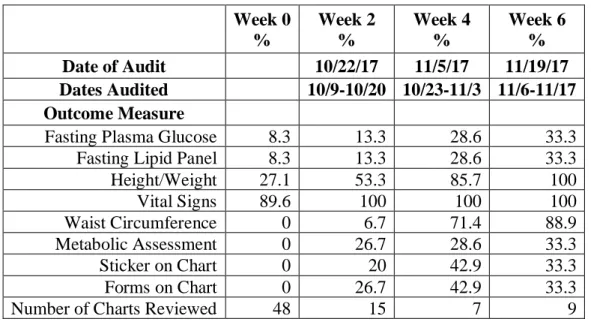
Table 1: Summary of Chart Audit Data
A total of 48 charts met the inclusion criteria and were reviewed for the existence or absence of the specific outcome measures prior to project initiation. Data from the baseline chart audit showed low rates of compliance (Appendix Q). Fasting plasma glucose and fasting lipid profile labs were current on only 8.3% of patients. BMI measurements were completed on 27.1% of patients. Vital signs (blood pressure, pulse) were completed on 89.6% of patients, the highest rate of compliance. None of the charts audited during the collection of baseline data showed evidence of a metabolic assessment or waist circumference measurement.
Week 0 %
Week 2 %
Week 4 %
Week 6 % Date of Audit 10/22/17 11/5/17 11/19/17 Dates Audited 10/9-10/20 10/23-11/3 11/6-11/17 Outcome Measure
Fasting Plasma Glucose 8.3 13.3 28.6 33.3
Fasting Lipid Panel 8.3 13.3 28.6 33.3
Height/Weight 27.1 53.3 85.7 100
Vital Signs 89.6 100 100 100
Waist Circumference 0 6.7 71.4 88.9
Metabolic Assessment 0 26.7 28.6 33.3
Sticker on Chart 0 20 42.9 33.3
Forms on Chart 0 26.7 42.9 33.3
36
This baseline data was shared with stakeholders (office staff and providers) during staff/provider meetings prior to project implementation. Goals for improvement change were established by the respective staff or provider. The office staff identified a goal of 100% compliance for documentation of vital signs, height and weight, and waist circumference. Providers identified a goal of 100% compliance with ordering lab work, metabolic assessment, and 100% compliance of use of toolkit within the project population; and, to also use the toolkit with other applicable patients.
37 Graph 1: Compliance Data
It was important that each individual intervention was measured independently in order to identify potential barriers and points of failure. Provider compliance rates were calculated for each outcome for individual providers and the practice as a whole. Outcome measurement data was documented using run charts and results were displayed at the completion of each of the three chart audits in a central location visible to all staff members (Appendix Q).
Providers were given their individual rates after each audit to show their individual progress and areas for improvement. Each measure was scored independently and if applicable, the results were reviewed to see if components were more likely to completed independently or clustered with other outcomes.
0 0.2 0.4 0.6 0.8 1 1.2
Metabolic
Assessment FastingPlasma Glucose
Fasting Lipid
Panel BMI (H/W) Vital Signs CircumferenceWaist Sticker Forms Used
AAP QI PROJECT
38
CHAPTER 7: DISCUSSION AND IMPLICATIONS FOR PRACTICE Upon completion of PDSA Cycles, evidence of successful implementation included increases in the incidences of compliance with the practice guideline recommendations of metabolic history-taking and assessment, laboratory and vital sign monitoring, and appropriate follow up. By the end of the implementation time period, the outcome measures of BMI and vital signs reached 100% compliance. The outcome measure of waist circumference improved from 0% to 88.9%. The completion of a metabolic assessment increased from 0% to 33.3%.
The use of the standardized metabolic assessment form in the toolkit and the use of the sticker for identification was a new practice, therefore there was no baseline data. Outcome data for these two measures increased from baseline to Week 2 and to Week 4 chart audits, then decreased during Week 6 audit, for a final rate of 33.3% for both measures.
The outcome measures for BMI, vital sign, and waist circumference measure were
39
While the qualitative feedback from the providers and office staff members supported the use of the toolkit, the variations in compliance with each piece of the toolkit did not demonstrate that having these items packaged together made any significant impact on their use. The
increased rates of compliance could be attributed to the increased awareness created by multiple discussions and visual reminders of the project goals. Having a standardized metabolic
assessment and the lab order form included in the toolkit improved compliance rates with each of these measures. While a standardized metabolic assessment is not necessary to be in compliance with the practice guideline recommendations, this form served as a visual reminder and allowed for quick documentation of the patient’s metabolic and family history. The inclusion of the lab order form also served as a visual reminder and increased compliance rates. The main
differences in the compliance rates were with who was assigned the task(s). The office support staff members had the highest rates of compliance and the greatest improvement in compliance rates for the tasks for which they were responsible (vital signs, height, weight, and waist circumference). Provider experience level did not appear to play a role as both the providers with the least and the most years of experience had the lowest rates of compliance.
40
outsourcing this task. This incident highlighted the work-arounds that providers may employ. The value of relationship-building in the Theory of Planned Change Model was exemplified during this exchange: open discussion by staff and providers, honest feedback about
perceived/actual barriers, and resulting behavior change that supported the practice change. This type of interaction is important to stabilize change. The use of this particular model was not successful with all of the individual providers. This speaks to the other internal and external factors that prevent providers from utilizing clinical practice guidelines, much like those found in the literature.
One of the providers involved had initially been very enthusiastic for the project and voiced support for the project and the need for providers to be more accountable for the monitoring of metabolic side effects. Yet, as the implementation ensued, this provider was increasingly challenged by timely completion of documentation. As a result, this provider did not employ the toolkit with any patients during the period of data collection. Discussion with this provider (relationship building) revealed the PMHNP role was new and the quantity of new patients being seen was overwhelming. This highlighted an important consideration in the implementation of practice change. Administrative and clinical staff are seldom at the same experience level and will likely require different amounts of training and support to effectively engage with the change process. Awareness of the differing levels of support was also important to ensure stabilization of change.
41
toolkits supplied to these providers. Only the absolutely necessary forms (metabolic assessment form, lab ordering forms, patient education handout, and sticker) were included in their toolkits in an effort to secure their buy-in, experience the project as less overwhelming and time
consuming. This attempt was unsuccessful, as neither provider implemented the trimmed toolkit.
When office management realized a provider did not value the outcomes of toolkit use and was not going to cooperate or participate in the project, the decision was made to transition patients who met the criteria for the project off of this provider’s caseload. This lack of
willingness to use the established practice guidelines with the project population was considered a quality and safety issue for patient care. Discussion with office management resulted in a solution that maintained high quality and safety for patients and for the office. This exemplifies a management-level decision that promotes effective stabilization of change.
Despite improvements in compliance rates after the implementation of this practice change project, there is still significant room for improvement. There were changes in practice in this setting, but not with every provider, not consistently over time, and not with every patient. These outcomes are supported in the literature (Wiechers et al., 2012). Even though the
compliance rate in many of the studies improved, the rates were not notably higher. The design of the intervention seemed to account for more patient and organization barriers. While many attempts were made to account for barriers at the provider level, it was impossible to mitigate all of them.
42
to complete the forms. Providers felt it was too time consuming to fill out the metabolic assessment and order labs, yet no one utilized the suggestion of scheduling a separate
appointment to focus solely on the toolkit contents. There was not a particular reason identified by providers for not using this strategy. This feedback from providers was congruent with previous studies. None of the providers verbalized that they did not feel like monitoring metabolic parameters was their responsibility nor did they voice concern that monitoring metabolic changes would impact treatment but it is certainly possible that they did feel this way but did not verbalize it.
Despite the perceived barriers, all staff and providers believed it was a good idea to have this type of project because it kept evidence-based practice in the spotlight and provided
reminders for safe practice. This recognition of the value and necessity for practice guidelines did not translate into the consistent use of those guidelines. The disconnect between knowledge and behavior is well supported in the literature. Although use of the Phase I of the toolkit
contents was not yet sustained, positive feedback included having an actual toolkit with all of the necessary information in one accessible folder. The consensus of the staff and providers was that more time was needed to further cement this new process before moving on to Phase II of toolkit implementation.
43
CHAPTER 8: STRENGTHS AND LIMITATIONS OF THE PROJECT There were several strengths of this project. This project was based on high levels of research evidence. It was tailored according to the current resources available at the practice location and composition of the setting. The large quality improvement project was divided into smaller phases to avoid overwhelming participants, encourage buy-in, simplify a larger project, to avoid measuring too many outcomes at once, and to monitor progress with incremental changes before moving on to the next phase. There was sufficient evidence to demonstrate the immediate need for action. Many of the actions involved in the project required little effort to complete. The contents of the toolkit were evidenced-based and tailored to each provider to avoid superfluous steps. The rationale for the inclusion of each part of the toolkit was explained. A reasonable amount of information was introduced at one time and reiterated throughout the study. The outcomes, tasks, and roles, were clearly defined. The outcome measures were measured objectively and not based on self-reported data like some previous studies on provider adherence. The necessary tools and equipment to complete the tasks were readily available and in working condition.
One major weakness of this project was the insufficient mitigation of the productivity-focused culture. It was not enough to encourage the providers to schedule an additional
44
45
CHAPTER 9: SUSTAINABILITY
46
CHAPTER 10: RECOMMENDATIONS FOR THE FUTURE
For this project, streamlining the process may assist in decreasing the feeling that time is a barrier. Implementation of an electronic medical record could greatly assist in this process. Strategic scheduling could also assist with the time barrier. If patients could be identified in the scheduling system, scheduled for a longer appointment that was designated to discuss the toolkit, there would not be as much pressure to rush through the appointment. Strategic interaction with office management to provide education about quality and safety as it relates to established practice guidelines would improve understanding of potential liability and promote discussion about solutions for system change.
This project highlights several other areas for future study. Because of the seriousness of the potential side effects and long-term consequences, there are ethical concerns regarding standards of care and safe practice by providers. Those in management roles need guidance in addressing these issues with their employees to maintain high quality and safe care delivery. Other studies could look at cost-models like those used in the treatment of asthma to explore the creation of protocols that would include the addition of a nurse to the practice who could execute standing orders and assist with following practice guidelines.
47
48
APPENDIX A: MONITORING PROTOCOL FOR PATIENTS ON SGAS
Monitoring Protocol for Patients on SGAs*
Baseline 4 Weeks
8
Weeks 12 Weeks Quarterly Annually
Every 5 Years Personal/Family
History X X
Weight (BMI) X X X X X
Waist Circumference X X
Blood Pressure X X X
Fasting Plasma
Glucose X X X
Fasting Lipid Profile X X X
Note. SGA = Second-Generation Antipsychotics; BMI = Body Mass Index. *More frequent assessments may be warranted based on clinical status.
Adapted from American Diabetes Association, American Psychiatric Association, American Association of Clinical Endocrinologists, & North American Association for the Study of Obesity. (2004). Consensus development conference on antipsychotic drugs and obesity and diabetes. Diabetes Care 2004; 27: 596-601.
49
APPENDIX B: DATABASE SEARCH STRATEGY
Date Search Engine Search Terms Search Limits Results
9/18/16 CINAHL
Atypical antipsychotic* OR second generation antipsychotic* AND discontinua*AND (child* OR adolescen*)
Sept 2006 – Sept 2016,
English 1,150
9/18/16 PubMed
(Atypical antipsyhotic* OR second generation antipsychotic*) AND discontinua* AND (child* OR adolescen*)
36
9/18/16 PsycINFO
Atypical antipsychotic* OR second generation antipsychotic* AND discontinua*AND child* OR adolescen*
2006-2016, English 210,398
9/18/16 CINAHL weigh* AND gain* AND child* OR adolescen* AND consequenc* OR effec*
Sept 2006 – Sept 2016, English, all child (age)
101,449
9/18/16 CINAHL weigh* AND gain* AND child* OR adolescen* AND consequenc* OR effec* AND iatrogen*
Sept 2006 – Sept 2016,
English, all child (age) 5,438
9/18/16 CINAHL iatrogen* ANDweigh* AND gain* Sept 2006 – Sept 2016,
English 12
9/18/16 CINAHL
weigh* AND gain* AND child* OR adolescen* AND consequenc* OR effec* AND iatrogen* OR adverse
Sept 2006 – Sept 2016, English, all child (age)
45,794
9/18/16 CINAHL
weigh* AND gain* AND child* OR adolescen* AND atypical antisphyschotic* OR second generation antipsychotic*
Sept 2006 – Sept 2016, English, all child (age)
1,909
9/18/16 CINAHL side effect* OR adverse AND effect* OR consequence* AND treatment* OR relationship
Sept 2006 – Sept 2016, English
361,696
9/18/16 CINAHL patient AND attitude OR percep* AND treatment AND compliance OR adherence
Sept 2006 – Sept 2016,
English 75,874
10/1/16 Clinical Key Weight atypical antipsychotic 2,980
10/1/16 Clinical Key Weight atypical antipsychotic Guidelines, full text articles 1690 10/1/16 Clinical Key diet exercise weight child* adolescent Guidelines, full text articles 1947 10/1/16 Clinical Key diet exercise weight child* adolescent parent Guidelines, full text articles 1330
10/1/16 Clinical Key diet exercise weight child* adolescent atypical
antipsychotic Guidelines, full text articles 90
10/1/16 Joanna Briggs “weight management” OR diet OR exercise AND
child* OR adolsce* 113
10/1/16 PubMed diet OR exercise OR "weight management" AND
child* OR adolescen* AND parent* AND theor* 4394
10/15/16
National Guideline Clearinghouse
Atypical antipsychotic 27
10/15/16
National Guideline Clearinghouse
Second generation antipsychotic 53
10/15/16
National Guideline Clearinghouse
Bipolar AND children 28
10/15/16 TRIP Bipolar disorder children adolescents Guidelines 210
10/15/16 PubMed bipolar disorder* children adolescent* Guidelines, practice
guidelines 17
10/15/16 CINAHL Bipolar AND children OR adolescen* Practice guidelines,
2006-2016 1
10/25/16 PubMed
(((((((((((provider*) OR prescribe*) OR clinician) OR physician) OR practitioner) AND complian*) OR use) OR utiliz*) AND lab*) OR monitor*) AND atypical antipsychot*) OR second generation antipsych
![[HOK], A NEW YEAST NON-MENDELIAN TRAIT, ENABLES A REPLICATION-DEFECTIVE KILLER PLASMID TO BE MAINTAINED](data:image/gif;base64,R0lGODlhAQABAIAAAP///wAAACH5BAEAAAAALAAAAAABAAEAAAICRAEAOw==)