1
NAME:
TUMUSIIMIRE EVAS
STUDENT NUMBER: s190503
COURSE CODE
:
MIS 300
A study on social protection programs for the poor children in Uganda:
A case of the Universal Primary Education (UPE) Program.
Thesis submitted for the Master‘s Degree in International Social welfare and
Health Policy
Oslo and Akershus University College of Applied Sciences
Faculty of Social Sciences
2
Abstract
The government of Uganda has implemented various forms of social protection programs focusing on different social groups within the population. The Universal primary education (UPE) program has been selected among others, for this thesis, as one of the social protection programs focusing on the poor children. The program was introduced in January 1997 and has been implemented hitherto, with a view to enrolling all children of primary –school age, addressing concerns about inequity in education on the basis of socio-economic status and gender, and improving education quality outcomes.
The overall objective of the study is to examine the educational opportunities for the poor children that have come along with the introduction and subsequent implementation of UPE program in Uganda; the challenges facing the implementation of the program; and the strategies the government of Uganda has put in place to address these challenges. The findings of the study indicate that the UPE program has increased access to and affordability of basic education by children most of whom from poor families who had been previously not attending school. Consequently, there was sudden massive primary school enrollment from 2.5 million in 1996 to 5 million in 19997 and 8.3 million in 2012. Other educational opportunities that have come along with the introduction and subsequent implementation of UPE program include reduction in primary school dropout for the first six years before it started rising again in the recent past; achieving gender parity in school enrollment; and creating educational opportunities for children with various categories of special needs. The findings further indicate that despite these opportunities, the UPE program is facing challenges that are affecting its effective implementation. The major challenges include declining quality of primary education, increasing rates of school dropout, limited financial resources, corruption and mismanagement of financial resources (UPE funds). Amidst these challenges, the government of Uganda through the Ministry of education and sports has put in place various strategies to address these challenges in order to enable UPE program achieve its goal and objectives. These include introduction of customized performance targets guidelines in UPE schools to address the challenge of declining quality of education, introduction of several programs to address the challenge of rising school dropout rates, increasing budget for primary education over the years though it has been reduced in the recent past to finance the Universal secondary education (USE) program, and devising mechanisms for fighting corruption in UPE program implementation.
The thesis proposes recommendations that would keep the UPE program on track and be able to achieve its goal and objectives. These include imploring the government through ministry of education to strive and strike a balance between quantity (in terms of massive enrollment) and quality of education; double efforts in mitigating increased rates of school dropout; increase and maintain sufficient budget for both UPE and USE programs without having one program affecting implementation of the other; and use a multi-stakeholder approach in fighting corruption in the implementation of UPE program.
3
Table of contents page
Abstract……….………1
Acknowledgement ... 4
1.1 Introduction ... 5
1.2 Background to the study ... 7
1.3 The Universal Primary Education (UPE) program in Uganda ... 12
1. 4 Objective of the study ... 14
1.5 Research Questions ... 14
1.6 The Theoretical Framework ... 15
2. Methodology and data sources ... 18
2.1. Methodology ... 18 2.2 Data Sources ... 19 2.3 Data analysis ... 19 2. 4 Limitations ... 20 2.5 Ethical Approval ... 20 3. Results / Findings ... 20
3.1 Educational opportunities for the poor children that have emerged from the introduction and implementation of the UPE program in Uganda ... 21
3.1.1 Access to and affordability of primary education ... 21
3.1.2 Reduction in primary school dropout rates ... 24
3.1.3. Gender parity in primary education ... 25
3.1.4 Education for children with special needs ... 28
3.2 Challenges faced in implementing the UPE Program in Uganda ... 29
3.2.1 Declining quality of education:- ‗quality versus quantity‘ ... 29
3.2.2 Increasing school dropout rates ... 32
3.2.3 Lack of manpower and facilitation for school inspection ... 34
3.2.4 Corruption and financial resource mismanagement……….35
3.3. Strategies put in place by government of Uganda to address the challenges facing implementation of UPE program. ... 36
3.3.1 Introduction of customized performance targets guidelines in UPE ... 36
3.3.2 Mitigating school dropout rates. ... 37
3.3.3 Increased budgetary allocation to primary education ... 38
3.3.4. Fighting against corruption in the implementation of UPE program... 40
4. Discussion of findings ... 41
5.1. Conclusions ... 47
5.2. Recommendations ... 49
4
Acknowledgement
I am so glad that I have finalized this master thesis which marks the end of my master degree in International Social welfare and health policy. I want to extend my sincere appreciation to all those who have made this possible for me, especially Dr. Erika, Ms. Ariana and my supervisor Prof Ivar Lodemel for all the necessary guidance and advice throughout the preparation of this thesis. I further thank Prof Ivar for striving to read my thesis and giving me his various sets of comments which have added more value to my thesis.
My special thanks go to my family for the invaluable support of all kind that kept me strong and encouraged till the last minute of this work, in particular I want to surely thank my dear husband for all the sacrifices he made towards my study in general, pieces of advice, academic guidance, taking care of the family during my absence, and the love he maintained for me among many other things.
Thanks also go to my class mates and colloquium group members at HIOA for the fruitful discussions and exchange of ideas during the time of thesis preparation seminars, thesis proposal presentation seminars, and writing the final thesis.
Above all, the glory goes back to the Almighty God who blessed me with the scholarship, kept me healthy and alive to be able to accomplish the entire MIS programme.
5
1.1 Introduction
The concept of social protection has been widely defined by various scholars, public and private organizations and international agencies. However, it remains a concept with a range of varying but related and familiar definitions that is both in the literature and among policy-makers responsible for implementing social protection programs.
Holzmann and Jorgensen (2001, 530) define social protection as ―public interventions to assist individuals, households, and communities better manage risk, and provide support to the critically poor‖.
The International Labour Organization (ILO) on the other hand, defines social protection by basic rights. It is defined by ―entitlement to benefits that society provides to individuals and households through public and collective measures – to protect against low or declining living standards arising out of a number of basic risks and needs‖ (Ginneken, 2003).
Social protection is also defined as ―all public and private initiatives that provide income or consumption transfers to the poor, protect the vulnerable against livelihood risks, and enhance the social status and rights of the marginalized; with the overall objective of reducing the economic and social vulnerability of poor, vulnerable and marginalized groups‖ (CSO, 2008).
A broader conceptualization of social protection has also been expounded by Barrientos and Shepherd (2003), through their attempts to map out key features of new perspectives on social protection. They argue that consensus is emerging around the view that social protection can provide an appropriate framework for addressing rising poverty, vulnerability and inequality in the context of current conditions in poorer countries: ―social protection focuses on poverty reduction and on providing support to the poorest; seeks to address the causes of poverty, and not simply its symptoms; focuses on risk and vulnerability as the main cause of poverty; acknowledges the multidimensional nature of poverty; draws attention to informal social networks, micro-insurance, and
intra-6
household support‖ (CPRC, DRT & CCFU, 2009, 12). From this conceptualization, the Chronic Poverty Research Centre (CPRC), Development Research and Training (DRT) and Cross-Cultural Foundation of Uganda (CCFU) describe Social protection as important to protect human rights and as a set of policies and programs designed to prevent, mitigate and raise the ability of poor people to cope and recover from the major hazards they face; to contribute to their emergence from extreme poverty and insecurity; and to prevent the inter-generational transmission of such poverty (ibid)
In the Ugandan context, different sets of stakeholders perceive differently the definition and boundaries of social protection. For example: (i) Some stakeholders adopt a very broad approach, including even universal primary education (UPE), microcredit and job creation programs, as well as safety nets for groups that may be vulnerable to shocks, but are not usually regarded as among the poorest strata of society (such as coffee farmers facing falling prices for their produce); ((ii) Others see social protection narrowly, essentially as a new label for old-style social welfare provided to conventionally defined ‗vulnerable groups‘ (such as People living with HIV/AIDS; People with disabilities, widows, orphans); (iii) A more ‗political‘ or ‗transformative‘ view extends social protection to arenas of equity, empowerment and ‗social rights‘, rather than confining the definition to targeted income and consumption transfers. For the National Development Plan (2010-2015), social protection entails all public and private interventions that address risks and vulnerabilities associated with being or becoming poor.
Drawing from all the above definitions and conceptualizations of social protection, it can be mentioned that social protection is the set of all initiatives, both formal and informal, that provide social assistance to extremely poor individuals and households; social services to groups who need special care or would otherwise be denied access to basic services; social insurance to protect people against the risks and consequences of livelihood shocks; and social equity to protect people against social risks such as discrimination or abuse. The key objective of social protection is to reduce the vulnerability of the poor, and a full range of social protection measures may include direct income transfers to vulnerable groups, safety nets in case of collapses in
7
livelihoods, regulatory change and sensitization campaigns to protect the rights of socially and economically disadvantaged groups (CPRC, DRT & CCFU, 2009; CSO 2008; Fitzpatrick et al. 2006; Ginneken, 2003; Devereux, S. et al. 2002; Holzmann and Jorgensen, 2001).
For purposes of this thesis, social protection is regarded as all formal or informal government and private interventions taken to protect poor and vulnerable groups of people from socio-economic risks and vulnerabilities and promote their livelihood in order to live a life of security and dignity.
1.2 Background to the study
Modern social protection emerged since the late 19th century and the modern welfare state in Organization for Economic Cooperation Development countries developed since the Mid-20th century. In developed countries risks like unemployment, sickness, disability and old age are covered under social insurance scheme which is universal. This has minimized people‘s exposure to poverty resulting from such risks (Overbye. 2005). Though such schemes exist in both newly industrialized and developing countries, they only cover small sections of citizens (those working in formal sector).
Social protection is globally recognized as a basic right and not a mere ―welfarist‖ approach to addressing risk and vulnerability. This can be witnessed in a range of international human rights instruments and national constitutions. For example the Universal Declaration of Human Rights, 1948, guarantees everyone the right to social security in the event of unemployment, sickness, disability, widowhood, old-age or other lack of livelihood in circumstances beyond his control; The International Covenant on Economic Social and Cultural Rights, 1966, obliges Governments to put in place measures to ensure access to social security, including social insurance, for everyone; The Convention on the Rights of the Child, 1989, compels Governments to help children who are poor and in need either directly or through their guardians. The 1995 Constitution of the Republic of Uganda provides a firm basis for social protection interventions. Article 32 of the Constitution states that ‗notwithstanding anything in this
8
Constitution, the State shall take affirmative action in favour of groups marginalized on the basis of gender, age, disability or any other reason created by history, tradition or custom, for the purpose of redressing imbalances which exist against them.
The above international human rights instruments and national constitutions emphasize the linkage between social protection and the realization of people‘s rights. The social protection policies and programs can thus support the realization of human rights for the poorest and most vulnerable and this is particularly the case when the range of social protection instruments such as pension schemes, food aid, targeted cash transfers or social funds are seen not as based on humanitarian concerns or charity but as grounded in social justice and the equal rights and entitlements of those that benefit from Social Protection (CSO, 2008).
Social protection has also been recognized by International agencies, donors, Governments and civil society organizations as playing a vital role in preventing and reducing poverty, and promoting development. The ILO members meeting the 101st session of the international labour conference in 2012 in Geneva re- affirmed that the right to social security is a human right and acknowledged social security as an important tool to prevent and reduce poverty, social inequality, social exclusion and social insecurity, promote equal opportunity, gender and racial equality, and support the transition from informal to formal employment (ILO 2012, 2). Member states were encouraged as quickly as possible to maintain their social protection floors comprising basic social security guarantees in accordance with respective national circumstances. The social protection floors should comprise among other things, income security for children at least at a nationally defined minimum level, providing access to health care and nutrition, basic education, and any other necessary goods and services (ibid, 8). In designing and implementing national social protection floors , ILO member states should among other things, promote productive economic activity and formal employment through considering policies that promote education, vocational training, productive skills and employability (ILO 2012, 10).
9
According to United Nations (UN 2012, 3), social protection programs tackle multiple dimensions of poverty and deprivation (decent work, education, health care, food security, income security) and can therefore be a powerful tool in the battle against poverty and inequality. Social protection can play a fundamental role in creating more inclusive and sustainable development pathways. In its functions of protecting, preventing, promoting and transforming social protection enhances human capital productivity by for example increasing access to social services like education and health. This reinforces productivity and participation in the labour market and reduces vulnerability and thus breaking the problem of inter-generational poverty cycle (Barrientos and Hulme, 2008). In the absence of social protection, people, especially the most vulnerable, are subjected to increased risks of sinking below the poverty line or remaining trapped in poverty for generations (UN 2012, 3).
Social protection is an important instrument for the pursuit of at least six (6) of the eight present Millennium Development Goals (MDGs) by ensuring universal access to key essential services in quality basic and maternal health care, education, nutrition and environmental health (ibid). For example, achieving universal primary education is the Millennium Development Goal 2 (UN 2012; UNDP, 2013).
In developing countries, Social protection originally focused on short term protective safety nets, mechanisms designed to protect people from the impact of shocks such as floods, drought, unemployment among others. It has now expanded to encompass four types of interventions of protective (recovery from shocks), Preventive (mitigating risks in order to avoid shocks), promotive (promoting opportunities) and transformative (focusing on underlying structural inequalities which give rise to vulnerability) (Barrientos and Hulme, 2008).
In Uganda, like in most Sub-Saharan Africa, social protection was traditionally provided by the local institutions (Mutual arrangements), clan/kinship members and extended families. It is believed that pre-colonial Africans lived in mutual support networks, extended family and clan groups. ‗Reciprocity and social cohesion were the pillars of
10
traditional social protection‘. However this has been eroded by the HIV/AIDS epidemic, the civil wars due to the death and displacement of individuals, families and communities at large (Lwanga et al, 2008). Globalization has of lately also contributed to the breakdown of solidarity within families and thus affecting their obligation of supporting each other. In addition, increased poverty rates, social risks and vulnerability have overwhelmed and over stretched extended families in provision of social protection to the very poor (Maes, 2003; UNICEF, 2009). Inevitably, the government‘s formal social protection programs have largely ‗crowded out‘ the traditional informal arrangements in proving social security to various categories of poor and vulnerable people.
Since 1997, Uganda has been implementing poverty reduction programs under the Poverty Eradication Action Plan (PEAP 1997- 2008) which was recently transformed into the National Development Plan (NDP 2010-2015) whose theme is ―Growth, Employment and Prosperity for All‖ (ibid). Despite Uganda‘s promising economic growth rate and poverty reduction efforts1, social exclusion of the most vulnerable groups and communities has continued unabated. Income poverty and inequality is one manifestation of this problem. According to the recent poverty study, 24% of the total population of Uganda (about 7 million people) lives below the poverty line and are unaffected by current development interventions. The most affected include but are not limited to people with disabilities, widows, the elderly with no social support; orphaned and neglected children; street children; unemployed youth, those affected by HIV/AIDS (especially in instances where the bread winner is ill or has died); the long-term sick; and people living in isolated communities and marginal areas, particularly those which are prone to disasters; and those who often rely on own account agriculture or casual jobs (UNHS 2009/2010; CPRC&DRT, 2005). Thus, people are poor and vulnerable due to socio-economic characteristics such as gender, age, disability, household composition, ill-health and employment status. Consequently, poverty is being tied to the lack of access to equal opportunities, inequitable distribution of resources, and the marginalization and disempowerment of some categories of people.
1 Head count poverty levels in Uganda have been gradually falling from 56% in 1992, to 35% in 2000 and
11
Uganda has identified Social protection as an intervention to address the socio-economic vulnerabilities of these vulnerable groups. It should be noted that the government of Uganda recognized the fact that the conventional existing social protection / security programs such as the Pensions Scheme and the National Social Security Fund (NSSF) reach only a few people, and they exclude the poor. They target only a small percentage of the population who work in the public and private formal sectors (less than 10 percent of the workforce). This means that the majority of people, especially those who work in the agricultural and informal sectors, are excluded from such schemes, which makes it necessary for alternatives to be provided for the larger and less secure majority- the poor. Consequently, the government of Uganda with support from development partners and civil society organization has been implementing a wide range of social protection programs but with varying levels of success, or even consistency. The most prominent of these include the Universal Primary Education (UPE) program; the School Feeding Program in primary schools in Northern and North Eastern districts of Uganda supported by the World Food Program; the National Minimum Health Care Package; Abolition of fees for healthcare services; the Community-led HIV/AIDS Initiative (CHAI); the Northern Uganda Social Action Fund (NUSAF); the Community Based Rehabilitation program for Persons with Disabilities (MGLSD 2013; Murungi 2011; CSO 2008; Kasaija 2007). The most recent is a direct income support pilot program known as the Social Assistance Grants for Empowerment (SAGE) which comprises of two grants schemes – a Senior Citizens Grant and a Vulnerable Family Grant under the Expanding Social Protection (ESP) Program implemented by the Ministry of Gender, Labour & Social Development with the overall goal of reducing chronic poverty and improve the life chances for poor men, women and children in Uganda supported by the Department for International Development (DFID), Irish Aid, UNICEF (MGLSD 2012; Murungi, 2011).
There is a strong legal and policy basis for Uganda to design programs / interventions to enhance delivery of social protection services in the Country. Uganda is a signatory to the Universal Declaration of Human Rights, 1948; the government of Uganda has also
12
ratified the International Covenant on Economic Social and Cultural Rights, 1966, and the Convention on the Rights of the Child. At the regional level, Uganda has endorsed the Livingstone Call to Action, 2006, which obliges Africa states to put in place plans for the implementation of direct income support programs. Uganda is also a signatory to the African Union Social Policy Framework, 2008, which calls on member governments to recognize that social protection is a state obligation, with provisions in national legislations. Uganda also ratified African Charter on Rights and Welfare of the Child, a regional instrument promoting rights and responsibilities of children. In the same vein, Uganda was among the countries that made a commitment to the ―Plan of Action of A World Fit for Children 2002‖ – A World Fit For Children (WFFC) is one in which all children get the best possible start in life and have access to quality basic education and in which all children have ample opportunity to develop their individual capacities in a safe and supportive environment (MGLSD 2006, 1).
At the national level, the 1995 Constitution of the Republic of Uganda provides a firm basis for social protection interventions. Chapter 4 of the Constitution provides for the following entitlements: Right to education (Article 30); Affirmative action for marginalized groups (Article 32); Protection of rights of minorities (Article 36), among others (1995 Uganda constitution). In addition various policies and Acts (Laws) have been formulated in support of social protection. The notable ones particularly for children include the Children Act cap 59 (1997); the National policy on elimination of child labour (2006); and the National orphans and other vulnerable children policy (2004).
1.3 The Universal Primary Education (UPE) program in Uganda
As earlier mentioned above, the focus of this thesis is social protection programs for the poor children. Particular focus is on the Universal Primary Education program. The Universal Primary Education (UPE) program is one of the fundamental education sector reforms the government of Uganda has made in the recent past. UPE was introduced in January 1997 and has been implemented hitherto, with a view to enrolling all children of primary –school age, addressing concerns about inequity in education and improving quality outcomes (MoES 1999, 9-10; 2005, 3; Bategeka, et al. 2004 xv).
13
The introduction and subsequent implementation of UPE in Uganda was consistent with global and continental movements / campaigns for universal access to basic education as a fundamental human right as well as a pre-requisite for socio-economic development (Mukunya 2007, 233; Nansozi 2002, 210). The UPE program embraced the proclamation by the Universal Declaration of Human Rights 1948 (Article 28), of the right of everyone to education. UPE was also popularized by African leaders at a conference for African Ministers of education in Addis Ababa in 1961. The conference proclaimed that access to education not only was a fundamental right but was also Africa‘s most urgent and vital need. The leaders called for universal, compulsory, free primary education throughout the continent by 1980 (Nansozi 2002, 210). UPE is also consistent with the United Nations Millennium Development Goals particularly Goal 2- Achieving universal primary education (www.undp.org/mdgs).
The UPE program was launched in January 1997 by President Yoweri Museveni and in February 1997 the first term of the new school began with the first entrants. The program was conceived within the national goals of poverty eradication, as ultimate goal. It was seen as a tool for achieving government economic, social and political objectives: (i) Making basic education accessible to the learners and relevant to their needs as well as meeting national goals; (2) Making education equitable in order to eliminate disparities and inequalities; (3) Establishing, providing and maintaining quality education as the basis for promoting the necessary human resource development; (4) Initiating a fundamental positive transformation of society in the social, economic and political fields; and (5) Ensuring that education is affordable by the majority of Ugandans by providing, initially, the minimum necessary facilities and resources, and progressively the optimal facilities, to enable every child to enter and remain in school until they complete the primary education cycle (MoES 1999, 10; 2005, 3; Bategeka et al, 2004, 1).
In order to achieve the above objectives, government ensured continued fulfillment of its obligations and commitment to providing the following: Pay tuition fees for four children per family; buying instructional materials in the form of text books; pay teachers‘
14
salaries; train teachers; and construction of basic physical facilities in form of classrooms, laboratories, libraries and teachers‘ houses, while local authorities and communities would make additional input especially in the form of labour for construction (MoES 1999, 10; Bategeka et al. 2004, xvii; Nansozi 2002, 218, Mukunya 2005, 233).
The choice to support four children per family was largely based on the understanding that it was the number that the government budget could afford. It was assumed that identifying the four children was not going to be a problem at household level and that parents would comply with paying the cost of the ‗extra‘ number of children. However, identifying the four children per family proved a difficult task which forced the government to remove the ceiling. This made access to UPE open so that every child who was interested in schooling was allowed to enroll (Bategeka et al. 2004, xvii).
1. 4 Objective of the study
To evaluate and analyze educational opportunities that have emerged from implementing one of the social protection programs for the poor children – the Universal Primary Education using a comparative situation analysis of the pre and post UPE program in Uganda; challenges facing implementation of the UPE program, and strategies being taken to address these challenges.
1.5 Research Questions
Are there any educational opportunities for the poor children that have emerged from the introduction and subsequent implementation of the UPE program in Uganda?
What are some of the challenges facing the implementation of UPE program in Uganda? And what strategies has the government of Uganda put in place to address these challenges?
15
1.6 The Theoretical Framework
This study is premised on the theoretical framework of critical theory. It presents the tenets, basic ideas, assumptions and understandings of critical theory and its relevancy in explaining the subject matter- the implementation of the UPE program in Uganda. Critical theory is a broader theoretical umbrella associated with the works of the original members of the Frankfurt institute of Social Research and subsequently extended to scholars who continued that tradition. Various essays of the philosophers notably Max Horkheimer (1937/72), Herbert Marcuse (1937/68), Theodor Adorno (1969/76), Jurgen Habermas(1965/72; 1981/87), Karl-Otto Apel(1977) Albrecht Wellmer(1969/71), Roberto Mangabeira Unger(1975), and Alvin Gouldner (1970) were instrumental in developing, popularizing, re-defining / re-developing, and reinforcing the theory over the years since 1930s hitherto (Delanty and Strydom 2003, 207-276). Critical theory emerged from the attempt of the members of Frankfurt Institute to revise both the Marxian critique of capitalism and theory of evolution in order to confront the new political and social conditions which had evolved since the death of Karl Marx. In the process, ‗critical theory of society emerged to deal with those aspects of society that Marxism had neglected or downplayed (Bronner and Kellner 1989, 1).
Welton (1995) defines critical theory as ―a theory of history and society driven by a passionate commitment to understand how ideological systems and societal structures hinder and impede the fullest development of humankind's collective potential to be self-reflective and self-determining historical actors‖ (Sumner 2003,3). Accordingly, the central concern of critical theory is the explanation of the contradictions between ideology and reality as the former depicts the false unity of the two. Ideological claims such as existence of freedom, equality, and democracy among others are contrasted with social reality indicating the contradictory elements emerging from the emancipatory dimensions of ideology and constraints of historical situation. Employing this process of comparison, critical theory elucidates the difference between the ideological assumptions of society and its actual organization (ibid).
16
As a social theory, Critical theory ―aims to give us knowledge of society: - its structure, dynamics and life-world thereby enabling us to determine what our true interests are‖ (Nielsen 1992, 265 as cited in Sumner (2003, 3). In essence, Critical theory shines a critical light on the workings of society and finds them dominated by the interests of a wealthy elite who have succeeded in convincing most people that those elite interests are also the interests of society at large. In spite of this domination, Critical theorists argue that humans can change reality and that the necessary conditions for such change already exist (ibid). In this way, as the name suggests, critical theory is both critical and emancipatory- critical in the sense that it critiques capitalist society and emancipatory in the sense that it imagines something better for human beings. These interests are underscored by the earlier mentioned definition of Critical theory by Welton (1995). Critical theory as a paradigm that frames the way we look at the world involves the cultivation of a critical attitude on all levels. Indeed, Critical theorists are convinced that the future of humanity depends on the existence of the consciously critical attitude, which Horkheimer (1972) particularly conceived as ―part of the development of society. The emancipatory worldview of critical theory includes vital human agency and creativity (ibid).
According to Val Larsen and Newell D. Wright (1993) while quoting Murray and Ozanne (1991), critical practitioners should intervene in the lives of others, acting as liberators, because they perceive the conditions and interests of the oppressed, and subjugated better than the latter themselves and are thus positioned to stimulate them to discover or create just and reasonable solutions for their practical problems. This is exemplified by the works of Critical theorists of the first generation notably Horkheimer, Adorno,and Marcuse who undertook the reconstruction unified by two value judgements-‗human life is worth living‘, ‗human life can be improved‘ -and by a shared terminal goal, their desire to create ‗a form of social organization that makes possible freedom, justice, and reason‘ (ibid, 134). This amounts to a claim on the part of the critical practitioner of special insight into social ethics and what Alvin Gouldner (1970) calls ‗moral sociology‘ (Delanty and Strydom 2003, 269).
17
Critical theory and scientific research / research program
The critical-emancipatory orientation of critical theory can ably translate into research. Critical theory provides a theoretical framework for scientific social research. Its importance in research is that it provides a potentially more useful and politically relevant alternative than approaches such as existentialism, post-structuralism, phenomenology and post-modernism because it maintains a non-dogmatic perspective which is sustained by an interest in emancipation from all forms of oppression, commitment to freedom, happiness, and a rational ordering of society. The theory is generally intrinsically open to development and revision of society or social order. It further seeks an emancipatory alternative to the existing order (Sumner 2003, 4).
As a research methodology, critical theory adopts an overtly critical approach to inquiry. It precedes with an attitude of suspicion, calling into question not only the data itself, but also the researcher, the research design, and the interpretation of findings. Every part of the research process comes under critical scrutiny in order that it neither proceeds from taken-for-granted assumptions that serve elite interests, nor result in findings that reinforce the status quo (ibid). It firmly asserts that all research serves certain interests, and that these interests are seldom clarified by traditional forms of research. Critical theory not only chooses to serve critical-emancipatory interests, but also demands that all researchers confront the question of whose interests their research serves (ibid).
Kincheloe and Mclaren (1994) cited in Michael Crotty (1998, 157-158) and (Dryzek 1995, 99) present a picture of ‗criticalist‘ researchers and theorists. They believe that ‗criticalists‘- people who use their work as a form of social or cultural criticism seek to understand the ideologically distorted subjective situation of some individual or group; explore the forces that have caused that situation; and show that these forces can be overcome through awareness of them on the part of the oppressed individual or group in question.
All in all, critical theory research aims to increase our awareness of the political nature of social phenomena and to develop the ability of researchers to reflect critically upon those taken-for-granted realities which they are examining and of which they are also — as
18
members of society — an inevitable part (Alvesson & Sköldberg ( 2000) as cited in Sumner (2003, 5). Another important aspect of critical theory research is its ability to assimilate other research programs.
I find critical theory relevant to this study because its tenets and explanations are applicable in understanding the way UPE program is implemented, the kinds of various researches that have been conducted about its implementation using a critical approach, and the way its implementation has attracted various sections of the public who strive to keep it on track for the benefit of the marginalized poor citizens- its prime beneficiaries. Since its inception, the public has been keen on how UPE program functions, and where it seems to go off track, various actors- the government officials, civil society, education practitioners, parents, school management committees and the general public strive to keep it on track with belief that they can change reality and that the necessary conditions for such change exists. This implies that the implementation of the UPE program has involved the self- cultivation of a critical attitude among different sections of the public. The argument is that the marginalized groups such as the poor for which programs are designed like the UPE, usually lack the voice to champion their grievances, and this calls for critical practitioners including critical researchers to intervene in the lives of others, acting as liberators, because they perceive the conditions and interests of the oppressed, and subjugated better than the latter themselves and are thus positioned to stimulate them to discover or create just and reasonable solutions for their practical problems.
2. Methodology and data sources 2.1. Methodology
The study is largely qualitative in nature and is based on literature review of secondary data. It generally explores issues, understands a phenomenon and answers questions (Chambliss and Schutt. 2010). Literature review involves evaluation of information in the area of the research topic. This has been done by carrying out a comprehensive search through online databases and other relevant websites by clearly and precisely stating the questions that have been answered by the study. This review makes it possible to
19
examine a number of texts and determine where there is short of knowledge in the area of study (Ibid).
The study also employs both comparative and evaluative research designs. The comparative research design is employed to compare the pre and post UPE program implementation to establish if there are any substantial changes in primary education while focusing mainly on education opportunities for the poor children that could have come along with the implementation of UPE program. On the other hand, evaluative research design is employed to establish whether or not the UPE program is keeping its promises as outlined in its goal and objectives especially those focusing on the poor children. A critical approach is used here to establish the effectiveness of the UPE program implementation in relation to its goal and objectives.
2.2 Data Sources
Review of literature on social protection and Universal primary education program in Uganda has been done through journals, national and international policies. In addition, literature review includes previous research that has been done on social protection and Universal primary education in Uganda and elsewhere. These documents have been accessed from databases of advanced search engines like BIBSYS, EBSCO, Google scholar and ScienceDirect. The key words used during the search include social protection, universal primary education, poor children, and Uganda. I also visited the websites of Ministry of Gender, Labour, and Social Development (MGLSD) to access some of the documents on the social protection programs in Uganda. I also visited one primary school in Uganda under the UPE program and I interacted with some of the teachers about the functioning of UPE Program.
2.3 Data analysis
Content analysis has been applied in assessing the content of the data. It has been used for making inferences by systematically identifying key characteristics of the written text and arrange them into common themes or categories. Most of these categories arose in the process of reading the data. This method looks at the number of times a particular concept appears in the text (Tonkiss F. 2004).
20
2. 4 Limitations
The fact that I did not conduct an extensive field work/ interviews, I could not be able to get first-hand / primary data to supplement secondary data. Thus the study is largely based on secondary data which could have lacked up to date data on the one hand while on the other, searching for secondary data also affects the scope of my findings/results.
After having left HIOA and went back home, I experienced difficulties in accessing internet due to regular electricity blackouts / load shedding. This disrupted the search process and eventually delayed completion of thesis writing.
2.5 Ethical Approval
Since I have done literature review from online databases which I have access to, I did not therefore need any approval. Nevertheless, all sources of data used have been duly acknowledged in the references section.
3. Results / Findings
This section presents the results / main findings of the study with reference to study objective and research question. The first subsection presents the findings on the first research question;- Are there any opportunities for the poor children that have emerged from the introduction and implementation of the UPE program in Uganda? Findings are presented using a comparative situation analysis between pre and post UPE program period.
The second sub-section presents findings on the second research question;- what are the challenges encountered in effective implementation of UPE program in Uganda, and what strategies are being taken by the government of Uganda to address the above challenges. The findings are presented separately into two parts- first, the challenges and later, the strategies to address them.
21
3.1 Educational opportunities for the poor children that have emerged from the introduction and implementation of the UPE program in Uganda
3.1.1 Access to and affordability of primary education
Education is regarded as a means of fighting poverty and reducing vulnerability and it is one of the top priorities for children that can help them to reach their potentials and become responsible and productive citizens (UNHS, 2005/06). It also provides a high standard of living, access to more and better resources and can provide opportunities that otherwise might not be available to help raise people out of poverty. However it is so difficult to obtain education when living in poverty due to lack of resources and access to opportunities moreover it‘s a fundamental human right (J. Curley et al , 2009 ). Indeed, these were the opportunities that a great number of children from poor households were missing before the introduction and implementation of Universal primary education program in Uganda. Because acquiring education requires substantial individual investments, educational opportunities were limited for the poor due to credit constraints. Majority of the children of school- going age from poor households very often were not attending school at all, and those who were attending were dropping out of school due a number of reasons but mostly high cost of education. The high cost of education forced many parents to choose between education and other competing needs (Betegeka et al. (2004, xvi).
Various sets of literature on UPE in Uganda are consistently in agreement that before the introduction of UPE program, primary school gross enrolment was as low as 2.5 million pupils by 1995/1996 (Mukunya 2007; UNHS 2005/06; MoES 2005; 1999; Bategeka, et al. 2004; Nansozi 2002; 1999, 9-10; 2005, 3; Bategeka, et al. 2004). Yet the population of school age going children was about 5 million (UNHS 2005/06). The Uganda National Household Survey 2005/06 Report revealed a number of reasons why children between 6 -12 were not in school.
22
Table 1. Reasons for not attending primary school by the children of school –age going children (6-12)
Reason for not attending school Male Female Total
1.Being too young to be in school 54.2% 52.2% 53.2%
2.Too expensive 8.5% 7.4% 7.9%
3.School too far away 5.6% 8.2% 6.8%
4.Had to help at home/family business 8.3% 11.2% 9.6%
5.Indifference to education 9.5% 8.7% 9.0%
6. Orphaned 0.7% 0.4% 0.6%
7. Disabled 6.6% 5.6% 6.1%
8. Other reasons (insecurity, displacement etc) 6.6% 6.3% 6.8% Source: UNHS 2005/2006 Page 12.
From table 1 above, it can be seen that among other reasons, the cost of education (7.6%) had inhibited most children from attending school, majority being from the poor households. And as Bategeka et al. (2004) point out that the high cost of education forced many parents to choose between education and other competing needs, this is exemplified by the finding that parents kept children at home to help on home/family business (9.6%). It should be noted from the table above, that the high cost of education might have had a great influence on other reasons for children not attending school. The high cost of education for day primary school was mainly in terms of school & registration fees, uniform, books and supplies.
For the poor parents who really valued education for their children and strived to send them to primary school, children dropped out of school before completing the primary school because their parents ran out of funds to meet their education expenses most especially school fees (see Figure 1 below).
23 Source: MoES 1999, page 23.
However, with introduction of UPE program things have changed. The government waived school fees and registration fees for children in primary schools which were the biggest hindrance for the poor children from attending school. The rest of the minimal costs were left to the parents / guardians. In so doing, the government aimed at ensuring that education is affordable by the majority of Ugandans especially the poor and to enable every child to enter and remain in school until they complete the primary education cycle. Consequently, there has been a dramatic increase in gross primary school enrolment rates. The primary school gross enrolment shot up from about 2.5 million pupils in 1995/96 to about 5.3 million in 1997 when the program started. Since then, the primary school gross enrollment rates have continued to grow as the table below shows.
Table 2. Primary School enrollment rates over the years as a result of UPE
Year 1996 1997 2000 2005 2008 2010 2012
Primary school gross enrollment
rate (in millions) 2.5 5.3 6.5% 7.3 8.0 8.3 8.3
24
From table 2 above, it is seen that at the inception of UPE in 1997, the primary school gross enrollment doubled and the rates have consistently shot up over the years. This implies that great numbers of children mostly from poor households who had been previously excluded from the school system got an opportunity to attend school most especially when the government waived school fees and registration fees which had hindered most children from poor households to attend school. Generally, the UPE program has greatly increased primary school enrollment mostly among the very poor, as indicated in table 3 below.
Table 3: Primary School Net Attendance Ratio by Wealth by 2001
Source: Uganda DHS Education Data Survey 2001 page 38
3.1.2 Reduction in primary school dropout rates
As mentioned earlier above that before UPE started, there was high school dropout rate before completion of primary level (primary seven class). However, with the introduction of UPE in 1997, the subsequent years witnessed an increased proportion of children successfully completing P7. In other words, the rate of pupils dropping from school has been reducing (in 1997- 7.9%; 2002- 4.7%). This trend is illustrated in Figure 2 below.
Asset Index Boys Girls Total Average
Lowest quintile 82.4 79.4 80.9
Second quintile 89.0 87.0 88.0
Middle quintile 87.3 86.9 87.1
Fourth quintile 88.8 89.5 89.1
25
Figure 2: Estimated Drop-out rate (1997- 2003)
Source: MoES, 2005 page 5
Figure 2 above shows that since 1997, there has been a decline in the number of children who drop out of primary school. It is from 2002, when school dropout rates started to increase. The reason for the birth of school dropout rates is among others the re-introduction of school fees in primary schools by school administrators in contradiction to government‘s directive. Details of this phenomenon are explained in the subsequent section.
3.1.3. Gender parity in primary education
One of the aims of UPE was to make education equitable in order to eliminate disparities and inequalities especially along the gender lines with emphasis on girl-child education (MoES 2005). At its inception, the UPE program‘s component of School Facilities Grant (SFG) which is fully supported by funding partners operated among others things, through a ranking system which prioritized poorest schools and rewarded schools with 48% or more girls‘ enrollment (Kasente 2003, 2).
0 2 4 6 8 10 _1997 _1998 _1999 _2000 _2001 _2002 _2003 % Dr op ou t Year Male Female
26
This was a response to the glaring gender disparities and inequalities in education system right from the primary level throughout the university that have persisted for a long time, whereby males outmatched females at all levels of education in Uganda thereby creating gender imbalances in education attainment. This phenomenon had dimensions of culture / tradition, and poverty (UNHS 2010; 2005; 2000). Culturally and traditionally, various studies particularly on poverty and national household surveys had consistently indicated that most parents did not value girls‘ education thus they preferred educating boys to girls. It was held that since girls will grow and get married to another family, their education was not regarded as important to the development of their parent‘s family compared to boys whose education was regarded as instrumental to future family‘s development. On the other hand, the poverty dimension explains that in circumstances that resources were not adequate to educate all the children, boys were given the first priority. Thus, both the cultural/traditional, and socio-economic (poverty) dimensions were for a long time intertwined to deny girls a right to education (UNHS 2000; 2005; 2010).
With the introduction and implementation of UPE, the school access program component aims at reducing the gap between boys and girls in education so as to promote equality in lifelong opportunities. It is intended to ensure that both boys and girls leave the school system with an education according to their capabilities and free from gender categorization (MoES 2012). It should be noted that the introduction of UPE program with emphasis on gender equity coincided with global, regional and national programs /movements and legislations that advocated for gender equity and particularly girl-child education. Notable among these include feminism movement, gender and development movement / programs, women emancipation, gender mainstreaming, and legislation of fundamental rights and equal rights and opportunities.
Consequently, gender disparities in primary school enrolment have been almost wiped out because there is a steady increase in the number of girls enrolling at school each year (MoES, 2005) as the table below indicates.
27
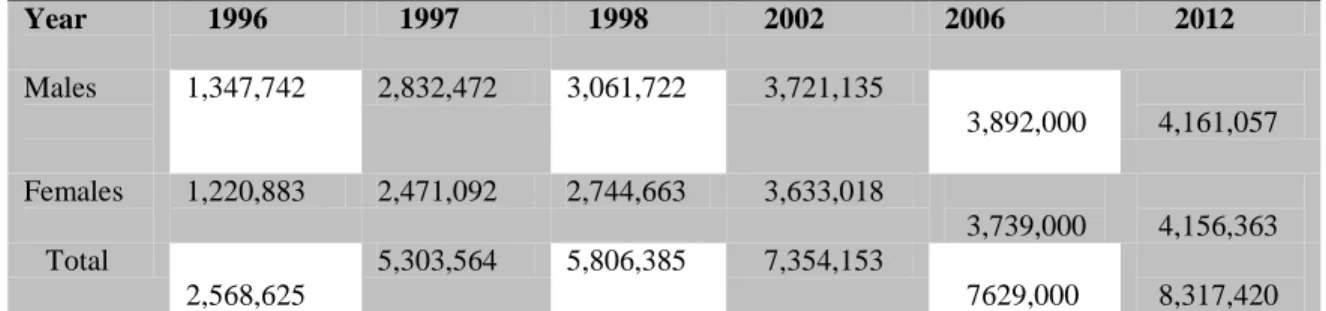
Table 4: Primary School Enrolment by gender 1996-2012 as a consequence of UPE
Year 1996 1997 1998 2002 2006 2012 Males 1,347,742 2,832,472 3,061,722 3,721,135 3,892,000 4,161,057 Females 1,220,883 2,471,092 2,744,663 3,633,018 3,739,000 4,156,363 Total 2,568,625 5,303,564 5,806,385 7,354,153 7629,000 8,317,420 Source: MoES 2005; 2012
Table 4 above confirms that the greatest beneficiary of UPE has been the girl-child. Enrolment of girls has increased from a dismal 1,420,883 in 1996 to 4,156,363 in 2012, representing more than 156% increase for the fifteen years of implementation. The proportion of girls enrolling in primary school in Uganda has been increasing since the inception of UPE in 1997 hitherto and the enrolment of girls and boys at primary school level has reached the parity level. The 2011/2012 Education and Sports Sector Annual Performance Review Report indicates that a total of 8,317,420 l (Male 4,161,057; female 4,156,363) pupils were enrolled in primary schools of which 50% were female. For the last two financial years, more girls were enrolled in school as compared to the boys. This indicates progress as far as educating the girl child is concerned.
Table 5. Percentage share of primary pupils by gender 2010/11-2011/12
Financial Year 2010/2011 2011/2012
Female 50.1% 50.0%
Male 49.9% 50.0%
Source: MOES (2012, 43).
Generally, it should be noted that UPE program has led to increased access for both sexes but mainly for girls thought it has not completely addressed the challenge of the social construction of gender in society that tends to disadvantage girls by allocating them endless reproductive work, among other gender inequalities that specifically keep girls from enrolling in school (UNHS, 2005). Currently, the existing gender disparities in education are mostly caused by dropout rates of girls in upper primary school characterized by low retention, repetition, dropout and non-completion. Thus while countrywide enrolment figures for girls are perfectly good in primary one to primary
28
three (50% for girls and 50% for boys), from P4 onwards there is widening of the gender gap. The primary school completion rate for girls is estimated to be 65% while that of boys is 71% (MISR, 2010). Girls in upper primary levels dropout mainly due to sexuality and reproductive health factors such as early pregnancy, early marriages, and sometimes lack of better school facilities that favour adolescent girls such as sanitary and toiletry facilities.
3.1.4 Education for children with special needs
Prior to the implementation of UPE, few schools for children with disabilities were working hard to meet their needs, and most of these children were out of school. The situation was even worse for the poor children with disabilities. With implementation of UPE, the situation has changed. Special needs schools benefit from UPE funds. Even more significantly, children with disabilities are being integrated into normal schools through an inclusion approach (MoES, 2005, 14). The number of pupils with special needs in schools increased by 726% from 26,429 in 1997 to 218,286 in 2004. Following the efforts to increase awareness about the value of education for children with disabilities, their total enrolments grew from 218,286 (117,824 males and 100,462 females) in FY 2002/03 to 247,953 (133,487 males and 114,466 females) in FY 2003/04 at primary level.
It is recalled that emphasis on access to schools by children with disabilities was more pronounced with the initial UPE arrangement for the four children per family (before it was later on universalized to all children of school going age) whereby the enrolment of UPE was carried out with an emphatic request for parents to include girls, disabled and orphans among the four children per family they registered. In 1997, it is estimated that about 3% of the pupils enrolled were disabled (MoES, 1999, 11).
Generally, the implementation of UPE has demonstrated Uganda‘s commitment to achieve Millennium Development Goal 2:- Achieve universal primary education; Target 2A:- Ensure that by 2015, children everywhere, boys and girls alike, will be able to
29
complete a full course of primary schooling (www.undp.org/mdgs/). The government of Uganda has made some effort in achieving this goal demonstrated by increased chances of access to basic education, increased possibility of starting school at the right age (6 years), and achieved gender parity in enrollment as mentioned above. The drawback however, as will be detailed in the next section, are the increasing rates of primary school dropout and low rates of primary school completion which have lowered Uganda‘s score card on achieving the MDG 2. The current Uganda‘s MDG progress report indicates a ‗SLOW‘ remark in the progress to achieve the target for the MDG 2 (MFPED, 2013).
3.2 Challenges faced in implementing the UPE Program in Uganda
This section presents challenges being faced in implementing UPE program in Uganda. The challenges are faced at different levels:- national, community, school, and parent.
3.2.1 Declining quality of education:- ‘quality versus quantity’
One of the achievements of UPE was dramatic increase in primary school enrolment rates as earlier mentioned above from just 2.5 million pupils in 1995-6 to 8.3 million by 2012. Notwithstanding this quantitative achievement, it resulted into associated operational cost implications. Unfortunately hitherto, in many districts, there has not been matching increase in education inputs such as teachers, classrooms, and textbooks in order to address the challenge of increased enrolment. Consequently, such input indicators such as pupil-teacher, pupil-textbook and pupil-classroom ratios initially worsened despite some recent improvements but still the situation is not yet to official expectations (MoES 1999, 10-11; Bategeka et al. 2004, xv).
These indicators have various implications on the quality of education. The existing high pupil-teacher ratio of over 100:1 (which is contrary to the standard 40:1) results into missed opportunity for individual pupil–teacher interaction and assessment for pupil‘s special learning needs. On the other the high pupil –text book ratio implies a scramble for learning materials which leaves many pupils denied access to the a few available copies of some texts since access is on the best of first come first served or crudely, ‗survival for the fittest‘. In addition, the high pupil-classroom ratio makes the pupils overcrowd the
30
classrooms and in extreme cases in some schools classes have been conducted under the trees. With this improvisation, pupil concentration becomes low due to distracting environment. Moreover, lessons are prone to vagaries of weather whereby in cases of rainy days, lessons are suspended.
Besides, there is always low morale among the teachers due to poor working conditions characterized by low salaries2, inadequate accommodation for teaching staff which compel most teachers to walk long-distances to and from school making teachers sometimes absent themselves on some days or arrive late at school, skip some lessons, or teach half a day (MoES, 2012, 43; MISR 2010, 15). All the above have serious implications on teaching and learning and eventually the poor quality of education becomes inevitable and of course it is the pupil who loses.
Another factor that has compromised quality of primary education under UPE program is the ‗automatic promotion policy‘. The UPE program dictates that a child must spend only seven years in primary school. This implies automatic promotion of children irrespective of class performance. The earlier system of children repeating the same class due to poor performance at the end of academic year was abolished. This arrangement obviously compromises the quality of UPE school ‗graduates‘. All pupils are promoted from one class to another irrespective of their performance so as to complete the primary cycle within the stated period of seven years. Consequently, most children complete primary seven when they have not grasped sufficient content of literacy and numeracy. Various reports have shown inadequate literacy/ reading skills and declining proficiency levels in literacy and numeracy among UPE school ‗graduates‘ over the years (MoES, 2012; MISR 2010).
As a result, the public usually refer to UPE schools as ‗Bonnabasome‘- literally meaning schools that embrace all children but with a negative connotation to imply a ‗bandwagon‘
2
Primary teachers in UPE/ Government aided schools have been striking over the years for salary increment. The recent sit down strike was at the beginning of the final / promotional term of the year 2013 for the same reason but the government still ignores their demand for salary increment. This happens as the counterpart teachers and pupils in private schools are progressively having normal school programs.
31
effect referring to UPE schools as where every child from any background can afford to attend. More so, the public continue to taint the term ‗Bonnabasome‘ to call it more crudely ‗Bonnabakone‘ implying that the UPE schools produce ‗graduates‘ who are ‗half-baked‘. This is what Kyomuhendo Bantebya and Amon (2013) refer to as the ‗food that cannot be eaten‘. This carries a lot of stigma and shame to parents and children alike under UPE program.
Taking advantage of the situation, many private primary schools have been established by private individuals to provide alternative quality education but only for the benefit of the well-off parents who can afford to pay huge sums of money as school fees and other expenses for their children. Thus, it is only children from poor households who have been left in UPE schools since they have no alternative. This has also created stigma and shame both to the parents and children as the general public always refer to UPE schools as the ‗schools for only the poor‘. Some government officials aggravates this situation through media by imploring the rich to remove their children from UPE schools. For example Bukedde Newspaper January 7, 2002 stated ‗Mugalekere abanaku – RDC Asabye abagagga okugya abaana mu masomero ga UPE‘ (‗Leave UPE Schools for the poor; Resident District Commissioner advises the rich people to take their children out of UPE schools and leave them for the poor‘) (Kyomuhendo Bantebya and Mwiine (2013).
Besides, the poor quality of education in UPE schools has created a vicious cycle that compromise one‘s future educational attainment. A pupil who studies in a UPE school most especially in rural areas, scores poor grades at the end of primary school level (Primary Leaving Examinations-PLE), joins Universal Secondary Education (USE) school (which is a replica of UPE school) for secondary education, again scores poor grades at the end of secondary education (Uganda Certificate of Education –UCE). S/he cannot be admitted in any high school or college, thus, his /her education career ends in despair. In comparison, a pupil who studies in a private school where education is of good quality, scores good grades at primary level, joins a good secondary school, scores good grades to join High School, and later joins college or university on government
32
sponsorship. This creates inequalities in future education attainment between the children from poor and rich households.
3.2.2 Increasing school dropout rates
Despite the massive increase in primary school enrollment rates as a result of UPE Program, there still exists a discrepancy between enrolment rates and completion rates of primary school education. This phenomenon has dimensions of gender, economic status and geographical location. With particular focus on poverty and gender, most sets of literature show that as a result of poverty, children from poor households and marginalized groups experience high school dropout and or completion rates due to financial constraints (MoES, 2012; UNHS, 2006; MISR, 2010). On the other hand, the gender dimension indicates that girls more than boys have high school dropout rates3. For the girl child, the primary seven completion rate is on average less than 60 percent. In general, school dropout rates for primary school stand at 38% (MoES, 2012).
Studies show that the highest percentage of children who dropped out of school do so because it is still expensive for them. It is important to note that although UPE is supposed to be free, it is known that there are other costs related to school attendance like uniforms, stationery, transport, development fund, and in some schools boarding fees which may be prohibitive to the poor households. Thus, among other reasons, schooling costs remain the major cause of school dropout for children from poor families.
Paradoxically, the problem has been worsened by the recent attempts by most UPE schools to (re) introduce more school funds payable by parents in the guise of development fund. The background of development fund is traced at the initial introduction of UPE program when it was declared that since the government committed itself to waive school fees, buy textbooks, pay teachers‘ salaries, and construct classrooms, parents were required to voluntarily contribute towards other school development projects either in form of physical labour or cash especially towards infrastructure development (field visit to Kabingo UPE primary school, November 2013).
3Various studies (MoES, 2012; JICA, 2012 ; MISR, 2010, Neema et al: 2007 ; UNHS, 2005/2006) have associated high school dropout for girls to among other reasons, teenage pregnancies, early marriage, and effects of unsafe abortions.