DigitalCommons@CSB/SJU
DigitalCommons@CSB/SJU
CSBSJU Distinguished Thesis Undergraduate Research
2020
Implementation Considerations for Mitigating Bias in Supervised
Implementation Considerations for Mitigating Bias in Supervised
Machine Learning
Machine Learning
Bardia Bijani AvalCollege of Saint Benedict/Saint John's University, [email protected]
Follow this and additional works at: https://digitalcommons.csbsju.edu/ur_thesis
Part of the Applied Ethics Commons, Artificial Intelligence and Robotics Commons, Ethics and Political Philosophy Commons, Inequality and Stratification Commons, and the Other Computer Sciences Commons
Recommended Citation Recommended Citation
Bijani Aval, Bardia, "Implementation Considerations for Mitigating Bias in Supervised Machine Learning" (2020). CSBSJU Distinguished Thesis. 6.
https://digitalcommons.csbsju.edu/ur_thesis/6
This Thesis is brought to you for free and open access by DigitalCommons@CSB/SJU. It has been accepted for inclusion in CSBSJU Distinguished Thesis by an authorized administrator of DigitalCommons@CSB/SJU. For more information, please contact [email protected].
Implementation Considerations for Mitigating Bias in Supervised Machine Learning by
Bardia Bijani Aval
The College of Saint Benedict and Saint John’s University May 7, 2020
Implementation Considerations for Mitigating Bias in Supervised Machine Learning By Bardia Bijani Aval
Approved By:
_________________________________ Dr. Noreen Herzfeld
Thesis Advisor, Professor of Computer Science and Theology
_________________________________ Dr. Erica Stonestreet
Faculty Reader, Associate Professor of Philosophy
_________________________________ Dr. Peter Ohmann
Faculty Reader, Assistant Professor of Computer Science
_________________________________ Dr. Imad Rahal
Chair, Department of Computer Science
_________________________________ Dr. Catherine Bohn-Gettler
Co-Director of Undergraduate Research – All-College Thesis
_________________________________ Dr. Mary Stenson
Abstract
Machine Learning (ML) is an important component of computer science and a mainstream way of making sense of large amounts of data. Although the technology is establishing new
possibilities in different fields, there are also problems to consider, one of which is bias. Due to the inductive reasoning of ML algorithms in creating mathematical models, the predictions and trends found by the models will never necessarily be true – just more or less probable. Knowing this, it is unreasonable for us to expect the applied deductive reasoning of these models to ever be fully unbiased. Therefore, it is important that we set expectations for ML that account for the limitations of reality.
The current conversation of ML regards how and when to implement the technology to mitigate the effect of bias on its results. This thesis suggests that the question of “whether” should be addressed first. We tackle the issue of bias from the standpoint of justice and fairness in ML, developing a framework tasked with determining whether the implementation of a specific ML model is warranted. We accomplish this by emphasizing the liberal values that drive our
definitions of societal fairness and justice, such as the separateness of persons, moral evaluation, freedom and understanding of choice, and accountability for wrongdoings.1
1 An immense “thank you” to Dr. Noreen Herzfeld for her limitless encouragement and mentorship throughout the
Contents
1 Introduction ... 6
2 Background ... 7
2.1 Machine Learning ... 7
2.1.1 Supervised Learning... 7
2.1.1.2 Methods and Black-Box Models ... 9
2.2 Biases ... 10
2.2.1 Dataset Bias ... 10
2.2.2 Algorithmic Bias ... 11
2.2.3 Hardware Bias ... 12
2.3 Cognitive Source of Dataset and Algorithmic Bias ... 12
2.4 Inductive and Deductive Reasoning ... 14
2.4.1 The Problem of Induction ... 15
2.5 Justice and Fairness in ML ... 15
2.6 Full Accommodation of Fairness ... 16
2.7 Problem Statement ... 17
3 Current State of the Field ... 19
3.1 Fairness Verification ... 19
3.2 Non-Empirical Feedback Loops ... 19
3.3 Current Fairness Criteria ... 20
3.3.1 Anti-Classification ... 20
3.3.2 Classification Parity ... 21
3.3.3 Calibration ... 22
3.4 Mutual Exclusivity of Fairness Criteria ... 22
3.5 Theoretical Versus Empirical Observations ... 23
4 Development of Framework ... 24
4.1 Distributive Justice ... 24
4.1.1 John Rawls’ Justice as Fairness ... 24
4.2 Compensatory Justice ... 28
4.3 Moral Evaluation ... 29
4.3.1 Adam Smith’s Impartial Spectator ... 30
4.3.2 Algorithmic Auditing ... 31
4.4 Freedom of Choice ... 31
4.4.1 Choice of Task Avoidance ... 32
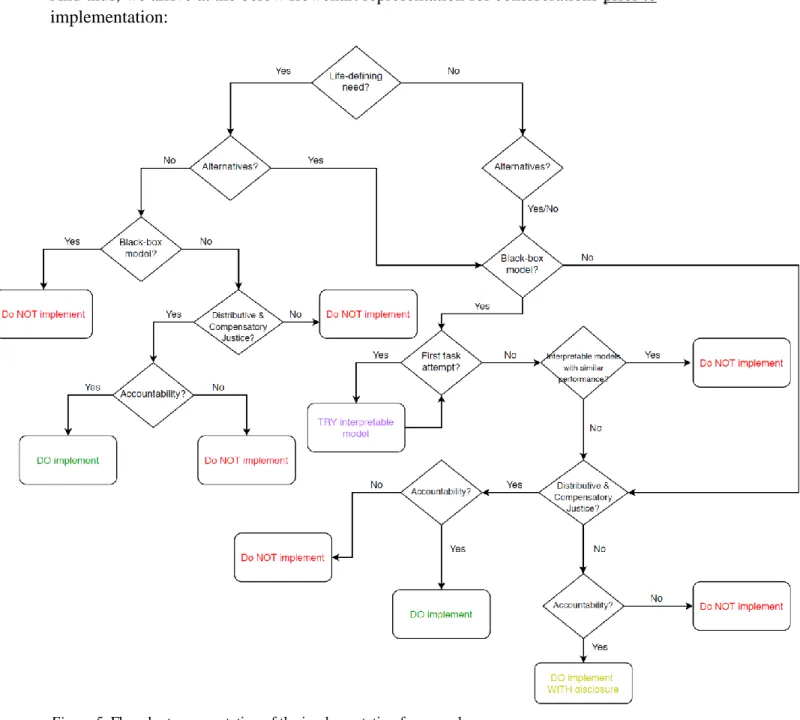
4.4.3 Explainable and Interpretable ML ... 35 4.5 Accountability ... 37 4.6 Pre-Implementation Flowchart ... 39 4.7 Post-Implementation Accountability ... 39 4.7.1 Restorative Justice... 40 4.7.2 Criminal Justice ... 41 4.7.3 Additional Comments ... 42
5 Reflections on Work and Future Areas of Research... 43
6 Conclusion ... 45
1 Introduction
In the past few decades, humans have made technological progress on an exponential scale. Moore’s law, although unable to precisely predict future advancements, emphasizes the remarkable improvements we have made in the field of computer science. We have witnessed exponential growth in both computational power and clock speeds, which inevitably are expanding the possibilities within the field.2
As we are broadening the capabilities of computers and specifically artificial intelligence (AI), we are exploring new applications. Some of these aid us in addressing the shortcomings of humans, increasing both time- and task efficiency. An example is the concept of self-driving cars. In 2018, the number of traffic deaths exceeded 40,000 for the third consecutive year; about 110 deaths daily. In 92 (±2) percent of cases, the accident could be attributed to human error. This means that AI, although it would add a small computing error, has the potential to save many lives by removing all or most of the unreliable human factor in car accidents.3 Our respective economies will have to adapt to changes posed by these new developments. Nevertheless, there is definite potential to help human beings lead better lives.
However, these advancements do not come without repercussions. In the endeavor of continuing our technological explorations and addressing more complex issues, we are facing new
challenges in different aspects of development and application. One of these challenges is bias in artificial intelligence (AI) and automation, whose foundation is machine learning. These biases are not mere theoretical obstacles but have grave practical consequences for many undeserving individuals (which will become evident as we proceed). For the purpose of this work, we intend to explore the shortcomings of the machine learning models that lead to these biases, and how we could address them by being more conscientious about how, but especially when we implement the technology.
In this endeavor, we have tasked ourselves with developing a framework that will consider the current impact of bias in machine learning and its relevance to societal injustices, to give
recommendations on whether implementation of a given machine learning model is warranted in the given context. In the following sections, we will explore fundamental themes that such a framework should include and use a bottom-up approach to establish its components
accordingly.
2 Roser, Max, and Hannah Ritchie. “Technological Progress.” Our World in Data, 2020.
https://ourworldindata.org/technological-progress.
3 “Traffic Safety Facts: A Brief Statistical Summary.” U.S Department of Transportation, 2015.
2 Background
2.1 Machine Learning
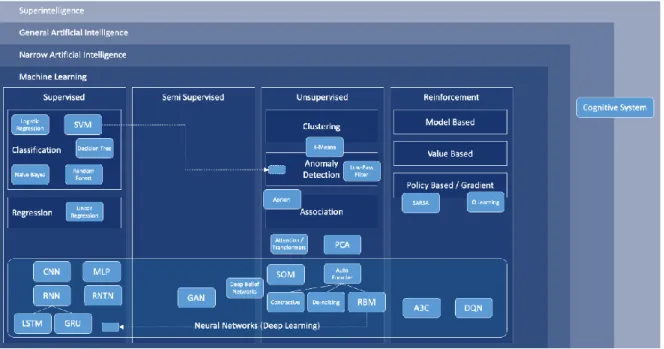
Machine learning (ML) is the ability for computers, through analysis of extensive datasets, to find trends and make predictions using statistical models. It is the foundation of how many AI applications learn, find patterns in data and predict outcomes based on previous subjects. The figure below outlines only a subset of all available ML techniques.
Figure 1: A subset of available ML techniques.4 2.1.1 Supervised Learning
There are distinctions to be made between different types of ML. The main type of learning we will consider is supervised learning, which makes use of pre-defined labels to classify and find patterns in data. In other words, unlike unsupervised learning, there are right and wrong answers for the model to consider for each subject fed to it. An example of supervised learning is feeding an algorithm a dataset filled with photos containing certain objects, along with the categories they belong to. ML would attempt to categorize future subjects using what was seen in previous examples. Not surprisingly, it is a complicated task that could go wrong. This was exactly the case when, in 2015, Google received widespread criticism for Google Photos erroneously labeling two Black individuals as gorillas.5 It is these types of discrimination and unfairness we will continue discussing.
4 Ackermann, Nils. “Artificial Intelligence Framework: A Visual Introduction to Machine Learning and AI.”
Medium. Towards Data Science, December 15, 2018. https://towardsdatascience.com/artificial-intelligence-framework-a-visual-introduction-to-machine-learning-and-ai-d7e36b304f87.
5 Pachal, Pete. “Google Photos Identified Two Black People as 'Gorillas'.” Mashable. Mashable, July 1, 2015.
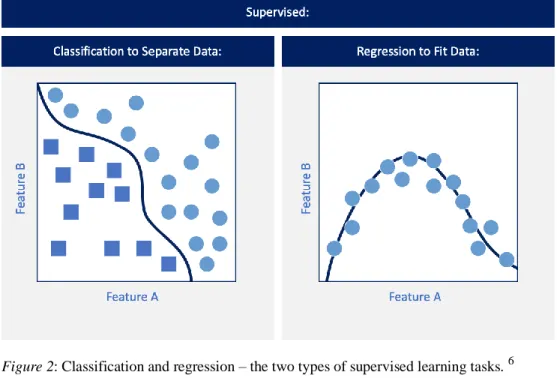
Figure 2: Classification and regression – the two types of supervised learning tasks. 6 2.1.1.1 Tasks
The type of task performed in the above-mentioned example is called classification. It focuses on categorizing subjects into different classes based on how different they are from other classes. The other type of task is regression, which looks at similarities in the data that could help predict a certain numerical value. Predicting how likely prisoners are to recidivate by assigning risk scores to them is an example of a regression task. Worth noting is that regression tasks could be considered a type of classification, in that a numerical threshold could be assigned to decide on which category a certain numerical value belongs to (in the recidivism example these categories could regard the approval or denial of bail or parole). In other words, classification is discrete (categorical), whereas regression is continuous.7
6 A Visual Introduction to Machine Learning.
7 Brownlee, Jason. “Difference Between Classification and Regression in Machine Learning.” Machine Learning
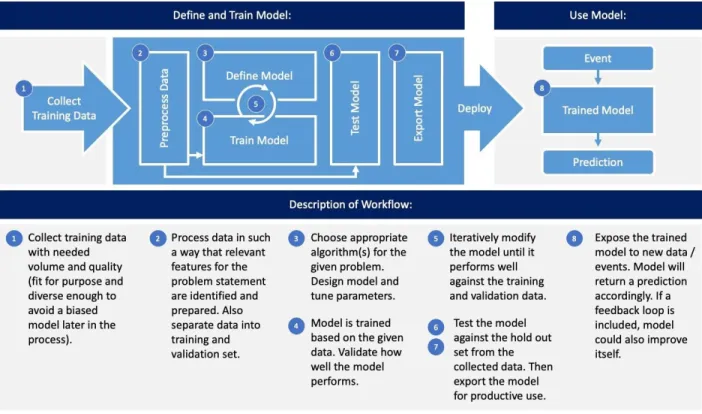
Figure 3: The process of ML.8
2.1.1.2 Methods and Black-Box Models
As seen in Figure 1, we use numerous approaches to complete classification and regression tasks.9 Oftentimes, these tasks become complex to the extent that the models by which they are solved become hard to make sense of without additional tools. These models are referred to as black-box models due to their high complexity. We will specifically address these models later.10 There are chiefly two types of complexity that contribute to black-box models – dimensionality and the type of ML technique.
2.1.1.2.1 Dimensionality
Dimensionality is the number of attributes (or factors) that are considered by a ML algorithm. For complex problems, such as predicting types of cancer in human beings based on gene expression, it is not uncommon to consider datasets with more than 1,000 different genes, with each of them being considered an independent attribute.11
In ML, it is commonly known that as the number of attributes considered increases, so does the difficulty of analyzing the data in question. This is often referred to as the curse of
dimensionality due to the resulting complications, most of which regard the difficulty of assessing how the model in question arrives at a certain decision, but also the increased
8 Visual Introduction to Machine Learning. 9 See 2.1.
10 See 4.4.3.
11 Molla, Michael, Michael Waddell, David Page, and Jude Shavlik. “Using Machine Learning to Design and
likelihood of the model reflecting the specifics of its training dataset and not performing as well on other datasets made for the task in question.12
2.1.1.2.2 Technique Type
Some ML techniques are obviously better for certain tasks and some techniques are more complex and ambiguous than others. Neural networks, for instance – the technique by which deep learning (a subset of ML) is deployed – are heavily used to display complex behavior in computers, as seen in AI.13 They attempt to model the way our brains arrive at conclusions, which is a complicated and diverse process due to how little we know about the brain.14
These techniques are usually called explainable models, as they are not intuitive in the same way as other models and require measures (such as writing a summary program) to explain them.15 Not all explainable models are supervised learning, although some are and will be covered in detail as we discuss the impact of black-box models on bias. 16
2.2 Biases
Figure 3 describes the process of properly deploying ML. There is bias to consider in all mentioned steps, but they can be classified as two distinct types: dataset bias and algorithmic bias.
2.2.1 Dataset Bias
Everything a ML algorithm learns is based on input data, which means that if our data are flawed, we will never receive an acceptable output.17 Each ML model must first be given a training dataset, which is used to help the model understand the relationships between all attributes in the data and the classifications given to each subject. If the dataset has biases, so will the model.
A commonly discussed application of ML, which has received much criticism for its uneven performance, is classifying gender in human beings. Gender Shades is a project, conducted by MIT Media Lab, which explores gender- and racial bias in well-known facial recognition algorithms. The project specifically chose to consider facial recognition software made by three companies: IBM, Microsoft and Megvii.
At first glance, the algorithms display high overall gender classification accuracies (between 94% and 87% for all three). However, when we consider the misclassified cases, biases become
12 Tan, Pang-Ning, Anuj Karpatne, Vipin Kumar, and Michael Steinbach. Introduction to Data Mining. Harlow:
Pearson, 2020.
13 Ibid.
14 “5 Unsolved Mysteries about the Brain.” Allen Institute for Brain Science, March 14, 2019.
https://alleninstitute.org/what-we-do/brain-science/news-press/articles/5-unsolved-mysteries-about-brain.
15 Molnar, Christopher. Interpretable Machine Learning: A Guide for Making Black Box Models Explainable.
GitHub, 2020.
16 Mols, Bennie. “In Black Box Algorithms We Trust (or Do We?).” ACM, March 16, 2017.
https://cacm.acm.org/news/214618-in-black-box-algorithms-we-trust-or-do-we/fulltext.
17 Sharma, Dhruv. “Problems in Machine Learning Models? Check Your Data First.” Medium. Towards Data
Science, August 31, 2019. https://towardsdatascience.com/problems-in-machine-learning-models-check-your-data-first-f6c2c88c5ec2.
evident. With Microsoft’s software, 93.6% of times faces were mistaken, the subject was Black. With Megvii’s Face++ software, 95.9% of misclassifications were made when the subject was a woman. And, with IBM’s software, the misclassification rate of darker women was 34.4% higher than that of lighter men.18 These are not small margins.
A large reason for the bias seen in these models is the lack of proper subject distribution in common training datasets.19 Minorities and women are usually less represented, which leads to ML algorithms overemphasizing White men. Joy Buolamwini, the founder of the Algorithmic Justice League and leader of the Gender Shades research team, noticed that in the IJB-A, a dataset commonly used in facial recognition by governmental bodies, 75.4% of all subjects were male, and at least 79% of the subjects had lighter skin.20 ML algorithms learn what they see, which makes it no surprise that facial recognition currently performs best on light-skinned men. To address the issue of dataset bias, we must consider what an optimized dataset looks like. There are general guidelines on how to develop those, which we will not fully outline. The gist is that the distribution of subjects by pre-defined group membership should be equal (or close to it) for all involved groups, to make sure that the ML model in question does not overemphasize certain portions and features of a dataset, as seen in our previous example. 2122
2.2.2 Algorithmic Bias
Part of the ML process is choosing and designing a learning algorithm that takes input datasets and learns based on their contents.23 Algorithmic bias is the bias that arises from discrimination in the learning algorithm and, eventually the resulting ML model. Algorithmic bias is a broader, more general term than dataset bias, in that other factors than the learning algorithm (including dataset bias itself) have a direct impact on algorithmic bias.24 Regardless of how solid an algorithm is, it can only be as good as the dataset fed to it, and the choices made in defining it. These choices may entail deciding on which algorithm is best suited to complete the task in question, the weights assigned to the learning algorithm, the structure of the algorithm itself, or anything closely related. All of it has an impact on algorithmic bias.25
18 Buolamwini, Joy. “Gender Shades.” Gender Shades, 2018. http://gendershades.org/overview.html.
19 Buolamwini, Joy A. “Gender Shades: Intersectional Phenotypic and Demographic Evaluation of Face Datasets
and Gender Classifiers.” MIT Media Lab, 2017, 2017.
20 Buolamwini, Joy. “Artificial Intelligence Has a Racial and Gender Bias Problem.” Time. Time, February 7, 2019.
https://time.com/5520558/artificial-intelligence-racial-gender-bias/.
21 Torralba, Antonio, and Alexei A. Efros. “Unbiased Look at Dataset Bias.” Cvpr 2011, 2011.
https://doi.org/10.1109/cvpr.2011.5995347.
22 Deeper Look at Dataset Bias (PDF)
23 “Machine Learning Crash Course | Google Developers.” Google. Google. Accessed March 29, 2020.
https://developers.google.com/machine-learning/crash-course/.
24 Mehrabi, Ninareh, Fred Morstatter, Nripsuta Saxena, Aram Galstyan, and Kristina Lerman. “A Survey on Bias
and Fairness in Machine Learning.” USC, Information Sciences Institute, September 17, 2019. https://doi.org/10.1145/3341161.3342915.
25 Hao, Karen. “This Is How AI Bias Really Happens-and Why It's so Hard to Fix.” MIT Technology Review. MIT
Technology Review, February 4, 2019. https://www.technologyreview.com/s/612876/this-is-how-ai-bias-really-happensand-why-its-so-hard-to-fix/.
2.2.3 Hardware Bias
Not all bias is software- or data-related. For instance, in the case of Global Navigation Satellite System (GNSS) positioning (the most famous example of which is GPS), there are small deviations when reading phase changes that emerge from bias in hardware (specifically the satellite and receiver).26 For this thesis, we will disregard hardware bias.
2.3 Cognitive Source of Dataset and Algorithmic Bias
Many of the problems regarding both dataset and algorithmic bias would be thoroughly mitigated with some theoretically basic solutions, and extensive research is being made on the details of these issues. A year after doing their first audit, the Gender Shades research team did a second audit on the same three companies and found that they all had significantly improved the performance of their models. Microsoft, for instance, which had a 20.8% difference in
performance between darker females and lighter males, brought that same number down to 1.5% a year later. Face++ and IBM also made significant improvements, although the most
disadvantaged in the context were still female subjects and those with darker skin. In terms of bias directly related to algorithms, improvements are also being made. Recent research has found a way to mitigate bias in the algorithms themselves, even with poor datasets. This is done by means of latent structure analysis, which allows for the importance of some attributes in training datasets to be redistributed and for bias to be reduced as a result.27
Nevertheless, as we witness improvements, some of the major problems remain. In the second audit, Gender Shades also investigated two newer facial recognition models, made by Kairos and Amazon respectively. Amazon clearly had the worst performance of all audited models, with a 31.4% performance difference between darker females and lighter males; almost as
underwhelming as IBM in 2018.28
Despite the evident biases, Amazon found it convenient to pitch their software to the
Immigration and Customs Enforcement (ICE) for use in their operations. This is software that would more than likely misidentify people of color frequently, leading to unjust arrests. Either Amazon was unaware of these biases (which would imply serious negligence), or the company simply does not care. Our current societies and economies incentivize the release of unethical products due to their profitability, with entities rarely being held accountable. There are
26 Håkansson, Martin. “Hardware biases and their impact on GNSS positioning.”, 2017.
See also: “What Is GNSS?” European Global Navigation Satellite Systems Agency, August 29, 2017. https://www.gsa.europa.eu/european-gnss/what-gnss.
27 Amini, Alexander, Ava P. Soleimany, Wilko Schwarting, Sangeeta N. Bhatia, and Daniela Rus. “Uncovering and
Mitigating Algorithmic Bias through Learned Latent Structure.” Proceedings of the 2019 AAAI/ACM Conference on AI, Ethics, and Society, 2019. https://doi.org/10.1145/3306618.3314243.
28 Hao, Karen. “Making Face Recognition Less Biased Doesn't Make It Less Scary.” MIT Technology Review. MIT
Technology Review, February 15, 2019. https://www.technologyreview.com/s/612846/making-face-recognition-less-biased-doesnt-make-it-less-scary/.
numerous examples, with Cathy O’Neil, Virginia Eubanks and others having written books containing many of them (some of which will be covered briefly in this work).2930
This brings us to the fundamental problem of bias in supervised ML: cognitive biases.31Although dataset and algorithmic biases are concerns, they directly derive from our implicit biases. These become apparent in how much we expect from the ML model. How much can it discriminate and still be acceptable (or fair)? How lenient can we be in our requirements on data collection? How much empirical research do we need before including a feature in our dataset? How confident are we that the chosen learning algorithm is the best suited one? Do we understand the algorithm well enough to know how it arrives at decisions? And lastly, the question that we hope to answer: For which contexts and with which solutions is ML warranted at all? These are only some of the questions that should be answered every time ML is deployed and, oftentimes, we fail to answer all of them correctly (we will find that sometimes there is no “correct” answer), which leads to severe consequences.
No matter how hard we try to erase these biases, they will remain present. Usually, we do not recognize our implicit biases and their significant impacts on outcome. A prime example came up in Amazon’s attempt to make a program that would aid in recruiting. It was quickly detected that the program was biased against women, which was assumed to be due to women being directly used as an assessment variable, or feature, in the program. However, when group membership became an excluded feature, the program was still discriminating against women. After extensive investigation it was discovered that the program was, unbeknownst to the developers, seeing a pattern in resume word usage among men and women respectively, which made the program favor men’s resumes. The training set used consisted of resumes from successful Amazon employees, most of whom have been male in the past, which skewed the results.32
Initially this seems like a farfetched bias and stereotype but it has empirical evidence behind it.33 Out of the many factors impacting a complex model, the first thought is rarely to assume that word usage is the main contributing factor to bias. It is evident that when faced with multiple factors (attributes) to consider (in some cases thousands), humans will be unable to account for all of them. For this and other reasons, the thesis will largely be focusing on the human
limitations that come with ML. The limitations of our programs start and end with us. If our
29 Peterson, Andrea, and Jake Laperruque. “Amazon Pushes ICE to Buy Its Face Recognition Surveillance Tech.”
The Daily Beast. The Daily Beast Company, October 23, 2018. https://www.thedailybeast.com/amazon-pushes-ice-to-buy-its-face-recognition-surveillance-tech.
30 Eubanks, Virginia. Automating Inequality: How High-Tech Tools Profile, Police, and Punish the Poor. New
York: Picador, St. Martins Press, 2019.
31 Turner-Lee, Nicol, Paul Resnick, and Genie Barton. “Algorithmic Bias Detection and Mitigation: Best Practices
and Policies to Reduce Consumer Harms.” Brookings. Brookings, October 25, 2019.
https://www.brookings.edu/research/algorithmic-bias-detection-and-mitigation-best-practices-and-policies-to-reduce-consumer-harms/.
32 Dastin, Jeffrey. “Amazon Scraps Secret AI Recruiting Tool That Showed Bias against Women.” Reuters.
Thomson Reuters, October 10, 2018. https://www.reuters.com/article/us-amazon-com-jobs-automation-insight/amazon-scraps-secret-ai-recruiting-tool-that-showed-bias-against-women-idUSKCN1MK08G.
33 Jackson, Abby. “12 Words That Are More Familiar to Women than Men.” Business Insider. Business Insider,
limitations and flaws are accounted for, doing the same for our ML models will become a simpler task.
In assessing biases, we will mainly be assessing the output, except when discussing the interpretability of an algorithm.34Long-term, it is the output of a certain model that defines whether the dataset and algorithm were appropriately chosen and deployed. It is by considering the output that we can properly assess whether the input data and/or ML technique must be improved. This, of course, disregards how understandable the model is to the general public (and prioritizes performance ahead of interpretability) but allows us to see how often the models in question get things right, regardless of how they arrive at decisions.
2.4 Inductive and Deductive Reasoning
We have many ways of classifying the knowledge we receive from ML applications. However, conclusions reached based on output from ML algorithms are oftentimes defined by either their predictive or descriptive nature.
Predictive tasks have, as indicated by the name, the goal of predicting outcomes or
characteristics in future subjects, based on trends and data seen in previous subjects. In more technical terms, these tasks assume dependence of certain attributes in datasets on other independent attributes and try to make predictions based on the given relationships.35 A more well-known application is using historic stock market trends to try to predict future outcomes.36 Descriptive tasks, on the other hand, try to highlight trends and patterns in data for various useful purposes. Different statistical measures, such as clustering or association rule mining, consider what attributes have in common and set them apart, and find appropriate ways to present relevant conclusions.37
Although there is much to separate these types of tasks, they have one trait in common: the construction of all models related to descriptive and predictive ML tasks are based on inductive reasoning. Inductive, or bottom-up reasoning, is the concept of using statements and instances of different sorts to provide evidence in support of a certain claim (as opposed to deductive
reasoning, where we make use of informational input to reach, by way of logical discourse and while assuming the truth of the input, fully true conclusions).38 We then apply our inductively reasoned models to deduce conclusions about future subjects, or to find patterns within data. Both inductive and deductive reasoning have value, but the former can be misinterpreted, whereas the latter cannot. Deductive reasoning, if done correctly, leads to what is called necessarily true conclusions, which are true regardless of circumstance, so long as the logical foundation of the issue in question (as well as the assumptions that accompany them) does not
34 See 4.4.
35 ”Features” and ”attributes” will be used interchangeably in this work.
36 Kompella, Subhadra, and Kalyana Chakravarthy Chilukuri. “Stock Market Prediction Using Machine Learning
Methods.” International Journal Of Computer Engineering And Technology 10, no. 3 (2019). https://doi.org/10.34218/ijcet.10.3.2019.003.
37Introduction to Data Mining.
38 Bradford, Alina. “Deductive Reasoning vs. Inductive Reasoning.” LiveScience. Purch, July 25, 2017.
change. Inductive reasoning, however, only provides evidence for or against a claim, without making it necessarily true. The best inductive reasoning can do is to make certain claims more (or less) probable.
2.4.1 The Problem of Induction
It is here that the problem of induction comes into play. English philosopher C.D Broad famously stated that “induction is the glory of science and the scandal of philosophy.”39
Posed by many prominent philosophers (including David Hume), the main criticism of inductive reasoning is that it can never provide epistemic certainty.40 There will always be parts of the inductively reached conclusions that remain incomplete. For this reason, since the deductive reasoning applied by ML models is based on inductive reasoning, there will be unaccommodated gaps of knowledge in our conclusions.
The problem of induction targets descriptive and predictive ML tasks in different ways. For descriptive tasks, it criticizes that generalization based on patterns seen in data never will provide pure knowledge (since we can never assume full truth of the input, or data), even in cases where all subjects point to the same classification (which would be considered the best-case scenario). For predictive tasks, the criticism is directed toward the impossibility of accurately predicting all future outcomes based on previous ones.
In ML, we rarely encounter best-case scenarios. If we have information that assertively suggests a generalization or future outcome, we will likely not use ML to confirm it. We would, for instance, not need ML to tell us that the probability of each outcome on a regular, fair-weighted die is one-sixth. Although various shapes and designs will have slightly different outcomes (engraved dots, for instance, may change the weight distribution of a die), we neglect these attributes due to their lack of relevance in the larger scheme of things. Since trial and error has given us no reason to think otherwise, we have, through inductive reasoning, concluded that in the case of a six-sided die with (relatively) even weight distribution, the respective probabilities will remain constant. ML is applied to cases in which the answers are not as obvious.
Due to this problem of induction, we cannot generalize and, with full certainty, make necessarily correct assumptions about outcomes for future subjects, or the attributes by which they are assessed. In more technical terms, the answers we get from ML are of a probabilistic, non-deterministic nature. It is thus unreasonable to expect perfection from our ML models and applications. Imperfection is therefore not part of the problem for bias and should not be perceived as such. It is the way imperfection is dealt with that becomes the main issue. 2.5 Justice and Fairness in ML
Theoretically, the problem of induction suggests that due to the inductive reasoning of ML model development, we will find ourselves in situations where not everyone is treated equally by the resulting models. This theoretical discrimination will, however, also have a practical impact
39 Broad, C. D. The Philosophy of Francis Bacon: an Address Delivered at Cambridge on the Occasion of the Bacon
Tercentenary, 5 October 1926. New York: Octagon Books, 1976.
40 Hume, David, and Tom L. Beauchamp. An Enquiry Concerning Human Understanding: a Critical Edition.
on people’s lives, which we have seen in previous examples and seek to explore further. In light of this issue, the interpretation of what is fair and just becomes relevant. Much of the general discussion regarding justice is about how we establish equity, which warrants those same discussions taking place in the context of ML. But, before we proceed, we must highlight the distinction between justice and fairness.
These terms are often used interchangeably, although doing so has created confusion in the past, as it makes the task of distinguishing between moral obligations, versus considerations, difficult. Justice is the moral concept of what is right. Fairness, on the other hand, is the personal
evaluation of justice. As Goldman and Cropanzano state, ““Justice” denotes the conduct that is morally required, whereas “fairness” denotes an evaluative judgment as to whether this conduct is morally praiseworthy.” 41 In this sense, justice is a concept independent of fairness, in that it can exist without satisfying fairness. This does not, however, necessarily mean that we have access to this definition of justice, but even if we did, it would be difficult to attain due to our biased evaluations. The question then becomes to what extent we can accommodate fairness, while having solid considerations for ML justice. We will clarify the reason(s) for this specific approach in the coming sections.42
2.6 Full Accommodation of Fairness in ML
In situations of complete consensus, we seem to be less concerned with investigating whether an outcome is fair. In these instances, we assume that since every individual in question has the same definition of fairness, that the outcome indeed must be fair. Unfortunately, this best-case scenario is almost never a reality – especially when we have many people with different backgrounds involved (which oftentimes applies to ML). The question then becomes: “In situations of disagreement, is there a way for ML to accommodate everyone’s fairness
definitions?” One can argue that some fairness definitions are bad and that some are good, but completing such assessments would require one to make assumptions beyond what we know to be necessarily true. For that reason, taking an approach which does not intend to accommodate all definitions of fairness is selective without justification.
Nonetheless, the answer to this question has its foundation in whether one finds fairness subjective or objective. If we find that fairness is objective, we should only look to account for what is objectively fair and just. However, by the definition used in 2.5, fairness is the personal evaluation of justice, which is a subjective concept. This means, in turn, that any disagreement on what fair course of action is would imply that fairness is not fully accommodated in that instance (we believe most people encounter such situations frequently). This would consequently apply to ML, as any approach to accommodate fairness (or any disagreement with such
approach) would only be a personal evaluation of what is considered just, and not necessarily what is actually just. Therefore, regardless of situation and how close to perfect an application is, there will be instances of unfairness due to us having different definitions of what is fair. In other
41 Goldman, Barry, and Russell Cropanzano. “‘Justice’ and ‘Fairness’ Are Not the Same Thing.” Journal of
Organizational Behavior 36, no. 2 (2014): 313–18. https://doi.org/10.1002/job.1956.
words – no, we cannot accommodate everyone with one singular solution – with or without ML models. This should, however, not stop us from trying to optimize our conditions.
When we discuss fairness, we often discuss equality. It may sound like a simple measure of fairness, and sometimes, that may be true. But, what do we exactly mean by equality? Is it the equality of goods? The equality of opportunity? The equality of treatment? Ronald Dworkin explored this topic in his two essays, “The Equality of Welfare” and “The Equality of
Resources”. He discovered that equality oftentimes is not what we are looking for. Equality, just for the sake of it, is counterproductive and unethical.43 Assuming limited resources, what point is there in providing insulin for someone who does not have diabetes?
Although it is much more difficult to define, as it requires us to consider the diversity of perspective and needs, the concept of equity has taken precedence over equality. For our purposes, we will define equity as “giving everyone what they need to be successful” moving forward. 44
Sometimes, equity and some type of equality mean the same thing. Sometimes, giving everyone what they need to be successful implies treating everyone the same, or giving everyone the same opportunity. When we discuss access to human rights, this is often the case. The Universal Declaration of Human Rights, for instance, states that “the inherent dignity and […] the equal and inalienable rights of all members of the human family is the foundation of freedom, justice and peace in the world.”45 However, for situations in which equality is not equity, there are disagreements on what decisions would be considered fair, which most certainly becomes relevant in the application of ML. All these concerns will help set the foundation for justice in our framework of ML implementation considerations.
2.7 Problem Statement
In the previous sections, we have discussed the presence of bias, the nature of it, and the reasons as to why it inevitably impacts fairness and justice in our societies. In our attempts to address these problems, we often ask how and when we can ethically use ML. However, we rarely ask whether it is ethically justified to implement ML models to complete tasks in certain contexts. The questions of “how” and “when” to ethically use a certain application of ML are dependent on the existence of an affirmative answer to the question of “whether”.
Some tasks cannot be ethically completed in certain contexts, which will become evident in some of the examples mentioned below.46 Another problem is that we oftentimes focus on the performance of a task, rather than the context in which a task is being performed. We tend to
43 Rothman, Joshua. “The Equality Conundrum.” The New Yorker. The New Yorker, January 21, 2020.
https://www.newyorker.com/magazine/2020/01/13/the-equality-conundrum.
44 Sun, Amy. “Equality Is Not Enough: What the Classroom Has Taught Me About Justice.” Everyday Feminism,
September 25, 2014. https://everydayfeminism.com/2014/09/equality-is-not-enough/.
45 “Universal Declaration of Human Rights.” United Nations. United Nations. Accessed March 30, 2020.
https://www.un.org/en/universal-declaration-human-rights/.
46 Chamorro-Premuzic, Tomas. “Four Unethical Uses Of AI In Recruitment.” Forbes. Forbes Magazine, May 30,
2018. https://www.forbes.com/sites/tomaspremuzic/2018/05/27/four-unethical-uses-of-ai-in-recruitment/#6baa3dac15f5.
assume that the implementation is wrong and that it could be remedied. This is not always the case.
To address these issues, we have tasked ourselves with developing a framework that will
consider the current problems of fairness and justice in ML, along with the evident technological and cognitive bias limitations, to give recommendations on whether implementation of ML is warranted in a given context, with a given ML model. In doing so, the framework also intends to set expectation standards for ML, both pre- and post-implementation. We hope that this will encourage more self-awareness in programmers and users of ML technology about the impact of their actions, but also optimism about the potential for societal and technological improvement. The framework in question will be assuming liberalism as deployed in most Western countries as the pursued virtue. This means that values such as freedom of choice, separateness of persons and theoretical impartiality will be commonly encountered themes. This is a reasonable approach for a general framework, as the theoretical ambition should not be set any lower than full
accommodation for all individuals. Now, with a set foundation of background knowledge, we consider the current situation before commencing the development of the framework.
3 Current State of the Field
3.1 Fairness Verification
As the problem of fairness in ML has been increasingly highlighted publicly, measures have been taken to actively assess how well applications account for fairness. At the University of Wisconsin – Madison, a team of researchers have worked on a bias verification program called FairSquare, which is a mathematical approach to assessing bias presence. The gist of the practice is to assume a certain fairness criterion, defined by mathematical constraints, and check to see whether a program is successfully fulfilling that criterion.47Assuming that the fairness criteria are “correct”, this is a truly helpful practice to ensure less biased software use. Nevertheless, there are many situations in which we are not certain about the “right” definition of fairness; likely because our definitions almost never are fully fair, and much less so when we attempt to model them mathematically (which is the case with ML). In the coming paragraphs, we will outline the problems with our current definitions of fairness from most to least critical.
3.2 Non-Empirical Feedback Loops
A common problem in ML regards the features by which a ML model attempts to complete a task or answer a question. It is common for governmental entities to occasionally include attributes in their datasets that have no empirically shown correlation with the attempted classification. The TSA has, for instance, received criticism for discriminating against Muslim subjects by using biased attributes.4849
In the worst scenarios, we take those wrongfully included features and draw erroneous conclusions about what their contribution to a certain result should tell us. We accept results without confirming their proper function. In Washington, D.C during the 2008 recession, for instance, the city administration started assessing teacher performance using a ML program called IMPACT. This program was to make decisions on which teachers to hold responsible (and release) for poor learning results among students in the district. The program was responsible for 50 percent of the assessment for each subject. Although the program’s features were not revealed to the public, the results surprised many, as some of the top-rated teachers in the district (as judged by administrators and parents) received the lowest performance scores overall and were fired as a result. It became evident that one of the higher weighted features of IMPACT was changes in standardized test scores for students, from year to year. USA Today later also discovered that there was a significant level of erasures on the standardized tests assessed at many of the schools in the district (almost a fourth of them, specifically). This implied cheating
47 Albarghouthi, Aws, Loris Dantoni, Samuel Drews, and Aditya V. Nori. “FairSquare: Probabilistic Verification of
Program Fairness.” Proceedings of the ACM on Programming Languages 1, no. OOPSLA (December 2017): 1–30. https://doi.org/10.1145/3133904.
48 Handeyside, Hugh. “New Documents Show This TSA Program Blamed for Profiling Is Unscientific and
Unreliable - But Still It Continues.” American Civil Liberties Union, April 22, 2019.
https://www.aclu.org/blog/national-security/discriminatory-profiling/new-documents-show-tsa-program-blamed-profiling.
49 Gillum, Jack, and Marisol Bello. “When Standardized Test Scores Soared in D.C., Were the Gains Real?” USA
Today. Gannett Satellite Information Network, March 30, 2011.
by students, and possibly teachers allowing them to check their own answers. In the investigations, teachers were not asked if they contributed to this high level of erasure (specifically wrong-to-right answers). 50 And, the teachers who were fired never received explanations as to how IMPACT arrived at their low scores.
IMPACT assumed that better grades implies more learning, which there is no general empirical evidence for (it may apply in certain schools, but not all). This is what O’Neil refers to as a “WMD [Weapon of Math Destruction] feedback loop”, which accepts a ML model arriving at the right answer without having empirical backing. O’Neil discusses a more general example:
Employers, for example, are increasingly using credit scores to evaluate potential hires. Those who pay their bills promptly, the thinking goes, are more likely to show up to work on time and follow the rules. In fact, there are plenty of responsible people and good workers who suffer misfortune and see their credit scores fall. But the belief that bad credit correlates with bad job performance leaves those with low scores less likely to find work. Joblessness pushes them toward poverty, which further worsens their scores, making it even harder for them to land a job. It’s a downward spiral. And employers never learn how many good employees they’ve missed out on by focusing on credit scores.51
Usually, we assess the success of a classification task by considering misclassification rates. These answer the question: “A posteriori, how often did the model get things right?” In the examples seen above, this question cannot be answered as there is no misclassification rate to consider. We do not know how many times we got things wrong, which acts as positive reinforcement for the developers and users; all they know is that it gets some job done. 3.3 Current Fairness Criteria
There are three approaches currently used with intention to maximize fairness in our ML models. These are anti-classification, classification parity and calibration. Corbett-Davies and Goel (2018) did a comprehensive analysis of the potential flaws that each approach may have.52 We will analyze the effectiveness of these using the example of a program called COMPAS, developed in 2016, which assigns inmates recidivism risk scores for sentencing by considering more than 100 different factors that supposedly play a role in an inmate’s probability of
reoffending. Its outcomes were passionately discussed after its implementation, which has made for increased statistical availability.
3.3.1 Anti-Classification
Anti-classification disregards which pre-defined group (such as ethnicity or sex) one belongs to, with the intention of not having that impact the result of the model. In other words, pre-defined group membership is not considered a feature of the developed ML model. However, although
50 Turque, Bill. “'Creative ... Motivating' and Fired.” The Washington Post. WP Company, March 6, 2012.
https://www.washingtonpost.com/local/education/creative--motivating-and-fired/2012/02/04/gIQAwzZpvR_story.html.
51 O'Neil, Cathy. Weapons of Math Destruction: How Big Data Increases Inequality and Threatens Democracy.
London: Penguin Books, 2018.
52 Corbett-Davies, Sam, and Sharad Goel. “The Measure and Mismeasure of Fairness: A Critical Review of Fair
this approach has good intentions, anti-classification could have an adverse effect if classifications are disregarded.
For instance, results show that it is inevitable that COMPAS will discriminate against women if anti-classification is enforced. Without considering the classification of the subjects in question, women are assigned significantly higher risk scores for the same subject recidivism rates. In other words, this implies that women who do not recommit crimes are given harder treatment by the ML model (and – in turn – the courts) if the assessment does not directly consider the
subject’s gender. This is due to implicit biases of our data inevitably leading to our learning algorithms catching patterns indirectly related to group membership, changing the treatment of certain subjects accordingly.
Usually, we do not recognize our implicit biases and their significant impacts on outcome. This is the danger with anti-classification. The aforementioned Amazon recruitment system is enough evidence that anti-classification does not mean anti-discrimination.53
3.3.2 Classification Parity
Classification parity is the approach that intentionally regards group membership and ensures that the evaluation measure for each subject’s performance is equalized across the relevant groups. This uses confusion matrices – a concept commonly used in ML to determine how often a model classifies correctly – for each pre-defined group classification to assess how well the ML model in question works (usually by considering metrics such as precision and false positive rates) and to equalize in accordance.
The problem with classification parity is that our measures of risk distribution will be different for every relevant group classification. In that regard, if we make decisions on relevance based on a single threshold for all groups, we are not exercising classification parity (as there will be disparity in how each group is treated, based on their respective risk distribution). The solution is to assign a different threshold for each group that accounts for the relative risk distributions of each classification. When this approach is taken, however, we see large differences in optimal thresholds for different demographics, meaning that classification parity also could result in some demographics being significantly more roughly treated than others. For COMPAS,
regardless of whether one wanted to minimize recidivism or achieve most equal treatment across all relevant groups, this resulted in a 16-17% optimal threshold for Black subjects (meaning that less than a fifth of Black subjects would have high enough risk scores to be detained), compared to 31% for White subjects – a significant difference (which will be discussed briefly later).54 With classification parity, it is also difficult to know whether the problem is actual
discrimination or underlying problems that lead to the impression of discrimination. In some situations, the possibility exists that the risk distribution that results for a certain group is close to true, but that vast disparities give us reason to believe that the distribution is biased.
53 See 2.3.
Classification parity disregards this possibility by reasoning that bias must always be accounted for by equating subjects by group membership, when this is not always the case.
3.3.3 Calibration
Calibration is a tool used to ensure that the predictions of a certain model align well with actual outcomes (and that if they do not, that the model gets “calibrated” accordingly). In other words, it sets a standard for what the risk score in question is supposed to mean across all subjects. Thus, calibration implies that the same predicted classifications for two different groups should mean the same (or very similar) thing in real life and modifies the model until that is the case. Calibration for COMPAS, for instance, would mean that the same risk score for two subjects of different groups would imply the same recidivism rates for those respective groups.
One problem with calibration is its susceptibility to direct discrimination.55 Redlining (that is, the systematic approach taken by governmental entities to limit resources for minority communities), for instance, has been heavily associated with calibration, in that it allows the modification of each subject’s risk score to gather around a distribution that is less beneficial for a certain group.56 The flexibility provided by calibration also oftentimes implies that standards are a non-necessity in the context, which defeats the point of one of our current objectives – to set a standard for what fairness looks like in ML.
3.4 Mutual Exclusivity of Fairness Criteria
As pointed out, all currently used mathematical definitions of fairness have their respective biases. One may then wonder about the possibilities of combining the strengths of all three measures to account for all their flaws. It turns out that this is oftentimes impossible.
There are instances in which two or more different criteria, which all cover legitimate concerns and most likely should contribute to the scenario’s holistic definition of fairness, contradict one another mathematically. The reason COMPAS became a topic of discussion was because of the disagreements in what was considered fair.
Race was not one of the features, meaning that the program developer, Northpointe, was
exercising anti-classification with COMPAS. On the one hand, Northpointe correctly argued that COMPAS was accurate in its assessment ( “defendants assigned the highest risk score
reoffended at almost four times the rate as those assigned the lowest score”), and that the program achieved this without considering race. On the other hand, news organization ProPublica accurately claimed that the program treated Black people who did not recommit crimes rougher than White people in the same category (on average, Black people in this category were given a risk score twice as high).57
55 Ibid.
56 Yu, Joe. “Assessing Fairness in COMPAS: Impossibility Theory, Calibration, and Redlining.” Medium. Medium,
March 19, 2019. https://medium.com/@qy002/assessing-fairness-in-compas-impossibility-theory-calibration-and-redlining-2d32a8d6f9af.
57 Corbett-Davies, Sam, Emma Pierson, Avi Feller, and Sharad Goel. “A Computer Program Used for Bail and
Sentencing Decisions Was Labeled Biased against Blacks. It's Actually Not That Clear.” The Washington Post. WP Company, October 17, 2016.
We could argue that both Northpointe and ProPublica’s perspectives should be part of the holistic fairness definition and be included in the program’s assessment. Race should, by our moral measures, likely not be an attribute of the program, and Black people who do not reoffend should not be considered higher risk than White people in the same category. However, based on a mathematical analysis of the program, COMPAS would be unable to achieve the constraints set out by both companies. Fulfilling one fairness criterion would require us to exclude the other fairness criterion, making it mathematically impossible to achieve mutual inclusivity of all fairness criteria in the case of COMPAS. It becomes evident that if this is a reality for one ML model, that it is a possibility for others as well. This example points out the shortcomings of mathematical models in achieving what we would consider fully fair outcomes.
3.5 Theoretical Versus Empirical Observations
Theoretically, the problem of induction already implied that ML would not be able to achieve full accommodation of fairness.58 Now, we have seen empirical evidence in support of that claim. No matter how hard we try, perfection will never exist in ML, and for that reason, it should never be the expectation. Our task is to develop a framework that accounts for both theoretical and practical limitations and sets a standard for the expectations that should be placed on ML models and tasks we hope to solve.
4 Development of Framework
We have now established the difficulties of fully accommodating fairness, and thus establishing equity. Thus, it is of importance to emphasize solutions that aim to maximize the parts of fairness we define (or should define) similarly (we will elaborate on this in 4.1).
For proper application of the framework, three input objects must be defined: 1. The task to be solved
2. The ML model by which the task is to be completed 3. The implementation context of the task
The considerations of the framework will not be discussed in the order that they are addressed in the framework itself; that order is established for our convenience in our condensed flowchart representation.59 As seen in above-mentioned examples, the definition of optimal distribution (for establishing equity) is the main question that remains unanswered in supervised ML tasks. We will begin by addressing that question, and see if our answer resembles any of the previously outlined criteria of fairness currently used in ML.
4.1 Distributive Justice
The question of optimal distribution raises the concept of distributive justice, which is the branch of justice that concerns itself with the just distribution of goods – both tangible
(products/materials) and non-tangible (services).
The problem in ML is often the distribution of mistakes. For reasons that require no explanation, the discrimination against women and dark skin as seen in Gender Shades is a prime example of distributive injustice in ML.60 The question then becomes: “What would constitute distributive justice in this and any other supervised learning context?” John Rawls can help us set a
foundation.
4.1.1 John Rawls’ Justice as Fairness
Since fairness looks different to every individual, based on their respective nature and nurture, we want to consider philosophical theories that account for the separateness and biases of individuals, and allow us to set an objective standard for distributive justice. We also want to explore the extent to which we can find consensus despite the biases we have regarding fairness. Rawls recognized the presence of human bias and thought of ways to theoretically mitigate its effects on our definitions of justice.
In A Theory of Justice (1972), John Rawls introduces theories on what distributive justice should look like to a reasonable human being. In other words, Rawls describes the foundation of
distributive justice, by outlining what everyone, regardless of personal preferences and
definitions of fairness, can (or should) agree on. The conclusions he reaches are independent of
59 See 4.6. 60 See 2.2.1
virtue, or the common good – they are focused on justice. He calls the theory “Justice as Fairness.”61
In his work, Rawls famously describes the concept of the original position; a thought experiment that assumes what is called a veil of ignorance. A veil of ignorance is the concept of removing the partial human characteristics of the individuals/parties in question, thus rendering decision making as impartial as possible. Rawls makes the case that this theoretical impartiality will aid in establishing the foundation of justice, since one would make decisions knowing nothing about oneself or other individuals. In summary, the original position is the one all people would (theoretically) take, had they not known anything about themselves or others, and should therefore be used as the foundation of distributive justice.
In exploring this position of supposed complete impartiality, Rawls comes up with two basic principles of justice that he considers applicable, regardless of one’s biased stance on fairness. In his 1985 book Political Liberalism, where he refines some of the arguments made in A Theory of Justice, he describes these as follows:
a. Each person has an equal claim to a fully adequate scheme of equal basic rights and liberties, which scheme is compatible with the same scheme for all; and in this scheme the equal political liberties, and only those liberties, are to be guaranteed their fair value [liberty principle].
b. Social and economic inequalities are to satisfy two conditions: first, they are to be attached to positions and offices open to all under conditions of fair equality of opportunity [fair equality of opportunity principle]; and second, they are to be to the greatest benefit of the least advantaged members of society [difference principle].
Rawls makes a strong case for all, claiming that from the original position, these are conditions all reasonable individuals would want for themselves and others. He also notes that a) takes precedence over b), should these two interfere.62
Rawls claims that all reasonable individuals, regardless of their backgrounds and outlooks on the common good, would be inclined to agree with the abovementioned principles, due to what he calls overlapping consensus. He defines a reasonable individual as someone who is willing to work with other individuals in their respective societies to reach mutual agreements that fairly accommodate all.63
His ideas of overlapping consensus are derived from Immanuel Kant’s concept of the categorical imperative, which claims that reason within each individual allows us, by logical discourse, to arrive at some principles of morality that are applicable to all, regardless of one’s views in regard to everything else.64 Rawls makes the case that his outlined argument in “Justice as Fairness” is as far as we can go in establishing the categorical imperative from a societal standpoint.65
61 Rawls, John. A Theory of Justice. Cambridge, MA: Harvard Univ. Pr., 1980. 62 Rawls, John. Political Liberalism. New York: Columbia University Press, 1985. 63 Ibid.
64 Kant, Immanuel. Kant: Groundwork of the Metaphysics of Morals. Provo, UT: Renaissance Classics, 2012. 65 Rawls, John. “Justice as Fairness.” Cambridge, MA: Harvard Univ. Pr., 1971.
In establishing the difference principle, Rawls recognizes the distinction between equality and equity, and that not all individuals from the beginning of time recognize unconditional equality as the best definition of fairness. This is also part of Rawls’ Pareto argument for inequality, which makes the claim that inequality is virtue if it benefits everyone in the context.66 He points out that sometimes, regardless of how conscientious we are in accommodating fairness, we will have inequalities. In those cases, he claims that such inequalities should favor “the least
advantaged.”67
Rawls’ theories were mainly intended for optimizing societal structures to accommodate endeavors of all individuals. Nevertheless, the goods produced by our societies that directly affect individuals should also reflect the values by which these societal structures are established. In other words, if we have goods produced by the market that limit enforcements of the “basic structures of society”, that is a problem. For that reason, the same societal structures developed by Rawls are also applicable to ML and its respective operations.
4.1.1.1 Choice of Fairness Criteria
From this, one could assume that Rawls likely would prefer the approach of classification parity to the other two, as the inequality in question will often favor what we consider to be the least advantaged group (with COMPAS for instance, we could strongly argue that Black people are less advantaged in Western societies than White people).68 The important question to answer, regardless of situation, is if the solution in question favors what we consider to be the least advantaged in the context of the issue.
One major weakness of Rawls’ discourse: he never confidently defines the least advantaged. This is especially a weakness since we would need to properly identify the least advantaged for classification parity to fulfill the requirements of Rawls’ justice principles. He does describe the potential traits of a relatively disadvantaged person (most of which focused on social and
economic class differences) but does not go onto introducing a formal definition. In a later paper, he changes his description of the least advantaged individuals, and characterizes them by how undeserving people are of the position they are in. His description begs the question: “Is this individual better or worse off, based on the initial conditions that they were given?”69 There are weaknesses in both descriptions, but moving forward, we will assume that the definition of “the least advantaged” is sufficiently accounted for and that the hypothetical context of the ML model implementation makes it possible to accurately define the least advantaged group of individuals. One can also argue the extent to which inequality between groups can be considered acceptable, even in the case of favoring the least advantaged (and thus abiding by Rawls’ difference
principle). With classification parity, both commonly used measures of parity (demographic parity and utility-maximizing equalization of false positives) resulted in a 16-17% threshold for
66 Fisher, A.R.J, and E.F McClennen. “The Pareto Argument for Inequality Revisited.”, 2011. 67 We will address some concerns with this wording in 4.1.1.1.
68 See 3.3.2.
69 Weatherford, Roy C. “Discussions Defining the Least Advantaged.” Equality and Liberty, 1991, 37–45.
Black people and 31% for White people, meaning that the treatment of White people would be almost twice as rough.70 Whether this is acceptable should be seriously discussed.
Finally, the problem previously mentioned in the outlining of classification parity persists.71 Sometimes, in a particular context, people may not actually be discriminated against. It may be simply the reality of the situation. Rawls would likely argue that we may have been led to this reality due to discrimination in other contexts of life. For instance, if we were to assume that significantly more crimes are being committed in poorer neighborhoods, the fact that some individuals are poor sometimes warrants no other action. Rawls would claim that we counteract the “negative” discriminations in our societies by enforcing “positive” discriminations where it is not possible to have equality of opportunity.
4.1.1.2 Other Concerns
Some will make the case that the difference principle is utilitarian. In A Theory of Justice, Rawls specifies in detail how his philosophy differs from utilitarianism. An important part of the difference principle is that it was not suggested with the intention to maximize utility; it was suggested because it was logically derived from the original position, and still takes into account the separateness of persons (something utilitarianism does not). G.A Cohen, an analytical
Marxist, provided an extensive critique of the same principle, although there are other
philosophers who claim that the difference between the two is not their stances on egalitarianism, but more the way they seek to achieve it.72
It becomes evident that other people may arrive at different conclusions than Rawls – even when considering the original position – which confirms that bias is not fully removed even with a veil of ignorance. Some of Rawls’ conclusions, for instance, were reached while implying that humans will always put their own needs and desires first (which, if we consider the original position, he could not have known). Nevertheless, he is one of few to have fully expressed his thoughts and attempted to apply deontology, to its possible extent, to a consequentialist reality. For this reason, for a first attempt, Rawls’ principles seemed to be the best by which to develop the distributive justice considerations of this framework. This does not ever mean that his (or our) framework is free from flaws.
Knowing that this definition of distributive justice is not carved in stone, it is essential that John Rawls’ ideas are treated as merely a starting point for distributive justice. His approach is deontological, which makes for a difficult practical application, but gives an idea of what we theoretically should consider fairness. His claims are basic, since that is only as far as one can go without making further assumptions about the specific task and model at hand. Nevertheless, those hypotheticals will always exist, which requires us to deal with them. Therefore, this is a framework of considerations and not criteria (as it is immensely difficult to deal with the
hypotheticals of each specific scenario in a general framework). The models in question must be
70 Critical Review of Fair Machine Learning. 71 See 3.3.2.
72 Smith, Paul. “Incentives and Justice.” Social Theory and Practice 24, no. 2 (1998): 205–35.
evaluated with the context of their respective applications in mind (the situation specificity of each solution will be partly addressed in 4.3).
4.1.2.1 Considerations
So, the above analysis suggests this consideration for the framework:
CONSIDERATION: Does the model in question fulfill the defined requirements of distributive justice?
For this consideration, three questions must be answered about the solution in question, to address the three principles of distributive justice put forth by Rawls:
SUBCONSIDERATION 1: Does the model allow each individual equal rights and liberties? If no, then we do not have distributive justice as defined by Rawls. If yes, proceed to 2). SUBCONSIDERATION 2: Does the model allow each individual equal opportunity in the context of its application?
If no, proceed to 3). If yes, 3) need not be considered and we have distributive justice as defined by Rawls.
SUBCONSIDERATION 3: Does potential inequality favor the least advantaged of the involved groups?
If no, then we do not have distributive justice as defined by Rawls. Otherwise, we do.
In a sense, subconsideration 3 is a type of compensatory justice. However, there are more aspects of compensation to consider in the context of ML.
4.2 Compensatory Justice
Compensatory justice concerns itself with ensuring that subjects are properly compensated for unfair disadvantages. Let us assume that we achieve distributive justice as described above. Now, further assume that one is part of the subset that the ML model still works against. As previously mentioned, due to the problem of induction, ML will never yield perfect results. Regardless of how well a model is implemented, there will always exist individuals who get unfairly excluded from the applicability of the model in question. In other words, although a ML model may avoid discriminating against groups, it may still discriminate against certain
individuals who are considered anomalies, or outliers. It is of utmost importance that these outliers are not punished for the shortcomings of the model, and that the entities who choose to deploy these models compensate accordingly.
In ML, this is a prevalent problem. In her book Automating Inequality (2018), Virginia Eubanks explores scenarios in which the application of automation had undesirable effects. One of the cases in question had a program make decisions on welfare distribution to individuals in Indiana, which resulted in terrible outcomes for many individuals. One million citizens had benefits denied during the first three years of implementation, 54% more denials than the three years prior to implementation. One specific case that gained attention was that of Omega Young, who