The effects of kinesiotape on athletic-based
performance outcomes in healthy, active
individuals: a literature synthesis
Jillian L. Drouin,
BSc, DC*Caitlin T. McAlpine,
BKin, DC*Kari A. Primak,
BA Kin, DC*Jaclyn Kissel,
BSc, DC, FRCCSS(C)*** Private practice
** Tutor, Canadian Memorial Chiropractic College, Toronto, Canada Address correspondence to:
Dr. Jillian Drouin,
Corunna Chiropractic and Massage, 426 Lyndoch Street,
Corunna, Ontario, N0N 1G0
E-mail: [email protected] © JCCA 2013
Context: The effect of the application of kinesiotape to
skin overlying musculature on measurable athletic-based performance outcomes in healthy individuals has not been well established.
Objective: To systematically search and assess the quality of the literature on the effect of kinesiotape on athletic-based performance outcomes in healthy, active individuals.
Methods: An electronic search strategy was conducted in MANTIS, Cochrane Library and EBSCO databases. Retrieved articles that met the eligibility criteria were rated for methodological quality by using an adaption of the critical appraisal criteria in Clinical Epidemiology by Sackett et al.
Results: Ten articles met the inclusion criteria. Seven articles had positive results in at least one athletic-based performance measure compared to controls.
Conclusion: Evidence is lacking to support the use of kinesiotape as a successful measure for improving athletic-based performance outcomes in healthy
Contexte : l’effet de l’application du Kinesiotape à la
peau recouvrant la musculature sur les résultats des performances athlétiques mesurables chez les personnes saines n’a pas été bien établi.
Objectif : rechercher et évaluer systématiquement la
qualité de la documentation sur l’effet du Kinesiotape sur les résultats des performances athlétiques chez des personnes saines et actives.
Méthodologie : une stratégie de recherche
électronique a été mise au point pour les bases de données de MANTIS, Cochrane Library et EBSCO. Les documents extraits qui répondaient aux critères d’admissibilité ont été évalués pour leur qualité méthodologique à l’aide d’une adaptation des critères d’évaluation critique dans l’ouvrage Clinical Epidemiology par Sackett et autres.
Résultats : dix articles ont satisfait aux critères
d’inclusion. Sept articles ont donné des résultats positifs dans au moins une mesure de performance athlétique par rapport aux groupes de contrôle.
individuals. However, there is no evidence to show that kinesiotape has a negative effect on any of the performace measures.
(JCCA 2013; 57(4):356-365)
k e y w o r d s: kinesiotape, performance, athlete
chez les personnes saines. Néanmoins, il n’existe aucune preuve pour montrer que le Kinesiotape a un effet négatif sur l’une des mesures de performance.
(JCCA 2013; 57(4):356-365)
m o t s c l é s : Kinesiotape, performance, athlète
Introduction
Therapeutic taping protocols have demonstrated a well-established presence in the sporting world for years. The three main taping techniques accepted in North America are athletic taping, McConnell taping technique, and Kin-esio Taping® technique.1 It has been theorized that
tap-ing may prevent acute injury acquisition by enhanctap-ing proprioception via cutaneous afferent stimulation of the skin.2 Kinesio Taping® technique, employing the newest
form of elastic tape developed in the 1970s by Dr. Kenzo Kase, is customarily used for the treatment of sports injur-ies primarily by orthopedists, chiropractors, acupunctur-ists, and other medical practitioners.3,4
Today, Kase’s product is marketed by various compan-ies under brand names such as Spider Tech™, Kinesio®
Tape, Kinesio® Tex Tape, Gold Tech™, KT Tape®,
Per-formTex™ and RockTape®, commonly known as
kinesio-tape (KT). After garnering international television expos-ure at the 2008 Beijing Olympic Games, KT has recently gained mainstream recognition for use on a number of conditions by therapists and patients of all backgrounds.3
Over 150 thousand medical practitioners worldwide util-ize KT in their practice.5
Kase describes KT as differing from traditional white athletic tape through its wave-like grain, elastic adhesive material, ability to stretch to 20-40% of its original length, and mimicking the thickness of human skin. When ap-plied to the skin, KT is said to lift the fascia and soft tissue to produce additional space below the area of application.6
Using the methods outlined by Kase et al.6, the following
advantageous effects are proposed to occur: (i) increasing proprioception by providing constant cutaneous afferent stimulation through the skin, (ii) realigning fascial tis-sue function by normalizing muscle tension, (iii) creat-ing more space for improvcreat-ing circulation of blood and
lymph flow by eliminating extra fluid, edema, or bleed-ing beneath the skin, (iv) correctbleed-ing muscle function by strengthening muscle weakness, and (v) decreasing pain through neurological suppression. It has also been stated that KT can be used in the treatment and rehabilitation of injuries or as a preventative measure; it is designed to assist the body’s natural healing process, provide support and stability to muscles and joints without limiting range of motion, and to extend the benefits of manual therapy by providing extended soft tissue manipulation.7
Despite its recent gain in popularity and the proposed theories of effectiveness, there remains a lack of sufficient evidence supporting these claims and current literature is limited in its ability to draw discernible conclusions. At this time, there is no known systematic literature review commenting on the effects of KT on athletic performance outcomes in healthy individuals. KT has the potential to be a valuable clinical intervention due to the fact that it is highly accessible, simple to apply, and not very restrictive. Therefore, it is important to evaluate the proposed theor-ies to determine their efficacy. The aim of this literature synthesis is to assess the effects of KT on athletic-based performance outcomes in healthy, active individuals.
Methods
Search Strategy
2011, purporting to contain information on the subject of the effects of kinesiotape on measurable athletic perform-ance outcomes were selected for review. The selection criteria for incorporated articles consisted of literature reviews, randomized controlled studies, cohort studies and cross-sectional studies to ensure all relevant informa-tion was obtained. A series of searches were performed using the following MeSH terms: kinesiotape, kinesiotap-ing, kinesio tape and kinesio taping and similar terms in CINAHL and SportDISCUS. These terms were combined with text words to capture, for completion: athletic tape, endurance, strength and performance, which were not MeSH terms. Using the AND Boolean operator, a com-bination of MeSH terms with text words was conducted. Reference list examination was conducted to further iden-tify potential relevant articles that may not have been in-cluded in the initial electronic search.
Screening of Citations
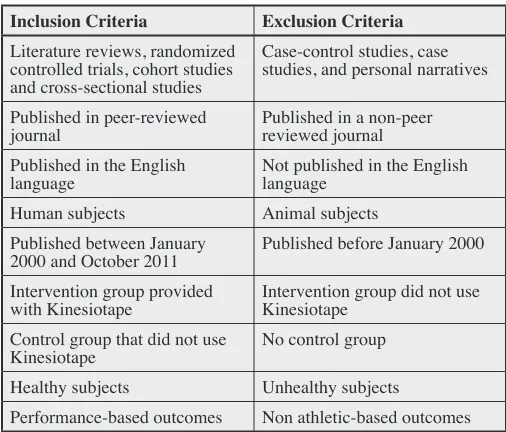
The three authors independently evaluated the results from the electronic search. The titles and abstracts found in the electronic search were examined to determine which articles met the basic criteria to be included in the review. All of the obtained full text manuscripts were evaluated using the inclusion criteria indicated in Table 1. Interven-tions included the use of KT compared to a control group without KT. Studies must have contained information on the subject of the effects of KT on measurable athletic performance in healthy individuals only. These criteria were applied to all of the obtained manuscripts. Upon completion of the independent reviews, the authors com-pared their results and if disagreement between reviewers was identified, it was resolved by consensus.
Data Collection Process
The researchers collectively chose a total of 10 articles that met the inclusion criteria which were further evalu-ated based on the presence of 10 specific criteria. The criteria utilized to appraise each article were chosen col-lectively as a group among the researchers. However, to ensure that the appraisal scores were highly accurate de-pictions of each article’s study design and protocol, each researcher independently evaluated the articles without collaboration. The 10 criteria chosen in order to critically appraise each article reflected the study’s protocols and methods by evaluating specific details of the study’s use
of randomization and blinding procedures, interventions, sources of error and specific outcomes.
Firstly, details of the population used in the study were evaluated, including the procedures used in the assign-ment of subjects, the baseline characteristics of the sub-jects used in the study and the utilization of prognostic stratification, which reflected the study’s ability to limit bias through the use of randomization. Secondly, the study method protocol was critically examined including the use of blinding procedures, the compliance to study methods, the costs and resources required for the study, the explanation of follow up procedures used in the study and the identification of sources of error, contamination or co-intervention in the study. Lastly, the outcomes of the research study were evaluated including the ability of the author to document the statistical and clinical signifi-cance of the outcomes derived from the study, as well as their relevance. Pooling of statistics was not completed for the included studies. The critical appraisal scores that were derived for each article were therefore based on the presence of 10 appraisal criteria, are highly accurate de-pictions of each article’s design and protocol, and com-plete the data collection process utilized in the literature synthesis.
Table 1:
Review of Eligibility Criteria
Inclusion Criteria Exclusion Criteria Literature reviews, randomized
controlled trials, cohort studies and cross-sectional studies
Case-control studies, case studies, and personal narratives
Published in peer-reviewed
journal Published in a non-peer reviewed journal Published in the English
language Not published in the English language Human subjects Animal subjects
Published between January
2000 and October 2011 Published before January 2000 Intervention group provided
with Kinesiotape Intervention group did not use Kinesiotape Control group that did not use
Kinesiotape No control group
Healthy subjects Unhealthy subjects
Quality of the Studies
Using an adaption of the critical appraisal criteria in Clin-ical Epidemiology by Sackett et al.8 found in Table 2,
the authors independently evaluated the methodological quality of the 10 studies that met the eligibility condi-tions. The appraisal criteria used for this review consisted of 10 questions scoring either 2 for acceptable or 1 for lacking, which resulted in a total out of 20. A score of 10-12 was considered of poor methodological quality; 13-15 of moderate quality; 16-18 of high quality; and 19-20 was considered to be of superior methodological quality. Scores from the methodological appraisal can be found in Table 4.
Results
A total of 10 articles were found and included in this lit-erature synthesis.9-18 The search of EBSCO databases in
MEDLINE, CINAHL, SportDISCUS, Index to Chiro-practic Literature, Alt Health Watch, AMED, Nursing and Allied Health Collection, Psychology and Behavioural Sciences Collection and Rehabilitation & Sports Medi-cine Source, using all MeSH terms with limiters resulted in 140 articles in total. Adding all the MeSH terms and search terms combined with limiters produced 22 articles.
Upon reviewing the titles and abstracts of these articles, 12 were discarded because they did not meet the inclusion criteria for this review. The principle reason for discarding these articles was due to the inclusion of non-healthy subjects. No additional studies were identified after con-ducting a reference check of the included articles. The 10 selected articles were then read in full. 9-18 All were found
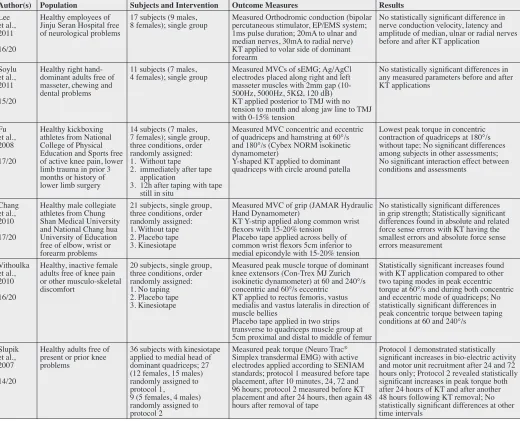
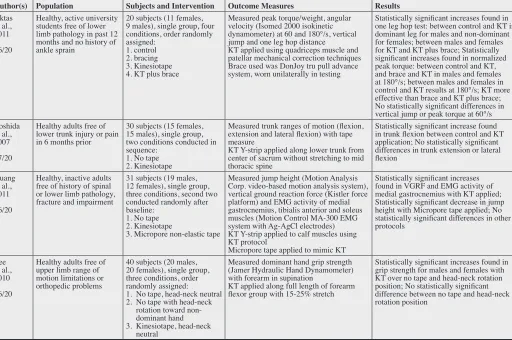
to meet the inclusion criteria and were included in this re-view. No unpublished preliminary studies were included. For a summary of the results for each of the 10 articles see Table 3.
Methodological Quality
The quality score assigned to each of the 10 studies in-cluded in this review is provided in Table 4. In order to systematically evaluate the methodological quality of each study and to aid in developing an objective measurement of the results of the appraisal, an adaptation of the critical appraisal criteria in Clinical Epidemiology by Sackett et al.8 was applied. The majority of studies (n= 8) included in
this review were of high methodological quality.9,11-13,15-18
None of the studies were considered to be of poor or su-perior methodological quality. Two studies, namely the study completed by Stupik et al.14 and Soylu et al.10, were
Table 2:
Critical Appraisal Criteria
1. Was the assignment of subjects randomized?
2. Were baseline characteristics of subjects similar between groups to limit bias? 3. Was prognostic stratification used?
4. Was an appropriate blinding protocol followed? 5. Is the study method protocol realistically feasible?
6. Was compliance to study methods at least 80% or otherwise adequately explained? 7. Were follow-up procedures adequately explained?
8. Were sources of error, contamination or co-intervention identified? 9. Was statistical significance given for all outcomes?
of moderate methodological quality and were graded the lowest score consistently among the reviewers. Each study utilized in this review was lacking at least three of the critical appraisal criteria outlined in Table 2. Therefore, the highest score awarded was 17/20, which was achieved by Fu et al.11, Chang et al.12 and Yoshida et al.16
Three of the 10 appraisal criteria, specifically method protocol, compliance and clinical significance, were
util-ized in all 10 studies. Firstly, every study demonstrated a study method protocol that was considered to be realis-tically feasible. The requirements necessary to complete the study procedure were clearly outlined in each paper. Additionally, the data collection methods, which were im-plemented by the researchers, were outlined sufficiently so that the study could be repeated similarly. Secondly, all of the studies had at least 80% compliance or adequately
Table 3:
Results Summary Table
Author(s) Population Subjects and Intervention Outcome Measures Results
Lee et al., 2011 16/20
Healthy employees of Jinju Seran Hospital free of neurological problems
17 subjects (9 males,
8 females); single group Measured Orthodromic conduction (bipolar percutaneous stimulator, EP/EMS system; 1ms pulse duration; 20mA to ulnar and median nerves, 30mA to radial nerve) KT applied to volar side of dominant forearm
No statistically significant difference in nerve conduction velocity, latency and amplitude of median, ulnar or radial nerves before and after KT application
Soylu et al., 2011 15/20
Healthy right hand-dominant adults free of masseter, chewing and dental problems
11 subjects (7 males,
4 females); single group Measured MVCs of sEMG; Ag/AgCl electrodes placed along right and left masseter muscles with 2mm gap (10-500Hz, 5000Hz, 5KΩ, 120 dB) KT applied posterior to TMJ with no tension to mouth and along jaw line to TMJ with 0-15% tension
No statistically significant differences in any measured parameters before and after KT applications Fu et al., 2008 17/20 Healthy kickboxing athletes from National College of Physical Education and Sports free of active knee pain, lower limb trauma in prior 3 months or history of lower limb surgery
14 subjects (7 males, 7 females); single group, three conditions, order randomly assigned: 1. Without tape 2. immediately after tape
application
3. 12h after taping with tape still in situ
Measured MVC concentric and eccentric of quadriceps and hamstring at 60°/s and 180°/s (Cybex NORM isokinetic dynamometer)
Y-shaped KT applied to dominant quadriceps with circle around patella
Lowest peak torque in concentric contraction of quadriceps at 180°/s without tape; No significant differences among subjects in other assessments; No significant interaction effect between conditions and assessments
Chang et al., 2010 17/20
Healthy male collegiate athletes from Chung Shan Medical University and National Chang hua University of Education free of elbow, wrist or forearm problems
21 subjects, single group, three conditions, order randomly assigned: 1. Without tape 2. Placebo tape 3. Kinesiotape
Measured MVC of grip (JAMAR Hydraulic Hand Dynamometer)
KT Y-strip applied along common wrist flexors with 15-20% tension
Placebo tape applied across belly of common wrist flexors 5cm inferior to medial epicondyle with 15-20% tension
No statistically significant differences in grip strength; Statistically significant differences found in absolute and related force sense errors with KT having the smallest errors and absolute force sense errors measurement
Vithoulka et al., 2010 16/20
Healthy, inactive female adults free of knee pain or other musculo-skeletal discomfort
20 subjects, single group, three conditions, order randomly assigned: 1. No taping 2. Placebo tape 3. Kinesiotape
Measured peak muscle torque of dominant knee extensors (Con-Trex MJ Zurich isokinetic dynamometer) at 60 and 240°/s concentric and 60°/s eccentric
KT applied to rectus femoris, vastus medialis and vastus lateralis in direction of muscle bellies
Placebo tape applied in two strips transverse to quadriceps muscle group at 5cm proximal and distal to middle of femur
Statistically significant increases found with KT application compared to other two taping modes in peak eccentric torque at 60°/s and during both concentric and eccentric mode of quadriceps; No statistically significant differences in peak concentric torque between taping conditions at 60 and 240°/s
Slupik et al., 2007 14/20
Healthy adults free of present or prior knee problems
36 subjects with kinesiotape applied to medial head of dominant quadriceps; 27 (12 females, 15 males) randomly assigned to protocol 1,
9 (5 females, 4 males) randomly assigned to protocol 2
Measured peak torque (Neuro Trac®
Simplex transdermal EMG) with active electrodes applied according to SENIAM standards; protocol 1 measured before tape placement, after 10 minutes, 24, 72 and 96 hours; protocol 2 measured before KT placement and after 24 hours, then again 48 hours after removal of tape
Protocol 1 demonstrated statistically significant increases in bio-electric activity and motor unit recruitment after 24 and 72 hours only; Protocol 2 revealed statistically significant increases in peak torque both after 24 hours of KT and after another 48 hours following KT removal; No statistically significant differences at other time intervals
explained and provided valid reasoning as to why full compliance was not achieved. Monitoring protocol com-pliance is essential in order to establish the validity of the study. Lastly, the relevance of clinical outcomes and their clinical significance was provided by all 10 studies. This is necessary in order to continuously improve care in a clinical setting, as well as to guide further research related to the results of the particular study.
Conversely, one of the 10 appraisal criteria was not in-corporated into any of the studies. Follow-up procedures were either not adequately explained or not utilized en-tirely in all 10 studies. Half of the studies (n=5) did not use adequate randomization protocols9,10,14,15,17 and
there-fore, the study results did not adequately represent the en-tire population and ultimately could not be applied to the general population. Randomization procedures are
neces-Author(s) Population Subjects and Intervention Outcome Measures Results
Aktas et al., 2011 16/20
Healthy, active university students free of lower limb pathology in past 12 months and no history of ankle sprain
20 subjects (11 females, 9 males), single group, four conditions, order randomly assigned:
1. control 2. bracing 3. Kinesiotape 4. KT plus brace
Measured peak torque/weight, angular velocity (Isomed 2000 isokinetic dynamometer) at 60 and 180°/s, vertical jump and one leg hop distance
KT applied using quadriceps muscle and patellar mechanical correction techniques Brace used was DonJoy tru pull advance system, worn unilaterally in testing
Statistically significant increases found in one leg hop test: between control and KT in dominant leg for males and non-dominant for females; between males and females for KT and KT plus brace; Statistically significant increases found in normalized peak torque: between control and KT, and brace and KT in males and females at 180°/s; between males and females in control and KT results at 180°/s; KT more effective than brace and KT plus brace; No statistically significant differences in vertical jump or peak torque at 60°/s Yoshida
et al., 2007 17/20
Healthy adults free of lower trunk injury or pain in 6 months prior
30 subjects (15 females, 15 males), single group, two conditions conducted in sequence:
1. No tape 2. Kinesiotape
Measured trunk ranges of motion (flexion, extension and lateral flexion) with tape measure
KT Y-strip applied along lower trunk from center of sacrum without stretching to mid thoracic spine
Statistically significant increase found in trunk flexion between control and KT application; No statistically significant differences in trunk extension or lateral flexion
Huang et al., 2011 16/20
Healthy, inactive adults free of history of spinal or lower limb pathology, fracture and impairment
31 subjects (19 males, 12 females), single group, three conditions, second two conducted randomly after baseline:
1. No tape 2. Kinesiotape
3. Micropore non-elastic tape
Measured jump height (Motion Analysis Corp. video-based motion analysis system), vertical ground reaction force (Kistler force platform) and EMG activity of medial gastrocnemius, tibialis anterior and soleus muscles (Motion Control MA-300 EMG system with Ag-AgCl electrodes) KT Y-strip applied to calf muscles using KT protocol
Micropore tape applied to mimic KT
Statistically significant increases found in VGRF and EMG activity of medial gastrocnemius with KT applied; Statistically significant decrease in jump height with Micropore tape applied; No statistically significant differences in other protocols
Lee et al., 2010 16/20
Healthy adults free of upper limb range of motion limitations or orthopedic problems
40 subjects (20 males, 20 females), single group, three conditions, order randomly assigned: 1. No tape, head-neck neutral 2. No tape with head-neck
rotation toward non-dominant hand 3. Kinesiotape, head-neck
neutral
Measured dominant hand grip strength (Jamer Hydraulic Hand Dynamometer) with forearm in supination
KT applied along full length of forearm flexor group with 15-25% stretch
Statistically significant increases found in grip strength for males and females with KT over no tape and head-neck rotation position; No statistically significant difference between no tape and head-neck rotation position
Table 3:
sary in order to eliminate a selection bias. Each study en-sured that baseline characteristics of subjects were similar between groups to limit bias, except for the research com-pleted by Stupik et al.14 The two groups used in this study
differed in the average age of group members, the total number of group members and the percentage of females versus males within each group. The majority of studies (n=9) failed to adequately report or incorporate blinding procedures into their study protocol,9-16,18 except for the
research completed by Huang, et al.17 In this study, the
test sequence was randomly processed for each subject in order to avoid potential bias. The majority of studies (n=6) successfully identified the potential sources of error in the discussion portion of their paper.9-12,15,16 Lastly, most
of the studies (n=8) reviewed provided statistical signifi-cance for all outcomes.9,11-17 Only two studies, namely
those completely by Soylu et al.10 and Lee et al.18, failed
to accurately reveal this appraisal criteria.
Participants
The sample sizes in the 10 studies ranged from 11 to 40. All of the studies had an average age range of 20.86 to 34.35 years old.9-18 Eight of the studies mentioned
aver-age height and weight with respective ranges of 167.06 to 181.24 cm and 56.94 to 72.86 kg.9-13,15,17,18 One study
measured BMI in subjects and excluded individuals with
BMI > 25 from participation.15 Two studies utilized
sub-jects of only one sex.12,13 Two of the studies used
collegi-ate athletes11,12 and two other studies specified that
sub-jects were previously inactive13,17. All of the studies used
healthy volunteers with no current pain or injury.9-18 Primary Outcome
In all the articles examined, the primary health outcome measured was always athletic based performance. In many of the experimental studies, the primary aim of the study was to improve maximum voluntary contrac-tion.10-12 All 10 of the studies looked at different
meth-ods of measuring athletic based performance including MVC10-12, grip strength18, peak muscle torque13-15, muscle
bioelectrical activity14, range of motion15, vertical ground
reaction force17, and Orthodromic conduction9. This lack
of homogeneity amongst outcome measures in the stud-ies prevented the ability to pool statistical data. The most common control intervention used within the studies was repeated measures within a single group, with and with-out KT (n=3).9,10,16 Three studies involved a single group
with three conditions, order randomly assigned.11-13 One
study had a single group with four conditions, order ran-domly assigned.14 One study was a single group with three
conditions, the second two conducted randomly after the controlled baseline.17 Another study divided participants
Table 4:
Methodological Quality Appraisal Results
No. Item Description Lee et al.9 Soylu
et al.10 Fu et al.11 Chang et al.12 Vithoulka et al.13 Slupik et al.14 Aktas et al.15 Yoshida et al.16 Huang et al.17 Lee et al.18
1 Randomized 1 1 2 2 2 1 1 2 1 2
2 Baseline Characteristics 2 2 2 2 2 1 2 2 2 2
3 Prognostic Stratification 1 1 1 1 1 1 1 1 1 2
4 Blinding 1 1 1 1 1 1 1 1 2 1
5 Method Protocol 2 2 2 2 2 2 2 2 2 2
6 Compliance 2 2 2 2 2 2 2 2 2 2
7 Follow-up 1 1 1 1 1 1 1 1 1 1
8 Sources of Error 2 2 2 2 1 1 2 2 1 1
9 Statistical Significance 2 1 2 2 2 2 2 2 2 1
10 Clinical Significance 2 2 2 2 2 2 2 2 2 2
into two protocol groups, both tested without KT initially. The first group was then tested at 10 minutes, 24 hours, 72 hours, and 96 hours after KT application. The second group was tested at 24 hours after KT application and 48 hours after removal of tape.14 The final study was a single
group with three conditions randomly assigned, two be-ing without tape and one with KT.18
The timing of the testing varied between all 10 stud-ies in this review. The timing of testing ranged from im-mediately after the application of KT to 96 hours after the application. The results show that KT has beneficial ef-fects on athletic performance up to 72 hours after applica-tion.14 The number of variables tested in each individual
ranged from one to four different conditions. The location of KT application varied between studies and included the forearm muscles9,12,18, masseter muscles10, quadriceps and
hamstring muscles11-15, lumbar erector muscles16, and
gas-trocnemius, soleus, and tibialis anterior muscles17. Four
of the intervention studies showed no statistically signifi-cant differences in any measured parameters before and after KT applications.9-12 Five studies found immediate
statistically significant increases in grip strength, verti-cal ground reaction force, EMG activity, range of motion, and peak torque with KT over no tape when measure-ments were taken between 0 and 45 minutes following tape application.13,15-18 Lee et al.18 showed an increase in
dominant hand grip strength for males and females with KT applied to the flexor muscles over no tape. Huang et al.17 showed increases found in vertical ground reaction
force and EMG activity of medial gastrocnemius with KT applied and a statistically significant decrease in jump height with the non-elastic tape applied, after 30 minutes of tape application. Yoshida et al.16 found an increase in
trunk flexion between control and KT application, when measured immediately following tape application. Aktas et al.15 found increases in the single-leg hop test and in
normalized peak torque between control and KT, with KT being more effective than the brace and KT plus brace groups, when testing was completed 45 minutes after tape application. Vithoulka et al.13 showed increases with KT
application to the rectus femoris, vastus lateralis and vas-tus medialis over placebo and no tape methods in peak eccentric torque at 60°/s and during both the concentric and eccentric mode of quadriceps contraction. None of the previous studies included follow up to assess the sus-tained effects of KT application. One study, by Slupik et
al.14 evaluated the longer term results of KT application
and found increases in bio-electric activity and motor unit recruitment of the vastuss medialis after 24 and 72 hours of KT application, and at 48 hours following KT removal, with no improvement found 96 hours after removal.
Discussion
The evidence is not adequately strong to determine the effectiveness of KT on improving athletic-based perform-ance outcome measures in healthy individuals. Merely six studies showed positive results of KT as an effective method for improving some measures of athletic-based performance.13-18 This review demonstrates that there is
scant evidence that KT application immediately improves grip strength, vertical ground reaction force, gastrocn-emius EMG activity, trunk flexion, single-leg hop test and peak torque within 0 to 45 minutes of application.13,15-18
As well, it was shown that bio-electric activity and mo-tor unit recruitment in the vastus medialis was increased after 24 and 72 hours of KT application and after 48 hours following removal of the KT only.14 There are numerous
studies assessing the effectiveness of using KT as a treat-ment for a variety of injuries and disorders; however, only 10 studies9-18 evaluating its effect on performance in
healthy individuals were identified. Evidence to suggest that KT should be used as a method for improving ath-letic-based performance is lacking. Consequently, chiro-practors and other healthcare practitioners should proceed with caution when considering the use of KT as a method for improving athletic-based performance measures. Limited conclusions can be made on recommendations for appropriate instructions, location and duration of KT application due to variation in age, sex, tape application protocols and duration of application of tape. In addition, the wide variety of athletic-based performance measures assessed in each study and the dearth of sufficient inter-vention sizes makes it difficult to draw definite conclu-sions as to whether or not KT affects athletic-based per-formance measures in healthy persons.
back only as far as the year 2000, which could have ex-cluded studies that may have had an impact on the results of this review. The inclusion of cohort and cross-sectional studies and not limiting the studies to RCTs could have limited the quality of the results found in this review. However, a thorough search strategy was conducted using multiple electronic databases with hand reference search-ing of the obtained articles, thus actions were taken to as-sess the current state of the literature. The lack of pooled statistics may have also limited the quality and strength of our results. Furthermore, this review focused entirely on athletic-based performance outcomes, limiting the clin-ical application of these results to the general population. The principle limitation amid the included studies was the lack of homogeneity of the methodological designs and outcome measures resulting in inconclusive findings regarding appropriate instructions, location and duration of KT application to affect athletic performance. Addi-tional limitations present in the articles of this review in-clude small study sizes, inadequately described follow-up procedures, lack of blinding protocols, failure to describe the experience level of those applying the KT, failure to address the possible placebo effect of KT and lack of con-trol groups. There were only ten studies identified in total which involved entirely healthy subjects, which also lim-ited the conclusiveness of results found in this review. There are currently no literature reviews assessing the effects of KT on athletic-based performance measures in healthy individuals. Future research in this area should focus on higher quality RCTs involving larger study sizes, appropriate blinding procedures and extended fol-low-up protocol. More consistent use of outcome meas-ures should also be included in future research to enable comparison and pooling of data. Additionally, research focused on confirming the mechanism of the function of KT, assessing the potential placebo effect of KT, assess-ing the importance of application experience on various outcome measures, determining the rates at which chiro-practors apply or recommend kinesiotaping techniques as a means of improving athletic performance and the effects produced with KT use in combination with other treat-ment protocols should be conducted.
Conventionally, KT has been used in the treatment of athletic injury or to limit pain in athletes and is used as a substitute for the traditional white athletic tape. The evi-dence is lacking to support the use of KT in improving
athletic-based performance outcomes in healthy subjects; however, there was no evidence KT had a negative ef-fect on the measured outcomes. A more extensive review of the effect of KT on various athletic injuries would be beneficial, as its ease of use, its relatively low risk of minimal side effects and the non-detrimental impact it appears to have on athletic performance give KT the po-tential to be a viable treatment option. Chiropractors and other healthcare providers need to educate themselves, coaches and athletes on the possible benefits KT can have on athletic performance with caution since more research is required to establish concrete outcomes.
Conclusions
KT has quickly garnered popularity in the athletic popula-tion as it has gained more mainstream use since the 2008 Beijing Olympic Games. It has been suggested by its cre-ator, Dr. Kenzo Kase, that KT has the following effects: (i) increasing proprioception by providing constant cuta-neous afferent stimulation through the skin, (ii) realign-ing fascial tissue function by normalizrealign-ing muscle tension, (iii) creating more space for improving circulation of blood and lymph flow by eliminating extra fluid, edema, or bleeding beneath the skin, (iv) correcting muscle func-tion by strengthening muscle weakness, (v) decreasing pain through neurological suppression.
There is scant evidence to support kinesiotaping tech-niques as a successful means of affecting athletic-based performance outcomes such as improved strength, pro-prioception and range of motion, in healthy persons. Re-gardless of the heterogeneity of the study methods there is some evidence showing KT can improve certain athletic-based performance outcomes. Results from this literature review give pause to chiropractors and other healthcare practitioners looking to justify using KT for improving athletic performance in healthy athletes. Although it does not seem to further hinder athletic performance, addition-al research is needed before any conclusive statements can be made with regard to the recommended use of KT and its effects on athletic-based performance outcomes.
References
2. Lephart SM. The role of proprioception in the treatment of sports injuries. Sports Exerc Inj. 1995; 1: 96-102.
3. Williams S, Whatman C, Hume PA, Sheerin K. Kinesio Taping in treatment and prevention of sports injuries: A meta-analysis of the evidence for its effectiveness. Sports Med. 2012; 42 (2): 153-164.
4. Kinesiotaping in Canada. What does kinesiotaping do? [homepage on the Internet]. c2003 [cited 25 February 2012]. Available from http://www.kinesiotape.ca/ whatitdoes.htm
5. Kinesio® USA. Kinesio® Taping about video [video on the
Internet]. c2010 [cited 25 February 2012]. Available from http://www.kinesiotaping.com/us/global/association/about/ video.html
6. Kase K, Wallis J, Kase T. Clinical therapeutic applications of the Kinesio® Taping method. Tokyo, Japan: Kinesio
Taping Association, Ken Ikai Co. Ltd; 2003.
7. Kinesio® USA. Kinesio® Taping method [homepage on the
Internet]. c2010 [cited 18 February 2012]. Available from http://www.kinesiotaping.com/us/global/corporation/about/ kinesio-taping-method.html
8. Sackett DL, Haynes RB, Guyatt GH, Tugwell P. Clinical epidemiology: a basic science for clinical medicine. Toronto: Little Brown; 1991.
9. Lee MH, Lee CR, Park JS, Lee SY, Jeong TG, Son GS, Lee JY, Kim EC, Kim YK. Influence of kinesio taping on the motor neuron conduction velocity. J Phys Ther Sci. 2011; 23(2): 313-315.
10. Soylu AR, Irmak R, Baltaci G. Acute effects of
kinesiotaping on muscular endurance and fatigue by using
surface electromyography signals of masseter muscle. Med Sport. 2011; 15(1): 13-16.
11. Fu TC, Wong AMK, Pei YC, Wu KP, Chou SW, Lin YC. Effect of kinesio taping on muscle strength in athletes – a pilot study. J Sci Med Sport. 2008; 11: 198-201.
12. Chang HY, Chou KY, Lin JJ, Lin CF, Wang CH, Immediate effect of forearm kinesio taping on maximal grip strength and force sense in healthy collegiate athletes. Phys Ther Sport. 2010; 11: 122-127.
13. Vithoulka I, Beneka A, Malliou P, Aggelousis N, Karatsolis K, Diamantopoulos K. The effects of kinesio taping on quadriceps strength during isokinetic exercise in healthy non athlete women. Isokinet Exerc Sci. 2010; 18: 1-6.
14. Slupik A, Dwornik M, Bialoszewski D, Zych, E. Effect of kinesio taping on bioelectrical activity of vastus medialis muscle. Preliminary report. Orto Traum Rehab. 2007; 9(6): 644-651.
15. Aktas G, Baltaci G. Does kinesiotaping increase knee muscles strength and functional performance? Isokinet Exerc Sci. 2011; 19: 149-155.
16. Yoshida A, Kahanov L. The effect of kinesio taping on lower trunk range of motions. Res Sport Med. 2007; 15: 103-112.
17. Huang CY, Hsieh TH, Lu SC, Su FC. Effect of the kinesio tape to muscle activity and vertical jump performance in healthy inactive people. Biomed Eng Online. 2011; 10: 70. 18. Lee JH, Yoo WG, Lee KS. Effects of head-neck rotation