ORIGINAL PAPER
Green synthesis of gold nanoparticles and their anticancer activity
Ravi Geetha&Thirunavukkarasu Ashokkumar& Selvaraj Tamilselvan&Kasivelu Govindaraju& Mohamed Sadiq&Ganesan Singaravelu
Received: 21 March 2013 / Accepted: 5 May 2013 / Published online: 5 June 2013 #Springer-Verlag Wien 2013
Abstract As the nano revolution unfolds, it is imperative to integrate nanoscience and medicine. The secret gleaned from nature have led to the generation of biogenic technologies for the fabrication of advanced nanomaterials. Present investiga-tion discloses the gold nanoparticles biosynthesizing capabil-ity of the flower of pharmacologically important tree
Couroupita guianensis. Rapid, cost-effective, one-step pro-cess of synthesis has been achieved. Newly genre gold nanoparticles were characterized by involving UV–vis spec-troscopy, FTIR, XRD, SEM, and TEM analysis. Interestingly, as a result of extensive screening on the application of newly synthesized gold nanoparticles their anticancer potential has been discovered using MTT assay, DNA fragmentation, apo-ptosis by DAPI staining, and comet assay for DNA damage.
Keywords Couroupita guianensis. Gold nanoparticles .
Anticancer . DNA fragmentation
1 Introduction
Metal nanoparticles are of great importance due to their high surface area and a high fraction of surface atoms. The scien-tific and technological significance of metal nanoparticles has made them the subject of intensive research, given their spe-cial chemical and physical properties. In particular, gold
nanoparticles are employed in many fields: biosensing (Mirkin et al. 1996), catalysis (Sen et al. 2012), electronics (Rao and Cheetham2001), enzyme electrodes (Crumbliss et al.1992), super conductors (Sun and Xia2002), and cancer therapy (EI-Sayed et al.2006) among others.
Presently, biological nanoscience has drawn increasing attention due to its avant-garde nature and the efficacy of produced nanoparticles in industrial, biomedical, and elec-tronic applications such as catalyst (Hashmi and Hutchings
2006), cancer detection (Huang et al.2007b), and bioimaging (Wu et al.2006). Among the loads of metal nanoparticles, gold nanoparticles have an especially wide application in DNA recognition, heredity medicine, and nano-catalysis. It has been pointed out that the divergent capabilities of these nanoparticles are controlled by their size (Alivisatos1996; Jin et al.2001; Aizpurua et al.2003).
Numerous methodologies are developed to synthesize noble metal nanoparticles of particular shape and size depending on specific requirements. Biosynthesis of nanoparticles has an emerging highlight of the intersection of nanotechnology and biotechnology which has received increased attention to a growing need to develop environ-mentally benign technologies in material syntheses. Bio-molecules as reductants are found to have significant advantage over chemical reductants due to their non bio-compatible nature (Huang et al.2007a).
In the present cram, a simple biosynthetic method using flower extract ofCouroupita guianensisis addressed herein for synthesizing gold nanoparticles. The newly synthesized gold nanoparticles were characterized by employing stan-dard technologies. The plant C. guianensis, commonly known as cannon ball tree, has innumerable medicinal ap-plications including antibiotic, antiseptic, anti-inflammatory activity (Geetha et al.2004). Indeed, it is expected that gold nanoparticles synthesized using the flower of the tree C. guianensis might have medicinal properties. Accordingly, efforts are made to identify the newly generated gold
R. Geetha
:
T. Ashokkumar:
S. Tamilselvan:
G. Singaravelu (*) Nanoscience Division, Department of Zoology, Thiruvalluvar University, Vellore 632 115, Indiae-mail: [email protected]
K. Govindaraju
Centre for Ocean Research, Sathyabama University, Chennai 600 119, India
M. Sadiq
Department of Biochemistry, Adhiparasakthi College of Arts and Science, Kalavai, Tamilnadu, India
nanoparticles’medicinal value. As a result, their antileu-kemic cancer activity has been explored. Cancer is the leading cause of death worldwide after cardiovascular diseases (Garrett and Workman 1999). Leukemia is a major type of cancer affecting a significant segment of the population, especially children. In fact, leukemia is the most frequent childhood cancer, with 26 % of all cases, and 30 % mortality (Canadian Cancer Society2005). Clinical trials in identifying new agents and treatment modal-ities has been studied and achieved. However, current treat-ments have many limitations related to their side effects and the development of acquired drug resistance (Robert and Jarry
2003). Thus, the new therapeutic agents needed should be more active and produce fewer side effects and they also should act through a mechanism different from that of cyto-toxic agents already used.
2 Materials and methods
2.1 Preparation of flower extract
Fresh flowers ofC. guianensiswere collected, washed thor-oughly with double distilled water, air dried, and powdered. About 1 g of powdered flower was transferred into a 100-mL beaker containing 50 100-mL double distilled water and mixed well. The extract obtained was filtered through Whatmann no. 1 filter paper and the filtrate was collected in a separate flask.
2.2 Synthesis of gold nanoparticles using plant extract
One hundred milliliter solution of 1 mM chloroauric acid at concentration of 10−3 M was prepared by dissolving in double distilled water. Different reaction concentrations of
C. guianensis extract and HAuCl4solution (1:9, 2:8, 3:7,
4:6, and 5:5) were subjected, respectively. The reduction of gold ions to gold nanoparticles was completed within 5 min. The pale yellow color solution turns to ruby red color indicating the formation of gold nanoparticles. The reduc-tion of metal ions was continuously monitored by visual inspection as well as by measuring with UV–visible spec-trometer in the wavelength range 300–800 nm.
2.3 Characterization of gold nanoparticles
UV–visible spectrum was recorded as a function of the reaction time on a Techomp (UV 2300) double beam spectrophotometer.
For FTIR measurements, the newly synthesized gold nanoparticles were centrifuged at 8,000 rpm for 10 min and the resulting suspension was redispersed in distilled water. The purified pellets were dried and smirk with KBr pellets
and analyzed by Thermo Nicolet Quator instrument in the diffuse reflectance mode operating at a resolution of 4 cm−1.
XRD measurements of the C. guianensis-synthesized gold nanoparticles solution drop coated on to glass sub-strates was done on a Siefert X-ray diffractometer, operated at a voltage of 40 kV and tube current of 30 mA with Cu-Kα radiation. Surface morphology of newly formed gold nanoparticles was determined using scanning electron mi-croscope (FEI Quanta 200 SEM).
For TEM studies, newly synthesized gold nanoparticles were prepared by placing a drop of nanoparticle solution on carbon-coated copper grids and allowing water to evaporate. TEM measurements were performed on JEOL 3010 UHR TEM equipped with a Gatan Imaging Filter.
2.3.1 Assessment of cell morphology
HL-60 cells were cultured in 24-well plates and incubated at 37 °C for 24 h before each well were individually treated with 0, 60, 90, 120, 150, and 180μg/mL gold nanoparticles for 48 h. Determination of cell morphology was made using a phase contrast microscope (Lu et al.2010).
2.3.2 DAPI staining for apoptosis
Cells in 12-well plates were treated with or without 0, 80, 120, 180, and 200μg/mL gold nanoparticles for 48 h. Cells were then stained by using 4,6-diamidino-2-phenylindole dihydrochloride (DAPI) (Chen et al.2009a).
2.3.3 Comet assay for DNA damage
Cells in 96-well plates were treated with or without 0, 60, 90, 120, 150, and 180μg/mL gold nanoparticles for 48 h. Cells were then harvested and DNA damage was deter-mined with the Comet assay (Chen et al.2009b).
2.3.4 DNA gel electrophoresis for DNA fragmentation
Cells in six-well plates were incubated with 0 and 150μg/mL gold nanoparticles 48 h. Cells were harvested by centrifuga-tion and DNA was isolated before DNA fragmentacentrifuga-tion was determined by DNA gel electrophoresis (Lu et al.2010).
2.3.5 Effect of gold nanoparticles on cytotoxicity
HL-60 cells were obtained from the NCCS, Pune, India, and grown in RPMI1640 medium and supplemented with a 2 mg mL−1 sodium bicarbonate, 4.5 mg mL−1 glucose, 100μg mL−1streptomycin sulfate, 40μg mL−1gentamycin, 100 U mL−1penicillin as well as 10 % heat-inactivated fetal calf serum. An environment of humidified air containing
mononuclear cells (PBMC) were obtained from healthy do-nors and cultured as described. Effects of gold nanoparticles
on the proliferation of cells was determined by MTT [3-(4, 5-dimethyl thiazoyl-2-yl)-(2,5-diphenyltetrazolium bromide)]
Fig. 1 UV–visible absorption spectrum of biosynthesized gold nanoparticles by
Couroupita guianensisflower extract
4000.0 3600 3200 2800 2400 2000 1800 1600 1400 1200 1000 800 600 450.0 0.0
5 10 15 20 25 30 35 40 45 50 55 60 65 70 75 80 85 90 95 100.0
3414
2133
1648
1383 1288
1073
671 498
cm-1 %T
3615
3547
2924 2855
2402
2129
1744
1378
1071
814
555
a
b
assay. Briefly, the cells were suspended at 3×10⁵Cell mL−1. The cells were placed in 96-well microtiter plates (200 μl well−1) and incubated at 37 °C in a CO2 incubator in the
presence of the gold nanoparticles. After 5 days, cell viability was measured by MTT assay, from which cytotoxic concen-tration (CC50) was calculated (Premnathan et al.1996).
3 Results and discussion
Design and development of nanomaterials with unusual physico-chemical and optoelectronic features is a corner stone in nanoscience. Present report discloses the bioreduction property of gold ions into gold nanoparticles
by ethnopharmacologically important C. guianensis
flower’s extract. Synthesis of gold nanoparticles has been achieved in 5 min of reaction without any experimental protocols like stirring, heating, change in pH. Reduction and capping of newly formed gold nanoparticles was
achieved with the flower extract of C. guianensis. As a result of extensive screening with different concentrations of auric chloride and flower extract, synthesis was success-ful with the concentration of 2:8 (2 mL of flower extract and 8 mL of auric chloride). Figure1shows the UV–vis spectra of the newly formed gold nanoparticles and the characteristic SPR band occurs at ca. 534 and at 5 min that attained the maximum intensity.
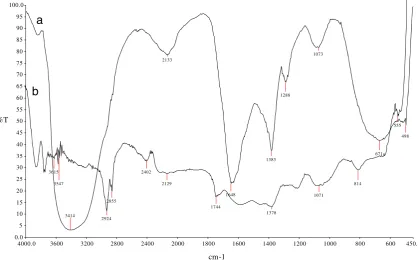
Fourier transform infrared (FTIR) was made in order to identify the possible biomolecules responsible for the reduc-tion of gold ions and capping of the bioreduced gold nanoparticles (Fig.2a and b). FTIR spectrum of the aqueous extract ofC. guianensis(curve a) showed peaks at 3,414 (O– H stretch, H–bonded of alcohols/phenols), 2,133 (−C (triple bond) C– stretch of alkynes), 1,648 (−C=C– stretch of al-kynes), 1,383 (C–N stretching vibration of aliphatic amines), 1,288 (C–O stretch of alcohols), and 1,073 cm−1 (C–N stretching vibration of aliphatic amines or alcohols/phenols). The intense broad absorbance at 3,414 cm−1is characteristic of the hydroxyl functional group in alcohols and phenolic compounds. The FTIR spectrum of the gold nanoparticles (curve b) showed peaks at 3,615 and 3,547 (O–H stretch, H–bonded of alcohols/phenols), 2,924 and 2,855 (C–H stretch), 2,402 and 2,129 (−C (triple bond) C– stretch of alkynes), 1,744 (C=O stretch of carboxylic acids), 1,378 (C– N stretching vibration of aliphatic amines), and 1,071 cm−1(C– N stretching vibration of aliphatic amines or to alcohols/phenols). Comparing both FTIR spectra it can be identified that the changes in the–COOH group for–OH, i.e., hydroxyl group the peak appeared at 3,414 cm−1in raw mate-rial, but after encapsulation of nanoparticles, the peak is narrower and shifted to 3,615 cm−1and also for–C– of car-boxylic group the peak intensity reduced after encapsulation of nanoparticles. The peaks at 1,648, 1,383, 1,288, and 1,073 cm−1 are reduced and the new peak appeared at
10 20 30 40 50 60 70 80
0 100 200 300 400 500
Intensity
2
(11
1
)
(2
0
0
)
(220) (31
1
)
Fig. 3 XRD pattern of gold nanoparticles synthesized using C. guianensis
1,744 cm−1which indicates the alcoholic group is converted into aldehyde to reduce Au3+to Au0.
A structural analysis of gold nanoparticles prepared from the sample was performed by XRD. Taking into account the angular positions of the Bragg peaks (Fig.3), a face-centered cubic structure was assigned to the gold nanoparticles. The XRD pattern thus clearly illustrates that the gold nanoparticles synthesized byC. guianensisare crystalline in nature.
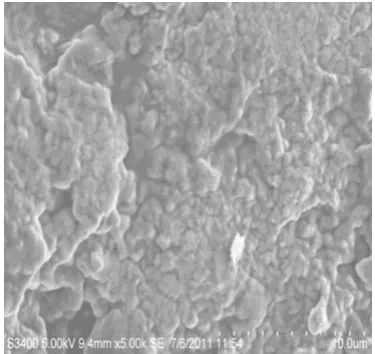
Figure4shows the SEM images of the newly synthesized gold nanoparticles. It was observed that the surface mor-phology of gold nanoparticles synthesized from flower ex-tract ofC. guianensissolution clearly indicates that they are in different shapes and well dispersed.
The TEM images confirm the formation of gold nanoparticles and it has been observed that the newly formed nanoparticles are polydispersed consisting of spherical, triangular, tetragonal and pentagonal with irregular contours. The size distribution of gold nanoparticles diameter is located between 7 and 48 nm (Fig.5). Generation of metal nanoparticles mainly relies on the use of lethal reducing agents. For the development of biocompatible nanoparticles, various biomimetic approaches are being ex-plored. Indeed, a discovery on the application of nanoparticles in medical sciences is exciting which is continually strengthened by the ever-widening spectrum. This necessitates the need of biologically benign nanoparticles. Biological methods may pro-vide an alternate to the conventional techniques, with emphasis
Fig. 6 Morphological analysis of HL-60 cells a control and b C. guianensissynthesized gold nanoparticles treated with HL-60 cells
Fig. 7 aControl andbgold nanoparticles induced apoptosis
on the production of environmentally benign nanoparticles. However, the limitations such as change in pH and incubation are accountable in the large-scale production. Greener technolo-gy on the synthesis of nanoparticles deserves merit to overcome the drawbacks of microbial synthesis of nanoparticles. The result addressed herein is on the biological synthesis of gold nanoparticles using medicinally important tree C. guianensis
flower extract.
There are reports on the plant-mediated synthesis of gold nanoparticles. Ghoreshi and co-workers (2011) reported on the synthesis of gold nanoparticles using the flower extract ofRosa damascene. Studies also demonstrate that the flavanoids and polyphenols of the flower are responsible for the formation of quasi-spherical nanoparticles. Philip (2010) demonstrated
Hibiscus rosa sinensis-mediated synthesis of gold nanoparticles and it has been reported that carboxylic group of malic acid may be the active principle for the reduction and capping of gold nanoparticles. Cinnamomum zeylanicum-mediated syn-thesis of gold nanoparticles have been reported and possibly the amines of proteins bound the newly formed nanoparticles (Smitha et al.2009). It has been illustrated that flavanoids of the plant Syzygium aromaticumfound to have the property of synthesizing irregular-shaped nanoparticles (Deshpande et al.
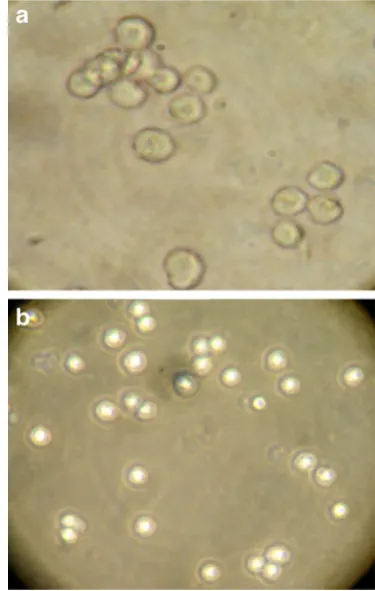
2010). Pioneering works on nanoparticles synthesis using plant extracts have been carried out by Sastry and co-workers using geranium leaves, neem,Aloe vera, and lemon grass are exten-sively studied (Ankamwar et al.2005; Shankar et al.2004; Chandran et al.2006; Shankar et al.2005). Singaravelu and co-workers (Singaravelu et al.2007, Govindaraju et al.2008, Khaleel et al.2010) reported on the biological synthesis of gold and silver nanoparticles usingSargassum wightii, Spiru-lina platensis,Psidium guajavaas green chemistry approach. Foregoing facts discloses that phytochemicals in the synthesis of nanoparticles is an important symbiosis between nanoscience and green chemistry. As a result of our extensive screening on identifying the newly formed gold nanoparticles application, anti leukemic cancer activity has been explored. HL-60 cells were treated with various concentrations of gold nanoparticles for different time-periods. The results shown in Fig.6a and b
indicate the nuclear morphology of dying HL-60 cells due to gold nanoparticles treatment and these effects were dose-dependent. Figure7a and bindicates that gold nanoparticles induced apoptosis in HL-60 cells, and the results showed less cell number compared to control. Gold nanoparticles induced apoptosis which was consistent with data showing that DNA fragmentation occurred as seen in Fig.8a and b. Concentra-tions of gold nanoparticles led to a longer tail (DNA damage), further supporting the fact that gold nanoparticles induced apoptosis in HL-60 cells and data in Fig.9 show DNA gel electrophoresis of DNA fragmentation which was enhanced with increasing exposure to gold nanoparticles.
Viable c
e
ll
(%
)
Concentration (µg) Fig. 10 Differential cytotoxic
effects ofC. guianensis -synthesized gold nanoparticles on cancerous HL60 cells and PBMC from a representative experiment is presented,n=3
M C E
Fig. 9 DNA fragmentation analysis using agarose gel electrophoresis.
Cell viability determination was made using MTT assay which was conducted for 120 h.C. guianensisflower extract-synthesized gold nanoparticles caused a significant cytotoxicity in HL-60 cells in a concentration-dependent manner with the CC50value of 5.14μM whereas for PBMC it is 113.25μM
(Fig.10).
Despite the widespread use of gold nanoparticles, there are only few studies to determine the cytotoxic effects of biolog-ically synthesized gold nanoparticles, particularly in the con-text of apoptosis. MTT assay was used to appraise the effect of gold nanoparticles on proliferation of HL-60 cells. This is the first study to evaluateC. guianensis-based gold nanoparticles’ cytotoxicity against cancer cell lines. Thus we hypothesize that cell killing could be the possible mechanism induced by the cytotoxic effect of biosynthesized gold nanoparticles.
Nanotechnology has attracted a great interest in recent years due to its expected impact on many areas such as energy, medicine, and electronics. The development of new materials with nanometer size including nanoparticles, nanotubes, nanowires, etc., is the major activity. Among all, nanoparticles with the unique properties in chemistry, optics, electronics, and magnetics have led to an increasing interest in their synthesis. Much of the existing research in the development of anti-cancer therapeutics from the plants has been focused on investigating the molecular mechanism by which an agent induces cytotoxicity and apoptosis in cancer cells. This study provides valuable insight in developing nanotherapeutics against dreadful cancer.
Investigation suggests that ethnopharmacological ap-proach on the production of gold nanoparticles will greatly facilitate on the creation of an important symbiosis between nanoscience and medical science.
4 Conclusions
The results addressed herein disclose anticancer activity of gold nanoparticles synthesized using aqueous flower extract ofC. guianensis. It is reasonable to infer that the pharma-cological properties ofC. guianensisprovide the anticancer activity of newly formed gold nanoparticles. Interestingly, it has been demonstrated that the functionalization of gold nanoparticles as anticancer nanomaterial has been achieved without doping of molecules.
Acknowledgment G.S and R.G thank the INSPIRE—Department of Science and Technology, New Delhi, for financial assistance.
References
Aizpurua J, Hanarp P, Sutherland DS, Kall M, Bryant GW, Garcia de Abajo FJ (2003) Optical properties of gold nanorings. Phys Rev Lett 90:057401-1–057401-4
Alivisatos AP (1996) Perspectives on the physical chemistry of semi-conductor nanocrystals. J Phys Chem 100:13226–13239 Ankamwar B, Chaudhary M, Sastry M (2005) Gold nanotriangles
biologically synthesized using tamarind leaf extract and potential application in vapor sensing. Synth React Inorg Met Org Nano Metal Chem 35:19–26
Canadian Cancer Society–National Cancer Institute of Canada (2005)
Canadian Cancer Statistics 2005, Toronto, Canada, April, ISSN: 0835–2976
Chandran SP, Chaudhary M, Pasricha R, Ahmad A, Sastry M (2006) Synthesis of gold nanotriangles and silver nanoparticles using
Aloe veraplant extract. Biotechnol Prog 22:577–583
Chen JC, Lu KW, Lee JH, Yeh CC, Chung JG (2009a) Gypenosides induced apoptosis in human colon cancer cells through the mitochondria-dependent pathways and activation of caspase-3. Anticancer Res 26:4313–4326
Chen JC, Lu KW, Tsai ML, Hsu SC, Kuo CL, Yang JS, Hsia TC, Yu CS, Chou ST, Kao MC, Chung JG, Wood WG (2009b) Gypenosides induced G0/G1 arrest via CHk2 and apoptosis through endoplasmic reticulum stress and mitochondria-dependent pathways in human tongue cancer SCC-4 cells. Oral Oncol 45:273–283
Crumbliss AL, Perine SC, Stonehuerner J, Tubergen KR, Zhao J, Henkens RW, O’Daly JP (1992) Colloidal gold as biocompatible immobilization matrix suitable for the fabrication of enzyme electrodes by electrodeposition. Biotechnol Bioeng 40:483–490 Deshpande R, Bedre MD, Basavaraja S, Sawle B, Manjunath SY,
Venkataraman A (2010) Rapid biosynthesis of irregular shaped gold nanoparticles from maccrated aqueous extracellular dried clove buds (Sygyium aromaticum) solution. Colloids Surf B: Biointerfaces 79:235–240
EI-Sayed IH, Huang X, EI-Sayed MA (2006) Selective laser photo-thermal therapy of epithelial carcinoma using EGFR anti-body conjugated gold nanoparticles. Cancer Lett 239(1):129– 135
Garrett MD, Workman P (1999) Discovering novel chemotherapeutic drugs for the third millennium. Eur J Cancer 35(14):2010–2030 Geetha M, Saluja AK, Shankar MB, Mehta RS (2004) Analgesic and
anti inflammatory activity ofCouroupita guianensis Aubl. J Natural Remedies 4(1):52–55
Ghoreishi SM, Behpour M, Khayatkashni M (2011) Green synthesis of silver and gold nanoparticles usingRosa damasceneand its pri-mary application in electrochemistry. Physica E 44:97–104 Govindaraju K, Khaleel Basha S, Ganesh Kumar VG, Singaravelu G
(2008) Silver, gold and bimetallic nanoparticles production using single-cell protein (Spirulina platensis) Geitler. J Mater Sci 43:5115–5123
Hashmi ASK, Hutchings GJ (2006) Gold catalysis. Angew Chem Int Ed 45:7896–7936
Huang J, Li Q, Sun D, Lu Y, Su Y, Yang X, Wang H, Shao W, He N, Hong J, Chen C (2007a) Biosynthesis of silver and gold nanoparticles by using novel sun-driedCinnamomum camphoraleaves. Nanotechnol 18:105104–105114
Huang XH, Jain PK, EI-Sayed IH, EI-Sayed MA (2007b) Gold nanoparticles: interesting optical properties and recent appli-cations in cancer diagnostic and therapy. Nanomedicine 2:681–693
Jin RC, Cao YW, Mirkin CA, Kelly KL, Schatz GC, Zheng JG (2001) Photoinduced conversion of silver nanospheres to nanoprisms. Science 294:1901–1903
Khaleel Basha S, Govindaraju K, Manikandan R, Ahn J, Bae EY, Singaravelu G (2010) Phytochemical mediated gold nanoparticles and their PTP 1B inhibitory activity. Colloids Surf B: Biointerfaces 75:405– 409
and inhibits DNA repair gene expressions in GBM 8401 human brain glioblastoma multiforms cells. Neurochem Res 35:1105– 1110
Mirkin CA, Letsinger RL, Mucic RC, Storhoff JJA (1996) DNA-based method for rationally assembling nanoparticles into macroscopic materials. Nature 382:607–609
Philip D (2010) Green synthesis of gold and silver nanoparticles using
Hibiscus rosa sinensis. Physica E 42:1417–1424
Premnathan M, Nakashima H, Kathiresan K, Rajendran N, Yamamoto N (1996) In vitro anti human immunodeficiency virus activity of mangrove plants. Ind J Med Res 103:278–281
Rao CNR, Cheetham AK (2001) Science and technology of nanomaterials: current state and future prospects. J Mater Chem. 11:2887–2894
Robert J, Jarry C (2003) Multidrug resistance reversal agents. J Med Chem 46(23):4805–4817
Sen IK, Maity K, Islam SS (2012) Green synthesis of gold nanoparticles using a glucan of an edible mushroom and study of catalytic activity. Carbohydrate Polymer. doi:10.1016/j.carbpol.08.058
Shankar SS, Rai A, Ahmed A, Sastry M (2005) Controlling the optical properties of lemon grass extract synthesized gold nanotriangles and potential application in infrared-absorbing optical coatings. Chem Mater 17:566–572
Shankar S, Rai A, Ahmed A, Sastry M (2004) Rapid synthesis of Au, Ag, and bimetallic Au core-Ag shell nanoparticles using Neem (Azadirachta indica) leaf broth. J Colloid Interf Sci 275:496–502 Singaravelu G, Arockiyamari J, Ganesh Kumar V, Govindaraju K (2007) A novel extracellular synthesis of monodisperse gold nanoparticles using marine alga Sargassum wightii Greville. Colloids Surfaces B: Biointerf 57:97–101
Smitha SL, Philip D, Gopchandran KG (2009) Green synthesis of gold nanoparticles usingCinnamom zeylanicumleaf broth. Spectrochim Acta, Part A Mol Biomol Spec 74:735–739
Sun Y, Xia Y (2002) shape-controlled synthesis of gold and silver nanoparticles. Science 298:2176–2179