1
Older age, early symptoms and physical function are associated with the severity of late
symptom clusters for men undergoing radiotherapy for prostate cancer
Lemanska Agnieszka1, Dearnaley David P2, Jena Rajesh3, Sydes Matthew R4, Faithfull Sara1
1
School of Health Sciences, Faculty of Health and Medical Sciences, University of Surrey, UK 2
Institute of Cancer Research and Royal Marsden NHS Trust, London, UK 3
Cambridge University Hospitals, Addenbrookes Hospital, Cambridge, UK 4
MRC Clinical Trials Unit at UCL, Institute of Clinical Trials and Methodology, London, UK
Corresponding author: Dr Agnieszka Lemanska, Ph.D.
School of Health Sciences, Faculty of Health and Medical Sciences, University of Surrey Guildford, GU2 7XH, UK
Tel: 00 44 1483689384
2 ABSTRACT
Purpose: To identify symptom clusters and predisposing factors associated with long-term symptoms and health-related quality of life (HRQOL) following radiotherapy in men with prostate cancer. Methods: Patient-reported outcomes (PROs) data from the Medical Research Council RT01
radiotherapy with neoadjuvant androgen deprivation therapy (ADT) trial of 843 patients were used. PROs were collected over 5 years with the University of California, Los Angeles Prostate Cancer Index (UCLA-PCI) and the 36-Item Short-Form Health Survey (SF-36). Symptom clusters were explored using hierarchical cluster analysis (HCA). The association of treatment dose, baseline patient characteristics and early symptom clusters with the change in severity of PROs over three years was investigated with multivariate linear mixed effects models.
Results: Seven symptom clusters of three or more symptoms were identified. The clusters were stable over time. The longitudinal profiles of symptom clusters showed the onset of acute symptoms during treatment for all symptom clusters and significant recovery by six months. Some clusters such as Physical Health and Sexual Function were adversely affected more than others by ADT, and were less likely to return to pre-treatment levels over time. Older age was significantly associated with
decreased long-term Physical Function, Physical Health and Sexual Function (p<0.001). Both baseline and acute symptom clusters were significant antecedents for impaired function and HRQOL at three years.
Conclusions: Men with poorer physical function and health prior to or during treatment were more likely to report poorer PROs at year three. Early assessment using PROs and lifestyle interventions should be employed to identify those with higher needs and provide targeted rehabilitation and symptom management.
Keywords: Symptom clusters, Prostate cancer, Acute symptoms, Late symptoms, PROs,
3 INTRODUCTION
Prostate cancer (PCa) survival has improved significantly over the last decade. More than 84% of men now survive 10 years or more in the United Kingdom (UK) [1] and the number of survivors is growing by 3% every year [2]. Globally more than 1.1 million cases of PCa were recorded in 2012. This constitutes 8% of all cancers and 15% of cancers in men, making PCa the second most common cancer in men [3]. With increasing survival, cancer-related symptoms and treatment-related toxicity can impact on men’s long-term health-related quality of life (HRQOL) [4]. Common side-effects following prostate radiotherapy include decreased urinary, bowel and sexual functions and this impacts on supportive care needs of men [5]. Population based studies of long-term functional outcomes after PCa suggest that at 12 years from treatment 87% of men will have erectile dysfunction or sexual inactivity, 20% urinary incontinence and 14% bowel problems [6]. These figures are substantially lower in men without cancer and of a similar age (62%,6% and 7%
respectively). Androgen deprivation therapy (ADT) is commonly used with radical radiotherapy for intermediate or high risk PCa. It allows for better long-term PCa control than with radiotherapy alone. However, it can add fatigue, hot flushes or muscle and bone loss to the spectrum of expected side-effects [7,8].
The prevalence of long-term side-effects from radiotherapy depends on many factors. Treatment factors such as total dose or fractionation schedule and individual factors such as age, co-morbidities or medical history (for example prior surgery) can all impact on late toxicity [9]. Patients undergoing radiotherapy, experience groups of symptoms called clusters in response to cancer or treatment. Symptom clusters were first defined in cancer by Miaskowski et al. in 2004 [10]. They are groups of symptoms with similar prevalence rates, and related by a common aetiology or by
influencing similar patient outcomes. Since then the concept has served as a basis for the assessment and management of multiple symptoms. There has been substantive research into defining and identifying symptom clusters in a variety of cancers and oncology treatments [11]. Fatigue, insomnia, pain and depression constitute the most prevalent symptom cluster in cancer [12]. Synergy of
4
In PCa there are only two studies examining symptom clusters related to the early stage disease or its treatment [15,16]. Maliski et al. (2008) found that fatigue and emotional distress were common in this group of patients and they clustered together with urinary, bowel and sexual symptoms [15]. Capp et al (2009) only explored rectal symptoms in their longitudinal study. They found that symptom clusters were stable over time and that rectal urgency and pain were the core drives of symptom clustering [16]. A different longitudinal study of Knapp et al. (2012) explored trajectories and predictors of radiotherapy-related PCa symptoms over 25 weeks [17]. They found that pain, fatigue, insomnia and diarrhoea were highly prevalent and related to symptom distress. Only a limited number of longitudinal studies are available in PCa and none report symptom clusters over a 5 year trajectory. A limitation of studies that analyse radiotherapy-related data in a cross-sectional manner is that the effect of baseline symptoms on time trajectory is not considered and it may be attributed to radiation toxicity.
It is important to consider baseline symptoms when assessing treatment-related side-effects. This is because both baseline and acute symptoms, have been found to be a precursor of late
symptoms. This has been termed as consequential late effects [18,19]. In addition, treatment factors (ADT, radiotherapy dose or fractionation) have been found to directly affect acute and late symptoms [20]. However, the research into treatment side-effects is now complemented by the evidence of an indirect effect of patient characteristics such as age, functional status or co-morbidities [21-23]. Despite the increasing interest and growing body of evidence, identification and prediction of long-term symptom clusters in PCa, to establish links between symptoms and the role of other contributing factors, remains a challenge. Men with PCa could benefit from this through targeted symptom
5 METHODS
Study design and research questions
Longitudinal profiles of patient-reported outcomes (PROs) were explored and symptom clusters investigated using well-established symptom clustering methodologies [24,25]. Patterns in PROs data, reported up to five years post-treatment by men in the MRC RT01 clinical trial were investigated to study (1) which PROs were associated and formed symptom clusters. This is to investigate what symptom clusters are experienced by men with PCa during and post-radiotherapy. (2) How symptom clusters change over time. This is to investigate the effect of ADT and radiotherapy treatment on the trajectory of symptom clusters during the 5 years follow-up. (3) The association of treatment, demographics, medical history i.e. co-morbidities, and baseline and acute symptom clusters with the change in symptom clusters over 3 years was studied to investigate potential risk factors contributing to late symptom clusters.
Dataset and patients
We used the MRC RT01 trial (ISRCTN47772397) which is a dataset of 843 patients [26,20]. It was a UK-led, multicentre, randomised controlled trial (RCT) that investigated standard (64Gy/32f) versus escalated (74Gy/37f) conformal radiotherapy (CFRT) with neoadjuvant ADT for patients with localised PCa. Eligible men had histologically confirmed PCa and prostate-specific antigen (PSA) <50 ng/ml, no previous PCa treatment and no significant medical history that excluded them from radical radiotherapy. Men were followed in the study for up to 5 years. PROs were recorded with the University of California, Los Angeles Prostate Cancer Index (UCLA-PCI) that also included the RAND 36-Item Short-Form Health Survey (SF-36). Detailed study design, patient eligibility criteria and main results have been published [27,28].
Measurements and outcome variables
6
surgery or previous transurethral resection of the prostate (TURP). PROs were collected before androgen deprivation therapy (baseline), during radiotherapy (acute) and until five years post-radiotherapy (long-term). PROs included 20 items of the UCLA-PCI [29] measuring function and symptom bother in the three PCa primary concern areas (urinary, bowel and sexual scales); and 36 items of the SF-36 measured HRQOL arranged in eight multi-item scales (Physical functioning, Role limitations due to physical health, Role limitations due to emotional problems, Bodily pain, Vitality, Mental health, Social functioning and General Health) [30]. In total, 56 PROs recorded on a Likert scale were included in the secondary data analysis. They were collected by patient self-report at the following ten time points: pre-androgen deprivation therapy (pre-ADT), pre-radiotherapy (pre-RT), end of radiotherapy (at week 10 after the start of radiotherapy), every 6 months until year 2 (month 6, 12, 18 and year 2) and then yearly for up-to five years (year 3, 4 and 5 after the start of radiotherapy).
Missing data and data pre-treatment
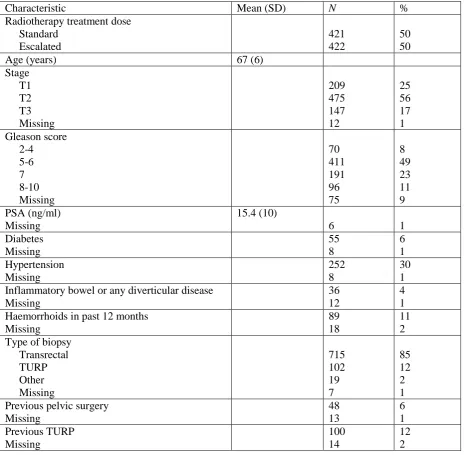
The number of data missing in patient baseline characteristics is detailed in Table 1. The number of PROs questionnaires completed at each time point is detailed in Table 2. These missing data were not imputed. Numbers of single questions left unanswered in completed questionnaires (intermittent missing data) varied from 0.8% for Feeling tired (SF-36 Vitality Scale) to 13.4% for Urinary leak interfering with sex (UCLA-PCI Sexual Function Scale). Intermittent missing data were treated with multiple imputation, rather than using complete case analysis, to minimise the risk of biased results and to preserve sample size [31]. Five imputations are usually sufficient, but seven imputed datasets were created to further reduce the uncertainty in the prediction of missing values process [32]. Variables were re-scaled to a 0 to 100 scale for consistency (0 representing the worst outcome and 100 representing the best possible outcome), including reversing negatively worded questions, as recommended by the scoring manual [33].
Symptom clusters analysis
7
the seven imputed datasets, composite correlations were calculated using Fisher's z transformation [34]. Clustering between PROs was identified using hierarchical cluster analysis (HCA) with the average linkage method of cluster agglomeration. Symptom clusters were determined at a cut-off correlation value of >0.60 [25].
Multivariate linear mixed effects regression analysis
Multivariate linear mixed effects modelling was used to calculate the contribution of early symptoms and other potential risk factors such as treatment, age, medical history and other symptom clusters, to the change in symptom clusters over time. Composite scores of symptom clusters at three time points were used in longitudinal modelling: baseline (pre-ADT or pre-HT if pre-ADT was not collected), acute (week 10) and late (year 3). Three years’ post-radiotherapy has been used as an endpoint because it has been shown to be an important point in time for the recognisable development of late radiotherapy-related symptoms [26,35].
8 RESULTS
Symptom clusters
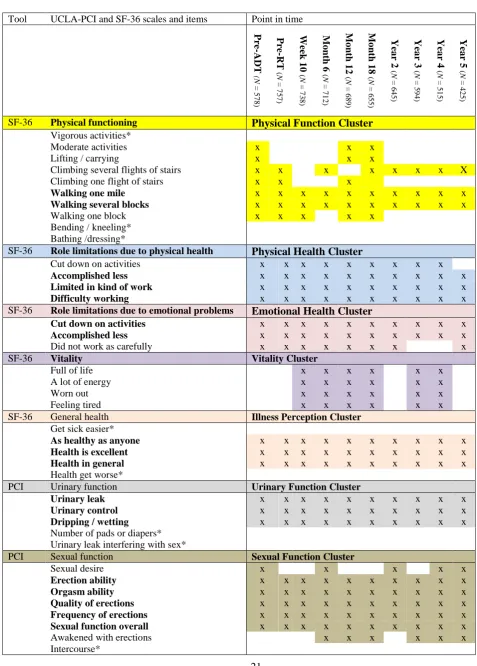
Seven symptom clusters of three or more associated symptoms were identified and named as: Physical Function; Physical Health; Emotional Health; Vitality; Illness Perception; Urinary Function; and Sexual Function. The results of symptom clustering and the number of questionnaires collected at each time point are presented in Table 2. Only two clusters from the SF-36 (Physical Health and Emotional Health) included all of the items present in the corresponding SF-36 scale. The correlation of bowel symptoms from the UCLA-PCI Bowel Function Scale was <0.4 and therefore not strong enough to form a cluster. It is clear from the analysis that symptom clusters are not always the same as the scales of the UCLA-PCI or SF-36. The Urinary Function Cluster consisted of three (Urinary leak, Urinary control and Dripping/wetting) out of the five UCLA-PCI Urinary Function Scale symptoms. The remaining two symptoms (Number of pads and Urinary leak interfering with sex) did not exhibit high enough correlation with the three symptoms to be included in the Urinary Function Cluster (it was <0.2 and <0.3 respectively).
Symptom clusters were evaluated separately for each time point and were very similar at each point so relatively stable over time. In addition, there are core symptoms that were always present in a cluster across time. They are marked in bold in Table 2. For example, Sexual Function Cluster had five core symptoms (Erection ability, Orgasm ability, Quality of erections, Frequency of erections and Sexual function overall) and two that were present in the cluster intermittently (Sexual desire and Awakened with erections). There was one symptom in the Sexual Function Scale of UCLA-PCI (Intercourse) that was not correlated enough to belong to the Sexual Function Cluster at any time point.
Longitudinal profiles of symptom clusters - trajectory of treatment and recovery
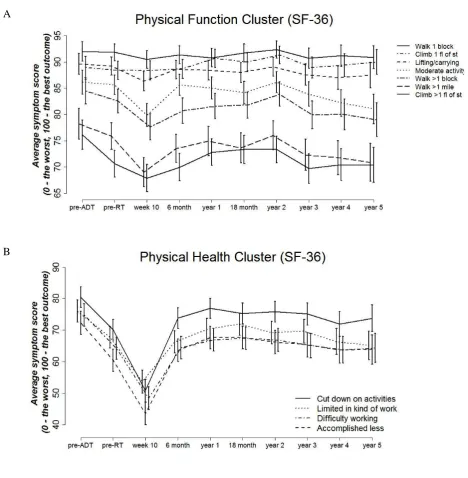
The longitudinal profiles of symptoms over the 5 years of follow-up are presented in Figure 1. They document the trajectory of treatment and recovery after radiotherapy for patients with PCa.
From these time profiles, we observe an increase in symptom intensity by week 10 which is
9
onset of acute symptoms due to radiotherapy. In relation to that, we can distinguish two types of trends. The first, where the onset of acute symptoms starts prior to radiotherapy, is during the period when men receive ADT. Clusters such as Physical Health, Vitality and Illness Perception are examples of this type of decline in HRQOL. However, the functional decline due to ADT is very prominent also for the Sexual Function Cluster. We observe that the sexual function of patients drops dramatically after ADT as compared to the baseline levels, and for many men it does not return to baseline levels even after many years post-treatment.
The second type of the acute functional and HRQOL decline due to treatment can be observed for the Physical Function, Emotional Health and Urinary Function Clusters. They were relatively stable during ADT and the acute decline is mainly due to radiotherapy. For these clusters, symptoms and HRQOL recover by 6 months post-radiotherapy, reaching higher than the pre-treatment levels. In addition to acute symptoms, for some symptom clusters we can also observe an increase in late symptoms. This decline in function and HRQOL starts after year 2 post-radiotherapy. This is especially prominent for the Physical Function, Emotional Health and Urinary Function Clusters.
Risk factors and antecedents for late symptom clusters - regression analysis
10 DISCUSSION
We studied the trajectory of symptom clusters before, during and after radiotherapy for PCa, by analysing symptom clusters over 5 years following radiotherapy. This study contributes to the limited body of research documenting symptom clusters in PCa and radical radiotherapy [37] as well as identifying important targets for improving patient outcomes. Symptom clusters identified were different to those presented in the literature so far [15,16]. We did not find the correlation of fatigue and mental health symptoms with PCa-specific symptoms (urinary, bowel or sexual) that was
observed by Maliski et al. [15]. However, Vitality and Emotional Health Clusters were significant risk factors for the Urinary and Sexual Function Clusters as demonstrated by the regression analysis. Capp et al. focused on rectal toxicity in a longitudinal study. However, we did not observe a cluster
associated with bowel dysfunction. The difference in the composition of symptom clusters between different studies may be due to the clustering approach or PROs tools used, or due to the differing treatments or population characteristics [38].
11
Symptom clusters were relatively stable over time with core symptoms always present in the cluster. The stability of symptom clusters across the time trajectory has also been shown in other longitudinal studies [48,49]. However, this study is unique as there is no other study that reports PCa symptom clusters for as long as five years. Studies describe sentinel symptoms, which can be used as indicators of symptom clusters in clinical assessment [50,51]. This not only can be used in identifying patients at high risk of long-term symptoms, but core cluster symptoms have also been recognised as targets for symptom management interventions [52]. These findings are important and can lead to targeted prehabilitation approaches in the form of lifestyle interventions prior to ADT and
radiotherapy. ADT reduces muscle mass and strength so it impacts on physical and functional health [8,53]. NICE, 2008 recommends that men on ADT receive 12 weeks of exercise intervention to reduce fatigue symptoms [54]. Recent systematic review and meta-analysis suggest that this is also beneficial for lower body strength and aerobic fitness [55]. Figure 2 illustrates potential risk factors that can contribute to increased radiotherapy side-effects and may influence symptom severity and reduce HRQOL. The effectiveness of physical rehabilitation has been shown to decrease cancer and treatment-related morbidity and improve late radiotherapy outcomes [56-58].
Baseline and acute (end of treatment) symptom clusters were associated with decreased long-term function and HRQOL in this population. This was independent of the radiotherapy dose and added to the evidence towards consequential late effects [18,19]. Physical Health and Physical Function Clusters were important antecedents of symptoms at 3 years in older men. Older men are likely to have multiple underlying health problems and this may influence their physical and functional health [21,22]. Screening of health status and management of co-morbidities is important prior to treatment as this may improve fitness. This is recommended in the International Society of Geriatric Oncology (SIOG) guidance for older cancer patients [59]. Poorer fitness may be a
12
Previous analysis of PROs from the MRC RT01 trial identified that gastrointestinal toxicity increased from baseline for up to 3 years post-radiotherapy [61]. Acute bladder symptoms were also a precursor of late symptoms and patients with pre-treatment bladder symptoms were more likely to report bladder symptom at 5 years [62]. Emerging evidence around phosphodiesterase type 5 (PDE5) inhibitors suggests that these agents may have an impact not only on sexual but also on urinary symptoms [63,64]. However, the clinical mechanisms of this effect remain unclear. Provision of support in the cancer recovery pathway, through survivorship plans, has mixed results in terms of benefits, but referral to voluntary sector services could improve self-management and early symptom support [65]. This reflects findings from other studies [66-68] and underpins the importance of employing a broader PROs assessment that includes symptoms, function and HRQOL measurements. If it is established that pre-treatment PROs scores predict poor post radiotherapy outcomes then there is a need to intervene and demonstrate through research that the consequences of cancer treatment can be prevented. Future work is needed to establish whether poor PROs and thus men’s long-term quality of life can be improved.
Strengths and limitations
13
instrument [70]. However, because EPIC adapts similar scoring rules for its items, investigating symptom clusters over time can be beneficial.
CONCLUSIONS
14 Acknowledgments
Professor David Dearnaley acknowledges NHS funding to the NIHR Biomedical Research Centre at the Royal Marsden NHS Foundation Trust and Institute of Cancer Research. An extensive list of participating oncologists, urologists, radiographers, physicists, other support staff, and the membership of each of the trial committees and subcommittees can be found in the MRC RT01 trial methods paper [28]. Matthew Sydes acknowledges funding from the Medical Research Council grant MC_UU_12023/28 and MC_UU_12023/6.
Compliance with Ethical Standards
Secondary data analysis was agreed by the MRC RT01 trial team and received appropriate ethical approval. Professor David Dearnaley, Consultant Clinical Oncologist, London, has attended, and received honoraria, for advisory boards and served as a consultant for Takeda, Amgen, Astellas, Sandoz and Janssen Pharma. Abiraterone acetate was developed at The Institute of Cancer Research, which therefore has a commercial interest in the development of this agent. Professor David
15 REFERENCES
1. Yeruva, S. L. H., Nwabudike, S. M., Ogbonna, O. H., & Oneal, P. (2015). Aromatase Inhibitor-Induced Erythrocytosis in a Patient Undergoing Hormonal Treatment for Breast Cancer. Case Reports In Hematology, 2015, 784783-784783.
2. Maddams, J., Utley, M., & Moller, H. (2012). Projections of cancer prevalence in the United Kingdom, 2010-2040. Br J Cancer, 107(7), 1195-1202.
3. Globocan (2012). www.globocan.iarc.fr/Pages/fact_sheets_population.aspx. Accessed July 2016. 4. Yip, K., McConnell, H., Alonzi, R., & Maher, J. (2015). Using routinely collected data to stratify prostate cancer patients into phases of care in the United Kingdom: implications for resource allocation and the cancer survivorship programme. Br J Cancer, 112(9), 1594-1602.
5. Andreyev, H. J. N., Wotherspoon, A., Denham, J. W., & Hauer-Jensen, M. (2010). Defining pelvic-radiation disease for the survivorship era. The Lancet Oncology, 11(4), 310-312.
6. Carlsson, S., Drevin, L., Loeb, S., Widmark, A., Lissbrant, I. F., Robinson, D., et al. (2016).
Population-based study of long-term functional outcomes after prostate cancer treatment. BJU International, 117(6B), E36-E45.
7. Dal Pra, A., Cury, F. L., & Souhami, L. (2010). Combining radiation therapy and androgen deprivation for localized prostate cancer—a critical review. Current Oncology, 17(5), 28-38. 8. Nguyen, P. L., Alibhai, S. M., Basaria, S., D'Amico, A. V., Kantoff, P. W., Keating, N. L., et al.
(2015). Adverse effects of androgen deprivation therapy and strategies to mitigate them. Eur Urol, 67(5), 825-836.
9. Kerns, S. L., Ostrer, H., & Rosenstein, B. S. (2014). Radiogenomics: Using Genetics to Identify Cancer Patients at Risk for Development of Adverse Effects Following Radiotherapy. Cancer discovery, 4(2), 155-165.
10. Miaskowski, C., Dodd, M., & Lee, K. (2004). Symptom clusters: the new frontier in symptom management research. J Natl Cancer Inst Monogr, 32, 17-21.
11. Xiao, C. (2010). The state of science in the study of cancer symptom clusters. Eur J Oncol Nurs, 14(5), 417-434.
12. Barsevick, A. M. (2007). The elusive concept of the symptom cluster. Oncol Nurs Forum, 34(5), 971-980.
13. Ferreira, K. A., Kimura, M., Teixeira, M. J., Mendoza, T. R., da Nobrega, J. C., Graziani, S. R., et al. (2008). Impact of cancer-related symptom synergisms on health-related quality of life and performance status. J Pain Symptom Manage, 35(6), 604-616.
14. Fan, G., Filipczak, L., & Chow, E. (2007). Symptom clusters in cancer patients: a review of the literature. Current Oncology, 14(5), 173-179.
15. Maliski, S. L., Kwan, L., Elashoff, D., & Litwin, M. S. (2008). Symptom clusters related to treatment for prostate cancer. Oncol Nurs Forum, 35(5), 786-793.
16. Capp, A., Inostroza-Ponta, M., Bill, D., Moscato, P., Lai, C., Christie, D., et al. (2009). Is there more than one proctitis syndrome? A revisitation using data from the TROG 96.01 trial. Radiother Oncol, 90(3), 400-407.
17. Knapp, K., Cooper, B., Koetters, T., Cataldo, J., Dhruva, A., Paul, S. M., et al. (2012).
Trajectories and Predictors of Symptom Occurrence, Severity, and Distress in Prostate Cancer Patients Undergoing Radiation Therapy. Journal of Pain and Symptom Management, 44(4), 486-507.
18. Peach, M. S., Showalter, T. N., & Ohri, N. (2015). Systematic Review of the Relationship between Acute and Late Gastrointestinal Toxicity after Radiotherapy for Prostate Cancer. Prostate Cancer, 2015, 624736.
19. Pinkawa, M., Holy, R., Piroth, M. D., Fischedick, K., Schaar, S., Székely-Orbán, D., et al. (2010). Consequential late effects after radiotherapy for prostate cancer - a prospective longitudinal quality of life study. Radiation Oncology (London, England), 5, 27-27.
16
21. Smith, A. W., Reeve, B. B., Bellizzi, K. M., Harlan, L. C., Klabunde, C. N., Amsellem, M., et al. (2008). Cancer, comorbidities, and health-related quality of life of older adults. Health Care Financ Rev, 29(4), 41-56.
22. Sogaard, M., Thomsen, R. W., Bossen, K. S., Sorensen, H. T., & Norgaard, M. (2013). The impact of comorbidity on cancer survival: a review. Clin Epidemiol, 5(Suppl 1), 3-29. 23. Posternak, V., Dunn, L. B., Dhruva, A., Paul, S. M., Luce, J., Mastick, J., et al. (2016).
Differences in demographic, clinical, and symptom characteristics and quality of life outcomes among oncology patients with different types of pain. Pain, 157(4), 892-900. 24. Skerman, H. M., Yates, P. M., & Battistutta, D. (2009). Multivariate methods to identify
cancer-related symptom clusters. Res Nurs Health, 32(3), 345-360.
25. Aktas, A., Walsh, D., & Hu, B. (2014). Cancer Symptom Clusters: An Exploratory Analysis of Eight Statistical Techniques. Journal of Pain and Symptom Management, 48(6), 1254-1266. 26. Dearnaley, D. P., Sydes, M. R., Graham, J. D., Aird, E. G., Bottomley, D., Cowan, R. A., et al.
(2007). Escalated-dose versus standard-dose conformal radiotherapy in prostate cancer: first results from the MRC RT01 randomised controlled trial. Lancet Oncol, 8(6), 475-487. 27. Dearnaley, D. P., Sydes, M. R., Langley, R. E., Graham, J. D., Huddart, R. A., Syndikus, I., et al.
(2007). The early toxicity of escalated versus standard dose conformal radiotherapy with neo-adjuvant androgen suppression for patients with localised prostate cancer: results from the MRC RT01 trial (ISRCTN47772397). Radiother Oncol, 83(1), 31-41.
28. Sydes, M. R., Stephens, R. J., Moore, A. R., Aird, E. G., Bidmead, A. M., Fallowfield, L. J., et al. (2004). Implementing the UK Medical Research Council (MRC) RT01 trial (ISRCTN 47772397): methods and practicalities of a randomised controlled trial of conformal radiotherapy in men with localised prostate cancer. Radiother Oncol, 72(2), 199-211. 29. Litwin, M. S., Hays, R. D., Fink, A., Ganz, P. A., Leake, B., & Brook, R. H. (1998). The UCLA
Prostate Cancer Index: development, reliability, and validity of a health-related quality of life measure. Med Care, 36(7), 1002-1012.
30. Ware, J. E., Jr., & Sherbourne, C. D. (1992). The MOS 36-item short-form health survey (SF-36). I. Conceptual framework and item selection. Med Care, 30(6), 473-483.
31. Little, & Rubin (2002). Statistical Analysis with Missing Data.
32. Sterne, J. A. C., White, I. R., Carlin, J. B., Spratt, M., Royston, P., Kenward, M. G., et al. (2009). Multiple imputation for missing data in epidemiological and clinical research: potential and pitfalls. BMJ, 338.
33. Litwin, M. S. (1994). UCLA-PCI including the RAND SF-36 v2 health-related quality of life scoring instructions. https://eprovide.mapi-trust.org/instruments/ucla-prostate-cancer-index/scoring. Accessed March 2017.
34. Corey, D. M., Dunlap, W. P., & Burke, M. J. (1998). Averaging Correlations: Expected Values and Bias in Combined Pearson rs and Fisher's z Transformations. The Journal of General Psychology, 125(3), 245-261.
35. Zelefsky, M. J., Levin, E. J., Hunt, M., Yamada, Y., Shippy, A. M., Jackson, A., et al. (2008). Incidence of Late Rectal and Urinary Toxicities After Three-Dimensional Conformal Radiotherapy and Intensity-Modulated Radiotherapy for Localized Prostate Cancer. International Journal of Radiation Oncology*Biology*Physics, 70(4), 1124-1129. 36. Luke, S. G. (2017). Evaluating significance in linear mixed-effects models in R. Behavior
Research Methods, 49(4), 1494-1502.
37. Thavarajah, N., Chen, E., Bedard, G., Lauzon, N., Zhou, M., Chu, D., et al. (2012). Symptom clusters in patients with prostate cancer: A literature review Journal of Pain Management, 5(4), 303-310.
38. Kirkova, J., & Walsh, D. (2007). Cancer symptom clusters - a dynamic construct. 19(9), 1011-1013.
39. Kwekkeboom, K. L. (2016). Cancer Symptom Cluster Management. Semin Oncol Nurs, 32(4), 373-382.
17
41. Vij, A., Kowalkowski, M. A., Hart, T., Goltz, H. H., Hoffman, D. J., Knight, S. J., et al. (2013). Symptom management strategies for men with early-stage prostate cancer: results from the Prostate Cancer Patient Education Program (PC PEP). J Cancer Educ, 28(4), 755-761. 42. Skolarus, T. A., Ragnoni, J. A., Garlinghouse, C., Schafenacker, A., Webster, D., Hager, P., et al.
(2017). Multilingual Self-Management Resources for Prostate Cancer Survivors and Their Partners: Results of a Long-Term Academic-State Health Department Partnership to Promote Survivorship Care. Urology, 23(17), 30637-30634.
43. Barsevick, A. M., Whitmer, K., Nail, L. M., Beck, S. L., & Dudley, W. N. (2006). Symptom cluster research: conceptual, design, measurement, and analysis issues. J Pain Symptom Manage, 31(1), 85-95.
44. Chen, M. L., & Lin, C. C. (2007). Cancer symptom clusters: a validation study. J Pain Symptom Manage, 34(6), 590-599.
45. Miaskowski, C., & Aouizerat, B. E. (2007). Is there a biological basis for the clustering of symptoms? Semin Oncol Nurs, 23(2), 99-105.
46. Lemanska, A., Chen, T., Dearnaley, D. P., Jena, R., Sydes, M. R., & Faithfull, S. (2017). Symptom clusters for revising scale membership in the analysis of prostate cancer patient reported outcome measures: a secondary data analysis of the Medical Research Council RT01 trial (ISCRTN47772397). Qual Life Res, 26(8), 2103-2116.
47. Lemanska, A., Cox, A., Kirkby, N. F., Chen, T., & Faithfull, S. (2014). Predictive Modelling of Patient Reported Radiotherapy-Related Toxicity by the Application of Symptom Clustering and Autoregression. International Journal of Statistics in Medical Research(3), 412-422. 48. Gift, A. G., Stommel, M., Jablonski, A., & Given, W. (2003). A cluster of symptoms over time in
patients with lung cancer. Nurs Res, 52(6), 393-400.
49. Kim, H.-J., Barsevick, A. M., Tulman, L., & McDermott, P. A. Treatment-Related Symptom Clusters in Breast Cancer: A Secondary Analysis. Journal of Pain and Symptom
Management, 36(5), 468-479.
50. Aktas, A. (2013). Cancer symptom clusters: current concepts and controversies. Curr Opin Support Palliat Care, 7(1), 38-44.
51. Brown, J. K., Cooley, M. E., Chernecky, C., & Sarna, L. (2011). A symptom cluster and sentinel symptom experienced by women with lung cancer. Oncol Nurs Forum, 38(6), E425-E435. 52. Barsevick, A. M. (2007). The concept of symptom cluster. Semin Oncol Nurs, 23(2), 89-98. 53. Chang, D., Joseph, D. J., Ebert, M. A., Galvao, D. A., Taaffe, D. R., Denham, J. W., et al. (2014).
Effect of androgen deprivation therapy on muscle attenuation in men with prostate cancer. J Med Imaging Radiat Oncol, 58(2), 223-228.
54. NICE (2008). Prostate cancer: diagnosis and management. Clinical guideline [CG175] www.nice.org.uk/guidance/cg175. Accessed Novemebr 2017.
55. Bourke, L., Smith, D., Steed, L., Hooper, R., Carter, A., Catto, J., et al. (2016). Exercise for Men with Prostate Cancer: A Systematic Review and Meta-analysis. Eur Urol, 69(4), 693-703. 56. Silver, J. K., & Baima, J. (2013). Cancer prehabilitation: an opportunity to decrease
treatment-related morbidity, increase cancer treatment options, and improve physical and psychological health outcomes. Am J Phys Med Rehabil, 92(8), 715-727.
57. Shun, S.-C. (2016). Cancer Prehabilitation for Patients Starting from Active Treatment to Surveillance. Asia-Pacific Journal of Oncology Nursing, 3(1), 37-40.
58. Silver, J. K. (2015). Cancer prehabilitation and its role in improving health outcomes and reducing health care costs. Semin Oncol Nurs, 31(1), 13-30.
59. Droz, J.-P., Aapro, M., Balducci, L., Boyle, H., Van den Broeck, T., Cathcart, P., et al. Management of prostate cancer in older patients: updated recommendations of a working group of the International Society of Geriatric Oncology. The Lancet Oncology, 15(9), e404-e414.
60. Wang, Y., Jacobs, E. J., Gapstur, S. M., Maliniak, M. L., Gansler, T., McCullough, M. L., et al. (2017). Recreational Physical Activity in Relation to Prostate Cancer-specific Mortality Among Men with Nonmetastatic Prostate Cancer. Eur Urol, 72(6), 931-939.
18
Cancer: Results From the UK Medical Research Council RT01 Trial (ISRCTN47772397). International Journal of Radiation Oncology*Biology*Physics, 77(3), 773-783.
62. Barnett, G. C., De Meerleer, G., Gulliford, S. L., Sydes, M. R., Elliott, R. M., & Dearnaley, D. P. (2011). The impact of clinical factors on the development of late radiation toxicity: results from the Medical Research Council RT01 trial (ISRCTN47772397). Clin Oncol, 23(9), 613-624.
63. Mahmood, J., Shamah, A. A., Creed, T. M., Pavlovic, R., Matsui, H., Kimura, M., et al. (2016). Radiation-induced erectile dysfunction: Recent advances and future directions. Adv Radiat Oncol, 1(3), 161-169.
64. Chughtai, B., Ali, A., Dunphy, C., & Kaplan, S. A. (2015). Effect of phosphodiesterase inhibitors in the bladder. Asian Journal of Urology, 2(1), 33-37.
65. McCabe, M. S., Faithfull, S., Makin, W., & Wengstrom, Y. (2013). Survivorship programs and care planning. Cancer, 119 Suppl 11, 2179-2186.
66. Braithwaite, D., Satariano, W. A., Sternfeld, B., Hiatt, R. A., Ganz, P. A., Kerlikowske, K., et al. (2010). Long-term Prognostic Role of Functional Limitations Among Women With Breast Cancer. JNCI Journal of the National Cancer Institute, 102(19), 1468-1477.
67. Demark-Wahnefried, W., Pinto, B. M., & Gritz, E. R. (2006). Promoting Health and Physical Function Among Cancer Survivors: Potential for Prevention and Questions That Remain. Journal of Clinical Oncology, 24(32), 5125-5131.
68. Brown, J. C., Harhay, M. O., & Harhay, M. N. (2015). Physical function as a prognostic biomarker among cancer survivors. Br J Cancer, 112(1), 194-198.
69. Faithfull, S., Lemanska, A., Aslet, P., Bhatt, N., Coe, J., Drudge-Coates, L., et al. (2015). Integrative review on the non-invasive management of lower urinary tract symptoms in men following treatments for pelvic malignancies. Int J Clin Pract, 69(10), 1184-1208.
70. Wei, J. T., Dunn, R. L., Litwin, M. S., Sandler, H. M., & Sanda, M. G. (2000). Development and validation of the expanded prostate cancer index composite (EPIC) for comprehensive assessment of health-related quality of life in men with prostate cancer. Urology, 56(6), 899-905.
71. Resnick, M. J., Barocas, D. A., Morgans, A. K., Phillips, S. E., Chen, V. W., Cooperberg, M. R., et al. (2014). Contemporary prevalence of pretreatment urinary, sexual, hormonal, and bowel dysfunction: Defining the population at risk for harms of prostate cancer treatment. Cancer, 120(8), 1263-1271.
19 List of tables and figures
Tables
Table 1. Medical Research Council RT01 study: patient baseline characteristics (N = 843) Table 2. Results of symptom clustering. Items collected with the UCLA-PCI and the SF-36 that belong to a cluster in a given point in time are shaded and marked with x in the table. Core cluster symptoms (present in clusters across time) are marked in bold. Symptoms never present in the symptom cluster are marked with *. Seven symptom clusters were identified: Physical Function, Physical Health, Emotional Health, Vitality, Illness Perception, Urinary Function and Sexual Function.
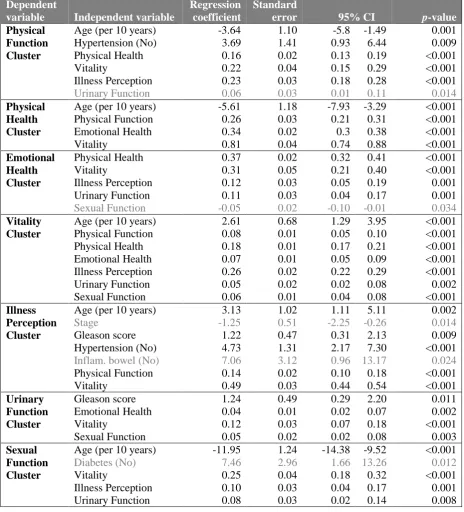
Table 3. Multivariate mixed effects analyses show the contribution of potential risk factors to the changes in profiles of symptom clusters over time. A separate model was obtained for each of the symptom clusters: Physical Function, Physical Health, Emotional Health, Vitality, Illness Perception, Urinary Function and Sexual Function. Random effects included radiotherapy dose, time and
individual patient variation. Fixed effects included baseline patient characteristics, medical history and other symptom clusters that were used as independent variables (potential risk factors).
Independent variables with preliminary significant associations of p<0.05 were retained in the final regression models. A statistical significance level was set at p<0.01.
Figures
Figure 1. Longitudinal profiles of symptom clusters. A) Physical Function Cluster, B) Physical Health Cluster, C) Emotional Health Cluster, D) Vitality Cluster, E) Illness Perception Cluster, F) Urinary Function Cluster and G) Sexual Function Cluster. A-E items from the SF-36. F and G items from the UCLA-PCI.
Figure 2. The time trajectory of symptom clusters during neoadjuvent ADT and radiotherapy treatment and 5 years follow-up. The role of symptom clusters and the mechanism of late
20
Table 1. Medical Research Council RT01 study: patient baseline characteristics (N = 843)
Characteristic Mean (SD) N %
Radiotherapy treatment dose Standard Escalated 421 422 50 50
Age (years) 67 (6)
Stage T1 T2 T3 Missing 209 475 147 12 25 56 17 1 Gleason score 2-4 5-6 7 8-10 Missing 70 411 191 96 75 8 49 23 11 9 PSA (ng/ml) Missing 15.4 (10)
6 1
Diabetes Missing 55 8 6 1 Hypertension Missing 252 8 30 1 Inflammatory bowel or any diverticular disease
Missing
36 12
4 1 Haemorrhoids in past 12 months
Missing
89 18
11 2 Type of biopsy
Transrectal TURP Other Missing 715 102 19 7 85 12 2 1 Previous pelvic surgery
21
Table 2. Results of symptom clustering. Items collected with the UCLA-PCI and the SF-36 that belong to a cluster in a given point in time are shaded and marked with x in the table. Core cluster symptoms (present in clusters across time) are marked in bold. Symptoms never present in the symptom cluster are marked with *. Seven symptom clusters were identified: Physical Function, Physical Health, Emotional Health, Vitality, Illness Perception, Urinary Function and Sexual Function.
Tool UCLA-PCI and SF-36 scales and items Point in time
P re -ADT (N = 5 7 8 ) P re -RT ( N = 7 5 7 ) Wee k 1 0 ( N = 7 3 8 ) M o nth 6 ( N = 7 1 2 ) M o nth 1 2 ( N = 6 8 9 ) M o nth 1 8 ( N = 6 5 5 ) Yea r 2 ( N = 6 4 5 ) Yea r 3 ( N = 5 9 4 ) Yea r 4 ( N = 5 1 5 ) Yea r 5 ( N = 4 2 5 )
SF-36 Physical functioning Physical Function Cluster Vigorous activities*
Moderate activities x x x
Lifting / carrying x x x
Climbing several flights of stairs x x x x x x x X
Climbing one flight of stairs x x x
Walking one mile x x x x x x x x x x
Walking several blocks x x x x x x x x x x
Walking one block x x x x x
Bending / kneeling* Bathing /dressing*
SF-36 Role limitations due to physical health Physical Health Cluster
Cut down on activities x x x x x x x x x
Accomplished less x x x x x x x x x x
Limited in kind of work x x x x x x x x x x
Difficulty working x x x x x x x x x x
SF-36 Role limitations due to emotional problems Emotional Health Cluster
Cut down on activities x x x x x x x x x x
Accomplished less x x x x x x x x x x
Did not work as carefully x x x x x x x x
SF-36 Vitality Vitality Cluster
Full of life x x x x x x
A lot of energy x x x x x x
Worn out x x x x x x
Feeling tired x x x x x x
SF-36 General health Illness Perception Cluster Get sick easier*
As healthy as anyone x x x x x x x x x x
Health is excellent x x x x x x x x x x
Health in general x x x x x x x x x x
Health get worse*
PCI Urinary function Urinary Function Cluster
Urinary leak x x x x x x x x x x
Urinary control x x x x x x x x x x
Dripping / wetting x x x x x x x x x x
Number of pads or diapers* Urinary leak interfering with sex*
PCI Sexual function Sexual Function Cluster
Sexual desire x x x x x
Erection ability x x x x x x x x x x
Orgasm ability x x x x x x x x x x
Quality of erections x x x x x x x x x x
Frequency of erections x x x x x x x x x x
Sexual function overall x x x x x x x x x x
Awakened with erections x x x x x x
22
Table 3. Multivariate mixed effects analyses show the contribution of potential risk factors to the changes in profiles of symptom clusters over time. A separate model was obtained for each of the symptom clusters: Physical Function, Physical Health, Emotional Health, Vitality, Illness Perception, Urinary Function and Sexual Function. Random effects included radiotherapy dose, time and
individual patient variation. Fixed effects included baseline patient characteristics, medical history and other symptom clusters that were used as independent variables (potential risk factors).
Independent variables with preliminary significant associations of p<0.05 were retained in the final regression models. A statistical significance level was set at p<0.01.
Dependent
variable Independent variable
Regression coefficient
Standard
error 95% CI p-value
Physical Function Cluster
Age (per 10 years) -3.64 1.10 -5.8 -1.49 0.001
Hypertension (No) 3.69 1.41 0.93 6.44 0.009
Physical Health 0.16 0.02 0.13 0.19 <0.001
Vitality 0.22 0.04 0.15 0.29 <0.001
Illness Perception 0.23 0.03 0.18 0.28 <0.001
Urinary Function 0.06 0.03 0.01 0.11 0.014
Physical Health Cluster
Age (per 10 years) -5.61 1.18 -7.93 -3.29 <0.001
Physical Function 0.26 0.03 0.21 0.31 <0.001
Emotional Health 0.34 0.02 0.3 0.38 <0.001
Vitality 0.81 0.04 0.74 0.88 <0.001
Emotional Health Cluster
Physical Health 0.37 0.02 0.32 0.41 <0.001
Vitality 0.31 0.05 0.21 0.40 <0.001
Illness Perception 0.12 0.03 0.05 0.19 0.001
Urinary Function 0.11 0.03 0.04 0.17 0.001
Sexual Function -0.05 0.02 -0.10 -0.01 0.034
Vitality Cluster
Age (per 10 years) 2.61 0.68 1.29 3.95 <0.001
Physical Function 0.08 0.01 0.05 0.10 <0.001
Physical Health 0.18 0.01 0.17 0.21 <0.001
Emotional Health 0.07 0.01 0.05 0.09 <0.001
Illness Perception 0.26 0.02 0.22 0.29 <0.001
Urinary Function 0.05 0.02 0.02 0.08 0.002
Sexual Function 0.06 0.01 0.04 0.08 <0.001
Illness Perception Cluster
Age (per 10 years) 3.13 1.02 1.11 5.11 0.002
Stage -1.25 0.51 -2.25 -0.26 0.014
Gleason score 1.22 0.47 0.31 2.13 0.009
Hypertension (No) 4.73 1.31 2.17 7.30 <0.001
Inflam. bowel (No) 7.06 3.12 0.96 13.17 0.024
Physical Function 0.14 0.02 0.10 0.18 <0.001
Vitality 0.49 0.03 0.44 0.54 <0.001
Urinary Function Cluster
Gleason score 1.24 0.49 0.29 2.20 0.011
Emotional Health 0.04 0.01 0.02 0.07 0.002
Vitality 0.12 0.03 0.07 0.18 <0.001
Sexual Function 0.05 0.02 0.02 0.08 0.003
Sexual Function Cluster
Age (per 10 years) -11.95 1.24 -14.38 -9.52 <0.001
Diabetes (No) 7.46 2.96 1.66 13.26 0.012
Vitality 0.25 0.04 0.18 0.32 <0.001
Illness Perception 0.10 0.03 0.04 0.17 0.001
23
Figure 1. Longitudinal profiles of symptom clusters. A) Physical Function Cluster, B) Physical Health Cluster, C) Emotional Health Cluster, D) Vitality Cluster, E) Illness Perception Cluster, F) Urinary Function Cluster and G) Sexual Function Cluster. A-E items from the SF-36. F and G items from the UCLA-PCI.
A
24 C
D
25 F
26
Figure 2. The time trajectory of symptom clusters during neoadjuvent ADT and radiotherapy treatment and 5 years follow-up. The role of symptom clusters and the mechanism of late