Original Research Article
Anxiety and depression among caregivers of inpatients suffering from
chronic debilitating and terminal illnesses
Basavakumar S. Anandi
1, Meenakshi M. Dhadave
2*
INTRODUCTION
Caregivers of the patients have shown to demonstrate high levels of psychological distress and depression; increased rates of physiological illness due to personal, financial, family, and social problems. Adverse effects experienced by many who provide such care are also well documented. Care givers of patients with neurological disorders have been found to be at higher risk of social isolation, emotional burden and a reduction in quality of life. The care givers have been found to have an increased rate of affective and anxiety disorders.1
It is important to assess the mental health status and attend to the needs of care givers. Not only do the care givers impact their own health and well-being, their ill health impacts the care of the patients as well. In a study by Quittner et al, which showed a Concordance between adolescents whose parents reported depression were more likely to be elevated on depression; similarly, adolescents whose parents reported anxiety were more likely to score in the elevated range on the anxiety measure.2 In another study conducted on patients suffering from amyotrophic lateral sclerosis, found; a very strong correlations between depression and anxiety among patients and their caregivers in addition; the severity of depression
ABSTRACT
Background: Depression and anxiety are the priority conditions covered by WHO’s Mental Health Gap Action
Programme. Depression is a common illness worldwide, despite effective treatments available, fewer than half of those affected receive such treatments. Caregivers of the patients, attributed to bear higher burden of personal, financial, family, and social problems are expected to be predisposed to psychological illness. Thus this study was undertaken with following objectives; i) to estimate prevalence of anxiety and depression and ii) to find associated factors for anxiety and depression among in-patient care givers of a tertiary care hospital.
Methods: An observational study was undertaken in the cardio, neuro, medical and cancer in-patient setting, in a
tertiary care hospital, of Kalaburagi district. Study was undertaken for 2 months from Dec-2017 to Jan-2018. Care-givers of all, receiving in-patient care were included in the study. The anxiety and depression levels were assessed using GAD-7 & PHQ-9 questionnaires respectively.
Results: All in-patient care-givers had some degree of anxiety of which majority of them had severe level of anxiety
(50%). Likewise, 96% of the subjects had some degree of depression, of which 40% of them had moderately severe level of depression. Severe levels of anxiety and depression were found to be high among 30-40 years age group.
Conclusions: It is crucial to screen the care givers, especially females, for presence of anxiety and depression. This
approach will help timely identification and proper management of these individuals.
Keywords: Anxiety, Depression, Debilitating illness, Chronic illness, Primary caregiver
Department ofCommunity Medicine, 1ESIC medical college and Hospital, 2GIMS, Kalaburagi, Karnataka,, India
Received: 15 February 2018
Revised: 18 March 2018
Accepted: 19 March 2018
*Correspondence:
Dr. Meenakshi M. Dhadave, E-mail: [email protected]
Copyright: © the author(s), publisher and licensee Medip Academy. This is an open-access article distributed under
the terms of the Creative Commons Attribution Non-Commercial License, which permits unrestricted non-commercial use, distribution, and reproduction in any medium, provided the original work is properly cited.
and anxiety of patients correlated moderately with that of their caregivers.3 Thus the importance of addressing the burden of care givers involved in care of patients suffering from chronic ailments has been recommended. Burden of care of stroke patients impacts the physical as well as psychological well-being of the caregivers adversely. The caregivers have been found to have an increased rate of affective and anxiety disorders.4
Despite chronic and debilitating conditions being one of the most common causes of disability world-wide, very few studies have been undertaken to assess the impact of these conditions on the care givers in Indian setting. It has been well documented that the family members are affected by the patient’s illness from the outset. Thus the burden of care can lead to emotional breakdown among the care givers themselves. In this context, current study aimed 1) to assess the prevalence of depression and anxiety levels among the care givers of the patients suffering from acute, chronic & debilitating illnesses. 2) To find any associated factors for anxiety and depression among care-givers.
METHODS
The study was carried out among 30 consecutive inpatient caregivers attending to the patients in intensive care units, in a tertiary care hospital of Kalaburagi District. After obtaining clearance from Institutional ethical clearance committee, informed consent was sought individually from the each participants. Participant enrollment was purely voluntary. To be eligible for participation in the study the family members present with the patient has to be the primary care giver (defined as primary earning members of the family). Study was undertaken for two months from Dec 2017 to Jan 2018. Illness was considered to be chronic if it lasted for more than 3 months.5 A severely debilitating illness is considered as any condition in which there is major irreversible morbidity–e.g. Alzheimer's disease, blindness, diabetic nephropathy, neurologic degeneration etc.6
Socio-demographic data of the care givers was collected using a self-administered semi-structured proforma. Anxiety and depression levels were assessed using GAD -7 and PHQ-9 questionnaires for anxiety and depression respectively. The GAD-7 score is calculated by assigning scores of 0, 1, 2, and 3, to the response categories such as 'not at all', several days, more than half the days, and nearly every day, respectively, and adding together the scores for the seven questions. Scores of 5, 10, and 15 are taken as the cut-off points for mild, moderate and severe anxiety, respectively. Using the threshold score of 10, the GAD-7 has a sensitivity of 89% and a specificity of 82% for GAD. It has been found to be moderately good at screening common anxiety disorders such as panic disorder (sensitivity 74%, specificity 81%), social anxiety disorder (sensitivity 72%, specificity 80%) and post-traumatic stress disorder (sensitivity 66%, specificity
7
questionnaire; self-administered version has been used as a diagnostic instrument for common mental disorders. The PHQ-9 is the depression module, which scores each of the nine DSM-IV criteria as "0" (not at all) to "3" (nearly every day). It has been validated for use in primary care. When used as a screening tool for depression the Patient Health Questionnaire (PHQ-9) has 97% sensitivity and 67% specificity. The data was analysed using SPSS version 18.0.8 Descriptive analysis was undertaken for those found to anxiety and the socio-demographic factors, and similarly for those with depression and the socio-demographic factors.
RESULTS
Data-analysis was done for all 30 consecutive patients receiving in-patient care in the medical/surgical/ pediatric/cardiac/neuro/oncology intensive care units of a tertiary care hospital. The sample included 8 male and 22 female care givers. Majority of the subjects were in the age group of 30-40 (46.7%) with minority of them being above the age of 51 years (13%). Mean age was 42±7. Majority of the subjects were males (73%). Medical ICU caregivers contributed highest to the study (53%), when compared to all other units. Majority of the caregivers, who participated, attended to the in-patients suffering from more than 30 days of illness. In-patient care givers of acute illnesses where found in majority (53%) when compared to other group of illnesses as shown in Table 1.
Almost all the in-patient care-givers were found to have some degree of anxiety. Majority of subjects were found to have severe level of anxiety (50%), whereas 37% of them had moderate anxiety, and only 13% of them had mild anxiety (as shown in Table 2). In a study by Kroenke et al, similar findings were noted wherein 19.5% subjects had at least 1 anxiety disorder, 8.6% had posttraumatic stress disorder, 7.6% had a generalized anxiety disorder, 6.8% had a panic disorder, and 6.2% had a social anxiety disorder.9
Figure 1: Prevalence of depression among care-givers.
Majority of them were found to have some degree of depression (96%). Further, moderately severe level of depression, severe depression and moderate depression was observed in 40%, 23% and 20% of the study
4% 13%
20%
40% 23%
Depression Levels (%)
No depression Mild
Table 1: Socio-demographic profile of patients studied.
No. of
patients %
Age in years
30-40 14 46.7
41-50 12 40.0
51-60 4 13.3
Total 30 100.0
Mean±SD: 42.±7
Gender
Female 8 26.7
Male 22 73.3
Total 30 100.0
Name of section
Medical ICU 16 53.3 Cardiac ICU 5 16.7 Cancer care unit 3 10.0 Pediatric ICU 3 10.0
Neuro ICU 2 6.7
Surgical ICU 1 3.3
Total 30 100.0
Duration of current illness
<15 days 9 30.0
15-30 days 8 26.7
>30 days 13 43.3
Total 30 100.0
Nature of illness
Acute illness 16 53 Chronic illness 9 30 Chronic debilitating illness 5 17
Total 30 100.0
Table 2: Prevalence of anxiety among care-givers.
Anxiety level No. of patients %
Mild 4 13
Moderate 11 37
Severe 15 50
Mild anxiety levels were more prevalent among 30-40 years age group, whereas severe anxiety levels were observed to be high among 40-50 years age group, when compared to other age-groups. In contrast, both mild depression and severe depression levels were found to be high among 30-40 years age group, whereas moderately severe level of depression was more among 40-50 years age-group, as shown in Figure 2 A and B.
Prevalence of anxiety was observed to be high among males when compared to females. Further prevalence of moderate and moderately severe levels of depression were found to be high among males when compared to females. In contrast, mild depression level was more among females when compared to males, as depicted in Figure 3 A and B.
Figure 2: Age-wise distribution of anxiety and depression among study subjects.
Figure 3: Gender-wise distribution of anxiety and depression among study subjects.
7
5
.00
%
2
5
.00
%
0
.00
%
6
3
.60
%
3
6
.40
%
0
.00
%
2
6
.70
% 4
6
.70
%
2
6
.70
%
30-40 40-50 50-60
Anx
iety
lev
els (%
)
Age category Mild Moderate Severe
0% 10% 20% 30% 40% 50% 60%
30-40 40-50 50-60
Depressi
o
n
lev
els (%
)
Age category
Mild Moderate
Moderately severe
Severe
7
5
.00
%
2
5
.00
%
6
3
.60
%
3
6
.40
%
8
0
.00
%
2
0
.00
%
Male Female
Anx
iety
lev
els (%
)
Gender
Mild Moderate Severe
0% 20% 40% 60% 80% 100% 120%
Male Female
Depressi
o
n
lev
els (%
)
Gender
Mild
Moderate
Moderately severe
Severe A
B
Figure 4: Section-wise distribution of anxiety and depression among study subjects.
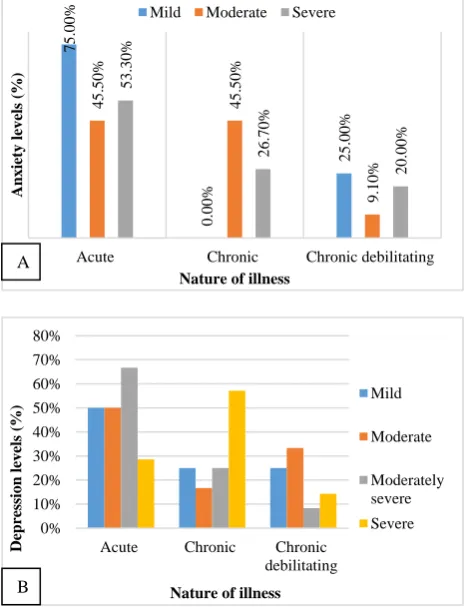
Figure 5: Anxiety and depression according to the nature of illness.
Anxiety and depression levels were found to be high for the in-patient care-givers of medical ICU, when compared to all other sections. Following medical ICU; care-givers of cardiac and cancer care units were observed to higher levels of anxiety and depression when compared to other sections as shown in Figure 4 A and B.
Higher levels of anxiety were observed among subjects attending in-patients with acute illness when compared those attending chronic and chronic debilitating illnesses. Similarly depression levels were also more among caregivers attending patients with acute illness when compared to other groups, as shown in Figure 5 A and B. Whereas, severe depression levels were observed to be high among caregivers attending patients suffering from chronic illnesses (Figure 5B).
DISCUSSION
Our findings revealed, mild anxiety levels were more prevalent among 30-40 years age group, whereas severe anxiety levels were observed to be high among 40-50 years age group, when compared to other age-groups. Similarly, moderately severe level of depression was high among 40-50 years age-group. Our study also elucidated higher levels of both anxiety and depression among care-givers of in-patients suffering from acute illnesses. A recent study form India found increased caregiving burden related anxiety, depression and sleep disturbance among 70%, 76%, and 43% of care givers, respectively and care givers of the patients with dementia and depression experienced greater stress.10 In June 2015, a cross-sectional study analysis of psychological status of caregivers by Avsar et al, on caregivers of renal transplantation patients (Tx) compared with those of hemodialysis patients (HD) using the Hospital Anxiety and depression scale, revealed; caregivers in the Hemodialysis group had significantly higher rates of anxiety and depression compared with the transplantation group (p=0.007 and p<0.001, respectively). Good sleep quality rates were observed for caregivers in the Transplantation group (92%) than caregivers in the HD group (63%). In addition, caregiver burden scores were significantly higher for caregivers in the HD group compared with caregivers in the Tx group (p<0.001). The age, sex, income level, and education level were similar between the 2 groups.4 An observational evaluation conducted by Quittner et al, in adolescents and adults with cystic fibrosis (CF) and parent caregivers across nine countries, showed elevated symptoms of depression in 37% of mothers and 31% of fathers. Elevations in anxiety were found in 48% of mothers and 36% of fathers. Overall, elevations were 2–3 times those of community samples. Participants who reported elevated anxiety were more likely to report depression. Significant differences in reports of depression and anxiety were found by patient age and parent respondent.2
In our study the prevalence of anxiety was observed to be
50% 0% 0% 25% 0% 25% 46% 9% 18% 27% 0% 0% 60% 0% 7% 7% 13% 13% Medical ICU Surgical ICU Pediatric ICU
Cardio Neuro Cancer care unit Anx iety lev els (% )
Name of the section Mild Moderate Severe
0% 10% 20% 30% 40% 50% 60% 70% 80% Medical ICU Surgical ICU Pediatric ICU
Cardio Neuro Cancer care unit Depressi o n lev els (% )
Name of the section
Mild Moderate Moderately severe Severe
7 5 .00 % 0 .00 % 2 5 .00 % 4 5 .50 % 4 5 .50 % 9 .10 % 5 3 .30 % 2 6 .70 % 2 0 .00 %
Acute Chronic Chronic debilitating
Anx
iety
lev
els (%
)
Nature of illness Mild Moderate Severe
0% 10% 20% 30% 40% 50% 60% 70% 80%
Acute Chronic Chronic debilitating Depressi o n lev els (% )
Nature of illness
prevalence of moderate and moderately severe levels of depression were also found to be high among males when compared to females. In contrast, mild depression level was more among females when compared to males. A systematic review by Watts et al, in 2014 pertaining to the prevalence of depression and anxiety in patients with prostate cancer among 4494 patients with prostate cancer from primary research investigations revealed; the prevalence of depression and anxiety in men with prostate cancer, across the treatment spectrum, was relatively high.11 In contrast to the findings of current study, a study undertaken to identify socio-demographic variables influencing anxiety, depression and stress for the informal caregivers of the mentally ill; and to determine the influence of family background variables on caregiver anxiety, depression and stress; by Cabral in 2014 found; females had higher rates (p<0.05) of anxiety, depression and stress; participants with less education had more anxiety than those with higher and secondary education (p=0.001); those who perceived belonging to families with marked dysfunctions had higher levels of depression.12 This study examined the relationship between caregivers' anxiety supporting a patient with advanced cancer and self-efficacy and their socio-demographic characteristics, and then whether these variables could influence their self-efficacy. A study to assess caregivers' anxiety and self-efficacy in palliative care, in 2012 observed significant differences between State anxiety and female gender (p=0.009), cohabitation (p=0.002) and relationship with the patient (p=0.004); statistically significant associations were found between State, Trait anxiety and self-efficacy scores of caregivers (p<0.0005 respectively). Female caregivers and spouses of advanced cancer patients experienced more state anxiety levels than men and other caregivers respectively. In addition, caregivers with low self-efficacy were more likely to have elevated anxiety scores than self-efficacious caregivers.13 Female care givers were found to receive more appreciation and family bonding was well maintained. Another study found the prevalence of anxiety disorders was significantly higher in female caregivers than in males (26.1 vs. 10.9%; p=0.04) as assessed by HADS. Women have found to serve as caregivers far more frequently than men.14 The results of studies comparing outcomes for male versus female caregivers have been variable. Some of the studies have found the effects to be worse for women, while others have found the effects to be either worse for men or similar for the two.
A cross-sectional study was undertaken on primary caregivers of dependent elderly relatives in Spain to determine whether satisfaction and perceived burden were associated with anxiety and depression, while controlling for objective aspects of care recipients' needs. This study found anxiety and depression levels were lower in caregivers with high satisfaction and low perceived burden than in those with low satisfaction and high burden or with high satisfaction and high burden, in addition it also revealed; the combination of high
satisfaction and low burden might have protective effects on anxiety and depression in caregivers.15
In a longitudinal study of care givers of stroke patients older patient age, male gender, poor mental health, functional handicap and functional disability were found to be significant correlates of caregiver burden.16 Another prospective study among care givers of patients with Gullian Barre Syndrome found 72% of the 86 relatives reported one or more problems in daily living. However, there was significant improvement in their anxiety during the first half year. A study among the Israeli stroke survivor caregivers found the depression scores to improve among the care givers at 3 month follow up.17 Hence it seems that the initial period following hospitalization might be the most crucial time with regards to the mental health status of the care givers. A routine screening followed by indicated thorough evaluation could help identify these individuals. A three year prospective study among the care givers of 340 stroke patients found both anxiety (p<0.01) and depression (p<0.01) among the care givers to be related to high care giver burden scores.1 Studies making use of self-evaluation approach have found that care givers tend to rate their depressive symptoms as no higher than those who are not involved in care of patients with some kind of neurological illness.
CONCLUSION
Majority of the subjects in the age group of 30-40 were found to have higher levels of anxiety and depression. Anxiety and depression was more prevalent among males when compared to females. Caregivers of patients with chronic illness had higher levels of severe depression when compared to other groups. Thus screening for symptoms of depression and anxiety among caregivers should be performed annually and addressed systematically.
Recommendations
Home visiting program, group and community level programs can be beneficial for their informational and emotional components for the care givers of those with debilitating and chronic illnesses. However, in limited resource setting; a group based models would be better suited for developing countries like India. It is crucial to screen the care givers, especially female care giver, for presence of anxiety and depression. This approach will help timely identification and proper management of these individuals.
ACKNOWLEDGEMENTS
to the completion of the study. I specially thank all faculty, Dept. of community medicine, Gulbarga Institute of medical sciences, for their support and assistance throughout the study. Lastly I would like to thank all participants, without whom the study would not have been possible.
Funding: No funding sources Conflict of interest: None declared
Ethical approval: The study was approved by the Institutional Ethics Committee
REFERENCES
1. Verama R, Sharma S, Singh Balhara YP, Mathur S. Anxiety and Depression among the Caregivers of patients with Neurological illness. Delhi Psychiatry J. 2011;14(1):120-3.
2. Quittner AL, Goldbeck L, Abbott J, Duff A, Lambrecht P, Solé A, et al. Prevalence of depression and anxiety in patients with cystic fibrosis and parent caregivers: results of The International Depression Epidemiological Study across nine countries. Thorax. 2014;69(12):1090–7.
3. Chen D, Guo X, Zheng Z, Wei Q, Song W, Cao B, et al. Depression and anxiety in amyotrophic lateral sclerosis: correlations between the distress of patients and caregivers. Muscle Nerve. 2015;51(3):353-7.
4. Avşar U, Avşar UZ, Cansever Z, Yucel A, Cankaya E, Certez H, et al. Caregiver Burden, Anxiety, Depression, and Sleep Quality Differences in Caregivers of Hemodialysis Patients Compared With Renal Transplant Patients. Transplant Proc. 2015;47(5):1388–91.
5. Definition of Chronic disease. MedicineNet.. Available at: https://www.medicinenet.com/script/ main/art.asp?articlekey=33490. Accessed on 12 February 2018.
6. Debilitating Diseases - 12 Diseases that change millions of lives. Dodge Park Rest Home. 2013. Available at: https://dodgepark.com/health/ debilitating-diseases/. Accessed on 12 February 2018.
7. GAD7 Anxiety Test Questionnaire. Available at:
https://patient.info/doctor/generalised-anxiety-disorder-assessment-gad-7. Accessed on 12 February 2018.
8. Kroenke K, Spitzer RL, Williams JBW. The PHQ-9. J Gen Intern Med. 2001;16(9):606–13.
9. Kroenke K, Spitzer RL, Williams JBW, Monahan PO, Löwe B. Anxiety Disorders in Primary Care: Prevalence, Impairment, Comorbidity, and Detection. Ann Intern Med. 2007;146(5):317. 10. Brodaty H, Donkin M. Family caregivers of people
with dementia. Dialogues Clin Neurosci. 2009;11(2):217–28.
11. Watts S, Leydon G, Birch B, Prescott P, Lai L, Eardley S, et al. Depression and anxiety in prostate cancer: a systematic review and meta-analysis of prevalence rates. BMJ Open. 2014;4(3):e003901. 12. Cabral L, Duarte J, Ferreira M, dos Santos C.
Anxiety, stress and depression in family caregivers of the mentally ill. Aten Primaria. 2014;46:176–9. 13. Mystakidou K, Parpa E, Panagiotou I, Tsilika E,
Galanos A, Gouliamos A. Caregivers’ anxiety and self-efficacy in palliative care. Eur J Cancer Care (Engl). 2013;22(2):188–95.
14. Use of the Hospital Anxiety and Depression Scale in Spanish caregivers - Sánchez-López - 2015 - Scandinavian Journal of Caring Sciences - Wiley Online Library. Available at: http://onlinelibrary. wiley.com/doi/10.1111/scs.12206/abstract.
Accessed on 11 February 2018.
15. Casado R, Moral PA, Osuna A. The Association of Satisfaction and Perceived Burden With Anxiety and Depression in Primary Caregivers of Dependent Elderly Relatives. Res Nurs Health. 2015;38(5):384-91.
16. Bademli K. Anxiety and Depression in Caregivers of Chronic Mental Illness. J Depress Anxiety. 2016;6(1):1000254.
17. Mateen FJ, Cornblath DR, Jafari H, Shinohara RT, Khandit D, Ahuja B, et al. Guillain–Barré Syndrome in India: Population-based validation of the Brighton criteria. Vaccine. 2011;29(52):9697–701.
Cite this article as: Anandi BS, Dhadwe M.Anxiety