Online Problem-Solving Therapy for Executive
Dysfunction After Child Traumatic Brain Injury
WHAT’S KNOWN ON THIS SUBJECT: Cognitive and behavioral problems after pediatric traumatic brain injury lead to poor functioning across multiple settings and can persist long-term after injury. Executive dysfunction is particularly common; however, there is a paucity of evidence-based interventions to guide treatment.
WHAT THIS STUDY ADDS: This study is among the largest randomized controlled trials performed in pediatric traumatic brain injury. It demonstrates the ability to use an online problem-solving-based intervention to improve caregiver ratings of executive dysfunction within 12 months after injury.
abstract
OBJECTIVE:Executive dysfunction after traumatic brain injury (TBI) in children is common and leads to significant problems in functioning across multiple settings. The objective of this study was to evaluate the efficacy of a web-based counselor-assisted problem solving (CAPS) intervention compared with an Internet resource comparison (IRC) for treatment of executive dysfunction within 12 months after complicated mild to severe TBI in adolescents. We hypothesized that CAPS would significantly improve parent ratings of executive dysfunction compared with an IRC.
METHODS:Participants included 132 adolescents aged 12 to 17 years who sustained a complicated mild to severe TBI within 1 to 6 months before study enrollment. Study design was a multisite, assessor-blinded, randomized controlled trial. Study sites included 3 tertiary pediatric hospitals and 2 tertiary general medical centers. The main outcome measure was primary caregiver Behavioral Rating Inventory of Executive Function Global Executive Composite at baseline and 6-month follow-up. Generalized linear models that controlled for baseline scores were used to compare the CAPS and IRC scores.
RESULTS:In older teens, the CAPS group showed significant improve-ment in executive function behaviors at 6-month follow-up compared with the IRC group (F = 6.74,P= .01, Cohen’sd= 0.63).
CONCLUSIONS: Findings indicate that web-based CAPS improves primary caregiver-rated executive functioning within thefirst 12 months after TBI in older adolescents. Future research needs to define the optimal timing after injury for delivery of CAPS and characteristics of individuals and families who are most likely to benefit from CAPS.Pediatrics2013;132:e158–e166
AUTHORS:Brad G. Kurowski, MD, MS,aShari L. Wade, PhD,a
Michael W. Kirkwood, PhD,bTanya M. Brown, PhD,cTerry
Stancin, PhD,dand H. Gerry Taylor, PhDe
aDivision of Physical Medicine and Rehabilitation, Department of
Pediatrics, Cincinnati Children’s Hospital Medical Center and University of Cincinnati College of Medicine, Cincinnati, Ohio;
bDepartment of Physical Medicine and Rehabilitation, Children’s
Hospital Colorado and University of Colorado School of Medicine, Aurora, Colorado;cDepartment of Psychiatry and Psychology,
Mayo Clinic College of Medicine, Mayo Clinic, Rochester, Minnesota;dDivision of Pediatric Psychology, Department of
Pediatrics, MetroHealth Medical Center and Case Western Reserve University, Cleveland, Ohio; andeDivision of
Developmental and Behavioral Pediatrics and Psychology, Department of Pediatrics, Case Western Reserve University and Rainbow Babies and Children’s Hospital, University Hospitals Case Medical Center, Cleveland, Ohio
KEY WORDS
brain injury, online, therapy, executive function, child, adolescent
ABBREVIATIONS
BRI—Behavioral Regulation Index
BRIEF—Behavior Rating Inventory of Executive Function CAPS—counselor-assisted problem solving
CT—computerized tomography GCS—Glasgow Coma Scale GEC—Global Executive Composite IRC—Internet Resource Comparison MI—Metacognition Index
TBI—traumatic brain injury
Dr Kurowski conceptualized the hypotheses and analysis for this study, performed all associated analyses, interrupted the analyses, and drafted the initial manuscript; Dr Wade conceptualized the original study design, supervised data collection at all participating sites, assisted in conceptualization and analyses, and critically reviewed and revised the manuscript; Dr Kirkwood coordinated and supervised data collection at one site, and critically reviewed and revised the manuscript; Dr Brown coordinated and supervised data collection at her site, acted as a treating therapist at her site, and critically reviewed and revised the manuscript; Dr Stancin coordinated and supervised data collection at her site, and critically reviewed and revised the manuscript; Dr Taylor coordinated and supervised data collection at his site, and critically reviewed and revised the manuscript; and all authors approved thefinal manuscript as submitted.
This trial has been registered at www.clinicaltrials.gov (identifier NCT00409448).
Traumatic brain injury (TBI) is a world-wide heath problem and is among the most common causes of acquired morbidity and mortality in children.1–5 TBI results in 2685 deaths, 37 000 hos-pitalizations, and 435 000 emergency department visits in children yearly in the United States.4,5 Because these injuries can occur at an early age, they can have lifelong impact. Neurocog-nitive and behavioral problems are common after TBI in children and lead to significant problems in functioning across multiple settings.6–13In partic-ular, executive dysfunction after pedi-atric TBI is associated with functional problems across home, school, and community settings both in the short-and long-term after injury.6–10,14–20 Better treatment of executive dysfunc-tion after injury may lead to improved functioning in everyday settings.21
Problem-solving training has demon-strated promise in various clinical populations22–26; however, it has only been preliminarily explored in pediat-ric TBI.27–34In a small randomized trial of children aged 5 to 17 years (N= 32), findings showed that family-centered online problem-solving therapy im-proved internalizing behavioral prob-lems after severe TBI.32Initial evidence suggests that problem-solving inter-ventions can also be delivered effec-tively through a web-based portal directly to children with TBI.35In a small randomized-controlled trial of adoles-cents aged 11 to 18 years (n= 35), teen-directed online problem-solving im-proved both parent- and self-reported behavioral problems33but only improved self-ratings, not parent-ratings, of exec-utive dysfunction.34 These studies have been limited by small sample sizes and heterogeneous populations.
The current study sought to build on this previous research and evaluate the efficacy of a web-based counselor-assisted problem solving (CAPS) in-tervention compared with an Internet
resource comparison (IRC) group for treatment of executive dysfunction within thefirst year after complicated mild to severe TBI in adolescents. Be-cause CAPS provides training to teens and their families to improve problem solving and self-regulation, we hy-pothesized that CAPS would improve adolescent executive function as rated by parents 6 months after initiation of the intervention. In agreement with Wade et al,36we hypothesized that CAPS would be most effective in older ado-lescents. This study expands on pre-vious work and evaluates the efficacy of an online problem solving in-tervention in a carefully controlled trial with a large (N= 132) sample of ado-lescents after TBI.
METHODS
Subjects
Participants included adolescents aged 12 to 17 years of age who sustained a complicated mild to severe TBI. Complicated mild TBI was defined as Glasgow Coma Scale (GCS) score.12 with evidence of a neurologic insult on MRI or computerized tomography (CT), moderate TBI as GCS score of 9 to 12, and severe TBI defined as GCS score
,9.37–39GCS was used primarily as the measure of injury severity because it was the most consistently obtained clinical variable across multiple sites at the time of participant enrollment. CT scans performed acutely were not used as a marker of severity because CTs are not particularly more pre-dictive of cognitive and behavioral outcomes than GCS or other clinical factors in the subacute period.37,40,41 Exclusion criteria included nonblunt trauma, primary language other than English, history of significant intel-lectual disability before injury, history of child abuse, insufficient recovery to al-low participation in the study, history of parental or child psychiatric hospitali-zation within 1 year before enrollment,
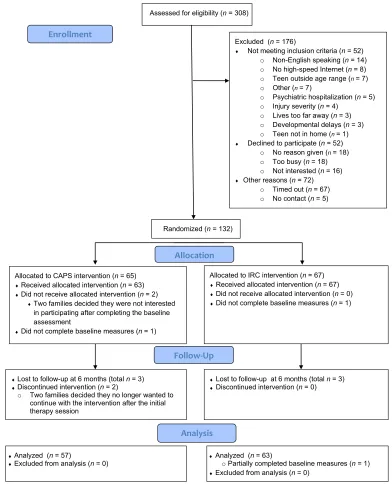
family residence in an area without high-speed Internet access, or child residence outside the home (eg, detention facility). Because baseline assessments and a computer installation and ori-entation visit were performed in the participants’homes, participants were also excluded if they resided.3 hours from the study site. Participants were enrolled 1 to 6 months after initial in-jury. Recruitment was conducted from March 2007 through January 2011. Study sites included 3 tertiary pediatric hospitals and 2 tertiary general medi-cal centers across 4 cities: Cincinnati, OH; Denver, CO; Cleveland, OH; and Rochester, MN. Institutional review board approval was obtained from all participating institutions, and the study was registered with clinicaltrials.gov (identifier: NCT00409448). Three hun-dred eight participants were assessed for eligibility: 52 did not meet inclusion criteria, 52 declined to participate, 72 timed out of the eligibility period, and 5 were unable to be contacted (see Fig 1). There were no differences between participants and nonparticipants in age: mean (SD) = 14.54 (1.74) for participants and 14.68 (1.74) for nonparticipants. Nonparticipants were significantly more likely to be nonwhite (24.4% vs 19.7%, respectively) and to have less severe TBI as measured by the GCS: mean (SD) = 11.90 (3.89) vs 10.03 (4.56).
Design
were balanced within the sites. An SAS program was created using permuted block sizes for each of the random-izations. A sealed envelope containing group assignment was handed to the participants at the end of the baseline visit. Group assignment was concealed from the research coordinators. All families were provided with a new computer, web camera, and high-speed
Internet access, and shown how to log on to the study web site and access the links to TBI resources on the web.
CAPS Intervention
CAPS36consisted of a 6-month counselor-assisted, web-based, family-centered intervention that focused on problem solving, communication, and self-regulation. During the initial face-to-face session in
the family’s home, the psychologist performed his or her evaluation and instructed the family on how to access available treatment modules on the CAPS web site and log on to Skype for subsequent videoconference sessions. The subsequent sessions were com-pleted initially weekly then biweekly for thefirst 3 months for a total of 6 ses-sions and consisted of self-guided
FIGURE 1
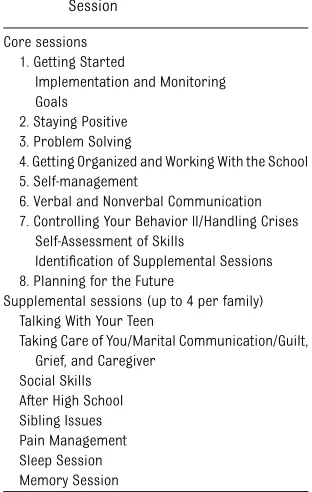
didactic content regarding problems-solving skills, video clips modeling these skills, and exercises to practice the skills. During these sessions, the therapist reviewed the online materi-als and practiced problem-solving skills using problems that the family identified. During months 4 and 5 of CAPS, families with persistent con-cerns could complete up to 4 supple-mental sessions. In the seventh online session, all participating parents completed a measure of family burden and a self-assessment of problem solving and communication. On the basis of the results of the self-assessment, the therapist planned in-dividualized sessions for the family with ongoing attention given to injury-related issues that were identified on the questionnaires. Up to four addi-tional supplemental sessions could be provided to address additional un-resolved issues. All families were scheduled for afinal session with the therapist in the sixth month. Content of the core and supplemental CAPS ses-sions is listed in Table 1.
IRC Intervention
Families in the IRC36 group also re-ceived a computer, web camera, and high-speed Internet access. The web camera was provided to keep the re-search assistants unaware of group assignment. IRC group received access to a home page with links to online resources. Resources included links to local, state, and national brain-injury associations and to sites specific to pediatric brain injury, such as the Center on Brain Injury Research and Training, Brain Injury Partners and the National Database of Educational Resources on Traumatic Brain Injury. These web sites provided didactic in-formation about brain injury as well as modules about working with schools,42 handling stress, and problem solving around common issues. Families were encouraged to spend at least 1 hour
each week accessing information re-garding pediatric brain injury on the web throughout the 6-month inter-vention period and to track the sites that they visited. At follow-up, parents provided information about the TBI-related web sites visited and the time spent at each site. The IRC group did not have access to specific session content provided to the CAPS group.
Follow-up Assessment
A follow-up assessment was completed an average of 6 months after baseline at participants’homes for both groups and included the same assessments that were completed at baseline. To equate the time between baseline and follow-up assessments between grofollow-ups and maintain concealment of group assign-ment, follow-ups were performed with-out knowledge of group.
Background Questionnaire
Information regarding injury severity was collected from relevant hospital records. Sociodemographic information was collected from the caregiver at the baseline assessment. Parents and
primary caregivers completed a baseline interview regarding preinjury diagnoses and treatments, as well as current be-havioral and medical treatments.
Outcome Measures
Measures were collected during home visits by trained research coordinators. Baseline measures were collected be-fore treatment group assignment. The Behavior Rating Inventory of Executive Function (BRIEF) was completed by the participant’s family-identified primary caregiver to assess executive func-tion.43–47The BRIEF has good internal consistency and interrater reliability, and test-retest reliability and has been validated in pediatric TBI.43,47The BRIEF provides an assessment of executive function in everyday settings and dem-onstrates good ecological validity.43The Global Executive Composite (GEC) is a composite of the Behavioral Regulation Index (BRI) and the Metacognition Index (MI) and was used as the primary out-come measure to assess overall execu-tive function. The BRI provides ratings of a child’s ability to appropriately stop his or her own behavior, move freely from one situation to another, and modulate emotional responses appropriately.46The MI provides ratings of a child’s ability to hold information in mind to complete a task, anticipate future events, carry out tasks in a systematic manner, keep workspace or play areas orderly, assess performance related to goal, and keep track of the effect of his or her behavior on others.46The BRI and MI are subdivided into specific subscales: BRI subscales are Inhibit, Shift, Emotional Control, and MI subscales are Initiate, Working Memory, Plan/Organization, Organization of Mate-rials, and Monitor. Higher scores indicate more problems in executive function, with a score of 65 or greater indicating sig-nificant executive dysfunction.45,46
Analysis x2
and t tests were used to compare demographic variables between the TABLE 1 CAPS Core and Supplemental
Session
Core sessions 1. Getting Started
Implementation and Monitoring Goals
2. Staying Positive 3. Problem Solving
4. Getting Organized and Working With the School 5. Self-management
6. Verbal and Nonverbal Communication 7. Controlling Your Behavior II/Handling Crises
Self-Assessment of Skills
Identification of Supplemental Sessions 8. Planning for the Future
Supplemental sessions (up to 4 per family) Talking With Your Teen
Taking Care of You/Marital Communication/Guilt, Grief, and Caregiver
IRC and CAPS groups. General linear models (SAS Enterprise Guide 5.1, GLM procedure), which controlled for base-line BRIEF scores (covariate), were used to evaluate for significant differ-ences at follow-up (dependent vari-able) between the CAPS and IRC groups (independent variable). For the pri-mary outcome (GEC), significance was defined as P , .05. Similar to Wade et al,36analyses were done for the en-tire sample and then subdivided into 2 groups: older teens (9th–12th grade) and younger teens (6th–8th grade). Cohen’sdwas calculated to determine the effect size of the intervention using G*power 3.1.3.48Cohen’sdvalues were interpreted by using the following cri-teria: 0.2 to 0.49 for a small effect, 0.50 to 0.79 for a medium effect, and$0.80 for large effects.49Secondary analyses that included the BRI, MI, and associ-ated subscales were also performed to elucidate which components of execu-tive function preferentially responded to the intervention. Because the BRI and MI represent 2 distinct constructs of executive function, a corrected P value of .025 (0.05/2) was used to identify associations for response on the BRI, MI, and associated subscales. Strict multiple correction was not performed for the associated sub-scales because these analyses were exploratory in nature. All analyses were performed with intention to treat.
RESULTS
Participants and Demographics
Baseline demographic characteristics were not different between the IRC and CAPS group (Table 2). Baseline GEC and BRI scores were not different between groups, but MI scores were higher in the IRC group (Table 2). Baseline Plan/ Organize and Organization of Materials MI subscale scores were higher in the IRC group (Table 2). One hundred thirty-two participants were randomized to CAPS (n= 65) or IRC (n= 67). In the CAPS
group, 2 families dropped out after baseline assessment, 1 did not complete baseline assessments, 2 dropped out af-ter the initial therapy visit, and 3 were lost to follow-up at the 6-month assessment (Fig 1). In the IRC group, 1 participant did not complete the baseline measure, and 3 were lost to follow-up (Fig 1). In the final analysis, 57 participants were in-cluded in the CAPS group and 63 in the IRC group. The mean number of sessions completed in the CAPS group was 7.23 (SD: 2.99, range: 0–13). Parent and self-reported time spent viewing information on the web did not differ between groups (data not shown).
Primary Outcome
The CAPS and IRC groups did not differ significantly on the GEC at the follow-up assessment (Table 2). However, in older teens (9th–12th grade), the CAPS group showed significant improvement at follow-up on the GEC compared with the IRC group (Table 3), which corresponded to a Cohen’sdvalue of 0.63. In younger teens (6th–8th grade), no significant differences were found between CAPS and IRC groups at follow-up (Table 3).
Secondary and Exploratory Analyses
In the entire sample, there were no dif-ferences between the CAPS and IRC group on the BRI, MI, or subscales of executive function at follow-up (Table 4). In older teens, there was improvement on the BRI composite and the Emotional Control BRI subscale, whereas the Inhibit and Shift BRI subscales trended toward significant improvement in the CAPS grouped com-pared with IRC at follow-up (Table 4). In older teens, there was also improvement on the Working Memory and Monitor subscales of the MI, whereas the com-posite MI score showed a trend toward improvement in the CAPS group com-pared with IRC (Table 4). In younger teens, there was no improvement in the CAPS compared with the IRC group on the BRI, MI, or subscales (Table 4).
Adverse Events
There were no reported adverse events in IRC or CAPS groups.
DISCUSSION
The findings from this study demon-strate the ability of online problem
TABLE 2 Baseline Demographic and Injury Characteristics by Treatment Group
Entire Sample IRC (n= 67) CAPS (n= 65) t/x2 Mean (SD) Mean (SD)
Age at injury (y) 14.67 (1.77) 14.40 (1.68) 0.91
n(%) male 42 (63%) 44 (68%) 0.36 Time since injury (y)
Baseline 0.29 (0.14) 0.30 (0.16) 0.59 6-mo follow-up 0.79 (0.14) 0.80 (0.16) 0.59 Current grade 8.94 (1.77) 8.69 (1.75) 0.81
n(%) Nonwhite 13 (20%) 13 (20%) 0.01 Lowest GCS score 10.03 (4.33) 10.08 (4.85) 0.06
n(%)severe TBI 41 (61%) 40 (62%) 0.00 Median income $65 912 (22.84) $71 325 (32.19) 1.11 BRIEF GEC 61.65 (10.51) 58.61 (10.10) 1.67 BRIEF BRI 59.06 (12.05) 57.78 (11.11) 0.63 Inhibit 60.12 (13.58) 57.25 (12.40) 1.25 Shift 56.00 (11.87) 56.06 (10.89) 0.03 Emotional Control 57.26 (11.11) 57.48 (11.28) 0.12 BRIEF MI 62.00 (9.91) 58.03 (9.54) 2.32a
Initiate 58.33 (8.77) 56.42 (9.94) 1.16 Working Memory 63.53 (12.82) 60.17 (11.34) 1.58 Plan/Organize 60.47 (10.77) 56.25 (10.67) 2.25a
solving to improve executive function behaviors, as rated by primary care-givers, within thefirst year after com-plicated mild to severe TBI in older adolescents compared with individuals
who received web-based information only. The intervention was most suc-cessful for adolescents who were in grades 9 to 12, and the overall effect size was medium in magnitude. This is one
of the largest randomized controlled studies to demonstrate positive ef-fects in reducing problems in execu-tive function after adolescent TBI. It is an important contribution to the TABLE 3 Improvements From Baseline to Follow-up on the GEC in the CAPS Versus IRC Treatments in the Entire Sample Older Teens (9th–12th Grade)
and Younger Teens (6th–8th Grade)
CAPS (n= 57) IRC (n= 62a
) F(df) Pb
Mean (SD) Mean (SD)
Baseline 6 month Change Baseline 6 month Change
Entire sample 58.61 (10.10) 56.81 (11.40) 21.53 (8.75) 61.65 (10.51) 60.38 (12.05) 21.40 (7.43) 0.17 (118) .68 Older teens 60.65 (10.46) 55.04 (11.36) 24.78 (6.66) 61.59 (10.69) 61.03 (10.77) 20.86 (5.98) 6.74 (61) .01 Younger teens 56.70 (9.50) 58.47 (11.37) 1.40 (9.46) 61.71 (10.46) 59.48 (13.77) 22.11 (9.06) 1.27 (56) .27 aThe total study participants for IRC was 63. However, 1 participant did not complete the BRIEF BRI Inhibit subscale; thus the GEC could not be calculated, and this participant was excluded from
this analysis.
bPvalues apply to differences between CAPS and IRC groups as measured by general linear models after controlling for baseline scores.
TABLE 4 Improvements from Baseline to Follow-up on the BRIEF Subscales in the CAPS Versus IRC Treatments in the Entire Sample, Older Teens (9th–12th grade), and Younger Teens (6th–8th Grade)
Measure CAPS (n= 57) IRC (n= 63) F(df) Pa
Mean (SD) Mean (SD)
Baseline 6 Month Change Baseline 6 Month Change Entire sample
BRIEF BRI 57.78 (11.11) 56.07 (13.33) 21.25 (9.38) 59.06 (12.05) 58.55 (10.51) 20.29 (8.46) 0.50 (118b
) .48 Inhibit 57.25 (12.40) 55.91 (14.35) 20.46 (11.46) 60.12 (13.58) 60.30 (14.05) 20.34 (8.32) 0.61 (118b
) .44 Shift 56.06 (10.89) 54.78 (11.79) 21.75 (10.12) 56.00 (11.87) 55.34 (11.79) 20.49 (10.40) 0.30 (119) .59 Emotional Control 57.48 (11.30) 55.31 (12.22) 21.68 (9.29) 57.26 (11.11) 57.52 (12.16) 0.60 (9.27) 1.85 (119) .18 BRIEF MI 58.03 (9.54) 56.48 (10.02) 21.37 (8.06) 62.00 (9.91) 60.20 (11.36) 21.92 (6.98) 0.03 (119) .87 Initiate 56.42 (9.94) 54.90 (9.88) 21.74 (10.36) 58.33 (8.77) 57.48 (10.88) 0.89 (9.14) 0.91 (119) .34 Working Memory 60.17 (11.34) 59.76 (12.01) 20.33 (9.24) 63.53 (12.82) 63.11 (13.97) 20.67 (9.87) 0.08 (119) .77 Plan/Organize 56.25 (10.67) 55.14 (10.36) 20.60 (8.52) 60.47 (10.76) 58.67 (11.72) 21.79 (7.50) 0.01 (119) .93 Organization of Materials 52.86 (9.19) 53.17 (9.58) 20.18 (6.82) 58.64 (8.47) 55.53 (10.13) 23.19 (8.15) 1.62 (119) .21 Monitor 58.91 (10.51) 54.48 (10.15) 23.81 (10.94) 60.23 (9.63) 58.36 (10.64) 21.92 (8.62) 2.63 (119) .12 Older teens
BRIEF BRI 59.00 (10.78) 52.82 (11.73) 25.00 (7.61) 59.19 (11.45) 58.70 (10.39) 20.26 (7.51) 6.95 (61b) .01** Inhibit 57.26 (11.97) 52.32 (11.27) 23.63 (8.95) 59.14 (13.22) 59.62 (12.83) 0.43 (8.75) 5.01 (61b) .03* Shift 57.81 (10.60) 51.79 (10.50) 25.89 (9.20) 57.32 (11.90) 56.22 (10.77) 20.64 (9.40) 5.30 (62) .03* Emotional Control 58.32 (10.79) 53.14 (11.37) 23.74 (8.34) 57.74 (9.58) 58.97 (9.57) 1.75 (7.84) 7.91 (62) .007** BRIEF MI 60.74 (10.65) 55.82 (10.83) 24.33 (6.15) 62.03 (10.35) 60.89 (10.44) 21.39 (5.44) 5.04 (62) .03*
Initiate 58.39 (10.57) 54.11 (10.35) 24.41 (7.94) 58.13 (9.24) 56.78 (9.98) 21.53 (7.03) 2.51 (62) .12 Working Memory 64.55 (11.38) 58.86 (12.17) 25.19 (6.91) 63.32 (13.42) 64.62 (12.79) 0.97 (8.40) 10.25 (62) .002** Plan/Organize 58.29 (11.84) 55.07 (10.99) 22.22 (7.61) 60.26 (11.40) 58.62 (10.74) 21.75 (7.06) 0.44 (62) .51 Organization of Materials 53.16 (1.053) 52.21 (10.44) 21.63 (5.72) 59.24 (8.90) 56.89 (9.41) 22.61 (6.97) 0.00 (62) .95 Monitor 60.12 (10.31) 53.04 (10.29) 26.37 (8.54) 60.21 (9.72) 59.27 (10.77) 20.92 (8.62) 7.13 (62) .01** Younger teens
BRIEF BRI 56.63 (11.46) 59.10 (14.19) 2.13 (9.64) 58.89 (13.03) 58.33 (15.77) 20.33 (9.71) 0.81 (56) .37 Inhibit 57.24 (12.99) 59.27 (16.19) 2.40 (12.81) 61.43 (14.17) 61.22 (15.79) 0.22 (7.90) 0.34 (56) .57 Shift 54.42 (11.06) 57.57 (12.41) 1.97 (9.60) 54.21 (11.81) 54.15 (13.19) 20.30 (11.78) 0.94 (56) .34 Emotional Control 56.70 (11.83) 57.33 (12.82) 0.17 (9.83) 56.61 (13.05) 55.52 (14.97) 20.93 (10.86) 0.23 (56) .64 BRIEF MI 55.48 (7.69) 57.10 (9.34) 1.30 (8.71) 61.96 (9.47) 59.26 (12.64) 22.63 (8.69) 1.26 (56) .26 Initiate 54.58 (9.09) 55.63 (9.54) 0.67 (11.75) 58.61 (8.24) 58.44 (12.14) 20.04 (11.47) 0.27 (56) .61 Working Memory 56.06 (9.79) 60.60 (12.01) 4.03 (8.96) 63.82 (12.20) 61.04 (15.44) 22.85 (11.34) 4.11 (56) .05 Plan/Organize 54.33 (9.21) 55.20 (9.92) 0.87 (9.14) 60.75 (10.01) 58.74 (13.16) 21.85 (8.17) 0.39 (56) .54 Organization of Materials 52.58 (7.89) 54.07 (8.79) 1.13 (7.53) 57.82 (7.94) 53.67 (10.95) 23.96 (9.59) 2.52 (56) .12 Monitor 57.30 (10.59) 55.83 (10.00) 21.50 (12.41) 60.25 (9.69) 57.11 (10.53) 23.26 (8.60) 0.00 (56) .98
*P,.05; **P,.025.
paucity of evidence-based interven-tions available for management of cognitive and behavioral sequelae of pediatric TBI.
Our results expand on previous studies that evaluated the feasibility and effi -cacy of online problem-solving inter-ventions after pediatric TBI.32–35,50 In a large randomized controlled trial, we documented improvements on ratings of global executive functioning in older but not younger adolescents. On further analysis, it appears that older teens improved in both behav-ioral regulation and metacognitive aspects of executive functioning. The emotional control component con-tributed to improvement in behavioral regulation, whereas the working memory and monitoring components contributed to metacognition improve-ment. The improvement in working memory is of particular interest in view of a previous report of poorer working memory in children with TBI compared with controls at 3 and 12 months after injury, indicating a spe-cial vulnerability of this skill to the effects of injury.7Future research will need to evaluate the longitudinal effects of an early intervention on long-term outcomes related to executive function.
Thefinding of positive effects of CAPS on executive functioning of older adoles-cents is similar to results obtained by Wade et al for parent ratings of exter-nalizing behavior.36Older adolescents may be developmentally more capable of using this training than younger adolescents, which may explain the differential effect. Alternative inter-ventions that are beneficial to younger adolescents need to be explored in the future.
Ourfindings also contribute further to the telehealth literature by demon-strating the ability to use online coun-selor assisted therapy in the pediatric TBI population. Children with TBI often
have unmet health and behavioral needs,51 and web-based technology may provide easier access to these services. The rapidly increasing use of web-based and telehealth technology in medicine would allow delivery of the CAPS intervention on a wide scale. Implementation studies should be considered in the future to determine the ability to integrate CAPS into standard clinical practice. Because executive dysfunction is one of the most common sequelae of pediatric TBI, early treatment is apt to allow children to be more successful in ev-eryday settings, including the home, school, and community. Integration of CAPS or other problem-solving in-terventions into the outpatient man-agement of pediatric TBI should be considered.
Limitations
Because outcome measures were based on parent-report only, evaluation of teacher or self-report may provide further insight into the efficacy of the intervention. Additionally, we did not examine the influence of the inter-vention on laboratory-based measures of executive function; however, the BRIEF has good ecological validity and correlates with functioning in everyday settings.43,52 Although our findings highlight the potential ecological im-pact of the CAPS intervention for exec-utive dysfunction after pediatric TBI, we were unable to conceal assignment from families/participants; therefore, some effects of the intervention may be attributable to participant and family expectations or biases. Participants had more severe injuries compared with nonparticipants, which may limit the generalizability of the findings to individuals with more severe injuries. A further limitation is that the IRC group did not receive an equal amount of therapist contact; therefore, we are unable to definitively determine if the
positive effects are related to the problem-solving intervention itself or generalized involvement of a therapist. The groups reported equal viewing of web information related to TBI; there-fore, we can state that the CAPS in-tervention was more efficacious than the IRC intervention. Additional re-search needs to be done to elucidate the mechanism of effect. Finally, a rel-atively low percentage of the pop-ulation was nonwhite, which may limit the generalizability of thefindings
CONCLUSIONS
Findings indicate that the CAPS in-tervention improves executive func-tioning within thefirst 12 months after TBI in older adolescents. This is one of the few large, randomized controlled treatment trials performed in pedi-atric TBI demonstrating the efficacy of an online problems solving in-tervention for management of execu-tive dysfunction. Use of the CAPS intervention clinically should be con-sidered; however, additional research needs to define the optimal timing after injury for delivery of CAPS and characteristics of individuals and families that are more likely to benefit from CAPS or online problem-solving interventions more broadly. Future analyses are needed to determine whether these effects are maintained over the long term and elucidate factors associated with better main-tenance of effects.
ACKNOWLEDGMENTS
REFERENCES
1. Maas AI, Stocchetti N, Bullock R. Moderate and severe traumatic brain injury in adults.Lancet Neurol. 2008;7(8):728–741 2. Styrke J, Stålnacke BM, Sojka P, Björnstig U.
Traumatic brain injuries in a well-defined population: epidemiological aspects and severity. J Neurotrauma. 2007;24(9):1425– 1436
3. Tagliaferri F, Compagnone C, Korsic M, Servadei F, Kraus J. A systematic review of brain injury epidemiology in Europe.Acta Neurochir (Wien). 2006;148(3):255–268, discussion 268
4. Langlois J, Rutland-Brown W, Thomas K.
Traumatic Brain Injury in the United States: Emergency Department Visits, Hospital-izations, and Deaths. Atlanta, GA: US De-partment of Health and Human Servicies, CDC; 2004
5. Faul M, Xu L, Wald MM, Coronado VG. Traumatic brain injury in the United States: emergency department visits, hospitaliza-tions and deaths 2002–2006. 2010, March. Available at: www.cdc.gov/TraumaticBrainInjury. Accessed April 21, 2011
6. Nadebaum C, Anderson V, Catroppa C. Ex-ecutive function outcomes following trau-matic brain injury in young children: afive year follow-up.Dev Neuropsychol. 2007;32 (2):703–728
7. Sesma H, Slomine B, Ding R, McCarthy M, Grp CS. Executive functioning in thefirst year after pediatric traumatic brain injury.
Pediatrics. 2008;121(6). Available at: www. pediatrics.org/cgi/content/full/121/6/E1686 8. Levin HS, Hanten G. Executive functions af-ter traumatic brain injury in children.
Pediatr Neurol. 2005;33(2):79–93 9. Ganesalingam K, Yeates KO, Taylor HG, Walz
NC, Stancin T, Wade S. Executive functions and social competence in young children 6 months following traumatic brain injury.
Neuropsychology. 2011;25(4):466–476 10. Chapman LA, Wade SL, Walz NC, Taylor HG,
Stancin T, Yeates KO. Clinically significant behavior problems during the initial 18 months following early childhood trau-matic brain injury.Rehabil Psychol. 2010;55 (1):48–57
11. Jaffe KM, Fay GC, Polissar NL, et al. Severity of pediatric traumatic brain injury and early neurobehavioral outcome: a cohort study.Arch Phys Med Rehabil. 1992;73(6): 540–547
12. Massagli TL, Jaffe KM, Fay GC, Polissar NL, Liao S, Rivara JB. Neurobehavioral sequelae of severe pediatric traumatic brain injury: a cohort study. Arch Phys Med Rehabil. 1996;77(3):223–231
13. Fay GC, Jaffe KM, Polissar NL, Liao S, Rivara JB, Martin KM. Outcome of pediatric trau-matic brain injury at three years: a cohort study.Arch Phys Med Rehabil. 1994;75(7): 733–741
14. Kurowski BG, Taylor HG, Yeates KO, Walz NC, Stancin T, Wade SL. Caregiver ratings of long-term executive dysfunction and atten-tion problems after early childhood trau-matic brain injury: family functioning is important.PM R.Sep 2011;3(9):836–845 15. Kurowski BG, Taylor HG, Stancin T, Kirkwood
M, Brown TM, Wade SL. Executive dysfunc-tion after moderate and severe pediatric traumatic brain injury predicts functional impairment on the child and adolescent functional assessment scale. Am J Phys Med Rehabil. 2011;90(4):347–348 16. Hanks RA, Rapport LJ, Millis SR, Deshpande
SA. Measures of executive functioning as predictors of functional ability and social integration in a rehabilitation sample.Arch Phys Med Rehabil. 1999;80(9):1030–1037 17. Donders J, Warschausky S.
Neurobehavi-oral outcomes after early versus late childhood traumatic brain injury. J Head Trauma Rehabil. 2007;22(5):296–302 18. Anderson V, Catroppa C. Recovery of
exec-utive skills following paediatric traumatic brain injury (TBI): a 2 year follow-up.Brain Inj. 2005;19(6):459–470
19. Struchen MA, Clark AN, Sander AM, Mills MR, Evans G, Kurtz D. Relation of executive functioning and social communication measures to functional outcomes following traumatic brain injury.NeuroRehabilitation. 2008;23(2):185–198
20. Muscara F, Catroppa C, Anderson V. Social problem-solving skills as a mediator be-tween executive function and long-term social outcome following paediatric trau-matic brain injury.J Neuropsychol. 2008;2 (pt 2):445–461
21. Galvin J, Mandalis A. Executive skills and their functional implications: approaches to rehabilitation after childhood TBI. Dev Neurorehabil. 2009;12(5):352–360 22. Blake CS, Hamrin V. Current approaches to
the assessment and management of anger and aggression in youth: a review.J Child Adolesc Psychiatr Nurs. 2007;20(4):209–221 23. Clarke SA, Calam R. The effectiveness of psychosocial interventions designed to im-prove health-related quality of life (HRQOL) amongst asthmatic children and their fam-ilies: a systematic review. Qual Life Res. 2012;21(5):747–764
24. Eccleston C, Palermo TM, Fisher E, Law E. Psychological interventions for parents of
children and adolescents with chronic ill-ness.Cochrane Database Syst Rev. 2012;8: CD009660
25. Lochman JE, Powell NP, Boxmeyer CL, Jimenez-Camargo L. Cognitive-behavioral therapy for externalizing disorders in chil-dren and adolescents. Child Adolesc Psy-chiatr Clin N Am. 2011;20(2):305–318 26. Robin AL. Family intervention for
home-based problems of adolescents with attention-deficit/hyperactivity disorder.Adolesc Med. 2008;19(2):268–277, ix
27. Chan DY, Fong KN. The effects of problem-solving skills training based on metacog-nitive principles for children with acquired brain injury attending mainstream schools: a controlled clinical trial. Disabil Rehabil. 2011;33(21–22):2023–2032
28. Kehle TJ, Clark E, Jenson WR. Interventions for students with traumatic brain injury: managing behavioral disturbances.J Learn Disabil. 1996;29(6):633–642
29. Suzman KB, Morris RD, Morris MK, Milan MA. Cognitive-behavioral remediation of problem solving deficits in children with acquired brain injury. J Behav Ther Exp Psychiatry. 1997;28(3):203–212
30. Wade SL, Walz NC, Carey JC, Williams KM. Preliminary efficacy of a Web-based family problem-solving treatment program for adolescents with traumatic brain injury.J Head Trauma Rehabil. 2008;23(6):369–377 31. Wade SL, Walz NC, Carey JC, Williams KM.
Brief report: Description of feasibility and satisfaction findings from an innovative online family problem-solving intervention for adolescents following traumatic brain injury. J Pediatr Psychol. 2009;34(5):517– 522
32. Wade SL, Michaud L, Brown TM. Putting the pieces together: preliminary efficacy of a family problem-solving intervention for children with traumatic brain injury. J Head Trauma Rehabil. 2006;21(1):57–67 33. Wade SL, Walz NC, Carey J, et al. Effect on
behavior problems of teen online problem-solving for adolescent traumatic brain in-jury. Pediatrics. 2011;128(4). Available at: www.pediatrics.org/cgi/content/full/128/4/ e947
34. Wade SL, Walz NC, Carey J, et al. A ran-domized trial of teen online problem solv-ing for improving executive function deficits following pediatric traumatic brain injury.J Head Trauma Rehabil. 2010;25(6): 409–415
for children with traumatic brain injury.J Pediatr Psychol. 2005;30(5):437–442 36. Wade SL, Stancin T, Kirkwood M, Brown TM,
McMullen KM, Taylor HG. Counselor-assisted problem solving (CAPS) improves behavioral outcomes in older adolescents with com-plicated mild to severe TBI [published online ahead of print May 1, 2013].J Head Trauma Rehab.PMID: 23640543
37. Taylor HG, Swartwout MD, Yeates KO, Walz NC, Stancin T, Wade SL. Traumatic brain injury in young children: postacute effects on cognitive and school readiness skills.
J Int Neuropsychol Soc. 2008;14(5):734–745 38. Anderson VA, Catroppa C, Dudgeon P, Morse SA, Haritou F, Rosenfeld JV. Understanding predictors of functional recovery and out-come 30 months following early childhood head injury. Neuropsychology. 2006;20(1): 42–57
39. Fletcher JM, Ewing-Cobbs L, Miner ME, Levin HS, Eisenberg HM. Behavioral changes after closed head injury in children.J Consult Clin Psychol. 1990;58(1):93–98
40. Sherer M, Stouter J, Hart T, et al. Computed tomography findings and early cognitive outcome after traumatic brain injury.Brain Inj. 2006;20(10):997–1005
41. Suskauer SJ, Huisman TA. Neuroimaging in pediatric traumatic brain injury: current and future predictors of functional out-come.Dev Disabil Res Reviews. 2009;15(2): 117–123
42. McLaughlin KA, Glang A, Beaver SV, Gau JM, Keen S. Web-based training in family ad-vocacy [published online ahead of print June 8, 2012].J Head Trauma Rehabil. 43. Gioia GA, Isquith PK. Ecological assessment
of executive function in traumatic brain injury.Dev Neuropsychol. 2004;25(1-2):135– 158
44. Gioia GA, Isquith PK, Guy SC, Kenworthy L. Behavior rating inventory of executive function.Child Neuropsychol.Sep 2000;6(3): 235–238
45. Gioia G, Espy KA, Isquith PK.BRIEF-P: Behav-ior Rating Inventory of Executive Function— Preschool Version. Lutz, FL: Psychological Assessment Resources; 2003
46. Gioia G, Isquith PK, Guy SC, Kenworthy L.
BRIEF: Behavior Rating Inventory of Execu-tive Function. Lutz, FL: Psychological As-sessment Resources; 2000
47. Donders J, DenBraber D, Vos L. Construct and criterion validity of the Behaviour
Rating Inventory of Executive Function (BRIEF) in children referred for neuro-psychological assessment after paediatric traumatic brain injury. J Neuropsychol. 2010;4(pt 2):197–209
48. Faul F, Erdfelder E, Lang AG, Buchner AG. G*Power 3: a flexible statistical power analysis program for the social, behavioral, and biomedical sciences.Behav Res Meth-ods. 2007;39(2):175–191
49. Cohen J.Statistical Power Analysis for the Behavioral Sciences. 2nd ed. Hillsdale, NJ: Lawrence Erlbaum Associates; 1988 50. Wade SL, Wolfe CR, Brown TM, Pestian JP.
Can a web-based family problem-solving intervention work for children with trau-matic brain injury?Rehabil Psychol. 2005; 50(4):337–345
51. Slomine BS, McCarthy ML, Ding R, et al; CHAT Study Group. Health care utilization and needs after pediatric traumatic brain injury.Pediatrics. 2006;117(4):e663–e674 52. Vriezen ER, Pigott SE. The relationship
be-tween parental report on the BRIEF and performance-based measures of executive function in children with moderate to se-vere traumatic brain injury. Child Neuro-psychol. 2002;8(4):296–303
(Continued fromfirst page)
www.pediatrics.org/cgi/doi/10.1542/peds.2012-4040 doi:10.1542/peds.2012-4040
Accepted for publication Mar 12, 2013
Address correspondence to Brad G. Kurowski, MD, MS, 3333 Burnet Ave, MLC 4009, Cincinnati Children’s Hospital Medical Center, Cincinnati, OH 45229-3039. E-mail: [email protected]
PEDIATRICS (ISSN Numbers: Print, 0031-4005; Online, 1098-4275). Copyright © 2013 by the American Academy of Pediatrics
FINANCIAL DISCLOSURE:The authors have indicated they have nofinancial relationships relevant to this article to disclose.
DOI: 10.1542/peds.2012-4040 originally published online June 10, 2013;
2013;132;e158
Pediatrics
Stancin and H. Gerry Taylor
Brad G. Kurowski, Shari L. Wade, Michael W. Kirkwood, Tanya M. Brown, Terry
Services
Updated Information &
http://pediatrics.aappublications.org/content/132/1/e158 including high resolution figures, can be found at:
References
http://pediatrics.aappublications.org/content/132/1/e158#BIBL This article cites 39 articles, 2 of which you can access for free at:
Subspecialty Collections
y_sub
http://www.aappublications.org/cgi/collection/traumatic_brain_injur
Traumatic Brain Injury
ub
http://www.aappublications.org/cgi/collection/head_neck_injuries_s
Head and Neck Injuries
following collection(s):
This article, along with others on similar topics, appears in the
Permissions & Licensing
http://www.aappublications.org/site/misc/Permissions.xhtml in its entirety can be found online at:
Information about reproducing this article in parts (figures, tables) or
Reprints
DOI: 10.1542/peds.2012-4040 originally published online June 10, 2013;
2013;132;e158
Pediatrics
Stancin and H. Gerry Taylor
Brad G. Kurowski, Shari L. Wade, Michael W. Kirkwood, Tanya M. Brown, Terry
Traumatic Brain Injury
Online Problem-Solving Therapy for Executive Dysfunction After Child
http://pediatrics.aappublications.org/content/132/1/e158
located on the World Wide Web at:
The online version of this article, along with updated information and services, is
by the American Academy of Pediatrics. All rights reserved. Print ISSN: 1073-0397.