Original citation:
Mathew, James, Mandal, Animesh, Kumar, S. Deepak, Bajpai, S., Chakraborty, M., West, G. D. and Srirangam, Prakash. (2017) Effect of semi-solid forging on microstructure and mechanical properties of in-situ cast Al-Cu-TiB2 composites. Journal of Alloys and Compounds, doi: 10.1016/j.jallcom.2017.04.113.
Permanent WRAP URL:
http://wrap.warwick.ac.uk/87711
Copyright and reuse:
The Warwick Research Archive Portal (WRAP) makes this work by researchers of the University of Warwick available open access under the following conditions. Copyright © and all moral rights to the version of the paper presented here belong to the individual author(s) and/or other copyright owners. To the extent reasonable and practicable the material made available in WRAP has been checked for eligibility before being made available.
Copies of full items can be used for personal research or study, educational, or not-for-profit purposes without prior permission or charge. Provided that the authors, title and full bibliographic details are credited, a hyperlink and/or URL is given for the original metadata page and the content is not changed in any way.
Publisher’s statement:
© 2017, Elsevier. Licensed under the Creative Commons Attribution-NonCommercial-NoDerivatives 4.0 International http://creativecommons.org/licenses/by-nc-nd/4.0/
A note on versions:
The version presented here may differ from the published version or, version of record, if you wish to cite this item you are advised to consult the publisher’s version. Please see the ‘permanent WRAP URL’ above for details on accessing the published version and note that access may require a subscription.
Effect of semi-solid forging on microstructure and mechanical properties of in-situ cast Al-Cu-TiB2 composites
James Mathew, Animesh Mandal, S. Deepak Kumar, S. Bajpai, M. Chakraborty, G.D. West, Prakash Srirangam
PII: S0925-8388(17)31313-0
DOI: 10.1016/j.jallcom.2017.04.113 Reference: JALCOM 41517
To appear in: Journal of Alloys and Compounds
Received Date: 17 January 2017 Revised Date: 28 March 2017 Accepted Date: 12 April 2017
Please cite this article as: J. Mathew, A. Mandal, S.D. Kumar, S. Bajpai, M. Chakraborty, G.D. West, P. Srirangam, Effect of semi-solid forging on microstructure and mechanical properties of in-situ cast Al-Cu-TiB2 composites, Journal of Alloys and Compounds (2017), doi: 10.1016/j.jallcom.2017.04.113.
M
AN
US
CR
IP
T
AC
CE
PT
ED
Effect of semi-solid forging on microstructure and mechanical properties of in-situ cast Al-Cu-TiB2 composites
James Mathew1, Animesh Mandal2, S. Deepak Kumar3, S. Bajpai4, M. Chakraborty5, G.D. West1, Prakash Srirangam1*
1
Warwick Manufacturing Group, University of Warwick, Coventry, CV4 7AL, UK
2 School of Minerals, Metallurgical and Materials Engineering, Indian Institute of Technology, Bhubaneswar,
India
3School of Mechanical Sciences, Indian Institute of Technology, Bhubaneswar, India
4Advanced Materials Technology Department, CSIR-Institute of Minerals and Materials Technology,
Bhubaneswar, India
5
ADAMAS University, Barasat, Kolkata, West Bengal, India
* Corresponding author: [email protected] (P. Srirangam)
Key words:
Al-Cu alloys, metal matrix composite, semi-solid forging, TiB2 particles, EBSD, nano-indentation,
Dynamic recrystallization
Abstract:
The present work deals with the effect of semisolid processing on microstructure and
mechanical properties of Al-4.5 % Cu – 5% TiB2 in-situ cast composites. The composite was
prepared by flux assisted synthesis in which TiB2 particles were formed in-situ through an
exothermic reaction between K2TiF6 and KBF4 halide salts. Al-4.5wt% Cu alloy and Al-4.5%
Cu-5 % TiB2 composite samples were forged in semisolid state with 0.3 volume fraction of
liquid. Semisolid forging was carried out for two forge reductions (30% and 50% forge
reductions). Microstructure studies show that the semi-solid forging results in uniform
distribution of TiB2 particles and Al2Cu particles in the composite. Further, TiB2 particles
play a dual role as grain refiners as well as reinforcements of composites. EBSD and nano
indentation studies shows that semisolid forging results in dynamic recrystallization of grains
in the composite with significant grain refinement which leads to a marked increase in
M
AN
US
CR
IP
T
AC
CE
PT
ED
1. Introduction
The demand for lightweight and low cost dispersion strengthened components is increasing in
automotive and aerospace applications to improve the fuel efficiency and to reduce
greenhouse gas emissions [1][2]. An important challenge in manufacturing of light weight and
high strength aluminium parts is to produce near net shape components of complex geometry
with desired properties meeting the requirements of automotive applications [1]. As a result,
there is a considerable interest in aluminium based metal matrix composites (MMCs) due to
their high specific strength and stiffness [3]. In-situ metal matrix composites in which
reinforcement is generated within the alloy offers an advantage of clean interface with
minimal interfacial reaction between reinforcement and matrix [4][5]. Amongst many types of
reinforcements used [3, 6-13], TiB2 reinforcement in aluminium alloys using salt based
in-situ methods offers great advantages such as minimal reactivity[7], clean interface[14], sound
thermal conductivity [15] and high elastic modulus and hardness [16]. TiB2 particles acts as a
heterogeneous nucleating site for α-Al [11] controlling the grain size, thereby improves the
mechanical properties of the Al matrix. During solidification this sub- micron sized TiB2
particles are pushed to the grain boundaries resulting in the formation of clusters [17].
Unfortunately, the clustered second phase particles cannot control the grain size [17]. These
clusters could be fragmented and the particle distribution could be improved by secondary
processes such as extrusion, rolling and semisolid rolling or forging [16, 18-21]. The
semi-solid forming results in a non-dendritic microstructure due to forming at a temperature
between solidus and liquidus temperature [22]. In semisolid state, the enclosed liquid
component allows the slip and rotations of solid grains thereby improving the formability of
metals [23]. In addition to this, semisolid temperature has a critical role on the final
microstructure such as grain orientation, grain morphology and distribution of reinforcement
M
AN
US
CR
IP
T
AC
CE
PT
ED
processing has a significant effect on improvement of mechanical properties of the alloys. The
study of semi-solid forging on aluminium alloys has showed a high-temperature dependence
on microstructure, especially on precipitation in Al-Cu alloys [26]. Higher amounts of solid
fraction are usually preferred as they reduce porosity, promote laminar flow of liquid, and
also improve the surface quality of alloys [24]. Previous research studies on semisolid
deformation behaviour of metals have shown that a liquid fraction between 10% and 30% is
commonly suitable for semi-solid forging [27].
Recent X-ray computed tomography studies on Al-4.5%Cu-5%TiB2 in-situ composite showed
that semisolid forging has resulted in improvement of TiB2 particle size distribution and
reduction of particle clusters [28].Additionally, Deepak Kumar et al. [29], suggested that
semisolid forging of Al-5TiB2 composites improves mechanical properties of the composite.
Aluminium alloys are generally expected to produce new grains during hot deformation by
dynamic recrystallization process which can be experimentally studied using [30, 31].
Electron backscattered diffraction (EBSD) mapping of grain boundary misorientation [32]. It
was found that only few studies have used EBSD investigation of semisolid processed
Al-TiB2 composites [33] and there is no earlier report on EBSD studies on semisolid forged
Al-4.5% Cu - 5% TiB2 in-situ composites. Since the hardness and Young’s modulus behaviour of
Al-TiB2 composites are found to be increased with increased volume fraction of TiB2 and
uniform distribution of TiB2 particles [34], the semisolid forging would definitely have an
influence on the mechanical properties of composites. The effect of semisolid forging on
Young’s modulus and hardness of Al-TiB2 composite are important inputs for micro-structure
based modelling of the process [35]. Nano indentation studies were rarely carried out on
Al-TiB2 composites to determine Young’s modulus and hardness by means of accurately
measured load-depth data [36]. In this work, we studied the effect of semi-solid forging on
M
AN
US
CR
IP
T
AC
CE
PT
ED
thixoforged at 0.3 volume fraction (Vfl) of liquid with two forge reductions (30% reduction
and 50% reduction).
2. Experimental procedure
2.1 Processing of Al-4.5Cu-5wt%TiB2 in-situ composite
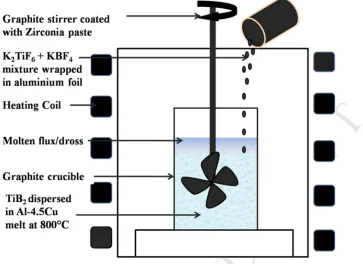
Al-4.5%Cu-5wt%TiB2 composite was synthesized by Flux Assisted Synthesis (FAS)
technique which consists of addition of halide salts, K2TiF6 and KBF4, to molten Al-4.5Cu
alloy at 800 °C and a reaction time of one hour. The schematic of flux assisted synthesis of
in-situ Al-Cu-TiB2 composites is shown in fig 1. The exothermic reaction within the melt results
in the formation of titanium-diboride (TiB2) particles within the matrix. The melt was stirred
intermittently every 10 minutes to ensure complete reaction of salts with molten aluminium
and homogenous distribution of TiB2 particles. After completion of reaction, the lighter dross
was decanted and the melt was degassed using C2Cl6. The composite melt was finally poured
into rectangular mild steel mould and machined to dimension of 10 mm x 10 mm x 60 mm
prior to forging in semi-solid state. Thixoforging was carried out using 80-ton hydraulic press,
at a load of 150 Kg/cm2 and at a ram speed of 20 mm/sec. As-cast alloy and composite were
subjected to forging at 30% and 50% deformation in semi-solid state. As-cast alloy and the
composite were forged at 631°C and 632°C respectively corresponding to a liquid fraction of
0.3. The samples were soaked at forging temperature for 10 minutes prior to forging. The
M
AN
US
CR
IP
T
AC
CE
PT
ED
Fig. 1. Schematic of flux assisted synthesis of in-situ Al-Cu-TiB2 composites
2.2 Microstructural characterization
Microstructure studies of alloy and composite were carried out using optical microscopy and
field emission scanning electron microscope (FESEM) after polishing respective samples
using standard metallographic procedures. Polished samples were anodised with a Barker’s
reagent (1.8% HBF4 in water) applying 23V DC for upto 1 minute. Dark field and bright field
micrographs were captured using a NIKON (Model: ECLIPSE LV150N) metallurgical
microscope. Grain size analyses was performed as per ASTM E112 standard test method in
polarized mode using a LEICA metallurgical microscope (Model: DM 4000M). Samples were
deep etched with 20% NaOH solution to study the clustering behaviour of particles at high
magnifications using SEM coupled with energy dispersive X-ray spectrometer (Carl Zeiss
[image:7.595.133.496.75.339.2]M
AN
US
CR
IP
T
AC
CE
PT
ED
2.3 Mechanical property characterization
Nano-indentation tests were performed using a nano-indentation instrument (Fischer-Cripps,
Australia) with a standard Berkovich indentor which measures force and displacement as
indentation progresses. The Berkovich indenter has a trigonal pyramidal shape with a nominal
angle of 65.3°. The samples were ultrafine polished to avoid surface roughness effects on the
results of nano indentation studies. For each sample, ten indentations were made using a
maximum load of 30 mN with each indentation separated by 20 µm. Details about nano
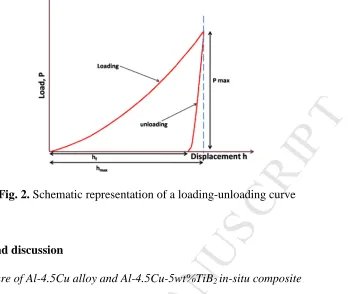
indentation test methodology can be found elsewhere [37]. Fig. 2 shows the typical loading –
unloading curves obtained from nano indentation studies [38]. As shown in Fig. 2, Pmax
represents the load at maximum indentation, hmax is the indenter displacement at peak load, hf
is the final depth of the contact impression after unloading. The total displacement (hmax) is
the displacement of the indenter from its initial position at peak load (Pmax). However, the
material elastically recovers its shape partially, when the indenter is unloaded [37-40]. So the
total displacement is composed of both elastic and plastic displacements. From this, elastic
displacements can be measured to calculate the elastic modulus, E. The hardness, H can be
calculated by removing this elastic contribution from the total displacement.
The hardness H can be calculated as;
H = ௫ (1)
Where Pmaxis the peak load, A is the projected area of contact between the indenter and
M
AN
US
CR
IP
T
AC
CE
PT
ED
Fig. 2. Schematic representation of a loading-unloading curve
3. Results and discussion
3.1 Microstructure of Al-4.5Cu alloy and Al-4.5Cu-5wt%TiB2 in-situ composite
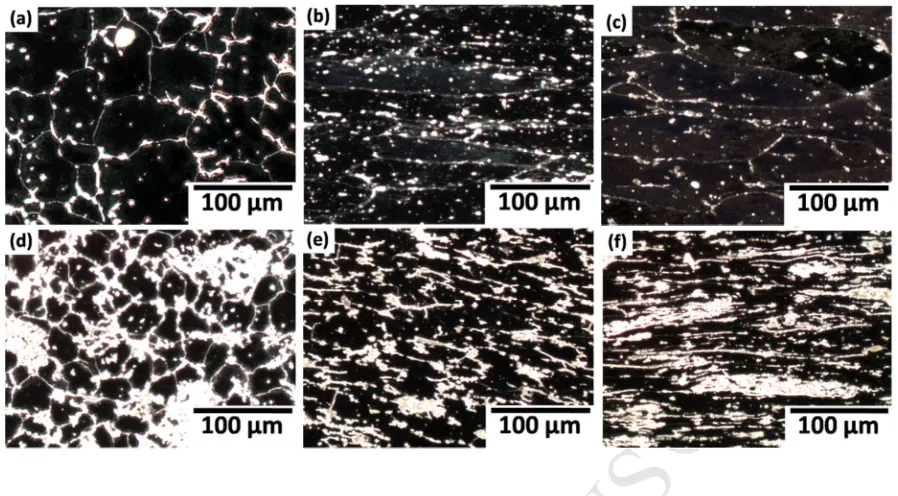
Fig. 3 shows the optical microstructure of as cast and semi solid processed Al-4.5Cu alloy and
in-situ Al-Cu-TiB2 composites. As represented in Fig. 3(a), the microstructure of the as cast
Al-4.5Cu alloy shows coarse rosette shaped α-Al grains and Al2Cu dispersed in the alloy. As
shown in Fig. 3(b, c), deformation of the alloy in semi-solid state led to a fragmentation and
dispersion of Al2Cu particles (bright phase) . Further, it was observed that higher percentage
of deformation (50% reduction) did not lead to enhanced distribution of Al2Cu particles as
[image:9.595.152.500.82.376.2]M
AN
US
CR
IP
T
AC
CE
PT
ED
Fig. 3. Dark field optical microstructure of Al-4.5Cu alloy (a) as cast condition (b)Vf, liquid =
0.3, 30% reduction (c) Vf, liquid = 0.3, 50% reduction, Al-4.5Cu-5TiB2 composite (d) as cast
condition (e)Vf, liquid = 0.3, 30% reduction (f) Vf, liquid = 0.3, 50% reduction
Fig. 3(d) shows the formation of fine α-Al grains in Al-4.5Cu-5TiB2 composite due to in-situ
formed TiB2 particles which act as heterogeneous nucleation sites.TiB2 is mainly seen in the
form of clusters of varying size randomly distributed in the matrix. When samples were
subjected to semisolid forging, it is observed that α-Al grains are elongated in the direction
normal to forging [Fig. 3(e, f)]. Also, the large agglomerates of TiB2 particles are fragmented
into relatively smaller agglomerates and uniformly distributed in the matrix. The compressive
force applied during forging resulted in separation of TiB2 particle clusters and probably
closure of pores in the composite [28]. TiB2 particles are redistributed by both viscous flow of
liquid and fragmentation of unmelted solid grains due to the force applied during semisolid
state forging. It was also observed that TiB2 particles are driven from their original locations
at grain boundaries by viscous drag of intergranular liquid when subjected to thixoforging.
[image:10.595.71.520.70.318.2]M
AN
US
CR
IP
T
AC
CE
PT
ED
The α-Al grains in the microstructure of as cast alloy and composites were studied using
polarised optical microscopy to understand the effect of semisolid forging on grain refinement
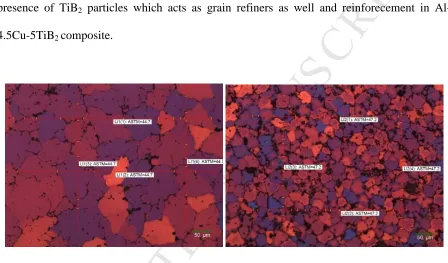
Al-4.5 Cu alloy. Fig. 4 shows average grain size of as cast Al-4.5Cu alloy and
Al-4.5Cu-5TiB2 composite. The average grain size of as cast Al-4.5 Cu alloy was found to be 59 µm,
while in and as cast Al-4.5Cu-5TiB2 composite was 24 µm. This shows that fine and uniform
grain structure is formed in the composite sample as compared to as-cast alloy due to the
presence of TiB2 particles which acts as grain refiners as well and reinforecement in
Al-4.5Cu-5TiB2 composite.
Fig. 4. Polarized optical microstructure of as cast (a) Al-4.5Cu alloy (b) Al-4.5Cu-5TiB2
composite
In order to understand the effect of semisolid forging on particle clustering and distribution in
as cast and semi solid processed in-situ Al-Cu-TiB2 composites, SEM studies were performed
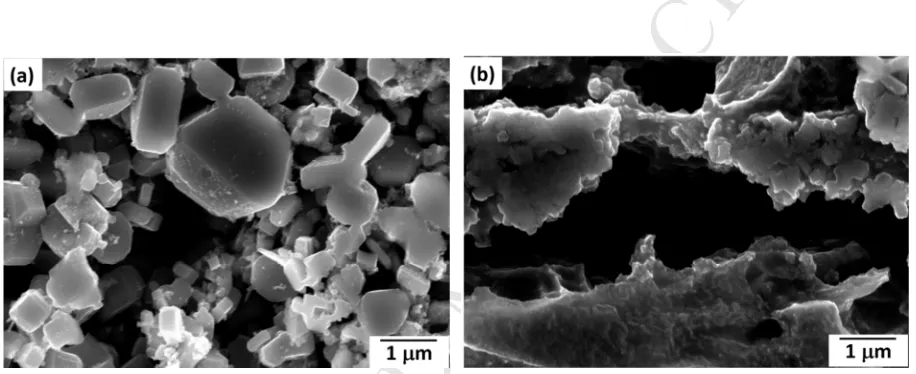
at higher magnifications. Fig. 5 shows SEM images of deep etched as cast and semi solid
processed in-situ Al-Cu-TiB2 composites. As shown in Fig. 5(a), the average size of TiB2
particle was found to be 1-2 µm in as cast composite. The shape of TiB2 particles were
observed as flakes as well as hexagonal shaped as shown in fig 5(a), which in a close
[image:11.595.75.523.237.500.2]M
AN
US
CR
IP
T
AC
CE
PT
ED
shape in 3 Dimension, but show different face in 2 Dimensional images. Similar observations
were made by Sun et al [41] that TiB2 particles in Al matrix exhibits hexagonal shapes with
smooth surfaces. Upon semisolid forging, TiB2 particles were fragmented and observed to be
finer in size as compared to as-cast samples as shown in Fig. 5(b). However, it is to be noted
that the TiB2 particles were embedded in Al2Cu clusters in the composite as shown in fig 5(b).
These clusters were observed to be elongated and distributed in the direction normal to
forging along the grain boundaries instead of forming large agglomerates in the matrix.
Fig. 5. FESEM Electron backscatter image showing the particle clusters in Al-4.5Cu-5TiB2
composite (a) as cast condition (b) Vf, liquid = 0.3, 30% reduction.
3.2 X-Ray Diffraction analysis
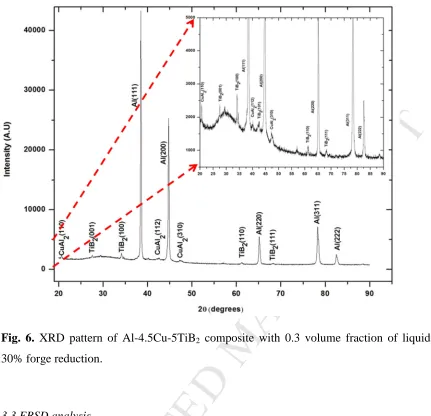
Fig. 6 shows the XRD pattern obtained from the Al-4.5Cu-5TiB2 composite with 0.3 volume
fraction of liquid and 30% reduction condition. The intensity peaks corresponding to TiB2,
[image:12.595.71.529.266.453.2]M
AN
US
CR
IP
T
AC
CE
PT
ED
Fig. 6. XRD pattern of Al-4.5Cu-5TiB2 composite with 0.3 volume fraction of liquid and
30% forge reduction.
3.3 EBSD analysis
Semisolid forging is a material deformation process at semsolid temperature range and is
expected to have a dynamic recrystallisation during the process. The α-Al grains in the
microstructure of as cast and semi solid processed in-situ Al-Cu-TiB2 composites were
analysed using EBSD to understand the grain orientation, grain boundary characteristics and
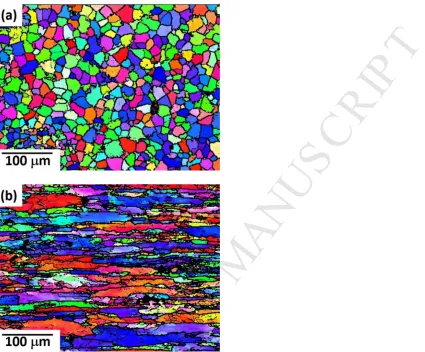
grain size distribution due to semisolid forging. Fig. 7 shows the grain orientaion in as cast
and semi solid processed in-situ Al-Cu-TiB2 composites. It is to be noted that TiB2 particles
were not able to be identified in EBSD maps due to their extremely fine sizes in comparison
to α-Al grains in the composite. All the poorly indexed points (black coloured) were excluded
[image:13.595.71.502.68.484.2]M
AN
US
CR
IP
T
AC
CE
PT
ED
particles aligned along the grain boundaries in the composite (Fig. 7(b)), while grains were
found to be equiaxed in as cast composite (Fig. 7(a)).
Fig. 7. EBSD map showing the grain orientation in Al-4.5Cu-5TiB2 composite (a) as cast
[image:14.595.76.501.151.503.2]M
AN
US
CR
IP
T
AC
CE
PT
ED
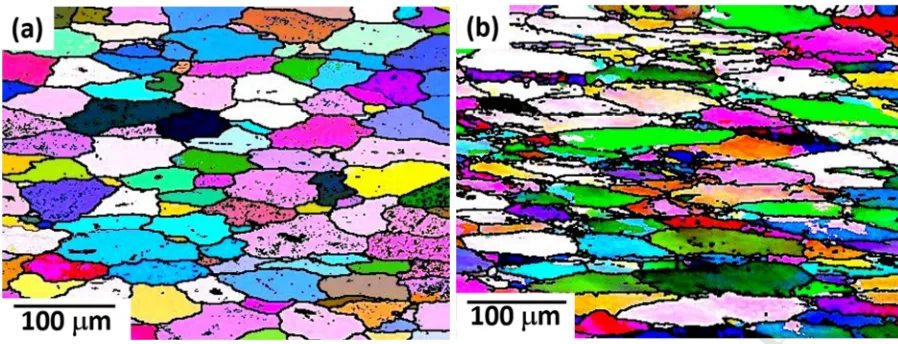
Fig. 8. EBSD map showing the grain orientation in Al-4.5Cu-alloys (a) as cast condition (b)
[image:15.595.71.520.70.242.2]Vf,liquid = 0.3, 30% reduction.
Fig. 8 shows the grain orientaion in as cast alloy and semi solid processed in-situ Al-Cu alloy.
The grains were observed to be elongated due to semisolid forging (Fig. 8(b)) as compared to
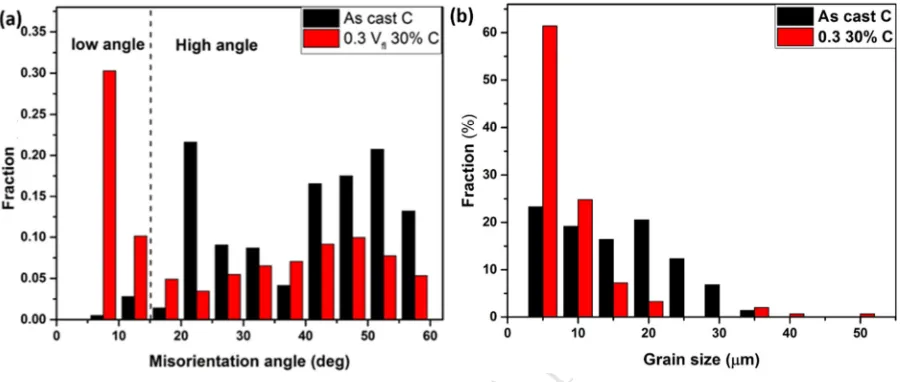
the grains in as cast alloy (Fig. 8(a)). Fig 9 shows EBSD mapping representing the effect of
semisolid forging on grain misorientation angle and grain size of the composite. The grain
boundaries with a misorientation angle above 15ο is generally considered as high angle
boundaries (HAB), while grain boundaries with a misorientation angle below 15ο are
considered as low angle boundaries (LAB). As shown in Fig. 9(a) as cast composite has
almost all of its grain boundaries as HAB with a higher degree of uniformity, while semisolid
forged composite has significantly higher amount of LAB along with HAB. During hot
deformation in semi solid state, liquid film forms at grain boundaries thereby causing
migration of grain boundaries which initiated recrystallization in the alloy [43]. Some of the
boundaries are incomplete LAB and mixed character which might be due to a transformation
from low angle to high angle or vice versa. The mixed nature of boundaries is due to the
continuous type recrystallization (CDRX) [42]. During dynamic recovery the LAB’S
increases progressively results in formation of new grains which then transforms into HAB’s
M
AN
US
CR
IP
T
AC
CE
PT
ED
boundaries in as cast composite, whereas only 60% of grain boundaries were found to be high
angle boundaries in semisolid forged composite. Further, the grain size is found to be finer in
the semisolid forged composite as compared to as cast composite (Fig. 9(b)).
Fig. 9. EBSD results of Al-4.5Cu-5TiB2 composite showing the effect of semisolid forging on
(a) grain misorientation angle, and (b) grain size distribution.
A similar type of observation is obtained after semisolid forging of Al-4.5Cu alloy. Fig. 10
represents EBSD results showing the effect of semisolid forging on grain misorientation
angle, and grain size distribution of Al-4.5Cu alloy. As shown in Fig. 10(a), more than 90%
boundaries were found to be high angle boundaries in as cast alloy, whereas only 50% of
boundaries are found to be high angle boundaries in semisolid forged alloy. Further, the
grains in semisolid forged alloy were found to be fine in size as compared to as cast alloy
[image:16.595.74.527.183.374.2]M
AN
US
CR
IP
T
AC
CE
PT
ED
Fig.10. EBSD results of Al-4.5Cu alloy showing the effect of semisolid forging on (a) grain
misorientation angle, and (b) grain size distribution.
Hence, above EBSD results as shown in Fig 9 and Fig 10 represent that the application of
semisolid forging results in formation of fine new grains due to recrystallization in alloy and
composite respectively. Similar observations were made by Hogg et al. [45] that the hot
compression of aluminium alloys resulted in a grain refinement of microstructure by partial
dynamic recrystallization in the alloy. The size of newly formed recrystallized grains depends
on the nucleation rate and the velocity of moving HAB’s [46]. The average grain size was
found to be small in the alloy (Fig 10(b)) as compared to the composite (Fig 9(b)). Also, the
effect of semisolid forging on grain size of the composite was found to be significantly higher
than the alloy. The fraction of low angle boundaries formed due to semisolid forging of
composite (Fig 9(a)) was found to be less than the fraction of low angle boundaries formed
due to semisolid forging of the alloy (Fig 10(a)). The particles could have inhibited the
movement of dislocations, initiated the heterogeneous nucleation and resulted in enhanced
recrystallization. However, further studies need to be performed using TEM to understand the
mechanism of dynamic recrystallization and moving of grain boundaries due to semi solid
M
AN
US
CR
IP
T
AC
CE
PT
ED
3.4 Nanoindentation
The hardness and elastic modulus of as-cast and semi-solid forged 4.5Cu alloy and
Al-4.5Cu-5TiB2 composite were determined from the loading-unloading curve using the method
proposed by Oliver and Pharr [38]. In order to minimize the indentation size effects, an
indentation depth of 0.713 µm and an interval of 20 µm between each indentation was used
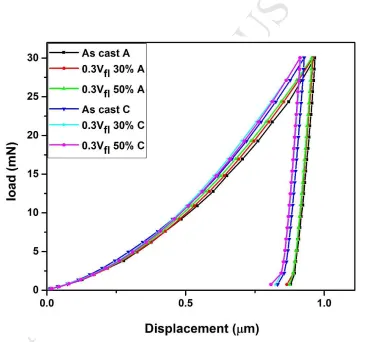
[39,40]. Fig. 11 shows the loading - unloading curve of semi-solid processed Al-4.5Cu alloy
and Al-4.5Cu-5TiB2 composite from which the hardness and elastic modulus were measured.
Fig. 11. Loading - unloading curve of semisolid processed Al-4.5Cu alloy and
Al-4.5Cu-5TiB2 composite.
[image:18.595.118.490.300.642.2]M
AN
US
CR
IP
T
AC
CE
PT
ED
they reported a dramatic increase in modulus with increase in local dislocation and the local stored energy due to deformation. Table 1 summarizes the results of as cast and semi-solid forged Al-4.5Cu alloy and Al-4.5Cu-5TiB2 composite measured using nano indentation as shown in Fig. 11. The results show that the hardness of the alloy is increased on semisolid processing. The hardness of Al-4.5Cu alloy is increased by 2.14% after semisolid forging. This increase in hardness could be due to the closure of pores by the application of compressive force applied during forging and recrystallization of the grains. The hardness of as cast Al-4.5Cu-5TiB2 composite was increased by 7.14% compared to the as cast Al-4.5Cu alloy. This can be attributed to the reinforcement of TiB2 particles in the composite [6, 20,
29]. Further, it was observed that the semisolid forging has a significant influence on the elastic modulus of the alloy and composite. The elastic modulus of as-cast Al-4.5Cu-5TiB2
composite was found to be 9% higher than the as-cast Al-4.5Cu alloy. This increase in elastic modulus can be attributed to the reinforcement of TiB2 particles in the matrix [48]. The elastic
modulus and hardness is increased by 8% and 2.14 % respectively in case of alloy, while elastic modulus and hardness increased by 15% and 7.14% respectively in case of composite due to semi solid forging.
Table 1 :Elastic modulus and hardness of Al-4.5Cu alloy and Al-4.5Cu-5TiB2 composite
Materials Elastic
modulus (GPa)
% increase Hardness (GPa) % increase
Al-4.5Cu alloy 89.68 ± 2.86 0 1.40 ± 0.06 0
Al-4.5Cu alloy, 0.3Vfl, 30%
reduction
90.71 ± 3.51 1% 1.41 ± 0.07 0.07%
Al-4.5Cu alloy, 0.3Vfl, 50%
reduction
97.35 ± 2.29 8% 1.43 ± 0.09 2.14%
Al-4.5Cu-5TiB2 composite 97.99 ± 3.14 9% 1.50 ± 0.14 7.14%
Al-4.5Cu-5TiB2 composite, 0.3Vfl,
30% reduction
111.33 ± 3.69 24% 1.60 ± 0.11 14.28%
Al-4.5Cu-5TiB2 composite, 0.3Vfl,
50% reduction
M
AN
US
CR
IP
T
AC
CE
PT
ED
Further, it was observed that the increase in forge deformation from 30% to 50% shows a significant change in the elastic modulus and hardness of the composite. The elastic modulus and hardness are found to be higher for the 30% reduction condition. The possible reason for this could be the better distribution of TiB2 particles and reduction in cluster size when
subjected to 30% deformation [49]. The cluster size reduction and TiB2 particle distribution in
Al-4.5Cu-5TiB2 composite with 30% reduction by semisolid forging was well explained in
our recent X-ray computed tomography studies [28]. Kuruvilla et al. [50] found that the extremely fine size TiB2 particle reinforcements results in the improvement of elastic
modulus of the aluminium matrix composite. This study shows the application of semi solid forging on improvement of mechanical properties of the alloy and composite by the combined effect of reinforcement of TiB2 particles and enhanced dynamic recrystallization of alloy and
composite.
4. Conclusions
The in-situ TiB2 particles in Al-4.5Cu-5TiB2 composite perform a dual role of grain refiner
and reinforcement thus contributing to hardening by Hall-Petch mechanism as well as
dispersion hardening mechanism. Semisolid forging of the composite leads to fragmentation
of TiB2 clusters thereby enabling uniform distribution of particles in the matrix. It also
enables dynamic recrystallization and nucleation of grains with increased dislocation density.
This leads to marked increase in hardness and elastic modulus of the alloy as well as the
composite.
Acknowledgement
We would like to thank Director, CSIR-IMMT for giving permission to publish the
nanindentation results. We would like to thank Dr Vit Janik, WMG, University of Warwick
M
AN
US
CR
IP
T
AC
CE
PT
ED
6. References
[1] G. Hirt, R. Cremer, T. Witulski, H. Tinius, Lightweight near net shape components
produced by thixoforming, Mater. Des. 18 (1998) 315–321.
doi:10.1016/S0261-3069(97)00071-X
[2] J. V. Wood, P. Davies, J.L.F. Kellie, Properties of reactively cast aluminium–TiB2
alloys, Mater. Sci. Technol. 9 (1993) 833–840. doi:10.1179/mst.1993.9.10.833.
[3] M.A. Herbert, R. Maiti, R. Mitra, M. Chakraborty, Wear behaviour of cast and mushy
state rolled Al-4.5Cu alloy and in-situ Al4.5Cu-5TiB2 composite, Wear. 265 (2008)
1606–1618. doi:10.1016/j.wear.2008.03.010.
[4] R. MITRA and Y.R. Mahajan, Interfaces in discontinuously reinforced metal matrix
composites : An overview, Bull. Mater. Sci. 18 (1995) 405–434.
doi:10.1007/BF02749771.
[5] S.C. Tjong, Z.Y. Ma, Microstructural and mechanical characteristics of in situ metal
matrix composites, Mater. Sci. Eng. R Reports. 29 (2000) 49–113.
doi:10.1016/S0927-796X(00)00024-3.
[6] C.S. Ramesh, A. Ahamed, B.H. Channabasappa, R. Keshavamurthy, Development of
Al 6063 – TiB2 in situ composites, Mater. Des. 31 (2010) 2230–2236.
doi:10.1016/j.matdes.2009.10.019.
[7] N. Hosseini, F. Karimzadeh, M.H. Abbasi, M.H. Enayati, Tribology International A
comparative study on the wear properties of coarse-grained Al6061 alloy and
nanostructured Al6061 – Al2O3 composites, Tribiology Int. 54 (2012) 58–67.
doi:10.1016/j.triboint.2012.04.020.
[8] N. Soltani, H.R.J. Nodooshan, A. Bahrami, M.I. Pech-canul, W. Liu, G. Wu, Effect of
M
AN
US
CR
IP
T
AC
CE
PT
ED
composites, Mater. Des. 53 (2014) 774–781. doi:10.1016/j.matdes.2013.07.084.
[9] F. Toptan, A. Kilicarslan, A. Karaaslan, M. Cigdem, I. Kerti, Processing and
microstructural characterisation of AA 1070 and AA 6063 matrix B4Cp reinforced
composites, Mater. Des. 31 (2010) S87–S91. doi:10.1016/j.matdes.2009.11.064.
[10] D. Jeyasimman, R. Narayanasamy, R. Ponalagusamy, V. Anandakrishnan, M. Kamaraj,
The effects of various reinforcements on dry sliding wear behaviour of AA 6061
nanocomposites, Mater. Des. 64 (2014) 783–793. doi:10.1016/j.matdes.2014.08.039.
[11] B.S. Murty, S. A. Kori, M. Chakraborty, Grain refinement of aluminium and its alloys
by heterogeneous nucleation and alloying, Int. Mater. Rev. 47 (2002) 3–29.
doi:10.1179/095066001225001049.
[12] C. Bartels, D. R, G. Gottstein, U. Huber, Investigation of the precipitation kinetics in
an A16061 / TiB2 metal matrix composite, 237 (1997) 12–23.
doi:10.1016/S0921-5093(97)00104-4.
[13] A. Jana, I.G. Siddhalingeshwar, R. Mitra, Effect of homogeneity of particle distribution
on tensile crack propagation in mushy state rolled in situ Al-4.5Cu-5TiB2 particulate
composite, Mater. Sci. Eng. A. 575 (2013) 104–110. doi:10.1016/j.msea.2013.03.049.
[14] A. Mandal, R. Maiti, M. Chakraborty, B.S. Murty, Effect of TiB2 particles on aging
response of Al-4Cu alloy, Mater. Sci. Eng. A. 386 (2004) 296–300.
doi:10.1016/j.msea.2004.07.026.
[15] R.G. Munro, Material Properties of Titanium Diboride, 105 (2000) 709–720.
[16] C. Zou, H. Kang, W. Wang, Z. Chen, R. Li, X. Gao, T. Li, T. Wang, Effect of La
addition on the particle characteristics , mechanical and electrical properties of in situ
Cu-TiB2 composites, J. Alloys Compd. 687 (2016) 312–319.
M
AN
US
CR
IP
T
AC
CE
PT
ED
[17] J. Geng, T. Hong, Y. Shen, G. Liu, C. Xia, D. Chen, M. Wang, H. Wang,
Microstructural stability of in-situ TiB2/Al composite during solution treatment, Mater.
Charact. 124 (2017) 50–57. doi:10.1016/j.matchar.2016.11.032.
[18] Y. Birol, Semi-solid processing of the primary aluminium die casting alloy A365, J.
Alloys Compd. 473 (2009) 133–138. doi:10.1016/j.jallcom.2008.05.074.
[19] A. Bolouri, M. Shahmiri, C.G. Kang, Study on the effects of the compression ratio and
mushy zone heating on the thixotropic microstructure of AA 7075 aluminum alloy via
SIMA process, J. Alloys Compd. 509 (2011) 402–408.
doi:10.1016/j.jallcom.2010.09.042.
[20] I.G. Siddhalingeshwar, M.A. Herbert, M. Chakraborty, R. Mitra, Effect of mushy state
rolling on age-hardening and tensile behavior of Al-4.5Cu alloy and in situ
Al-4.5Cu-5TiB2 composite, Mater. Sci. Eng. A. 528 (2011) 1787–1798.
doi:10.1016/j.msea.2010.11.027.
[21] Y. Birol, Thixoforging experiments with 6082 extrusion feedstock, J. Alloys Compd.
455 (2008) 178–185. doi:10.1016/j.jallcom.2007.01.053.
[22] Z. Fan, Semisolid metal processing, Int. Mater. Rev. 47 (2002) 49-85.
doi:10.1179/095066001225001076.
[23] J. Wannasin, R. Canyook, S. Wisutmethangoon, M.C. Flemings, Grain refinement
behavior of an aluminum alloy by inoculation and dynamic nucleation, Acta Mater. 61
(2013) 3897–3903. doi:10.1016/j.actamat.2013.03.029.
[24] L.H. Liu, C. Yang, L.M. Kang, S.G. Qu, X.Q. Li, W.W. Zhang, W.P. Chen, Y.Y. Li,
P.J. Li, L.C. Zhang, A new insight into high-strength Ti62Nb12.2Fe13.6Co6.4Al5.8 alloys
with bimodal microstructure fabricated by semi-solid sintering, Sci. Rep. 6 (2016)
M
AN
US
CR
IP
T
AC
CE
PT
ED
[25] Y. Chen, W. Yang, H. Zhan, F. Zhang, Y. Huo, Y. Zhao, X. Song, Y. Gu, Tailorable
Burning Behavior of Ti14 Alloy by Controlling Semi-Solid Forging Temperature,
Materials (Basel). 9 (2016) 697. doi:10.3390/ma9080697.
[26] R. Canyook, J. Wannasin, S. Wisuthmethangkul, M.C. Flemings, Characterization of
the microstructure evolution of a semi-solid metal slurry during the early stages, Acta
Mater. 60 (2012) 3501–3510. doi:10.1016/j.actamat.2012.03.002.
[27] D.C. Hofmann, S.N. Roberts, H. Kozachkov, Infrared thermal processing history of a
Ti-based bulk metallic glass matrix composite manufactured via semi-solid forging,
Acta Mater. 95 (2015) 192–200. doi:10.1016/j.actamat.2015.05.029.
[28] J. Mathew, A. Mandal, J. Warnett, M.A. Williams, M. Chakraborty, P. Srirangam,
X-ray tomography studies on porosity and particle size distribution in cast in-situ
Al-Cu-TiB2 semi-solid forged composites, Mater. Charact. 118 (2016) 57-64.
doi:10.1016/j.matchar.2016.05.010.
[29] S. Deepak Kumar, A. Mandal, M. Chakraborty, On the age hardening behavior of
thixoformed A356–5TiB2 in-situ composite, Mater. Sci. Eng. A. 636 (2015) 254–262.
doi:10.1016/j.msea.2015.03.076.
[30] T. Sakai, H. Miura, A. Goloborodko, O. Sitdikov, Continuous dynamic
recrystallization during the transient severe deformation of aluminum alloy 7475, Acta
Mater. 57 (2009) 153–162. doi:10.1016/j.actamat.2008.09.001.
[31] S. Gourdet, F. Montheillet, An experimental study of the recrystallization mechanism
during hot deformation of aluminium, Mater. Sci. Eng. A. 283 (2000) 274–288.
doi:10.1016/S0921-5093(00)00733-4.
[32] P.B. Prangnell, C.P. Heason, Grain structure formation during friction stir welding
M
AN
US
CR
IP
T
AC
CE
PT
ED
doi:10.1016/j.actamat.2005.03.044.
[33] M. Mandal, R. Mitra, Effect of Mushy State Rolling on the Microstructure,
Microhardness, and Microtexture in Al-4.5wt.%Cu-5wt.%TiB2 In Situ Composite,
Jom. 68 (2016) 1902–1908. doi:10.1007/s11837-016-1911-4.
[34] J. Douin, S. Jouannigot, M. Zakhour, M. Nakhl, J. Silvain, J. Bobet, Materials Science
& Engineering A Hardness and Young ’ s modulus behavior of Al composites
reinforced by nanometric TiB2 elaborated by mechanosynthesis, 591 (2014) 1–8.
doi:10.1016/j.msea.2013.10.065.
[35] S.S. Singh, C. Schwartzstein, J.J. Williams, X. Xiao, F. De Carlo, N. Chawla, 3D
microstructural characterization and mechanical properties of constituent particles in Al
7075 alloys using X-ray synchrotron tomography and nanoindentation, J. Alloys
Compd. 602 (2014) 163–174. doi:10.1016/j.jallcom.2014.03.010.
[36] Y.W. Bao, W. Wang, Y.C. Zhou, Investigation of the relationship between elastic
modulus and hardness based on depth-sensing indentation measurements, Acta Mater.
52 (2004) 5397–5404. doi:10.1016/j.actamat.2004.08.002.
[37] S. Bajpai, A. Gupta, S.K. Pradhan, T. Mandal, K. Balani, Crack Propagation Resistance
of α-Al2O3 Reinforced Pulsed Laser-Deposited Hydroxyapatite Coating on 316
Stainless Steel, Jom. 66 (2014) 2095–2107. doi:10.1007/s11837-014-1152-3.
[38] W.C. Oliver, G.M. Pharr, Measurement of hardness and elastic modulus by
instrumented indentation: Advances in understanding and refinements to methodology,
J. Mater. Res. 19 (2004) 3–20. doi:10.1557/jmr.2004.19.1.3.
[39] K.M. Mussert, A nano-indentation study on the mechanical behaviour of the matrix
material in an AA6061 - Al2O3 MMC, Jom. 7 (2002) 789–794.
M
AN
US
CR
IP
T
AC
CE
PT
ED
[40] X. Li, B. Bhushan, A review of nanoindentation continuous stiffness measurement
technique and its applications, Mater. Charact. 48 (2002) 11-36.
doi:10.1016/S1044-5803(02)00192-4.
[41] J. Sun, X. Zhang, Y. Zhang, N. Ma, H. Wang, Effect of alloy elements on the
morphology transformation of TiB2 particles in Al matrix, Micron. 70 (2015) 21–25.
doi:10.1016/j.micron.2014.12.002.
[42] D. Yadav, R. Bauri, Friction Stir Processing of Al-TiB2 In Situ Composite: Effect on
Particle Distribution, Microstructure and Properties, J. Mater. Eng. Perform. 24 (2015)
1116–1124. doi:10.1007/s11665-015-1404-6.
[43] H. V. Atkinson, K. Burke, G. Vaneetveld, Recrystallisation in the Semi-Solid State in
7075 Aluminium Alloy, Int. J. Mater. Form. 1 (2008) 973–976.
doi:10.1007/s12289-008-0220-z
[44] S. Gourdet, F. Montheillet, A model of continuous dynamic recrystallization, Acta
Mater. 51 (2003) 2685–2699. doi:10.1016/S1359-6454(03)00078-8.
[45] S.C. Hogg, I.G. Palmer, L.G. Thomas, P.S. Grant, Processing, microstructure and
property aspects of a spraycast Al-Mg-Li-Zr alloy, Acta Mater. 55 (2007) 1885–1894.
doi:10.1016/j.actamat.2006.10.057.
[46] C. Sommitsch, W. Mitter, On modelling of dynamic recrystallisation of fcc materials
with low stacking fault energy, Acta Mater. 54 (2006) 357–375.
doi:10.1016/j.actamat.2005.09.008.
[47] S. Pathak, D. Stojakovic, S.R. Kalidindi, Measurement of the local mechanical
properties in polycrystalline samples using spherical nanoindentation and orientation
imaging microscopy, Acta Mater. 57 (2009) 3020–3028.
M
AN
US
CR
IP
T
AC
CE
PT
ED
[48] H. Yi, N. Ma, Y. Zhang, X. Li, H. Wang, Effective elastic moduli of Al-Si composites
reinforced in situ with TiB2 particles, Scr. Mater. 54 (2006) 1093–1097.
doi:10.1016/j.scriptamat.2005.11.070.
[49] D.J. Lloyd, Particle reinforced aluminium and magnesium matrix composites, Int.
Mater. Rev. 39 (1994) 1–23.doi:10.1179/imr.1994.39.1.1
[50] A.K. Kuruvilla, K.S.Prasad, V.V.Bhanuprasad, Y.R.Mahajan, Microstructure-property
correlation in Al/TiB2(XD)composites Scr. Mater. 24 (1990) 873-878.
M
AN
US
CR
IP
T
AC
CE
PT
ED
Effect of semi-solid forging on microstructure and mechanical properties of in-situ Al-Cu-TiB2 composites
Highlights:
• Al-Cu-TiB2 MMC was prepared by casting using flux assisted synthesis method.
• Semisolid forging was employed to deagglomerate TiB2 clusters in the composite.
• Semisolid forging resulted in improvement in grain refinement in the composite due dynamic recrystallization.