Decipherment Complexity in 1:1 Substitution Ciphers
Malte Nuhn and Hermann Ney
Human Language Technology and Pattern Recognition
Computer Science Department, RWTH Aachen University, Aachen, Germany
<surname>@cs.rwth-aachen.de
Abstract
In this paper we show that even for the case of 1:1 substitution ciphers—which encipher plaintext symbols by exchang-ing them with a unique substitute—findexchang-ing the optimal decipherment with respect to a bigram language model is NP-hard. We show that in this case the decipherment problem is equivalent to the quadratic as-signment problem (QAP). To the best of our knowledge, this connection between the QAP and the decipherment problem has not been known in the literature be-fore.
1 Introduction
The decipherment approach for MT has recently gained popularity for training and adapting trans-lation models using only monolingual data. The general idea is to find those translation model parameters that maximize the probability of the translations of a given source text in a given lan-guage model of the target lanlan-guage.
In general, the process of translation has a wide range of phenomena like substitution and reorder-ing of words and phrases. In this paper we only study models that substitute tokens—i.e. words or letters—with a unique substitute. It therefore serves as a very basic case for decipherment and machine translation.
Multiple techniques like integer linear program-ming (ILP), A∗ search, genetic algorithms, and
Bayesian inference have been used to tackle the decipherment problem for 1:1 substitution ciphers. The existence of such a variety of different ap-proaches for solving the same problem already shows that there is no obvious way to solve the problem optimally.
In this paper we show that decipherment of 1:1 substitution ciphers is indeed NP-hard and thus
ex-plain why there is no single best approach to the problem. The literature on decipherment provides surprisingly little on the analysis of the complexity of the decipherment problem. This might be re-lated to the fact that a statistical formulation of the decipherment problem has not been analyzed with respect to n-gram language models: This paper
shows the close relationship of the decipherment problem to the quadratic assignment problem. To the best of our knowledge the connection between the decipherment problem and the quadratic as-signment problem was not known.
The remainder of this paper is structured as follows: In Section 2 we review related work. Section 3 introduces the decipherment problem and describes the notation and definitions used throughout this paper. In Section 4 we show that decipherment using a unigram language model corresponds to solving a linear sum assignment problem (LSAP). Section 5 shows the connection between the quadratic assignment problem and de-cipherment using a bigram language model. Here we also give a reduction of the traveling sales-man problem (TSP) to the decipherment problem to highlight the additional complexity in the deci-pherment problem.
2 Related Work
In recent years a large number of publications on the automatic decipherment of substitution ci-phers has been published. These publications were mostly dominated by rather heuristic methods and did not provide a theoretical analysis of the com-plexity of the decipherment problem: (Knight and Yamada, 1999) and (Knight et al., 2006) use the EM algorithm for various decipherment problems, like e.g. word substitution ciphers. (Ravi and Knight, 2008) and (Corlett and Penn, 2010) are able to obtain optimal (i.e. without search errors) decipherments of short cryptograms given an n
gram language model. (Ravi and Knight, 2011), (Nuhn et al., 2012), and (Dou and Knight, 2012) treat natural language translation as a deciphering problem including phenomena like reordering, in-sertion, and deletion and are able to train transla-tion models using only monolingual data.
In this paper we will show the connection be-tween the decipherment problem and the linear sum assignment problem as well as the quadratic assignment problem: Regarding the linear sum as-signment problem we will make use of definitions presented in (Burkard and ela, 1999). Concern-ing the quadratic assignment problem we will use basic definitions from (Beckmann and Koopmans, 1957). Further (Burkard et al., 1998) gives a good overview over the quadratic assignment problem, including different formulations, solution meth-ods, and an analysis of computational complexity. The paper also references a vast amount of fur-ther literature that might be interesting for future research.
3 Definitions
In the following we will use the machine trans-lation notation and denote the ciphertext with
fN
1 = f1. . . fj. . . fN which consists of cipher
tokens fj ∈ Vf. We denote the plaintext with eN1 = e1. . . ei. . . eN (and its vocabulary Ve
re-spectively). We define
e0=f0=eN+1 =fN+1= $ (1)
with “$” being a special sentence boundary token.
We use the abbreviationsVe =Ve∪ {$}andVf
respectively.
A general substitution cipher uses a table
s(e|f) which contains for each cipher token f a
probability that the tokenf is substituted with the
plaintext token e. Such a table for substituting
cipher tokens{A, B, C, D}with plaintext tokens {a, b, c, d}could for example look like
a b c d
A 0.1 0.2 0.3 0.4
B 0.4 0.2 0.1 0.3
C 0.4 0.1 0.2 0.3
D 0.3 0.4 0.2 0.1
The 1:1 substitution cipher encrypts a given plaintext into a ciphertext by replacing each plain-text token with a unique substitute: This means that the tables(e|f)contains all zeroes, except for
one “1.0” perf ∈ Vf and one “1.0” per e ∈ Ve.
For example the text
abadcab would be enciphered to
BCBADBC when using the substitution
a b c d
A 0 0 0 1
B 1 0 0 0
C 0 1 0 0
D 0 0 1 0
We formalize the 1:1 substitutions with a bijective functionφ : Vf → Ve. The general decipher-ment goalis to obtain a mappingφsuch that the
probability of the deciphered text is maximal:
ˆ
φ= arg max
φ
p(φ(f1)φ(f2)φ(f3)...φ(fN)) (2)
Herep(. . .) denotes thelanguage model.
De-pending on the structure of the language model Equation 2 can be further simplified.
Given a ciphertextf1N, we define theunigram countNf off ∈Vf as1
Nf = N+1X
i=0
δ(f, fi) (3)
This implies thatNf are integer counts > 0. We
similarly define thebigram countNf f0off, f0∈
Vf as
Nf f0 =
N+1X
i=1
δ(f, fi−1)·δ(f0, fi) (4)
This definition implies that
(a) Nf f0 are integer counts>0of bigrams found in the ciphertextfN
1 .
(b) Given the first and last token of the cipherf1
andfN, the bigram counts involving the
sen-tence boundary token$need to fulfill
N$f =δ(f, f1) (5) Nf$ =δ(f, fN) (6)
(c) For allf ∈Vf
X
f0∈Vf
Nf f0 =
X
f0∈Vf
Nf0f (7)
must hold.
Similarly, we define language model matrices S
for the unigram and the bigram case. The uni-gram language modelSf is defined as
Sf = logp(f) (8)
which implies that
(a) Sf are real numbers with
Sf ∈[−∞,0] (9)
(b) The following normalization constraint holds:
X
f∈Vf
exp(Sf) = 1 (10)
Similarly for thebigram language model matrix Sf f0, we define
Sf f0 = logp(f0|f) (11)
This definition implies that (a) Sf f0 are real numbers with
Sf f0 ∈[−∞,0] (12)
(b) For the sentence boundary symbol, it holds that
S$$=−∞ (13)
(c) For all f ∈ Vf the following normalization
constraint holds:
X
f0∈Vf
exp(Sf f0) = 1 (14)
4 Decipherment Using Unigram LMs 4.1 Problem Definition
When using a unigram language model, Equa-tion 2 simplifies to finding
ˆ
φ= arg max
φ N
Y
i=1
p(φ(fi)) (15)
which can be rewritten as
ˆ
φ= arg max
φ
X
f∈Vf
NfSφ(f) (16)
When defining cf f0 = Nflogp(f0), forf, f0 ∈ Vf, Equation 16 can be brought into the form of
ˆ
φ= arg max
φ
X
f∈Vf
cf φ(f) (17)
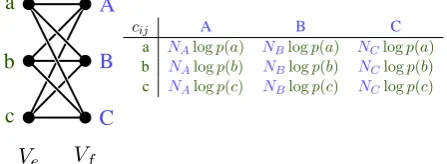
Figure 1 shows an illustration of this problem.
A
B
C a
b
c
Ve Vf
cij A B C
[image:3.595.309.533.68.150.2]a NAlogp(a) NBlogp(a) NClogp(a) b NAlogp(b) NBlogp(b) NClogp(b) c NAlogp(c) NBlogp(c) NClogp(c)
Figure 1: Linear sum assignment problem for a cipher withVe ={a, b, c},Vf ={A, B, C},
uni-gram countsNf, and unigram probabilitiesp(e).
4.2 The Linear Sum Assignment Problem
The practical problem behind the linear sum assignment problem can be described as fol-lows: Given jobs {j1, . . . , jn} and workers
{w1, . . . , wn}, the task is to assign each jobjito a
workerwj. Each assignment incurs a costcij and
the total cost for assigning all jobs and workers is to be minimized.
This can be formalized as finding the assign-ment
ˆ
φ = arg min
φ n
X
i=1
ciφ(i) (18)
The general LSAP can be solved in polynomial time using the Hungarian algorithm (Kuhn, 1955). However, since the matrixcijoccurring for the
de-cipherment using a unigram language model can be represented as the product cij = ai ·bj the
decipherment problem can be solved more easily: In the Section “Optimal Matching”, (Bauer, 2010) shows that in this case the optimal assignment is found by sorting the jobsjibyaiand workerswj
bybj and then assigning the jobsji to workerswj
that have the same rank in the respective sorted lists. Sorting and then assigning the elements can be done inO(nlogn).
5 Decipherment Using Bigram LMs
5.1 Problem Definition
When using a2-gram language model, Equation 2
simplifies to
ˆ
φ= arg max
φ
NY+1
j=1
p(φ(fj)|φ(fj−1))
x y
l1
l2
l3 l4
Assignments l1 l2 l3 l4
(a) f1 f2 f3 f4 (b) f1 f4 f3 f2
Flows
f1 f2 f3 f4
f1 1
f2 1
f3 1
[image:4.595.92.273.66.205.2]f4 1
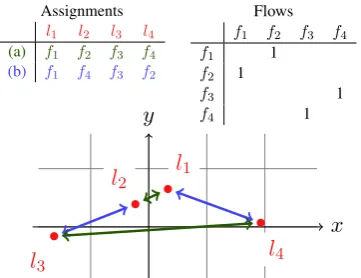
Figure 2: Hypothetical quadratic assignment prob-lem with locations l1. . . l4 and facilities f1. . . f4
with all flows being zero except f1 ↔ f2 and f3 ↔f4. The distance between locationsl1. . . l4
is implicitly given by the locations in the plane, implying a euclidean metric. Two example assign-ments(a)and(b)are shown, with (b)having the
lower overall costs.
Using the definitions from Section 3, Equation 19 can be rewritten as
ˆ
φ= arg max
φ
X
f∈Vf
X
f0∈Vf
Nf f0Sφ(f)φ(f0)
(20)
(Bauer, 2010) arrives at a similar optimization problem for the “combined method of frequency matching” using bigrams and mentions that it can be seen as a combinatorial problem for which an efficient way of solving is not known. However, he does not mention the close connection to the quadratic assignment problem.
5.2 The Quadratic Assignment Problem
The quadratic assignment problem was introduced by (Beckmann and Koopmans, 1957) for the fol-lowing real-life problem:
Given a set of facilities {f1, . . . , fn} and a set
of locations {l1, . . . , ln} with distances for each
pair of locations, and flows for each pair of facili-ties (e.g. the amount of supplies to be transported between a pair of facilities) the problem is to as-sign the facilities to locations such that the sum of the distances multiplied by the corresponding flows (which can be interpreted as total transporta-tion costs) is minimized. This is visualized in Fig-ure 2.
Following (Beckmann and Koopmans, 1957) we can express the quadratic assignment problem
as finding
ˆ
φ= arg min
φ
n
X
i=1 n
X
j=1
aijbφ(i)φ(j)+ n
X
i=1 ciφ(i)
(21)
whereA = (aij), B = (bij), C = (cij) ∈ Nn×n
andφa permutation
φ:{1, . . . , n} → {1, . . . , n}. (22)
This formulation is often referred to as Koopman-Beckman QAP and often abbreviated as
QAP(A, B, C). The so-called pure or
ho-mogeneousQAP
ˆ
φ= arg min
φ
n
X
i=1 n
X
j=1
aijbφ(i)φ(j)
(23)
is obtained by settingcij = 0, and is often denoted
asQAP(A, B).
In terms of the real-life problem presented in (Beckmann and Koopmans, 1957) the matrix A
can be interpreted as distance matrix for loca-tions{l1. . . ln}andBas flow matrix for facilities
{f1. . . fn}.
(Sahni and Gonzalez, 1976) show that the quadratic assignment problem is strongly NP-hard.
We will now show the relation between the quadratic assignment problem and the decipher-ment problem.
5.3 Decipherment ProblemQuadratic
Assignment Problem
Every decipherment problem is directly a quadratic assignment problem, since the ma-trices Nf f0 and Sf f0 are just special cases of the general matrices A and B required for the quadratic assignment problem. Thus a reduction from the decipherment problem to the quadratic assignment problem is trivial. This means that all algorithms capable of solving QAPs can directly be used to solve the decipherment problem.
5.4 Quadratic Assignment Problem
Decipherment Problem
Given QAP(A, B) with integer matrices A = (aij), B = (bij) i, j ∈ {1, . . . , n} we construct
quadratic assignment problem, and vice versa. We will use the vocabulariesVe=Vf ={1, . . . , n+
3}, withn+ 3being the special sentence
bound-ary token “$”. The construction ofNf f0 andSf f0 is shown in Figure 3.
To show the validity of our construction, we will
1. Show thatNf f0 is a valid count matrix.
2. Show that Sf f0 is a valid bigram language model matrix.
3. Show that the decipherment problem and the newly constructed quadratic assignment problem are equivalent.
We start by showing thatNf f0 is a valid count matrix:
(a) By construction,Nf f0 has integer counts that are greater or equal to 0.
(b) By construction,Nf f0 at boundaries is:
• N$f =δ(f,1)
• Nf$=δ(f, n+ 2)
(c) Regarding the propertiesP
f0
Nf f0 =P
f0
Nf0f:
• For allf ∈ {1, . . . , n}the count
proper-ties are equivalent to
˜
af∗+
X
f0
˜
af f0 = ˜a∗f +
X
f0
˜
af0f+δ(f,1)
(24)
which holds by construction of ˜a∗f and
˜
af∗.
• Forf =n+1the count property is
equiv-alent to
1 +X
f0
˜
af0∗ = 2 +
X
f0
˜
a∗f0 (25)
which follows from Equation (24) by summing over allf ∈ {1, . . . , n}.
• Forf =n+ 2andf =n+ 3, the condi-tion is fulfilled by construccondi-tion.
We now show that Sf f0 is a valid bigram lan-guage model matrix:
(a) By construction,Sf f0 ∈[−∞,0]holds.
(b) By construction,S$$=−∞holds.
(c) By the construction of˜bf
∗, the valuesSf f0
ful-fill Pf0exp(Sf f0) = 1for allf. This works
since all entries˜b
f f0 are chosen to be smaller than−log(n+ 2).
We now show the equivalence of the quadratic assignment problem and the newly constructed de-cipherment problem. For this we will use the defi-nitions
˜
A = {1, . . . , n} (26)
˜
B = {n+ 1, n+ 2, n+ 3} (27)
We first show that solutions of the constructed decipherment problem with score > −∞ fulfill
φ(f) =f forf ∈B˜.
All mappings φ, withφ(f) = f0 for anyf ∈
˜
A andf0 ∈ B˜ will induce a score of −∞ since for f ∈ A˜ all Nf f > 0 and Sf0f0 = −∞ for
f0 ∈B˜. Thus anyφwith score>−∞will fulfill φ(f)∈B˜ forf ∈B˜. Further, by enumerating all
sixpossible permutations, it can be seen that only theφwithφ(f) =f forf ∈B˜ induces a score of >−∞. Thus we can rewrite
n+3
X
f=1 n+3
X
f0=1
Nf f0Sφ(f)φ(f0) (28)
to
X
f∈A˜
X
f∈A˜
Nf f0Sφ(f)φ(f0)
| {z }
(AA)
+X
f∈A˜
X
f0∈B˜
Nf f0Sφ(f)f0
| {z }
(AB)
+
X
f∈B˜
X
f0∈A˜
Nf f0Sf φ(f0)
| {z }
(BA)
+X
f∈B˜
X
f0∈B˜
Nf f0Sf f0
| {z }
(BB)
Here
• (AB) is independent ofφsince
∀f ∈A, f˜ 0 ∈ {n+ 1, n+ 3}:Sf f0 =S1f0 (29)
and
∀f ∈A˜:Nf,n+2 = 0 (30)
• (BA) is independent ofφsince
∀f0 ∈A, f˜ ∈B˜ :Sf f0 =Sf1 (31)
Nf f0 = ˜
a11 ˜a12 · · · ˜a1n ˜a1∗ 0 0
˜
a21 ˜a22 · · · ˜a2n ˜a2∗ 0 0 ... ... ... ... ... ... ...
˜
an1 ˜an2 · · · ˜ann a˜n∗ 0 0
˜
a∗1 ˜a∗2 · · · ˜a∗n 0 2 0
0 0 · · · 0 1 0 1
1 0 · · · 0 0 0 0
Sf f0 =
˜
b11 ˜b12 · · · ˜b1n ε2 ˜b1∗ ε2
˜
b21 ˜b22 · · · ˜b2n ε2 ˜b2∗ ε2
... ... ... ... ... ... ...
˜bn1 ˜bn2 · · · ˜bnn ε2 ˜bn
∗ ε2
ε1 ε1 · · · ε1 −∞ ε1 −∞
ε2 ε2 · · · ε2 ε2 −∞ ε2
ε0 ε0 · · · ε0 −∞ −∞ −∞
˜
af f0 =af f0−min
˜
ff˜0 {af˜f˜0}+ 1
˜b
f f0 =bf f0 −max
˜
ff˜0 {bf˜f˜0} −log(n+ 2)
˜
af∗ = max
n
X
f0=1
af0f −af f0,0
+δ(f,1) ˜bf∗ = log
1−
n
X
f0=1
exp(˜bf f0)− 2
n+ 2
˜
a∗f0 = max
n X f=1
af f0−af0f,0
εi =−log(n+i)
Figure 3: Construction of matricesNf f0 andSf f0 of the decipherment problem from matricesA= (aij)
andB= (bij)of the quadratic assignment problemQAP(A, B).
Thus, with some constantc, we can finally rewrite
Equation 28 as
c+ n X f=1 n X
f0=1
Nf f0Sφ(f)φ(f0) (32)
Inserting the definition ofNf f0 andSf f0 (simpli-fied using constantsc0, andc00) we obtain
c+ n X f=1 n X
f0=1
(af f0+c0)(bφ(f)φ(f0)+c00) (33)
which is equivalent to the original quadratic as-signment problem arg max n X f=1 n X
f0=1
af f0bφ(f)φ(f0)
(34)
Thus we have shown that a solution to the quadratic assignment problem in Equation 34 is a solution to the decipherment problem in Equa-tion 20 and vice versa. Assuming that calculat-ing elementary functions can be done inO(1),
set-ting upNf f0 andSf f0 can be done in polynomial time.2 Thus we have given a polynomial time re-duction from the quadratic assignment problem to 2This is the case if we only require a fixed number of dig-its precision for thelogandexpoperations.
the decipherment problem: Since the quadratic as-signment problem is NP-hard, it follows that the decipherment problem is NP-hard, too.
5.5 Traveling Salesman Problem
Decipherment Problem
Using the above construction we can immediately construct a decipherment problem that is equiva-lent to the traveling salesman problem by using the quadratic assignment problem formulation of the traveling salesman problem.
Without loss of generality3 we assume that the TSP’s distance matrix fulfills the constraints of a bigram language model matrix Sf f0. Then the count matrixNf f0 needs to be chosen as
Nf f0 =
0 1 0 · · · 0 0 0
0 0 1 · · · 0 0 0
0 0 0 · · · 0 0 0
... ... ... ... ... ... ...
0 0 0 · · · 0 1 0
0 0 0 · · · 0 0 1
1 0 0 · · · 0 0 0
(35)
which fulfills the constraints of a bigram count matrix.
This matrix corresponds to a ciphertext of the form
$abcd$ (36)
and represents the tour of the traveling salesman in an intuitive way. The mappingφthen only decides
in which order the cities are visited, and only costs between two successive cities are counted.
This shows that the TSP is only a special case of the decipherment problem.
6 Conclusion
We have shown the correspondence between solv-ing 1:1 substitution ciphers and the linear sum as-signment problem and the quadratic asas-signment problem: When using unigram language models, the decipherment problem is equivalent to the lin-ear sum assignment problem and solvable in poly-nomial time. For a bigram language model, the de-cipherment problem is equivalent to the quadratic assignment problem and is NP-hard.
We also pointed out that all available algorithms for the quadratic assignment problem can be di-rectly used to solve the decipherment problem.
To the best of our knowledge, this correspon-dence between the decipherment problem and the quadratic assignment problem has not been known previous to our work.
Acknowledgements
This work was partly realized as part of the Quaero Programme, funded by OSEO, French State agency for innovation.
References
Friedrich L. Bauer. 2010.Decrypted Secrets: Methods and Maxims of Cryptology. Springer, 4th edition.
Martin J. Beckmann and Tjalling C. Koopmans. 1957. Assignment problems and the location of economic activities. Econometrica, 25(4):53–76.
Rainer E. Burkard and Eranda ela. 1999. Linear as-signment problems and extensions. In Handbook of Combinatorial Optimization - Supplement Volume A, pages 75–149. Kluwer Academic Publishers.
Rainer E. Burkard, Eranda ela, Panos M. Pardalos, and Leonidas S. Pitsoulis. 1998. The quadratic assign-ment problem. InHandbook of Combinatorial Op-timization, pages 241–338. Kluwer Academic Pub-lishers.
Eric Corlett and Gerald Penn. 2010. An exact A* method for deciphering letter-substitution ciphers. In Proceedings of the 48th Annual Meeting of the Association for Computational Linguistics (ACL), pages 1040–1047, Uppsala, Sweden, July. The As-sociation for Computer Linguistics.
Qing Dou and Kevin Knight. 2012. Large scale deci-pherment for out-of-domain machine translation. In Conference on Empirical Methods in Natural guage Processing and Computational Natural Lan-guage Learning (EMNLP-CoNLL), pages 266–275, Jeju Island, Korea, July. Association for Computa-tional Linguistics.
Kevin Knight and Kenji Yamada. 1999. A computa-tional approach to deciphering unknown scripts. In Proceedings of the ACL Workshop on Unsupervised Learning in Natural Language Processing, num-ber 1, pages 37–44. Association for Computational Linguistics.
Kevin Knight, Anish Nair, Nishit Rathod, and Kenji Yamada. 2006. Unsupervised analysis for deci-pherment problems. InProceedings of the Confer-ence on Computational Linguistics and Association of Computation Linguistics (COLING/ACL) Main Conference Poster Sessions, pages 499–506, Syd-ney, Australia, July. Association for Computational Linguistics.
Harold W. Kuhn. 1955. The Hungarian method for the assignment problem. Naval Research Logistic Quarterly, 2(1-2):83–97.
Malte Nuhn, Arne Mauser, and Hermann Ney. 2012. Deciphering foreign language by combining lan-guage models and context vectors. InProceedings of the 50th Annual Meeting of the Association for Computational Linguistics (ACL), pages 156–164, Jeju, Republic of Korea, July. Association for Com-putational Linguistics.
Sujith Ravi and Kevin Knight. 2008. Attacking de-cipherment problems optimally with low-order n-gram models. InProceedings of the Conference on Empirical Methods in Natural Language Processing (EMNLP), pages 812–819, Honolulu, Hawaii. Asso-ciation for Computational Linguistics.
Sujith Ravi and Kevin Knight. 2011. Deciphering foreign language. In Proceedings of the 49th An-nual Meeting of the Association for Computational Linguistics: Human Language Technologies (ACL-HLT), pages 12–21, Portland, Oregon, USA, June. Association for Computational Linguistics.