Original citation:
Cotanda, Pepa, Petzetakis, Nikos and O'Reilly, Rachel K.. (2012) Catalytic polymeric
nanoreactors : more than a solid supported catalyst. MRS Communications, Volume 2
(Number 4). pp. 119-126. ISSN 2159-6859
Permanent WRAP url:
http://wrap.warwick.ac.uk/57865/
Copyright and reuse:
The Warwick Research Archive Portal (WRAP) makes this work by researchers of the
University of Warwick available open access under the following conditions. Copyright ©
and all moral rights to the version of the paper presented here belong to the individual
author(s) and/or other copyright owners. To the extent reasonable and practicable the
material made available in WRAP has been checked for eligibility before being made
available.
Copies of full items can be used for personal research or study, educational, or
not-for-profit purposes without prior permission or charge. Provided that the authors, title and
full bibliographic details are credited, a hyperlink and/or URL is given for the original
metadata page and the content is not changed in any way.
Publisher’s statement:
Copyright © Materials Research Society 2012
A note on versions:
The version presented in WRAP is the published version or, version of record, and may
be cited as it appears here.
Prospective Article
Catalytic polymeric nanoreactors: more than a solid supported catalyst
Pepa Cotanda, Nikos Petzetakis,andRachel K. O'Reilly,Department of Chemistry, University of Warwick, Coventry CV4 7AL, UK
Address all correspondence to Rachel K. O’Reilly [email protected]
(Received 3 August 2012; accepted 5 October 2012)
Abstract
Polymeric nanostructures can be synthesized where the catalytic motif is covalently attached within the core domain and protected from the environment by a polymeric shell. Such nanoreactors can be easily recycled, and have shown unique properties when catalyzing reactions under pseudohomogeneous conditions. Many examples of how these catalytic nanostructures can act as nanosized reaction vessels have been reported in the literature. This prospective will focus on the exclusive features observed for these catalytic systems and highlight their potential as enzyme mimics, as well as the importance of further studies to unveil their full potential.
In organic reactions the catalyst is often the most expensive component and usually very toxic. Its incorporation into a solid support has been of great interest due to several advan-tages such as simplification of product work-up, separation, isolation, and reuse of the catalysts. In 1963, Merrifield intro-duced the concept of using supported species to overcome some of the physical and mechanical difficulties of complet-ing long syntheses rapidly and efficiently.[1]Merrifield high-lighted a solid-phase method for oligopeptide synthesis using polystyrene-based resins as a precursor. In this method, the syntheses of peptides is achieved by consecutive reactions involving supported protecting groups where the separation of the new supported species is not possible and hence the reac-tions must be clean and very high yielding. The use of polymer-supported reagents is less demanding. Over the last decade, polymer-supported catalysts have been extensively used in organic synthesis.[2,3] By attaching the catalyst onto a polymer support it can be easily recovered after each reac-tion for recycling and not every site needs to be available for reaction.[4] However, these immobilized catalysts are sometimes less active than the corresponding original cata-lysts and the precursors can be expensive and difficult to synthesize.[5]
During the last few years, the interest in developing novel polymeric nanostructures as scaffolds for catalysis has increased significantly.[6–8] Nanometer sized core-shell struc-tured containers can be applied as catalytic nanoreactors where functionalities can be incorporated on the surface, the shell, or the well-defined core of the polymeric support. The advantages of such nanostructures over traditional supports are numerous since they combine benefits from both homo-geneous and heterohomo-geneous catalysts creating a novel environ-ment for reaction and improved recovery.
With the introduction of controlled radical polymerization (CRP) techniques the range of accessible polymer architec-tures, which have the capacity to act as nanoreactors for organic reactions, has now greatly increased.[9–11]Given the number of examples of catalytic polymeric nanoreactors in the literature, due to space limitations, in this prospective we will focus on core-shell-type polymeric nanoparticles, where the specific cat-alytic groups are tethered within the core domain and protected from degradation or side reactions by the surrounding corona. This allows for the selective reaction of the reagents within the central domain in an overall homogeneous media (Fig. 1). A few selected examples are discussed illustrating the benefits of tethering the catalyst in the core of the polymeric nanoreactor.
Well-de
fi
ned polymeric
nanostructures
To obtain well-defined nanoreactors, constituent polymers must have a low polydispersity (PDI) and a well-defined mol-ecular weight. Moreover, the selected polymerization technique must be tolerant to functional groups and allow for the tuning of the structure and density of catalyst along the polymer chain. Living polymerization techniques, such as anionic or cationic procedures, are popular methods for synthesizing block copoly-mers (BCPs).[12]The polymer scaffold can be made in stages, each stage containing a different monomer and hence different characteristics (functionalities) can be introduced in each block.[13] However, ionic polymerizations are not tolerant to a broad range of functionalities and often non-trivial protecting chemistries are needed to prepare functional BCPs. Furthermore, the methodology is unsuitable for large-scale industrial applications due to the extremely stringent reaction conditions and high monomer purity, hence conventional MRS Communications (2012),2, 119–126
radical chemistry is often employed in industry. Although rad-ical techniques avoid the need for stringent reaction conditions, they lack the high level of control which a living polymeriz-ation offers.
The synthesis of a wide range of precisely engineered poly-mers has been achieved over the last two decades with the development of CRP techniques that share a lot of the features of living polymerizations.[14–16] Polydispersities obtained for CRPs can approach the values typically obtained for living pro-cedures (ca.1.1)[17]and are often tolerant to trace impurities in the reaction medium. CRPs are based on the establishment of a dynamic equilibrium in solution between active (propagating) and deactivated (dormant) species. The dynamic equilibrium can be achieved by two general mechanistic approaches: the
first one involves the reversible deactivation of propagating chains that subsequently can be reactivated, either catalytically as in atom transfer radical polymerization (ATRP)[18]or spon-taneously like in nitroxide-mediated polymerization (NMP).[19] The second approach relies on the degenerative transfer between propagating chains and dormant species with a typical example of this being reversible addition-fragmentation chain transfer (RAFT) polymerization.[20] One of the main advan-tages of CRPs is that they can tolerate a wide range of function-alities while retaining excellent control over the molecular characteristics of the products and hence allowing the synthesis of precisely engineered BCP macromolecular architectures. These features give the ability to readily tune the chemical nanoenvironment of a given functionality with excellent pre-cision within the BCP.[21]
Hydrophobic pockets for organic
synthesis in aqueous media
The use of water as a reaction medium has experienced a great development in the last few decades.[22,23]Despite water being cheap, safe, and the most abundant solvent on earth, its appli-cation in organic synthesis is restricted by the low solubility of organic compounds in water and the decomposition or deac-tivation of some substrates in aqueous conditions. A good approach to overcome these challenges has been the
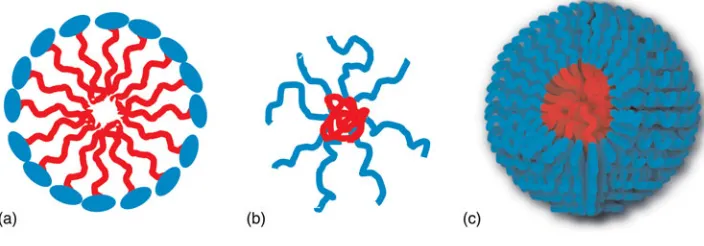
[image:3.612.127.479.80.203.2]introduction of surfactants and water-soluble dendrimers as reaction pockets.[24,25] By carrying out organic reactions in the presence of surfactant-type micelles, enhancement of rates and/or specificity has been observed for different reactions based on hydrophobic forces. The high concentration created in the hydrophobic core enhances the reaction rates and induces selectivity in the same way as enzymes in biological systems. Unfortunately, problems with catalyst recovery and product isolation limit the scope of this approach. In the same way as surfactant-based micellar systems, polymeric micelles can con-centrate reactants within a well-confined nanoenvironment. By carefully tuning the nature of the monomeric units of the core block, the selectivity of the reaction can be modified based on non-covalent interactions core-substrates such hydrogen-bonding or solvophobic effects.[26,27] A further advantage of polymeric self-assembled systems is their stability over surfactant-based micelles, creating a more“protected” kineti-cally frozen pocket within the core domain.[27–29] Moreover, by covalently attaching the catalytic functionality within the polymer backbone, it can be easily recovered after reaction by precipitation or ultrafiltration methods.[30,31] Therefore, polymeric core-shell-type catalytic nanoreactors have been investigated in which the hydrophobic core provides a favor-able confined environment for the hydrophobic starting materials, while the hydrophilic shell guarantees water solubi-lity. The simplest method for the assembly of synthetic polymer chains into nanoparticles is the solution self-assembly to allow for the formation of spherical polymer micelles. Conventional micelles based on hydrophilic-hydrophobic diBCPs have been extensively reported.[32] The major driving force behind the self-assembly of amphiphilic copolymers is the decrease in free energy of the system due to the removal of the hydro-phobic fragments from the incompatible aqueous environment. The micelle core is stabilized and “protected” from the sur-rounding aqueous media by the hydrophilic blocks. Amphiphilic micelles are formed spontaneously via the solution-state self-assembly of amphiphilic (multi)-BCPs, con-sisting of hydrophobic and hydrophilic chain segments (Fig. 2). The self-assembly process is usually achieved by the so-called
solvent switch method, which involves dissolving the amphi-philic copolymer in a good solvent for all the blocks followed by the gradual addition of a non-solvent for one of the blocks (selective solvent) at a concentration above the critical micelle concentration (cmc). Then via dialysis or evaporation, the com-plete replacement of the good solvent by the non-solvent is achieved and well-defined aggregates (micelles) are prepared. Furthermore, depending on the combination of polymer-solvent, the final system can be kinetically trapped (frozen micelles), where no unimer exchange is observed or dynamic, where fast intermicellar polymer chain exchange is allowed and the solvent, to a certain extent, penetrates the solvophobic core.[33] The kinetically frozen nature of polymeric micelles in water creates a confined hydrophobic pocket, which avoids water per-meability creating a stable environment for substrates sensitive to hydrolysis. Thayumanavan and Ramamurthy recently reported a comparative study of product selectivity using amphiphilic polymer versus surfactant based micelles in water (Fig. 3).[29]Their studies revealed that the hydrophobic domains created by a kinetically frozen styrenic-based amphi-philic homopolymer stops hydrolysis of hydrophobic substrates and offers better selectivity control than micelles formed from small molecule surfactants. This is due to the more stable and confined hydrophobic pocket generated by the amphiphilic
homopolymer compared with that for small molecule surfactants.
Functional amphiphilic BCPs have been self-assembled into micelles in water with incorporation of functional groups within the core, enabling different reactions to be carried out within this unique hydrophobic environment. Nuyken and co-workers pioneered the development of a platform of amphiphi-lic, water-soluble BCPs for metal catalysis in water.[6] The covalent immobilization of transition metal catalysts (Rh, Ir, or Pd) within the hydrophobic core increased the local concen-tration of the catalyst in the reaction.[34,35] The hydrophobic substrates were dissolved in the micellar core, where the cata-lyst was also located, allowing the transformations to be carried out in an overall aqueous environment, significantly increasing the reaction rates compared with the water-soluble homopoly-mer counterparts.[36] However, the leaching of the catalyst could not be avoided therefore the recyclability of this poly-meric systems was limited.
In further work by Nuyken’s, unfunctionalized polymers were synthesized by living cationic polymerization of 2-oxazo-line monomers and the active catalyst was introduced via a post-functionalization method. While this approach affords well-defined precursor polymers the post-modification method can often be inefficient. Hence, a new strategy has been
[image:4.612.154.462.555.699.2]Figure 2. Self-assembled spherical micelles from amphiphilic BCPs in water.
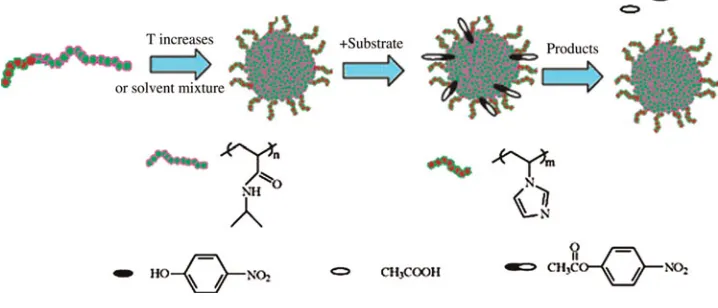
Figure 3. Schematic representation of a reaction within the homopolymer micelle-type nanocontainer. Reproduced with permission from Ref.29. Copyright 2005 American Chemical Society.
developed which involves the synthesis of functionalized monomers, which can be incorporated selectively into a specific domain of a BCP via robust CRP techniques.[30,37–40] This approach allows for the synthesis of functional polymers without the need of protecting groups or post-functionalization steps.[41]The choice of functional monomer provides the possi-bility of introducing a variety of functional groups into the micelle (core, shell, or surface), which can tune the properties of the nanostructure for different applications. By introducing a stimuli-responsive block in the synthesis of block co-polymers, one block can be tunable to be hydrophilic or hydrophobic by applying an external stimulus, whereas the other block remains hydrophobic or hydrophilic offering con-venient ways to control the self-assembly. Following this strat-egy, the concept of micelles as pseudohomogeneous catalyst supports has been explored using recoverable and responsive polymers.[39,42]
Most significantly, Liu and co-workers used RAFT to syn-thesize stimuli-responsive BCPs, poly(N
-isopropylacrylamide)-b-poly(N-vinylimidazole) (PNIPAM-b-PVim), which self-assembled above the lower critical solution temperature (LCST) of PNIPAM into micelles with the hydrophobic PNIPAM core of the micelles.[39] Interestingly, the authors in this case incorporated the catalytic PVim functionality in the shell of the aggregates and studied the hydrolysis reaction of
p-nitrophenyl acetate (NPA) at elevated temperatures, where the BCP is above its critical micellization temperature (CMT) and thus micelles were formed (Fig. 4). They found that in the presence of the catalytic micelles, the rate of esterolysis increased up to 7 times, and they proposed that this was due to the hydro-phobic affinity of the reactants for the hydrophobic PNIPAM core bringing the reactants in close proximity to the catalytic shell and hence increased their local concentration. Although in this example the authors left the catalyst“exposed’’in the shell domain and the reaction did not take place in the core of the aggregates, the importance of selective localization of the starting materials via hydrophobic attractions was illustrated.
O’Reilly et al. recently reported the successful incorporation of the organocatalystL-proline into the hydrophobic segment of two amphiphilic BCPs via RAFT giving two efficient nanor-eactor systems for aldol reactions in water.[28]The catalytic effi -ciency of these core–shell structures was investigated using the reaction of 4-nitrobenzaldehyde and cyclohexanone. The poly-meric nanoreactors showed excellent catalytic properties, resulting in higher activity in water compared with unsupported L-proline in water and organic solvents. Moreover, it was proved that the different hydrophobicity of the micellar core determined the amount of water present in the reaction environ-ment affecting the reaction rates.
In 2009, Zhao and co-workers used ATRP to synthesize a poly(ethylene oxide)-b-poly(methoxydi (ethylene glycol) methacrylate-co-2-(N-methyl-N-(4-pyridyl)amino)ethyl metha-crylate), (PEO-b-P(DEGMMA-co-MAPMA)) diBCP.[40] In this case MAPMA, a 4-dimethylaminopyridine (DMAP) func-tionalized monomer, was copolymerized with the temperature-responsive DEGMMA monomer. The corresponding temperature-responsive block with the tethered DMAP function-ality formed the hydrophobic core of the micelle upon heating to 30-48 °C.[40]They envisioned that, by increasing the temperature above the LCST of PDEGMMA, hydrophobic substrates could be concentrated in the core of the micelle by hydrophobic attrac-tions and proposed that this would result in an enhanced reaction rate due to the high concentration of substrates within the cataly-tic core domain. To explore this, the authors studied the hydroly-sis of NPA at different temperatures, always above the CMT of the aggregates. Disappointingly, the reaction rates did not increase with temperature as much as expected by the Arrhenius equation and the result was attributed to a poor parti-tioning of the starting materials to the hydrophobic core.
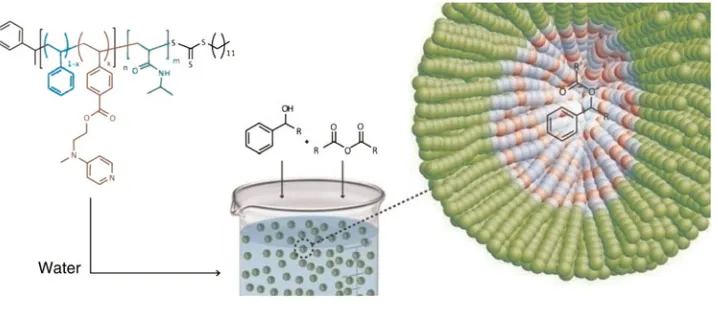
[image:5.612.126.485.543.697.2]Recently our group utilized DMAP-functionalized BCP micelles to effectively catalyze acylation reactions in water.[31]We investigated the effect of having a DMAP func-tionality covalently attached to the polystyrene core of poly-meric micelles synthesized by RAFT polymerization (Fig. 5).
The reactivity of the tethered organocatalyst within the nanos-tructure was found to be high, improving in some cases the acy-lation rates up to 100 times compared with those for unsupported DMAP in organic solvents. The efficacy of the system was affected by the hydrophobicity of the starting materials; the more hydrophobic substrates exhibited more favorable interactions with the hydrophobic polystyrene core and hence greater partitioning was observed. This effect is directly related to the selectivity of the nanoreactors toward more hydrophobic substrates. Moreover, as we designed our BCPs to contain a temperature responsive PNIPAM shell, the catalytic nanoreactors were easily recycled by precipitation with a simple heating step. Several recycling steps were carried out without any side effects on the catalytic performance of the DMAP nanoreactors.
Based on these initial results, the concept of substrate recog-nition based on hydrophobic interactions was further explored.[27]We showed that these polymeric organocatalytic nanoreactors are not only very efficient and recyclable supports for catalytic reactions in aqueous media, but also show specific substrate recognition able to drastically modify the selectivity of the reactions based on the simple concept of hydrophobicity. The hydrophobic core-substrate attraction induced by the unique nature of the polymeric micelle creates a concentrated catalytic environment that allows for reaction of otherwise non-reactive species significantly improving the effects observed for surfactant-based systems. This is thefirst example of polymeric nanoreactors capable of effectively distinguishing from a pool of substrates of similar or different reactivities and where
speci-ficity is achieved based on substrate hydrophobicity. We see these results as an initial approach toward enzyme mimics for organic reactions in water.
Cross-linked polymeric micelles
Although polymeric micelles can be more stable than surfactant-based micelles, these structures can be affected by drastic changes in concentration or temperature. The
stabilization of polymeric micelles through cross-linking, to obtain stable robust particles, has been extensively reported in the literature. Two different techniques are typically used: one involves the formation of the aggregates followed by the addition of a cross-linking agent that can specifically crosslink the core, shell, or corona.[32,43]The second method involves the preparation of polymeric micelles using BCPs containing self-crosslinkable groups, and then inducing the post-modification cross-linking process.[44,45]Surprisingly, only a few examples of their application in catalysis have been reported.[43]
Catalytic shell cross-linked micelles have been synthesized by our group using NMP. In this case, the core of the particles contained a terpyridine side group that could be utilized as a ligand to bind Cu(I) species.[37] The catalytic efficiency of these nanoparticles on mediating“click’’reactions was
[image:6.612.130.489.75.231.2]con-firmed using afluorogenic reaction between an azido cou-marin and an alkynyl small molecule. Further, more recent work by Weck and co-workers used poly(2-oxazoline)-based amphiphilic triBCPs with a salen-functionalized hydrophobic block prepared by living cationic polymerization.[30] The polymers were self-assembled into core-shell-corona micelles and stabilized by photo-crosslinking the mid-block. Subsequently, the catalytic sites were generated by adding Co(III)-producing Co(III)-salen complexes in the hydro-phobic core of the particles. The authors explored the kinetic resolution of a range of epoxides of different hydrophobici-ties. These nanoreactors also exhibited substrate selectivity based on hydrophobic effects. However, at the same catalyst loading, the non-cross-linked catalyst showed a slightly higher catalytic activity due to the less permeable shell in the cross-linked particles. The same effect has been recently observed by Stenzel et al. when comparing the rate of release for a drug encapsulated in the core of a cross-linked and non-cross-linked micelle. Despite its high stability, the shell-cross-linked micelles lead to a network formation, which can act as obstacle for the diffusion drugs, leading to a reduced release rate.
Figure 5. DMAP nanoreactor for efficient catalysis of hydrophobic substrates in water. Reproduced with permission from Ref.31. Copyright 2012 American Chemical Society.
Site isolation
One-pot multistep reactions are effective at reducing the waste and the cost of a synthetic process because they decrease the number of work-ups and purification steps, as well as the volume of the solvent used. These reactions are especially use-ful when multiple catalysts are used so that one can trap an unstable intermediate formed by the other. Although a variety of these reactions have been reported, they are limited to a rela-tively small number of systems where the catalysts are compa-tible with each other.[46,47] The work of Patchornik in 1981 demonstrated that this limitation can be overcome by immobi-lizing incompatible catalysts on solid supports.[48] The prin-ciple of site isolation to catalysis has been applied making use of different supports. Several examples show how poly-meric nanostructures render incompatible catalysts compatible. In recent years, soluble dendritic and other hyperbranched polymers have emerged as attractive systems for the encapsula-tion and isolaencapsula-tion of various funcencapsula-tional groups within the interior of the polymers. The placement of catalytic functional-ity at the interior of a globular dendritic structure protects the catalyst from deactivation and allows for the tuning of molecu-lar properties and catalytic activity by modification of the per-iphery and the interior environment, respectively.[25] Such stable unimolecular supports can exist with high stability in different solvents and temperatures; however, their synthetic difficulty limits their use.
Cascade reactions in self-assembled polymeric nanoreactors have been explored by Weberskirch et al. for the mono (Rh) and bimetallic (Rh and Ir) micellar catalysis in the hydroamino-methylation of 1-octene. Unfortunately, conditions optimized for one reaction were not favorable for the next one, probably due to the competition of more than one substrate for the metal center and the deactivation of the catalyst.[34]
Polymeric stars
A similar but simpler approach to obtain stable polymeric nanoreactors is to synthesize unimolecular micelles. The facile synthesis and tunable composition of star polymers makes them an attractive alternative to the widely studied dendritic systems or other cross-linked micelles. A polymeric star is a macromolecule containing a single branched core with mul-tiple linear chains or arms forming a 3D globule. The use of CRP techniques allows the formation of unimolecular branched stars and the selection of initiators monomers or cross-linkers allows for covalent incorporation of functional-ities into the structure. The synthesis of polymeric stars is com-monly carried out via three different strategies based on the sequence of formation of the core and the arms. In the“
core-first”approach, polymeric arms are grown from a multifunc-tional cross-linked initiator, while in the“arm-first”approach presynthesized linear polymers are cross-linked using divinyl compounds.[14–16,49]A third strategy,“coupling onto”, consist of attaching linear polymers onto a multifunctional core. The “arm-first” method is the most commonly used strategy to
synthesize stars by the most popular CRP techniques (NMP, RAFT, and ATRP).
Although it has already been demonstrated that cross-linking the core or the shell domain reduces the micelle per-meability, the introduction of catalytic motif into the core of a polymeric star is a simple way of protecting the catalyst from the surrounding environment and avoid side reactions. Such structures share the recyclability of cross-linked micelles and have shown outstanding properties for site isolation.
The groups of Fréchet and Hawker have developed an effective method to synthesize star polymers with core confinement of functionalities by NMP using the arm first approach. In 2005, Fréchet et al. report the synthetic utility of site isolation by carrying out a one pot cascade reaction of the otherwise incompatible acid and base catalysts (Fig. 6).[50] They synthesized star polymers that contained acid (para-toluenesulfonic acid) or base (DMAP) catalysts in their cores to perform acid and base cascade reactions in the same pot with an acid-catalyzed deprotection followed by the nucleophilic amine-catalyzed Baylis-Hillman reaction. These capsules were recovered after reaction and yielded higher activities in acylation reactions than linear polymers or other solid supports.
This ability to generate an otherwise incompatible cascade of reactions is characteristic of biological systems where differ-ent enzymes are used consecutively to create a wide range of chemical transformations through the combination of simple steps. Further studies reported that site isolation with star poly-mers enables the combination of incompatible catalysts for more sophisticated asymmetric cascade reactions. This group have also published the design of non-interpenetrating star polymers to combine iminium, enamine, and hydrogen bond catalysis in one pot for asymmetric reactions that generate cas-cade products with more than one chiral center.[8]
[image:7.612.339.530.539.674.2]The groups of Sawamoto and Matyjaszewski have exten-sively reported the formation of functional polymeric stars by ATRP.[51–53]
Figure 6. One-pot-reaction cascade involving sequential acid-catalyzed acetal hydrolysis followed by the amine-catalyzed Baylis-Hillman reaction.[50]
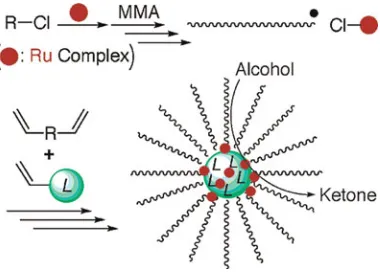
In 2003, the group of Sawamoto reported an interesting pro-cedure to synthesize catalytic stars where a ruthenium complex was incorporated into the core using ruthenium-catalyzed liv-ing radical polymerization.[52] The ruthenium catalyst was encapsulated by cross-linking poly (methylmethacrylate) “arms”using ethylene glycol dimethylacrylate in the presence of diphenyl-4-styrylphosphine as a ligand to form the catalytic core. The ruthenium-containing star polymers were then employed as a catalyst for the oxidation of alcohols into ketones (Fig. 7). However, they observed that the activity of the stars was lower than the unsupported complex in solution, probably due to the overloading of catalyst in the core of the star. Sawamoto and co-workers cleverly used a predicted “drawback” of ATRP (difficult removal of metal catalyst) to synthesize a very efficient and highly recyclable nanoreactor. In this case, the residual metal catalyst used to synthesize the nanoreactor by ATRP and was encapsulated and employed as a catalyst for organic reactions. Furthermore, the same star polymer catalysts showed high activity, versatility, functional-ity tolerance, and recyclabilfunctional-ity as a catalyst for ATRP reactions.[54]
Conclusions
Although supported catalysis has been a popular subject for many years, the study of polymeric nanostructures for catalysis of organic reactions has received increasing interest in the last decade and is yet still at an early stage. However, the recent advances in CRP techniques may provide a versatile route to the synthesis of well-defined functional structures and hence facilitate further research in this area. Indeed, responsive prop-erties and functionalities can now be introduced into the nanor-eactors without the need of protecting groups or stringent conditions. By tethering the catalysts into a polymeric support the catalyst can be easily recovered but, more importantly, the protected and confined environment provided by the polymeric nanoreactor can act as a yocto-litre reaction vessel concentrat-ing reactants into the core of the confined environment.
Hence, solvophobic products can be protected from degra-dation, the solubility of the catalyst can be modified and the rate of reaction can be enhanced compared with homogeneous systems.
Thefield of nanoreactors will benefit by further advances in thefield of polymer synthesis which in turn will give access to nanoreactors with a higher degree of molecular and compo-sitional homogeneity. Fine control over the sequence and poly-dispersity of BCPs will open new avenues to mimic the structural complexity and hence the precise and elegant func-tion achieved in natural systems.
However, the synthesis of polymeric nanoreactors must be further simplified to also allow its commercial exploitation and application. Next-generation nanoreactors should be pre-pared from cheap starting materials in a one pot synthesis enabling for versatile functionalization and result in robust structural characteristics. We see star polymeric nanoreactors as a very promising approach toward this direction.
Acknowledgment
The EPSRC and AWE are thanked forfinancial support.
References
1. R.B. Merrifield: Solid phase peptide synthesis. I. The synthesis of a tetra-peptide.J. Am. Chem. Soc.85, 2149 (1963).
2. N. Madhavan, C.W. Jones, and M. Weck: Rational approach to polymer-supported catalysts: synergy between catalytic reaction mechanism and polymer design.Acc. Chem. Res.41, 1153 (2008).
3. B. Clapham, T.S. Reger, and K.D. Janda: Polymer-supported catalysis in synthetic organic chemistry.Tetrahedron57, 4637 (2001).
4. P. Hodge: Polymer-supported organic reactions: what takes place in the beads?Chem. Soc. Rev.26, 417 (1997).
5. D.C. Sherrington: Polymer-supported reagents, catalysts, and sorbents: evolution and exploitation - A personalized view.J. Polym. Sci., Part A: Polym. Chem.39, 2364 (2001).
6. O. Nuyken, P. Persigehl, and R. Weberskirch: Amphiphilic poly(oxazoline) s - synthesis and application for micellar catalysis.Macromol. Symp.177, 163 (2002).
7. B.P. Mason, S.M. Hira, G.F. Strouse, and D.T. McQuade: Microcapsules with three orthogonal reactive sites.Org. Lett.11, 1479 (2009). 8. Y.G. Chi, S.T. Scroggins, and J.M.J. Frechet: One-pot multi-component
asymmetric cascade reactions catalyzed by soluble star polymers with highly branched non-interpenetrating catalytic cores. J. Am. Chem. Soc.130, 6322 (2008).
9. S. Perrier and P. Takolpuckdee: Macromolecular design via reversible addition-fragmentation chain transfer (RAFT)/xanthates (MADIX) polymerization.J. Polym. Sci., Part A: Polym. Chem.43, 5347 (2005). 10. K. Matyjaszewski and J.H. Xia: Atom transfer radical polymerization.
Chem. Rev.101, 2921 (2001).
11. D. Benoit, V. Chaplinski, R. Braslau, and C.J. Hawker: Development of a universal alkoxyamine for“living”free radical polymerizations.J. Am. Chem. Soc.121, 3904 (1999).
12. M. Szwarc:“Living”polymers.Nature178, 1168 (1956).
13. K.B. Thurmond, T. Kowalewski, and K.L. Wooley: Water-soluble knedel-like structures: the preparation of shell-cross-linked small particles.
J. Am. Chem. Soc.118, 7239 (1996).
14. K. Matyjaszewski and N.V. Tsarevsky: Nanostructured functional materials prepared by atom transfer radical polymerization. Nature Chem.1, 276 (2009).
15. A. Gregory and M.H. Stenzel: Complex polymer architectures via RAFT polymerization: from fundamental process to extending the scope using click chemistry and nature’s building blocks.Prog. Polym. Sci.
[image:8.612.85.275.74.211.2]37, 38 (2012).
Figure 7. Direct encapsulation of metal catalyst into star polymer core during metal-catalyzed living radical polymerization. Reproduced with permission from Ref.52. Copyright 2003 American Chemical Society.
16. A.W. Bosman, R. Vestberg, A. Heumann, J.M.J. Fréchet, and C.J. Hawker: A modular approach toward functionalized three-dimensional macromol-ecules: from synthetic concepts to practical applications.J. Am. Chem. Soc.125, 715 (2002).
17. C.J. Hawker:“Living”free radical polymerization: a unique technique for the preparation of controlled macromolecular architectures.Acc. Chem. Res.30, 373 (1997).
18. J.S. Wang and K. Matyjaszewski: Controlled living radical polymerization -halogen atom-transfer radical polymerization promoted by a Cu(I)/Cu(II) redox process.Macromolecules28, 7901 (1995).
19. C.J. Hawker, G.G. Barclay, A. Orellana, J. Dao, and W. Devonport: Initiating systems for nitroxide-mediated“living”free radical polymeriz-ations: synthesis and evaluation.Macromolecules29, 5245 (1996). 20. J. Chiefari, Y.K. Chong, F. Ercole, J. Krstina, J. Jeffery, T.P.T. Le, R.T.
A. Mayadunne, G.F. Meijs, C.L. Moad, G. Moad, E. Rizzardo, and S.H. Thang: Living free-radical polymerization by reversible addition-fragmentation chain transfer: the RAFT process. Macromolecules 31, 5559 (1998).
21. W.A. Braunecker and K. Matyjaszewski: Controlled/living radical polymer-ization: features, developments, and perspectives.Prog. Polym. Sci.32, 93 (2007).
22. R.A. Sheldon: Green solvents for sustainable organic synthesis: state of the art.Green Chem.7, 267 (2005).
23. M. Gruttadauria, F. Giacalone, and R. Noto: Water in stereoselective orga-nocatalytic reactions.Adv. Synth. Catal.351, 33 (2009).
24. D.M. Vriezema, M.C. Aragones, J.A.A.W. Elemans, J.J.L.M. Cornelissen, A.E. Rowan, and R.J.M. Nolte: Self-assembled nanoreactors.Chem. Rev.
105, 1445 (2005).
25. B. Helms and J.M.J. Fréchet: The dendrimer effect in homogeneous cat-alysis.Adv. Synth. Catal.348, 1125 (2006).
26. R. McHale, J.P. Patterson, P.B. Zetterlund, and R.K. O’Reilly: Biomimetic radical polymerization via cooperative assembly of segregating templates.
Nature Chem.4, 491 (2012).
27. P. Cotanda and R.K. O’Reilly: Molecular recognition driven catalysis using polymeric nanoreactors. Chem. Commun. 48, 10280–10282 (2012). DOI: 10.1039/C2CC35655D
28. A. Lu, P. Cotanda, J.P. Patterson, D.A. Longbottom, and R.K. O’Reilly: Aldol reactions catalyzed by l-proline functionalized polymeric nanoreac-tors in water.Chem. Commun.48, 9699 (2012).
29. S. Arumugam, D.R. Vutukuri, S. Thayumanavan, and V. Ramamurthy: Amphiphilic homopolymer as a reaction medium in water: product selec-tivity within polymeric nanopockets. J. Am. Chem. Soc. 127, 13200 (2005).
30. Y. Liu, Y. Wang, Y. Wang, J. Lu, V. Piñón, and M. Weck: Shell cross-linked micelle-based nanoreactors for the substrate-selective hydrolytic kinetic resolution of epoxides.J. Am. Chem. Soc.133, 14260 (2011). 31. P. Cotanda, A. Lu, J.P. Patterson, N. Petzetakis, and R.K. O’Reilly:
Functionalized organocatalytic nanoreactors: hydrophobic pockets for acylation reactions in water.Macromolecules45, 2377 (2012). 32. K.L. Wooley: Shell crosslinked polymer assemblies: nanoscale constructs
inspired from biological systems.J. Polym. Sci., Part A: Polym. Chem.
38, 1397 (2000).
33. T. Nicolai, O. Colombani, and C. Chassenieux: Dynamic polymeric micelles versus frozen nanoparticles formed by block copolymers.Soft Matter6, 3111 (2010).
34. B. Gall, M. Bortenschlager, O. Nuyken, and R. Weberskirch: Cascade reac-tions in polymeric nanoreactors: mono (Rh)- and bimetallic (Rh/Ir) micel-lar catalysis in the hydroaminomethylation of 1-octene.Macromol. Chem. Phys.209, 1152 (2008).
35. P. Persigehl, R. Jordan, and O. Nuyken: Functionalization of amphiphilic poly(2-oxazoline) block copolymers: a novel class of macroligands for micellar catalysis.Macromolecules33, 6977 (2000).
36. M.T. Zarka, O. Nuyken, and R. Weberskirch: Amphiphilic polymer sup-ports for the asymmetric hydrogenation of amino acid precursors in water.Chem. Eur. J.9, 3228 (2003).
37. A.D. Ievins, X.F. Wang, A.O. Moughton, J. Skey, and R.K. O’Reilly: Synthesis of core functionalized polymer micelles and shell cross-linked nanoparticles.Macromolecules41, 2998 (2008).
38. B.M. Rossbach, K. Leopold, and R. Weberskirch: Self-assembled nanor-eactors as highly active catalysts in the hydrolytic kinetic resolution (HKR) of epoxides in water.Angew. Chem., Int. Ed.45, 1309 (2006). 39. Z.S. Ge, D. Xie, D. Chen, X. Jiang, Y. Zhang, H. Liu, and S. Liu:
Stimuli-responsive double hydrophilic block copolymer micelles with switchable catalytic activity.Macromolecules40, 3538 (2007). 40. T.G. O’Lenick, X. Jiang, and B. Zhao: Catalytic activity of a thermosensitive
hydrophilic diblock copolymer-supported 4-N,N-dialkylaminopyridine in hydrolysis of p-nitrophenyl acetate in aqueous buffers. Polymer 50, 4363 (2009).
41. A. Lu, T.P. Smart, T.H. Epps, D.A. Longbottom, and R.K. O’Reilly: l-proline functionalized polymers prepared by RAFT polymerization and their assemblies as supported organocatalysts. Macromolecules 44, 7233 (2011).
42. Y. Wang, G.W. Wei, W.Q. Zhang, X.W. Jiang, P.W. Zheng, L.Q. Shi, and A. J. Dong: Responsive catalysis of thermoresponsive micelle-supported gold nanoparticles.J. Mol. Catal. A: Chem.266, 233 (2007).
43. R.K. O’Reilly, C.J. Hawker, and K.L. Wooley: Cross-linked block copoly-mer micelles: functional nanostructures of great potential and versatility.
Chem. Soc. Rev.35, 1068 (2006).
44. X. Yan, G. Liu, F. Liu, B.Z. Tang, H. Peng, A.B. Pakhomov, and C.Y. Wong: Superparamagnetic triblock copolymer/Fe2O3hybrid nanofibers.Angew.
Chem., Int. Ed.40, 3593 (2001).
45. Y. Liu, V. Pinon, and M. Weck: Poly(norbornene) block copolymer-based shell cross-linked micelles with Co(iii)-salen cores.Polym. Chem.2, 1964 (2011).
46. S.J. Broadwater, S.L. Roth, K.E. Price, M. Kobaslija, and D.T. McQuade: One-pot multi-step synthesis: a challenge spawning innovation. Org. Bio. Chem.3, 2899 (2005).
47. L.F. Tietze: Domino reactions in organic synthesis.Chem. Rev.96, 115 (1996).
48. B.J. Cohen, M.A. Kraus, and A. Patchornik: Wolf and lamb reactions -equilibrium and kinetic effects in multipolymer systems.J. Am. Chem. Soc.103, 7620 (1981).
49. H. Gao: Development of star polymers as unimolecular containers for nanomaterials.Macromol. Rapid Commun.33, 722 (2012).
50. B. Helms, S.J. Guillaudeu, Y. Xie, M. McMurdo, C.J. Hawker, and J.M. J. Frechet: One-pot reaction cascades using star polymers with core-confined catalysts.Angew. Chem., Int. Ed.44, 6384 (2005).
51. K.-Y. Baek, M. Kamigaito, and M. Sawamoto: Core-functionalized star polymers by transition metal-catalyzed living radical polymerization. 2. Selective interaction with protic guests via core func-tionalities 1.Macromolecules35, 1493 (2002).
52. T. Terashima, M. Kamigaito, K.-Y. Baek, T. Ando, and M. Sawamoto: Polymer catalysts from polymerization catalysts: direct encapsulation of metal catalyst into star polymer core during metal-catalyzed living rad-ical polymerization.J. Am. Chem. Soc.125, 5288 (2003).
53. T. Terashima, M. Ouchi, T. Ando, and M. Sawamoto: Thermoregulated phase-transfer catalysis via PEG-armed Ru(II)-bearing microgel core star polymers: efficient and reusable Ru(II) catalysts for aqueous transfer hydrogenation of ketones.J. Polym. Sci., Part A: Polym. Chem.48, 373 (2010).

![Figure 6. One-pot-reaction cascade involving sequential acid-catalyzedacetal hydrolysis followed by the amine-catalyzed Baylis-Hillman reaction.[50]Reproduced with permission from Ref](https://thumb-us.123doks.com/thumbv2/123dok_us/9621947.464781/7.612.339.530.539.674/involving-sequential-catalyzedacetal-hydrolysis-followed-catalyzed-reproduced-permission.webp)