warwick.ac.uk/lib-publications
Permanent WRAP URL:http://wrap.warwick.ac.uk/98408
Copyright and reuse:
This thesis is made available online and is protected by original copyright. Please scroll down to view the document itself.
Please refer to the repository record for this item for information to help you to cite it. Our policy information is available from the repository home page.
Sleep And Physical Activity: A Mixed Method Study In
People With Chronic Pain
By
Fatanah Ramlee
A thesis submitted in partial fulfillment of the requirements for the
degree of
Doctor of Philosophy in Psychology
University of Warwick, Department of Psychology
Table of Contents
List Of Tables………. 7
List Of Figures……… 8
List Of Abbreviations……… 9
Acknowledgements………. 12
Declaration………. 13
Output Arising From This Thesis………. 14
Additional Research Conducted With Warwick Sleep And Pain Laboratory…………. 16
Abstract……… 17
Chapter 1: General Introduction………. 18
1.1 The beginning of the research programme……….. 18
1.2 Prevalence of chronic pain, sleep disturbance and reduced physical activity……… 18
1.3 Aims of the research programme……… 24
1.4 Overview of the thesis……… 25
Chapter 2: Background Of Sleep And Physical Activity In The Context Of Chronic Pain……… 29
2.1 Sleep and its function………. 29
2.2 Sleep regulation processes: The two-process model………. 33
2.3 Measures of sleep……….. 34
2.4 Nature of the sleep disturbance in chronic pain……… 37
2.5 Insomnia models………. 41
2.5.1 Spielman’s model……….. 41
2.5.2 Morin’s model……….. 42
2.5.3 Lundh and Broman’s model……… 44
2.5.4 Harvey’s model……… 46
2.5.5 Espie et al.’s model……… 49
2.6 The relationship between pain and sleep………. 51
2.6.2 Sleep affects pain……… 54
2.6.3 Bidirectional relationships between pain and sleep on a daily basis 58 2.7 Physical activity and health outcomes………. 60
2.8 Measures of physical activity………. 63
2.9 The relationship between physical activity and sleep……….. 65
2.9.1 Physical activity affects sleep………. 65
2.9.2 Sleep affects physical activity……… 68
2.9.3 The relationship between sleep and physical activity on a daily basis………. 71
2.10 Theoretical models of physical activity in people with chronic pain…… 74
2.11 Possible roles of psychological variables in predicting physical activity………. 78
Chapter 3: Study 1 - Do People With Chronic Pain Judge Their Sleep Differently? A Qualitative Study………..……….. 80
3.1 Introduction……… 80
3.2 Method………. 84
3.2.1 Participants………. 84
3.2.2 Procedure……… 85
3.2.3 Analysis………. 87
3.3 Results……… 89
3.4 Discussion……… 96
Chapter 4: Study 2 - What Sways People’s Judgement Of Sleep Quality? A Quantitative Choice-Making Study With Good And Poor Sleepers……… 105
4.1 Introduction……… 105
4.2 Methods……… 110
4.2.1 Design………. 110
4.2.2 Participants………. 112
4.2.3 Procedure……… 114
4.2.5 Analysis………. 128
4.3 Results……… 130
4.4 Discussion……… 137
Chapter 5: Study 3 - A Daily Process Study On The Association Between Sleep And Physical Activity In Healthy Young Adults………. 148
5.1 Introduction……… 148
5.2 Methods……… 159
5.2.1 Design………. 159
5.2.2 Sample size………. 161
5.2.3 Participants………. 162
5.2.4 Procedure……… 163
5.2.5 Measures………. 165
5.2.6 Data analysis………. 168
5.3 Results……… 171
5.3.1 Participant characteristics……… 171
5.3.2 Multilevel models for exploring the effects of previous night’s sleep on next day physical activity………. 174
5.3.3 Multilevel models for exploring the effects of daytime physical activity on subsequent sleep………. 176
5.4 Discussion……… 178
Chapter 6: Study 4 - A Daily Process Study On The Association Between Sleep And Physical Activity In Patients With Chronic Pain………. 185
6.1 Introduction……… 185
6.2 Methods……… 185
6.2.1 Design………. 186
6.2.2 Sample size………. 190
6.2.3 Participants………. 190
6.2.4 Procedure……… 193
6.2.6 Data analysis………. 205
6.3 Results……… 208
6.3.1 Participant characteristics……… 208
6.3.2 Multilevel models for exploring the effects of previous night’s sleep on next day physical activity………. 214
6.3.3 Multilevel models for exploring the effects of daytime physical activity on subsequent sleep………. 216
6.3.4 Multilevel models for exploring the effects of psychological variables upon waking on the subsequent physical activity……… 218
6.3.5 Multilevel models for exploring the effects of the overall level of physical activity on the subsequent presleep pain and mood………… 222
6.4 Discussion……… 226
Chapter 7: General Discussion……….. 240
7.1 Summary of the key findings………. 240
7.2 Discussion of overall findings………. 244
7.3 Overall limitations of the research………. 247
7.4 Implications and future directions………. 249
7.5 Overall conclusion………. 251
References………. 252
Appendices………. 285
Appendix 1: Study 1 - Participant information sheet………. 285
Appendix 2: Study 1 - Participant screening form………. 286
Appendix 3: Study 1 - Consent form……….. 288
Appendix 4: Study 1 - The questionnaire booklet………. 289
Appendix 5: Study 1 - Debriefing sheet……… 297
Appendix 6: Study 2 - Participant information sheet………. 298
Appendix 7: Study 2 - Consent form……….. 299
Appendix 8: Study 2 - The questionnaire booklet………. 300
Appendix 10: Study 3 - Consent form……… 303
Appendix 11: Study 3 - Questionnaires……… 304
Appendix 12: Study 3 - Sleep diary……….. 312
Appendix 13: Study 3 - Activity diary………. 313
Appendix 14: Study 3 - Debriefing sheet………. 314
Appendix 15: Study 4 - NHS’s ethical approval letter………. 315
Appendix 16: Study 4 - Participant information sheet……….. 321
Appendix 17: Study 4 - Screening form……… 325
Appendix 18: Study 4 - Consent form……… 326
Appendix 19: Study 4 - The questionnaire booklet……….. 327
Appendix 20: Study 4 - Training manual……….. 344
Appendix 21: Study 4 - Monitoring schedule……… 346
Appendix 22: Study 4 - Sleep diary……….. 347
Appendix 23: Study 4 - Daily diary (Diary 1, 2, and 3) ……… 348
List Of Tables
Table 3.1 Interview outline... 87
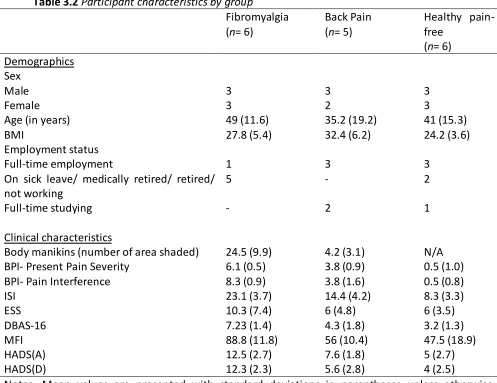
Table 3.2 Participant characteristics by group ... 90
Table 4.1 Options for each parameter of sleep quality……….……125
Table 4.2 Participants' sleep and demographic characteristics... 131
Table 4.3 Individual parameters and time periods log likelihood and BIC values ... 135
Table 5.1 Participants' characteristics………..…...172
Table 5.2 Participants' sleep patterns (derived from sleep diary data) ... 173
Table 5.3 Participants' physical activity patterns ... 173
Table 5.4 Results of the multilevel models for exploring the effects of previous night's sleep on next day physical activity ... 175
Table 5.5 Results of the multilevel models for exploring the effects of daytime physical activity on subsequent sleep ... 177
Table 6.1 Participants' characteristics………..……210
Table 6.2 Participants' sleep patterns and pain threshold ... 213
Table 6.3 Participants' physical activity patterns ... 213
Table 6.4 Results of the Multilevel models for exploring the effects of previous night’s sleep on next day physical activity ... 215
Table 6.5 Results of the Multilevel models for exploring the effects of daytime physical activity on subsequent sleep ... 217
Table 6.6 Results of the Multilevel models for exploring the effects of psychological variables upon waking on the subsequent physical activity ... 220
Table 6.7 Results of the Multilevel models for exploring the effects of the overall level of physical activity on the subsequent presleep pain and mood ... 223
List Of Figures
Figure 2.1 The Two-process model ... 34
Figure 2.2 Spielman's model ... 42
Figure 2.3 Morin's model ... 44
Figure 2.4 Lund and Broman's model ... 46
Figure 2.5 Harvey's model ... 49
Figure 2.6 Espie's model ... 50
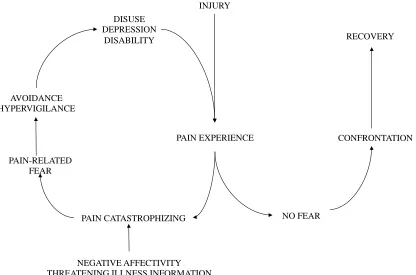
Figure 2.7 Fear-avoidance model ... 76
Figure 3.1 Themes emerged as criteria for judging sleep... 91
Figure 4.1 Flow diagram of participant recruitment………114
Figure 4.2 An example of how the MCMCP algorithm mutates the scenarios in response to a participant's choices. ... 117
Figure 4.3 Multiple chains of each group ... 119
Figure 4.4 Examples of scenarios that were presented to a participant.. ... 127
Figure 4.5 Descriptions of a good night's sleep. ... 133
Figure 5.1 Study design………161
Figure 5.2 Results summary of the multilevel models for exploring the relationship from last night’s sleep and next day physical activity and from daytime physical activity to nighttime sleep. ... 177
Figure 6.1 Study design………189
Figure 6.2 Recruitment flow diagram ... 192
Figure 6.3 Results summary of the multilevel models for exploring the relationship from last night’s sleep, psychological variables upon waking and subsequent overall level of physical activity, and from daytime overall level of physical activity to nighttime sleep, presleep pain and mood. ... 224
List Of Abbreviations
AEM : Avoidance-Endurance Model AIC : Akiake Information Criterion AOR : Adjusted Odds Ratio
BIC : Bayesian Information Criterion BMI : Body Mass Index
BPI : Brief Pain Inventory
CBT : Cognitive Behaviour Therapy
CBT-I : Cognitive Behaviour Therapy for Insomnia
COREQ : Consolidated Criteria for Reporting Qualitative Research CPM : Conditioned Pain Modulation
CPT : Cold Pressor Task CSD : Consensus Sleep Diary
DBAS-16 : Dysfunctional Beliefs and Attitude about Sleep-16
DSM-5 : Diagnostic and Statistical Manual of Mental Disorders, 5th Edition EEG : Electroencephalography
EMG : Electromyography EOG : Electrooculography ESS : Epworth Sleepiness Scale FAM : Fear-Avoidance Model
HADS : Hospital Anxiety and Depression Scale
IASP : International Association for the Study of Pain ICSD-3 : International Classification of Sleep Disorders-3 ISI : Insomnia Severity Index
MCMC : Markov Chain Monte Carlo
MCMCP : Markov Chain Monte Carlo with People MEQ : Morningness-Eveningness Questionnaire MFI : Multidimensional Fatigue Inventory
OR : Odds Ratio
PAMSys : Physical Activity Monitoring System
PBAS : Pain-Related Beliefs and Attitudes about Sleep POAM-P : Patterns of Activity Measure-Pain
PSQI : Pittsburgh Sleep Quality Index QALY : Quality-Adjusted Life-Year RCT : Randomised Controlled Trial REM : Rapid Eye Movement
SE : Sleep Efficiency SOL : Sleep Onset Latency SWS : Slow Wave Sleep TIB : Time In Bed TST : Total Sleep Time
TSK-11 : Tampa Scale for Kinesophobia-11 WAKE : Number of Wake After Sleep Onset WASO : Wake After Sleep Onset
Dedication
In the fond memory of my late father Ramlee Ismail, whose wisdom and passion for
Acknowledgements
In the Name of Allah, the Most Gracious, the Most Merciful
The journey of completing my PhD has been an amazing experience of personal and professional growth. My PhD could not have been completed without the great support and encouragement that I have received from so many kind people throughout the course of my programme. First and foremost, I have been honoured to have Dr. Nicole Tang as my PhD supervisor, whose enthusiasm, support and endless guidance have helped me to progress as a researcher. I would like to thank Nicole for her outstanding mentorship, she inspired me to venture into the world of sleep and pain research more than ever before. I have learnt so much from her throughout my time at Warwick. I would also like to thank Dr. Adam Sanborn, my PhD co-supervisor for his guidance and time especially in teaching me how to use R for the analysis and modelling. I look forward to continuing to work with Nicole and Adam from Malaysia.
I am deeply indebted to all participants and patients with chronic pain who took part in this research. This research would not have been possible without their involvement, time and willingness to travel to the lab. I am also thankful to Dr. Robin Correa, Dr. Shyam Balasubramanian, and the consultants and staff at the Pain Management Clinic and Department of Rheumatology at University Hospital Coventry and Warwickshire (UHCW) for their kind assistance with patient recruitment.
I gratefully acknowledge my employer Sultan Idris Education University and the Ministry of Higher Education Malaysia for awarding me a scholarship that allowed me to take a step further in my career. I must also acknowledge the Department of Psychology, University of Warwick for providing me with the facilities and funds needed for my research.
I am extremely grateful to my fellow friends and lab mates Esther, Toria and Corran for the teamwork and support particularly in reading countless drafts of my papers. Cheers to the “small but mighty” team! Many thanks also to all in H122/124, friends, and colleagues who have made working in Warwick so pleasant and to all those whose name I am not able to mention, thank you.
Declaration
This thesis is submitted to the University of Warwick in support of my application for the degree of Doctor of Philosophy in Psychology. It has been composed by myself and has not been submitted in any previous application for any degree. The work presented (including data generated and data analysis) was carried out entirely by the author.
Inclusion of Published Work
Part of this thesis has been published by the author: Chapter 3 includes the following publication:
Ramlee, F., Afolalu, E. F., & Tang, N. K. Y. (2016). Do people with chronic pain judge their sleep differently? A qualitative study. Behavioral Sleep Medicine, 1-16.
Dr. Nicole Tang contributed to the planning and supervision of this research. All co-authors provided feedback on drafts of the manuscript.
Chapter 4 includes the following publication:
Ramlee, F., Sanborn, A. N., & Tang, N. K. Y. (2017). What sways people’s judgement of
sleep quality? A quantitative choice-making study with good and poor sleepers.
Sleep, 40(7).
Outputs Arising From This Thesis
Publications
Ramlee, F., Sanborn, A. N., & Tang, N. K. Y. (2017). What sways people’s judgement of sleep quality? A quantitative choice-making study with good and poor sleepers.
Sleep, 40(7).
Ramlee, F., Afolalu, E. F., & Tang, N. K. Y. (2016). Do people with chronic pain judge their sleep differently? A qualitative study. Behavioral Sleep Medicine, 1-16.
Poster Presentations
Ramlee, F., & Tang, N. K. Y. (2017, May). Does a good night’s sleep contribute to improving daytime physical activity? A daily process study in patients with chronic
pain. Poster presented at the British Pain Society’s 50th Anniversary Annual
Scientific Meeting, Birmingham, United Kingdom.
Ramlee, F., Sanborn, A. N., & Tang, N. K. Y. (2015, November). What is a poor night’s
sleep? A quantitative approach to unravel the meaning of sleep quality. Poster
presented at the 7th World Congress of the World Sleep Federation (WSF 2015),
Istanbul, Turkey.
Ramlee, F., Afolalu, E. F., & Tang, N. K. Y. (2015, September). Do people with chronic
pain judge their sleep differently? A qualitative study. Poster presented at the 9th
Congress of the European Pain Federation (EFIC 2015), Vienna, Austria.*
*Award:The Best Poster Presentation on the Subject of Clinical Science
Ramlee, F. & Tang, N. K. Y. (2014, June). Exploring the essential ingredients of a good
night’s sleep: A qualitative study with people with fibromyalgia, back pain and
healthy individuals without chronic pain. Poster presented at Research
Postgraduate Poster Showcase, University of Warwick, Coventry.
Ramlee, F. & Tang, N. K. Y. (2014, May). Exploring the essential ingredients of a good
night’s sleep: A qualitative study with people with fibromyalgia, back pain and
healthy individuals without chronic pain. Poster presented at Psychology
Oral Presentations
Ramlee, F., Sanborn, A. N., & Tang, N. K. Y. (2016, May). What is a poor night’s sleep? A
quantitative choice making approach to unravel the parameters of sleep quality.
Oral presentation at Psychology Postgraduate Research Day (PGR 2016), University of Warwick, Coventry.
Additional Research Conducted With Warwick Sleep And Pain Laboratory
Publications
Afolalu, E. F., Ramlee, F., & Tang, N. K. Y. (in press). Effect of sleep changes on pain-related health outcomes in the general population: A systematic review of longitudinal studies with exploratory meta-analysis. Sleep Medicine Reviews.
Afolalu, E. F., Moore, C., Ramlee, F., Goodchild, C. & Tang, N. K. Y. (2016). Development of the Pain-Related Beliefs and Attitudes about Sleep (PBAS) scale for the assessment and treatment of insomnia comorbid with chronic pain. Journal of
Clinical Sleep Medicine, 12(9), 1269-1277.
Book Chapter
Tang, N. K. Y., Afolalu, E. F., & Ramlee, F. (2018). Sleep and Pain. In F. P. Cappuccio, M. A. Miller, & S. W. Lockley (Eds.) Sleep Health and Society – From Aetiology to Public
Health, 2nd Edition. Oxford, U.K.: Oxford University Press.
Poster Presentations
Afolalu, E. F., Ramlee, F., & Tang, N. K. Y. (2017, May). Reliability of conditioned pain modulation in a healthy population: investigating the influence of distraction, pain
catastrophising and sleep. Poster presented at the British Pain Society’s 50th
Anniversary Annual Scientific Meeting, Birmingham, United Kingdom.*
*Award:The highly commended poster rosette
Afolalu, E. F., Ramlee, F., & Tang, N. K. Y. (2017, May). Effect of sleep changes on pain-related health outcomes in the general population: A systematic review of
longitudinal studies with exploratory meta-analysis.Poster presented at the British
Pain Society’s 50th Anniversary Annual Scientific Meeting, Birmingham, United
Kingdom.
Afolalu, E. F., Moore, C., Ramlee, F., Goodchild, C. E., & Tang, N. K. Y. (2015, November). Development of the Pain-Related Beliefs and Attitudes about Sleep (PBAS) scale for the assessment and treatment of insomnia comorbid with chronic pain. Poster presented at the 7th World Congress of the World Sleep Federation (WSF
Abstract
Chapter 1
General Introduction
1.1The beginning of the research programme
Six years ago, I had the opportunity to carry out a research project for my Master’s study at a haemodialysis centre. I found out that sleep was an important issue to patients undergoing haemodialysis. Although at that time, I did not have much knowledge about sleep, the experience of working with these patients has inspired me to explore sleep problems in people living with chronic medical conditions as part of my doctoral research. At Warwick, I was given the opportunity to study sleep in chronic pain and this thesis presents the work I have done here.
1.2Prevalence of chronic pain, sleep disturbance and reduced physical activity
The prevalence of sleep disturbance is very high among people with chronic pain. Chronic pain is defined as pain that persists for more than three to six months, beyond the expected time of healing (IASP Task Force on Taxanomy, 1994; Treede et al., 2015). Chronic pain is a debilitating health condition and a major health problem worldwide. The prevalence of chronic pain for adults (≥18 years old) was 30.7% in the
that significantly affects their quality of life (Breivik, Collett, Ventafridda, Cohen, & Gallacher, 2006). Based on Breivik et al.’s survey (2006), individuals suffering from chronic pain indicated that they were no longer able or less able to work outside home (61%), lift (72%), exercise (73%), drive (47%), have sexual relations (43%), attend social activities (48%), carry out household chores (54%), sleep (65%), walk (47%), maintain an independent lifestyle (30%) and maintain relationships with family and friends (27%). Importantly, pain was the top cause of quality-adjusted life-year (QALY)1losses in
primary health care, above mood disorder and anxiety as well as other chronic physical conditions such as cardiovascular disease and diabetes (Fernández et al., 2010).
At the societal level, chronic pain has an impact on economy. Pain has been cited as a primary reason of missed work (U.S. Department of Health and Human Services, 2017). Consequently, it causes an economic loss specifically in term of loss of productive working time in the workforce (Stewart, Ricci, Chee, Morganstein, & Lipton, 2003). Besides, in the UK, 25% of individuals with chronic pain lost their job as a result of pain (Breivik et al., 2006; Breivik, Eisenberg, & O’Brien, 2013). At the individual level, the impact of chronic pain is more devastating. The reported statistics are grim as chronic pain has a negative impact on daily activities, employment, psychological, physical and social functioning (Smith & Osborn, 2007; Widerstrom-Noga, Felipe-Cuervo, & Yezierski, 2001).
A number of surveys have also shown that sleep impairment is a common comorbidity of chronic pain. In a survey of five European countries (i.e., UK, Germany,
Italy, Portugal and Spain), 23% of individuals with chronic painful physical condition reported at least one insomnia symptom in comparison to only 7.4% among individuals without chronic pain (Ohayon, 2005). A recent large-scale population-based study involving 6,205 older adults (≥65 years of age) in Sweden found that older adults with chronic pain had a high proportion of clinical insomnia (24.6%) compared to older adults with subacute pain (21.3%) and without pain (13%) (Dragioti, Levin, Bernfort, Larsson, & Gerdle, 2017). The prevalence of chronic pain comorbid with sleep disturbance in clinical populations is also high. Approximately 50-80% of patients with chronic pain seeking treatment at the pain clinics reported to have clinical insomnia (Mccracken, Williams, & Tang, 2011; Tang, Wright, & Salkovskis, 2007).
Insomnia refers to difficulty initiating sleep, difficulty maintaining sleep and/or early morning awakenings with inability to return to sleep and those difficulties occur despite adequate opportunity for sleep (The Diagnostic and Statistical Manual of Mental Disorders 5th Edition (DSM-5), American Psychiatric Association, 2013). Insomnia is
problem (i.e., trouble falling asleep or staying asleep) lasting at least 6 months and those who reported no sleep problem. Fortier-Brochu et al. (2012) carried out a meta-analysis to examine the magnitude differences in daytime cognitive functioning between individuals with primary insomnia and normal sleepers. Findings revealed that there were significant impairments of small to moderate magnitude in some aspects of daytime cognitive functions (i.e., episodic memory, problem solving, working memory) among individuals with primary insomnia compared to normal sleepers. Kyle et al. (2010) also reported that insomnia has a negative impact on various aspects of health-related quality of life (HRQoL). These aspects include vitality, energy, mental, social and physical functioning.
Reduced physical activity is a common consequence of chronic pain with more than 40% of individuals suffering from chronic pain being less able to exercise, walk and do household chores (Breivik et al., 2006). Studies have also indicated that people with chronic pain are generally less physically active than those without chronic pain (Griffin, Harmon, & Kennedy, 2012; Kop et al., 2005; McBeth, Nicholl, Cordingley, Davies, & MacFarlane, 2010; McLoughlin, Colbert, Stegner, & Cook, 2011; Ryan et al., 2009; van den Berg-Emons, Schasfoort, de Vos, Bussmann, & Stam, 2007; Verbunt et al., 2003). Griffin et al. (2012) conducted a systematic review to examine differences in the physical activity pattern between patients with chronic low back pain and healthy individuals. The systematic review used the electronic databases from the start of each database until the end of December 2009 (i.e., Embase, Medline, ISI Web of Knowledge, Cinahl, Sport Discus and Nursing and Allied Health). Of 1414 potentials citations retrieved, seven studies were included in the final review comprising four studies among adults aged 18-65 years, two studies among older adults aged ≥65 years and one study among adolescents aged <18 years. These studies used different physical activity measures, which ranged from self-report and activity monitoring to the use of pedometers. Griffin et al. (2012) found that patients with chronic low back pain showed an altered pattern of physical activity over the course of a day than healthy controls. Patients with chronic low back pain were significantly less active in the evening compared to healthy controls.
(e.g., Kop et al., 2005; van den Berg-Emons et al., 2007). van den Berg-Emons et al. (2007) compared activity level of patients with chronic pain (n= 18) with healthy individuals (n= 18) using an accelerometer. They found that patients with chronic pain exhibited lower overall levels of physical activity compared to the healthy control group. Kop et al. (2005) monitored activity levels of patients with fibromyalgia and/or chronic fatigue syndrome (n= 38) and age-matched healthy controls (n= 27) using actigraph accelerometer for 5 days. Activity levels comprised a cumulative count of activity units for every 5-minute period. Patients with fibromyalgia and/or chronic fatigue syndrome (mean= 8654 units) demonstrated lower peak activity levels than individuals in the control group (mean= 12913 units). Patients with fibromyalgia and/or fatigue syndrome also spent less time in high-level activities than individuals in the control group. Previous correlational studies in older adults have also shown that sleep disturbance is associated with physical activity such as walking speed, completion of sit-to-stand tasks and activities of daily living (Dam et al., 2008; Goldman et al., 2007).
approaches were employed. The two approaches were qualitative and quantitative (i.e., experimental and daily process studies). A qualitative approach provides in-depth exploration of sleep experience and insights from participants’ perspective. Meanwhile, a quantitative approach uses a more rigorous statistical method and larger sample sizes to examine the relationship between sleep and physical activity. These two approaches provide a holistic picture to fill a gap in the literature and meet the aims of the research programme.
1.3Aims of the research programme
The overarching aim of this research programme is to investigate sleep quality and the pathway through which sleep influences engagement in physical activity. The first two studies presented in the thesis focus on exploring and refining the concept of sleep quality (Aims 1 and 2), whilst the next two studies focus on investigating the link between sleep and physical activity, as well as the possible roles of pain and other psychological variables (Aims 3 and 4).
1) To explore and compare the definition of sleep quality in people with and without chronic pain and to examine to what extent judgments of sleep quality differ with the presence of pain (See Chapter 3).
2) To quantitatively examine the relative importance of 17 parameters of sleep quality in good and poor sleepers (See Chapter 4).
subsequent sleep on a day-to-day basis in healthy young adults (See Chapter 5) and patients with chronic pain (See Chapter 6).
4) To investigate the possible role of the psychological variables in determining subsequent physical activity. These psychological variables were pain, mood, tiredness, sleepiness, energy level, body condition, motivation to accomplish tasks, confidence to get things done and management of pain right now and later (See Chapter 6).
1.4Overview of the thesis
Chapter 2 presents a brief introduction to sleep and physical activity in the context of chronic pain. Specifically, this chapter provides a background on sleep, its functions and the physiological processes regulating sleep. This chapter also provides a brief background on assessment of sleep and physical activity ranging from self-reported measures to objective measures. Besides, this chapter discusses the nature of sleep disturbance in chronic pain and the relationship between pain and sleep. Next, this chapter focuses on physical activity and its relationship with sleep, the theoretical models of physical activity in people with chronic pain and, finally, this chapter provides a brief discussion on the possible roles of psychological variables in predicting physical activity.
(2013), there is a lack of research that explores the subjective meaning of sleep quality specifically in chronic pain population. The aim of this qualitative study was to offer an in-depth exploration of participants’ mental representation of sleep quality using their own words (Pope & Mays, 1995). A thematic analysis was carried out on all interview transcripts to uncover potential factors that determine people’s judgment of sleep quality (Braun & Clarke, 2006). Although the thematic analysis has the flexibility to generate unexpected insight from the data, interpretation of the data may have been influenced by personal beliefs and biases. Therefore, several measures were also taken to minimise the biases. These are also described in detail in Chapter 3.
parameter was anchored to different options. Besides, this study can quantitatively examine the relative importance of these possible parameters as well as interactions with each other by using logistic regression. Together, both Chapters 3 and 4 will present multiple parameters of sleep quality and by clarifying what people mean when they explicitly said they have had a good (or poor) night’s sleep has provided insight into people’s judgment of their sleep experience. Having defined what is meant by sleep
quality, the thesis shifts its focus to the link between sleep and physical activity in Chapters 5 and 6.
Chapter 5 presents a daily process study that was conducted in healthy young adults. The daily process study involved repeated monitoring of sleep and physical activity over certain period (i.e., 7 days in the present study) (Affleck, Urrows, Tennen, Higgins, & Abeles, 1996). Using self-reported measures of sleep and physical activity, this daily process study provided a preliminary examination of the relationship between sleep and physical activity in the participants’ natural living and sleeping environment.
Chapter 6 presents a follow-up daily process study that was conducted in people with chronic pain. Using both self-reported and objective measures of sleep and physical activity, the study adapted and extended the methods established in Chapter 5 to examine the bidirectional relationship between sleep and physical activity in the chronic pain patients’ natural living and sleeping environment. In addition, Chapter 6 also investigated the possible roles of pain and other psychological variables that may interact with sleep to affect the regulation of daytime physical activity.
Chapter 7 presents the general discussion and conclusions that may be drawn from the studies presented in this thesis. The chapter begins with summary of the key findings, followed by discussion of overall findings, overall limitations of the research, and importantly implications and future directions.
Chapter 2
Background Of Sleep And Physical Activity In The Context Of Chronic Pain
This chapter aims to set a background for the thesis by providing a brief introduction to sleep and physical activity in the context of chronic pain. It starts with introducing sleep, its function and the physiological processes involved in the regulation of sleep. This chapter also introduces the technology used for assessing sleep, ranging from both self-reported to objective methods. Chapter 1 has shown that sleep disturbances and physical inactivity are major concerns in people with chronic pain, hence this chapter will go into the details of the nature of the sleep disturbances experienced by people with chronic pain. Several insomnia models that explain the development and maintenance of insomnia and evidence of the relationship between sleep and pain is then reviewed. Having discussed how sleep and pain are related, the next sections of this chapter highlight physical activity and health outcomes, assessment of physical activity and the relationship between sleep and physical activity. Finally, this chapter provides an overview of the theoretical models of physical activity in people with chronic pain and possible roles of pain and psychological variables in predicting physical activity.
2.1 Sleep and its function
(Moorcroft, 2013, p. 24). The typical indicators of sleep are postural recumbence, behavioural quiescence and closed eyes (Carskadon & Dement, 2011). When people are asleep, they are less aware of their surroundings, exhibit reduced activity and reduced responsiveness to external stimuli. Wyatt, Bootzin, Anthony and Bazant (1994) found that participants who slept for 10 minutes exhibited severe deficit in free recall for words presented to them three minutes before sleep onset. The authors highlighted retrograde and anterograde amnesia during the early stage of sleep process.
Sleep is an active process that involves changes in brain activity, physiological functions and regulation of various bodily systems. Some of the possible functions of sleep include body restoration, tissue restoration and growth, toxins removal, energy conservation, consolidation of memory and learning, and emotional regulation (Adam & Oswald, 1984; Harrison, 2012; Siegel, 2001). The possible functions of sleep can be observed through the “removal of sleep”. The negative effects would appear when sleep is being taken away (e.g., when people go on without sleep or when people experience sleep deprivation). For example a classic case study in the 1960s, Randy Gardner a high school student in San Diego stayed awake without sleep for 264 continuous hours to break the world record. Towards the end of the experiment, he started showing episodes of fragmented thinking, tiredness, mood changes, irritability, inability to complete a task, paranoia and hallucination. All the symptoms emerged within just a few days (Moorcroft, 2013).
an experimental rat and a control rat were placed on two sides of a divided horizontal disk (rotating platform). The disk was automatically rotated whenever the experimental rat began to sleep or entered a “forbidden” sleep stage. The rotated disk awakened the experimental rat and forced both experimental and control rats to move opposite to disk rotation to avoid the water. Hence, both rats had the same physical stimulation. The stimulation was also scheduled to awake the experimental rat. The findings (Rechtschaffen & Bergmann, 2002; Rechtschaffen et al., 1989) showed that rats could survive between 11 to 32 days after total sleep deprivation (TSD) and survive between 16 to 54 days after chronic paradoxical sleep deprivation (PSD). The rats also had a scrawny and debilitated appearance with brownish and dishevelled fur as well as severe ulcerative and hyperkeratotic skin lesions in their tails and paws. Despite increased food intake, the rats also showed weight loss. The rats exhibited an increase in energy expenditure and plasma norepinephrine (i.e., responsible for stress, aging and reducing survival). In addition, the rats showed a decrease in body temperature and plasma thyroxine (i.e., responsible for regulating the metabolism). Taken together, these findings revealed important functions of sleep.
More recent experiments have shown that sleep may serve as housekeeping functions. Experiment in mouse motor cortex showed that sleep promotes the formation of postsynaptic dendritic spines on specific branches of individual layer V
pyramidal neurons after motor learning (Yang et al., 2014). This motor learning
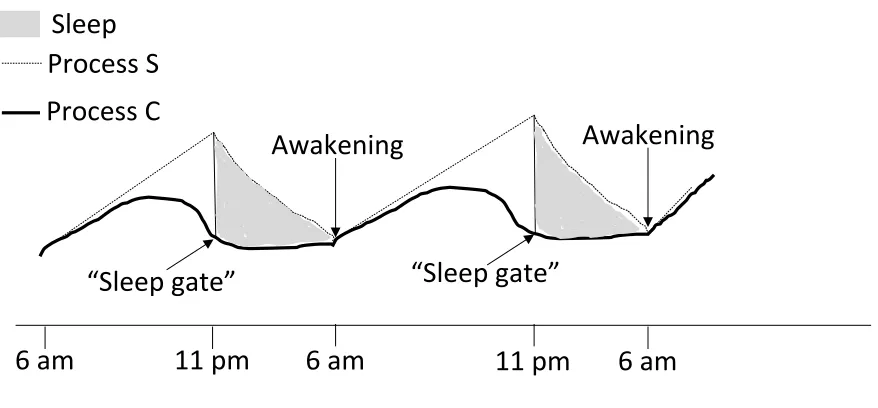
2.2 Sleep regulation processes: The two-process model
Figure 2.1 The two-process model (Adapted from Borbely, 1982)
2.3 Measures of sleep
Sleep is a private experience for everyone. The state of sleep can be assessed using objective and self-reported measures. Some examples of objective measures are polysomnography (PSG) and actigraphy. Meanwhile examples of self-reported measures are sleep diary and questionnaires.
Polysomnography is the “gold standard” physiological measure of sleep. PSG records brain activity (electroencephalography- EEG), eye movement (electrooculography- EOG) and muscle tone (electromyography- EMG) during sleep (American Association of Sleep Technologists, 2012; Morin & Espie, 2004; Moorcroft, 2013). Sleep starts with alert wakefulness, drowsy wakefulness and then followed by
6 am
11 pm
6 am
11 pm
6 am
Process S
Process C
Sleep
Awakening
Awakening
different stages of sleep; N1, N2, N3 sleep and rapid eye movement sleep (REM). N1, N2 and N3 are also referred as non-REM sleep. N1 and N2 are light sleep and N3 is a deep sleep/ slow wave sleep (SWS). It is called SWS because typical EEG output shows slower-frequency delta waves. PSG is usually carried out in the sleep laboratory under the supervision of a trained sleep researcher or sleep technologist. PSG has the advantage of providing more fine-grained and precise information of sleep architecture. For example, it provides more information about the total time of each sleep stage and the transition from one sleep stage to another. The main limitations of PSG, however, are that it is expensive and requires a trained sleep technologist/ researcher to set up, analyse and interpret the PSG data (American Association of Sleep Technologists, 2012). The PSG study is usually conducted in the sleep laboratory for a short duration (e.g., two nights). Thus, actigraphy will be a viable sleep measurement with greater ecological validity.
Actigraphy involves the use of an actigraph equipped with a piezo-electric accelerometer to record physical movement/ motion and is usually placed on the wrist (or ankle). The sleep-wake patterns are estimated from periods of activity and inactivity as it works based on the assumption that “people make more movement during wake
precise moment of sleep onset specifically in people who lie in bed motionless for long periods (Ancoli-Israel et al., 2003). This motionless period maybe interpreted as sleep when in fact it is still awake. Therefore, actigraphy should always be used with a sleep diary. Sleep diary can be used to estimate bed times and get up times.
Sleep diary is a self-report instrument designed to record the individual’s sleep experience (Carney et al., 2012). It usually consists of questions pertaining to bedtime, get up time, sleep duration, sleep onset latency (i.e., how long did it take one to fall asleep), number of times awakening from sleep, duration of awakenings, and sleep quality rating. People complete the sleep diary every morning as soon as they wake up based on their previous night’s sleep. A sleep diary has the advantage of being a practical way of data collection on sleep/ wake patterns by gathering information from individual’s own estimations of sleep experience. However, sleep diary has a number of limitations since it is self-report in nature. Sleep diary is subject to recall and reporting biases. Sleep diary is also a burden to the participants, as they need to complete sleep diary every morning. Potentially missing data would occur as a result of incomplete sleep diary.
established reliability and validity. However, a problem with the use of these questionnaires was biases. Since, the questionnaires depend on self-report and are retrospective (e.g., over weeks or months), the data from questionnaires are limited to recall and reporting biases.
Actigraphy, sleep diary and questionnaires were used to measure sleep for considerations of the aims of the studies and the intention to assess sleep in the participants’ natural living and sleeping environment in Chapters 5 and 6.
2.4 Nature of the sleep disturbance in chronic pain
et al., 2011; Landis, Lentz, Rothermel, Buchwald, & Shaver, 2004; Landis, Lentz, Tsuji, Buchwald, & Shaver, 2004; Rizzi et al., 2004; Roizenblatt, Moldofsky, Benedito-Silva, & Tufik, 2001). At the micro EEG level, findings revealed that there was reduced spindle activity during N2 sleep in chronic low back pain and fibromyalgia (Harman et al., 2002; Landis et al., 2004). Landis et al. (2004) conducted a PSG study to investigate sleep spindles and spindle activity in patients with fibromyalgia (n= 37) and pain-free and good sleeper individuals (n= 30). Patients with fibromyalgia exhibited fewer sleep spindles (i.e., 5) and reduced spindle activity during N2 sleep compared to the pain-free, good sleeping control group (Landis et al., 2004). These sleep spindles and spindle activity might disturb sleep initiation and maintenance processes as there were impairments in the thalamocortical mechanisms.
activity and patients with low alpha activity). This interference of alpha activity has been linked to nonrestorative sleep in chronic pain.
Several studies have reported an increased rate of Cyclic Alternating Pattern (CAP) in people with chronic pain (e.g., Parrino, Ferri, Bruni, & Terzano, 2012; Rizzi et al., 2004). CAP is a marker of sleep instability, derived from PSG data. It is a periodic activity comprises two alternate EEG patterns that measures the presence of NREM sleep and the extent to which changes occur between these patterns over time (Krystal & Edinger, 2008; Terzano et al., 1985). CAP “corresponds to a prolonged oscillation of the arousal level between two reciprocal functional states termed phase A (greater arousal) and
phase B (lesser arousal). It is thought to represent a condition of instability that
manifests the brain’s fatigue in preserving and regulating the macrostructure of sleep”
(Rizzi et al., 2004, p. 1193). CAP rate (NREM sleep) is calculated based on a percentage ratio of total CAP time to total NREM sleep time. To evaluate the presence of CAP, Rizzi et al. (2004) compared an overnight PSG data of patients with fibromyalgia (n= 45) with healthy individuals (n= 36). The authors found that the CAP rate was significantly increased in patients with fibromyalgia than the control group. Findings also revealed that the CAP rate had positive association with the severity of clinical symptoms and negative association with sleep efficiency in fibromyalgia group. These results indicate
that the CAP reflects sleep instability and correlates with pain symptoms. Together, these studies provide insights into the disturbance of sleep patterns in
2.5 Insomnia models
2.5.1 Spielman’s model
framework to conceptualise the development from acute to chronic insomnia in the context of chronic pain based on the interaction of the three factors (predisposing, precipitating and perpetuating). However, this model is a generic model and hence it does not specify the perpetuating factors that could explain how poor sleep could affect next day functioning such as physical inactivity in people with chronic pain.
Figure 2.2 Spielman's model (Adapted from Spielman et al., 1987)
2.5.2 Morin’s model
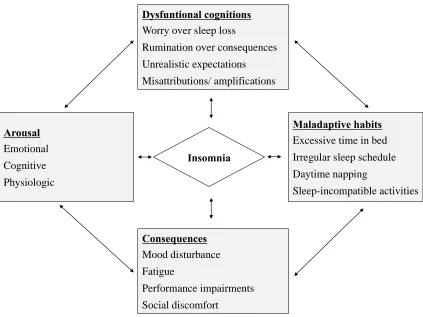
Morin’s model (1993) presents the variables responsible for insomnia (see Figure 2.3). Morin’s model acknowledges the role of hyperarousal as the mediating feature of insomnia. This arousal includes emotional, cognitive and physiological. Greater level of
Predisposing factors (e.g., hyperarousal, excessive worry, incompatible sleep schedule between spouse)
Precipitating factors (e.g., stress, medical illness, noise)
Perpetuating factors (e.g., going to bed early, getting out of bed later)
Threshold (clinical level of insomnia) In so m n ia i n te n si ty Pre-clinical insomnia
Onset Short-term insomnia
arousal interrupts the balance between sleep and wakefulness. Maladaptive habits such as excessive time in bed, irregular sleep schedule, daytime napping and sleep-incompatible activities are also responsible for insomnia. The model recognizes the novel contribution of dysfunctional beliefs and attitudes about sleep on the development and maintenance of insomnia. These dysfunctional cognitions include worry over sleep loss, rumination over consequences, unrealistic expectations and misattribution/ amplifications. The model highlights the common next-day consequences of insomnia. These consequences involve mood disturbance, fatigue, performance impairments and social discomfort. In the context of chronic pain, pain may aggravate emotional, cognitive and physiological arousal. The dysfunctional cognitions were not only about rumination and worrying over sleep loss, but also dysfunctional sleep beliefs about the sleep-pain interaction (Afolalu, Moore, Ramlee, Goodchild, & Tang, 2016). For example, “with the pain, I can never get myself
comfortable in bed”, “I know I can’t sleep through the night because the pain will wake
me up” or “Not sleeping well is going to make my pain worse the next day”. These
Figure 2.3 Morin's model (Adapted from Morin, 1993)
2.5.3 Lundh and Broman’s model
Lundh and Broman’s model (Lundh & Broman, 2000; see Figure 2.4) proposed that insomnia is a manifestation of the interaction between sleep-interfering processes (arousal) and sleep-interpreting processes (appraisal). This model is more comprehensive as it differentiates the role of arousal and appraisal in the development and maintenance of insomnia. Sleep-interfering processes refer to cognitive, physiological and emotional arousal that occurs in response to stressful life events. The stressful life events include a high level of arousal, worry about sleeplessness and emotional conflicts in interpersonal relationships. Consequently, these psychological
Insomnia Dysfuntional cognitions
Worry over sleep loss
Rumination over consequences
Unrealistic expectations
Misattributions/ amplifications
Maladaptive habits
Excessive time in bed
Irregular sleep schedule
Daytime napping
Sleep-incompatible activities
Arousal
Emotional
Cognitive
Physiologic
Consequences
Mood disturbance
Fatigue
Performance impairments
Figure 2.4 Lund and Broman’s model (Adapted from Lund & Broman, 2000)
2.5.4 Harvey’s model
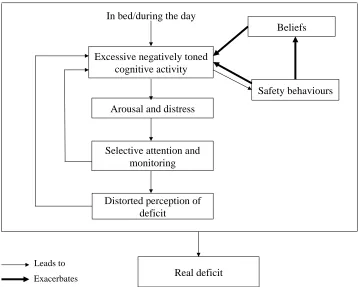
The cognitive model by Harvey (Harvey, 2002; see Figure 2.5) suggested that excessive negatively toned cognitive activity (i.e., excessive worry about not getting enough sleep and its daytime consequences) triggers both autonomic arousal and emotional distress in people with insomnia. This model is based on anxiety disorder models. In an early study, Lichstein and Rosenthal (1980) reported that people with insomnia suffer from excessive worry and intrusive thoughts. Lichstein and Rosenthal (1980) conducted a survey in a sample of 296 people with insomnia and they found that cognitive disturbance was cited 10 times more likely than somatic arousal as the primary
SLEEP AROUSAL -physiological, emotional,
cognitive
APPRAISAL
of sleep and daytime functioning AROUSABILITY (emotional sensitivity, slow habituation) STIMULUS-AROUSAL ASSOCIATIONS BEHAVIOURAL AND COGNITIVE STRATEGIES with regard
to sleep situation
INTERPERSONAL RELATIONS (conflicts, emotional involvements) SLEEP COMPLAINT = INSOMNIA ATTRIBUTIONS of poor sleep and daytime
functioning
PERFECTIONISM high personal standards
concerning sleep and daytime functioning
BELIEFS ABOUT sleep need, consequences of
factor of the insomnia. During the presleep period, people with insomnia occupied their cognition processes with worries, problems and noises in the environment (Harvey, 2000). According to Harvey’s cognitive model, the anxious state in turn leads to selective attention towards and monitoring of internal (e.g., body sensations) and external (e.g., the environment) sleep-related threats. Clock monitoring during presleep has been identified as a habit that induces worries in individuals with insomnia. Tang, Schmidt and Harvey (2007) conducted an experiment to examine the effect of clock monitoring during presleep on sleep misperception in people with primary insomnia. Participants were randomly assigned to either the clock-monitoring group (n= 19) or the display unit-monitoring group (n= 19). On a scale 0 (not at all) to 10 (very much), participants were asked to rate to index sleep-related worry. Out of six items, four items were found to have significant differences between the clock-monitoring group and the display unit-monitoring group. The items were “to what extent did the task make you worry that you are not getting enough sleep” (p= .007), “to what extent did the task make you worry about not being able to fall asleep” (p= .001), “to what extent did the task make it
difficult to fall asleep” (p= .005) and, “to what extent did the task make me become
Figure 2.5 Harvey's model (Adapted from Harvey, 2002)
2.5.5 Espie et al.’s model
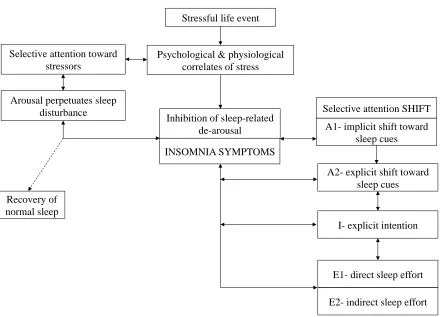
The Attention-Intention-Effort (A-I-E) model (Espie, Broomfield, MacMahon, Macphee, & Taylor, 2006; see Figure 2.6) viewed that normal sleep is an automatic process that occurs passively without conscious attention, intention and effort to sleep. It is an involuntary psychophysiological process. However, this sleep normalcy may be inhibited and insomnia results from the failure to inhibit wakefulness and initiate sleep without effort. The central mechanism of the model is the inhibition of sleep-related de-arousal. This occurs as a result of selective attention bias towards sleeps cues, leading to explicit intention to sleep and eventually engaging in active effort trying to fall asleep. For patients with chronic pain, the comorbid of poor sleep disturbance and pain are
In bed/during the day
Excessive negatively toned cognitive activity
Real deficit Selective attention and
monitoring Arousal and distress
Distorted perception of deficit
Beliefs
Safety behaviours
Leads to
considered a stressful life event. Theadom and Cropley (2008) found that high perceived stress was significantly associated with greater sleep disturbance (p<.05) and higher daytime dysfunction (p<.05) in people with fibromyalgia (n= 83, mean age= 52.59). The experience of pain is likely an inhibition of normal sleep-related de-arousal. Based on the explicit intention component in the Espie’s model, people with chronic pain would reduce their daytime physical activity or not do anything during the day which eventually will involve in direct/ indirect sleep effort.
Figure 2.6Espie at el.’s model (Adapted from Espie et al., 2006)
Stressful life event
Selective attention toward stressors
Inhibition of sleep-related de-arousal
Psychological & physiological correlates of stress
INSOMNIA SYMPTOMS
Selective attention SHIFT Arousal perpetuates sleep
disturbance
A1- implicit shift toward sleep cues
A2- explicit shift toward sleep cues
I- explicit intention
E1- direct sleep effort
E2- indirect sleep effort Recovery of
All of the models have highlighted some common underlying features in the development and maintenance of insomnia. However, they are generic, piecemeal and not coherent. In the context of chronic pain, pain could be a factor and/or consequence of sleep disturbance. Hence, the next sections will discuss evidence on how pain affects sleep and vice versa.
2.6 The relationship between pain and sleep
2.6.1 Pain affects sleep
There has been a growing number of studies that demonstrate pain could impact sleep. Lavigne et al. (2004) carried out an experimental study with healthy adults (n= 13, mean age= 24.2 years old) to examine the role of nociceptive stimulation in eliciting sleep arousal over all sleep stages. Participants underwent two experimental nights, which were one for the innocuous experiments (i.e., using vibrotactile and/or auditory) and the other for the noxious experiments (i.e., using intramuscular saline infusions). These stimulations were administered before sleep session and repeated during sleep. Participants completed questionnaires on sleep quality and pain in the morning. The analysis showed that the vibrotactile-auditory stimulations and noxious infusions significantly triggered more awakenings in N2 and REM. Participants also reported lower sleep quality following the nights with noxious stimulations compared to the baseline night. The findings highlight noxious stimuli can trigger arousals across all sleep stages.
al., 2013; Tang et al., 2014). LeBlanc and colleagues (2009) conducted a postal survey in 464 good sleepers (mean age= 42.36 years) followed every 6 months and over the course of a year. At baseline, sleep variables were assessed using the Insomnia Severity Index, Pittsburgh Sleep Quality Index and questions about any previous episodes of insomnia and familial history of insomnia. Bodily pain was assessed using the SF-12, with a higher score indicating less pain. Participants were classified into one of three groups: insomnia syndrome group, insomnia symptoms group or good sleepers. Insomnia syndrome group consisted of those who met all the diagnostic criteria for insomnia. The diagnostic criteria were based on DSM-IV-TR, the International of Classification of Diseases, 10th Edition (ICD-10) and on the utilisation of sleep-promoting products (i.e.,
the American College of Rheumatology criteria for widespread pain) significantly predicted the risk of insomnia onset at 3 years. The risk of insomnia onset remained significant even after adjusting for age, gender, socio-economic class, education, anxiety, depression, sleep and comorbidity at baseline.
2.6.2 Sleep affects pain
Each pain assessment session comprised testing of pressure pain threshold, thermal sensitivity and pain inhibition.
Several longitudinal studies have also demonstrated the role of sleep in influencing pain (e.g., Gupta et al., 2007; Mork & Nilsen, 2012; Morphy, Dunn, Lewis, Boardman, & Croft, 2007; Nitter, Pripp, & Forseth, 2012). Mork and Nilsen (2012) examined the link between self-reported sleep disturbance and risk of fibromyalgia in 12350 healthy adult women. The authors found 327 women reported an incidence of fibromyalgia at follow-up 11-12 years later. The relative risk estimate was adjusted for age, body mass index, frequency of physical exercise, psychological wellbeing, smoking status and education. An association was found between sleep problems at baseline and risk of fibromyalgia at follow-up in women with sleep problems (Adjusted RR= 3.43). In addition, Morphy et al. (2007) found that insomnia at baseline significantly predicted widespread pain 12 months later in both adult men and women (unadjusted RR: 1.55; n= 1589). Insomnia in this study was based on self-report of having “trouble falling asleep on most nights” and/ or “wake up several times at night on most nights” and/ or
“ trouble falling asleep on most nights” and/ or “wake up tired and worn out on most
nights”. The relationship between insomnia and widespread pain remained significant after the effects of age and gender were adjusted (RR: 1.45).
chronic widespread pain, which were Somatic Symptom Checklist (OR: 1.8), Illness Behaviour subscale of the Illness Attitude Scales (OR: 3.3), and the Sleep Problem Scale (OR: 2.7). Compared to participants who scored low on all the three scales, those who scored high were 12 times more likely to develop new chronic widespread pain 15 months later.
Nitter et al. (2012) followed up 1338 women in Norway over 17 years at three time points; in 1990 (range age= 20-29 years), 1995 (range age= 30-39 years) and 2007(range age= 40-49 years). They found that the development of chronic pain in initially pain-free women at follow up was 44%, with impaired sleep quality being a significant predictor of chronic pain (OR: 2.1). Impaired sleep quality was assessed using closed-ended questions (e.g., Do you often wake up at night or have poor sleep?; Do you
feel refreshed in the morning?) with two dichotomous answers (yes/ no). Meanwhile,
pain was measured using a question (i.e., Did you have pain and/ or stiffness for at least
three consecutive months during the last year at any of these sites? Joints, muscles,
back, whole body) with two dichotomous answer (yes/ no). The participants were
classified into (1) chronic widespread pain if they reported pain in the combination of “muscles”, “joints” and “back” or any combination involving “whole body”, (2) chronic
regional pain if they reported pain in either “muscles”, “joints”, or “back” or any
2.6.3 Bidirectional relationships between pain and sleep on a daily basis
This section will discuss some evidence on the potential bi-directional relationships between sleep and pain. The association between pain and sleep is likely to be bidirectional, such that sleep disturbance increases pain sensitivity and pain worsens sleep. Several previous studies have used daily process study to investigate the day-to-day relationship between pain and sleep (e.g., Affleck et al., 1996; Edwards, Almeida, Klick, Haythornthwaite, & Smith, 2008; Raymond, Nielsen, Lavigne, Manzini, & Choinie, 2001; Tang, Goodchild, Sanborn, Howard, & Salkovskis, 2012). However the findings are not always consistent. The overall balance of the findings suggests that sleep has a greater influence on pain than pain on sleep. Daily process study or micro-longitudinal study is an intensive design with time-specific monitoring procedure of pain and sleep over a certain period of time (Affleck, Zautra, Tennen, & Armeli, 1999; Smith, Nasir, Campbell & Okonkwo, 2012). Specifically this design requires the participants to collect data of their own pain and sleep experience repeatedly and frequently (e.g., three times a day for seven days). This design typically utilises multilevel modelling to examine lagged relationship or within-person day-to-day interaction between pain and sleep. According to Tennen and Affleck (1996), this design has the advantage to detect the rapid daily fluctuations in pain and sleep.
association became non-significant when pain attention was controlled for. This result was derived from 30 days of self-monitoring data. Similarly, using structural equation model for over a week report data, duration of reported sleep (i.e., long sleep of ≥ 9
hours and short sleep of < 6 hours) was found to predict greater pain next day and pain predicted sleep duration in 971 participants (Edwards et al., 2008).
Other researchers, however, who have looked at the bidirectional association between pain and sleep have found that the association did not seem to be reciprocal (Raymond et al., 2001; Tang et al., 2012). Using a daily process design, Tang et al. (2012) investigated the effect of presleep pain on subsequent sleep and sleep on pain reports the next day in 119 patients with chronic pain. Participants were trained to monitor their pain, sleep, mood and presleep arousal for a week using electronic diary and actigraphy, in their natural living and sleeping environment. Multilevel models revealed that presleep pain was not a significant and reliable predictor of subsequent overall sleep quality. However, sleep quality significantly predicted pain during the first half of the day, with higher sleep quality predicting less pain during the day. Whilst sleep quality was found to be a consistent predictor of pain the next day, findings suggested that the pain-reliving effect of sleep was only evident during the first half of the day.
rate their sleep quality of the previous night using a visual analogue scale, total sleep time, number of awakenings during the night and the presence of nightmares. During the day, participants were asked to rate their pain intensity using a numerical rating scale from 0 (no pain at all) to 10 (unbearable pain). The pain ratings were taken every four hours. Pooled cross-sectional regression analyses revealed that poor sleep quality of the previous night was followed by a more painful day. However pain during the day was not a significant predictor of the subsequent sleep. Importantly, findings from daily process studies highlight that sleep appears to be a stronger, more reliable predictor of pain than pain on sleep (Finan, Goodin, & Smith, 2013). Overall, these studies highlight the comorbid nature of pain and sleep disturbance and their temporal association but findings for the bidirectional relationship between pain and sleep are somewhat less consistent. Possibly, further investigations are required to examine the factors mediating or moderating the relationship between sleep and pain. For example, depression (Naughton, Ashworth, & Skevington, 2007) and physical activity (Tang et al., 2012) may be mediators in the sleep-pain relationship. Physical activity will be the focus in the next sections.
2.7 Physical activity and health outcomes
walking, swimming and bicycling. Meanwhile intensity is the extent to which the activity is being performed and moderate-intensity is defined as activity that is performed at 3.0-5.9 times the intensity of rest on an absolute scale. For instance, moderate-intensity physical activity is rated as 5 on a scale of 0-10 relative to an individual’s personal capacity. In addition, moderate- or vigorous-intensity activities performed as a part of daily routine such as brisk walking to work and gardening with shovel performed in bouts of 10 minutes can be counted as recommended amount and types of physical activity (Haskell et al., 2007). Vigorous-intensity is defined as activity that is performed at 6.0 or more time the intensity of rest. For instance, vigorous-intensity physical activity is rated as 7 on a scale of 0-10 relative to an individual’s personal capacity. Following the WHO recommendations, individuals should perform moderate-intensity aerobic physical activity for a minimum of 30 minutes on five days in a week or vigorous-intensity aerobic physical activity for a minimum of 20 minutes on three days in a week (Haskell et al., 2007).
2010). In summary, these findings show low level of physical activity is associated with poorer health outcomes.
2.8 Measures of physical activity
There are similarities between sleep and physical activity measurements in that physical activity can also be assessed using objective and self-report measures. An example of objective measure is the use of ambulatory activity monitor. Meanwhile examples of self-report measures are questionnaires and activity diaries.