MapReduce based RDF
Assisted Distributed SVM for
High Throughput Spam
Filtering
A Thesis submitted for the Degree of
Doctor of Philosophy
By
Godwin Caruana
Department of Electronic and Computer Engineering
School of Engineering and Design
Brunel University
May 2013
Abstract
Electronic mail has become cast and embedded in our everyday lives. Billions of legitimate emails are sent on a daily basis. The widely established underlying infrastructure, its widespread availability as well as its ease of use have all acted as catalysts to such pervasive proliferation. Unfortunately, the same can be alleged about unsolicited bulk email, or rather spam. Various methods, as well as enabling architectures are available to try to mitigate spam permeation. In this respect, this dissertation compliments existing survey work in this area by contributing an extensive literature review of traditional and emerging spam filtering approaches. Techniques, approaches and architectures employed for spam filtering are appraised, critically assessing respective strengths and weaknesses.
Velocity, volume and variety are key characteristics of the spam challenge. MapReduce (M/R) has become increasingly popular as an Internet scale, data intensive processing platform. In the context of machine learning based spam filter training, support vector machine (SVM) based techniques have been proven effective. SVM training is however a computationally intensive process. In this dissertation, a M/R based distributed SVM algorithm for scalable spam filter training, designated MRSMO, is presented. By distributing and processing subsets of the training data across multiple participating computing nodes, the distributed SVM reduces spam filter training time significantly. To mitigate the accuracy degradation introduced by the adopted approach, a Resource Description Framework (RDF) based feedback loop is evaluated. Experimental results demonstrate that this improves the accuracy levels of the distributed SVM beyond the original sequential counterpart.
Effectively exploiting large scale, ‘Cloud’ based, heterogeneous processing capabilities for M/R in what can be considered a non-deterministic environment requires the consideration of a number of perspectives. In this work, gSched, a Hadoop M/R based, heterogeneous aware task to node matching and allocation scheme is designed. Using MRSMO as a baseline, experimental evaluation indicates that gSched improves on the performance of the out-of-the box Hadoop counterpart in a typical Cloud based infrastructure.
The focal contribution to knowledge is a scalable, heterogeneous infrastructure and machine learning based spam filtering scheme, able to capitalize on collaborative accuracy improvements through RDF based, end user feedback.
Acknowledgements
I am grateful to all of my colleagues and friends at Brunel University who supported me in different ways during the PhD research. I am thankful to all the staff at the Department of Electronic and Computing Engineering, Brunel University.
I am heartily thankful to my supervisor, Dr Maozhen Li who supervised my research and guided me with great dedication throughout. His view of research has proved invaluable to my dissertation and supporting work. His personality, together with his high standards for research, makes him an ideal advisor. To me, he is also a role model.
I am also appreciative to the Malta Information Technology Agency for supporting my Ph.D. studies.
Lastly, I owe my deepest gratitude to my close friends, work colleagues – particularly those within the Technology and Systems Governance Group, family, and especially my wonderful wife, without whom I would not have made it through my PhD studies.
Contents
Abstract ... ii
Acknowledgements ... iii
List of Figures ... vii
List of Tables ... ix
List of Algorithms ... x
List of Abbreviations ... xi
Authors Declaration ... xii
Statement of Copyright... xiii
List of Publications ... xiv
Journal Papers: ... xiv
Conference Papers: ... xiv
CHAPTER 1 - Introduction ... 1
1.1 Challenges ... 2
1.2 Motivation ... 3
1.3 Main Contributions ... 7
1.4 Structure ... 10
CHAPTER 2 – Spam Filtering Approaches ... 12
2.1 A Synopsis of Traditional Approaches to Spam Filtering ... 12
2.1.1 SMTP Approaches ... 12
2.1.2 Machine-Learning Techniques ... 15
2.2 General Challenges ... 16
2.3 Emerging Approaches ... 18
2.3.1 Peer to Peer Computing ... 18
2.3.2 Grid Computing ... 22
2.3.4 Ontology Based Semantics ... 25
2.3.5 Other Approaches... 27
2.4 Security and Privacy Considerations ... 28
2.4.1 Security Aspects ... 29
2.4.2 Personalization and Privacy ... 32
2.5 Discussions and Observations ... 34
2.6 Summary ... 39
CHAPTER 3 – MapReduce based Distributed SVM for High Throughput Spam Filtering ... 41
3.1 Related Work ... 41
3.2 The Support Vector Machine ... 46
3.3 MapReduce ... 48
3.4 The Design of MRSMO ... 48
3.4.1 Sequential SMO ... 50
3.4.2 Distributed SVM with MapReduce ... 54
3.5 Experiments and Results ... 59
3.5.1 Performance of the Sequential SMO ... 62
3.5.2 Accuracy of Sequential SMO ... 62
3.5.3 Efficiency of Distributed SMO ... 63
3.5.4 Hadoop MapReduce Speedup and Efficiency ... 64
3.5.5 Accuracy of distributed SMO ... 65
3.5.6 Scalability of the distributed SMO ... 66
3.5.7 HSIM ... 67
3.6 Comparison with MPI ... 70
3.6.1 Speedup – Polynomial and Gaussian Kernels ... 71
3.6.2 Efficiency – Polynomial and Gaussian Kernels ... 72
3.7 Summary ... 74
CHAPTER 4 – RDF Assisted Distributed SVM ... 76
4.1 Related Work ... 76
4.2 Ensemble Approaches ... 81
4.3 Ontology ... 82
4.4 Assisting MRSMO’s accuracy with RDF ... 83
4.5 RDF Based Feedback Loop ... 84
4.6 Experiments and Results ... 95
4.7 Summary ... 99
CHAPTER 5 - Optimising Task Allocation in Heterogeneous Hadoop Cluster Environments 100 5.1 Related Work ... 100
5.2 Heterogeneous MapReduce Environments ... 103
5.3 The Design of gSched ... 104
5.3.1 Design ... 105
5.3.2 ECT Estimation ... 108
5.3.3 Task to Node Matching and Allocation ... 110
5.4 gSched Implementation ... 110
5.5 Experiments ... 116
5.4.1 Base-lining gSched ... 116
5.5.2 Distributed SMO ... 119
5.5.3 gSched Scalability and Cost Effectiveness ... 122
5.6 Summary ... 129
CHAPTER 6 – Conclusion and Future Work ... 130
6.1 Conclusions ... 130
6.2 Future Work ... 132
List of Figures
Figure 2-1: Peer-to-peer computing for spam filtering ... 19
Figure 2-2: Grid computing for spam filtering. ... 22
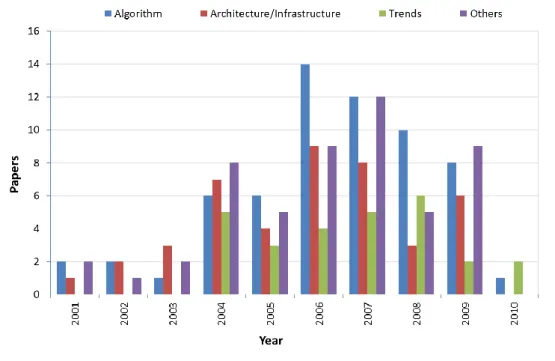
Figure 2-3: A classification of surveyed papers ... 34
Figure 2-4: The focus distribution of the surveyed papers. ... 35
Figure 3-1: SVM (Linear) separating hyperplanes ... 47
Figure 3-2: SVM (Linear) decision function ... 47
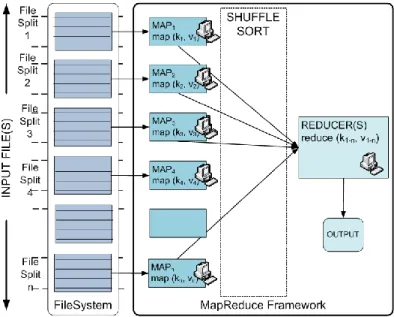
Figure 3-3: MapReduce Architecture ... 50
Figure 3-4: Aggregation of SVM process... 55
Figure 3-5: Reducer aggregation of individual, distributed SVM output. ... 58
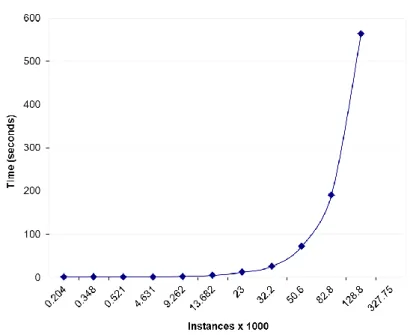
Figure 3-6: Sequential SMO training time ... 62
Figure 3-7: Accuracy of the Sequential SMO ... 63
Figure 3-8: Hadoop MapReduce Speedup ... 64
Figure 3-9: Hadoop MapReduce Efficiency ... 65
Figure 3-10: Performance of the distributed SMO ... 65
Figure 3-11: Accuracy of distributed SMO ... 66
Figure 3-12: The scalability of the distributed SMO ... 67
Figure 3-13: Experimental and Simulator Performance Baseline Indicators ... 68
Figure 3-14: Varying the number of input files and size ... 68
Figure 3-15: Doubling the CPU speed ... 69
Figure 3-16: Increasing the number of reducers ... 69
Figure 3-17: Hadoop M/R SVM simulated scalability ... 70
Figure 3-18: MRSMO - speedup - Polynomial Kernel ... 72
Figure 3-19: MRSMO - speedup - Gaussian Kernel ... 72
Figure 3-20: MRSMO - efficiency - Polynomial Kernel ... 73
Figure 3-21: MRSMO - efficiency - Gaussian Kernel ... 73
Figure 4-1: The effect of Bagging and SMOTE ... 82
Figure 4-2: SPONTO ham instance ... 86
Figure 4-4: RDF assisted classification process ... 87
Figure 4-5: SPONTO prototype template interface ... 93
Figure 4-6: RDF based user assistance and enhancement via Protégé ... 93
Figure 4-7: RDF assisted classification process. ... 94
Figure 4-8: The impact of file splits on accuracy improvement ... 96
Figure 4-9: The impact of RDF augmentation on accuracy degradation ... 97
Figure 4-10: The accuracy of the RDF augmented MapReduce SMO ... 97
Figure 4-11: MapReduce SMO accuracy degradation with RDF augmentation-TREC ... 98
Figure 4-12: The impact of TREC file splits on accuracy improvement – TREC ... 98
Figure 5-1: Specifically created & configured Hadoop 0.20.205 Amazon EC2 AMI Stack ... 105
Figure 5-2: The design of gSched ... 111
Figure 5-3: Example gSched allocation ... 115
Figure 5-4: TestDFSIO - Standard vs. gSched ... 116
Figure 5-5: MRBench - Standard vs. gSched ... 117
Figure 5-6: TestDFSIO - Standard vs. gSched – EC2 4 Node ... 118
Figure 5-7: MRBench - Standard vs. gSched – EC2 4 Node ... 118
Figure 5-8: MRSMO - speedup (seconds) - Polynomial Kernel ... 120
Figure 5-9: MRSMO – speedup (seconds) - Gaussian Kernel... 120
Figure 5-10: MRSMO - efficiency - Polynomial Kernel ... 121
Figure 5-11: MRSMO - efficiency - Gaussian Kernel ... 121
Figure 5-12: Word count Test - Standard vs. gSched ... 123
Figure 5-13: Amazon EC2 Hadoop MapReduce Cluster based on specifically built AMI ... 124
Figure 5-14: Cloud M/R - Standard vs. gSched (A) ... 125
Figure 5-15: Cloud M/R - Standard vs. gSched (B) ... 125
Figure 5-16: Cloud M/R - Standard vs. gSched (C) ... 126
List of Tables
Table 2-1: Surveyed work perspectives ... 36
Table 2-2: Typical products and types ... 38
Table 3-1: Spam Corpora Examples ... 60
Table 3-2: SpamBase structure ... 60
Table 3-3: Desktop configuration ... 61
Table 3-4: Hadoop cluster configuration ... 63
Table 3-5: The performance of the distributed SVM using 4 MapReduce nodes. ... 66
Table 3-6: Hadoop configuration. ... 71
Table 4-1: SPONTO - core properties. ... 85
Table 4-2: Weka to RDF conversion ... 91
Table 4-3: RDF representation of ARFF instance ... 91
Table 4-4: Sample SPONTO Protégé Template operations ... 92
Table 4-5: Random instance classification ... 96
Table 5-1: AMI Virtual Appliance software baseline ... 105
Table 5-2: Initial experiment – Test cluster ... 116
Table 5-3: MRSMO with gSched – Test cluster ... 119
Table 5-4: gSched parameters ... 122
Table 5-5: EC2 instance types - initial experiment ... 123
Table 5-6: Amazon Instance Types ... 124
Table 5-7:EC2 instance types - second experiment set ... 124
Table 5-8: Performance improvement ... 127
Table 5-9: gSched performance improvements over standard scheduler ... 127
List of Algorithms
Algorithm 3-1: Sequential SMO ... 51
Algorithm 3-2: MapReduce based distributed SMO ... 55
Algorithm 4-1: RDF based enhancement of training set ... 88
Algorithm 5-1: Cluster Start-up (& Re-profiling) ... 112
Algorithm 5-2: Task Node/Matching and allocation ... 112
Algorithm 5-3: Task Finished ... 114
Algorithm 5-4: ECT Table Generation ... 114
List of Abbreviations
ANN Artificial Neural Network
CAPTCHA Completely Automatic Public Turing test to tell Computer and Humans Apart DAML DARPA Agent Mark-up Language
DHT Distributed Hash Table DKIE Domain Keys Identified Email DNSBL DNS-based Black-hole List
DT Decision Trees
ECT Estimated Completion Time ESP Email Service Providers
IAPP Integrated authentication process platform IDS Intrusion detection systems
JVM Java Virtual Machine
KKT Karush-Kuhn-Tucker
kNN K Nearest Neighbour
LCP Lightweight currency protocol
ML Machine learning
MPI Message Passing Interface
MR Map Reduce
MRSMO Map Reduce Sequential Minimal Optimization MTA Mail Transfer Agent
MUA Mail User Agent
OIL Ontology Inference Layer
OWL Web Ontology Language
P2P Peer to Peer
RBL Real-time blacklist
RDF Resource Description Framework
S/MIME Secure/Multipurpose Internet Mail Extensions SASL Simple Authentication and Security Layer SIDF Sender ID Framework
SMO Sequential Minimal Optimization SOA Service Oriented Architecture SVM Support Vector Machine
TF Term frequency
TF-IDF Term frequency–inverse document frequency URI Uniform Resource Identifier
VSS Vector Space Search
W3C World Wide Web Consortium XML Extensible Mark-up Language
Authors Declaration
The work described in this thesis has not been previously submitted for a degree in this or any other university and unless otherwise referenced it is the author’s own work.
Statement of Copyright
The copyright of this thesis rests with the author. No quotation from it should be published without prior written consent and information derived from it should be acknowledged.
List of Publications
The following papers have been accepted for publication as a direct or indirect result of the research discussed in this thesis.
Journal Papers:
G. Caruana and M. Li, “A survey of emerging approaches to spam filtering,” ACM Computing Surveys, vol. 44, no. 2, pp. 1–27, Feb. 2012.
G. Caruana, M. Li, and Y. Liu, “An Ontology Enhanced Parallel SVM for Scalable Spam Filter Training,” Neurocomputing, no. 108, p.45–57, 2013.
Conference Papers:
G. Caruana, M. Li, and H. Qi, “SpamCloud: A MapReduce based anti-spam architecture,” in 2010 Seventh International Conference on Fuzzy Systems and Knowledge Discovery, 2010, vol. 6, pp. 3003–3006.
G. Caruana, M. Li, and M. Qi, “A MapReduce based parallel SVM for large scale spam filtering,” in Fuzzy Systems and Knowledge Discovery (FSKD), 2011 Eighth International Conference on, 2011, vol. 4, pp. 2659–2662.
From just an annoying characteristic of the electronic mail epoch, spam has evolved into an expensive resource and time consuming problem. Spam continues to contaminate legitimate email communication and its enabling infrastructure. The costs of processing power, storage, as well as the human effort required to deal with spam are substantial. Spam varies in shape and form [1]. Nonetheless, it tends to exhibit a number of similar traits in terms of structure, content, and diffusion approaches. There is a perceptible business reason and justification for its proliferation. From a spammer’s perspective, the effort and cost of sending a substantial number of emails is minimal, yet the potential reach in terms of the magnitude of the available audience size is enormous [2]. The prospective profitability is clearly described by [3].
Unless careful mitigating controls and filtering considerations are applied from the outset, the value proposition of email and associated services will be reduced over time. This degradation is contextualized in terms of overall usability and value for money, as spam starts to deeply permeate respective email infrastructures. Consequently, approaches to spam filtering have been continuously researched, explored and applied with varying degrees of success. The techniques applied and employed by spammers continue to get smarter as well, with the primary intent being to outsmart and out-compute counterpart detection and filtering schemes.
To this extent, the overall objectives for this research are therefore to:
Establish the current research landscape in terms of spam filtering techniques from the various perspectives involved, including algorithmic, architectural and trends.
Design and implement a high throughout spam filter training approach able to capitalize on distributed computing techniques.
Evaluate the distributed spam filter training scheme effectiveness in terms of performance and accuracy and compare it with relevant current research.
Identify and evaluate how end user contribution can be considered and employed to improve spam filtering accuracy, using a feedback loop approach for the spam filter training scheme adopted.
Research and explore the opportunity to exploit heterogeneous, commodity based, large scale computing environments to perform spam filter training in a high throughput construct.
Evaluate the heterogeneous optimization approach(es) explored from a performance and cost perspectives.
1.1 Challenges
Velocity, variety and volume are key characteristics of the modern day spam challenge. The rate of spam proliferation (velocity), the continuously changing payload and approach type (variety) and sheer numbers (volume) have reached unprecedented levels. These attributes are indicative of the scale of the problem – one which can be characterised as an Internet scale problem. This mandates Internet scale techniques, algorithms and approaches for segregating ham from spam – and which can evolve at Internet speed.
Accuracy and performance are two fundamental properties for effective spam filtering. Establishing the right balance between them is non-trivial and not guaranteed completely accurate. This is a key challenge in any spam filtering construct. False-positives which can be very costly. On the other hand, email being highly entrenched within the general Internet ecosystem as it is, any spam filtering approach needs to make sure that it is as non-intrusive as possible in order to be of any use. This constrains the opportunity areas that can actually be exploited for improving spam mitigation – another fundamental spam filtering challenge. From a wider perspective, spam filtering can be represented as a text classification challenge. Machine learning has been applied extensively in the context of spam filtering. Whilst numerous machine learning techniques are widespread, Support Vector Machines have and continue to garner increased attention in this construct. However, SVM approaches are inclined to be computationally expensive, especially when the size of a training data set is large. The scalability of typical SVM classifier training still remains an open challenge by virtue of the involvement of constrained, convex, quadratic programming challenges. In simpler terms, this refers to the degree of computing time required which is
quadratic to the number of training data elements. This challenge is amplified further in a spam filtering construct due to its variety and velocity (as in rate of change) attributes. Furthermore, this fluctuation of spam in terms of volume amplifies these issues considerably. Whilst stale techniques become obsolete quickly in such a fast moving landscape, without the ability to scale, up and down, spam filtering strategies can become very costly, quickly. This highlights yet another challenge - the evolution tempo spam of delivery approaches is alarming – with parasitic spam becoming increasingly evident. Other challenges include the widespread dependence on specialized complex algorithms and processing environments rather than simple, commodity processing resources based approaches. There is also a tendency to require an in depth understanding of how to tune and parameterize solutions. This both from an algorithmic as well as processing environment perspectives.
Such complex and tightly woven challenges continue to fuel spam filtering research from a number of standpoints – approaches in this context can be either based on specific areas or employed concurrently.
1.2 Motivation
Applied from a technical perspective (other approaches, exist, including regulatory and organizational for example), filtering approaches take various avenues. Common methods include email client extensions (filters) and filtering processes at the mail service-provider end. Simple Mail Transfer Protocol (SMTP) and machine learning based approaches are popular implementations of filtering schemes [4]. The application of heuristics, based around techniques such as black/white listing (the application of trusted and non-trusted sources), is also common [5]. Machine-learning techniques involve the analysis of email, mostly at content level, and employ algorithms, such as Bayesian, Support Vector Machines, and others, to segregate spam from legitimate email. These approaches have been extensively applied in spam filtering and exhibit different capabilities [6]. Schyryen [7] asserts that combinations of techniques and algorithms employed together, or cocktails, as more creatively referred to in [8], significantly increase the potential to alleviate spam-related issues.
As indicated earlier, Support Vector Machine (SVM) techniques have received increasing attention from the research community in the context of classification [9] [10] [11] [12] [13]. The qualities of SVM based classification in general have been proven remarkable [11] [14] [15] [16] [17] [18] [19]. SVM based approaches have also been proved to perform consistently well for spam classification [9] [20] [21]. There are numerous contributing factors to SVM’s popularity for general machine learning problems as well as spam classification. Perhaps the more prevalent include the adaptability to different types of input data as well as limited sensitivity to feature selection [22]. The accuracy and performance of SVMs can also be further improved with numerous methods such as outlier removal, scaling and parameter optimization selection [23] [24] [20]. Improving the basic SVM approach by coming up with specific decompositions and solvers is another widespread technique [11] [25]. Another practice is to split the training data and use a number of SVMs to process the individual data chunks, subsequently aggregating results using various strategies [26]. Other approaches include the utilization of specialized processing hardware, such as Graphics Processing Units (GPU)’s [19] [16]. These are employed to offload speed sensitive algorithmic steps or used for the entire algorithm. Distributed and parallel computing principles are believed to be key enablers for providing adaptable, Internet-scale anti-spam solutions. Whilst distributed and parallel programming in distributed environments is not a trivial task, various frameworks and models are available that make distributed and parallel computing more accessible. The MapReduce framework is one such programming model intended to abstract large scale computation challenges and enable a degree of automatic distribution and parallelization [27]. MapReduce was popularized by Google and primarily motivated by the need to be able to distribute and parallelize the processing of Internet scale data sets. Popular implementations include Mars [28], Phoenix [29], Hadoop [30] and Google’s implementation [31]. Whilst the consideration for and application of MapReduce based approaches in the context of distributed systems is hardly new, it is also an area which one can safely assert as being relatively ‘fresh’ in terms of exploiting its potential for application in specialized ways. This includes uniting it with modern machine learning algorithms for spam detection and filtering, such as support vector machines [21]. To date, MapReduce’s primary application is towards data intensive tasks rather than for computation in general.
Efforts to the latter's extent do however exist, including the work presented in [32] [33] [27] [34]. From this standpoint, MapReduce can be employed for dealing with both data and computationally intensive challenges. It is also believed to provide a motivating research prospect by virtue of the specific characteristics associated with this (spam filtering) problem. Tuning contemporary and innovative machine learning based spam filtering techniques to this metaphor is believed to provide ample potential for research.
In the application of a distributed spam filter training architecture and in the context of MapReduce, respective ‘Mappers’ and ‘Reducers’ will perform the steps required for machine learning computing sequences. It is expected that distributing spam filtering jobs and spam data to a potentially ‘unlimited’ number of computing resources can effectively tackle the spam challenge in a large scale construct. MapReduce can thus be employed as an enabling technology to facilitate high performance machine learning techniques for spam filter training/filtering. As already indicated, SVM training is well known to be a compute intensive task because of the quadratic programming challenge it involves, i.e. training time increases exponentially with the number of training elements involved. However, distributed MapReduce based SVM training would scale well because a number of nodes can be utilized concurrently and each node can deal with a subset of the training data at an individual level rather than processing the entire data set, thus alleviating this drawback. This is the basis of the distributed SVM, designated MRSMO, designed and evaluated in this dissertation.
However, the application of distributed computing techniques to what is normally a sequential algorithm, as is the case of many standard SVM formulations, can have side effects. The computation of SVM support vectors is a global optimization problem. One of the potential challenges of the decomposition and subsequent reconstruction of SVM’s to be considered in a distributed computing construct is degradation of classifier accuracy. This is where RDF based techniques are believed to provide an opportunity to mitigate this challenge. Ontologies enable the re-use of domain knowledge and expertise by formal and unambiguous concept representation. They provide a sound basis for formal information exchange and automated processing between machines, including varying degrees of automated ‘reasoning’. In this research work, an RDF based, intelligence supplementing and training instance correction feedback loop is explored as a potential means to mitigate the
accuracy degradation exhibited by the reformulation of a sequential SVM in a distributed construct.
In Cloud computing environments, the ability to scale up and down as well as potential financial benefits, such as reduced capital expenditure costs, are touted to have created a market worth hundreds of billions [35]. Cloud computing environments such as Amazon Web Services [36], Windows Azure [37] and the Google Cloud Platform [38] are heavily based on highly heterogeneous, multi-core, distributed and parallel computing models and virtualization technologies. Heterogeneous environments are reflective of continuously evolving technology. Maximization of computing capability imbalance is considered very important in Cloud Computing environments. Despite continuous evolution [39][40], cloud services, cost and chargeback models can be considered still relatively immature [41]. Establishing a balance between performance and cost in such a context is considered a challenge [42]. The underlying mechanics of multiplexing and resource pooling - key cloud computing characteristics - can impact the actual runtime performance of virtual heterogeneous resources. This challenge is further amplified by the actual host behaviour, including operating system scheduling, workload, performance characteristics etc. In this work, a heterogeneous aware, MapReduce based task to node matching and allocation scheme is presented. Via configuration, the proposed approach is able to establish a degree of balance between performance and cost.
Summarizing, spam filtering research is an active study area. Whilst research on SVM based spam filter training has been carried out from various perspectives, a significant number focuses on specialized SVM formulations, solvers and/or architectures in isolation. This is referring to the emphasis on specific and specialized performance enhancement areas rather than overall flexibility, ease of use and practicality. There is also a tendency to rely on specific strategies and techniques that are mostly intended to target specific scenarios. Specialized configurations (including special hardware use, special software stacks and/or specialized code bases) limit applicability for practical large scale spam filter training and classification. The use of specialized hardware and environments does not allow common computing resources to be employed easily. When special architectures and/or configurations are employed, improving on performance via the use of additional,
commodity computing resources/nodes is not always viable. It is also much more complex to scale well at the rate mandated by continuously changing spam traffic and patterns. Furthermore, special stacks and configurations require equally specialized knowledge for operation.
1.3 Main Contributions
The challenges, and subsequently opportunities, highlighted in section 1.1 form the basis of the research effort proposed in this work. The focus is to try to tackle a number of critical success factors with respect to practical, large scale spam filter training using commodity infrastructures in a high throughput distributed computing construct. The primary goals are scalability, accuracy, simplicity and cost effectiveness. This in terms of algorithmic approach as well as the use of easily accessible, commodity hardware and software elements which provide real-world scalability and large scale data processing capabilities. As indicated in the abstract, the underpinning motivation and principal contributions can be summarized as a scalable machine learning based, spam filter training architecture, designed to capitalize on heterogeneous infrastructures and collaborative accuracy improvement efforts through end users, and, in the future, machine to machine, feedback loop.
To this extent, this dissertation work contributes a number of novel elements to research in the area of high performance, scalable spam filter training and thus, classification.
This research performs and provides an extensive literature review, in the shape of a survey of literature on emerging spam filtering techniques. A comparison of spam filtering research work focus, categorized in a number of key areas, including algorithmic, architecture and trends is provided. The various research perspectives available are explored and discussed, covering traditional whilst focusing on emerging techniques and architectures, more specifically:
1. SMTP approaches, including DSMTP, ASMTP as well as grey listing and black listing studies are reviewed.
2. Explores research work available in the traditional heuristic and signature based areas as well as performs a study of the machine learning work in this context. Specific areas in this respect include the application of neural networks, Bayesian as
well as more recently Support Vector machines. Research in the area of accuracy, performance and scalability is also performed and discussed.
3. A study focusing on emerging trends, including peer to peer, grid and ontology semantics is contributed. Research work in the area of personalization, security and privacy is also discussed.
4. The survey work also presents an assessment of the key features of prevalent approaches in the form of techniques applied (e.g. pre-Send / post-Send, machine learning, heuristic, signature based etc.). The comparison also includes implementation complexity, performance, reach, quality characteristics and architectural footprints amongst others.
MapReduce is established as good candidate enabling framework for distributed SVM based Sequential Minimal Optimization (SMO) algorithm. This dissertation work decomposes a typical SMO algorithm and employs it as a baseline for the design of a distributed SVM, designated Map Reduce Sequential Minimal Optimization (MRSMO). This research also:
1. Implements the designed distributed SMO in a Hadoop M/R construct.
2. Subsequently evaluates the baseline sequential SMO with the presented distributed equivalent. The evaluation is carried out from a performance and accuracy perspective.
3. Employs two key sets of SVM kernels for the evaluation, namely Gaussian and Polynomial and demonstrates the significant improvement towards MRSMO across the tests performed.
4. Compares the performance of the distributed SMO with a baseline MPI work.
Whilst the distributed SMO (MRSMO) outperforms the corresponding sequential implementation as intended, the accuracy of the resultant classifier suffers. To this extent, this research:
1. Explores the possibility of using traditional ensemble and subsequently RDF based approaches for improving the overall accuracy.
2. Introduces an RDF based feedback loop with the M/R based distributed SMO.
3. Augments the training set with end user contributed ‘knowledge’ by transforming the training data into an RDF graph representation. Misclassified elements are
identified using automatically generated SPARQL queries, optionally assisted with an intermediary C4.5 classifier where the respective decision tree fact rules are translated into SPARQL queries.
4. Employs Protégé for the proposed RDF based feedback loop improvement and assistance. Subsequently, the resultant, knowledge supplemented RDF base, is re-transformed to respective SVM (distributed MRSMO) training instances.
5. Evaluates the RDF assisted feedback loop accuracy improvement using both the SpamBase as well the TREC datasets. The improvement level reaches, and surpasses, the original sequential SVM accuracy.
In order to further improve the overall value proposition for a ‘turnkey’ scalable anti-spam filtering architecture, this research also proposes an improved task matching and node allocation for MapReduce, using the out of the box Hadoop scheduler as a comparison baseline. In this respect, this research work contributes:
1. The design of gSched – a heterogeneous aware M/R task to node matching and allocation scheme for Hadoop. The focus of the design’s parameters is on balancing cost and performance. A specifically configured Amazon AMI is also configured and discussed.
2. A comparison and evaluation of gSched on a virtual cluster using the baseline DFSIO and MRBERNCH Hadoop M/R benchmarks.
3. Comparison and evaluation of gSched on Amazon’s EC2 cloud infrastructure, again using the TestDFSIO and MRBERNCH Hadoop M/R benchmarks.
4. Evaluation of the distributed M/R SVM (MRSMO) using the Gaussian and Polynomial Kernels - comparing the standard Hadoop and gSched task allocation scheme performance. These test are performed again on Amazon EC2.
5. Evaluation of gSched’s performance, cost and scalability improvements using the standard WordCount test on Amazon EC2 nodes.
In summary, the principal contribution of this dissertation is a scalable, heterogeneous aware, machine learning based spam filter training architectural pattern, able to capitalize on collaborative feedback. This is corroborated by an in depth survey of emerging spam filtering approaches, the design and implementation of a distributed support vector
machine algorithm and an RDF semantics based, end user assisted feedback loop for accuracy improvement. It is also supported by a heterogeneous aware, task to node matching and allocation scheme for MapReduce based spam filter training.
1.4 Structure
This dissertation is organised as follows. The initial research background, alongside the motivation are presented in this chapter. The primary contribution of this research is also articulated in Chapter 1.
Chapter 2 provides an extensive survey of current literature related to spam filtering. It provides an in depth discussion of the current as well as emerging concepts and application of spam filtering approaches, techniques and architectures. It also discusses the challenges and opportunities presented with respective combinations, focusing on emerging approaches. Chapter 2 also establishes the baseline principles for the consideration of specific underlying architectures for high performance spam filtering.
Subsequently, in Chapter 3, a brief discussion of key machine learning approaches is presented, focusing on the support vector machine perspective. MapReduce - an architecture for internet scale compute and data intensive processing is also presented. In this chapter a typical sequential SMO algorithm is decomposed and re-formulated in a distributed construct. This leads to the design and proposal of MRSMO. A number of experiments are performed and presented in this construct. The accuracy and efficiency of the sequential SMO are presented. This is used as a baseline for comparison with the corresponding distributed M/R implementation proposed. MRSMO is also evaluated with a baseline MPI implementation using two flavours of the SVM kernel, namely Gaussian and Polynomial. A number of simulation comparisons to establish the scalability of the proposed approach are also performed.
In order to further improve the accuracy of the distributed SVM, the application of RDF based techniques to be used for end user feedback contribution is evaluated. This is the basis of Chapter 4. In this section, SPONTO - Spam Ontology, based on the primary data set used for research in this context, namely SpamBase, is presented. The ontology reflects the basic elements in this specific data set, but also includes additional attribute assertions. The end user is able to contribute knowledge via the RDF based feedback loop. The instance
data is used to generate baseline RDF graphs which are subsequently employed to establish misclassified elements. The original accuracy outcome based on the distributed SMO with the RDF supplemented approach is compared. The result of this work in this respect establishes accuracy improvements of 5%, on average, beyond the original distributed SMO’s performance in this regard. An experimental test on the TREC dataset is also performed. The accuracy improvement, or rather degradation induced due the high throughput, distributed SMO, improves by an average 3%.
In Chapter 5 the distributed, RDF assisted spam filter training approach presented is taken a step further. A limitation of the default Hadoop MapReduce scheduling implementation employed is established. The out-of-the-box task allocation scheme assumes a homogenous underlying computing resource environment. The design and implementation of a heterogeneous aware Hadoop MapReduce task to node matching and allocation scheme is thus presented. Designated gSched, this approach is intended to establish a balance between performance and cost effectiveness in what has become a very popular computing resource provisioning construct, namely cloud computing. The task to node matching and allocation scheme is base lined and performance compared with the standard scheduler performance in an Amazon EC2 construct. The outcome of the evaluation of the two schemes in terms of performance when using the distributed SVM, Gaussian and Polynomial kernels are presented. The standard WordCount test to establish the scalability improvements between the original and proposed scheme is also performed and presented in this chapter.
This dissertation concludes with Chapter 6, summarizing the contributions, limitations and boundaries of this research as well as providing a number of suggestions for future improvements and extensions to this work.
CHAPTER 2 – Spam Filtering Approaches
There have been numerous efforts to review spam filtering methods [43] [4], and with varied scope. The increased velocity, volume and variety of spam demands high performance filtering algorithms and methods. The past years have witnessed a number of emerging technologies in computing, notably, peer-to-peer computing [44], [45], semantic web [46], and social networks [47]. These technologies facilitate the development of collaborative computing environments for solving large scale problems. A number of approaches, building on these emerging computing technology trends towards spam filtering have been more lately proposed and implemented.
This chapter provides an extensive review of spam filtering directed literature and is organized as follows. Section 2.1 provides an overview of traditional approaches to spam filtering. Section 2.3 reviews emerging spam filtering approaches and discusses the challenges that these approaches present. Section 2.4 discusses various issues related to security and privacy in spam filtering. Section 2.5 presents a number of observations identified in this survey and discusses research directions, closing off with a summary.
2.1 A Synopsis of Traditional Approaches to Spam Filtering
As briefly cited in the background, SMTP and machine learning are popular implementations of spam filtering approaches. An overview of these is provided, accompanied by a discussion of a number of core challenges associated with them in the next sections.
2.1.1 SMTP Approaches
The SMTP protocol is at the foundation of the email enabling infrastructure. It is regularly argued that a number of the limitations capitalized on by spammers are inherent to its original design [48], since one of the primary original concerns was to preserve simplicity in exchange. The motivator behind the work presented in [49], for example, is primarily focused on addressing a number of these simplicity limitations. The basic approach presented tries to shift the control from the sender to the receiver in order to mitigate the unwarranted reception of unsolicited mail. This is achieved by changing, in part, the delivery
approach from sender-push to receiver-pull [49]. The proposed extension to the baseline protocol, designated Differentiated Mail Transfer Protocol (DMTP), introduces an additional measure for email transactions. The recipient is first sent an ‘intent’ message [49], subsequent to which the message content is only retrieved if interest in the former is shown. While this approach exhibits substantial potential, any change to the underlying core email transmission infrastructure is bound to introduce operational complexities. Furthermore, it is potentially prone to impact a number of intertwined enabling services, even if an incremental deployment approach is undertaken, as suggested. This risk has the potential to considerably impact and limit adoption and acceptance levels for such an approach.
The SMTP protocol’s core inherent simplicity is also evident from the very small set of operations allowed, namely HELO, MAIL FROM, RCPT TO, DATA, . , QUIT, and RSET, in that order. To this extent, Li and Mu [50] base their spam-filtering approach by scrutinizing SMTP traffic payload data. More specifically, abnormal SMTP interaction ‘patterns’ are considered. It is argued that high throughput access and interaction patterns are not representative of normal email users or email clients’ communication exchanges. This motivation is subsequently employed as the basis for assuming that such traffic is most likely spam. Designated Abnormal SMTP Command Identification (ASCI), the results from the work presented in [50] indicate that this approach can achieve around 11% reduction in spam. The endorsement of normal protocol interaction by spammers or bots will undoubtedly hinder the spam-sending throughput rate considerably. However, adopted as is, ASCI runs the risk of not retaining original effectiveness over time. This challenge manifests itself when intelligent botnets are involved and able to identify and react to basic non-delivery issues for example. Irrespectively, this approach provides a representative first level of defence in reducing the number of spam that actually infiltrates inwards from the edge network.
Another prevalent technique for filtering spam is Greylisting. Whilst numerous variations exist, the core concept is rather simple. The IP address of the SMTP host participating in the exchange and the addresses of both the sender and recipients (referred to as a triplet) are employed to deny the email exchange from happening, initially. Triplet information is stored and subsequent attempts with the same signature are allowed to perform the mail
exchange. This approach is based on the rationale that most spammers do not care to retry sending the same email from the same relay. Numerous studies supported by empirical results [5] [51] [52] show that this approach is rather effective. Furthermore, it is non-intrusive from an end user perspective, which is considered a critical success factor. The combination of Greylisting with other techniques, such as Blacklisting, further increases the potential to control spam. Blacklisting, or real-time blacklist (RBL), involves setting up and maintaining a list or lists of sources, including open relays that are identified as spam propagation sources. Numerous sources for Blacklists and associated services exist, notably Spamhaus [53], SpamCop [54], and DNSBL [55]. Innovative variations of Blacklisting-based approaches exist as well [56].
Non-SMTP approaches, which can be classified as infrastructure related, but are not necessarily directly related to SMTP, also exist. Spam can be stopped at the source before it leaves its origin, in transit, or at the receiving end - various degrees of filtering and combination points exist in this construct [57]. Approaches include those which sit beyond the individual point of spam origin, but still within the source network. Other inspection and filtering points sit at the very edge of the destination email service-provider network. Gateway and router based approaches are popular as well. One such example is presented and discussed in [58] . One can refer to this approach as late pre-send given that filtering happens just before the email is dispatched out of the originating source network. Intrusion detection systems (IDS) are regularly employed near the entry point of enterprise networks. The method presented in [58] capitalizes on this approach, albeit this method could also be employed at different parts of the network. By inspecting various information sources that the IDS gathers, assembles, and has access to, as well as the ability to identify correlations, the approach performs dynamic, domain specific blacklisting. IP address domains which are identified as spam sources are blocked via the automated insertion of respective firewall blocking rules, based on the intelligence gathered and built by the environment. This approach avoids spam flowing into the network in the first place. However, the effectiveness of this approach depends on a number of sources which are not fully under the control of the solution itself. This may severely hinder its overall effectiveness in a high throughput production system.
2.1.2 Machine-Learning Techniques
A number of filtering algorithms are commonly employed from a technology standpoint, varying in complexity and effectiveness. However, spam filtering algorithms can be split into two overall umbrella approaches, namely machine and non-machine learning methods. Approaches applied in the former category include Bayesian classification, neural-networks, Markov-based models, and pattern discovery. Rule, signature and hash-based identification, blacklisting, and traffic analysis, among others, are typical techniques that are employed with respect to non-machine learning variants. Both classes have their advantages and disadvantages and demand different requirements in terms of processing power and bandwidth for example.
Machine learning variants can normally achieve effectiveness with less manual intervention and are more adaptive to continued changes in spam patterns. Furthermore, they do not depend on any predefined rule sets analogous with non-machine learning counterparts. Two principal machine learning approaches for inferring spam classification in a semi or fully autonomous fashion are commonly considered, namely supervised and unsupervised. The former depends on an initial training set to assert classification, while the latter does not, employing rather other techniques, such as clustering, to achieve its objectives. In supervised learning, model input observations, more commonly referred to as labels, are associated with corresponding outputs upfront; in non-supervised approaches, any observations are associated with latent or inferred variables.
From a high level perspective, considering spam from a text classification dimension in the context of machine learning, one can describe the basic problem via the dichotomy mi ∈ {−1, +1}. Here mi represents a set of messages and −1 and +1 represent ham (non-spam) and spam respectively. In order to apply text classification to spam, messages are normally represented as a set of vectors, such as {} : m → Rn. Here the vector set R represents the features of a message. Each message has a corresponding feature vector constructed using respective features. Identifying those features of a message which have the qualities to indicate whether it is spam is a critical task for machine learning approaches. This also includes, where applicable, a number of pre-processing tasks, such as lexical analysis and dimensionality reduction, in the form of stemming, cleansing, and normalization [59]. Features can take the form of words, combinations of words and phrases, etc. Generally
speaking however, fewer features normally represent greater generalization and better performance. However, this mostly at the expense of not being able to obtain the required class separation, that is the identification of the optimal separating level between the classes (spam/ham), thus minimizing or removing entropy. Various schemes intended to identify the best features in terms of quality and number are possible, as discussed by [60]. Feature vectors are also typically associated with weights intended to influence the outcome of the classification accordingly. Popular weighting schemes include term frequency (TF), binary representation, and term frequency–inverse document frequency (TF-IDF) [61].
Besides the definition of the respective feature vectors and subsequent creation of the training set, there is also the classification algorithm itself that evidently needs to be considered. As indicated earlier, numerous machine-learning algorithms exist, including Decision Trees (DT), Bayesian classifiers, Artificial Neural Networks (ANN), and Support Vector Machines (SVM). While the specific review and discussion of machine learning based approaches and their accompanying algorithms is not the scope of this work, these approaches continue to garner a lot of attention in the context of spam filtering [43] [4] [62] [62].
2.2 General Challenges
Although significant advancements in spam filtering have been made with traditional approaches, a number of challenges remain [57]. SMTP is at the core of the email enabling infrastructure, so it follows that considerable effort to handle spam at this level has been applied, including research from various perspectives [49] [63]. The biggest challenge for SMTP based approaches is to ensure that they do not impact in any way the underlying enabling infrastructure. The number of components and building blocks involved in successful email exchange and which are directly dependent on the protocol itself are not trivial. While the potential is there, technical complexities as well as financial challenges restrict (in various ways and to different extents) the widespread consideration and adoption of SMTP-based approaches. As an example, email exchange-path verification, which provides the ability to trace the real origin of an email sender, requires appropriate accounting in the context of the packet network involved. Authentication, on the other hand, requires appropriate client support as well as cooperation, and therefore may limit
the clients that are able to interact in such fashion. While the popularity of Blacklisting and Whitelisting continues [4] [57] [64] [65] challenges still exist, including the increased possibility of blocking legitimate email exchange, or false positives, which is considered to be very costly. Manual interventions for applying changes or adding new records to these lists make them prone to mistakes. There is also an additional burden of keeping them up-to-date. Similarly, where heuristic based approaches are employed, it is difficult to maintain the necessary patterns that are employed for matching up-to-date.
Different challenges also exist in machine learning approaches to spam filtering [57]. Specific algorithms have particular advantages and disadvantages which influence their overall accuracy and performance. This has been extensively discussed in numerous related works which compare algorithms and approaches from a research [22] [66] [59], as well as real-world application perspectives [67] [68]. From an end user standpoint, what the email user perceives as spam and not spam also remains an active research question, by virtue of the degree of personal subjectivity associated with its classification. Challenges surrounding false positives, including the implications they can lead to, have also been discussed extensively. False positives refer to wrong outcomes from classification schemes. More specifically, they portray the situation whereby ham is classified as spam. While such challenges can be somewhat mitigated by the concurrent application of a number of different classification schemes (classifier combining) as discussed in [69], they still constitute an on-going challenge. The same applies to security and other typical challenges associated with machine learning [70].
Furthermore, in a machine learning context, the overall utility of a classifier directly depends on the training set [71]. The training element of many machine learning approaches requires content from real world email in order to be as representative as possible. Quality training data may not be readily available or tailored to an extent that may impact the overall quality of the learning models. This challenge is amplified further when the learning data is frequently changing and mandates continued efforts retraining it. The performance of numerous machine learning approaches is also largely dependent on the size of the training set. Although a larger, representative, training set would under normal circumstances produce better results, more processing time in terms of the learning process is normally required. Furthermore, the identification and selection of the best feature set introduces
further challenges. Learning data tends to reflect specific attributes, perhaps not distinguishing enough between the relative weights of attributes (and training instances), as well as missing relevant properties. Changes in spammer behaviour, as well as the delivery type of spam payload, have also introduced different sets of challenges which require innovative approaches to remain effective in spam filtering.
Additionally, the traditional Mail User Agent and Mail Transfer Agent model for spam filtering faces continued challenges related to scalability and performance. The sheer number, type, and size of spam traversing communication exchange paths mandates considerable computing resource requirements for filtering. These requirements tend to be of an order of magnitude beyond most traditional filtering architectures. It is extremely difficult for traditional spam filtering architectures to be in position to scale up (and down) effectively and at the rate mandated by the fluctuations of spam proliferation.
Summing up, traditional approaches to spam filtering face continued and increasing challenges. These approaches are usually deployed on computer nodes which process spam individually without collaboration, limiting their application to a relatively small scale.
2.3 Emerging Approaches
Spam and spammer techniques evolve through time, capitalizing on new approaches and exploiting new flaws. Building on evolving developments of computing technologies - including peer-to-peer (P2P) computing, grid computing, semantic web, and social networks - a number of emerging approaches have been proposed for spam filtering. These approaches have the potential to tackle a number of challenges discussed earlier. They are also intended to improve overall spam filtering effectiveness. The following sections discuss representative research work in these areas.
2.3.1 Peer to Peer Computing
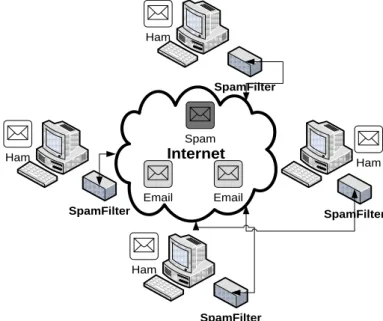
The ability to capitalize on distributed resources, including hardware, software, as well as human participation is what constitutes and drives the core of peer to peer (P2P) initiatives and architectures (see Figure 2-1). From a very high level perspective, there are two umbrella types of P2P architectures, namely centralized and decentralized. Decentralized P2P networks can be further classified into unstructured and structured P2P networks.
Figure 2-1: Peer-to-peer computing for spam filtering
P2P architectures form the backbone of numerous distributed, high-performance services and systems, significantly popularized in recent years by Internet-based application sharing communities and software. These include those based on the Gnutella [72] and FastTrack protocol (undocumented formally), such as Limewire [73]. The ability to exploit scalability easily, as well as offer a good degree of personalization, are inherent potentials of P2P-based systems. Furthermore, the ability to make efficient use of common interests is very inductive to collaboration. In this context, P2P computing application for spam filtering is applied in a number of ways. Peers can collaborate towards the identification and filtering of spam via the exchange of either computing power or, more simply, intelligence gathered on email and spam. Various techniques can be employed; however the algorithms and techniques employed in this context are normally focused on minimizing network bandwidth and identification of nearest peers. Exchange of information is normally focused on pre-computed signatures which relate to previously scrutinized and tagged content. The structuring element plays a critical role in P2P systems. Flat, hierarchical, and distributed hash tables (DHTs) are commonly considered. Specifically with respect to DHT structured P2P networks, popular implementations such as Pastry [74] and Chord [75] provide sound architectures that are scalable and are inherently fault-tolerant. [76] Provides a review on the application of P2P systems to spam filtering in this context.
Internet Email Email Spam Ham SpamFilter SpamFilter SpamFilter SpamFilter Ham Ham Ham
The CASSANDRA (Collaborative Anti-Spam System Allowing Node-Decentralized Research Algorithms) initiative, for example, presents a personalized approach for tagging and classifying spam [77]. The work employs a P2P architecture and exploits computing resources that participating nodes can offer to achieve high scalability and flexibility. The authors argue that, whilst common spam filtering established on traditional non-machine / machine-learning approaches and based on mail content are reasonably effective, they are still considerably prone to false positives. Collaborative spam filtering tends to be better suited to tackling issues related to spam drift, or rather, spam and spammers tendency metamorphoses in trying to circumnavigate filters based solely on content. The prototype architecture described, however, does not seem to consider possible issues related to how it can distinguish between real-world users and automated spam bots.
Building on a Chord P2P network, [76] present another approach to exchanging partial and hashed message data on spam between participating nodes. This allows the network to distinguish good participation from malevolent. However, one challenging issue is that spammers could easily influence the P2P network by changing their participating status from non-trusted to trusted participating entities. In the real world, this may cause the approach to gradually loose efficiency over time. Being a proxy based implementation allows for great flexibility in terms of the usability from the widest variety of email clients (assuming adequate levels of heterogeneity). However, it also introduces an additional element of complexity, as well as computational resource requirements at the client end. This challenge may be further amplified by virtue of the proxy itself being a simple Web server, increasing the local node’s attack surface from a botnet perspective. Updates to the proxy itself can also prove difficult given the potentially high distribution of nodes which will be making use of the localized proxy.
Other P2P based approaches to spam filtering include those presented by [78], [79], [80], and [81]. In [82], the authors discuss a diverse approach. The primary motivation of their work concerns the collaboration of email servers, rather than the collaboration between mail clients. Spam checking is primarily performed at two specific points in time: before being sent by the sending email service and at the receiving email service end. A system of rewards and restrictions is applied to participating servers. The overall standing of these servers with regards to trust directly effects the degree of influence on the resolution. A
critical factor for the effectiveness of this approach is the participation of a considerable number of email service providers (ESPs). Effectiveness is drastically decreased if participation is low. Additionally, the possibility for legitimate email to be slowed down by virtue of the respective ESP being classified as a temporary spam source could potentially irritate legitimate email users. The work does, however, indicate possible avenues for further exploration. On the other hand, the work as presented does not consider the utilization of resources available at the client’s end for additional collaboration and contribution towards the improvement of spam detection and filtering. It can therefore be argued that this reduces possible input sources, as well as overlooks the possibility of benefitting from additional processing power or intelligence for improving filtering quality. A rather distinctive viewpoint using Percolation Networks as a theoretical base is provided by Kong et al. [83]. This approach identifies spam using a typical classification scheme (such as Bayes). A digest function, which the client must be able to generate, is subsequently produced if the email is identified as spam. The client then publishes this newly identified intelligence to a number of participating neighbours. This is done using a random walk path through the percolation network based on the graph edges (distance). Mail clients can query the network to identify whether an email has already been tagged as spam. This scheme works by implanting the inquiry using the same approach employed for publishing its spam digest database updates, that is, by traversing the percolation graph using a random walk to a pre-specified distance. The query percolates and aggregates digest hits across nodes, returning the results of the query via a reverse path. If the hit count meets a specified score, the message on which the query digest was based is declared as spam. Data exchange during querying and publishing does not appear to be high, but a degradation of performance from an underlying network perspective still has the potential to inflict non-trivial performance penalties, reducing the overall effectiveness of this approach.
Overall, in the context of spam filtering, P2P approaches provide a number of advantages by exploiting the typical underlying mesh based network infrastructure. P2P networks are well suited for collaborative spam filtering. The computing capacities of P2P networks can easily grow with the increasing number of peer nodes. Ad-hoc distribution of messages also eliminates single point of failures and permits active distributed processing. Another opportunity which can be exploited is aggregation of participants with similar interests in
spam filtering. However, P2P networks suffer from a number of issues: unstructured P2P networks are technically challenged in achieving high scalability in locating peers. They are also prone to a number of security challenges. In index poisoning, for example, when a resource search is performed, the results returned may not reflect correct information because bogus information may have been inserted in the respective tracking structures. Also, structured P2P networks, while DHT approaches provide the necessary scalability, suffer from complex and challenging overheads associated with structure maintenance, as well as management [84].
2.3.2 Grid Computing
Originally conceptualized in 1997, grid computing has evolved into an effective computing paradigm for solving data and computationally intensive problems by utilizing various computing resources over the Internet [45]. Figure 2-2 portrays a general grid computing architecture for spam filtering. Grid computing promotes the utilization of collective computing resources that facilitate spam filtering on a large scale. Rather than investing in resources to keep up with continued spam increase, capitalizing on grid resources on a need basis has significant advantages. Hosted and cloud based anti-spam service implementations such as [85] and [86], in which the spam filtering element is contracted out to a third party, are also commonly based on grid computing principles. Similar to P2P computing, the ability to share resources, as well as intelligence in a collaborative fashion, provides further opportunities improving the quality of spam filtering.
Figure 2-2: Grid computing for spam filtering.
GRID Email Spam Ham Filte r SpamFilter
Email Email Email
Spam Ham Internet GRID Node Internet GRID Node GRID Node GRID Node Internet Email Email