June 2017 Page 3 of 200
Table of Contents
I. Introduction ... 5
II. Background... 5
A. Definition of Traumatic Events ... 5
B. Acute Stress Reaction and Diagnosis of Acute Stress Disorder ... 6
C. Diagnosis of Posttraumatic Stress Disorder ... 8
D. DSM-IV versus DSM-5: Clinical Practice Guideline Implications ... 11
E. Epidemiology and Impact ... 13
III. About this Clinical Practice Guideline ... 16
A. Methods ... 16
B. Summary of Patient Focus Group Methods and Findings ... 20
C. Conflicts of Interest ... 21
D. Scope of this Clinical Practice Guideline ... 21
E. Highlighted Features of this Clinical Practice Guideline ... 22
F. Patient-centered Care ... 22
G. Shared Decision Making ... 23
H. Background on Co-occurring Conditions with Posttraumatic Stress Disorder ... 23
I. Implementation ... 24
IV. Guideline Work Group ... 26
V. Algorithm ... 27
Module A: Acute Stress Reaction/Disorder ... 28
Module B: Assessment and Diagnosis of Posttraumatic Stress Disorder ... 30
Module C: Management of Posttraumatic Stress Disorder ... 32
VI. Recommendations ... 33
A. General Clinical Management ... 37
B. Diagnosis and Assessment of Posttraumatic Stress Disorder ... 39
C. Prevention of Posttraumatic Stress Disorder ... 41
D. Treatment of Posttraumatic Stress Disorder ... 44
E. Treatment of Posttraumatic Stress Disorder with Co-occurring Conditions ... 72
VII. Knowledge Gaps and Recommended Research ... 76
A. Shared Decision Making and Collaborative Care ... 76
June 2017 Page 4 of 200
C. Treatments for Posttraumatic Stress Disorder ... 76
D. Non-Pharmacologic Biological Treatments for Posttraumatic Stress Disorder ... 78
E. Technology-based Treatments for Posttraumatic Stress Disorder ... 78
F. Treatments for Posttraumatic Stress Disorder with Comorbidities and Co-occurring Conditions. 78 Appendix A: Evidence Review Methodology ... 79
A. Developing the Scope and Key Questions ... 79
B. Conducting the Systematic Review ... 83
C. Convening the Face-to-face Meeting ... 87
D. Grading Recommendations ... 88
E. Recommendation Categorization ... 91
F. Drafting and Submitting the Final Clinical Practice Guideline... 93
Appendix B: Patient Focus Group Methods and Findings ... 95
A. Methods ... 95
B. Patient Focus Group Findings ... 95
Appendix C: Pharmacotherapy Dosing Table ... 97
Appendix D: Evidence Table ... 98
Appendix E: 2010 Recommendation Categorization Table ... 104
Appendix F: Participant List ... 140
Appendix G: Literature Review Search Terms and Strategy ... 142
A. Topic-specific Search Terms ... 142
B. Search Strategies ... 156
Appendix H: Abbreviation List ... 183
June 2017 Page 5 of 200
I.
Introduction
The Department of Veterans Affairs (VA) and the Department of Defense (DoD) Evidence-Based Practice Work Group (EBPWG) was established and first chartered in 2004, with a mission to advise the “…Health Executive Council on the use of clinical and epidemiological evidence to improve the health of the population across the Veterans Health Administration and Military Health System,” by facilitating the development of clinical practice guidelines (CPGs) for the VA and DoD populations.[1] This CPG is intended to provide healthcare providers with a framework by which to evaluate, treat, and manage the individual needs and preferences of patients with posttraumatic stress disorder (PTSD) and acute stress disorder (ASD), thereby leading to improved clinical outcomes.
In 2010, the VA and DoD published a CPG for the Management of Post-Traumatic Stress and Acute Stress Reaction (2010 PTSD CPG), which was based on evidence reviewed through March 2009. Since the release of that guideline, a growing body of research has expanded the general knowledge and understanding of PTSD and other stress related disorders, such as ASD and other acute reactions to trauma (sometimes referred to as acute stress reactions [ASR]). Improved recognition of the complex nature of ASR, ASD, and PTSD has led to the adoption of new or refined strategies to manage and treat patients with these conditions.
Consequently, a recommendation to update the 2010 PTSD CPG was initiated in 2015. The updated CPG includes objective, evidence-based information on the management of PTSD and related conditions. It is intended to assist healthcare providers in all aspects of patient care, including, but not limited to, diagnosis, treatment, and follow-up. The system-wide goal of developing evidence-based guidelines is to improve the patient’s health and well-being by guiding health providers who are taking care of patients with PTSD along the management pathways that are supported by evidence. The expected outcome of successful implementation of this guideline is to:
Enhance assessment of the patient’s condition and determine the best treatment method in collaboration with the patient and, when possible and desired, the patient’s family and caregivers
Optimize the patient’s health outcomes and improve quality of life
Minimize preventable complications and morbidity
Emphasize the use of patient-centered care
II.
Background
A.
Definition of Traumatic Events
June 2017 Page 6 of 200 The DSM-5 definition of traumatic events is the same for both ASD and PTSD, and one can meet the trauma definition with any one of four criteria (A1-A4) (see Table 1 and Table 2). Criterion A1 is direct exposure to traumatic events such as actual or threatened death, serious injury (e.g., military combat, physical attack, torture, man-made/natural disasters, accidents, incarceration, and exposure to war-zone/urban/domestic violence) or sexual violence or assault. Criterion A2 is witnessing such events and includes people who directly observed such events, but were not harmed themselves. Criterion A3 is indirect exposure such as learning that a loved one was exposed to a traumatic event; if the loved one died during such an event, Criterion A3 would only be met if the death was violent or accidental. Criterion A4 applies to exposure to repeated or extreme details of trauma, such as seeing dead body parts or severely injured people as part of one’s professional duties (e.g., medical, law enforcement, mortuary affairs, and journalism personnel).
B.
Acute Stress Reaction and Diagnosis of Acute Stress Disorder
ASR is defined as a transient normal reaction to traumatic stress and is not a DSM-5 diagnosis, although symptoms may be temporarily debilitating. Onset of stress-related signs and symptoms may be
simultaneous or within minutes of the traumatic event or may follow the trauma after an interval of hours or several days. In most cases, symptoms will resolve rapidly with simple measures, such as reassurance, rest, and ensuring safety.
Combat and operational stress reaction (COSR) is the military analog of ASR and reflects a normal, transient, acute reaction to a high-stress operational or combat-related traumatic event in a military occupational setting. ASR/COSR can present with a broad group of physical, mental, behavioral, and emotional symptoms and signs (e.g., depression, fatigue, anxiety, panic, decreased
concentration/memory, hyperarousal, dissociation). Identification of a patient with ASR/COSR
symptoms is based on observation of behavior and function as well as clinical assessments since there is insufficient evidence to recommend a specific screening tool. With regard to COSR, a Service Member’s role and functional capabilities should also be considered as well as the complexity and importance of his or her job. Symptoms of COSR and ability to function in an operational mission should be
documented and collateral information pertaining to stressors or the medical history can be obtained from unit leaders, coworkers, or peers. Individuals who experience ASR or COSR should receive a comprehensive assessment of their symptoms or behavioral signs to include details about the time of onset, frequency, course, severity, level of distress, work performance, functional impairment, and other relevant information. Additionally, the individual should be assessed for medical causes of acute changes in behavior. Military policy indicates that Service Members with COSR who do not respond to initial supportive interventions may warrant referral or evacuation, though the general principle of care is to provide treatment as close to the Service Member’s unit/team as possible. If ASR/COSR continues beyond three days with persistent limitations of functioning, it is necessary to monitor Service Members for the possible development of ASD.
June 2017 Page 7 of 200 Individuals with ASD must have been exposed to a traumatic stressor (Criteria A1-A4). In addition, they must exhibit at least nine out of 14 possible symptoms that are nested within five diagnostic clusters (Table 1). Symptoms need to cause significant distress or functional impairment.
Table 1. DSM-5 Diagnostic Criteria for Acute Stress Disorder*[2]
Diagnostic Criteria for ASD
Criterion A. Exposure to actual or threatened death, serious injury, or sexual violence in one (or more) of the following ways:
1. Directly experiencing the traumatic event(s)
2. Witnessing, in person, the event(s) as it occurred to others
3. Learning that the event(s) occurred to a close family member or close friend
Note: In cases of actual or threatened death of a family member or friend, the event(s) must have been violent or accidental.
4. Experiencing repeated or extreme exposure to aversive details of the traumatic event(s) (e.g., first responders collecting human remains, police officers repeatedly exposed to details of child abuse)
Note: This does not apply to exposure through electronic media, television, movies, or pictures, unless this exposure is work related.
Criterion B. Presence of nine (or more) of the following symptoms from any of the five categories of intrusion, negative mood, dissociation, avoidance, and arousal, beginning or worsening after the traumatic event s) occurred:
Intrusion Symptoms
1. Recurrent, involuntary, and intrusive distressing memories of the traumatic event(s)
2. Recurrent distressing dreams in which the content and/or affect of the dream are related to the traumatic event(s)
3. Dissociative reactions (e.g., flashbacks) in which the individual feels or acts as if the traumatic event(s) were recurring (such reactions may occur on a continuum, with the most extreme expression being a complete loss of awareness of present surroundings)
4. Intense or prolonged psychological distress or marked physiological reactions in response to internal or external cues that symbolize or resemble an aspect of the traumatic event(s)
Negative Mood
5. Persistent inability to experience positive emotions (e.g., inability to experience happiness, satisfaction, loving feelings)
Dissociative Symptoms
6. An altered sense of reality of one’s surroundings or oneself (e.g., seeing oneself from another’s perspective, being in a daze, time slowing)
7. Inability to remember an important aspect of the event(s) (typically due to dissociative amnesia and not to other factors such as head injury, alcohol, or drugs)
Avoidance Symptoms
8. Efforts to avoid distressing memories, thoughts, or feelings about or closely associated with the traumatic event(s)
9. Efforts to avoid external reminders (e.g., people, places, conversations, activities, objects, situations) that arouse distressing memories, thoughts, or feelings about or closely associated with the traumatic event(s)
Arousal Symptoms
10. Sleep disturbance (e.g., difficulty falling or staying asleep, restless sleep)
11. Irritable behavior and angry outbursts (with little or no provocation), typically expressed as verbal or physical aggression toward people or objects
12. Hypervigilance
June 2017 Page 8 of 200 Diagnostic Criteria for ASD
Criterion C. Duration of the disturbance (symptoms in Criterion B) is three days to one month after trauma exposure.
Note: Symptoms typically begin immediately after the trauma, but persistence for at least three days and up to a month is needed to meet disorder criteria.
Criterion D. The disturbance causes clinically significant distress or impairment in social, occupational, or other important areas of functioning.
Criterion E. The disturbance is not attributable to the physiological effects of a substance (e.g., medication or alcohol) or another medical condition (e.g., mild traumatic brain injury) and is not better explained by brief psychotic disorder.
*Reprinted with permission by the American Psychiatric Association
C.
Diagnosis of Posttraumatic Stress Disorder
PTSD is a clinically-significant condition with symptoms that have persisted for more than one month after exposure to a traumatic event (Criteria A1-A4) and caused significant distress or impairment in social, occupational, or other important areas of functioning (see Table 2 for full criteria). Criterion A for PTSD is the same as criterion A for ASD; however, ASD can only be within the first month after the traumatic event. After one month, the diagnostic question is whether PTSD is present. Individuals with PTSD must exhibit a specific number of symptoms from each symptom cluster (Criteria B-E). PTSD symptoms must persist for at least one month after the traumatic event (Criterion F) and result in significant distress or functional impairment (Criterion G). PTSD can also have a delayed expression, when full diagnostic criteria are not met until at least six months after exposure to the traumatic event. PTSD can appear alone as the only diagnosis, or more commonly, with another co-occurring DSM-5 disorder, such as a substance use disorder (SUD), mood disorder, or anxiety disorder. PTSD is also strongly associated with functional difficulties, reduced quality of life, and adverse physical health outcomes.
Table 2. DSM-5 Diagnostic Criteria for Posttraumatic Stress Disorder*[2]
DSM-5 Diagnostic Criteria for PTSD
Criterion A. Exposure to actual or threatened death, serious injury, or sexual violence in one (or more) of the following ways:
1. Directly experiencing the traumatic event(s)
2. Witnessing, in person, the event(s) as it occurred to others
3. Learning that the traumatic event(s) occurred to a close family member or close friend
Note: In cases of actual or threatened death of a family member or friend, the event(s) must have been violent or accidental.
4. Experiencing repeated or extreme exposure to aversive details of the traumatic event(s) (e.g., first responders collecting human remains, police officers repeatedly exposed to details of child abuse)
June 2017 Page 9 of 200 DSM-5 Diagnostic Criteria for PTSD
Criterion B. Presence of one (or more) of the following intrusion symptoms associated with the traumatic event(s), beginning after the traumatic event(s) occurred.
1. Recurrent, involuntary, and intrusive distressing memories of the traumatic event(s)
2. Recurrent distressing dreams in which the content and/or affect of the dream are related to the traumatic event(s)
3. Dissociative reactions (e.g., flashbacks) in which the individual feels or acts as if the traumatic event(s) were recurring (such reactions may occur on a continuum with the most extreme expression being a complete loss of awareness of present surroundings)
4. Intense or prolonged psychological distress at exposure to internal or external cues that symbolize or resemble an aspect of the traumatic event(s)
5. Marked physiological reactions to internal or external cues that symbolize or resemble an aspect of the traumatic event(s)
Criterion C. Persistent avoidance of stimuli associated with the traumatic event(s), beginning after the traumatic event(s) occurred, as evidenced by one or both of the following:
1. Avoidance of or efforts to avoid distressing memories, thoughts, or feelings about or closely associated with the traumatic event(s)
2. Avoidance or efforts to avoid external reminders (people, places, conversations, activities, objects, situations) that arouse distressing memories, thoughts, or feelings about or closely associated with the traumatic event(s)
Criterion D. Negative alterations in cognitions and mood associated with the traumatic event(s), beginning or worsening after the traumatic event(s) occurred as evidenced by two or more of the following:
1. Inability to recall an important aspect of the traumatic event(s) (typically due to dissociative amnesia and not to other factors such as head injury, alcohol, or drugs)
2. Persistent and exaggerated negative beliefs or expectations about oneself, others, or the world (e.g., “I am bad.”, “No one can be trusted.”, “The world is completely dangerous.”, “My whole nervous system is permanently ruined.”)
3. Persistent distorted cognitions about the cause or consequences of the traumatic event(s) that lead the individual to blame himself/herself or others
4. Persistent negative emotional state (e.g., fear, horror, anger, guilt, shame) 5. Markedly diminished interest or participation in significant activities 6. Feeling of detachment or estrangement from others
7. Persistent inability to experience positive emotions (e.g., inability to experience happiness, satisfaction, loving feelings)
Criterion E. Marked alterations in arousal and reactivity associated with the traumatic event(s), beginning or worsening after the traumatic event(s) occurred, as evidenced by two (or more) of the following:
1. Irritable behavior and angry outbursts (with little or no provocation) typically expressed as verbal or physical aggression toward people or objects
2. Reckless or self-destructive behavior 3. Hypervigilance
4. Exaggerated startle response 5. Problems with concentration
6. Sleep disturbance (e.g., difficulty falling or staying asleep, restless sleep)
June 2017 Page 10 of 200 DSM-5 Diagnostic Criteria for PTSD
Criterion H. The disturbance is not attributable to the physiological effects of a substance (e.g., medication, alcohol) or another medical condition.
Specify whether:
With dissociative symptoms: The individuals symptoms must meet the criteria for PTSD and in addition, in response to the stressor, the individual experiences persistent or recurrent symptoms of either of the following:
1. Depersonalization: Persistent or recurrent experiences of feeling detached from, and as if one were an outside observer of, one’s mental processes or body (e.g., feeling as though one were in a dream, feeling a sense of unreality of self or body, time moving slowly)
2. Derealization: Persistent or recurrent experiences of unreality of surroundings (e.g., the world around the individual is experienced as unreal, dreamlike, distant, or distorted)
Note: To use this subtype, the dissociative symptoms must not be attributable to the physiological effects of a substance (e.g., blackouts, behavior during alcohol intoxication) or another medical condition (e.g., complex partial seizures).
Specify if:
With delayed expression: If the full diagnostic criteria are not met until at least six months after the event (although the onset and expression of some symptoms may be immediate).
*Reprinted with permission by the American Psychiatric Association
Specific Diagnostic Issues and Questions
As shown in Table 2, the Dissociative Subtype of PTSD is diagnosed when an individual meets all diagnostic criteria for PTSD and also exhibits depersonalization or derealization.
Also shown in Table 2, PTSD with delayed expression is diagnosed if full diagnostic criteria are not met until at least six months after exposure to the traumatic event.
Subthreshold PTSD (also sometimes designated as partial PTSD or subsyndromal PTSD) is a diagnosis used by clinicians to characterize individuals with clinically significant posttraumatic reactions who fail to meet full PTSD criteria (often for lack of one or two symptoms). The DSM-5 diagnosis for such individuals is Other Specified Trauma and Stress-Related Disorder (309.89). Unfortunately, we currently lack an approved case definition for subthreshold PTSD. Individuals designated as such in one research study may have met different criteria in another study. Furthermore, participants in the clinical trials cited in this CPG were diagnosed with full rather than subthreshold PTSD. As a result, we cannot be certain how well our recommendations for treatment of full PTSD apply to those with subthreshold PTSD. (See the DSM-IV versus DSM-5: Clinical Practice Guideline Implications section below regarding a reasonable clinical approach to individuals with subthreshold PTSD.)
June 2017 Page 11 of 200
D.
DSM-IV versus DSM-5: Clinical Practice Guideline Implications
The diagnostic criteria for PTSD underwent substantial changes between the DSM-IV (published in 1994) and the DSM-5, which was published in 2013. As with other mental disorders, we lack biological markers for PTSD, making a provider dependent on the self-reported presence or absence of specific symptoms in making the diagnosis. Changes in the criteria for PTSD may carry significant implications for the diagnosis and treatment of the disorder.
Changes to the PTSD diagnostic criteria included modifying the definition of a traumatic event to note that the sudden death of a loved one had to involve traumatic circumstances to qualify as a trauma, and to eliminate the requirement that the traumatic event be accompanied by particular emotional reactions, specifically fear, helplessness, or horror. Changes to the symptom criteria for PTSD included adding three new symptoms to the diagnosis. These symptoms, a persistent and distorted sense of blame for the trauma or its consequence, persistent negative emotions, and reckless or self-destructive behavior,
increased the total number of symptoms from 17 to 20. In addition, the descriptions of eight of the original 17 symptoms were revised or rewritten, with changes ranging from minor to substantial. The symptom criteria for PTSD were also rearranged into four symptom clusters instead of the three present in earlier versions of the DSM. Effectively, symptoms in the DSM-IV cluster of “Avoidance and numbing” were divided into an “Avoidance” cluster and a “Negative alterations in cognition and mood” cluster that includes five DSM-IV symptoms and two newly added symptoms. Although the DSM-5 retained the diagnostic requirement that symptoms from all clusters be present, the changes in the number of symptoms, definitions of symptoms, and specific symptoms included in each cluster effectively changed the criteria used to make a diagnosis.
At the time this CPG was prepared, the full consequences of the changes to the diagnostic criteria were not clear. The changes generated considerable controversy and rigorous debate within the clinical and research community. A full exploration of these controversies is beyond the scope of this guideline, but two issues raised are of particular importance in the application of this guideline. First, there are questions about the impact of the diagnostic changes on the actual diagnosis of the disorder, and the potential that the new definition excludes people who would have met the previous diagnosis. Second, there are questions about the appropriate application of treatments developed and tested using DSM-IV criteria to patients diagnosed with the DSM-5 criteria.[4,5]
June 2017 Page 12 of 200 For clinicians, the possibility that changes in the DSM criteria for PTSD could alter the diagnostic
determination, change a treatment plan, or alter a disability determination raises questions. Indeed, the PTSD CPG Work Group was faced with this challenge as it developed this guideline. In an effort to put forward a useful guideline based on existing research, the Work Group adopted an approach that balanced logic, empirical data, and practicality.
At the time that this guideline was prepared, both the VA and DoD had adopted the DSM-5 criteria, so clinicians are expected to base their diagnosis on these criteria. In contrast, however, all of the clinical trials reviewed in the preparation of this guideline utilized the DSM-IV (or earlier) criteria, raising potential questions as to the applicability of the present guideline. In situations where the diagnostic determination (either presence or absence of PTSD) is consistent under the DSM-IV and DSM-5 criteria, there are no particular conflicts. When PTSD is present, one would apply this guideline and when PTSD is clearly absent, one would not. Questions arise, however, when PTSD would be diagnosed under one set of criteria but not the other, or when significant PTSD symptoms are present but the diagnostic criteria are not met
(subthreshold PTSD).
Concerning situations in which diagnoses using the different criteria are discordant or where the DSM-IV-based diagnosis is unknown, the Work Group believes the present guideline reflects the best, empirically-based treatment recommendations. This can be illustrated by examining three clinical scenarios: two involving discordant diagnoses and one involving subthreshold PTSD.
Scenario 1: In the case of a patient who has been diagnosed with PTSD based on DSM-IV criteria, retains
symptoms of PTSD, but who does not meet DSM-5 criteria, the present guideline may be used with confidence to make treatment decisions because they were developed based on studies that used the same DSM-IV criteria.
Scenario 2: In the case of a patient who has not been previously diagnosed with PTSD based on DSM-IV
criteria (or the DSM-IV diagnosis is unknown) but does meet DSM-5 criteria, the clinician must make treatment decisions although empirical outcome data using DSM-5 criteria are lacking. In this case, the present guideline, based on research using DSM-IV criteria, is assumed to provide the best available projection of effective treatments for DSM-5 PTSD.
Scenario 3: A patient who does not meet DSM-5 criteria for PTSD but does have a number of PTSD
symptoms accompanied by clinically-significant distress or impairment is often referred to as
June 2017 Page 13 of 200
E.
Epidemiology and Impact
Estimates of the prevalence of PTSD depend on both sample characteristics and study methods. Sample characteristics include the population of study (e.g., general population, Veterans, or Service Members; U.S. versus other countries; treatment-seeking versus not treatment-seeking). Study methods include the sampling strategy and the method of PTSD assessment and diagnosis. In addition, various risk and
protective factors modify prevalence estimates such as military factors (e.g., service era, branch of service, time since deployment, combat exposure), demographic factors (e.g., age, gender, race/ethnicity), and type and amount of trauma exposure.
a.
General Population
The Wave 2 National Epidemiologic Survey on Alcohol and Related Conditions (NESARC) study found a lifetime PTSD prevalence of 6.4% overall in a sample of over 34,000 U.S. adults.[6] The sample was surveyed in 2004-2005 as a representative sample that reflected the population based on characteristics including region, age, gender, and race/ethnicity. Lifetime PTSD prevalence was higher in women (8.6%) than men (4.1%). The prevalence of lifetime subthreshold partial PTSD was 6.6%. The estimates in the NESARC sample are quite similar to the estimates reported by Kessler et al. in the National Comorbidity Survey-Replication (NCS-R).[7] Like the NESARC, the NCS-R is based on a nationally -representative sample, although the NCS-R data were collected approximately five years earlier. The overall lifetime prevalence of PTSD in the NCS-R was 6.8%, with women higher than men in lifetime prevalence (9.7% compared to 5.2%) and in current prevalence (3.6% compared to 1.8%). Note that although the prevalence estimates in Wave 2 of NESARC and in the NCS-R are based on DSM-IV criteria for PTSD, more recent estimates from Wave 3 of NESARC based on DSM-5 criteria suggest comparable lifetime (6.1%) and current (4.7%) PTSD
prevalence estimates.[8]
b.
Active Duty U.S. Service Members
In recent years, a number of reviews have examined PTSD prevalence estimates among U.S. Service Members deployed to Iraq and/or Afghanistan.[9-12] Many of the studies in the reviews, however, are based on data collected relatively early during the wars and may not reflect the dynamic changes in the population, such as the cumulative effects of repeated deployments. Richardson et al. reported estimates for current PTSD in U.S. Operation Enduring Freedom (OEF) and Operation Iraqi Freedom (OIF) Veterans ranging from 4% to 17%.[12] Kok et al. reported a weighted post-deployment PTSD prevalence of 13.2% in OEF/OIF infantry units, and 6% in the overall population post-deployment.[10] A study by the RAND Corporation in 2008 reported that 14% of a representative sample of 1,965 OEF/OIF Veterans interviewed by telephone met current criteria for PTSD.[13] A review by Ramchand et al. noted an increased
prevalence of PTSD in those serving in the Army and Marine Corps as well as among enlisted personnel relative to officers.[14] Combat exposure, however, is the strongest predictor of mental health problems among those deployed to Iraq and Afghanistan.[14] One study found higher rates of PTSD among National Guard members, [15] though in general, similar prevalences have been found by service, branch, or rank adjusted for combat exposure.[14]
June 2017 Page 14 of 200 collected, and therefore are not strictly estimates for active duty personnel. However, the Army Study to Assess Risk and Resilience in Service Members (ARMYSTARRS), showed a prevalence of 8.6%, consistent with the Millennium cohort data.[18]
c.
Users of Care in the Department of Defense Healthcare System
DoD estimates of incidence and prevalence are derived from administrative medical data of active duty personnel who receive PTSD-related care within the DoD direct care system. During fiscal year 2015, 2.2% of the active duty population was estimated to meet criteria for PTSD. Estimated prevalence was higher among female Service Members (3.2%) than male Service Members (2.0%) and among those who
had deployed (3.6%) as compared to those who had not (0.8%).[19]
d.
U.S. Veterans
A precise estimate of the prevalence of PTSD in the current population of U.S. Veterans overall has yet to be established. Among non-treatment-seeking Veteran samples, estimates are only slightly higher than in the general population (6.4% to 6.8%).[6,7] In a recent survey of a nationally representative U.S. Veteran sample, 8% screened positive for lifetime PTSD on the PTSD Checklist (PCL).[20] Current (past year) PTSD prevalence was 5%. Lifetime prevalence was higher among female than male Veterans and among younger Veterans than older Veterans. Veterans of all ages reported exposure to many potentially
traumatic events, including combat, and the conditional risk for developing PTSD was high for non-combat-related events such as sexual or physical assault.
For various reasons, including barriers to endorsing mental health issues in the military (e.g., stigma, fear, job loss), prevalence estimates among active duty U.S. Service Members may not be representative of PTSD prevalence estimates among U.S. Veterans.
e.
Veteran Service Era
Magruder and Yeager reviewed studies of PTSD prevalence related to deployment status by war era.[21] They reported that prevalence of PTSD among OEF/OIF and Operation New Dawn (OND) deployed populations ranged from 5% to 20% and among non-deployed, 3% to 9%. The estimated prevalence of PTSD among deployed populations to the Gulf War ranged from 2% to 24% and among the non-deployed groups from 0.7% to 6%. Among Vietnam War studies, the estimated prevalence of PTSD among deployed populations ranged from 9% to 19%. Among the non-deployed Vietnam era comparison groups, estimates were 1% to 13%. Despite the heterogeneous results for PTSD prevalence, they noted a 1.5- to 3.5-fold increase in PTSD risk with deployment, regardless of war era. The odds of PTSD for deployed versus non-deployed Veterans were lowest among OEF/OIF/OND and highest for Vietnam Veterans.
June 2017 Page 15 of 200 The Health of Vietnam-Era Women’s Study examined the prevalence of PTSD in Vietnam-era women Veterans.[24] The prevalence of current PTSD according to DSM-5 was 15.9%, 8.1% and 9.1% for the Vietnam, near-Vietnam, and U.S. cohorts who served stateside, respectively. The prevalence of lifetime PTSD was 20.1%, 11.5%, and 14.1%, respectively. It is not clear why the estimates of current and lifetime PTSD are higher in this study than in the NVVLS, but methodologic differences between studies (e.g., use of clinician interview in the NVVLS and lay interview in the all-women’s study) may account for the
difference. One of the most telling findings was that sexual discrimination or harassment, which is not thought of as war zone exposure, was higher among deployed women and significantly associated with the development of PTSD.
New research conducted by Magruder et al. has examined the long-term trajectories of PTSD in Vietnam-era VetVietnam-erans and found that while the majority of VetVietnam-erans remain unaffected by PTSD throughout their lives (79% of those with theater service, 91% with non-theater service), a critical minority (10% of theater Veterans, 4.5% of non-theater Veterans) in 2012 had current PTSD that was either late onset (6.5% theater, 3.3% non-theater) or chronic (4% theater, 1% non-theater).[25] The distribution of longitudinal patterns was significantly different by theater service and confirms that PTSD remains a critical issue for many Vietnam-era Veterans.
The prevalence of PTSD among surviving Veterans of World War II or the Korean Conflict is unknown, but is likely to be lower compared with the prevalence in younger Veterans. The review cited above of prevalence across war eras did not include cohorts prior to the Vietnam War.[21] The nationally representative sample cited above [20] also did not report prevalence by war era, but did report that lifetime and current prevalence were higher in the youngest Veterans (23.4% and 9.1%, respectively, in those age 21-29) compared with the oldest Veterans (age 60+, 3.5% and 2.5%, respectively).[20]
Regardless of the specific estimate, these data indicate that some Veterans continue to experience PTSD into old age.
f.
Users of Care in the Veterans Health Administration
The VA’s Northeast Program Evaluation Center produces an annual data sheet that provides an overview of the PTSD patient population receiving healthcare in the VA. Veterans are defined as meeting a diagnosis of PTSD if they had received at least two visits or one inpatient/residential stay with a diagnosis of PTSD in the prior year. Of the 5,841,668 total Veterans served, 10.6% (N=619,493) who used VA healthcare in fiscal year 2016 were diagnosed with PTSD: 10.2% of men and 15.5% of women.[26] Prevalence data in 2015 was much higher among those Veterans who served in Iraq and/or Afghanistan: 26.7% overall, and 27.3% and 22.5% in men and women, respectively.[27]
g.
Impact
June 2017 Page 16 of 200 functioning and overall quality of life.[6,28,29] In addition, PTSD is associated with poorer perceived physical health, increased morbidity, and greater healthcare utilization for physical problems.[30] Findings on mortality are mixed, but generally show that PTSD is associated with increased overall mortality and mortality due to accidental causes.
III.
About this Clinical Practice Guideline
This guideline represents an important step toward improving the treatment and management of patients with PTSD in the VA and DoD. As with other CPGs, however, challenges remain, including evidence gaps, the need to develop effective strategies for guideline implementation and to evaluate the effect of guideline adherence on clinical outcomes. This guideline is intended for VA and DoD healthcare practitioners including primary care physicians, nurse practitioners, physician assistants, psychiatrists, psychologists, social workers, nurses, pharmacists, chaplains, addiction counselors, and others involved in the care of Service Members or Veterans with PTSD.
As elaborated in the qualifying statement on page one, this CPG is not intended to serve as a standard of care. Standards of care are determined on the basis of all clinical data available for an individual patient and are subject to change as scientific knowledge and technology advance and patterns evolve. This CPG is based on information available by March 2016 and is intended to provide a general guide to best practices. The guideline can assist care providers, but the use of a CPG must always be considered as a
recommendation, within the context of a provider’s clinical judgment and patient values and preferences, for the care of an individual patient.
A.
Methods
The current document is an update to the 2010 PTSD CPG. The methodology used in developing the 2017 CPG follows the Guideline for Guidelines,[1] an internal document of the VA and DoD EBPWG. The Guideline for Guidelines can be downloaded from http://www.healthquality.va.gov/policy/index.asp. This document provides information regarding the process of developing guidelines, including the identification and assembly of the Guideline Champions (Champions) and other subject matter experts from within the VA and DoD, known as the Work Group, and ultimately, the development and submission of a new or updated PTSD CPG.
The Champions and Work Group for this CPG were charged with developing evidence-based clinical practice recommendations and writing and publishing a guideline document to be used by providers within the VA/DoD healthcare systems. Specifically, the Champions and Work Group members for this guideline were responsible for identifying the key questions (KQs) of the most clinical relevance,
importance, and interest for the management of patients with PTSD. The Champions and the Work Group also provided direction on inclusion and exclusion criteria for the evidence review and assessed the level and quality of the evidence. The amount of new scientific evidence that had accumulated since the previous version of the CPG was also taken into consideration in the identification of the KQs. In addition, the Champions assisted in:
Identifying appropriate disciplines of individuals to be included as part of the Work Group
June 2017 Page 17 of 200 Participating throughout the guideline development and review processes
The VA Office of Quality, Safety and Value, in collaboration with the Office of Evidence Based Practice, U.S. Army Medical Command, the proponent for CPGs for the DoD, identified five clinical leaders, Nancy Bernardy, PhD, Matthew Friedman, MD, PhD, and Paula Schnurr, PhD, from the VA as well as Charles Hoge, MD and David Riggs, PhD from the DoD, as Champions for the 2017 PTSD CPG.
The Lewin Team, including The Lewin Group, Duty First Consulting, ECRI Institute, and Sigma Health Consulting, LLC, was contracted by the VA and DoD to support the development of this CPG and conduct the evidence review. The first conference call was held in November 2015, with participation from the contracting officer’s representative (COR), leaders from the VA Office of Quality, Safety and Value and the DoD Office of Evidence Based Practice, and the Champions. During this call, participants discussed the scope of the guideline initiative, the roles and responsibilities of the Champions, the project timeline, and the approach for developing and prioritizing specific research questions on which to base a systematic review about the management of PTSD. The group also identified a list of clinical specialties and areas of expertise that are important and relevant to the management of PTSD, from which Work Group members were recruited. The specialties and clinical areas of interest included: ambulatory care, behavioral health, clinical pharmacy, clinical neuropsychology, family medicine, nursing, pharmacology, pharmacy,
psychiatry, and psychology.
The guideline development process for the 2017 CPG update consisted of the following steps:
1. Formulating and prioritizing evidence KQs
2. Convening a patient focus group
3. Conducting the systematic review
4. Convening a face-to-face meeting with the CPG Champions and Work Group members
5. Drafting and submitting a final CPG on the management of PTSD to the VA/DoD EBPWG
Appendix A provides a detailed description of each of these tasks.
a.
Grading Recommendations
The Champions and Work Group used the Grading of Recommendations Assessment, Development and Evaluation (GRADE) system to assess the quality of the evidence base and assign a grade for the strength for each recommendation. The GRADE system uses the following four domains to assess the strength of each recommendation: [31]
Balance of desirable and undesirable outcomes
Confidence in the quality of the evidence
Patient or provider values and preferences
Other implications, as appropriate, e.g.,:
Resource use
Equity
June 2017 Page 18 of 200 Feasibility
Subgroup considerations
Using this system, the Champions and Work Group determined the relative strength of each
recommendation (Strong or Weak). A strong recommendation indicates that the Work Group is highly confident about the balance between desirable and undesirable outcomes. If the Work Group is less confident of the balance between desirable and undesirable outcomes, they give a weak recommendation.
They also determined the direction of each recommendation (For or Against). A recommendation for a therapy or preventive measure indicates that the desirable consequences outweigh the undesirable consequences. A recommendation against a therapy or preventive measure indicates that the undesirable consequences outweigh the desirable consequences.
Occasionally, instances may occur when the Work Group feels there is insufficient evidence to make a recommendation for or against a particular therapy or preventive measure. This can occur when there is an absence of studies on a particular topic that met evidence review inclusion criteria, studies included in the evidence review report conflicting results, or studies included in the evidence review report
inconclusive results regarding the desirable and undesirable outcomes.
Using these elements, the grade of each recommendation is presented as part of a continuum:
Strong for (or “We recommend offering this option …”)
Weak for (or “We suggest offering this option …”)
No recommendation for or against (or “There is insufficient evidence…”)
Weak against (or “We suggest not offering this option …”)
Strong against (or “We recommend against offering this option …”)
The grade of each recommendation made in the 2017 CPG can be found in the section on
Recommendations. Additional information regarding the use of the GRADE system can be found in Appendix A.
b.
Reconciling 2010 Clinical Practice Guideline Recommendations
Evidence-based CPGs should be current, which typically requires revisions of previous guidelines based on new evidence, or as scheduled, subject to time-based expirations.[32] For example, the U.S. Preventive Services Task Force (USPSTF) has a process for refining or otherwise updating its recommendations
pertaining to preventive services.[33] Further, the inclusion criteria for the National Guideline Clearinghouse specify that a guideline must have been developed, reviewed, or revised within the past five years.
June 2017 Page 19 of 200 A set of recommendation categories was adapted from those used by the National Institute for Health and Care Excellence (NICE).[34,35] These categories, along with their corresponding definitions, were used to account for the various ways in which older recommendations could have been updated. In brief, the categories took into account whether or not the evidence that related to a recommendation was
systematically reviewed, the degree to which the recommendation was modified, and the degree to which a recommendation is relevant in the current patient care environment and inside the scope of the CPG. Additional information regarding these categories and their definitions can be found in Appendix A. The categories for the recommendations included in the 2017 version of the guideline can be found in the section on Recommendations. The categories for the recommendations from the 2010 PTSD CPG are noted in Appendix E: 2010 Recommendation Categorization Table.
The CPG Work Group recognized the need to accommodate the transition in evidence rating systems from the 2010 PTSD CPG to the current CPG. In order to report the strength of all recommendations using a consistent format (i.e., the GRADE system) the CPG Work Group converted the USPSTF strengths of the recommendation accompanying the carryover recommendations from the 2010 guideline to the GRADE system. As such, the CPG Work Group considered the strength of the evidence cited for each
recommendation in the 2010 PTSD CPG as well as harms and benefits, values and preferences, and other implications, where possible. The CPG Work Group referred to the available evidence as summarized in the body of the 2010 PTSD CPG and did not re-assess the evidence systematically. In some instances, peer-reviewed literature published since the 2010 PTSD CPG was considered along with the evidence base used for that CPG.
Where such newer literature was considered when converting the strength of the recommendation from the USPSTF to the GRADE system, it is referenced in the discussion that follows the corresponding recommendation, as well as in Appendix D: Evidence Table.
The CPG Work Group recognizes that, while there are practical reasons for incorporating findings from a previous systematic review, previous recommendations,[36] or recent peer-reviewed publications into an updated CPG, doing so does not involve an original, comprehensive systematic review and, therefore, may introduce bias.
c.
Peer Review Process
The CPG was developed through an iterative process in which the Work Group produced multiple drafts of the CPG. The process for developing the initial draft is described in more detail in Drafting and Submitting the Final Clinical Practice Guideline.
Once a near-final draft of the guideline was agreed upon by the Champions and Work Group members, the draft was sent out for peer review and comment. The draft was posted on a wiki website for a period of 14 business days. The peer reviewers comprised individuals working within the VA and DoD health systems as well as experts from relevant outside organizations designated by the Work Group members. Organizations designated by the Work Group to participate in the peer review and that provided feedback include the following:
Emory University School of Medicine
June 2017 Page 20 of 200 New York University Langone Medical Center
Medical University of South Carolina
University of Adelaide
The VA and DoD Leadership reached out to both the internal and external peer reviewers to solicit their feedback on the CPG. Reviewers were provided a hyperlink to the wiki website where the draft CPG was posted. All reviewer feedback was posted in tabular form on the wiki site, along with the name of the reviewer, for transparency. All feedback from the peer reviewers was discussed and considered by the Work Group. Modifications made throughout the CPG development process were made in accordance with the evidence.
B.
Summary of Patient Focus Group Methods and Findings
When forming guideline recommendations, consideration should be given to the values of those most affected by the recommendations: patients. Patients bring perspectives, values, and preferences into their healthcare experience that can vary from those of clinicians. These differences can affect decision making in various situations, and should thus be highlighted and made explicit due to their potential to influence a recommendation’s implementation.[37,38] Focus groups can be used as an efficient method to explore ideas and perspectives of a group of individuals with an a priori set of assumptions or hypotheses and collect qualitative data on a thoughtfully predetermined set of questions.
Therefore, as part of the effort to update this CPG, VA and DoD Leadership, along with the PTSD CPG Work Group, held a patient focus group prior to finalizing the KQs for the evidence review. The group met on January 25, 2016, at Brooke Army Medical Center, San Antonio Military Medical Center, Fort Sam Houston, Texas. The aim of the focus group and interview was to further the understanding of the perspectives of patients diagnosed with PTSD within the VA and/or DoD healthcare systems. The focus group explored a set of topics related to the management of PTSD, including knowledge of PTSD, treatment options, delivery of care, and the impact and challenges of living with PTSD.
It is important to note the focus group was a convenience sample and the Work Group recognizes the limitations inherent in the small sample size. Less than 10 people were included in the focus group consistent with the requirements of the federal Paperwork Reduction Act, 1980. The Work Group
acknowledges that the sample of patients included in this focus group is likely not representative of all VA and DoD patients diagnosed with PTSD. Further, time limitations for the focus group prevented exhaustive exploration of all topics related to PTSD care in the VA and DoD and the patients’ broader experiences with their care. Thus, the Work Group made decisions regarding the priority of topics to discuss at the focus group. These limitations, as well as others, were considered during the guideline development as the information collected from the discussion was being used. Recruitment for participation in the focus group was managed by the Champions and VA and DoD Leadership, with assistance from coordinators at the facility at which the focus group took place.
June 2017 Page 21 of 200 feedback throughout the PTSD CPG development process. Additional details regarding the patient focus group methods and findings can be found in Appendix B: Patient Focus Group Methods and Findings.
PTSD CPG Focus Group Concepts
A. Using shared decision making, consider treatment options and develop a treatment plan based on patient-specific goals, values, and preferences.
B. Educate patients about treatment options, including benefits and risks, side effects, and expectations. C. Involve family members in accordance with patient preferences and maintain open, trusting, and respectful
relationships with patients and their families.
D. Take active steps to improve the perception of and stigma surrounding PTSD.
E. Work with appropriate providers to ensure continuity and accessibility of high-quality care within and between VA and DoD healthcare systems.
C.
Conflicts of Interest
At the start of this guideline development process and at other key points throughout, the project team was required to submit disclosure statements to reveal any areas of potential conflict of interest (COI) in the past 24 months. Verbal affirmations of no COI were used as necessary during meetings throughout the guideline development process. The project team was also subject to random web-based surveillance (e.g., ProPublica).
If a project team member reported a COI (actual or potential), then it was reported to the Office of
Evidence Based Practice. It was also discussed with the PTSD CPG Work Group in tandem with their review of the evidence and development of recommendations. The Office of Evidence Based Practice and the PTSD CPG Work Group determined whether or not action, such as restricting participation and/or voting on sections related to the conflict or removal from the Work Group, was necessary. If it was deemed necessary, action to mitigate the COI was taken by the Champions and Office of Evidence Based Practice, based on the level and extent of involvement.
D.
Scope of this Clinical Practice Guideline
Regardless of setting, any patient in the healthcare system should ideally have access to the interventions that are recommended in this guideline after taking into consideration the patient’s specific circumstances.
Guideline recommendations are intended to be patient-centered. Thus, treatment and care should take into account a patient’s needs and preferences. Good communication between healthcare professionals and the patient is essential and should be supported by evidence-based information tailored to the patient’s needs. Use of an empathetic and non-judgmental approach facilitates discussions sensitive to gender, culture, ethnic, and other differences. The information that patients are given about treatment and care should be culturally appropriate and available to people with limited literacy skills. It should also be accessible to people with additional needs such as physical, sensory, or learning disabilities. Family involvement should be considered, if appropriate.
non-June 2017 Page 22 of 200 deployed active duty Service Members, Guard, and Reserve. This CPG does not provide recommendations for the management of PTSD in children or adolescents.
The literature review encompassed interventional studies (primarily RCTs) published between March 2009 and March 2016, and targeted 12 KQs focusing on the means by which the delivery of healthcare could be optimized for patients with PTSD. The selected KQs were prioritized from many possible KQs. Due to resource constraints, a review of the evidence in all important aspects of care for patients with PTSD was not feasible for the update to this CPG. The methodology used in this systematic evidence review differed from the methodology used in some other published systematic reviews. The methodology for this systematic evidence review relied primarily on existing systematic reviews, supplemented by original articles not represented in those reviews and/or published after the existing review. The process for this guideline produced comprehensive summaries of the conclusions reached by existing systematic reviews or meta-analyses that covered the topics of the KQs. Work Group members pulled the original articles cited within the existing systematic reviews when more information was needed about the results of a particular trial. Work Group members sometimes identified additional relevant articles not identified in the review process or published after March 2016 to supplement the discussion; however, these instances are noted in the text and were not considered when determining the strength and direction of the
recommendations. Although the conclusions reached were mostly consistent with the previous guideline, and with other PTSD CPGs, the Work Group acknowledges the limitations of this methodology.
E.
Highlighted Features of this Clinical Practice Guideline
The 2017 edition of the VA/DoD Clinical Practice Guideline for the Management of Posttraumatic Stress Disorder and Acute Stress Disorder (2017 PTSD CPG) is the second update to the original CPG. It provides practice recommendations for the care of populations with PTSD, ASD, and other reactions to trauma (ASR/COSR). A particular strength of this CPG is the multidisciplinary stakeholder involvement from its inception, ensuring representation from the broad spectrum of clinicians engaged in the treatment and management of patients with PTSD and related disorders.
The framework for recommendations in this CPG considered factors beyond the strength of the evidence, including balancing desired outcomes with potential harms of treatment, equity of resource availability, and the potential for variation in patient values and preferences. Applicability of the evidence to VA/DoD populations was also taken into consideration. A structured algorithm accompanies the guideline to provide an overview of the recommendations in the context of the flow of patient care and clinician decision making and to assist with training providers. The algorithm may be used to help facilitate translation of guideline recommendations into effective practice.
F.
Patient-centered Care
June 2017 Page 23 of 200 As part of the patient-centered care approach, clinicians should review the outcomes of previous self-change efforts, past treatment experiences, and outcomes (including reasons for treatment dropout) with the patient. They should explain treatment options to patients including the benefits of accepting a referral to a mental health specialist. The clinician should discuss any concerns the patient has and explore any identified treatment barriers. Lastly, the clinician should involve the patient in prioritizing problems to be addressed and in setting specific goals regardless of the selected setting or level of care.
G.
Shared Decision Making
Throughout this VA/DoD CPG, the authors encourage clinicians to focus on shared decision making (SDM). The SDM model was introduced in Crossing the Quality Chasm, an Institute of Medicine (now called the National Academy of Medicine) report, in 2001.[41] It is readily apparent that patients with PTSD, together with their clinicians, make decisions regarding which care they choose to engage in. However, patients require sufficient information and time to be able to make informed decisions. Clinicians must be adept at presenting information to their patients regarding individual treatments, expected outcomes, and levels and/or locations of care.
H.
Background on Co-occurring Conditions with Posttraumatic Stress
Disorder
The vast majority of patients with PTSD will have one or more co-occurring mental health disorders. Comorbid medical and psychiatric conditions are important to recognize because they can modify clinical determinations of prognosis, patient or provider treatment priorities, selection of interventions, and the setting where PTSD care will be provided. Suicidality in particular should be assessed early on and carefully monitored (see Recommendation 4). However, it should be noted that many of the recommended
treatments (in particular those in Recommendation 11 and Recommendation 17) in this guideline are effective for patients with considerable complexity and comorbidity.
Because of the many potential etiologies of co-occurring conditions, it is generally best to develop a collaborative care treatment strategy to address these health concerns simultaneously with PTSD symptoms (See Recommendation 2 regarding collaborative care). Some comorbid medical or psychiatric conditions may require early specialist mental health consultation in order to assist in determining treatment priorities. To improve management of PTSD symptoms when they are complicated by the presence of a medical or psychiatric comorbidity, providers may consider the following:
June 2017 Page 24 of 200 2. Because of the high prevalence of psychiatric comorbidities in the PTSD population, screening for
depression and other psychiatric disorders is warranted (see also the VA/DoD CPGs for the Management of Major Depressive Disorder [MDD]1 and the Management of Bipolar Disorder2).
3. Providers should assess and carefully monitor suicide risk (see the VA/DoD CPG for Assessment and Management of Patients at Risk for Suicide3)
4. Patterns of current and past use of substances by persons with trauma histories or PTSD should be routinely assessed to identify substance misuse or dependency (alcohol, nicotine, prescribed drugs, and illicit drugs) (see also Recommendation 38 on the management of PTSD in the presence of co-occurring SUD and the VA/DoD CPG for SUD4).
5. Pain (acute and chronic) and sleep disturbances should be assessed in all patients with PTSD. See Recommendation 39 regarding management of PTSD in the presence of co-occurring sleep disorders.
6. Generalized physical and cognitive health symptoms, also attributed to mild traumatic brain injury (mTBI) and many other causes, should be assessed and managed in patients with PTSD and co-occurring diagnoses (see VA/DoD CPG for the Management of Concussion/mTBI5 and VA/DoD CPG for the Management of Chronic Multisymptom Illness6 [CMI]).
7. Associated high-risk behaviors (e.g., smoking, alcohol/drug use, unsafe weapon storage, dangerous driving, unprotected sex, needle sharing, human immunodeficiency virus [HIV], hepatitis risks) should be assessed in patients with PTSD and addressed in the treatment plan.
8. Providers should consider the existence of comorbid conditions when deciding whether to treat patients in the primary care or general mental health setting, or refer them for specialty mental healthcare.
9. Patients with complicated comorbidity may be referred to mental health or PTSD specialty care for evaluation and diagnosis.
I.
Implementation
This CPG and algorithm are designed to be adapted by individual healthcare providers with consideration of local needs and resources. The algorithms serve as a tool to prompt providers to consider key decision points in the course of an episode of care.
1 See the VA/DoD Clinical Practice Guideline for Management of Major Depressive Disorder. Available at: http://www.healthquality.va.gov/guidelines/mh/mdd/index.asp
2 See the VA/DoD Clinical Practice Guideline for Management of Bipolar Disorder in Adults. Available at: http://www.healthquality.va.gov/guidelines/mh/bd/index.asp
3 See the VA/DoD Clinical Practice Guideline for Assessment and Management of Patients at Risk for Suicide. Available at: http://www.healthquality.va.gov/guidelines/mh/srb/index.asp
4 See the VA/DoD Clinical Practice Guideline for Management of Substance Use Disorder. Available at: http://www.healthquality.va.gov/guidelines/mh/sud/index.asp
5 See the VA/DoD Clinical Practice Guideline for Management of Concussion/mild Traumatic Brain Injury. Available at: http://www.healthquality.va.gov/guidelines/rehab/mtbi/index.asp
June 2017 Page 26 of 200
IV.
Guideline Work Group
Guideline Work Group*
Department of Veterans Affairs Department of Defense
Nancy C. Bernardy, PhD (Champion) Charles W. Hoge, MD (Champion) Matthew J. Friedman, MD, PhD (Champion) David S. Riggs, PhD (Champion)
Paula P. Schnurr, PhD (Champion) Megan J. Ehret, PharmD, MS, BCPP
Kathleen M. Chard, PhD Maj Joel T. Foster, PhD
Lori Davis, MD COL Shawn F. Kane, MD, FAAFP, FACSM
Bradford Felker, MD Kate McGraw, PhD
Jessica L. Hamblen, PhD CDR Jeffrey Millegan, MD, MPH, FAPA Matthew Jeffreys, MD Elaine P. Stuffel, BSN, MHA, RN
Sonya Norman, PhD COL Lisa A. Teegarden, PsyD
Mary Jo Pugh, RN, PhD, FACMPH CDR Meena Vythilingam, MD
Sheila A.M. Rauch, PhD, ABPP COL Wendi M. Waits, MD
Todd P. Semla, MS, PharmD, BCPS, FCCP, AGSF Jonathan Wolf, MD
Office of Quality, Safety and Value Veterans Health Administration
Office of Evidence Based Practice U.S. Army Medical Command
Eric Rodgers, PhD, FNP, BC James Sall, PhD, FNP-BC
Rene Sutton, BS, HCA
Corinne K. B. Devlin, MSN, RN, FNP-BC Elaine P. Stuffel, BSN, MHA, RN
Lewin Group ECRI Institute
Clifford Goodman, PhD Christine Jones, MS, MPH, PMP
Erin Gardner, BS Anjali Jain, MD
James Reston, MPH, PhD Amy Tsou, MD, MSc Rebecca Rishar, MLIS
Jeff Oristaglio, PhD Savvas Pavlides, PhD
Sigma Health Consulting, LLC DutyFirst Consulting
Frances Murphy, MD, MPH Anita Ramanathan, BA
June 2017 Page 27 of 200
V.
Algorithm
This CPG includes an algorithm that is designed to facilitate understanding of the clinical pathway and decision making process used in management of PTSD. The use of the algorithm format as a way to represent patient management was chosen based on the understanding that such a format may promote more efficient diagnostic and therapeutic decision making and has the potential to change patterns of resource use. Recognizing that some clinical care processes are non-linear, the algorithm format attempts to help the provider to follow a more simplified approach whenever possible in assessing the critical information needed at the major decision points in the clinical process, and includes:
An ordered sequence of steps of care
Recommended observations and examinations
Decisions to be considered
Actions to be taken
June 2017 Page 28 of 200
June 2017 Page 30 of 200
June 2017 Page 32 of 200
June 2017 Page 33 of 200
VI.
Recommendations
# Recommendation Strength* Category†
A. General Clinical Management
1 We recommend engaging patients in shared decision making (SDM), which includes educating patients about effective treatment options.
Strong For Not Reviewed, Amended 2 For patients with posttraumatic stress disorder (PTSD) who are treated
in primary care, we suggest collaborative care interventions that facilitate active engagement in evidence-based treatments.
Weak For Reviewed, New-replaced
B. Diagnosis and Assessment of PTSD
3 We suggest periodic screening for PTSD using validated measures such as the Primary Care PTSD Screen (PC-PTSD) or the PTSD Checklist (PCL).
Weak For Not Reviewed, Amended 4 For patients with suspected PTSD, we recommend an appropriate
diagnostic evaluation that includes determination of DSM criteria, acute risk of harm to self or others, functional status, medical history, past treatment history, and relevant family history. A structured diagnostic interview may be considered.
Strong For Not Reviewed, Amended
5 For patients with a diagnosis of PTSD, we suggest using a quantitative self-report measure of PTSD severity, such as the PTSD Checklist for DSM-5 (PCL-5), in the initial treatment planning and to monitor treatment progress.
Weak For Not Reviewed, Amended
C. Prevention of PTSD
a. Selective Prevention of PTSD
6 For the selective prevention of PTSD, there is insufficient evidence to recommend the use of trauma-focused psychotherapy or
pharmacotherapy in the immediate post-trauma period.
N/A Reviewed,
New-replaced
b. Indicated Prevention of PTSD and Treatment of ASD
7 For the indicated prevention of PTSD in patients with acute stress disorder (ASD), we recommend an individual trauma-focused
psychotherapy that includes a primary component of exposure and/or cognitive restructuring.
Strong For Reviewed, New-replaced
8 For the indicated prevention of PTSD in patients with ASD, there is insufficient evidence to recommend the use of pharmacotherapy.
N/A Reviewed,
New-replaced D. Treatment of PTSD
a. Treatment Selection
9 We recommend individual, manualized trauma-focused psychotherapy (see Recommendation 11) over other pharmacologic and
non-pharmacologic interventions for the primary treatment of PTSD.
Strong For Reviewed, New-added
10 When individual trauma-focused psychotherapy is not readily available or not preferred, we recommend pharmacotherapy (see
Recommendation 17) or individual non-trauma-focused psychotherapy
(see Recommendation 12). With respect to pharmacotherapy and non-trauma-focused psychotherapy, there is insufficient evidence to recommend one over the other.
June 2017 Page 34 of 200
# Recommendation Strength* Category†
b. Psychotherapy
11 For patients with PTSD, we recommend individual, manualized trauma-focused psychotherapies that have a primary component of exposure and/or cognitive restructuring to include Prolonged Exposure (PE), Cognitive Processing Therapy (CPT), Eye Movement Desensitization and Reprocessing (EMDR), specific cognitive behavioral therapies for PTSD, Brief Eclectic Psychotherapy (BEP), Narrative Exposure Therapy (NET), and written narrative exposure.
Strong For Reviewed, New-replaced
12 We suggest the following individual, manualized non-trauma-focused therapies for patients diagnosed with PTSD: Stress Inoculation Training (SIT), Present-Centered Therapy (PCT), and Interpersonal Psychotherapy (IPT).
Weak For Reviewed, New-replaced
13 There is insufficient evidence to recommend for or against
psychotherapies that are not specified in other recommendations, such as Dialectical Behavior Therapy (DBT), Skills Training in Affect and Interpersonal Regulation (STAIR), Acceptance and Commitment Therapy (ACT), Seeking Safety, and supportive counseling.
N/A Reviewed,
New-replaced
14 There is insufficient evidence to recommend using individual
components of manualized psychotherapy protocols over or in addition to the full therapy protocol.
N/A Reviewed,
New-added
15 We suggest manualized group therapy over no treatment. There is insufficient evidence to recommend using one type of group therapy over any other.
Weak For Reviewed, New-replaced
16 There is insufficient evidence to recommend for or against trauma-focused or non-trauma-trauma-focused couples therapy for the primary treatment of PTSD.
N/A Reviewed,
Amended
c. Pharmacotherapy
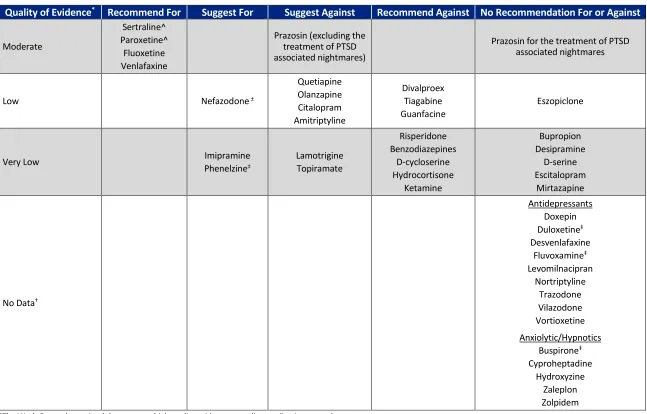
17 We recommend sertraline, paroxetine, fluoxetine, or venlafaxine as monotherapy for PTSD for patients diagnosed with PTSD who choose not to engage in or are unable to access trauma-focused psychotherapy.
Strong For Reviewed, New-replaced
18 We suggest nefazodone, imipramine, or phenelzine as monotherapy for the treatment of PTSD if recommended pharmacotherapy (see
Recommendation 17), trauma-focused psychotherapy (see
Recommendation 11), or non-trauma-focused psychotherapy (see
Recommendation 12) are ineffective, unavailable, or not in accordance with patient preference and tolerance. (NOTE: Nefazodone and phenelzine have potentially serious toxicities and should be managed carefully.)
Weak For Reviewed, New-replaced
19 We suggest against treatment of PTSD with quetiapine, olanzapine, and other atypical antipsychotics (except for risperidone, which is a Strong Against, see Recommendation 20), citalopram, amitriptyline,
lamotrigine, or topiramate as monotherapy due to the lack of strong evidence for their efficacy and/or known adverse effect profiles and associated risks.
Weak Against Reviewed, New-replaced
20 We recommend against treating PTSD with divalproex, tiagabine, guanfacine, risperidone, benzodiazepines, ketamine, hydrocortisone, or D-cycloserine, as monotherapy due to the lack of strong evidence for their efficacy and/or known adverse effect profiles and associated risks.
Strong Against Reviewed, New-replaced
21 We recommend against treating PTSD with cannabis or cannabis derivatives due to the lack of evidence for their efficacy, known adverse effects, and associated risks.