Article
Outputs, Outcomes, and Behavioural Impacts of an
Antibiotic-Related Educational Activity in Lao PDR
Marco J Haenssgen a, b, c, d, i * Thipphaphone Xayavong e, f, g Nutcha Charoenboon d Penporn Warapikuptanun d Yuzana Khine Zaw h
a. Centre for Tropical Medicine and Global Health, Nuffield Department of Clinical Medicine, University of Oxford, Old Road Campus, Roosevelt Drive, Oxford OX3 7FZ, UK
b. CABDyN Complexity Centre, Saïd Business School, University of Oxford, Park End Street, Oxford OX1 1HP, Oxford, UK
c. Green Templeton College, 43 Woodstock Road, Oxford OX2 6HG, UK
d. Mahidol Oxford Tropical Medicine Research Unit, Faculty of Tropical Medicine, Mahidol University, 3/F, 60th Anniversary Chalermprakiat Building, 420/6 Rajvithi Road, Bangkok, Thailand
e. Department of Peace and Conflict Studies, University for Peace, Costa Rica
f. Department of Political Science, School of Social Science, Ateneo de Manila University, Manila, Philippines g. Lao Oxford Mahosot Wellcome Trust Research Unit (LOMWRU), Mahidol Oxford Tropical Medicine Research Unit (MORU), Faculty of Tropical Medicine, Mahidol University, Bangkok, Thailand
h. Department of Global Health and Development, London School of Hygiene & Tropical Medicine, London, UK
*. Corresponding author: [email protected], phone: +66 (0) 951906543
Abstract: Education and awareness raising are the primary tools of global health policy to change public behaviour. Considering the limitations of awareness agenda and the lack of social research to inform alternative approaches, our objective was to generate new empirical evidence on the consequences of antibiotic-related awareness raising in a low-income country context. We implemented an educational activity in two Lao villages to share general antibiotic-related messages, but also to learn about people’s conceptions and health behaviours. Two rounds of census survey data enabled us to assess the activity’s outputs, its knowledge outcomes, and its immediate behavioural impacts in a difference-in-difference design. Our panel data covered 1,130 adults over two rounds, including 58 activity participants and 208 villagers exposed indirectly via conversations in the village. We found that activity-related communication circulated among more privileged groups, which limited its indirect effects. Among participants, the activity influenced the awareness and understanding of “drug resistance,” while effects on attitudes were minor. Evidence on behavioural impacts was sparse and mixed, but the range of possible consequences included a disproportionate uptake of antibiotics from formal healthcare providers. Our study casts doubt on the continued dominance of awareness raising as a behavioural tool to address antibiotic resistance.
Keywords: Antimicrobial resistance; antibiotics; health behaviour; health education; survey; development studies; rural; LMICs; Lao PDR
1. Introduction
Antibiotic resistance (ABR) as a subset of antimicrobial resistance (AMR) has reached the highest policy levels. National and global policies have been developed to address a problem that is feared to become the leading cause of death globally by 2050 with a disproportionate impact on low- and middle-income countries [1,2]. The leading global policy document to address AMR is the Global Action Plan on Antimicrobial Resistance by the FAO/OIE/WHO Tripartite Collaboration on AMR,1 the
1 FAO: Food and Agriculture Organization; OIE: World Organisation for Animal Health; WHO: World Health
Organization.
first objective of which is to “improve awareness and understanding of antimicrobial resistance through effective communication, education and training” [3] (p. 8). This knowledge deficit approach to population health behaviour is problematic for two main reasons [4,5]: First, it disregards other drivers of population health behaviour—for instance health system dysfunctions and inequities especially in low- and middle-income settings [1,6]—which could render awareness-raising activities ineffective. Second, health communication can have adverse and unforeseen consequences [7,8], and AMR awareness raising is no exception [9]. This can be seen for example in the stigmatisation of pig farmers in Denmark, where leaflets had begun advising that, “If you work on a pig farm, you should refrain from having sex with others or seeing anybody […]” [10] (p. 4). These reasons make it questionable whether the awareness-raising agenda can live up to its expectations of changing population behaviour in the context of global antibiotic and antimicrobial resistance.
Awareness raising is of course not the only global health policy tool to address ABR and AMR more generally—complementary approaches also involve for instance drug research and development, public health interventions, new diagnostic tools, and surveillance activities [2,3,11]. In addition, national-level action to address ABR-related population behaviour has taken more diverse approaches [12], and internal global health policy development processes have started considering interdisciplinary perspectives of human behaviour [13]. However, the awareness agenda remains the central mechanism to address human behaviour on the global policy level, public health research on health communication tends to focus on positive outcomes among intended audiences [8], and the continued underrepresentation of social science research (comprising only 0.6% of all AMR-related publications) impedes a more holistic and nuanced approach to human behaviour in antibiotic and antimicrobial resistance.2
This study aimed to inform the awareness agenda from a social sciences perspective by assessing the outputs, outcomes, and behavioural impacts of an ABR-themed educational activity in the low-income setting of southern Lao PDR. Detailed quantitative health behaviour data collected in two census surveys rounds in two villages enabled us to document the intended and unintended consequences of awareness raising in a difference-in-difference design.
Although this work did not constitute a formal evaluation because the research team both developed and assessed the consequences of the educational activity [15], our study design enabled us to detect direct and indirect consequences of the activity—positive as well as negative. Our detailed quantitative health behaviour data from nearly 2,500 survey interviews permitted us to document the inequitable diffusion of new information, mild changes in villagers’ awareness of drug resistance, weak links to antibiotic-related attitudes, and mixed but potentially detrimental impacts on antibiotic consumption. This study therefore contributes to the limited yet growing social understanding of the consequences and limitations of ABR interventions in low-income contexts.
2. Material and Methods
2.1. Study Site
Our study was part of a research project to study rural medicine use in the context of marginalisation in Thailand (Chiang Rai) and Lao PDR (Salavan) [16]. In the present study, we assessed a half-day educational activity that interspersed two rounds of complete census surveys in two peri-urban villages near a district capital city in Salavan, Lao PDR’s poorest province (see Figure 1 for a map and timeline of research activities) [17]. The village locations reflected an environment of higher affluence and smaller families compared to the provincial average (Table 1), but we nonetheless observed widespread hardship consistent with the low-income country setting of Lao
2 345,410 AMR-related publications between 1890 and 2019. Medicine, biology, immunology, pharmacology,
PDR. The selection of the villages was aided by a local public health official who indicated interest in these village case studies for future education and communication activities.
Figure 1. Site Map and Research Timeline in Lao PDR.
Source: Authors, adapted from Google Inc. [18].
Table 1. Characteristics of Network Villages Compared to Provincial Average.
Village 1 Village 2 Salavan Average Village Size 1,462 744 369a
Household Size 5.0 4.5 5.9
Female Population Share 48.8% 53.1% 50.1%
Dependency Ratioc 0.68 0.63 0.64b
Households Owning Mobile Phones 96.0% 89.9% 81.6% Source: Primary survey data and Lao Statistics Bureau [19].
a. Village numbers based on data from National Geospatial-Intelligence Agency [20]. b. National average for rural areas.
c. Non-working-age population divided by working-age population (15-64 years).
2.2 Study Population
The study population included Lao villagers aged 18 years and above. We did not focus specifically on patients but on the general population. We excluded respondents who were unable to participate in the study after two attempts to arrange an interview, and we excluded adolescents and children because adults typically acquire and administer antibiotics on together with or on behalf of children [21].
2.3. Intervention (Public Engagement Activity)
We developed the educational activity following more than a year of qualitative research on antibiotic use and treatment-seeking behaviour in Thailand, Myanmar, and Lao PDR. Owing to the public engagement nature of the activity, the development studies background of our research, the caveats in the social sciences literature on health communication, and our own research of antibiotic use and treatment-seeking behaviour in rural Southeast Asia, we decided that the objective of the activities was not to change behaviour, nor to convince villagers that their current behaviour was
Salavan Province
Village 1 Village 2
Dec ‘17
Jan
Feb
Apr Mar
May ‘18
Key: Survey Round 1 (R.1)
Educational Activity
wrong. The activity rather aimed at sharing information and ideas about antibiotics and drug resistance in line with messages from the World Health Organization [e.g. 22], but it also aimed at the team learning from the participating villagers about their antibiotic-related behaviour and conceptions as well as how they received the messages from the activity. Nevertheless, our two-round data collection enabled a quasi-experimental design in which we could ascertain knowledge, attitude, and behaviour changes among people who participated in the activity (i.e. direct exposure), who talked about the activity (i.e. indirect exposure), and who were not involved in the activity in any way (i.e. non-exposure).
The one-off activity in Salavan was designed to cover half a day of interactive sessions for 25 to 40 people.3 We selected well-known individuals from the across each village, expecting that they
would inform other villagers about the content of the activity (corresponding to approaches of targeting opinion leaders [24,25]).
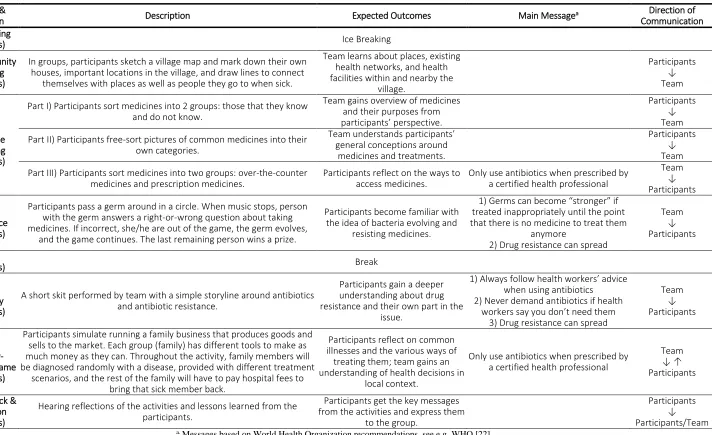
The six sessions of the activity (presented in detail in Table 2) covered a mapping exercise to understand treatment choices in the village, a medicine matching game to learn about local conceptions and medicine uses, a resistance game to introduce the idea of evolving microbes, a role play to explain drug resistance in a social context, a healthy-wealthy game to reflect on treatment-seeking choices, and a final feedback and reflection session to understand how the participants received the messages from the activity. Specifically, the messages embedded in the activity were,
•
“
Always follow health workers’ advice when using antibiotics,”• “Never demand antibiotics if health workers say you don’t need them,”
• “Only use antibiotics when prescribed by a certified health professional,”
• “Germs can become ‘stronger’ if treated inappropriately until the point that there is no medicine to treat
them anymore,” and
• “Drug resistance can spread.”
3 We developed the activity simultaneously for rural Thailand and rural Lao PDR as part of the larger project.
Table 2.
Elements of the Educational Activity.
Session &
Duration Description Expected Outcomes Main Messagea
Direction of Communication Ice breaking
(15 mins) Ice Breaking
(1) Community Mapping (30 mins)
In groups, participants sketch a village map and mark down their own houses, important locations in the village, and draw lines to connect
themselves with places as well as people they go to when sick.
Team learns about places, existing health networks, and health facilities within and nearby the
village. Participants ↓ Team (2) Medicine Matching (30 mins)
Part I) Participants sort medicines into 2 groups: those that they know and do not know.
Team gains overview of medicines and their purposes from participants’ perspective.
Participants ↓ Team
Part II) Participants free-sort pictures of common medicines into their own categories.
Team understands participants’ general conceptions around
medicines and treatments.
Participants ↓ Team
Part III) Participants sort medicines into two groups: over-the-counter medicines and prescription medicines.
Participants reflect on the ways to access medicines.
Only use antibiotics when prescribed by a certified health professional
Team ↓ Participants (3) Resistance (30 mins)
Participants pass a germ around in a circle. When music stops, person with the germ answers a right-or-wrong question about taking medicines. If incorrect, she/he are out of the game, the germ evolves,
and the game continues. The last remaining person wins a prize.
Participants become familiar with the idea of bacteria evolving and
resisting medicines.
1) Germs can become “stronger” if treated inappropriately until the point that there is no medicine to treat them
anymore
2) Drug resistance can spread
Team ↓ Participants
Break
(15 mins) Break
(4) Roleplay (20 mins)
A short skit performed by team with a simple storyline around antibiotics and antibiotic resistance.
Participants gain a deeper understanding about drug resistance and their own part in the
issue.
1) Always follow health workers’ advice when using antibiotics
2) Never demand antibiotics if health workers say you don’t need them
3) Drug resistance can spread
Team ↓ Participants (5) Healthy-Wealthy Game (30 mins)
Participants simulate running a family business that produces goods and sells to the market. Each group (family) has different tools to make as much money as they can. Throughout the activity, family members will be diagnosed randomly with a disease, provided with different treatment
scenarios, and the rest of the family will have to pay hospital fees to bring that sick member back.
Participants reflect on common illnesses and the various ways of
treating them; team gains an understanding of health decisions in
local context.
Only use antibiotics when prescribed by a certified health professional
Team ↓ ↑ Participants
(6) Feedback & Reflection
(15 mins)
Hearing reflections of the activities and lessons learned from the participants.
Participants get the key messages from the activities and express them
to the group.
2.4. Data Collection
Our survey instrument was a 45-minute questionnaire on antibiotic-related attitudes and knowledge, treatment-seeking behaviour, and social networks alongside standard demographic indicators [16]. The questionnaire was administered face-to-face using tablet computers with the SurveyCTO software [26]. Among others, we elicited attitudes and knowledge of antibiotics that corresponded broadly to WHO messages [e.g. 22], asking four questions on whether respondents (a) would buy antibiotics over the counter, (b) would prefer antibiotics over alternatives, (c) would keep antibiotics for future use, and (d) considered that antibiotic resistance can spread. Considering the range of possible responses to these questions, we trained our survey teams to field-code the responses as “desirable” and “undesirable” from the point of view of the original WHO messages. (An assessment of behaviour as “undesirable” according to these criteria did not necessarily mean that people’s behaviours were implausible, irrational, or otherwise inferior; it was merely intended to guide the analysis in light of the objectives of mainstream approaches to awareness raising.) We also collected detailed information on acute illnesses and accidents among the respondents and/or children under their supervision within the two months preceding the survey, and the healthcare choices (healthcare providers, medicine) that the respondents made therein.
2.5. Sample Size
We collected two rounds of complete census data from all adult villagers. Satellite images helped to enumerate 578 potentially residential buildings, which comprised 459 households [27]. We defined a household as a group of people sharing a kitchen, and its members as those who had lived in the village for the past six months. The ensuing sample comprised 2,480 interviews (1,264 in Round I and 1,216 in Round II), whereby we interviewed virtually every adult at least once and 89.4% of the Round-I respondents could be re-interviewed (only two households refused participation).4 As part
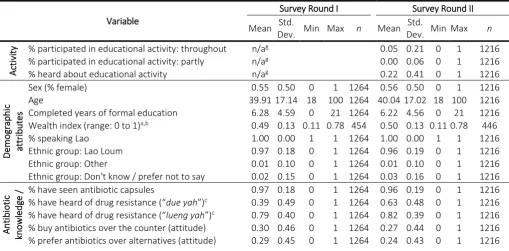
of the village population censuses, we recorded 512 completed illness episodes in the first survey round, and 284 in the second. The description of the survey sample is presented in Table 3.
Table 3. Sample Characteristics of Two Rounds of Census Survey in Two Lao Villages.
Variable
Survey Round I Survey Round II
Mean Std.
Dev. Min Max n Mean
Std.
Dev. Min Max n
Activ
it
y % participated in educational activity: throughout n/ag 0.05 0.21 0 1 1216
% participated in educational activity: partly n/ag 0.00 0.06 0 1 1216
% heard about educational activity n/ag 0.22 0.41 0 1 1216
Demographic attr
ibut
es
Sex (% female) 0.55 0.50 0 1 1264 0.56 0.50 0 1 1216
Age 39.91 17.14 18 100 1264 40.0417.02 18 100 1216
Completed years of formal education 6.28 4.59 0 21 1264 6.22 4.56 0 21 1216
Wealth index (range: 0 to 1)a,b 0.49 0.13 0.11 0.78 454
0.50 0.13 0.110.78 446
% speaking Lao 1.00 0.00 1 1 1264 1.00 0.00 1 1 1216
Ethnic group: Lao Loum 0.97 0.18 0 1 1264 0.96 0.19 0 1 1216
Ethnic group: Other 0.01 0.10 0 1 1264 0.01 0.10 0 1 1216
Ethnic group: Don't know / prefer not to say 0.02 0.15 0 1 1264 0.03 0.16 0 1 1216
Antibi
otic
kn
owl
edg
e /
atti
tu
des
% have seen antibiotic capsules 0.97 0.18 0 1 1264 0.96 0.19 0 1 1216
% have heard of drug resistance (“due yah”)c 0.39 0.49 0 1 1264 0.63 0.48 0 1 1216
% have heard of drug resistance (“lueng yah”)c 0.79 0.40 0 1 1264 0.82 0.39 0 1 1216
% buy antibiotics over the counter (attitude) 0.30 0.46 0 1 1264 0.27 0.44 0 1 1216
% prefer antibiotics over alternatives (attitude) 0.29 0.45 0 1 1264 0.24 0.43 0 1 1216
4 Individuals who could only be interviewed once tended to migrate for labour, which is reflected in a larger
% do not keep antibiotics for future use (knowledge) 0.22 0.41 0 1 1264 0.27 0.44 0 1 1216
% antibiotic resistance can spread (knowledge) 0.12 0.32 0 1 1264 0.02 0.15 0 1 1216
No. of desirable knowledge/attitude answers (0-4) 0.93 0.93 0 4 1264 0.81 0.87 0 4 1216
Tr
eatm
ent
-see
kin
g
be
h
av
io
ur
d,
e
% of illness episodes involving children 0.39 0.49 0 1 512 0.35 0.48 0 1 284
Self-rated severity (1=mild, 2=medium, 3=severe) 1.79 0.70 1 3 512 1.88 0.67 1 3 284
Average duration of illness episode (days) 7.29 9.25 1 130 512 7.36 14.42 1 219 284
Average no. of medicines and treatments receivedf 2.74 1.71 0 13 512 2.46 1.39 0 8 284
Average no. of antibiotics 0.50 0.70 0 4 512 0.42 0.59 0 3 284
Average no. of antibiotics (incl. “uncertain” medicine) 1.31 1.45 0 10 512 1.15 1.25 0 6 284
% public providers (health centres, hospitals) 0.27 0.44 0 1 512 0.27 0.44 0 1 284
% private providers (clinics, hospitals, pharmacies) 0.53 0.50 0 1 512 0.59 0.49 0 1 284
% informal providers (grocery stores, healers) 0.02 0.14 0 1 512 0.05 0.22 0 1 284
% family and self-care 0.97 0.18 0 1 512 1.00 0.06 0 1 284
% others 0.06 0.25 0 1 512 0.07 0.26 0 1 284
a. Average of 17 household assets and amenities on scale from 0 to 1. b. Household level data.
c. The term “drug resistance” has two local expressions: “ ື້ ຍາດ ” (“due yah”) as the formal term and “ ື້ ງຍາລ ” (“lueng yah”) as a more colloquial expression.
d. Illness-level data.
e. Completed illnesses experienced by respondent or a child under their supervision.
f. “Number of courses” as in, “How many types of medicine did you receive during step x of your illness?” g. Educational activity took place after Survey Round I, therefore no exposure reported.
2.6. Study Outcomes
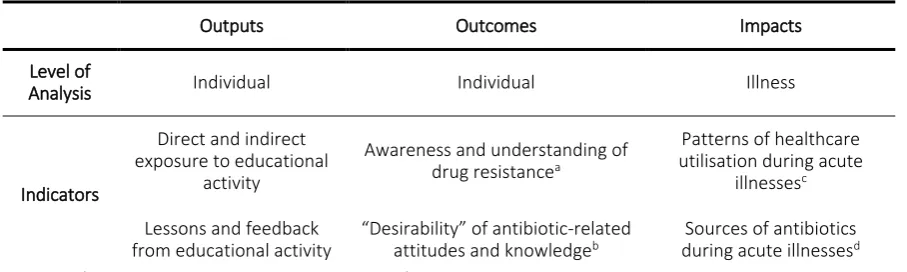
The analysis was guided by a simple evaluation framework that considered outputs, outcomes, and impacts of the activity as shown in Table 4.5
Table 4. Evaluation Framework for Analysis of Study Outcomes.
Outputs Outcomes Impacts
Level of
Analysis Individual Individual Illness
Indicators
Direct and indirect exposure to educational
activity
Awareness and understanding of
drug resistancea
Patterns of healthcare utilisation during acute
illnessesc
Lessons and feedback from educational activity
“Desirability” of antibiotic-related
attitudes and knowledgeb during acute illnessesSources of antibiotics d
a. Using “ດ ື້ ຍາ” or “due yah” as the formal term, and “ລ ື້ ງຍາ” or “lueng yah” as a colloquial but also broader expression in the context of drug resistance. While lueng yah did not exclusively refer to drug resistance, it had arisen consistently as a theme during the questionnaire testing phase and, as can be seen in Results Section 3.2, it was commonly mentioned as an
explanation for the formal term due yah. b. See Table 3 for associated indicators.
c. Focusing especially on formal and informal healthcare providers. Formal providers include public hospitals and primary
care units (public), and private clinics and hospitals and pharmacies (private). Informal providers include traditional healers, grocery stores, retired doctors, and itinerant medicine traders.
d. Same as above, plus antibiotics stored at home and provided by family and friends as “informal” sources.
2.7. Data Analysis
5 Note that, because the study team developed and assessed the activity, this did not constitute a formal
We analysed the quantitative survey data descriptively in a difference-in-difference approach, which enabled us to isolate general trends from changes associated with the educational activities. Because we surveyed all adults in our study villages, and because the educational activity took place between the two survey rounds, we could consider three-month changes of attitudes and behaviours for three groups: people who participated in the educational activity (direct exposure), who talked about the activity (indirect exposure), and who neither talked about nor participated in the activity (unexposed).
On the individual level, we used the matched panel data set based on the census data, which enabled like-for-like comparisons of the village before and after the activity. This enabled us to compare group means before and after the educational activity in each village (first difference), and the difference of these averages between exposed and unexposed groups (difference-in-difference). Because we used complete village census data on the individual level rather than a sample of the village populations, inferential statistics obsolete and confidence intervals were inapplicable and were thus omitted from reporting.6
Data on the illness level could not be matched accordingly, considering that only a subset of respondents would report an acute illness or accident, which were also not immediately comparable for the same individual across the two survey rounds. As a result, we treated the data on the illness level as repeated cross-sectional data rather than panel data. The practical implication was that the interpretation of our descriptive analysis of immediate behavioural impacts had to be more cautious.7
Owing to the smaller size of the illness samples across the three study groups, we also carried out sensitivity analyses of antibiotic use from formal and informal sources by respondents’ attitudes towards buying antibiotics over the counter (see Appendix Table 2). For illustrative purposes, we used Wilcoxon rank-sum hypothesis tests for non-normally distributed variables [28,29]. The analysis was carried out using Stata 15 [30].
2.8. Ethical Considerations
The research was reviewed and approved by the University of Oxford Tropical Research Ethics Committee (Ref. OxTREC 528-17), and it received local ethical approval in Thailand from the Mae Fah Luang University Research Ethics Committee on Human Research (Ref. REH 60099), and in Lao PDR from the National Ethics Committee for Health Research (Ref. NEHCR 074). Permission to access the study villages was obtained from local security authorities and villages leaders. Participation in the interviews and educational activities was voluntary and informed verbal consent was obtained from all study participants, which was audio recorded and documented through a written record of oral consent by the survey field investigators for each participant. The participants received a small financial token of appreciation of the equivalent of GBP 1.00 for the survey and GBP 3.00 for the educational activity.
3. Results
3.1. Outputs
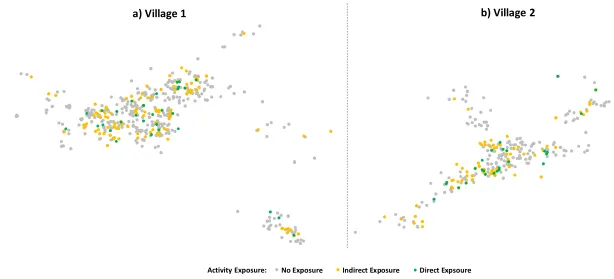
The educational activities took place in two comparatively large peri-urban villages located on main roads with easy access to urban and formal health facilities. Within the villages, a range of informal healthcare providers including traditional healers and grocery shops provided treatment and medicine alongside public and private primary healthcare providers (mapped in Figure 2; households indicated by circles, village infrastructure by triangles, and healthcare and medicine providers by diamonds with antibiotic sources having red borders).
6 In other words, our sample comprised the complete population of the two villages, while otherwise the data
from two villages would be insufficient to make inferences for the Salavan population. Another part of the broader research project involved representative survey data collection to enable inferences for the provincial population.
Figure 2.
Map and Overview of Educational Activity Exposure in Case Study Villages.
Notes. “Endline” (R.2) data, matched panel data. n = 723 (Panel a), n = 407 (Panel b). Marker size adjusted to distinguish overlapping responses.
b) Village 2
No Exposure Indirect Exposure Direct Expsoure Activity Exposure:
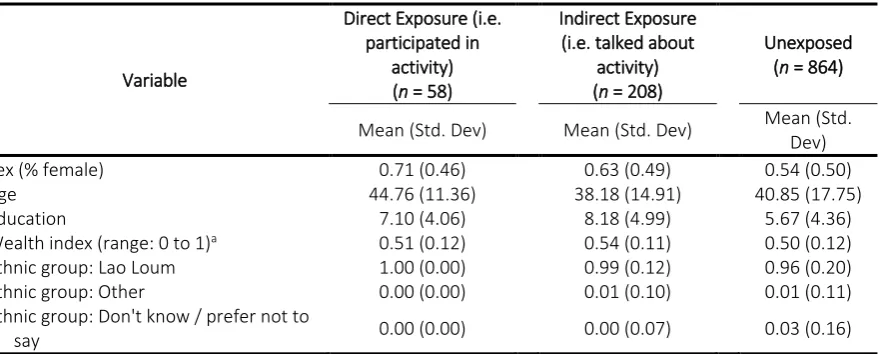
The characteristics of the 58 participants are presented in Table 5, together with 208 respondents who talked about the activity in the village, and 864 villagers who had not been exposed directly or indirectly. The table indicates that the activity participants included a higher share of women and higher levels of education than the village average. People who talked about the activity also tended to be female and better educated, while the small fraction of non-Lao ethnic groups remained largely unexposed.
Table 5. Characteristics of Individuals by Activity Exposure.
Variable
Direct Exposure (i.e. participated in
activity)
(n = 58)
Indirect Exposure (i.e. talked about
activity)
(n = 208)
Unexposed
(n = 864)
Mean (Std. Dev) Mean (Std. Dev) Mean (Std.
Dev)
Sex (% female) 0.71 (0.46) 0.63 (0.49) 0.54 (0.50)
Age 44.76 (11.36) 38.18 (14.91) 40.85 (17.75)
Education 7.10 (4.06) 8.18 (4.99) 5.67 (4.36)
Wealth index (range: 0 to 1)a 0.51 (0.12) 0.54 (0.11) 0.50 (0.12)
Ethnic group: Lao Loum 1.00 (0.00) 0.99 (0.12) 0.96 (0.20)
Ethnic group: Other 0.00 (0.00) 0.01 (0.10) 0.01 (0.11)
Ethnic group: Don't know / prefer not to
say 0.00 (0.00) 0.00 (0.07) 0.03 (0.16)
Notes. “Endline” (R.2) data, using matched panel data. Mutually exclusive groups, i.e. the group “talked about activity”
does not include participants (among whom 53 talked about the activity with other villagers). a. Average of 17 household assets and amenities on scale from 0 to 1.
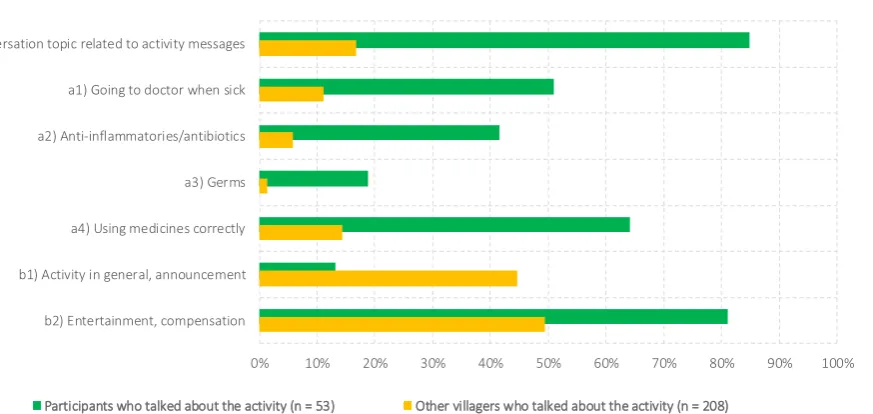
Figure 3. Differences in Communicated Activity Themes Across Participants and Non-Participants.
Notes. “Endline” (R.2) data, using matched panel data.
3.2. Outcomes
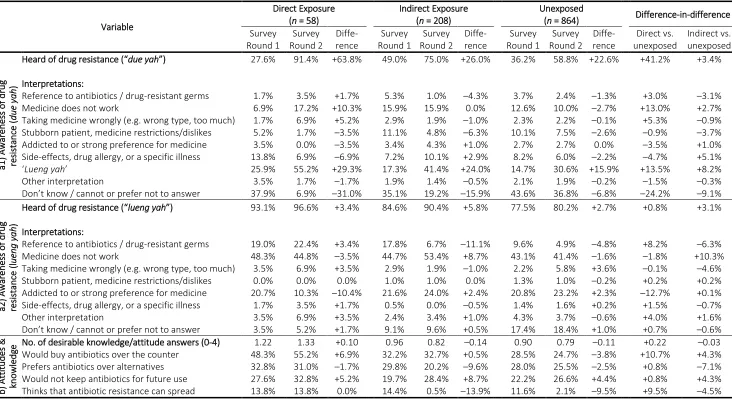
Table 6 summarises the outcomes of the activity, reporting knowledge and attitudes, grouped by directly, indirectly, and non-exposed groups. For each group, we report average knowledge and attitudes before and after the educational activity, together with the before-after difference and difference-in-difference statistics comparing exposed to unexposed group differences. Graphs of the outcomes reported in this section are presented in Appendix Figures 1-3.
The outcomes of the activity were concentrated on knowledge and attitudes among people who were exposed directly. The recognition of the various terms for “drug resistance” is documented in Table 6, Section a1 for the technical but lesser-known term of “due yah,” and Section a2 for the colloquial but broader translation “lueng yah” as “[e.g. the body getting] used to medicine.” Against a generally increasing trend in the recognition of due yah—at least by 22.6 percentage points across all groups, potentially an artefact of the survey asking the same question twice in three months—the recognition of the term increased disproportionately among the participants of the activity. The average recognition of the term rose from 27.6% to 91.4% among the participants, compared to 36.2% to 58.8% among the unexposed group. In contrast, the colloquial expression of lueng yah was already widely recognised prior to the educational activity (at least 80.2%), and direct and indirect exposure exhibited only a marginally higher rate of change in the first village compared to the unexposed group.
0% 10% 20% 30% 40% 50% 60% 70% 80% 90% 100%
a) Conversation topic related to activity messages
a1) Going to doctor when sick
a2) Anti-inflammatories/antibiotics
a3) Germs
a4) Using medicines correctly
b1) Activity in general, announcement
b2) Entertainment, compensation
Table 6. Antibiotic-Related Attitudes and Knowledge Across Survey Rounds.
Variable
Direct Exposure
(n = 58)
Indirect Exposure
(n = 208)
Unexposed
(n = 864) Difference-in-difference
Survey Round 1 Survey Round 2 Diffe-rence Survey Round 1 Survey Round 2 Diffe-rence Survey Round 1 Survey Round 2 Diffe-rence Direct vs. unexposed Indirect vs. unexposed a1 ) Aw areness of drug re sistanc e ( d ue y a h )
Heard of drug resistance (“due yah”) 27.6% 91.4% +63.8% 49.0% 75.0% +26.0% 36.2% 58.8% +22.6% +41.2% +3.4%
Interpretations:
Reference to antibiotics / drug-resistant germs 1.7% 3.5% +1.7% 5.3% 1.0% –4.3% 3.7% 2.4% –1.3% +3.0% –3.1%
Medicine does not work 6.9% 17.2% +10.3% 15.9% 15.9% 0.0% 12.6% 10.0% –2.7% +13.0% +2.7%
Taking medicine wrongly (e.g. wrong type, too much) 1.7% 6.9% +5.2% 2.9% 1.9% –1.0% 2.3% 2.2% –0.1% +5.3% –0.9%
Stubborn patient, medicine restrictions/dislikes 5.2% 1.7% –3.5% 11.1% 4.8% –6.3% 10.1% 7.5% –2.6% –0.9% –3.7%
Addicted to or strong preference for medicine 3.5% 0.0% –3.5% 3.4% 4.3% +1.0% 2.7% 2.7% 0.0% –3.5% +1.0%
Side-effects, drug allergy, or a specific illness 13.8% 6.9% –6.9% 7.2% 10.1% +2.9% 8.2% 6.0% –2.2% –4.7% +5.1%
‘Lueng yah’ 25.9% 55.2% +29.3% 17.3% 41.4% +24.0% 14.7% 30.6% +15.9% +13.5% +8.2%
Other interpretation 3.5% 1.7% –1.7% 1.9% 1.4% –0.5% 2.1% 1.9% –0.2% –1.5% –0.3%
Don’t know / cannot or prefer not to answer 37.9% 6.9% –31.0% 35.1% 19.2% –15.9% 43.6% 36.8% –6.8% –24.2% –9.1%
a2 ) Aw areness of drug re sistanc e (l ueng yah )
Heard of drug resistance (“lueng yah”) 93.1% 96.6% +3.4% 84.6% 90.4% +5.8% 77.5% 80.2% +2.7% +0.8% +3.1%
Interpretations:
Reference to antibiotics / drug-resistant germs 19.0% 22.4% +3.4% 17.8% 6.7% –11.1% 9.6% 4.9% –4.8% +8.2% –6.3%
Medicine does not work 48.3% 44.8% –3.5% 44.7% 53.4% +8.7% 43.1% 41.4% –1.6% –1.8% +10.3%
Taking medicine wrongly (e.g. wrong type, too much) 3.5% 6.9% +3.5% 2.9% 1.9% –1.0% 2.2% 5.8% +3.6% –0.1% –4.6%
Stubborn patient, medicine restrictions/dislikes 0.0% 0.0% 0.0% 1.0% 1.0% 0.0% 1.3% 1.0% –0.2% +0.2% +0.2%
Addicted to or strong preference for medicine 20.7% 10.3% –10.4% 21.6% 24.0% +2.4% 20.8% 23.2% +2.3% –12.7% +0.1%
Side-effects, drug allergy, or a specific illness 1.7% 3.5% +1.7% 0.5% 0.0% –0.5% 1.4% 1.6% +0.2% +1.5% –0.7%
Other interpretation 3.5% 6.9% +3.5% 2.4% 3.4% +1.0% 4.3% 3.7% –0.6% +4.0% +1.6%
Don’t know / cannot or prefer not to answer 3.5% 5.2% +1.7% 9.1% 9.6% +0.5% 17.4% 18.4% +1.0% +0.7% –0.6%
b) At tit ud es & kn owl edg
e No. of desirable knowledge/attitude answers (0-4) 1.22 1.33 +0.10 0.96 0.82 –0.14 0.90 0.79 –0.11 +0.22 –0.03
Would buy antibiotics over the counter 48.3% 55.2% +6.9% 32.2% 32.7% +0.5% 28.5% 24.7% –3.8% +10.7% +4.3%
Prefers antibiotics over alternatives 32.8% 31.0% –1.7% 29.8% 20.2% –9.6% 28.0% 25.5% –2.5% +0.8% –7.1%
Would not keep antibiotics for future use 27.6% 32.8% +5.2% 19.7% 28.4% +8.7% 22.2% 26.6% +4.4% +0.8% +4.3%
Thinks that antibiotic resistance can spread 13.8% 13.8% 0.0% 14.4% 0.5% –13.9% 11.6% 2.1% –9.5% +9.5% –4.5%
Even in the absence of changing rates of recognition, the educational activity might have influenced people’s interpretation of the term “drug resistance.” For both notions (due yah and lueng yah), we present the interpretations in Table 6, Sections a1 and a2.8 Section a1 shows that the
interpretation of due yah changed most among the participants of the activity, where a decreasing share of “don’t know” responses (–31.0%) was replaced with broad and antibiotic-independent interpretations of “due yah means lueng yah” (+29.3%), “medicines [in general] do not work anymore” (+10.3%), and “taking medicines in the wrong way” (+5.2%). The activity participants also exhibited fewer interpretations that conflict with the biomedical concept of drug resistance, like “patients being stubborn” (–3.5%), “being addicted to medicine” (–3.5%), or “medicines having side-effects” (–6.9%).9
However, the fraction of interpretations relating directly to antibiotics and germs only increased marginally from 1.7% to 3.5% among the participants, and it decreased among indirectly exposed villagers at a higher than the unexposed group (from 5.3% to 1.0% vs. from 3.7% to 2.4%). Aside from an increase in the interpretation “due yah means lueng yah” (+24.0%), the indirectly exposed group also exhibited small changes in the themes “stubborn patients” (–6.3%) and “medicine side-effects” (+2.9%).Section a2 in Table 6 indicates that changes in the interpretation of lueng yah were less pronounced among all groups. Compared to the trend among unexposed villagers, activity participants nevertheless declared more interpretations relating to antibiotics and drug-resistant germs (+3.4%), and fewer interpretations relating to “drug resistance” as medicine addiction (– 10.4%). Among the indirectly exposed group, we also observed a shift away from antibiotic-specific (–11.1%) towards more general interpretations of medicine becoming less effectual (+8.7%; typically involving notions that the body develops a “tolerance” against medicine in line with the broader meaning of lueng yah).
Despite the association between the activity and villagers’ recognition and interpretation of “drug resistance,” the changes in the biomedical “desirability” of people’s antibiotic-related knowledge and attitudes varied only to a small extent across the study groups. As reported in Section b of Table 6, direct exposure yielded a slightly stronger increase in our assessment of “desirability” (+0.10 index points on a scale from 0 to 4), whereas indirect exposure was not associated with an increase beyond the general trend (–0.14 vs. unexposed trend of –0.11). Broken down by its four component questions, the sources of the increase among the directly exposed group were the attitude to not buy antibiotics over the counter (from 43.8% to 55.2%; disproportionately large increase compared to other groups) and the knowledge to not keep antibiotics at home for future use (from 27.6% to 32.8%; increase higher than unexposed group but short of the larger increase in indirectly exposed group). Curiously, responses the question “Can your due yah spread to other people?” became noticeably less “desirable” over time among the groups with indirect and without exposure to the activity (–13.9% and –9.5%). Overall, the outcomes on attitudes are inconclusive despite the mild relative increase in our measure of “desirability” among the activity participants.
3.3. Impact
As the final step in our analysis, we examined the impact of the activity on villagers’ behaviour, focusing specifically on healthcare choices and antibiotic use during recent acute illnesses and accidents. The main results are presented in Figure 4 and detailed results in Appendix Table 1.
Panel a in Figure 4 presents the patterns of healthcare access during people’s recent illness episodes with the caveats that (a) people could report multiple healthcare choices during an illness episode, (b) illnesses in Survey Round 2 were reported less frequently, (c) the self-reported severity of illnesses was marginally higher in Survey Round 2 (see Appendix Table 1 for details), and (d) the illness episode samples among the directly exposed group were small with 18 and 12 observations in Survey Rounds 1 and 2 and should therefore be considered cautiously. Pending further discussion in the next section, the main observations from this panel were:
8 Responses to the question, “What do you think is ‘drug resistance?’”
9 Side-effects refer here not to drug resistance but to medicine-related complications like dizziness, nausea,
• The directly and indirectly exposed groups reported higher public healthcare access in the
second survey round.
• Private healthcare access followed a slightly increasing trend that was absent from the
indirectly exposed group.
• Informal healthcare access was generally low but followed a slightly increasing trend that
was absent from the directly exposed group.
• The involvement of “other” healthcare providers (esp. retired doctors running informal
practices in the villages) decreased only in the directly exposed group—to a level similar to
the other groups.
Figure 4. Healthcare Access and Sources of Antibiotics Across Survey Rounds.
Notes. Pooled data set using complete survey data; repeated cross-sections of illness episodes (n = 727). Sub-sample sizes
by survey round are: Round 1 / direct exposure (n = 18) / indirect exposure (n = 89) / unexposed (n = 337); Round 2 / direct exposure (n = 12) / indirect exposure (n = 59) / unexposed (n = 213). Multiple sources of antibiotic access per
illness episode possible.
a. “Antibiotics” including confirmed and possible antibiotics based on reported medicines received during the illness and respondent’s reported names and uses of antibiotics shown during the interview.
b. Includes public and private healthcare providers.
c. Includes traditional healers, grocery stores, retired doctors, itinerant medicine traders), and medicine stored at home and
provided by family and friends.
4. Discussion
The analysis of outputs of the educational activity suggested geographically widespread direct and indirect exposure, but a closer examination of communication patterns revealed that activity-related messages did not circulate within the villages as a whole but within socio-economically more privileged strata. On the outcome level, the educational activity entailed changes in antibiotic-related attitudes and in awareness and interpretation of the term “drug resistance” that were broadly in line 0% 10% 20% 30% 40% 50% 60% 70% 80% 90% 100% Public care Private care Informal care Self-care/ Family Other providers Public care Private care Informal care Self-care/ Family Other providers Public care Private care Informal care Self-care/ Family Other providers
Direct exposure Indirect exposure Unexposed
S h ar e o f I lln es s E p iso d es
Sources of Healthcare by Exposure to Educational Activity a) Access to Healthcare
Survey Round 1 Survey Round 2
0.2 0.4 0.6 0.8 1.0 1.2 1.4
Formal sources Informal sources Formal sources Informal sources Formal sources Informal sources
Direct exposure Indirect exposure Unexposed
A ve rag e N um b er o f A n tib io tic C o u rs es R ec eiv ed
Sources of Antibiotics by Exposure to Educational Activity b) Sources of Antibioticsa
Survey Round 1 Survey Round 2
with the content of the activity but limited to the directly exposed participants. Weak outcomes among indirectly exposed groups could be explained with the aforementioned communication frictions on the outcome level. On the impact level, the association between the activity and health behaviour was weak at best, and at worst it could suggest that activity participants overcompensated antibiotics from informal sources with antibiotics from formal healthcare providers.
Three study limitations deserve particular discussion. Firstly, the extensive presence of the survey teams and participation in the activity could have contributed to priming and social desirability biases, although our difference-in-difference design aimed at mitigating the influence of social desirability and feedback from the villagers and from regular survey team meetings suggested that social desirability played some but no overwhelming role in explaining people’s responses.
Secondly, the small sample of illness episodes among the activity participants weakened the analysis and rendered the impact assessment only indicative. Our sensitivity tests (Appendix Table 2) suggested that informal antibiotic use was consistently lower among people with “desirable” attitudes, but this reduction could be outweighed by formal antibiotic use depending on the definition of antibiotics.10 The results therefore remained inconclusive but reinforced the possibility
that more “desirable” attitudes could needlessly high antibiotic use.
Thirdly, our design choices (peri-urban setting, purposive participant selection) limit the external validity of our findings. Our larger research project on rural health behaviour in Salavan and Chiang Rai is nevertheless able to put our findings into perspective. For example, our representative survey in rural Salavan documented high formal antibiotic uses and a similarly weak link to antibiotic-related attitudes [31], and similar educational activities in Chiang Rai entailed side-effects like rumours and increasing informal healthcare access [23]. The comparatively small side-effects in Salavan may have resulted from programmatic choices and contextual variation like the presence of health officials and the peri-urban environment.
In sum, this study suggests that the outputs of our educational diffused inequitably, its outcomes on awareness were discernible while the effects on attitudes were weak, and its immediate behavioural impact was inconclusive with potentially detrimental facets. Together with the residual influence of social desirability biases, this case study adds to the social understanding of awareness-raising health interventions and provides support for the caution with which the social sciences approach health communication in general and AMR-related awareness raising in particular.
It appears that one for medical sociologists perhaps obvious obstacle to changing behaviours was that people had existing notions around drug resistance as a vernacular concept. Rather than being “empty vessels” [32], new information competed with the existing knowledge and other sources of information [33]. Beyond the activity participants, the limited circulation of content-related themes suggested that the main messages resonated with more privileged lifestyles irrespective of our efforts to translate and convey them in a way that is meaningful for the broader rural population (similar to core-periphery tensions raised by Broom, et al. [34]). A further complication for the diffusion of the messages was that people might not deem information about drug resistance a personal priority [4,35],11 and the benefit of slowing the development of drug resistant bacteria lacks
a clear demonstration effect [24]. If these arguments hold, then new ideas about antibiotic use would remain passive unless they threaten people personally (or: we would need to combine the content with “a spark”). However, other authors have cautioned against backlashes from fear-based AMR narratives [10,36]. Problems like adverse behavioural reactions, stigma, or public resentment may be accentuated yet further in situations like ours where antibiotics cannot be easily identified and people might not actively distinguish between antibiotics and other types of pharmaceuticals [37].
10 We used Wilcoxon rank-sum hypothesis tests [28,29] to compare antibiotic use among villagers with
“desirable” and “undesirable” attitudes towards buying antibiotics over the counter. The comparison suggested that people with more “desirable” attitudes had significantly higher use of confirmed antibiotics from formal sources (p<0.10), which outweighed the lower use of antibiotics from informal sources (p<0.05). If also unclassified medicines were included in the definition of medicines that could possibly be antibiotics, then the informal antibiotic use among people with more “desirable” attitudes was still significantly lower (p<0.01), but outweighed the small and statistically insignificant difference between antibiotics from formal sources.
5. Conclusions
We developed an educational activity and deployed it between two rounds of complete adult population censuses in two peri-urban villages in Salavan. Difference-in-difference analysis of the survey data provided a detailed picture of the activity’s outputs, outcomes, and impacts to inform awareness-centric global AMR agendas.
The two-directional educational activity enabled us to learn about the medicine use of the participating villagers in peri-urban Salavan, and it permitted us to share antibiotic-related ideas and messages albeit their outcomes on attitudes and their immediate behavioural impact was limited. As an antibiotic-related awareness-raising intervention at scale, however, our approach would face obstacles. On the one hand, the small-group format of our activity does not lend itself to deployment among an entire village population. On the other hand, the incomplete diffusion of the messages beyond the participants suggested that the beneficiaries of the activity would be more privileged groups. Other forms of awareness raising like hospital- or mass-media-led information campaigns may be able to reach out further, but they, too, may suffer from inequitable uptake and unforeseen interpretations of messages across socio-economic strata.
Appendix
Appendix Figure 1. Changes in Villagers’ Recognition of the Term “Drug Resistance” by Exposure to Educational Activity.
Notes. Pooled data set using matched panel data (n = 1,129).
Appendix Figure 2. Changes in Interpretations of “Drug Resistance” Across Survey Rounds.
Notes. Absolute changes reported. Pooled data set using matched panel data (n = 1,129). Single response per panel.
0% 10% 20% 30% 40% 50% 60% 70% 80% 90% 100%
R.1 R.2 R.1 R.2
Salavan 1 Salavan 2
P e rc en t o f Re sp o nd en ts
a) "
Due Yah
" (technical term)
Direct exposure (i.e. participated) Indirect exposure (i.e. talked about activity) Unexposed 0% 10% 20% 30% 40% 50% 60% 70% 80% 90% 100%
R.1 R.2 R.1 R.2
Salavan 1 Salavan 2
P e rc en t o f Re sp o nd en ts
b) "
Lueng Yah
" (colloquial term)
–40% –30% –20% –10% +10% +20% +30% +40%
Reference to antibiotics / drug-resistant germs
Medicine does not work
Taking medicine wrongly (e.g. wrong type, too much) Stubborn patient, medicine
restrictions/dislikes Addicted to or strong preference for medicine
Side-effects, drug allergy, or a specific illness
'Lueng yah'
Other interpretation
Don’t know / cannot or prefer not to answer
Change in Share of Interpretations
a) "Due Yah" (technical term)
Direct exposure (n= 58) Indirect exposure (n = 208) Unexposed (n = 864)
–40% –30% –20% –10% +10% +20% +30% +40%
Change in Share of Interpretations
Appendix Figure 3. Changes in Antibiotic-Related Attitudes by Exposure to Educational Activity.
Notes. Pooled data set using matched panel data (n = 1,129).
0.0 0.2 0.4 0.6 0.8 1.0 1.2 1.4 1.6 1.8 2.0
R.1 R.2 R.1 R.2
Salavan 1 Salavan 2
D
e
si
ra
b
le
A
n
sw
er
s
(o
ut
o
f 4
q
u
es
ti
on
s)
Appendix Table 1. Healthcare Access and Sources of Antibiotics Across Survey Rounds.
Variable
Direct
Exposure
Indirect
Exposure Unexposed
R.1
(n = 18)
R.2
(n = 12)
R.1
(n =
89)
R.2
(n = 58)
R.1
(n =
337)
R.2
(n =
213)
% of illness episodes involving children 39% 58% 37% 34% 43% 34%
Average self-rated severity 1.56 1.67 1.80 2.03 1.80 1.85
% public healthcare access 22.2% 50.0% 25.8% 37.9% 26.7% 22.5%
% private healthcare access 27.8% 50.0% 56.2% 53.4% 51.9% 60.6%
% informal healthcare access 0.0% 0.0% 1.1% 6.9% 2.7% 5.2%
% family and self-care 94.4% 100.0% 94.4% 100.0% 97.0% 99.5%
% other healthcare providers 22.2% 8.3% 3.4% 6.9% 6.8% 7.0%
Av. no. of non-antibiotic medicines/treatment 1.28 1.42 1.56 1.41 1.39 1.27
Av. no. of confirmed antibioticsa 0.72 0.75 0.55 0.57 0.49 0.36
Av. no. of confirmed & possible antibiotics
(ABx)a 0.33 0.42 0.79 0.97 0.86 0.69
ABx from formal sourcesb 0.50 1.08 1.11 1.29 1.06 0.95
ABx from informal sourcesc 0.22 0.00 0.20 0.14 0.20 0.05
Notes. Pooled data set using complete survey data; repeated cross-sections of illness episodes (n = 727). Multiple sources
of antibiotic access per illness episode possible.
a. Based on reported medicines received during the illness and respondent’s reported names and uses of antibiotics shown
during the interview.
b. Includes public and private healthcare providers.
c. Includes traditional healers, grocery stores, retired doctors, itinerant medicine traders), and medicine stored at home and
provided by family and friends.
Appendix Table 2. Sensitivity Analysis: Difference in Antibiotic Use from Formal and Informal Sources by Respondent’s Attitude Towards Buying Antibiotics Over the Counter.
Variable
Undesirable Attitude
Desirable
Attitude Difference
Mean (Std. Dev)
Mean (Std.
Dev) Mean p
Confirmed antibiotics from formal sources 0.36 (0.02) 0.45 (0.04) + 0.08 0.052
Confirmed antibiotics from informal sources 0.08 (0.01) 0.04 (0.01) – 0.04 0.036
Confirmed & possible antibiotics from formal sources 1.02 (0.05) 1.05 (0.08) + 0.03 0.267
Confirmed & possible antibiotics from informal sources 0.17 (0.02) 0.07 (0.02) – 0.10 0.003
Notes. Pooled data set using complete survey data; repeated cross-sections of illness episodes (n = 796). Hypothesis test
Acknowledgements: We thank our project collaborators Romyen Kosaikanont, Pathompong Manohan, Pollavat Praphattong, Giacomo Zanello, Jeffrey P Lienert, Felix Reed-Tsochas, Caroline OH Jones, Mayfong Mayxay, Paul N Newton, Yoel Lubell, Direk Limmathurotsakul, Heiman FL Wertheim, Proochista Ariana, Rachel C Greer, Daranee Intralawan, Supalert Nedsuwan, Tri Wangrangsimakul for helpful inputs that shaped the development of the project. We also acknowledge gratefully the support we received in Salavan from Sommay Keomany, Sayasinh Kong, and Bounnak Keodonekhong, without whom this research would not have been possible. Particular thanks go to our volunteers and survey team Amphayvone Thepkhamkong, Nicksan Sithongdeng, Maipheth Keovilayvanh, Nid Khamsoukthavong, Phaengnitta Phanthasomchit, Chanthasone Phanthavong, Somsanith Boualaiseng, and Souksakhone Vongsavang. We further thank Thomas Althaus, Ernest R Guevarra, Eric Ohuma, Elizabeth Elliot, Deuansavanh Mahaxay, and for helpful discussions, feedback, and support during the survey design phase; Edward Gibbs, Lisa White, Nicholas Day, the Centre for Tropical Medicine and Global Health, and the Mahidol-Oxford Tropical Medicine Research Unit /
Wellcome Trust Strategic Award for institutional support; Zoë Doran and the Clinical Trials Support Group at the Mahidol Oxford Tropical Medicine Research Unit for quality assurance during the protocol development process; Alison Brindle, Claire-Lise Kessler, and John Bleho for engaging communication work; and Karen Valentine, David Burton, Holly Blades, Kanchana Pongsaswat, Athirat Black, and Sengmany Symanivong for indispensable operational and logistical assistance.
Funding: This project is funded by the Antimicrobial Resistance Cross Council Initiative supported by the seven research councils in partnership with the Department of Health and Department for Environment Food & Rural Affairs (grant ref. ES/P00511X/1, administered by the UK Economic and Social Research Council). YKZ was further supported by internal research placement funding by the MSc International Health and Tropical Medicine (University of Oxford).
Author Contributions: Conceptualization, NC, TX, PW, YKZ, MJH; Methodology, MJH, NC; Formal Analysis, MJH, TX, NC; Data Curation, MJH; Investigation, MJH, TX, NC; Writing – Original Draft Preparation, MJH; Writing – Review & Editing, MJH, NC, TX, YKZ, PW; Supervision, MJH, NC; Project Administration, NC; Funding Acquisition, MJH.
References