Scholarship@Western
Scholarship@Western
Electronic Thesis and Dissertation Repository
1-16-2018 11:00 AM
Feature Based Calibration of a Network of Kinect Sensors
Feature Based Calibration of a Network of Kinect Sensors
Xiaoyang Li
The University of Western Ontario
Supervisor
Steven Beauchemin
The University of Western Ontario Co-Supervisor Michael Bauer
The University of Western Ontario Graduate Program in Computer Science
A thesis submitted in partial fulfillment of the requirements for the degree in Master of Science © Xiaoyang Li 2018
Follow this and additional works at: https://ir.lib.uwo.ca/etd
Part of the Artificial Intelligence and Robotics Commons
Recommended Citation Recommended Citation
Li, Xiaoyang, "Feature Based Calibration of a Network of Kinect Sensors" (2018). Electronic Thesis and Dissertation Repository. 5180.
https://ir.lib.uwo.ca/etd/5180
This Dissertation/Thesis is brought to you for free and open access by Scholarship@Western. It has been accepted for inclusion in Electronic Thesis and Dissertation Repository by an authorized administrator of
i
The availability of affordable depth sensors in conjunction with common RGB cameras, such
as the Microsoft Kinect, can provide robots with a complete and instantaneous representation
of the current surrounding environment. However, in the problem of calibrating multiple
camera systems, traditional methods bear some drawbacks, such as requiring human
intervention. In this thesis, we propose an automatic and reliable calibration framework that
can easily estimate the extrinsic parameters of a Kinect sensor network. Our framework
includes feature extraction, Random Sample Consensus and camera pose estimation from
high accuracy correspondences. We also implement a robustness analysis of position
estimation algorithms. The result shows that our system could provide precise data under
certain amount noise.
Keywords
ii
Acknowledgments
Foremost, I would like to express my sincere gratitude to my advisors Prof. Steven
Beauchemin and Prof. Michael Bauer for their continuous support of my Master study and
thesis, for their patience, motivation, enthusiasm, and immense knowledge. The door to Prof.
Beauchemin’s office was always open whenever I ran into a trouble spot or had a question
about my research or writing. I could not have imagined having a better advisor and mentor
for my Master study.
Besides my advisors, I would like to thank the rest of my thesis committee: Prof. John
Barron, Prof. Kostas Kontogiannis, and Prof. Ken Mclsaac, for their encouragement,
insightful comments, and hard questions.
Last but not the least, I would like to thank my family: my parents Gan Li and Guixiang Li,
for giving birth to me in the first place and supporting me spiritually throughout my life. This
iii
Table of Contents
Abstract ... i
Acknowledgments... ii
Table of Contents ... iii
List of Tables ... vi
List of Figures ... vii
Chapter 1 ... 1
1 Introduction ... 1
1.1 Overview ... 1
1.2 Kinect Mechanism ... 1
Kinect Sensing Hardware ... 2
1.3 Problem and Issues ... 5
1.4 Thesis Contribution ... 6
1.5 Thesis Contents ... 6
Chapter 2 ... 7
2 Related Work ... 7
Chapter 3 ... 11
3 System Description ... 11
3.1 Stereo Vision Theory ... 12
Disparity and Depth ... 12
Coordinate Systems ... 14
iv
3.2 Camera Calibration ... 17
Intrinsic Parameters ... 17
3.3 Epipolar Geometry ... 21
3.4 Feature Detection ... 26
SIFT Feature ... 26
SURF Feature... 30
3.5 Correspondence... 34
Overview ... 34
Random Sample Consensus (RANSAC) ... 35
3.6 Camera pose estimation Algorithm ... 37
Eight-Points Algorithm (2D-2D) ... 37
Perspective-n-Point Algorithm (3D-2D)... 41
Point Set Registration (3D-3D) ... 43
Chapter 4 ... 46
4 Methodology ... 46
4.1 Feature Selection ... 46
4.2 Correspondence Method Selection ... 46
4.3 Experiments with Real RGB-D Images ... 47
Case 1 ... 47
Case 2 ... 47
4.4 Robustness Analysis ... 48
Chapter 5 ... 50
v
5.1 Results with Real RGB-D Data ... 51
Case 1 ... 51
Case 2 ... 55
5.2 Robustness Analysis ... 57
Chapter 6 ... 64
6 Future Work ... 64
6.1 System Constraints... 64
6.2 Device Limitations ... 64
References ... 67
vi
List of Tables
Table 1. Comparative Specifications of Kinect v1 and Kinect v2. ... 4
Table 2 Comparison of results from different camera pose estimation algorithms ... 54
Table 3 Comparative results from different camera pose estimation algorithms ... 57
Table 4 Synthetic Data ... 59
vii
List of Figures
Figure 1.1. Hardware configuration of Kinect v2. ... 3
Figure 1.2. Illustration of Kinect depth measurement. ... 4
Figure 3.1 Flow chart r the whole system ... 12
Figure 3.2 Stereo cameras projection. ... 13
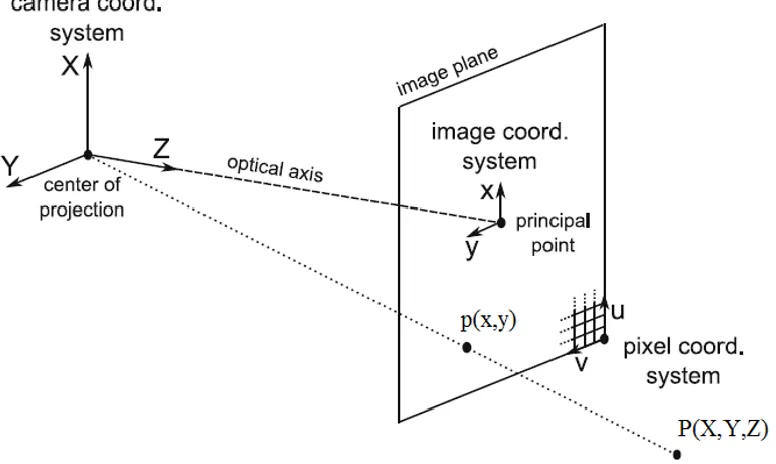
Figure 3.3 Projection between different coordinate systems ... 15
Figure 3.4 A pinhole camera model. ... 17
Figure 3.5 Barrel Distortion and Pincushion Distortion ... 19
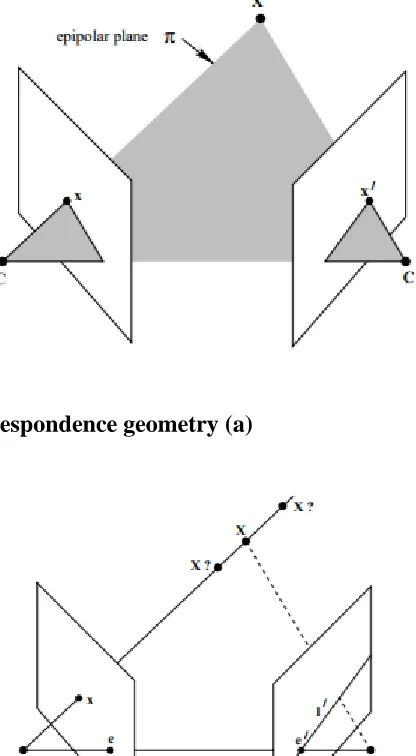
Figure 3.6 Points correspondence geometry (a) ... 22
Figure 3.7 Points correspondence geometry (b) ... 22
Figure 3.8 Illustration of Epipolar geometry ... 23
Figure 3.9 Epipolar constraint... 26
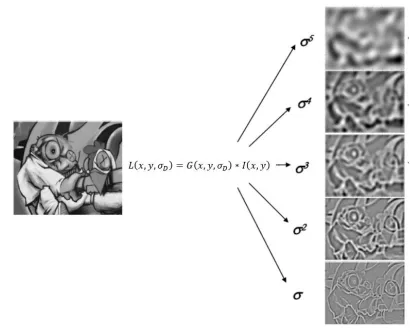
Figure 3.10 Input image applied with different Gaussian kernel... 28
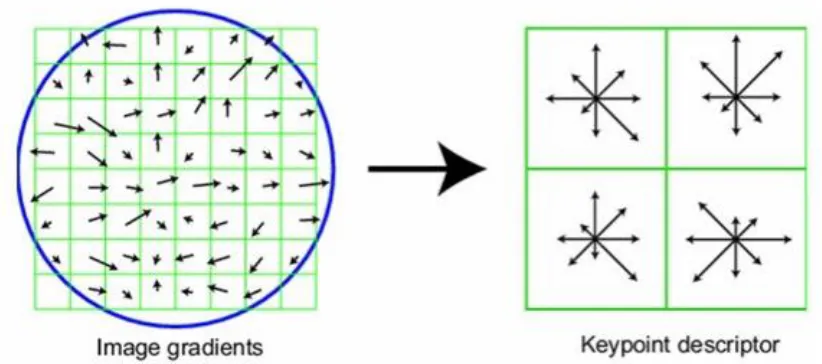
Figure 3.11 SIFT key point descriptor ... 30
Figure 3.12 Differences between SIFT (left side) and SURF (right side) when constructing a scale space. ... 32
Figure 3.13 Orientation assignment of SURF... 33
viii
Figure 3.15 Four solution form decompose Essential Matrix.. ... 40
Figure 3.16 Re-center dataset ... 44
Figure 5.1 RGB-D image structure. ... 51
Figure 5.2 Case 1: Feature Points.. ... 53
Figure 5.3 Case 1: Correspondences.. ... 54
Figure 5.4 Case 2: Feature Points ... 56
Figure 5.5 Case 2: Correspondences ... 56
Figure 5.6 Gaussian Distribution with different values for sigma ... 60
Figure 5.7 Comparative offsets of R for sigma∈ [0,1] ... 61
Figure 5.8 Comparative offsets of T for sigma∈ [0,1] ... 61
Figure 5.9 Comparative offsets of R for sigma∈ [0,0.7] ... 62
Figure 5.10 Comparable offsets of T for sigma∈ [0,0.7] ... 62
Figure 6.1 The reflection problem with a transparent glass... 65
Chapter 1
1
Introduction
1.1
Overview
The robotics industry has been developing rapidly in the past few years. Typical robotic
tasks, like simultaneous localization and mapping (SLAM), navigation, object
recognition and many others, greatly benefit from having color and depth information
fused together. Traditional high-cost 3D profiling cameras often result in lengthy
acquisition and slow processing of massive amounts of information. With the invention
of the low-cost Microsoft Kinect sensor, high-resolution depth and visual (RGB) sensing
has created many opportunities for multimedia computing. Our objective is to design and
implement a system for calibrating multiple Kinect sensors in different views.
1.2
Kinect Mechanism
Kinect contains a normal RGB camera, an Infrared Sensor and a four-microphone array.
Combining these devices, the Kinect is able to provide RGB images, depth images and
audio signals simultaneously, which encourages varied applications in different fields,
such as image signal synchronization, human 3-D motion capture, human face
Kinect Sensing Hardware
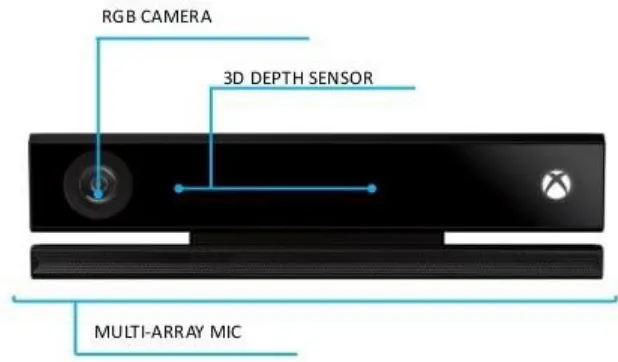
Kinect is a composite device consisting of a near-infrared laser pattern projector, an IR
camera and a color (RGB) camera; Figure 1.1 shows the arrangement of the sensors on a
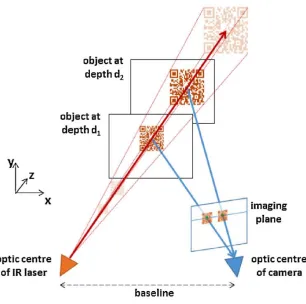
Kinect. The laser pattern projector and the IR camera are used as a stereo pair to capture
depth information in 3D space. The IR projector casts an IR speckle dot pattern into the
3D scene while the IR camera captures the reflected IR speckles. Due to the uniqueness
of each projected dot, the depth of a point can be captured by relative left-right translation
of the dot pattern. This translation is dependent on the distance of the object to the
camera-projector plane. Such a procedure is illustrated in Figure 1.2. [1]
Each component of the Kinect hardware is described below.
1) RGB Camera: It delivers three basic color components of the video. The camera
operates at 30 Hz, and can offer images at 1920×1080 pixels with 8-bit per channel. The
angular field of view (FOV) is 84.1° horizontally and 54.8° vertically.
2) 3-D Depth Sensor: It consists of an IR laser projector and an IR camera. Together, the
depth image is constructed by triangulation from the stereo pair. The sensor has a
practical ranging limit of 0.5 m−8.0 m distance, and outputs video at 30 frames/s with the
resolution of 512×424 pixels. The angular field of view (FOV) is 70.6° horizontally and
60.0° vertically.
Table 1 also provides comparative specifications of the Kinect v2, which is used in this
Figure 1.2. Illustration of Kinect depth measurement. IR camera could sense the
depth by the unique project pattern.
Table 1. Comparative Specifications of Kinect v1 and Kinect v2.
Kinect v1 Kinect v2
Resolution of RGB image 640 × 480(pixel) 1920 × 1080(pixel)
Resolution of IR image 320 × 240(pixel) 512 × 424(pixel)
Field view of RGB image 62° × 48.6° 84.1° × 53.8°
Maximum skeletal tracking 2 6
Method of depth measurement Lighting coding Time of Flight
Working range 0.8m~3.5m 0.5m~8.0m
1.3
Problem and Issues
Multiple-camera systems have become increasingly prevalent in robotics and computer
vision research. One of the most important tasks is how to combine the visual
information in those cameras. This problem, in general, can be interpreted as a
mathematical problem. Given two cameras, each with their own 3D coordinate system,
they obtain information of the same scene from different views. There should be a rigid
transformation between the two camera coordinates. Specifically, in 3D space, this
transformation is determined by a rotation matrix 𝑅 and a transit vector 𝒕⃗.
This problem can be stated as follows:
Assume that we have two calibrated cameras 𝐶𝑙 and 𝐶𝑟, such that the intrinsic matrices
are 𝐾𝑙 and 𝐾𝑟. However, the absolute positions expressed in a world coordinate system
𝑂𝑤 between them are unknown. By giving the input RGB + Depth (RGB-D) images of
the same scene from those two cameras, can we design a system that can automatically
1.4
Thesis Contribution
This thesis presents and evaluates a framework that integrates RGB-D data capture,
feature points selection, correspondence optimization and camera pose reconstruction
into one application. The thesis also includes a robustness analysis of the approach which
demonstrates that the system is resistant to noisy data and provides precise estimation.
Besides, this thesis is the first one to introduce 3D eight-points algorithm and numerically
compare those three pose estimation algorithms.
1.5
Thesis Contents
This thesis is organized as follows:
Chapter 2 briefly describes the traditional methods of camera calibration as well as
previous work on 3D sensor calibration and address the deficiency and constraints of
each algorithm. Chapter 3 is the core of this thesis which explained in detail each stage of
the processing within the system. With respect to feature detection and correspondence
selection, we rely on the work of Lowe [2][3] and Bay and Herbert [4]. We also
leverage the camera pose estimation algorithms proposed by Lepetit [5] and Hartley [6].
In Chapter 4, the methodology that is used to build the complete system is presented and
the sets of experiments are described. The results presented in Chapter 5 illustrate the
effectiveness of the system and demonstrate its robustness to noise. Finally, Chapter 6
lists some areas of future work for potentially improving the system and proposes new
Chapter 2
2
Related Work
Camera calibration, in general, is the process of estimating the parameters of a pinhole
camera model approximating the camera that produced a given photograph or video. The
extrinsic calibration of a camera from independent pairwise correspondences with
multiple views is essentially the problem of estimating the camera positions between
non-central cameras.
Many calibration methods have been proposed to do the calibration work using a
calibration object with known world coordinates. One possible way is to use a calibration
object, which consists of several easily detectable non-coplanar feature points with
known relative 3D positions, such as a checkerboard pattern [7], [8], [9]. Corresponding
points between 3D world points and image points could be accomplished by fixing the
world coordinate system in the calibration object. Then, by optimizing the mapping from
picture coordinates system to corresponding 3D world coordinates, both intrinsic and
extrinsic parameters could then be estimated. This optimization problem could be solved
linearly if 17 correspondences are given [10]. Apart from the time complexity, 6 pairs of
correspondences, at a minimum, are also able to be used to find an acceptable estimation
[11]. However, this 6-pairs correspondence method cannot output reliable results for
some particular situations, for example, if one of the generalized views is a pin-hole. For
stereo rigs, Vasconcelos et al. propose a non-minimal solution using 10 correspondences
[12].
To conclude, these kinds of algorithms can solve the problem for calibrating a single
camera efficiently. However, when it comes to a camera network, which contains
multiple cameras, it is tedious and cumbersome to calibrate all the cameras
simultaneously using these reference objects, as it is often extremely difficult to make all
the points on the calibration object simultaneously visible in all views. Moreover,
designing highly accurate tailor-made calibration patterns are often difficult and
expensive.
Another option [13], [14] is to observe the object through planar mirror reflections in
order to handle situations of little or no overlap in the focal views. They overcome the
need for all cameras to have overlapping direct views by allowing them to see the object
through a mirror. They first adopt standard calibration methods to find the internal and
external parameters of a set of mirrored cameras poses and then estimate the external
parameters of the real cameras from their mirrored poses by formulating constraints
between them. However, those calibration procedures are explicit, in the sense that they
require substantial human intervention, and are meant to be carried out as an initial
off-line step before starting to operate the network of cameras.
People have also turned to 3D sensors, which offer depth information in more convincing
and precise ways. An important task for multiple cameras is the calibration for 3D
Auvinet et al. [15] proposed a method for calibrating multiple depth cameras by using
only depth information. Their algorithm is based on plane intersections and the Network
Time Protocol for data synchronization. The calibration achieves good results even if the
depth error of the sensor is 10 mm. A drawback of their implementation is that they have
to manually select the plane corners and, above all, they only deal with depth sensors,
thus avoiding the possibility to add the color information to the fused data.
Another approach to solve the calibration problem is the one proposed by Le and
Ng [16]: they jointly calibrate groups of sensors. Each group is composed by a set of
sensors that can provide a 3D representation of the world. They first calibrate the
intrinsic parameters of the sensors individually, then they calibrate the extrinsic
parameters of each group and the extrinsic parameters of each group with respect to all
the others. In the end, they refine the calibration parameters of the entire system in one
optimization step. Their experiments show that this method not only reduces the
calibration error, but also requires little human intervention.
In 2010, the Kinect for Xbox 360 sensor was introduced by Microsoft as an affordable
and real-time source for RGB-D data, which was dedicated to gesture detection and
recognition in a game controller. Due to its acquisition speed, many researchers have
recognized the potential of the Kinect’s RGB-D imaging technology, which gives a
significant rise to this field.
In order to merge data collected from different Kinect sensors, various approaches have
been proposed for simultaneous calibration of Kinect’s sensors. Burrus [17] proposes to
selection of the four corners of a checkerboard for calibrating the depth sensor. Zhang et
al. [18] propose a semi-automatic method. They automatically sample the planar target to
collect the points for calibration of depth sensor and then manually select corresponding
points between color and depth images. Combing them together, the extrinsic relationship
within a single Kinect sensor is established. Gaffney [19] describes a technique to
calibrate the depth sensor by using 3D printouts of cuboids to generate different levels in
depth images. However, after that it requires an elaborate process to construct the target.
To avoid the need for blocking the projector when calibrating, Berger et al. use a
checkerboard where black boxes are replaced with mirroring aluminum foil [20].
In conclusion, traditional methods fail to use depth information effectively which makes
them unable to determine the distance in the real world. A number of the previous 3D
sensor calibrating algorithms require human intervention and thus are tedious and
complex when calibration of multiple cameras is needed. This thesis provides a system
that can not only determine camera poses with a high precision but it is also robust to
noisy data. More importantly, it is an automatic system that requires no human
Chapter 3
3
System Description
In this Chapter, we present each component of our system in chronological order. We
introduce the theory of RGB-D image formation, depth information, pinhole camera
models and four coordinate systems. Following this, the problem of calibrating the
camera system is proposed. This part contains the definition of intrinsic and extrinsic
camera parameters and discusses the phenomenon of camera lens distortion. In order to
introduce the Essential and Fundamental Matrices, the theory of Epipolar Geometry is
also discussed.
We then discuss some common computer vison tasks such as, feature detection and
matching. Two scale-invariant feature detection algorithms, SIFT and SURF, are
presented. We also discuss a robust stochastic method (RANSAC) commonly used to
match features from source images.
Three methods of estimating camera pose from correspondences are presented. These are:
the Eight-Point algorithm (uses 2D correspondences), Perspective-n-Point (uses 3D-2D
correspondences), and 3D Point Registration (uses 3D correspondences). The system is
Figure 3.1 Flow chart r the whole system
3.1
Stereo Vision Theory
Stereo vision refers to the process of extracting 3D information from two (or more) 2D
views of a scene. In this Section, common knowledge is discussed such as disparity and
depth. In addition, the pinhole camera model as well as different coordinate systems are
introduced in order to discuss stereo vison effectively.
Disparity and Depth
Human eyes are horizontally separated by about 50–75 mm, depending on each
individual. Thus, each eye has a slightly different view of the world around. The term
binocular disparity refers to geometric measurements related to the estimation of scene
depth. In computer vision, binocular disparity is calculated from stereo images taken
from a set of stereo cameras. The variable distance between these cameras, called the
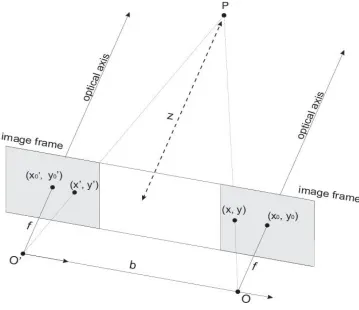
[21]. Figure 3.2 shows one point in the real world projected onto two image planes by
two cameras in different positions.
Figure 3.2 Stereo cameras projection. The quantity b refers to baseline, and (𝒙 − 𝒙′)
is disparity.
Disparity can be used in the extraction of information from stereo images. One case that
disparity is most useful is for 3D depth estimation. Disparity and distance from the
cameras are inversely related. As the distance of an object from the cameras increases,
the disparity decreases. According to triangulation, we have
Disparity d = 𝑥 − 𝑥′= b ·𝑓 𝑧
Depth
z =
𝑏·𝑓 𝑥−𝑥′=
𝑏·𝑓
𝑑 (3.1)
where 𝑥 and 𝑥′ are the distance between points in the image plane corresponding to the
3D scene point and their camera centers. b is the distance between two cameras and 𝑓 is
the focal length of camera.
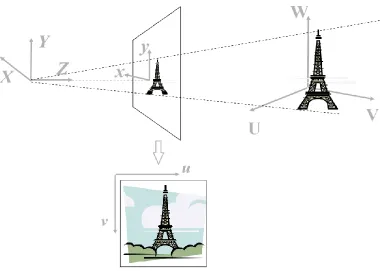
Coordinate Systems
1) World Coordinate (U, V, W)
It is the absolute coordinate system of the world. In general, a 3D scene is expressed
in this coordinate system.
2) Camera Coordinate (X, Y, Z)
This coordinate system is related to the pinhole camera model. In this coordinate
system, Z is the optical axis (or line if sight), with the image plane located at𝑓units
away along the optical axis. 𝑓 is known as the focal length.
3) Film Coordinate (𝑥, 𝑦)
By forward projecting point from camera coordinates onto the image plane, a 2D
coordinate is obtained, which is called a film coordinate.
4) Pixel Coordinate (𝑢, 𝑣)
In images, the points are measured in pixel units, so the film coordinate needs to be
in the upper left corner of the image and the u and v axes are parallel to x and y axes
in film coordinates.
Figure 3.3 shows the relationship between the four coordinate systems.
Figure 3.3 Projection between different coordinate systems
Pinhole Camera Model
Given a camera coordinate system with 𝑓 as its focal length. The line from center of
projection and perpendicular to the image plane is called principal axis of the camera and
Assume (𝑋, 𝑌, 𝑍) is the 3D coordinates of an image point p(𝑥, 𝑦) on the camera image
plane. Then, the 3D point and its 2D image point are related as:
𝑥 = 𝑓𝑋
𝑍 , 𝑦 = 𝑓 𝑌
𝑍 (3.2)
This relation is known as perspective projection. However, x and y are expressed in the
units of the world coordinate system, and need to be converted to pixel units.
Transforming the coordinates requires knowing the column-wise and row-wise density of
the pixels (pixels per millimeter), let them be 𝑎𝑢and 𝑎𝑣 respectively. We also need to
know the deviation of the principal point from the image center. Let its coordinates be
(−𝑥0, −𝑦0). Then p can be written as
𝑢 = 𝑎𝑢(𝑥 + 𝑥0) = 𝑎𝑢𝑓 𝑋
𝑍+ 𝑎𝑢𝑥0 (3.3)
𝑣 = 𝑎𝑣(𝑦 + 𝑦0) = 𝑎𝑣𝑓𝑌
𝑍+ 𝑎𝑣𝑦0 .
Figure 3.4 A pinhole camera model.
3.2
Camera Calibration
Intrinsic Parameters
Equation (3.3)
𝑢 = 𝑎𝑢(𝑥 + 𝑥0) = 𝑎𝑢𝑓 𝑋
𝑍+ 𝑎𝑢𝑥0
𝑣 = 𝑎𝑣(𝑦 + 𝑦0) = 𝑎𝑣𝑓𝑌
𝑍+ 𝑎𝑣𝑦0 .
𝑃′ =𝑃 𝑍 = ( 𝑋 𝑍 ⁄ 𝑌 𝑍 ⁄ 𝑍 𝑍 ⁄ ) = ( 𝑋′ 𝑌′
1) (3.4)
Then (3.3) can be expressed as:
(𝑢𝑣 1) = (
𝑎𝑢𝑓 0 𝑎𝑢𝑥0
0 𝑎𝑣𝑓 𝑎𝑣𝑦0
0 0 1
) (𝑋
′
𝑌′
1) = 𝐾𝑃
′ (3.5)
and let
𝑓𝑥 = 𝑎𝑢𝑓, 𝑓𝑦 = 𝑎𝑣𝑓, 𝑐𝑥 = 𝑎𝑢𝑥0, 𝑐𝑦 = 𝑎𝑣𝑦0.
Those four quantities are determined by the internal structure of the camera, and are
known as intrinsic parameters. Therefore, the camera intrinsic parameter matrix 𝐾 can be
represented as:
𝐾 = (
𝑓𝑥 0 𝑐𝑥
0 𝑓𝑦 𝑐𝑦
0 0 1
) (3.6)
Normally, the intrinsic parameters of the camera are usually found by calibration [22].
For the Kinect cameras, they can be obtained using the Microsoft Kinect SDK v2.0 [23].
3.2.1.1
Distortion Coefficients
In the section 3.1.3, we introduced the pinhole camera model, disregarding the possibility
of distortions introduced by the camera assembly and the lens itself. Because of such
There are two types of distortions: optical and perspective. Both result in some type of
image deformations, lightly or noticeably. In optical distortion, there has been two most
common and significant distortions: Barrel Distortion and Pincushion Distortion. Figure
3.5 shows how they deform images.
Figure 3.5 Barrel Distortion and Pincushion Distortion
These distortions are accounted for and corrected with relatively simple models [22],
[24]. Let (𝑥, 𝑦) be the ideal coordinates on image plane, and (𝑥𝑑, 𝑦𝑑) the corresponding,
real observed coordinates. Also, let (0,0) denote the principal point, free of any
distortion. Then we can write:
𝑥𝑑 = 𝑥 ∙ (1 + 𝑘1𝑟2+ 𝑘2𝑟4+ 𝑘3𝑟6), (3.7)
𝑦𝑑 = 𝑦 ∙ (1 + 𝑘1𝑟2+ 𝑘2𝑟4+ 𝑘3𝑟6),
Where
and𝑘1, 𝑘2, 𝑘3 are radial distortion coefficients. Zhang claims that the first two terms in
these equations are sufficient to adequately undistort images in most cases [2].
3.2.1.2
Extrinsic Parameters
In the pinhole camera model, we have a prerequisite assumption that the center of the
camera coordinate system is the center of world coordinate system. But in real life, it not
always the case. We define a rotation matrix 𝑅 and a translation vector 𝒕⃗ to denote the
coordinate system transformations from 3D world coordinates to 3D camera coordinates.
Let P(𝑈, 𝑉, 𝑊) to be a point in the world coordinate and P(𝑋, 𝑌, 𝑍)corresponding to
coordinates in the camera coordinate system. Then,
( 𝑋 𝑌 𝑍 ) = 𝑅 · ( 𝑈 𝑉 𝑊 ) + 𝒕⃗ = (
𝑟11 𝑟12 𝑟13 𝑟21 𝑟22 𝑟23 𝑟31 𝑟32 𝑟33) · (
𝑈 𝑉 𝑊 ) +· ( 𝑡𝑥 𝑡𝑦 𝑡𝑧 ) (3.8)
The parameters 𝑅 and 𝒕⃗ are known as extrinsic parameters. They describe the camera's
location and orientation in the world coordinate system. The extrinsic parameters are
often written in a matrix form:
[𝑅|𝒕⃗] = [
𝑟11 𝑟12 𝑟13 𝑟21 𝑟22 𝑟23 𝑟31 𝑟32 𝑟33|
𝑡𝑥 𝑡𝑦 𝑡𝑧
] , (3.9)
3.3
Epipolar Geometry
3.3.1.1
Overview
When using two cameras or the same camera in two different locations to image the same
scene, the two resulting pictures are related by what is known as Epipolar Geometry. This
type of geometry is independent of scene structure, and only depends on the cameras’
internal parameters and relative pose [25].
Suppose 𝑋 is a point in 3D world coordinates, where 𝑋 is projected onto the two views,
as 𝑥 in the first view, and as 𝑥′ in the second view. 3D Point 𝑋 and the camera centers 𝐶
and 𝐶′ form what is known as the epipolar plane 𝜋. Figure 3.6, shows that the rays
back-projected from 𝑥 and 𝑥′ intersect at 𝑋, and are lying in the plane 𝜋.
If we only know 𝑥, the position of 𝑥′ is impossible to determine (See Figure 3.7). The
plane 𝜋 is determined by the stereo baseline and the rays defined by 𝑥. The point 𝑥′ lies
on a line 𝑙′, which is the image in the second view of the ray back-projected from x. This
constraint is quite crucial to stereo correspondence, since the search for the point
corresponding to x need not cover the entire image plane but can be restricted to the line
𝑙′, known as an epipolar line.
We introduce the terminology of Epipolar geometry.
➢ Epipole: the epipole is the point of intersection of the line joining the camera centers
(the baseline) with the image plane.
➢ Epipolar line: an epipolar line is the intersection of an epipolar plane with the image
plane. All epipolar lines intersect at the epipole.
The geometric entities involved in Epipolar geometry are illustrated in Figure 3.8.
Figure 3.6 Points correspondence geometry (a)
Figure 3.8 Illustration of Epipolar geometry
3.3.1.2
Fundamental and Essential Matrices
In 1981, Longuet-Higgins found that there is a special 3 × 3 matrix that associates two
images from different perspectives of the same scene [26]. Then in the late 1980s and
early 1990s, other scholars re-discovered this matrix in various fields. It came to be
known as the Fundamental Matrix.
Let’s consider two perspective images of a scene as taken from a stereo pair of cameras.
(or equivalently, assume the scene is rigid and imaged with a single camera from two
different locations) and suppose 𝐾𝑙 and 𝐾𝑟 are the intrinsic parameter matrices of these
two cameras. Let P be a point in the world coordinate, and 𝑃𝑙(𝑃𝑙𝑥, 𝑃𝑙𝑦, 𝑃𝑙𝑧) and
𝑃𝑟(𝑃𝑟𝑥, 𝑃𝑟𝑦, 𝑃𝑟𝑧) be the coordinates of P in left and right camera coordinate system. The
position and orientation of the two cameras are related by a rotation matrix 𝑅 and a
translation vector𝒕⃗ = (𝑡𝑥, 𝑡𝑦, 𝑡𝑧)𝑇in the following way:
Due to the epipolar constraint (see Figure 3.9) and outer product properties we can write:
𝑃𝑟∙ (𝒕⃗ × 𝑃𝑟) = 0 (3.11)
Combining (3.10) and (3.11) yields:
𝑃𝑟∙ (𝒕⃗ × (𝑅 · 𝑃𝑙+ 𝒕⃗)) = 0 (3.12)
Since, 𝒕⃗ × 𝒕⃗ = 𝟎, the equation is equivalent to:
𝑃𝑟∙ 𝒕⃗ × 𝑅 ∙ 𝑃𝑙 = 0 (3.13)
We have
𝒕⃗ × 𝑅 = S𝑅 (3.14)
where
𝑆 = [
0 −𝑡𝑧 𝑡𝑦 𝑡𝑧 0 −𝑡𝑥 −𝑡𝑦 𝑡𝑥 0
] ,
is a skew-symmetric matrix of rank 2.
Thus, we write:
𝑃𝑟𝑇∙ 𝑆𝑅 ∙ 𝑃
𝑙 = 0 . (3.15)
Let 𝐸 = 𝑅𝑆:
The matrix 𝐸 here called the Essential Matrix. The matrix 𝐸:
has rank 2, and
depends only on the extrinsic parameters (𝑹 and 𝒕⃗).
Consider 𝑥𝑙 = (𝑢𝑙, 𝑣𝑙) and 𝑥𝑟 = (𝑢𝑟, 𝑣𝑟) as the projections of 3D point 𝑃 onto the two
image planes, with 𝑥𝑙 and 𝑥𝑟 defined as:
𝑥𝑙 = (𝑢𝑙
𝑣𝑙
1
) , 𝑥𝑟 = (𝑢𝑟
𝑣𝑟
1
) (3.17)
According to (3.4), we have
𝑍 · 𝑥𝑙 = 𝐾𝑙𝑋𝑙 , (3.18)
𝑍 · 𝑥𝑟 = 𝐾𝑟𝑋𝑟.
Combing (3.16) and (3.18)
𝑍2∙ 𝑥𝑟𝑇∙ 𝐾𝑟−𝑇∙ 𝐸 ∙ 𝐾𝑙−1∙ 𝑥𝑙 = 0 , (3.19)
which is equivalent to
𝑥𝑟𝑇∙ 𝐾
𝑟−𝑇∙ 𝐸 ∙ 𝐾𝑙−1∙ 𝑥𝑙= 0 (3.20)
The matrix 𝐹 = 𝐾𝑟−𝑇∙ 𝐸 ∙ 𝐾
𝑙−1, is called Fundamental Matrix and expresses epipolar
Figure 3.9 Epipolar constraint
3.4
Feature Detection
SIFT Feature
The Scale Invariant Feature Transform (SIFT) was first proposed by David Lowe in 1999
and improved in 2004 to identify points of interest in an image [2], [3]. The SIFT
approach, for image feature generation, takes an image and transforms it into a "large
collection of local feature vectors", with each of these feature vectors invariant to scaling,
rotation or translation of the image.
The SIFT algorithm consists of a 4-stage filtering approach:
Scale-space peak detection
This stage of the filtering attempts to identify those locations and scales that are
identifiable from different views of the same object. The approach to achieve this is
building a scale space by using Laplacian of Gaussian (LoG). The scale space is defined
𝐿(𝑥, 𝑦, 𝜎𝐷) = 𝐺(𝑥, 𝑦, 𝜎𝐷) ∗ 𝐼(𝑥, 𝑦) ,
where 𝐼(𝑥, 𝑦) represents the original image, ∗ is the convolution operator, and 𝐺 is a
Gaussian kernel. Figure (3.10) shows an input image to which a Gaussian kernel is
applied in a successive manner.
There are various techniques to detect stable key point locations in scale-space. One of
them is the Difference of Gaussians technique: locating scale-space peak 𝐷(𝑥, 𝑦, 𝜎𝐷) by
computing the difference between two images, one with scale𝑘 times the other.
𝐷(𝑥, 𝑦, 𝜎𝐷) is then given by:
𝐷(𝑥, 𝑦, 𝜎𝐷) = 𝐿(𝑥, 𝑦, 𝑘𝜎𝐷) − 𝐿(𝑥, 𝑦, 𝜎𝐷)
To detect the local maxima and minima of 𝐷(𝑥, 𝑦, 𝜎𝐷), each point is compared with its 8
neighbors at the same scale, and its 9 neighbors up and down one scale. If this value is
Figure 3.10 Input image applied with different Gaussian kernel. Applied with
different scales factor, input image shows different details.
Key point localization
The purpose of this step is to pinpoint the location of the feature key. To reach this goal,
the Laplacian value for each key point found in stage 1 is calculated. The location of
extremum, z is given by:
z = −
𝜕
2
𝐷
−1𝜕𝑋
2If the function value at z is below a threshold value then this point is excluded. By doing
this, low contrast extrema and poorly localized candidates are removed. It is noted for
difference of Gaussian function that there is a large principle curvature across the edge
but a small curvature in the perpendicular direction. If this difference is below the ratio of
largest to smallest eigenvector, from the 2x2 Hessian matrix at the location and scale of
the key point, the key point is rejected.
Orientation assignment
This is the third step of SIFT. The purpose is to achieve the orientation invariance of the
SIFT feature. The approach taken to find an orientation is:
➢ Use the key points scale to select the Gaussian smoothed image L
➢ Compute gradient magnitude 𝑚 and orientation 𝜃
𝑚(𝑥, 𝑦) = √(𝐿(𝑥 + 1, 𝑦) − 𝐿(𝑥 − 1, 𝑦))2+ (𝐿(𝑥, 𝑦 + 1) − 𝐿(𝑥, 𝑦 − 1))2 ,
𝜃(𝑥, 𝑦) = tan−1((𝐿(𝑥, 𝑦 + 1) − 𝐿(𝑥, 𝑦 − 1)) (𝐿(𝑥 + 1, 𝑦) − 𝐿(𝑥 − 1, 𝑦))⁄ )
➢ For each key point, we select the 16 x 16 neighborhood and quantify the gradient of
all pixels (256) in this window into the histogram of 36 bin.
➢ Locate the highest peak in the histogram. Use this peak and any other local peak
within 80% of the height of this peak to create a key point with that orientation
Once Completed the above three steps of SIFT, then we need to find a Local Image
Descriptors at key points. Here we chose to use the gradient direction histogram to
describe this key point. Key point descriptors typically use a set of 16 histograms, aligned
in a 4x4 grid, each with 8 orientation bins, one for each of the main compass directions
and one for each of the mid-points of these directions. This results in a feature vector in
128-dimensions, (see Figure 3.11).
Figure 3.11 SIFT key point descriptor
SURF Feature
In computer vision, speeded up robust features (SURF) is a patented local feature
detector and descriptor. This algorithm is based on the same principles and steps of SIFT,
but it utilizes a different scheme [4].
SURF uses a Hessian based blob detector [27] to find interest points. The determinant of
a Hessian matrix expresses the extent of the response and is an expression of the local
change around the area.
A Hessian Matrix is defined as:
𝐻(𝑥, 𝜎) = [𝐿𝑥𝑥(𝑥, 𝜎) 𝐿𝑥𝑦(𝑥, 𝜎) 𝐿𝑥𝑦(𝑥, 𝜎) 𝐿𝑦𝑦(𝑥, 𝜎)] ,
where
𝐿𝑥𝑥(𝑥, 𝜎) = 𝐼(𝑥) ∗ 𝜕 2
𝜕𝑥2𝑔(𝜎)
𝐿𝑥𝑦(𝑥, 𝜎) = 𝐼(𝑥) ∗ 𝜕 2
𝜕𝑥𝑦𝑔(𝜎)
The core of SURF detection is non-maximal-suppression of the determinants of the
Hessian matrices. However, to calculate the convolutions is a time-consuming process.
To speed it up, integral images and approximated kernels are being used.
An Integral image 𝐼(𝑥) is an image where each point 𝑝(𝑥, 𝑦)𝑇stores the sum of all pixels
in a rectangular area between center 𝑂(0,0)𝑇and p.
𝐼(𝑥) = ∑ ∑ 𝐼(𝑥, 𝑦) 𝑗<𝑦
𝑗=0 𝑖<𝑥
𝑖=0
As in the first stage of SIFT, interest points can be found at different scales, partly
because the search for correspondences often requires the comparison of images where
these points are seen at different scales. In the stages of building a scale pyramid, the
SURF and SIFT use different strategies. For SIFT, the Gaussian filter size is kept
unchanged, but the image size changes at different scales. The SURF technique is
opposite, the image size remains unchanged but the filter size changes (see Figure 3.12).
In order to localize interest points in the image and over scales, a non-maximum
suppression in a 3 × 3 × 3 neighborhood is applied.
Figure 3.12 Differences between SIFT (left side) and SURF (right side) when
constructing a scale space.
Orientation assignment
In order to be invariant to image rotation, SURF builds the distribution of first-order Haar
The dominant orientation is estimated by calculating the sum of all responses within a
sliding orientation window of size 𝜋⁄3, as in Figure 3.13.
Figure 3.13 Orientation assignment of SURF. The right region has a strongest Haar
Wavelet response, therefore such orientation serves as the dominant orientation for
the interst point.
Descriptor based on sum of Haar wavelet responses
For the extraction of the descriptor, the first step consists of constructing a square region
centered around the interest point and oriented along the dominant orientation. The size
of this window is 20s, where s is the scale at which the interest point was detected. The
region is then split up regularly into smaller 4 × 4 square sub-regions. Then, the wavelet
responses 𝑑𝑥, 𝑑𝑦,|𝑑𝑥| and |𝑑𝑦| are summed up over each sub-region and form a feature
Figure 3.14 Feature descriptor for SURF
3.5
Correspondence
Overview
Given two or more images of the same 3D scene, taken from different points of view, the
correspondence problem refers to the task of finding a set of points in one image which
can be identified as the same points in another image.
There are two basic ways to achieve this:
The idea of the correlation is to check if one part in one image looks like another in
another image. One simple method is to compare small patches between rectified images:
A filter window is passed over a number of positions in one image to check how well it
compares with the same location as well as several nearby locations in the other image.
Feature-based methods
This kind of methods first finds features in one image and then associates them with
features from a second image that are most similar. As mentioned in Section 3.4, SIFT,
SURF and other feature point detection algorithms could be used to reach this goal. For
example, rough correspondence could be found by just comparing two key points
descriptor’s Euclidean distance.
Random Sample Consensus (RANSAC)
The RANSAC algorithm performs a robust fitting of models in the presence of many data
outliers [27], [28],[29]. Given a dataset whose data elements contain both inliers and
outliers, RANSAC uses the voting scheme to find the optimal fitting result. The
implementation of this voting scheme is based on two assumptions:
Few Outliers: the noisy features will not vote consistently for any single model.
Few Missing Data: there are enough features to agree on a good model.
RANSAC algorithm is often used in computer vision. To be specific, it could be used to
simultaneously solve the correspondence problem and estimate the fundamental
This algorithm works as follows:
Algorithm:
Input: source RGB-D image 𝐼𝑙 and 𝐼𝑟, threshold 𝜀, Maximum iteration 𝜇
Output: high-quality correspondences set 𝑆 and Essential Matrix 𝐸
Step 1: Calculate Feature points set 𝐹𝑙 and 𝐹𝑟 from source image. (e.g. using SURF
feature.)
Step 2: Calculate correspondence set𝐶 from 𝐹𝑙 and 𝐹𝑟 by using feature based
correspondence methods.
Step 3: Initialize 𝑁 = 0.
Step 4: Randomly select a set 𝑆𝑡 , which contains 8 correspondences, from 𝐶 and
compute 𝐸𝑡 with 8 points algorithms and initialize 𝑁𝑡=0.
Step 5: for correspondence 𝑝 ↔ 𝑞 in 𝐶, compute𝑝𝐸𝑡𝑞.
if 𝑝𝐸𝑡𝑞 < 𝜀
then 𝑁𝑡 = 𝑁𝑡+ 1
Step 6: if 𝑁𝑡> 𝑁
then 𝑁 = 𝑁𝑡, 𝑆 = 𝑆𝑡, 𝐸 = 𝐸𝑡.
Step 8: output set 𝑆 and Essential Matrix 𝐸.
3.6
Camera pose estimation Algorithm
Eight-Points Algorithm (2D-2D)
3.6.1.1
Computing the Fundamental Matrix
In Section 3.1.1.2, we introduced the Fundamental Matrix
𝑥𝑟𝑇∙ 𝐹 ∙ 𝑥𝑙 = 0
where 𝑥𝑟 and 𝑥𝑙 are projections of the same 3D point in two different image planes.
Given any pair of correspondence 𝑝 ↔ 𝑞 where 𝑝 = (𝑢, 𝑣, 1)𝑇 and 𝑞 = (𝑢′, 𝑣′, 1)𝑇, the
equation relating points p and q to the Fundamental Matrix 𝐹 is:
𝑢𝑢′𝑓11+ 𝑢𝑣′𝑓21+ 𝑢𝑓31+ 𝑣𝑢′𝑓12+ 𝑣𝑣′𝑓22+ 𝑣𝑓32+ 𝑢′𝑓13+ 𝑣′𝑓23+ 𝑓33= 0 .
Each correspondence gives rises to one linear equation in the unknown entries of 𝐹.
Therefore at least 8 correspondences are needed to estimate matrix 𝐹 from a homogenous
set of linear equations:
[
𝑢1𝑢1′ 𝑢1𝑣1′ 𝑢1 𝑣1𝑢1′ 𝑣1𝑣1′ 𝑣1 𝑢1′ 𝑣1′ 1
⋮ ⋮ ⋮ ⋮ ⋮ ⋮ ⋮ ⋮ ⋮
𝑢8𝑢8′ 𝑢8𝑣8′ 𝑢8 𝑣8𝑢8′ 𝑣8𝑣8′ 𝑣8 𝑢8′ 𝑣8′ 1
] 𝑓⃗ = 0 . (3.21)
Where 𝑓⃗ = (𝑓11, 𝑓21, 𝑓31, 𝑓12, 𝑓22, 𝑓32, 𝑓13, 𝑓23, 𝑓33)𝑇,
𝑨𝑓⃗ = 0 (3.22)
we are seeking 𝑓⃗ that minimizes ‖𝑨𝑓⃗‖ subject to the constraint ‖𝑓⃗‖ = 𝑓⃑𝑇∙ 𝑓⃑ = 1. This
represents a least-squares estimation of the Fundamental Matrix.
3.6.1.2
Extracting Camera Pose from the Essential Matrix
Once 𝐹 is estimated, we can compute the Essential Matrix with the following equation:
𝐸 = 𝐾𝑟𝑇∙ 𝐹 ∙ 𝐾 𝑙
We also have
𝐸 = 𝒕⃗ × 𝑅 = 𝑆𝑅 , (3.23)
where 𝑅 and 𝒕⃗ are the rotation matrix and the translation vector describing the positions
of the two cameras, relative to each other.
𝐸 has the following properties,
rank 2
det( 𝐸) = 0
its two non-zero singular values are equal.
Since the scale is arbitrary, we set a constraint stipulating ‖𝒕⃗‖ = 1.
𝐸 = 𝑈 ∙ 𝑑𝑖𝑎𝑔(1,1,0) ∙ 𝑉𝑇 (3.24)
We introduce two auxiliary matrices:
𝑊 = [
0 −1 0
1 0 0
0 0 1
] and 𝑍 = [
0 1 0
−1 0 0
0 0 0
]
where the matrix𝑊 is a rotation and 𝑍 is skew symmetric. Furthermore, for these
matrices we have:
𝑍𝑊 = diag(1,1,0) , (3.25)
𝑍𝑊𝑇 = −diag(1,1,0)
Using (3.23) and (3.24), we have two solutions that fit 𝐸 = 𝑆𝑅, which are
𝑆1 = −𝑈𝑍𝑈𝑇 , 𝑅1 = 𝑈𝑊𝑇𝑉𝑇 , (3.26)
𝑆2 = 𝑈𝑍𝑈𝑇 , 𝑅
2 = 𝑈𝑊𝑉𝑇 .
It’s easy to validate that both 𝑅1 and 𝑅2 are rotations and 𝑆1 = 𝑆2. We can extract 𝒕⃗ from
𝑆1(or 𝑆2) such that 𝒕⃗ = ±(𝑠32, 𝑠13, 𝑠21)𝑇.
Therefore, we have four possible solutions of 𝑅 and 𝒕⃗, which are (𝑅1, 𝒕⃗), (𝑅2, 𝒕⃗),
(𝑅1, −𝒕⃗), (𝑅2, −𝒕⃗), and only one of them is the right solution. Since 𝒕⃗ is normalized to
‖𝒕⃗‖ = 1, the actual translation vector between the two cameras is determined up to a
scale factor: 𝑇 = λ ∙ 𝒕⃗. To solve for the exact camera pose, we need to use 3D point depth
information. Only one of these solutions puts the scene points in front of both cameras.
triangulation, and choosing the one solution that enforces most of the structure solution
(allowing for a few reconstruction errors) to be in front of both cameras. In Figure 3.15,
only solution 2 has positive depths, thus solution 2 is the correct one.
Figure 3.15 Four solution form decompose Essential Matrix. The correct
solution(right top one) makes the world points P has a positive depth in both camera
Perspective-n-Point Algorithm (3D-2D)
Perspective-n-Point (PnP) [30] is the problem of estimating the pose of an intrinsically
calibrated camera given a set of n 3D points in the world and their corresponding 2D
projections in the image of the camera. Suppose we have𝒏 3D points in the real scene
and their corresponding 2D image projections. Assuming the intrinsic matrix of the
camera is 𝐾, the perspective projection model for cameras can be described as follows:
𝑠𝑃𝑐 = 𝐾 [𝑅|𝒕⃗]𝑃𝑤 (3.27)
where 𝑃𝑤 = (𝑥, 𝑦, 𝑧, 1)𝑇is the homogenous world point; 𝑃
𝑐 = (𝑢, 𝑣, 1)𝑇 is the
corresponding homogenous image point, s is a scale factor for the image point, R and 𝒕⃗
are the desired rotation matrix and translation vector.
This equation also has an equivalent matrix form:
𝑠 [ 𝑢 𝑣 1
] = [
𝑓𝑥 0 𝑐𝑥
0 𝑓𝑦 𝑐𝑦
0 0 1
] [
𝑟11 𝑟12 𝑟13 𝑡1 𝑟21 𝑟22 𝑟23 𝑡2 𝑟31 𝑟32 𝑟33 𝑡3
] [ 𝑥 𝑦 𝑧 1
] . (3.28)
Efficient PnP (EPnP) which was developed by Lepetit [5], is a common method for
solving the general problem of PnP for n ≥ 3.
They introduce the concept of virtual control points, and design the algorithm based on
the notion that each of the n points, also known as reference points, can be expressed as a
Let those n points whose 3D coordinates are known in the camera coordinate system be
𝑝ic , 𝑖 = 1, ⋯ , 𝑛 and assume 4 virtual control points expressed as 𝑐𝑗 , 𝑗 = 1, ⋯ ,4.
Then we can express each reference point as a weighted sum of control points:
𝑝𝑖𝑐 = ∑𝑗=14 𝑎𝑖𝑗𝑐𝑗𝑐, with ∑4𝑗=1𝑎𝑖𝑗 = 1 (3.29)
Combining with (3.28), we obtain:
∀𝑖 , 𝑠𝑖[ 𝑢𝑖 𝑣𝑖 1
] = [
𝑓𝑥 0 𝑐𝑥
0 𝑓𝑦 𝑐𝑦
0 0 1
] ∑4𝑗=1𝑎𝑖𝑗[ 𝑥𝑗𝑐 𝑦𝑗𝑐 𝑧𝑗𝑐
] (3.30)
Substituting this expression in the first two rows yields two linear equations for each
reference point:
∑4𝑗=1𝑎𝑖𝑗𝑓𝑥𝑥𝑗𝑐 + 𝑎𝑖𝑗(𝑐𝑥− 𝑢𝑖)𝑧𝑗𝑐 = 0 (3.31)
∑4𝑗=1𝑎𝑖𝑗𝑓𝑥𝑦𝑗𝑐 + 𝑎𝑖𝑗(𝑐𝑦− 𝑣𝑖)𝑧𝑗𝑐 = 0
Note that projective parameter 𝑠𝑖 disappear in those equations. Grouping all references
points, we generate a linear system:
M𝑥 = 0 (3.32)
Where 𝑥 = [𝑐1𝑐𝑇, 𝑐2𝑐𝑇, 𝑐3𝑐𝑇𝑐4𝑐𝑇]𝑇 is a vector in 𝑅12 (the coordinates of those control points
are unknown), and M is a 2n × 12 matrix generated by arranging the coefficients of (3.31)
for each reference point.
The solution is to the null space of M, which can be expressed as:
𝑥 = ∑𝑁𝑖=1𝛽𝑖𝑣𝑖 (3.33)
The solution is found efficiently by solving the null eigenvectors of matrix 𝑀𝑇𝑀.
In order to have an optimized result, those four coefficients β = [𝛽1, 𝛽2, 𝛽3, 𝛽4] are
refined by choosing the values that minimize the change in distance between control
points, using Gauss-Newton Optimization:
Error( β) = ∑(𝑖,𝑗) 𝑠.𝑡. 𝑖<𝑗(‖𝑐𝑖𝑐− 𝑐𝑗𝑐‖2− ‖𝑐𝑖𝑤 − 𝑐𝑗𝑤‖2) (3.34)
where 𝑐𝑖𝑤 are 3D world coordinates.
After determining the best 𝛽, 𝑥 is solved. Therefore, the pose transformation between the
world coordinates system and the camera coordinate system is easily formed.
This algorithm is found in the open source library OpenCV (routine name: solvePnP).
Also, RANSAC can be used to deal with outliers in the data set to optimize the result
(routine name, solvePnPRansc) [31].
Point Set Registration (3D-3D)
3D Registration is a method to seek for the optimal rotation and translation between two
sets of corresponding 3D point data, that makes them well registered [32]. Suppose we
have two sets of 3D points, dataset A and B. This method has three main steps:
Finding the centroids
This is quite straightforward: the centroids are the average point and can be calculated as
follows: 𝑐𝑒𝑛𝑡𝑟𝑜𝑖𝑑𝐴 = 1 𝑁∑ 𝑃𝐴 𝑖 , 𝑁 𝑖=1 (3.35)
𝑐𝑒𝑛𝑡𝑟𝑜𝑖𝑑𝐵 = 1
Here, 𝑃𝐴 and 𝑃𝐵 are points in dataset A and B respectively.
Finding the optimal rotation
To find the optimal rotation, we need to re-center the datasets so that their centroids are at
the origin. This is shown in Figure 3.16.
Figure 3.16 Re-center dataset
The next step involves the computation of a covariance matrix 𝐻, and using SVD to find
the rotation as follows:
𝐻 = ∑𝑁𝑖=1(𝑃𝐴𝑖 − 𝑐𝑒𝑛𝑡𝑟𝑜𝑖𝑑𝐴)(𝑃𝐵𝑖 − 𝑐𝑒𝑛𝑡𝑟𝑜𝑖𝑑𝐵)𝑇 (3.36)
[𝑈, 𝑆, 𝑉𝑇] = 𝑆𝑉𝐷(𝐻) (3.37)
The optimal rotation can be calculated as
𝑅 = 𝑉𝑇𝑈𝑇 (3.38)
R here has to be a rotation matrix, which means ‖𝑅‖ = 1. We need to validate this
property in case the SVD returns a reflection matrix, which is numerically correct but is
nonsense for real cases. If R is the reflection matrix, then ‖𝑅‖ = −1, and we multiply the
third column of R by -1 as a remedy.
Finding the translation vector
Since we have the optimal R, the translation vector 𝒕⃗ is obtained with:
Chapter 4
4
Methodology
This thesis proposes to evaluate the algorithms described in the last Section to calibrate
for the extrinsic parameters of two Kinect cameras. In this Section, we follow with
appropriate justifications for our approach, and what the advantages are for each chosen
method or process. Also, this Section justifies the reasons for our choices in the
experiments that follow in the next Chapter.
4.1
Feature Selection
In section 3.4, we presented the SIFT and SURF algorithms. They are quite similar in the
generating phase. In our case, SIFT has detected larger numbers of features compared to
SURF but with slower speed. For its high speed and relatively high-quality performance,
we choose SURF as our feature point detection approach [33].
4.2
Correspondence Method Selection
In the selection of correspondence methods, feature-based methods provide relatively
accurate information about local regions of interest and thus achieve better matching
compared to correlation-based methods, which are also computationally expensive.
Feature-based methods work best with images taken with roughly the same point of view
and either at the same time or with little to no movement of the scene between image
4.3
Experiments with Real RGB-D Images
Normally, camera pose estimation techniques are aimed at calibrating multiple cameras
in different positions. However, one equivalent way to validate a calibration algorithm is
to keep the scene unchanged and capture images from different positions with one
camera. By doing so, we only need to calibrate intrinsic parameters once, with no
synchronization issues. The experiments in this thesis are based on the second method.
Case 1
For this case, we manually set the pose of the Kinect camera and measure the distance of
the two successive locations used to take images. Since the rotation is hard to physically
measure, we did not rotate the camera. The objective for this case is to prove that the
camera pose obtained by the algorithm is close to the physically measured distance.
Case 2
In this case, we investigate how our algorithm performs in random cases. So, the camera
position is chosen with no particular preference, and the square error of the computed 3D
correspondence sets is calculated to estimate the correctness of the results. Note that the
choice of camera positions is constrained by the fact that there must be a scene overlap in
4.4
Robustness Analysis
We are interested in finding out the behavior of the algorithms when confronted to noise.
In order to compare the robustness of camera pose estimation algorithms, we used a
synthetic set of 3D points, with a known rotation and translation to also generate the
second 3D set. Noise is then added, and we compare the so obtained translation and
rotation to the original one. We proceed to list the specifics of our robustness analysis.
Gaussian Noise
Gaussian noise is a random form of noise with a probability density function equal to that
of the normal distribution. In the field of Computer Vision, Gaussian noise is widely used
since it is regarded as the most realistic simulation of noise for most circumstances.
Synthetic Data
The goal of the robustness experiments is to analyze how algorithms behave when noise
is present. To achieve this goal, we tested the algorithms without the use of the cameras,
to avoid any unwanted noise such as that introduced when finding image
correspondences. The use of synthetic 3D points sets and camera position and orientation
reflects robustness in an unbiased fashion and allows us to know the real total amount of
noise that is being introduced.
Offsets of R and 𝒕⃗
The rotation matrix is completely specified by three angles about the x-, y-, and z- axes,
which we denote as 𝜃𝑥, 𝜃𝑦 and 𝜃𝑧. We use 𝜃0 = (𝜃𝑥0, 𝜃𝑦0, 𝜃𝑧0)
𝑇 and 𝑡
0 = (𝑡𝑥0, 𝑡𝑦0, 𝑡𝑧0)
as the ground truth for the rotation angle vector and the translation vector, and 𝜃 =
(𝜃𝑥, 𝜃𝑦, 𝜃𝑧)𝑇 and 𝑡 = (𝑡
𝑥, 𝑡𝑦, 𝑡𝑧)𝑇as the results obtained from the algorithms under study.
To measure the system behavior towards noise, the offsets of R and 𝒕⃗ is defined as follow:
Offset_R = √(𝜃 − 𝜃0)𝑇∙ (𝜃 − 𝜃0)
Offset_T = √(𝑡 − 𝑡0)𝑇∙ (𝑡 − 𝑡0)
Chapter 5
5
Experiments and Results
To properly identify the correctness and the robustness of the algorithms, a series of
experiments are performed in the indoor lab scene. The input for the first experiment are
RGB-D images obtained from our Kinect sensor. This experiment aims to prove that our
work is not only numerically correct but also well suited for general cases. The second
experiment focuses on the robustness of the chosen camera pose estimation algorithms.
Various levels of Gaussian noise are added to the synthetic data and the distance between
the synthetic pose parameters and the output of each algorithm is calculated.
Figure 5.1 shows the type of RGB-D images used for the experiments. The left image is
the RGB image from the color camera, which is resized to 512 × 424 (original resolution
1920 × 1080). The right image is the depth image-capture from the IR sensor, which
also has a resolution of 512 × 424. The red points inside the image indicate invalid depth
values. The intensity of the depth value is related to object distance: nearer surfaces are
Figure 5.1 RGB-D image structure. The red dots indicate invalid depth value. RGB
image and Depth image has slightly difference if you look carefully (only
demonstrate the RGB-D image structure), they do have intrinsic mapping function
from each RGB pixel to depth pixel.
5.1
Results with Real RGB-D Data
Case 1
In this case, the Kinect sensor first captured an indoor scene at one location and was then
relocated along the 𝑥 axis of the camera coordinate system by approximately 3 inches
(76.2 mm). These two RGB-D images only contain a slight perspective difference, which
makes feature points easy to match correctly. The SURF features (colored dots) from the
image obtained at the second camera position are shown in Figure 5.2 and the optimized
correspondences between the two RGB-D image sources are displayed in Figure 5.3.
Table 2 gives the rotation matrix and translation vector obtained from each specific
that, in this case, all the algorithms give a nearly perfect solution for the rotation matrix,
which is very close to identity matrix. However, for the translation vector, the
Perspective-n-points algorithm and the 3D point registration algorithm both perform
better than the Eight-point algorithm. These results support the correctness of the
implementations. Moreover, it also indicates that the intrinsic parameters of the camera
are well measured so that the points in the image plane could be adequately re-projected
Figure 5.2 Case 1: Feature Points. The bottom images zoom in the black region of
the top one. Those colorful dots are SURF feature points detected from feature
Figure 5.3 Case 1: Correspondences. The bottom images zoom in the black region of
the top one, which shows the details of matching correspondence.
Table 2 Comparison of results from different camera pose estimation algorithms
Algorithms Rotation Matrix Translation Vector
Eight-Point
Algorithm
[
0.9992 −0.0050 0.0398
0.0053 0.9999 0.0074
−0.0398 0.0076 0.9992
] [ −0.0908 0.0215 −0.0083 ] Perspective-n-Point Algorithm [
1.0000 0.0004 −0.0008
−0.0004 0.9999 0.0059
0.0008 −0.0059 1.0000
] [
−0.0804 0.0022 −0.0018
3D Point
Registration
[
0.9999 −0.0005 −0.0028
0.0005 0.9999 0.0076
0.0028 −0.0076 0.9999
] [ −0.0734 −0.0015 −0.0030 ] Pre-given Ground Truth [
1.0000 0.0000 0.0000
0.0000 1.0000 0.0000
0.0000 0.0000 1.0000
] [ −0.7620 0.0000 0.0000 ]
Case 2
In this case, the Kinect senor is placed at two random locations where the two
perspectives have a visual overlap over the scene. Figures 5.4 and 5.5 show the feature
points and their correspondences separately.
Comparative results from the camera pose estimation algorithms are displayed in Table 3.
Since we no longer have synthetic pose data (rotation and translation), the average
squared error is recorded to measure the performance of each algorithm. The average
squared error is calculated in the following way: For all the matching pairs in the
correspondence set, we use the rotation matrix and the translation vector produced by
each algorithm to re-project the 3D matching points in the left image into a new 3D point
set and then we average the squared error of the re-projection and with the right image
matching points.
From Table 3 we conclude that the Perspective-n-points algorithm and the 3D point
The result from the Eight-Point algorithm is significantly higher, which is around 0.0775.
However, this error rate is still acceptable.
Figure 5.4 Case 2: Feature Points
Table 3 Comparative results from different camera pose estimation algorithms
Algorithms Rotation Matrix Transit
Vector Average Squared Error Eight-Points Algorithm [
0.9983 −0.0237 0.0520
0.0097 0.9967 0.2538
−0.0563 −0.2528 0.9659
] [ −0.1508 −0.6120 −0.0477 ] 0.07746700 Perspective-n-Point Algorithm [
0.9985 −0.0186 0.0506
0.0053 0.9679 0.2512
−0.0537 −0.2506 0.9666
] [ −0.2034 −0.5638 −0.0517 ] 0.00492257 3D Points Registration [
0.9986 −0.0187 0.0501
0.0056 0.9674 0.2531
−0.0533 −0.2525 0.9661
] [ −0.2033 −0.5719 −0.0488 ] 0.00473059
5.2
Robustness Analysis
In this experiment, we randomly generate a Kinect-like set of (𝑢, 𝑣, 𝑑) points with 𝑢 ∈
(0,1920), 𝑣 ∈ (0,1080), 𝑑 ∈ (500,8000) (see Table 4). These points, along with the
intrinsic parameters form a set of points 𝑆1in the world coordinate system.
In addition, we also defined a rotation matrix 𝑅 and a translation vector 𝒕⃗ as ground truth,
where
𝑅 = [
0.684718 0.136252 0.715959
0.492042 0.638267 −0.592039
−0.537639 0.757661 0.369991
𝒕⃗ = [ 0.35 −0.28
0.76 ]
For all the points in the set 𝑆1, we follow the convention that𝑞 = 𝑅 ∙ 𝑝 + 𝒕⃗, forming set
𝑆2which is the perfect matching set for 𝑆1.
The next step is to add the Gaussian noise in. We defined our levels of Gaussian noise
with various standard deviations, but kept the mean to 0. Figure 5.6 shows how the
Gaussian distribution behaves with different standard deviations.
We form the correspondence sets 𝐺1 and 𝐺2 by generating Gaussian noise and adding it
to the points in 𝑆1 and 𝑆2. The noise could be interpreted as the error in dealing with real
case usage, which may come from data gathering, parameter measuring, feature matching
and so on.
We then input 𝐺1 and 𝐺2 into the camera pose estimation stage of our chosen algorithms
and record the offsets between the outputs and the pre-set ground truth values. Note that,
when sigma equals to 0, both algorithms give nearly error-free solutions, as expected.
The results are shown in Figures 5.7 and 5.8. From these, we conclude that each
algorithm has a different tolerance to input noise. The 3D Registration algorithm
performs best when faced with noise, as the offset for both R and T is close to 0 if sigma
is less than 0.6. The Perspective-n-points algorithm’s output is a relatively precise result
if the noise level (sigma) is less than 0.4. The Eight-point algorithm is very sensitive to
noise. Even a tiny amount of noise has a great influence on the results. Only when sigma