ABSTRACT
ZHANG, TAO. Using Measures of Situation Awareness to Characterize Mental Models in Inductive Reasoning Tasks. (Under the direction of Dr. David B. Kaber.)
Mental models have been proposed in both the cognitive psychology and human factors literature. However, they have been applied for a variety of related but distinct representations. For system design and user training in practical applications, there remains a need to describe the characteristics of mental models. Situation awareness (SA) has been proposed as a cognitive construct critical in decision making in complex tasks and is considered to be related to operator mental models. However, there have been few empirical studies assessing SA as a basis for mental model characterizations.
To extend and further validate the approach developed in the pilot study, an inductive reasoning task paradigm was used in the primary experiment, in which participants were exposed to structured detective case stories. In order to develop a thorough understanding of a story and to identify root causes of crimes, participants needed to form a complex mental model of the story and use this model to predict the process of the crime investigation. Three different types of mental models were hypothesized to occur, including a simple list of story elements, elements grouped based on importance, and an organized network of elements. These models reflected different degrees of understanding of the story during the comprehension aspect of inductive reasoning. Measures of SA collected during participant performance of the task were related to results of another established mental model assessment method, concept mapping, in order to identify any convergence of the two methods. Participant SA and concept map accuracy were also assessed as to their predictability of knowledge test performance at the end of each story.
Using Measures of Situation Awareness to Characterize Mental Models in Inductive Reasoning Tasks
by Tao Zhang
A dissertation submitted to the Graduate Faculty of North Carolina State University
in partial fulfillment of the requirements for the Degree of
Doctor of Philosophy
Industrial Engineering
Raleigh, North Carolina 2009
APPROVED BY:
________________________ ________________________ Dr. David Dickey Dr. Simon Hsiang
________________________ ________________________ Dr. Christopher Mayhorn Dr. David Kaber
DEDICATION
BIOGRAPHY
Tao Zhang was born in Tingzi, a small town in eastern Sichuan province in China. He moved to Chengdu, capital of Sichuan, after completing his elementary education in 1994. After graduating from the No. 4 High School of Pi County, Chengdu, he went to Tsinghua University in Beijing to study Industrial Engineering in Fall 2000. Following graduation with a B.S. degree in 2004, he continued to study Industrial Engineering at Tsinghua University as a master student under the direction of Professor Pei-Luen (Patrick) Rau. His master study was focused on Human-Computer Interaction and he graduated with a M.S. degree in 2006.
ACKNOWLEDGEMENTS
I would like to express my sincere gratitude to my academic advisor and committee chair Dr. David Kaber for his continuous support and guidance throughout my research and studies at NCSU. Dr. Kaber has provided great inspiration and advice to me in the process of my dissertation work. I appreciate his direction and encouragement to help me obtain the knowledge and skills to accomplish this research. The learning experience with Dr. Kaber over the past three years has been an invaluable part of my life. I would like to thank Dr. Simon Hsiang for his guidance and support during this work. I would also like to thank Dr. David Dickey and Dr. Chris Mayhorn for serving on my committee. I appreciate their time and comments to improve the quality of this dissertation.
I wish to thank Dr. Mohamed Sheik-Nainar and Xuezhong Wang for their help on the pilot study. Thanks are due to my fellow students in the Cognitive Ergonomics Lab, Biwen Zhu, Yu Zhang and Sang-Hwan Kim, for their constant encouragement. I would also like to thank Mr. Edward Fitts for providing the Fitts’ Fellowship in the first two years of my doctoral study, the Department of Industrial and Systems Engineering at NCSU for supporting my research, and all the participants in my experiment for their time and efforts.
TABLE OF CONTENTS
LIST OF TABLES ... x
LIST OF FIGURES ... xii
LIST OF ABBREVIATIONS ... xiv
1. INTRODUCTION ... 1
2. LITERATURE REVIEW ... 5
2.1. Definitions and concepts of mental models ... 5
2.1.1. Mental models as representations of knowledge ... 5
2.1.2. Mental models as internal functions ... 8
2.1.3. Limitations of the mental model concept and valuations ... 9
2.2. Characteristics of mental models ... 14
2.2.1. Structural similarity ... 14
2.2.2. Incompleteness ... 15
2.2.3. Dynamic representation ... 15
2.2.4. Context-dependence ... 17
2.3. Origins and construction of mental models ... 18
2.3.1. Isomorphism in working memory ... 18
2.3.2. Homomorphism in long-term memory ... 20
2.3.3. Integrated views and construction ... 21
2.4.3. Content-based taxonomy ... 30
2.4.4. A taxonomy based on the use of mental models ... 30
2.4.5. Summary of mental model taxonomies ... 31
2.5. Review of methods for mental model characterization ... 32
2.5.1. Exploratory methods ... 36
2.5.2. Empirical methods ... 39
2.5.3. Concept-based analysis ... 42
2.5.4. Concept mapping ... 44
2.5.5. A methodological framework ... 46
2.5.6. Using SA to characterize mental models ... 49
2.6. Review of the relation between SA and mental models ... 52
2.6.1. Review of SA theories ... 52
2.6.2. Review of SA measurements ... 57
2.6.3. Mental models in typical SA tasks... 59
2.6.4. A conceptual framework of mental models for SA tasks ... 62
2.7. Summary of literature review ... 65
3. PILOT STUDY ... 70
3.1. Motivation ... 70
3.2. Method ... 72
3.2.1. Participants ... 72
3.2.2. Apparatus and scenario ... 72
3.2.4. Variables ... 79
3.2.5. Procedure ... 83
3.3. Results ... 85
3.3.1. Frequency of response patterns for mental models ... 86
3.3.2. MANOVA modeling ... 88
3.3.3. Logistic regression analysis on binary variables ... 91
3.3.4. Non-parametric test on confidence ratings ... 93
3.3.5. Correlation analyses of SA and other response variables ... 93
3.4. Discussion ... 94
3.5. Conclusion ... 96
3.5.1. Applications of results ... 98
3.5.2. Future research ... 98
4. RESEARCH CHALLENGES ... 100
4.1. Hypothesized mental models for inductive reasoning tasks ... 102
4.2. Characterization of specific mental models ... 104
4.3. Motivation for formal experiment ... 105
5. EXPERIMENTAL METHODOLOGY ... 107
5.1. Objective ... 107
5.2. Participants ... 107
5.6. Experiment design and variables ... 114
5.7. Procedure ... 118
6. DATA ANALYSES AND SPECIFIC HYPOTHESES ... 122
6.1. SA measures and fuzzy logic modeling ... 122
6.2. Fuzzy clustering ... 126
6.3. Measures of concept map ... 129
6.4. Correlation analyses ... 130
6.5. Regression analyses... 131
7. RESULTS ... 132
7.1. Descriptive statistics ... 132
7.2. Fuzzy logic modeling ... 134
7.3. ANOVA modeling ... 142
7.4. Fuzzy clustering ... 143
7.5. Correlation analyses ... 147
7.6. Regression analyses... 152
8. DISCUSSION ... 154
8.1. SA-based classification of mental models ... 154
8.2. Correlation analyses ... 156
8.2.1. Correlation between SA and concept map measures ... 156
8.2.2. Correlations among other response variables ... 160
8.3. Regression analyses... 162
9.1. Inference of mental model types from SA measures ... 166
9.2. Relations among SA, concept map measures and task performance ... 167
9.3. The empirical methodology for characterizing mental models in SA tasks .... 167
9.4. Limitations ... 171
9.5. Future research ... 172
10. REFERENCES ... 175
APPENDICES ... 189
APPENDIX A – PERFECT CONCEPT MAP FOR STORY 1 ... 190
LIST OF TABLES
Table 2-1. Definitions of mental models as knowledge representations in understanding
devices... 6
Table 2-2. Relations between human, task and environment in different mental model studies (adopted from Moray, 1996). ... 28
Table 2-3. Classifications of mental model assessment methods from Rouse and Morris, and Rutherford and Wilson. ... 33
Table 2-4. Summary of mental model assessment methods given by Langan-Fox et al. . 33 Table 2-5. Steps of concept mapping (Novak and Gowin, 1984). ... 46
Table 3-1. A contingency table that may be internally constructed by participants in simple event counting. ... 79
Table 3-2. A sample of the SA query pool and example responses. ... 83
Table 3-3. SA, Confidence and TLX response patterns for mental models. ... 88
Table 3-4. Descriptive statistics for SA measures and participant response variables. .... 89
Table 3-5. RMSE and TLX means and standard deviations for different levels of SA. .. 90
Table 4-1. A comparison of characteristics between SA and inductive reasoning tasks.103 Table 5-1. Brief descriptions of the two detective stories used in test trials. ... 109
Table 5-2. Concept mapping process used in the experiment. ... 115
Table 5-3. A sample of SA questions. ... 117
Table 5-4. A sample of knowledge test questions. ... 117
Table 6-1. Rules of the fuzzy logic model. ... 126
Table 7-2. Inter-rater reliabilities of concept map measures. ... 133
Table 7-3. Descriptive statistics of concept map measures. ... 134
Table 7-4. Values of dividing points for SA data. ... 135
Table 7-5. Descriptive statistics on fuzzy logic model output. ... 142
Table 7-6. Counts of mental model types for participants from the fuzzy inference. .... 142
Table 7-7. Coordinates of cluster centers for each story. ... 144
Table 7-8. Summary of fuzzy clustering results. ... 147
Table 7-9. Correlation results for Story 1 data set (only significant correlations are shown). ... 149
Table 7-10. Correlation results for Story 2 data set (only significant correlations are shown). ... 151
Table 7-11. Parameter estimates for the regression models. ... 152
LIST OF FIGURES
Figure 2-1. Integrated view of mental model construction (adopted from Wickens and
Holland (2000) and St-Cyr (2002)). ... 24
Figure 2-2. Coupling between mental model, task and environment in various contexts (reproduced from Moray, 1996). ... 29
Figure 2-3. Dimensions defining mental models for various domains (reproduced from Rouse & Morris, 1986). ... 36
Figure 2-4. New methodological framework to address mental models used in different tasks. ... 49
Figure 2-5. Mental model formation in a SA task context. ... 65
Figure 3-1. Using SA as a task output to identify mental models (adapted from Brewer & Hsiang, 2002). ... 71
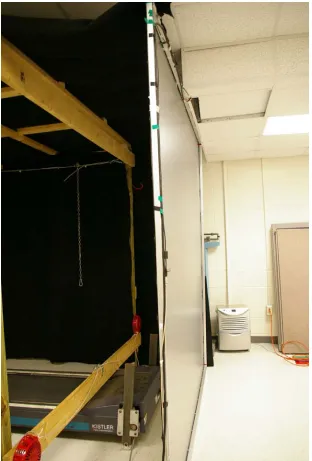
Figure 3-2. Treadmill, full-body harness protection system and rear projection screen. . 74 Figure 3-3. Rear projection screen. ... 75
Figure 3-4. Canopy around treadmill. ... 76
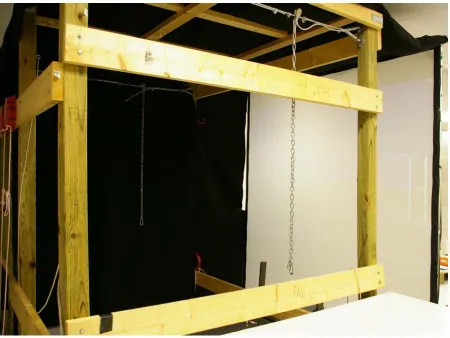
Figure 3-5. Close-up of VR simulator display. ... 77
Figure 3-6. Components of goal-directed task analysis. ... 82
Figure 3-7. Overview of research analyses. ... 86
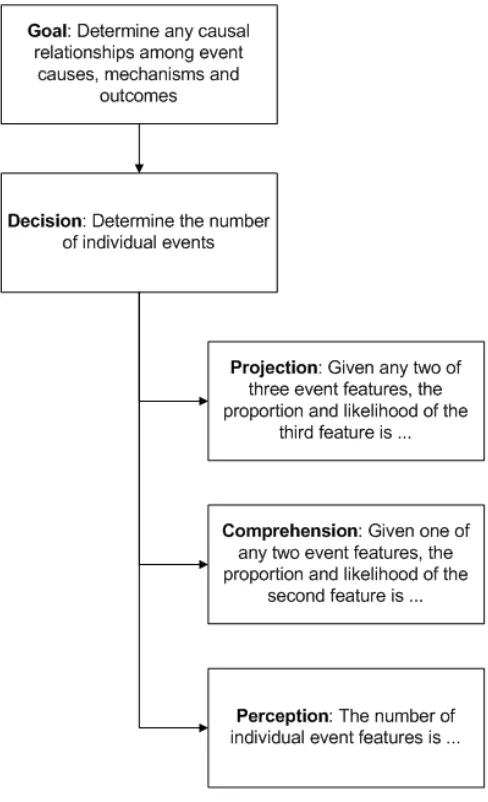
Figure 3-8. Mapping between levels of SA and hypothesized mental models. ... 87
Figure 3-9. RMSE plotted against the categories of Level 2 SA. ... 91
Figure 3-10. TLX scores plotted against the categories of Level 2 SA. ... 91
Figure 5-2. The experiment environment. ... 112
Figure 6-1 Diagram of the fuzzy logic model (Story 1). ... 125
Figure 6-2. Diagram of the fuzzy logic model (Story 2). ... 125
Figure 7-1. Input variable histogram with membership functions (Story 1). ... 135
Figure 7-2. Input variable histogram with membership functions (Story 2). ... 136
Figure 7-3. Output surface of the fuzzy logic model (SA1 and SA2 in Story 1). ... 137
Figure 7-4. Output surface of the fuzzy logic model (SA1 and SA3 in Story 1). ... 138
Figure 7-5. Output surface of the fuzzy logic model (SA2 and SA3 in Story 1). ... 139
Figure 7-6. Output surface of the fuzzy logic model (SA1 and SA2 in Story 2). ... 140
Figure 7-7. Output surface of the fuzzy logic model (SA1 and SA3 in Story 2). ... 141
Figure 7-8. Output surface of the fuzzy logic model (SA2 and SA3 in Story 2). ... 142
Figure 7-9. Cluster centers for Story 1... 145
Figure 7-10. Cluster centers for Story 2... 146
LIST OF ABBREVIATIONS ATC – Air Traffic Control
CS – Content Similarity FCM – Free Concept Mapping HCI – Human-Computer Interaction LTM – Long-term Memory
MDS – Multidimensional Scaling RMSE – Root Mean Square Error SA – Situation Awareness
SAGAT – Situation Awareness Global Assessment Technique SART– Situation Awareness Rating Technique
SS – Structural Similarity TLX – Task Load Index VE – Virtual Environment
VESS – The Virtual Environment Software Sandbox VLE – Virtual Locomotion Environment
1. INTRODUCTION
performance with complex technical or physical systems occurs. Rutherford and Wilson (1991) summarized that mental models have been discussed in three different ways in human factors: (1) as part of recommendations that displays or task processes must be compatible with operator mental models of systems (e.g., Albers, 1999; Newman & Lamming, 1995; Norman, 1986); (2) in the view that displays themselves impact certain mental models (Bennett, Parasuraman, & Howard, 1984; Norman, 1986); and (3) in the assertion that people can be trained or otherwise given information to construct and use certain mental models for performance (e.g., Kieras & Bovair, 1984). Again, the central idea is that a mental model’s structure is analogous to the structure of an actual situation (Held, Knauff, & Vosgerau, 2006), although what the exact structure is may or may not be clear.
Unfortunately, the prevalence of the mental model concept has not led to substantial theoretical investigation necessary for practical applications. As Payne (2003) points out, the term mental model has been used “in so many different ways as to be almost void of any force beyond the general idea of users’ knowledge about the system they use.” Consequently, in theoretical discussions related to mental models, the concept of mental models is widely accepted; however, mental models have provided little predictive or explanatory power for systems design in practice, in part, because of our limited capability to assess and characterize them.
methodological framework to support selection of appropriate methods for mental model description across domains (e.g., Rouse & Morris, 1986). However, the framework proposed by Rouse and Morris (1986) was based on task characteristics relevant to operator goals and some of the tasks addressed by the framework lacked practical applications (e.g., neural information processing, problem solving in physics, and making value judgments). The need to develop an applicable framework of mental model characterization methods based on mental model theories remains.
Recent SA theories provide a basis for using operator internal situation models to infer components and structures of mental models. SA is generally considered as current instantiations of a mental model (Endsley, 2000b). Previous study by Endsley (2000b) demonstrated that SA measures and neural networks can be used to model human behavior. However, computer learning techniques, such as neural networks, are limited in providing insights on internal human mental representations or the characteristics of mental models. There is a need to develop an empirical method for assessing mental models in terms of SA. Such a method should allow for identification of hypothesized forms of mental models related to task performance and could be validated by using other existing mental model measurement methods. Furthermore, the new method should be validated in appropriate task contexts in which SA is considered fundamental to operator performance.
2. LITERATURE REVIEW
2.1. Definitions and concepts of mental models
In the literature, mental models have been defined to have two major functions: representation of knowledge and internal functions for mental simulation. Although these two types of functions are frequently accepted and referred to, they are not free of theoretical limitations and have led to much confusion for both researchers and practitioners. Each type of mental model function is addressed below and then limitations of mental model concepts are presented.
2.1.1. Mental models as representations of knowledge
specialized, delimited aspects of the environment, and studying how these theories affect their thinking and behavior in particular domains. In studying people’s mental model of interactive devices, Young (1983) suggests that a mental model may be a way of describing a device independent of its usage, a representation of the input-output relations associated with typical uses of the device, or a means of understanding an analogous device (e.g., a computer terminal is similar to a typewriter). Related to this, de Kleer and Brown (1983) proposed a theory of qualitative reasoning about simple devices consisting of four notions: device topology, envisioning, causal model, and running of the causal model. Device topology is a representation of the structure of the device; the envisioning process instantiates a specific behavior for each component in the device structure and then derives the functioning of the device; a causal model is a description of functioning of the device, given a chain of events with each causally related to the previous one. Other definitions proposed from similar perspectives are listed in Table 2-1.
Table 2-1. Definitions of mental models as knowledge representations in understanding devices.
Author(s) Definition
Kieras and Bovair (1984)
A mental model is some kind of understanding of “how a device works in terms of its internal structures and processes.”
Seel (1999) A mental model is a concrete, comprehensible, and feasible representation of non-obvious or abstract objects or phenomena. Halasz and
Moran (1983)
A mental model is a cognitive representation of a system’s internal mechanics, i.e., its component parts and their behaviors – a “surrogate” model.
also conceived to support monitoring, decision making, predicting, and planning activities. Veldhuyzen and Stassen (1977) stated that an “internal model” may consist of knowledge about the system under control, knowledge about the disturbances acting on the system, and knowledge about the task to be performed. Wickens and Kramer (1985) and Moray (1998) view mental models as descriptions of operators’ concepts of how a system operates. Carroll and Olson (1988) view a mental model as a rich and elaborate structure that reflects user understanding of what the system contains, how it works and why it works in a particular way. Some researchers have noted that, these definitions are very broad and their reliance on the term “system” makes it unclear what is not included in mental model formulations (Schwamb, 1990). Related to this, Rouse and Morris (1986) argue that a system-oriented version of mental models may not be an appropriate and complete conceptualization depending on the specific task and how the models are being used.
and formation of mental models may involve particular cognitive processes based on the relationships among components of mental models. Additionally, Schwamb (1990) said that certain relations (especially temporal and spatial) in reality are often captured implicitly in mental models through representational structure or emerge through mental simulation.
2.1.2. Mental models as internal functions
From a functional perspective, Rouse and Morris (1986) view mental models as, “the mechanisms whereby humans are able to generate: descriptions of a system’s purpose and form; explanations of system functioning and observed system states; and predictions of future system states.” This view of mental models as internal mechanisms or a set of functions represents one theoretical perspective, which is also relevant to Payne’s (2003) idea that mental models are computationally equivalent to external functional representations (e.g., diagrams) for directing information processing and decision making.
Considering mental models as internal functions, Williams, Hollan and Stevens (1983) state that a mental model is a collection of connected “mental objects, each with an explicit representation of state, an explicit representation of its topological connections to other objects, and a set of internal parameters”, which is “runnable” by means of local qualitative inferences and can be decomposed. Akin to Williams et al., Fiore, Cuevas and Oser (2003) define mental models as a subset of knowledge structures that are task specific, integrated long-term memory (LTM) structures developed during training, and activated during task performance. According to Wickens et al. (1998), mental models are “internal representations of objects, actions, situations or people; built on experience and observation and are simulations, which are run in mind, to produce qualitative inferences in order to underpin our understanding of a system and allow us to describe, predict and explain behavior, and to test ‘what if’s’ and ‘what wills’.” Staggers and Norcio (1993) contend that mental models are composed of both concrete and abstract objects in a relational structure which emulates the actual situation and can be “run” for both descriptive and causal hypothesis testing. Because of their dynamic and changing nature, mental models seem to be more process than outcome entities (Staggers & Norcio, 1993). All of these concepts hold in common that mental models are runnable, internal functions for explanation and prediction.
2.1.3. Limitations of the mental model concept and valuations
Seel, Al-Diban, and Blumschein (2000) conclude, there is conceptual confusion in mental model research, in general, due to “an inflationary use of the concept, weakness of the theoretical foundation, and shortcomings of formal precision”. Wilson and Rutherford (1989) warned of the danger that the mental model notion may be seen as a panacea for design and development problems, even before its utility for explaining the human mind and behavior in specific contexts is validated. More recently, Payne (2003) criticized that the quick acceptance of the “logical necessity” of mental models has led to insufficient theoretical explorations of this concept. His criticism, above all, reflects the fact that the application of the mental model concept falls short of having clear practical utility (Rogers & Rutherford, 1992).
anticipation (advance calculation) of responses to acts or events not previously met, and support explanation or understanding except in the form of reference to prior experience. In addition, Johnson-Laird (1983) said that mental models are based on computational activities of the mind and the exclusion of the “running” of mental models as a definitive characteristic may lead to other theoretical concerns (e.g., the distinction between mental models and knowledge structures, such as schemas).
The different views on the essential characteristics of mental models and the various approaches that have been used in mental model identification (see section 2.5) shows a lack of theoretical development, and that the nature of mental models is not established uniformly across related scientific communities (Rutherford & Wilson, 1992). A strong criticism was made by Waern (1987):
The concept of mental models as currently used by researchers in the field of human-computer interaction is prescientific. It is used to explain observations and then stir imagination, rather than to test hypotheses. There is no agreement on the definition of the model, on what it refers to or how it functions in the thought processes of the individual.
It is difficult to find an example of an explicitly stated user mental model that could be used subsequently in systems design, and certainly there is nothing expressed in terms of anything similar to effective procedures [for this purpose].
Norman (1983) concludes that mental models are inherently difficult to define. He finds that people’s mental models of artifacts are: unstable because details are not always remembered; not clearly bounded because similar devices and operations are confused with each other; “unscientific” because occasionally actions appear to be based on superstition; and not easily simulated due to model complexity. Despite this, people are often aware of their limits of knowledge or the extents of their mental models, and they develop behavior patterns that make them more secure in their actions (Norman, 1983).
2.2. Characteristics of mental models
2.2.1. Structural similarity
Both Johnson-Laird (1983) and authors of chapters in Gentner and Stevens (1983) edited volume emphasize the structural similarity of a model to reality as an important characteristic of models. In order to provide explanations of the phenomenon a person interacts with, a mental model has to have similar structures to the phenomenon it represents. It is this similarity in structure that enables a person to make mental inferences about the natural/real phenomenon based on an appropriate mental model. However, Sasse (1997) points out that there are notable differences between Johnson-Laird’s structural analogy and analogical reasoning, as discussed in Gentner and Stevens (1983). Johnson-Laird focuses on the structural analogy between the external phenomenon and its internal representation in terms of meanings; whereas, the latter focuses on the transfer of information/content from one internalized model to another based on surface characteristics and syntactic features. Furthermore, Carroll and Mack (1985) argued that structural analogies are actively generated, rather than being static and formal, as proposed by Gentner and Gentner (1983).
contrast, the dynamic models in the work of Holland et al. are proposed to be homo-morphisms and they share structure only at the level of state-changes.
2.2.2. Incompleteness
Many authors think that mental models are often simple and incomplete; that is, their content is only a partial representation of the environment and their scope is limited (Borgman, 1986; Moran, 1981; Moray, 1987; Norman, 1983; Sanderson, 1990; Williams, et al., 1983). Payne (2003) studied students’ theories about ATM machines and found that: (1) users of ATMs are eager to form explanatory models and they will readily go beyond available data to infer models that are consistent with their experiences; and (2) these models may be fragmentary collections of beliefs about parts of the system, processes, or behaviors, rather than unified models of the whole design. Although incomplete mental models are enough for certain tasks and situations, use of such models may result in lack of perception of new information and erroneous task state interpretations (Gentner & Gentner, 1983; Janosky, Smith, & Hildreth, 1986). Moray (1987) also noticed that users may become stuck in one mode of operation and not update their mental model when encountering new information, which he labeled as “cognitive lock-up”.
2.2.3. Dynamic representation
qualitatively (Williams, et al., 1983) or in a cause-and-effect mode (diSessa, 1983). As the function of a mental model is to simulate reality in working memory (J. J. Cañas, et al., 2001; Newman & Lamming, 1995) or a certain physical “problem space” (Payne, 2003; Seel, 1999), some believe the ability to infer procedures (or deduce sequences of events) is the key contribution of a mental model to performance. Related to this, Rasmussen (1990) said that the purpose of a mental model is to assist users in finding appropriate actions to achieve their goals.
Payne (1992) proposed that all cognitive artifacts (see Norman, 1991) demand that “the user construct a model that explicitly represents the relationship between the artifact and some represented world, whether or not changes to that represented world have a physical manifestation”. Based on the classification of human behavior into routine skill or problem solving, Payne (2003) argues that mental models can provide a problem space that allows more elaborate encoding of remembered methods, specific to artifacts, allowing problem solvers to search for new methods to achieve tasks. From a study on Reverse Polish Notation (RPN) calculators, he points out that reasoning through a sequence of states in mental models is more flexible than mere rote-method following, and that this kind of reasoning is based on domain-specific and knowledge-bounded rules rather than architecture bounded rules.
what is being measured is the result of the internal simulation process, which can be taken as a reflection of the content of knowledge stored in LTM – the conceptual model. Therefore, it may be possible to measure mental models or develop evidence based on the outcome (content) of dynamic working memory at any given time.
2.2.4. Context-dependence
Related to the dynamic nature of mental models is the idea that such structures depend on the individual, the task and the context. The chapters in Gentner and Stevens (1983) demonstrated that mental models and their construction processes may differ according to the task or problem domain. When the concept of a mental model is applied to the study of a particular task domain, it is also likely that the findings will depend on which aspect of the mental model is being emphasized either by the participants or researchers. For example, Cooke & Schvaneveld (1988) reported that expert computer programmers had less similar mental representations of computer concepts than novices. One possible explanation is that, when tested individually, the experts executed different mental models for the task (J. J. Cañas, et al., 2001). Thus, Cañas et al. point out that it is impossible to have a unique picture of the knowledge represented in LTM without considering the task participants have to perform. They say that what is observed in an empirical experiment is the result of both a knowledge structure and a process that works on it.
memory: a “static model” of the air traffic route structure, separation guidelines, and procedures; a “dynamic model” of the attributes of particular aircraft (e.g., climb or descent rates, turns, etc.); and a “working memory” for storing the current positions and status of aircrafts in attention. In review of previous studies, Mogford (1990) commented that a controller’s internal model is not merely a visuospatial mental image but also includes task-related rules, which influence the controller’s understanding of the information available from the system. In other words, the term “picture”, used as a common reference to an air traffic controller’s internal model, may only refer to the conscious part of the model maintained in working memory. Procedural information stored in LTM may form the non-conscious parts of the model.
2.3. Origins and construction of mental models
2.3.1. Isomorphism in working memory
importance to the characteristics of a task, the information extracted by perceptual processes and the characteristics of memory (Rasmussen, 1990). Johnson-Laird, Byrne and Schaeken (1992) restrict the notion of a mental model to a representation of the content of a problem constructed in working memory for the purpose of applying problem-solving skills to a particular domain. The model represents logical possibilities implied by the premises of the problems.
Although Johnson-Laird (1983) described an iterative process in which new information is added into existing representations, he did not specify the exact construction process of initial models. In text comprehension, it has been proposed that readers first form representations of the text itself (surface form and propositional content) and then compute a mental model of the meaning of the text. The model represents the situation described by the language, rather than the language itself (Payne, 2003). In the case when propositions may be consistent with an infinite number of situations, Johnson-Laird (1989) proposed that a single model can be used as a representative sample. Hegarty and Just (1993) hold a similar view that mental models are constructed in working memory as a person reads a text by integrating the information presented at different points in the text about the same objects and by elaborating this information using world knowledge or knowledge of spatial constraints. Therefore, “a mental model provides a way of mapping language to perception” (Payne, 2003).
between mental models and the phenomena is a referentially isomorphic one (Sasse, 1997). Johnson-Laird (1999) acknowledges that the term mental model is sometimes simply used to refer to the representation of a body of knowledge in LTM, which may have the same sort of structure as models used in reasoning about a task or system (e.g., Bainbridge, 1992). Researchers working on problems of human-machine system design often use the notion of a mental model to refer to contents of LTM.
2.3.2. Homomorphism in long-term memory
People can formulate mental models by observation aided by knowledge, other people’s explanations, or model construction either from a set of basic components or from analogous models that they already possess (Johnson-Laird, 1989). Presumably, mental models in LTM can be updated from contents in working memory and new information obtained from the environment. Following this, Langan-Fox et al. (2000) view mental models as a general network of associations between domain concepts. Besnard, Greathead, and Baxter (2004) suggest that mental models are essentially constructed within the knowledge needed for pursing a given goal, and some data extracted from the environment. Mental models are thus a cognitively acceptable simplification of a complex reality and may not be isomorphic in nature.
all mappings some information will be lost (e.g., at the level of a complete description of the physical structure of an industrial process). He further proposed that an operator’s mental model is a homomorph of the real system along with a set of quasi-independent subsystems into which the total system can be decomposed (Moray, 1999).
Operators construct a series of mental models by first performing a mapping from the external world into their heads, and subsequently by performing a series of mappings to form models from models (Moray, 1998). Moray’s lattice theory of mental models proposes that different levels of system understanding form a lattice of relationships and different parts of the lattice are called into use depending on the task (Moray, 1999). Formalizing mental models in this way can help identify how types of causal knowledge are related and how certain errors arise. It also suggests an alternative as to how models may be structured in LTM.
2.3.3. Integrated views and construction
Mental models may be formed through many kinds of user experience (Newman & Lamming, 1995): from incoming information or from already existing knowledge and expectations (Waern, 1990). In the following, several competing theories of the components of mental models are reviewed and then an integrated view of mental model construction is presented.
Seel’s (2006) three sources of mental model construction
of basic components of world knowledge or from analogous models that the learner already possesses; (2) everyday observations of the outside world may be used in association with the adaptation of cultural models; and (3) other people’s explanations of tasks, processes or systems, as in training. The first source is consistent with the Dutke’s (1996) theory that mental models are constructed from information stored in LTM, particularly from schemas (see also Johnson-Laird, 1983). According to Dutke, a learner dynamically constructs a mental model through the use of generic knowledge of spatial, temporal, and causal relations in the environment, based on the inputs he or she receives.
The third source for mental model construction is based on training and instruction. Different instructional representations may result in different internal representations from which a mental model can be developed (Bibby, 1992). Mayer (1989), Halasz and Moran (1983), and Kieras and Bovair (1984) suggest that model instruction, as opposed to task operating principles alone, may facilitate the building of mental models of systems and, consequently, may increase the effectiveness of learning in terms of conceptual information recall and creative solutions to problems. Bibby and Payne (1993, 1996) also showed that the exact form of instructions may have long-term effects on mental models and strategies used to perform tasks.
Mental models as integrations of different levels of information
Rasmussen (1990) said that mental models are representations of the relational structure of the causal environment and work content used in knowledge-based tasks. Knowledge about a system makes up the operator’s internal mental model. From a more integrated perspective, Kintsch (1996) said that information represented in mental models is based on direct perception of the system at a lower level, but is also based on indirect perception (i.e., thinking about the system at a higher level). The integration of higher and lower level information, in working memory and LTM, respectively, result in a complex representation of the system and means of interacting with it (Sanderson, 1990). This is another integrated view of mental models.
complexity of the system, and the complexity of the task. A perceived need for information or interest in the device may motivate users to induce a model for a better understanding. On the other hand, the complexity of either the system or the task may mediate mental model construction. In general, it is now accepted that mental models are formed dynamically in working memory, as needed, by combing information stored in LTM and characteristics extracted from the environment (e.g., J. J. Cañas, et al., 2001). As Figure 2-1 presents, mental model construction is a dynamic process in which knowledge and skills acquired by an operator will be used to construct and update future mental models, and mental models may direct knowledge acquisition (Wickens & Holland, 2000). Compared to Kintsch’s (1996) theory, this integrated view is more focused on the dynamic interaction between LTM and working memory facilitating the integration of different levels of information.
Working memory Current mental model of
the system Long-term memory Generic knowledge and previous mental models
Transfer of Enhanced knowledge
Mental model
(Internal representation) Interface
Physical system
Figure 2-1. Integrated view of mental model construction (adopted from Wickens and Holland (2000) and St-Cyr (2002)).
2.4. Taxonomies of mental models
2.4.1. Abstraction-level based taxonomy
functional meaning or purpose. Along this continuum, mental models have been classified into two types – perceptual and thought models, or physical and conceptual models (Johnson-Laird, 1983). Glaser et al. (1987) and Johnson-Laird (1983) refer to perceptual or physical models as the appearance of structured models that represent the external world in a static manner. Thought or conceptual models include qualitative process models as well as inductively derived artifacts that represent physical systems and their causal relationships in a dynamic manner. There may be a continuum from the analogue, visual image based models, through models of structural and functional relationships, to general models representing the overall meaning and purposes of the system (Wilson & Rutherford, 1989). It is thus important to distinguish between the notions of descriptive abstractions and levels of explanation for theoretical clarity (Rogers & Rutherford, 1992). Johnson-Laird (1989) also gave a caution that all model distinctions may be artificial for they may represent the same reality.
2.4.2. Functional taxonomies
causal structure. A metaphor is a direct comparison between the target system and a related system, which can be used to aid user understanding of the target system. Finally, a glass box model falls in the middle of the continuum from surrogates to metaphors, sharing properties from the other two categories.
Newman and Lamming (1995) distinguished four “common” forms of mental model in the context of (HCI; Human-Computer Interaction) tasks: state transition models, object-action models, mapping models, and analogies. A state-transition model is likely to be formed if the system is perceived to switch between different modes of behavior (Williams, et al., 1983). An object-action mental model consists of both objects accessible via a user interface and actions that can be performed on the objects; thus, providing a basis for organizing knowledge about the system’s functionality (Newman & Lamming, 1995). A mapping model arises when the system requires repetitive sequences of actions or does not suggest any other form of mental model due to its complexity (Young, 1983). Finally, an analogical model is likely to be formed when the user encounters a new system that closely resembles a system they are familiar with (e.g., Gentner & Gentner, 1983).
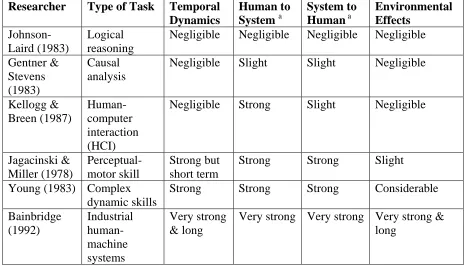
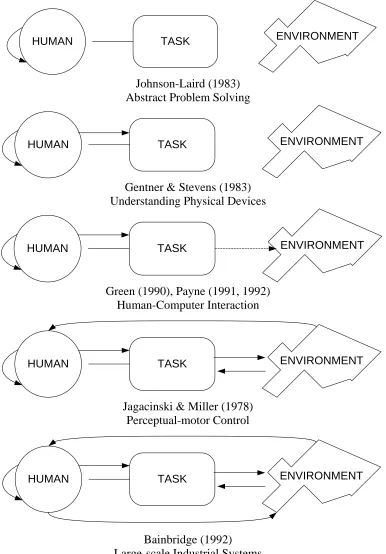
complexity, strength of the physical coupling between the human and task, complexity of real-time task dynamics, as well as the coupling between the task and the environment, and between the human and the environment (see Table 2-2). These characteristics may be further incorporated into a framework for classifying different methods of assessing mental models.
Table 2-2. Relations between human, task and environment in different mental model studies (adopted from Moray, 1996).
Researcher Type of Task Temporal Dynamics
Human to System a
System to Human a
Environmental Effects Johnson-Laird (1983) Logical reasoning
Negligible Negligible Negligible Negligible Gentner &
Stevens (1983)
Causal analysis
Negligible Slight Slight Negligible
Kellogg & Breen (1987) Human-computer interaction (HCI)
Negligible Strong Slight Negligible
Jagacinski & Miller (1978) Perceptual-motor skill Strong but short term
Strong Strong Slight Young (1983) Complex
dynamic skills
Strong Strong Strong Considerable Bainbridge (1992) Industrial human-machine systems Very strong & long
Very strong Very strong Very strong & long
a
TASK ENVIRONMENT HUMAN
Johnson-Laird (1983) Abstract Problem Solving
TASK ENVIRONMENT
HUMAN
Gentner & Stevens (1983) Understanding Physical Devices
TASK ENVIRONMENT
HUMAN
Green (1990), Payne (1991, 1992) Human-Computer Interaction
TASK ENVIRONMENT
HUMAN
Jagacinski & Miller (1978) Perceptual-motor Control
TASK ENVIRONMENT
HUMAN
Wilson and Rutherford (1989) suggested two tentative types of functional mental models: (1) models for post-hoc rationalization (thinking or verbalizing about an event after it has occurred) and (2) models not available to conscious recall but used to initiate action. However, they also stated that these two types of mental models might have already been accounted for by Johnson-Laird (1983) and Rasmussen (1986).
2.4.3. Content-based taxonomy
Under the assumption that the terminology mental model refers in general to ways in which knowledge is used in cognitive processing, Bainbridge (1992) presented a three-type classification of mental models, including: (1) knowledge of the permanent or potential characteristics of some part of the external world; (2) temporary inferred knowledge about the present or predicted state of the external world; and (3) knowledge of outcomes and properties (permanent or potential characteristics) of a user’s own behavior. The first type of mental model is prevalent in the process control literature (e.g., Gentner & Stevens, 1983) and is also referred to as knowledge about the process (knowledge base). The second type is consistent with what Johnson-Laird (1983) referred to as mental models and is considered an overview of the current state of the task in process control (Bainbridge, 1992). The last type suggests that each working model has information for deciding whether it is appropriate for use (meta-knowledge).
2.4.4. A taxonomy based on the use of mental models
the system designers, (2) the users and (3) the system itself (represented by its interface). Accordingly, there are three different types of models associated with each entity. A designer’s model is the conceptualization of the system held by designer. The model formed by a user from his/her observations and work with the system is the user’s mental model. The system image is the physical image of the system from which the user develops his/her mental model. As a user’s mental model results from the way the user interprets the system image, it is a common claim that the structure of the system interface should match the cognitive structure of the users of the system (Norman, 1986).
2.4.5. Summary of mental model taxonomies
As reviewed earlier, a mental model can be constructed and maintained from: information perceived from the environment, knowledge from the LTM, or a combination of the two. A content-based taxonomy of mental models is in-line with this theory, compared to other proposed taxonomies. It also helps reduce confusion among different mental model concepts in the literature.
2.5. Review of methods for mental model characterization
Although the concept of mental models as a robust and coherent form of information organization and storage is appealing, in practice the construct may be limited due to abstract descriptions of the actual structure and functional characteristics of models. As Rutherford and Wilson (1992) pointed out, the characterization of mental models is of great importance not only in terms of theoretical development and practicality, but also in terms of cognitive psychology generating closer approximations to the forms of actual mental model constructs as a basis for design practice.
may never be captured completely because it is not a static construct having only a single form. Langan-Fox et al. (2000) further summarized factors that can influence the selection of a method for mental model elicitation and representation, including: (1) applicability of the method to the problem under investigation; (2) practical considerations (e.g., suitability of the method for the particular sample of users); and (3) theoretical considerations (i.e., assumptions underlying the researchers’ concept of the mental model construct). By considering these factors, Langan-Fox et al. proposed a set of guidelines on concept-based mental model measurement design and development.
Table 2-3. Classifications of mental model assessment methods from Rouse and Morris, and Rutherford and Wilson.
Rouse and Morris (1986) Rutherford and Wilson (1992)
Objective Methods
Empirical modeling Classical experimentation Inferring characteristics via
empirical study
Quasi-experimental and naturalistic approaches
Analytical modeling Subjective
Methods Verbal/Written Reports
Interviews Questionnaires
Think-aloud protocols Constructive interaction
Table 2-4. Summary of mental model assessment methods given by Langan-Fox et al.
Elicitation Techniques Analysis and Representation Techniques
Cognitive interview techniques Verbal protocol analysis Content analysis
Observation of task
Virtual card sorting technique Repertory grid technique Causal mapping
Pairwise ratings Ordered tree
Sasse (1992) focused specifically on techniques that have been used in various HCI user model assessment studies, including: thinking-aloud techniques and verbal protocols, on-line protocols, and performance data. She also discussed the limitations of the methods, highlighting numerous difficulties that researchers face in attempting to elicit and describe mental models. In review of previous studies (Borgman, 1986; Frese & Albrecht, 1988; Kieras & Bovair, 1984), she argued that there were four limitations: (1) over-interpretation of performance data, (2) lack of ecological validity, (3) small sample sizes, and (4) the possibility of alternative explanations. Following Young (1983), Sasse suggested that information about user mental models can be collected by different approaches including: (1) observing users using the system, (2) asking users to explain the system, (3) users asking users to predict the behavior of the system, and (4) observing users learning the system. However, the questions of whether one form of data is more valid than another, in terms of how well it reflects the underlying cognitive processes, was not addressed (Rogers, 1992).
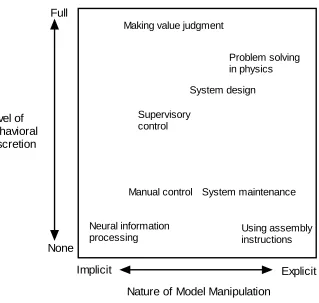
be considered carefully, together with an appreciation of the weakness of each method and the specific goals of the study (Rutherford & Wilson, 1992).
Nature of Model Manipulation
Implicit Explicit
Level of Behavioral Discretion
Full
None
Neural information processing
Using assembly instructions Manual control System maintenance
Supervisory control
System design
Problem solving in physics Making value judgment
Figure 2-3. Dimensions defining mental models for various domains (reproduced from Rouse & Morris, 1986).
2.5.1. Exploratory methods
Verbal protocol analysis
Kaempf, Klein, Thorsden, & Wolf, 1996; Redding & Cannon, 1992). It is most appropriate for tasks in which verbalization is a natural part of the cognitive process (Langan-Fox, et al., 2000). As an example, Sanderson, Verhage, and Fuld (1989) used verbal protocols to collect subject statements during a process control task, and classified them according to their predicate type (statements about goals, plans, actions or causal relations). By assessing the frequency of certain types of utterances, they were able to determine their accuracy with respect to the actual system state. In this way, Sanderson et al. claimed that verbal reports could be used as data on subject knowledge of a system (i.e., mental models).
giving protocols, and indeed the way in which the task is performed may be altered considerably (Moray, 1999). Furthermore, if we are interested in how subjects are thinking rather than just what they are thinking about, verbal protocols are far from accurate descriptions of dynamic mental models. With respect to experiment control, it is also possible that expert verbalizations may reflect what they expect an experimenter wants rather than how they actually think (Rouse & Morris, 1986). The demand structure of the situation may “force” people to provide reasons for their behavior when they did not base their actions on any particular reason (Norman, 1983). Consequently, in using verbal protocols to describe mental models/procedures, careful attention should be given to discrepancies between subject verbalizations and actual performance.
Analytical modeling
The concept that a human operator requires certain knowledge about a system to be controlled is referred to as an “internal model” or “internal representation”. The intuitive nature of this concept has led to analytical modeling of “internal models”. The essential idea of analytical modeling is using control theory to represent explicit assumptions about the possible forms, structures and/or parameters of mental models for specific tasks. Based on the assumptions modeled, performance can be calculated analytically and compared to actual human performance. Subsequently, the parameters of the analytical model are adjusted with the goal of minimizing the difference in model outputs from the empirical data (Rouse & Morris, 1986).
(1977) used estimations and control theory to develop a model describing helmsman’s steering of a supertanker and the influence of displays, such as a rate of turn indicator, on behavior. Analytical modeling is also assumed appropriate in the situation where a purely empirical modeling approach is not feasible, such as complex cognitive system modeling. ACT-R developed by Anderson (1983) is an example, which aims to define the basic and irreducible cognitive and perceptual operations that enable the human mind. Soar (Symbolic cognitive architecture), created by Laird and Newell (see Newell, 1990), is both a theory of cognition with a set of principles and constraints, and an implementation of the architecture as a programming language. It is often used by artificial intelligence (AI) researchers to construct integrated intelligent agents and by cognitive scientists for cognitive modeling. The GOMS (Goals, Operators, Methods and Selection) modeling approach of Card, Moran and Newell (1983) provides goal decomposition between the overall task and a unit task, which involves detailed understanding of the user’s problem-solving strategies and the application domain. GOMS is thus good for describing how experts perform routine tasks. In general, the above analytical modeling techniques can be considered as providing descriptions of mental models in terms of processing mechanisms.
2.5.2. Empirical methods
empirical approaches are limited by the fact that behavioral effects of access and manipulation of mental models may possibly be confounded with perception and response execution. Therefore, Rouse and Morris (1986) believed that empirical modeling might be feasible in situations where perception and response execution do not interact with mental model manipulation. This assumption requires that the nature of the cognitive process only involves the use of a mental model, so it is possible that the mental model can be algorithmically or logically constructed from subject responses to a system. Unfortunately, there are very few tasks suitable for this type of modeling.
2.5.3. Concept-based analysis
Concept-based analysis refers to techniques and associated analysis methods that measure people’s understanding of concepts relevant to the task domain under investigation. Typical measurement techniques include: card sorting, repertory grid technique, causal mapping, and pairwise rating (see Langan-Fox, et al., 2000). These methods compensate for the limitations of verbal protocol techniques by depicting the complexity of relationships between mental concepts and ideas. Although measuring understanding of concepts is indirect, the resulting conceptual structures of concept-based analysis are “mediating representations” of the contents and structures of underlying mental models (Rogers, 1992).
possible pair of concepts from the pool; the matrix of pairwise ratings can be subjected to either multidimensional scaling (MDS) or a pathfinder algorithm (see Schvaneveldt, 1990) to derive the underlying structure or conceptual network, which can further be compared to an expert’s conceptual structure as a measure of mental model accuracy.
For the above concept-based analysis methods, the dimension on which two system components are judged to be related would depend on the task the participants simulate in their working memory and the sequence in which the pairs of components are presented (J. J. Cañas, et al., 2001). As an example of concept-based analysis, Kellogg and Breen (1987) used hierarchical clustering analysis to develop structural diagrams of expert and novice models of a text formatting language system. Subjects were asked to sort different cards of system components into meaningful subsets. User models of the system were identified from the physical distances between pairs of concepts in the sorted component sets. Comparison of user models and the system model yielded information on the amount of structural overlap across the system concepts. As expert card sorts were in closer agreement with the actual system layout than were novice sorts, and were in closer agreement with each other than for novices, Kellogg and Breen asserted that user mental models approach the system model as experience accumulates. However, it is possible that experts and novices compared concepts along different dimensions and that the dimensions different experts used were more consistent than novices used.
mental models were initially based on virtual features of those agents in the game environment, but changed qualitatively with additional game experience. These studies demonstrated techniques applied to identify mental model structure using data extracted through concept-based analysis. Related to this, Rutherford and Wilson (1992) warned that data structures identified through statistical analysis should be best regarded as a consequence of mental model operations but not actual structural representations of mental models.
2.5.4. Concept mapping
Freeman & Jessup, 2004), navigation support in hypermedia (e.g., Nilsson & Mayer, 2002), description of action procedures (e.g., Takano, Sasou, & Yoshimura, 1997), etc.
2004). (An explanation of the concept mapping steps used in the experiment is provided in the Experimental Methodology section.)
Table 2-5. Steps of concept mapping (Novak and Gowin, 1984). 1. Define the topic or focus question.
2. Identify and list the most important or “general” concepts that are related with the key topic.
3. The general concepts or subtopics should be ordered top to bottom in the mapping field, going from most general and inclusive to the most specific. (This action fosters the explicit representation of subsumption relationships (i.e., a hierarchical arrangement or morphology of the concepts).)
4. Links should be added among concepts to form a preliminary concept map. 5. Linking phrases should be added to describe the relationship among concepts.
6. Once the preliminary concept map has been constructed, look for cross-links, which connect concepts in different areas or sub-domains of the map. (Cross-links help to elaborate how concepts are interrelated.)
7. Finally, the map should be reviewed and any necessary changes to the structure or content should be made.
2.5.5. A methodological framework
(1) observing users using a system, (2) users explaining a system, (3) observing users learning a system, (4) users predicting the behavior of a system, and (5) users describing and using a system. Cooke (1994) grouped HCI assessment methods based on their methodological similarity including: observation and interview (active participation, focused observation, structured observation), process tracing (verbal and non-verbal reports), and conceptual techniques (concept elicitation, data collection, structural analysis). All of these classifications schemes are quite simple and lack guidance for method selection based on task or environment features.
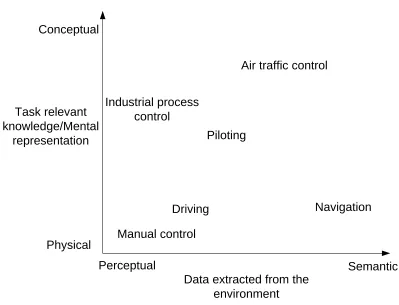
seems to be based on the general cognitive process being used rather than the content or structure of mental models of interest.
With respect to model measurement, there remains a lack of clarification regarding the assumptions of different methods and the associated model representation formats. There is also a need for a more robust methodological framework accounting for task and environment factors.
Data extracted from the environment Task relevant
knowledge/Mental representation
Perceptual Semantic
Less structured Highly structured
Visual card sorting
Observation of task
Causal mapping
Content analysis
Verbal protocol analysis Cognitive
interview
Pairwise ratings
Figure 2-4. New methodological framework to address mental models used in different tasks.
2.5.6. Using SA to characterize mental models
models; that is, levels of SA (perception, comprehension and projection capability) can be related to different types of mental models.
Endsley (2000b) and Endsley, English and Sundararajan (1997) proposed that situation models (i.e., SA) are primarily determined by underlying mental models, so measuring situation models over time may provide a means of tapping into the content and structures of mental models. She presented a methodology using situation models to extract and reassemble human knowledge and to create representations of human mental models. Specifically, Endsley used SA data collected in a piloting tactical decision making task using SAGAT (Situation Awareness Globe Assessment Technique) to develop a neural network and computer model of pilot behavior. Endsley reported that the performance of the computer model could match that of the human test pilots. Although this research demonstrated SA measures can be used to model human mental behavior, as Endsley acknowledged, computer learning techniques like neural networks can only serve as predictive models but cannot be descriptive in order to provide insight on internal human mental representations or the characteristics of mental models.
Nevertheless, Endsley’s work provides theoretical support for using measures of SA to infer possible structures of underlying mental models.
There have been some reluctant views about the relationship between mental models and SA. For example, Rousseau, Tremblay and Breton (2004) argue that the idea of identifying SA as a situational model is not compatible with the notion of perceptual knowledge, as described in Endsley’s original multi-level model of SA. In reviewing the situation model concept in discourse comprehension literature, Rousseau et al. define a situation model as, “a schema depicting the current state of the mental model of the system,” and further suggest that SA may more likely be an analogue of episodic memory rather than that of a situation model. This episodic memory representation is viewed as an active component of comprehension in Endsley’s model. Unfortunately, this interpretation does not help clarify the relationship between mental models and SA but only results in more confusion regarding the concept of SA. Moreover, Rousseau et al. did not provide any further arguments regarding their concern related to the perceptual knowledge aspect of SA, suggesting the theory of “SA as an analogue of episodic memory” to be unwarranted.
and mental models, this study does not make assumptions about the nature of SA but uses a measure of SA, or a dynamic knowledge test, and response patterns to infer possible types of mental models participants may form. SA is not considered as a direct measure of mental models and, therefore, any bias in the measurement process does not jeopardize the utility of the response measure as a basis for mental model characterization. It is also expected that relating SA to mental models in an empirical test will contribute to the clarification of controversies in both SA and mental model theories.
2.6. Review of the relation between SA and mental models
2.6.1. Review of SA theories
are critical to dynamic, event-driven, and multitask fields of practice.” Each of these views identifies different characteristics of SA (Stanton, Chambers, & Piggott, 2001). Adams et al. (1995) said that the processes of SA both determine and are determined by its products, and vice versa, although the terms used for describing the processes were confusing in the first place. Smith and Hancock (1995) said that SA is a process driven by the interaction of the content of the environment and user perception. With respect to these theories, questions remain as to whether SA should be considered as only conscious mental content, ruling out any forms of tacit (implicit) knowledge (Croft, Banbury, Butler, & Berry, 2004). In the following passages, a review of SA models, representing both “state” and “process” theories, is provided and justification for the use of Endsley’s theory in this research is also presented.
Endsley (1988, 1995b) proposed a model of SA consisting of three hierarchical levels, as mentioned above. This model is based on information processing theory, which allows the construct of SA to be measured easily and effectively (Endsley, 1995a), and also supports the identification of SA requirements as well as development of specific training strategies and design guidelines to support the acquisition of SA in a particular context (Endsley & Jones, 2003). In her model, Endsley distinguished between situation awareness (a state) and
that Endsley’s reference to mental models, which themselves are ill-defined, is problematic. Others have said the terms Endsley used in her model, such as “perception of the elements”, “understanding of their meaning”, and “projection of future states”, may be taken by readers as processes involved in the acquisition of SA (Salmon, et al., 2007). The model has also been criticized for its inability to cope with the dynamic nature of SA (Uhlarik & Comerford, 2002).
building of the picture. Although Smith and Hancock’s model differed from the “state”-oriented view taken in Endsley’s model, it has received less attention due to the lack of empirical support (Salmon, et al., 2007); whereas, several studies have contended empirical validation of Endsley’s model (Endsley, 1995b; Endsley & Kaber, 1999; Endsley & Kiris, 1995).
In reconciliation of the state-oriented and process-oriented theories of SA, Durso and Gronlund (1999) suggested that the state-oriented definition of SA could be associated with a situation-focused approach in which SA is determined by the specific environment or situation, and that the process-oriented view of SA could be associated with an operator-focused approach that is concerned with the properties and basic mechanisms of the operator as they acquire SA. Ostensibly, a situation-focused approach is driven by the properties of the situation aspect of the SA concept and involves mapping of relevant information in a situation onto a mental representation of that information within the operator’s mind; whereas, an operator-focused approach is related to the properties of the operator; that is, the set of cognitive processes supporting the production of the mental representation corresponding to the SA state (Rousseau, et al., 2004).
2.6.2. Review of SA measurements
Pew (2000) said that the key step in the translation of a vague term into a quantitative concept is operational definition and measurement, which is particularly true for SA. Endsley (1995a) presented a taxonomy of SA measurement methods, including physiological techniques, performance measures, subjective techniques, and questionnaires. This taxonomy was based largely on the air combat context. Pew (2000) presented a taxonomy of measures, which he claimed to be less dependent on particular contexts, including: direct system performance measures, direct experimental measures, verbal protocols, and subjective measures. Direct system performance measures are only applicable when the performance of interest is driven entirely by SA; verbal protocols and subjective measures have similar problems as when they are used to tap mental models; direct experimental measures, such as SA queries and measures of information seeking, are the most common measurement method (Pew, 2000). In the following passages, two important techniques for measuring SA, SAGAT and SART (Situation Awareness Rating Technique), are reviewed.