This thesis must be used in accordance with the
provisions of the Copyright Act 1968.
Reproduction of material protected by copyright
may be an infringement of copyright and
copyright owners may be entitled to take
legal action against persons who infringe their
copyright.
Section 51 (2) of the Copyright Act permits
an authorized officer of a university library or
archives to provide a copy (by communication
or otherwise) of an unpublished thesis kept in
the library or archives, to a person who satisfies
the authorized officer that he or she requires
the reproduction for the purposes of research
or study.
The Copyright Act grants the creator of a work
a number of moral rights, specifically the right of
attribution, the right against false attribution and
the right of integrity.
You may infringe the author’s moral rights if you:
- fail to acknowledge the author of this thesis if
you quote sections from the work
- attribute this thesis to another author
- subject this thesis to derogatory treatment
Secure Data Management and
Transmission Infrastructure for the Future
Smart Grid
By
Xin
Zhang
B.E.
(Computer
Science
and
Technology)
A thesis submitted in fulfilment of the requirements for the degree of
Master of Philosophy
in
School of Electrical and Information Engineering
Faculty of Engineering and Information Technology
The University of Sydney
NSW 2006, Australia
Declaration
This thesis is original and the work which is presented is on my own work, to the best of my
knowledge and brief, except where due reference has been made in the text. It has not been
accepted for the award of any other degree or diploma in any university or other tertiary
institution. Signature (Candidate): Xin Zhang
Acknowledgement
This thesis is finished with the University of Sydney. It marks the completion of my 2‐year MPhil
study, and it also means the beginning of a next stage in my life. There are so many people I want to
thank for.
I would like to express my genuine gratitude to my supervisor, Prof. Zhao Yang Dong. I am honored to be one of his students. When I decided to pursue my higher degree in Australia, Prof. Dong provided loads of valuable information for me and guided me through my application. His insight, hard work and leadership have had a great influence on me. I would also like to thank Dr. Jin Ma for being my auxiliary supervisor. Whenever I met with difficulties, they were there with me. Their help and advice gave me confidence to face any difficulty. I am also grateful to my colleagues, we have been through hundreds of days, working, studying and discussing together. They selflessly helped me solve many problems. They made the past two years become a wonderful memory.
I appreciate my family for their unconditional love. It is impossible to complete my study without their support. Their understanding is a solid foundation for me to live up to my aspirations.
Abstract
Power grid has played a crucial role since its inception in the Industrial Age. It has evolved from a wide network supplying energy for incorporated multiple areas to the largest cyber‐physical system. Its security and reliability are crucial to any country’s economy and stability [1]. With the emergence of the new technologies and the growing pressure of the global warming, the aging power grid can no
longer meet the requirements of the modern industry, which leads to the proposal of ‘smart grid’. In
smart grid, both electricity and control information communicate in a massively distributed power
network. It is essential for smart grid to deliver real‐time data by communication network. By using
smart meter, AMI can measure energy consumption, monitor loads, collect data and forward
information to collectors.
Smart grid is an intelligent network consists of many technologies in not only power but also
information, telecommunications and control. The most famous structure of smart grid is the three‐
layer structure. It divides smart grid into three different layers, each layer has its own duty. All these
three layers work together, providing us a smart grid that monitor and optimize the operations of all
functional units from power generation to all the end‐customers [2].
To enhance the security level of future smart grid, deploying a high secure level data
transmission scheme on critical nodes is an effective and practical approach. A critical node is a communication node in a cyber‐physical network which can be developed to meet certain requirements. It also has firewalls and capability of intrusion detection, so it is useful for a time‐critical network system, in other words, it is suitable for future smart grid.
The deployment of such a scheme can be tricky regarding to different network topologies. A
simple and general way is to install it on every node in the network, that is to say all nodes in this network are critical nodes, but this way takes time, energy and money. Obviously, it is not the best way to do so. Thus, we propose a multi‐objective evolutionary algorithm for the searching of critical nodes.
A new scheme should be proposed for smart grid. Also, an optimal planning in power grid for
embedding large system can effectively ensure every power station and substation to operate safely and
detect anomalies in time. Using such a new method is a reliable method to meet increasing security
objective function. In the meanwhile, a means of decomposition is useful for exploring solutions evenly
in decision space. Furthermore, constraints handling technologies can place critical nodes on optimal
locations so as to enhance system security even with several constraints of limited resources and/or hardware. The high‐quality experimental results have validated the efficiency and applicability of the proposed approach. It has good reason to believe that the new algorithm has a promising space over the real‐world multi‐objective optimization problems extracted from power grid security domain.
In this thesis, a cloud‐based information infrastructure is proposed to deal with the big data
storage and computation problems for the future smart grid, some challenges and limitations are
addressed, and a new secure data management and transmission strategy regarding increasing security challenges of future smart grid are given as well.
Table of Contents
Declaration ... 4 Acknowledgement ... 6 Abstract ... 9 Table of Contents ... 11 List of Publications ... 15 List of Figures ... 16 Chapter 1. The Era of Big Data ... 18 I. INTRODUCTION ... 18 A. Data Transferring and Sharing ... 18 B. Data Storage and Management ... 19 C. Data Analysis and Mining ... 19 II. EMERGING TECHNOLOGIES ... 20 A. Cloud Computing ... 20 B. Secure Multi‐Parties Computation ... 21 C. MapReduce Parallel Processing Framework ... 21 D. Data‐Centric Data Storing and Routing Technology ... 22 E. Stream Computing ... 22 F. Imprecise Data Querying ... 23 G. Uncertain Data Mining ... 24 III. POTENTIAL APPLICATION SCENARIOS ... 24 A. Uncertain Data Mining ... 24 B. Non‐Intrusive Load Monitoring ... 25 C. Real‐Time System Peak Load Tracking ... 25 D. Demand Response ... 26 E. Direct Load Control ... 26 F. Electric Vehicle Charging System Planning and Electric Vehicle Real‐Time Dispatch ... 27G. Secure Collaboration Framework for Smart Grid Applications ... 27 IV. SUMMARY ... 28 Chapter 2. Data Based Cloud Computing Framework ... 29 I. INTRODUCTION ... 29 A. Limitations of Current Information Infrastructure ... 29 B. Related Works and the Scope ... 30 II. LAYERED MODEL of the CLOUD‐BASED INFORMATION INFRASTRACUTRE ... 31 A. Basic Conception of Cloud Computing ... 31 B. Layered Information Infrastructure Model... 32 C. Merits of the Cloud‐based Information Infrastructure ... 35 D. Implementation Technologies ... 37 III. APPLICATIONS ... 39 A. Enabling Power Applications by the Cloud‐based Information Infrastructure ... 40 B. Compute‐Intensive Application Demonstration: Cloud‐enabled Load Shedding Scheme for Voltage Stability ... 45 C. Data‐Intensive Application Demonstration: Cloud‐Enabled Pattern Discovery‐based Power System Dynamic Security Assessment ... 48 D. Collaborative Application Demonstration: A Cloud‐Enabled Direct Load Control Framework ... 52 IV. CYBER SECURITY CONSIDERATIONS ... 60 A. Compromised‐Key Attach & Eavesdropping Attack ... 60 B. Denial‐of‐Service (DoS) Attack ... 61 C. Man‐in‐the‐Middle Attack ... 61 V. CHALLENGES AND LIMITATIONS ... 62 A. Computational Load Scheduling ... 62 B. Distributed Data Management ... 63 C. Hardware & Software Technique Obstacles ... 63 D. The Impact of the Operation of the Cloud Data Centre on Power Systems ... 63 E. Other Limitations ... 64 VI. SUMMARY ... 65 Chapter 3. Algorithm for Critical Points Searching ... 66 I. INTRODUCTION ... 66
A. Three Layer Structure ... 67 B. Undirected Graph ... 68 D. NP‐Hard Problem ... 69 III. MATHEMATICAL BACKGROUND ... 70 A. Extreme Learning Machine (ELM) [18] ... 71 B. Basic Differential Evolution Framework ... 73 C. SaE‐ELM ... 73 IV. APPROXIMATION MODEL ... 74 A. First‐order Approximation Model ... 75 B. Direction to Optimum ... 76 V. PROPOSED ALGORITHM ... 76 A. Historical Pool ... 77 B. Self‐Adaptive Parameters ... 77 C. Hybrid Strategy for Trial Vector ... 78 D. RSM‐DE algorithm ... 79 E. RSM‐DE‐ELM ... 80 VI. CASE STUDY ... 80 A. Optimization Algorithm Description ... 80 B. Experimental Results ... 81 VII. SUMMARY ... 82 Chapter 4. Quantum Cryptography ... 83 I. INTRODUCTION ... 83 II. STATE‐OF‐THE‐ART ... 84 A. Limitations of the Current Communication Infrastructure of the Smart Grid ... 84 B. Development of the Quantum Computer ... 84 C. Development of the Quantum Cryptography ... 85 III. QUANTUM CRYPTOGRAPHY ... 86 A. Photon Polarization Basis of the Quantum Cryptography ... 86 B. Quantum Channel ... 87 C. Quantum Key Distribution ... 88 D. Case Demonstration ... 89 IV. POTENTIAL APPLICATIONS IN SMART GRIDS ... 92
A. Power Market Operation ... 92 B. Demand Side Management ... 92 C. Wide Area Control of the Power Grid ... 93 V. SUMMARY ... 94 Chapter 5. Conclusions and Future Work ... 95 I. CONCLUSIONS ... 95 II. FUTURE WORK ... 95 Reference ... 97
List of Publications
During the whole research period, the candidate was responsible for designing concepts and
algorithms, conducting simulations and numerical experiments, and writing up papers and response to reviewers for publications. Several journal papers and conference papers has been accepted, which are listed below. Journal Papers [1] “Cloud‐Based Information Infrastructure for Next‐Generation Power Grid: Conception, Architecture, and Applications”. Fengji Luo, Junhua Zhao, Zhao Yang Dong, Yingying Chen,
Yan Xu, Xin Zhang, Kit Po Wong. Paper has been accepted by the IEEE Transactions on
Smart Grid, 2015.
[2] “Rational and Self‐Adaptive Evolutionary Extreme Learning Machine for Electricity
Price Forecast”. Chixin Xiao, Zhaoyang Dong, Yan Xu, Ke Meng, Xun Zhou and Xin Zhang. Paper has been accepted by the special issue on Memetic Computing, 2015.
Conference Papers
[1] “Enabling the Big Data Analysis in the Smart Grid”. Fengji Luo, Zhao Yang Dong, Junhua
Zhao, Xin Zhang, Weicong Kong, and Yingying Chen. Paper has been accepted by IEEE
Power and Energy Society 2015 General Meeting, 2014.
[2] “Quantum Cryptography Based Cyber‐Physical Security Technology for Smart Grids”.
Xin Zhang, Chixin Xiao, Fengji Luo, Zeya Wang, Zhao Yang Dong, Paper has been accepted by APSCOM 2015, 2015.
List of Figures
Figure 1‐1. Architecture of the Storm
Figure 2‐1. Core technologies of cloud computing
Figure 2‐2. Layered model of the cloud‐based information infrastructure
Figure 2‐3. Parallel process model of the load shedding strategy on Amazon EC2
Figure 2-4. Total execution time of the simulation
Figure 2-5. Convergence curves of the parallel-DE and the original DE Figure 2-6. Architecture of the Google Application Engine
Figure 2-7. Parallel framework of pattern discovery process
Figure 2-8. The computation time (up) and network overhead (down) on GAE
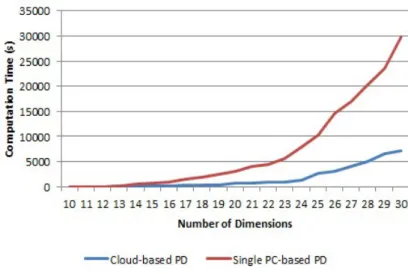
Figure 2-9. The computation time comparison between the single PC-based PD and the cloud-based PD Figure 2-10. PD demonstration on 3-dimension data space
Figure 2-11. Hierarchical dispatch model for large scale TCLs Figure 2-12. Centralized DLC architecture
Figure 2-13. Cloud-based DLC architecture
Figure 2-14. Day-ahead operational planning results of the aggregators Figure 2-15. Sensitivity study of
Figure 3-1. Three layer structure network Figure 3-2. Three layer small network model Figure 3-3. Principle of the approximation model Figure 3-4. Pseudo-code of producing hybrid trial vectors Figure 3-5. Pseudo-code of RSM-DE-ELM
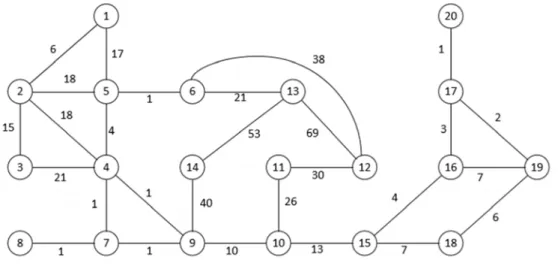
Figure 3-6. Layer 2 nodes connection graph
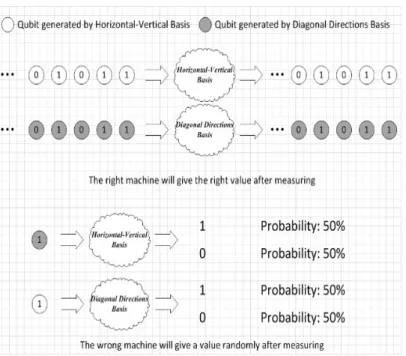
Figure 3-7. Result of domain division and critical points setting from Figure 3-6 Figure 4-1. Quantum key distribution measurement
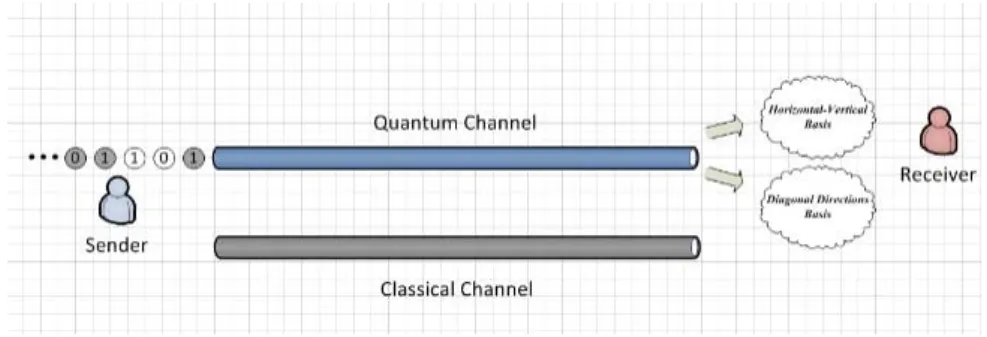
Figure 4-2. Quantum bits transmitted through quantum channel
Chapter 1. The Era of Big Data
I. INTRODUCTION
Since its proposal in the early 21th century, the smart grid has been undergoing a rapid development [3]. With the integration of various advanced technologies, a smart grid has become the
complicated system covering multiple domains. Benefit from the wide area sensor infrastructure, the
smart grid will continuously generate the unprecedented data volume, which could be used to support the decision making of the utilities and optimize the grid operation. The big data generated can be from
different data sources, such as the advanced measurement infrastructure (AMI), the scattered
distributed generators, the widely deployed phase measurement units (PMUs), etc. For example, in the smart grid, a PMU can generate 50 or 60 phase measurements per second [4]. One significant challenge faced by a smart grid is how to collect, manage, and analyze the big data in an efficient, reliable and secure manner. The challenges exist in each segment of the data flow: data transferring, data storage, and data analysis. Some basic requirements of the big data analysis of the smart grid can be drawn as below.
A. Data Transferring and Sharing
In a smart grid, data is transferred and shared among multiple parties at different levels. In the
lower level, the big data generated by the sensor infrastructure is transferred to the cyber resources
(such as the database, data warehouse, etc.). In the higher level, different parties share the critical private data to collaboratively achieve a specific objective. In either level, ensuring the data security
would be the primary objective of the communication. Here the data security refers to two‐fold
meanings. The first one is the confidentiality of the data, meaning that the data cannot be disclosed to
the external environment during the communication; the second one is the data integrity and
consistency, which means the data cannot be falsified by the irrelevant parties. The unsecure data communication may lead to serious consequences. For example, a cyber‐attacker may inject the falsified data to distort the grid state estimation process and lead to improper control actions [5]. Or a
generation company may lose its profit by disclosing his confidential bidding information to the other
B. Data Storage and Management
The vast amounts of the data generated in the smart grid impose new challenges to the data
storage and management infrastructure. In the smart grid, the big data is from wide area data sources, with high dimension, unstructured organizations and noises, and often generated on the real‐time basis. These characteristics makes the big data in the smart grid can hardly be effectively stored by the traditional database management systems.
Firstly, since the sensors are distributed deployed, it is un‐practical to store the big data in a
centralized manner. It would be more practical to design and develop a distributed data storage
network to provide the platform‐level support for the big data in the smart grid. The data storage platform also should be robust enough to resist the cyber‐attacks.
Secondly, the wide area data generated in the smart grid will be accessed by different parties to do the specific tasks, ranging from the local scheduling to wide area control. Therefore, how to effectively route the data packages among the under‐lying distributed storage nodes to the query points would be a challenge. A certain data routing algorithm would be developed to optimize the performance of the whole distributed data storage network.
Thirdly, the challenges not only arise in the data storing and routing, but also in data querying
and retrieving. Due to the fast changing environment of the smart grid, the big data generated in the
smart grid are often with noises and uncertainties. When respond to the queries from the users, the
data management system should be smart enough to take the uncertainty nature of the data into
account, which means the traditional precise data querying techniques might not be adapted to this
new environment.
C. Data Analysis and Mining
Generally, it is meaningless to just aggregate and store the big data. The different parties in the smart grid need to gain the knowledge from the data to make decisions. In despite of the wide study of applying data mining techniques on power systems, new challenges arise under the new context of big data. In the traditional data mining techniques, the training data is often assumed to be precise. However, similar with the uncertain data querying issue, the inherent uncertainties of the big data needs to be considered in the data mining process.
In the literature, there are just a few papers focusing on designing the architecture of the information infrastructure to support big data management in the smart grid. [6] proposed a cloud
computing based information infrastructure for the future power grid; [7] proposed a cloud‐based
bargaining model for the demand response to enhance the security and robustness of the
communication process between the load aggregators and the utility; [8] proposed a data‐centric
information platform to manage the information flow in the smart grid in a secure manner. The new
challenges discussed above require the integration of new technologies into the smart grid operation
and development of the new applications.
II. EMERGING TECHNOLOGIES
In recent years, there have been some significantly new technologies emerged, which can be
employed in the different aspects of the big data analysis in the smart grid. In this section, we will give a brief review of these technologies.
A. Cloud Computing
Cloud computing [9] [10] is a new computing mode whose core component is the data center. In cloud computing, the multiple data centers are often constructed and each one consists of a large
number of servers to facilitate the high performance processing. Unlike traditionally distributed
computing, cloud computing uses the hardware virtualization technology to generate virtual machines
based on the underlying physical servers. The life cycles of the virtual machines and the map‐ping of the
virtual machines to the physical servers are often managed by the firmware, and the upper‐level
applications run on the virtual machines. In this way, cloud computing has strong scalability and can
deliver the virtual resources to the users on demand.
According to the level of the abstraction, the services pro‐vided by the cloud computing are often classified as: 1) infra‐structure as a service (IaaS), where the virtual resources are directly delivered to the users; 2) platform as a service (PaaS), where users develop applications directly through the programming and development environment provided by the cloud side; 3) software as a service (SaaS),
where the software is directly published in the cloud side through the web service interface, and the
B. Secure Multi‐Parties Computation
In the practical world, the collaboration of multiple parties often involves the exchange and sharing of data to enable joint decision making. There are thus strong motivations for the multiple parties to keep the confidentiality of their sensitive data. Secure Multi‐parties Computation (SMC) [11] [12] is a technique which addresses the data security issue in the collaboration. That is, is it possible to perform the collaborative computations directly on the encrypted data without decrypting it?
SMC itself is not new. The study of the SMC can be traced back to the 1980s. In recent years, the
widely deployment of the Web and cloud computing make the electronica collaboration more
convenient and efficient. This gives the SMC technique a more important role. SMC is based on a data
encryption technique called the homomorphic encryption. The homomorphic encryption technique
allows the encrypted data to be processed by certain operators (additions, multiplications, etc.), and the results are the same with that of processing the plain data. Based on this, the basic idea of the SMC is that given a computation function, a set of specific protocols can be designed between the collaborators to enable them to only share data encrypted with homomorphic encryption and use the encrypted data to do the computation so that each party can only decode the computation result, rather than others’ contributed data. In despite of its attractive security features, SMC have not been widely used in the industry due to two reasons: one is that the SMC solution is not generic for a variety of computations, and another is that the SMC would be computational intensive when the number of collaborators increases. How‐ever,
with the recent advances of the high performance computing (e.g., cloud computing), the barriers
between the SMC and the industrial applications can be expected to be re‐moved.
C. MapReduce Parallel Processing Framework
MapReduce [13] is a programming model to parallel process parallelizable problems across huge datasets using a large number of computing nodes. In recent years, MapReduce has been applied widely on many cloud computing platforms to do the large scale big data analysis. There are three major steps in the MapReduce model:
a) “Map” step. In this step, each worker node invokes the “map()” function to the local data, and sends the output to a temporary storage;
b) “Shuffle” step. Each worker nodes redistributes data ac‐cording to the output keys generated by the “map” function, so that all data belonging to one key is located on the same worker node;
c) “Reduce” step. The worker nodes process each group of the output data, per key, in parallel. In the MapReduce framework, the “map’ step can be highly paralleled. Assuming each mapping
operation is independent of the others, all map operations can be performed in parallel. The
MapReduce framework is also fault‐tolerant. If there are partial failures of servers or storage devices during the computation, the work load can be rescheduled.
D. Data‐Centric Data Storing and Routing Technology
The vast amount of data generated by the wide area sensor networks require scalable, self‐ organizing and efficient data dissemination and routing algorithms. Instead of the common host‐to‐host
communication pattern, in the last decades the data‐centric data storing and routing technology [14]
[15] has been developed. This technology is based on a simple observation: the content of the data is more important than the identity of the node that gathers them.
In the data‐centric data storing and routing technology, the identity of the data storage node is less relevant, and the data are named and routed referring to these names rather than the storage node addresses. Users can define certain conditions to query the data. Certain name‐based data routing algorithms are often adopted (such as the Greedy Perimeter Stateless Routing (GPST) algorithm [15]). In these algorithms, a data object is associated with a key and each data storage node stores a certain
range of keys. These algorithms allow any node in the system to locate the data storage node for an
arbitrary key. Nodes can put and get files based on their keys, thereby supporting a hash‐table‐like interface.
E. Stream Computing
As a new computational paradigm, stream computing has the capability to process the
unbounded data streams in a real‐time and reliable manner. Stream computing provides a computing
framework to effectively capture and process the data streams. Currently, there are some widely used streams computing platforms, such as S4 [16], Storm [17], Stream‐Base [18], etc.
a) Tuple. A tuple is a named list of values where each one can be any type (string, integer, decimal value, etc.); b) Spout. A spout is a logical computing node representing the source of the data stream. Spout will read the tuples from an external source and emit them into the topology; c) Bolt. A bolt is a logical computing node which process the input streams and generate the output streams;
d) Topology. Topology is a network of spouts and bolts which represent the overall computation. A
topology can be modelled as a directed acyclic graph composed of a series of Bolt and Spout nodes. The organization of the Storm components can be depicted in Figure 1‐1.
Figure 1‐1. Architecture of the Storm [81]
F. Imprecise Data Querying
In the traditional data querying techniques, the database management system (DBMS) returns the precise results ac‐cording to the query conditions. In recent years, a series of querying and indexing
techniques are developed to take into account the uncertainty of the data [19] [20]. Instead of
generating the precise response, these techniques evaluate data uncertainties and provide probabilistic guarantees. For example, [19] modelled the uncertainty of the data as the stochastic value within a
certain bounds, and classified the data queries as different classes. It then developed different algorithms to compute the probabilistic answers.
G. Uncertain Data Mining
In the traditional data mining techniques, the data samples are often assumed to be precise or
with definite values. How‐ever, in the latest years, there has been some research works conducted to
capture the uncertain features of the data, which is common in the big data applications [21] [22] [23]. These techniques often assume a probabilistic distribution for the values of the data, and then generate the probabilistic data mining results. For example, [21] extended the K‐means clustering algorithm to be
the UK‐means clustering algorithm by specifying a data object by an uncertainty region with an
uncertainty probabilistic distribution function. In the UK‐means clustering algorithm, the expected sum
of squired errors of a data object and the clusters are minimized. In [22], a decision tree classifier for
uncertain data is developed and the related pruning algorithms are proposed.
III. POTENTIAL APPLICATION SCENARIOS
In this section, we briefly identify some potential smart grid application scenarios which are
related to the big data analysis. Obviously, the possible big data applications are not restricted to the
ones discussed.
A. Uncertain Data Mining
Up to now, there are just a few papers in the uncertain data mining, and it is still a relatively new research direction. A common feature of the existing methods in the literature [21] [22] [23] is that they assume the possible values of the uncertain data follow a certain pdf. And the normal distribution
is often used to represent the worst scenario where the actual pdf is not known. However, this
assumption cannot be always true in many practical applications. Therefore, a possible re‐search
direction in the uncertain data mining is to develop a robust technique to relax this assumption to make it more practical.
The research in uncertain data mining can be considered more like a fundamental research than a smart grid application. However, it makes significant role in big data environment can effectively support many smart grid application where the underlying data is uncertain in nature.
B. Non‐Intrusive Load Monitoring
With the deployment of the AMI, data of load consumption at the end user level can be a huge mine for load model‐ling. Such models at granular level would be beneficial to en‐courage interactions
between the utility and electricity customers. Non‐Intrusive Load Monitoring (NILM) is one of the
applications to make use of smart meter data for big data analysis and enhance load modelling in future grid.
The concept of NILM is to disaggregate the total power consumption into combination of power consumption at appliance level based on some extent of prior knowledge of electric devices which may be included. The prior knowledge of electric devices is analyzed to form the signatures for individual
devices. Typical inherent signatures for devices usually include active and reactive power range,
harmonic content range, V‐I trajectory, and start‐up spike [24]. Some research also considered external signatures such as time of use of a day, average duration and times of operation per day [25].
Combining affluent signature database and smart meter data, customer behavior, composition
of power consumption, more accurate user load model and better load forecasting can be analyzed
through NILM. Such information is useful to further facilitate renewable generation penetration and enhance general efficiency of future smart grid.
C. Real‐Time System Peak Load Tracking
A typical smart grid application of the real‐time data flow processing is the real‐time system peak load tracking. With the fine‐gained data collection of the SCADA (supervisory control and data acquisition) system and the widely deployment of the AMI, the volume of the real‐time data generated is huge. The current data collection rate of the SCADA system and AMI are every 3‐5 seconds and every 15 minutes, leading to the gigabyte‐level cached data for a regional distribution net‐work. In this context, the system operator needs to analyze the data to track the system peak load and take appropriate control actions.
The real‐time processing of such vast amounts of data can be a big challenge of the traditional
computing modes. With the stream computing technology, the effectively real‐time system peak load
tracking can be achieved. Taking the Storm architecture as an example, by properly designing the data flow processing topology, the real‐time data generated by the wide area sensors can be collected by the
distributed spouts. The data flow then can be sent to the other bolts to do step‐by‐step further analysis, and the extracted load information can be finally sent to the utility side to support the decision making. D. Demand Response There are two common approaches to do the demand side management: demand response (DR) and direct load control (DLC). In DR, the end users actively adjust their energy usage patterns to respond to the incentive schemes provided by the utility. The incentive policy making of the utility is thus crucial to the optimal operation of the DR programs. For example, the most straightforward policy might be the time‐of‐use pricing system. A more sophisticated strategy could be that the utility publishes various
energy usage discount packages, and the users purchase different packages based on their own
situation [26]. However, these strategies are relatively coarse‐grained due to the lack of analysis for the user’s energy usage patterns.
In the big data context, more sophisticated energy retailing policies can be made based on analyzing the energy usage data of the users. The cloud computing platform and the da‐ta‐centric data
storage technology could be utilized to aggregate the energy usage data of the users, which could be
generated by the AMI or the NILM techniques. The uncertain data mining techniques could be then
employed in the utility side to extract the users’ energy usage characteristics and patterns. Then the utility can design highly customized incentive schemes which mostly fit the individual users. In this way, both of the profits of the utility and the electricity costs of the end users can be optimized.
In the practical deployment, the mining process of the end users’ energy usage data can be
deployed in the cloud plat‐forms, and the MapReduce framework can be employed to improve the
mining performance.
E. Direct Load Control
In addition to the DR, another effective demand side management approach is the DLC, where the utility directly dispatches and controls the ON/OFF actions of the loads. The DLC is often subjected to a specific object (e.g. system peak load reduction) while minimizing the interruption of the users. In
the existing methods, the DLC is completely based on the approximately dynamic models of the
appliances [27] (air conditioner, water heater, etc.). In the big data context, with the availability of the users’ energy usage data of the users, the users’ energy usage characteristics can be taken into ac‐count
preferences of the users from the data, and then design more effective DLC strategies to minimize the discomfort of the users.
F. Electric Vehicle Charging System Planning and Electric Vehicle Real‐Time Dispatch
The large scale plug‐in electric vehicles (EVs) will significantly affect the power grid operation. The layout of the EV charging infrastructure and the driving routes of the EVs will alter the power flow distribution, and further affect the power loss and voltage distribution of the distribution system. The big data analytics would be meaningful in both of the EV charging system expansion planning and the EV real‐time dispatch. In the EV charging system expansion planning, the large scale historical route records of the EVs can be aggregated, and the utility can discover the EV driving route clusters from it, which can be used
to determine the charging system expansion plans. For example, the utility might choose to construct
more charging stations in the areas to which the EVs intensively drive.
In the EV real‐time dispatch, the driving routes of the EVs could be able to be guided through some devices (such as GPS), by considering both of the traffic and distribution network conditions. The route guidance of the EVs involves the querying of the real‐time EV positions through the wireless sensor networks, which can be classified as an imprecise data querying problem in a moving object
environment. Therefore, the imprecise data querying introduced in the Section II can be employed in
the process of the EV route guidance.
G. Secure Collaboration Framework for Smart Grid Applications
In the smart grid, there are many application scenarios where different parties will work together to achieve certain objectives. In such applications, the SMC technology introduced in the Section II can be employed to form the secure collaboration frameworks. For example, in the application described in [28], multiple virtual power plants (VPPs) cooperatively sell energy to the grid. The cooperation process involves the sharing of the capacity and bid information of the VPPs, which can be
considered as the sensitively private data. By using the SMC, the cooperative calculations can be per‐
formed on the encrypted data, and thus can better protect the privacy of the VPPs.
Another application scenario could be the DLC process, where the utility negotiates the load shedding prices with the load aggregators. Here the sensitive data, such as the price and the load
capacity, also needs to be exchanged through the communication channels. Again, the SMC can enhance the cyber‐security of the DLC process.
IV. SUMMARY
This chapter discusses the feasibility of enabling big data analysis in the smart grid context. Firstly the importance of the big data analysis in smart grid by extracting some fundamental data
requirements in the future grid is emphasized. Then, a brief overview for some new technologies
emerged in the recent years is given. These technologies can be used as the ‘bricks’ to develop the big data applications in the smart grid. Lastly, this chapter identifies some potential big data application scenarios in the smart grid.
The next chapter will give a data based cloud computing framework for the big data challenges we are facing nowadays in a smart grid.
Chapter 2. Data Based Cloud Computing
Framework
I. INTRODUCTION
Driven by the new emerging technologies and the increasing pressure of the global warming,
the conception of ‘smart grid’ is proposed in the last a few years [29‐31]. According to the definitions
given by the National Energy Technology Laboratory (NETL) of the U.S [29], smart grid should have the
features of self‐healing, attack‐tolerance, running more efficiently, motivating demand side
management, high penetration of the renewable energy, etc. These features make the future grid to be
a complex cyber‐physical system and impose some significant requirements on the information
infrastructure of the next‐generation power grid, including: fast reaction to disturbances and faults, wide area data management, high performance computing and real‐time analysis, data security, etc.
A. Limitations of Current Information Infrastructure
Currently, the information structure of the grid adopts the centralized structure, where the control entities of a utility are directly connected to the energy management system (EMS) and the EMS acts as the main control center. The control activities are also performed in a centralized manner. The Remote Terminal Unit (RTU) of each substation interacts with the EMS to report the state information of the underlying power devices.
This centralized information infrastructure cannot satisfy the information requirements of the
future grid. The first limitation is that the control center can hardly manage the mass data generated by future grid due to its storage bottleneck. For instance, in the future grid a PMU generates 50 or 60 phasor measurements per second [32]. Such big data cannot be fully transmitted to the control center due to the bandwidth limit. It can be expected that even a small number of PMU will generate a large amount of data and reach the bandwidth bottleneck. Even the bandwidth can be upgraded to serve the peak‐rate data transmission (obviously this is not a cost efficient solution), the storage capacity
limitation of the control center restricts the storing of the big data centrally. Therefore, to effectively
With the exploration of the big data, the computing power consumption of the future grid will
become a big challenge for the centralized information infrastructure. In order to be self‐healing and
fast react to online disturbances, the control center needs to process the big data quickly. Also, many online/offline applications will run on the servers simultaneously, which imposes heavy load for the computational resources of the control center. A new platform‐centric information infrastructure is thus needed to deliver scalable and reliable computational powers to the future grid.
Today’s centralized structure is also vulnerable to the cyber‐attacks. For example, one attacker
may attack the transmission channel between the EMS and the control entity by injecting a large
number of malicious data packages to make the congestion. Since the current information infrastructure is a star network, the significant data transmission delay is unavoidable under this attack. Or the
attackers may impose distributed denial of service (DDoS) attacks to breakdown the control center
server. To ensure the reliable and secure operation of future’s grid, a robust information infrastructure is needed.
B. Related Works and the Scope
There have been a few initial works discussing the vision of applying cloud computing on future
power grid. Authors in [6] presented a prototype of hybrid cloud computing platform for smart grid and
discussed some potential cloud‐based smart grid applications; the authors in [33] gave a conceptual design of the power cloud data center to deliver multi‐layer services to smart grid; Authors in [34]
discussed how smart grid applications can benefit from cloud computing framework, and described a
cloud computing platform for SCADA (supervisory control and data acquisition) data monitoring
application; Authors of [35] proposed a coordination dispatch algorithm for cloud computing and smart power grids. The power flow constraints are incorporated into the cloud datacenter dispatch algorithm, so that the impact of the dispatch of computational resources on power grid is considered; [36] analyzed
the limitation of the data management infrastructure of the current grid, and then proposed a cloud
framework for smart grid data management; authors of [37] established a cloud‐based demand
response application for smart grid, where the utility negotiated load shedding price with the large number of energy consumers.
Most of above works only described general models of the cloud platform for power grid, and summarize some conceptual applications. The major contributions of this chapter are 2 folds:
a) An explicitly layered model of the cloud computing based information infrastructure for the
next generation power grid is proposed in this Chapter. Just as the well‐known layered model of the
TCP/IP protocol, the layered cloud‐based information infrastructure model explicitly decouples different cyber‐physical entities and identifies their roles; and
b) How power applications can benefit from the cloud‐based information infrastructure are
discussed, and three specific cloud‐enabled power applications are developed. The first two aim to demonstrate how to develop compute‐intensive and data‐intensive power applications on the state‐of‐ the‐art public cloud platform while the third one develops a cloud‐based collaborative DLC architecture based on the proposed layered model.
II. LAYERED MODEL of the CLOUD‐BASED INFORMATION INFRASTRACUTRE
A. Basic Conception of Cloud Computing
According to the definition of Foster [38], cloud computing is a large scale distributed computing
mode which can form a virtualized, dynamically scalable resource pool to deliver services to users on
demand through the Internet. As a new computing mode, cloud computing is an integration of multiple major technologies (shown in Figure 2‐1), including grid computing, hardware virtualization, utility
computing, web service, automation computing, etc. The more details of cloud computing can be
referred to [39].
Supported by these core technologies, cloud computing can deliver different level of services to users.
(1) Infrastructure as a Service (IaaS): IaaS offers virtualized resources to users in an on demand manner. Users can access and use the virtualized resources directly on demand;
(2) Platform as a Service (PaaS): PaaS offers a programmable environment where developers
can construct applications directly on the cloud side; and
(3) Software as a Service (SaaS): The complete developed software is delivered to users through
cloud portals. SaaS makes users shift from locally installed computer programs to on‐line software services that offer the same functionality.
Inte rne t T ec hnolog y Distributed Comput ing
Figure 2-1. Core technologies of cloud computing [39]
B. Layered Information Infrastructure Model
In the future grid, the information flow and decision making process can be supported by the
cloud‐based information infrastructure, in all of the generation, transmission and distribution sides [33] [36]. The proposed layered model for the information infrastructure of the future grid is shown in Figure 2‐2.
A well‐designed layered model often decouples the dependencies of different elements and
defines role boundaries of each layer. A well‐known example is the layered OSI model of the TCP/IP
protocol [40]. In our model, each layer relies on underlying layers and only communicates with its neighbored layers.
Power Fabric Layer
...
Power Gr idFoundat ion
Sensor & Actuator Network
Sensor & act uator Layer Power
Resource
Monitor &
Control
Secure Communi cation Layer
Secure Communication Channels & Data Encryption
Secure
Communication
Cyber Sy stem Foundat ion
Cyber Fabric Layer
...
Power
Plant Substation
Distributed
Generator EV
Server Software Network
Bandwidth Storage
Devices
Dynamical Schedu lin g Layer
Computational
Load Scheduling
Distributed Data
Management
Fir mware Layer
Cyber Sy stem Perfor mance Optimization Hardware Virtualization Virtualized Resource Management Authentication & Access Control
Abstracted Service Layer Application Layer IaaS (Vir tualized resour ces PaaS (Open API) SaaS (Online
soft ware &
service) Ancil lary Servi ces Demand Response Stability Analysis Generation Scheduling Power Data Mining
...
Middleware Servi ce Abstracted Servi ce Interface Power Gr idOperat ion &
Control Physical Resources Cloud Application Monitor & Control Information upload
Secure communi cation control Resource allocati on &
scheduling Vir tualization &
resource mapping
management Servi ce abstr action
Decision maki ng
1). Power Fabric Layer
The Power Fabric Layer includes the wide‐area physical resources of the power grid. Those
resources are involved in the generation side (power plants, wind turbines, etc.), transmission side (transmission lines, transformer, etc.), distribution side (substations, feeders, EVs, etc.), and other control elements. This layer forms the foundation of the power grid.
2). Sensor and Actuator Network Layer
The Sensor Network Layer monitors the state of the power resources and collects the raw data.
The elements of this layer may include SCADA system, phase measurement unit (PMU), smart meters, etc. In addition to the hardware sensors, the software & services which generate data for some specific objectives are also classified into the sensor network (e.g. the wind speed forecasting system).
3). Cyber Fabric Layer
This layer consists of the cyber resources, including computational resources (servers,
workstations, PC clusters, etc.), storage resources (disks, database, data warehouse, etc.), software
systems, communication network infrastructure, etc. Here the cyber resources may be invested and
owned by different parties, such as the public cloud service providers.
4). Secure Communication Layer
This layer encrypts and authenticates the data to ensure it cannot be read or interfered during communication. Different secure communication technologies can be applied in this layer. For example, the data encryption can be implemented by establishing the secure channels, where each channel is
secured by the session key. The communication parties assign the key to the secure channel through the
key exchange (KE) procedure [41]. For establishing the secure channels, the public key infrastructure (PKI)
can be used.
5). Dynamical Scheduling Layer
This layer implements the dynamical scheduling algorithms for the cyber system performance
optimization. Computational tasks are scheduled among different computational resources to achieve
high performance computing efficiency and optimize the computational load balance of the
computational resources. Critical & large volume data of the power grid are storage & cached distributed.
6). Firmware Layer
Firmware Layer performs the hardware virtualization for the cyber resources. It dynamically
generates the virtualized machines with different scale and configurations. It also maintains the life cycles of the virtualized machines and does low‐level scheduling tasks, such as mitigating the operation
environment from one server to another when physical fault happens. The Firmware Layer also provides
authenticate & access control services to ensure the secure access of the virtualized machines.
7). Abstracted Service Layer
This layer provides various power grid‐oriented services in different cloud service layers (IaaS,
PaaS, and SaaS). In the IaaS, it delivers the virtualized machines on demand to power grid participants;
the PaaS provides open API to power grid participants to develop different applications; the SaaS provides online services such as data analytics, stability analysis, system modeling, etc., to support decision making of power grid participants.
8). Power Application Layer
Based on the web service interfaces of the cloud‐based information infrastructure, power grid participants can develop various applications, ranging from local to wide‐area operation and control.
C. Merits of the Cloud‐based Information Infrastructure
Based on the aforementioned architecture, we summarize some merits of the cloud‐based
information infrastructure for the power grid, which are significantly different with the current
centralized information infrastructure.
1). Scalable and Elastic Virtualized Resource Provision
By utilizing the hardware virtualization technology, the Firmware Layer can create virtualized
resource instances on top of the hardware resources. Each virtual machine can run its own operation
system and software stacks. Backed by the massively powerful physical resources in the Cyber Fabric
layer, the Firmware Layer can provide nearly unlimited capacities of virtualized resources to the power
users, and it can dynamically scale the resource provision according to the different power applications requirement.
2). Distributed Power Data Management
In the cloud‐based information infrastructure, the Dynamical Scheduling Layer will aggregate
and manage the wide area power data. The advanced data dissemination, routing and replication
control centers and other different smart grid participants, and optimize the performance of the whole underlying data storage network. The higher‐level data management services and data analytical tools implemented in the Web Service Layer can let the power users effectively manage and analyze the underlying large scale data to optimize the operation of the grid.
3). Scalable High Performance Computing
The elastic computational resource provision feature of the cloud‐based information
infrastructure enables the high performance processing for different scale of the power applications.
Such powerful computing capacities can hardly be achieved by the centralized computing mode. Also, the fast parallel processing capability of the cloud infrastructure can effectively support the power users to do the real‐time analysis and make online decisions.
4). Security and Fault-Tolerance
Compared with the centralized structure, the cloud‐based information infrastructure is more
robust and fault‐tolerant. The Secure Communication Layer can enhance the data security and integrity
of the communications. The authentication and access control services in the Firmware Layer and the
secure computing services in the Web Service Layer can ensure the confidentiality of the users. And many cyber‐attack defending techniques for the specific power applications can be implemented in the Abstracted Service Layer and the Power Application Layer to enhance the cyber security of the grid.
The hardware virtualization technology in the Firmware Layer can significantly improve the fault‐tolerance of the system. Given there is any hardware failure occurs, the virtualized resource
management schemes in the Firmware Layer can mitigate the virtualized resources images to other
hardware to avoid the single point breakdown. Also, the data & task scheduling mechanisms in the
Dynamical Scheduling Layer will enhance the robustness of the whole system.
5). Cost Reduction
In the cloud‐based information infrastructure, the cyber hardware is maintained in the cloud
side, and the services are delivered to the users in the on‐demand manner. By mitigating the
applications to the cloud side, the power users only need to pay‐on‐demand and thus can largely reduce the local investment & operation costs on the hardware and software. This will also encourage the information sharing & application integrity of different power entities, and promote the economical operation of the grid.
6). Access the Cloud at Any time & Any where
Since the communication media of the cloud computing is the Internet, the power users can
access the cloud through the web service interface as they want, by using various lightweight media (PAD, smart phone, etc.)
D. Implementation Technologies
After introducing the architecture of the cloud‐based information infrastructure, in this section we will give some overview discussions about the implementation technologies of the different layers of
the infrastructure. The technologies discussed in this sections can be used as ‘bricks’ to construct the
cloud‐based information infrastructure. It also should be mentioned that the technologies introduced
below are just some representative technologies summarized by us. More technologies can be found in both of the industry and academic circle. And since each layer in our layered model represents an open research area, more useful tools can be developed in future.
In the Secure Communication Layer, the RSA public‐key based encryption method [42] has been
widely applied in most of Internet‐based communications. The theoretical foundation of the RSA is the decomposition of large prime number, which can therefore fundamentally resist the eavesdropping of the cyber‐attackers. In addition to RSA, there are also some other data encryption technologies which is
promising to be widely deployed in the foreseeable future. One significant technology is the quantum
cryptography technology [43], whose theoretical foundation is the quantum mechanics. Instead of
transmitting bits, in quantum cryptography the data is encoded as qubits. Qubits are polarized by different directions. The quantum key distribution starts by sending a large number of qubits from the sender to receiver. If a eavesdropper wants to get the information of any qubit, he or she will have to
measure it. Since the eavesdropper knows nothing about the qubit’s polarization, he or she can only
measure it by guess, and then send another randomly polarized qubit to the receiver. But all these operations will be discovered at the end of quantum key distribution. After a brief communication, the key will be identified to be safe or not.
In the Dynamical Scheduling Layer, there are several technologies can be applied in the
computational load scheduling. For example, Cloud Scheduler [44] is a commercial software system for scheduling the tasks among the cloud resources. Many researchers also proposed some computational load scheduling strategies. [45] proposed a task scheduling scheme to schedule the task groups in cloud computing platform, where resources have different resource costs and computation performance. [46]
proposed the cost and time models for the computational tasks in the cloud computing environment, and studied an optimal task scheduling model. Some other works can be referred to [47‐50]. There are also some technologies for the distributed data management in the cloud environment. Brocade Vyatta Virtual Router [51] delivers advanced routing for the data packages in physical, virtual, and cloud
networking environments. It includes dynamic routing, policy‐based routing, etc. in a platform that is
optimized for virtualized environments. The HP VSR 1000 router series [52] is a virtualized application
that provides functionality similar to a physical router. It enables significant operational savings as a result of its agility and ease of deployment. Spanner [53] is a data synchronous replication system adopted by Google’s cloud infrastructure, which stores data in multiple data centres to avoid the data lost in case of the hardware disaster. [54] proposed a cost‐effective dynamic data replication scheme. By adjusting replica number and location according to workload changing and node capacity, this scheme can dynamically redistribute workloads among data nodes in the heterogeneous cloud. [55] proposed a dynamic data replication strategy to improve the data availability in the cloud computing environment.
Another promising technology is the data‐centric data dissemination and routing technology [56],
[57].This technology is based on a simple observation: the content of the data is more important than
the identity of the node that gathers them. In the data‐centric data dissemination and routing
technology, the identity of the data storage node is less relevant, and the data are named and routed referring to these names rather than the storage node addresses. Users can define certain conditions to query the data. Certain name‐based data routing algorithms are often adopted.
In the Firmware Layer, some mature industrial products can be applied to perform the virtual
resource management. For example, the Dell virtualization management solutions [58] can provide a
series of services to users, including performance and availability monitoring, capacity planning for the resources, etc. Right Scale [59] is a platform for managing and deploying cloud resources across public and private environments, providing users the tools to configure, monitor, automate deployments, and govern controls and access. VMWare Workstation [60] provides a suite of software solutions for creating and managing the virtualized resources and construct the cloud data centers.
In the Abstracted Service Layer, many sophisticated services can be developed. There have been
many industrial products which can be deployed in this level. These products provide higher‐level
services in many aspects. As a SaaS‐level product, Google Cloud SQL [61] runs on the Google cloud data
directly to the users; CloudFuzion [63] provides the PaaS‐level services on which the users can develop and fast solve different engineer problems. It also provides a suite of power grid application solutions.
MapReduce [64] is a parallel data processing framework which have been widely used in the cloud
platforms. It can parallel process parallelizable problems across huge datasets using a large number of
computing nodes. A famous software implementation of the MapReduce framework is the Apache
Hadoop [65]. CloudBroker [66] is a software which provide higher‐level task scheduling services among the resources belonged to different cloud providers. Some other products (such as Cloudyn [67], Cloud
Cruiser [68], etc.) can provide some ancillary services such as cost tracking, resource monitoring, task
tracking, etc.
Supported by the powerful cloud virtualized resources, some other promising technologies can also applied in the abstracted service layer. For example, stream computing is a software framework designed to support the fast real‐time stream data processing. It can be seamlessly deployed on the
cloud resources to do the fast data flow process. The widely used stream computing software include
Storm [69], S4 [70], and StreamBase [71]. The Secure Multi‐parties Computation (SMC) [72] is another
technology which is promising to be widely applied to enhance the data security in the cloud
environment. SMC addresses the data security issue in the collaboration. SMC makes it possible to
perform the collaborative computations directly on the encrypted data without decrypting it. The
theoretic foundation of SMC a data encryption technique called the homomorphic encryption [73]. The
homomorphic encryption technique allows the encrypted data to be processed by certain operators
(additions, multiplications, etc.), and the results are the same with that of processing the plain data. Based on this, the basic idea of the SMC is that given a computation function, a set of specific protocols
can be designed between the collaborators to enable them to only share data encrypted with
homomorphic encryption and use the encrypted data to do the computation so that each party can only decode the computation result, rather than others’ contributed data.
III. APPLICATIONS
This section discusses how different power applications can benefit from the cloud‐based
information infrastructure. Firstly, we identify 4 categories of the power applications, and discuss how they can be effectively solved by cloud computing. Followed by this, we give 3 specific technical applications for the demonstration purpose. The first two demonstrate how to build compute‐intensive and data‐intensive power applications by utilizing the practical cloud platforms, respectively; in the third
![Figure 2-1. Core technologies of cloud computing [39]](https://thumb-us.123doks.com/thumbv2/123dok_us/10119223.2912483/33.892.293.594.171.463/figure-core-technologies-cloud-computing.webp)
![Figure 2-2. Layered model of the cloud-based information infrastructure [174]](https://thumb-us.123doks.com/thumbv2/123dok_us/10119223.2912483/34.892.126.818.155.988/figure-layered-model-cloud-based-information-infrastructure.webp)
![Figure 2-6. Architecture of the Google Application Engine [71]](https://thumb-us.123doks.com/thumbv2/123dok_us/10119223.2912483/49.892.180.717.163.414/figure-architecture-google-application-engine.webp)