Via Sapientiae
Via Sapientiae
College of Science and Health Theses andDissertations College of Science and Health
Summer 8-21-2016
DNP Project: Effectiveness of Video Simulation Training to
DNP Project: Effectiveness of Video Simulation Training to
Increase Knowledge and Confidence in the Student Registered
Increase Knowledge and Confidence in the Student Registered
Nurse Anesthetist
Nurse Anesthetist
Mishawna K. BohnerDePaul University, [email protected]
Follow this and additional works at: https://via.library.depaul.edu/csh_etd
Part of the Nursing Commons
Recommended Citation Recommended Citation
Bohner, Mishawna K., "DNP Project: Effectiveness of Video Simulation Training to Increase Knowledge and Confidence in the Student Registered Nurse Anesthetist" (2016). College of Science and Health Theses and Dissertations. 147.
https://via.library.depaul.edu/csh_etd/147
This Dissertation is brought to you for free and open access by the College of Science and Health at Via Sapientiae. It has been accepted for inclusion in College of Science and Health Theses and Dissertations by an authorized administrator of Via Sapientiae. For more information, please contact [email protected].
Mishawna Bussing & Erica Kubis
Effectiveness of Video Simulation Training to Increase Knowledge and Confidence in the Student Registered Nurse Anesthetist
Abstract
Background: Video instruction as a form of education has steadily increased over the past two decades (Whatley & Ahmad, 2007). Current research supports the use of web-based video learning as an adjunct to traditional education to increase knowledge and competency of skills. Despite the many studies showing the effectiveness of video based learning into traditional based learning methods, there are few web-based anesthesia specific platforms with reviewable audio-visual outlets for student registered nurse anesthetists (SRNA) to increase clinical skill
competency and confidence.
Purpose: The purpose of this studywas to assess the effectiveness of a newly developed web-based clinical simulation education for SRNA’s, with specific emphasis in the areas of perceived confidence and knowledge enhancement in bag-valve-mask (BVM) ventilation video education.
Methods: A single group pre-test post-test designwas used to compare the perceived
effectiveness of video simulation education. A convenience sampling approach was used obtain student volunteers in their second year of graduate school as SRNA’s at NorthShore University HealthSystem School of Nurse Anesthesia in Evanston, Illinois.
Results: Eighteen SRNA’s participated in the single group pre-test post-test design to compare
the perceived effectiveness of video simulation education. Using a paired t test the results suggest web based simulation video intervention significantly increased the SRNA’s perceived knowledge (p=.01) and confidence (p=.013), as well as their opinion on video learning (p=.05). The SRNAs gained an average of 4.44 points (95% confidence interval, 1.171, 7.718) on overall mean test scores after watching the web based simulation video on BVM ventilation.
Conclusions: Implementation of the BVM ventilation video increased SRNAs knowledge and confidence on the BVM ventilation skill, and improved their opinion on video learning in the educational setting. Web-based anesthesia specific platforms with reviewable audio-visual outlets for student registered nurse anesthetists increase clinical skill competency and confidence.
Key words: Simulation, education, computers, instructional video(s), instructional film(s) and video(s), students
Introduction
Background and Significance
Today’s learner is exposed to technology throughout their life, thus the use of technology in healthcare education may become an effective adjunct to traditional teaching methods. The use of the World Wide Web has allowed up-to-date healthcare information to be readily accessed at the provider's’ fingertips. However, traditional based learning such as the use of textbooks is six to ten years out of date by the time they are published. Thus, the use of traditional teaching modalities is no longer an acceptable singular method for the practice of current evidence based research within health care (Kurup & Ruskin, 2008). Video instruction as a form of education has steadily increased over the past two decades (Whatley & Ahmad, 2007). Research has reported web-based simulation education and instructional videos facilitates the transfer of learning in both performance of clinical skills and perceived knowledge by the learner
(Bonnetain, Boucheix, Hamet, & Freysz, 2010; Chi, Pickrell, & Riedy, 2014). The addition of web-based education within the student registered nurse anesthetist (SRNA) education may aid traditional teaching modalities.
It is well documented that instructional videos for education may effectively enhance and create a self-paced learning environment (Gadbury et al., 2014) (citation). Student’s state
instructional video improves performance and self-assessment of skills by allowing them to control the pace of learning, which improves their ability to retain and comprehend information (Gadbury-Amyot, Purk, Williams, & Van Ness, 2014). Bonnetain et al. (2010) also found that a multimedia computer screen-based simulation demonstrated a greater positive educational outcome, compared to traditional learning methods. Furthermore, Chi et al. (2014) reported performance scores significantly increased across thirteen categories when students used video
based education over paper form alone. Thus, the previous study suggests that the integration of video based learning into traditional based learning methods is a better education tool for learners.
The acuity of patient’ healthcare needs have increased across the nation, and will continue to increase. Due to high acuity patients, improved skills of health care providers are needed to competently and confidently care patients. Current research supports the use of web-based video learning as an adjunct to traditional education to increase knowledge and
competency of skills. McLain, Biddle, and Cotter (2012, p. 15) found video based education for SRNA’s showed “significant results in clinical performance measures, which may demonstrate higher cognitive processes, rather than simple memorization, and may indicate that information synthesis has occurred.”Mask ventilation is a basic yet imperative clinical skill that anesthesia providers must have in order to provide safe and competent respiratory care. According to Hart, Reardon, Ward, and Miner (2013) “Face-mask, or bag-valve-mask, ventilation is the single most important skill for emergent airway management.” (p. 1028). Our target population is novice SRNA’s with minimal to no experience in the skill of BVM ventilation. This skill will need to be one of the first mastered prior to the development of other anesthesia skill sets. Thus, Bag Valve Mask ventilation (BVM) is the skill that has been chosen for this study.
Problem Statement
Despite the many studies showing the effectiveness of video based learning into
traditional based learning methods, there are few web-based anesthesia specific platforms with reviewable audio-visual outlets for SRNA’s to increase clinical skill competency and confidence specifically in mask ventilation.
Purpose of the Project
The purpose of this single group pre-test post-test designwas to assess the effectiveness of a newly developed web-based clinical simulation education for SRNA’s, with specific emphasis in the areas of perceived confidence and knowledge enhancement in bag-valve-mask (BVM) ventilation video education. Mask ventilation was selected because it is a foundational skill for anesthesia providers which future skills are built upon.
Clinical Question:
The clinical questions were as follows:
Does a web based simulation video on bag-valve mask ventilation for SRNA’s increase their perceived knowledge and confidence about bag-valve mask ventilation skills? Do SRNA’s who use the web-based simulation videos perceive that the technology
enhances the teaching and learning environment?
Conceptual Framework
The cognitive theory of multimedia learning centers on the idea that the brain processes information from different avenues to produce a logical mental construct of meaningful
connections (Mayer, 2002). According this theory, words and pictures are more effective in the transfer of learning than words alone, and that narration and video are superior to narration and text (as cited in Gadburry-Amyot, Purk, Williams, & Ness, 2014). Multimedia messages are more effective when they are designed in consideration of the natural neurological processes, leading to an increased level of meaningful learning (Mayer, 2002). Research on the cognitive theory of multimedia learning has demonstrated that the combination of visual and auditory learning improves the transfer and retention of knowledge (Gadburry-Amyot et al., 2014). When
learners control the pace of the auditory and visual presentation, they are able to commit the knowledge to long term memory (Gadburry-Amyot et al., 2014).
Key concepts of Mayer’s cognitive theory of multimedia learning include: dual channels, limited capacity, and active processing (Mayer, 2002). The dual channels refer to auditory and visual channels for processing information. Limited capacity is described as the fixed function in the brain that can only process a certain information in each channel at one time (Mayer,
2002). Active processing of learning consists of filtering, organizing, and making connections between information. This study incorporated all three components of this model but focused on dual channels. The study’s goal is to engage the learner through instructional video to aid in increased perceived knowledge and confidence.
Study of web based simulation instructional videos acknowledges that auditory and visual channels need to be activated in learning but understand that the brain has a limited capacity to process information in each channel. Mayer’s cognitive theory of multimedia learning identifies the influence of narration and video on learner knowledge retention (Gadburry-Amyot et al., 2014). Therefore, this study was to determine if SRNA perceived confidence and knowledge was enhanced with bag-valve-mask (BVM) ventilation video education.
Literature Review
A review of the literature from PubMed, CINAHL, Articles Plus, and Education Research Complete was conducted using the keywords as follows: “instructional videos and films” “Video simulation” and “Instructional videos and films anesthesia”. The data was not limited to a time period. Evidence from nursing and other medical professions was used
these areas. Professions other than those in the medical field were excluded from this study to create a more homogenous synthesis of literature. Research within this topic focused on participant perceptions of web-based simulation, and the increase in knowledge resulting from the use of simulation training. These studies used both qualitative and quantitative measurements to assess the significance simulation learning have within the medical profession. Examinations of ten studies were used for the purpose of this literature review.
Video-Based Learning as an Effective Teaching Tool
Consistently students have shown a preference for the use of video simulation
technology. Chi et al. (2014, p. 24) studied the use of video education for dental students stating “dental students indicate a strong preference for video-based teaching compared to traditional modalities.” This retrospective cohort study focused on learning outcomes associated with technology-driven versus a traditional approach to education. Technology based education consisted of a video case report, while the traditional control group received the same case report in paper format. Researchers found significant increases of scores within the video intervention group compared to the paper control group.
In another multi-method study, which included randomized control trial and a quasi-experimental design, Kelly (2009) compared online learning videos with traditional lecturer demonstration to determine student outcomes of knowledge and performance. Student perception of online video learning was almost examined. Using a Mann Whitney- U test for analysis, there was no significant difference between the control and experimental groups regarding student median and mean scores on the three skills. The findings of the student attitude questionnaire on video learning, which included 134 students out of 204, supported the use of videos for teaching clinical skills to student nurses in conjunction with lecturer
demonstration (Kelly, 2009). Students favored the self-managed and flexible methods of online video learning. This study suggests “Instructional videos are as effective as face to face
demonstration for teaching psychomotor skills” which supports findings of other research (Kelly, 2009, p.299).
Video based learning has demonstrated the transfer of learning and retention in many studies. The objective of one randomized control trial study was to determine the benefits of learning cardiac arrest procedures through multimedia computer screen-based simulation (Bonnetain et al., 2010). A traditional resuscitation course was complete by both groups. MicroSim software was the interactive computer screen-based simulator used for the experimental group (EG) after the course. Manikin-based exercises and written materials/instructions were used for the CG after the initial course. Calculations and
comparisons were performed using SPSS version 7.1. Descriptive statistics and T test were used to analyzed and present data. The results showed a statistically significant difference between the total treatment test scores in the control group and experiment group. This study concluded that the multimedia computer screen-based simulation has demonstrated a greater positive
educational outcome compared to the traditional learning methods.
Video-based simulation technology allows the student unlimited access to educational resources. Brydges, Carnahan, Safir & Dubrowski (2005) suggest video based learning has the ability to increase autonomy and motivation, while also allowing user to customize their learning experience to better suit their needs. Using a clinical control trial design Brydges, Carnahan, Safir & Dubrowski (2005) assessed how the use of instructional videos affected retention of skills among novice medical students. Measurements were made using hand motion efficiency software as well as expert ratings. Findings concluded participants with unrestricted access to
video instruction had increased retention and performed skills better than students whose access was restricted.
Zhang and Chawla (2012) conducted a randomized convenience cohort study of 191 students to determine the effect of using instructional video on chiropractic students’ physical ophthalmic examination skills and written test results. The results were analyzed using ANOVA and post hoc multiple comparison tests. This study concluded that the use of the video improved chiropractic students' ophthalmic physical examination skills, which may be further developed by implementing a mistake-referenced instructional video (Zhang & Chawla, 2012).
Simulation technology creates a rich environment for knowledge synthesis. Deindl, Schwindt, Berger, & Schmölzer (2015) used a quasi-randomized cohort study to assess the effectiveness of video-learning on bag-mask ventilation skills of inexperienced providers. Participants were recorded performing bag-mask ventilation before and after watching an expert video on the skill. Recordings were evaluated by an expert who was blinded from knowing if it was taped before or after video-education. Video-education was found to significantly improve quality of head positioning, maneuvers to open the airway, and no soft tissue obstruction compared to baseline recordings (Deindl, Schwindt, Berger, & Schmölzer, 2015, p. 23)
Gadbury-Amyot, Purk, Williams & Van Ness (2014) examined if tablet technology with instructional videos enhanced the teaching and learning outcomes in preclinical dental laboratory setting. The videos included both ideal and non-ideal or error representation. The experimental group used the tablet with videos in their lab session while the control group did not. Both groups were required to complete the same lab examination with faculty evaluation and self-assessment. The data was analyzed with Mann-Whitney U tests and Pearson's r correlation tests. There was no statistically significant difference between the experimental group and
control group in faculty evaluations scores. However, the questionnaire using the Likert scale showed that “students strongly perceived that the tablets and videos helped them perform better and more accurately self-assess their work products" (Gadburry-Amyot et al., 2014,
p.255). Further research is still needed to examine how video technology can be used to enhance the learning environment.
Although not specifically focused on, increasing safety is another motivator for
optimizing knowledge synthesis with the use of video-learning. McLain, Biddle, & Cotter (2012) state “critical thinking skills, in combination with a strong foundational knowledge and its
application to patient care, are essential to administer safe anesthesia” (McLain, Biddle, & Cotter, 2012, p. 11). Furthermore, they suggest the failure of these skills may lead to preventable negative outcomes for patients. Using a randomized controlled crossover trial McLain, Biddle, & Cotter (2012) used a pre-test and post-test knowledge assessment to evaluate SRNA response in crisis events. SRNAs received video or paper education regarding crisis management within anesthesia. It was determined video-based education significantly increased clinical performance measures compared to paper based education. Researchers suggest video-learning may stimulate higher cognitive processes and improve information synthesis.
In order to determine students’ belief and preference of instructional video for learning, Chan (2010) completed a survey analysis from students in a computer based learning course. Overall feedback showed that students perceived videos aided in learning and the ability to hold their attention. Furthermore Chan (2010) states “video instructions are generally the most preferred method of learning as compared to other online learning media” (p.1316).
The limitations to the research reviewed included small sample sizes, homogenous populations, and short study durations. Each study focuses on a specific population creating
non-generalizable research. Finally, many of the studies conducted in this field are not randomized control trials. This decreases the reliability of the study, and increases the potential bias for within the research.
In summary, the literature review presented supports the use of video based education to aid learning over a variety of fields. Students appear to have a preference for video learning as an adjunct to other teaching methods. Only one study was identified that researched the use of video based learning with SRNAs. This expands on the idea that further research on the usefulness of video learning for SRNAs is warranted.
Literature Review Table Author &
Year
Aim & Research Design
Methods Confounding factors Findings
Chi, D. L., Pickrell, J. E., & Riedy, C. A. (2014) Retrospective cohort study with a historical control group To evaluate learning outcomes associated with technology-driven approaches and traditional approaches to teach public health to dental students
Experimental group (n=63) first year dental students receiving video case; Historical control group (n=184) second-, third-, and fourth-year dental students receiving paper case.
Survey based
One-way ANOVA & Pearson chi-square test
1. Non-randomized study design with historical control group allowing for recall bias
2. Limited external generalizability due to only including one school of dentistry
3. Clinical behavior and patient outcomes were not assessed 4. Data was cross-sectional
5. Low response rates from second- and- fourth year dental students
Dental students in video group reported a significantly higher overall mean case format effectiveness score than students in paper group (p< 0.001) across thirteen
measures.
Deindl, P., Schwindt, J., Berger, A., & Schmölzer, G. M. (2015) Quazi-randomized clinical trial cohort study To evaluate whether video-based education could improve the quality of bag-mask ventilation performed by inexperienced
28 fourth-year medical students were video recorded preforming bag-mask ventilation before and after watching a five minute teaching video on the topic. A newborn life support trainer then watched all of the
recordings and evaluated them. The evaluator was blinded to which (pre or post education) video they were watching
1. The use of a manikin model 2. Participants did not wear gloves
during the study
3. Only one person reviewed the video recordings creating a potential bias
Video training improved quality of both correct head positioning including no overextension, no flexion, sniffing position, and of the quality of manoeuvers to open the airway including chin lift, no soft tissue obstruction below the chin during
providers during simulated neonatal resuscitation PPV compared to baseline. Brydges, R., Carnahan, H., Safir, O., & Dubrowski, A. (2009) Clinical Trial Using a quantitative approach to test whether skill retention improves when novice medical students self-guide their access to an instructional video and how setting goals prior to practice influences long-term skill retention.
48 medical students in years 1 & 2 of medical school were placed in groups by stratified
randomization. They were balanced for gender, year of training, and previous experience with skill.
Self-guided group (n=24) freely accessed instructional video during practice. The control group (n=24) was shown the exact portions of video reviewed by participants in self-guided group. The only difference between groups was autonomy in accessing instruction.
Measurements: Hand Motion Efficiency and Expert Ratings (gold standard)
1. Only the performance of one skill is measured thus not generalizable to all other clinical technical skills
2. Use of homogenous population from one institution
3. Small sample size
Comparison 1: Effect of self-guided access to instruction by
comparing
performance on self-process and control-process groups Self-process group performed better on retention test than the control-process group Comparison 2: Effect of self-guided access to instruction by comparing performances of self-outcome and control-outcome groups There was no
statistically significant difference on post-test, retention post-test, or transfer
Outcome: Participants who self-guided their access to instruction and set process goals performed better on retention than thos whose access to instruction was externally controlled McLain, N. E., Biddle, C., & Cotter, J. J. (2012) Randomized control crossover trial To investigate differences in student registered nurse anesthetist (SRNA) in recall and
24 SRNAs with no prior exposure to anesthesia equipment or delivery systems were randomly divided into two groups using SPSS. A pre-test and post-test knowledge assessment comparison was done to evaluate recall of educational content.
1. Potential for inadequate representation of reality 2. Previous individual SRNA
emotional experiences may have affected the degree to which learning occurred.
3. Instrumentation: there is no standardized data collection tool for determining knowledge application related to the
Results support the hypothesis that recall was greater in the vignette groups as opposed to the written case study groups
performance when exposed to different simulated anesthesia apparatus related crisis situations
Two videos depicting separate crisis situations were created; Group 1 watched one video, and group 2 the other video. Written case studies were provided for the crisis the group had not viewed. Simulation performance was measured at point-of-learning and 2 weeks post-instruction.
anesthesia machine checkout process.
4. Small homogenous sample size decreases generalizability. Chan, M. C. (2010) Qualitative Survey analysis To determine students’ belief and use of video instructions for learning
Survey data retrieved from 31 students in a computer based learning course regarding their beliefs and preference for video instructions for learning. Overall video instructional learning is positive and assist with engagement in learning.
1. Small sample size
2. One university class of students
Findings show that students will refer to video instruction first before attempting any other form of online instruction.
High quality visual content and fast loading clips are the crucial elements in online instructional video learning.
Further study in the areas of instructional video design and collaborate learning is needed. Bonnetain, E., Boucheix, J., Hamet, M., & Freysz, M. (2010) Randomized control trial.
The objective of the study was to determine the benefits of learning cardiac arrest procedures through multimedia computer screen-based simulation (MCSS) at the medical school of the University of
N=28, 14 in control group and 14 in experimental group. A traditional resuscitation course was complete by both groups. MicroSim software was the interactive computer screen-based simulator used for the experimental group (EG) after the course. Manikin-based exercises and written
materials/instructions were used for the CG after the initial course. Both groups were tested on their performance in the high fidelity patient simulation, SimMan.
1. The limitation to the study was the small sample size. 2. Only the performance of one
skill is measured thus not generalizable to all other clinical technical skills
There is a statistically significant difference between the total treatment test scores in the control group and experiment group (p< .05). The multimedia computer screen-based simulation has demonstrated a greater positive educational outcome compared to the traditional learning methods when using high-fidelity patient simulators, which
Burgundy in Dijon, France
The scoring system met the standards of the European Resuscitation Council and consisted of 23 points.
-ANOVA
resemble real-life situations.
The results are similar to the results of other larger studies related to multimedia computer based learning. Gadbury-Amyot, C. C., Purk, J. H., Williams, B. J., & Van Ness, C. J. (2014) Pilot study.
The aim of this study is to examine if tablet technology with accompanying instructional videos enhanced the teaching and learning outcomes in
preclinical dental laboratory setting.
30 second year dental student’s volunteers using SPSS random number generator.
During open lab, the participants accessed videos with correct and incorrect procedures. The ipads were collected after open lab to ensure the videos were not shared with non-participating students All students
(participants selected and nonparticipants) had to complete a self –assessment. Students were evaluated by faculty on work product produced.
A questionnaire using the Likert scale was used to obtain student perceptions on the use of iPad technology in preclinical lab setting.
-SPSS
-Mann Whitney U tests -Pearson r correlation tests -Likert scale: the median and
interquartile range
1. Small sample size 2. One dental school 3. Reports early results
While correlations were stronger in the experimental group, the control group had significant correlations for all three procedures, while the experimental group had significant correlations on only two procedures (p<.05. p <.01)
Students strongly perceived that the ipads and accompanying videos helped them to perform better and to more accurately self-assess their work products. Positive feedback regarding ability to re-watch videos and learns at their own pace
Further research is still needed to examine how the advent of new technologies can be used to enhance the teaching and learning environment.
Kelly, M., Lyng, C., McGrath, M., & Cannon, G. (2009) Multi-method study, randomized control, quasi-experimental post-test only control group design.
The aims of this study were to inform practice and
curriculum design in relation to e-learning in undergraduate nursing education. The objectives were to:
-Determine how online learning videos compare with the traditional lecturer demonstration in terms of the outcomes ‘knowledge attainment’ and ‘student performance’. -Explore how Year 1 student nurses feel about learning clinical skills through online learning videos.
14 students out of 204 (6.8%) volunteered for the outcomes evaluation phase of the study, and then randomly assigned to control and experimental groups. (4 participants withdrew)
-The control group (4) was taught three key skills in the “traditional” manner of lecturer demonstration followed by a scheduled period of practice under supervision. The experimental group (6) was instructed to view the
instructional videos relating to the three skills before scheduled supervision and were able to watch them as many times as desired. The volunteers were assessed 1 week after their period of supervision. Performance outcomes were tested by Objective Structural Clinical Examination using standardized assessment tools. Student knowledge was tested using a 15-item multiple choice quiz. An attitude questionnaire using the Likert scale with 16 statements, and two open ended questions were used.
One hundred and thirty four out of 204 students completed the questionnaire (65.6 %).
-Mann Whitney U test -Chi square
1. The outcome evaluation portion of the study has a small sample size. A power analysis had indicated that a sample of 77 students, divided evenly into control and experimental groups would be needed to establish significance to findings.
There was no significant difference between the control and experimental groups regarding student median and mean scores on the three skills.
Female students are more positively disposed to learning skill through video than male students (p=.003)
The findings of the questionnaire support the use of videos for teaching clinical skills to student nurses in conjunction with lecturer demonstration. Instructional videos are as effective as face to face demonstration for teaching psychomotor skills which supports findings of other research. Zhang, N., & Chawla, S. (2012) Cohort study.
The aim of the study: determine the effect of using instructional video in ophthalmic physical examination
Randomized Convenience sample of 191 students divided into 3 study cohorts: the comparison cohort (62) who did not utilize the instructional videos as a tool, the standard video cohort (76) who viewed only the standard procedure of
1. The video based tool was only implemented at one chiropractic college
2. Short study duration (3months) 3. Students assigned into different
cohorts were based on matriculating classes
There was a significant difference between the three groups and Post hoc multiple
comparisons further revealed that the mean scores of both video cohorts were
teaching on
chiropractic students' laboratory physical examination skills and written test results.
video clips, and the mistake-referenced video cohort (53) who viewed video clips containing both standard procedure and common mistakes.
Instructional videos of procedures and mistakes were created and used for laboratory teaching. Students were compared using lab skill exams and written test results. -ANOVA
-post hoc multiple comparison tests
significantly higher than that of the comparison cohort (p < .001).
There was no significant difference of the mean scores between the two video cohorts (p > .05) There was no significant difference of written test scores among all three cohorts (p > .05).
The instructional video of the standard procedure improves chiropractic students' ophthalmic physical examination skills, which may be further enhanced by implementing a mistake-referenced instructional video. Methods Research Design
A single group pre-test post-test designwas used to compare the perceived effectiveness of video simulation education by comparing pretest and post-test surveys before and after the intervention. The pre-test post-test research design applied to this study because it focused on aspects of human behavior, and allowed the researchers to compare the same participant’s
responses before and after an intervention. This pre-test post-test design was appropriate because the purpose of the study was to measure if there was a change in SRNA’s perception on
technology, knowledge and confidence after viewing the web based simulation video on BVM ventilation.
Sampling approach
A convenience sampling approach was used obtain student volunteers in their second year of graduate school as SRNA’s at NorthShore University HealthSystem School of Nurse Anesthesia in Evanston, Illinois. Convenience sampling is defined as recruitment of subjects based on ease of accessibility of the researchers and does not represent an entire population. SRNA’s were contacted for recruitment into this study. Inclusion criteria consisted of full-time SRNA’s, second year level of study in NorthShore University HealthSystem School of Nurse Anesthesia practicum, SRNAs must have a minimum of a Bachelor's Degree in Nursing, intensive care registered nursing experience is required, with no minimum or maximum time requirement.
Recruitment Procedure
A compilation of email addresses from the NorthShore University HealthSystem School of Nurse Anesthesia class of 2017 was used to recruit and inform subjects of the research objectives. Program Director Pam Schwartz DNP/CRNA was the third party sending emails regarding study participation to the class of 2017. Pam Schwartz was the only person to contact the potential subjects. Participant recruitment was approached via an emailed document, sent to each email address that was provided (Appendix A). The recruitment email contained the Human subject consent form: Information sheet (DePaul IRB), introducing the purpose of the study, inclusion criteria, and the requirements of participation (Appendix B). Participants were
informed that while there is no official signed consent, submission of a survey would assume the form of consent to participate in the study. All recruitment activities were conducted only by the researchers of this study. There was no provided incentive for SRNA students to participate in this study.
Intervention (Video Simulation Education)
Investigator-developed Video Simulation on BVM Ventilation
Before the investigators-developed instructional video clip proceeded to filming, the investigators modified a checklist on BVM ventilation objectives developed by Weiss (2008) and Sinz, Navarro, and Soderberg (2011). The checklist was submitted for review and revision for content validity by the program director of NorthShore University Health System, School of Nurse Anesthesia, Pam Schwartz DNP/CRNA and faculty instructor, Karen Kapanke
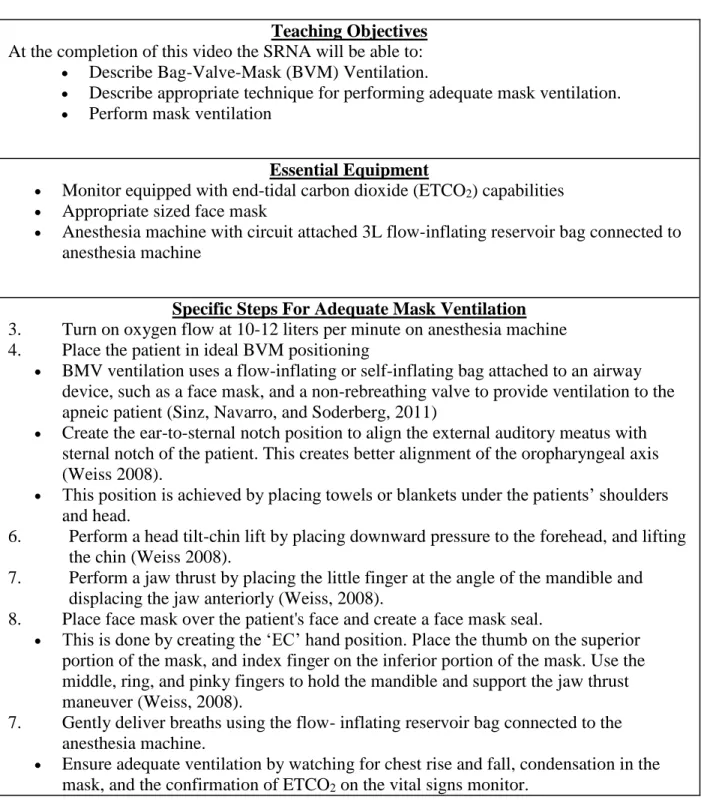
MSN/CRNA. Revisions included grammatical error corrections, and incorporating an additional source as to define the term bag-valve mask ventilation. After the suggested revisions were completed by the investigators of this study, the video script was resubmitted to the CRNA’s and received final approval as seen in Table 1.
This video was filmed using the NorthShore University Health Systems simulation center. The content of video consisted of the approved checklist on BMV including textbook standard procedure. The BVM ventilation video clip is three minutes in length. At the beginning of the video the name and purpose of the skill was introduced, followed by a step-by-step instructional demonstration of the BVM ventilation skill. After the video was filmed, Pam
Schwartz DNP/CRNA, Karen Kapanke MSN/CRNA, and Megan Grelson DNP/CRNA reviewed the video and provided feedback regarding changes that needed to be made for adequate
instruction of the BVM ventilation skill. When the final video was approved, the investigators proceeded to data collection.
Table 1. Checklist for Instructional Video (Mask Ventilation for the Nurse Anesthetist)
Teaching Objectives
At the completion of this video the SRNA will be able to: Describe Bag-Valve-Mask (BVM) Ventilation.
Describe appropriate technique for performing adequate mask ventilation. Perform mask ventilation
Essential Equipment
Monitor equipped with end-tidal carbon dioxide (ETCO2) capabilities Appropriate sized face mask
Anesthesia machine with circuit attached 3L flow-inflating reservoir bag connected to anesthesia machine
Specific Steps For Adequate Mask Ventilation
1. Turn on oxygen flow at 10-12 liters per minute on anesthesia machine 2. Place the patient in ideal BVM positioning
BMV ventilation uses a flow-inflating or self-inflating bag attached to an airway device, such as a face mask, and a non-rebreathing valve to provide ventilation to the apneic patient (Sinz, Navarro, and Soderberg, 2011)
Create the ear-to-sternal notch position to align the external auditory meatus with sternal notch of the patient. This creates better alignment of the oropharyngeal axis (Weiss 2008).
This position is achieved by placing towels or blankets under the patients’ shoulders and head.
3. Perform a head tilt-chin lift by placing downward pressure to the forehead, and lifting the chin (Weiss 2008).
4. Perform a jaw thrust by placing the little finger at the angle of the mandible and displacing the jaw anteriorly (Weiss, 2008).
5. Place face mask over the patient's face and create a face mask seal.
This is done by creating the ‘EC’ hand position. Place the thumb on the superior portion of the mask, and index finger on the inferior portion of the mask. Use the middle, ring, and pinky fingers to hold the mandible and support the jaw thrust maneuver (Weiss, 2008).
6. Gently deliver breaths using the flow- inflating reservoir bag connected to the anesthesia machine.
Ensure adequate ventilation by watching for chest rise and fall, condensation in the mask, and the confirmation of ETCO2 on the vital signs monitor.
Instrument: The Video Simulation Education Evaluation Survey
The survey instrument consisted of two sections which include: 1) Demographic
questions and 2) The Video Simulation Education Evaluation Survey Pre-test and Post-test. The demographic questions included participant’s age, gender, ethnicity/race, type of nursing degree
held (BSN or MSN), and years of intensive care unit experience. The Technology for Education Purposes Survey pre-test and post-test was a modified version of Eom, Ashill, and Wen (2006)
Survey Questions. The Survey Questions created by Eom et al. (2006) were tested using Cronbach's coefficient alpha greater than 0.70, which indicates internal consistency. Sean Eom granted the researchers permission to use the survey. “The Video Simulation Education
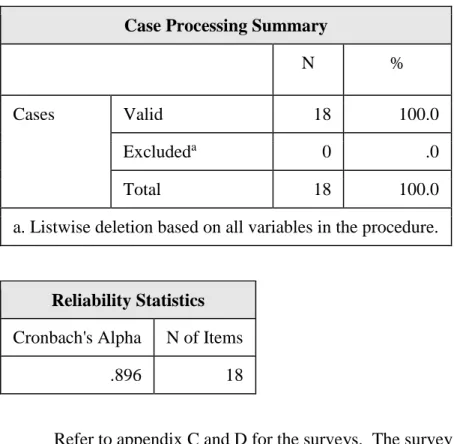
Evaluation Survey Pre-test and Post-test” questions were tested using Cronbach's coefficient alpha and the value was 0.896, indicating internal consistency of participants responses to the items in the questionnaire (Table 2). The surveys was reviewed and approved by two doctoral prepared certified registered nurse anesthetists (CRNA). This validated the purpose of the study being in correspondence with the survey questions addressed.
Table 2. Reliability Statistics
Case Processing Summary
N %
Cases Valid 18 100.0
Excludeda 0 .0
Total 18 100.0
a. Listwise deletion based on all variables in the procedure.
Reliability Statistics
Cronbach's Alpha N of Items
.896 18
Refer to appendix C and D for the surveys. The survey was broken into three categories which included technology opinion, knowledge, and confidence. There were ten statements in the technology opinion category, which discuss student learning preference and the use of technology in the learning environment. The next category of knowledge consists of four
statements about the student’s understanding on the BVM ventilation skill. The final category in the survey includes four statements regarding student confidence on the BMM ventilation skill.
Data Collection Procedure
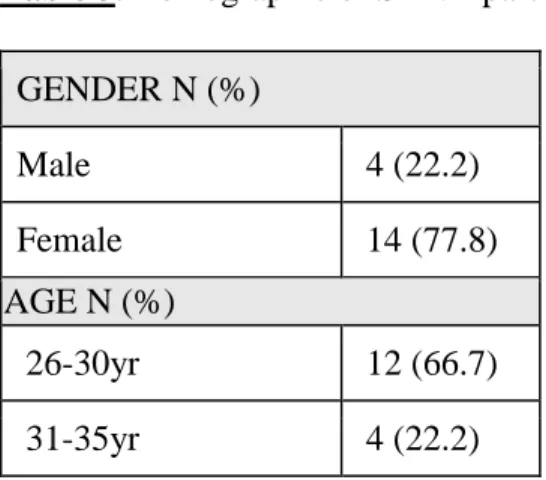
Following approval by the Illinois Institutional Review Board, a convenience sample of volunteer SRNA’s participated in the study. Demographics of the student participants are shown in Table 3. The majority of participants were white, females, 26-30 years old, possessed a bachelor’s of science in nursing degree with an average of 3-5 years ICU work experience. Data collection was conducted on a January 9, 2016 after a seminar where SRNA students in the class of 2017 were scheduled to attend. Participant’s anonymity was assured and all data was reported as a compiled data set. SRNA’s were informed that participation was voluntary, and that they may leave the study at any time prior to survey completion. It was explained that after survey completion the removal of a specific participant’s data would be impossible, as data results are anonymous and compiled together to ensure that anonymity. This was done for the convenience of the SRNA to participate in the study. Participants met in an auditorium to complete a ten-minute seminar. This was the only time data was collected, and there was one follow-up survey immediately after viewing the educational BVM ventilation video. The video took five minutes to watch.
Table 3. Demographic of SRNA participating in the web based video simulation study (n=18) GENDER N (%) Male 4 (22.2) Female 14 (77.8) AGE N (%) 26-30yr 12 (66.7) 31-35yr 4 (22.2)
36 & Older 2 (11.1) ETHNICITY N (%) White 13 (72.2) African American 1 (5.6) Hispanic 2 (11.1) Asian 2 (11.1) EDUCATION LEVEL N (%) BSN 17 (94.4) MSN 1 (5.6)
ICU EXPERIENCE YEARS N (%)
3-5 years 14 (77.8)
6-9 years 4 (22.2)
The Demographics Survey and Pre-test Post-test Survey (appendix C and D) were provided to the SRNA’s prior to watching the video clip, which focused on the skill of bag-valve-mask ventilation. Each survey took the participant about five to ten minutes to complete. The same survey was used for the pre-test and post-test, which was on the same piece of paper to keep the rankings together. After the SRNA’s watched the video clip, the students were
instructed to complete the post-test portion of the survey. The posttest survey results were compared with the pretest survey results to determine if there was a significant change in perceived knowledge and confidence regarding BVM ventilation. Since the pretest and posttest survey results come from the same person, the data points are correlated, and a statistical technique for matched pairs must be used (Plichta & Kelvin 2013).
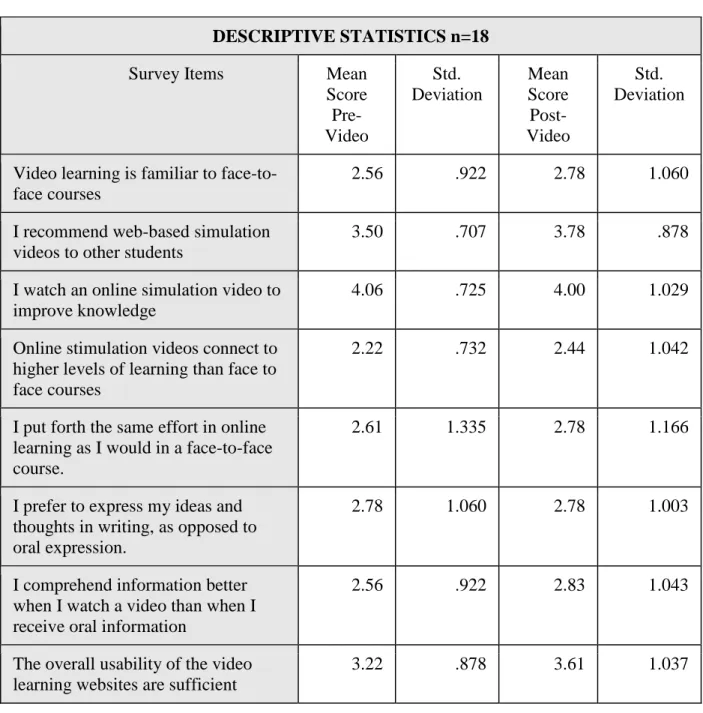
Since this was a pilot study, a power analysis was not performed prior to the conduction of the study. Data was analyzed using IBM SPSS Statistics 23. A preliminary examination of the frequency/percent of individual values of each question was conducted and presented in table 4.
Table 4. Survey Items Descriptive Statistics (n=18)
DESCRIPTIVE STATISTICS n=18
Survey Items Mean
Score Pre-Video Std. Deviation Mean Score Post-Video Std. Deviation
Video learning is familiar to face-to-face courses
2.56 .922 2.78 1.060
I recommend web-based simulation videos to other students
3.50 .707 3.78 .878
I watch an online simulation video to improve knowledge
4.06 .725 4.00 1.029
Online stimulation videos connect to higher levels of learning than face to face courses
2.22 .732 2.44 1.042
I put forth the same effort in online learning as I would in a face-to-face course.
2.61 1.335 2.78 1.166
I prefer to express my ideas and thoughts in writing, as opposed to oral expression.
2.78 1.060 2.78 1.003
I comprehend information better when I watch a video than when I receive oral information
2.56 .922 2.83 1.043
The overall usability of the video learning websites are sufficient
Objectives and procedures of video learning that I have been exposed to were clearly communicated.
3.61 .850 3.83 .786
Online video material that I have been exposed to was organized into logical and understandable
components.
3.72 .575 4.00 .594
The learner is very knowledgeable about bag-valve mask ventilation
3.28 .826 3.56 .705
I feel that I learn as much from online stimulation videos as I might have from a face-to-face version of a video
2.61 1.195 2.89 1.132
I feel that I learn more in online videos than in face-to-face courses.
2.39 .916 2.56 1.097
The quality of the learning
experience in online videos is better than in face-to-face instruction.
2.11 .758 2.67 1.138
I am goal directed, if I set my sights on a result, I usually can achieve it.
4.50 .618 4.44 .616
I am confident about performing bag-valve mask ventilation skill
3.11 1.023 3.44 .922
I feel that my confidence about BMV ventilation is/will be improved after watching a video regarding that skill
3.33 .970 3.50 .857
I have more confidence about learning skills in online videos than in face-to-face courses.
2.22 .943 2.94 1.259
After running the descriptive statistics, the paired t test was used “...to determine whether a difference exists in the mean of two correlated variables that are ratio in measurement scale and normally distributed” (Plichta & Kelvin, 2013, p. 130).
The significance level (α-level) is .05. The total degrees of freedom equal the number of pairs (18) minus 1 (Plichta & Kelvin, 2013). The critical value for the t-statistic, two-tailed
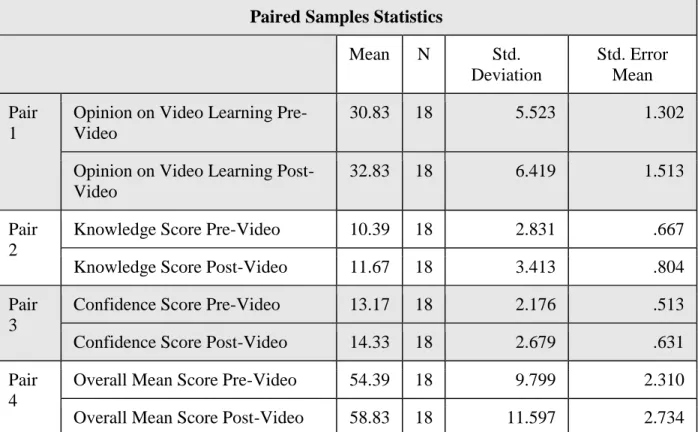
test=α/df and was determined after data points were collected (Plichta & Kelvin, 2013). The mean, standard deviation, and standard error mean for each group were computed and presented in Table 5.
Table 5. Paired Sample Statistics
Paired Samples Statistics
Mean N Std. Deviation Std. Error Mean Pair 1
Opinion on Video Learning Pre-Video
30.83 18 5.523 1.302
Opinion on Video Learning Post-Video
32.83 18 6.419 1.513
Pair 2
Knowledge Score Pre-Video 10.39 18 2.831 .667
Knowledge Score Post-Video 11.67 18 3.413 .804
Pair 3
Confidence Score Pre-Video 13.17 18 2.176 .513
Confidence Score Post-Video 14.33 18 2.679 .631
Pair 4
Overall Mean Score Pre-Video 54.39 18 9.799 2.310
Overall Mean Score Post-Video 58.83 18 11.597 2.734
An analysis of students’ pre and post test for each section of opinion on educational technology, knowledge, and confidence to answer the research questions of:
Does a web based simulation video on bag-valve mask ventilation for SRNA’s increase their perceived knowledge and confidence about bag-valve mask ventilation skills? Do SRNA’s who use the web-based simulation videos perceive that the technology
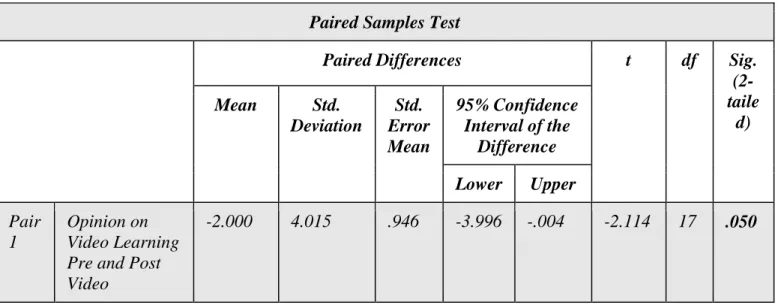
Because the nature of the data, the paired t tests were conducted to examine where there was a significant difference between pre and post test scores. The comparison of mean scores among the three categories of Opinion on Video Learning, Knowledge and Confidence showed statistically significant higher mean scores after the students watched the video on BVM ventilation (p<.05). The video simulation on BVM ventilation intervention significantly increased the SRNA’s overall opinion on video learning, knowledge, and confidence. The SRNAs gained an average of 4.44 points (95% confidence interval, 1.171, 7.718) on overall tests scores after watching the web based simulation video on BVM ventilation. The gain is
statistically significant by the paired t test (p< .05) (Table 6). It can be concluded that the perceived knowledge, confidence, and technology on education opinion rankings after watching the simulation video clip on BVM ventilation were significantly higher than the rankings before watching the video clip (Plichta & Kelvin, 2013).
Table 6. Paired Samples T Test: Opinion on Video Learning Pre and Post Video,
Knowledge Pre and Post Video, Confidence Pre and Post Video, and Overall Pre and Post Video Mean Score
Paired Samples Test
Paired Differences t df Sig.
(2-taile d) Mean Std. Deviation Std. Error Mean 95% Confidence Interval of the Difference Lower Upper Pair 1 Opinion on Video Learning Pre and Post Video
Pair 2
Knowledge Pre and Post Video
-1.278 1.873 .441 -2.209 -.347 -2.895 17 .010 Pair 3 Confidence Pre and Post-Video -1.167 1.790 .422 -2.057 -.276 -2.764 17 .013 Pair 4 Overall Pre and Post Video Mean Score
Discussion
There have been various studies regarding the efficacy of video learning on
education. However, to the researcher's knowledge, this is the first study to explore the influence of instructional videos on the skill of BVM ventilation at a Nurse Anesthesia Program. The ability to perform adequate BVM ventilation is the most important skill for an anesthesia provider and a cornerstone to airway management. The inability to mask ventilate patients can lead to hypoxia and cardiac arrest. Therefore, it is imperative for that the most effective teaching methods for SRNAs are provided to ensure mastery of the most important skill in airway
management.
In the current study, the influence of the web based simulation video on BVM ventilation on SRNAs perceived confidence and knowledge about the skill as well opinion on video learning was evaluated. The researchers found that implementing the BVM ventilation video increased SRNAs knowledge and confidence on the BVM ventilation skill and improved their opinion on video learning in the educational setting. The researchers believe the effectiveness of the video is due to demonstration of the skill that would be difficult to depict with verbal or written material alone.
Ethical Consideration
The project obtained Institutional Review Board approval from DePaul University. The protection of human subjects was upheld by ensuring that participants knew that participation was voluntary and all participants’ responses were kept anonymous by not collecting any directly identifiable information or IP addresses. Participants were provided with an emailed information sheet that contained information about the purpose of the study, information about privacy, right
to cessation of participation without penalty, and contact information of researchers before participating in the study. The demographic survey was on a separate form and collected in the manila envelope labeled demographics. The pre and post-test surveys were collected in another manila envelope labeled pre-test post-test. Therefore, participants were not linked to data collected from the pre and post surveys. All data was kept in a locked cabinet at NorthShore University, School of Anesthesia office and only three people were able to access the data.
Limitations
One limitation of this study was that the use of pretest-posttest design may decrease external validity, because administering a pretest has the ability to influence the results. Thus, there is no way to assure an unaltered baseline assessment from participants is obtained.
A second limitation was that the study focused on a small, homogenous, convenience sample population within one university. This decreases the generalizability of results to other SRNAs at universities other than the one studied. The small sample size may have generated false results. As a homogenous population, this study may not be generalizable past the focus of SRNAs onto other anesthesia professionals. The use of nonrandom sampling also creates potential for selection bias, further impairing the generalizability of results.
Due to research participation being on a scheduled class day the SRNA may feel punitive action would be taken upon them for not attending. SRNA’s may have felt obligated to
participate because the researchers are fellow SRNA’s who they may perceive as mentors in their program of study.
Despite the many studies showing the effectiveness of video based learning into
traditional based learning methods, there are few web-based anesthesia specific platforms with reviewable audio-visual outlets for SRNA’s to increase clinical skill competency. To the researcher's knowledge, this is the first study to explore the influence of instructional videos on the skill of BVM ventilation at a Nurse Anesthesia Program. Results from this study suggest the use of video learning increases knowledge and confidence of the SRNA when learning a skill. Findings also showed just introducing video learning to subjects improved their opinion on video learning in the educational setting.
More web-based anesthesia specific platforms with reviewable audio-visual outlets for SRNA’s need to be incorporated into the educational setting. It is suggested by the authors that further research into the benefit of video learning be conducted, and that more educational videos specific to the SRNA are created.
Conclusion
These findings will help bridge the gap in learning and education for SRNA’s by using web based simulation video’s to enhance perceived knowledge and confidence on BVM ventilation skills. The use of technology when combined with traditional teaching modalities effectively increases perceived knowledge and confidence in the clinical realm for SRNAs. The findings show that the use of video simulation and technology in education is a preferred method of learning, which is consistent with current research on video based simulation videos. The findings solidify the idea that SRNAs believe that there is a need for more video based simulation educational videos.
References
Bonnetain, E., Boucheix, J., Hamet, M., & Freysz, M. (2010). Benefits of computer screen- based simulation in learning cardiac arrest procedures. Medical Education, 44, 716- 722. doi:10.1111/j.1365-2923.2010.03708.
Brydges, R., Carnahan, H., Safir, O., & Dubrowski, A. (2009). How effective is self-guided learning of clinical technical skills? It's all about process. Medical Education, 43(6), 507-515.
doi:10.1111/j.1365-2923.2009.03329.x
Chi, D. L., Pickrell, J. E., & Riedy, C. A. (2014). Student learning outcomes associated with video vs. paper cases in a public health dentistry course. Journal of Dental Education, 78(1), 24-30. Chiviacowsky, S., & Wulf, G. (2005). Self-controlled feedback is effective if it is based on the learner's
performance. Research Quarterly for Exercise and Sport, 76(1), 42-8.
Deindl, P., Schwindt, J., Berger, A., & Schmölzer, G. M. (2015). An instructional video enhanced bag-mask ventilation quality during simulated newborn resuscitation. Acta Paediatrica, 104(1), e20-6. doi:10.1111/apa.1282e20-6.
Eom, S. B., Wen, H. J., & Ashill, N. (2006). The determinants of students' perceived learning outcomes and satisfaction in university online education: An empirical investigation. Decision Sciences Journal of Innovative Education, 4(2), 215-235.
Gadbury-Amyot, C. C., Purk, J. H., Williams, B. J., & Van Ness, C. J. (2014). Using tablet technology and instructional videos to enhance preclinical dental laboratory learning. Journal of Dental Education,78(2), 250-258.
Hart, D., Reardon, R., Ward, C., & Miner, J. (2013). Face mask ventilation: A comparison of three techniques. Journal of Emergency Medicine, 44(5), 1028-1033.
Kelly, M., Lyng, C., McGrath, M., & Cannon, G. (2009). A multi-method study to determine the
effectiveness of, and student attitudes to, online instructional videos for teaching clinical nursing skills. Nurse Education Today, 29(3), 292-300.
Kurup, V., & Ruskin, K. (2008). Information technology in anesthesia education. In J. Stonemetz & K. Ruskin (Eds). Anesthesia informatics. London, UK: Springer.
Mayer, R.E. (2002). Cognitive theory of multimedia learning. In B. Ross (Ed). Psychology of learning and motivation (pp.85-139), San Diego, CA: Academic Press.
McLain, N. E., Biddle, C., & Cotter, J. J. (2012). Anesthesia clinical performance outcomes: Does teaching method make a difference? American Association of Nurse Anesthesia Journal, 80(4), S11-S16.
Plichta, S. B., Kelvin, E. A., & Munro, B. H. (2013). Munro's statistical methods for health care research. Philadelphia, PA: Wolters Kluwer Health/Lippincott Williams & Wilkins. Sinz, E., Navarro, K., & Soderberg, E. S. (2011). Advanced cardiovascular life support: Provider
manual. American Heart Association. Dallas, TX.
Weiss, A. M., & Lutes, M. (September, 2008). Focus on – Bag-valve mask ventilation. American College of Emergency Physicians. Retrieved from https://www.acep.org/Clinical---Practice-Management/Focus-On---Bag-Valve-Mask-Ventilation/
Whatley, J & Ahmad, A. (2007). Using video to record summary lectures to aid students’ revision. Interdisciplinary Journal of Knowledge and Learning Objects, 3, 185-195.
Zhang, N., & Chawla, S. (2012). Effect of implementing instructional videos in a physical examination course: An alternative paradigm for chiropractic physical examination teaching. The Journal of Chiropractic Education, 26(1), 40–46.
Appendix A Recruitment Email
Hello SRNAs.
Tomorrow you may choose to attend a seminar focused on web-based simulation presented as part of our DNP project. The goal of the seminar and surveys is to determine if web-based simulation education videos will improve your perceived confidence and knowledge on the skill of bag-valve mask ventilation. Your participation is both voluntary and anonymous. If you choose to not to participate at any time during the seminar, you are not obligated to stay and may exit the room. However, once you have submitted a survey, we will be unable to remove your responses from the data as it is anonymous so we will not know which responses you provided. Attached you will find an information sheet for participation in a research study. Please review prior to your participation in the web-based simulation seminar and completion of any
surveys. We thank you in advance for your participation. Sincerely,
Appendix B
INFORMATION SHEET FOR PARTICIPATION IN RESEARCH STUDY
THE USE OF HUMAN FACTORS TRAINING TO IMPROVE THE QUALITY OF DECISION MAKING IN NURSE ANESTHESIA TRAINEES
Principal Investigator: Erica Kubis, BSN, RN; Mishawna Bussing, BSN, RN
Institution: DePaul University, USA
Collaborators:
NorthShore University HealthSystem School of Nurse Anesthesia: Pamela Schwartz, DNP, CRNA University of Chicago: Megan Grelson, DNP, CRNA
We are conducting a research study because we are trying to learn more about the effectiveness of video simulation training to increase knowledge and confidence in the student registered nurse
anesthetist. We are asking you to be in the research because you are enrolled in the NorthShore University HealthSystem School of Nurse Anesthesia and in your second year of training. If you agree to be in this study, you will be asked to watch a five minutes web based instructional video
on bag valve mask ventilation skills and complete a two anonymous surveys; one prior to watching the video and one after watching the video. The surveys will include questions about your perceived confidence and knowledge on the bag valve mask ventilation skills. We will also
collect some personal information about you such as gender, age, ethnicity, education level, and number of years of intensive care unit experience. If there is a question you do not want to answer, you may skip it. This web based instructional video will take 5 minutes of your time.
Each of the two surveys will take approximately 5-10 minutes to complete. Research data collected from you will be anonymous.
Your participation is voluntary, which means you can choose not to participate. There will be no negative consequences if you decide not to participate or change your mind later after you begin the study. You can withdraw your participation at any time prior to submitting your survey. If you change your mind later while answering the survey, you may simply exit the survey. Once you submit your responses, we will be unable to remove your data later from the study because all data is anonymous and we will not know which data belongs to you. Your decision whether or not to be in the research will not affect any grade, evaluation, or status within DePaul University or the NorthShore University HealthSystem School of Nurse Anesthesia.
If you have questions, concerns, or complaints about this study or you want to get additional information or provide input about this research, please contact Erica Kubis at
[email protected] or Mishawna Bussing at [email protected] .
If you have questions about your rights as a research subject you may contact Susan Loess-Perez, DePaul University’s Director of Research Compliance, in the Office of Research Services at 312-362-7593 or by email at [email protected]. You may also contact DePaul’s Office of Research Services if:
Your questions, concerns, or complaints are not being answered by the research team. You cannot reach the research team.
Appendix C: Demographic Survey
Your participation is voluntary and anonymous. This survey should take approximately 5 minutes.
Gender Male Female
Age 20-25 26-30 31-35 36 and
Older
Ethnicity White African American Hispanic Asian
Education Level Bachelor's Degree in Science Nursing Master’s Degree in Science Nursing Doctorate in Science Nursing Other Intensive Care Unit Experience
Appendix D: The Video Simulation Education Evaluation Survey
Please complete the following survey regarding the use of technology in learning and the
perceived levels of confidence and knowledge associated with it. Your participation is voluntary and anonymous. This survey should take approximately 5-10 minutes. The information from the survey will be used to evaluate web-based video learning.
The Video Simulation Education Evaluation Survey Pre-test 1 Strongly Disagree 2 Disagree 3 Neutral 4 Agree 5 Strongly Agree
Technology and Learning
Video learning is on par with face-to-face courses
I recommend web-based simulation videos to other students
I watch an online simulation videos to improve knowledge
Online stimulation videos connect to higher levels of learning than face to face courses
I put forth the same effort in online learning as I would in a face-to-face course.
I prefer to express my ideas and thoughts in writing, as opposed to oral expression.
I comprehend information better when I watch a video than when I receive oral information
The overall usability of the video learning websites are sufficient Objectives and procedures of video learning that I have been exposed to were clearly communicated.
Online video material that I have been exposed to was organized into logical and understandable components.
Knowledge
The learner is very knowledgeable about bag-valve mask ventilation
I feel that I learn as much from online stimulation videos as I might have from a face-to-face version of a video
I feel that I learn more in online videos than in face-to-face courses.
The quality of the learning experience in online videos is better than in face-to-face instruction.
Confidence
I am goal directed, if I set my sights on a result, I usually can achieve it. I am confident about performing bag-valve mask ventilation skill
I feel that my confidence about BMV ventilation is/will be improved after watching a video regarding that skill I have more confidence about learning skills in online videos than in face-to-face courses.
Please complete the following survey regarding the use of technology in learning and the
perceived levels of confidence and knowledge associated with it. Your participation is voluntary and anonymous. This survey should take approximately 5-10 minutes. The information from the survey will be used to evaluate web-based video learning.
The Video Simulation Education Evaluation Survey Post-test 1 Strongly Disagree 2 Disagree 3 Neutral 4 Agree 5 Strongly Agree
Technology and Learning
Video learning is on par with face-to-face courses
I recommend web-based simulation videos to other students
I watch an online simulation videos to improve knowledge
Online stimulation videos connect to higher levels of learning than face to face courses
I put forth the same effort in online learning as I would in a face-to-face course.
I prefer to express my ideas and thoughts in writing, as opposed to oral expression.
I comprehend information better when I watch a video than when I receive oral information
The overall usability of the video learning websites are sufficient Objectives and procedures of video learning that I have been exposed to were clearly communicated.
Online video material that I have been exposed to was organized into logical and understandable components.
Knowledge
The learner is very knowledgeable about bag-valve mask ventilation I feel that I learn as much from online stimulation videos as I might have from a face-to-face version of a video
I feel that I learn more in online videos than in face-to-face courses.
The quality of the learning experience in online videos is better than in face-to-face instruction.
Confidence
I am goal directed, if I set my sights on a result, I usually can achieve it. I am confident about performing bag-valve mask ventilation skill
I feel that my confidence about BMV ventilation is/will be improved after watching a video regarding that skill
I have more confidence about learning skills in online videos than in face-to-face courses.
Appendix E
Table 1. Checklist for Instructional Video (Mask Ventilation for the Nurse Anesthetist)
Teaching Objectives
At the completion of this video the SRNA will be able to: Describe Bag-Valve-Mask (BVM) Ventilation.
Describe appropriate technique for performing adequate mask ventilation. Perform mask ventilation
Essential Equipment
Monitor equipped with end-tidal carbon dioxide (ETCO2) capabilities Appropriate sized face mask
Anesthesia machine with circuit attached 3L flow-inflating reservoir bag connected to anesthesia machine
Specific Steps For Adequate Mask Ventilation
3. Turn on oxygen flow at 10-12 liters per minute on anesthesia machine 4. Place the patient in ideal BVM positioning
BMV ventilation uses a flow-inflating or self-inflating bag attached to an airway device, such as a face mask, and a non-rebreathing valve to provide ventilation to the apneic patient (Sinz, Navarro, and Soderberg, 2011)
Create the ear-to-sternal notch position to align the external auditory meatus with sternal notch of the patient. This creates better alignment of the oropharyngeal axis (Weiss 2008).
This position is achieved by placing towels or blankets under the patients’ shoulders and head.
6. Perform a head tilt-chin lift by placing downward pressure to the forehead, and lifting the chin (Weiss 2008).
7. Perform a jaw thrust by placing the little finger at the angle of the mandible and displacing the jaw anteriorly (Weiss, 2008).
8. Place face mask over the patient's face and create a face mask seal.
This is done by creating the ‘EC’ hand position. Place the thumb on the superior portion of the mask, and index finger on the inferior portion of the mask. Use the middle, ring, and pinky fingers to hold the mandible and support the jaw thrust maneuver (Weiss, 2008).
7. Gently deliver breaths using the flow- inflating reservoir bag connected to the anesthesia machine.
Ensure adequate ventilation by watching for chest rise and fall, condensation in the mask, and the confirmation of ETCO2 on the vital signs monitor.