Remarkable progress has been made in recent decades to reduce the number of child deaths worldwide, but neonatal mortality rate declined at a slower pace. Yet a large proportion of newborn deaths are preventable. Currently, 2.9 million babies die within the first month of life accounting for 44% of under-five mortality, and an additional 2.6 million babies are stillborn. In order to reduce child mortality and end preventable deaths, intensified action and guidance are needed to ensure newborn survival.
The Every Newborn: an action plan to end preventable deaths is a roadmap for change. It sets out a vision and proposes a goal and targets to end newborn deaths from preventable causes. Five guiding principles and five strategic objectives are at the core of the plan.
The action plan is based on evidence and considers the main causes on newborn mortality and effective interventions to prevent and manage these. It builds on the intrinsic links between maternal and newborn health and promotes state-of-the-art knowledge of effective delivery approaches for the interventions and innovations to accelerate progress towards universal health coverage. The plan is also informed by a systematic review of the progress in addressing newborn survival globally in the last decade.
Development of this plan has been guided by the advice of countries and experts, and was coordinated by a core group of partners, led by WHO and UNICEF. The process included several multi-stakeholder consultations in which country teams presented and discussed results from a bottleneck analysis towards scaling up of newborn interventions that they had conducted in their countries.
The Every Newborn Action Plan is situated in the continuum of care for Reproductive, Maternal, Newborn and Child Health. It will be a useful resource to guide the design of national plans to accelerate progress towards MDGs 4 and 5 and work towards the longer term goal of ending preventable deaths among women and children.
Every newborn: a draft action plan to end
preventable deaths
1. Remarkable progress has been made in recent decades in reducing the number of child deaths worldwide, largely due to interventions to lower child mortality after the first month of life. Even though the mortality rate among children under the age of five years has declined globally by almost 50% (from 90 deaths/1000 live births in 1990 to 48 deaths/1000 live births in 2012), the neonatal mortality rate decreased only 36%, from 33 deaths/1000 live births to 21 deaths/1000 live births over the same period.1 As a result, the proportion of deaths in children under five years of age that occur in the neonatal period increased from 37% in 1990 to 44% in 2012 when 2.9 million children died within the first month of their life, mostly of preventable causes. These deaths are closely linked to 2.6 million babies who die in the last 3 months of pregnancy or during childbirth (stillbirths).
2. Many governments and partners have renewed their commitments to saving the lives of women and newborns, in response to the United Nations Secretary-General’s Global Strategy for Women’s and Children’s Health (launched in 2010) and its accompanying Every Woman, Every Child initiative and to recommendations made by the Commission on Information and Accountability (2011) and the United Nations Commission on Life-Saving Commodities for Women and Children (2012). The Every Newborn Action Plan takes forward the Global Strategy’s mission and is part of the Every Woman, Every Children movement, thus contributing to integrated actions across the reproductive, maternal, newborn and child health continuum of care.
3. World-wide, national and global leaders have endorsed the goals set out in Committing to Child Survival: A Promise Renewed (APR), which calls for ending preventable child deaths by 2035.2 Similarly, there are strong regional and global commitments to ending preventable maternal deaths. Given the significance of neonatal mortality in under-five mortality, the APR target that every country reduces underfive mortality to 20 or less per 1000 live births by 2035 will not be attained without specific efforts to reduce newborn mortality.
4. This draft action plan is a response to the urgent need to intensify action to end preventable neonatal deaths. It is based on evidence of what works and provides clear strategic objectives. It recognizes that survival of newborns is a sensitive marker of a health system’s response to its most vulnerable citizens and calls upon all stakeholders to improve access to and quality of health care for women and newborns, within the continuum of care that spans pregnancy, childhood and adolescence. The draft action plan emphasizes reaching every woman and every newborn baby, in particular when they are most vulnerable, namely in labour, during childbirth and in the first days of
1
UNICEF, WHO, The World Bank, United Nations. Levels and trends in child mortality: Report 2013. New York: UNICEF; 2013.
2
a newborn’s life. Effective care for mother and baby at this time also reduces maternal mortality and intrapartum stillbirths, resulting in a triple return on investment.
5. The opportunities for improving newborn health are unprecedented. Over a decade of analysis and research has generated information on the burden and causes of newborn mortality, demonstrated effective interventions and service delivery channels, and identified ways to accelerate progress in extending the coverage of interventions and to reduce that mortality. The intrinsic link between the survival, health and nutrition of newborns and the survival, health and well-being of the mother has been corroborated, and the period of greatest risk of morbidity and mortality of both mother and child confirmed as the hours that precede and follow childbirth.
6. At the Sixty-fourth World Health Assembly, in resolution WHA64.12 and discussions in Committee A, Member States noted the insufficient and uneven progress towards achieving Millennium Development Goals 4 and 5, and observed that progress towards reducing perinatal and neonatal mortality had stagnated. They expressed concern over the high number of stillbirths and neonatal deaths and the large contribution of neonatal mortality to under-five mortality. The Health Assembly, in resolution WHA64.13, Working towards the reduction of perinatal and neonatal mortality, requested the Director-General to promote targeted plans to increase access to high quality and safe health services to prevent and treat perinatal and neonatal conditions.3 The present draft action plan responds to that request and is also in line with the provisions of resolution WHA64.9, Sustainable financing structures and universal coverage.
7. Newborn health is a human right as specified in the Convention on the Rights of the Child. The United Nations Human Rights Council, in resolution A/HRC/22/32, affirmed the importance of applying a human-rights-based approach to eliminating preventable maternal and child mortality and morbidity, and requested States to renew their political commitment and to take action to address the main causes of maternal and child mortality and morbidity. The General Comment No. 155 made by the Committee on the Rights of the Child in April 2013 specifies that ‘States have an obligation to reduce child mortality”, and the Committee urged particular attention be paid to neonatal mortality.
8. The Global Investment Framework for Women’s and Children’s Health estimates the effects of investment on reproductive, maternal, newborn and child health across the continuum of care.4 The package of 50 effective interventions considered includes those related to newborn health. The Framework estimated that, with the right investment of US$ 5 per person per year, the deaths of
3 See also document WHA64/2011/REC/1, summary records of the ninth, tenth and eleventh meetings of
Committee A.
4
Stenberg K, Axelson H, Sheehan P, Anderson I, Gülmezoglu AM, Temmerman M et al. Advancing social and economic development by investing in women’s and children’s health: a new Global Investment Framework. Lancet, early online publication 19 November 2013, doi:10.1016/S0140-6736(13)62231-X (accessed 26
147 million children (including 60 million newborns), 32 million stillbirths and 5 million maternal deaths can be avoided by 2035. The investment would yield a return of close to nine-fold in the form of social and economic benefits over the 23-year period, 2012-2035, considered by the Framework for a group of 74 countries with the highest burden of maternal, newborn and child deaths.
CURRENT SITUATION
9. It is estimated that every year 287 000 women die from complications of pregnancy and childbirth, 2.6 million babies are stillborn and 2.9 million babies die in the first months of life. The global annual average rate of decline in newborn deaths since 1990 has been 2.1%, lower than that of maternal mortality (3.1%) and mortality of children aged 1–59 months (3.5%) and far less than the 4.4% required to achieve Millennium Development Goal 4 and the 5.2% required to achieve the goal set in Committing to Child Survival: A Promise Renewed. Appendix 1 sets out the targets of the draft action plan for rectifying that situation.
10. Most newborn deaths occur in low- and middle-income countries. Two-thirds of all newborn mortality occurs in 12 countries, six of which are in sub-Saharan Africa.5 Countries with a neonatal mortality rate of 30 or more deaths/1000 live births account for 60% of all newborn deaths.6 Many countries with a high burden of newborn mortality have experienced recent conflict or humanitarian emergencies. Others have weak health systems with limited infrastructure and low density of skilled health workers; in addition, out-of-pocket expenditures are high. Access to quality health services for women and children is not guaranteed, resulting in stark disparities in coverage of interventions, between and within countries. In the past decade, however, at least 77 countries, including 13 low-income countries, 7 have shown that it is possible to make rapid progress, as they reduced their newborn mortality rate by more than 25%.8
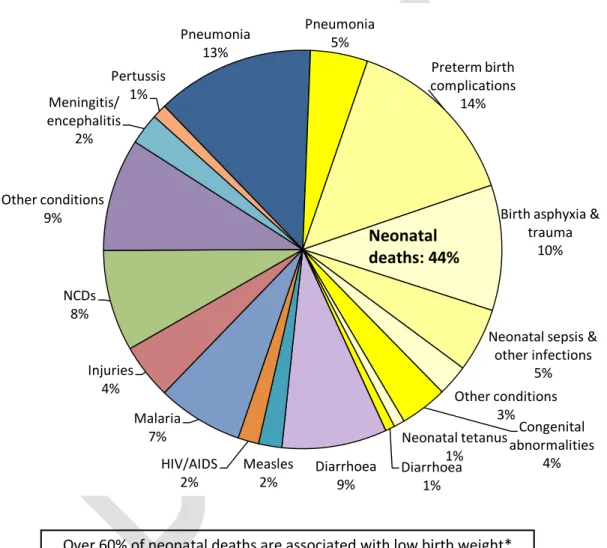
11. Three causes account for more than 85% of newborn mortality (Figure 1): complications of prematurity, intrapartum-related neonatal deaths (including birth asphyxia) and neonatal infections.9 Complications of prematurity are currently the second leading cause of under-five deaths. Annually 15 million babies are born prematurely and 32.4 million are born with a weight below the tenth percentile for their gestational age. More than 60% of all newborn deaths occur
5 India, Nigeria, Pakistan, China, Democratic Republic of the Congo, Ethiopia, Bangladesh, Indonesia, Angola, Kenya,
United Republic of Tanzania, Afghanistan (in descending order of annual number of newborn deaths).
6
Afghanistan, Angola, Burundi, Central African Republic, Chad, Comoros, Congo, Côte d'Ivoire, Democratic Republic of the Congo, Djibouti, EquatorialGuinea, Ethiopia, Guinea,Guinea-Bissau, India, Lesotho, Mali, Mauritania, Mozambique, Nigeria, Pakistan, Sierra Leone, Somalia, South Sudan, Swaziland, Togo and Zimbabwe.
7 Bangladesh, Bolivia (Plurinational State of), Eritrea, Guatemala, Indonesia, Madagascar, Malawi, Morocco, Nepal,
Senegal, Rwanda, United Republic of Tanzania and Viet Nam.
8
Lawn JE, Kinney MV, Black RE, et al. Newborn survival: a multi-country analysis of a decade of change. Health policy and planning. Jul 2012;27 Suppl 3:iii6-28.
9 Global Health Observatory Data Repository. World Health Organization; 2013. http://apps.who.int/ghodata/ (Accessed 26 November 2013).
among babies who have a low birth weight due to prematurity or are small for gestational age or both.10 Among infants born prematurely, 2.7% (or 345 000) suffer a moderate or severe impairment and 4.4% (or 567 000) have a mild impairment.11 The life-time risk of developing a noncommunicable disease is also increased in people who were born prematurely. Moderate and severe prematurity carries the greatest risk of disability and long-term morbidity.
Fig 1: Causes of death in children under five years of age
Source:(1) WHO. Global Health Observatory http://www.who.int/gho/child_health/en/index.html); (2) *For low birth weight: Katz et al. Lancet, 2013
10
Katz J, Lee AC, Kozuki N, et al. Mortality risk in preterm and small-for-gestational-age infants in low-income and middle-income countries: a pooled country analysis. Lancet. Aug 3 2013;382(9890):417-425.
11 Lawn JE, Blencowe H, Darmstadt GL, Bhutta ZA. Beyond newborn survival: the world you are born into
determines your risk of disability-free survival. Pediatric Research. 2013. Pneumonia
13%
Pneumonia 5%
Preterm birth complications
14%
Birth asphyxia & trauma
10%
Neonatal sepsis & other infections
5% Other conditions
3%
Congenital abnormalities
4% Neonatal tetanus
1% Diarrhoea
1% Diarrhoea
9% Measles
2% HIV/AIDS
2% Malaria
7% Injuries
4% NCDs
8% Other conditions
9%
Meningitis/ encephalitis
2%
Pertussis 1%
Neonatal
deaths: 44%
12. The impact of social determinants of health on newborn mortality should not be underestimated. Poverty, inequality and societal unrest undermine maternal and newborn care through numerous pathways, including poor maternal diets, inadequate housing and sanitation. Complex humanitarian emergencies catalyse dramatic movements of people, including pregnant women and newborns, and compromise access to functional health systems. Low education levels, gender discrimination and a lack of empowerment prevent women from seeking health care and making the best choices for themselves and their children’s health, thereby resulting in perilous delays and unnecessary deaths. The gap between those with highest and lowest coverage of effective interventions can be closed in a generation through intersectoral actions such as expanding educational programmes, improving living and working conditions, increasing access to clean water and adequate sanitation, and progress towards universal health coverage.
EFFECTIVE INTERVENTIONS FOR IMPROVING THE HEALTH OF NEWBORNS ALONG THE CONTINUUM OF CARE
13. Effective interventions for improving survival and health of newborn babies form one component of integrated health services for reproductive, maternal, newborn and child and adolescent health. These interventions have been well documented across the life course and have been packaged for levels of service delivery.12 Many are delivered from common platforms for health care delivery; integrated planning and delivery can ensure efficient and effective health services for women and children.
14. Interventions around the time of birth have the greatest effect on reducing neonatal mortality, as low coverage and poor quality of health care at that time account for high rates of newborn mortality as well as maternal mortality and intrapartum stillbirths. Good-quality care during labour, birth and in the immediate postnatal period not only prevents the onset of complications but enables their early detection and prompt management. Although globally the proportion of women giving birth with a skilled attendant (physician, nurse or midwife) has increased to 66%, great disparities exist between and within countries. In sub-Saharan Africa in particular, coverage of skilled care at birth remains low at just under 50%.13
15. Recognizing the importance of reaching every women and every newborn with quality care around the time of childbirth and the days immediately after birth, interventions during pregnancy and before conception also have a critical role to play. Interventions include those essential for all pregnant women who are in labour as well as essential newborn care. Additional care may be required for small and/or sick babies such as neonatal resuscitation, antibiotics and Kangaroo
12 The Partnership for Maternal, Newborn and Child Health. A global review of the key interventions related to
reproductive, maternal, newborn and child health. Geneva: The Partnership for Maternal, Newborn and Child Health, 2011.
13 WHO. EB 134/17 Monitoring the achievement of the health-related Millennium Development Goals, Geneva:
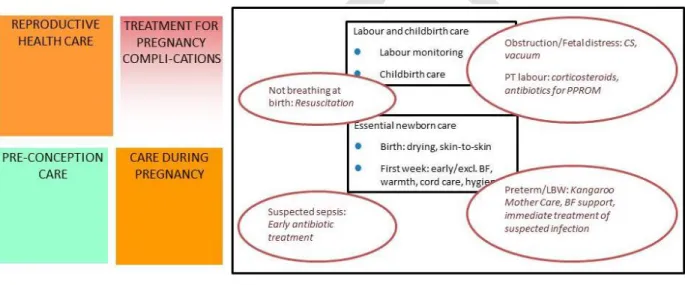
Mother Care. However, care before pregnancy, between pregnancies and during pregnancy also affects the survival and health of newborns. Pregnant women who are malnourished are more likely to give birth to low birth weight babies, as are women who were undernourished during their own first 1,000 days of life. Very young mothers not only face more pregnancy-related problems but are also prone to obstructed labour. Inadequately-spaced pregnancies are closely linked with newborn health outcomes and mortality. Access to family planning and the right to control when and how frequently they become pregnant is a vital part of empowering women and girls but also to the survival and health of their babies. Figure 2 present the packages of interventions that are essential for newborn survival and that also have an impact on maternal mortality and stillbirths.
Figure 2: Packages of essential interventions for ending preventable newborn mortality
16. Low access to effective interventions continues in the postnatal period, with less than half of women and their newborn babies receiving postnatal care within the first two days after birth.14 Early postnatal care is particularly important for reducing the large percentage of newborn mortality that occurs on the first day of life, as good-quality postnatal care within 24 hours, on day 3, and between day 7 and 14 has a major impact on maternal and newborn health.15 Postnatal care enables carers to institute good care practices such as exclusive breastfeeding and seeking care
14
Requejo JH, Bryce J, Victora C, Deixel A. Accountability for maternal, newborn and child survival: the 2013 update. Geneva: World Health Organization and UNICEF; 2013.
15 World Health Organization. Compilation of WHO recommendations on maternal, newborn, child and adolescent
when a newborn develops signs of illness. Globally, only 38% of infants younger than six months of age are exclusively breastfed, often owing to inadequate care that starts in the first week of a baby’s life and in spite of the fact that optimal breastfeeding practices can save the lives of up to 800 000 children under five years of age each year.16
17. Interventions should start well before conception. Every pregnancy should be wanted and, in this connection, intensified efforts are needed to reach an estimated 222 million women in developing countries who would like to delay or stop childbearing but are not using any modern method of contraception.17 Investments in family planning will also contribute significantly to an overall reduction in maternal and neonatal mortality. Reducing the number of unintended pregnancies could avert 60% of maternal deathsand 57% of the child deaths.18
18. No girl should marry or become a mother before having had a chance to reach an age of maturity. About 16 million adolescent girls between 15 and 19 years of age give birth each year, roughly 11% of all births worldwide. Complications in pregnancy and childbirth are some of the leading causes of death for adolescent girls, and perinatal deaths among babies born to mothers under 20 years of age are 50% higher than among those born to mothers between 20 and 29 years of age; adolescent mothers’ babies are also more likely to have low birth weight and/or be born prematurely. Preventing early pregnancy in adolescent girls has to be a major component of efforts to improve the health of newborns.19
19. Efforts and resources to prevent adolescent pregnancy have typically been focused on girls aged between 15 and 19 years, yet the most vulnerable girls, and those who face the greatest risk of complications and dying as a result of pregnancy and childbirth, are 14 years old or younger. Their needs are immense, and governments, civil society, communities and the international community must do much more to protect them and support their safe and healthy transition from childhood and adolescence to adulthood.20
20. Providing care to women and couples before and between pregnancies improves the chances of mothers and babies being healthy. Preconception care has, until recently, been a weak link in the continuum of care. In addition to family planning, it includes life-skills education; interventions to improve nutrition, prevent and manage harmful practices, such as smoking or alcohol use;
16
Bhutta ZA, Das JK, Rizvi A, et al. Evidence-based interventions for improvement of maternal and child nutrition: what can be done and at what cost? Lancet. Aug 3 2013;382(9890):452-477.
17
Singh S, Darroch JE. Adding It up: costs and benefits of contraceptive services - estimates for 2012. New York: Guttmacher Institute and United Nations Population Fund; 2012.
18 Stenberg K, Axelson H, Sheehan P, et al. Advancing social and economic development by investing in women's
and children's health: a new Global Investment Framework. Lancet. Nov 18 2013.
19
World Health Organization. Preventing early pregnancy and poor reproductive outcomes among adolescents in developing countries. Geneva: World Health Organization; 2011.
20 United Nations Population Fund. The state of world population 2013: motherhood in childhood. New York:
identification and treatment of conditions such as sexually transmitted infections and mental illness; and tackling intimate partner violence.
21. Antenatal care is an important channel for delivery of a set of interventions that have a direct impact on the health of the mother and the fetus. In low-income countries, only an estimated 37% of women attend the recommended minimum four visits to antenatal clinics, and often the quality of care available is sub-optimal. An even lower proportion receives essential interventions such as screening for and treatment of anaemia and hypertension, counselling and testing for HIV and syphilis, or prevention and treatment of malaria.
22. The provision of a continuum of care throughout the life course needs seamless, functional coordination between levels of health services. In many countries, skilled care at birth is most efficiently provided in health facilities, as immediate access to emergency obstetric and newborn services when complications occur is crucial for survival. Community health workers can play an important role in supporting families to adopt good home care practices, encouraging delivery in a health care facility when quality services are accessible, and ensuring timely referral of newborns showing signs of illness.
23. Delivering health care to mothers and newborns requires coordination between technical programmes and initiatives, and collaboration among all concerned stakeholders led by governments, with professional associations, civil society, academic and research institutions, the business community, development partners and families.
THE ACTION PLAN
24. This draft action plan aims to enhance and support coordinated, comprehensive planning and implementation of newborn-specific actions within the context of national health strategies and action plans. It has been drafted in close consultation with stakeholders and takes into account the findings of analyses of bottlenecks to scaling up.
25. Putting the action plan into practice will build upon and strengthen existing commitments, such as those referred to in paragraphs 2 and 3 above. The plan also builds upon goals and targets included in other global actions plans, such as those for elimination of mother-to-child transmission of HIV and syphilis; control of malaria; improving maternal, infant and young child nutrition; reaching universal coverage of immunization; and the Integrated Global Action Plan for the Prevention and Control of Pneumonia and Diarrhoea.
26. The action plan relies on five guiding principles:
(a) Country leadership: Countries have the primary ownership and responsibility for establishing good governance and providing effective and good-quality reproductive, maternal and newborn health services. Community participation is a key feature of such leadership as it is one of the most effective transformational mechanisms for action and
accountability for newborn health. Development partners should align their contributions and harmonize action.
(b) Integration: Providing every woman and every newborn with good-quality care requires integrated service delivery with coordinated health system approaches between multiple programmes, stakeholders and initiatives across the continuum of reproductive, maternal, newborn and child health are essential, without losing visibility for newborn specific content.
(c) Equity: Equitable and universal coverage of high-impact interventions, and a focus on reaching the most vulnerable and poorest population groups are central to realizing the right of every woman and every newborn, girl and boy, to health.
(d) Accountability: Transparency, oversight and accountability are prerequisites for equitable coverage, quality of care and optimal use of resources.
(e) Innovation: Evidence has been accumulating over the past decade of strategies that broaden the coverage of interventions for newborns and reduce mortality. Nevertheless, innovative thinking is needed about ways to reach the poorest and most underserved populations. Optimizing the application of knowledge of which interventions and strategies are most effective still needs more research and development.
VISION, GOALS AND TARGETS
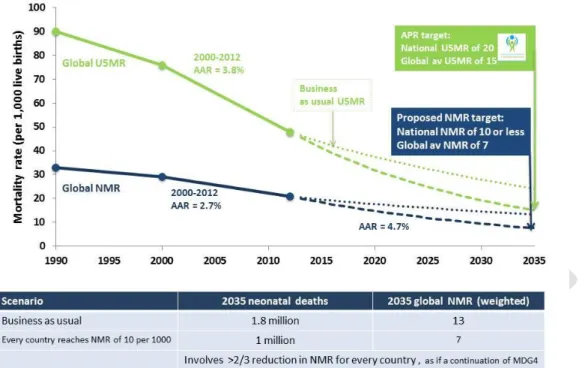
27. The action plan sets out a vision, and proposes a goal and targets for neonatal mortality reduction and reduction by 2035, with intermediate mortality targets for 2020 and 2025. The mortality targets are related to targets of coverage and quality of care for mothers and babies in health care facilities, postnatal care and care of sick newborns. More targets are shown in Appendix 1. Figure 3 shows the current trajectory for five and neonatal mortality along with the targets for under-five mortality reduction as proposed by A Promise Renewed and matching targets for newborn mortality reduction as proposed by this Every Newborn action plan. Figure 4 outlines the vision, goals and targets proposed by this draft plan.
28. The draft action plan supports the goals of Family Planning 2020 initiative to reach 120 million new users with modern contraception, specifically through services providing postnatal care. Specific linkages with other goals are included in the respective section of the document.
Figure 3: Trajectory of under-five and neonatal mortality to 2035
Data sources: Trajectory calculated using mortality date from the UN Inter-agency Group for Child Mortality Estimation, Levels and Trends in Child Mortality: Report 2013
Figure 4. Outline of the vision, goals and targets of the Every Newborn action plan
Vision
The action planenvisages a world in which there are no preventable deaths of newborns or stillbirths, where every pregnancy is wanted, every birth is celebrated, and mothers, babies and children thrive and reach their social and economic potential.
Global targets
Ending preventable newborn deaths: All countries have less than 10 neonatal deaths/1000 live births by 2035, with a resultant average global neonatal mortality rate of 7 deaths/1000 live births, with interim global targets as shown below. This target is consistent with and supports that in Committing to child survival: A Promise Renewed for ending preventable child deaths and with proposed targets for ending preventable maternal deaths. Member States should ensure this target is also achieved for all their underserved populations.
Year 2020 2025 2030 2035 Number neonatal
deaths in 2035 Neonatal mortality
rate (global weighted average)
15 12 9 7 About 1 million
A neonatal death is defined as the death within 28 days of birth of any liveborn baby regardless of weight or gestational age.
Note that these figures take into account the targets set in Committing to child survival: A Promise Renewed for every country to reach a mortality rate for children under 5 years of age of 20 deaths/1000 live births, which will result in a global average of 15 deaths/1000 live births.
To achieve an average global neonatal mortality rate of 7 deaths/1000 live births, all countries will have to reduce neonatal mortality by at least two-thirds from a baseline in 2012, which may be considered a continuation of Millennium Development Goal 4 applied to the unfinished agenda for the reduction in the number of newborn deaths.
Ending all preventable stillbirths:
All countries reduce their stillbirth rate to less than 10/1000 total births by 2035, with a resultant average global stillbirth rate of 8/1000 total births. Those countries with a stillbirth rate under
10/1000 total births should focus on addressing inequalities and using audit data to track and prevent all avoidable stillbirths.
For international comparison purposes, a stillbirth is defined as a baby born with no signs of life, weighing more than 1000 g or at 28 weeks gestation.
Goals
The overall goal is to achieve equitable and high-quality coverage of essential, referral and emergency care for every woman and every newborn within every country.
Linkage with other global and national plans:
The action plan will support the goals of Family Planning 2020 to reach 120 million new users with modern contraception, specifically through linkages with provision of postnatal care. It also builds on and links with other global action plans, such as those on nutrition, vaccines, pneumonia, diarrhoea, and water and sanitation, elimination of mother-to-child transmission of HIV, syphilis and tetanus.
Measurement and accountability:
Within 12 months of the launch of the action plan, an operational plan will be developed for defining and measuring coverage and quality of effective interventions and intervention packages promoted in this action plan, in association with the organizations and institutions with a global mandate for improving such metrics, as well as linking to other global plans, and accountability frameworks. Annex 2 lists key indicators for newborn health.
Goals for coverage by 2020
Goal 1: Coverage and quality of care at birth
Ninety percent of women giving birth and of babies born in facilities will receive effective high-quality and respectful care that includes essential care during pregnancy, labour and following birth, with preventive care and appropriate management of complications for the mother and newborn. Maternal and perinatal deaths surveillance and response, and regular monitoring of quality of care will be an integral part of maternal and newborn health services
Goal 2: Coverage and quality of care for newborns at risk At least half of babies not breathing spontaneously after birth are resuscitated with bag and mask ventilation; at least half of stable preterm newborns or babies weighing less than 2000 g receive kangaroo mother care and other supportive care; and at least half of newborns with possible serious bacterial infection receive antibiotic therapy.
Goal 3: Home visits and participatory group support for women and newborns
Each country will have achieved a 20% increase (or an increase to 90% if their baseline is above 70%), in the delivery of early postnatal care to mothers and newborns within two days of birth, in order to promote breastfeeding, counselling and screening for maternal and newborn complications, and postnatal family planning. In addition, each country will have an increase of 20% in the number of pregnant women having access to a participatory group.
Goals for coverage by 2025
Goal 1: Coverage and quality of care at birth
95% of women will give birth with a skilled attendant, and every woman and her newborn with a skilled attendant will receive effective high-quality and respectful care outlined in coverage target 1. Goal 2: Coverage and quality of care for newborns at risk
At least 75% of babies not breathing spontaneously after birth are resuscitated with bag and mask ventilation; at least 75% of stable preterm newborns or babies weighing less than 2000 g receive kangaroo mother care and other supportive care; and at least 75% of newborns with possible serious bacterial infection receive antibiotic therapy.
Goal 3: Home visits and participatory group support for women and newborns
90% of mothers and newborns receive early postnatal care of high quality within two days of birth and access to a participatory group. Quality of postnatal care will be tracked with improved metrics to assess content and longer term outcomes such as the nutrition goal of 50% exclusive breastfeeding in all countries by 2025.
STRATEGIC OBJECTIVES
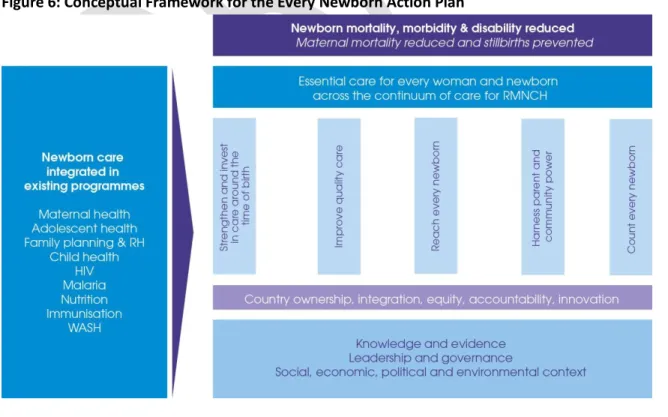
29. The Every Newborn action plan proposes five strategic objectives.
Strategic objective 1: Strengthen and invest in care during labour, childbirth, and the first day and week of life. More than one-third of stillbirths (1.2 million), 75% of newborn deaths (2 million) and 72% of maternal deaths (206 250) occur within this period. Many deaths and complications can be prevented by ensuring provision of high-quality, essential care for every pregnant woman and every baby around the time of labour, childbirth and in the first 24 hours and week after birth.
Strategic objective 2: Improve the quality of maternal and newborn care. Substantial gaps in the quality of care exist across the continuum of care for women and children’s health. In many settings women and newborns do not receive the care that they need even when they have a contact with the health system whether before, during or after pregnancy. The key to success in improving is introducing high-quality care with high-impact, cost-effective interventions for mother and baby together – in most cases, by the same health providers at the same time. Strategic objective 3: Reach every woman and every newborn to reduce inequities. Access to high-quality health care that people need without suffering financial hardship when paying for them is a human right. There is increasingly robust evidence of approaches for ending preventable newborn deaths that effectively accelerate the coverage of essential interventions, through innovations that include task sharing, improved access to life-saving commodities, health insurance and financing mechanisms, and use of information technology and social and knowledge networks.
Strategic objective 4: Harness the power of parents, families and communities. Education and information are crucial for empowering parents, families and their communities to demand quality care. Evidence has shown the power of engaged community leaders, women’s groups, and community workers in turning the tide for better health outcomes for newborns. Participatory learning and action in poor rural communities is a core intervention that requires investment and expansion.
Strategic objective 5: Count every newborn - measurement, programme tracking and accountability. Measurement enables managers to improve performance and adapt actions as needed. Assessing outcomes and financial flows with standardized indicators improves accountability. There is an urgent need to improve the metrics globally and nationally, especially for birth outcomes and quality of care. Every newborn needs to be registered and newborn deaths need to be counted. Counting every maternal death and stillbirth is of equal importance.
ACTIONS TO ACHIEVE THE STRATEGIC OBJECTIVES
Strategic objective 1: Strengthen and invest in care during labour, childbirth, and the first day and week of life
Why?
30. The time around labour, childbirth and the first days thereafter is when newborns are most vulnerable. Not only are they at risk of mortality due to complications, they may also acquire long-term disabilities. Skilled care during labour and childbirth with prompt management of complications alone can prevent about 50% of newborn mortality and 45% of intra-partum stillbirths. Combined with adequate newborn care in the postnatal period, 75% of current newborn deaths can be prevented as well as thousands of stillbirths and maternal deaths. This period is especially important not just for survival but for early childhood interaction and development, when the foundations for the evolution of cognitive and psychosocial skills are created.
31. Every pregnant woman should receive essential care provided by a skilled attendant who is proficient to monitor labour and assist the birth, and who is able to promptly detect and competently manage complications and arrange for immediate referral when needed. Similarly, every newborn baby should receive essential newborn care starting immediately after birth, during the first day, and continued at critical intervals in the first week of life and beyond.
32. Packages of proven interventions are available that should ensure provision of the basic and additional care for women and newborns in order to prevent or treat the main causes of neonatal mortality. These interventions include: (i) management of preterm birth, including the antenatal use of corticosteroids; (ii) skilled care at birth; (iii) basic obstetric care; (iv) comprehensive obstetric care; (v) essential newborn care including warmth, hygiene and feeding; (vi) neonatal resuscitation; (vii) kangaroo mother care; (viii) treatment of possible severe neonatal infections; and (ix) supportive care for sick newborns. A summary of essential interventions is attached as Appendix 2.
33. Providing extra care to babies with low birth weight is particularly important to reduce newborn mortality, and health personnel need to be competent and equipped to support mothers and these babies, many of whom do not need advanced or intensive care and can be well managed in a lower-level health facility or possibly in the community. For those babies that need intensive care, primary referral health facilities can play a vital role by providing interventions such as oxygen therapy, continuous positive airway pressure, intravenous fluids and life-saving medicines.
34. Many newborns with possible serious bacterial infection who cannot be referred for inpatient care can now be treated with simplified antibiotic regimens. That development strengthens the potential of home-based care visits in the first week after childbirth to be effective, as newborns with signs of severe illness may be identified by a trained community health worker, referred to a primary health
care facility, and treated as outpatients with standard protocols of management of newborn illnesses.
35. Research is an important element of investing in care around the time of birth. Nobody can predict when a pregnant woman will go into labour, yet timing of birth can determine the survival and health outcomes of a newborn. There is a need for greater understanding of the biological basis of term and preterm labour; devising new ways to prevent preterm birth; extending proven interventions in low- and middle-income countries; improving data collection; and fostering innovation and collaboration.
Proposed actions
36. All countries are encouraged to develop or re-focus national strategies and action plans in line with the principles, goal, targets and strategic objectives of the draft action plan. Governments should conduct a systematic situation analysis and agree on a set of core interventions and packages that match the local context, are relevant to the burden of newborn morbidity and mortality, and fit within the continuum of care. Equitable access to high-quality care during labour, childbirth and the first week of the postnatal period should be prioritized in all relevant country action plans.
37. National authorities, supported by interested stakeholders, should cost plans and allocate sufficient funding for women’s and children’s health, with due emphasis on care around the time of birth and the first week of life. Governments and all concerned stakeholders should ensure that investments in maternal and newborn health are sustained beyond 2015 and increased where needed.
38. National authorities should institute measures to increase coverage of skilled care at birth in health facilities. They should support the implementation of guidelines and policies to improve management during labour and childbirth, including the use of the partograph, and to increase the number of postnatal visits to mothers and their babies. Where necessary, more midwives, auxiliary staff and community health workers should be trained.
39. Governments and all concerned stakeholders must raise awareness and foster the realization in communities that the time around childbirth and the first week of life is vital to saving maternal and newborn lives, and be accountable for creating the conditions in which every mother and newborn can realize their right to health and health care.
Summary of key actions for strategic objective 1
Instil a realization among the population about the uniqueness of the time around childbirth and the first week after birth in order to save lives
Develop or sharpen national plans for newborn health within the continuum of reproductive, maternal, newborn and child health in line with the principles, goal, targets and strategic objectives of the Every Newborn action plan.
Allocate adequate financial resources to implement the national plan and ensure high levels of access to health services for women and newborns.
Increase accountability of all relevant stakeholders to create the conditions in which the right to health and health care is realized for every mother and every newborn
Strategic objective 2: Improve the quality of maternal and newborn care Why?
40. More skilled care at birth is being provided by physicians, nurses and midwives in many countries, but many women who give birth with an attendant receive suboptimal or poor-quality, non-respectful care, for herself and her newborn. The partograph is still not commonly used and infection prevention and newborn care practices immediately after birth are often harmful and not in line with the principles of the Baby-friendly Hospital Initiative, such as keeping the baby warm, keeping mother and baby together, initiating breastfeeding early, and promoting exclusive breastfeeding. Creation of appropriate areas for newborn care is often overlooked. Too few countries have embraced the principles of the Baby-friendly Hospital Initiative and care in many facilities is neither mother- nor baby- friendly. Simple indicators, such as the rate of early initiation of breastfeeding rate, clearly illustrate the discrepancy between coverage of skilled care at birth and the quality of care received. Thus, increasing the number of births in health facilities is not commensurate with the expected declines in neonatal mortality, in particular early neonatal deaths. 41. Reasons for inadequate and inequitable quality of care are multiple and include constraints related
to the density of health workers in the population, their knowledge, competences, motivation and work load, and availability of commodities. There is overwhelming evidence that the standard of education of physicians, nurses and midwives is low in many countries. For example, curricula in midwifery in some countries do not meet global standards, and students do not acquire the competences necessary to provide good-quality services with confidence. Limitations in regulation and professional association capacity mean that midwifery personnel have little legal protection and lack an organized voice to represent their interests. These factors, combined with staff shortages,
poorly equipped facilities and low remuneration, easily lead to poor motivation and low quality of care.
42. Health services also need to deal with risk factors for poor neonatal outcomes, such as adolescent pregnancy, short birth intervals, malnutrition (underweight or obesity), chronic disease (e.g., diabetes), infectious diseases (e.g., HIV), substance abuse (e.g., tobacco and alcohol use) and poor psychological health. Workplace policies are important to support women during pregnancy and in the postnatal period and should include regulations to protect pregnant women from physically-demanding work.21 Behavioural and community interventions to reduce exposure to potentially harmful pollutants, such as those from traditional cook-stoves and second-hand tobacco smoke, are also necessary. Prevention, screening and management of sexually transmitted infections (e.g. HIV and syphilis), malaria and noncommunicable diseases are often implemented through specific programmes but have to be well integrated with maternal and newborn health services. Figure 5 provides examples of specific platforms and how they can contribute to strengthening the quality of the health services provided to improve newborn health and survival outcomes.
Figure 5: Specific action for newborns in existing programme platforms
PLATFORM SPECIFIC LINK TO IMPROVED NEWBORN HEALTH AND SURVIVAL
Family Planning Prevention of pregnancy in adolescence, prevention of unintended pregnancies for all women and promotion of birth spacing
HIV Syphilis
Prevention of mother-to-child transmission of HIV and the elimination of new HIV infections in children
Screening and treatment of syphilis
Malaria Prevention, identification and intermittent treatment of malaria in pregnancy (IPTp)
Water, sanitation, and hygiene
Promotion of handwashing
Nutrition Early initiation and exclusive breastfeeding, promotion of healthy nutrition before and during pregnancy including supplementation or fortification of essential foods with micronutrients
Integrated management of childhood illnesses (IMCI)
Identification, treatment and timely referral of sick newborns; support for exclusive breastfeeding and counseling for feeding problems
21
International Labour Organization. Maternity Protection Convention, 2000 (No. 183). Geneva: International Labour Organization; 2000.
Home visits in the postnatal period
Postnatal care for all newborns. Support for good home care practices, identification and referral of sick newborns to health facilities, and follow-up support upon discharge
Immunization Promotion of vaccination, especially for adolescent girls; elimination efforts for maternal and neonatal tetanus and rubella/congenital rubella syndrome; provision of BCG, OPV and Hep B at birth
43. Adolescents require specific attention. Increasingly data are becoming available that show that they are not reached by health services. While globally the incidence of HIV infection is declining, HIV infection rates are increasing among adolescents. Adolescent friendly health services need to available for young people and offer sexual and reproductive health services. Prevention of early pregnancy is key but it also important to give special attention to girls and young women during pregnancy, childbirth and in the postnatal period, both for her own mental and physical health as well as the health of the baby.
44. Availability of life-saving commodities - such as uterotonic medicines (oxytocin or misoprostol), resuscitation devices, injectable antibiotics or antenatal corticosteroids, and chlorhexidine for cord care in home births in high mortality settings - is not secured in many health facilities, in particular in remote areas. New formulations of medicines may not have been registered and major supply chain bottlenecks exist. In many settings, essential commodities are frequently out of stock because of supply-chain deficiencies. In addition, carers and health care providers often lack awareness of a commodity and its effectiveness. In settings where services are not free to the user at the point of use, costs may be prohibitive.
45. There are few global indicators to monitor quality of maternal and newborn care exist but in many countries mechanisms for monitoring and evaluation are non-existent. Maternal and perinatal death surveillance and response can be a powerful approach to improve the quality of care. Many countries have adopted legislation requiring notification of maternal deaths, which can provide an entry point for a confidential enquiry into the causes that led to a maternal death and for planning remedial action to improve the quality of care. A similar approach could be taken for perinatal mortality.
Proposed actions
46. In collaboration with professional associations, academia and training institutions, and other stakeholders, governments should regularly update national policies and guidelines for interventions around the continuum of care for women’s and children’s health, on the basis of global evidence-based guidelines, and locally defined strategies. They should adopt norms and standards for respectful and high-quality maternal and newborn care and enforce their implementation.
47. Governments should adopt competency-based curricula and put in place regulatory frameworks defining the scope and practice of midwifery as well as nursing, including specific skills to take care of newborns that are small for gestational age or sick, lactation counselling and support training, and the minimum standards of educational requirement needed. Rectifying the shortage of specialists, such as neonatologists or breastfeeding counsellors, should also be considered, where appropriate.
48. Staffing levels for each facility providing maternal and newborn care need to be planned in such a way that services can be provided on a continuous basis, 24 hours a day, seven days a week. Team work is essential. In first- level and second-level referral hospitals, teams should be multidisciplinary and include specialized obstetric and paediatric staff in order to manage maternal and neonatal complications.
49. Maternity facilities must have appropriate infrastructure and be adequately equipped to provide the care needed by mothers and their babies. The norms of infection prevention and biosafety must be respected. Electricity, water, sanitation and hand-washing facilities, and clean toilets, appropriate spaces for women to give birth with privacy, and dedicated areas to manage sick newborns safely must be in place. Mother and baby should be routinely accommodated in the same room and provisions made available for mothers to provide kangaroo mother care comfortably. Expression and storage of breast milk should be encouraged in health facilities that care for babies that are small for gestational age or sick, complemented by milk banks in selected referral care facilities. Secondary and tertiary care facilities should have suitably equipped and staffed neonatal units and nurseries and linked to primary care facilities through a well-functioning referral system.
50. Life-saving commodities, including essential technologies, for women’s and children’s health should be included in every national essential medicines list and an uninterrupted supply chain to all facilities, especially the most peripheral health facilities, should be ensured. Medicines need to be appropriate for newborns, and investments need to be made by manufacturers to increase the availability of low-cost commodities that can be easily supplied and used in resource-poor settings.
51. A seamless continuum between primary care and referral level facilities saves lives. It is estimated that one in three pregnant women requires an intervention during childbirth and between 5% and 15% of women require a caesarean section delivery. It is sometimes difficult to predict risk and therefore every maternity service should be able to provide basic life-saving interventions for mothers and their newborns and have uninterrupted access to transport for referral when serious complications arise.
52. Monitoring and improvement of quality of care must be instituted in all public and private maternity care services, for instance through maternal and perinatal death surveillance and response, birth and death registration as well as periodic surveys of availability and readiness of health facilities. Information technology can assist in real-time monitoring and mobile phones are valuable for
increasing communication between health providers and with the community, for example in the sharing of data. Links between communities and services to improve the quality of care require investment as well as evaluation. Audit meetings and accountability are other key elements of the process of improving quality of care.
53. Motivation of staff is important for determining the quality of care, and national authorities may consider incentives, such as financial payments, bonuses and public recognition. A particular form of incentive is performance-based financing, which is being introduced in several countries, although further investigation of its cost-effectiveness and any associated risks is needed.
54. Raising public awareness and increasing community involvement can accelerate improvements in quality of care. Parliamentarians, who represent voters, legislate, scrutinize and approve budgets and oversee government actions, are therefore seminal in determining women’s and children’s well-being. Similarly, civil society and local leaders can strengthen crucial political will and help to increase public awareness and community ownership of the problems and solutions. For this to happen, there needs to be a free flow of data and information, and results from annual health sector reviews should be made publicly available, in line with recommendations made by the Commission on Information and Accountability for Women’s and Children’s Health.
55.
Engaging the private sector through public--private partnerships can bring multiple benefits,
including technology transfer to low-income countries, lower costs and increased availability of affordable and quality-certified essential medicines and commodities, improved quality of care and the provision of evidence-based services by private practitioners, stewardship and regulatory function of governments, provision of transport for emergency cases, stronger employer-based health services, and development of innovative technologies.Summary of key actions for strategic objective 2
Update national policies, guidelines, norms and standards for maternal and newborn care in line with globally agreed evidence-based guidelines, and local conditions.
Adopt competence-based curricula and put in place regulatory frameworks for midwifery and other health care personnel.
Ensure that all facilities providing maternal and newborn care are adequately staffed, have basic optimum infrastructure, allow for mother and baby to remain together, have a steady supply of life-saving key commodities and are able to provide uninterrupted services.
Ensure that all newborns that are born in health facilities and their mothers receive all essential services before discharge.
quality of their services, increase the supply of affordable essential commodities, and develop innovative technologies to overcome barriers.
Institute maternal and perinatal death surveillance and response, including notification of maternal and perinatal deaths, preferably within 24 h in order to elicit rapid action. Consider and evaluate innovative approaches such as coaching, mentoring, accreditation
and continuous education to improve access and quality of care.
Enhance public oversight of quality of maternal and newborn care, make available relevant information, and facilitate the power of communities to hold concerned stakeholders to account.
Strategic objective 3: Reach every woman and every newborn to reduce inequities Why?
56. Every woman and every newborn has the right to good-quality health care, in line with the principles of universal health coverage and human rights. Despite significant increases in the number of births in health care facilities over the past decade, the quality of care in many is not uniform. Moreover, about one third of births globally occur at home without care from a health professional. Countries with highest rates of neonatal mortality have vastly lower rates of caesarean sections than those with lower mortality rates. Though high caesarean section rates are not desirable, rates of less than 5% are usually a marker the unavailability of maternal and neonatal emergency and intensive care. There are few universal indicators of intervention coverage around the time of childbirth but small-scale analyses and studies reveal that coverage of potentially life-saving interventions, such as antenatal therapy with corticosteroids for preterm labour and early initiation of and exclusive breastfeeding, kangaroo mother care, and breastfeeding for babies that are premature and have low birth weight, and treatment of newborns with serious neonatal infections with antibiotics is still very low in many settings.
57. Access to high-quality maternal and newborn care depends, among other factors, on the availability of skilled health workers who are motivated, adequately equipped and equitably distributed. In many countries, the low density of health professionals, particularly in rural areas, is one of the main factors that explains persistent high mortality rates for mothers and newborns. Currently less than one in six countries with the highest burden of maternal and newborn mortality reaches the minimum benchmark of 23 doctors, midwives and nurses per 10 000 population that is necessary to provide a basic package of care.22 Severe shortages of midwives exist in at least 38 countries.23 In countries with a high and inequitable burden of newborn deaths, these factors, combined with poor
22
World Health Organization. Global Health Atlas of the Health Workforce. Geneva: World Health Organization; 2013 (www.who.int/globalatlas/autologin/hrh_login.asp, accessed 27 November 2013).
23 UNFPA. State of the world's midwifery report 2011: delivering health, saving lives. New York: United Nations
working conditions and few incentives for staff to live and work in remote areas or among disadvantaged populations, lead to unequal distribution of health workers and great inequities in access to care for mothers and newborns.
58. Cost of health services can present an important barrier to families seeking care during pregnancy and childbirth and in the postnatal period. Over-reliance on direct payments, for instance over-the-counter payments for medicines and fees for consultations and procedures, as well as indirect costs, such as transport and lost income, have led to sharp inequities in coverage, most notably for those women who give birth with a skilled attendant. Families who use maternal health services can incur high, sometimes catastrophic, costs in paying for their care. In some countries, up to 11% of the population suffers this type of hardship and up to 5% are forced into poverty because of health care-related expenditure, including costs associated with essential maternal and newborn care.24 The goal of universal health coverage stipulates that everybody should be able to access health services and not be subject to financial hardship in doing so, but the world is falling short on both counts, in particular for women and children.
59. The absence of information on budgets limits transparency and oversight for maternal and newborn health. Few countries have conducted national health accounts with specific subaccounts for maternal and newborn health, and tracking of development assistance has become prominent in the public domain only recently.
60. Reaching every woman and every newborn requires investment in every aspect of the all health system, including leadership and governance, the work force, infrastructure, commodities and supplies, service delivery, information systems, and financing. There is increasing evidence of effective approaches to accelerating coverage of effective interventions and reducing inequities, through, for instance, innovative ways to removing barriers in the health system. Different contexts require tailored approaches, with specific attention to preparedness and rapid response for complex humanitarian emergencies.
Proposed actions
61. For countries to move towards universal coverage of maternal and newborn care, a first proposed step is to conduct a systematic analysis of the barriers to extending provision of the intervention packages necessary for provision of good-quality care. These obstructions can be found within the health system itself but gaps in family and community knowledge, misperceptions and lack of resources can contribute. Results of such analyses should be taken into consideration in the design of national newborn action plans.
24 World Health Organization. The world health report 2010: Health systems financing: the oath to universal
62. A central component of national newborn action plans usually relates to the health workforce. Every country should have a comprehensive development plan for the health workforce that covers addresses not only its education and training but the distribution, motivation and retention of skilled personnel. It is essential that health workers’ attitudes and behaviours towards women and newborns are respectful. At the same time, working conditions need to be such that health workers themselves operate in a safe and respectful environment. Plans should include actions to expand and/or more equitably redistribute the workforce and, where needed, implement immediate remedial measures including appropriate remuneration. Provision of housing, electricity, and supplements to salaries has been effective in motivating health workers to serve in remote and underserved areas.
63. Optimizing performance of available staff is a priority. Evidence is strong that life-saving interventions can well be delegated to mid-level health workers, but only if they are appropriately trained. For example, where possibilities for referral are limited, midwifery personnel should be best able to provide the full range of emergency obstetric care. Community health workers can play an important role in bridging the gap between health services and families, and home visits made by them during pregnancy and in the first week after childbirth have been shown to have a positive impact on newborn care practices and to reduce newborn mortality rates by about 20%.25 They are also effective in detecting and referring mothers with postpartum complications and counselling on family planning.
64. Governments should adopt and enforce laws and policies on equity of access and quality of maternal and newborn care, in both the public and private sectors. Policies should include: ensuring universal access by women and children to health care services without enduring financial hardship; notification of maternal and perinatal deaths; context-specific approaches to HIV and infant feeding; ratification of the ILO’s Maternity Protection Convention, 2000 (No. 183); and legislation to implement the International Code of Marketing of Breast-milk Substitutes.
65. Plans for extending maternal and newborn health services should be based on objective information and evidence. Countries need to estimate requirements for and build and equip the infrastructure that is required for the number of pregnancies and births within a given setting. They need to define a standard package of maternal and newborn care for each level of health provision. In addition they need to determine the number of staff and the role of teams that include midwives and midwifery personnel, and where needed, specialized cadres such as obstetricians, neonatal nurses and paediatricians. Geographical mapping of access points has been successfully used in several countries for decision-making on the number and location of maternity facilities in order to
25
Gogia S, Sachdev HS. Home visits by community health workers to prevent neonatal deaths in developing countries: a systematic review. Bull World Health Organ. Sep 1 2010;88(9):658-666B. Kirkwood BR, Manu A, ten Asbroek AH, et al. Effect of the Newhints home-visits intervention on neonatal mortality rate and care practices in Ghana: a cluster randomised controlled trial. Lancet. Jun 22 2013;381(9884):2184-2192.
reach the greatest number of families and communities. Sound planning should inform increased investment in quality of care around childbirth.
66. In settings where adolescent pregnancies are common, deliberate efforts have to be made to prevent teenage and unintended pregnancies and to expand services to teenagers and young adults. Preventive measures, health education and good service delivery promote health and are cost-saving. Targeted programmes are needed to expand availability and use of modern contraceptive methods by adolescents and young adults. In order to prevent early pregnancies, measures should be taken, including: introduce legislation to prevent or lower the number of girls who marry under the age of 18 years; keep girls in school; reduce rates of coerced sex; prevent early pregnancy before 20 years, and inculcate positive cultural norms and traditions, through life-skills education for both boys and girls. Young people should be able to access sexuality education and contraceptives, and girls should be empowered to resist coerced sex. Youth-friendly health services should be available to give pregnant adolescents the full support they need so that they may be well prepared for birth and becoming a parent, regardless of marital status.
67. Closing the gap in coverage of maternal and newborn interventions between rich and poor will save lives. Policies are needed to eliminate disparities in health care access, including subsidizing the cost of care and focusing on the most vulnerable population groups, in order to ensure that maternal and newborn health services are available, of good quality and at an affordable cost at the point of use (which would mean free to many people). To do this, countries should reduce reliance on out-of-pocket payments by increasing forms of prepayment with subsequent pooling of funds to share financial risks across the population. Prepayment typically involves taxes and other government charges and/or insurance. In order to mobilize resources, governments must prioritize the health sector in domestic budgets, increase efficiency in collection of national revenue, and adopt innovative ways of raising funds, for instance through taxes on tobacco and alcohol. Development assistance for reproductive, maternal, newborn and child health will continue to fill funding gaps in many low-income countries. Investments should be used efficiently, well targeted and respond to priority needs.
68. In order to increase transparency in funding and resource allocation, all countries must develop capacity for regularly account for health expenditure, matched to commitments, goals and targets. They must track total health expenditure by financial source (and per capita), and total expenditure on reproductive, maternal, newborn and, child health by financing source (and per capita). Similarly all major development partners should report their assistance for women’s and newborn health against their commitments and make covenants that would enable national authorities to establish predictable budgets and reinforce mutual accountability.
69. Providing every woman and every newborn with essential interventions not only requires financial investment but also will improve efficiency in the functioning of the health system as a whole and at every point of contact in the health system. Integration of actions on the health of newborns into existing reproductive, maternal, newborn and child health initiatives and service delivery platforms