T
ECHNOLOGY
-R
OADMAPPING IN A
P
ROJECT
-D
RIVEN
O
RGANIZATION
S
TEFFEN
L
ANFER
S
CHOOL OFM
ANAGEMENT ANDG
OVERNANCE(SMG)
BA-MS-S-IE
VERSION:3
ii
M
ASTER
T
HESIS
:
“T
ECHNOLOGY-R
OADMAPPING IN AP
ROJECT-D
RIVENO
RGANIZATION”
D
EGREE
:
MS
C IN“B
USINESSA
DMINISTRATION”
(BA-MS-S-IE)
AT
U
NIVERSITYT
WENTE(UT),
THEN
ETHERLANDSA
NDMS
C IN“I
NNOVATIONM
ANAGEMENT ANDE
NTREPRENEURSHIP”
(IME)
AT
T
ECHNISCHEU
NIVERSITÄTB
ERLIN(TUB),
G
ERMANYD
ETAILS
:
AUTHOR
NAME STEFFEN LANFER
STUDENT NUMBER (UT) S1037862
MATRIKEL-NUMMER (TUB) 336981
SUPERVISORS
UT DR.IR.ERWIN HOFMAN
DR.MICHEL L.EHRENHARD
TUB PROF.DR.JAN KRATZER
PROF.DR.KATHARINA HÖLZLE
ORGANIZATION
iii
E
XECUTIVES
UMMARYThe master thesis project has been carried out at Siemens Special Machines (SM), a leading company in the special drives industry. It develops, design, produces and manufactures highly customized, complex electrical machines for business customers. As a consequence, the business is project-driven, which means that it is always dependent on the immediate needs of current customers. This has many effects on the organizations and the management of technologies. Short-term focus in nearly all parts of the organization, allocation of resources to immediate issues, and the breadth and depth of technologies needed to produce such complex machines are only an extract.
To tackle these problems, Siemens SM decided to implement technology-roadmapping (TRM) into their organization. But what became obvious is that such a TRM process has to be developed for their specific situation, not only to make it fit to their individual goals, but also to make it fit to the specific demands of a project-driven organization.
This point marks the beginning of this master thesis. Embedded in the official project at Siemens Special Machines, the goal of the thesis had been to develop a TRM process for project-driven organizations, and to find out how it can be implemented in such an organization. Therewith not only supporting and facilitating the project progress at Siemens, it also complemented the literature about TRM.
Led by the research question (“What is an appropriate TRM process for a project-driven organization, and how can it be implemented in the organization?”), the methodology was split into several consecutive steps.
At first, an initial theory-based TRM approach, consisting of the roadmapping- and implementation process, has been developed based on the literature about TRM and project-driven organizations. Constituting merely a basis, the theory-based TRM approach has been iteratively evaluated and improved in two separate group meetings with the Siemens project team (i.e. experts, project leader, external consultant, CKI1) prior to the implementation. As a consequence, the resulted TRM approach had a strong theory base, went through two evaluation-synthesis cycles, and was accepted and understood by the project team.
1 CKI (Center of Knowledge Interchange) is a cooperation between Siemens and top-class universities to enhance
iv After this initial design phase, the TRM approach has been implemented into Siemens SM by making a first run-through. While the implementation constituted a practical test, the methodology of this thesis focused on the identification of the TRM approach´s strengths and weaknesses throughout the entire implementation. Based on an evaluative description and further theoretical insights, final suggestions for improvement of the developed TRM approach were given.
Throughout the project, the TRM approach has been adapted several times, even during the implementation. As an answer to the research question and as a final result of this master thesis, an appropriate TRM approach should have the following distinctive characteristics when applied in a project-driven organization:
People-centred (i.e. workshop-based): involve all relevant experts of the organization to tap into the tacit knowledge embodied in the experts; and seek external consultancy for mediation and methodology
Each workshop needs a preparation phase (collect information input) and a post-meeting (verify results) to cope with the complexity of information
Collect and link information/knowledge about market/business drivers (esp. regulations and political drivers), product features, technologies (i.e. product and production technologies) and resources for the future to feed the separate layers of the roadmap
o Recommended are seven workshops to cope with the complexity of information
o Define precise market segments in the market workshop to deal with and display the diverse demands
o Input/ consider/ develop radical technological solutions (=bi-directional roadmapping) to compensate for the prevailing short-term view and the innovation imbalance
o Enter external technological developments to be able to process developments (i.e. mostly radical innovations) where the competence lies outside the own organization
Integrate the TRM process into central- and project-related processes to repeat the process regularly and support the management of technologies
v The first recommendation is to finish the integration of the TRM process, which comprises the integration of the roadmap results and the roadmapping process into the organizational systems and processes.
Thereafter, processes should be created/ implemented to close the gaps which were identified in the implementation and evaluation, so that finally all undone activities (i.e. identification of radical innovations, entering external developments, allocation of resources to the technologies) can be executed in the next run-through of the roadmapping process.
vi
L
IST OFF
IGURES ANDT
ABLESFigure 1: Macro-structure of the methodological approach ... 10
Figure 2: Structure of the thesis (in chapters)... 11
Figure 3: Generic roadmap, adopted from EIRMA ... 13
Figure 4: TRM process, extracted and adopted from the T-Plan ... 16
Figure 5: The complete T-Plan - three phases of implementation, including the TRM process ... 20
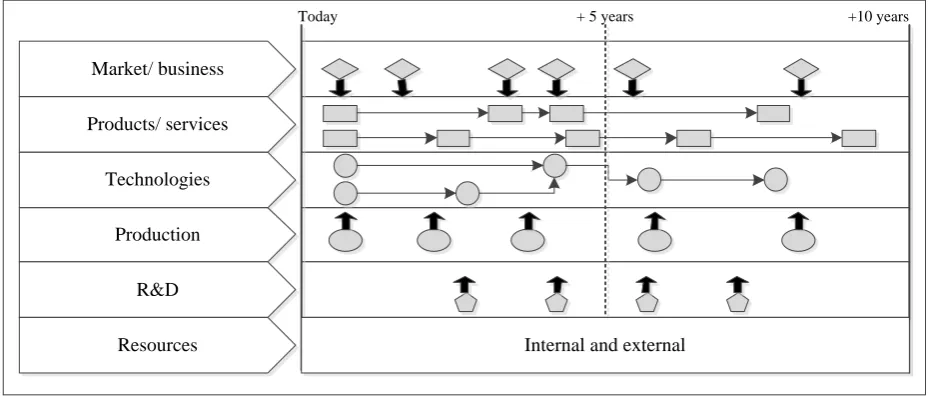
Figure 6: Product-technology roadmap prior to implementation ... 29
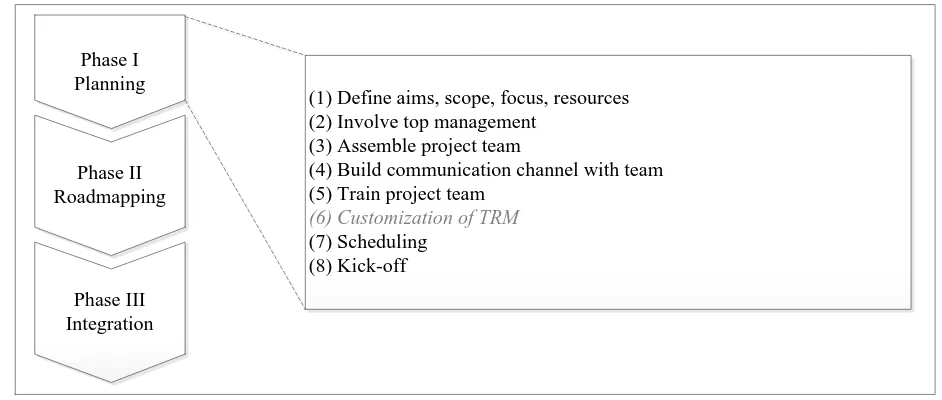
Figure 7: TRM implementation phases, detailed view of phase I ... 30
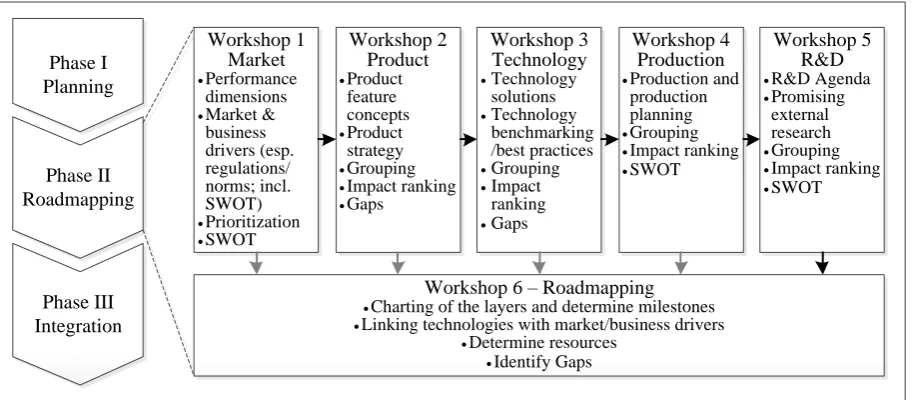
Figure 8: TRM implementation phases, detailed view of phase II ... 31
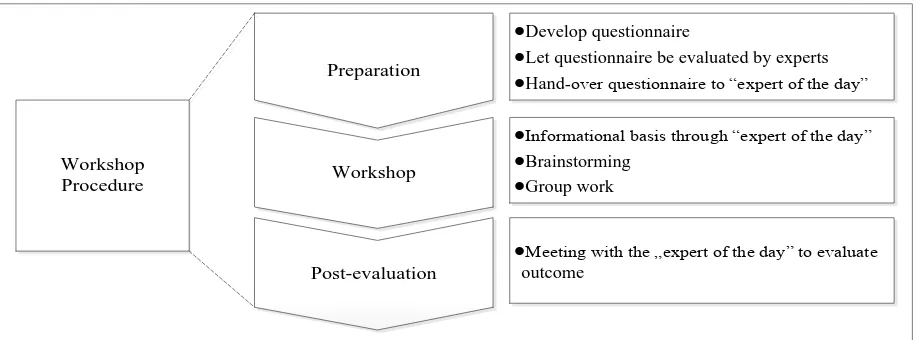
Figure 9: Workshop procedure for the first five workshops ... 32
Figure 10: TRM implementation phases, detailed view of phase III ... 34
vii
A
BBREVIATIONSB2B Business-to-Business cf. confer, “compare”
CKI (Siemens) Center of Knowledge Interchange CoPS Complex Products and Systems
e.g. Exempli gratia = for example esp. Especially
etc. Et cetera i.e. Id est = that is
OEM Original Equipment Manufacturer R&D Research and Development TRM Technology-roadmapping
viii
C
ONTENTSExecutive Summary ... iii
List of Figures and Tables ... vi
Abbreviations ... vii
Contents ... viii
1 Introduction ... 1
1.1 Company Profile and Situation of Siemens Special Machines ... 2
1.2 Practical Problem and Theoretical Gap ... 3
1.3 Research Goal ... 5
1.4 Central Research Question and Sub-Questions ... 5
1.5 Theoretical Frame ... 6
1.6 Theoretical and Practical Relevance ... 8
1.7 Methodology - Overview ... 9
1.8 Structure of the Thesis ... 10
2 Literature Review ... 12
2.1 Technology-Roadmapping (TRM) ... 12
2.1.1 Introduction to Roadmaps and Roadmapping ... 12
2.1.2 Technology-Roadmapping – The Process ... 14
2.1.3 Customization of Technology-Roadmapping ... 17
2.1.4 Implementation of Technology-Roadmapping ... 19
2.2 Project-Driven Organization ... 23
2.3 Requirements for TRM in Project-Driven Organizations ... 24
3 Development of the Technology-Roadmapping Approach ... 27
3.1 Methodology ... 27
3.2 Results – The Technology-Roadmapping Approach ... 28
4 Evaluation of the TRM Approach ... 36
4.1 Methodology ... 36
ix
4.3 Results – Post Evaluation ... 42
5 Implications ... 44
6 Recommendation for Siemens Special Machines ... 48
7 Conclusion and Discussion ... 51
7.1 Conclusion ... 51
7.2 Contributions ... 52
7.3 Limitations ... 54
7.4 Future Research ... 55
1
1
I
NTRODUCTIONTechnologies do have a fundamental relevance for today´s economies and organizations (Zahn, 2004). According to Grossman & Helpman (1994), innovative technologies are one of the major antecedents for economic growth. On a micro-economic level, organizations find themselves in a race to innovate technologically in competition to each other in order to reap the advantages and the respective privileges related to a dominant technological position (Zahn, 2004).
What becomes an obvious necessity for the individual organization as a player in that race is to invest resources into technologies. To let this investment be as effective and efficient as possible, organizations deploy processes, commonly and comprehensively described as technology management (Spath, Pastewski, & Lang-Koetz, 2010). More precisely, technology management comprises the identification, selection, acquisition, development, exploitation and protection of technologies (Gregory, 1995). Among the many tools available, “technology-roadmapping represents a powerful approach for supporting technology management and planning of the
firm” (Phaal, Farrukh, & Probert, 2001, p. 367). By bringing together the different business processes, considering relevant internal and external factors and considering the time dimension, it combines the technology- and market perspectives over time (Phaal & Farrukh, 2001) .
Nowadays, many companies are applying technology-roadmapping, and it has been widely adopted in different industries and organizations (Phaal et al., 2001). Likewise, the project principal for this master thesis, Siemens Special Machines (SM), has decided that technology-roadmapping can be of a high value for them. Acting in a market and industry where product and process technologies are of a vital importance to be competitively superior, the quest for technological innovation is high for Siemens SM. Because they are already technology leader in most of their customer markets, the issue of strategic technology management becomes even more important since the stakes are high in the light of the position to hold and defend. Awareness about weaknesses in long-term technology management led to the decision to customize a TRM process and to implement it into the organization in order to enhance their technology management and technological R&D.
2 difference is that they produce complex, customer-tailored products, leading to a project-driven approach to business.
This is exactly where the focus of this thesis lies on - a TRM process and its implementation in the context of a project-driven organization. What the specific situation of Siemens SM is, what exactly technology-roadmapping and a project-driven business means, and why this topic is of relevance for a master thesis are explained in the following.
1.1 COMPANY PROFILE AND SITUATION OF SIEMENS SPECIAL MACHINES
Siemens SM is a manufacturer of large electric drives and generators. It develops, designs, produces, and manufactures customized special machines for end customers and OEMs in B2B markets.
Since its foundation in the beginning of the 20th century, many innovations have left their plant which have affected the technological state-of-the-art and forced competitors to follow. Being industry technology leader, and having the benefits of the corporate parent, Siemens, Special Machines has gained a rather strong market position over the last decades.
Despite the dominance, a lack of a sufficient long-term perspective with respect to technology research and development concerns the R&D department. In addition, the separate departments, i.e. sales, marketing, engineering, and production, do not have aligned roadmaps, and communication and future planning of the respective departments is reduced to short-term, order-specific issues.
As a consequence, the head of the R&D department has initiated a project to tackle these problems and to develop a technology roadmap. The project started in cooperation with the CKI (Siemens Center of Knowledge Interchange). The method chosen to support this process is – as introduced above – technology-roadmapping. The main goals of the project are to develop a TRM process suited for Siemens SM´s situation, to prototype it once by making a complete run-through, to derive a first technology roadmap, and to integrate the process in order to make this process a continuous organizational process.
3 Siemens´ expectations with respect to this master thesis, and therefore my tasks for this study, are to facilitate the development and to validate the appropriateness of the TRM process and its implementation, and to give a recommendation for their further implementation. In how far this master thesis can satisfy these expectations is explained in the following sections.
1.2 PRACTICAL PROBLEM AND THEORETICAL GAP
That Siemens SM wants to have a TRM developed is in itself not a challenging problem. The TRM literature offers several viable approaches for TRM processes and their customization (e.g. EIRMA, 1998; Phaal, Farrukh, & Probert, 2004; Lee & Park, 2005b). However, the situation of a project-driven business was never an issue in the literature, though demands attention.
Taken the example of Siemens SM, as a manufacturer of special electric machines, they serve diverse B2B target markets. Their products need to be highly customized to meet the performance requirements of their diverse customer base. Practically every machine is different, with the customization already starting in the engineering department.
Hobday (1998) defines such high cost, customized, engineering-intensive B2B products “complex products and systems (CoPS)”. He states that CoPS-producing organizations require more breadth in technologies than other organizations, and that there is a difference in the dynamics of innovation in contrast to more mass-produced goods. He further says that CoPS are produced in projects due to the tailor-made subsystems and the individual composition of the overall product.
Also in the case of Siemens SM, every customer order represents a unique project, ranging from the development to the delivery of the complex machine. This complexity and individuality in their products demands to be project-driven in order to be able to react accordingly to their customers´ requirements. This leads us to the following explanation of what a project-driven organization is considered as in this thesis:
“A project-driven organization produces tailor-made, complex B2B products in project-form,
with the attention (e.g. resource allocation) on the customers´ specific and immediate needs.”2
Although the literature review (in sections 2.2 and 2.3) gives a more elaborated picture about the distinctive situation and requirements of a project-driven organization, it already becomes
4 obvious at this point that the prevailing conditions very much differs from organizations with batch/series production.
Having agreed that the consequences of being project-driven are extensive on the organization, the question arises if existing TRM literature considers this aspect and thus offering a solution for Siemens SM´s situation.
About technology-roadmapping much has been written since Motorola developed the approach in the 70s in order to support their long-range strategic planning (Willyard & McClees, 1987). In the following years, this approach has been adopted by a number of organizations and has been adapted according to their specific needs (Lee & Park, 2005).
Beginning in 1997, two researchers from Cambridge University, Phaal and Farrukh, have started to study this method and pioneered in the theoretical development of TRM, which has led very much to the generalization of the method. Since then, many papers have been published about TRM, and many case studies demonstrate where and how TRM has been applied to a specific organization in a specific context.
Because of the generic nature of the developed TRM processes, the literature suggests methods to customize the architecture and the processes to the specific needs of the organization (EIRMA, 1998; Phaal, Farrukh, Mills, & Probert, 2003, Phaal et al., 2004; Fleuryl et al., 2006). However, according to Lee and Park (2005), TRM is a useful and flexible approach; but there is still a problem concerning how to make the approach fit to specific needs, and to accommodate unusual circumstances. They state that it leads to problems in organizations if there is a misfit, since it is very important to flexibly alter the generic roadmapping process to address firm-specific circumstances and environmental conditions. That is why there are numerous published papers about TRM processes applied to specific circumstances, be it on industry or organizational level, in order to meet the specific, most contextual requirements.
5 This leads to the conclusion that although the TRM literature is extensive, there is still a gap in the literature about how an appropriate TRM process and its implementation might look like for the situation of a project-driven organization.
1.3 RESEARCH GOAL
The main goal for Siemens Special Machines is to have a suitable and functioning TRM process implemented into their organization. “Suitable” means that it fits to their specific situation, particularly fitting to their project-driven business. “Functioning” means that the process produces reliable roadmaps. Since the TRM literature possesses a gap with respect to the project-driven character of an organization, the research goal for this master thesis is:
“Develop an appropriate technology-roadmapping process, which can be implemented in a
project-driven organization, in order to support Siemens Special Machines in their TRM development and implementation project.”
1.4 CENTRAL RESEARCH QUESTION AND SUB-QUESTIONS
To conform to the requirements of the research goal, the research focuses on the identification of an appropriate technology-roadmapping process and implementation in the context of a project-driven organization. Therefore, the guiding central research question is:
“What is an appropriate technology-roadmapping process for a project-driven
organization, and how can it be implemented in the organization?”
“Appropriate” relates to the quality of the TRM process. This means, that it should consider the requirements coming from project-driven business; and that it should produce reliable roadmaps that can be used for strategic technology decision-making.
The central question consists of two parts, with each forming a separate sub-question:
1. What is an appropriate technology-roadmapping process for a project-driven organization?
6
2. How can this technology-roadmapping process be implemented in a project-driven
organization?
Once the TRM process is developed, it is essential to embed it into the process of implementation. In the first step, again, literature is used to plan the implementation.
After having initially developed a theory-based approach consisting of the TRM process and its implementation, the approach is evaluated and improved by experts, and finally implemented into Siemens SM. Analysis of the implementation allows verifying the effectiveness of the TRM approach on the one hand. On the other hand, the approach can be improved based on the feedback gathered during implementation, and allows giving Siemens SM a recommendation for their further implementation. By following this procedure, the two sub-questions can be answered by having both, a theoretical and an empirical basis.
The logical setup and methodology are discussed more elaborately later in thesis in the respective parts (see sections 3.1 and 4.1). But before continuing, it is important to set the context and define the theoretical frame.
1.5 THEORETICAL FRAME
From the research questions, the theoretical frame can be easily derived. Mainly two fields are needed and define the theoretical boundaries. The first one is technology-roadmapping literature, which includes the process of roadmapping, the outcome of a technology roadmap, the customization of both (process and roadmap) and the implementation of roadmapping. The second theoretical field is that of project-driven organizations. Well aware that this is a construct specifically defined for this thesis, it encompasses the literature about “Complex Product and System” (CoPS), as previously already indicated.
In the following, a brief view in each field is presented, which leads to a better contextual understanding. Furthermore, it is clarified what the scope of each is and how the terms are defined for this thesis.
Technology-Roadmapping (TRM)
7 resources to convert inputs (data, material, parts ,etc.) into outputs; these outputs then serve as
input for the next stage until a known goal or end result is reached”. (BusinessDictionary.com)3
A technology roadmap, accordingly, is then considered as the output of the TRM process. The interdependent and linked procedures which convert inputs and finally result in the technology roadmap are what is defined as the TRM process.
Over the years, many authors have constructed their own definition of what constitutes a TRM process. According to EIRMA (1998), the TRM process is an overarching process that integrates input from the relevant business processes. Groenveld (1997) states that technology “roadmapping is a process that contributes to the integration of business and technology and to
the definition of technology strategy by displaying the interaction between products and
technologies over time, taking into account both short- and long-term product and technology
aspects.” Phaal et al. (2003) further highlight the integration of market opportunities to display the development in technology that is linked to product evolution and market opportunities.
There are more definitions about roadmapping, which all have one core aspect in common. That is, that short- and long-term information from the existing business processes (i.e. market, product, technology) is brought together, linked, and displayed in a certain manner. It is not within the scope of roadmapping to produce new information, like for instance market projections and perspectives for the coming 10 years. Such processes should be ingrained in already existent business processes. In this example, market projections should be produced in the marketing department. The value of roadmapping rather lies in the alignment of the different perspectives of the organization and to search for connections between those. Visually enhanced in a roadmap format, this roadmap enhances decision making.
Consequently, an appropriate working definition for this master thesis is:
“A TRM process is an overarching process, consisting of interdependent and interlinked steps
and activities that are necessary to bring together the critical business processes to align data,
information, and knowledge from the market, products, and technologies, considering the short-
and long-term perspective in order to create a technology roadmap.”
3 BusinessDictionary.com. Definition of “process.” Retrieved March 15, 2012, from
8 TRM process implementation - Implementation means “to carry something out”, or to “execute” something that has been previously planned (Hornby, 2005). In other words, implementation is itself a process; and this process builds on preliminary thinking.
With respect to TRM, it means that implementation is the process which describes the initial execution of the separate steps and activities of the TRM process in the organization. That implies two critical aspects to consider. First, the TRM process was previously not existent in the organization – at least not in that form – and is introduced for the first time. So, TRM is new to the organization and means that the organization is confronted with a change. Second, the TRM process and the implementation are inevitably interlinked and therefore dependent on each other. Thus, the TRM process and the respective implementation are to be considered together in one approach in order to design a TRM process that enables an effective implementation.
In this thesis, the implementation encompasses the first execution of the TRM process in an organization, from the first step of planning, over the first run-through of the process, till the final integration in the organization´s systems and processes.
Project-driven organization
Like already defined above (section 1.2), a project-driven organization produces tailor-made, complex B2B products in project-form, with the attention on the customers´ specific and immediate needs. With respect to the scope of the term, is essential to highlight that project-driven is not directly and exclusively associated with the organizational structure, as it is sometimes interchangeably used with the term project-based organization. A project-driven organization as defined here may indeed have a dominant functional structure, or it may have a pure project-based structure. But in all cases, the project-driven organization sees the customer-order as a project due to the aforementioned characteristics that contrast in many ways a mass-producing organization. Critical in that definition are the requirements coming from the diverse markets needs, the resulting complexity in products and technologies, and the dependency on immediate customer orders.
1.6 THEORETICAL AND PRACTICAL RELEVANCE
9 Reaching the study objective contributes in many ways to theory and practice. For theory, it complements to existing TRM literature, explaining what constitutes a viable TRM process for driven organizations, and how it is best implemented. Further, the construct of a project-driven organization is defined and clarified, not to mention the linkage that is created and analyzed between a project-driven organization and technology-roadmapping. Therefore, it also contributes to the literature of “complex products and systems” and that of a project-driven organization by offering a list of requirements that are necessary to consider for processes like roadmapping.
The practical contribution is more obvious, and is most direct and valid for Siemens Special Machines. As the developed process is implemented into their organization, they finally receive a theoretically and practically robust TRM process. Moreover, a recommendation for their further implementation increases the likelihood for a successful outcome of their project.
In a wider sense, however, it can be helpful for other project-driven organizations willing to implement such a process. The developed TRM process is more suitable for that context than the other, more generic TRM approaches. It is a helpful process to align interest of the different departments and to increase cross-functional communication, i.e. marketing, product management and engineering, with respect to future planning. This is critical within an organization that needs, on the one side, a strong focus on B2B customers to capture all their needs, and on the other side a strong resource/technology perspective to plan innovations in the long-term independent from immediate, short-term customer demands.
1.7 METHODOLOGY - OVERVIEW
The methodology that is necessary to answer the research questions basically consist of two parts. The first part deals with the development of an appropriate TRM process and its implementation. The second part is about the implementation and its evaluation into Siemens SM in order to test the TRM approach.
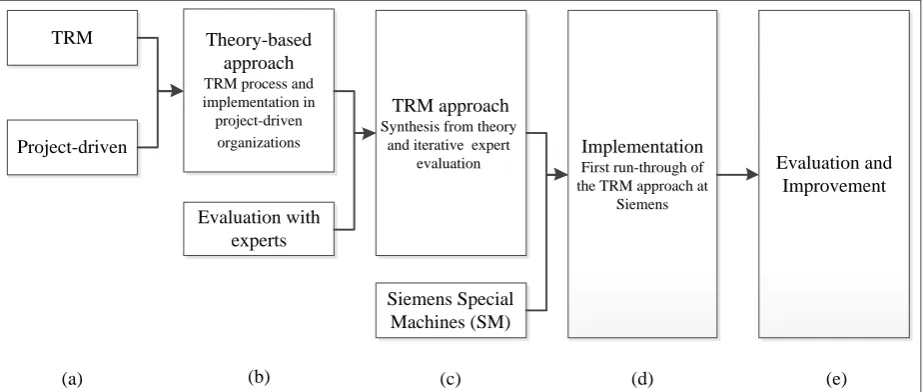
10 implementation of the design, following an implementation plan. Finally, the implemented design is evaluated.
In accordance with van Aken et al, the methodology in the first part should lead to a theory-based and practically feasible TRM process which can be implemented into a project-driven organization (see figure 1). Therefore, an initial theory-based TRM approach is suggested that fulfils the conditions found in the literature about project-driven organizations (figure 1: (a) and (b)). Then, this initial TRM approach is presented to a group of experts and is critically discussed through which an iterative evaluation and adjustment is guaranteed (figure 2: (b) and (c)).
TRM
Project-driven
Theory-based approach TRM process and implementation in project-driven organizations
Evaluation with experts
TRM approach Synthesis from theory
and iterative expert evaluation
Siemens Special Machines (SM)
Implementation First run-through of the TRM approach at
Siemens
Evaluation and Improvement
[image:19.595.88.550.265.461.2](a) (b) (c) (d) (e)
Figure 1: Macro-structure of the methodological approach
In the second part, the implementation and its evaluation should shed light into the practical application of the TRM approach, that is to find out what the strengths and weaknesses are (figure 1, (d) and (e)). From a methodological point of view, in this stage, it is important to collect appropriate data which can be analyzed in search for the strengths and weaknesses of the approach.
1.8 STRUCTURE OF THE THESIS
11
Figure 2: Structure of the thesis (in chapters)
Chapter two is devoted to an extensive and critical review of literature. Different approaches to TRM processes and its implementation are reviewed, as well as the literature that is relevant for the aspect of being project-driven. This chapter lays down the foundation for a theory-based TRM approach.
In chapter three, the TRM approach is developed. This includes the methodology about how the TRM approach, consisting of the TRM process and its implementation, is developed and the final TRM approach before to the implementation.
The fourth chapter describes the implementation. Emphasis is set on the aspects that went well and on those that were not that well. Based on this evaluation, the process can be further improved.
Based on these empirical findings and further theoretical insights, improvements for the TRM approach are suggested in chapter five.
This, in turn, serves as the basis for chapter six, where a recommendation for Siemens is formulated about how to proceed with the implementation.
Chapter seven concludes and discusses the thesis, especially in the light of the methodology. Additionally, further research in the field is suggested.
Ch 1 •Introduction
Ch 2 •Literature Review
Ch 3 •Developement of the TRM approach
Ch 4 •Evaluation of the Approach
Ch 5 •Implications
Ch 6 •Recommendation for Siemens Special Machines
12
2
L
ITERATURER
EVIEWThe theoretical foundation for this thesis is built up of two main fields, namely technology-roadmapping and project-driven organization. In the first two sub-chapters, these two fields are presented and reviewed respectively. Furthermore, an essential aspect of the thesis is to theoretically derive influencing factors of project-driven organizations for the TRM process and the respective implementation. Hence, in the final sub-chapter, these factors are identified by merging the two theoretical fields.
2.1 TECHNOLOGY-ROADMAPPING (TRM)
The literature about technology-roadmapping can be divided into three major parts. These parts are roadmaps as the output, roadmapping as the process leading to that output, and the implementation of the process leading to the first execution and the integration into the organization. Therefore, in the first section, general aspects about roadmaps and roadmapping are presented, including roadmap taxonomies, and intentions and purposes of TRM. Next, process and process customization literature are reviewed. And in the last section, the implementation literature for TRM is presented and compared.
2.1.1 IN TRODUC TION TO ROADMAPS AND ROADMAPPING
Roadmaps as used in the business literature are connected to the metaphor of the roadmap used for navigation purposes. From a bird´s eye view, the roadmap pictures a certain area and shows alternative ways to alternative goals. By selecting a specific destination, the traveller can chose among the alternative ways in order to reach that destination. Similar, several business-related aspects can be selected to put on the roadmap. By connecting the separate aspects in a logical way, several routes can be indentified among which the organizations can choose between partly rival alternatives.
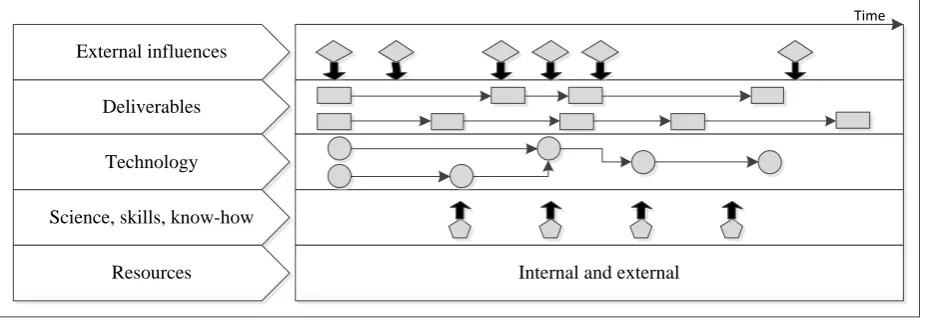
A roadmap is generally visualized two-dimensionally and multi-layered (see figure 3). On the vertical axis, the business areas and their planning activities and milestones are placed. The horizontal axis is the time dimension along which the activities and milestones are allocated. As shown in the next section, both axes can be customized based on the purpose and context of the organization in subject.
13 By linking the market and the resource perspective, the organization is able to identify interdependencies and alternative routes (Phaal & Farrukh, 2001).
External influences
Deliverables
Technology
Science, skills, know-how
Resources Internal and external
[image:22.595.88.551.122.281.2]Time
Figure 3: Generic roadmap, adopted from EIRMA4
Taxonomies of roadmaps
The term roadmap and technology roadmap has been used for different kinds of documents, and the TRM process can be deployed for several purposes. Kappel (2001, p.40) suggests a taxonomy based on two dimensions. One dimension is the level of orientation, namely if the roadmap is developed for the industry (macro level) or if it is developed for an organization (micro level). The other dimension divides the emphasis into the identification of specific trends and the positioning within a certain area. As a result, he defines the following four roadmaps:
Science/ technology roadmaps: Setting of industrial goals based on industry trends
Industry roadmaps: Setting of industry expectations based on position
Product roadmaps: Scheduling of product introductions
Product-technology roadmap: Aligning of internal decisions based on trends
Independent of the taxonomy, all roadmap formats include the time dimension as common characteristic.
Intention of using TRM
Technology-roadmapping follows a bunch of intentions and has many benefits, which are summarized by Bucher (2003). The first is directly bound to what is actually done in the process of roadmapping, which is to integrate business processes and to establish links between the perspectives. Further, because the perspectives are aligned, cross-functional communication and
14 interaction is needed and enhanced. TRM, with its focus on technology planning, improves the quality of technological decision making, and ultimately helps to coordinate and align technology-related projects and processes.
Purpose of TRM
For what TRM is actually needed, is best captured by Phaal et al (2001), who classified roadmaps by its purpose into eight groups. These groups are product planning, capability planning, strategic planning, long-range planning, knowledge asset planning, programme planning, process planning and integration planning. For each roadmap, apart from the roadmap design, also the process is different, since the process depends on the roadmap (cf. section 2.1.3).
2.1.2 TECHNOLOGY-ROADMAPPING – THE PR OCESS
Technology-roadmapping is the process that is followed to develop and maintain the technology roadmap. Many authors have developed their own approach. In total, more than twenty approaches could be identified. Most of them differ in the kind of roadmap being produced, and therefore purpose being served.
For instance, the TRM process from Sandia National Laboratories leads to a product-technology roadmap and has its focus on the identification of requirements and drivers in order to select technology alternatives (Garcia & Bray, 1997). Abele et al.´s (2002) process produces a product-technology roadmap with the help of product-technology foresight and scenario planning and with the main focus on the communication between the engineering and production. Following Zurcher & Kosthoff´s (1997) process helps to identify types of projects and requirements. Kosthoff together with Schaller (2001) then suggest two diverging approaches, namely a workshop-oriented expert-based approach and, in contrast, a computer-based approach. Wildemann´s approach (2003) enables the adjustment of market and technology planning, the identification of synergies and allocation of resources. Gerdsri (2007) offers a dynamic approach by developing an operationalyzed process that is easily updateable as the market changes and the technology continues to develop.
15 According to Phaal et al. (2004), the TRM process needs to be considered in parallel with the roadmap structure. That is why it is essential to make the conscious decision to focus on a certain type of roadmap fulfilling a certain purpose, which is in this case the product-technology roadmap linking the external market side with the internal resource side.
One of the approaches fulfilling this purpose is from EIRMA (1998), which is a group of organizations which has standardized roadmapping and developed a generic approach. Their approach aims to integrate the different business processes and their already existing information about markets, products and technologies. This allows exploring and mapping the evolution of market, products and technologies along the time dimension and to identify the linkages between the respective business processes.
Many authors, also some of the above-mentioned, based their approach on that generic proposition from EIRMA. One of the most comprehensive, most cited and internationally most recognized ones is from Phaal and his colleagues from the University of Cambridge. Phaal et al have published numerous articles about their technology-roadmapping approach (“T-Plan”), offering solutions to customize the approach and having a strong focus on the implementation of TRM.
For the theoretical basis of this thesis, the T-Plan offers an optimal foundation to develop the TRM process for project-driven organizations. The authors, as well as other authors, applied the T-Plan to many contexts. This demonstrates a certain robustness of the process on the one side, and flexibility on the other side. The level of detail is very high, since, in contrast to many other authors, Phaal describes not only the macro process of the main phases, but also elaborates on the micro processes. Offering comprehensive complementary literature about the implementation and customization, their stream ideally fits to the intention of this thesis.
T-Plan (University of Cambridge)5
The aim of this approach is to establish key linkages between the resources-side (technology resources) and the market-side (business drivers), and to identify important gaps in the market, product, technology intelligence.
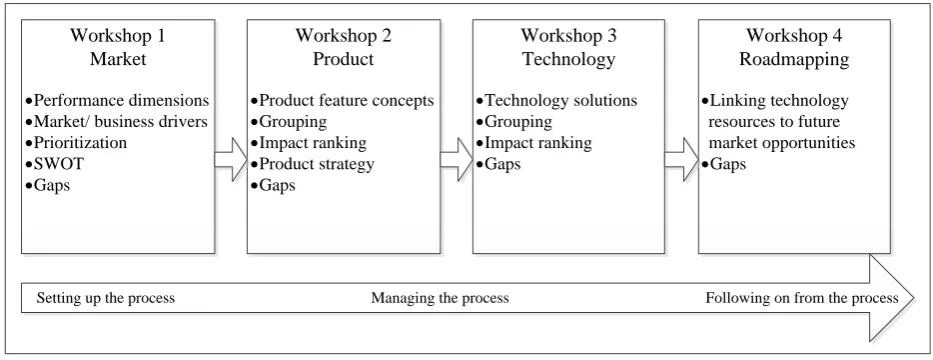
The macro structure of the T-Plan consists of the three phases “planning”, “roadmapping workshops” and “roll-out”. These phases constitute the implementation phases of the TRM
16 process, which itself is embedded in the second phase, the roadmapping workshops (see figure 4). The second phase of the T-Plan is elaborated in the following, whereas the first and the third phase are handled in another section (cf. section 2.1.4),which deals with the implementation in detail.
Workshop 1 Market
Performance dimensions
Market/ business drivers
Prioritization
SWOT
Gaps
Workshop 2 Product
Product feature concepts
Grouping
Impact ranking
Product strategy
Gaps
Workshop 3 Technology
Technology solutions
Grouping
Impact ranking
Gaps
Workshop 4 Roadmapping
Linking technology resources to future market opportunities
Gaps
[image:25.595.84.551.153.333.2]Setting up the process Managing the process Following on from the process
Figure 4: TRM process, extracted and adopted from the T-Plan6
For the TRM process in phase II, Phaal et al (2001; 2003) suggest a workshop-based approach, where each layer of the roadmap is handled in one workshop and analysis grids are used to identify and assess the relationships between the layers and sub-layers of the roadmap.
The main aim of the first workshop is to identify and prioritize market and business drivers, which can be derived from the most important performance dimension driving product development. In the second workshop, appropriate product feature concepts are to be identified that could satisfy the business and market drivers. After grouping the features, the relationships and impacts between the drivers and the product features are determined using a grid. In the third workshop, technological solutions to realize the product features are sought. After grouping them into technical areas, their impacts on the product features are discussed. The results of the three workshops are three business areas connected to each other through the respective grids. In the fourth workshop, the actual roadmap is charted using the output of the previous workshops. Key milestones are determined for each sub-layer (y-axis) along the time-axis (x-axis). Resources (e.g. technological programs; suppliers; skills, etc.) are identified and paths are drawn using the results from the impact ranking (i.e. grids) and by negotiation of the attending experts.
The main benefit of the workshop-form is that it brings together key stakeholders and experts. They then capture, share and structure knowledge about the issue being addressed, indentify
17 strategic issues and plan the way forward. Thus, the TRM process is structured by workshops, and the agenda of the workshops constitute the activities to follow (see figure 4).
In parallel to the workshop procedure, certain management activities are important; this includes facilitation of workshops, process co-ordination, and follow-up actions.
Phaal et al state that many of the benefits are derived from the roadmapping process rather than the roadmap itself. People are brought together from different parts of the business, which provides an opportunity for sharing information and perspectives. Highlighted is also the TRM process as a mean for supporting communication across functional boundaries in the organisation.
Assessment of the TRM processes
The T-Plan constitutes the best theoretical basis for the goal of this thesis and Siemens. It has a high level of detail and seems to be simple. The former aspect is related to a high practicability. The latter one is essential in the context of implementation. As explained in the next section, the adaption of the process to the organization is vital for the success. So, generic in nature, the standard process from T-Plan represents not more than the raw basis for the customization to make it fit to a project-driven organization.
2.1.3 CUSTOMIZATION OF TECHNOLOGY-ROADMAPPING
There is agreement among the researchers, that it is essential to adapt the generic roadmapping approach to the specific needs of the organization, since the potential benefit of deploying TRM may not be exploited otherwise (e.g. Groenveld, 1997; Garcia & Bray, 1997; Phaal et al., 2001; Lee & Park, 2005; Gerdsri, Assakul, & Vatananan, 2010). The adaption is based on the firm-specific situation and context and addresses the objective, timeframe, the TRM process and the roadmap architecture (Phaal, Farrukh, Mills, et al., 2003). In the international literature, there are two main groups dealing with the customization of technology-roadmapping, which are Phaal et al and Lee & Park.
18 process for this thesis. The customization from Phaal et al, instead, is not only more flexible but also an integrated part of the already above-explained T-Plan (cf. section 2.1.2).
Customization of the T-Plan (University of Cambridge)7
As part of the T-Plan, Phaal et al (2004) propose a standard process for developing a product-technology roadmap (cf. section 2.1.2). Alternatively, they offer a customization of this standard process in case the roadmap purpose differs.
Customization takes place in the planning phase of the T-Plan´s macro process. The two interdependent design elements to be customized are the roadmap architecture and the roadmapping process. Before considering the design, the context (scope of interest; focus for TRM; aims of TRM; available resources for the process) has to be discussed and defined in order identify the aims and boundaries that will affect TRM.
Having clarified this, the architecture and the macro- and micro process are designed. The architecture entails the timeframe and the layer and sub-layers (see figure 3 in section 2.1.1). The temporal dimension is dependent on how far the organization wants to “look” into the future with respect to the aspects to be mapped. The layers are determined based on the issues to be mapped, but basically there are three layers. The upper layer represents the drivers, or purpose, of the roadmapping activity (e.g. market/business drivers). The middle layer relates to the tangible system that satisfies the market and business drivers (e.g. products/ product feature concepts). The lower layer is the resource side (i.e. knowledge like technologies), that is needed to respond to the market and business drivers.
After the architecture is determined, first, the macro process has to be developed, which concerns the wider goal that is desired to reach. After that, based on the layers of the roadmap and aims to reach, the micro process can be established, which concerns the agenda of the workshops.
Assessment of the customization literature
The T-Plan approach offers a way to customize TRM to the specific needs of the organization by considering manifold aspects that may vary with the organizational context. However, although very prescriptive in the development of the roadmap´s architecture, it lacks an elaboration how to customize the roadmapping process. Phaal et al (2004) state that the process depends on the architecture, but they do not explain how to derive the process from it. Thus, it seems that there
19 is still gap in the literature about how to come up with the respective necessary process activities for developing a roadmap based on the customized roadmap architecture.
2.1.4 IMPLEMENTATION OF TECHNOLOGY-ROADMAPPING
The literature of TRM implementation is not as comprehensive as the literature about roadmapping processes. The scope of implementation varies and is differently defined by authors. For some authors, implementation is restricted to the initial execution in the subject organization. For others, also the integration into the organization´s system belongs to the implementation process.
In the literature, there are two main parties, Phaal et al. and Gerdsri et al., who covered the entire scope of TRM implementation, and who respectively published several studies about it. Phaal et al first published their “T-Plan” in 2001, offering a fast plan which enables organizations to easily start with technology-roadmapping. The research from Gerdsri et al builds on that work, making it complementary by focusing not only on the initial implementation but also on the final integration into the organization´s system.
Implementation with the T-Plan (University of Cambridge)8
Some other parts of the T-Plan have been already introduced in the process- and customization section. The “T-Plan fast start approach” has been developed and applied in multiple companies from multiple industries in the 2000. One of the main aims for the researchers is to support the start-up of company-specific TRM processes, giving organizations guidance on how to initially implement technology-roadmapping.
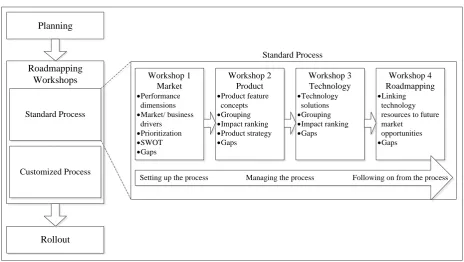
The implementation process consists of three phases, namely planning, roadmapping workshops in which the TRM process is embedded, and roll-out (see figure 5).
In the planning phase, the objectives of the business with respect to the process are set and articulated, and the TRM process is customized to the specific objectives and the individual context of the organization. Ownership of the project and the roadmap are clarified and a project manager is determined. Finally, the TRM process is planned and a schedule is set up.
The second phase, roadmapping workshops, consists of two main parts. There is the standard approach for a product-technology roadmap, which has four subsequent workshops, structured
20 by the business aspects that are to be linked in the TRM process (as explained in section 2.1.2).And there is a customized approach to adapt the T-Plan to other, broader applications (as explained in section 2.1.3)
Workshop 1 Market
Performance dimensions
Market/ business drivers Prioritization SWOT Gaps Workshop 2 Product
Product feature concepts
Grouping
Impact ranking
Product strategy
Gaps Workshop 3 Technology Technology solutions Grouping
Impact ranking
Gaps
Workshop 4 Roadmapping
Linking technology resources to future market
opportunities
Gaps
[image:29.595.85.550.134.396.2]Setting up the process Managing the process Following on from the process Planning Roadmapping Workshops Rollout Standard Process Customized Process Standard Process
Figure 5: The complete T-Plan - three phases of implementation, including the TRM process9
In the third phase, the implementation of the roadmap takes place, as well as the final integration of TRM into the organizational system.
Implementation as a change process (Gerdsri & Vatananan10)
People, processes and data are the most critical factors to a successful initiation and implementation of TRM (Nathasit Gerdsri & Vatananan, 2007, p. 1577). Highlighting the importance of people, the authors set the individuals´ roles and responsibilities as a major focus for the implementation process.
The authors start by defining three phases (i.e. initiation, development, and integration) in which they split the implementation process. The purpose of the first phase, initiation, is to gather and disseminate information that is used in later stages. The team is formed and is made familiar with the technology-roadmapping approach, and ground rules for team participation are set. After the basics are dealt with and agreed on in the official kick-off, the TRM process is to be customized
9 Source: Phaal, Farrukh, Mills, et al., 2003
21 and key stakeholders are approached to get them buy into the initiative. Having the right momentum, the first workshop can be planned and organized.
The second phase is mainly about data collection and analysis. Data is collected internally and externally between the workshops. The workshop then fulfils the function to bring together the team members, so that the collected information can be analyzed and knowledge can be shared, transferred and created.
For those organizations who want to assimilate the TRM process into the organizational system, instead of developing a one-time roadmap, go beyond the second and enter the third phase. The purpose of this phase is the integration of the TRM process as a continuous process into the existent, ongoing business operations.
After having defined the three phases, Gerdsri and Vatananan conducted research with respect to the dynamics of the key players and their contributions in the implementation process. They defined the key players and analyzed their roles and contributions in these three phases at successful TRM implementation projects.
Thereafter, Gerdsri and Vatananan integrated all their previous work about TRM implementation and combined it with change management literature (Nathasit Gerdsri, Assakul, & Vatananan, 2008). With the help of Prosci´s ADKAR model (Hiatt, 2006), activities are identified that prepare the individuals for change coming through the implementation process. Kotter´s (1996) eight stages of change are used complementary to identify further activities to manage the whole implementation process. The result is an activity guideline which should increase the probability of a successful TRM implementation (see table 1 for the activities).
Stage of TRM
Implementation Action Plan Supporting the three-stage TRM Implementation Process
Initiation (phase I)
Understand the value of applying TRM in the organization
Build awareness of why TRM implementation is needed
Discuss the details of TRM concept
Raise urgency of why TRM implementation is immediately necessary to all participating members
Develop a vision, objective, and scope of TRM implementation for the organization
Set the plan to roll-out TRM implementation
Gain acceptance and sponsorship from top-management
Communicate the vision for the buy-in and support from key players
22 Provide the fundamental concept of TRM to all participants
Prepare all participants to be ready to implement the TRM process
Training sessions may be provided
Customize the generic TRM process to fit with the organizational setting
Development (phase II)
Plan and organize a series of workshop sessions to develop a roadmap
Allocate responsibilities to each individual in the group as well as set up ground rules for the group participation
Maintain the momentum and energy from all participations throughout the TRM development process
Remove barriers blocking participants from carrying out their TRM activities
Conduct debriefing and review sessions
Integration (phase III)
Consolidate roadmaps into one master roadmap (if needed)
Establish the procedures to review and revise a roadmap so that a roadmap can be kept alive
Integrate TRM process into organization’s existing processes
[image:31.595.81.555.54.303.2]Transfer ownership of the process to the proper group of people
Table 1: Activity guideline for the implementation of TRM11
Assessment of the implementation
To begin with, the two approaches overlap to a high degree. This can be easily explained, since Gerdsri builds on Phaal´s structure and content. Phaal et al cover the whole implementation process from linking of the business needs and objectives in the planning phase till the final integration into the organizational system in the roll-out phase. However, the focus is clearly set on the roadmapping workshops and less on the first or the third implementation phase. Thereby, they offer an approach that elaborates on the TRM process, whereas the TRM process represents a micro process embedded in the macro process of the actual implementation. Moreover, the approach includes an explanation how to customize the TRM process if the purpose is different from a product-technology roadmap. But elaboration of the TRM project and process planning and the final integration is neglected.
Gerdsri and Vatananan elaborate more on the planning and integration phase, and set a major focus on the human factor in all three implementation phases, which complements Phaal´s approach. Furthermore, they combine two complementary change management approaches, which results in a very precise list of activities to follow in order to have a successful implementation.
23 2.2 PROJECT-DRIVEN ORGANIZATION
In the introduction, it is explained that the project-driven character of an organization comes from the complex nature and the associated customization of products. The effects from that situation on the organization are manifold and best captured by Hobday (Hobday, 1998b; 2000 & Hobday & Rush, 1999). He explored the character of “complex products and systems (CoPS)” and their effects on the organization.
The complexity in products comes from the number of customized components, the breadth of knowledge, and skills required and the degree of technological novelty, among others. Hobday (1998b) developed a measurement list to determine product characteristics and their complexity (see appendix A). He further argues that the complex nature of a product is determinative for the organizational form, coordination, and innovation processes of an organization; and that these aspects differ from mass-producing organizations.
Complex products are mainly produced in projects and small batches, customized for individual users. The optimal organizational form is the project-based firm, since it can be adapted to the demands of each project and each major customer (Mike Hobday, 2000).
Producing complex products has an effect on the innovation processes in the sense that innovation takes place during the project with a high involvement of the user, which means that the diffusion takes place at the same time as innovation. The focus of innovation lies on product design and development, and the deep and simultaneous broad knowledge needed to cope with these short-term, reactive innovation processes is embodied in the employees. The tacit nature of the knowledge and the project character make it difficult to manage knowledge and thus to realize effective organizational learning. (Mike Hobday, 1998)
Because of the complex nature, such products have different coordination needs. With increasing complexity, uncertainty and cost, coordination becomes more difficult. Dependent on the complexity of the product or system, the project requires the creation of multi-firm alliances for innovation and production, leading to a (temporary) network of organizations for the respective project. (Mike Hobday, 1998)
24 Governments and regulator often have a high stake, which leads to many regulations and other control mechanisms. (Mike Hobday, 1998)
To conclude, the complex and tailor-made characteristics of the products makes an organization project-driven. This has many consequences. Since the demands of the customers are very specific and do not become apparent until an order is placed, an organization becomes dependent on the orders. This dependency has an effect on the organizational form, the coordination of processes and the innovation processes, which have to be considered when customizing the TRM process and the implementation.
2.3 REQUIREMENTS FOR TRM IN PROJECT-DRIVEN ORGANIZATIONS
By matching literature from the sub-chapter about project-driven organizations with the literature about TRM, requirements for TRM in project-driven organizations can be identified. These are presented in the following, separated by requirements for the TRM process and requirements for the implementation.
Requirements for a TRM process
The first requirement concerns the market drivers. The market of project-driven organizations tends to be highly regulated and politically influenced (Mike Hobday, 1998). This happens for a number of reasons, for instance, for safety or standard reasons, or to prevent monopolistic abuse. These external factors influence innovation and have to be considered as important drivers in the upper layer.
Another requirement addresses the production. Since complex products are individually developed and tailored and produced in projects or small batches, the product features, product technologies and production are interdependent (Michael Hobday & Davies, 2005; Mike Hobday, 1998b). For an appropriate roadmap, therefore, production (planning) and the linkage to product technologies and product features should be considered.
25 tacit knowledge is still in debate (Prencipe & Tell, 2001). But at least the knowledge needed to develop the technology roadmap must be tapped into, which makes the importance of people/experts so central. In order to tap into the relevant tacit knowledge and make it explicit via the roadmap, the experts in the organization, who carry the tacit knowledge, must play a central role in the entire TRM process. A workshop-based approach seems therefore the optimal solution.
Prevailing in project-driven organizations is a short-term view. Since complex products are highly customized, the (specific) needs of the customers often become clear with the order inquiry (Mike Hobday, 1998). A long-term view is difficult, since innovation then happens on the project, triggered by the immediate needs of the customer. Additionally, the further the look into the future, the more uncertainty and risk appears, especially in project-driven organizations (Mike Hobday, 2000). In order to reduce uncertainty, a long-term view is necessary to compensate for the downsides of short-term resource allocation.
Requirements the TRM implementation
When it comes to the implementation, one requirement is of similar importance as it is for the TRM process, namely the involvement of people. As explained above, it is of high importance to have the tacit knowledge as input for the TRM process. Additionally, the initial implementation is a change process for the organization. For the change process to be successful, acceptance and involvement of the organizational members is of a high importance in all phases (Kotter, 1995; Nathasit Gerdsri et al., 2008).
26 allocation of resources may be still made for the short-term, order-specific, customer-driven issues. Thus, top management´s understanding, acceptance and adoption of a long-term perspective is essential, which is the reason why they should be involved in the planning and the integration phase of the implementation.
The third requirement addresses the integration of the TRM process in the existing systems and processes. Due to project character and the project structure of project-driven organizations, organizational learning is rather problematic (Michael Hobday & Davies, 2005). As a consequence, valuable input for the roadmapping process can go lost, if, for instance, lessons learned, ideas or supplier information about future technological developments are not made explicit and codified for the next TRM process. Therefore, especially in project-driven organizations, the TRM process must not only be embedded into central business planning and strategic processes, but also linked to project processes. Particularly, the customer projects yield many opportunities to gain input for the roadmap, since these trigger mostly the innovation processes, where, for instance, employees gain insights into developments of suppliers and other partners.
27
3
D
EVELOPMENT OF THET
ECHNOLOGY-R
OADMAPPINGA
PPROACHUnderpinned by the results of the literature review, the TRM approach for project-driven organizations is designed in this chapter (see also appendix B). In the first sub-chapter, the precise methodology for the design phase is explained, followed by the result in form of the TRM approach in the second sub-chapter.
3.1 METHODOLOGY
The expectation for the methodology is that it should enable the development of an appropriate TRM process for project-driven organizations. There may be many approaches available, from which only a limited amount makes sense given the boundary conditions. The set-up and schedule of the project at Siemens are such conditions, as well as the limited resources and time available for the master thesis. Another condition is the requirement to have theory and expertise incorporated.
One of the viable approaches meeting these conditions is the case-based action research methodology applied by Phaal et al in their research program, in which they developed and customized dozens of roadmap processes (Phaal, Farrukh, & Probert, 2004a). Since action research covers a large variety of approaches (Eden & Huxham, 1996), and the exact methodology of Phaal et al is not disclosed, another approach qualifies to fulfil the expectations. This approach is van Aken´s business problem solving circle (van Aken et al., 2006), which is very similar to case-based action research, and has some advantages. First, a strong theory-orientation before the actual implementation serves as strong foundation. Second, it is appropriate in the context of a change process, since the involvement of experts is a central aspect of the problem solving circle and vital in the context of change processes. Thirdly, it can be easily embedded in the already existing project schedule of Siemens SM, and is feasible given the available resources not only for Siemens, but also for this master thesis.
28 In the second step, according to van Aken, the theory-based TRM approach is to be evaluated and improved in iterative steps. Additionally, the process needs to be further customized to Siemens´ needs. According to Gerdsri et al (2007), the customization is an important step in the initiation phase of the implementation, where the involvement of the entire TRM project operation team is essential. A group meeting is therefore ideal to verify the TRM approach; hence, this is where the first iteration of the evaluation is done.
At this team meeting, the approach of the TRM process and the planning for the implementation are presented. The group of experts, who make up the TRM operation team, consists of managers from the respective business areas (marketing/sales, product development, engineering, production) and representatives with special functions (i.e. experts for relevant, central technologies; project management experts; sales representative for important business areas). The group has the competence to discuss the effects of a project-driven organization from different perspectives and to bring valuable input from their areas. Furthermore, an external consultant with experience in TRM accompanies the project. After the presentation of the initial planning, the approach is open for discussion and evaluation. Comments and remarks from the group are discussed and documented. After this meeting, the group should have a better understanding of the approach and will have given valuable inputs for the improvement of the approach. Based on the remarks and comments, the TRM approach is adjusted.
The project planning of Siemens even allows a second iteration, which improves the quality of the design according to van Aken. This iteration is done at the official kick-off meeting for the project, just before the actual start of roadmapping. Again, all the above-mentioned experts are present. A main part of the kick-off is devoted to methodology, which allows discussion about the adjusted TRM approach. The procedure is equal to the first group evaluation. Of course, again the feedback is documented and processed in order to adjust the TRM approach.
The development process – as described above – is presented in more detail in a result-oriented documentation in the appendix (see appendix B). The outcome of the entire procedure, an appropriate TRM approach for project-driven organizations ready to be implemented, is presented in the next sub-chapter.
3.2 RESULTS – THE TECHNOLOGY-ROADMAPPING APPROACH