Adaptive eLearning for Grid Computing
by
Kathryn Cassidy
Bachelor of Science
A Thesis submitted to
The University of Dublin
for the degree of
Doctor of Philosophy
Department of Computer Science,
University of Dublin,
Trinity College
Declaration
I declare that this thesis has not been submitted as an exercise for a degree at this or any other university and it is entirely my own work.
I agree to deposit this thesis in the University’s open access institutional repository or allow the library to do so on my behalf, subject to Irish Copyright Legislation and Trinity College Library conditions of use and acknowledgement
Summary
Adaptive eLearning appears well suited to Grid education because of the distributed and heterogeneous nature of grid users and their asynchronous training demand. This thesis explores the application of adaptive eLearning techniques to grid computing education. It looks at integration of an adaptive eLearning application, and associated courses, with a training infrastructure which provides a fair replica of a production Grid.
It explores the potential for extending this integration to the practical compo-nents of online courses, allowing learners to access practical environments within the eLearning application and enabling the adaptive eLearning tool to capture relevant information about learners’ conduct of practical exercises within this environment, so-called ”XeL”for eXecutable eLearning, the core hypothesis of this thesis. Cap-tured information can then be used by the adaptive eLearning application for further course personalisation, potentially enhancing the learning experience.
A prototype implementation of an infrastructure and tools to explore these ideas is described. The prototype validated that the proposed infrastructure is feasible.
Several experiments were conducted to gather data about the efficacy or otherwise of the approach and the results of these experiments are presented and some tentative conclusions drawn as to the benefits of the XeL approach. Learners found XeL both intuitive and useful, and there is some evidence for increased learning, and enhanced suitability for remote learners when using XeL.
Acknowledgements
I extend my sincere thanks to my supervisor Dr.Brian Coghlan. His broad knowledge, endless patience and thorough attention to detail have been of enormous help to me over the past five years. His ideas and insight were key in expanding my initial ideas about this research. I am also indebted to the HEA PRTLI3 CosmoGrid project and the HEA PRTLI4 e-INIS project (both led by Prof.Luke Drury, DIAS), whose generous support made this research possible.
The members past and present of the Computer Architecture and Grid Research Group in Trinity College Dublin acted as mentors and sounding-boards for many of the ideas in this thesis. Working with John Walsh on the Introduction to Develop-ing Grid Applications course laid the foundations for this research. He, along with Dr.David O’Callaghan, Dr.Eamonn Kenny, Dr.Stuart Kenny, Dr.Stephen Childs, Dr.Geoff Quigley and Dr.John Ryan kindly assisted me with aspects of the eLGrid infrastructure. I must also thank Dr.Ronan Watson and Peter Lavin, my team-mates on the Statistics course, for their assistance with the R statistical package and their agreement to use a subset of my data for our group project, a useful dry-run for my own analysis. Indeed, to all of the CAG, KDEG and SCSS members who gave their time to help with emergency testing I am grateful.
Thanks are also due to KDEG for allowing me to use APeLS and ACCT within eL-Grid, and special mention must go to Dr.Declan Dagger who provided guidance on usage of these tools and much helpful feedback on aspects of this research.
The organisers and attendees of the PIC Simulations workshop and the EELA Grid School in TCD in 2008 were trusting enough to use eLGrid and several eLGrid courses as a central part of their training. Similarly, the students of courses 4BA9 (2009) and CS4021 (2009, 2010) in the Computer Science Degree programme of Trinity College Dublin all willingly subjected themselves to my tortuous tests and surveys.
I have been involved, over the past five years, in several Grid projects that have significantly enhanced this research. I would like to specifically thank the members of the ICEAGE Consortium for kindly allowing me to tag along. Also, the organis-ers of the ISSGC, which I attended both in the capacity of student and organiser. The members of the OGF Education and Training Community Group have all con-tributed in one way or another to this research. Membership of this group gave me the opportunity to discuss my work with experts in the grid education field for which I am truly grateful. I am also indebted to OGF themselves, who provided me with a scholarship to attend GGF17 in Tokyo, Japan in May of 2006.
I would like to thank my parents and family for their continued assistance and unwa-vering support throughout my “scenic-route” through education. Thanks also to all of the kenshi of the TCD Kendo club, the Dublin Kendo club, Kendo na h´Eireann, and the Irish National Kendo Team, without whose inspiration, support and friendship, this thesis might have been completed a good deal earlier.
Finally to Martin, thank you... I tak twoja zawsze b֒ ed֒ e, i przy tobie zawsze si֒ ed֒ e...֒
Contents
1 Introduction 1
1.1 Motivation . . . 1
1.2 Objective and Goals . . . 2
1.3 Thesis Organisation . . . 4
2 An eLearning approach for Grid education and training 6 2.1 User Requirements . . . 6
2.1.1 Requirement 1: Ability to work at their own pace . . . 7
2.1.2 Requirement 2: Certificates should be obtained in advance . . 8
2.1.3 Requirement 3: Practical environments and exercises . . . 9
2.1.4 Requirement 4: Personal support and feedback . . . 10
2.2 Benefits of a Grid eLearning System . . . 10
2.2.1 Why eLearning? . . . 10
2.2.2 Why Adaptive eLearning? . . . 12
2.2.3 Why integrate eLearning tools with t-Infrastructure? . . . 13
2.2.4 Why adaptive executable eLearning . . . 14
2.3 Future Potential of XeL . . . 15
2.4 Summary of Potential Attributes of XeL . . . 16
3 Current State of the Relevant Art 18 3.1 Introduction . . . 18
3.2 Learning Theory . . . 18
3.2.1 Specific theories of learning . . . 20
3.4 Adaptive eLearning . . . 25
3.4.1 Methods of Adaptivity . . . 25
3.4.2 What to adapt to . . . 27
3.4.3 Simulations . . . 30
3.4.4 Assessment . . . 31
3.5 Grid Education . . . 32
3.6 Grid eLearning . . . 37
3.7 Practical Environments for Grid . . . 38
3.7.1 Grid t-Infrastructures . . . 39
3.7.2 Other technology eLearning Practical Environments . . . 41
3.8 Discussion . . . 42
4 XeL Architecture 45 4.1 Introduction . . . 45
4.2 XeL Overview . . . 45
4.3 Architecture of an XeL-enabled eLearning system . . . 47
4.4 The t-Infrastructure . . . 49
4.4.1 t-Infrastructure Design Requirements . . . 49
4.4.2 Choice of t-Infrastructure . . . 53
4.4.3 Certificate Authority . . . 54
4.5 The Front-end eLearning Application . . . 54
4.5.1 User-Interface Design . . . 55
4.5.2 Authentication . . . 56
4.5.3 Adaptivity . . . 57
4.6 The Adaptive Engine . . . 58
4.7 XeL Modules . . . 59
4.7.1 Capturing Job Status . . . 61
4.7.2 Capturing Job Output . . . 61
4.8 Metadata Models . . . 63
4.8.1 Learner Model . . . 63
4.9 Networking Layer . . . 72
4.10 Management Services . . . 72
4.11 External Services . . . 73
4.11.1 Digital Library . . . 73
4.11.2 People Registry . . . 74
4.11.3 Networking and Grid Services . . . 75
4.12 Courses . . . 75
4.12.1 Grid Certificates course . . . 75
4.12.2 Introduction to the Grid course . . . 76
4.12.3 Introduction to R-GMA course . . . 77
4.12.4 JDL course . . . 78
4.12.5 SQL course . . . 78
4.12.6 Grid workflows course . . . 78
4.12.7 Grid MPI course . . . 79
4.12.8 WebCom course . . . 79
4.13 Discussion . . . 80
5 Evaluation of Grid eLearning without XeL 86 5.1 Overview . . . 86
5.1.1 Methodology . . . 87
5.1.2 The first evaluation study . . . 88
5.1.3 The second evaluation study . . . 89
5.1.4 The third evaluation study . . . 89
5.1.5 System Logs . . . 90
5.1.6 Survey answers . . . 90
5.2 Analysis . . . 91
5.3 Accessing the eLearning application and the learning materials . . . . 93
5.3.1 Statistical Inferences . . . 94
5.3.2 Correlations . . . 99
5.4 The“Test Me!” feature . . . 100
5.6 Overall views of eLGrid . . . 106
5.7 Test & Project Marks: objective measure of learning . . . 111
5.8 Data mining using course concepts . . . 114
5.9 Discussion . . . 115
6 Evaluation of Grid eLearning with XeL 133 6.1 Overview . . . 133
6.1.1 The XeL evaluation studies . . . 134
6.2 Differences in learner behaviour with XeL . . . 136
6.3 Evidence for increased learning with XeL . . . 141
6.4 Evidence for not needing a tutor with XeL . . . 142
6.5 General attitudes towards eLGrid with XeL . . . 143
6.6 Attitudes towards integration of the practical exercises . . . 146
6.7 Discussion . . . 151
7 Conclusions and Future Possibilities 153 7.1 Conclusions . . . 153
7.2 Future Possibilities . . . 155
7.3 Final Thoughts . . . 161
A Implementation Details 163 A.1 t-Infrastructure . . . 163
A.1.1 Virtualisation . . . 164
A.1.2 Certificate Authority . . . 165
A.2 The eLGrid Adaptive eLearning Application . . . 166
A.2.1 Next and Previous buttons - Direct Guidance . . . 168
A.2.2 Menu - Link Annotation and the Traffic-light metaphor . . . . 168
A.3 The Adaptive Engine - APeLS . . . 169
A.4 XeL Modules . . . 171
A.4.1 Webcom XeL Node . . . 171
A.4.2 gLite wrapper script . . . 171
B The Networking Layer 173 C Management Services 175
C.1 The GridBuilder Tool . . . 175
C.2 Configuration and Management . . . 176
C.3 Deployment . . . 178
C.4 Course Construction . . . 179
D eLGrid Learner Model 182 E eLGrid Content Model 184 F eLGrid Authentication 194 G Data from the Second Experiment 199 H Data from the Third Experiment 201 I Data from the Fourth & Fifth Experiments 204 J Data from Other Learners 208 K Treatment of Missing Data 211 L Tables of Statistical Results 213 M Sample post-course survey 245
List of Figures
4-1 A proposed XeL architecture . . . 50
4-2 The eLGrid front-end . . . 59
4-3 The eLGrid Login screen showing the list of courses . . . 76
4-4 The eLGrid Grid Certificates Course practical screen . . . 77
5-1 The Likert Scale for the post-course survey . . . 90
5-2 Concept count grouped by level . . . 96
5-3 Time series plot of logins . . . 98
5-4 Concept count by time spent for Group C . . . 100
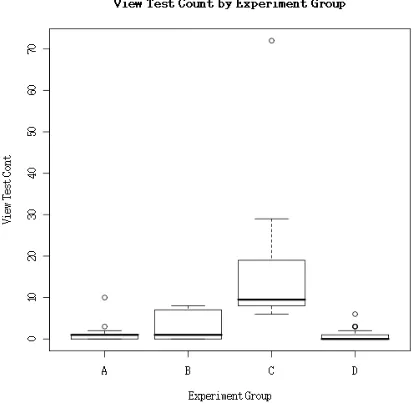
5-5 Test Count by Experiment Group . . . 101
5-6 Plot of Correct versus Incorrect Answers . . . 103
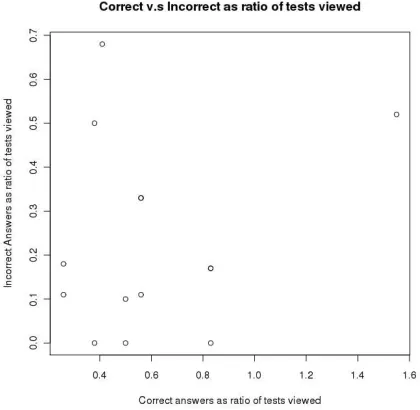
5-7 Plot of Correct versus Incorrect Answers as a ratio of tests viewed . . 104
5-8 Plot of responses to the statement “The practical environment was easy to access” broken out by experiment group . . . 106
5-9 Plot of concept counts grouped by responses to the statement“The course was too simple, explaining things that I already knew” . . . 108
5-10 Responses to the statement “The presence of a tutor was required for me to complete the course”. . . 109
5-11 Responses to the statement “In the future I will probably use the tech-nologies taught in this course”. . . 111
5-12 Distribution of learner’s total marks, plotted with a normal curve. . . 112
6-2 Total Concept Viewing Time plotted for the groups with and without
XeL. . . 138
6-3 Total Concept Count plotted with XeL and without XeL. . . 139
6-4 Incorrect Answer Count plotted with and without XeL. . . 141
6-5 Responses to the statement“The presence of a tutor was necessary for me to complete this course” . . . 143
6-6 Responses to the statement“The theory in this course supported and complemented the practical exercises” . . . 145
6-7 Responses to the statement“The practical exercises were a good way for me to evaluate my knowledge” . . . 147
6-8 Responses to the statement“The practical exercises were a good way for eLGrid to evaluate my knowledge”. . . 148
6-9 Responses to the statement“The instant feedback on the results of my practical exercises was helpful” . . . 149
A-1 The eLGrid t-Infrastructure architecture . . . 164
A-2 The eLGrid Certificate Authority front end. . . 166
A-3 The eLGrid front-end . . . 170
C-1 The GridBuilder Tool allows fast replica VM creation. . . 176
C-2 The TransDeploy tool showing the eLGrid servers. . . 179
C-3 Creating a concept space in ACCT . . . 180
List of Tables
4.1 How the architecture and technologies used have met the requirements 83 4.2 How the eLearning tools & technologies used have met the requirements 84
4.3 Summary of features of the eLGrid Courses . . . 85
5.1 Experiments . . . 87
5.2 Grouping of Learners . . . 92
5.3 End of course survey: Practicals . . . 105
5.4 End of course survey: Overall attitudes . . . 107
5.5 Test and Project Marks . . . 112
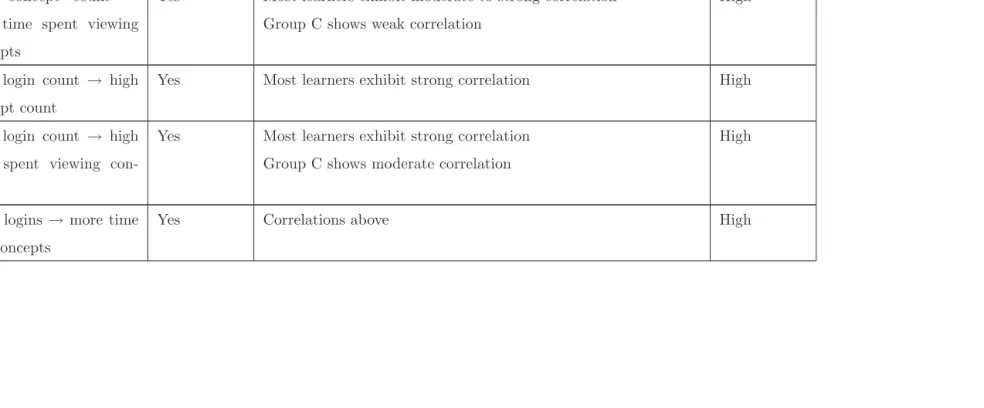
5.6 Differences in behaviour and usage patterns . . . 120
5.7 Summary of the analysis of the“Test Me!”feature . . . 122
5.8 Summary of overall attitudes to practical exercises and environment . 125 5.9 Summary of the overall attitudes to eLGrid . . . 128
6.1 Summary of Login Durations for the non-XeL and XeL groups . . . . 137
6.2 Summary of Concept Count and time spent viewing concepts for non-XeL and non-XeL groups . . . 140
F.1 Configuration Parameters for the Tomcat database authentication . . 197
K.1 Missing survey data points . . . 211
L.1 ANOVA results . . . 214
L.2 Correlations . . . 235
Glossary
4BA9 Advanced Computer Architecture final year course at TCD
ABC Assess By Computer, for computer-assisted marking AccessGrid A virtual collaboration tool
ACCT Adaptive Course Construction Toolkit ACTSim An adaptive simulator for soft skills training Adobe Connect A web conferencing tool
AHS Adaptive Hypermedia System
ANOVA Analysis of Variance statistical method
Apache An open source web server developed by the Apache Foundation
APeLS Adaptive Personalised eLearning Service ARC A grid middleware originating in Scandanavia Assima A simulator supporting screen-capture and replay Blackboard A commercial learning management system
Bonferroni adjust. A statistical method used to address the increased probability of type I error in multiple comparisons BugScope Educational project providing online free interactive
access to a scanning electron microscope
CA Certificate Authority
CAG Computer Architecture and Grid research group at TCD
CBT Computer-Based Training CE A gLite Computing Element
CERN European Organization for Nuclear Research
Cloud Provisioning model providing on-demand access to virtualised resources via a computer network
Condor An opportunistic scheduling system from Univ.Wisconsin
CS4021 Advanced Computer Architecture final year course at TCD (formerly 4BA9)
CSS Cascading Style Sheet
CVS Concurrent Versions System - an open-source version control system
dCache A Grid storage service originating in Germany DCI Distributed Computing Infrastructure
DemoGrid An instructional grid environment
DIAS The Dublin Institute for Advanced Studies
DN Distinguished Name, a component of an X.509 cer-tificate
DNS Domain Name Service
EC European Commission
EDG European DataGrid project
EduGAIN A European project providing a federated identity service for participating federations
EELA EU project linking to the Latin American Grid EGEE Enabling Grids for E-SciencE
EGI European Grid Infrastructure
EGI.eu The EGI headquarters entity in Amsterdam
EGI-InSPIRE An EU FP7 project to support the European Grid Infrastructure (EGI)
e-IRG e-Infrastructure Reflection Group eLearning Electronic Learning
ELeGI European Learning Grid Infrastructure
eLGrid Grid eLearning prototype instrument constructed for this thesis
Ellipse A learning plugin (from O’Reilly) for the Eclipse IDE EMI European Middleware Initiative
e-Science Talk A Grid dissemination project (formerly GridTalk) ETTF Education and Training Task Force of the e-IRG
EU European Union
EUChiaGRID EU project linking to the Chinese Grid
EUDCISS European Distributed Computing Infrastructures Summer School on Grid, Cloud and Desktop Com-puting Services
EU-IndiaGRID EU project linking to the Indian Grid
EUMEDGRID EU project linking to the Mediterranean Grid Fibonacci number The sequenceFn=Fn−1+Fn−2, seeded byF0=0,F1=1
FP7 Framework Program 7
F-test An ANOVA statistical test of significance for multiple groups
GANGA Python-based graphical user interface for Grid
GB GigaByte
Genius A grid-enabled portal originating from Italy
GGF Global Grid Forum, precursor to the Open Grid Fo-rum OGF
GILDA Grid INFN Virtual Laboratory for Dissemination Ac-tivities
gLite A grid middleware originating in the EU EDG/EGEE project series
GMA Grid Monitoring System
Grid A computing paradigm involving shared resources which span organisational boundaries
GridBriefings Periodic Grid newsletter maintained by e-Science Talk
GridBuilder A tool to configure and start new VMs
GridCafe Grid dissemination outlet maintained by e-Science Talk
GridCast Grid dissemination outlet maintained by e-Science Talk
GridGuide Grid dissemination outlet maintained by e-Science Talk
Grid-Ireland National Grid Initiative for Ireland
GridKA A summer school held by Karlsruhe Institute of Tech-nology
GridSite A grid-enabled webserver originating in Manchester GridTalk A Grid dissemination project (now e-Science Talk) GRNET Greek Research and Technology Network, the
Na-tional Grid Initiative (and NREN) for Greece HEA The Irish Higher Education Authority
HEAnet The NREN for Ireland
HEP High-Energy Physics
HTML HyperText Markup Language
Hypergraph An applet for viewing tree structures in hyperbolic space
IaaS Infrastructure as a Service
ICEAGE International Collaboration to Extend and Advance Grid Education
in2p3 Institut National de Physique Nucl´eaire et de Physique des Particules (French National Nuclear and Particle Physics institute)
IP Internet Protocol
IQR Inter-Quartile Range, a statistical measure
iSGTW International Science Grid This Week, a Grid on-line magazine
ISSGC International Summer School of Grid Computing IWSGC International Winter School of Grid Computing Java An object-oriented language originating from Sun
Mi-crosystems
JDL Job Description Language, originating in the Euro-pean Datagrid project
JSP Java Server Pages
KB KiloByte
KDEG Knowledge and Data Engineering Group at TCD KIT Karlsruhe Institute of Technology
LCFG A fabric management system originating from Edin-burgh
Likert Scale A scale for deriving ordinal data from survey ques-tionnaires
Linux A UNIX-like open source multi-user operating system originating in Finland
LMS Learning Management System LVM Logical Volume Manager
MB MegaByte
MD Migrating Desktop, a graphical user interface for Grid originating in Poznan
MyProxy A repository for proxy X.509 certificates NAT Network Address Translation
NFS A network file system NGI National Grid Initiative
NREN National Research and Education Network
NTP Network Time Protocol
OGF Open Grid Forum
OGF ET-CG Open Grid Forum Education and Training Commu-nity Group
OGSA-DAI A grid-enabled database integration service
OpenCA Open source software for implementing a certificate authority
OpsCentre Grid-Ireland Operations Centre at TCD
OSG Open Science Grid
Pearson Coefficient A statistical correlation measure
P-Grade A grid-enabled portal originating from Hungary PIC Particle-in-Cell method of solving a certain class of
partial differential equations PKI Public Key Infrastructure
PRTLI Programme for Research in Third-Level Institutions, a series of funding programmes run by the HEA
QoS Quality of Service
Quattor A fabric management system originating from CERN RA Registration Authority
Rapidbuilder A simulator supporting screen-capture and replay R-GMA Relational Grid Monitoring System
SaaS Software as a Service
SQL Structured Query Language
SSH Secure Shell, a UNIX secure command line environ-ment
StratusLab An EU FP7 project aiming to integrate Grids and Clouds
SuGI A Grid portal
TCD Trinity College Dublin t-Infrastructure Training Infrastructure Tomcat An Apache servlet container
TransDeploy A transactional deployment system
t-test A statistical test of significance for differences be-tween two groups
UI A gLite User Interface
UML User Mode Linux, a virtualisation technology UNICORE A grid middleware originating in Germany
UNIX A multi-user operating system originating in Bell Laboratries
VARK Visual, Aural, Read/write and Kinaesthetic learning style categorisation
Vivio A bidirectional animation tool VLE Virtual Learning Environment
VM Virtual Machine
VMWare A virtualisation technology
VO Virtual Organisation
VOCE The central-European production Grid service VOMS Virtual Organisation Management System VPN Virtual Private Network
WebCom An implementation of the condensed graphs model of computing
WebCT A learning management system
Weka An open source statistical data mining application Wiki A web-based collaborative documentation tool Windows A proprietary operating system from Microsoft
WN A gLite Worker Node
WS-Pgrade A new web-services version of the P-Grade portal X.509 A standard for certificates for a public key
infrastruc-ture
X86 The architecture of the Intel x8086-derived micropro-cessors
XeL Executable e-Learning Xen A virtualisation technology XMLDB XML database format
XMLDB Extensible Markup Language Yaim A fabric management system
Chapter 1
Introduction
1.1
Motivation
Grid technologies are maturing and entering a production phase, but outside of the High Energy Physics (HEP) community, there is still a dearth of knowledgeable users who can exploit the potential of Grids. To grow the Grid user community will require significant investment in training and education. This need has been recognised by the Grid community itself, and many recent projects, such as EGEE [1] and ICEAGE [2] have contained a strong education and training component.
Major policy and standards bodies such as the e-Infrastructures Reflection Group (e-IRG) [3] and the Open Grid Forum (OGF) Education and Training Community Group (ET-CG) [4] (of which the author was Secretary from its inception in 2006 until June 2008) have published documents in recent years calling for a sustained increase in funding and effort in Grid education and training.
These bodies have identified a skills shortage in research and industry which has the potential to cause existing infrastructures to be underutilised and to slow the emergence of knowledge-based economies [5], [6].
They argue that as distributed computing becomes more and more pervasive in our lives the need for trained professionals who are able to manage and troubleshoot these systems will grow rapidly [7].
dis-tributed nature of the Grid and its users, and their asynchronous training demand. eLearning allows learners to begin their training when and where they wish, while simultaneously reducing the overheads associated with face-to-face learning (organi-sation, catering, space, registration, resources, etc.).
Many Grid projects already provide online tutorials, most often taking the form of a static html user guide or a wiki. By only using these types of resources, however, projects and their students are lagging behind current eLearning practice. There have been many advances in the eLearning field in the last ten years and there are now a wealth of tools available for creating and delivering innovative online courses which follow modern pedagogic approaches such as constructivism, experiential learning, collaborative learning, etc. [8]
Furthermore, the emergence of adaptive courseware which can change details of the course, such as the exact content displayed, the difficulty level of the exercises, or even the entire pedagogic approach, mean that many of the disadvantages of eLearn-ing as compared with face-to-face learneLearn-ing (for example, the one-size-fits-all approach and lack of feedback to the learner on their progress) are now being overcome. [9]
1.2
Objective and Goals
In this thesis I investigate the potential for using adaptive eLearning technologies to enhance Grid education.
The objective is to look at the questions of whether a learner’s practical exercises running on the Grid can feed back into the personalisation of adaptive Grid eLearning courses, and whether this gives any benefit to the learner in terms of their learning experience.
In order to answer these questions, a secondary objective of this thesis is to attempt to prototype an appropriately integrated adaptive Grid eLearning system, and evaluate its usage by real learners.
ap-proach and the lack of personalised feedback. Courses can be adapted based on a range of different characteristics of the learner, such as their prior knowledge, their preferred learning style or the characteristics of the client device with which they access the learning content.
Often prior knowledge and understanding of course concepts is tested in adaptive eLearning systems via multiple-choice tests. Alternatively, adaptive simulations can allow the learner to apply what they have learned in a simulated environment and the results can be fed back into the personalisation to update the prior-knowledge attributes of the learner’s profile. This is a much better way of testing a learner’s understanding of the material presented, but it is also considerably more difficult to achieve.
In the case of technology training there is a potential to go beyond simulation and to have the learner apply their knowledge in what is essentially a real environment.
This thesis looks at this idea of adaptive execution using a fair replica, that is to say, a replica that while perhaps not exact, is as similar as possible to and captures all of the salient features of the Grid-Ireland infrastructure [10] as an execution en-vironment for learner’s practical exercises. It investigates ways to use plugins and standard Grid services such as the Information System to feed into the eLearning personalisation and also ways to use the output of learners’ jobs to generate further examples and exercises.
It explores whether the users’ learning tasks (job submissions, etc) can actually run in the same environment in which the eLearning software runs, and if so, how well, and what issues arise, and whether as a consequence, the results can be made available to the eLearning software for use as inputs to the adaptivity engine and whether it can then modify subsequent instruction or exercises.
I have called this concept “Executable eLearning” (XeL). The central hypothesis is that XeL can enable practical exercises within the same environment as the adaptive engine, and that the synergy with and exploitation of XeL by the adaptive engine can significantly enhance Grid eLearning.
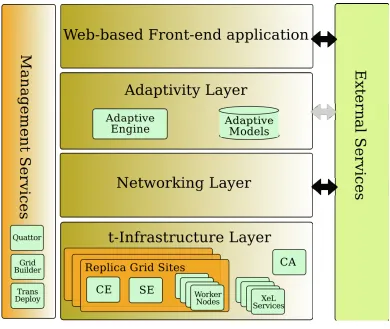
system consisting of
(1) a training infrastructure (henceforth referred to as “t-Infrastructure”) (2) an adaptive eLearning engine
(3) a web-based eLearning application which leverages the personalisation afforded by the adaptive engine and integrates with the t-Infrastructure
(4) a set of XeL modules to collect information about the results of learners’ practical exercises and feed these into the adaptive engine
A prototype implementation of this architecture is described. This was imple-mented as an instrument to gather data to help answer the questions of this thesis, including those related to feasibility. In prototyping this instrument, the author at-tempted to use existing, open-source components where possible and to follow relevant best-practice in each area.
A number of controlled experiments were then conducted using the instrument in order to assess the central hypothesis.
1.3
Thesis Organisation
This thesis looks at the question of whether executable eLearning (XeL) can enhance the learning experience for Grid and distributed computing learners.
The thesis begins with a chapter describing a face-to-face course run by Grid-Ireland in 2006, the requirements identified from this experience, and how these requirements might be met by an eLearning approach.
This is followed by a review of the State of the Art in educational practice, eLearn-ing and Grid and distributed computeLearn-ing education.
The next chapter describes a possible architecture of an XeL-enabled eLearning system as well as the prototype infrastructure (eLGrid) developed to evaluate the XeL approach.
Chapter 2
An eLearning approach for Grid
ed-ucation and training
Adopting eLearning for Grid education has the potential to bring many benefits, and I discuss some of these benefits in this chapter. I also look at the rationale behind integrating the eLearning tools closely with the t-Infrastructure and choosing adaptive eLearning tools over the many non-adaptive tools which are available. I go on to describe the potential benefits which XeL might provide to learners in the Grid community.
The prototype system described in this thesis provides many of the benefits over traditional face-to-face learning. It also specifically addresses requirements which were identified as a result of a face-to-face course run in March 2006 by the Irish National Grid Infrastructure, Grid-Ireland. Section 2.1 describes this course, the requirements which arose from it and how the eLGrid system satisfies these require-ments.
2.1
User Requirements
Grid. The course modules included a general introduction to the Grid and to the Grid-Ireland facilities, how to run jobs on the Grid, data handling on the Grid and running MPI jobs on the Grid. Hands-on sessions allowed learners to try out what they had learned.
At the end of the event participants were asked to fill in a feedback question-naire. The questionnaire included evaluation questions along with spaces for learner comments.
In all, 16 feedback forms were returned by participants. A qualitative analysis of the comments was performed, with similar comments grouped together to try to identify themes which could be developed into a set of requirements for Grid education. The resultant requirements are discussed below.
2.1.1
Requirement 1: Ability to work at their own pace
The prior-experience and knowledge of participants in the face-to-face course varied. While some found the material easy, others found it difficult. Similarly, some found the sessions too long while others called for more time to be provided, particularly for the practicals.
• “Perhaps too much to take in in such a short space of time (for a beginner to the subject)”
• “Found the pace a bit slow” • “Lectures felt very long”
• “Some parts a bit rushed, could have had longer practical on day 1”
Clearly, it seemed that participants would benefit from being able to work at their own pace.
2.1.2
Requirement 2: Certificates should be obtained in
ad-vance
A number of comments specifically asked for certificates (more properly, authentica-tion and authorisaauthentica-tion) to be issued in advance in order to avoid delays during the course.
• “Grid certificates should have been obtained before the class to maximise the time for the practicals”
• “Ideally all the work related to issuing certificates and VO membership should be done in advance”
• “If certificates could have been created in advance, and not during first half of the MPI Grid practical, it would have been better”
Grid authentication and authorisation is achieved using digital certificates issued by a Grid Certification Authority (CA). Each National Grid Infrastructure runs its own CA and in order to ensure the security of the infrastructure there are strict policies regulating the issuing of certificates to users [13]. The normal procedure for obtaining a Grid certificate involves visiting your local Grid Registration Authority (RA) and providing proof of identity such as a passport or staff or student identifi-cation card of your research institution.
This process does not lend itself well to courses, as learners must either apply for their Grid certificate in advance and bring it with them to the course, or the certificates must be issued on the day of the course once the local RA has verified the identity of each learner.
allow certificates to be issued without following the rigorous policies of the National Grid Infrastructure. A consequence of the less rigorous security policies is that the t-Infrastructure would need to be designed for simple press-button re-installation in the event of inadvertent or malicious degradation. In addition, to further simplify the process for learners, it is likely to be helpful if the first course published in the prototype eLearning system were a course on “Obtaining a Grid Certificate” which took learners through the process of obtaining Grid credentials before progressing to the other courses, or indeed, before attending a face-to-face course.
2.1.3
Requirement 3: Practical environments and exercises
Eight of the 13 respondents who included comments in their response mentioned practicals. There was one general comment about the usefulness of being able to try out job submission while four participants mentioned practicals in response to the question “What did you most like about this event”. Two respondents wanted more practicals, and another two mentioned problems in running the practicals.
The number of participants who referred to the practical sessions in one way or another suggests that the practical sessions are important to the success of any learning event.
At a face-to-face learning course, however, time constraints mean that it is not always possible to include as many practical exercises as tutors or learners might like.
2.1.4
Requirement 4: Personal support and feedback
The presence of tutors to answer questions and provide feedback was greatly appre-ciated by the participants.
• “Presenters and assistants were very patient and very helpful”
• “Ability to ask questions and depth of knowledge of the people hosting event” • “This event give me the chance to familiar the most important command with
the help of the expert” [sic]
Conclusion: There are obvious disadvantages to eLearning when it comes to pro-viding personal support and feedback to learners. One possible way to mitigate this problem is by using adaptive eLearning [14]. Adaptive eLearning systems provide per-sonalised courses to learners, modifying content or navigation and providing feedback, based on characteristics of the individual learner, and on their progress through the course. Sections 2.2.3 to 2.2.4 look in more detail at the ways in which adaptive eLearning can address these issues, and whether other benefits can accrue from using adaptive and personalised learning.
2.2
Benefits of a Grid eLearning System
2.2.1
Why eLearning?
on the part of the trainers (of course it may be necessary to have some interaction, regular updates to the course material, answering student queries, etc.).
In addition to the reduction in trainer workload, eLearning can help with the problem of asynchronous training demand. Training is required at different times for different users and it is often not feasible to run new face-to-face training courses for individuals or small groups as the need arises. Expecting users to wait until there are sufficient learners with the same need to run a face-to-face course is not satisfactory. eLearning allows new users to begin their training when they want it, not when it is convenient for the trainers, and to fit the training into their own schedule.
Even experienced Grid users will have need for ongoing training as new middle-ware versions are released, or to refresh their skills on a technology which they use infrequently. An eLearning system is ideal for these users who may not wish to at-tend a full training course. A well designed eLearning system could even alert users to changes and additions and recommend revisiting a previously completed course, supporting continuous professional development.
The arguments above can be made about any training activity, but in the Grid field there are additional reasons for considering eLearning. Grid education is par-ticularly well suited to eLearning because of the distributed nature of the Grid and its users, providers and operators. When dealing with such a widely distributed user group it makes sense to design training which can be accessed from many and widely dispersed locations rather than to require users to travel to a central location.
training after the face-to-face course is over.
eLearning is not, of course, a panacea. There are some areas where traditional face-to-face learning outperforms eLearning, such as the interaction and personalised feedback from a tutor, peer interaction and support from fellow students, etc. These problems can be mitigated by careful design of the eLearning system, and incorpora-tion of social interacincorpora-tion elements such as email, forums and chat.
2.2.2
Why Adaptive eLearning?
Many Grid projects already provide online tutorials, often taking the form of a static HTML user guide or a wiki. By only using these types of resources, however, projects and their students are lagging behind, and hence not taking advantage of, current eLearning practice. There have been many advances in the eLearning field in the last ten years and there are now a wealth of tools available for creating and deliv-ering innovative online courses which follow modern pedagogic approaches such as constructivism, experiential learning, collaborative learning, etc. [8]
Furthermore, the emergence of adaptive courseware which can adapt to a learner’s ability and progress by changing details of the course, such as the exact content displayed, the prerequisites covered, the level of difficulty of the exercises, or even the entire pedagogic approach, mean that many of the disadvantages of eLearning as compared with face-to-face learning (for example, the one-size-fits-all approach and lack of feedback to the learner on their progress) are now being overcome. [9]
The future of eLearning is likely to involve well designed courses tailored to the particular learner’s requirements, providing feedback and varying the difficulty and content based on the user’s ability and performance in online assessment. These adaptive tools are on the cutting edge of eLearning research today and should give a much more satisfactory learning experience.
give individual support. Adaptive eLearning is ideally suited to these conditions.
2.2.3
Why integrate eLearning tools with t-Infrastructure?
Chapter 1 briefly outlined the concept of executable eLearning (XeL). This section and section 2.2.4 effectively ask “Why XeL?”.
Where eLearning tools are to be used there are many compelling reasons to closely integrate them with the t-Infrastructure.
Self-paced practical exercises can easily be delivered by an eLearning system. But while the instructions for these exercises are delivered by the eLearning system, in most cases the exercises themselves are performed on the t-Infrastructure outside of the eLearning system. The first core concept of XeL is to perform the exercises from within the eLearning system, i.e. to integrate the eLearning system with the t-Infrastructure.
Several studies have shown that practice sessions distributed throughout a lesson lead to better retention of material [16] [17] when compared with training which places all of the practical exercises at the end of the lesson. In an eLearning course, however, distributing practical exercises throughout the lesson can lead to the learner chopping and changing between the eLearning environment and the training infrastructure where they must try out what they have learned. It is thus desirable to have the eLearning system integrated as closely as possible with the training environment. For example, if a web portal is being used for the practical exercises then it would helpful if this can be opened within a web-based eLearning page as a frame or via a new browser tab.
This allows instructions to be kept close to the exercise on-screen. While there is little in the research literature that looks directly at the benefits of this, studies have shown that retention and understanding are improved where text and images or other related objects are placed close to each other on-screen, the so-called “contiguity principle” [18].
the learner’s prior-knowledge, performance, or other characteristics which otherwise could only be applied to the didactic part of the course.
A more concrete benefit of this integration would be the ability of the eLearning tool to capture relevant information about learners’ conduct of practical exercises, for example the inputs to the practicals, the behaviour of the learners when using the practical environment, the results of the practical exercises, etc. This information could then be used for assessment of the learner or adaptation of the course based on their results.
Integration would also allow leveraging of the single-sign-on capabilities of the Grid. If the eLearning tools can be modified to allow them to use the user’s x.509 Distinguished Name (DN) to identify the user then the user need not log in separately to the eLearning tool. This will be even more useful with the new federated identity schemes such as EduGAIN [19] now being deployed which could automatically provide the whole of academia with privileges to access eLGrid.
2.2.4
Why adaptive executable eLearning
Chapter 5 describes in some detail the results of the experiments conducted with the eLGrid system before XeL is implemented. Learners were generally positive about the utility of the adaptive navigation in the form of a“traffic-light”annotated menu system. This suggests that the adaptivity (as implemented) benefits the learner.
This personalisation used the learners’ multiple-choice test responses. However, such tests are not a good measure of learners real learning [20]. Practical exercises are a much better measure in courses that teach technology. If it is possible to link the practical environment and the eLearning tools, then this might make it possible to also adapt the learning material to the learner’s conduct of practical exercises. This is the second core concept of XeL.
This thesis investigates whether any improvement can be found for learning achieved and satisfaction reported by learner groups who experienced this additional person-alisation based on their practical exercises.
performance on practical exercises as inputs to subsequent exercises, examples, etc. This would create the potential to enhance actual learning by providing more relevant examples.
If the learner’s performance on the practical exercises can be made available to the eLearning software, the satisfactory completion of these exercises can be seen as prerequisites to completion of further courses, i.e. the concept of “prerequisites” will have been extended to practical exercises rather than just theoretical material. Any given concept could then be considered to be “understood” in several different ways, with a mixture of tests and practical exercises being used to determine the learner’s prior knowledge, and their progress through the course material. This appears to be a closer approximation to instructor-led training than is normally possible with eLearning.
If it is so, then ideally course developers should be able to include prerequisite material, including practical aspects, into advanced courses on the basis that existing knowledge will be automatically taken into account, i.e. that adaptation will remove material, including exercises, that students have already learnt.
Section 2.2.1 suggests that learners may revisit the eLearning system in order to brush up or further explore topics of interest. Without XeL this relates more to the theoretical aspects of a course, although some t-Infrastructures allow learners to independently revisit practical exercises too. With XeL, the practical exercises would be able to be seamlessly revisited within the same eLearning environment, and adapted to the learners’ current knowledge. Moreover, an integrated eLearning system might alert users about updates to the infrastructure and software of the training environment as well as course content modifications, allowing learners to revisit the practical components of courses and constantly update their skills for each new software release while easing the burden of updates for the course designers.
2.3
Future Potential of XeL
inte-grated practical environment with adaptive eLearning and collaborative tools might become the basis for a desktop problem-solving “personal XeL workbench” that in-cludes learning and practical exercises adapted to existing knowledge, and where the t-Infrastructure allows speculative experiments in order to make progress towards a solution to a problem. The collaborative nature of the Grid enables natural extension towards a “personal/group XeL workbench”, potentially bringing together groups of geographically distributed participants for distributed problem solving, where if the participants encounter aspects of a problem that are unfamiliar, then XeL is there to enlighten them.
While these predictions may be “visionary” wishful thinking, the perfectly reason-able theme is that XeL is not just a limited enhancement, but instead is a concept that creates the potential for extensive future development and impact.
2.4
Summary of Potential Attributes of XeL
The sections above discuss the various benefits of an XeL approach, and suggest several attributes of XeL. This section attempts to summarise these features:
1. Distributed pedagogically-sound self-paced adaptive Grid education via eLearn-ing
2. Support for integration into face-to-face courses
3. Integration of t-Infrastructure for practical exercises within the eLearning en-vironment
4. Capture of relevant information about practical exercises by the eLearning tool 5. Leveraging of single sign-on capabilities of the Grid
6. Adaptation to the information about learners’ conduct of practical exercises 7. Ability to treat satisfactory completion of practical exercises as pre-requisites
8. Ability to revisit adaptive eLearning including integrated practical exercises 9. Possible extension to become an integrated problem-solving “personal/group
XeL work-bench”
Chapter 3
Current State of the Relevant Art
3.1
Introduction
It is impossible to begin to discuss eLearning without proper reference to the fun-damental learning paradigms and theories which aim to explain how humans learn. Thus this literature review begins with a discussion of some of the more mainstream learning theories of relevance to this thesis.
Similarly, there has been an explosion in eLearning and adaptive eLearning re-search in the last three decades and so there follows a discussion of a number of the relevant approaches and theories.
The state of the art in eLearning as it relates to Grids and this thesis also en-compasses t-Infrastructures, Grid education and Grid eLearning. This chapter then looks at some of the most relevant work in each of these fields.
The discussion section reviews the related work in light of the thesis goals and attempts to set some design guidelines for the development of an XeL architecture as well as the implementation of the prototype instrument.
3.2
Learning Theory
example [21].
Behaviourist approaches, firmly situated in the empiricist epistemology tradition, argue that the mind, which cannot be observed, is therefore not a suitable object of study. They view learning as essentially a process of modification and acquisition of behaviours, where learning can thus be objectively measured through observation of behavioural change. Similarly, as learning occurs via external stimuli working upon the learner to reinforce some behaviours and discourage others, the role of the teacher becomes one of presenting the learner with appropriate learning resources and tasks (the stimuli) which bring about changes in behaviour (the response) [22].
Cognitive theorists view the behavioural approach as simplistic, dealing only with observed behaviour while ignoring the cognitive processes which lie behind this. They argue that learning cannot be understood without reference to these cognitive pro-cesses [23]. Within the cognitive approach there are a wealth of theories investigating different aspects of the cognitive processes associated with learning.
Cognitive theorists believe that knowledge and understanding are actively con-structed by the learner, not passively received from the teacher (as is the case in behaviourist theories of learning). Knowledge is represented in the brain in the form of mental models or schemata, and these can be modelled and studied [21].
Cognitivists also take account of the existing preconceptions and ideas of learners which may influence their receptiveness to new knowledge either positively, by giving them an existing model into which they can incorporate new knowledge, or in the case of misconceptions, negatively, potentially militating against the acquisition of new knowledge. Learners construct knowledge through interaction with the physical world.
Constructivism views learning as the process of actively constructing schemata. It builds upon cognitivism, and also stresses the importance of understanding the cognitive processes behind learning. It includes similar ideas about mental models, schemata, preconceptions and learning styles.
dominant theoretical framework for the current understanding of education, in par-ticular, science education [24].
Each of these approaches has some relevance to this thesis. In particular, many theories from the cognitive and constructivist approaches can be fruitfully applied to Grid eLearning.
3.2.1
Specific theories of learning
A number of theories are of particular relevance to the work of this thesis. These are largely within the cognitive and constructivist paradigms, but some also stem from the behaviourist approach. This section describes some of these theories.
Active learning
Active learning theory follows the constructivist approach and emphasises the learn-ers’ role in the learning process, arguing that learning is more effective when the learner takes an active role in the learning process. It stresses the importance of activities that promote higher-order thinking tasks, such as reflecting on learning, analysing and evaluating. Group discussions, writing assignments, case-studies, de-bates, role-playing and simulations are common methods employed in active learn-ing [25].
Recommendations for eLearning systems based on active learning include provid-ing many opportunities for practice, and engagement with real-world case problems and examples to encourage the learner to be cognitively active. However, some re-search has shown that being too active, in particular, being behaviourally active, can in fact reduce successful schema building and thus learning [26].
Active learning techniques unique to eLearning include practice with automated tailored feedback and the use of simulation to accelerate expertise [18].
Problem-based learning
Problem-based learning is another active learning technique which involves introduc-ing a problem at the beginnintroduc-ing of a lesson and encouragintroduc-ing learners to choose what to learn in order to solve the problem [27]. It is argued that this helps learners to build schemata as they are not acquiring abstract knowledge without an understanding of its applications.
An eLearning course can easily support problem-based learning, providing oppor-tunities for learners to perform real-world problem-solving tasks. Learning materials can be structured such that the problem is presented at the beginning, and the learner can then browse the learning material, perhaps freely, or with guidance, in order to find the solution. In an adaptive eLearning system, the content can even be adap-tively presented in a problem-based or traditional didactic manner depending on the attributes of the learner, for an example see [28].
Worked-example Effect
Worked-examples also fall under the ‘active-learning’ banner, but unlike problem-based or discovery learning, the learner is not actively solving a problem. Instead they are cognitively active in understanding the problem being solved. This has been shown to be more beneficial in some cases than active problem solving [29].
The importance of Practice
In order to master any skill it is necessary to practice. While this may, in many ways sound like simple common-sense, a recent opinion-piece [30] by Tim O’Reilly, of O’Reilly Books, noted that while practice is essential when learning technology subjects such as programming, most learners will try to do the minimum number of exercises possible.
In an eLearning environment where learner drop-out is usually high and it is generally hard to ascertain the level of learner engagement with the material, it becomes necessary to carefully design the system, materials and exercises in order to encourage the maximum participation in the practical exercises.
In order to ensure that the practical exercises are interesting to learners and thus reduce drop-out rates, exercises should require learners to apply knowledge and skills to real-life situations [18].
Furthermore, research has shown that distributed practice exercises are signif-icantly more effective and contribute more to learning than massed practice, for example, where all the practical exercises are grouped together at the end of a course or after an initial lesson [31].
The implications of such studies for eLearning are clear. It is desirable to have several practice exercises per topic, distributed throughout the lessons, and they should be based on real-world problems which are relevant and interesting to the learner.
Cognitive Load theory
Cognitive load theory is a theory of learning from the cognitive approach which deals with attention and the transfer of skills and knowledge from short-term to long-term memory.
In order to alter long-term memory, however, novel information must first be processed in short-term or working memory, which is severely constrained in terms of its capacity.
Cognitive load is the load placed on working memory during learning. It is divided into three types
• Intrinsic load due to the complexity of the subject matter being learned • Extraneous load due to instructional design which fails to take account of the
limits of working memory
• Germane load due to the active learning effort of the learner.
This theory has important implications for multimedia design and eLearning in terms of the organisation and presentation of material, how much novel material should be presented and the mode in which to present novel material [32].
For example, thesplit-attention orcontiguity principle argues that where a learner must integrate information from different sources, placing them close together on screen reduces cognitive load. Practical recommendations which can be drawn from this include placing text close to associated images, and instructions for practical exercises close to the interface where the practical steps are carried out [18].
The modality effect is based on research which shows that each input “channel”, corresponding to the different human senses, has a separate short-term memory store. This theory argues that one should present different sources of information in different modes (visual, audio, dual-channel) [33]. For example, one might use audio narration rather than text to explain on-screen graphics or animations.
While an experienced teacher or tutor can usually tailor the amount of material provided to the level of the learner, in an eLearning system this requires personalisa-tion and adaptive eLearning technologies [34].
Worked examples can decrease cognitive load, but some active learning and problem-based learning techniques can actually increase extraneous cognitive load [29]. Problem-based learning and discovery learning require the learner to use some of their attention and short-term memory to identify what they should be learning, while with worked examples there is no search of the problem space and all attention can be given to the formation of new schema. A mix of problem solving and worked examples can help to balance these effects.
3.3
eLearning
In the broadest sense of the term, eLearning or electronic learning, is any electronic or technology assisted learning or teaching. The term, and indeed the entire field of eLearning, has developed out of research in the areas of computer-based training (CBT), distance learning, military simulations, and other fields, each with their own focus and approach, and thus it is difficult to pin down a concise definition of the term [35]. The modern usage in most sectors, however, emphasises internet-based learning experiences [35] and this is the sense in which the term is used in this thesis. While earlier systems often focussed solely on content delivery and were little more than computerised books, modern eLearning systems include a diverse range of multimedia, interactivity, social learning and support for learner-centred pedagogy.
While several research prototypes have attempted to add personalisation to VLEs (for example [43], [44], [45]), VLEs generally do not provide much built-in support for personalisation or adaptivity beyond basic localisation options.
This section identifies recent eLearning research areas which are of particular relevance to this thesis, and reviews similar work to the adaptive executable eLearning framework proposed herein.
3.4
Adaptive eLearning
Adaptive eLearning allows courses to be personalised for each individual learner, with this personalisation potentially taking many forms. Common personalisation techniques involve modifying the navigational path that the user takes through the course (adaptive navigation) or modifying the learning content to the user (adaptive presentation).
Similarly, the adaptation can be based on a range of different characteristics of the learner, such as their prior-knowledge, their preferred learning style or the char-acteristics of the client device with which they access the learning content.
3.4.1
Methods of Adaptivity
The way in which the course is personalised is the method of adaptivity. This gerally involves modifying details of the course content, structure or the learning en-vironment.
Adaptive Presentation
Adaptive presentation involves presenting different material, or the same material in different ways, to different learners. This might include:
• Varying the difficulty of the material presented based on the learner’s ability, prior knowledge or expertise [47] (see section 3.4.2)
• Changing the presentation media to suit learners’ style, for example, based on the learner’s VARK (Visual, Aural, Read/write and Kinaesthetic) style [48] (see section 3.4.2)
• Providing low- and high-bandwidth content based on the learners’ connection speed [49] (see section 3.4.2)
Adaptive Navigation
Another option is to adapt the navigation path through the course. This can involve any of the following:
• Link Annotation: The addition of extra information which provides the learner with some information about the status of the content linked (for example, its relevance to their learner profile, or whether they are ready to view it based on their prior-knowledge) [14].
• Link-hiding, disabling and removal: Links not relevant to a learner might be disabled, so that the link anchor appears as ordinary text, or the link may be hidden or removed from the navigation menu [50].
• Re-ordering concepts: The ideal order in which concepts should be tackled may differ for different types of learner. One might choose, for example, based on the Honey and Mumford learning style categories, to present theory first to a theorist learner or the problem first to an activist learner [51]. For an example of a system which does this see [28].
Various types of navigation control can be supported in an adaptive eLearning course ranging fromlearner control, a discovery-based learning approach, through to
Learner control can be effective where the content is relatively uncomplicated and there are few interrelations between topics, or where the audience has significant prior-knowledge of the subject area. Program control is suitable mainly for novice users. Advisement is a more flexible approach which can be used where the learners have a mix of knowledge and skills or where saving time of those users who can demonstrate prior competence is a priority [18].
3.4.2
What to adapt to
Adaptation to the learner’s style
Different learners have different learning strategies and styles, and benefit to different extents from particular structuring or presentation of materials. There is a lot of research in this area and several different theories attempt to classify learners into different groups based on their learning style.
For example the VARK (Visual, Aural, Read/write and Kinaesthetic) [48] (see also [52]) categorisation developed by Neil Fleming of Lincoln University, New Zealand, groups learners by the mode of delivery they prefer and argues that similar content should be presented in different ways for different types of learner.
Kolb [53], and Honey and Mumford [51], instead focus more on the underlying cognitive style of the learner. Kolb proposes two integral processes in learning: pre-hension of concepts andtransformation. Each of these processes can take place in two different ways, prehension via apprehension (grasping through immediate concrete experience), or via comprehension (indirect grasping through symbolic representa-tions of experience), and transformation via intension (reflection), or via extension
(action).
• Convergent: comprehension transformed through extension
Honey and Mumford’s theory of learning styles categorises learners into Activist,
Reflector,Theorist and Pragmatist groups. While these are similar to Kolb’s classifi-cations the real strength of the Honey and Mumford approach is the manual published by the authors, which serves as a toolkit for educators, enabling them to easily imple-ment learning-styles testing and giving a cookbook of ways in which the theory may be applied to eLearning activities. This makes it an attractive option for educators wishing to implement personalisation based on learning style and it has been used in many adaptive eLearning systems [28], [54].
Other approaches include Gardner’s theory of multiple intelligences [55], Pask’s Learning strategies [56] and Hudson’s convergent and divergent thinking [57].
Learning styles are a popular element for adaptation in personalised eLearning courses and many systems or prototypes exist which implement personalisation based on different learning style theories. For a review of the literature in personalisation based on learning style see [58] or [59].
Such systems are generally based on the notion that a learner will learn best when content is presented to them in a way which matches their personal learning style. This might, for example, involve changing the type of content from plain text to graphics, audio or multi-media if using VARK, or, as another example, changing the content itself to be more theoretical for an Assimilative learner under Kolb’s classification.
more structured navigational path for Theorist learners.
Some systems also have a secondary aim of educating learners about their pre-ferred learning style or training them to use learning styles other than that which they naturally prefer, thus teaching the learner to learn and improving their cognitive flexibility.
Existing systems usually determine the learner’s preferred style via a pre-course questionnaire.
Adaptation to the learner’s Devices
Adaptive eLearning systems often personalise course delivery based on characteristics of the learner’s environment, such as the device with which they are accessing the course, or the bandwidth of their connection.
For example, a system might use adaptive presentation to display a low-resolution version of course materials to a learner using a slow or high-cost connection [60], [61], [49]. This could involve lower resolution images, text-based material instead of graphics, the exclusion of certain materials such as videos, etc.
Similarly, certain types of learning content might be more suitable for users con-necting on devices with small screens such as mobile phones, for example a graphic might be simplified to ensure that it is visible on a small screen, or a landscape or portrait version might be used for different screen sizes if switching between the two orientations is not possible on the device [60]. Or, for example, the eLearning envi-ronment can be made more convenient for mobile users by integrating it within smart phones (for example, Intuition Publishing Ltd. [62] has a dominant role in provision of eLearning integrated with Blackberry devices).
Adaptation to the learner’s Location
Adaptation to the Learners’ Prior Knowledge and Expertise
Any concept within a course can be considered to be understood or not, and the navigation or content can be modified based on which course concepts are understood by each learner.
This is often assessed at the start of the course, for example via a pre-course learner questionnaire or test. The learner’s profile can also be updated as they progress through the course, with a concept considered understood when the learner has viewed the relevant material, or after completion of multiple-choice test questions relating to that concept.
Automatic assessment of such multiple-choice tests is easy to achieve, hence non-adaptive test functionality is already built into many Virtual Learning Environments (VLEs). Similarly, there are several adaptive eLearning tools which modify aspects of a course based on the results of such tests, such as the Adaptive Personalised eLearning Service (APeLS) developed by the Knowledge and Data Engineering Group in Trinity College [64].
Multiple-choice tests, however, are not a very reliable way of measuring a learner’s knowledge [20]. Adaptive simulations, described in section 3.4.3, can allow the learner to apply what they have learned in a simulated environment and the results can be fed back into the personalisation. This is a much better way of testing a learner’s understanding of the material presented, but it is also considerably more difficult to achieve.
In the case of technology training there is a potential to go beyond simulation and to have the learner apply their knowledge in what is essentially a real environment which feeds back to the eLearning personalisation engine, and this is the approach taken in this thesis with XeL.
3.4.3
Simulations
has been the focus of the majority of traditional eLearning tools in the past [65]. Simulations can be used in many domains, from soft-skills training through com-puter skills to military and flight simulations or even medical diagnosis and surgical procedures. The Futurelab project has published a review highlighting many promi-nent examples of educational simulations [66].
There are many tools which enable the creation of software training simulations, for example using animations of sequences of mouse-clicks and keystrokes required to complete various tasks. This is often achieved by creating a flash recording of the tutor performing the same tasks using the real software. To this can be added some interactivity where the learner must select what to do next, or questions can be embedded in the simulation. Popular simulation systems supporting this type of screen-capture and replay include Adobe Captivate [67], Assima [68] and Xstream Rapidbuilder [69].
Other tools provide for different types of simulations, for example educational immersive games or softskills training [70], [71]. An interesting example from the author’s host research group is Vivio [72], a bidirectional animation tool that allows simulations to move both forward and backward in time.
Integrating simulations and adaptive eLearning is difficult, however, and few sys-tems attempt it. Those which do often embed the adaptivity directly into the simula-tion making it difficult to generalise or reuse the content. One ground-breaking tool for creating adaptive simulations is ACTSim [73] but this is focussed on soft skills training.
3.4.4
Assessment
Assessment is the process of evaluating the learner’s progress and the extent of learn-ing achieved. Summative assessment aims to establish a measure of the student’s learning at the end of a course, usually in order to award a final mark or grade, while
Assessment is often supported by VLEs, which typically provide multiple-choice test functionality to test the knowledge of the learner and can sometimes provide limited feedback to the learner on their results. Multiple-choice questions are quite limited in their ability to test deep learning or understanding gained from a course. They also fail to assess whether the learner has been able to transfer the skills and knowledge gained to real world problems. For this type of assessment it is usually necessary to involve a tutor.
Short answer marking engines [75], which analyse free-text answers for keywords, can provide more realistic and flexible assessment, as can comparing answers or out-puts of practicals with work of experts.
Computer-assisted marking can reduce the time taken to mark assignments, for example allowing the computer to mark certain portions of an assignment, or au-tomatically clustering similar answers to which the tutor can easily assign a single grade. Assess by Computer (ABC) [76] used by the University of Manchester is an example of a computer-assisted marking application.
Simulations can enable closed-loop adaptive education which involves the use of automated adaptive assessment via practical exercises carried out in the simulated environment [77]. One of the proposed benefits of XeL and the integration of the t-Infrastructure with eLe