EFFECT OF RESISTANCE TRAINING ON EXERCISE INTOLERANCE AND RISK OF FALL IN ELDERLY
1
Dr Ujwal Yeole
1
Associate Professor and Principal, Dep
2
Intern Department of Physiotherapy Tilak Maharashtra Vidyapeeth Pune
ARTICLE INFO ABSTRACT
Background:
Lack of muscle strength said to be associated with increased risk of fall in elderly. was done to evaluate the effect of resistance training
6 Minute walk distance (6MWD),VO2 MAX, Time up and go(TUG) test, Functional independence measure (FIM) scale,10 Repetition maximum (RM).
approache
inclusion and exclusion criteria and were randomly divided into Experimental Group A (n=30, 67.30±5.26) and Control Group B(n=30, 67.96±4.51). Experimental Group wa
group of muscles of Lower Limb along with ergonomic advice for prevention of fall whereas the Control Group was given ergonomic advice
RM, 6MWD, Pre
10 RM Hamstring (2.65±0.73), Quadriceps (2.46±0.43), 6MWD (325.17±51.23), Predicted VO2 max (32.73±4.67), TUG (12.36±3.43), FIM (125.77±0.50) of Group A as compared to 10RM
(1.85±0.54) Quadriceps (2.20±0.50), 6MWD (278.9±37.66), Predicted VO2 max (29.42±4.38), TUG (13.36±3.56), FIM (122.0±2022) of Group B.
improvement in Exercise intolerance and risk of fall
Copyright © 2018, Ujwal Yeole and Akshay Adsul. This
unrestricted use, distribution, and reproduction in any medium,
INTRODUCTION
In the elderly, muscle strength is a main determinant in the performance of everyday tasks. Resistance training may improve, or at least maintain health, physical and psychological well-being in elderly people
Bottino Roma, 2013). The aging process causes a quantitative loss of muscle mass and a decrease in strength and in muscle potency. The peak of muscle strength of life is between the second and third decade. After 50 years of age ther
decrease in muscle strength that occurs, which is stressed after age 65 years, and then decreases 12% to 15% for each decade. There is decrease in muscle strength with atrophy of the fast fibers (type II fibers), where there is decrease in te elasticity and also low activation of agonist and higher antagonist muscles. The benefits of resistance training increased muscle strength and muscle mass
activity has been known to help prevent cardiovascular disease (Maria Fernanda Bottino Roma, 2013). A fall is a complex multifactorial phenomenon, that explains the mechanism of
*Corresponding author: Dr. Ujwal Yeole,
MPTh (Cardiovascular and Respiratory), MIAP, Associate Professor and Principal, Department of Physiotherapy, Tilak
Vidyapeeth Pune.
ISSN: 0975-833X
Vol.
Article History:
Received 20th September, 2018
Received in revised form 24th October, 2018
Accepted 16th November, 2018
Published online 31st December, 2018
Citation: Dr. Ujwal Yeole and Akshay Adsul. 2018.
Current Research, 10, (12), 76458-76462.
Key Words:
Resistance training, 6MWD, Exercise intolerance, Risk of fall, Elderly.
RESEARCH ARTICLE
EFFECT OF RESISTANCE TRAINING ON EXERCISE INTOLERANCE AND RISK OF FALL IN ELDERLY
Dr Ujwal Yeole and
2Akshay Adsul
and Principal, Department of Physiotherapy, Tilak Maharashtra Vidyapeeth
Intern Department of Physiotherapy Tilak Maharashtra Vidyapeeth Pune
ABSTRACT
Background: In an elderly, muscle strength is a main determinant in the performance of everyday tasks. Lack of muscle strength said to be associated with increased risk of fall in elderly.
was done to evaluate the effect of resistance training on exercise intolerance and risk of fall in elderly using 6 Minute walk distance (6MWD),VO2 MAX, Time up and go(TUG) test, Functional independence measure (FIM) scale,10 Repetition maximum (RM). Methods: Senior citizen clubs across the city were approached for evaluating risk of fall in elderly. Total number of 60 elderly were selected based on inclusion and exclusion criteria and were randomly divided into Experimental Group A (n=30, 67.30±5.26) and Control Group B(n=30, 67.96±4.51). Experimental Group was given Resistance Training for major group of muscles of Lower Limb along with ergonomic advice for prevention of fall whereas the Control Group was given ergonomic advice only. All the participants were evaluated pre
RM, 6MWD, Predicted VO2 MAX, TUG test, FIM scale. Results: There was significant improvement in 10 RM Hamstring (2.65±0.73), Quadriceps (2.46±0.43), 6MWD (325.17±51.23), Predicted VO2 max (32.73±4.67), TUG (12.36±3.43), FIM (125.77±0.50) of Group A as compared to 10RM
(1.85±0.54) Quadriceps (2.20±0.50), 6MWD (278.9±37.66), Predicted VO2 max (29.42±4.38), TUG (13.36±3.56), FIM (122.0±2022) of Group B. Conclusion: Resistance training program showed significant improvement in Exercise intolerance and risk of fall in elderly.
This is an open access article distributed under the Creative Commons medium, provided the original work is properly cited.
In the elderly, muscle strength is a main determinant in the performance of everyday tasks. Resistance training may improve, or at least maintain health, physical and people (Maria Fernanda . The aging process causes a quantitative loss of muscle mass and a decrease in strength and in muscle potency. The peak of muscle strength of life is between the second and third decade. After 50 years of age there is a slight decrease in muscle strength that occurs, which is stressed after age 65 years, and then decreases 12% to 15% for each decade. There is decrease in muscle strength with atrophy of the fast fibers (type II fibers), where there is decrease in tendon elasticity and also low activation of agonist and higher antagonist muscles. The benefits of resistance training – increased muscle strength and muscle mass – and aerobic activity has been known to help prevent cardiovascular disease A fall is a complex multifactorial phenomenon, that explains the mechanism of
Respiratory), MIAP, Associate Professor and Principal, Department of Physiotherapy, Tilak Maharashtra
falls, it is essential for understanding the pattern of normal gait. Essential substrates of a normal gait include fine neural networks such as the cortical–basal ganglia loop and the basal ganglia–brainstem system, exquisite musculoskeletal structures with appropriately regulated muscle tone, and proper processing of sensory information (i.e. cerebral cortex, vision, hearing, fine touch, and proprioception)
are usually leading cause of injury. T
increases with age in both sexes and in all racial groups, with falls which are 70% of accidental deaths in elderly of 75 years age and older. Falls can be markers of poor health and declining function, and they are often associated significant morbidity. More than 90% of hip fractures occur as a result of falls, these fractures occurring at 70 years of age. One third of community-dwelling elderly persons and 60% of nursing home residents fall each year
factors in elderly specifically causing injuries in fall are increasing age, medication uses by elderly, people with cognitive impairment and sensory problems. Outpatient evaluation of a patient is taken which includes a focused history with an importance given to medications, physical examination and simple tests of postural structures and overall physical function. Treatment is given on underlying cause of the fall and can return the patient to his everyday functions.
International Journal of Current Research
Vol. 10, Issue, 12, pp.76458-76462, December, 2018
DOI: https://doi.org/10.24941/ijcr.33416.12.2018
“Effect of resistance training on exercise intolerance and risk of fall in elderly
EFFECT OF RESISTANCE TRAINING ON EXERCISE INTOLERANCE AND RISK OF FALL IN ELDERLY
t of Physiotherapy, Tilak Maharashtra Vidyapeeth, Pune,
Intern Department of Physiotherapy Tilak Maharashtra Vidyapeeth Pune
In an elderly, muscle strength is a main determinant in the performance of everyday tasks. Lack of muscle strength said to be associated with increased risk of fall in elderly. Objectives: This study on exercise intolerance and risk of fall in elderly using 6 Minute walk distance (6MWD),VO2 MAX, Time up and go(TUG) test, Functional independence Senior citizen clubs across the city were d for evaluating risk of fall in elderly. Total number of 60 elderly were selected based on inclusion and exclusion criteria and were randomly divided into Experimental Group A (n=30, 67.30±5.26) s given Resistance Training for major group of muscles of Lower Limb along with ergonomic advice for prevention of fall whereas the Control only. All the participants were evaluated pre-post intervention for 10 There was significant improvement in 10 RM Hamstring (2.65±0.73), Quadriceps (2.46±0.43), 6MWD (325.17±51.23), Predicted VO2 max (32.73±4.67), TUG (12.36±3.43), FIM (125.77±0.50) of Group A as compared to 10RM Hamstring (1.85±0.54) Quadriceps (2.20±0.50), 6MWD (278.9±37.66), Predicted VO2 max (29.42±4.38), TUG Resistance training program showed significant
Commons Attribution License, which permits
falls, it is essential for understanding the pattern of normal gait. Essential substrates of a normal gait include fine neural basal ganglia loop and the basal exquisite musculoskeletal structures with appropriately regulated muscle tone, and proper processing of sensory information (i.e. cerebral cortex, vision, hearing, fine touch, and proprioception) (George, 2000). Falls are usually leading cause of injury. The death rate for falls increases with age in both sexes and in all racial groups, with falls which are 70% of accidental deaths in elderly of 75 years age and older. Falls can be markers of poor health and declining function, and they are often associated with significant morbidity. More than 90% of hip fractures occur as a result of falls, these fractures occurring at 70 years of age. dwelling elderly persons and 60% of nursing home residents fall each year (George, 2000). The risk factors in elderly specifically causing injuries in fall are increasing age, medication uses by elderly, people with cognitive impairment and sensory problems. Outpatient evaluation of a patient is taken which includes a focused given to medications, physical examination and simple tests of postural structures and overall physical function. Treatment is given on underlying cause of the fall and can return the patient to his everyday functions.
OF CURRENT RESEARCH
The risk factors responsible for a fall can be intrinsic (i.e., age-related physiologic changes, diseases and medications) or extrinsic factors. It is essential to remember that a single fall may have multiple causes, and repeated falls may each have a different aetiology. Intrinsic Factors- Normal physical and mental changes related to aging (but not associated with disease) decrease functional reserve. As a result, elderly patients become more prone to falls as they are confronted with any challenge (George, 2000). Some age-related changes are not necessarily “normal,” but they are modifiable. Extrinsic Factors of a fall, when a person are being exposed to high-intensity forces at impact, whereas the risk of injury in less on young active people but depends more on their susceptibility (i.e., if they have fragile bones or ineffective protective responses). Frail elderly persons tend to fall and injure themselves inside home during the course of routine activities. Effective coordination of those components, along with adequate cognition and concentration, is needed to prevent falls and maintain gait (George, 2000). Benefits of physical exercise have been consistently shown for objective health measures (e.g. improvement of cardio respiratory fitness, favourable physiological changes such as lower serum cholesterol concentrations and increase in bone mineral density (Shaw, 2014). A physical exercise in a form of resistance training which specializing in the use of resistance to produce muscular contraction which has effect on the strength, anaerobic endurance, and size of skeletal muscles (Shaw, 2014).
Exercise intolerance is a condition in which a person’s inability or there is decreased ability to perform physical exercise than normally expected level or duration. It does include experiences of unusually severe post-exercise pain, fatigue, nausea, vomiting or other negative effects. Exercise intolerance is not a disease or syndrome in and of itself, but can result from various disorders. When properly performed, the strength training can provide proper benefits with increase in level of health and well-being, including increased bone, muscle, tendon, and ligament strength and toughness, improved joint function, increased bone density, metabolism, fitness and improved cardiac function (Scott Owens, 2000). Aging has been related with muscular atrophy and decreased functional performance, reducing the ability to perform daily tasks. In therapeutic developments in elderly population, there is a potential role to increase muscle power focus on high speed power training activities.
There are various benefits of weight training which includes greater muscular strength, improved muscle tone and appearance, also has increase in endurance and enhanced bone density. Resistance training also provides functional benefits (ACSM, 2009). Stronger muscles improve posture, provide better support for joints, and reduce the risk of injury from every day. High-speed training strategies to improve the muscle power output of elderly individuals will then be recommended based on the scientific literature (ACSM, 2009). Falls are a common and serious health problem with devastating consequences. Falls can be prevented from several evidence-based interventions, which can be either single or multicomponent interventions. Identifying at-risk patients is the most important part of management, as applying preventive measures with these vulnerable populations that have a profound effect on public health (Falls, 2014). Hence the study was conducted to evaluate the effect of resistance training on exercise intolerance and risk of fall in elderly.
MATERIAL AND METHODS
Study Type: Randomised Control Trial Sample Size: 60
Study Duration: 6 months Study Set Up: Pune
Sampling Method: Random
Participants
A survey was conducted at Geriatric Health Clubs across the city for evaluation of risk of fall in elderly. Amongst theses 60 elderly individuals were taken according to inclusion and exclusion criteria using simple random sampling. The participants were divided in 2 groups, Experimental Group A (n=30) and Control Group B (n=30). The subjects with age ranged between 60-75 years and both males and femaleswere included.
Procedure
Permission was taken from the Institutional Ethical Committee
of Tilak Maharashtra Vidyapeeth Department of
Physiotherapy. Senior citizen clubs across the city were approached for evaluating risk of fall in elderly. Total number of 60 elderly were selected based on inclusion and exclusion criteria and were randomly divided into Experimental Group A(n=30,67.30±5.26) and Control Group B(n=30, 67.96±4.51). Experimental Group was given Resistance Training for major group of muscles of Lower Limb along with ergonomic advice for prevention of fall whereas the Control Group was given ergonomic advice only. All the participants were evaluated pre-post intervention for 10 RM, 6MWD, Predicted VO2 MAX, TUG test, FIM scale. 6MWD is considered as a reliable and valid major for prediction of aerobic capacity of individuals. VO2 MAX is predicted by using 6MWD by equation {70.161 + (0.023*6MWD)-(0.276* weight)-(6.79* gender)-(0.193*rest heart rate)-(0.191*age)}. The treatment was given for 3 weeks using weight cuff resistance. Each individual underwent 20 minutes of treatment that included 10 minutes of warm up activities followed by 10 minutes of resistance training and 5 minutes of relaxation activity as a form of cool down.
The resistance training consisted of chair based exercises for lower limb using weightcuffs.10 RM was evaluated for major muscle groups of lower limb using standardised procedures. For hamstring muscles, patient was in prone position and weight cuffs were applied on lower limb and asked the patient to extend his knee. For quadriceps muscles, patient was in sitting position and weight cuffs were applied and asked the patient to extend his knee. Calf muscles, patient was in standing position and was made to raise his toes upto 10 repetitions. The intensity of resistance training was progressed from 40-60% of 10 RM during 6 weeks protocol for respective muscle groups.
Statistical Analysis
RESULTS
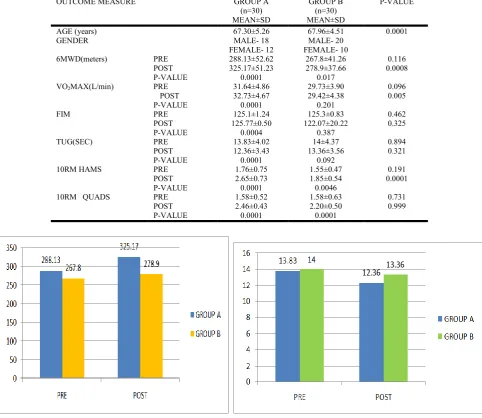
Table 1. Between group comparison pre-post intervention
OUTCOME MEASURE GROUP A (n=30) MEAN±SD
GROUP B (n=30) MEAN±SD
P-VALUE
AGE (years) 67.30±5.26 67.96±4.51 0.0001
GENDER MALE- 18 MALE- 20
FEMALE- 12 FEMALE- 10
6MWD(meters) PRE 288.13±52.62 267.8±41.26 0.116 POST 325.17±51.23 278.9±37.66 0.0008 P-VALUE 0.0001 0.017
VO2MAX(L/min) PRE 31.64±4.86 29.73±3.90 0.096
POST 32.73±4.67 29.42±4.38 0.005 P-VALUE 0.0001 0.201
FIM PRE 125.1±1.24 125.3±0.83 0.462
POST 125.77±0.50 122.07±20.22 0.325 P-VALUE 0.0004 0.387
TUG(SEC) PRE 13.83±4.02 14±4.37 0.894 POST 12.36±3.43 13.36±3.56 0.321 P-VALUE 0.0001 0.092
10RM HAMS PRE 1.76±0.75 1.55±0.47 0.191 POST 2.65±0.73 1.85±0.54 0.0001 P-VALUE 0.0001 0.0046
[image:3.595.53.536.107.525.2]10RM QUADS PRE 1.58±0.52 1.58±0.63 0.731 POST 2.46±0.43 2.20±0.50 0.999 P-VALUE 0.0001 0.0001
Figure 1. Between group comparison of 6MWD Figure 2. Between group comparisons of TUG
[image:3.595.152.436.563.756.2]DISCUSSION
The purpose of this study was to evaluate the effect of resistance training on exercise intolerance and risk of fall elderly. The mean age for group A was 67.30±5.52 and for group B was 67.96±4.51 (p 0.0001). Both the groups were evaluated pre and post intervention using outcome measures TUG test, FIM scale, 6MWD and Predicted VO2 max by using six minute walk test. A similar study on resistance training was done by Maria Fernanda Bottino Roma in 2013 on a study to compare the effects of physical fitness and function on older adults within two programs were supervised while doing exercise activity i.e resistance training and aerobic exercise with the sample size of 50 participants there was no improvement in aerobic group while the other group which was resistance training showed improvement. Resistance training would have resulted in massive loss of body fats, gained plenty of connective tissues, improved physical strength, heart and lung conditioning (Maria Fernanda Bottino Roma, 2013). Muscle strength and power gradually decline with ageing. Quantitative loss of muscle mass, is usually referred to as “sarcopenia” which is the most important factor. However, qualitative changes of muscle fibres and tendons, such as selective atrophy of fast-twitch fibres and reduced tendon stiffness, and neural changes, also count for the age-related decrease in muscle function. The older muscle seems to be more resistant to isometric fatigue which can be used to the selective atrophy of fast-twitch fibres, slowing in the contractile properties. Specific training programmes can dramatically improve the muscle strength, power and functional abilities of older individuals (Maria Fernanda Bottino Roma, 2013).
There are few benefits of weight training which includes a greater muscular strength with improved muscle tone and also the appearance of muscles. Strength training provides various functional benefits like having stronger muscles which improve posture, provide better support for joints, and reduce risk of injury from day to day activities. Older people who look forward for weight training can prevent some loss of muscle tissue that normally accompanies with aging process- and also can regain some functional strength- and by following it become less frail. Weight- bearing exercise prevents osteoporosis to improve bone strength (Clin Geriatr Med, 2010). Muscle weakness is a common impairment in older adults. Strength training has been the focus of a great deal of recent clinical research in many populations. In older adults, there is strong evidence of randomized controlled clinical trials (RCTs), in which muscle strength can be increased with a strength training program that uses a progressive overload.
There is also evidence that showed strength training improves mobility (i.e. increased gait speed), simple functional tasks (i.e. standing up from a chair) and self-rated daily function in older adults. However, while the effects of strength training are large, the impact on function and disability is much more modest (Nancy Latham-Strength training in older adults, 2010). In the elderly population, strength training has a very major effect on strength, and a smaller, non-significant, effect on function. This is perhaps not surprising, since the intervention is targeting muscle and so the major aim is on strength, while many factors can contribute to late-life functional problems. The aging process promotes decrease in both muscle mass and muscle strength, as estimated 5% loss in muscle mass after age 40, affecting mainly the lower
limbs, with greater decline after 65 years of age the causes of poor performance in activities such as walking, sitting/standing, and going up/down stairs, which in turn interfere with performance in the walk test. Based on this study, we can say that a muscle strengthening protocol may improve performance in the 6MWD, thus increasing the distance walked (Burr, 2011). The results showed that the increase in quadriceps, hamstring, calf strength had effect on 6MWD and Predicted VO2 max. It is possible that this muscle strengthening protocol would yield a more favourable result on gait performance for older individuals; some studies have shown that the distance walked during the 6MWD is shorter for older and heavier individuals. Conversely, other studies found no correlation between age and weight for the 6MWD, thus that suggests that health problems and plantar flexor strength may have a greater influence than age itself. Overall the result of this study reported that most of the outcome measures showed us significant improvement in a Resistance training group as compared to control group.
Conclusion
Resistance training program showed significant improvement in Exercise intolerance and risk of fall in elderly.
Limitations and Future Scope
This study evaluated the effects of resistance training program. With this study it would be difficult to know whether the effect was long term after the training program stopped. Further study can be done with a follow-up intervention to evaluate the long term effects of the resistance training program.
REFERENCES
"Timed Up and Go (TUG)". 2010. Minnesota Falls Prevention. Retrieved (2010)-02-16.
American College of Sports Medicine ACSM. Progression models in resistance training for healthy adults, (2009) Med Science Sports Exercise 41: Pg687–708.
Burr JF, Bredin SS. 2011. The 6 minute walk test as a predictor of objectively measured aerobic fitness in healthy working aged adults. Phys Sports med. 39(2): Pg133-9.
Chumney D, Nollinger K. 2010. "Ability of Functional Independence Measure to accurately predict functional outcome of stroke-specific population: Systematic
review" J Rehabilitation Res Dev., 47(1): Pg17-29
Clin Geriatr Med. Strength training in older adults. 2010 Aug; 26(3): 445–459.
Falls in the elderly Can Fam Physician. (2014) March; 60(3): Pg225
George f. Fuller, col, mc, USA, White House Medical Clinic, Washington, D.C. Am Fam Physician-Falls in the Elderly. (2000) Apr 1; 61(7):2159-2168.
Harada, ND. 1999. Mobility-related function in older adults: assessment with a 6-minute walk test 1999 Archives of physical medicine and rehabilitation, 80(7): 837-841
prospective clinical trial. Volume 2013April-June; 11(2): Pg- 153-7.
Nancy Latham-Strength training in older adults: The benefits for osteoarthritis. 2010. Aug; 26(3): Pg 445– 459.
Scott Owens, Bernard Gutin, 2000. “Exercise Intolerance” Retrieved (2015)-04-17.
Shaw, B.S. 2014. Resistance Training and the Prevention of
Sports Injuries. Gavin Journal of Orthopaedic Research
and therapy Volume: 2016: Pg1-5
Wright BD, Granger CV, Hamilton BB. 1994. The structure and stability of the functional independence measure. Arch Physical Med Rehabilitation. 75: 127-132.