Open Access
Hypothesis
Possible stimulation of anti-tumor immunity using repeated cold
stress: a hypothesis
Nikolai A Shevchuk*
1and Sasa Radoja
2Address: 1Department of Radiation Oncology, Virginia Commonwealth University, Richmond, VA, USA and 2Center for Cancer and Immunology
Research, Children's Research Institute, Washington DC, USA
Email: Nikolai A Shevchuk* - [email protected]; Sasa Radoja - [email protected] * Corresponding author
Abstract
Background: The phenomenon of hormesis, whereby small amounts of seemingly harmful or stressful agents can be beneficial for the health and lifespan of laboratory animals has been reported in literature. In particular, there is accumulating evidence that daily brief cold stress can increase both numbers and activity of peripheral cytotoxic T lymphocytes and natural killer cells, the major effectors of adaptive and innate tumor immunity, respectively. This type of regimen (for 8 days) has been shown to improve survival of mice infected with intracellular parasite Toxoplasma gondii, which would also be consistent with enhanced cell-mediated immunity.
Presentation of the hypothesis: This paper hypothesizes that brief cold-water stress repeated daily over many months could enhance anti-tumor immunity and improve survival rate of a non-lymphoid cancer. The possible mechanism of the non-specific stimulation of cellular immunity by repeated cold stress appears to involve transient activation of the sympathetic nervous system, hypothalamic-pituitary-adrenal and hypothalamic-pituitary-thyroid axes, as described in more detail in the text. Daily moderate cold hydrotherapy is known to reduce pain and does not appear to have noticeable adverse effects on normal test subjects, although some studies have shown that it can cause transient arrhythmias in patients with heart problems and can also inhibit humoral immunity. Sudden immersion in ice-cold water can cause transient pulmonary edema and increase permeability of the blood-brain barrier, thereby increasing mortality of neurovirulent infections.
Testing the hypothesis: The proposed procedure is an adapted cold swim (5–7 minutes at 20 degrees Celsius, includes gradual adaptation) to be tested on a mouse tumor model. Mortality, tumor size, and measurements of cellular immunity (numbers and activity of peripheral CD8+ T lymphocytes and natural killer cells) of the cold-exposed group would be compared to those of control groups (warm swim and no treatment). Cold-water stress would be administered twice a day for the duration of several months.
Implications of the hypothesis: If the hypothesis is supported by empirical studies and the method is shown to be safe, this could lead to the development of an adjunctive immunotherapy for some (non-lymphoid) cancers, including those caused by viral infections.
Published: 13 November 2007
Infectious Agents and Cancer 2007, 2:20 doi:10.1186/1750-9378-2-20
Received: 26 June 2007 Accepted: 13 November 2007
This article is available from: http://www.infectagentscancer.com/content/2/1/20
© 2007 Shevchuk and Radoja; licensee BioMed Central Ltd.
Background
Numerous studies show that small amounts of harmful or stressful agents (e.g. heat stress, cold stress, hypergravity) can be beneficial for the health of laboratory animals, the phenomenon that became known as hormesis, although evidence for possible benefits in humans is lacking at present [1,2]. This paper presents theoretical evidence for immunomodulating properties of brief cold stress, as increasing evidence indicates that cold stress repeated daily can have a stimulating effect on cell-mediated immunity [3-6], while inhibiting humoral immunity to some extent [7,8]. There is a number of ways to administer cold stress and this may account for the different effects on the immune system reported by various studies [9-11]. The focus of this paper is brief whole-body exposure to cold water since it has been shown to increase both activ-ity and numbers of peripheral natural killer (NK) cells and CD8+ T lymphocytes [3,6,12-14]. This effect could be explained by transient activation of the sympathetic nerv-ous system (SNS) [15,16], the pituitary-adrenal (HPA) axis [17,18] as well as the hypothalamic-pituitary-thyroid (HPT) axis [19,20] resulting in a brief action of norepinephrine, adrenocorticotropic hormone (ACTH), beta-endorphin, and thyroid hormones (triio-dothyronine (T3) and thyroxine (T4)) on cytotoxic T lym-phocytes (CTLs) and NK cells. As explained below, all of these neuroendocrine factors have been previously shown to promote expansion and/or cytolytic activity of CTLs and NK cells. Interestingly, brief cold swim stress repeated for 8 days was also reported to increase survival of mice infected with intracellular parasite Toxoplasma gondii [5], the situation that is consistent with enhancement of cellu-lar immunity. Based on this evidence and given the fact that NK cells and CTLs are major components of an anti-tumor immune response [21], it seems logical to propose the following hypothesis.
Presentation of the hypothesis
The hypothesis is that brief cold-water stress repeated daily over many months could enhance anti-tumor immunity and improve cancer survival rate in a mouse (non-lymphoid) tumor model. While substantial efforts in the field of tumor immunology are devoted to finding ways to elicit a specific CTL response using tumor-derived antigens [22], this paper discusses a somewhat different approach of non-specific promotion of cell-mediated immune responses by increasing the total number and enhancing cytolytic potential of peripheral CTLs and NK cells. As a tide that lifts all boats, this approach could enhance endogenous (but possibly inad-equate) CTL anti-tumor responses and thereby inhibit the development and growth of a tumor. Lymphocyte activa-tion may also lead to autoimmunity, which does not appear to be the case for immunological changes associ-ated with repeassoci-ated cold stress [3,6,12,23,24]. A similar
"broad activation" principle serves as a rationale for sys-temic interleukin-2 (IL-2) administration, which is cur-rently used as anti-cancer immunotherapy in renal cell cancer and metastatic melanoma [25]. However, this approach proved to be rather inefficient, probably due to induction of T cell apoptosis and/or inability of the effec-tor CD8+ T lymphocytes to infiltrate/home to the tumor site [25,26]. On the other hand, it has been demonstrated in several mouse tumor models that tumor-specific T cells are fully mature/activated and effectively infiltrate tumors but are not able to kill the cognate tumor cells ex vivo due to defective granule exocytosis-mediated cytotoxicity [27,28]. This defect is reversible as tumor-specific T cells that are isolated/purified from the tumor can regain lytic activity after brief in vitro culture [28]. The paper presented here hypothesizes that repeated cold stress could induce/ enhance lytic activity of CD8+ T cells at the tumor site, and may also enhance innate anti-tumor immunity through expansion and activation of NK cells, all of which could result in more efficient tumor elimination. The detailed supporting evidence for this hypothesis is as fol-lows.
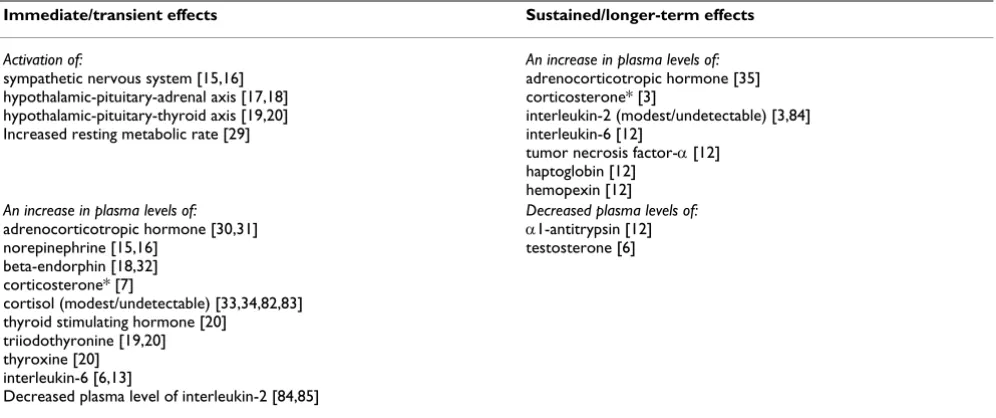
General neuro-endocrine effects of brief cold stress From available literature, one can distinguish immediate (or transient) effects of cold stress, lasting 1 to 2 hours, and longer-term (or sustained) effects of repeated (e.g. once daily) cold stress, lasting days and possibly weeks. The immediate/transient effects reported in mice and humans include: brief activation of the SNS [15,16], of the HPA axis [17,18] and of the HPT axis [19,20] with a significant increase in the metabolic rate [29] and in plasma levels of norepinephrine [15,16], ACTH [30,31], corticosterone [7], beta-endorphin [18,32], T3 [19,20], T4 [20], as well as a modest or undetectable increase in the plasma levels of interleukin-6 (IL-6) [12,13] and cortisol [33,34] (Table 1). The sustained/longer-term effects of cold stress repeated daily or almost daily (over the period of 5 days to 6 weeks) appear to include increased plasma levels of tumor necrosis factor-α (TNF-α) [12], 2 [3], IL-6 [12], ACTH [35], corticosterone [3], as well as a decreased plasma level of α1-antitrypsin [12] and testo-sterone [6] (Table 1).
stimu-late lymphocyte proliferation, maturation, and peripheral recruitment via norepinephrine release in a non-synaptic fashion (reviewed in [42]). Additionally, the cold stress-induced expansion of CTLs could be mediated by changes in other neuroendocrine factors that are known to be caused by cold stress (Table 2).
Effects on activity of CTLs
Studies show that both single and repeated (daily) brief exposure to cold can enhance antigen-induced prolifera-tive responses of T lymphocytes and the level of activated
peripheral T lymphocytes in mammals [3,4,6,12,14]. This stimulatory effect could be mediated by the brief action of the SNS (via norepinephrine), of beta-endorphin, T3, or T4 or sustained action of ACTH and IL-2 (Table 2). There is also evidence of an increased phagocytic index follow-ing brief cold stress [43], suggestfollow-ing that antigen (cross-)presentation may be enhanced. Unfortunately, it is not known if cold stress can enhance cytolytic activity of peripheral cytotoxic T lymphocytes, but there is indirect evidence that this may be the case (Table 2 and [5,24]). Table 1: Known effects of cold stress. "Immediate/transient" means effects of a single brief exposure to cold that last less than 1–2 hours. "Sustained/longer-term" means effects (of repeated daily or several times per week cold-water stress) that can last one day or longer.
Immediate/transient effects Sustained/longer-term effects
Activation of:
sympathetic nervous system [15,16] hypothalamic-pituitary-adrenal axis [17,18] hypothalamic-pituitary-thyroid axis [19,20] Increased resting metabolic rate [29]
An increase in plasma levels of: adrenocorticotropic hormone [35] corticosterone* [3]
interleukin-2 (modest/undetectable) [3,84] interleukin-6 [12]
tumor necrosis factor-α [12] haptoglobin [12]
hemopexin [12] An increase in plasma levels of:
adrenocorticotropic hormone [30,31] norepinephrine [15,16]
beta-endorphin [18,32] corticosterone* [7]
cortisol (modest/undetectable) [33,34,82,83] thyroid stimulating hormone [20]
triiodothyronine [19,20] thyroxine [20] interleukin-6 [6,13]
Decreased plasma level of interleukin-2 [84,85]
Decreased plasma levels of: α1-antitrypsin [12] testosterone [6]
* It is expected to have a negligible immunosuppressive effect [86,87].
Table 2: Possible mechanisms underlying the stimulatory effects of repeated cold stress on cell-mediated immunity
CTLs and other cytotoxic immune cells NK cells*
Expansion/peripheral recruitment brief action** of the SNS [39-41] (via norepinephrine) on β2-adrenergic receptors of CD8+ T lymphocytes [36-38]; elevated plasma levels of ACTH [88,89], T4 [90], and beta-endorphin [91];
brief action** of the SNS (via norepinephrine) on β 2-adrenergic receptors of NK cells [37,42,44]; upregulation of beta-endorphin [92], IL-2 [93], T3 [94] and T4 [95];
Activation brief action** of the SNS (via norepinephrine) [36,39,96-98], beta-endorphin [91,99-101], T3 [102], or T4 [90,103,104] or sustained action of ACTH [88]; increased phagocytic index [43], downregulation of testosterone [105-107] or α1-antitrypsin [108];
-Cytolytic activity upregulation of ACTH [88,89], beta-endorphin [109,110], IL-2 [111-113], IL-6 [114,115], TNF-α [116-118], combination of IL-2 + IL-6 [119,120], or IL-2 + TNF-α [121]; downregulation of α 1-antitrypsin [122,123];
elevated plasma levels of IL-2 [93], beta-endorphin [124-126], ACTH [127,128], T3 [129,130] or T4 [131,132];
* Continuous hypothermia [133] (lowered core body temperature which cannot normally result from a brief exposure to cold in most mammals [52,53]) or continuous exposure to acute cold (4 hours or longer [134]) have been shown to reduce both the number and activity of peripheral NK cells.
Effects on maturation and peripheral recruitment of NK cells
Single brief exposure to cold appears to transiently increase the level of peripheral NK cells [11,13]. This could be due to the increased peripheral recruitment and/ or expansion of these cells, which are known to be medi-ated by the action of the SNS (via norepinephrine) on β 2-adrenergic receptors of NK cells [37,42,44]. This effect could also be mediated by elevated levels of beta-endor-phin, IL-2, T3 and T4 (Table 2).
Effects on activity of NK cells
Both single and repeated (daily) brief cold stress has been shown to enhance cytolytic activity of NK cells [3,13]. This could be the result of elevated plasma levels of IL-2, beta-endorphin, ACTH, T3 or T4 (Table 2).
Other effects
Daily moderate cold water stress does not appear to have noticeable adverse effects on normal test subjects either short-term or long-term [12,15,24,45] and, interestingly, in a near-life-time experiment on healthy rats, where the animals had to stand in 23°C water 4 hours per day 5 days per week, the repeated cold stress extended the lifespan by statistically insignificant 5% and somewhat reduced spon-taneous incidence of tumors, especially sarcomas [24]. Based on the evidence presented earlier, more frequent exposure to cold of shorter duration, for example 5-minute cold swim stress twice per day (>7 hours apart), could have a more significant immunostimulatory effect and a less pronounced effect on metabolism compared to the above experiment. Cold water stress is also known to have an analgesic effect [32,46,47], which is often relevant in cancer.
Possible adverse effects
1) Water colder than 14°C can cause cutaneous pain [48,49] and therefore would be best avoided.
2) Exposure to acute cold for extended periods of time can cause a significant drop of core body temperature (hypo-thermia) which can be associated with such adverse effects on health as ataxia, hypovolemia, atrial dysrhythmias, cold diuresis, and mental confusion [50,51]. Immersion in moderately cold water in the range of 16–23°C does not appear to cause hypothermia (core temperature of 35°C or lower) in healthy human subjects, even when it lasts for several hours [52]. During this procedure, core body temperature stays virtually unchanged during the first hour [52] due to unusual efficiency of the human thermoregulatory system [53]. It should be noted that the elderly or people with certain metabolic disorders may develop hypothermia under these conditions, and thus body temperature should be monitored in these groups of people if they use cold hydrotherapy [50,51].
3) Coldest months of the year have been shown to be associated with a higher incidence of acute heart failure and stroke [54-56]. In the landmark experiment by Hol-loszy and Smith described above, where rats were stand-ing in cold water 4 hours per day, the prevalence of cardiovascular problems was increased according to post-mortem examination, although the average lifespan was increased insignificantly and the prevalence of malignan-cies declined [24]. It is not known if daily brief exposure to moderately cold water (20°C, under 15 minutes) with gradual adaptation will have similar cardiovascular effects in the long run. Studies also show that immersion in cold water can cause transient arrhythmias in some patients with heart problems [57-59], although short-term cardio-vascular effects of cold water immersion seem to be benign in normal test subjects [15].
4) Upper respiratory tract infections such as the flu and common cold occur predominantly although not exclu-sively during the cold time of the year, i.e. late fall/winter [60]. It is not known if this is due to exposure to cold, die-tary patterns, or some other factors [61]. Near-life-time exposure of rats to cold water (23°C) for several hours per day was not reported to increase incidence of respiratory infections [24], as was the case for 1-hour cold water immersions (14°C) repeated 3 times per week for 6 weeks in humans [12,15]. On the other hand, some studies show that inhalation of cold air can inhibit cell-mediated immunity in the mucosa of the respiratory tract and thus possibly increase susceptibility to respiratory viral infec-tions [62].
5) Swimming in ice-cold water can cause transient pulmo-nary edema in humans [63-65], which may be due to severe hypothermia among other things [51].
"Testing the hypothesis" section could verify this assump-tion.
In summary, the review of literature suggests that winter swimming (in other words, sudden immersion in ice-cold water) may pose serious risks to health and it is possible that exposure to cold can be safer if it is brief and does not involve psychological distress, inhalation of cold air, and hypothermia. Further studies would be needed to assess the safety of the relatively non-stressful regimen of cold hydrotherapy that is proposed in this paper. At the same time, minimally stressful exposure to moderate cold still seems to have significant physiological and immunologi-cal effects [6,13,33,34], which may be useful for enhanc-ing anti-tumor immunity accordenhanc-ing to our hypothesis.
Testing the hypothesis
The hypothesis can be tested using a treatment that con-sists of an adapted cold swim procedure which begins with a slow and gradual lowering of a cage with laboratory animals into stirred cold water (20°C) over the period of 4–5 minutes followed by a 1- or 2-minute cold swim. The adaptation phase is expected to minimize stress and dis-comfort for the animals. The cage would be lifted out of the water to discontinue cold exposure and placed on proper bedding (certain cooling may still occur due to subsequent evaporation of water from the fur of the ani-mals). The procedure is estimated to cause the core body temperature of mice to decline by approximately 2°C based on data from Wan R. et al. [70], and may have to be tested and optimized in order to avoid inducing signifi-cant hypothermia in the animals. Manual handling of individual mice would be best avoided. Cold water stress would be administered twice per day (more than 7 hours apart) according to a schedule described below. A syn-geneic orthotopic mouse tumor model can be tested, for example, intradermal injection of MEB4 melanoma cell line (4 × 10⁴ cells) in C57BL/6 mice [72] or subcutaneous injection of 6-1 tumor cell line (2 × 10⁵ cells) in C3H/HeN mice [73]. Sixty mice can be used for a single experiment and all of them would be injected with tumor cells. One third of the animals will be assigned to the cold swim group. The other mice will be divided into two control groups: a warm swim group (Control I) and the no treat-ment group (Control II). Control I group will undergo adapted warm swim procedures (water temperature is 37°C) simultaneously with the cold swim (experimental) group. Control II group will undergo handling of the cage (and, possibly, manual handling of animals) similar to the experimental and Control I groups, but without immersion in water. Cold water stress would be initiated 2 weeks prior to injection of tumor cells and would be stopped for 3 days immediately after the inoculation in order to allow the skin wounds to close. Then cold water treatments would be resumed and continued for 2
months. On weekends, only one swim or, alternatively, no swims at all would be performed. At approximately 60 days postinjection, mortality, tumor incidence, and tumor size would be assessed in all three groups [72]. In addi-tion, the numbers and cytolytic activity of peripheral NK cells [74-76] as well as average numbers of CD25-positive (activated) and total peripheral CD4+ T lymphocytes and CD8+ T lymphocytes [77,78] and their effector properties (i.e., TCR-induced cytokine production [79] and lytic function [28]) would be measured before initiation of cold water treatment (in 5–10 mice) and 60 days after the tumor inoculation in the experimental and control groups of mice. In a separate group of 10–20 tumor-injected mice, lytic activity of freshly isolated CD8+ tumor infil-trating (and peripheral) T lymphocytes would be assessed as a function of time after the initiation of cold stress treat-ment [28,73].
To verify if the proposed cold stress procedure does not significantly increase permeability of the blood-brain bar-rier in the animals, an Evans blue extravasation assay [80,81] can be performed in an additional small group of mice with a no-treatment control.
If the adapted cold swim is shown to be beneficial and safe in mouse tumor models, a similar regimen can be tested on human subjects, namely, adapted cold showers, 20°C, 2–5 minutes, preceded by a 5-minute gradual adap-tation phase (expansion of the area of contact with water from the feet up), performed twice per day (morning and afternoon). The shower format is preferable in humans because the setup appears to take less time and effort com-pared to cold baths.
Implications of the hypothesis
If the theory is confirmed by empirical studies and the proposed approach is shown to be safe, then some form of cold hydrotherapy could potentially become a treat-ment option for some (non-lymphoid) cancers as an adjunctive immunotherapy.
Competing interests
The author(s) declare that they have no competing inter-ests.
Authors' contributions
Both NAS and SR contributed to formulating the idea and drafting of the manuscript. Both authors have read and approved the final manuscript.
Acknowledgements
References
1. Arumugam TV, Gleichmann M, Tang SC, Mattson MP: Hormesis/ preconditioning mechanisms, the nervous system and aging.
Ageing Res Rev 2006, 5(2):165-178.
2. Leslie M: How can we use moderate stresses to fortify humans and slow aging? Sci Aging Knowledge Environ 2005, 2005(26):nf49. 3. Shu J, Stevenson JR, Zhou X: Modulation of cellular immune
responses by cold water swim stress in the rat. Dev Comp Immunol 1993, 17(4):357-371.
4. Kalenova LF, Sukhovei YG, Fisher TA: Specific and nonspecific reactions of mouse immune system under the effect of short-term exposure in warm and/or cold water. Bull Exp Biol Med 2005, 140(6):720-722.
5. Banerjee SK, Aviles H, Fox MT, Monroy FP: Cold stress-induced modulation of cell immunity during acute Toxoplasma gon-dii infection in mice. J Parasitol 1999, 85(3):442-447.
6. Jain S, Bruot BC, Stevenson JR: Cold swim stress leads to enhanced splenocyte responsiveness to concanavalin A, decreased serum testosterone, and increased serum corti-costerone, glucose, and protein. Life Sci 1996, 59(3):209-218. 7. Luo YM, Cheng XJ, Yuan WX: Effects of ginseng root saponins
and ginsenoside Rb1 on immunity in cold water swim stress mice and rats. Zhongguo Yao Li Xue Bao 1993, 14(5):401-404. 8. Garbulinski T, Obminska-Domoradzka B, Switala M, Debowy J:
Responses of neutrophils and lymphocytes in the cold stress: effects of nonsteroid anti-inflammatory drugs. Pol J Pharmacol Pharm 1991, 43(5):353-359.
9. Cheng GJ, Morrow-Tesch JL, Beller DI, Levy EM, Black PH: Immu-nosuppression in mice induced by cold water stress. Brain Behav Immun 1990, 4(4):278-291.
10. Giberson PK, Kim CK, Hutchison S, Yu W, Junker A, Weinberg J: The effect of cold stress on lymphocyte proliferation in fetal ethanol-exposed rats. Alcohol Clin Exp Res 1997, 21(8):1440-1447. 11. Willemsen G, Carroll D, Ring C, Drayson M: Cellular and mucosal immune reactions to mental and cold stress: associations with gender and cardiovascular reactivity. Psychophysiology
2002, 39(2):222-228.
12. Jansky L, Pospisilova D, Honzova S, Ulicny B, Sramek P, Zeman V, Kaminkova J: Immune system of exposed and cold-adapted humans. Eur J Appl Physiol Occup Physiol 1996, 72(5-6):445-450.
13. Brenner IK, Castellani JW, Gabaree C, Young AJ, Zamecnik J, Shep-hard RJ, Shek PN: Immune changes in humans during cold exposure: effects of prior heating and exercise. J Appl Physiol
1999, 87(2):699-710.
14. Aviles H, Johnson MT, Monroy FP: Effects of cold stress on spleen cell proliferation and cytokine production during chronic Toxoplasma gondii infection. Neuroimmunomodulation 2004, 11(2):93-102.
15. Jansky L, Sramek P, Savlikova J, Ulicny B, Janakova H, Horky K: Change in sympathetic activity, cardiovascular functions and plasma hormone concentrations due to cold water immer-sion in men. Eur J Appl Physiol Occup Physiol 1996, 74(1-2):148-152. 16. Nakamoto M: Responses of sympathetic nervous system to cold exposure in vibration syndrome subjects and age-matched healthy controls. Int Arch Occup Environ Health 1990, 62(2):177-181.
17. Nakane T, Audhya T, Kanie N, Hollander CS: Evidence for a role of endogenous corticotropin-releasing factor in cold, ether, immobilization, and traumatic stress. Proc Natl Acad Sci U S A
1985, 82(4):1247-1251.
18. Giagnoni G, Santagostino A, Senini R, Fumagalli P, Gori E: Cold stress in the rat induces parallel changes in plasma and pitu-itary levels of endorphin and ACTH. Pharmacol Res Commun
1983, 15(1):15-21.
19. Reed HL, Quesada M, Hesslink RL Jr., D'Alesandro MM, Hays MT, Christopherson RJ, Turner BV, Young BA: Changes in serum trii-odothyronine kinetics and hepatic type I 5'-deiodinase activ-ity of cold-exposed swine. Am J Physiol 1994, 266(5 Pt 1):E786-95.
20. Quintanar-Stephano JL, Quintanar-Stephano A, Castillo-Hernandez L: Effect of the exposure to chronic-intermittent cold on the thyrotropin and thyroid hormones in the rat. Cryobiology 1991, 28(4):400-403.
21. Wallace ME, Smyth MJ: The role of natural killer cells in tumor control--effectors and regulators of adaptive immunity.
Springer Semin Immunopathol 2005, 27(1):49-64.
22. Knutson KL, Disis ML: Tumor antigen-specific T helper cells in cancer immunity and immunotherapy. Cancer Immunol Immu-nother 2005, 54(8):721-728.
23. Metzger D, Zwingmann C, Protz W, Jackel WH: Whole-body cry-otherapy in rehabilitation of patients with rheumatoid dis-eases--pilot study. Rehabilitation (Stuttg) 2000, 39(2):93-100. 24. Holloszy JO, Smith EK: Longevity of cold-exposed rats: a
reeval-uation of the "rate-of-living theory". J Appl Physiol 1986, 61(5):1656-1660.
25. Panelli MC, White R, Foster M, Martin B, Wang E, Smith K, Marincola FM: Forecasting the cytokine storm following systemic inter-leukin (IL)-2 administration. J Transl Med 2004, 2(1):17. 26. Tamakawa N, Saio M, Suwa T, Ohe N, Yoshimura S, Iwama T, Shinoda
J, Sakai N, Takami T: Interleukin-2 activated microglia engulf tumor infiltrating T cells in the central nervous system. Int J Mol Med 2004, 13(4):497-503.
27. Koneru M, Schaer D, Monu N, Ayala A, Frey AB: Defective proxi-mal TCR signaling inhibits CD8+ tumor-infiltrating lym-phocyte lytic function. J Immunol 2005, 174(4):1830-1840. 28. Radoja S, Saio M, Schaer D, Koneru M, Vukmanovic S, Frey AB:
CD8(+) tumor-infiltrating T cells are deficient in perforin-mediated cytolytic activity due to defective microtubule-organizing center mobilization and lytic granule exocytosis.
J Immunol 2001, 167(9):5042-5051.
29. Sramek P, Simeckova M, Jansky L, Savlikova J, Vybiral S: Human physiological responses to immersion into water of different temperatures. Eur J Appl Physiol 2000, 81(5):436-442.
30. Goundasheva D, Andonova M, Ivanov V: Changes in some param-eters of the immune response in rats after cold stress. Zen-tralbl Veterinarmed B 1994, 41(10):670-674.
31. Ohno H, Yahata T, Yamashita K, Kuroshima A: Effect of acute cold exposure on ACTH and zinc concentrations in human plasma. Jpn J Physiol 1987, 37(4):749-755.
32. Vaswani KK, Richard CW 3rd, Tejwani GA: Cold swim stress-induced changes in the levels of opioid peptides in the rat CNS and peripheral tissues. Pharmacol Biochem Behav 1988, 29(1):163-168.
33. Gerra G, Volpi R, Delsignore R, Maninetti L, Caccavari R, Vourna S, Maestri D, Chiodera P, Ugolotti G, Coiro V: Sex-related responses of beta-endorphin, ACTH, GH and PRL to cold exposure in humans. Acta Endocrinol (Copenh) 1992, 126(1):24-28. 34. Koska J, Ksinantova L, Sebokova E, Kvetnansky R, Klimes I, Chrousos G, Pacak K: Endocrine regulation of subcutaneous fat metab-olism during cold exposure in humans. Ann N Y Acad Sci 2002, 967:500-505.
35. Kioukia-Fougia N, Antoniou K, Bekris S, Liapi C, Christofidis I, Papa-dopoulou-Daifoti Z: The effects of stress exposure on the hypothalamic-pituitary-adrenal axis, thymus, thyroid hor-mones and glucose levels. Prog Neuropsychopharmacol Biol Psychia-try 2002, 26(5):823-830.
36. Hatfield SM, Petersen BH, DiMicco JA: Beta adrenoceptor modu-lation of the generation of murine cytotoxic T lymphocytes in vitro. J Pharmacol Exp Ther 1986, 239(2):460-466.
37. Benschop RJ, Rodriguez-Feuerhahn M, Schedlowski M: Catecho-lamine-induced leukocytosis: early observations, current research, and future directions. Brain Behav Immun 1996, 10(2):77-91.
38. Kappel M, Poulsen TD, Galbo H, Pedersen BK: Effects of elevated plasma noradrenaline concentration on the immune system in humans. Eur J Appl Physiol Occup Physiol 1998, 79(1):93-98. 39. Swanson MA, Lee WT, Sanders VM: IFN-gamma production by
Th1 cells generated from naive CD4+ T cells exposed to norepinephrine. J Immunol 2001, 166(1):232-240.
40. Madden KS, Felten SY, Felten DL, Sundaresan PR, Livnat S: Sympa-thetic neural modulation of the immune system. I. Depres-sion of T cell immunity in vivo and vitro following chemical sympathectomy. Brain Behav Immun 1989, 3(1):72-89.
42. Elenkov IJ, Wilder RL, Chrousos GP, Vizi ES: The sympathetic nerve--an integrative interface between two supersystems: the brain and the immune system. Pharmacol Rev 2000, 52(4):595-638.
43. Sundaresan G, Suthanthirarajan N, Namasivayam A: Certain immu-nological parameters in subacute cold stress. Indian J Physiol Pharmacol 1990, 34(1):57-60.
44. Schedlowski M, Hosch W, Oberbeck R, Benschop RJ, Jacobs R, Raab HR, Schmidt RE: Catecholamines modulate human NK cell cir-culation and function via spleen-independent beta 2-adren-ergic mechanisms. J Immunol 1996, 156(1):93-99.
45. Castellani JW, IK MB, Rhind SG: Cold exposure: human immune responses and intracellular cytokine expression. Med Sci Sports Exerc 2002, 34(12):2013-2020.
46. Kenunen OG, Prakh'e IV, Kozlovskii BL: A change in the alarm level entails a change in behavioural strategy of mice in stress and a change in analgesia induced by it. Ross Fiziol Zh Im I M Sechenova 2004, 90(12):1555-1562.
47. LaFoy J, Geden EA: Postepisiotomy pain: warm versus cold sitz bath. J Obstet Gynecol Neonatal Nurs 1989, 18(5):399-403. 48. Julien N, Marchand S: Endogenous pain inhibitory systems
acti-vated by spatial summation are opioid-mediated. Neurosci Lett
2006, 401(3):256-260.
49. Misasi S, Morin G, Kemler D, Olmstead PS, Pryzgocki K: The effect of a toe cap and bias on perceived pain during cold water immersion. J Athl Train 1995, 30(1):49-52.
50. Day MP: Hypothermia: a hazard for all seasons. Nursing 2006, 36(12 Pt.1):44-47.
51. McCullough L, Arora S: Diagnosis and treatment of hypother-mia. Am Fam Physician 2004, 70(12):2325-2332.
52. Tikuisis P: Heat balance precedes stabilization of body tem-peratures during cold water immersion. J Appl Physiol 2003, 95(1):89-96.
53. Doufas AG, Sessler DI: Physiology and clinical relevance of induced hypothermia. Neurocrit Care 2004, 1(4):489-498. 54. Milo-Cotter O, Setter I, Uriel N, Kaluski E, Vered Z, Golik A, Cotter
G: The daily incidence of acute heart failure is correlated with low minimal night temperature: cold immersion pul-monary edema revisited? J Card Fail 2006, 12(2):114-119. 55. Myint PK, Vowler SL, Woodhouse PR, Redmayne O, Fulcher RA:
Winter excess in hospital admissions, in-patient mortality and length of acute hospital stay in stroke: a hospital data-base study over six seasonal years in Norfolk, UK. Neuroepide-miology 2007, 28(2):79-85.
56. Sheth T, Nair C, Muller J, Yusuf S: Increased winter mortality from acute myocardial infarction and stroke: the effect of age. J Am Coll Cardiol 1999, 33(7):1916-1919.
57. Doubt TJ, Mayers DL, Flynn ET: Transient cardiac sinus dys-rhythmia occurring after cold water immersion. Am J Cardiol
1987, 59(15):1421-1422.
58. Houdas Y, Deklunder G, Lecroart JL: Cold exposure and ischemic heart disease. Int J Sports Med 1992, 13 Suppl 1:S179-81. 59. Lader EW, Kronzon I: Ice-water-induced arrhythmias in a
patient with ischemic heart disease. Ann Intern Med 1982, 96(5):614-615.
60. Fiore AE, Shay DK, Haber P, Iskander JK, Uyeki TM, Mootrey G, Bresee JS, Cox NJ: Prevention and control of influenza. Recom-mendations of the Advisory Committee on Immunization Practices (ACIP), 2007. MMWR Recomm Rep 2007, 56(RR-6):1-54.
61. Reichert TA, Simonsen L, Sharma A, Pardo SA, Fedson DS, Miller MA: Influenza and the winter increase in mortality in the United States, 1959-1999. Am J Epidemiol 2004, 160(5):492-502. 62. Davis MS, Williams CC, Meinkoth JH, Malayer JR, Royer CM,
William-son KK, McKenzie EC: Influx of neutrophils and persistence of cytokine expression in airways of horses after performing exercise while breathing cold air. Am J Vet Res 2007, 68(2):185-189.
63. Roeggla M, Roeggla G, Seidler D, Muellner M, Laggner AN: Self-lim-iting pulmonary edema with alveolar hemorrhage during diving in cold water. Am J Emerg Med 1996, 14(3):333.
64. Biswas R, Shibu PK, James CM: Pulmonary oedema precipitated by cold water swimming. Br J Sports Med 2004, 38(6):e36. 65. Wilmshurst PT: Pulmonary oedema induced by emotional
stress, by sexual intercourse, and by exertion in a cold
envi-ronment in people without evidence of heart disease. Heart
2004, 90(7):806-807.
66. Arican N, Kaya M, Kalayci R, Kucuk M, Cimen V, Elmas I: Effects of acute cold exposure on blood-brain barrier permeability in acute and chronic hyperglycemic rats. Forensic Sci Int 2002, 125(2-3):137-141.
67. Ben-Nathan D, Lustig S, Danenberg HD: Stress-induced neuroin-vasiveness of a neurovirulent noninvasive Sindbis virus in cold or isolation subjected mice. Life Sci 1991, 48(15):1493-1500.
68. Ben-Nathan D, Lustig S, Feuerstein G: The influence of cold or isolation stress on neuroinvasiveness and virulence of an attenuated variant of West Nile virus. Arch Virol 1989, 109(1-2):1-10.
69. Ben-Nathan D, Lustig S, Kobiler D, Danenberg HD, Lupu E, Feuer-stein G: Dehydroepiandrosterone protects mice inoculated with West Nile virus and exposed to cold stress. J Med Virol
1992, 38(3):159-166.
70. Wan R, Camandola S, Mattson MP: Dietary supplementation with 2-deoxy-D-glucose improves cardiovascular and neu-roendocrine stress adaptation in rats. Am J Physiol Heart Circ Physiol 2004, 287(3):H1186-93.
71. Elmas I, Kucuk M, Kalayci RB, Cevik A, Kaya M: Effects of profound hypothermia on the blood-brain barrier permeability in acute and chronically ethanol treated rats. Forensic Sci Int 2001, 119(2):212-216.
72. Weiss M, Hettmer S, Smith P, Ladisch S: Inhibition of melanoma tumor growth by a novel inhibitor of glucosylceramide syn-thase. Cancer Res 2003, 63(13):3654-3658.
73. Radoja S, Rao TD, Hillman D, Frey AB: Mice bearing late-stage tumors have normal functional systemic T cell responses in vitro and in vivo. J Immunol 2000, 164(5):2619-2628.
74. Glac W, Borman A, Badtke P, Stojek W, Orlikowska A, Tokarski J: Amphetamine enhances Natural Killer cytotoxic activity via beta-adrenergic mechanism. J Physiol Pharmacol 2006, 57 Suppl 11:125-132.
75. Melamed R, Bar-Yosef S, Shakhar G, Shakhar K, Ben-Eliyahu S: Sup-pression of natural killer cell activity and promotion of tumor metastasis by ketamine, thiopental, and halothane, but not by propofol: mediating mechanisms and prophylac-tic measures. Anesth Analg 2003, 97(5):1331-1339.
76. Zhang Z, Song Y, Wang XL: Inositol hexaphosphate-induced enhancement of natural killer cell activity correlates with suppression of colon carcinogenesis in rats. World J Gastroen-terol 2005, 11(32):5044-5046.
77. Afanasyeva M, Wang Y, Kaya Z, Stafford EA, Dohmen KM, Sadighi Akha AA, Rose NR: Interleukin-12 receptor/STAT4 signaling is required for the development of autoimmune myocarditis in mice by an interferon-gamma-independent pathway. Circula-tion 2001, 104(25):3145-3151.
78. Franch A, Castellote C, Castell M: Blood lymphocyte subsets in rats with adjuvant arthritis. Ann Rheum Dis 1994, 53(7):461-466. 79. Biller H, Bade B, Matthys H, Luttmann W, Virchow JC: Interferon-gamma secretion of peripheral blood CD8+ T lymphocytes in patients with bronchial asthma: in vitro stimulus deter-mines cytokine production. Clin Exp Immunol 2001, 126(2):199-205.
80. Kamath AF, Chauhan AK, Kisucka J, Dole VS, Loscalzo J, Handy DE, Wagner DD: Elevated levels of homocysteine compromise blood-brain barrier integrity in mice. Blood 2006, 107(2):591-593.
81. Vorbrodt AW, Dobrogowska DH, Lossinsky AS: Ultracytochemi-cal studies of the effects of aluminum on the blood-brain bar-rier of mice. J Histochem Cytochem 1994, 42(2):203-212. 82. Marino F, Sockler JM, Fry JM: Thermoregulatory, metabolic and
sympathoadrenal responses to repeated brief exposure to cold. Scand J Clin Lab Invest 1998, 58(7):537-545.
83. Smith DJ, Deuster PA, Ryan CJ, Doubt TJ: Prolonged whole body immersion in cold water: hormonal and metabolic changes.
Undersea Biomed Res 1990, 17(2):139-147.
84. Makarova OV, Trunova GV, Diatroptov ME, Serebryakov SN, Konda-shevskaya MV, Malaitsev VV: Comparative characterization of cytokine production by concanavalin A-activated spleno-cytes from BALB/c and C57BL/6 mice after cold exposure.
85. Liu YL, Bi H, Chi SM, Fan R, Wang YM, Ma XL, Chen YM, Luo WJ, Pei JM, Chen JY: The effect of compound nutrients on stress-induced changes in serum IL-2, IL-6 and TNF-alpha levels in rats. Cytokine 2007, 37(1):14-21.
86. DeKrey GK, Kerkvliet NI: Effects of exogenous corticosterone treatment on alloantigen-specific cytotoxic T lymphocyte activity in mice. J Pharmacol Exp Ther 1995, 273(2):823-829. 87. Wiegers GJ, Stec IE, Klinkert WE, Linthorst AC, Reul JM:
Bidirec-tional effects of corticosterone on splenic T-cell activation: critical role of cell density and culture time. Neuroendocrinology
2001, 73(2):139-148.
88. Gonsalkorale WM, Dascombe MJ, Hutchinson IV: Adrenocortico-tropic hormone as a potential enhancer of T-lymphocyte function in the rat mixed lymphocyte reaction. Int J Immunop-harmacol 1995, 17(3):197-206.
89. Johnson EW, Hughes TK Jr., Smith EM: ACTH enhancement of T-lymphocyte cytotoxic responses. Cell Mol Neurobiol 2005, 25(3-4):743-757.
90. Aoki N, Wakisaka G, Nagata I: Effects of thyroxine on T-cell counts and tumour cell rejection in mice. Acta Endocrinol (Copenh) 1976, 81(1):104-109.
91. Jin X, Zhao H, Wang JF, Fang LB, Lin JY, Gao Y: Influence of beta-endorphin on function of immune system of patients with cerebral hemorrhage. Zhonghua Yi Xue Za Zhi 2003, 83(16):1409-1412.
92. Boyadjieva NI, Dokur M, Advis JP, Meadows GG, Sarkar DK: Beta-endorphin modulation of lymphocyte proliferation: effects of ethanol. Alcohol Clin Exp Res 2002, 26(11):1719-1727.
93. Mirandola P, Ponti C, Gobbi G, Sponzilli I, Melloni E, Vitale M: The response of human natural killer cells to interleukin-2. J Endo-crinol Invest 2004, 27(6 Suppl):146-150.
94. Mariani E, Ravaglia G, Forti P, Meneghetti A, Tarozzi A, Maioli F, Boschi F, Pratelli L, Pizzoferrato A, Piras F, Facchini A: Vitamin D, thyroid hormones and muscle mass influence natural killer (NK) innate immunity in healthy nonagenarians and cente-narians. Clin Exp Immunol 1999, 116(1):19-27.
95. Watanabe K, Iwatani Y, Hidaka Y, Watanabe M, Amino N: Long-term effects of thyroid hormone on lymphocyte subsets in spleens and thymuses of mice. Endocr J 1995, 42(5):661-668. 96. Spengler RN, Allen RM, Remick DG, Strieter RM, Kunkel SL:
Stimu-lation of alpha-adrenergic receptor augments the produc-tion of macrophage-derived tumor necrosis factor. J Immunol
1990, 145(5):1430-1434.
97. Le Tulzo Y, Shenkar R, Kaneko D, Moine P, Fantuzzi G, Dinarello CA, Abraham E: Hemorrhage increases cytokine expression in lung mononuclear cells in mice: involvement of catecho-lamines in nuclear factor-kappaB regulation and cytokine expression. J Clin Invest 1997, 99(7):1516-1524.
98. Livnat S, Madden KS, Felten DL, Felten SY: Regulation of the immune system by sympathetic neural mechanisms. Prog Neuropsychopharmacol Biol Psychiatry 1987, 11(2-3):145-152. 99. Navolotskaya EV, Malkova NV, Zargarova TA, Lepikhova TN,
Kras-nova SB, Lipkin VM: Effect of synthetic beta-endorphin-like pep-tide immunorphin on human T lymphocytes. Biochemistry (Mosc) 2002, 67(3):357-363.
100. Fattorossi A, Matricardi PM, Pizzolo JG, Le Moli S, Antonelli G, D'Amelio R: Lack of specificity in the mechanisms involved in the enhancement of the concanavalin A driven human T lymphocyte stimulation by beta-endorphin: studies on acti-vation marker expression, cell cycle and interleukin release.
J Biol Regul Homeost Agents 1991, 5(3):91-97.
101. Hemmick LM, Bidlack JM: Beta-endorphin stimulates rat T lym-phocyte proliferation. J Neuroimmunol 1990, 29(1-3):239-248. 102. Balazs C, Leovey A, Szabo M, Bako G: Stimulating effect of
triio-dothyronine on cell-mediated immunity. Eur J Clin Pharmacol
1980, 17(1):19-23.
103. Ong ML, Malkin DG, Malkin A: Alteration of lymphocyte reactiv-ities by thyroid hormones. Int J Immunopharmacol 1986, 8(7):755-762.
104. Klecha AJ, Barreiro Arcos ML, Genaro AM, Gorelik G, Silberman DM, Caro R, Cremaschi GA: Different mitogen-mediated beta-adrenergic receptor modulation in murine T lymphocytes depending on the thyroid status. Neuroimmunomodulation 2005, 12(2):92-99.
105. Messingham KA, Shirazi M, Duffner LA, Emanuele MA, Kovacs EJ: Testosterone receptor blockade restores cellular immunity
in male mice after burn injury. J Endocrinol 2001, 169(2):299-308.
106. Benten WP, Bettenhaeuser U, Wunderlich F, Van Vliet E, Mossmann H: Testosterone-induced abrogation of self-healing of Plas-modium chabaudi malaria in B10 mice: mediation by spleen cells. Infect Immun 1991, 59(12):4486-4490.
107. Maccio DR, Calfa G, Roth GA: Oral testosterone in male rats and the development of experimental autoimmune enceph-alomyelitis. Neuroimmunomodulation 2005, 12(4):246-254. 108. Lu Y, Tang M, Wasserfall C, Kou Z, Campbell-Thompson M,
Garde-mann T, Crawford J, Atkinson M, Song S: Alpha1-antitrypsin gene therapy modulates cellular immunity and efficiently pre-vents type 1 diabetes in nonobese diabetic mice. Hum Gene Ther 2006, 17(6):625-634.
109. Gilmore W, Weiner LP: Beta-endorphin enhances interleukin-2 (IL-interleukin-2) production in murine lymphocytes. J Neuroimmunol
1988, 18(2):125-138.
110. Chiappelli F, Yamashita N, Faisal M, Kemeny M, Bullington R, Nguyen L, Clement LT, Fahey JL: Differential effect of beta-endorphin on three human cytotoxic cell populations. Int J Immunopharmacol
1991, 13(2-3):291-297.
111. Hajkova R, Indrova M, Jandlova T, Bubenik J, Reinis M: Interleukin 2 gene therapy of surgical minimal residual tumour disease: characterization of cytolytic effector cells from tumour pro-gressors and repro-gressors. Folia Biol (Praha) 1999, 45(6):227-231. 112. Palmer PA, Scharenberg JG, von Blomberg BM, Stam AG, Meijer CJ,
Roest GJ, Franks CR, Scheper RJ: Persistent augmentation of natural-killer- and T-cell-mediated cytotoxicity in peripheral blood mononuclear cells pulsed in vitro with high-dose recombinant interleukin-2 prior to culturing with a low maintenance dose. Cancer Immunol Immunother 1994, 39(1):34-40.
113. Euhus DM, Kimura L, Arnold B: Expansion of CD3+CD56+ lym-phocytes correlates with induction of cytotoxicity by inter-leukin-2 gene transfer in human breast tumor cultures. Ann Surg Oncol 1997, 4(5):432-439.
114. Katz A, Shulman LM, Porgador A, Revel M, Feldman M, Eisenbach L: Abrogation of B16 melanoma metastases by long-term low-dose interleukin-6 therapy. J Immunother Emphasis Tumor Immunol
1993, 13(2):98-109.
115. Lee TY, Koo AS, Peyret C, Shimabukuro T, Dekernion JB, Belldegrun A: The effects of interleukin-6 on tumor-infiltrating lym-phocytes derived from human renal cell cancer. J Urol 1991, 145(3):663-667.
116. Charnetsky PS, Greisman RA, Salmon SE, Hersh EM, Scuderi P: Increased peripheral blood leukocyte cytotoxic activity in cancer patients during the continuous intravenous adminis-tration of recombinant human tumor necrosis factor. J Clin Immunol 1989, 9(1):34-38.
117. Yoshida J, Takaoka T, Mizuno M, Momota H, Okada H: Cytolysis of malignant glioma cells by lymphokine-activated killer cells combined with anti-CD3/antiglioma bifunctional antibody and tumor necrosis factor-alpha. J Surg Oncol 1996, 62(3):177-182.
118. Philip R: Cytolysis of tumor necrosis factor (TNF)-resistant tumor targets. Differential cytotoxicity of monocytes acti-vated by the interferons, IL-2, and TNF. J Immunol 1988, 140(4):1345-1349.
119. Stringfellow MM, Wilson RE, Herrmann SH: Production of inter-leukin-6 in vitro parallels development of cytotoxic T lym-phocytes from murine thymocytes. Surgery 1989, 106(2):332-338.
120. Galandrini R, Cernetti C, Albi N, Dembech C, Terenzi A, Grignani F, Velardi A: Interleukin-6 is constitutively produced by human CTL clones and is required to maintain their cytolytic func-tion. Cell Immunol 1991, 138(1):11-23.
121. Stolfi VM, Milsom JW, Finke JH, Fazio VW, Fiocchi C: Resident research award: tumor necrosis factor alpha selectively enhances growth and cytotoxic activity of tumor infiltrating lymphocytes from human colorectal cancer. J Surg Res 1992, 52(1):39-45.
Publish with BioMed Central and every scientist can read your work free of charge "BioMed Central will be the most significant development for disseminating the results of biomedical researc h in our lifetime."
Sir Paul Nurse, Cancer Research UK
Your research papers will be:
available free of charge to the entire biomedical community
peer reviewed and published immediately upon acceptance
cited in PubMed and archived on PubMed Central
yours — you keep the copyright
Submit your manuscript here:
http://www.biomedcentral.com/info/publishing_adv.asp
BioMedcentral 123. Grossi P, Dughetti S, Di Perri G, Vento S, Mondelli M: Direct
immune response against hepatic antigens in patients with alpha-1-antitrypsin deficiency. Boll Ist Sieroter Milan 1986, 65(2):143-149.
124. Jonsdottir IH, Johansson C, Asea A, Hellstrand K, Thoren P, Hoff-mann P: Chronic intracerebroventricular administration of beta-endorphin augments natural killer cell cytotoxicity in rats. Regul Pept 1996, 62(2-3):113-118.
125. Dokur M, Chen CP, Advis JP, Sarkar DK: Beta-endorphin modu-lation of interferon-gamma, perforin and granzyme B levels in splenic NK cells: effects of ethanol. J Neuroimmunol 2005, 166(1-2):29-38.
126. Boyadjieva N, Advis JP, Sarkar DK: Role of beta-endorphin, corti-cotropin-releasing hormone, and autonomic nervous system in mediation of the effect of chronic ethanol on natural killer cell cytolytic activity. Alcohol Clin Exp Res 2006, 30(10):1761-1767.
127. Gatti G, Masera RG, Pallavicini L, Sartori ML, Staurenghi A, Orlandi F, Angeli A: Interplay in vitro between ACTH, beta-endorphin, and glucocorticoids in the modulation of spontaneous and lymphokine-inducible human natural killer (NK) cell activity.
Brain Behav Immun 1993, 7(1):16-28.
128. Martinez-Taboada V, Bartolome MJ, Amado JA, Blanco R, Garcia-Unzueta MT, Rodriguez-Valverde V, Lopez-Hoyos M: Changes in peripheral blood lymphocyte subsets in elderly subjects are associated with an impaired function of the hypothalamic-pituitary-adrenal axis. Mech Ageing Dev 2002, 123(11):1477-1486.
129. Kmiec Z, Mysliwska J, Rachon D, Kotlarz G, Sworczak K, Mysliwski A: Natural killer activity and thyroid hormone levels in young and elderly persons. Gerontology 2001, 47(5):282-288.
130. Ingram KG, Crouch DA, Douez DL, Croy BA, Woodward B: Effects of triiodothyronine supplements on splenic natural killer cells in malnourished weanling mice. Int J Immunopharmacol
1995, 17(1):21-32.
131. Provinciali M, Muzzioli M, Fabris N: Thyroxine-dependent modu-lation of natural killer activity. J Exp Pathol 1987, 3(4):617-622. 132. Provinciali M, Muzzioli M, Di Stefano G, Fabris N: Recovery of
spleen cell natural killer activity by thyroid hormone treat-ment in old mice. Nat Immun Cell Growth Regul 1991, 10(4):226-236.
133. Saito T, Otsuka A, Kurashima A, Watanabe M, Aoki S, Harada A: Study of lymphocyte and NK cell activity during mild hypo-thermia therapy. No Shinkei Geka 2001, 29(7):633-639. 134. Jiang XH, Guo SY, Xu S, Yin QZ, Ohshita Y, Naitoh M, Horibe Y,
Hisamitsu T: Sympathetic nervous system mediates cold stress-induced suppression of natural killer cytotoxicity in rats. Neurosci Lett 2004, 358(1):1-4.
135. Kalinichenko VV, Mokyr MB, Graf LH Jr., Cohen RL, Chambers DA: Norepinephrine-mediated inhibition of antitumor cytotoxic T lymphocyte generation involves a beta-adrenergic recep-tor mechanism and decreased TNF-alpha gene expression. J Immunol 1999, 163(5):2492-2499.