ISSN (e): 2250-3021, ISSN (p): 2278-8719
Vol. 09, Issue 5 (May. 2019), ||S (VI) || PP 45-51
Design and Implementation of a Bionic Arm
Chitrangan Nimje
1, Sudhir Tembhurne
1, Punam Hedau1, Mamta Yerne
1, Oshin
Ramteke
1, Shahaji Gayakwad, Prof. Suresh Rijal
21BE Scholar, Department of Electronics and Telecommunication Engineering, J D College of Engineering and Management, Nagpur, India
2Assistance Professor, Department of Electronics and Telecommunication Engineering, J D College of Engineering and Management, Nagpur,India
Abstract:
Physical weakness can restrain the physical capacity or fine/net engine capacity of appendages of a person. Such an individual at that point can be called as a handicap. In instances of people with loss of appendages and alongside nothing remaining limit, it is extremely troublesome for them to connect with every day exercises just as a business, instruction, autonomous living, and so on. This paper will delineate the data relating the substitution of the upper appendage of an amputee by Bionic Arm. The prosthesis is a piece of Rehabilitation Engineering which implies, the reintegration of a person with weaknesses into society. The main role of an arm prosthesis is to emulate the appearance and supplant the capacity of a missing appendage. It requires powerful utilization of assistive frameworks to reestablish the engine elements of an amputee and furthermore it ought to be cosmetically engaging. These prerequisites and advances in science and innovation have prompted improvement of the remotely controlled prosthesis that interface legitimately with the neuromuscular framework and reproduce a portion of a typical hand's complex proprioceptive control.Keywords:
Rehabilitation, Prosthesis, Bionic ARMI.
Introduction
The hands are the central instrument for the physical control of things, additionally being the piece of the body with the greater part of the nerve endings on the grounds that the material data they give. The principle utilization of the hands is to take and hold objects, in spite of the fact that exists a ton of inferences because of the flexibility and exactness of developments they have. Being utilized as instruments to eat, compose, convey through gesture-based communication, and so on. As indicated by the American Occupational Safety and Health Administration (OSHA), from the 2 million
Americans incapacitated laborers every year, about 400.000 have hand wounds, being the most incessant area fingers (72%). The modern part demonstrates that 60% of removals are on hands, with the laborers who work with metals the most awful removals recorded (6.7%). In our nation there are few examinations on the study of disease transmission of word-related mishaps, among them there is one made in material organizations, which reports that from the complete mishaps in work, 54.8% are at hand and 2.4% of them are horrendous removal. The hand wounds have imperative importance since they are an excellent anatomic area with high esteem, due to be utilized in practically every one of the calling occupations.
Any dimension of removal prompts a level of inability that may constrain the human to perform fundamental exercises like nourishing and prepping for all time. These days exists a ton of prosthesis pretty much like the genuine hands and which can accomplish practically 50% of the elements of the genuine ones, the most up to date can be moved by mental signs, or by nerve signals. Moreover, the cost of them can't manage the cost of by a large portion of the general population with a fundamental pay. Consequently, this task is tied in with making a model of an orthopedic hand which can be made with a low cost. Utilizing the new innovation of the 3Dprinters and the development will be performed by muscle signs.
The point of this task is to make a model of a hand which can be put on the forearm of the body, this hand would accomplish the fundamental developments of graving an item in two diverse ways:
• Impingement, with the file, center finger and thumb. For littler articles and more accuracy. • Enclosure, with the entire fingers. For standard articles.
chosen to take only the correct hand from this task and the forearm will be planned with CREO Parametric so as to set the hand on the human forearm and convey the servos, hardware, and sustenance on it.
II.
Literature Review
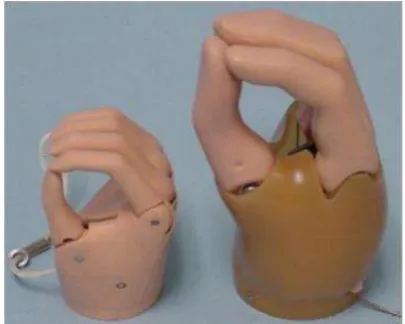
Figure1. VASI Hand Family (Technologies, Liberating, 2012)
Figure 2. Mech Hands (Technologies, Liberating, 2012)
There are commonly available prosthetic hands which offer very limited and simple functionality. All of these hands offer one action, opening or closing. They generally have a very blocky appearance, and often have 3 fingers instead of 5. The simple hands were easier to design and build, but cannot perform many tasks required of the user.
A. BeBionic and iLimb Hands
Figure 4. iLimb Hand (Arthur Finnieston Prosthetics + Orthotics, 2012)
Several years ago, robotic prosthetic hands with individually articulated fingers were released onto the market. These hands were completely revolutionary in their look and function compared with other prosthetic options that existed.
Touch Bionics was the first company to release one of these hands known as the “iLimb”. The iLimb is based around the design of an individual finger, known as “digits” by Touch Bionics. Each finger contains its own motor and gearbox which is very helpful when designing a prosthetic hand which must fit inside human proportions. In fact, amputees who are only missing partial fingers may simply use as many Digits as they need in a custom solution from Touch Bionics. Each finger has a joint at the base and one pivot point at the first knuckle. The fingertip is passively actuated by being pulled on by a cable. One interesting mechanical aspect of the fingers is a spring linkage which allows the fingers to be manually bent inwards to prevent damage if the hand hits into a hard object. Altogether, the iLimb has 5 degrees of freedom. User input is controlled through myoelectric sensors reading the muscle signals remaining on a portion of an amputees arm. The control is designed to be intuitive in this sense that a person should optimally be able to open and close their hand with the same muscle signals they would normally send them to an actual human hand. Touch bionics boasts 14 different grip patterns which are all subtle variations of the most commonly used patterns. (Touch Bionics, 2012) Overall, the iLimb is a fantastic product which has given a tremendous amount of increased functionality to the lives of many amputees. The iLimb however does not have an actively powered positionable thumb. The user must use their other hand to manually rotate the angle of the thumb. For example, if a user is eating a meal and has their hand in a key grip mode for holding onto a spoon or fork, and then decides to drink from a glass or cup, the user would have to manually rotate the thumb down until it is in position for a cylindrical grip. The iLimb does at least contain a sensor to recognize the current position of the thumb to help ensure the hand is not going to damage itself in certain grip modes. There is also no force feedback provided to the user, so it can be difficult to
perform precision tasks. As a result of the
lack of force feedback, users may inadvertently drop objects because they are not being gripped firmly enough, but there is no indication before it is too late and the object has fallen.
Several people have posted videos on the Internet demonstrating how they use the iLimb to perform daily tasks. Due to the fact that there are such a low number of prosthetic hands available on the market, these videos serve as a great tool for spreading information about options for the prosthetic community. One such man named Darin Sargent created an entire video diary explaining the process of him obtaining the iLimb from initially hearing about it, all the way through months of use. He documented his journey clearly and excitedly including the emotional highs and lows along the way. The most viewed video of his diary is an extremely touching moment which candidly captured his younger daughter reaching for his prosthetic hand to hold onto it, as if it was his real hand. The young girl accepted the prosthetic limb as his actual hand in that moment.
One surprising moment from Sargent’s video diary was the explanation of his initial discussions with Hanger Prosthetics. Hanger Prosthetics was a local distributor recommended by Touch Bionics who specializes in custom prosthetic and orthotic devices. Hanger Prosthetics is a large national chain well known in the prosthetic community and industry. The sales specialist described that the full the cost of the prosthetic hand should be covered completely by insurance. They disclosed that the cost of the hand would be a staggering $60,000. Sargent, as well as most people, had a very small budget, so paying for the hand out right was not remotely an option. It was several weeks of back-and-forth phone calls from the insurance company and Hanger prosthetics before it was concluded that the insurance company would be willing to cover most of the cost of the prosthetic hand. This would normally sound like good news, but that they would only be able to cover 75% of the cost, which would leave $15,000 still to be paid for. This was simply too much money for Sargent, but the people at Hanger prosthetics were persistent enough with the insurance company to reduce the cost until only $1000 remained. This side story helps explain just how expensive robotic prosthetic hands actually are.
The BeBionic hand is incredibly similar in construction to the iLimb. The BeBionic hand was produced by RSL Steeper with the intention of offering similar functionality to the iLimb at a slightly reduced cost. Some people speculate that the hand is a direct spinoff based on identical mechanical components. There are little to no functional differences between the two hands, so they are considered the same for the sake of discussion.
B. Michelangelo Hand
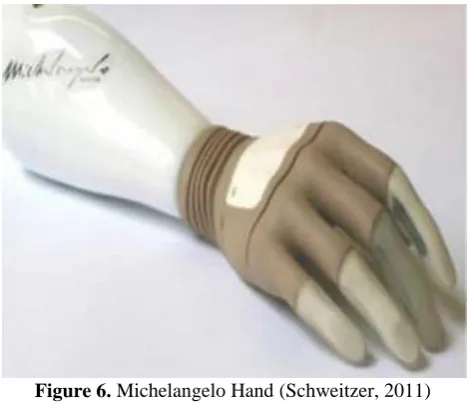
The Michelangelo Hand built by Advanced Arm Dynamics is simply the most advanced hand on the market today in prosthetics. It actually has the powered opposable thumb, the first one released as an actual product. Sadly, the arm costs $100,000, so it
Figure 6. Michelangelo Hand (Schweitzer, 2011)
is unable to be purchased, and difficult for even insurance companies to pay for. (Pittman, 2012) The hand is incredibly well refined and streamlined in execution.
C. Interview with Art Shae
human arm as opposed to focusing on the hand, but when he described the low level of amputees who are missing a complete arm it lead me towards the hand. Art was very frank in explaining why prosthetic devices can cost so much, they are all custom and most of the cost comes from the frequent visits with the prosthetist as opposed to the actual cost of the device. Each amputee has a unique situation. Not everyone can accept a socket or prosthesis at all because of problems with nerve damage and pain levels, or bone fragmentation. He also offered me several older prosthetic part catalogs which lead to my inspiration of designing a hand that would be able to bolt in directly where a hook used to be. If an amputee has already gone through the time consuming and difficult process of getting a custom socket, then they are more willing to experiment
with new and different terminal devices.
III.
Design Methodology
The replication of the sensory-motor capabilities of the human hand is still an open challenge for scientists and engineers. The results, in fact, are quite far from the original, either in terms of dimension, sensors and so on.
Two of the most critical aspects in current hand prostheses: • Poor functionality
• Poor control capabilities
Surveys on using such artificial hands, in fact, reveal that, due to the above limitations, 30 to 50% of the upper extremity amputees users prefer to use simpler cosmetic or kinematic prosthesis instead of the myoelectric ones.
A possible solution to the first problem is the enhancement of the current design of prosthetic hand, for example by the introduction of advanced underactuated mechanism, biologically-inspired sensors, and so on. A possible solution to overcome this limitation is the use of soft-computing techniques for the construction of the classifier. In particular, a novel evolutionary approach for the generation of a compact neural classification scheme directly from EMG data, based on is implemented and tested. This new generation of hands could provide the user with much more functionality and capabilities. As for the poor control interface, instead, among several different possibilities, more or less invasive, the EMG signals recorded using surface electrodes are considered as an interesting source of information to allow human beings to control robotic artifacts. In fact, these signals are very easy to record in a non-invasive way and provide an important access to the neuro-muscular system of the user.
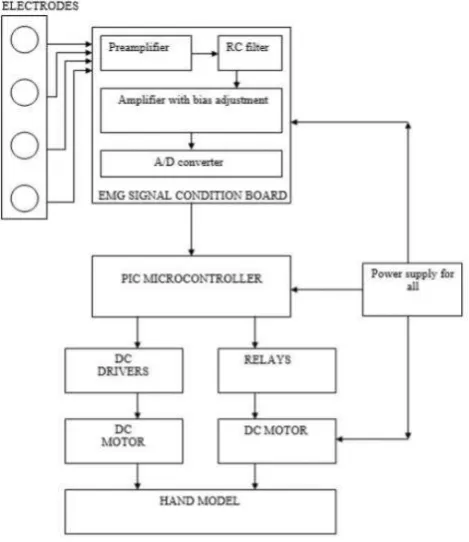
The power supply output is given to microcontroller and another circuit also; the design of the power supply is mainly because of the microcontroller, the microcontroller work in Dc source with a voltage of +5v. As we are getting the line voltage VL has 230v in ac source, so it is not possible. This power supply designs an output of +5v Dc to activate the microcontroller.
Microprocessor
Here we are using an Arduino Uno. We use the analog pins as input since the output of the EMG sensors is analog. We convert them into digital signals using basic A/D converters. This is integrated with an Atmega microcontroller. This to ensure that we can integrate the Arduino board with an LCD display and the motors.
Relay
electromagnet to open or close one or many sets of contacts. It was invented by Joseph Henry in 1835. Because a relay is able to control an output circuit of higher power than the input circuit, it can be considered, in a broad sense, to be a form of an electrical amplifier.
DC Motor
In any electric motor, the operation is based on simple electromagnetism. A current-carrying conductor generates a magnetic field; when this is then placed in an external magnetic field, it will experience a force proportional to the current in the conductor, and to the strength of the external magnetic field. As you are well aware of from playing with magnets as a kid, opposite (North and South) polarities attract, while like polarities (North and North, South and South) repel. The internal configuration of a DC motor is designed to harness the magnetic interaction between a current-carrying conductor and an external magnetic field to generate rotational motion.
EMG Sensors
Electromyography sensors are used to sense the movement in the muscles. The EMG sensors have three electrodes. One for reference, one for noting the change in the muscle and one is the ground. The signals from the sensors are sent to an amplification stage to allow for voltages in the range which can be processed.
Skeletal Arm Structure
The artificial arm structure is made out of aluminum and replicates the movements of a human arm very closely. It is carefully designed and integrated with the DC motor to allow for natural reflexes in real time.
IV.
Conclusion
A relay is an electrical switch that opens and closes under the control of another electrical circuit. In the original form, the switch is operated by an With the proposed thought, the simple combination of upper appendage prosthetics can be completed to the client regardless of age, sex, ailments and so on. The model requires no obtrusive medical procedure and subsequently is anything but difficult to keep up and profoundly tough. When worn by the client, it can begin to identify their muscle developments. At the point when the client needs to close their clench hands and moves the lingering muscle, the EMG sensors recognize this and the handling unit controls the counterfeit arm. At the point when the client loosens up the muscle, the voltage necessities are checked and the arm is opened. Hence a financially savvy, low support, exceedingly touchy ongoing Bionic Arm proposed by the thought had the capacity to do the vital prerequisites to be executed, all things considered, circumstances
References
[1]. Arthur Finnieston Prosthetics + Orthotics. (2012). Arms/Hands. Retrieved from Arthur Finnieston Prosthetics + Orthotics: http://www.extremeprosthetics.com/images/co mp_hand.png
[2]. Bradford, G. M. (n.d.). Limb Prosthetics Services and Devices Critical Unmet Need: Market Analysis. Bioengineering Institute Center for Neuroprosthetics.
[3]. Cowan, W. (2012). Cowan's Auctions.Retrieved from Cowan's Auctions: http://www.cowanauctions.com/itemImages/p 4135.jpg
[4]. DEKA Research. (2009). The DEKA Arm. Retrieved from DEKA Research: http://www.dekaresearch.com/deka_arm.shtm l [5]. Dillow, C. (2011, 2 10). DARPA's Brain-Controlled Robotic Arm Fast-Tracked, Could Be Available in Just Four Years. Retrieved
from PopSci: http://www.popsci.com/science/article/2011- 02/darpasbrain-controlled-robotic-arm-could- be-available-just-four-years
[7]. Kulley, M. (2003).http://biomed.brown.edu/Courses/BI108/ _2003_Groups/Hand_Prosthetics/stats.html. [8]. Retrieved from http://biomed.brown.edu/Courses/BI108/BI108 _2003_Groups/Hand_Prosthetics/stats.html
[9]. Mchugh, S. (2012). Profile Pictures. Retrieved from Facebook.
[10]. MIGUELEZ, J. (2009). Upper Extremity Prosthetics. In Care of the Combat Amputee (pp. 611-613).
[11]. New Launches. (2010). Mind-controlled prosthetic arm all set to be tested. Retrieved from New Launches: http://www.newlaunches.com/archives/mindc ontrolled_prosthetic_arm_all_set_to_be_teste d.php
[12]. Phillipe, T. (2012). Advancing prosthetic limb technology with robotics. Retrieved from Electronic Products: http://www2.electronicproducts.com/Advanci ng_prosthetic_limb_technology_with_robotics article-fabd_alion_aug2011-html.aspx [13]. Pittman, M. (2012, 1 12). Local Man Gets First-of-Its-Kind Prosthetic Hand. Retrieved from KSTP.com:
http://kstp.com/news/stories/S2451196.shtml?c at=1
[14]. Pololu. (2012). 250:1 Micro Metal Gearmotor HP. Retrieved from Pololu Robotics and Electronics: http://www.pololu.com/catalog/product/99 Prosthetics, U. L. (2010). Body Powered Prostheses. Retrieved fromhttp://www.upperlimbprosthetics.info/we b_images/figure_8_simple.jpg
[15]. Sargent, D. (2012). The Adventures of the iLimb. Retrieved from The Adventures of the iLimb: http://theadventuresoftheilimb.files.wordpress .com/2009/02/25947662.jpg?w=500
[16]. Schweitzer, W. (2011). Technical below Elbow Amputee Issues. Retrieved from Swiss Stuff: http://www.swisswuff.ch/
[17]. Sparkfun Electronics. (2012). Arduino Pro Mini 328 - 5V/16MHz. Retrieved from Sparkfun Electronics: http://www.sparkfun.com/products/11113
[18]. Sparkfun Electronics. (2012). Arduino Pro Mini 328 - 5V/16MHz. Retrieved from Sparkfun Electronics: http://www.sparkfun.com/products/11113 Technologies, Liberating. (2012). Products. Retrieved from Liberating Technologies: http://www.liberatingtech.com/products/imag es/