‘Information’ as Term: Historical Root,
Present Focus and Future Potentials with
Technologies
Prantosh Kumar PaulFBAS, Bengal Engineering & Science University, Howrah, West Bengal, India
Email: [email protected]
Abstract
Information is one of the important term now days. Today each and every one; including human being, organization, institutes are directly and indirectly associated with Information. The role and value of Information is increasing day by day. Virtually for centuries the societies in their various stages and development have prospered on the basis of Information and Knowledge. Information-The term is actually deals with Latin roots and Greek origin and was readily deployed in empiricist philosophy because it seemed to describe the mechanics of sensation objects in the world inform the senses. Virtually¸ due to several input, Information has reckoned as a driving force for all human developments. This paper presents a conceptual overview of information which includes origin and historical aspects powered by information. Paper lastly highlights some aspects of information; compare to data and knowledge, which we deemed equal many times.
© 2013 New Delhi Publishers. All rights reserved
Keywords: Information, Knowledge, Data, Information Studies, Information Sci-ence, Information History, Future Trends, Knowledge Management Trend Report, Instruction, Character
Introduction
According to Wikipedia, the word ‘Information’ is presented by Capurro and Hjorland. Reference or “formation or modeling of the mind or character, training, Instruction, teaching” date from the 19th century in both English and other European
Today we are using so many things as road, aero plane, bridges, TV Mobile, Satellite, and so on; directly and indirectly as such activities and development was made by Information and their healthy and interesting role [34, 17].
Objective
The main aim of this conceptual paper is includes; but not limited to as
follows:-• To learn basic about Information; including planning, characteristics and nature;
• To find out historical root of Information and some allied domain such as Data and Knowledge;
• To learn about Information and its convention, contemporary and emerging role in changing scenario;
• To find out role and values of information in contemporary society which includes Business, Education, Mass- Communication, Population, Govern-ment and other domain;
• To learn about Information and Technologies; their integration and Future Potentials;
• To learn some domain and knowledge cluster; directly and healthy related with Information and Knowledge.
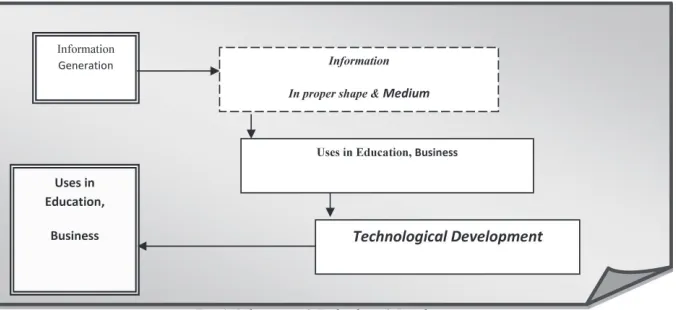
Fig. 1: Information & Technology & Development
Information: Meaning
transitory in nature. Information more clearly can be identified, deserted, represented in information systems for different domains of knowledge. Combination of Information is called Knowledge; which reflects sound meaning and how and why on a particular topic or domain. Information has valuable role and this is play an important role for Research and development activities. Practically the input and output of the domain is information. Research is fully depends on Information; thus more research means more Information creation [01, 02, 17, 19].
The term information first came to existence in USA, as an alternative of documentation. Information is actually nothing but the collection or we can say accumulation of statements, fact and figures idea what ever it may be and that are organized in a systematic manner [13]. This systematic organization can be done through or by the way of reasoning, logic, ideas etc [05]. information actually has several facets
like-• information is a flow of message.
• information is transitory by nature.
• information inherits meaning.
• information is a particular.
• information is fragmented.
• information is dynamic.
• information is timely.
• information is purpose oriented.
• information is quantitative.
• information can be recorded.
• information needs person’s affiliation.
• information is descriptive.
• information can be abstracted.
• information can be surrogated and so on.
Historical Root
Information history actually an important domain related to library but it is the broader field than that. Virtually, there are important links between the modern information age and its historical procedure. There are so many domain, component and things directly and indirectly influence this is an important domain. Virtually, following components helps to build information and thus history of the following directly may relate with historical root of
• History of Libraries and Librarianships and Documentation;
• History related to book development, Publishing history and history of read-ing and so on;
• History of Information and Knowledge Society;
• History of Information and Knowledge Economy;
• History of some information related domain such as Information Studies, Information Management, Knowledge Management and Information Sys-tems;
• Apart from domain mentioned above some more domain are also indirectly associated with the Information and related activities or fields; these are In-formation Science and Technology, InIn-formation Technology, Computer En-gineering, Communication Engineering and so on[05, 06, 07,22];
• The History of Contagious areas like- Communication history; including In-formation Policy and InIn-formation Architecture;
• The History of Information as social history with emphasis on importance of general and computing based Information Networks.
Virtually, in modern era, most important influences is actually on Information Theory developed by Shannon and Weaver. Today we can see use of Information in several subject and domino especially Computer Science, and Electronics and Communication Engineering but many of the Information Scientist not interested to
fall such matter as Pure Information. Machlap, 1983, himself disagree with the use of concept of information in the context of signal transmission, the basic sensor of information in his view a referring “to telling something or to the something that is being told. Information is addressed to human minds and is needed by human minds” on person who involved and speaking Information. Information can be identified, described, represented in Information Systems for different domain of knowledge. Before origin and popularization of ‘Information’ as a term ‘Documentation’ was emerged but from 1962 several organization changes their nomenclature from ‘Documentation to Information’ among these, American Institute of Documentation is most common which introduce American Society of Information Science/ ASIS instead of American Institute of Documentation or AID[09, 11, 18, 22].
Information and Present Role
Information plays an important role for centuries the societies in their various stages of development and progress. Information is needed and valuable for almost all type of organization and institutes regardless of Government or Private, Profit Making or Non Profit Making, Small or Large. Virtually, Information is important fact and tool for everyone; for human being; for our family; for establishment and so on. Some of the role and contemporary application of information are as
follows:-In Business: in Business follows:-Information play an important role. For Product Designing to Development Information is must, marketing of product/services, supply chain management, customer’s feedback depends on Information. Apart from these, In-house document and information also associated with healthy and sophisticated information management tools; In business most organizations are some recent tools like- Data Warehousing, Data Mining, ERP and Business Intelligence and so on.
In Government: Government is also largest stakeholder of Information user. Government’s input as well as output is actually Information. Government’s each and every works depends on Information; work related to Ministry’s, Departments and organizations are purely depends on Information. And the amount is increasing day by day due to several output and mainly statistical data output. Government of most of the country’s today builds sophisticated information and document management tools for proper Information collection, selection, organization, processing, dissemination and so on. Today, Database Management Systems, Networking and Web Technology are using rapidly for building healthy Government Information Infrastructure.
Human Computer Interaction for better Media representation and Interactive Information and Documentation building; including Audio/ Video material[08, 10, 12, 25.
In Common People-In common people also, Information plays a valuable role. For each and every activity we need Information. In some cases we get Information verbally in some cases with a particular format and medium; such as Document, E-Copy, and Online Copy. Thus for Information Storage we uses Database and Computing devices like Pen Drive, HDD, Compact Disk and so on. Information Dissemination through Information Kiosk; run self mode way is today empowered by Usability Engineering and Usability Experience Design.
In Research and Development-The input and output of R/D activities is Information. People first gain Information depending upon skilled knowledge try to develop new theories, relationship, products and services. Thus, initially during gaining of knowledge they depend on Research and after identification of new knowledge they try to disseminate it. Thus, they collect and dissemination Information. Today for better R/D so many things are practice Like Online Journal, Online Abstracting Systems, E-Book, E-Dictionaries/ E-Encyclopedia; where as earlier they depends on Traditional Product and Services[13, 14, 15,22, 26, 28].
In Education- In Educational activities, Information Play an important role; for building course curriculum Course Work delivery Information is needed. Spearing Education to Common one and Students also need communication and there Information is needed.
Information and Future Potentials: Technology and Tools
Earlier for Information and its management several tools was used which includes cataloguing, classification, indexing, abstracting, ledger and so on. But days are gone where traditional information management tools are used today due to interaction of Information-Technology-People or Society several tools are using like- Data Communication Technology, Database Technology, Web Technology, Image Processing and Multimedia Technology and so on[29, 19].
• Data Communication and Networking Technology are useful in Information and Communication within a building, campus, town or country to country with the help of LAN, MAN, WAN and SAN. Though this Technology, Con-tent, Information, Audio, Video and other resources are possible to nicate and share any where through infrared and wireless/ satellite commu-nication;
• Database Technologies are uses for Information and content storage and de-pending upon need DBMS may be use for Data collection, manipulation and dissemination. This saves future data preservation and utilization;
sophisticated Website and internet systems and for all activities We Technol-ogy play an important role. Today rather than Static Website, Dynamic, PHP and client server interacting Website are uses for Information display;
• Multimedia Technology is another one, uses for healthy and sophisticated content organization and dissemination. Use of Multimedia Technology is needed for Audio/ Video Representation of Information;
Apart from using these technologies, some more are today also using in Information field. Cloud Computing is uses for Information, Software and hardware virtualization based on Cloud Architecture. Usability Engineering is another needed for Interactive Interface designing and display unit of Information Kiosks and other Information means [22, 23].
Conclusion
Advancement of technologies changes entire dimension of Information and Knowledge. The field of Information treated as Information Studies and Information Science. The Technologies and their integration in Information Science practice build Information Science with new look; thus new nomenclature originated from Information Science i.e. Information Science and Technology [IST]. Apart from Technologies mentioned earlier section some more are also integrates with IST for better Information Processing and Management and these technologies and tools are Data Warehousing, Data Mining, ERP, Green Computing, Business Intelligence and so on. Thus, from a social Science [Documentation] field, Information Science [Which is the main base of Information] Transform as an Applied Science domain with agenda of Information-Technology-People/ Community Interaction.
References
Cohen, E. B. 2004. Applying the Informing Science Framework to Higher Education: Knowledge Development, Management, and Dissemination. Konferencja Pozyskiwanie wiedzy i zarz¹dzanie wiedz¹ (Proceedings of the Knowledge Acquisition and Management Conference) May 13-15, 2004 Kule, Poland.
Cohen, Eli B. and Nycz Malgorzata 2006. Learning Objects and E-Learning: an Informing Science Perspective. Interdisciplinary Journal of Knowledge and Learning Objects Volume 2:2006
Martin, S.B. 1998. Information technology, employment, and the information sector: Trends in information employment 1970–1995. Journal of the American Society for Information Science, 49(12):1053–1069.
Michael Buckland and Ziming liu 1995.History of information science. Annual Review of Information Science and Technology, 30:385-416.
Paul, Prantosh Kumar, Dipak Chaterjee and Bhaskar Karn “Information Science Education and Research: emphasizing contemporary Indian scenario- an overview” in IEM/IEEE sponsored international conference proceedings (IEMCON-12). P-349-353. [indexed, abstracted in Google Scholar[USA], Cite Ceer, EBSCO]
Paul, Prantosh Kumar, B B Sarangi, “Information Science (IS): Emerging utilization of Computing, Technology and Management Gradients in the 21st Century”. in Procedings
of National Conference on Emerging Trends in Computer Application & Management[NCETCAM-12], AVIT, VM University, 24-25/02/12, GK Publisher, Chennai, Page-138-142, ISBN-978-93-81208-04-5
Prantosh Kumar Paul , Dipak Chaterjee , K V Sridevi , K L Dangwal , “Computer and Information Science (CIS) Education in the Universities of India: Emphasizing Central Universities – A Brief Study” in International Journal of Marketting and Trade Policy, Page-277-284, July-Dec, 2012,ISSN-0975-6132 Serials Publications, New Delhi, India. Chief Editor- P Arunachallan, CUSAT. Kerala
Prantosh Kr Paul, Kalyan Kumar “Green Computing Vis-à-Vis Information Science - Indian Perspective” International Journal of Computer Science and Engineering Systems, Vol. 6, No. 4, October 2012, Page-167-171, CSES International, ISSN 0973-4406, July-Dec, 2012, Serials Publications, New Delhi, India
Prantosh Kr. Pau1, Minakshi Ghosh “Information Science & Technology (IST): Need of New Age Information Centric and Technology & Engineering Dependent Academic Programme for Building Virtualized & Green-Eco Friendly Information Infrastructure” International Journal of Computer Science and System Analysis, Page-153-157, Vol. 6, No. 2, July-Dec. 2012,SP, ISSN-0973-7448 Chief Editor-NS Chaudhari, NTU, Singapore Paul, Prantosh Kumar,Shyamsundar Bairagya, Bhusan Bhusan Sarangi ‘Expert System and
Artificial Intelligence: its evolution and contemporary scenario with special reference to its uses in Information Science (IS). in IEEE/IETE/CSI/DRDO Co-sponsored Procedings of ‘Nationnal Conference on VLSI,Embedded System & Communication Technology’ [NCVESCOM-12], Chennai ,AVIT, VM University, Page-40-44. (ISBN-9789382062127), Excel India Publication, New Delhi
Prantosh Kr Paul , K V Sridevi, Minakshi Ghosh “Information Science: From Fundamental to Contemporary Scenario” International Journals of Mathematics and Engineering with Computers, Vol. 3. No.2, July-Dec. 2012, ISSN-2230-8911, Page- 73-78, International Science Press, Haryana, India, EIC- R Panalagusamy, Tamilnadu
Prantosh Kumar Paul, S Govindarajan, B B Sarangi “Software Engineering: Challenges, issues
and opportunities in the emerging field of Information Science & Technology (IST)” International Journal of Computer Mathematical Sciences and Applications, ISSN-0973-6786 Page-109-115, Vol. 6, No. 3-4, July-Dec. 2012, SP,New Delhi, EIC-G Ganesan, A N University, AP, India
Prantosh Kr. Paul, “Information Science and its increasing scope and utilization in Geo Sciences for sophisticated Sustainable Development” International Journals of Neural Networks and Applications, ISSN-0974-6048, Vol. 5, No. 2, Page-85-89, International Science Press, Haryana, India, EIC- Angela Slavoa, IMI-BASc, Bulgaria
Prantosh Kr. Pau1, R Senthamarai, K S Shivraji, D Chatterjee B Karn“Artificial Intelligence and Expert Systems: its emerging interaction and importance in Information Science-An overview” Asian Journal of Electrical Sciences, Vol. 1. No. 2, July-Dec. 2012, ISSN-2249-6297,Page- 06-10, The Research Publication, Coimbatore, India, EIC-Hebba Hassan, Oman
Prantosh Kumar Paul, Ashok Kumar, Dipak Chaterjee “ Health Informatics and its Practice: Emerging Domain of Information Science-Indian Scenario” in Current Trends in Biotechnology and Chemical Research, Vol. 2 No. 2, July-Dec, 2012, Page- 83-87, ISSN-2249-4073 [Indexed in DOAJ, Index Copernicus, Google Scholar, CAS-USA] Prantosh Kumar Paul, Dipak Chaterjee, BB Sarangi, B Karn “Mathematics & statistics:
emphasizing its application and utilization in the working & Academic area of information science (IS)-contemporary scenario” In National Confernce on Mathematical Modeling and Simulation, ISBN-978-93-81274-45-3 VMKVEC, VM University, TN, India, Page- 80-86, Feb. 2012
Paul, Prantosh Kumar, Dipak Chaterjee and Bhaskar Karn “Information Science Education and Research: emphasizing contemporary Indian scenario- an overview” in International Journal of Management and Technology, Page-54-58, ISSN-2296-6611, January-2012, Vol. 2, No. 1, IEM, Kolkata.
Paul,Prantosh Kumar , D Chatterjee, M Ghosh “Medical Information Science: Emerging Domain of Information Science and Technology (IST) forsophisticated Health & Medical Infrastructure Building — An Overview” in International Scientific Journal of Sports Science, Vol.1 No. 2, July-Dec, 2012, Page-97-104, ISSN-2277-2804, New Delhi Publisher, New Delhi.
Paul,Prantosh Kumar, M K Ghose, “Cloud Computing: Possibilities, Chalenges, and opportunitities with special reference to its emerging need in the academic and working area of Information Science”, ICMOC, Procedia Engineering, 38 [2012], Page-2222-2227, DOI-10.1016/j.proeng.2012.6.267, 1877-7058 C- Published by- Elsevier,USA, Paul, Prantosh Kumar, R Rajesh, S Govindarajan, Uma Pricilda J, “Information Science: Contemporary subject scope and periphery with special reference to Global influence in India” International Journal of Image Processing and Applications” Vol. 3, No. 2, July-Dec. 2012, ISSN- 0975-8178, Page- 63-68, International Science Press, Haryana, India Paul,Prantosh Kumar ,R Rajesh,D Chaterjee, R Senthamarai , A Kumar, S Chaterjee “Usability Engineering: Contemporary Overview with specialreference to its possible & emerging utilisation in the academic and industrial field of Information Science (IS)” Journal of Emerging Technology in Mechanical Science and Engineering, Vol. 4, No. 1, March, 2013, ISSN-0976-2558, NI University, Kanyakumai, TN, India
Paul, Prantos Paul, Prantosh Kumar”Business Informatics: Emerging Domain of Interdisciplinary Information Science with Possibilities in I-Schools” IJMT, Vol.3 No.2 July-December 2013, pp.113-120, International Science Press
Paul, Prantosh Kumar, Jhuma Ganguly, M Ghosh, “Medical Information Science: Overview and a model curriculum of MSc-Information Science [Medical Information Science]” Submitted for Current Trends in Biotechnology and Chemical Research, Vol. 3 No. 1, ISSN-2249-4073, Page-50-54 [Indexed in DOAJ, Index Copernicus, Google Scholar, CAS-USA]
Reichman, F. 1961. Notched Cards. In R. Shaw (Ed.), The state of the library art04(01), pp. 11–55). New Brunswick, NJ: Rutgers, The State University, Graduate School of Library Service.
Saracevic, T. 1975. Relevance: A review of and a framework for the thinking on the notion in information science. Journal of the American Society of Information Science, 26(6): 321–343.
Saracevic, T. 1979a. An essay on the past and future of information science education. I. Historical overview. Information Processing &Management, 15(1):1–15.
Saracevic, T. 1979b. An essay on the past and future of information science education. II. Unresolved problems of ‘extemalities’ of education Information Processing & Management, 15(4):291–301.
Vakkari, S.P. 1996. Library and information science: Content and scope. In J. Olaisen, E. Munch-Petersen, & P. Wilson (Eds.), Information science: From development of the discipline to social interaction. Oslo, Norway: Scandinavian University Press. Vickery, B.C., & Vickery, A. 1987. Information science in theory and practice. London:
Butterworths.
Wersig, G., & Neveling, U. 1975. The phenomena of interest to information science. Information Scientist, 9:127–140.
White, H.D., & McCain, K.W. 1997. Visualization of literatures. Annual Review of Information Science and Technology, 32:99–168.
www.en.wikipedia.org www.infosci.cornell.edu/ www.ischools.org