ISSN: www.jatit.org E-ISSN:
SHAPING AN EXPERTS LOCATOR SYSTEM:
RECOMMENDING THE RIGHT EXPERT
1NASSER ALHOSAN, 2AYHAM FAYYOUMI, 3HOSSAM FARIS
1Information Systems Department, Al Imam Mohammad ibn Saud Islamic University (IMSIU) 2Information Systems Department, Al Imam Mohammad ibn Saud Islamic University (IMSIU)
3King Abdullah II School for Information Technology, the University of Jordan
E-mail: 1[email protected], 2[email protected], 3[email protected]
ABSTRACT
Experiences and knowledge inside any organization is a high valued resource. In order to utilize this resource, organizations should facilitate the knowledge sharing process between experts and others. Experts-locator systems recommend experts within the organization. However, current systems does not take into account the responsiveness of experts in providing support when requested. The proposed system ranks and recommends experts based on factors such as experience duration, experience level, number of projects, and more importantly, number of sent emails as a responsiveness indicator. Delphi technique was followed to identify and weight the factors. The prototype system has been experimented and results indicate that ranking formula is useful to recommend more responsive experts.
Keywords: Knowledge Management, Knowledge Sharing, Experts-locator Systems, Responsiveness
1. BACKGROUND
Today, knowledge is very beneficial resource for any organization [1]. The combined knowledge residing in the minds of firm’s experts is key resource of today’s enterprise. Organizations can get many advantages from managing their knowledge, some of these advantages are completely visible like utilizing core organization experts, enhancing decision-making and cycle times, accelerating innovation and time-to-market, encouragement of organizational commitment, and gaining competitive advantages [2]. Therefore, knowledge management (KM) is considered as an increasingly significant domain that encourages the sharing, discover, capture, and application of the organization’s knowledge. Knowledge management can be defined as "implementing collection of processes to ensure sharing, discovering, capturing, and applying knowledge, that lead to the accomplishment of organization goals" [3]. The four basic processes represent the basis of knowledge management.
In general, knowledge management emphasizes on making available and organizing useful knowledge, whenever and wherever it is needed [4]. The traditional focus in knowledge management has been on knowledge that is identified and already articulated in some format. This includes knowledge
about procedures, processes, lessons learned, documented best practices, problems solutions and intellectual property. Increasingly, KM also covers organizing useful knowledge that might be located merely in the minds of firms’ employees [5]. Systems that support knowledge management processes are called knowledge management systems (KMS). Thus, knowledge management systems can be categorized into four types: knowledge discovery systems, knowledge capture systems, knowledge sharing systems, knowledge application systems [6], [7].
In this context, many large companies recognize the value of the intellectual capital and experiences within the organization and the need to utilize them through the use of different systems. Experts’ Locator Systems (ELS) recommends experts to knowledge seekers so they can make the most of experts’ knowledge. The ability to find an expert who can provide information or an ability to carry out specific organizational tasks or social functions within the organization are the main benefits of an ELS [8].
ISSN: www.jatit.org E-ISSN:
knowledge (knowledge seekers) with those who own the knowledge (experts) [9]. When ELS are set up by an organization, the aim is to index or catalog competencies within a particular area of knowledge in a way that can be shared easily in the future. This may include information that is not gathered by the human resource (HR) department.
There are a number of characteristics that define these systems:
• The system's purpose: within each particular organization, an ELS may categorize knowledge in different types. For example, there may be a need to locate technical experts or to set up project teams or to match employee competencies in similar positions in the organization.
• Accessibility: most ELS are made available through an organization's Intranet. If the knowledge is shared with other organizations, this will commonly be made available via the Internet.
• Self-categorization: many organizations’ ELS are created by the experts themselves who offer detailed descriptions of their area of knowledge which will be made freely accessible.
• Participation: this defines the scope of the ELS and whether it contains knowledge on individuals within the organization itself, such as KSMS at the National Security Agency (NSA); or within a department such as Microsoft's SpuD experts that are keen to volunteer information about their expertise with others.
• Taxonomy: this refers to the classification scheme used to catalog knowledge within an organization. Some organizations create their own knowledge taxonomies such as Microsoft; whereas other organizations rely on the O*NET standard that was published by the US Labor Department (including NSA). There are other organizations who rely on a different standard such as that created by the U.S. Library of Congress to which they have added other knowledge systems such as that decided by HP.
• Levels of competency: these outline how to describe the competency level of a particular person [5].
• Communication: Today, email is the powerful communication tool [10]. In a survey conducted in 2003 it has been found that 80% of employees favor email for business communication [11]. All organizations depend on the email to accomplish most of its activities. There are lots of uses of email within organizations like: coordination,
collaboration, send/receive information, alerting and exchange individual's experience [12] [13]. Some organizations may go further, to better understanding of the email content, the email social network analysis can used to enable application-like search within communities or organizations about service, contact, product, and supplier or partner [14].
Within the context of this project, email is considered one of the means for an expert/employee to deliver the experience to others, and share knowledge that he/she possesses. However, one of the main problems faced in creating ELSs is the willingness of experts to respond and share their experiences with others. To address this issue, we have conducted an exploratory study considering, among other factors, the number of emails sent by an experts within the organization as an indicator to the level of responsiveness of the expert.
The main objective of this work is to rank experts when processing a query by an experience seeker. This is done based on several important factors in determining the level of the experience of an expert such as duration of the experience, the number of projects has participated in [15] and number of exchanged emails inside organization as an indicator to the level of responsiveness. The application of ELS is appropriate whenever the organization aims to increase the sharing of knowledge held by its experts; this gives a great chance for the organization to gain a competitive advantage and improve its performance compared to other organizations.
2. METHODOLOGY
The main objectives of the project is to build and experiment an Experts Locator System that ranks experts based on several important factors in determining the relevance of the experience of an expert and his/her responsiveness.
Ranking of experts raises some social problems associated with expertise locator systems, in particular, this study addresses the following questions:
How can expertise be assessed and ranked accordingly?
How to improve structured ranking of experts and solve the issue of responsiveness?
This research work went through different stages. The main phases of this research are:
2.1.Phase I: Ranking Formula
ISSN: www.jatit.org E-ISSN:
human resources department. Later we composed the ranking formula and used it to rank the experts as they appear to the expertise seekers through the system; this is explained in details in section 3.
2.2.Phase II: ELS Development
Prototyping methodology was used for system development. The prototype of the proposed system was developed as a windows application using Microsoft Visual studio development environment. C# was chosen as a programming language for the implementation and Microsoft Access for the
database management system; more details are in section 4.
2.3.Phase III: Experimentation
We experimented the system for a short period within an organization in the private sector. The data collected in a real environment for experts in the organization include real values of the factors used in the ranking formula. Employees used the system to search for experts within the organization. After that, we interviewed the users to get their feedback and opinion about the proposed system; more details are in section 5.
3. RANKING FORMULA: PRELIMINARY
STUDY
A preliminary study was conducted in order to have better understanding of how to rank queried experts. The main purpose then is to develop an appropriate formula to rank expert list including factors as: the experience duration, experience level, projects number and sent emails as new factor. To accomplish that, the Delphi technique was used; this method relies on a panel of experts [16] [17]. Ten experts have been surveyed from human resource departments in different companies, private and public. The experts answer questionnaires in two rounds. After the first round, we provided a summary of the experts’ opinions from the previous round as well as the reasons they provided for their judgments. Thus, experts are encouraged to revise their earlier answers in light of the replies of other members of their panel. This is important since during this process answers are expected to converge towards the "correct" answer. Finally, the average scores of the final round determine the results.
Participants were asked to answer two sections of questions: the first is related to general information like the business sector of the company: private or government, and the organization name. The second section asks to rank the importance of the factors (experience duration, experience level, number of projects and sent emails) for matching the experts to the expertise seekers; and suggest new factors they might think more important. We used a Likert scale (from 1 - 5) to rate each factor (1 represent very low priority and 5 represent very high priority).
Two participants were from government sector and eight from private sector, five participants are human resources managers as job title, and four are human resources experts and one is human resources consultant. Table 1 presents the weights that represent the priority of each factor been used to rank the list of experts. The weight of each factor has been calculated as a result of this phase of the study. To derive the final form of ranking formula we scale the real value of each factor as in Table 2.
Table1.Factors' Weights Based on Participants’ Opinion.
Table 2.Scales of Formula Factors.
Scale
Factors 1 2 3 4
Experience duration (years) 1 - 3 3 - 6 6 – 10 > 10
Number of projects 1 - 2 2 - 4 4 – 6 > 6
Level of experience Beginner Competent Proficient Expert
Number of sent emails (within a month) 1 - 10 10 - 20 20 – 30 > 30
Factor Responses Su
m
Averag e
Percentag e Weight
x1 Experience Duration 4 4 3 4 5 5 2 2 5 4 38 3.8 .26027 x2 Level of Experience 5 4 5 5 4 4 5 5 5 5 47 4.7 .32191 x3 Number of Projects 4 1 5 4 2 4 4 4 4 3 35 3.5 .23972 x4 Number of Sent Emails 2 5 2 2 2 3 3 3 3 1 26 2.6 .17808
ISSN: www.jatit.org E-ISSN:
It is important to note that the choice of the presented scales depends on the context of the company. The presented scales were chosen for the experimentation purpose are explained in section 6, and are appropriate for the chosen company.
We suppose: Y = the rank of expert, x1=
experience duration, x2= level of experience, x3=
number of projects, and x4= number of sent emails. Thus, the ranking formula is:
Y = .26027 x1+ .32191 x2+ .23972 x3+ .17808 x4
According the to the HR seniors, we found that the most important factors to rank experts are level
of experience then experience duration then number
of projects then number of sent emails. Moreover, it
is important to notice also that the number of emails sent by the expert reflects his/her responsiveness, and therefore, it is considered in the ranking process. These results allowed us to create a simple ranking algorithm that will provide expertise seekers better list of experts in the organization, which in turn, they are more likely to resolve their issues quickly. The use of such ranking technique is
expected to leverage the potential benefits of the system from one hand, and the user experience and satisfaction with the system on the other hand.
4. IMPLEMENTATION
Initially we came up with a ranking formula to be embedded in the system, as explained previously. Later on, we developed the software tool, the ELS, which can be used in the organization to recommend experts (those that have the knowledge within the organization). After that, we experimented the tool in a company for five days and gathered users’ feedback.
4.1.ELS Architecture
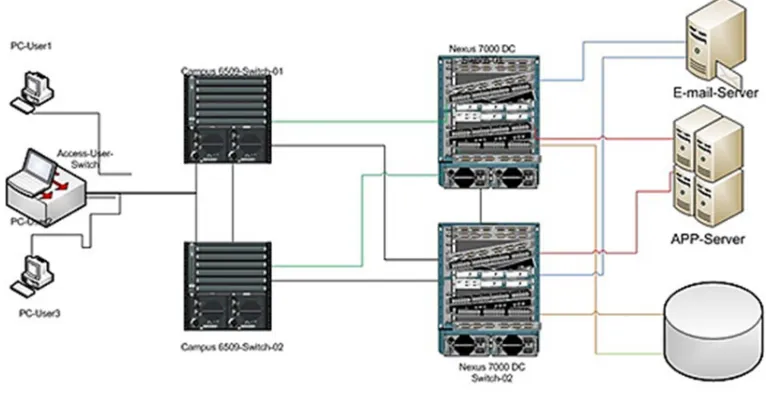
[image:4.595.104.487.425.624.2]The system consists of two main components: the database which contains data about all experts in organization and data about all emails sent or received by experts within the organization (next section provides more details). Second, the application, which offers two main functions: entering experts’ data to the database. Searching for experts based the factors that mention previously. Figure 1 shows the system architecture.
Figure 1. System Architecture
4.2.Experts Database
Experts’ database consists of two main entities: the first one is the expert entity, which contains data about all experts including name, qualification, start date of work, job title, email, phone number, number of projects, specialty, subspecialty and level
ISSN: www.jatit.org E-ISSN:
4.3.ELS Functions
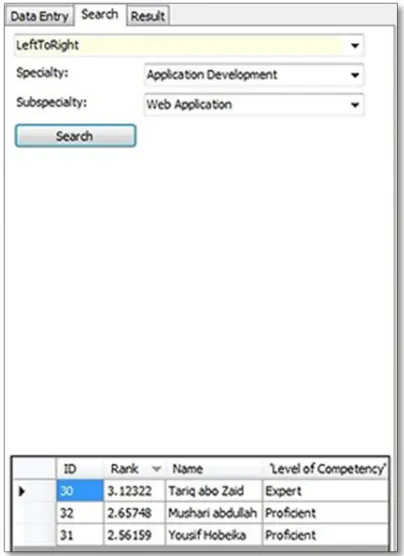
[image:5.595.307.509.216.494.2]The proposed system consists of three main functionalities. First, experts' profile (Data Entry): expert inserts the data to be stored in an experts' database mentioned previously. Then, the search of experts in the organization, this function contains a list of specialties in the organization, so that the user chooses a specialty and a sub-specialty. Consequently, the system extracts experts' data from an experts' database based on the developed criteria, i.e. the ranking formula is executed to calculate the rank of each expert in search results. The third tab provides detailed data about expert who has been chosen by the user. Moreover, data about sent or received emails by expert are provided. Figure 2 shows the user interface of the system
Figure 2. ELS Interface
5. EXPERIMENTINGTHESYSTEM
We have tested the prototype system in one of the local companies in Saudi Arabia, a provider of information technology services. We have collected information of six experts in application development field, three of them are web based development experts, and the other three are mobile application development experts. Also, we have updated the system with all sent and received emails by the six experts for one month -more than 125 emails. Lastly, we discussed the system with the users interacted with the system.
Three users in the company queried the system to search for experts in specific field. First query recorded was by User.1 asking about an expert in
[image:5.595.91.292.310.540.2]application development as specialty, web based application as subspecialty. This resulted in three experts list who matched the search criteria; the expert with ID=30, has been ranked the first (Y = 3.3). The expert with ID=32 has been ranked second (Y = 2.65). The third expert (ID=31) has been ranked third (Y = 2.56), results are show in Figure 3.
Figure 3. The Ranked List of Target Experts.
Although, Expert-31 has more experience duration, but Expert-32 was expected to be more responsive as indicated by the number of emails he sent; therefore, he was ranked higher than Expert-31. User 1 contacted the first expert, and terminated the task. He expressed his opinion about the system saying that the “proposed system has good capability to determine the rank of experts, because results were close to our expectations about experts within the organization”.
ISSN: www.jatit.org E-ISSN:
Second query by User 2 looking for an expert in application development as specialty, web based development as subspecialty. The results were same as the previous query. More importantly, User 2 opinion about system is that it “is important taking into account the responsiveness of expert in the ranking, which will solve a problem we face sometimes; we find the appropriate expert but he does not provide us with sufficient help on time”.
The third query by User 3, was regarding an expert in application development as specialty, mobile application as subspecialty. Three experts matched the search criteria, the first expert, had a rank of Y = 2.8; the second expert, had a rank of Y = 2.54, and the third expert, had rank of Y = 1.66. User 3 suggested adding a panel to chat with the selected expert directly. The user agreed with the importance of factors, particularly with length of experience as a very important factor, and also sent emails to indicate an expert’s willingness to share knowledge.
6. CONCLUSION
Experts are key aspect of institutional memory. Locating appropriate experts in organization helps in solving problems efficiently and encourages sharing knowledge. However, finding experts that not only correspond to the area of interest, but also is willing to respond in short time is the key to the effective use of these resources.
In this research, we proposed a new combination of factors to be considered in ranking experts within an organization. The major contributions of this research are the integration of multiple factors to represent the expert (experience duration, number of projects, and level of experience) and a factor represents expert’s responsiveness as the number of sent emails. The level of experience (x2) is the most
contributor in the ranking formula; however, HR senior experts agreed that the number of emails sent
by an expert within an organization is important in the recommendation of an expert.
The experimentation of the prototype system allows for better understanding of the system. It is found that knowledge seekers can be more confident in receiving an answer using the proposed system. Moreover, as stated in the experimentation phase, the users appreciated including the number of emails sent by an expert as an indicator of expert responsiveness, however, the ranking formula can be improved to include more social factors such as users’ recommendations. Future improvements of the system will considered such factors.
REFERENCES
[1] S. E. Bryant, "The role of transformational and transactional leadership in creating, sharing and exploiting organizational knowledge," Journal of Leadership & Organizational Studies, vol. 9, pp. 32-44, 2003.
[2] I. Becerra-Fernandez and R. Sabherwal, "Knowledge management at NASA-Kennedy Space Center," International journal of knowledge and learning, vol. 1, pp. 159-170, 2005.
[3] B. Meihami and H. Meihami, "Knowledge Management a way to gain a competitive advantage in firms (evidence of manufacturing companies)," International Letters of Social and Humanistic Sciences, pp. 80-91.
[4] D. Nevo and Y. E. Chan, "A Delphi study of knowledge management systems: Scope and requirements," Information & Management, vol. 44, pp. 583-597, 2007.
[5] I. Becerra-Fernandez and R. Sabherwal, Knowledge management: systems and processes: ME Sharpe, 2010
[6] I. Becerra-Fernandez, "Searching for experts with expertise-locator knowledge management systems," in ACL, 2001, pp. 9-16.
[7] H. Faris, S. Totaro and A. Corallo. “Framework and Implementation of a Knowledge Management System for Aerospace Collaborative Working Environments”, in Proceedings of the 2011 IEEE 12th International Conference on Mobile Data Management, pp. 92-97, 2011.
[8] D. Yimam-Seid and A. Kobsa, "Expert-finding systems for organizations: Problem and domain analysis and the DEMOIR approach," Journal of Organizational Computing and Electronic Commerce, vol. 13, pp. 1-24, 2003. [9] I. Becerra-Fernandez and D. Leidner, "On
knowledge, knowledge management, and knowledge management systems," Knowledge Management: An Evolutionary View. I. Armonk, New York: ME Sharpe, pp. 3-11, 2008.
ISSN: www.jatit.org E-ISSN:
[11] META Group Inc.: 80% of Users Prefer E-Mail as Business communication Tool. 2003, http://tinyurl.com/MetaEmail03.
[12] S. Whittaker and C. Sidner, "Email overload: exploring personal information management of email," in Proceedings of the SIGCHI conference on Human factors in computing systems, 1996, pp. 276-283.
[13] D. Fisher, A. J. Brush, E. Gleave, and M. A. Smith, "Revisiting Whittaker &Sidner's email overload ten years later," in Proceedings of the 2006 20th anniversary conference on Computer supported cooperative work, 2006, pp. 309-312.
[14] M. LackavK, t. Dlugolinsk, M. eleng, M. Kvassay, E. Gatial, Z. n. Balogh, and L. Hluch, "Email Analysis and Information Extraction for Enterprise Benefit," Computing & Informatics, vol. 30.
[15] L. Ping and Y. Yan, "An Ontology-based Experts Locator System within Academia," Journal of the China Society for Scientific and Technical Information, vol. 29. 2010
[16] N. Dalkey and O. Helmer, "An experimental application of the Delphi method to the use of experts," Management science, vol. 9, pp. 458-467, 1963.
[17] B. B. Brown, "Delphi process: A methodology used for the elicitation of opinions of experts," DTIC Document 1968.