EXPLORING GENERAL PRACTITIONERS’
EXPERIENCES OF IDENTIFYING AND
MANAGING CHILDHOOD OBESITY.
Donna Sager
DProf. Thesis
College of Health and Social Care.
School of Nursing, Midwifery, Social Work and Social
Sciences.
Salford University.
i CONTENTS.
Page.
Table of Contents. ii –v.
Appendixes. vi.
List of tables. vii.
Acknowledgments. viii.
Abbreviations. ix.
ii
TABLE OF CONTENTS.
Chapter Title Page
1. Introduction. 1
1.1. Research purpose and theme. 1 1.2. The research context – childhood obesity and primary care. 2 1.2.1. Childhood obesity: policy and context considerations. 2 1.2.2. Primary Care systems: policy and context considerations. 7 1.3. Personal and professional motivations for the research. 12
1.3.1. The research topic. 12 1.3.2. Epistemological position. 14 1.4. Overview of research aims. 17 1.4.1 Definitions 17 1.1.4.1 Childhood obesity. 17 1.1.4.2. Children. 19 1.1.4.3. General Practice. 19 1.4.2. The research site. 19 1.5. Contribution to knowledge. 20 1.6. Structure of the thesis. 21
2. Literature Review. 23
2.1. Introduction. 23
2.2. The health, psychological and social consequences of childhood obesity.
24 2.3. Costs associated with childhood obesity. 25 2.4. The prevention of childhood obesity. 25 2.5. The management of childhood obesity. 26 2.6. Childhood obesity and General Practice. 29
2.6.1. GPs’ views about their role in identifying and managing childhood obesity.
29 2.6.2. GPs’ views on the causes of childhood obesity. 31 2.6.3. Identification of children who are obese in a primary
care consultation.
33 2.6.4. Treatment and management of children who are obese
child in a primary care consultation.
34 2.6.5. GPs’ training and competence in relation to childhood
obesity.
37 2.6.6. General Practice infrastructure. 38 2.6.7. Working with parents of children who are obese
children in a primary care consultation.
39 2.6.8 Parents’ view of GPs and primary care consultations. 42 2.7. Summary and gaps in knowledge. 45
3. Research methodology and methods. 49
3.1. Introduction. 49
iii
3.3. The use of IPA in health care research. 53 3.4. Limitations of IPA. 53 Alternative methods considered 55 3.5.1. Conversational Analysis and Discourse Analysis. 55 3.5.2. Grounded Theory. 56 3.6. Assessing for Quality. 56 3.6.1. Sensitivity to context. 57 3.6.2. Commitment and rigour. 57 3.6.3. Transparency and coherence. 58 3.6.4. Impact and importance. 58 3.7. Ethical considerations. 59 3.8. Research methods used in the thesis. 60 3.8.1. Sampling strategy. 60 3.8.2. Sample size. 62 3.8.3. Recruitment of participants 62 3.8.4. Method of data collection. 63 3.8.5. Interview guide development. 64 3.9 Data management and the process of thematic analysis. 65 3.10 Reflexivity and qualitative research. 71 3.11 Reflexivity within the practitioner-researcher role. 72
3.11 Summary. 76
4. The Findings. 78
4.1. Introduction. 78
4.2. Super-ordinate Theme One: Understanding the family of child who is obese.
79 4.2.1. Knowledge of the family of the child who is obese. 79 4.2.2. Family held health beliefs, knowledge and behaviours
relating to childhood obesity.
80 4.2.3. Parenting practices. 82 4.2.4. Interpersonal dynamics and relationship with the family. 82 4.2.5. Parental concerns regarding childhood obesity. 84 4.2.6. GPs’ perceptions and values regarding overweight and obese
families
84 4.3. Super-ordinate Theme Two: Flexibility and Responsiveness. 86 4.3.1. Deciding to raise the topic – the nature of the consultation. 86 4.3.2. Long term relationship with the family. 88 4.3.3. Negotiating a way in. 88 4.3.4. Adapting the message. 89 4.3.5. Sensitivity of the topic of childhood obesity 90 4.3.6. Types of childhood obesity interventions 91 4.4. Super-ordinate Theme Three: Individual and Professional Dilemmas. 93 4.4.1. Role adequacy and legitimacy. 93 4.4.2. GP motivation. 95 4.4.3. GP competence, knowledge and training. 96 4.5. Super-ordinate Theme Four: Organisational Challenges. 97 4.5.1. The “lost” child in primary care. 97 4.5.2. Other health professional staff. 98 4.5.3. Services for children who are obese outside of General
Practice.
iv
4.5.4. Time and competing priorities. 99 4.5.5. Organisational response. 100
4.6. Summary. 101
5. Discussion. 103
5.1. Introduction. 103
5.2. Discussion of the super-ordinate themes 104 5.2.1. Understanding the family of child who is obese. 104
5.2.1.1. Knowledge of the family of the child who is obese.
105 5.2.1.2. Family health beliefs and behaviours relating to
childhood obesity
105 5.2.1.3. Parenting practices. 107 5.2.1.4. Parental concerns regarding childhood obesity. 108 5.2.1.5 GPs’ perceptions and values regarding overweight
and obese families.
109 5.2.2. Flexibility and responsiveness 110
5.2.2.1 Negotiating with the family to discuss the child’s weight.
110 5.2.2.2 Sensitivity of the topic of childhood obesity. 111 5.2.2.3 Lifestyle interventions for children who are obese. 113 5.2.3. Individual and professional dilemmas. 113
5.2.3.1. GPs’ role adequacy and legitimacy in relation to childhood obesity.
114 5.2.3.2. Competence, knowledge and training of the GPs. 115 5.2.4. Organisational challenges. 116 5.2.4.1 The ‘lost’ child in primary care. 116 5.2.4.2 Other health professional staff. 116 5.2.4.3 Time and competing pressures. 117 5.2.4.4 Services for the children who are obese outside of
primary care.
118 5.3. Variations in the accounts of the GPs and the emergence of role
types.
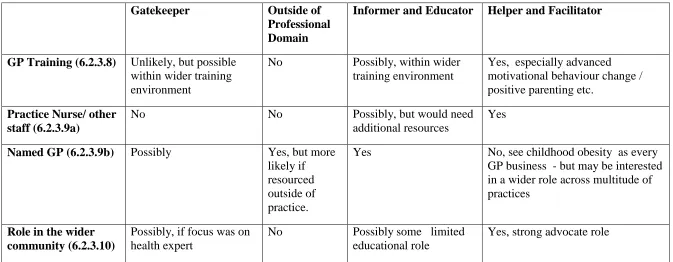
119 5.31. The Gatekeeper role. 120 5.3.2. Outside of professional role. 123 5.3.3. The Informer and Educator role. 124 5.3.4. The Helper and Facilitator role. 127
5.4. Summary. 130
5.5 Limitations of the research. 131
6. Conclusion and Recommendations. 133
6.1. Conclusion. 133
6.2. Recommendations. 137 6.2.1. National policy. 137 6.2.2. Local commissioners of childhood obesity services and
strategies.
v
lifestyle advice and risk factor management.
6.2.3.4 Information about local community services. 142 6.2.3.5 Evidence based guidance on the management of
childhood obesity.
143 6.2.3.6 The development of childhood obesity registers 143 6.2.3.7. Evidence about successful weight management
interventions.
144 6.2.3.8 GP Training. 144 6.2.3.9 Practice Nurse and other health care staff in the
General Practice setting.
144 6.2.3.10 GPs’ role in the wider community. 145 6.3. The likelihood of adopting the recommendations based on
GP typologies.
145 6.4. Recommendations for future research. 148 6.5 Final conclusions.
149
Appendices. 150
vi
APPENDICES.
Page One Synthesis Table of evaluation of childhood policy interventions,
2003-13 (adapted from Jebb et al., 2013).
150 Two Synthesis Table of UK qualitative studies of primary care and
childhood obesity.
155 Three Synthesis Table of UK studies of IPA and General Practice. 157 Four Ethics Committee Approval. 160 Five Letter of invitation. 161 Six Participant consent sheet. 163 Seven Interview schedule. 164 Eight Participant demographics and childhood obesity prevalence rates. 166 Nine Initial analysis, annotated transcript (GP No. 7). 167 Ten Summary subordinate themes (GP No.7) 173 Eleven Example of subordinate theme – Individual and professional
dilemmas – all GPs.
vii TABLES
Page Chapter Three
3.1. Summary of the key areas in the interview schedule. 64 3.2. Extract of a coded transcript - GP.No.7. 66 3.3. Abridged version of master list of emergent themes for GP. No. 7. 68 3.4. Examples of two subordinate themes: Knowledge of the family and
the child: Time and competing pressures.
69 3.5. Final super-ordinate and subordinate themes. 70 3.6. Example of reflective journal post interview GP No.7 and GP No.3. 75 3.7. Example of reflective journal analysis of the interview with GP
No.10.
76
Chapter Four.
4.1. Summary of the participants. 78
Chapter Six.
viii
ACKNOWLEDGEMENTS.
My sincere thanks go to my supervisors, Professor Lindsey Dugdill and Dr Orla Flannery for their continued, dedicated support and encouragement to me throughout the research. Their keen interest in my work and their constant focus at every stage was so welcome and inspiring.
My special thanks go to Paula my fellow Prof Doc student; our weekly catch-up over 5 years has made the journey so much easier and enjoyable. Thanks to my fellow IPA’ ers! Kate, Dji, Jeanne and Manya, we have learnt so much from each other.
A huge thanks to all the GPs in the study and especially to my dear friend Dr Susan Glicher who 25 years ago gently coached me into the strange new world of General Practice. Of course my deepest thanks go to Eamonn and my fabulous son Ted for all your support, encouragement and patience over the last few years.
ix
ABBREVIATIONS.
BMI: Body Mass Index.
CAMHS: Child and Adolescent Mental Health Services. CMO: Chief Medical Officer.
CCG: Clinical Commissioning Groups. DoH: Department of Health.
JSNA: Joint Strategic Needs assessments. HWBB: Health and Wellbeing Boards.
NICE: National Institute of Clinical Evidence.
NCMP: The National Child Measurement Programme. PCT: Primary Care Trust.
PSA: Public Sector Agreement.
x ABSTRACT.
National policies (DoH, 2008; 2011) propose a clear role for GPs in responding to the increase in childhood obesity, despite a limited evidence base which would secure such an emphasis. Previous research has indicated multiple barriers to the engagement of GPs in this clinical activity due to the sensitivities of the subject, low levels of role competence and confidence and limited access to specialist services.
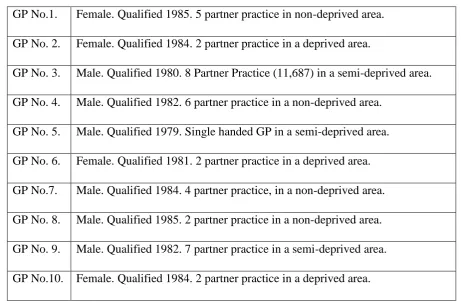
Using interpretive phenomenological analysis, this study explored how GPs made sense of their experiences of identifying and managing childhood obesity in order to provide a unique insight into these professional behaviours. Retrospective semi-structured interviews were carried out with ten GPs from Stockport, who had been in practice for over 25 years.
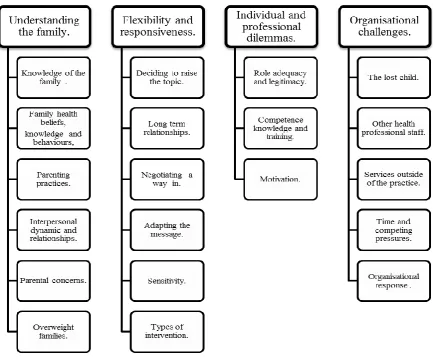
Four themes emerged. The first ‘understanding the family’ demonstrated how the GPs utilised their knowledge of the family’s health beliefs, motivations, skills, and wider socio economic factors to compile a unique understanding of the family which framed their responses to the obese child. The second ‘flexibility and responsiveness’ explored how this complex knowledge of the family was used to negotiate and address the different physical and emotional needs of the child. The third theme ‘professional and individual dilemmas’ explored areas of professional uncertainty, the identification of perceived legitimate role boundaries and the personal belief systems of the GPs regarding childhood obesity. The final theme ‘organisational challenges’ highlighted how time pressures, competing priorities, and structural constraints challenged their abilities to provide effective responses.
1 Chapter 1: Introduction.
1.1. Research purpose and theme.
This thesis presents an exploratory phenomenological study which aims to increase understanding of GPs’ experiences of identifying and managing childhood obesity. It focuses on how GPs understand, make sense of and respond to children who are obese.This topic is a relatively unexplored area in the literature, yet warrants significant attention given concerns regarding the prevalence of childhood obesity in the UK, (DoH 2003; 2008; 2009; 2011; NICE 2006; 2013). The National Childhood Measurement Programme (NCMP) annual survey of children in England, 2012/13, indicates that one in five children aged 4-5 years are overweight or obese (boys 23.5%, girls 21.6%), and one in three children aged 10-11 years are overweight or obese (boys 35.4%, girls 32.4%), (NOO, 2013). Whilst there are some signs overall, of childhood obesity levelling off, (Mandalia, 2012) this has varied by population groups, and there is evidence that obesity levels among children of lower socio-economic groups have continued to rise (Stamatakis et al., 2010; Jebb et al., 2013). Child obesity is closely correlated with deprivation (Hancock et al., 2013), and obesity prevalence is significantly higher in urban areas than rural areas (NOO, 2013).
Although a role for greater GP involvement has been raised at a policy level (DoH, 2003; 2008; 2011), advocated in NICE guidelines (2006; 2013), and recommended by the Royal College of Physicians (2013), little is known and understood about what happens in routine clinical practice with children who are obese, and even less is known about GPs’ own views and experiences. GPs are pivotal to the delivery of any initiative in primary care and their attitudes and practices are likely to determine the impact achieved in any clinical intervention, (Howie, 1996; Blakeman et al., 2006, Gabbay and le May, 2011). This thesis argues that it is critical to explore and understand GPs’ attitudes and practices regarding interventions to indicate why this key strategy for tackling childhood obesity may not be achieving its full potential.
2
1996). A distinctive feature of IPA is its commitment to an idiographic perspective, (Eatough and Smith, 2006) and as such the research consists of an in-depth analysis of semi- structured interviews carried out with ten experienced GPs in Stockport, Greater Manchester. As IPA places emphasis on “sense making” (Smith et al., 2009, p.37), it is expected to be particularly salient in the exploration of a debated and complex concept such as childhood obesity (Lupton, 2013).
This remainder of this chapter provides the relevant policy context and background for the research in Section 1.2. It highlights relevant policies in England related to childhood obesity, and refers to the structural and organisational policy changes in primary care and child health services which are critical in order to situate the research context. Section 1.3 outlines the professional and personal motivations that led to this research topic and the decision to pursue a Professional Doctorate in this area. The three research aims are presented in Section 1.4, together with definitions and details of the research site. Section 1.5 outlines the key contributions that this research makes. Section 1.6 describes the content of the remaining chapters of this thesis.
1.2. The research context – childhood obesity and primary care.
The following section identifies both national policy on childhood obesity in England, and the major changes to the organisation of primary care health services, as part of the wider reform of the NHS, in order to locate the research context for this study. It will argue that the policy context of childhood obesity has undergone considerable change in emphasis over the years, particularly in relation to recent politically driven discourses which relocate responsibility away from the wider social and environmental determinants of childhood obesity, to the level of the individual. It will illuminate the magnitude of the challenge of childhood obesity to the whole of society and confirm why a “whole systems approach” (Jebb et al., 2013, p.56) is advocated.
1.2.1. Childhood obesity: policy and context considerations.
This section will detail and discuss the range of obesity policies that have emerged in the England over the last 20 years, (DoH, 1992; 1999; 2003; 2008; 2011). Throughout the 1990’s a small number of Public Health strategies were produced which recognised the challenge of increasing rates of obesity. These included the Conservative Government’s “Health of the
3
Nation” (DoH, 1999). However despite the articulation of high level ambitions to halt the rise in adult obesity, these reports seemed to have little impact in reducing obesity levels, which continued to rise throughout this time, (NAO, 2001). The focus on childhood obesity in the policy discourse emerged in 2002, and was vividly articulated in the Chief Medical Officer Annual Report (DoH, 2002).
“The growth of overweight and obesity in the population of our country, particularly
amongst children, is a major concern. It is a health time bomb with the potential to
explode over the next decades. Unless this time bomb is defused the consequences for the population health and the cost to the NHS will be disastrous." (2002, p.44). In 2004 an Inquiry by the Parliamentary Health Committee (2004) received further evidence of the health impacts of childhood obesity, and starkly concluded that as a consequence of the increase in childhood obesity “today's generation of children will be the first for over a century for whom life-expectancy falls”, (Jebb et al., 2013, p. 42). Such warnings led to the
announcement of the first Public Service Agreement (PSA) for childhood obesity in 2003 designed;
“To halt, by 2010, the year-on-year increase in obesity among children under 11 years’, (DoH, 2003 p.6).
Whilst a range of public health strategies followed including “Choosing Health: Making
Healthier Choices Easier” (DoH, 2003), and “Choosing a Better Diet: A Food and Health
Action Plan” (DoH, 2005), the focus was primarily on addressing dietary issues and promoting physical activity, with a strong emphasis on personal choice and individual responsibility for changing lifestyles behaviours. The National Audit Office (2006) was again critical of the Department of Health’s approach, challenging the fact that;
4
forecasting analysis (McPherson et al., 2007; Finegood et al., 2010), which confirmed that obesity had significant cost implications for government and the wider economy, concluding that a comprehensive, co-ordinated approach was needed to address such challenges, (Jebb et al., 2013). Critically it called for action to be initiated and sustained at different levels: individual, local, national, and global (Kopelman et al., 2007). A number of the key recommendations highlighted in the Foresight Report (Butland et al., 2007) were accepted and included in the Labour Government’s Public Health strategy “Healthy Weight, Healthy
Lives” (DoH, 2008). Crucially, it was positioned as a cross-government strategy and contained commitments across a range of departments including transport and local government, with an emphasis on changes in the environment intended to make it more likely that families and children would adopt a healthy diet and increase their physical activity. In April 2008 a revised Public Service Agreement (PSA) on Child Health and Wellbeing was issued with the statement;
“Our ambition is to be the first major nation to reverse the rising tide of obesity and overweight in the population. Our initial focus will be on children: by 2020, we aim to reduce the proportion of overweight and obese children to 2000 levels.” (DoH, 2008, p.3)
Jebb et al., (2013) noted that such wording reflected a subtle but important change, adding overweight children alongside the obese child as a focus for action and effectively creating a target to increase the proportion of children with a healthy weight. In doing so, it shifted the emphasis from a narrow focus on treating established childhood obesity to a “broader societal obesity prevention agenda,” (2013, p.8).
However the election of a new Coalition Government in May 2010 reflected a considerable change in emphasis. In the forward to the White Paper “Healthy Lives, Healthy People: Call
for Action on Obesity” (DoH, 2011) the Secretary of State revealed the long standing criticisms by Conservative politicians of Labour’s previous public health policies many of which were dismissed as “nannying” (Rayner and Lang, 2011, p.3). The Secretary of State announced;
“The dilemma for Government is this: it is simply not possible to promote healthier lifestyles through Whitehall diktat and nannying about the way people should live.”
5
In the evolution of childhood obesity policies, this White Paper marked a significant move away from policies led by Central Government towards locally delivery, albeit these continued to be heavily based on the Government’s predominant discourse that achieving and maintaining calorie balance was an individual responsibility, which needed to be addressed by individuals making healthy decisions about their diet and levels of physical activity. Although a “life course approach” (Marmot, 2010) was advocated to effectively tackle obesity, from pre-conception, through pregnancy and infancy, to adulthood and older age, the main components focussed on the provision of guidance, advice, and information. This was delivered, for example, through national social marketing campaigns such as the Change4Life programme (DoH, 2009) launched with an annual budget of around £25 million. The particular emphasis in “Healthy Lives, Healthy People” (DoH, 2011) on policies that encouraged personal autonomy also leaned towards a voluntary, rather than mandated approach, to changing behaviour, which as Jebb et al., (2013) confirmed is consistent with “a
model of liberal paternalism” (2013 p.44). In addition the earlier emphasis on centralist interventions, such as restrictions on advertising certain foods to children and mandatory school food standards, were replaced by an approach favouring greater co-production with food manufacturers and retailers, advanced in the “Responsibility Deal” (DoH, 2011) with industry positioned as benign helpers unconnected with the causes of the childhood obesity problem.
Mayor (2011) reported the clear disappointment amongst scientific advisers, public health leaders and obesity specialists, whose analysis and consensus regarding the complex multifactorial interplay of obesity (Butland et al., 2007), had been significantly relegated in
“Healthy Lives, Healthy People” (DoH, 2011). There was particular criticism of the emphasis on individual choice and responsibility and on the over reliance on parents as being the sole
6
organisations, such as Diabetes UK and the British Heart Foundation refused to sign up to the “Responsibility Deal”, arguing that the approach was fundamentally flawed in its expectation that industry would take voluntary actions that prioritise public health interests above its own commercial ones. Professor James, a leading nutritionist, reported that “Healthy Lives,
Healthy People” (DoH, 2011) constituted an abrogation of responsibility around the vital role that the state must still play in creating healthy environments, concluding;
“The plan is a completely inadequate response to the problem of obesity. It is not
simply a question of personal responsibility. There is an environmental problem in terms of the food system we have.” (Mayor, 2011, p.343).
Barry et al., (2012) however, have argued that policies consistent with the neo-liberal desire to avoid state regulation and intervention will inevitably focus on individually mediated approaches, such as encouraging families to swap unhealthy products for healthy ones. Such approaches are relatively inexpensive in financial and political terms, are perceived to be non-intrusive and are specifically designed to avoid “accusations of the self-defeating, heavy
handedness of the state” (2012, p. 390).
The final, most recent published report, which considered childhood obesity was the Chief Medical Officer (CMO) “Our Children Deserve Better: Prevention Pays” (DoH, 2013). Although childhood obesity has previously been portrayed in national policies as an economic problem (Harrison, 2012), it is perhaps not surprising in a period of financial austerity, that the focus for prevention in this report was overt, stressing that;
“Reducing obesity by just one percentage point among children and young people
could lead to savings of £1 billion each year as children would be less likely to end up with long-term health problems needing NHS treatment.” (2013, p.14).
7
In summary, this section has demonstrated that respective Governments have recognised that childhood obesity has been a sufficient challenge to the health of the nation to warrant specific action. However, despite high quality evidence, (Butland et al., 2007) which demonstrated that childhood obesity could only be addressed via a system-wide approach, with clear leadership, accountability, and engagement of all Government agencies and departments, there has been an absence of long term, sustained interventions, in favour of a continued focus on individual responsibility and lifestyle change. Childhood obesity has been described as an “issue-attention cycle” (Barry et al., 2012, p.390) in which societal problems leap into public prominence, captivate public attention for some time, then gradually recede from the public's view, often before the problem has been resolved. This pattern, Barry et al., (2012) suggested occurs when initial public alarm over the discovery of a problem, and optimism about its quick resolution, are replaced by the realisation that solving the problem will require some public sacrifice and will displace powerful societal interests.
There is little doubt that the evolution of strategies to address childhood obesity have resulted in a mix of policy actions that have been shaped over time. Jebb et al’s. (2013) review of childhood obesity policies between 2003 and 2013 identified 14 policies which ranged from regulatory interventions to improve nutritional standards in schools and physical activity and sport programmes, through to policies that focus on individual responsibility such as breast breastfeeding and healthy weaning practices. These policies, summarised in a synthesis table in Appendix One, demonstrate that despite some promising outcomes, primarily related to behavioural changes, overall the childhood obesity rates have not declined, which clearly reinforces the magnitude of the challenge of addressing childhood obesity.
1.2.2. Primary care systems: policy and context considerations.
This section will consider how the current delivery of primary care services have also been formed by a wide range of policy drivers, NHS reforms and changing contractual arrangements. It will examine the current contractual context of General Practice in England, the emergence of policies to enhance the role of GPs in the promotion of health for individual patients, and wider system change in child health services. It will argue that some of these changes dilute the impact that individual GPs are likely to achieve in relation to supporting children who are obese.
8
1970s have often been considered as the “golden era” for the NHS where patient care was
“more effective, more humane and less authoritarian,” (Tudor Hart, 2006, p.17). From the 1980s onwards, however there was a move towards increasing fragmentation of the NHS and the introduction of more managerial and accountability controls. Within primary care the development of “Fund holding and GP Purchasing” in 1995 formalised and rewarded the concept of internal competition, encouraging GPs to hold budgets to purchase health care services for their patients, (Kay, 2002). The 2004 new General Medical Services (nGMS) contract (DoH, 2004b) was probably the most significant contemporary reshaping of policy in General Practice, consistent with changes across the public services of increased definition, measurement and regulation of professional work. In this contract a range of clinical and organisational indicators known collectively as the “Quality and Outcomes Framework” (QOF) (DoH 2004b) were introduced in primary care, designed to improve quality by linking up to 25% of the income of GP practices to the achievement of quality targets for a range of chronic conditions. Although linking performance to payment is not in itself a new phenomenon, the format of the QOF, with 147 targets, was unprecedented in provoking a shift of clinical activity in response to financial rewards.
There was a very mixed response from GPs, academics and the Royal College of General Practitioners (RCGP) to the Quality and Outcomes Framework, (QOF). Those in favour credited the QOF for supporting an improvement in diabetic, asthma and coronary heart disease care, (Campbell et al. 2008). Others, however, reported that the management of non-incentivised conditions has been compromised, (Grant et al., 2009). Doran and Roland (2010) suggest that the adoption of the QOF has put into question the core values at the heart of general practice, arguing that the framework accorded greater status to what is written or coded rather than the interaction between the doctor and patient.
9
A further policy change which is pertinent to this thesis relates to the delivery of the child health programme by GPs in primary care, which historically included certain screening procedures, routine childhood vaccinations and the provision of health promotion advice delivered within a routine Child Health Surveillance (CHS) review. However, the introduction in 2004 of “Healthy Child Programme” (DoH, 2004a) which provided families with an extensive programme of screening, immunisation, health and development reviews, and advice around parenting, significantly extended the range of health professionals and children’s workforce practitioners involved in such programmes. Whilst some GPs led on these programmes, a range of other health professionals such as Health Visitors and School Nurses and early childcare professionals increasingly became more involved in child health routine screening, and many of these services were delivered outside of the GP surgery in new settings such as Children Centres and schools. For example the annual National Child Measurement Programme established by the Department of Health (DoH, 2006) was carried out by School Nurses in the school setting.
One of the consequences of this diverse range of providers of child health was fragmentation, and as Wood and Wilson, (2012) demonstrated, resulted in designated preventive care, and universal health promotion programmes forming only a very small minority of GPs contacts with children, leaving the majority of GP consultations with children to focus only on more acute presentations. Walker et al., (2007) argues that the plethora of other professionals who have, quite rightly, taken on greater activity in the preventative area, may mean that GPs are less minded to consider the wider health of children as they might have been when this was considered core business.
A further, more recent health care policy which provides a background context to this thesis is
10
surprisingly the responses by GPs to such ministerial injunctions have been varied. Mooney, (2012), for example, challenged health promotion strategies which collectively over emphasise individualistic approaches, and ignore the economic influences on health and the role of social, educational and economic policies to promote health. Kaner and McGovern (2013) have also argued that policymakers and politicians have oversimplified the challenge, given that recipients of lifestyle intervention in primary care do not form a homogenous group and the varying ability, willingness and competence of GPs to motivate patients. It has also been suggested that the fact that “Making Every Contact Count” (NHS Future Forum, 2012) is conceptually and financially distinct from the QOF, dilutes its focus, credibility and priority in primary care, (Mooney, 2012).
Finally, the very recent NHS reforms defined in the Health and Social Care Act 2012 (DoH, 2012) has added considerable turbulence and complexity to the ambition of a system wide response to childhood obesity. Primary Care Trusts (PCTs) have been replaced by GP Clinical Commissioning Groups (CCGs), made up of local GP practices that are now responsible for commissioning the majority of local health services though control of substantial budgets. However, the accountability for delivery of the General Medical Service Contract is no longer held locally, but rests with Area Teams in NHS England. In addition, from April 2013 the local planning and delivery infrastructure for all public health programmes transferred from PCTs to Local Authorities, and Public Health England was also established to support local areas by providing public health evidence and sharing good practice. The Health and Social Care Act 2012 (DoH, 2012) also gave statutory responsibilities to Local Authorities to establish Health and Wellbeing Boards, bringing together key commissioners from the local NHS and local government, including Directors of Public Health, to strategically plan local health and social care services. Health and Wellbeing Boards were also held responsible for identifying the needs of the local population through the Joint Strategic Needs Assessment and developing priorities for action through Joint Health and Wellbeing Strategies.
11
childhood obesity services, Local Authorities through their Health and Wellbeing Board are responsible for commissioning prevention services, and commissioning childhood weight management services, (Tier 2), CCGs are responsible for commissioning specialist obesity services, (Tier 3) and NHS England commissions bariatric services (Tier 4). This diversity of commissioners has significant implications in terms of trying to achieve integrated planning and commissioning for childhood obesity. In addition the commissioning of GP primary care services rests with NHS England although both LAs and CCGs are able to established locally enhanced services with GPs for some prevention and lifestyle services.
12
fragmented, short term, and failed to address the significant wider determinants of childhood obesity. Whilst individual programmes may have some short term effect (Appendix One) and the issue of childhood obesity still remains a government focus, it must be concluded that the continued emphasis on individual responsibility will only have limited impact in what is clearly a very multifaceted public health issue. A critical understanding of the complexity of the obesity debate, the varying policy responsesand thestructural and organisational changes identified in Section 1.2.1 provides a meaningful context for this research topic.
1.3. Personal and professional motivations for the research.
The following section in this chapter addresses the motivation for this research topic and the professional and academic experiences of the researcher that have led to the decision to focus on GPs and childhood obesity, using a qualitative phenomenological approach.
1.3.1. The research topic.
13
of securing their engagement in these areas, and therefore I knew that merely providing more information literature was not the answer. As the ethnographer Fetterman (2010) noted the researcher enters the field “with an open mind but not an empty head” (2010, p.13).
At this point I was greatly assisted in my thinking by Gabbay and le May (2011) ethnographic study of General Practice as described in their publication “Practice Based Evidence for Health Care”(Gabbay and le May, 2011). Through observation and analysis they documented the “messy world of General Practice” (2011, p.5) and highlighted the need to “get below the
surface and interpret the subtleties and meanings” (2011, p.7) that GPs attribute to their clinical behaviours. This prompted a significant rethinking of my initial research question, and with my supervisors’ encouragement, I came to the conclusion that I needed to focus not solely on recruitment issues to weight management schemes, but take a much wider, more explanatory analysis of the actual day to day experiences of GPs in identifying and managing childhood obesity, in order to consider how they understood and made sense of these experiences in a primary care setting.
As the revised area of research interest was concerned with experiences and meanings, and the contexts in which meaning making takes place, (Willig, 2001), a methodology was required which enables a focus on the individual experiences of the GPs as participants and the meanings they attach to their experiences of identifying and managing childhood obesity. Chapter 3 explores the other research methodologies considered including Grounded Theory, (Charmaz, 1990), Conversational Analysis, (Drew et al., 2001), and Discourse Analysis (Willig, 2008) before deciding to utilise Interpretive Phenomenological Analysis (Smith et al., 2009). This methodology was chosen as it combined flexibility to deal with the complexities of the experience of GPs managing childhood obesity, with a rigorous framework to assist both the researcher and the reader in making sense of the material. IPA’s acknowledgment and corresponding use of reflexivity by the researcher was also considered essential, and its structured method, with clear stages of data collection, analysis and writing, offered firm support to the research process.
14
research findings, rather than a deeper exploratory analysis. As a consequence some of the research is somewhat flat or lacking in depth. The intention of the research in this thesis, and the unique contribution it will provide, is to explore through the IPA methodology, a more robust level of deeper interpretative analysis, exploring and exposing the underlying reflective assumptions that the GPs’ descriptions point towards, in order to provide a further contribution to the literature.
1.3.2. Epistemological position.
In this section I will identify and reflect on the influences on myself as a researcher - practitioner (Lee, 2009) and clarify my emerging epistemological position in order to explain how this aligns with the purpose and methodological approach of the study. Chapter 3 will describe how the IPA methodology requires a significant level of interpretation by the researcher; as such it is important to provide a clear statement of the perspective from which this specific research was made. This allows the reader to situate both the researcher and the research more transparently.
My first degree was in social anthropology and as an undergraduate I was introduced to qualitative methodologies and in the main Interpretivist epistemologies. I completed my first ethnographic study in East Africa as part of a local programme which looked at why families were ignoring locally available sugar and salt solutions to counteract oral rehydration for children with gastro intestinal disease, and choosing instead to purchase expensive, and often less effective oral rehydration sachets. My study found that mothers saw their purchasing decisions as indicators of their quest for upward social mobility, for example they pinned the empty boxes of these Western medicine on their walls as a visible manifestation of how they used their family income to enhance the health of their children. Returning to England I enrolled on a Masters in Community Medicine Health where the focus at that time (the early 1980s) was on epidemiology, infection control and health protection. The epistemology was strictly positivist and reductionist, with a biomedical framework underpinning most of the teaching. The concept of culture was only referred to when needing to explain unexpected or atypical epidemiological findings.
15
this dissertation I argued that our focus should be on challenging the prevailing normative socio-cultural identities of males where prestige, maturity, and masculine identity were associated with a young man’s ability to “fill a pram”. Providing these young men with condoms was of little use in such situations, rather the broader socio-cultural and economic dimensions of the community needed to be addressed, if any progress was going to be made in reducing teenage pregnancy rates. Interestingly one of the commentators on my dissertation, a community physician, described my work as excessively anecdotal, inappropriately based on too small a sample size, and too subjective. Fortunately the Professor of Public Health who led the Masters strongly supported my work and agreed the insights I has provided on this community were very powerful. The debates about the value of qualitative research are not new, and have been regularly articulated (Bryman and Burgess 1994; Silverman 2013), as have attempts to accurately define qualitative research (Mason, 2002; Blaikie 2007), and the range of philosophical traditions and methodological techniques and practices that underpin such research. As Mason (2002) argues, criticisms that qualitative methodologies are merely anecdotal or illustrative, practiced in casual and unsystematic ways, totally ignore the strengths of methodologies that can capture “richness, depth, nuance,
context, multidimensionality and complexity,” (2002, p.1).
Since completing my Masters, Public Health has moved on significantly from a restricted consideration of biological phenomenon, to exploring wider societal patterns and contexts, and focussing specifically on the need to reduce health inequalities as evidenced in the Marmot Review “Fair Society, Healthy Lives” (2010). There is now a clear understanding, which I acknowledge in my professional practice, that causal pathways to secure population health improvement are likely to be longer, more complex and more diverse. Moreover the insistence on exploring the wider socio-economic determinants of health, and consider whole systems approaches to the promotion of health, are now mainstream in my public health professional activities.
16
discrimination. I see examples on a frequent basis of Puhland Latner (2007) conclusion that
“the stigmatization directed at obese children, by their peers, educators, and others, is pervasive and often unrelenting.” (2007, p. 574).
My decision to pursue a Professional Doctorate enabled me to continue in full time employment whilst studying and remain immersed within my field of professional work (Gregory, 1995). It was also in line with my ambition to acquire further professional research competencies, develop specific fields of expertise and to contribute to my professional body of knowledge, (Neumann, 2005; Wellington and Sikes, 2006). However, the determination to further advance and enhance professional practice (Lee, 2009) in the area of childhood obesity and produce new and original knowledge that would inform and underpin professional practice, was my ultimate consideration for both the choice of the Professional Doctorate and in the research topic.
Participating in the Professional Doctorate has provided me with an extremely valuable opportunity to revisit and further explore my epistemological position in order to embark on my thesis. My emerging epistemological position is critical realism, (Bhaskar, 2010) positing that knowledge is more than what can be measured directly, but includes that which exists underneath the surface of observable phenomena, and to some extent can be ascertained by theoretical reasoning (Archer, et al., 1998). Bhaskar (2010) distinguished between meanings of actions, which are social and inter subjective in character, and beliefs about, or reasons and motives given, for actions which are personal. He considered it important to distinguish the knowledge and meanings used in action from the belief and motives that prompt or rationalize it (Bhaskar, 1983, p.298). In relation to this thesis I was interested both in the decision making process which GPs used to decide how, and when, they would intervene and support children who are obese, and also how this related to their beliefs about childhood obesity and motivations around such interventions. It was felt that this was crucial to seek further understanding of the diversity and range of actions that GPs would or would not initiate with families and children who are obese.
17
research are not the unmediated voice of the participants, but an interpretation from my professional and personal perspectives, experiences, values and pre-understandings (Smith et al., 2009). It is this emphasis on interpretation in IPA that I find appealing in my intentions to move away from simply describing the experiences of the participants in this study towards an understanding of the phenomenon that is context specific and inclusive of both the individual and the researcher.
1.4. Overview of research aims.
In December 2010 Research Ethics approval was secured from the University of Salford Research Ethics Committee to proceed with the research study, “Exploring General
Practitioners’ (GPs) experiences of identifying and managing childhood obesity” (Appendix Four). The context and motivations for the study outlined in section 1.3.1 and the determination of the research methodology, described in section 1.3.2, led to the development of the following research aims.
The aims of the research were:
• To explore the experience of identifying and managing children who are obese from the GP’s perspective.
• To identify variations in these accounts which impact upon the type of responses that GPs provide.
• To relate the GPs’ perspectives on childhood obesity to current policy, in order to produce practical suggestions for improving service provision.
1.4.1. Definitions
In introducing this study it is necessary to provide a number of definitions which underpin the research.
1.4.1.1. Childhood obesity.
18
to develop a statistical definition of childhood obesity, (Cole et al. 1995). In sum this extrapolates the adult BMI definition (weight in kilograms/height in metres squared), where adults are classified as obese if their BMI exceeds 30kg/m², or overweight if their BMI is greater than 25kg/m², and uses variable thresholds that take into account the child’s age and sex, (Cole et al., 2000). It is also important to note that the population monitoring thresholds used for most published obesity and overweight prevalence figures, including those using the National Child Measurement Programme (DoH, 2006) data differ from the clinical cut‐offs recommended by NICE (2006) for use in clinical settings with individual children. A clinical diagnosis of childhood obesity is based on a BMI above the 99th percentile (NOO, 2013) but on the 95th centile for population monitoring.
The adoption of this BMI classification has had some benefits in research, enabling comparisons across data. However, NICE Guidelines (2006) issue caution in relation to BMI measurements as they cannot provide an accurate assessment of adiposity, primarily because they do not take into account body composition (lean and fat mass; muscle and bone ratios), and distribution of adipose tissue (Saxena et al., 2004). BMI can also underestimate the levels of overweight and obesity in young people (McCarthy et al., 2003). The recent NICE Guideline 47 (2013) also cautions that assessing the body mass index (BMI) of children is more complicated than for adults, because it changes as they grow and mature, and growth patterns differ between boys and girls.Although the choice of BMI as a measure of obesity in children is well established (Reilly et al., 2002), there is also emerging evidence to suggest that central adiposity in children is more relevant to health outcomes than overall adiposity estimated by BMI (Rodríguez-Rodríguez et al., 2011). Waist circumference has been advocated as a good indicator of central adiposity (Savva et al., 2000) and waist-to-height ratio (WHtR) has also been proposed as an additional indicator of childhood abdominal obesity (Griffiths et al., 2012). A further tool for monitoring and comparing the weight of groups of children and young people, is BMI z scores. These are a measure of how many standard deviations a child or young person's BMI is above or below the average BMI for their age and gender (NICE, 2013).
19 1.4.1.2. Children.
In the context of this study “children” is the collective term used by the UN Convention on the Right of the Child (Southall et al., 2000) to describe those aged between 4 and 11 years. This age range is also consistent with the National Child Measurement Programme (DoH, 2006) surveillance data used to analyse trends in patterns of childhood obesity. It is acknowledged that defining discrete age ranges can sometimes be artificial. During the research interview process a definition of the age range pertaining to this study was identified and discussed with the participants.
1.4.1.3. General Practice.
This study is located in the contemporary setting of NHS General Practice in the UK, in which General Practitioners (GPs) contractually deliver General Medical Services to a defined registered population. In the UK, over 80% of the population consult General Practice annually with an average of 5.4 consultations per person per year (NHSIC, 2009). More than a quarter of the workload of general practitioners arises from consultations with children (NHSIC, 2009). Research based on a survey of 503 practices, found a mean annual consultation rate of 6.72 for children less than 5 years, and 2.5 consultations per year for children aged 5 - 9 per year (NHSIC, 2009).
1.4.2. The research site.
The research in this thesis was carried out with GPs who practiced in Stockport, an area located in the South East of the Greater Manchester conurbation. Stockport has a population of 283,900, which is a slightly older age profile than the national average, and is less ethnically diverse than the national average (ONS, 2012). The 2007 Index of Multiple Deprivation, ranked Stockport as having average levels of deprivation on a national scale, however within Stockport there is a considerable spectrum, ranging from very affluent areas to the south and east of the borough to significantly deprived areas in the north and centre of Stockport. There are 50 GP practices located within the borough and 184 GPs.
20
remained in obesity prevalence and Stockport still has significantly lower rates than the national and regional average. Obesity rates in Stockport year 6 children have been significantly lower than the national and regional average since 2006-07 up to 2010-11. In 2011-12 the Stockport prevalence was similar to that of both the regional and national rate. In 2012-13 Stockport has returned to having significantly lower rates of obesity in year 6 children than the national and regional average. In Stockport there is a clear deprivation profile, with the most deprived children presenting significantly higher rates of overweight and obesity combined than the Stockport average in all years in both reception and year 6. Conversely the 40% least deprived reception children and 20% least deprived year 6 children show significantly lower rates than the Stockport average over the same time period.
1.5. Contribution to knowledge.
This study will provide an important opportunity to advance our knowledge of GPs’ experiences of childhood obesity in a primary care setting. It will add considerably to the limited research in the UK on GPs and childhood obesity, which to date, has focused mainly on the barriers, which inhibit the engagement of GPs in the identification and management of childhood obesity(Walker et al., 2007; Turner et al., 2009; Redsell et al., 2011; Banks et al., 2012). The literature review in Chapter 2 will highlight that the majority of published studies have been primarily descriptive in nature, and there have been relatively low levels of in-depth analysis conducted within this complex area of clinical practice. As the research presented in this thesis will be the first known attempt to utilise Interpretative Phenomenological Analysis (Smith et al., 2009), it will illuminate the value of this intense, interpretive methodological approach in providing additional explanatory insight in to the GPs’ perspectives and experiences of responding to childhood obesity in a primary care setting.
21
this thesis will focus solely on a group of GPs who have been in practice for over 25 years and will focus specifically on their skills, motivations and experiences. This sub group of GPs have not previously been purposefully sampled in the literature on childhood obesity, and therefore the research in this thesis will provide a new and additional contribution to the existing literature.
The considerable variance and differences in the ways GPs address and respond to the issue of childhood obesity will be also be highlighted, explored and discussed in this thesis, adding significantly to the existing literature,(Walker et al., 2007; Turner et al.,2009; Banks et al., 2012; Redsell et al., 2011). These divergent views will be closely examined to challenge current generalisations and offer a new extended insight into the behaviours, views and attitudes of GPs in relation to childhood obesity. The themes that will emerge following the methodological approach prescribed in IPA, will provide a deep understanding and coordinated explanatory analysis through exploring the phenomena with the GP as the “experiential expert”(Smith 2008 p.16).
Addressing the second aim, this thesis will contrast the thematic findings that emerge from the interpretive analysis with other research in order to identify new areas of understanding and extended insight. The identification of the likely epistemological frameworks which frame the GPs’ responses and the presentation of GP role typologies in Chapter 5, will extend the analysis beyond those revealed in the initial emergent themes, and add a unique, novel and a significant contribution to the existing literature. Collectively the findings and discussions will provide further directions for professional practice in commissioning, designing and developing interventions that will support GPs to provide a more effective response to children and their families. By exploring what is current mainstream practice, as opposed to what policies and guidelines have determined, there will be a stronger evidence base to construct programmes to support GPs in this growing and important area of clinical practice.
1.6. Structure of the thesis.
22
professional and policy advancement in the area of GP identification and management of childhood obesity.
Chapter Two provides a comprehensive overview of the current literature relating to the research questions of GPs’ experience of the identification and management of childhood obesity. It critically examines the contribution of the literature to the debate around the research topic and identifies gaps in the literature which this thesis will seek to address. Chapter Three focuses on the methodological choice of IPA (Smith et al., 2009) and details the research methods. The chapter provides an overview of the research setting and offers justification for the sampling strategy, the recruitment techniques and the use of semi-structured interviews for data collection. The theoretical foundation of the methodology is presented, and a discussion of the detailed data analysis procedures and the emergence of themes are provided. The chapter demonstrates how quality criteria were secured and includes a summative section on reflexivity.
Chapter Four starts with a summary of the findings of the qualitative interviews based on the 4 superordinate themes that are identified by the analytical methodological approach. The detailed sub themes within the super-ordinate themes are presented alongside direct illustrative quotes from the participants to add interest and clarity for the reader. The chapter ensures that the variances within the findings are highlighted and explored.
Chapter Five presents a coherent synthesis and discussion of the original findings that are contextualised in relation to the policy context offered in Chapter One, and in comparison with the existing literature review in Chapter Two. New literature to extend the thematic discussion is also considered. This chapter also provides an additional explanatory structure by considering the GP typologies identified in Laws et al., (2009) and the underlying epistemological frameworks of the GPs, to add robustness to the completed final discussion. The limitations of the study are presented.
23 Chapter 2: Literature Review.
2.1. Introduction.
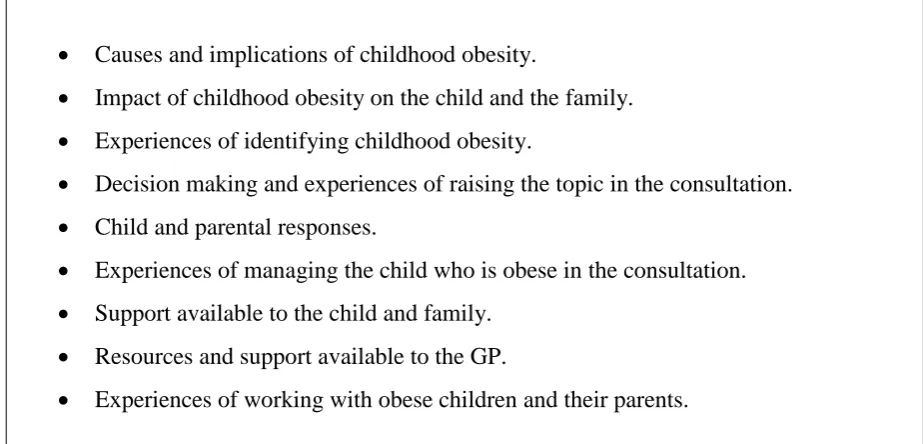
This chapter will explore the literature on GPs’ experiences of identification and management of childhood obesity through an evaluation of the relevant publications. Section 2.1 outlines the literature search strategy. Sections 2.2 to Sections 2.6 provide a contextual overview of the literature relating to the health, social and economic consequences of childhood obesity. These sections also explore the relevant literature relating to the prevention of childhood obesity, where settings outside of general practice seem to be the most effective; and the management of childhood obesity, concluding that the evidence of effective management interventions is extremely limited. Section 2.6.1 to Section 2.6.6 provides a critical summary of the literature pertinent to the research question of GPs’ experiences of childhood obesity. It includes the views of GPs about their perceived roles, their perspectives about the causes of childhood obesity, and their reported experiences in the identification and management of childhood obesity in a primary care setting. Wider pertinent issues such as training and competence and how the infrastructure and organisation of primary care impact on their responses are also considered. Section 2.6.7 focuses specifically on the perspectives of GPs working with parents of children who are obese, and incorporates additional literature on parental needs, expectations and behaviours, and the views of parents regarding primary care interventions. The summary in section 2.7 draws together the discussion of GPs’ experiences of the identification and management of childhood obesity and highlights the gaps in existing knowledge which this study aims to address, thus confirming the relevance of the key research questions in this thesis.
24
included and studies were in the main limited to those countries with a high degree of applicability to the UK; including the USA, Canada, Western Europe, Australia and New Zealand.
2.2. The health, psychological and social consequences of childhood obesity.
Childhood obesity is a complex, multifactorial condition that results from an interaction between genetic, environmental and behavioural factors, (Maffeis, 2000; Murray and Battista, 2009). Emerging research has attributed the growth in childhood obesity to a vast and often diverse range of factors including excessive food portions (McCrory et al., 2000), fast food consumption by young people (Ebbelling et al., 2002; Thompson et al., 2004), skipping breakfast (Niemeier et al., 2006), consumption of sweetened beverages (James et al., 2004), irresponsible food marketing (Lobstein and Dibb, 2005), sedentary lifestyles (Eisenmann et al., 2004), insufficient sleep (Chaput et al., 2007), increased television viewing (Crespo et al., 2001) and reduced breastfeeding (Arenz et al., 2004; Bovbjerg et al., 2013).
25
Obesity in childhood is known to have a significant impact on psychosocial health, and lead to an increased risk of developing behavioural and persistent psychosocial problems (Sjoberg et al., 2005; Griffiths et al., 2010).In addition, children who are obese are likely to experience bullying (Griffiths et al., 2006) which can affect their performance at school (Caird et al., 2011) and social functioning (Griffiths and Page, 2008). Children who are obese are known to become targets of significant discrimination and stigmatisation, (Dietz, 2004; Tang-Peronard, 2008).
2.3. Costs associated with childhood obesity.
Rudolf et al., (2006) argues that if obesity could be reversed in childhood the benefits to individuals and the savings to the health service would be significant. Whilst research to quantify the economic costs associated with child obesity is still emerging, a review of nine recent studies of the economic burden of child obesity in different countries, reported that most found increased healthcare costs for obese children (Pelone et al., 2012). Analyses presented in the Chief Medical Officer Annual Report, “Our Children Deserve Better: Prevention Pays” (2013) suggest that the total current cost of treatment of child obesity and its associated consequences in England is £51 million per year. The report also identified that the long-term healthcare costs which can be attributed to child obesity in England are estimated to range between £172 million and £206 million. These figures draw on the healthcare costs of treating adult obesity and include the direct costs of treating obesity, including GP consultations, hospital attendances and prescription drugs, and the direct costs of treating the health consequences of obesity, for example type 2 diabetes, hypertension, myocardial infarction, stroke, selected cancers and osteoarthritis. The figures also include indirect costs as a result of loss of earnings attributable to premature mortality, incapacity and sickness. The estimates are based on the assumption that 68% of the obese child population aged 2–15 in 2012 will grow into obese adults (Park et al., 2012), and that treatment costs remain constant.
2.4. The prevention of childhood obesity.
26
children. Of the interventions considered, those combining dietary and physical exercise components were found to be more effective than isolated programmes. The authors identified a range of more promising strategies, typically based in a school setting, including school curriculums that promoted healthy eating and physical activity, increased sessions for physical activity and improvements in nutritional quality of the food supply in schools. In addition, they concluded that environments, cultural practices, parent support and home activities that support children eating healthier foods and being active contributed most to the beneficial effects observed (2011. p. 35).
The conclusions by Waters et al., (2011) were confirmed in a more recent review of child obesity prevention programmes (Wang et al., 2013). In this review, 124 intervention studies were considered, of which 84% were school based, although frequently with components implemented in other settings such as the community. The review found strong evidence that school-based combined diet and physical activity interventions and home (e.g. involving parents) or community programmes have some success in preventing childhood obesity. However outside of the school and parental environment, there is a lack of high-quality studies that test environment or policy-based interventions to prevent childhood obesity, such as regulations on food retailing and distribution (Ding and Gebel, 2012). In addition, Bambra et al., (2013) have highlighted the lack of accessible evidence on interventions to reduce inequalities in childhood obesity, and their paper (Bambra et al., 2013) previewed a future systematic review, yet unpublished, which will examine the effects of individual, community and societal level public health interventions on addressing socioeconomic inequalities in childhood obesity (2013, p.16).
2.5. The management of childhood obesity.
27
dependent on the child’s age and BMI level. The lack of equivocal evidence to successfully address these complexities, particularly in the long-term, has made it difficult to draw firm conclusions regarding sustainable treatment options (Oude Luutikhuis et al., 2009; Whitlock et al., 2010).
The most current systematic review of childhood obesity treatments (Oude Luttikhuis et al., 2009) included 54 RCTs (5,230 participants), of which 12 were published studies of lifestyle interventions focussing on physical activity and sedentary behaviour, 6 studies of diet modification and 36 studies of behaviourally orientated treatment programmes. It concluded;
“ While there is limited quality data to recommend one treatment programme to be favoured over another, this review shows that combined behavioural lifestyle interventions compared to standard care or self-help can produce a significant and clinically meaningful reduction in overweight in children and adolescents.” (2009, p.2).
However, in relation to interventions to reduce childhood obesity in a primary care setting in the UK the evidence is very weak. This is confirmed in the NICE guideline 43 (2006) which, whilst offering a comprehensive summary of the international literature, provides no evidence of studies carried out in primary care in the UK, (Mercer, 2009). Section 5a of the NICE guideline, “Management of obesity in clinical settings (children): evidence statements and
reviews,” (2006) concluded that;
“Insufficient evidence is available on the effectiveness of interventions for overweight
children and adolescents that can be conducted in primary care settings or to which primary care clinicians can make referrals.”(2006, p. 465)
Outside of the UK, two trials, one randomised trial in Australia (McCallum et al., 2007), and one non-randomised in the US (Schwartz et al., 2007) evaluated brief, individualised primary care interventions targeting overweight or mildly obese children identified by screening. Neither of the studies was effective in reducing participant’s BMI relative to controls. Wake et al., (2009) completed a RCT, including 45 family practices (66 General Practitioners) and 258 children in order to evaluate the LEAP 2 programme, a structured secondary prevention programme in primary care. The authors concluded that,
“Primary care screening followed by brief counselling did not improve BMI, physical
28
very costly if universally implemented. These findings are at odds with national policies in countries including the US, UK, and Australia.” (2009, p.339).
Since the NICE guideline (2006) and the systematic review of childhood obesity treatments by Oude Luttikhuis et al., (2009), Banks et al., (2012) presented initial findings that offer a contribution to the literature on a UK based primary care childhood obesity intervention. The findings in their paper (2012) relate to the “Primary Care – Care Of Childhood Obesity