© 2016, IRJET | Impact Factor value: 4.45 | ISO 9001:2008 Certified Journal | Page 311
Improving Motion Estimation using Adaptive Weighted Mean
FilterMr.P.N.Sharma
1, Mr.P.A.Bhalge
21M.E Student,Computer Department, BNCOE, Pusad,INDIA
2Assistant Professor,Computer Department, BNCOE, Pusad,INDIA
Abstract -
This paper presents a new motion estimation algorithm to improve the performance of the existing algorithms at a relative low computational cost..The existence of impulse noise is one of the most frequent problems in many digital image processing applications. So for the removal of such impulse noise filter are widely used. The median filter is well-known.A more general filter, called the Adaptive Weighted Mean Filter.Therefore, This paper focuses on the study of the motion estimation using adaptive weighted mean filter.The submitted modification use the adaptive weighted mean filter and the Three step search(TSS) algorithm. Simulation results show that proposed technique can efficiently improve the motion estimation performance.Key Words: Motion estimation,Filter,Adaptive weighted
mean filter,Three step search(TSS).
1. INTRODUCTION
The purpose of the motion estimation (ME) and com- pensation is reduction of redundancy caused by interframe correlation of movement objects [1]. However, the estimation and coding of movement vectors should be appropriated to computational costs and bit rates at the perspective high compression systems. That’s why relationship between accuracy of movement estimation and simplicity of the description vector fields is very important. Better motion estimation means higher space decorrelation of prediction errors in time area.
The most popular approach is to reduce the number of search locations by using the assumption of unimodal error surface in which the matching error decreases monotonically when the searching location approaches to the global optimum. However, this assumption is not usually satisfied, thus resulting in local optimal solution. Instead of limiting the number of search locations, another interesting technique aims at reducing computation of block matching with pixel subsampling, successive elimination algorithm (SEA) [4] or segmentation [12], [13].
The two techniques achieve computation
reduction with or without loss of search performance. However, they cannot achieve the better performance than FSA. Another direction for fast computation is to exploit the motion correlation between the neighboring blocks in spatial and temporal directions [8]. However, only the
correct and fully exploited the spatial and temporal correlations, the improvement of estimation accuracy can then achieve.
For fast search algorithms, the loss of estimation accuracy is due to the simplification process, or the false assumption. On the other hand, the search is performed for integer location, thus the lower precision is also degraded the motion compensation performance.
Since the motion of neighboring blocks in both spatial and temporal are highly correlated. But the motion correlation in spatial neighboring is different from temporal neighboring. In spatial neighboring, the blocks may be partitioned from the same object, thus the neighboring blocks have the motion with similarity. In temporal neighboring, the blocks have the same characteristics of motion, i.e., nearly the same velocity or acceleration.
The further tradeoff between accuracy of ME and spatial homogeneity of temporal prediction errors led to the choice of the block matching algorithm (BMA) [1] for ME, possibly followed by vector field postprocessing [2]. A regularization procedure of motion vectors may be either embedded in the estimation itself [3], or designed for post- processing estimated vectors by exploiting confidence measurements as well.
The BMA suffers from another limitation concerning the fidelity of the predicted image: blocking effect is introduced for the lack of coherence of the estimated motion to the actual motion. It is possible to overcome this drawback partially by smoothing the estimated vector field in a further stage. Smoothing can be accomplished, for example, by using weighted mean filtering [2], [6], [7], [5] or Kalman filtering [8].
Therefore, in this paper, the main purpose is to pre- sent a motion estimation and filtering techniques that give consideration to both estimation performance and compu- tational efficiency.
© 2016, IRJET | Impact Factor value: 4.45 | ISO 9001:2008 Certified Journal | Page 312 2. MOTION ESTIMATION
For the estimation of the displacement vector (u, v) in a point (x, y) in a frame q, a small matching block centered at the point (x, y) is taken from the frame q and compared with all matching blocks centered at points (x-u, y-v) within a searching area (SA) of the frame q-1. The best match is taken as the presumable displacement vector VB r with components (uB, vB). Typical (usually used) matching criteria are the mean-square error (MSE) defined as
or the mean-absolute difference (MAD) defined as
where Xq, (Xq-1) are picture elements of matching block of frames q, (q-1). The size of the matching block is M by N. Assuming a maximum horizontal or vertical displacement of dm picture elements (-dm ≤ u, v ≤ dm). The full search (FS) procedure for finding the correlation peak requires an evaluation of MSE or MAD at
Q =(2dm +1)2 (3)
different horizontal and vertical shifts.
In order to reduce computational cost by reducing the high amount of trials, several fast search algorithms for block matching have been developed (2DLOG, TSS, conjugate direction search methods etc.) [1]. In these methods, the best match of the first step is the starting point of the sub- sequent step in which the search points are less coarsely spaced. Another very promising method is block matching with use of the conventional (cross) correlation (CC) function or phase correlation (PC) function [9]. In [10] motion estimation algorithms are proposed, based on the presumption that invertible rapid transform (IRT) consists of the rapid transform (RT), which supplies a
shift invariant pattern from the input pattern, and a binary coding process (generating additional data), which records the „phase information“ of the input pattern. Thus additional data are known as a matrix of states (binary matrix) for 1D-IRT or a system of matrices of states (system of binary matrices) for 2D-IRT. The success measure of finding movement vector VB r with components (uB, vB) considering the block B(x, y) can be the value MADB in the position (x, y)
which one needn’t be his minimal value for the fast search algorithms in case of non observance of the monotony criteria condition MAD(x, y, u, v) in SA. In this case BV r can be considered a vector corrupted by noise. To reduce errors in displacement estimate due to false motion detection, a thresholding technique can be adopted. The threshold value T1 should be set proportional to the variance of the background noise (in our case T1 was set to 3 or 5 experimentally). If MADB(x,y,0,0)<T1, where
thus the movement vector considering the block B is justi- fied to ( ) ,00=BV r and the searching procedure of the dis- placement vector is omitted. The binary matrix of search MS can be defined, which elements are
For (k, l) it can be written: x=(l-½)N, y=(k-½)M, k,l=1,2,… The value MS(k,l) = 1 indicates in which block the searching procedure was realized.
3.CRITERIA OF MOVEMENT ESTIMATION
© 2016, IRJET | Impact Factor value: 4.45 | ISO 9001:2008 Certified Journal | Page 313
There are often used subjective criteria or objective ones (i.e. analytically evaluated measures) in the analysis of
effectiveness of motion estimation algorithm
implementation. The subjective criteria represent
subjective regards of larger number of respondents, which categorize picture quality into several levels. The effect of motion estimation can be indicated by the improvement in the signal-to-noise ratio (SNR). We define
where Xq(x, y) are values of pixels of the frame q, X*(x,y) are the values of the reconstructed frame or frame q-1, VS is the vertical size of the frame, and HS is the horizontal size of the frame.
4.ADAPTIVE WEIGHTED MEAN FILTER
The main idea of AWMF is to decrease the detection errors and to replace the noise candidates by better value than median.The Adaptive weighted mean filter (AWMF) is used to remove SPN especially for high-level noise. For a given pixel, firstly,the window size is enlarged continuously until the maximum and minimum values of two successive windows are equal respectively. Secondly, the given pixel value will be replaced by the weighted mean of the current window if it equals the maximum or the minimum values, otherwise, it will be unchanged.
Algorithm:
5. LITERATURE SURVEY AND RELATED WORK
Peixuan Zhang and Fang Li, “A New Adaptive Weighted Mean Filter for Removing Salt-and-Pepper Noise” propose a new adaptive weighted mean filter (AWMF) for detecting and removing high level of salt-and-pepper noise. For each pixel, they firstly determine the adaptive window size by continuously enlarging the window size until the maximum
and minimum values of two successive windows are equal respectively. Then the current pixel is regarded as noise candidate if it is equal to the maximum or minimum values, otherwise, it is regarded as noise-free pixel. Finally, the noise candidate is replaced by the weighted mean of the current window, while the noise-free pixel is left unchanged. Experiments and comparisons demonstrate that proposed filter has very low detection error rate and high restoration quality especially for high-level noise. Experimental tests show that proposed AWMF method could perform better than many other existing filters.[14]
Wang Chang-you, et.al, “A new kind of adaptive
weighted median filter algorithm”. A new adaptive weighted median filtering algorithm is proposed in this paper uses the block uniformity as testing standard to detect the pulse noise on the image. The new algorithm first takes a decision whether the pixel under test is noise or not by comparing the block uniformity of the 3x3 window with one of the entire image, then adjusts the size of filtering window adaptively according to the number of noise points in the window. Finally the noise is removed by means of ameliorated median filtering algorithm. Experimental results clearly indicate that the proposed method has a better filtering effect than the existing methods such as standard median filter, adaptive median filter in terms of visual quality and quantitative measures. [15]
Rohini R. Varade, et.al, “A Survey on Various
Median Filtering Techniques for Removal of Impulse Noise from Digital Images”. The existence of impulse noise is one of the most frequent problems in many digital image processing applications. So for the removal of such impulse noise median based filter becomes widely used. This paper surveys seven common median filtering techniques. Each technique has its own advantages, and disadvantages. Most of the recent median filtering based methods employ two or more than two of these framework in order to obtain an improved impulse noise cancellation.[16]
Trapti Soni, et.al, “A Comparative Performance
© 2016, IRJET | Impact Factor value: 4.45 | ISO 9001:2008 Certified Journal | Page 314
filters MNF filter performance is better. This filter is quite effective in eliminative the impulse noise. Extensive simulation results verify its excellent impulse detection and detail preservation abilities by attaining the highest PSNR and lowest MSE values across a wide range of noise densities. [17]
Mária Gamcova, Stanislav Marchevsky, et.al,
“Higher Efficiency of Motion Estimation Methods” In this paper they suggested a new motion estimation algorithm to improve the performance of the existing searching algorithms at a relative low computational cost. The submitted modifications conditionally use the AWM and full search algorithm (FSA). The results in this paper indicate that modifications of algorithms can bring small increasing of computational time (with comparison to 2DLOG) but sign an improvement of SNR and decreasing computational time with comparison to FSA. The more realistic representation of motion in frame after application filtering procedures and their modifications can be seen from vector fields and polar plots. The proposed experiment results indicate good results in terms of computation cost, speed, and motion estimation accuracy. [18]
Jigar Ratnottar, et.al, “Comparative Study of Motion
Estimation & Motion Compensation for Video
Compression”. This paper gives the better comparison for Motion Estimation & Motion Compensation, which are the major parameter for getting the highest compression. The ME process analyzes previous or future frames to identify blocks those are not changed and the motion vectors are stored in the place of blocks. Whereas Motion Compensation technique gives the residue of original image & estimated image.[19]
6. EXPERIMENTAL RESULTS
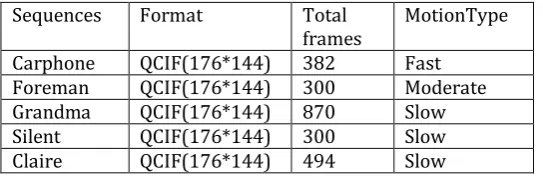
[image:4.595.300.566.217.321.2]In this sections result analysis is discuss in detail. Video contain frames and frames are nothing but images. Image basically made up of number of pixels. Any work that is related with the image can be done on the basis of number of pixels in an image. This Paper focuses on improving Motion Estimation using different algorithms. Image sequences with large, moderate or small motion are exploited in this paper.
Table 1: QCIF input Sequences
Sequences Format Total
frames
MotionType
Carphone QCIF(176*144) 382 Fast
Foreman QCIF(176*144) 300 Moderate
Grandma QCIF(176*144) 870 Slow
Silent QCIF(176*144) 300 Slow
Claire QCIF(176*144) 494 Slow
These image sequences are tested using the three methods of this project. The performance of an algorithm is expressed with PSNR computed and the Time required to
[image:4.595.30.302.635.724.2]compute Motion Vector. The Following table summarizes the results of simulation of the above sequences for PSNR expressed in decibel(dB) and the Time for Full Search, Three Step Search, and the Three Step Search with Adaptive Weighted mean Filter. The results obtained with the first 100 frames for video sequences are presented in the table 2.
Table 2: Performance comparison between FS,TSS and TSS with AWMF
Video File FullSearch Three Step
Search
TSS using
AWMF PSNR TIME PSNR TIME PSNR TIME
Carphone 26.30 1.29 22.94 0.34 22.94 0.33
Foreman 22.75 1.20 18.99 0.31 18.99 0.33
Grandma 38.71 1.20 35.44 0.31 35.45 0.32
Silent 29.67 1.20 26.79 0.35 26.80 0.31
Claire 38.11 1.21 32.59 0.31 32.59 0.32
From the table, it is clear that the PSNR of Full Search algorithm is efficient but it requires the more time to compute motion vectors. So this algorithm is best in terms of quality of predicted image and the simplicity of algorithm. So it is very computationally intensive.
Results shows that the Three Step Search using
Adaptive Weighted Mean Filter Method gives the better performance similar to Full Search Method.
7. CONCLUSION
Among the all motion estimation methodologies, the block matching received very much attention by researcher because of their simplicity and regularity. In this paper, an improved method based on AWMF is proposed. The Three Step Search using AWMF produces results close to FS.FS is fastest, it is computationally intensive. Experimental results shows that TSS using AWMF gives the better performance similar to FS.
REFERENCES
[1] Musmann, H. J., Pyrsh, P., Grallert,H. J. Advances in Picture Coding. In Proceedings of the IEEE, 1985, vol. 73, no. 4, p. 523–548.
[2] Koivunen, T., Nieminen,A Motion Field Restoration using Vector Median Filtering on High Definition Television
Sequences,In Visual Communications and Image
Processing ’90, 1990, vol. 1360, p. 736–742.
© 2016, IRJET | Impact Factor value: 4.45 | ISO 9001:2008 Certified Journal | Page 315
[5] Alparone, L,. Santurri L,Weighted Median Refinement of Motion Vectors in H.263-Based Video Coding. In IEEE Packet Video Workshop. Forte Village, Cagliari (Italy), May 2000.
[6] Alparone, L., Barni, M,. Bartolini, F., Cappelini,Adaptively Weighted Vector-Median Filters for Motion Fields Smooting. In Proceeding of IEEE International Conference on Acoustics Speech and Signal Processing ICASSP”96. Atlanta (Geor- gia, U.S.A.), 1996, p.2267-2270.
[7] Alparone L,. Barni, M., Bartolini, F.,
Caldelli,Regularization of Optic Flow Estimates By Means of Weighted Vector Median Filtering. IEEE Trans. Image Processing, 1999, vol.8, no. 10, p.1462-1467.
[8] Kuo, C. M., Hsieh, C. H., Li, H. C., - Lu, P. C,Motion Estimation Algorithm with Kalman Filter. Electronics Letters, 1994, vol.30, no.15, p.1204 - 6.
[9] Gőtze,Generation of Motion Vector Fields for Motion Compensated Interpolation of HDTV Signals. Signal Processing of HDTV, North-Holland, 1988, p. 383 - 391. [10] Gamec, J., Turán,Inverse Rapid Transform and Motion Analysis. In Proceedings of Workshop COST 229, Bayona-Vigo (Spain), 1994.
[11] Turán, J., Fazekas, K., Gamec, J., Kövesi,Railway Station Crowd Motion Estimation Using Invertible Rapid Transform. Image Processing & Communications, 1997, vol. 3, no. 1-2, p.13-23.
[12] Polec, J., Karlubíková, T., Pavlovičová, J. B-th Order
Interpolation of Segmented Images Using Shape
Independent Sine Transform. In Proc. of IWSSIP 2000. Maribor (Slovenia), 2000, p. 85-87.
[13] Polec, J., Pavlovičová, J. Generalized Interpolation of Seg- mented Images Using Shape-Independent Orthogonal Transforms. In Proc. of Int. Conference on Image Processing ICIP 2001. Thessaloniki (Greece), 2001, p. 888-890.
[14] Peixuan Zhang and Fang Li,2014,A New Adaptive Weighted Mean Filter for Removing Salt-and-Pepper Noise,IEEE Signal Processing Letters, Vol. 21, No. 10, Oct. 2014.
[15] Wang Chang-you, et al, 2010,A new kind of adaptive weighted median filter algorithm,International Conference on Computer Application and System Modeling (ICCASM 2010).
[16] Rohini R. Varade, et al, 2013,A Survey on Various Median Filtering Techniques for Removal of Impulse Noise from Digital Images,International Journal of Advanced Research in Computer Engineering & Technology (IJARCET), Vol. 2, Issue 2, Feb. 2013.
[17] Trapti Soni, et al, 2014,A Comparative Performance Analysis of High Density Impulse Noise Removal Using Different Type Median Filters, International Journal of Computer Science Trends and Technology (IJCST), Vol. 2, Issue 6, Nov. 2014.
[18] Mária Gamcova, Stanislav Marchevsky, Ján Gamec,
2004,Higher Efficiency of Motion Estimation
Methods,Radioengineering, Vol. 13, No. 4, Dec. 2004. [19] Jigar Ratnottar, et al, 2012,Comparative Study of Motion Estimation & Motion Compensation for Video