In translation...
A Design Prespective
by Siyang Chen
University of Michigan l Penny Stamps College of Art and Design
RED = Final File Size/Bleed Line
BLACK = Page Size/Trim Line
Advising Committee
Approved by:
Jan-Henrik Andersen, Graduate Committee Chair
Eric Rabkin, Graduate Committee Member
Colleen Seifert, Graduate Committee Member
Gautam Kaul, Graduate Committee Member
Elona Van Gent, Associate Dean for Graduate Education
7
4. @Fingertips
1. Moneybag
3. Island
5. Bowl
Contents
1. Abstract1.1 Acknowledgment 1.2 Preface
2. Identity
2.1 Identity as value
2.2 Moneybag’s confl icting life
2.3 Identity as confl ict judgement
2.4 Statement in identifi cation
3. Empathy
3.1 Emptiness, as empathy
3.2 Emptiness as understanding
3.3 Empathy, as accessibility
3.4 Marginalization to inclusion
4. Awareness
4.1. Mundane awareness
4.1. Formation as awareness
4.3 Time as awareness
4.4 Awareness as understanding
8
9
1.Abstract
Keywords: Conflict, Empathy, Prespectives, Subjective, Objective, Identity
Design is a meaning and making process that directs emotion, influencesideology, and shapes attitude.1 We are the subjects of the objects
we make, and when we become the focus of the designed object, the subjective and objective considerations of a design are internally
connected.2 As people in a networked society, the borderline between
11
Life is full of learning to live by what you are taught. I wish we had more time to share, to talk, and to dream together. But time is what it is and we all eventually find new ground to cover. I will cherish everything you taught me.
Thank you to a wonderful thesis committee: Jan-Henrik Andersen, Eric Rabkin, Colleen Seifert, Gautam Kaul. Your thougts and suggestions have shaped my thesis. In this journey, you have each challenged me in different ways to think and to take risk.
Special Thanks to my friend, Shaun Jackson who inspired me to be more than my present self, to carry on beyond my present work into my future.
A gritty hands and warm heartful thanks to Shawn O’Grady from the Duderstadt, and John Leyland from the Ceramics Studio for supporting my ideas throughout the making process.
Thanks to those across the past three years in class and on campus. whose stories have been inspirational in my creative journey.
1.1 Acknowledgement
RED = Final File Size/Bleed Line
BLACK = Page Size/Trim Line
12
One would also hear cuckoos crying beneath the moon at night, Filling the empty mountain with grief. The way to Shu is hard,
harder than scaling the blue sky;
Just hearing these words turns one’s cheeks pale. Peak upon peak less than a foot from the sky, Where withered pines
hang inverted from sheer cliffs, Where cataracts and roaring torrents make noisy clamor,
Dashing upon rocks,
a thunderclap from ten thousand glens. A forbidding place like this-- I sigh and ask
why anyone should undertake such a long journey. There the Sword Peak stands erect and sharp: With one man guarding the pass,
Ten thousand cannot break through. Should those on guard prove untrustworthy, They could have turned into leopards and wolves. Mornings, stay away from fierce tigers; Evenings, stay away from long snakes-- They gnash their fangs, suck human blood, And maul people down like hemp.
The Brocade City might be a place for pleasure, But it’s far better to hurry home.
The way to Shu is hard, harder than scaling the blue sky.
Sideways I look westward and heave a long sigh. The Way To Shu Is Hard
Li Bai 699-762
Woe--! Phew--! How Steep! How high! The way to Shu is hard, harder than scaling the blue sky! Princes Cancong and Yufu Opened up the land in the dim past. Forty-eight thousand years since that time, Sealed off from the frontier region of Qin ! On the west stands Great White Peak, with a bird track
Spanning across to the summit of Mount Emei. Earth tottered, mountains crumbled, brave men perished,
And then came stone hanging-bridges, sky-ascending ladders interlocked. Above, the highest peak bounced the Six-Dragon chariot back to the sun;
Below, the gushing, churning torrents were also turn around.
Yellow swans cannot fly across,
And gibbons in despair give up their climbs. How the Mud Mountain twists and turns! Nine bends within a hundred steps, zigzagging up the precipice, To where breathless,
one can touch the stars Shen and Jing! Beating my breast,
I heave a long sigh and sit down. May I ask when you expect to return, traveling so far west?
Terrifying rocks,
13
1.2 Preface
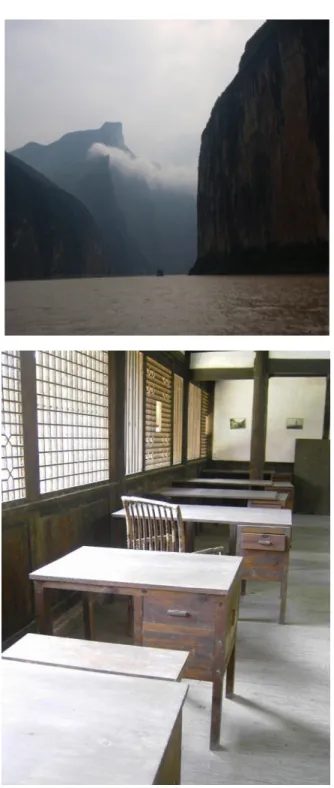
I was born and raised in Sichuan (Shu, the ancient name for Sichuan), famous for its biodiversity, Sichuan cuisine and nature resource. Sichuan is home to the famous Giant Panda sanctuaries and has nine scenic parks, and together Sichuan is surrounded by the Himalayas to the west, the Qinling Range to the east and the mountainous parts of Yunnan Province to the south. As described in Li Bai (699-762)’s famous poem about the difficult roads: “How steep! How high! The way to Shu is hard, harder than scaling the blue sky. Earth tottered, mountains crumbled,
brave men perished.”3 The area also has a signification population of
minorities such as Tibetans, Yi, Qiang and Naxi in the province as well. Both my experience in such a closed geographic location and my exposure to diverse cultures, influences my can-do spirit and my confrontational exchange with the rest of the world(fig.1.1.1). I left home 20 years ago and went to an art high school affiliated with Sichuan Institute of Fine Art in ChongQing, and later to Beijing to study Industrial design in Tsinghua University. From 2007 to 2013, I worked as product designer and visual artist in product development and information technology.
I started to notice that no matter where I went, I could always feel the conflicting movement of globalization, technology and how their values shaped my life, the environment, and the culture of this age. The internal conflicts within myself motivated me to move around were the influences of these “values” on me would be easier to understand in my pursuit of the meaning of exchange and how a local culture can develop its own voice in the world. My creative curiosity is the process of identifying the intangible conflicts and as a result, it has taken off my journey from pursuing the satisfactory of tangible elements in design into the intangible elements such as meaning in design, and how a tradition can
RED = Final File Size/Bleed Line
BLACK = Page Size/Trim Line
14
15
be a cultivation of new understanding in design. Inspired by my living experience in China and study experience in United States, I have chosen to design and make objects by abstracting their historical meaning into a new understanding. In this process, I explore the semantic meaning of perception and process from the view of the maker. I believe the role of designer is not only to utilize, but also to consider design as cultural commentary, to stimulate value, and discuss its implications in a larger historical, social, and cultural landscape.
RED = Final File Size/Bleed Line
BLACK = Page Size/Trim Line
16
“Things embody goals, make skills manifest, and shape the identities of their
users. Thus the objects also make and use their makers and users.”
4-Mihaly Csikszenmihalyi & Eugene Rochberg-Halton
“Identity is the human capacity…Identity shake the foundation of our life…it is
fundamental to the human organization: it is how we know who is who and what
is what.” …Identity is a process-identification-not a ‘thing’. It is not something
that one can have, or not; it is something that one does.”
5-Richard Jenkins
4. Csikszenmihalyi, Mihaly, Rochberg-Halton, Eugene. (1981) The meaning of things: Domestic symbols and the self. Milwaukee: Cambridge University Press 1981.
17
Products have their identity, and their identity can affect our identity in
variety of ways.4 While identification is processed between products and
people, it raises the question of the role of their connections in context. For example, in my moneybag project, I explore the connections between the identity of products and the identity of people, while asking whether the economic growth of a product reforms the way a society pursuits its collective interests? Also whether in the pursuit of interest, can the material identity of the product affect the way that same society directs their goals and participation with the development of the products? Most importantly, do changes in the society’s ambition for growth affect the product’s identity, and if these changes do affect the identity of the product, does this transfer to an emotional or spiritual inequality for its consumer audience?
As a designer, I am concerned with the ideological relationship between people and objects. Prior to this relationship I am equally curious of the cause and affect of industry practices that create products more quickly and easily, and how this raises critical questions regarding the achievement of customer satisfaction while fulfilling profit driven by design. Both of which are philosophically against my concern that social disparities such as poverty and hunger are still critical issues in China. There is an urgent need for understanding the interests and pursuits of economic growth while understanding the valuation of material means. How the sharing of growth with the makers, helps the community that supports the making of the product, and how this also retains the society’s cultural confidence. Without an understanding of the social and ethical value of making items, an industry might fail to understand the meaningfulness of the product on both the makers and consumers.
2. Identity
RED = Final File Size/Bleed Line
BLACK = Page Size/Trim Line
18
6. Forty, Adrian. ( 1986 ). Object of desire: Design and society since 1750. New York: Thames & Hudson 7. CNBC. (2013, Feb). Wealthy Chinese shift their luxury buying overseas. Available from http://www.cnbc. com/id/100491304
8. The economist. (2013, Jun). Luxury goods in China: Beyond bling. Available from http://www.economist. com/news/business/21579015-life-getting-harder-purveyors-luxury-china-growth-prospects-are-still
19
As design scholar Adrian Forty states, “Nearly every object we use, most of the clothes we wear and many the things we eat have been designed.
Since design seems to be so much a part of everyday life.” 6 There are
some unique occasions where the identity of the product is significant, where the identity of the product can remind us how living with products has an affect on our own lives, for example:
In 2013, I took my cousin and her colleagues from my hometown in Chengdu to New York City as their tour guide. We spent three days in New York, mostly in shopping districts, such as Fifth Avenue and Madison Street in Manhattan. In the three days, I had been amazed by two uniquely different but related phenomena. The first was evident in the population of the luxury stores, which were full of Chinese customers. The importance of these customers caused some of the luxury brands dealers like Coach to even have sales clerks that can speak fluent Mandarin. The next phenomenon is the inclination of Chinese citizens to consume luxury brands abroad that are available in China. In three days, the touring group that accompanied me had spent approximately $30,000 in a single United States city, and according to a CNBC report in February, Chinese customers spent $8.5 billon on luxury goods overseas
during a [single] month – an 18 percent gain over last year.7 In a wider
scope around the world, Chinese customers are becoming the worlds
fastest growing group of customers (fig 2.1.1). 8
2.1 Identity as value
RED = Final File Size/Bleed Line
BLACK = Page Size/Trim Line
20 Figure 2.2.2
21
On the other side of earth, in a rudimentary luggage-manufacturing studio there was a different reality, a different experience away from the manicured men of retail (fig.2.2.2). My experience was shredded fabric laying everywhere on the ground, and two dogs making their nest inside a corner of fabric (fig.2.2.3). Walls are filled with more than 50 scrolls of leather each, while twelve workers toiled away using stop sewing machines, sewing packages of various colors. It reads like a rainbow. Our strange visitation does not even raise an eyebrow or stop a single hand from their needlework. They’re skilled and function like machines. Calm, maybe even numb. It is as if this calmness fuels the speed, and it is in the constant hum of the passionate moment, my eyes lock to the twin Louis Vuitton bags on the table.
Though the bags have a similar story, each bag is different because of their individual points of departure. The dramatic difference between the identity of the product based on its brand, and the identity of the product based on its maker brings me to the understanding of the maker’s identity in defining the value of the product. It encouraged me to explore local craftsmen and workshops in the making of my own work, and my curiosity of the village in Pi County lead me to understand more about the identity of this small community of makers. Pi County is a place of natural resources such as good water that is used for making a variety of seasonings, like the spicy fermented bean sauce, douban-jiang. Local people in region of Pi County identify with the products they make such as the special sauce douban-jiang because they spend a year to make douban-jiang. Thereby, the douban-jiang, which is the soul of this community, is also the soul of the Sichuan Province and personality of the famous Sichuan Cuisine.
RED = Final File Size/Bleed Line
BLACK = Page Size/Trim Line
Figure 2.2.4
Over the past six years, Pi County has become highly commercialized into an industrial and estate development center, mostly during the upward trend of economic growth (fig.2.2.4). As I introduced in my example, my friend and I successfully requested an appointment to meet a local leather goods maker whose workshop is in Pi County. Xiao Luo, who is the lead tailor of this workshop, hosted my visit and shared with me how he moved from village to the Pi county to open his business. He told of how in two years, many new factories were being built in rural areas quite fast, replacing the rural homeland and coming out of the ground like crop, and how in two years, most small villages have become small towns. Their farmland disappears replaced by real estate development they cannot afford. People in Pi County no longer wait for the beans to grow, to mature, to be fermented, and hence they lose the identity in the process of making, the identity that I attribute to their happiness. Business is replacing the calm of this rural area and the new houses and cars represent the changing perception of quantity of money to provide their happiness (fig.2.2.5). Even in this small rural area the presence of a products monogram finds its existence in this newly built workshop because of financial allure. The availability of the products identity through monograms replaces the community identity that was once a source of happiness of its people who are now too quick to re-associate themselves with the symbols of value and disre-associate with their previous social identity.
RED = Final File Size/Bleed Line
BLACK = Page Size/Trim Line
25
2.2 Moneybag’s conflicting life
By associating a familiar conflict with a new attitude, the Moneybag invites audiences to celebrate their comfort with a symbolic brand identity, as well as their confusion with the identity of its maker by alluding to a similarly made product (fig.2.3.1). I believe this exchange mirrors what the consumer would feel if they understood the entirety of development associated with a product’s identity, and perceiving a culture of profit associated with what they purchased. The process of making the moneybag installation was an opportunity for me to understand challenges of my culture and community in relationship to a global economy of counterfeit products, and my personal views as a designer and makers connected. I realized through this project that the maker has a unique place in the development of the products value through the time for making the product and space the product travels to get to the consumer. These are linked with products final value changing the perception of making on design and of design on consumption.
RED = Final File Size/Bleed Line
BLACK = Page Size/Trim Line
32
Identification matters because it is the basic cognitive mechanism that humans
use to sort out themselves and their fellow, individually and collectively...The
perceptual basis of cognition is an internal-external dialectic between mind and
environment.
9-Richard Jenkins
9. Jenkins, Richard. (1996, 2004, 2008) Social identity, 3rd ed. London; New York: Routledge
RED = Final File Size/Bleed Line
BLACK = Page Size/Trim Line
33
Identity, as a process of living within a social context, varies in context as a matter of how we perceive the identity of others in relationship to
ourselves.9 At the same time, it produces an interaction between the
context and our self-identity in that it creates meaning for the products that form the context. In my Obama seal project, I question the identity in a narrative context, wondering if identity is the conscious structure between others and myself in the understanding of given statement. I question whether it is possible to exchange the identity of a particular statement to equally share in its reflection based on diverse interpretations of its original narrative context? Can we give Obama’s statement a new identity that is not only narrative and is able to reveal to it’s readers the intended meaning of its narrative context?
2.4 Identity as conflict judgment
RED = Final File Size/Bleed Line
BLACK = Page Size/Trim Line
34
“ If over a billion Chinese citizens have the same living patterns as Australians
and Americans do right now then all of us are in for a very miserable time,
the planet just can’t sustain it, so they understand that they’ve got to make a
decision about a new model that is more sustainable that allows them to pursue
the economic growth that they’re pursuing while at the same time dealing with
these environmental consequences. So I think they understand intellectually. “
10-Barack Obama, President of the United States
35
The original English is different enough from its Chinese translation to warrant anger by the Chinese audience.10 While Obama uses a more
suggestive tone, the Chinese translation stresses an absolutely negative tone by using the phrases “not allowed to“ and “must have to,” which are degrading to use in Chinese culture. Additionally by using a different tone, the Chinese translation changes the original wording from “life pattern” to “life style”. Upon further research I learned that within the English language, the word pattern implies the model of configuration or the configuration of making things, while the style often shows the attitudes of the people involved. Between these two translations, I perceive two completely different implications, each aiming for distinct and different outcomes depending on the provocateur. This accidental misinterpretation makes me realize the crucial role of narrative identity and its correctness with how we comprehend the meanings of ideas properly.
RED = Final File Size/Bleed Line
BLACK = Page Size/Trim Line
36
Figure 2.5.1 Artist seal of Dai-Chien Chang (1899-1983)
37
2.5 Statement in identification
While I am reading the text from Obama’s speech, images grow in my head. I started to wonder if his words have color, or texture? Does his statement have an objective shape for projecting the context of his statement, which can accurately describe the compete background of his original meaning? How the space and time is destined to make the difference to understand the subtlety, but is this the same for design? Can a design idea be a reflection of the context of the statement while masking a hidden message, removing the chance for misunderstandings? In the process of verifying the message, I came to realize that the eastern seal possesses a similar validating role for rethinking the message in design. The seal first appeared in China during the Kingdom era, and was first to used as the certificate for commodity trading. When we extend the seal to fine art and other fields as with a Poet’s seal, the beauty is both a work of art and tool to prevent forgery (fig.2.5.1). Besides its functional use, the seal has always been the connection between words, forms, and identity, most importantly; the beauty of seal’s narrative work is an extension of the owner’s identity. The author of the seal keeps the physical seal close, hidden under a stone that embodies their identity (fig.2.5.2). The prints of the original seal can reveal whom its owners were, along their identity to travel across time and space. No matter how far the prints travel, their message carries the identity of the owner and the original physical seal’s emotional intent.
RED = Final File Size/Bleed Line
BLACK = Page Size/Trim Line
38
Figure 2.5.3 Obama seal
39
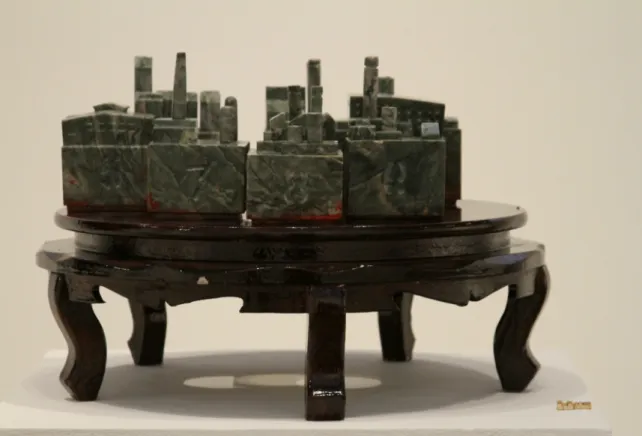
Obama Seal aims to cultivate a new meaning of historic symbols as a signature of traditional history, and as a reflection on Chinese economic growth in the broadest sense of cultural impact. Tradition is a collective belief that has existing presence in the objective structure of a society. Everyone has his or her own fragment of understanding in experiencing tradition, and time is always the missing puzzle to understand the structure of traditional nostalgia.11 While the Chinese seal is an exploration of using personal fragmentation to understand its structure as whole, the work began with the question on the responses to an authoritative statement and resulted in my employment of traditional symbols and materials: the nine dragon stones, the seal symbols and wooden seal desk. While focusing on the material nature, the objective employment in the installation is also a personal reflection of the subjective responses to the authority and abstinence from the of identity individuals on social media.
Different from how the Seal is arranged spatially when locating the calligraphy as painting, the objects are intended to shape their seal buttons to define a community of factories expressing the regal nature of the industries by which we live today. Living in an image of these relationships, between viewers and Obama seal, the conflict of the authoritative identity takes on a broader consideration of how will these industries be remembered across time and space. As a result, the objective consideration of these global issues also plays a supplementary seminal role in the meaning of the era in which environmental, emotional, and ideological differences permeate a global society.
RED = Final File Size/Bleed Line
BLACK = Page Size/Trim Line
46
Accept disgrace willingly.
Accept misfortune as the human condition.
What do you mean by “ Accept disgrace willingly’? Accept being unimportant.
Do not be concerned with loss or gain. This is called “accepting disgrace willing.”
What do you mean by “ Accepting misfortune as the human condition”? Misfortune comes from having a body.
Without a body, how could there be misfortune?
Surrender yourself humbly; they you can be trusted to care for all things. Love the world as your own self; then you can truly care for all things.
-Lao Tsu, Tao Te Ching
47
In 6th century, Laozi says the human body produces human condition. He points out the physical condition of our living and how the limit
prevents us from seeing other perspectives.12 This is similar to Viktor
Frankl’s perspective that states, “we live in an objective world, in which the subjective means of perception cannot be disconnected from their influence on the fact that we perceive the world with subjective manners because human cognition is not of kaleidoscopic nature.”
In my project Island 2012, I question the perception of emptiness versus empathic objective identification, asking the viewers to question if the subjectivity of a dispute challenges the perception of conflict when viewed from an eastern or western cultural perspective. The territorial dispute of Diaoya/Senkaku Island has been a longstanding subject of debate between Japan and China. From 2012, the conflict over ownership of the territorial border between these islands has become extremely intense and is continually discussed around the world. Unfortunately, the dispute seems irreconcilable as Japan and China each have unchanging views of ownership, which fundamentally conflict at the base of their opinion of one another. The conflict between these two countries forms from a philosophical difference these two societies have in part due to the subjective idealism of ownership. Each side views the island through
their own possessive perspective and readies their approach in defense
of this perception.
3. Empathy
RED = Final File Size/Bleed Line
BLACK = Page Size/Trim Line
The relationship between the island and people who use its resources are objective, yet people are free to interpret the relationship with the island as a product, based on the subjective history and memory. The philosophical border between China and Japan wraps itself in the emptiness between these islands, yet the objects of their desire creates no value from either truths or lies, only opinions (fig.3.1).
RED = Final File Size/Bleed Line
BLACK = Page Size/Trim Line
50
Thirty spokes share the wheel’s hub;
It is the center hole that makes it useful.
Shape clay into a vessel;
It is the space within that makes it useful.
Cut doors and windows for a room;
It is the holes, which make it useful.
Therefore profit comes from what is there;
Usefulness from what is not there.
-Lao Tzu (Tao Te Ching)
13. Translated by Feng, Gia-fu and English, Jane. (1972). Lao Tsu: Tao Te Ching. New York: Vintage books 14. Hara, Kenya. (2010). White. Baden, Switzeland: Lars Muller Publishers
13
The ancient Japanese religion of Shinto
worships the eight million ‘gods’ within nature,
we look at it from a different angle, we can
understand it as a technique of communication,
an imaginative power that invites wandering
gods from everywhere.
-Kenya Hara (White)
51
In the portrayal of this conflict for my thesis show, I chose to understand the structural relationship between sense of ownership and the mundane emptiness of the vast territory between each island. The use of emptiness is a tipping point in the relationship between cultures regarding the experience of possession and the feelings of loss defined by the emptiness. The conflict comes from the distance the viewer encounters with “valuables” hidden out of view, giving the viewer a sense that they could collect on their opportunity of ownership by positioning him or herself in perspective over the island shaped openings. By challenge people’s value system and reinforcing their sense of defensive exchange by limiting the amount of viewable space to view the hidden treasures, the installation presents a physical experience of the territorial conflict.
3.1 Emptiness, as empathy
RED = Final File Size/Bleed Line
BLACK = Page Size/Trim Line
52
Figure 3.1.1 Emptiness in the painting by Bada Shanren (1626-1705)
Figure 3.1.2 Emptiness in the painting by Tawara Yusaku ( 1932-2004)
53
In the relationship between the emptiness and the objects out of focus I create a balance of importance by their different locations that is defined by the obstruction of the viewing plane. The clearest example I can provide is in traditional Chinese painting, where the emptiness can be the sky, floating clouds, running water, fog, or dust encounters an intended object of focus, and the two produce different levels of balance to convey or mask the poetic expression (fig.3.1.1). For example, the beauty of the emptiness, which has been recognized in paintings, poems, and movies, is often near the top of a mountain or emptiness near a snow-capped river, defines a place tension based on the physical presence the viewer might encounter if they were actually at that location, and for imaginative wonder the subtlety of the entire piece balances the emotional detail of the object of interest giving purpose to the volume of emptiness (fig.3.1.2). As Wang Fangyu states, “the imaginative use of space, which embodies the suggestive quality of paintings, results in more prominence than the
54
Figure 3.6
55
The implicit nature of emptiness has always played an important role in Chinese and Japanese cultures. In my installation “Island,” the emptiness of the pedestal implies the beauty of the territory between friendship, fear, and war. It is through the deconstruction of any reference to other landmasses that the island’s closeness is defined, offering a range of possibilities for interpreting the relationship between the islands and how their isolation brings into question ownership and authority. The emptiness of the pedestal is relational to the viewer’s curiosity of what is full versus what is empty and how a full element can be of less interest when it is portrayed against the allure of the actual islands. The pedestal emptiness also opens up limitless interpretations on the value of unseen resources and gathers the observer’s attention to the voids presented in the shape of the islands (fig.3.2.1). The emptiness also increases sensibility in understanding the relationship between viewers while waiting to view the hidden elements and features of the areas with their buried interest(fig.3.2.2).
3.2 Emptiness as understanding
RED = Final File Size/Bleed Line
BLACK = Page Size/Trim Line
57
It is my perception that in any society where the pursuit is of fullness, the place where most people would be able to understand their successful achievement of their life goals is determined by the display of their accomplishment with a sense of fullness commonly portrayed in a culture made of material possessions. Though the empty island installation displays the extent societies will go for possession, its meaning is lost on a society unaware of the value of the unseen and only capable of consenting to the obvious (fig.3.2.3). The use of emptiness as a tipping point in the pursuit of possessing fullness is in itself a statement by which the emptiness can give fullness more space to be determined, and for me it is the control of both the emptiness and the feeling of fullness that is both critical and celebratory of the material nature of things.
RED = Final File Size/Bleed Line
BLACK = Page Size/Trim Line
60
The essence of humankind is purely trans-individual, made up of bonds that link individuals together in social forms which are invariably historical.
– Bourriaud Nicolas
Table 1: The blind premium - Existing portable computing devices by the blind
16. Bourriaud, Nicolas. (2002). Relational Aesthetics. (Pleasance, S. & Woods, F., Trans.). Dijon: Les presses du reel.
61
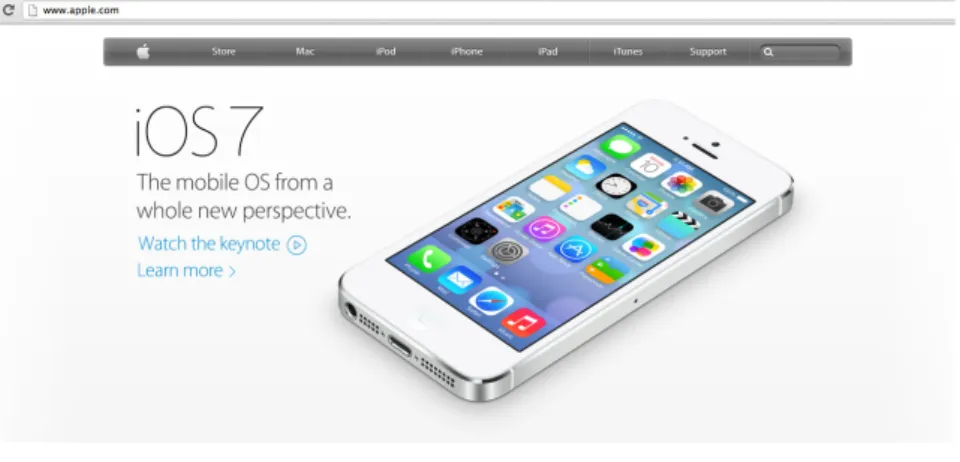
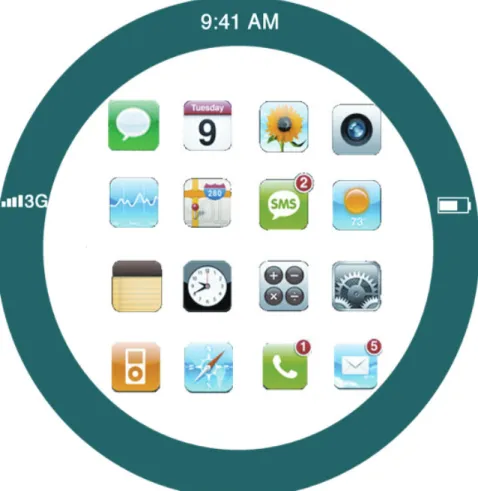
In another project @Fingertip, I responded the concept of empathy with accessibility, asking whether the subjectivity of products use can change the availability of accessibility in inclusive way? Can an object transfer between multiple users or amongst multiple products while simultaneously confronting the disparities of a specific disability? My consideration of current technologies such as the smartphone market that includes such famous brands as the iPhone and Android phone series, questioned whether these modern computing devices are fundamentally capable of providing interaction and daily assistance to the blind community? These modern computing devices are capable of a variety of unique features, and their software interface has been instantly embraced by unlimited number of socially conscious business developers outside of the device market that includes open-developmental platforms such as Google Goggles, Vehicle interface, BarCode scanners, and walkie-talkie type communication. But the devices themselves are primarily touch-screen and vision-intensive hardware, which is largely unusable by those in the blind community. As a result, visually impaired persons have to rely on a variety of inferior and incompatible technologies at ridiculously high sale prices (table.1).
3.3 Empathy, as accessibility
RED = Final File Size/Bleed Line
BLACK = Page Size/Trim Line
3.4 Marginalization to inclusion
The solutions @Fingertips addresses affect both usability and personal identity by combining several of the user specific preferences from my target group study, and the enabling of Touchscreen only devices to be accessible for the blind community(fig.3.4.2). Its physical hardware features a back-facing controller for controlling the visual elements of the touchscreen interface of the devices, while keeping the screen side open (fig.3.4.2). As a result, a visually impaired user can operate millions of useful applications on any smartphone with Voiceover feedback. The project blurs the difference between visual and tactile interface and the stigmatization of social identity associated with using smartphones. The working prototype can wirelessly connected to mainstream devices such as iPhone and Android to fundamentally access every application, such as weather, Clock, Dictionary, Cash Recognizer, Radio, Contact, and many others (fig.3.4.3). Functionally supportive the working prototype fits into a pocket.
RED = Final File Size/Bleed Line
BLACK = Page Size/Trim Line
65
Figure 3.4.3
RED = Final File Size/Bleed Line
BLACK = Page Size/Trim Line
66
67
68
“That man is not motivated by value…Man is pushed by drive, and pulled by values. “
-Viktor Frankl
17. Batthyany, A., & Tallon, A. (Eds.). (2010) Viktor Frankl: The feeling of meaninglessness, a challenge to psychotherapy and philosophy. Milwaukee: Marquette University Press.
69
If, as Viktor says, man is pushed by his/her drives for himself/herself, then it is necessary for us to be aware of the responsibility of personal
drive in the creation ideas and making of products. 17 The awareness of
making in design has different layers; the first layer is recognition of the goals of an object or product. It enables a designer to fulfill the goals of the product in through its design, and consequently, the awareness of responsibility to make better ideas based on the designers personal drive. The next layer of awareness by the designer is recognition of the emotional impact of the experience of an object or product. This next level is used by the designer to recognize the meaning of object based on the intended usability of the product and the understanding of why consumers choose to live with the objects and products that are made. Awareness is structured between the situation of self-awareness and situational-awareness and how, as designers, we respond to the balance of both needs. Realizing that most of time, consumers take for granted the intended operation or use of the objects and products. My project set out to explore the awareness in object development by shifting attention from the design as means of profitability in earlier works such as the moneybag, to design that is a result of awareness based on the comprehension of the formal societal needs masked behind conventional lifestyle choices. This is important because consumers we are living with designed objects; each decision the designer enacts is not just a product but also an understanding of human nature.
4. Awareness
17
RED = Final File Size/Bleed Line
BLACK = Page Size/Trim Line
70
“When a primitive man opens his eye to see a vessel hanging on the ceiling. He knows he has came to a more civilized human tribe.”
- La guerre du feu (1981), directed by Jean-Jacques Annaud
71
While watching the above referenced segment of the movie La guerre du feu, Quest of Fire in English translation, I felt empowered by the vessel in the scene (fig.4.1.1). At the moment when the camera pans around to reveal its position in the shelter, the vessel is in a direct dialogue with me. Its presence in the tent defines a change in our earliest behavioral relationship with the appreciation of food and also the awareness in etiquette in the definition of civilization. The vessel, which is a bowl, is about the primitive storing of savings for the long term. In the traditional patriarchal family structure human beings work to have extra savings, this establishes wealth so that they can begin to have authority over private property, a wife, and children. The bowl is one of the most powerful items in human society. Regardless of the identity, everyone has his or her own unique reliance on the bowl in relationship with their survival, as bowls serve most of our livelihood with the consumption and gathering of resources on Earth. Often made of soil and shaped into a simple form, the bowl installation is a reflection of the mundane task of our daily life while at the same time critical of the current state of global welfare and institutional savings. The banality of a simplified bowl balances the unlimited means of the individuals portrayed in silhouette against the institutional wealth that fill it.
4.1 Mundane awareness
RED = Final File Size/Bleed Line
BLACK = Page Size/Trim Line
72
Figure 4.2.1
73
Primarily in this discussion I have talked about form instead of formation, with the Bowl project I worked on the formative ideas of process to define the factual territory of objective decision-making and the subjective portrayal of wealth. The first sets of subjective considerations are set against a study of relational conflicts based on the fluctuations of global economies. We live in a 3-dimensional world, where we can see the height, length and width of things, yet financial constraints exist in a fourth dimension relative to time. In visual art, we construct an object in space by beginning with dot, which progresses to a line, then a plane, and finally after some degree of time a geometry. In this process, we see a basic relational logic of creating an image across time and in the preliminary design, I explore the relational logic of making a form from the silhouettes of selected global financial leader’s faces proportional to their global wealth. I use ten profiles of world leaders to make a form and each face is a dimensional progression in itself, generated digitally from the same beginnings, a dot on the face equaling a dot in digital space. By combining the ten profiles together, the form and the process of their formation, even though digitally, can invent a new relationship amongst each neighboring silhouette (fig.4.2.1). Every section of the form is a bundle of relationships with each other, whether objectively between faces or subjectively in the financial politics of the countries leaders. Together, they are making a new global form shaped from the distortion of space resulting from their relations (fig.4.2.2). The resulting shape is a reflection on the coming together of their economies.
4.2 formation as awareness
RED = Final File Size/Bleed Line
BLACK = Page Size/Trim Line
74
75
Time is implied in the installation by rice in the formation of a base for the occupation the piece and connects the institutional process of the manufacturing of a global resource to the significance of the vessel as carried by the global scale of individual economies combining to face the territorial burden of the load (fig.4.2.3). Behind the face of the bowl references the veiling of immense individual involvement and industrial process in order to carry the making of a tiny piece of rice. In order to create objects of desire like rice or pearls, we don’t necessarily need high technology; instead we need patience for these things to develop, for them to form from their own process. The same laws that apply to the formation of clay in the creation of a bowl can also be seen in the portrayal of global economy, where two dimensional references, material and time, combine to define the status of humankind with regard to the
goods and resources.
RED = Final File Size/Bleed Line
BLACK = Page Size/Trim Line
76
Pearl, approximates to sand, is away from the water.
Rice, approximates to sun, is away from the fire.
Bowl, approximate to clay, is away from the fire.
Dice, approximate to bone, is away from the hands.
Between is the material of spiritual life.
77
Regardless of poverty or affluence, truth or lies, bowls are in home of families around the world, and the presence of a bowl transformed in size represents the proportional importance of resources on human life(fig.4.3.1). Culturally, pearls have always been a metaphor for integrity, born of a similar time needed to nurtures bones of animal for making dice. The portrayal of rice, pearls, and dice together, allows them to be examined together for what they have in common. Whether it is the time it takes to create them, or the gamble of their perfection, the formation of the resources parallels the formation of the bowls, and equally the performance of global economies that differentiate based on the preferences of resources built over time from the commonality of our needs. Therefore, time plays a key role in deciding the metaphor of resources if we use the similar reflexive relational thinking. Time is made relational through the process of the clay, establishing an internal law between the rice, pearls, and dice to the construct of the object, the bowl, and a greater value system of wealth.
4.3 Time as awareness
RED = Final File Size/Bleed Line
BLACK = Page Size/Trim Line
78
18. Wu Xing, Five elements, five processes of metal, wood, water, fire and earth. Figure 4.4.1
79
The production of ceramics requires a need to control the process(fig.4.4.1). This controlling of the process is not only the controlling of the shape, but also the controlling of the material process, which is embodied in the combination of five elements. The Five Elements references an ancient Chinese concept of substance, which is also widely used in philosophy,
medicine and divination.18 According to the I-Ching the five elements are:
metal, water, wood, fire, and earth, which between them exist a material conflict to acquire strength and color. The belief is that all of nature is composed of five elements, and with the rise and fall of these five elements nature changes as is implied in the process of their shaping. The change not only affect the state of the material but also is considered influential in the shaping of personal fate of the people who possess the objects upon their completion, seeing everything that is in relationship as sharing in an endless loop universally.
The final object placed in the Slusser Gallery, shown in figure.29 is the result of multiple processes and failures I shared with Ceramics Studio coordinator John Leyland(fig.4.4.2). Being an audience to the experience of forming an ordinary bowl is nothing compared to the act of familiarizing your hands with the clay and giving into the transformation of material into object, which is transformed by the intangibles of time and space, equally, when we enlarged the bowl to 36 inches there were many challenges of making and moving the bowl.
4.4 Awareness as understanding
RED = Final File Size/Bleed Line
BLACK = Page Size/Trim Line
81
Enlarging the piece challenged the relationship between the viewer and the bowl by distorting the perception of its size and amount of its contents. When a bowl is in our hands, we are inclined to hold it to use it, and equally the size of bowl follows the objective limitation of human scale and thus vividly represents possible actions in its use. By oversizing the size, the perception of actions associated with its use are redefined away from the individual human mindset, and pushed to a larger community size reflecting changes in the world. The presence of a single bowl reminds me that there were originally two, and the immense effort in making the object and awareness of the great amount of loss associated with the destruction of what we create. There is always other possibilities for viewers to observe something more from the object, to see what is presented differently and understand the changes in elements and meanings encountered every day(fig.4.4.3).
RED = Final File Size/Bleed Line
BLACK = Page Size/Trim Line
83
RED = Final File Size/Bleed Line
BLACK = Page Size/Trim Line
84
“People have enough to live, but nothing to live for; they have the means but no
meaning.”
- Viktor Frankl
19. Batthyany, A., & Tallon, A. (Eds.). (2010) Viktor Frankl: The feeling of meaninglessness, a challenge to psychotherapy and philosophy. Milwaukee: Marquette University Press.
85
Conflict, is not solely a thing or a thought, neither is it so complex a structure so as to not achieve an absolute conception. If we utilize conflict for one object, one thing, or even a belief, it is detrimental to its growth, while the sharing of conflict, and the connectivity to the whole causes those connected to the conflict to grow. Instead, I now see value as a space for learning, created from opposing elements or ideas, where we get the freedom to spread by responding to the details found in its meanings. The Obama Seal, Bowl, Moneybag, Island and Smartphone Accessories for the blind commonly stretch the criticism of objectivity, forcing through conflict a thing or idea into being between multiple considerations. Even now I understand the conflict between an opinion, which can have both a physical existence and an ideology reference as a dialogue between reality and perceived history. These works are more or less a synthesis of my multiple conceptual dimensions of perception and identity, where stories are variables between my own design motivation and growing sense of value used to create meaning.
For me meaning varies as we are living in a unique situation, which is arranged by the space, time, and is the result of translation by the individual. Though I can see this thesis work as my own evolution, a process to understand my own system of creating questions, and answering them. I can also understand this system can be subjective and objective, simple or complicated, but what is most important in this journey for me are the hopes, surprises, frustrations, dreams and imaginations I experienced.
5. Conclusion
RED = Final File Size/Bleed Line
BLACK = Page Size/Trim Line
86
Figure 5.1 A boy in a leather goods maker workshop, Pi County, Sichuan
It is not the consciousness of men that determines their existence, but their
social existence that determines their consciousness.
20-Karl Marx
87
It has brought me closer to some ordinary peoples and showed me extraordinary their stories, dreams are, and when I look back, I remember my exploration began with a single curiosity to find the value and meaning in design. Design resulting from these certain variables helps me to better understand what I want to study in the future, and my thesis projects have provided a framework for me to facilitate more research on specific elements within a clearer understanding of my ideas. It ends with an understanding of quite simply “the meaning,” expressed as structure between people, ideas, and what is made whether art or design. The development of challenging myself on this subject and finding the method to investigate these curiosities is truly more valuable to me as it can be applied to all my future endeavors.
RED = Final File Size/Bleed Line
BLACK = Page Size/Trim Line
88
Apple Inc. (2011).iPhone, Available from http://www.apple.com
Batthyany, A., & Tallon, A. (Eds.). (2010) Viktor Frankl: The feeling of meaninglessness, a challenge to psychotherapy and philosophy. Milwaukee: Marquette University Press.
Bourriaud, Nicolas. (2002). Relational Aesthetics. (Pleasance, S. &
Woods, F., Trans.). Dijon: Les presses du reel.
Castells, Manuel. (1997). The power of identity. Malden, MA: Blackwell. CNBC. (2013, Feb). Wealthy Chinese shift their luxury buying overseas. Available from http://www.cnbc.com/id/100491304
Csikszentmihalyi, M & Rochberg-Halton, E. (1981). The meaning
of things, domestic symbols and self (pp. 1-5). Cambridge University Press.
The economist. (2013, Jun). Luxury goods in China: Beyond bling.
Available from http://www.economist.com/news/business/21579015-life-getting-harder-purveyors-luxury-china-growth-prospects-are-still
Feng, Gia-Fu and English, Jane. (1997). Lao Tsu Tao Te Ching. Vintage Books Edition.
Fogel, Robert Williams. (2000). The fourth great awakening & the future of egalitarianism. Chicago: The University of Chicago.
Forbes. (October, 2012) World’ Most Powerful Brands, Louis Vuitton, Available from: http://www.forbes.com/companies/louis-vuitton/
Forty, Adrian. ( 1986 ). Object of desire: Design and society since 1750. New York: Thames & Hudson
Hara, Kenya. (2010). White. Baden, Switzeland: Lars Muller Publishers
Kataoka, Mami. (2012). According to what? -a questioning attitude.
(pp.16-18)
Kazmierczak, E. T., 2003. Design as meaning making: from making
things to design of thinking, Design issues, vol. 19, No. 2
Kelly, Kevin. New Rules for the New Economy. 10 radical strategies for a connected world Penguin Books Edition, 1998.
Jenkins, Richard. (1996, 2004, 2008) Social identity, 3rd ed. London; New York: Routledge
89
Legge, James. (1983) Confucian Analects. Available from http://www.
cnculture.net/ebook/jing/sishu/lunyu_en/02.html
Levi-Strauss, Claude. (1969). The elementary structure of kinship, 1969 (R. Needham & J. R. Sturmer Trans.). (J. H. Bell, Ed.). Boston: Beacon Press
Millar, Susanna. (1994). Understanding and representing space: theory and evidence from studies with blind and sighted children. Oxford: Clarendon Press; New York: Oxford University Press.
Marx,Karl. (1977).A Contribution to the Critique of Political Economy, Moscow :Progress Publishers.
Millar, Susanna. (1997). Reading by touch (pp. 57-67). New York:
Routledge.
O’brien, Kerry. (2010, April). Face to face with Obama. Australian
Broadcasting Corporation. Available from: http://www.abc.net.au/7.30/ content/2010/s2872726.htm
Pink, Daniel H. (2006). A whole new mind: Why right-brainers will rule the future. New York: Riverhead Books.
Peirce, Charles Sanders. (1931-58). Collected Paper, 8 volumes.
(Hartshorne, C. & Weiss, P., Ed)
Rapaille, Clotair. (2006). The cultural code: an ingenious way to
understand people buy and live as they do. Broadway Book: Random House, Inc
Redström, J., (2006). Towards user design? On the shift from object to user as the subject of design. Design Studies.
Robert L. Peters (2010, Oct). Designing the future. Canada’s Visual Communications Magazine, Vol 25, No 4
Shaw, Han-yi. (2012, Sep). The inconvenient truth behind the
Diaoyu/Senkaku islands. Available from http://kristof.blogs.nytimes. com/2012/09/19/the-inconvenient-truth-behind-the-diaoyusenkaku-islands/
Wang, Fangyu & Barnhart, R. M. (1990). Master of the lotus Garden: the life of and art of Bada Shanren 1626-1705 (Smith. J. G, Ed). New Haven, Conn.: Yale University Press.
RED = Final File Size/Bleed Line