2018 2nd International Conference on Modeling, Simulation and Optimization Technologies and Applications (MSOTA 2018) ISBN: 978-1-60595-594-0
Digital Twin of the Oil Well, Based on Data Mining Technologies
S. O. KOSENKOV, V. Yu. TURCHANINOV, I. S. Korovin
*and D. Ya. IVANOV
LC "Association of Russian Oil and Gas Field Services Providers (Soyuzneftegazservice)", Moscow, Russian Federation
Southern Federal University, Rostov-on-Don, Russian Federation
*Corresponding author
Abstract. The article focuses on the use of the digital twin in the oil industry. The features of the concept of a digital twin are considered. Describes the digital application in relation to the problems of oil production. The importance of the use of data mining technologies in the creation and application of digital twins is shown.
Introduction
In such a complex production environment, such as the extraction of oil and gas, it is necessary to constantly evaluate the processes occurring. It should be borne in mind that the equipment of the field is distributed geographically and is often located in hard-to-reach areas, which makes it difficult for experts and specialists to access. Equipping the process equipment with a sensor network allows data collection. However, the data do not always arrive in a timely manner and are significantly noisy.
In order to control technological processes of remote and inaccessible equipment, the creation of digital twins of oil wells is proposed. And the problem of processing large volumes of noisy data coming from the sensors of this equipment is proposed to be solved using data mining technologies.
Product lifecycle management (PLM) is a type of activity that is aimed at the effective management of the company's products throughout its life cycle, starting with the very first idea of the product and until the product is disposed of. PLM allows companies to increase the efficiency of equipment use, reduce the risks associated with the failure of individual units of equipment, and reduce costs [1], [2].
Product lifecycle management currently uses industrial Internet of things [3], [4] technologies, big data collection technologies [5], cloud technologies [6], [7], fog computing [8]–[10], artificial intelligence technologies for analyzing big data [11]. Actively conducted research in the field of product data management [12], product information modeling [13], product information tracking [14], integration structure [15], [16], knowledge management [17], matching demand and supply product [18], product assembly [19], anyway, some tasks are still not solved. Most studies involve consumer products, not resources. Often there is no convergence between the physical and virtual product space [2].
Digital Twin Conception
The emergence of digital twin [2], [20], [21] is a further development of the concept of "digital production" and the Industrial Internet of Things [22]–[24] (IIoT).
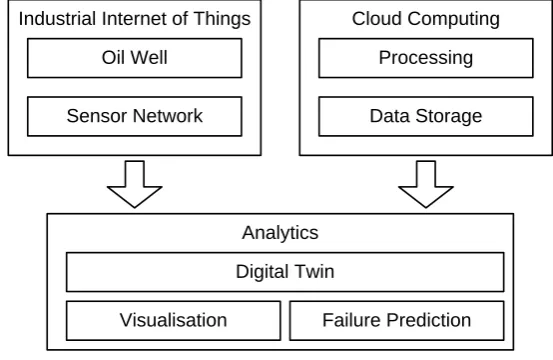
The digital twin gives service divisions a wide range of opportunities to analyze the current state of the product, plan maintenance activities, find potential problems and their solutions. In conjunction with the maintenance management system, the “digital twin” can be used to manage the parts and parts that will be needed to complete a repair or maintenance at a specific time and place. Having a sufficient number of examples in the database, the engineer will be able to evaluate the performance of a certain line of equipment and its components for further research on improving the product (see Fig. 1).
The idea of the digital twin is that performance and service information can be combined with the original project data to improve technical support and prepare future design solutions. In some markets, such as the aerospace industry, collecting and storing configuration history and maintenance data is a top priority. You can extract a specific benefit from the fact that the data collected during the entire life cycle are combined in a single center is the digital twin. For a long time, the insufficiently high level of technology development has impeded the achievement of this goal - it was not easy to transfer information between systems and use it with different software and on different platforms. Recently, such technological obstacles have disappeared. In addition, Industrial Internet of Things (IIoT) provides an “ocean” of data of data from installed sensors that monitor usage, performance, and product quality. All these data can be added to the digital twin, increasing its accuracy.
Industrial Internet of Things
Oil Well
Sensor Network
Cloud Computing
Processing
Data Storage
Analytics
Digital Twin
[image:2.595.157.434.321.501.2]Visualisation Failure Prediction
Figure 1. Digital twin for analytics of oil well.
Digital twins, no doubt, have become a very useful tool. They allow you to improve maintenance operations and simplify product technical support, save money by reducing the number of failures and extend equipment life. It can be assumed that with the development of the Industrial Internet of Things, digital twins will become more detailed, and will work to get the maximum return on investment in equipment and its maintenance, while simultaneously stimulating the improvement of product design.
The most effective use of Digital Twins is for products with the following criteria:
Accompanying the products with a qualified specialized service (condition monitoring, monitoring, technical support);
Long product life cycle (5..70 years);
A large number of copies of the installed equipment;
Wide range and variety of operating conditions;
Inaccessibility of the product for maintenance.
It is obvious that the equipment of oil producing wells is included in the scope of the digital twin. Figure 2 shows the information flows using the digital twin.
Applications of Digital Twins in the Oil Industry
The digital twin allows you to conduct research into the effects of proposed changes in equipment and production processes. These studies allow to determine the most appropriate strategies for equipment modernization in order to increase its efficiency and meet the requirements of reliability.
The development and modernization of oil production equipment leads to the fact that some previously correct operating assumptions lose their relevance. The digital twin helps to identify obsolete assumptions in a timely manner.
The Maintenance and Repair
Today, during the operation of the equipment, there are three main management strategies for its maintenance and repair [25]:
• event maintenance or reactive maintenance; • scheduled preventive maintenance;
• actual condition service.
Maintenance of the event involves the replacement of defective parts on the fact of their failure, which often increases the cost of repair and downtime during the work.
Scheduled preventive maintenance is the most common type of maintenance today and involves the replacement of parts at certain time intervals, which are determined by calculating the average time between failures.
The most advanced type of maintenance is maintenance based on actual condition. It implies the elimination of equipment failures by interactively assessing the technical condition of the equipment from the totality of data coming from its sensors and determining the optimal timing for the repair.
oil well
data gateway Cloud
Data Center
[image:3.595.125.471.400.455.2]Digital Twin data gateway
Figure 2. Information flows using the digital twin.
Data Mining
The number of factors complicating the use of numerical modeling techniques at the facilities of an oil and gas production enterprise can include the noisiness of telemetric control data, the differences in design and actual solutions in the field of drilling and control of well operation modes, other factors, including subjective ones. The combination of unaccounted factors affecting the processes of oil production, as well as a wide range of difficult to formalize the parameters that determine the results of mathematical modeling in the known solutions, makes it difficult to build an adequate model to solve the tasks.
In this connection, an approach is proposed for controlling technological processes, based on the analysis of retrospective data on production processes occurring in the field, using a set of modern methods of intellectual information analysis.
To carry out online monitoring procedures for the state of the oil producing wells, the use of automated systems built using modern Data Mining and Big Data methods is efficient and justified [12].
hierarchical neural network [29], as well as the use of a recursive Kalman filter [30], [31]. However, the existing methods of teaching hierarchical ANNs are ineffective and take considerable time to train them, therefore, the article considers a modified evolutionary approach to learning hierarchical ANNs adapted for conducting learning procedures under the conditions of the task.
The main problem of the existing approaches to teaching ANN is retraining associated with the method of adjusting the weights of the ANN [5]. Its solution is possible by using a combined approach to teaching ANN, combining the classical [6] and the evolutionary [32] approaches. Under uncertainty, evolutionary methods, including genetic algorithms, are most effective for achieving the required results. The classical genetic algorithm operates on a binary number system, although recently there are often jobs in which the operators of genetic algorithms perform operations with a set of real numbers. This allows to significantly expand the possibilities of application of the described algorithms [33]–[36].
Conclusions
The article discusses the main features of the concept of digital twins. Considered the scope of digital twins in the oil industry. The use of big data technologies in the creation and operation of digital doubles of oil-producing equipment has been substantiated.
Acknowledgment
The paper is published due the financial support of the Ministry of Education and Science of Russian Federation via the project “SKIF-NEDRA”.
References
[1] J. Stark, “Product lifecycle management,” in Product Lifecycle Management (Volume 1), Springer, 2015, pp. 1–29.
[2] F. Tao, J. Cheng, Q. Qi, M. Zhang, H. Zhang, and F. Sui, “Digital twin-driven product design, manufacturing and service with big data,” Int. J. Adv. Manuf. Technol., vol. 94, no. 9–12, pp. 3563–3576, 2018.
[3] L. Da Xu, W. He, and S. Li, “Internet of things in industries: A survey,” IEEE Trans. Ind. informatics, vol. 10, no. 4, pp. 2233–2243, 2014.
[4] H. Cai, L. Da Xu, B. Xu, C. Xie, S. Qin, and L. Jiang, “IoT-based configurable information service platform for product lifecycle management,” IEEE Trans. Ind. Informatics, vol. 10, no. 2, pp. 1558–1567, 2014.
[5] X. Wu, X. Zhu, G.-Q. Wu, and W. Ding, “Data mining with big data,” IEEE Trans. Knowl. Data Eng., vol. 26, no. 1, pp. 97–107, 2014.
[6] L. Jiang, L. Da Xu, H. Cai, Z. Jiang, F. Bu, and B. Xu, “An IoT-oriented data storage framework in cloud computing platform,” IEEE Trans. Ind. Informatics, vol. 10, no. 2, pp. 1443– 1451, 2014.
[7] K. Chen, C. Hu, X. Zhang, K. Zheng, Y. Chen, and others, “Cloud Computing,” IEEE Netw., p. 4, 2011.
[8] E. V Melnik, A. B. Klimenko, and D. Y. Ivanov, “Fog-computing concept usage as means to enhance information and control system reliability,” in Journal of Physics: Conference Series, 2018, vol. 1015, no. 3, p. 32175.
[10]E. V. Melnik, A. B. Klimenko, and Ivanov D. Y., “The Model of Device Community Forming Problem for the Geographically-Distributed Information and Control Systems Using Fog-computing Concept,” in Proceedings of the IV International research conference "Information technologies in Science, Management, Social sphere and Medicine, 2017, pp. 132–136.
[11]D. E. O’Leary, “Artificial intelligence and big data,” IEEE Intell. Syst., vol. 28, no. 2, pp. 96– 99, 2013.
[12]J. Li, F. Tao, Y. Cheng, and L. Zhao, “Big data in product lifecycle management,” Int. J. Adv. Manuf. Technol., vol. 81, no. 1–4, pp. 667–684, 2015.
[13]A. Matsokis and D. Kiritsis, “An ontology-based approach for Product Lifecycle Management,” Comput. Ind., vol. 61, no. 8, pp. 787–797, 2010.
[14]D. Kiritsis, A. Bufardi, and P. Xirouchakis, “Research issues on product lifecycle management and information tracking using smart embedded systems,” Adv. Eng. Informatics, vol. 17, no. 3–4, pp. 189–202, 2003.
[15]V. Srinivasan, “An integration framework for product lifecycle management,” Comput. Des., vol. 43, no. 5, pp. 464–478, 2011.
[16]D. Yue, S. Pandya, and F. You, “Integrating hybrid life cycle assessment with multiobjective optimization: a modeling framework,” Environ. Sci. Technol., vol. 50, no. 3, pp. 1501–1509, 2016.
[17]E. Vezzetti, S. Moos, and S. Kretli, “A product lifecycle management methodology for supporting knowledge reuse in the consumer packaged goods domain,” Comput. Des., vol. 43, no. 12, pp. 1902–1911, 2011.
[18]F. Tao, J. Cheng, Y. Cheng, S. Gu, T. Zheng, and H. Yang, “SDMSim: a manufacturing service supply--demand matching simulator under cloud environment,” Robot. Comput. Integr. Manuf., vol. 45, pp. 34–46, 2017.
[19]L. Da Xu, C. Wang, Z. Bi, and J. Yu, “AutoAssem: an automated assembly planning system for complex products,” IEEE Trans. Ind. Informatics, vol. 8, no. 3, pp. 669–678, 2012.
[20]B. Schleich, N. Anwer, L. Mathieu, and S. Wartzack, “Shaping the digital twin for design and production engineering,” CIRP Ann., vol. 66, no. 1, pp. 141–144, 2017.
[21]F. Tao, M. Zhang, J. Cheng, and Q. Qi, “Digital twin workshop: a new paradigm for future workshop,” Comput Integr Manuf Syst, vol. 23, no. 1, pp. 1–9, 2017.
[22]M. N. O. Sadiku, Y. Wang, S. Cui, and S. M. Musa, “Industrial internet of things,” IJASRE, vol. 3, 2017.
[23]S. Jeschke, C. Brecher, T. Meisen, D. Özdemir, and T. Eschert, “Industrial internet of things and cyber manufacturing systems,” in Industrial Internet of Things, Springer, 2017, pp. 3–19.
[24]D. Serpanos and M. Wolf, “Industrial Internet of Things,” in Internet-of-Things (IoT) Systems, Springer, 2018, pp. 37–54.
[25]“Digital Twin,” cadfem-cis, 2018. [Online]. Available: https://www.cadfem-cis.ru/products/ansys/systems/digital-twin/. [Accessed: 08-Oct-2018].
[26]Y. S. Korovin, M. G. Tkachenko, and S. V Kononov, “Oilfield equipment’s state diagnostics on the basis of data mining technologies,” Neft. khozyaystvo-Oil Ind., no. 9, pp. 116–118, 2012.
[28]Z. J. Viharos, L. Monostori, and T. Vincze, “Training and application of artificial neural networks with incomplete data,” in International Conference on Industrial, Engineering and Other Applications of Applied Intelligent Systems, 2002, pp. 649–659.
[29]M. L. Mavrovouniotis and S. Chang, “Hierarchical neural networks,” Comput. Chem. Eng., vol. 16, no. 4, pp. 347–369, 1992.
[30]R. Feraud, F. Clérot, J.-L. Simon, D. Pallou, C. Labbé, and S. Martin, “Kalman and Neural Network Approaches for the Control of a VP Bandwidth in an ATM Network,” in International Conference on Research in Networking, 2000, pp. 655–666.
[31]J. A. Pérez-Ortiz, J. Schmidhuber, F. A. Gers, and D. Eck, “Improving long-term online prediction with decoupled extended Kalman filters,” in International Conference on Artificial Neural Networks, 2002, pp. 1055–1060.
[32]J. R. Rabuñal, J. Dorado, A. Pazos, and D. Rivero, “Rules and generalization capacity extraction from ANN with GP,” in International Work-Conference on Artificial Neural Networks, 2003, pp. 606–613.
[33]I. S. Korovin, M. V Khisamutdinov, and A. I. Kaliaev, “The application of evolutionary algorithms in the artificial neural network training process for the oilfield equipment malfunctions’ forecasting,” in 2nd International Symposium on Computer, Communication, Control and Automation, 2013.
[34]I. S. Korovin, A. Kalyaev, M. Khisamutdinov, D. Ivanov, and G. Schaefer, “Application of neural networks for modelling centrifugal pumping units of booster pump stations for a two-phase gas-liquid mixture,” in Informatics, Electronics and Vision & 2017 7th International Symposium in Computational Medical and Health Technology (ICIEV-ISCMHT), 2017 6th International Conference on, 2017, pp. 1–6.
[35]I. Korovin, M. Khisamutdinov, A. Kalyaev, D. Ivanov, and G. Schaefer, “Neural network model of pumping units in oil preparation and pumping complex,” in Informatics, Electronics and Vision & 2017 7th International Symposium in Computational Medical and Health Technology (ICIEV-ISCMHT), 2017 6th International Conference on, 2017, pp. 1–4.