Lifetime Prolonged Coverage, Connectivity
Configuration (LPC
3
) Protocol for Wireless
Sensor Network
ABSTRACT
As wireless sensor networks (WSNs) continue to attract more and more researchers attention, new ideas for applications are continually being developed, many of which involve consistent coverage with good network connectivity of a given area of interest. For the successful operation of the wireless Sensor Network, the active sensor nodes must maintain both sufficient sensing coverage, and also sufficient network connectivity. These are two closely related essential prerequisites and they are also very important measurements of quality of service (QoS) for wireless sensor networks. This paper presents the design and analysis of novel protocols that can dynamically configure a network to achieve guaranteed degrees of coverage and connectivity. Our method utilizes a hybrid approach that provides sufficient sensing coverage and ensured network connectivity. In this paper, we incorporate the solution for eliminating the coverage holes. Simulation results show that our Lifetime prolonged Coverage, Connectivity Configuration (LPC3) Protocol can effectively reduce the number of active sensors and prolongs the network lifetime. Consequently, it realizes that the energy is best used and at the same time the sensor network lifetime is prolonged effectively,
Key Words: coverage, connectivity, energy conservation, power control
1. INTRODUCTION
In this paper we will present a simple yet important relationship between coverage and connectivity in wireless sensor networks [1].Wireless sensor networks have attracted a lot of attention recently. Such environments may consist of many inexpensive nodes, each capable of collecting, storing, and processing environmental information and communicating with neighboring nodes through wireless links. For a sensor network to operate successfully, sensors must maintain both sensing coverage and network connectivity. This issue has been studied in [2]& [3], both of which reach a similar conclusion that coverage can imply connectivity as long as sensors’ communication ranges are no less than twice their sensing ranges[8]Sensing is only one responsibility of a sensor network. To operate successfully a sensor network must also provide satisfactory connectivity so that nodes can
communicate for data fusion and reporting to base stations. Connectivity affects the robustness and achievable throughput of communication in a sensor network. None of the above coverage maintenance protocols addresses the problem of maintaining network connectivity. On the other hand, several other protocols (e.g., ASCENT [4], SPAN [5], AFECA [6], and GAF [7]) aim to maintain network connectivity, but do not guarantee sensing coverage. Unfortunately, satisfying only coverage or connectivity alone is not sufficient for a sensor network to provide sufficient service. Without sufficient connectivity, nodes may not be able to coordinate effectively or transmit data back to base stations.
In most of the usages, we are looking at reliable monitoring of the environment, where there are no holes in the sensing area of coverage. In order to ensure complete coverage in the region of interest, one possible method is to scatter sensors according to a regular pattern (hexagon, square grid, rhombus, or equilateral triangle) [9].
From the above literature, the designed protocol for sensor networks must account for the properties of wireless sensor networks, including the following:
• How to achieve the best coverage in wireless sensor network when it is randomly deployed.
• How these deployed nodes are connected with the neighbor sensor node.
• How to detect and eliminate the coverage holes.
• Lifetime constraints imposed by the limited energy supplies of the sensor nodes in the network.
To consider the sensor scheduling with the coverage and connectivity, the algorithm of [1] has modified the popular randomized scheduling [2] of the wsn. However, it only guarantees the connectivity with shortest paths. In the aspect of the coverage, the 100% coverage cannot be ensured. The algorithm of [1] has the blind point issue, such that some regions in the region of interest cannot be monitored by any wireless sensor nodes at a certain time.
In paper [10], the author presented a distributed approach to the randomized scheduling to provide the full coverage. To efficiently achieve this target, the presented approach is divided into two stages: Region of Interest (ROI) partition and coverage improvement. The handling issues of these two stages can be converted to two geometry problems: construction of Voronoi polygon and covering of circle.
D.G.Anand
Rajiv Gandhi Institute of Technology Bangalore,India
H.G. Chandrakanth, PhD.
Sambrama Institute ofTechnology Bangalore,India
Simulation results show that these methods can substantial improvements in quality of coverage in randomized scheduling.
In [11], authors investigated Coverage and connectivity problems and come up with analyzed the problems independently. In particular, they also noted that sensing coverage infers network connectivity if the coverage ranges Rc is at least twice the sensing range Rs (Rc ≥ 2Rs), and that if all the crossing points inside a disk are covered then the disk is covered. In their presentation Coverage and Configuration Protocol (CCP), each sensor node collects neighboring information and then uses this information as an eligibility rule to take decision, if a node can sleep. In the case of coverage range is less than twice the sensing range; they integrate their algorithm with SPAN [12] to ensure connectivity with coverage.
SPAN [12] is a randomized and distributed protocol in which sensor nodes make localized decisions on whether they should opt to be in active mode or to sleep. Sensor nodes that opt to stay awake and maintain sensor network connectivity called coordinators. A non-coordinator sensor node elects itself as a coordinator if any two of its neighbors cannot communicate with one another directly or indirectly via one or two existing coordinating nodes. The non-coordinator sensor node communicates its willingness of being a coordinator through local broadcast, delayed by a gap that reflects the residual power of a node. The information needed for coordinator election is exchanged among neighbors through HELLO/ACK messages.
In paper [13], the authors proposed the design and analysis of protocols that can dynamically configure a wireless network to which guarantees the of coverage and connectivity. This work differs from the available network connectivity or sensing coverage maintenance protocols in several key ways: 1) Authors proposed a Coverage Configuration Protocol (CCP) that can results various degrees of sensing coverage as requested by applications. This flexibility allows the sensor network to dynamically configure for a good range of applications and dynamic environments. 2) They prove it with geometrical analysis of the relationship between coverage and connectivity. This analysis results in key insights for treating coverage and connectivity in an integrated framework: this is in sharp contrast to several available methods that address the two problems independently. 3) Finally, authors integrated CCP with SPAN to provide both coverage and connectivity guarantees.
In [13], Author presented that the recent research result that energy savings achieved by dynamically management of sensor node duty cycles in wireless sensor networks with high node density. In this approach, some sensor nodes are scheduled to active nodes provide continuous service while the remaining other nodes are allowed to sleep (or enter a power saving mode). A fundamental issue is to reduce the number of sensor nodes that remain active mode and still achieving acceptable quality of service. In particular, maintaining desired sensing coverage and connectivity with the active sensor nodes is a threshold requirement in sensor
networks. The authors presented a geometric analysis that 1) shows sensing coverage results full network connectivity when the sensing range “Rs”is no more than half of the communication range ”Rc”. Their Simulation results proves that CCP and CCP+SPAN+2Hop can effectively produce the network to achieve both expected level of coverage and satisfactory communication range under different ratios of sensing/ communication ranges as expected by their geometric analysis.
Tian Ying, Zhang Shu-Fang and Wang Ying , presented [14] ,which is different from the available algorithms in four key ways: (1) They presented a Distributed Probabilistic Coverage-preserving Configuration Protocol (DPCCP) based on Neyman-Peason (NP) probabilistic detection model; (2) A simplified protocol to check sensing coverage is developed using Voronoi diagram; (3) with reference to network connectivity, it is integrated DPCCP with SPAN to guarantee both probabilistic sensing coverage and network connectivity; (4) To check the percentage of coverage of their algorithm , they presented an approximate protocol. Simulation results predicts that distributed probabilistic coverage-preserving configuration protocol DPCCP+SPAN can effectively minimise the required number of active sensors and enhances the sensor network lifetime on the precondition of probabilistic coverage-preserving and also network connectivity. The authors also presented an algorithm to check the coverage percentage of their proposed algorithm. Simulation results predicts that their algorithm out performs CCP+SPAN presented in [5], which can results in prolonging network lifetime on the precondition of probabilistic coverage preserving and also network connectivity.
2. PERFORMANCE COMPARISON
Problem formulation in Coverage Connectivity Protocol CCP +SPAN Distributed detection requires every location to be monitored by multiple nodes and distributed tracking, and classification requires even higher degree of convergence this leads to consumption of more energy.
CCP integrates SPAN algorithm to provide coverage and connectivity guarantees but SPAN algorithm doesn’t guaranty sensing coverage.
In CCP+SPAN a set of sensors that at least 1-cover of convex region A. The communication graph/path is established if communication range is greater than or equal to twice the sensing range.
active, this leads to consumption of more energy. In this protocol coverage can imply connectivity as long as communication range is no less than twice of the sensing range (Rs).
This protocol the coverage percentage of the region of interest (ROI) lower than 50%, a network will be considered as invalidation.
3. ALGORITHM
Assumption Done
We assume each node knows it location information in terms of coordinates.
We assume a heterogeneous network with powerful nodes uniformly distributed in a ratio.
Algorithm Steps
Each Power node will Query the Normal Nodes to send it location information. A node can be reached by two powerful nodes but it always replies only to the first Power node.
Each Normal Node sends its location information (x, y) to the power node.
The power node maintain a list of (X, Y) and broadcasts this to all power nodes neighboring.
The neighbor power nodes randomly elect a leader to do coverage calculation for particular Set (X, Y). Say which node has highest id will do the coverage calculation. Coverage Calculation algorithm will work by choosing the optimal nodes to cover the area using (X, Y) points and switch on schedule.
Power node will send the Border Sensor and coverage area information to all power nodes.
Two Power Nodes will determine if they are properly connected via the normal nodes else the node with higher id will choose the border node to ensure connectivity and sends the chosen node to the other power node. This is covered in the connectivity ensurance algorithm.
Once connectivity ensurance algorithm runs between all the power nodes, then whole network wide connectivity is ensured. Due to this step we know the optimal nodes to ensure connectivity and coverage.
Coverage Calculation Algorithm
The coverage calculation Algorithm accepts the list of (X, Y) locations of the sensors, each sensors range is same. With this input Coverage Calculation Algorithm has to output the minimum number of sensor to cover sensing area and the duty cycle of it.
For each sensor, it coverage is approximated to a largest square fitting in a circle taking X, Y as center and range r as radius. The square is identified by the sensor number covering it.
In a sensor ID1 is covering area mentioned by center X, Y it is denoted as below
SQR(X, Y) = {ID1};
In a rectangular plane, a particular square is placed if there is no square covered in that area fully.
If the square of a sensor say ID2 is fitting maximum to a square already available square, then it is added to the list of that square
SQR(X, Y) = {ID1, ID2};
If the square of a sensor is in overlap of two squares, then that sensor is skipped.
Once the square for all the sensors covered in the power node is complete, we have a coverage list like below SQR(X1, Y1) = {ID1, ID2}
SQR(X2, Y2) = {ID3, ID4, ID7} SQR(X3, Y3) = {ID5, ID6} SQR(X4, Y4) = {ID9};
The duty cycle for the nodes in the square is assigned in round robin. The duty cycle information to send to the nodes, so accordingly they sleep and wakeup.
Once all the squares are fitted, the border of the area is known and we provide the border nodes, the sensor covering and their duty cycle.
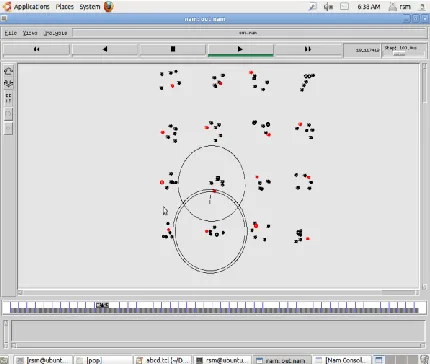
[image:3.612.326.541.290.472.2]Figure 1.
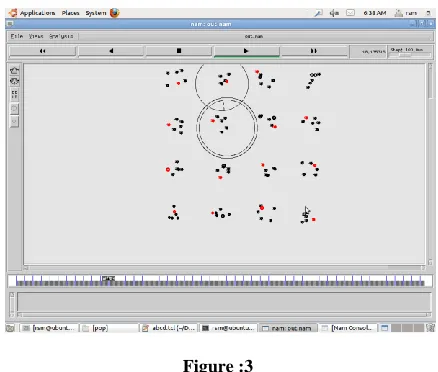
Figure :3
Figure 1, 2 and 3 Communication through border nodes between source and destination.
Connectivity Ensurance Algorithm
[image:4.612.72.283.340.482.2]Two power nodes share up their border sensor information, so that power node with higher id will find the nodes to give coverage between them.
Figure 4. Pictorial depiction of communication in proposed model
By matching the border squares, the power node will be able to find the border shared with the other power node. Once border squares are found, an intersection node will be found such that two border squares are always connected. Say two squares are border
SQR(X1, Y1) = {ID2, ID3, ID7}; SQR(X7, Y7) = {ID8, ID20};
Say the duty cycle of these two is matching then there is connectivity existing already. If not we can also rearrange the order to ensure connectivity and inform the sensor nodes to change the duty cycle
We are motivated to provide a solution for more number of active nodes and their decreased life span which consumes more battery energy henceforth making the system less efficient under the constraints of both sensing coverage and network connectivity with the availability of location information of each node. Specifically, we aim at designing
an algorithm which uses optimal active number of nodes that has the following features at any given time:
Decreasing the number of Active Nodes through duty cycle management.
Ensuring all the sensing area to be covered. Computing node Range for duty cycle matching. All the active sensor nodes are connected between source and destination nodes.
Power nodes maintain all the location details and duty cycle details as a reference for all its processes that take place.
The information form source to destination is delivered by the border sensor nodes that are available in each cluster until reaching the destination.
4. RESULTS
We evaluate proposed LPCCC model in five aspects by changing some critical parameters. To show the advantage of LPCCC protocol, we implement DPCCP+SPAN and CCP+SPAN and compare them with each other.
5. THE NUMBER OF ACTIVE NODES
Vs DEPLOYED NODES.
[image:4.612.325.540.455.572.2]We randomly deployed 300, 500, 700 and 900 nodes. We set α to 1, 1.2 and 1.4. As shown in fig 6.1, the number of active nodes increases rapidly when α become larger, and the number of active nodes is almost a constant with increasing the number of deployed nodes. We compare the configurability of our protocol with CCP+SPAN and DPCCP+SPAN with different system detection probability .We implement both protocols under different numbers of deployed nodes (300 to 900). As shown in fig. 6.1, our protocol outperforms CCP+SPAN and DPCCP+SPAN evidently.
Figure.5 Number of active nodes Vs Deployed nodes
6. ENERGY COST Vs RANGE &
NUMBER OF ACTIVE NODES Vs
RANGE
should be increased simultaneously. Therefore, the system energy consumption of each transmission is the tradeoff between active sensors and communication range. We simulate the relationship between number of living nodes, system energy cost and range, in the same reference frame but with different units. It is shown that the system energy consumption of each transmission in our protocol changes more steadily than other protocol. It means that our protocol can be used more widely in various kinds of WSN. These results are depicted in fig 6.2 and 6.3.
Figure.6. Energy cost Vs Communication Range
Figure.7 Number of active nodes Vs Range
7. SYSTEM LIFETIME Vs ENERGY
CONSUMPTION
&
SYSTEM
LIFETIME
Vs
COVERAGE
PERCENTAGE
The relationship of system lifetime, energy consumption and coverage percentage is simulated in figure. 8 & figure.9
We can see from the figures that the system coverage lifetime dominates the overall system lifetime since maintaining a high coverage percentage requires more active nodes than maintaining a communication backbone. As illustrated in both Fig 8 and Fig 9, the system lifetime doesn’t increase much when the node density increases.
Similar results are also reported. This is because the sleep nodes in 802.11 Power Saving Mode must wake up to listen to 802.11 beacons and “HELLO” messages periodically and consume considerable energy.
Figure.8. System lifetime Vs. Normalized rest energy of system
Figure.9. System lifetime Vs. Coverage percentage
In summary, the key results of our experiments are as follows:
Coverage efficiency: Proposed Model has smaller number of active nodes than the other protocol. The number of active nodes remains steady with respect to network density for the same requested coverage degree.
Coverage configuration: The Proposed Model eligibility algorithm can effectively enforce different coverage degrees specified by the application. The number of active nodes remains proportional to the requested coverage degree.
Connectivity: It proves sensing coverage implies network connectivity when the sensing range is no more than half of the communication range and quantify the relationship between the degree of coverage and connectivity.
8. CONCLUSION
more sophisticated coverage models and connectivity configuration and develop energy-efficient concept. The power node which is capable in our model to hold database of location information of each member node and to assign duty cycle for member nodes for a particular instant of time and allowing it to sleep for rest of the time. As a result of which our model ensures less number of active nodes to be taking part in an activity keeping others in sleep, which makes optimal number of nodes in active state. The obtained results show that our proposed model achieves a significant improvement in the delivering an energy efficient system which posses optimized coverage and connectivity. Simulation results show that our protocol outperforms CCP+SPAN & DPCCP+SPAN, which can effectively prolong network lifetime on the precondition of coverage preserving and network connectivity.
9. REFERENCES
[1] X. Wang, G. Xing, Y. Zhang, C. Lu, R. Pless, C. Gill, “Integrated coverage and connectivity configuration in wireless sensor networks,” In: Akyildiz IF, Estion D, eds. Proc. of the ACM Int'l Conf. on Embedded Networked Sensor Systems (SenSys). New York, 2003, pp. 28-39.
[2] Tian Ying, Zhang Shu-Fang and Wang Ying, “A Distributed Protocol for Ensuring Both Probabilistic Coverage and Connectivity of High Density Wireless Sensor Networks”, 1525-3511/08/pp. 2069-2074 2 WCNC 2008 IEEE.
[3] B. Chen, K. Jamieson, H. Balakrishnan, R. Morris, “SPAN: An energy efficient coordination algorithm for topology maintenance in ad hoc wireless networks,” ACM Wireless Networks, 2002, 8(5), pp.481-494.
[4] X. Wang, G. Xing, Y. Zhang, C. Lu, R. Pless, and C. Gill, “Integrated Coverage and Connectivity Configuration in Wireless Sensor Networks,” in ACM International Conference on Embedded Networked Sensor Systems (SenSys), pp. 28-39, Nov 2003. [5] Tian Ying, Zhang Shu-Fang and Wang Ying, “A
Distributed Protocol for Ensuring Both Probabilistic Coverage and Connectivity of High Density Wireless Sensor Networks”, 1525-3511/08/pp. 2069-2074 2 WCNC 2008. IEEE
[6] Y. Xu, J. Heidemann, and D. Estrin, "Geography-informed Energy Conservation for Ad Hoc Routing," ACM/IEEE International Conference on Mobile Computing and Networking (MobiCom 2001), Rome, Italy, July 16-21, 2001.
[7] Y. Xu, J. Heidemann, and D. Estrin, "Adaptive Energy- Conserving Routing for Multihop Ad Hoc Networks," Research Report 527, USC/Information Sciences Institute, October 2000.
[8] B. Chen, K. Jamieson, H. Balakrishnan, and R. Morris, "Span: An Energy-Efficient Coordination Algorithm for Topology Maintenance in Ad Hoc Wireless Networks," ACM/IEEE International Conference on Mobile Computing and Networking (MobiCom 2001), Rome, Italy, July 16-21, 2001.
[9] A. Cerpa and D. Estrin, "ASCENT: Adaptive Self- Configuring Sensor Networks Topologies," INFOCOM, June 2002.
[10] F. Aurenhammer, “Voronoi diagrams—A survey of a fundamental geometric data structure,” ACM Computing Surveys, 1991, 23(3), pp. 345-405. [11] X.Wang, G.Xing, Y.Zhang, C.Lu, R.Pless and C.Gill,
”Integrated Coverage and Connectivity Configuration in Wireless Sensor Networks,” in ACM International Conference on Embedded Networked Sensor Systems (SenSys), pp.28-39, 2003.
[12] Benjie Chen, Kyle Jamieson, Hari Balakrishnan, and Robert Morris” Span: An Energy Efficient Coordination Algorithm for Topology Maintenance in Ad Hoc Wireless Networks” in International Conference on Mobile Computing and networking (MobiCom),Rome,Italy,July 2001
[13] G.Xing, X.Wang, Y.Zhang, C.Lu, R.Pless, C. Gill” Integrated Coverage and Connectivity Configuration in Wireless Sensor Networks” ACM Transactions on Sensor Networks, Vol. 1, No. 1, August 2005, Pages 36–72.
[14] Tian Ying, Zhang Shu-Fang and Wang Ying” A Distributed Protocol for Ensuring Both Probabilistic Coverage and Connectivity of High Density Wireless Sensor Networks” IEEE Communications Society, WCNC proceedings, 2008, pp. 2069-2075
AUTHORS PROFILE
D. G. Anand is native of Madikeri, Karnataka, India. He received his B.E Degree from AIT, Chikamagalore, Mysore University and ME from UVCE Bangalore University, Bangalore and currently he is perusing his PhD from Jawaharlal Nehru Technological University Anantapur, Andra Pradesh. Presently he is serving as Professor and HOD in the department of ECE at Rajiv Gandhi Institute of Technology, Bangalore. His areas of interest are wireless communication, sensor networks.
Dr. H. G. Chandrakanth is native of Bangalore, Karnataka, India. He received B.E Degree from UVCE, Bangalore University, Bangalore, India in 1991, MSEE from Southern Illinois University Carbondale, USA in 1994 and PhD from Southern Illinois University Carbondale, USA in 1998. Presently he is working as Principal at Sambram Institute Of Technology, Bangalore.
Dr. M. N. Giri Prasad is native of Hindupur town of Anantapur District of Andhra Pradesh, India. He received B.Tech degree from J.N.T University College of Engineering, Anantapur, Andhra Pradesh, India in 1982, M.Tech degree from Sri Venkateshwara University, Tirupati, Andhra Pradesh, India in 1994 and PhD degree from J.N.T University, Hyderabad, Andhra Pradesh, India in 2003. Presently he is working as Professor in Department of Electronics and Communication at J.N.T University College of Engineering, Anantpur, Andhra Pradesh, India.
His research areas are Wireless Communications and Biomedical Instrumentation. He is a member of ISTE, IE &