COMPILING A DICTIONARY OF LOAN WORDS
IN BALINESE: THE EVALUATION RESULT OF
EFFECTIVENESS TESTING IN THE FIELD
AIDED BY MOBILE TECHNOLOGY
1
I NENGAH SUANDI, 2IDA BAGUS PUTRAYASA, 3DEWA GEDE HENDRA DIVAYANA
1,2
Faculty of Language and Arts, Department of Language Education,
3
Faculty of Technical and Vocational, Department of IT Education, Universitas Pendidikan Ganesha, Indonesia
E-mail: [email protected]
ABSTRACT
The objective of this third year study was to describe the result of the effectiveness testing in the field aided by mobile technology to the draft of dictionary of loan words in Balinese that has been successfully validated by linguists and lexicologists in the second year. This study was designed by following the stages of thinking in research and development adapted from the development of a set of teaching materials using 4-D model (Define, Design, Develop, and Disseminate). The subjects for this third year were Balinese language teachers and the students of Balinese Language Department in the public as well as in private institutes of higher learning in Singaraja and Denpasar. The data were collected through questionnaire The data that had been collected were analyzed by using a descriptive analysis Based on the formulation of the problems in this third year research and data analysis that has successfully been done it can be concluded that quantitatively, the draft of dictionary of loan words in Balinese can be said to be effective since the mean score obtained was 3.6 (falling into effective category). However, qualitatively, there are reasonably many inputs given by the respondents for the purpose of improving the draft of the dictionary. The inputs given are related to the aspects of (1) the appearance, (2) the title of the dictionary, (3) the foreword, (4) the guide to the use of the dictionary, (5) the quality of the contents of the dictionary and (6) bibliography.
Keywords: Dictionary of Loan Words, Effectiveness Test, Mobile Technology.
1. INTRODUCTION
In a book entitled Politik Bahasa (Rumusan
Seminar Politik Bahasa) it is stated that a regional
language functions as (1) the symbol of the pride of the region, 2) the symbol of the regional identity, (3) a means of communication in the families and the local community, (4) a means to support the regional culture and Indonesian language and (5) the support for regional literature and Indonesian[1]. Particularly as one of the regional languages in Indonesia Balinese also has the four functions. To serve maximally, especially its function as the regional pride and the means of communication in families and the regional community, it is proper for Balinese to be open to the effects from other languages, from Indonesian as the national language and from foreign languages, especially English as an international language. The preservation of Balinese should not
be used as an excuse to refuse the influence of elements of other languages.
Now there are quite a number od new words in Balinese with foreign bases. From the base deposito (Indonesian) ‘fixed deposit’, for example, in Balinese we find derivational words depositoang ‘to deposit (some money)’, depositone ‘his/her/the deposit’, depositoange ‘is deposited by him/her’. From the base print (English) there are derivational words prinang ‘ print!’, ngeprin ‘to print’, prinange ‘printed (by someone)’, prinane ‘the result of printing’, and prina ‘ is printed by somebody’ the words have been used empirically in the environment of Balinese speakers, but the new forms have not yet incorporated into Balinese dictionaries today, such as (1) Kamus Bahasa
Lumrah [2], (2) Kamus Bahasa Bali Modern [3],
(3) Kamus Bahasa Bali[4], (4) Kamus Bahasa Bali
The presence of new word forms in Balinese today is the reflection that Balinese is open to influences from other languages, especially Indonesian and English. This is parallel to Simatupang’s [6], that borrowing words from other languages is common and the sign that the receptive language is growing and developing and is done on purpose by the owners of the language themselves.
The number of new word forms will undergo development every time in response to the advances in knowledge and science in the future. The development of the new word forms in Balinese both whose bases coming from Indonesian and foreign languages indeed cannot be avoided. This is apparently caused by some factors such as: (1) Balinese has no words to describe objects or ideas introduced or imported through various types of contact; (2) the words or new form can help someone to express ideas more accurately and more appropriately; (3) the borrowings usually lead to practicality, briefness, and economy; (4) the borrowings or loan words especially from English are regarded to have prestige and the culture that it represents is regarded is proper to be imitated [7].
To the same effect as the perspective above, Grosjean, a bilingual borrows lexicons from other languages in his or her speeches because of some factors, that is: (1) If the bilingual cannot find words whose meanings he or she wants to communicate in his or her language; (2) if the words are indeed non existing in his or her language or he or she has not known them yet; (3) the words (which exist in the language he or she uses) are not so familiar to him or her, so he or she chooses the words that he or she is quite familiar with and (4) If the bilingual is in a tired, lazy, stressed conditions he or she tends to utter words which “are ready to use” [8].
Similarly, Mahon states that there are two factors which cause new word forms (Balinese). They are social and language factors. What is meant by social factor is when the borrower is encouraged to use elements of a particular group that is regarded as more prestigious,, while language factor is when the borrowing is caused by the fact that the borrower has to express a concept or to name an object which is nonexistent in the language that he or she uses [9].
When we look closely at the views above, it can be concluded that new word forms in Balinese cannot be separated from linguistic, sociolinguistic, and psycholinguistic factors. From the linguistic point of view. The factor of borrowing elements
from other languages is caused by the nonexistence of lexicons thus the foreign words enter the borrower’s language system. From sociolinguistic perspective, it is done among others to show personal identity and to meet the need euphemism. Furthermore, from psycholinguistic perspective, the factors that underlie the borrowing process among others is related to the level of competency of the people to be bilinguals and the degree of tolerance among the users of the language toward foreign languages or languages from which the words are borrowed [10].
The description above shows that it is important to incorporate words from languages outside Balinese (from foreign languages, regional languages in Indonesia and from Indonesian) into Balinese. The entrance of words or terms from outside of Balinese into Balinese of course is not only to be listened to, read, and uttered, but more important than those is to inventory and describe the meanings of the words and terms in a book in the form of a dictionary, in this case dictionary of
loan words in Balinese, which has so far not yet
been available for Balinese.
In terms of dictionary content is qualitatively looks good, but if seen from the level of effectiveness quantitatively still not look accurate in the calculation. Therefore, to know the level of effectiveness of the dictionary of loan words in
Balinese, then this dictionary should be evaluated.
To obtain valid and accurate evaluation results then needed assistance of information technology in the calculation process.
Based on the background above, the problem in this third year of the study is what is the result of the effectiveness testing of the draft of the mobile technology-aided dictionary in the field which has been successfully validated in the second year by linguists and lexicographers? Based on the formulation of the problem, the aim of this research was formulated, that is, to describe the result of the effectiveness testing in the field of the draft of
dictionary of loan words in Balinese that has been
successfully validated by linguists and lexicologists in the second year.
the indicators of advancement in Balinese civilization since vocabulary is the means of expressing knowledge-science-technology and society.
The development of Balinese vocabulary is among others reflected from the existence of Balinese dictionary, especially loan word Balinese dictionary. Hence, the existence of this dictionary is very useful for Balinese community. This dictionary helps Balinese users in understanding the meanings of new words in Balinese. Without the existence of this dictionary, it will be difficult to express in words new concepts that every user has. In addition, the existence of this dictionary is also very important in relation to the realization of Balinese users’ carefulness in thinking carefulness in thinking of the users of Balinese is not only determined by the accuracy using grammatical rules (morphology and syntax), but it is also determined by the accuracy in choosing Balinese words.
The existence of this loan word dictionary is also useful in the realm of Balinese teaching. Without a loan word dictionary, the teaching of Balinese in terms of the choice of Balinese vocabulary teaching material, in the aspects of listening, speaking, reading, and writing skills will give an impression of less innovative so that it will be less interesting and can be boring for the students. In other words, it can be said that without the existence of a loan word dictionary, Balinese teaching at school will be less contextual since the students are not introduced to new words in Balinese which actually have already been used in Balinese community, but have not yet been touched in the teaching of Balinese in the field.
Another use of this study lies in its contribution to promoting Balinese as part of Balinese culture as well as one of the elements that form Balinese culture. With the findings of this study, Balinese in the future is expected to keep existing so that it can be used as a modern means of communication which fully keeps up with the existing development in science and technology. We can state it that way since a dictionary functions to record developments and advancements in civilization and culture of a region/country, including developments and advancements in science. A dictionary is the repertoire of vocabulary and terms of a language which shows the level of civilization of the region/ nation of the owners. Meanwhile the vocabulary and terms keep on developing according to advancements of the era and science. Furthermore, the significance of this study is reflected in its
practicality, that is it can be used as one of the sources of information for the community in general and teachers of Balinese in particular in the effort to use new words or terms in Balinese which are very suitable with their meanings. In its relation to the teaching and learning of Balinese, this loan word dictionary has to be seen in its main position as the first recording of various new ideas, which can complete the existing repertoire.
In this study, a set of theories were used, types of dictionary, and stages in writing a dictionary. In relation to the concept of a dictionary, Kamus Besar Bahasa Indonesia was used as the base [11]. The discussion on dictionary was extracted from various opinions from scholars such as: Zgusta [12], Kridalaksana [13],[14], Brataatmaja, et al
[15], and Badudu [16]. In relation to the stages of the compilation of the dictionary, the stages as described in Depdikbud [17] and Sunaryo [18] were used. This study was a follow-up from Suandi with the title Pembentukan Kata Baru dalam Bahasa
Bali [19].
2. METHODS
This study was designed following Research and Development research paradigm which was adapted from 4-D (Define, Design, Develop, and Disseminate) model of teaching material development by Thiagarajan. In the third year, this study was aimed at describing the effectiveness the result of effectiveness testing of the draft of the dictionary which had successfully been validated by linguists and lexicographers in the second year in the field aided by mobile technology with the following steps: (1) small scale tried out; (2) the second revision; (3) large scale revision by inviting Balinese teachers throughout Bali and the students of Balinese Education Department (Universitas Pendidikan Ganesha, IKIP PGRI Bali, Institut Agama Hindu Denpasar) and the students of Balinese Department (Jurusan Bahasa Bali Fakultas Sastra Universitas Udayana); (4) the third revision; (5) writing the report, publication, and socialization to policy makers (Balai Bahasa and Dinas pendidikan dan Kebudayaan Tingkat Provinsi).
(1) having an educational background of at least bachelor in Balinese Department or Balinese Education Department and preferably students of master program in Language Education; (2) having an experience in teaching Balinese at least for 3 years; (3) it was attempted to select respondents from teachers: Junior Secondary School, Senior Secondary School, Senior Vocational School teachers (1 teacher for each school). Balinese students were selected from four institutes of higher learning which have Balinese departments or Balinese study programs or Balinese Education study programs or departments with the criteria: (1) being the students of the sixth semester and (2) native and never stay outside Bali for a long time. By considering the number of students in each institute of higher learning above, it was decided that the subjects were as follows: Undiksha (6 people), Universitas Udayana (6 people), Institut Hindu Dharma (3 people), and IKIP PGRI (3 people). The total number of subjects was 30.
The small scale try-out was done with 4 teachers (2 young and 2 old teachers) and 6 students of Balinese Education Department students of Univesitas Pendidikan Ganesha (2 with high ability, 2 with medium ability, and 2 with low ability). The small scale try-out was focused on six aspects: (1) format; (2) title of the dictionary; (3) foreword; (4) guide for using the dictionary; (5) quality of the contents of the dictionary; and (6) references. To obtain data on the six aspects, questionnaire method was used.
The collecting of data in the third year questionnaire method was used. In general, the material of the instrument or questionnaire consists of (1) format; (2) title of the dictionary; (3) foreword; (4) guide for using the dictionary; (5) quality of the dictionary; and (6) references. The data which have been collected were analyzed using descriptive analysis method. By descriptive method here is meant that special matters that have been successfully found in this study were collected together and then an abstraction was made. In other words, the data and the evidence obtained were not meant to prove or reject hypotheses. The grouping and abstraction were done continuously during the course of data collection without having to wait till the end of all data collecting process.
The stages of data analysis done covered: (1) data reduction, (2) data description, (3) data classification, (4) data interpretation and (5) conclusion of the results of the study. At the data reduction stage data coding and data reduction were done. Data description was meant as the display of
a group of information which had been arranged systematically as to enable the drawing of conclusions which were then followed with classification of data according to the problems of the study which had been determined beforehand. The data which had been classified were then interpreted to arrive at the conclusion of the study. The criteria of evaluation of dictionary of loan words in Balinese in terms of effectiveness are as follows.
Table 1: Criteria of Effectiveness of Dictionary of Loan Words in Balinese
No. Grade Category
1. 4 Very Effective (can be used without revision)
2. 3 Effective (can be used with a small revision)
3. 2 Less effective ( cannot be used) 4. 1 Not effective ( cannot be used)
3. RESULTS AND DISCUSSION
In this section the result of small and large scale try-outs is shown. Based on the analysis of the data in the small scale try-out, the final mean score obtained was 3.4 (effective category). Thus, following the guide of dictionary effectiveness in Chapter III, it can be said that the draft of dictionary of loan words in Balinese is effective (can be used with some revisions). From the six aspects, no aspect is not effective since the mean score is above 3.0. The highest mean score is in the aspect of dictionary contents (3.3). Quantitatively, the draft of dictionary of loan words in Balinese is effective since the mean score is above 3. This quantitative finding is also supported by qualitative findings from some respondents. In general, dictionary of loan words in Balinese falls into good category in terms of contents and its systematization and can enrich Balinese vocabulary.
adding more entries and doing a revision of the various kinds of typing mistakes. After doing the revision based on the limited try-out, a large scale try-out was carried out.
Based on the result of data analysis done in the large scale try-out, the final mean score obtained was 3.6 (effective category). Hence according to the guide for determining dictionary effectiveness in Chapter III, it can be said that the draft of dictionary of loan words in Balinese (in Indonesian: “Kamus Serapan Dalam Bahasa Bali”) is effective (can be used with a small revision). From the six aspects tested in terms of effectiveness, none of the aspects is not effective since the mean score exceeds 3.0. The highest mean score is in the aspect of guide for using the dictionary, while the lowest is in the aspect of dictionary contents.
Test effectiveness was actually part of an evaluation of the effectiveness of a program is running. Evaluation is an activity for collecting, analyzing, and explaining comprehensively information about a particular object/program/ policy being studied and the results of an evaluation can be used for the consideration in making a decision to continue or to stop the object/program/ policy [20]. Evaluation is an activity for collecting, understanding, and reporting the result of analysis of a particular program/object in such a way that the result can be used as the consideration in making a decision as to whether the program will be continued or stopped [21]. Evaluation is an activity to collect, analyze, and present information about an object to be evaluated, where the results of these evaluations are used for consideration in making a decision that is precise, accurate, and reliable [22]. Evaluation is an activity for collecting, analyzing, and presenting, information about a particular
object to be used for a consideration in making an appropriate and accurate decision[23]. Evaluation is an activity that consists of the process of gathering, describing, and explaining various pieces of information about the effectiveness of something that can be used later as the consideration for making a decision and a recommendation [24]. Evaluation is an activity for data collecting, data analyzing and data presenting into information about a particular object under study so that the results can be used to take a decision [25]. Evaluation is an activity for collecting, analyzing, and presenting information about a particular object being evaluated to be used as the consideration in making a decision [26]. Evaluation is an activity in collecting, analyzing, and presenting information about a research object and its results can be used to make a decision [27]. Evaluation is an activity to collect, analyze, and present information about the quality level of a particular object under study based on predetermined criteria or goals and the results can be used for consideration in making a decision [28]. Evaluation is an activity conducted by the evaluator to collect, analyze, and present complete and accurate information about a particular object/program/service/policy being studied, thus the results could be used as a recommendation in making a decision [29].
From some of these definitions, then drawn general conclusion that evaluation is an activity of data collection, data processing, data analysis, presentation of data into information that used as a recommendation in taking a right decision.
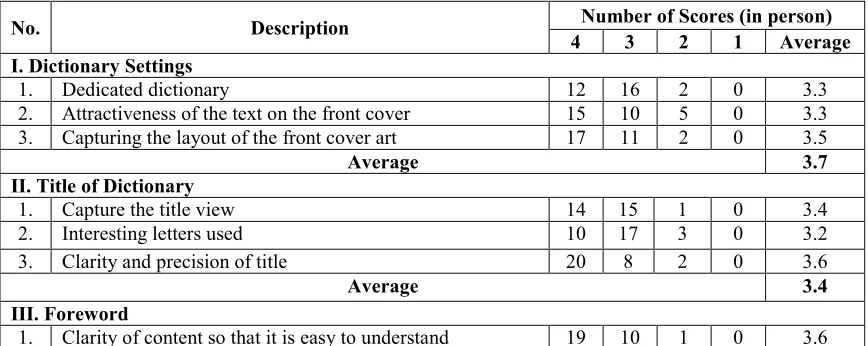
[image:5.612.90.524.551.724.2]The results of effectiveness test conducted in the field completely can be seen in the following table.
Table 2: The Result of Effectiveness of Dictionary of Loan Words in Balinese done in the field
No. Description Number of Scores (in person)
4 3 2 1 Average
I. Dictionary Settings
1. Dedicated dictionary 12 16 2 0 3.3 2. Attractiveness of the text on the front cover 15 10 5 0 3.3 3. Capturing the layout of the front cover art 17 11 2 0 3.5
Average 3.7
II. Title of Dictionary
1. Capture the title view 14 15 1 0 3.4 2. Interesting letters used 10 17 3 0 3.2 3. Clarity and precision of title 20 8 2 0 3.6
Average 3.4
III. Foreword
No. Description Number of Scores (in person)
4 3 2 1 Average
2. Systematic dish 15 15 0 0 3.5 3. Quality of language used 13 16 1 0 3.4 4. Motivate the reader to read the dictionary 12 17 1 0 3.4
Average 3.5
IV. Dictionary Use Instructions
1. Completeness instructions 22 6 2 0 3.7 2. Facilitate the reader in understanding the contents of the
dictionary
16 14 0 0 4.0
3. Content Clarity and Language 16 14 0 0 4.0
Average 3.9
V. Content in the Dictionary
1. Capture the display 14 15 1 0 3.4 2. Accuracy of the entry as an absorption word 10 19 1 0 3.3 3. Completeness of entry 7 22 1 0 3.2 4. Accuracy and clarity of meaning description 14 15 1 0 3.4 5. Conformity of data sample with description of meaning 11 18 1 0 3.3 6. Accuracy of class word entry 9 19 2 0 3.2 7. Accuracy of separation of syllable entry 12 15 3 0 3.3
Average 3.3
VI. Bibliography
1. Relevance 20 10 0 0 3.7 2. Adequacy 15 14 1 0 3.5 3. Updates 13 17 0 0 3.4
Average 3.5
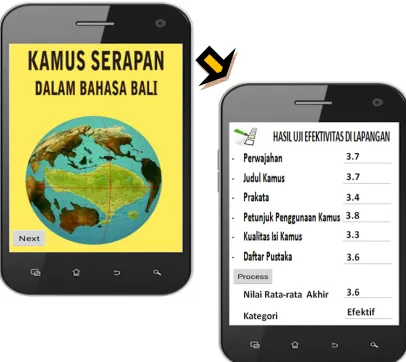
[image:6.612.92.295.526.707.2]A new breakthrough form used to obtain valid and accurate results in the effectiveness test conducted in the field toward a dictionary of loan words in Balinese is using mobile technology assistance. The view of mobile technology applications can be seen in the following picture.
Figure 1: Visualization of the Result of Effectiveness Testing in the Field Aided by Mobile Technology
Quantitatively, the draft of dictionary of loan words in Balinese is effective since the mean score exceeds 3.0. This finding is also supported qualitatively, which essentially shows positive things about the dictionary. Some respondents gave support to the writing of the dictionary as follows.
In general, dictionary of loan words in Balinese is good, easy to understand since it is accompanied by examples of the use of the loan words in sentences. This dictionary provides the reader with the correct guidance in using loan words from Indonesian and a foreign language. The presence of these loan words makes it easy for the readers to look up the meanings of new words.
The outcome of this study benefits Balinese in general and teachers of Balinese in particular. The more specific response in relation to the aspects which become the target of the evaluation .from the respondents, both about the strengths and weaknesses of the dictionary are given below.
qualitative findings as follows: (1) From the point of view of the format, Kamus Serapan dalam Bahasa Bali is interesting since the letters and the accuracy of the title make it easy for the readers to read the dictionary; (2) the cover is good. There is a picture of Bali Island surrounded by two oceans which show the hope that Balinese will keep existing and being recognized by the world organizations such as UNESCO; (3) The cover illustration is very good.
However, there are some important inputs that need to be given more attention to increase the quality of the format as follows. The cover is less interesting in terms of color, drawing and font. The format is interesting enough, but it would have been more interesting if the color of the background used were black, golden or dark red or bright yellow in order not to look pale. The background color does not go well with the symbol. To make them match, perhaps the globe which underlies Bali Island is immediately used as the background of the whole. Thus, the yellow background is changed with the globe and Bali Island as the symbol. The quality of the cover needs to be improved to look more interesting and on the cover page it would be better if some loan words were added to make the reader understand more about the dictionary and interested to learn from it.
There is still an empty space which can be filled in with decorations or thin drawings as the background of the book cover if they can be integrated/graded to avoid having just one color. In the writing on the cover, a font color other than black can be used to look more vivid and interesting. Color gradation can be added to the cover to make it more vivid. As to the name of the writer, the font size should be changed into smaller one. It would be better if the backbone cover title is written in one line and its font is enlarged.
It will be more interesting if the color of the cover is changed with a brighter color, but not too bright (for example, sky blue). In this case, the frame is not needed since it will hinder the reader from having a broader look of the cover and thus making it less interesting.
The attractiveness of the writing will be improved if the writing of the writer’s name below the picture is changed with a fresher font such as vijaya, etc. to avoid rigid impression. In this case, there is also the inappropriate choice of pictures for example the picture on the dictionary cover has the impression of an atlas book. On the contrary, in order not to disturb the reader’s focus and
understanding, the cover should only be decorated with lines or colors. It is very rare to see a dictionary cover with pictures. Probably it is aimed at protecting the readers from misunderstanding the contents.
As a response to the respondents’ inputs, a follow-up was done by the team of the study by improving the quality of the cover in terms of letters, pictures and variation of the use of colors by consulting a design expert.
As to the title of the dictionary, quantitatively, the mean score obtained is 3.7 (falling into good/effective category). This is in line with the comment given by a respondent. The respondent said that in terms of title, the use of letters is interesting. However, on the contrary, there are some inputs given, that is, (1) it would be better if the title is changed into dictionary of loan words in Balinese.
We think Dictionary of loan words in Balinese is less appropriate and will cause ambiguity. The title which we can suggest is Kamus Bahasa Bali
Serapan which is simple enough. However, the
result of the discussion among the study team decided to maintain the old title, that is Kamus
Serapan dalam Bahasa Bali, which is analogous
with a similar dictionary entitled Kamus Serapan dalam Bahasa Indonesia.
As to the foreword, quantitatively, the mean score obtained is 3.4 (falling into good/effective category). This is in line with the response given by a respondent who said that the foreword is good and can represent the meaning. Since in this part there is no input, the foreword will be kept as it is.
word classes, that is, adjective, noun, and verb. The study team appreciated this input so that the follow up was to add the guide for using the dictionary especially from the spelling point of view and to give examples for each point in the guide.
However, qualitatively, quite a lot of inputs given by respondents which need to be followed up by the study team such as follows: (1) there is one word which is not translated in this dictionary, which is participant. In short, this dictionary is good, but it will be better if more words are added, in order it becomes complete. (2) for syllable division, there are still many divisions which deviate from the guide on pages 6-8. For example, in the word uma not u.ma; there is still inconsistency in each entry and for entry containing sound /e/ its transcription still does not use /é/ most of the time. (3) There are still many loans that are not included in the dictionary such as: alpa, antisipasi, alamat, cekatan, gembong, instrument, inisiatif, meriah, nomaden, nota, obral, otot, organ, ornament, palsu, pesawat, popular, predikat, rahasia, ancu, rekreasi, rekan, sensitif, tobat,
trotoar, urbaninasi, vaksin, dan waras. (4) The
description of meaning should be simplified to make it easy to understand. (5) There are still a lot of errors in writing words such as in the word
melajah which should be written as malajah.
(6) There needs to be added a series of letters on the side of the dictionary to make it easier for the readers to look up words in the dictionary according to the alphabet like in the Indonesian-English Dictionary. (7) Word division in the guide for using the dictionary and in the contents of the dictionary is not consistent, such as in the Guide in points10- (6), a syllable in the form of vowel letter which is found in the initial or final base position is written as [alu] not [a.lu]. In the list of abbreviations for the word Inggris is shorten to Ing. However, in its application many people use Igr. (8) Some bases have not been divided into syllables such as alam (page 5); alat (page 6); edar (page 53); efek (page 53). (9) There are three errors in word class such as the word jorok which is classified in the dictionary as noun while actually it is an adjective. All the inputs related to the contents were followed up by the study team by making some improvement based on the inputs.
As to references, quantitatively, the mean score obtained is 3.6 (falling into good category). This is also supported by respondent’s comment which states that references are good in terms of relevance, adequacy, and up to date.
Another important result shows that quantitatively, the draft of dictionary of loan words in Balinese is effective since the mean score obtained is 3.6 (falling into good or effective category). This cannot be separated from a series of steps that have been taken starting from the first year up to the third year based on the model of the development study used in this study, that is, the 4D (Define, Design, Develop, and Disseminate) model by Thiagarajan as stated in the method section of this paper.
However, the results of this study also show that qualitatively, there are many inputs given by practitioners when the effectiveness testing of the dictionary was conducted. These qualitative inputs are natural since in the third year, the effectiveness testing was done involving practitioners such as Balinese teachers and Balinese students who are much involved in their field in the application of theories, while the validity by experts in the second year was more focused on the theoretical aspects of things related to dictionary compilation.
Based on the dictionary of loan words that has been successfully compiled in the third year, it can be explained as follows. First, the number of loan words in Balinese such as explained above cannot be separated from the limitation of Balinese vocabulary in expressing various ideas in keeping with the rapid development in science, technology, art, and sports. The openness of Balinese, that is as a Balinese symbol of pride. The numerous loan words in Balinese as stated above is in line with Sugono’s opinion [30], that the development of knowledge and technology and modern culture has to be balanced with the acceleration in vocabulary development. This finding is also in line with Muslich’s opinion [31], that language is dynamic so that it causes it to be alive, to change and to develop in keeping with the development in the life of the community or users of the language.
Secondly, Balinese loan words are regarded to
come from Indonesian, but actually some of them come from foreign languages, especially English. Words in Indonesian such as deposito, kuantitatif, kualitatif, praktis, valid, signifikan, inovatif, and kreatif actually come from English, but have been borrowed into Indonesian and have undergone a small change in form in accordance with the guide for forming terms in Indonesian. The words are then used in Balinese context, especially in scientific discourse such as in thesis.
Thirdly, many loan words in Balinese which
condition of Balinese community nowadays, most of which are bilinguals, that is Balinese-Indonesian rather than Balinese-English bilinguals. In the globalization era like today, almost no region is isolated and difficult to reach by mass media such as television and radio. The current rapid development of mobile technology also contributes to the entrance of words from Indonesian into Balinese.
The main constrains found in the implementation of this study are the results of the research hasn’t been able to show the results of overall effectiveness in terms of information related to the existence of a dictionary of loan words in Balinese, the selection of certain programs that may successfully meet the needs of a dictionary of loan words in Balinese, the socialization of dictionary of loan words in Balinese application, information related to how the working steps and function of a dictionary of loan words in Balinese, and provide information on the value or use of a dictionary of loan words in Balinese.
4. CONCLUSIONS
Based on the formulation of research problems in the third year and the analysis of data that has been successfully done, it can be concluded that quantitatively the result of effectiveness testing in the field aided by mobile technology to the draft of dictionary of loan words in Balinese is effective since the mean score obtained in 3.6 (falling into good category). However, qualitatively, there are many inputs given by the respondents to improve the draft. The inputs given are related to the aspects: (1) format; (2) title of the dictionary; (3) foreword; (4) guide for using the dictionary; (5) quality of the dictionary contents; and (6) references.
In the light of the results above, two suggestions can be made as follows: (1) there is a need to do further research on loan word dictionary compilation for various local languages in Indonesia in the effort to preserve local languages in Indonesia and (2) in the effort to compile the loan word dictionaries, the 4D (Design, Develop, and Disseminate) development research (Thiagarajan) can be used as one of the research models.
The solution of the constraints that’s found is to use the CSE-UCLA evaluation model in determining the effectiveness level of a dictionary of loan words in Balinese, so that it can get the result from five dimensions: system assessment,
program planning, program implementation, program improvement, and program certification.
ACKNOWLEDGMENTS
The authors would like to thank profusely to the entire staff of Universitas Pendidikan Ganesha, who have given both spiritual and moral support to this research.
REFERENCES
[1] H. Alwi, et.al. Politik Bahasa, Rumusan Seminar Politik Bahasa. Jakarta: Pusat Bahasa Departemen Pendidikan Nasional, 2003. [2] J. Kersten. Bahasa Bali (Tata Bahasa dan
Kamus Bahasa Lumrah). Ende, Flores : Nusa Indah, 1984.
[3] I.N. Tinggen. Kamus Bahasa Bali Modern. Singaraja : Tanpa Penerbit, 2005.
[4] I.W. Simpen. Kamus Bahasa Bali. Denpasar: PT Mabhakti, 1983.
[5] S.R. Anandakusuma. Kamus Bahasa Bali (Bali-Indonesia, Indonesia-Bali). Denpasar : CV Kayumas, 1986.
[6] M. Simatupang. 1993. Masuknya Kosakata Bahasa Daerah ke dalam Bahasa Indonesia. Jakarta: Kompas, 1993.
[7] J. Gonda. Sankirt in Indonesia. New Delhi: International Academy of Indian Culture, 1973.
[8] F. Grosjean. Life with Two Languages:An Introduction to Bilingualism. Cambridge, Massachusett, and London: Routledge and Kegan Paul, 1982.
[9] I.W. Jendra. Seni Mabebasan Sebagai Sumber Inspirasi Seni Budaya Bali dan Pemakaian Bahasanya. Denpasar: Deva, 2002.
[10] M. Marcellino. Penyerapan Unsur Bahasa Asing dalam Pers Indonesia dalam Dardjowidjojo, Soenjono (Penyunting).
Mengiring Rekan Sejati. Jakarta : Universitas
Katolik Indonesia Atma Jaya, 1994.
[11] Tim Penyusun. Kamus Besar Bahasa Indonesia. Jakarta: Balai Pustaka, 2008. [12] L. Zgusta. Manual of Lexicography. Mouton:
The Hague, 1971.
[13] H. Kridalaksana. Kamus Sinonim Bahasa Indonesia. Ende-Flores: Nusa Indah, 1981. [14] H. Kridalaksana. Kamus Linguistik. Jakarta:
Gramedia, 1993.
[16] J.S. Badudu. Kamus Kata-kata Serapan Asing dalam Bahasa Indonesia. Jakarta: PT Kompas Media Nusantara, 2003.
[17] Departemen Pendidikan dan Kebudayaan.
Panduan Penyusunan Kamus Bidang Ilmu.
Jakarta: Depdikbud, 1993.
[18] A. Sunaryo. Paradigma Leksikografi Dalam Telaah Bahasa dan Sastra. Jakarta: Pusat Pembinaan dan Pengembangan Bahasa, 1999. [19] I.N. Suandi, “Pembentukan Kata-kata Baru
dalam Bahasa Bali”, Linguistik
Indonesia:Jurnal Ilmiah Masyarakat
Linguistik Indonesia, Vol. 26, No. 2, 2008,
pp.197-210.
[20] D.G.H. Divayana, I.M. Ardana, and I.P.W. Ariawan, “Measurement of Effectiveness of A Lecturer in Transferring Algebra Knowledge Through of Multimedia Facilities by Using Certainty Factor-Formative-Summative Model”, Journal of Theoretical and Applied
Information Technology, Vol. 95, No. 9, 2017,
pp. 1963-1973.
[21] D.G.H. Divayana, and G.A.D. Sugiharni, “Evaluasi Program Sertifikasi Komputer Pada Universitas Teknologi Indonesia Menggunakan Model CSE-UCLA”, Jurnal
Pendidikan Indonesia, Vol. 5, No. 2, 2016, pp.
865-872.
[22] D.G.H. Divayana, D.B. Sanjaya, A.A.I.N. Marhaeni, and I.G. Sudirtha, “CIPP Evaluation Model Based on Mobile Phone in Evaluating the Use of Blended Learning Platforms at Vocational Schools in Bali”,
Journal of Theoretical and Applied
Information Technology, Vol. 95, No. 9, 2017,
pp. 1983-1995.
[23] D.G.H. Divayana, and D.B. Sanjaya, “Mobile Phone-Based CIPP Evaluation Model in Evaluating the Use of Blended Learning at School in Bali”, International Journal of
Interactive Mobile Technologies, Vol. 11, No.
4, 2017, pp. 149-159.
[24] I.P.W. Ariawan, D.B. Sanjaya, and D.G.H. Divayana, “An Evaluation of the Implementation of Practice Teaching Program for Prospective Teachers at Ganesha University of Education Based on CIPP-Forward Chaining”, International Journal of
Advanced Research in Artificial Intelligence,
Vol. 5, No. 2, 2016, pp. 1-5.
[25] D.B. Sanjaya, and D.G.H. Divayana, “An Expert System-Based Evaluation of Civics Education as a Means of Character Education Based on Local Culture in the Universities in Buleleng”, International Journal of Advanced
Research in Artificial Intelligence, Vol. 4, No.
12, 2015, pp. 17-21.
[26] D.G.H. Divayana, “Penggunaan Model CSE-UCLA Dalam Mengevaluasi Kualitas Program Aplikasi Sistem Pakar”, SNATIA, 2015, pp.165-168.
[27] D.G.H. Divayana, “Evaluasi Program Penanggulangan HIV/AIDS Dengan Model CIPP Berbantuan Komputer”, Konferensi Nasional Sistem & Informatika, 2015, pp.442-446.
[28] D.G.H. Divayana. Evaluasi Program Perpustakaan Digital Berbasis Sistem Pakar pada Universitas Teknologi Indonesia. Jakarta: Universitas Negeri Jakarta, 2016. [29] D.G.H. Divayana, A.A.I.N. Marhaeni, N.
Dantes, I.B.P. Arnyana, and W. Rahayu, “Evaluation of Blended Learning Process of Expert System Course Program by Using CSE-UCLA Model Based on Mobile Technology”, Journal of Theoretical and
Applied Information Technology, Vol. 95, No.
13, 2017, pp. 3075-3086.
[30] Sutami. Strategi Pengembangan Kosakata Bahasa Indonesia dalam Kosakata Bahasa
Indonesia Mutakhir. Jakarta: Pusat leksikologi
dan Leksikografi, Fakultas Ilmu Pengetahuan Budaya Universitas Indonesia, 2008.