EVALUATION OF MARGINAL ADAPTATION AND MICROLEAKAGE OF ALL CERAMIC
CROWN SYSTEMS BY USING TWO COMMERCIALLY AVAILABLE
1,*
Dr. Tedlapu Satyendra Kumar,
4
Dr. Kalluri Srinivas,
5Dr. Hari Krishna Modalavalasa
1
Senior Lecturer Department of Prosthodontics
2,4
Professor, Gitam
3
Vice Principal, Professor
5,6
Reader, Gitam Dental College, Visakhapatnam
ARTICLE INFO ABSTRACT
Background:
Denture. Thermocycling can mimic oral conditions in invitro study. agents on marginal gap and microlea
microleakage.
thermocycling on marginal fit and microleakage of all ceramic samples luted agents.
divided into four groups. Group 1and 2 : Heat pressed lithium CAD/CAM
groups were assigned cementation with resin modified glass
resin cement (B). The marginal gap before cementation, after cementation and a
measured using image analysis software. After marginal gap measurement, all samples are immersed in basic fuchsin solution, sectioned mesiodistally. The surface of each section was digitally photographed under a stereomicroscope. Mic
analysed using 2
discrepancy values for all ceramic pressable copings and crown were more after cementati
cementation (p=0.0). The mean marginal discrepancy values for all ceramic pressable copings and crown were more after thermocycling than after cementation (p=0.10). Samples luted with resin cement showed less marginal gap than samples luted
marginal gap than pressable samples (p=0.2). Self microleakage than resin modified glass
scores of ‘0’ were 83% for 1A, 50% for 1B, 50% for 2A, 16% for 2B, 33% for 3A and none for 3B.
Conclusion:
microleakage were recorded with self
showed smaller marginal discrepancy and less microleakage in comparison to pressable samples.
Copyright © 2018, Tedlapu Satyendra Kumar et al. This unrestricted use, distribution, and reproduction in any medium,
INTRODUCTION
Dental Ceramics since ages have undergone tremendous transformations. These transformations have improved their application in various areas of restorative dentistry
Anusavice, 2004).
*Corresponding author: Dr. Tedlapu Satyendra Kumar,
Senior Lecturer Department of Prosthodontics Gitam Dental College, Rushikonda Visakhapatnam – 530045
DOI: https://doi.org/10.24941/ijcr.32009.08.2018
ISSN: 0975-833X
Article History: Received 08th May, 2018
Received in revised form 14th June, 2018
Accepted 10th July, 2018
Published online 30th August, 2018
Citation: Dr. Tedlapu Satyendra Kumar, Dr. Hima Bindu,
ceramic crown systems by using two commercially available
Key Words:
Microleakage, Dental cements, Marginal gap ,CADCAM Crowns,
Thermocycling, Stereomicroscope , Pressable copings.
Glossary of Abbrevations:
m.m - Millimetre gm - Grams kg - Kilogram ºc - Degree Centigrade min. - Minutes µ - Microns
CADCAM – Computer Aided Designing and Computer Aided Machining
RMGIC - Resin Modified Glass Ionomer Cement RC - Resin Cement
SD - standard deviation
RESEARCH ARTICLE
EVALUATION OF MARGINAL ADAPTATION AND MICROLEAKAGE OF ALL CERAMIC
ING TWO COMMERCIALLY AVAILABLE LUTING AGENTS
VITRO STUDY
Kumar,
2Dr. Hima Bindu, R.,
3Dr. Yalavarthi Ravi Shankar,
Hari Krishna Modalavalasa and
6Dr. Shameen Kumar paidi
Senior Lecturer Department of Prosthodontics Gitam Dental College, Rushikonda Visakhapatnam
Professor, Gitam Dental College, Visakhapatnam
Vice Principal, Professor and Hod, Gitam Dental College, Visakhapatnam
Reader, Gitam Dental College, Visakhapatnam
ABSTRACT
Background: Marginal gap and Microleakage are known factors which influence success of Fixed Partial Denture. Thermocycling can mimic oral conditions in invitro study.
agents on marginal gap and microleakage. Question 2: Effect of thermocycling on marginal gap and microleakage. Objective:This study aimed at evaluating the effects of manufacturing type, cementation and thermocycling on marginal fit and microleakage of all ceramic samples luted
agents. Methods: Eighty extracted maxillary premolars were prepared for full
divided into four groups. Group 1and 2 : Heat pressed lithium-disilicate copings and crowns, Group 3and4 : CAD/CAM-fabricated ZrO2 copings and crowns. Copings were made following standard techniques, and
groups were assigned cementation with resin modified glass-ionomer luting cement self (A) or adhesive resin cement (B). The marginal gap before cementation, after cementation and a
measured using image analysis software. After marginal gap measurement, all samples are immersed in basic fuchsin solution, sectioned mesiodistally. The surface of each section was digitally photographed under a stereomicroscope. Microleakage was scored using a five
analysed using 2-way ANOVA, Kruskal-Wallis, and Mann-Whitney U tests.
discrepancy values for all ceramic pressable copings and crown were more after cementati
cementation (p=0.0). The mean marginal discrepancy values for all ceramic pressable copings and crown were more after thermocycling than after cementation (p=0.10). Samples luted with resin cement showed less marginal gap than samples luted with resin modified GIC (P=0.10).CADCAM samples showed less marginal gap than pressable samples (p=0.2). Self-adhesive resin cement (A) showed a lower level of microleakage than resin modified glass-ionomer luting cement (B) in all groups (P = 0.029). Micr scores of ‘0’ were 83% for 1A, 50% for 1B, 50% for 2A, 16% for 2B, 33% for 3A and none for 3B.
Conclusion: Marginal discrepancy and microleakage varied with cement type. Lower levels of microleakage were recorded with self-adhesive resin cement, while CAD/CAM
showed smaller marginal discrepancy and less microleakage in comparison to pressable samples.
This is an open access article distributed under the Creative Commons medium, provided the original work is properly cited.
Dental Ceramics since ages have undergone tremendous transformations have improved their application in various areas of restorative dentistry (Ferreira
Dr. Tedlapu Satyendra Kumar,
Senior Lecturer Department of Prosthodontics Gitam Dental College,
.08.2018
Metal ceramic restorations have been available
three decades. Despite its success, the demand for improved aesthetics and the concerns regarding the biocompatibility of the metal has led to the introduction of all
(Kelly, 1996). All-ceramic materials have higher flexural and compressive strength with less porosities than conventional feldspathic porcelain (FP). They provide better aesthetics with increased translucency, shrink less during processing, and have excellent marginal fit. Moreover, Pressed Ceramics, used for all-ceramic restorations, show less shrinkage and have the International Journal of Current Research
Vol. 10, Issue, 08, pp.72760-72765, August, 2018
Hima Bindu, R., Dr. Yalavarthi Ravi Shankar et al. 2018. “Evaluation of marginal adaptation and microleakage of all
ceramic crown systems by using two commercially available luting agents - an in vitro study.”, International Journal of Current Research
EVALUATION OF MARGINAL ADAPTATION AND MICROLEAKAGE OF ALL CERAMIC
LUTING AGENTS – AN IN
Yalavarthi Ravi Shankar,
Dr. Shameen Kumar paidi
Visakhapatnam – 530045
, Gitam Dental College, Visakhapatnam
Marginal gap and Microleakage are known factors which influence success of Fixed Partial Denture. Thermocycling can mimic oral conditions in invitro study. Question 1: Effect of different luting Effect of thermocycling on marginal gap and This study aimed at evaluating the effects of manufacturing type, cementation and thermocycling on marginal fit and microleakage of all ceramic samples luted with two different luting : Eighty extracted maxillary premolars were prepared for full-coverage crowns and were disilicate copings and crowns, Group 3and4 : copings and crowns. Copings were made following standard techniques, and ionomer luting cement self (A) or adhesive resin cement (B). The marginal gap before cementation, after cementation and after thermocycling was measured using image analysis software. After marginal gap measurement, all samples are immersed in basic fuchsin solution, sectioned mesiodistally. The surface of each section was digitally photographed scored using a five-point scale. Data were statistically Whitney U tests. Results: The mean marginal discrepancy values for all ceramic pressable copings and crown were more after cementation than before cementation (p=0.0). The mean marginal discrepancy values for all ceramic pressable copings and crown were more after thermocycling than after cementation (p=0.10). Samples luted with resin cement showed with resin modified GIC (P=0.10).CADCAM samples showed less adhesive resin cement (A) showed a lower level of ionomer luting cement (B) in all groups (P = 0.029). Microleakage scores of ‘0’ were 83% for 1A, 50% for 1B, 50% for 2A, 16% for 2B, 33% for 3A and none for 3B. Marginal discrepancy and microleakage varied with cement type. Lower levels of hile CAD/CAM-fabricated ZrO2 copings showed smaller marginal discrepancy and less microleakage in comparison to pressable samples.
Commons Attribution License, which permits
Metal ceramic restorations have been available for more than three decades. Despite its success, the demand for improved aesthetics and the concerns regarding the biocompatibility of the metal has led to the introduction of all-ceramic restorations ceramic materials have higher flexural and compressive strength with less porosities than conventional feldspathic porcelain (FP). They provide better aesthetics with increased translucency, shrink less during processing, and have Moreover, Pressed Ceramics, used for ceramic restorations, show less shrinkage and have the
OF CURRENT RESEARCH
of marginal adaptation and microleakage of all
additional advantage of being technically less challenging by use of the lost-wax technique (Kelly et al., 1996). The introduction of CAD/CAM systems for the production of machined inlays, onlays, veneers, and crown led t Kelly o development of a new generation of ceramics that are machinable. Clinical success and longevity of any fixed restoration depends on many factors among which micro leakage and marginal seal are of greater importance. Marginal fit is one of the most important criteria for the long-term success of all-ceramic restorations. Inadequate adaptation of the restoration may be detrimental for the tooth and the periodontal supporting tissue. Inaccurate marginal fit is responsible for plaque retention, microleakage and cement breakdown. Poor internal fit of a coping can increase the thickness of the cement and thus influence the mechanical stability of all ceramicrestorations3. Marginal precision can be measured through inspection, exploratory probing, and radiographic examination4. Therefore, the purpose of this study was to determine effect of manufacturing method, thermo cycling and cement type on marginal gap and microleakage of two different all ceramic crown systems using two different luting agents.
MATERIALS AND METHODOS
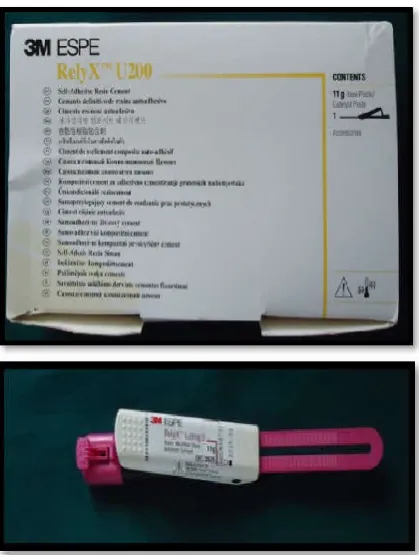
This study was undertaken to evaluate the marginal adaptation and microleakage of two all ceramic systems luted with two different luting agents, resin cement (RELYX LUT U 200) and resin modified GIC (RELYX LUT 2) (Figure 1) and the effect of thermocycling on them. A total of 80 samples include 40 samples of pressable copings (20) and layered crowns (20). Remaining 40 samples include 40 samples of CADCAM copings (20) and layered crowns (20). Each of these two groups was then subdivided into two subgroups. Each sub group had 20 specimens: 10 luted with resin modified glass ionomer and other 10 luted with resin cement. All samples were subjected to thermocycling. Recently extracted non carious maxillary premolar teeth with no flaws or defects were collected and stored in artificial saliva (ICPA) at room temperature. Extracted teeth were mounted in autopolymerising
resin by using a cylindrical jig such that onlytooth surface up
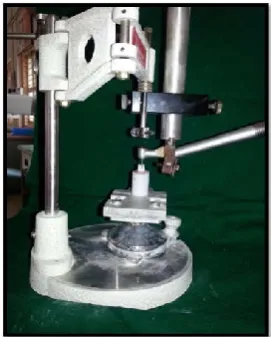
[image:2.595.319.547.55.341.2]to 2mm below the cemento-enamel junction was exposed. For standardizing tooth preparation an aluminum jig (Fig.2) was attached to the vertical arm of the surveyor which consisted of two parts, one vertical cylinder which is aligned parallel to the vertical arm of the surveyor (MARATHON). The horizontal rectangular part had an angulated housing to harbour the air rotor. A high-speed, high-torque air rotor handpiece (NSK NakanishiInc., Kanuma-Shi, Tochigi, Japan) was attached to the other end of the jig in such a manner that the bur would remain parallel to the vertical rod (Fig.3). Depth cutting bur for standardizing the depth of the preparation and tapered flat burs were used. Teeth in Group 1and2 were prepared to receive heat-pressed lithium-disilicate copings (IPS e.max Press, IvoclarVivadent, Schaan, Liechtenstein) (Fig.4) and layering was donefor Group 2, Group 3and4 teeth were prepared to receive ZrO2copings (fi.4) using the CAD/CAM method (Fig.5) and layering was done on group 4. Impressions were made with poly vinyl siloxane (putty light body technique) by using customized impression jig (Fig.6), the copings and crowns were made by following standard techniques. Each group was divided into two subgroups, (A) and (B), using
[image:2.595.348.515.371.559.2]Figure 1. Relyx u 200 & relyx lut 2
Figure 2. Jig for standardizing tooth preparation
[image:2.595.365.501.601.770.2]Figure 4. Ips e max pressable ceramic & nexxt zr
Figure 5. Delcam (cadcam)
Figure 6. Customized impression jig
Figure 7. Stereomicroscope (labomed)
[image:3.595.89.232.364.583.2]Figure 8. Thermocycling unit
Figure 9. Specimen sectioning unit
cementation with resin modified glass-ionomer luting cement (Relyxlut 2) and self-adhesive resin cement (RelyX U100,3M ESPE, St. Paul, USA) respectively. For each specimen, marginal gaps before cementation, after cementation, after thermocycling were measured using image analysis software (PROGRESS 14 PLUS). Each specimen was digitally photographed at x50 under a stereomicroscope (LABOMED) (Fig.7) and the data was transferred to a personal computer. After 24 hours of storage in distilledwater at 37 °C, all teeth
were subjected to 1,000 thermal cycles (Wilitech
Thermocycler With Cooling System HaakeEk 30
[image:3.595.342.527.470.620.2] [image:3.595.94.233.620.775.2]All samples are immersed in 0.5% basic fuchsin dye (Structure Probe,Inc., West Chester, USA) for 24 hours. Following removal from the solution, the teeth were rinsed under tap water and embedded in autopolymerising acrylic resin. Each tooth was vertically sectioned mesiodistally with a water-cooled diamond disc (SMT machine) (Fig.9). Two specimens were made from each tooth and the percentage of the
microleakage was scored as follows Tjan etal5 as given by: •0=
no leakage, •1= leakage up to one third of the axial wall, •2= leakage up to two thirds of the axial wall, •3= leakage along the entire length of the axial wall, •4= leakage extending onto the occlusal aspect. The distribution of continuous variables was investigated using the Shapiro-Wilk test. Marginal fit values are shown as mean ± standard deviation, while leakage scores are represented as frequency distributions. Marginal fit values according to fabrication techniques and cement types were assessed by two-way ANOVA. Differences arising from fabrication techniques in terms of leakage scores were evaluated by Kruskal-Wallis tests, whereas the difference of leakage scores arising from cement types was evaluated by Mann-Whitney U tests. Results with p < 0.05were considered statistically significant.
RESULTS
Sample distribution of all the samples are given in table 1. The mean marginal discrepancy values before cementation (table 2) were as follows Group 1A: 65.61±3.95; Group 1B: 55.59 ± 7.17, Group 2A: 84.22±11.15; Group 2B: 64.53±7.76, Group 3A: 45±6.50; Group 3B: 45.14±5.58, Group 4A: 48.40±5.85; Group 4B: 46.54±2.71.
The mean marginal discrepancy values after cementation (table 2) were: Group 1A: 74.26 ± 7.67 ; Group 1B: 64.04 ± 7.44, Group 2A: 93.00±12.54 ; Group 2B: 70.55±9.64, Group 3A:
56.90±5.94 ; Group 3B: 54.30±3.93, Group 4A: 61.33±6.77 ;
Group 4B: 57.39±6.00. The mean marginal discrepancy values after thermocycling (table 2) were: Group 1A: 78.22 ± 9.25;
Group 1B: 66.42 ± 7.20, Group 2A: 96.47±12.92; Group 2B:
73.17±9.47, Group 3A: 58.91±5.49; Group 3B: 57.03±4.24;
Group 4A: 64.32±6.18;Group 4B: 60.06±6.35. Micro leakage
score distribution among crowns and copings was as follows (table 3): The rates of micro leakage scores of ‘0’ by group and cement type were : Group 3A – 20% ,Group 4A– 20%, Group 3B - 40%. The rates of microleakage scores of ‘1’ by group and cement type were: Group 1A - 50% , Group 2A -40%, Group 1B - 80% , Group 2B - 40% , Group 3A -70% , Group 4A - 40% , Group 3B - 50%, Group 4B - 40%. The rates of microleakage scores of ‘2’ by group and cement type were: Group 1A -50%, Group 2A - 40%, Group 1B -20%, Group 2B - 60% , (Group 3A) -10%, Group 4A -30%, Group 3B - 10%, Group 4B - 60%, The rates of microleakage scores of ‘3’ by group and cement type were: Group 2A - 20% , Group 4A - 10%, and none of the samples tested showed score ‘4’.
DISCUSSION
[image:4.595.74.507.437.518.2]Marginal gap and microleakage are two important criteria for long term success of a restoration (Holmes, 1989). The 3 most common methods used to measure the marginal discrepancy of the crowns to the supporting structure are stereomicroscopy, travelling microscopy and video microscopy (Kenneth, 1998).
Table 1. Sample distribution of all samples
Group 1A pressable copings luted with resin modified glass ionomer cement
Group 2A, layered crowns on pressable copings luted with resin modified glass ionomercement Group 3A CAD CAM copings luted with resin modified glass ionomer cement
Group 4A layered crowns on CAD CAM copings luted with resin modified glass ionomer cement Group 1B pressable copings luted with resin cement
Group 2B layered crowns on pressable copings luted with resin cement Group 3B CAD CAM copings luted with resin cement
[image:4.595.70.513.544.687.2]Group 4B layered crowns on CAD CAM copings luted with resin cement
Table 2. Marginal gap values before cementation; after cementation; and after thermocycling
Marginal gap Cement Before
cementation (in microns µ)
After cementation (in microns µ)
After thermocycling (in microns µ)
Type of difference
P-value
All ceramic pressable copings
RMGIC
(IA) 65.61± 3.95 74.26 ± 7.67 78.22 ± 9.25 Within 0.000
RC (IB) 55.59 ± 7.17 64.04 ±7.44 66.42 ± 7.20 Between 0.000
All ceramic pressable crowns
RMGIC
(2A) 84.22± 11.15 93.00±12.54 96.47±12.92 Within 0.010
RC (2B) 64.53±7.76 70.55±9.64 73.17±9.47 Between 0.000
CAD CAM copings
RMGIC
(3A) 45±6.50 56.90±5.94 58.91±5.49 Within 0.000
RC (3B) 45.14±5.58 54.30±3.93 57.03±4.24 Between 0.222
CAD CAM crowns
RMGIC
(4A) 48.40±5. 85 61.33±6.77 64.32±6.18 Within 0.000
RC (4B) 46.54±2.71 57.39±6.00 60.06±6.35 Between 0.029
Table 3. Group distribution of microleakage scores
Groups Score 0 Score 1 Score 2 Score 3 Score 4
1A - 5 5 - -
1B - 8 2 - -
2A - 4 4 2 -
2B - 4 6 - -
3A 2 7 1 - -
3B 4 5 1 - -
4A 2 4 3 1 -
[image:4.595.68.512.719.805.2]Microleakage can be measured by die penetration method, chemical markers, radioactive isotopes, air pressure, bacteria, technique with artificial caries induced lesions and electro-chemical method8. In this study dye penetration method was used. Extent of microleakage was shown by the extent of dye penetration. The advantage of an in vitro evaluation of the marginal fit is that long term results can be acquired earlier than in an in vivo study . This in vitro study measured the marginal gap and microleakage of all ceramic specimens prepared on maxillary premolars. The results of this study support the hypothesis that marginal gap and microleakage levels vary with type offabrication techniques and variations in oral temperature. Increase in marginal gap after cementation in copings and crowns ( bothpressable and CAD CAM) are due to application of pressure during cementation caused development of microfractures due to lack of elastic deformation of all ceramic crowns and greater discrepancies owing to increased thickness of luting agent and / or decreased thickness of margin (Adriana ferraria, 2004). Luting agents may influence the marginal discrepancies through crown elevation after cementation due to viscous nature of cement (Xin huagu, 2003). Increase in marginal gap can be explained by the volume requirement of the cement used (Wael, 2009). Improved fit of a restoration can diminish the capacity of cement to flow and thus result in an increase in the marginal gap size (Wael, 2009). Decreased marginal gap value in CADCAM fabricated copings and crowns when compared to all ceramic pressable copings and crowns may be explained by proper internal relief and smooth internal finish of the coping / crown which can facilitate luting agent to flow more quickly reducing the marginal discrepancy (Adriana ferraria, 2004). Increase in marginal gap in crowns than copings (both pressable and CAD CAM) was due to Structural changes in porcelain during firing cycles. During the porcelain firing cycle, porcelain particles melt and fuse by filling up voids, and the contracting mass of fused porcelain exerts a compressive force on the coping during cooling. If the coping margin begins to deform under the stress of the contracting porcelain, the stress is spread further around the circumference of the margin. Consequently, because the porcelain shrinks towardits greatest mass, the labio palatal distance decreases, while the
mesio distal distanceincreases in the coping margin13. Another
reason might be core material used for manufacturing coping is lithium disilicate (pressable) whereas layered ceramic is of feldspathic type. Due todifference in composition, the coefficient of thermal expansion (15ppm/ºc) and (25ppm/ºc) may differ leading to variation in expansion and contraction per degree temperature. Increase in marginal gap after
thermocycling was due to difference in thermal expansion
between tooth and luting agent and ceramic, cycling of an all ceramic restoration between high and low temperature causes rupture of the bond between the luting agent and the tooth. Temperature cycling also causes percolation in the gap created at the luting agent and dentin interface. Because the resin cements had an almost zero or a very low rate of hygroscopic expansion and showed the highest rate of flexural modulus, the difference in dimensional change may have been directly responsible for the rupture of bond between luting agent and tooth and led to the increase in marginal gap after thermocycling (Irie, 2001). There was a notable difference between the marginal discrepancy of ZrO2 copings and that of pressable copings. It can be due to the precision of CADCAM technique (Esther Gonzalo et al., 2009) which reduces marginal gap and might be due to manual errors such as distortion of impression, die stone expansion, wax pattern
shrinkage, processing temperature variations, difference in coefficient of thermal expansion of the core and layered material. Samples luted with adhesive resin cement (relyx-u200) showed lower marginal discrepancy values than the samples luted with resin modified GIC (relyxlut2). This can be explained by varying film thickness of both resin cement (19.4 µm) and resin modified GIC (53.6 µm) attained after 5 minutes (Andrew, 2009). Marginal discrepancy values in the range of 100-120µ have been proved to be clinically acceptable with regard to longitivity of the fixed partial denture (McLean, 1971). All the copings and crowns in the present study were within 45µ-96µ. Marginal gap values of copings were noticed to be less than the crowns. Among the two luting agents used in the study samples luted with resin cement showed less marginal gap than samples luted with resin modified glass ionomer cement.
From the given data it can be stated that copings showed less microleakage than corresponding layered crowns. This can be explained due to the fact that copings had less marginal gap than layered crowns. Amount of marginal gap directly influenced the amount of microleakage. More the marginal gap more was the penetration of dye. Among two luting agents used samples luted with resin cement showed lower microleakage than samples luted with resin modified glass ionomer. This can be explained by the solubility of the cements, which plays an important role in providing a better seal. Water-soluble cements such as glass-ionomer deteriorate over time due to the deleterious effects of thermocycling. However, the insoluble resin cement absorbs water, which may help the relaxation of internal stresses caused by polymerization shrinkage (Eceyuksel, 2011). In the present study microleakage before and after thermocycling was compared. It was noted that thermocycled samples showed higher amount of microleakage. This can be explained by the stresses that occur during thermocycling may lead to cracks that propagate along bonded interfaces. Once a gap wascreated, changing gap dimensions can cause in- and outflow of oral fluids, a process known as“percolation”. When this gap arises after thermocycling, microleakage may be observedbetween the tooth and the restorative material. Therefore, thermocycling of the restored tooth will result in the highest clinically relevant stress and lead to increased microleakage (Wahab, 2003) Higher amount of micro leakage was seen at the cement restorative interface with RMGIC than the tooth restorative interface. It might be due to the chemical bond that is formed between the tooth and cement as seen in the case of RMGIC, and self etching and priming property of resin cement created a stronger bond between tooth and cement. Bonding towards the cement and restoration is due to mechanical locking which created a weaker bond with the luting agent.
Conclusion
Within the limitations of the study it can be concluded:
Mean marginal gap before cementation was less compared to mean marginal gap after cementation in pressable and CAD CAM samples.
Thermocycling has negative effect on marginal gap and microleakage. Marginal gap and microleakage increased in samples that are subjected to thermocycling.
With increase in marginal gap , microleakage also increased.
Mean marginal gap on copings was less than layered crowns.
Among two luting agents (Relyx U-200 and Relyxlut 2), adhesive resin cement showed lower marginal gap and microleakage values than resin modified GIC.
Conflict of interest: NONE
Source of Funding: Self funding
REFERENCES
Adriana ferrariaand Fabino Oliveria, 2004. Vertical marginal discrepancy of ceramic copings with different ceramic materials, finish lines and luting agents (JPD, 92;250-257) Adriana Ferrariaand Fabino Oliveria, 2004. Vertical marginal
discrepancy of ceramic copings with different ceramic materials, finish lines and luting agents (JPD;92;250-257) Andrew R. Kious, Howard W. Roberts, 2009. Film thickness
of recently introduced luting cements. (JPD;101:189-192) Balkaya M C., Cinar A. 2005. Influence of firing cycles on the
margin distortion of three all ceramic crown systems (JPD93:346-55)
Charlotte grenade, Amelie mainjot, Alain vanheusden, 2011. Fit of single tooth zirconia copings: comparison between various manufacturing process. J Prosthet Dent., 105:249-255.
Eceyuksel, Ali Zaimoglu, 2011. Influence of marginal fit and cement types on microleakage of all ceramic crown
systems. Braz Oral Res., mayjun;25(3):261-6.
Esther Gonzalo, Maria J.Suarez, A comparison of the marginal vertical discrepancies of zirconia and metal ceramic posterior fixed dental prosthesis before and after cementation (JPD 2009;102:378-384)
Ferreira Anusavice KJ. 2004. Phillip’s Science of Dental Materials. 11th edition, Saunders Company, USA. pp 721-57
Gianfranco Gassino, Sandro Baronemonfrin, 2004. Marginal adaptation of fixed Prosthodontics: A new in vitro 360-degree external examination procedure. Int J Prosthodont,
17: 218-223.
Heintze S., Forjanic M. 2008. Microleakage of class II restorations with different tracerscomparision with SEM quantitative analysis, J Adhes Dent., 78:259-67.
Holmes JR., Bayne SC. 1989. considerations in measurement of marginal fit. (JPD;62:405-8)
Kelly JR, Nishimura I, Campbell SD. 1996. Ceramics in dentistry: historical roots and current perspectives. J
Prosthet Dent., 75(1):18-32
Kenneth B. May, Melinda M. Russel. 1998. Precision of fit:
The ProceraAllceram J Prosthet Dent., 80: 394-405
M.Irie, K. Suzuki, 2001. Current Luting cements: marginal gap formation of composite inla and their mechanical properties.(Dental Materials 17347-353)
McLean JW., von Fraunhofer JA. 1971. The estimation of
cement film thickness by an in vivo technique. Br Dent J.,
131:107–111)
Tjan AH, Chiu J. 1989. Microleakage of core materials for
complete cast gold crowns. J Prosthet Dent., 61:659-64.
Wael att, FutoshiKomine, 2009. Marginal adaptation of 3 different zirconium dioxide three unit FDP. (JPD;101:238-247)
Wahab FK., Shalin FJ., Morgano SM., 2003. The effect of thermocycling on microleakage of several commercially available composite class V restorations in vitro. JPD 90: 168-174.
Xin huaguand Matthias Kern, 2003. Marginal discrepancies and leakage of all ceramic crowns: influence of luting agent and aging conditions. (Int J Prosthodont., 16:109-116)