P I C T O N
ITS SITE_, FORM Al\.TI) FUNCTION
THESIS
PRESENTED FOR THE DEGREE OF
M.A. IN GEOGRAPHY
CONTENTS
INTRODUCTION
CHAPTER I
Site,
For-.m
and EarlySettlement
CHAPTER II
Th-
l.~t'Functions
of:Picton
( a)
Commercial
(b'!'
Industrial
( C)
Social
(d)
Administrative
( e)Transport
(f)Residential
CHAPTER III
Queen Charlotte Sound
-the rural region tributary to Picton
(a) Physiography(b)
Climate
(c) Natural Vegetation
(d) Popnlation(e)
Connnunications
(f)
Present Vegetation and Land Use
LIST OF MAPS
1 • Location To face page 2
2. Communications II II II
3
J.
Proposed reclamation areas t1 II I! 44.
Functional buildings and relatedareas (In pocket at back)
,:; Position of freezing works To face page 17a
./=•
6.
Industrial buildings and relatedareas !I II II 20
7.
Population by census: Picton !I II II29
8. Queen Charlotte Sound: Topography It n n
31
9.
Geology II ll II32
fo.
Population distribution withinQueen Charlotte Sound II -11 II
34
11 • Queen Charlotte Sound: Communications II II
36
12. Present Vegetation u II II
37
1 IS T 0 F PHOTOGRAPHS
1. Picton and part of Queen Charlotte Sound
To
face page5
2. Looking across Nelson Square from the West3.
Showing the area Bin Map3,
to be reclaimed4.
Picton from the north-west, showing the meatfreezing works in foreground
5.
Coastal boat draw'..i.ng alongside Picton wharf6.
Inter-island steamer 11Tamahine11 at Pictonwharf
7.
Mt. Freeth. Railway sheds in foreground Cemetery in middle distance8. Railway Station. Exotics planted on hills
9.
Picton from the north-east, showing theII II ii II It II
business section in foreground 11
10. Picton from Victoria Domain 11
11. Show:L11g position of wharf and freezing works 11
12. Part of meat freezing works 11
13.
11Edw:in Fox11 berthed at Picton wharf 1114. A
whale blowing n1
5.
A harpooned whale fighti11g 1116.
At Te Awaiti whaling station - a humpbackwhale. H
17.
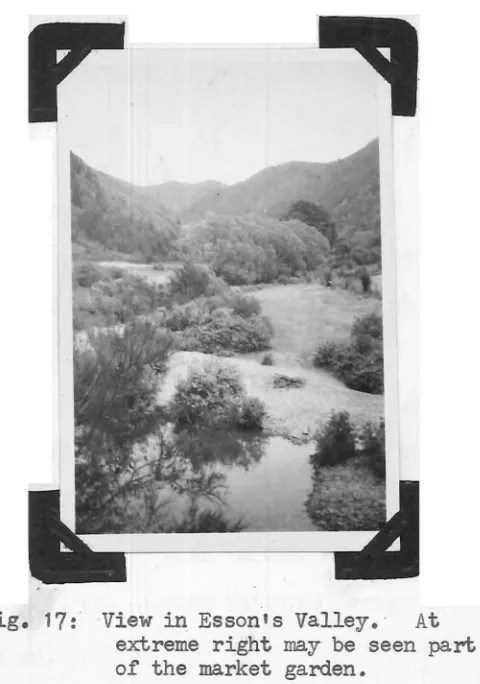
View in Esson Is Valley. At extreme right rnay be seen part of the market garden. n 1 8. Picton, showing residential area alongWai-kawa Road 11
19.
Picton Harbour from the town. 1120. Launch with punt drawn alongside, used for transporting sheep. Arapawa Island 11 21 • One of the numerous bays w:i th a typical cottage
-on the road between Waika1tra. and Whatam-ongo Bay11
22. Wha tamongo Bay n
23.
Waikawa - part of the area leased by Europeans.Hillslopes have been deforested 11
24.
Maori section of Waikawa - looking towardsPicton and Mt. Freeth 11
25.
Allport Island from Karaka Point. in foreground are Spanish Heath.Small plants
II
26.
Torea Bay27.
Tory Channel and Arapawa Island from Cook StraitII
II
II II
II II
II
ii
II n
II II
II
!! I!
II II
II II
II II
11 u
II II
II II
II ii
11 II
n !I
II II
II II
II II
II II
!I
II ii
II n
u II
II II
ACKNOWLEDGEMENTS are made to the
follow:ing:-Messrs. Elvy, Blenheim.; A.E. Greig., Picton Borough
Council; H.S. Gibbs, Soil Bureau, Wellington; Hanrahan,
manager of the New Zealand Refrigerating Company, Blenheim; Maclean, Borough Engineer, Picton;
J.
McDonald, managerof Picton canneries; Captaili. Morris, harbourmaster, Picton; Storey, Picton; I· Te Puni, Waik:aw'a, Supervisor of the Native . Housing Scheme in the South Island. Also the Depa :rtment
L'JTRODUCTION
This statement is a description and interpretation of the urban structure and economic importance of Picton, and the outstanding geographic characteristics of Queen Charlotte Sound which rn.a;#:>e called the rural region tributary to Picton. It is a statement showing how
Picton has developed by the interaction of various historical, economic
and political factors to become the only important port in Marlborough, with a population of 1,600.
As yet it is too early to state in what direction the future of Picton lies; whether its potentials as a tourist centre will be fully developed, or whether it will progress along industrial lines, or whether, as is more probable, some combination of these two possibilities will be evolved as the basis of its future development. Wherever possible, likely trends along which the progress of the town may develop in future are correlated with existing conditions.
The urban study of the town is based on a Land and Survey De-partment plan of 1926. In choosing Queen Charlotte Sound as the hinterland of Picton, the importance of the townis nodality in respect to its
CHAPTER I
SITE, FORM 2 AND EARLY SETTLEMEtifT
Site:
Picton is situated on the bay head delta of one of the larger arms of Queen Charlotte Sound, where the fortunate combina-tion of flat land for building and deep water close at hand for shipp-ing., is foimd. The delta, composed of material deposited by the Wait.obi ,Stream and its tributaries drai...>J.ing the slopes of Et. Piri Piri by way of Esson1s Valley, is closely surrounded by hills
ex-cept in the north-east where there is an extension of flat land for two·:miles to Waikawa Bay.
Originally developed as the :rr.ost suitable outlet for the vlairau Plains,. Picton still exists mainly to serve this purpose. To-day, as seventy years ago, any progress made b;f Picton is largely a reflection of the increasing prosperity of the \Iairau Plains and Blenheim., the largest town in Marlborough, eighteen miles inland from Picton.
The site of the port at Waitohi Bay was chosen in. preference to the shallow river port on the Opawa. River at Blenheim, because it offered an e:x.-tensive area, of flat land for building at the head of a sheltered bay, deep enough for shipphig. Other bays
in
the in:nnediate vicinity lackedthis
combination of flat land a.~d deep water.At
the head of the Sounc-: plenty of flat land was available, but the water was neither deep nor sheltered, while Ngakuta Bay possessed the ad-. vantages for a hai~bour but 7;::cked a suitable area of land for building. Also Picton, mo.re than any other of the neighbouring bays, was withii."1comparatively early access of Blenheim. &n.d the ~fairau Plains.
LOCATION
I?
7
+
I
!
/
(/;
_r
Sea.le.
and the rest of the South Island.
The completion of the South Island Main Trunk Railway with Picton as the northern terminus has brought the town into closer con-tact with the other South Island provinces. Instead of remai..11.ing mainly a proir .. , .. ncial port, Picton now possesses the Dossibil~Lties of developing the importance of its position as the most northern port oft he South Island, only fifty-two miles from \follington.., and of increasing its significance in the economy of New Zealand.
_A_ serious clis2,d,nmtage in the site of Picton as a port is the lortg and hazardous passage which sep2,rates it frnm the o-oen sea. Ships, other than regular coastal vessels, must be rnet by a special pilot, ,vhether entering Queen Charlotte Srn.JIJ.d by Tory- Channel or by the Northern Entrance.
l~--:~oar1sion of the tovrn 1;",ras greatl3,:-- ad_va1'lced_ b;y .. the
de""velop-ment of 1Jueen Charlotte Sound as a farIT1....ing district and a tourist resort. Picton then ceased to function only. as a provincial port.
Picton has become a collecting and distributing centre. Here, there is a break Lvi the t ran.sport of goods and people moving to and from Dlaces in Co)ueen Charlotte Sound
2
from all -oarts of New Zealand. latmches are substituted for the road.. and rail transport of the South Island, and for the steamer connections with the Nort:1 Island. The attractiveness of this area as a tourist
resort is greatly increased by its central position in New Zealand, within cornparati vely easy reach of the holiday mak:ers of both islands, especially the urban nonulation of -Vvellington. However, this m1pro-ductive, sparsely populated rural region tributary to Picton is of low economic value., and it is the significance of Picton as a port rather than as the centre of Queen Charlotte S01md that is irri.:portant i11 the
economy of New Zealand.
'
I /
I
Sca.Ze
- .:::---····
Mu
N ICA 110 NS
COM
() :10 20
i
3
Blenheim daily newspaper supplied to over five hu.ndred homes, and a small local paper published three times a ·week, Tvellington1 s three newspapers supply a daily total of five hundred &7.d eighty-two copies, li,ihile only· fifty-eight copies of one Christchm~ch paper are sold. The rugged character of much of the east coast of the South Island has always proved a barrier in developh;_g a ready ex-change of peoples, goods and ideas between Marlborough and the rest of the South Island. Even to-day with the completion of the South Island Hain Trunk Railway, 1,\rater cor.om.unications 1,dth
Jellington are more important to the residents of Picton than the long; journey by land to the nearest South Is]_and city at Christchurch.
For.m:
The first settlers built their homes along the waterfront, the site formerly occupied by an e.1..rtensive :Maori pa, and it was here that the com;,,erce of the port ·was naturally established., As the tovm grew, houses were built a.t random behind the waterfront ·with little thought of developing a u11iform street pattem. ;;;ellington Street, High Street and Auckland ,Street, stretching from the wa,ter-front towards the foot of the hills do not run parallel wi. th one an-other, and the resulting street form does not show the same regularity as the newer Darts of the tm-n.1. which were play,.,ned before they were settled. The develomnent of this triangD_lar-sha.ped section, with the ,,,'aitohi River forming the base and the p~ese11t - I-IosDital the
-renresents the earliest i.t7- the grovrth of the
of tl1.e l-10Ines are srnall, old trrooden ·places bu_ilt b;T sorn.e of the earliest residents -c.o·wctro.s ' ' the foot of the hills more n,odem homes beco:rr1e dominant.
I-Iigl: .. st1~eet and ltu.ckJ_and. Street forn1s the corrc.-~ercial core of the
Tb.is co11sist,s of tl1e sl1o~Jplrlg and. b1J_sir1es.s a~cea, the l1otels
PROPOSED ~ECLAMATION
AREAS
' ~
)
~
I
\J
/
I
I
~ (
~
(
5
/
I
!
I
I
(J
;
Prdon Harbour
/
/
Scv..le:
A. ..Trzdus!rzoJ Arca
B. Ca:rciu,s
C Cur J-brhn'J Area
4
dwellings and bu.si11ess premises in one 1-1-Y1it are quite common.
The most recent addition
tr
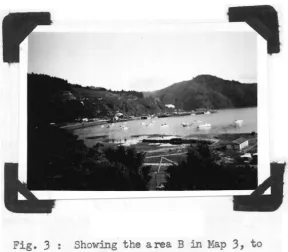
the comnerce of the tovm has been the development of the foreshore to cater for the increasing nu,iber of tourists. By reclaiming the tidal :;nud flats imro.edia.te1:r in front of the present tennis courts 1 it is planned to increase the extent of the foreshore and to provide more attractions for tourists. Frci:m Broadway to the foot of the hills this section loses itsconuner-cial ir;:portance. Larger homes, the police station, and the Roman Catholic church and school are fo1__1_nd here but rD.any of the sections are still unused.
As the po!_:mlation increased a re,sidential section 1,ras planned stretching westward from the Waitohi River to the slopes of
Mt. Freeth, focusing upon Nelson Square. Nelson Square with diag!::>nals radiating out from its four corners is iniposed upon a rectangular street pattern except in the area lying between Broadv.ray and the tidal mud flats.
In this latter area, low ly:L.'1g sections near the lagoon are
unused. Recent attempts to reclai.111 some of the s·waJ2p have been
carried out successfull3t by plai1.ting rice grass. 2
there is usually little grm-rth but the pla...'1.ts spread rapidly and each becomes a tuft abo-L1t one foot in diarneter in its second. year,
contin-uing until all are joined up :L.~ a solid rrass. In the Ten Year Plan, the l1a1~lborough Regional Planning CoTu'1.cil, plans to reclaim. Etbout n-•ne-teen acres of this tidal flat for iJ1d1J_str,ial 9111;.Joses. Thj_s
would be an excellent position for industry because of the proxiIDity of the railway ·yards and the wharf.
South of Broadway. this residential ssction is dorn.ina.ted daira-,___, 3,oad., the north-east, south-west diagorial of'. Nelson Sq_uare. Hot cnl:~ is this the road connec-cing re.sidential Picton to . l G ,S ' 00
ElJl1-ercj_al area, but along it passes the traffic to and f:_,_.--om the south.
2
This is one of the reclamation schemes in the Ten Year Plan. of the Harlborough Regiona,l Plan__;_"J.7ng Cm.:mcil.
Fig. 1
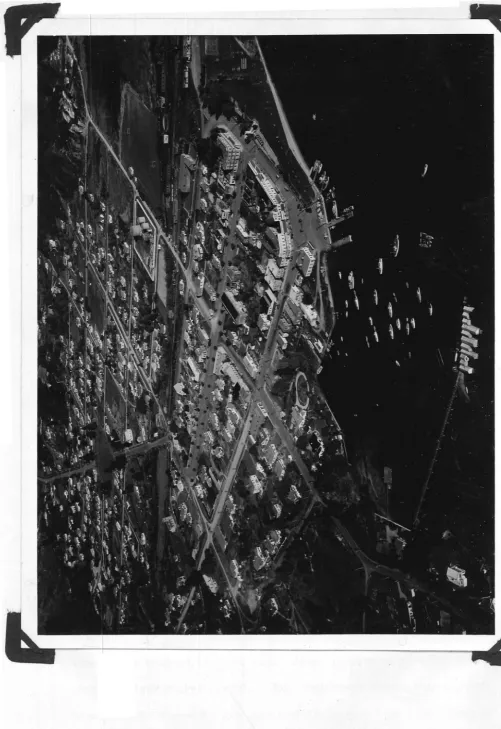
Picton and part of
Queen
Charlotte
Sound.
~
. ,
[image:14.580.42.546.39.807.2]5
The residences are 1Jredomi .... D.antly four-roomed wooden buildings,
but towards the 101,rer slopes of_Ht. Piri Piri dwellings are larger and more modern. Extending into Esson1s Valley is a strip of flat
land vm.ich has been developed as an attractive motor camp. Apart from two churches and a school, a factory, two guest houses, and a small general grocery store attached to a residence, this part of Picton is composed of residential buildings.
Although those sections of Picton already dis cussed could be settled more closely, future expE1.L7.sion of the town will largely take place on the flat land extendi,_7.g to daikawa. Streets parallel with, and at right angles to -Vva,ikawa Road already exist but as yet the consequent rectangular pattern is not corrrolete. It is a scattered residential area interspersed with vacant blocks covered with gorse,. broorr., heath, blackberry and bracken fern. A scheme to reclaim the tidal flats of this area for a sports grom1d has been suggested The south-east slopes of the t1!aika1cra ri,a,.7.ge, partly planted in pi,_711_1_s insignis which is a-c, p:_~esent being milled, are to bet erraced to form a natural grandstand and then planted in bush.
1Also part of the Ten Year Plan of the Narlborough Regional Planning
6
Early Settlement and Growth:
Various Haori tribes are reuuted to have lived around Picton but it is difficult to find inform2.tion because successive invaders drove the people further south. Rema:Lns of pit dwellings and shell heaps, t:n?ical of the earliest aboriginees, lmown as 0tangata whenua11 (men of the land) are still to be seen on the hills arom1.d Picton.
That the Eaoris were continually at war vJith one ar1other is proved by the existence at some ti111e of fortified nas on various islands; on Noioio Islai.1d in Tory Chann.el, on Allport Island and Mabel Island. On this latter isla..nd., in Picton Harbour, the scarped walls of the old fortified pa :may still be traced. In the, day-s of stone and wooden VIeapons the defenders wo-,__1_ld successfully throw stones at their enewies attempting to scale the steep sides of the island, but in the days of firearrr£ such a retreat would not possess its former impregnable qualities. In the early part of the nineteenth century an extensive Maori na covered most of the 1Hterfront. This
pa was called Te Wera o Waitohi - 11the burning of Waitohi'I. There are several translations of this name, each involving some incident no less plausible than another.
Between 1770 and 1777., Captain Cook paid no less than five visits to Ship Cove, but he doe? not appear to have explored Queen Charlotte S01md past Dieffenbach Point. The Russian ex:_olorer, Bell-inghausen, in 1820 sailed as far un the Sound as Allport Island. In his log it is interesting to note this entry 11The farther we went i.t'1.to the Sound the :more mo1..mta:L.'1.s we sa,,r which had no green but showed a yellow colour. Trees ·were only to be seen on the lower part near the w-a.ter11 • This seems to be hard to reconcile with the fact that when the Sounds were settled by Europeans the bush reached from the water1 s edge to the r:1ou.Y1tain tons. It is thought that the first ship to sail to the head of Queen Charlotte Sound I/IIas the 11"(,Jilliam the Fo.rth11
1
7
a trader commanded by. William Steine., an Australian. He named the head Horne Bay, but it is not clea,r whether he was referring to Picton Harbour, Anakiwa, the Grove, or Ngakuta Bay.
From 1836 the l\Tgatiawa tribe occupied the pa at Waitohi, and when 111 1845, two officials of the New Zealand Land Company arrived to j_n.vestigate its possibilities as a port, and to discover the advantages of a road from Picton to the Wairau Plain, they found a large 112,ori village with one hund.ed and fifty acres in crops of potatoes, cabbages, turnips, Indian corn, kumeras, melons and lJurnpkins, but there vras only one ,-suro·oean resident. Tl1ese tvTo officials fo1u1.d_ ·a I.faori road throu_,gh
tota.J~a lJusb . ., a1Jou_t s-eve11 niiles fro1:.1 The l\ii:aoris built their canoes 1-1:.0.ere the trees. were felled and dragged theE1 to the ha:~bol'D'.' !frith the help of 1;,;ooden rollers.
period of the history of Picton begins :iJ1 1 SL:.7 when Sir George Gre:r and ? Dillon Bell, representing the Government and the New Zeala,nd T,;:i_nd Company, purchased the site o.f ;Jaitohi pa from
I'!itb. o~ she.l tered_ ba~y., 1:,d.th flat la21ci and 9le.l'1t:r of timber
for building, with a river to supply water, and 1-dtl1. COJj1)2ratively easy commu.11.ications with the Tiairau Plains, 'ii1Tai tohi Bay 1vas chosen as the nost suitable outlet for the ,Jairau. Plai.i."1s. The natives agreed to exchange their land for that at via ikawa together 1·dth the payn1ent of £300 for their cultivations.
The narne of the new town was continually being changed
-t1orne Bay, Newton Bay, Raleigh, 1dakefield, Cromwell, Bea cc:, is field, un.til in 1859, Picton was chosen in honour of Sir Thomas Picton, the hero of Badajo s in the Pen:i 11.sular Wars.
At first the progress of the town was impeded because the la11d claimants were absentee owners, :iJ1. fact, for some years there was still only one European resident. It was not until the Nelson Govern..ment had grudg-i11.gly consented to cUTIL111.lmication facilities between the Wairau and haitohi that the town displayed any signs of life. Progress 1,;as further encouTaged i..'1 1859 when the provmces of Nelson and Marlborough were separated, 11dth Picton as capital of Marlborough.
Fig. 2
Fig.
3
Looking across Nelson Square from the west.
[image:18.574.134.421.70.334.2] [image:18.574.151.439.578.829.2]8
iii.
859-1875.
Once separation was granted and the dorrinating power of Nelson was removed, differences arose within the new province. TJ1e Wairau no longer wished Picton to be the provincial port, let alone the cap:Ltal. Thus arose the rivalr;:,r between Blen..heim, the econond.c centre of the
Wairau, and Picton, and their fight for the position of capital. The Blenheim. party consisted of resident proprietors, while the English land-owners embraced the Picton cause, ahd
it
was the conflict of their aims that dominated the politics of the province until1875
when the pro-vincic;l.l system of government vras abolished throughout New Zealand. L11.their fight for the capital the Blenheirn party opposed the idea of
making Picton a port of entry ai.'1.d thereby obtaini.ng the customs revenue,
in spite of the fact that Picton possessed
an
excellent natural harbour whj_le Blenheim could boast of only the shallow Opm\fa, River as ananchorage for ships. Picton has al 1.vays been considered the front door to the e,:airau Plains, whereas the Onawa River 1,;as called the ntrades-men' s entrance".
In the :rridst of these political difficulties gold 1'Jas discov-ered in the 1/faka·irarina Valley in
186h .•
It is estiJ:D.ated that within a month three thousand m:i.rj.ers passed through Picton on their way to the gold fields • Thel"e resulted a period of increase in wealth, popula-tion, land sales, custom duties., and prices for agricultural produce.Although the politics of the provin~e had been reduced to an antagonism of two social interests - nastoralists versus agricultur-alists - this period. is one of. considerable econo:rrdc progress. In the Sounds area, flax and saw-rrilling became the main non-farming ind1..1.stries of the pro"T.illCe. O:i:--igi.l'lally Waitohi Valley \Illas thickly wooded, but it was soon sacrificed for the sake of a few boles of com.1:ercial value. Three hundred. thousand acres of bush aTe rnaintained to have been cleared within sL,c years. The hill slopes were deforested by btm-'l-ii-1g to allow for the introduction of sheep, but lmfortunately soil erosion soon foll-owed on the steep slopes. Before the advent of refrigerati_on sheep were raised to prmride wool a.."'1.d tallow but as the price fo:i:-- wool was
In this period the sheep farming industry was men2,ced by a flscab11 disease, as well as br rabbits whose nmnbers rapidly increased from one pair liberated in 1859.
iv. Development from 1875.
9
This is the period of the development of modern Marlborough. The Blenheim-Picton railway 1rJ1'1ich was opened in 1
'2!75
was extended bydegrees to Seda.on (1902), to ~vard (1911), to lJharanui )1912), and finally in December
1945
it was conr1ected 1,vith the line from Kai.."k:oura at Parrassus, thus completing the South Island I0:ain Trunk Railway.It was also i..11 this period that coal ·was discove!'ed at Shake-sneare Bay, but in the various resulting enterprises on.l;y about three hundred and .seventy-five tons were hewn out at a cost of £7 _,000. 11The failure of these coal deposits was a serious blow to Picton., f:hr no harbour in. Ne,·.r Zealand is so well adapted for the hu.s-iness of a coal
port, and had the mineral been as easily obtained as on the West Coast, her ship~Jing would have been u11.rivalled in the colony, instead of being confi.ned·to a few wool ships in the year and the usual visits of the Union Company's steamers11 •
In
the 18801s the chief exports of Marlborough by way of Pictonwere wool ( chiefly Herino), peas, grain, flour, chaff and potatoes. Although most of the chaff was sent via Picton to the 1:lest Coast, soEJ.e Nas collected on the :'Jairau and Opav,ra Rivers from farms and sent to
i'sell:L.7.gton to feed tramway horses. Barley from the ,·Tairau was malted in Picton and sent to all parts of New Zealand and to Sydney. To-da~y these exnorts still rep:;_~esent a considerable ;:,ro~Jortion of the out·ward cargo handled at the port of Picton.
The meat freezing industry., which began about 1890, was firmly established by the 111.auguration of direct shippi~'lg of frozen rr,eat from Picton to London in
1892,
andoy
the building of a meat freezing hrorks at the port. Ji.t fi:_~st tl1e stea1-rLers12~:sr
orrt.side 1\-iabel Islan.d to load . ., but graduall:r as conf::Ldence in Picton Harbour gI'SW, vessels woulddroD anchor amc0st abreast of the freezing works. Now t1'.ey us1-1.ally
lie alongside the new wharf 'Which was built -in 1912 to repl&ce the former sma.lJ_,sr 011e erected ir1 1862. To-day the largest l-i11ers trading to New Zealand can berth at Picton. There v2s once a daily meeting of the ,,iJellL7.gton and Nelson steamers at Picton wharf but this has ceased with modern road transport.
Overseas ex-oort values of goods shi};ped from Picton are:-1900
1905
1910
1915 1920
19le0
£1 ~-1
.,ooo
£218,000
£305,000
£267,000
£1.i,60, 000£21,0
,ooo
- - - 1 - - . . c c
[image:22.569.28.533.44.723.2]CH.APTER II.
The Functions of Picton.
11The f1..mctions which are perforrned in the cities may be gro1..~Ded under six major headings. These are comr.rterce, industry, ad.ministration, cult1..1.re, recreation and defense. Of these the first two are of chief importance".
- li . .Aurousseau. (a) Commercial f1..mction.
Cities and tmms of all sizes depend mainly for their ex-istence on their conL:r_ercial function. In Picto:.1 the conr srcial ftmc-tion has developed because of its locaftmc-tion at a focus of ''."''.)u--c,es, 0,i:1ere there is a ch&,ge f:r'Om water and land transport. Vario1.1s acti\ritie s arising from its position as a port and as a tourist centre form the nresent com_ercial pattern.
1. Picton as a port.
It was as a port for Marlboro1..1.gh and more expressly for Blenheim and the Wairau Plains that Picton 1rra.s originally developed, but now as the northern terminus of the South Island 1-iain Trunk Rail-way, it handles produce not only from Marlborough but from other provinces in the South Island. Goods from as far as the Bl1.lff, Oa.rnaru, Timaru and Christchurch for example, leather goods from. Woolston - are now railed to Picton for shipment instead of causing extra congestion and of wasting time at Lyttleton.
While facilitating conn.ections by land, the opening of the Blu.ff-Picton railwa;:,r has led to a decline i.n coastal trade 1rrithin the South Is la.'1.d. Coal from the '!est Coast, and domestic supplies of flour from Tirnaru, for:nl.erly shi9ped to Picton by co2.stal boat, now take advantage of the q1.tlcker tra.nsport offered by the railway.
New Zealand and the consequent decrease of overseas vessels berthing at Picton., the nu111.ber of coastal ships calling has not :..,.11creased re-latively because of the d evelonment of rail co:rs.;;11..mications.
2
'.Jv.oted in J2.mes - 11Cutline of Geography11 p. 185.
Since 19[:.1 overseas vessels call almost exch1sivel::;r at the four n1a.ir1 iJorts of -4:L1ckla._nd, :1TeJ_lil1gton, L:rttJ_eton ~rid Du11ed7YJ._, to 1,-ihich
although
although 12
Nuntber of vessels calli.11.g annually at Picton., and their
net
tonnage:-Year ending AErili
1941.
2l~ overseas vessels
55,994
tons341
coastal n199, 9L:-.3
:iYear ending A:eril2
1942.
5.
overseas vessels6 ,23L:-
tons320
coastal II164,069
IIYear endin~ A:eril,
19L1J.
1 overseas vessel
1,302
tons323
coastal vessels 171 ,27-i rrYear ending
Anril
2ii.. - -
19Li.4.
2
overseas vessels1,794
tons311 coastal II
172,599
IIYear ending A-eril,
1945,
1 overseas vessel
738
tons230 coastal vessels
157,653
IIYear ending April,
1946.
1 overseas vessel
4,
Hl-2 tons277
coastal vessels160,531
IIYear ending April,.
1947.
399
coastal vessels164,973
tonsTo-day, coastal trade is mainly inter-island. Regular trade
between Picton and Onehunga, the ni.a.in trad:L."lg route .established by
Picton withi.n New Zeal, ·1d, is maintained b:r coastal ships with an average
gross tonnage of 1,200 tons. The figures below a re monthly totals of
the 11
Hauturu.
11 , tracli.ng regularly between Picton and Onehunga.August
2194,7.
Outward Cargo:
General cargo Chaff
Hay
Potatoes
Seeds and Grain
Malt
Inward Cargo :
General cargo
(Machi.nery, food a11d drink)
Sugar
Timber
February, 191-i.8.
Outward Cargo:
General
Malt
Seeds and Grain
Hay
Inward Cargo:
General
Sug2,r
185 tons
2,4-39
sacks471
trusses623 sacks
1,755
IIl+,607 l!
653
tons116½
II3,522
super feet32
tons1,800 sacks
624
II280
trusses92
tons24
.l Ii2
The steamer, 11Ta:mahine11 , maintain.s a cargo as ·well as a
Fig.
5
Fig. 6
,
Coastal boat drawmg alongside
Picton wharf.
Inter-island
steamer
11Tanahme
11 [image:25.585.121.404.86.331.2] [image:25.585.131.415.578.838.2]13
during the holiday period, the increased passenger traffic makes e};.--tra trips necessary. Much of the cargo transported by the 11Tarriahine11
-is reshipped in Well ;ngton i..ri accordance with the centralised shipping scheme.
Cargo figures for 11Tamahine11 ( 1
,93.9
gross tons). February2 1948.Outward Cargo:
Peas
1,969
sacks196
tonsSeed 472 II
4-7
IIChaf.f 1,100 II 166 n
Hay 1
,319
trusses 198 iiPotatoes 4,557 sacks 1+50 H
Halt
600
II60
!IEh.ale
Oil
244 dru_rns65
IIEggs 127 crates 8 II
Fish 1,082 boxes L;;8 !I
General
88
IiTotal
1,326
IIMotor cars 121
(usually belonging to passengers) Tr11,rard Cargo:
Coke
300
sac.ks 10 tonsFruit ~c90 II 20 _u !I
General 1+94 II
Total 532 II
Motor cars
133
Except for regular coastal vessels, pilotage is coEri::iulsor:r within Queen Charlotte Sound. The harbou.rmaster meets the ships be-tween Long Island anc:. Eotuara Isla.nd, o:,.~ at the Heads if the ships a re entering the Sound by Tory Channel.
As yet the amount of ea rgo ha..'1.dled b;;r the port warr&1ts only one wharf,
but
should the nesd &rise, the proximity of deer; waterto
the land will facilitate any expa.ri.sion.on each side of the wharf with depths of
The re is 586 feet of berthage feet to
36
feet on the west side, a.nd 22 feet to35
feet on the eastern side :=tt H.L.W.S. (mean lm,r w,_ter spring) . The depth of the water increases from6
fathoms at the end of the wharf, to 1h-
fathoms at Mabel Island, to 20 or 25 fathoms int.h.e S0Ui.'1ds in general.
.,
Fig.
7:
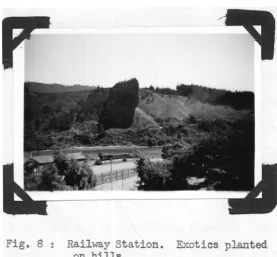
Mt. Freeth. Railway sheds in foreground. Cemetery in middle distance. [image:27.573.126.402.75.337.2] [image:27.573.127.405.576.833.2]14
capable of conveying upwards of fifty ordinar;y goods vehicles need not entail very great expendit1..1re in proportion tot he adv2.r;tages foreshadowed and the prospects of revenue to be obtained11 • 1
The report continued by saying that wherever this scheme had been ad-opted in other parts of the world., traffic had been developed to a
rm.wh greater ' 1
T,11&"1 obta:ined 1..1nder previous shipping conditions.
Last- year - August, 1947 - the Minister of Railways agreed to invest-igate the matter T\Tith a view to an up to date report being prepared for the inforrne,tion of the Gove:mment.
Under such a scher£1.e there would be a quicker turn ro1..1nd in shipping and a consequent savi.i.'1.g -1 n coastal trade, as 1,,rell as a re-duction in time, labour and cost of transport.
But
Picton would not be particularly affected. It would become merely another station in a through connection. But the success of this scheme is directly imDaired by the growing ir~Port:ance of air freight within i'Jew Zeal&'1d, and the proximity of the well developed air port at Blenheim.In the 19201 s, at -about the same time a,s the idea of a train ferry between Picton and Wellington was brought forward, it was suggest-ed that a trai.i.'1. ferry port should be establishsuggest-ed at Clifford Bay.
In thus avoiding the extra rail journey to Picton and the difficult sea route through Queen Charlotte Solmd, Blenheim and Picton would have been by-passed by the main stream of north-south traffic just as effect-ively as if it had been diverted at Lyttleton to Wellington.
If
this scheme had been put into operation., Picton 1 s functions as an outletfor the ITairau ·would have. almost completely clisappeared. Picton, de-pri ved of its Inost i-111portant corrm1ercial acti ,ri ty., w01..1.ld have been forceci to function only as the focal point of 'Jueen Charlotte Sou:nd. Fort,J.n.ately for Pj_cton the construction of a port at Clifford
Ba:T
pre-sented great d_7-Pfic1.,1lties and :LYJ.stead of being O~r--pas.sed 1?y trafficd_iverted at Clifford BaJr to }Ie1lington., Picton1s Luport,a11ce as a port~
has been increased by the corimletion of the South Island r,Ial n 7,n,mk
Up to the present the final connection of the
railway
:in1945
1
5
has 11ot be11.efited Picton1 s position as a port as m.1.1ch as 1rras
anticipated, but it would be 1.,1nwise to draw any f-'hced conclusions on the achieve1ne11ts attain.eel 1Jnder su.ch abnormal co11.d.it.io11s si11ce that
date. But. ii:. r.cn;_st 11ot be o·ve r looked_ tl1at , in. cor.crpariso11, Blenl1eirn' s recent progress reflects ad:va11tages rec::1--17t7 n: from the completion
the tr"LD.11-<: railT~ray e It remains to be seen 1dhether, 1...111d.er 11orrnal
co11-dition9 , the railway will cont:L.1!.ue to advance the prosperity of Blen-hei.t,1 more than that of Picton.
2. Picton 1 s fu11ction as a tourist cent re.
With the increas-iYJ.g popularity of 1'.;'1ueen Charlotte Sound as a tourist resort, Picton, the only town in the region, and having c'iirect communications 1ttl th ½oth the North Islm1d and the South Isla'1d, has become the focal point for the tourist traffic~
This aspect of Picton Is co:m2:1erce is largely of seasonal
im-porta.YJ.ce, the peak period lasting from Christmas rn1til Easter. During this t:L.'11.e visitors from all parts of New Zealand over-tax the capacity of the three camping grounds, the four licensed hotels, and the six boarding houses and guest houses, as well as the many private resi-dences caterin.g for visitors. The three ma:i n hotels, occupying
S7·tes 1·11 -'-"he '011s~-n~ss co·r~ of' +1-,~ -'-onn -·", .::see r - , _ _ ·_,,., __ .• _1 o +111e ,,,ra+er-"', ror:.+. '01-.. 1.+
. ~ ___ l.,l1 ~- J_uc; - c; ~ c.;US:: l, ,\u J - _ 'G u ev v _ v ; _ v guest houses and motor camps are widely scattered$
In ·winter, the so called noff-season11 , tho$8 people unable to holiday in su.n,mer, and travellers between the North Island and the South Island via Wellington and Picton, prevent the complete seasonal collapse of the t01m Is function as a tourist resort.
Because this aspect of coID_;:nerce is especially of seasonal im-porta...11ce, ·some business concerns caterin.g almost exclusively for the
advanced.
11Finding here ever3r natural facility that can be desired
in the way of boating, bathj_ng, fishing, scenic walks and. drives, tourists from throughout the Dominion, and overseas, each year in in-creasing numbers visit Picton and the Yiarlborough Sounds11 • 1
Up to the present it has been the Picton Borough Council which ha5 borne the expense of purchasing and beautifying the present
foreshore; of :maix1tainj_n.g a number of small wharves most frequently used by J_aunch owners in serving the needs of the Som1ds guest houses, :in pleasure trips &7.d fish171g excursions, and of planning a number of scenic walks. Now the Borough Council considers that the present tourist facilities., 1Arhich a::_~e becoming inadequate for the il1creasing
number of visitors, should be developed by the State. With this aim, the Borough Council has put forward as its prior:Lt;;r reheJ)ilitation scherr:e, a plan for ,rarious it'Il9rovements 1rv.L th State assistance
-i. Extension of the existing foresho"-~e b3, the reclamation2 of cert2,in adjoi11il1g ar-·eas of approximately 15 to 20 acres, and the nro-vision of tepid salt water baths, tea kiosk and bathj_rig pavilion,
gardens, picnic 1:u:,c' l7ark:i..n.g areas, and. launch passenger waiting rooms. ii. Rebuild:ing of the present launch wharves which are both antic:uated and iT1adequate to meet the needs of ap_proximately one hundred passenger ancl;Private launches operating from PicJil1))11 Harbour. These jetties, ·which are so construcJ~-ed in respect to the north-1"1-est
1
,rvind-', as to offer la1J11ches no protect.ion from bei71g battered against the wharves, are to be replaced by concrete ones lying directly in the f-3.ce of the wind.
iii. Provis:i.911 of a boat haven which would provide a safe anchorage in all weathers for private boat 01-mers who are at present compelled to moor their boats in unsheltered parts of the harbour.
iv. Extension of the Marine Parade, along the eastern side
of the ha1--bour, which would open un several small bays for the use of the public as well as providing a scenic
walk.
Report by Picton Borough Co1.,mcil - 1946 2 See Map
3
17
If these schemes could be effected, it would be quite reasonable to expect a substantial rise in the tourist population, an extension of hotel facilities and an improvement in those already existing because of increased competition, and a considerable advance
in the com.merce of the to1rm.
But Picton1s function as a tourist centre is not confined to
the town itself. }'!:any tourists only pass through Picton on their va3r to accommodation houses
in
other parts of Queen Charlotte Sound, and also to Kenepuru Sound, for it is only from Picton that la1.mches rvn regularly to the various scattered bays providing holiday resorts. Ke1.1epuru Sound is reached from Picton b3r launch to Torea Bay or0:.:.3.hau Bay whence roads lead over low saddles to Portage Bay and Te Mabia Bay respectively. Consequently, as well as bei.,.'"lg a po~:mlar holiday resort, Picton, because of its rodality in Queen Charlotte and Kenepuru Sou.11.ds, and its communications with the rest
of New Zealand, has become a centre for the other resorts in this
POSITION
or
FREEZING. WORKS
_____,,.,--
---_______
,/
J
~ A'oads
_...- /?ailway.s
I
·/
\ /
Industrial Function.
The meat freezL."'1g indu.stT''J which began in Marlborough at the end of the last century is to-day the most irnportianu . ' + 711.d1-.,1st~1 in
Picton. .first the stock was killed,it Spring Creek - a few miles out '.Jf Blenheirn - and the carcasses railed to Picton ai.'1d frozen on
It was soon decided to establish a freezing works at Picton, 1,,tiich not only possessed the advantage of bei.ng a port but was located about the centre of the district the plant 1rmuld
serve. Since then the 2,,rea suppl:ring s7;,ock to the freezing works has gro-:/\JYJ. &Y}d Picton is 110 longer the cen.tre of tl1e su_ppl:r area 1r,rhict1 no1:,r
stretches from Pelorus and ~ueen Charlotte Sounds to the Rai Saddle, from Tophouse to the Clarence Bridge.
The freezit7g works has been built outside the Borough on a small isthmus separating Shakespeare Bay from Picton Harbour, a position readil~r pe-r-rn.it tin.g ctr~h1age to the forrn.er '.oa.y· ~ But 111 resDe et to
the railway station and the wharf, tll.e -olant is
:Stoel<:: arri,.ril1g at PiCton. lJ:r rail b.as to be drive11 tb.ree rniles to be
slaughtered, while the carcasses have to be conveyed by p1..mt o-r launch from the freezing works jetty to the wharf to be loaded on to the ships. Last season
191,7
season - the handling of the stock was reduced, when for the first time feeder boats anchored alongside the freezing v,orksjetty to be loaded and then proceeded to the mother ship at WellLn.gton. This centralised and cheaper scheme has been a success and it seems probable that it will contLn.ue to operate.
Stock is brought to;lhe works by rail, lor-.ty or pl111t. is estimated tbat 25;;£ of the stock is lorried direct, a method, which al-l:.hough more e:x.-pensi ve thax1 the others is quicker and more econo:rnica1, reduces the time factor and handJ_ing, and keeps up the condition of the stock. The most common method of transport however., is by rail, although i;Jith-in the Sounds the. pu.nt becomes of utrh.ost irrt,.D©'rtance. The method of transport adopted in bringix1g the stock to be slaughe ted
Origh1ally an immigrant ship to New Zeal&.'1d, the 11Ed.1°.in Foxn has remained L.'1 Picton Harbour as a storage space fur since the freezLng industry was established at Picton.
2
Fig. 11 · Showing position of wharf and freezing works.
r
-
,
Fig. 12 · Part of meat freezing works.
[image:36.586.122.403.66.309.2] [image:36.586.123.409.396.622.2] [image:36.586.95.452.657.920.2]is domi,.7ated by location. Those areas served by the railway send their stock by rail; vrithin the Sounds the punt is used; while scattered
places such as Tophouse must rely on the more expensive but more efficient transDort by lorry.
In the 1947 season from December to July, ap~Jroximatel;y- 1,921 tons of frozen meat were shinned :from. Picton. Although this is not a large plant, it has almost doubled tr1e number of stock handled in the last ten years. In the 1937-38 season, the kill totalled 132,000 sheep and lambs as compared with the present average of 200,000. The nu.mber of cattle har1dled an.nually varies from 800 to 1 ,COO, abo1,1_t
70fS
being bone qu2.lity 1·.Jhich is used loc2,lly. Fat stock is sent to the Addington market.Of approximately 140 men employed in the freezing industry at least tv,o-thirds are c2.st12.l labou.:ters. , 1 • Tnis s eason al., em,loy:rnent of labourers is nicelJ7 adjusted to the farrning economy of '-lD_een Charlotte
Sound, for when the meat freezing season ends in Ju_ly, fa1~ms offer err,.-ployrr1ent in lambing and shea,ring until December 01~ Janu.ar:7 1vhen the
f~eezing industry is again resumed.
A cornpe.ratively recent industr-J 1·as established in 19l~2 by
Brown Barret Is of Auckland to provide tinned pilchards for the armed
forces. Until three years ago, 1
50
to 200 cases of pilchards were caught each 1c· ,,z:ht off the lVIarlborou.gh coast, but now, possibly because of the migrator:, habits of these fish, a:nd not neces::carily because of theirnumbers 1::Jeirrg reduced by human intervention, the catch is greatly diminished. If supplies irrere still available, popular demand on the hom.e market
would make pilch2.rd C§,r,.rri;'g still the most importa,.'1.t activity in this .factorJ. But with the decrease in the sup:ply of pilchards, other commodities such as ,,Jhale meat, eels, crayfish, spaghetti and peas are now being cani,.eda
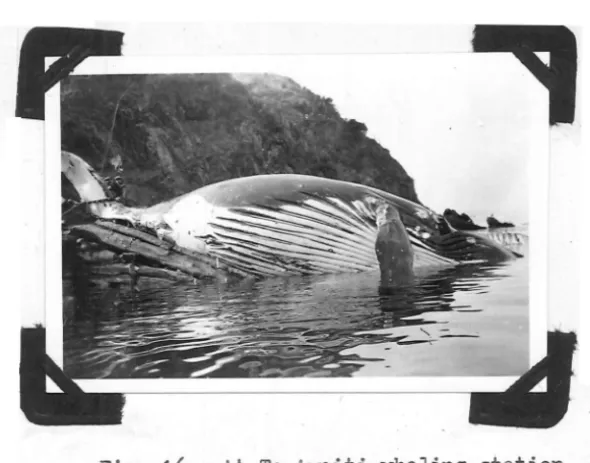
The can.7ling of whale m.eat from the whal -ing station at Te Awaiti, near the entrance of Tory Chan.nel, becomes/4m!)ortant in June, July and
Fig. 14: A whale blowing.
Fig. 15: A harpooned whale fighting.
[image:38.576.92.370.65.290.2] [image:38.576.105.386.374.609.2] [image:38.576.106.401.687.918.2]19
acceptable for can11i..11g. ~uthough there is no demand for ca:nned whale :;neat in New Zealand, it finds a ready market in the British Isles. In 191.7, 50 tons of whale weat were canned. and sent to the United
Kingdom. Previously., together wtth canned eels, it was sent to U.N.N~R.A.
Similarly, the derrand for carmed eels :Ls lacking in New Zealand; in 194-7 the 30 tons produced were sent to Australia.
The eels arrive at the factor-,;T from Lake Ellesmere by special railway refrigeration cars. When the factory is ready to can them they are remoYed from the freezer, heads and tails are cut off and the re-ma:i..11.der blanched, skins are ripped off and the intestines rerr~ved. After they have been brined they are cut into pieces a..ri.d ha.rJ.d ?Jacked i11. one po1..m.d cans 1,d. th one o'L'Ilce of agar. As the cans pass throu,gh an
exhauster., which w..aintains a consta..11.t terr,perature of 212°F, in a moving line, the air is expelled by heat to form a vacuxan. The tins are then sealed and washed and put into steel baskets, ready to be cooked -in.
steam retorts for 100 m:LYJ.utes at 236°F. The process of ca._rm.ing whale n.eat is the sarre, but taller cans are used, and s·oices cmd s2.lts re-place the aga:r.
Crayfish., caught on the coast from Port Under,-_10od to Kaik01.Ta, are sent • ..l..
lil00 the facto1~~r three or foD_l"' t2-mes a 1,reek.
cooked, cased and frozen for local consumption, or for shipment to 1!elljngton and to Xustralia. Fresh fish s1::.ch as grcrJer, blue cod, outterfish, moki 2.nd terik:i)1i, cau.gr.t local1:y- a""0e a.lso packed and sent
to ;Jellington.
The canning of spaghetti is now the most :Lmoort8..!.7.t activity 0.f the fa,ctory .. ?he tomatoes :may be locall3r grown but frequently, hm-,,rever, the local tomato growers 1:,ref er to send their nrodu ce to the :::<Brkets, 2.nd j_t tl1en becoraes necessa~~r to irt1Dort t}1e pul1:, frort!. .A1iclcla11d. Tl1e
dry spaghetti is sent from a Tirra,ru mill, while cheese, also added to the mixture cor:.1es fr-on.1 the Korom_i.lrn Dairy Coroz_oany - si.""SC miles from Picton on the Blenheim road •.
It hc:s been fo1..md that ~i_ried peas, e s:Geciall3r the BTue Prussian variety can be successfully ti..rmed. ),s a d1"7:.'" pea the Blue
n G ~+
rrussian even a.Luer long soaking is not particularly. ap0-::iet~_sing, but its
INDUSTRIAL BUI LOI NGS
&
RELATED AREAS
7
2
/lfo?t .House,3 J3ocd:- .Buzcdtn5
5
Cord,o.Z Fo.dor_y20
On the average, this small factory, employing siz:teen I!len, eight of w'nom are M.2.oris, cans 2 tons a day. Although the ,-m!'k is monotonous, for exa:rrmle one person measures -out one ounce of agar
for each tin in the canning of eels, ;§he monotony is not as g Teat as fu a more specialised .factorJ because the cam1ing of one comr.1JOr1i ty does not last for more tha.n a few days at a time.
It seems safe to predict that this industr·y will gro·w in im-portance. Many of the men who are being placed on the land around Blenheim 1.mder Rehabilitation schemes; are specialising in growing tomat0es and asparagus. In all probability this facto:r"J will be the outlet for both these products, as the local w.arket is 1.mlikely to be able to cope with it all. As yet, the asparagus 1'.)eds have not matured, but it is anticipated tl:i..a t can.11.ed asparagus will be a very popular produet and that the supply vrill not be sufficient to meet the demand.
The malt house, stretching between Higb. Sti~eet and ~v-ellington Street close to the com"'.nercial centre of the town was one of the first :Lndustric:.l concerns to be established i.c'1 Picton. To-day it is the largest of its ki.n.d in New Zealand, using an average of 31,000 bushells of barley annually, grown in the districts around Gro·iretow:n,
Spring-creek and Seddon.
When the barley arrives at the :malt house it is steeped in w3,ter for about forty-eight hours to allow it to s1rrell to a1Jout twice its orig:inal size before being sent down to the first maJ±i.ng floor. After seven days on both the first and second ma.lt:L'1g floors at a
con-stan i; low temperature, it passes to the kiln where it is dried out from below through f-'iTle steel gratings 1'D.. th temperatures rising from
l,0°F to 1 00°F. When completely· :rr:atured after about six ·weeks, it is
bagged ready for ti~ansport all over New Zealand to the various branches of New Zealand Breweries Limited, where the actual malt ext:~2-ction process is carried out.
Recently there has been a development o::: two boat-building industries, occupying sites on either side of the harbour. The :~}ueen Charlotte Transport Compa.l:;Y on the eastern shore, uas the first to be established, but at present 12.s ~ .. : of labou1~ is restricting
to repail~ "t-vu rk • . On the other side of the harbour a ;nore prosperous
.,
Fig. 17: View
inEsson•s Valley.
·
At
extreme
right may be seen
part
[image:42.567.143.383.210.552.2]21
Dleasure launches, speedboats, fishing boats, ·whale ch2"sers 2,nd clingb.ies to sa.tisf;r d_e1nar1ds fr·o2 all over I\Tevr Zealancl41
1Arorl-csJ:1.op en1ployin.g eight 1TLe11 1JiJ_ilt sD: s1112~11 la1Jncl1es a11.c1 tb.ree diivighies as 1,iell as doing n.mn.erous re:Js.irs.
a11.ce of the Solu1d_s as a t:01-1.rist resort tb.e deman.d. for la:L1-n.c}1es a.nd_
dj_ngb.ies is bot.1nd to lr1crea~se4' .,bu_t ux1less r.o.ore ICLanuo1,\Jex~ is available
tl1j_s d.err1a11d \tv-ill 11ot be r11e0 e On.ce labo1)_r does becon1e aclec_flJ_a-te tl-1e
iEtnort·ance of \/Tater tTans1Jo1,..t as ar1 esse11tia.l rnea11s of d.e\relop:Lng tl1e
goods.
J,.21 e::carnD..Le of tl1.e decentralisation. of' sx1 :Lr1d1J_stry,. to a"\!'a.ilable sct1.rces of lal:,01).r, is illv.stra~t,ecl the establishment, in P:Lcton, of
Il1. this case the .a·\rail ... Only the actual roach-il1in.g is done in Picton, tl1e ..:..v..;..v -Pol+ 1Jeing cu_·l::. and steamed into shape
5ir1 ce the -P 1
947,
it [1asbeen et. fi11ax1cial s1.-1.ccess ~ l:rut as
:ret
1Jossibilities.
restricted 1.,1-L1til Tl1e TJ1·ese11.t 1:>1-1ilding, orj_ginally a. sho~J, is enl·a:c-gec1 and_ rnocie1'1.1ised_~
The r : , • , •
l lS11.li7.g industry in Picton is carried 011 as a brar1cl1 01 ~
tl-1e IJelson. Fisl1.e ries for 1:-rl1icl1 all the fishi11g la1:cr1cl1es in Picton
01J-erate $ Bll1e cod, groper :s flovncler~, b1..1+~-. er-P7 ~\ri .::::ind ~101\7 a2.""'e clea.11ecl
groper goes ou_t ::)f s easox1 ir1 June, l'let fisl"1 s1J_cl1 as btrGterfish anc1
moki takes its place. A shop the only fish shoD i_r1 Picton - attached to the factory·, sup:plies. the local clemai1ct·~
A_ srr!.all cordial f2,ctor3r prodJJ_ces ae1'""ated 1,,ra-c,er for local
consunrption.
l1ecentl~,r a scherne for rr1arket. gardenL.11.g in tl-1e sheltered position of Esson Is Valley has been put into operation s1-.:c cessfully. Fi·ve acres of land covered in b7:a,ckberry, broom, gorse, stl<,
22
carrots, lettuce, tome.toes, silver beet J pUi'npkins, marrows, onions,
cucumbers, rhubarb and cape gooseberries. Picton. and >.Taika1-~ra these vegetables are delivered daily from ho-u.se to house. Tl-1j_s nas
a1~oused the oppositio11 of tl1e gre:-ngrocers 1rJl1.ose corning n
I 1~0111
Blenheim, cannot conr::;ete in freshness with those locall:r gro-wn. Before the e:z:i.sting indu_stries can be greatly ez::panded or
nelv ones set 1-1p, tb .. e re are- t11,ro factors 1r,Jl1icl1. L.11}.st be take11 into co11sid:'=
eration. TJ:1ese are th.e q1.-1estion.s of ele ctrici t~T anc1 of 1rra.ter st1p9J_3r ~
i\.
t
prese11t Picton.1 s electrici is generated from deisel oil., a method~rJ::'Lt l-1 an in. creasing population and a greater demand on electricity especially in winter, i t :::;ecomes more and more Ul'J.Certain whether the engines will be able to ! 1 ' '1 (
T,D.e .1..03,Q. TJn.d .. er s11ch conditions, and_
pe11se of direct no bu .. siness n"Bn is encou.raged to set UD
Ho1r1Jever, this Dro blen1 s1101J.ld_ be sol ·ved_ on tt'1.e
com--will be connected.
Tl1e 1•rater s1-.1ppl:y d.eri ved from tb.e 1tla,i tohi iStrean1 is inade~_;_1J_ate to fulfill the needs of &1y further L~dustries.
could be saved.
It
therefore I'1m-off from thealread.:.)7 bee11 rnacle ·qith. a ·vie1i to increasing tb.e capacit.J.1 of the alreac\ir
existin.g dame
It is the oninion of loc&l b1.1siness men that with cheaDe r
attracted to Picton.
a.,11d ru.r1:1.in.g costs the ve11se oi· cli1--ect cu.rrei-1t- 01 electricit:r, Picton a·c. nrese11t cffers r10
The ov_tloolz for -cc11e ' '
23
potentials is shown in the drawing up of the plan to reclaim. land
7
t
, .
.
7 d _, -1-• h ~ +" • - . 1c~ose o -c,ne rai~way yar s anu une w arr, vor 1.nc,ustry. At Dresent il.7. Picton, all industries apart from the meat freezii."1.g industry, are too sn1B;ll to be of much significance in the economy of New Zealand.
(d)
Sqcial Ftmction.The functions carried out by educational, religious and health institutions and b37 various ~:ilaces of entertainrnent and recreation.,
are grouped under the heading of the social function36f a t01tm. Recreation and Entertainment
-In most towns there is an equal development of all the ac-tivities involved in :formmg the social function, but in Picton there has been a greater comparative grmrrth of the recreation and entertain-ment function. This m.ay be entirely accounted for by its uosition as a tourist resort in C}1J.een Charlotte S01.1ncl, readily lending itself to the estabiishment of uopular snorting activities. - - - However., it is only in the s1..ur,me:r that this a,spect of Picton t s social f,mctfon can be effected. D,..1.ring these months, activities S".J.Ch as ='·achting, rowing, s-vd.111.ming,
tennis, cricket, fishing, launch trips, speed-boat racing and tramping not only form the main tourist attractions, but also occupy the leisure
tilre of the local residents. Yachting, rowing and speedboat
competi-tions i'71 Picton Harbour, sheltered and free from c1..1.:n1~ents, !1a7e become inmortant annual events for enthusiasts f:i::Dm all parts of Ne11 Zealand. The importance of.this function will be increased by the extension of the foreshore, 2 and the provision of more facilities not only for s1--Jimmers and teri.nis players but for the less energetic tourist.
The tempora:ry influx of visitors in the Christmas holidays is the occasion for an increase i."'1 entertairn:n.ent s, but for the rest of the ~,ea.r one -oicture theatre screer;i.t"1.g four nights a. week_, a weekl3r dance, a 'oilliard saloon and a lodge, ~)rovide entertain.rnent typical of that of n.1ost small towns.
Educational
-In 1861 the first school m Fie-ton was onened with fifteen
See map
3
p1.--:.Dils.
site -::Jl1.ich 11.01·\J fc :::::.:..s of tl1e
_-_ 'J2, ::·t
from tl1is nrir~ar·1i, scl1ool., Lne 011.l:t othe1~ school iil the to·t\111 is a,ttac}J_ed_ to the Rorn.an Ca,tholic Cl11-1_rch. )_lthoL!.gl1 tJ:1e Dllblic scl1ool 2.s co11.\rex1= ientl::r sit1..1ated j_n Tesuec-: to the n1ain ~esidential ar·ea a..rolt:1d. !ffelson
locs:>sd Picton.
... !...Li post Dltpils are obl-iged to rail to }fs,rlboroµgh College i.21. BlerJ1e7 rn, 01~ to at ten.cl toar~di11g schools Q
In
' 11:,ne
__
._.__,_':::,.,_-_ served by •.__,'' _ , ~ f Library S.t:dto tl1e to1rv11. as -vrell as resiCLe11ts 1nay· borrov,r books.
uresent on ths ~-1~_:...ch rfl.u_st bec.:-Tt .. s s=._te
3i.shon spent onl3r one day -i 11 Picton and .l..v not until ten :rears later that mis sion2_.ries arri--,-ed 1r,,d_ th 7 i1tentions of establishir1g a
-~t
first the se~Jices 11u~ere cond_l1cted in a tent near tl-1e beclch an.C,. ll1 private h:=>~~-:~s .,, oy 1 863 an - ·::.=:-=-
~:::_·--c -:-:hurch 1vaslife increa.seo.. ' ' cl11..:rcl~ 1-·tere erected,.
area bet1,.ree11. tl1e co11unercial anct the r;1.ain -r~s7r1e:n_t"1al uarts of tb.e to1-m*
T::1e otl1er - .. -V
I-Iealth
Tl1e 9rese11-c tos~Ji tal b:Jilt
a..t
tl1e b egir711i21g of tJ1-is cen:tt"..I";Y,OGCl}.Dl8S site of .,_, vrie in 1862,
·::--sfore >!orld -,:,~-~ -s iclea
hos-oita.l to i')Tovide it
1,,.J}r~_0i'l no~\r co11trols all provir1cial ]1.os-oit2.l a cti viti_es te
Street,. ?ltG.l~=et roor:1s, t:rpical of rnost ITelf.r Zeala,r1d no n1Ettter 11.o\/J
c,, Ctistrict n1.1rse~
de,relo-::ied as the nrovincial cent re, the former absorbed more of the
ad-ministrative affairs of the province. ·:vherever i t has been Dracticable Bl en.beTTi'l l1as talcen over su.ch offices a.n.d cor1solidated tl1eL1 in. central regibn~~ offices. Origil1.all3r the pro-v-incia.1 b.ospital erected. at PictoJ:1 was con.trolled by the Picton Hospital Board, but 111 1930 this was
8.l'Z!..3.l-gan:1atecl 1Jvith tl1e T·Jaj_rsJ)_ t-Iospital Board 1J11d_er the title of t}1e I-Iarlbo1~01-1_gb. Hospital Board. Apart frm1 iTnJnediate police control, the
acJ111inistra-tive offices of the to1m have largely -oassed to Blenheim.. 7he court-l101..,1_se is r101.rJ seldorn -used_, ancl the to~,,m cti .. arrJJers 11}1ich once T•ritnessed tl1.e political part:, stx~ife of 7:-Iarlboro"L~gb_ l1av--e been gi1re11 o,rer to
Cot111.cil0 T1l1e local affairs of the to·hm are iJ.1 tb.e J:1a11.ds of the Picton
Department the control of the ha::~bour,,
However, 1Jecause of its f1Jr.tctions as a. por·t a21d. as the focal po7nt of 1J1..1ee11 Cl1arlotte Sormd.) adr~Un.istrati\re offices essential to the
st1ccessf1_:i_l opera_!cio11_ of -t,hese fl.mctior1s. 1,fill co11tl111J_e t.o. be ruainta,ined. in. Pictone, The Union Steam Ship Company has a branch office in Picton
1r.J}1ile mos-!;, of tl1e launcl1es r11.aintail1ing cor.filectior1s bet1r<teen. Picton a,J1d The development of' fa,r-.o.tlng 1~ritb.in Queen Charlot:te Sotu1d~ has \:\lC~rra:n.ted. the establist-JD.ent of
TJhen it is considered that mails arid telephone coi-c,crco.1ica,tions for the scattered pop1.,:lation of , -L 1
Fig. 19: Picton Harbour from the town.
Fig.
20:La.unch
with punt
drawn alongside,
used for
transporting
sheep.
[image:49.578.132.411.110.348.2] [image:49.578.133.409.543.807.2]26
(e) Transnort Function.
Because of its coastal location, both land and water
co:rn1mmications have been factors in the develO'.Jl:lent of Picton' s transport function. Transport by sea s a f1.mction of the town can be divided :,:-ead:i,.1y :i.nto two classes; tra.risport by launch which serv·es the needs of the population only withj_n Queen Charlotte Sound; and of greater signi-ficance in the economy of New Zealand, transport by coastal boat and steamer vlhich connects Picton to the rest of the Dcm.inion. 1
Within its tributar-y- region Picton is irrt,_-oortant a,s the 1:,dal point by m.eans of which co:rrrnu.11.ications can be effected ,'Ji th the rest of lJei·t Zeala.nd. Launches from Picton transport provisions and. mail each week to the entire population scattered thro1..,ghout Queen Charlotte Sou:n.d, as well as catering for tourist traffic within the area, and pleasure
cruises. Three mail services are now in oper.stio:c.; on 11ondays lavnches run to East 3ay and 0;7:::1uku Bay, stopping at intermediate places; on
;Jedr1esdays to Oku.kari, past Te Awaiti; and on Fridays to Endeavour Inlet, ?:esolution Bay and .i-\.na.1.caka.ta, - the so-called *end of civilisation11 •
of transporting sheep vdthin the. Sounds. In the first six months of the year it is a common sight to see punts loaded 1rri.th sheep being brought to the freezing works at Picton.
There are ten la1..mches, all belonging to one local company, used 111 carrying out the deFands of tourists and permanent residents. Other launches anchored in Pictol'.1!. Harbour may be fishing boats or privately owned pleasure craft.
Between Picton and its tributar-,y region transport by la..nd is of rninor significance, but between Picton and Blenhe:un and the rest of the South Island, roaa ari_d rail connection.s perform :Lmportant functions.
3y means of this route Picton first became important as the outlet for the ,Jairau!' while to-day frequent rail and road services mintained along this same route a::.:'e a.bsolutely essential to the con:rnercial and i.c'1.d.ustrial pros-perity of the town. Of the three routes leading out of Picton this :is
Fig. 21: One of the numerous bays with a typical cottage - on the road
between Waikawa and Wha tamongo Bay.