Real time selective sequencing using nanopore technology.
Matthew Loose1*, Sunir Malla1 & Michael Stout1
1School of Life Sciences, University of Nottingham, Nottingham, NG7 2UH, UK *Correspondence to [email protected] @mattloose
The Oxford Nanopore MinION is a portable real time sequencing device which functions by
sensing the change in current flow through a nanopore as DNA passes through it. These
current values can be streamed in real time from individual nanopores as DNA molecules
traverse them. Furthermore, the technology enables individual DNA molecules to be rejected
on demand by reversing the voltage across specific channels. In theory, combining these
features enables selection of individual DNA molecules for sequencing from a pool, an
approach called ‘Read Until’. Here we apply dynamic time warping to match short query
current traces to references, demonstrating selection of specific regions of small genomes,
individual amplicons from a group of targets, or normalisation of amplicons in a set. This is
the first demonstration of direct selection of specific DNA molecules in real time whilst
sequencing on any device and enables many novel uses for the MinION.
Keywords: Nanopore, Sequencing, Dynamic Time Warping, Read Until, MinION, Squiggle
Space
The introduction of nanopore sequencing, represented commercially by Oxford Nanopore
Technologies (ONT) MinION sequencer, has enabled a new sequencing paradigm for real time
analysis1. MinION reads are collections of electrical current measurements, known as squiggles,
where the values are determined by the specific DNA bases in contact with the nanopore at a given
current values from individual nanopores as DNA molecules are passing through, enabling the
analysis of current traces whilst sequencing is in progress. The MinION can stream data from all
channels (currently 512) simultaneously, with each channel individually addressable and able to
reverse the voltage across its pore, thus rejecting the read. In principle this enables selective
sequencing. Molecules can be sampled by the sequencer and, based on some criterion, either be
allowed to sequence to completion or be rejected and a second molecule sampled. On rejection the
read would be ejected from the nanopore back into the pool of molecules. This molecule is not
likely to be available for sequencing again as the enzymes associated with the leader sequence will
already have migrated along the sequence. Furthermore the strength of rejection is sufficient that
the DNA is physically remote from the channel. This type of approach has been described, but not
yet implemented, by Oxford Nanopore and has been named ‘Read Until’.
To maximize the benefit of selective sequencing identification must be rapid and
accomplished before the read is complete. This depends on two key parameters. Firstly, the speed of
sequence identification and placement with respect to the reference and secondly, the average length
of reads within the library. Read length is limited by the ability to generate the input material, with
mappable reads reported exceeding 100 kb2. Fully exploiting 'Read Until' requires matching the
shortest possible fragment of the longest possible read to a specific position within a reference
sequence. However, implementation of 'Read Until' is complicated by the fact that the sequence
data streamed by the device is a current squiggle, not a decoded sequence of known bases. To date
there are no publicly available methods for analysing squiggle data directly without first base
calling.
One possible approach would be to base call these read fragments, but all current
optimisations to maximise base call quality1,3-5. Therefore, we focused on mapping squiggle data
directly to a reference sequence in squiggle space. The mapping of one squiggle to another shares
much in common with the comparison of audio signals and so we turned to dynamic time warping
(DTW), an algorithm first applied to the matching of speech6,7. Guaranteed to find the optimal
alignment of two series of time-ordered data, DTW has been used many times in the analysis of
sequence data, recent examples including alignment of genomic signals8. Here we use DTW to
match observed short squiggles to a reference in real time, manipulating the output from the
sequencer to demonstrate selective sequencing on the MinION. We apply this approach to two
problems. First, the selection of specific regions from a whole genome library, in this case Lambda.
Second, the selective sequencing of individual amplicons from a pooled set of molecules to provide
efficient coverage balancing, motivated by recent field experiments with Ebola9. All methods and
scripts are freely available under the MIT license from https://github.com/mattloose/RUscripts and
we also include methods for post processing reads after sequencing is complete. Figures are
presented as Jupyter notebooks at https://github.com/mattloose/RUFigs . All read data are available
from the ENA (PRJEB12567). The API required for addressing the sequencer is available directly
from Oxford Nanopore Technologies on request but is currently an alpha release and still in
development.
Squiggle Matching nanopore reads.
To match short fragments of read data to a reference requires the conversion of the reference
sequence to a hypothetical current trace. In brief, the appropriate model can be extracted from a
base called MinION read, and thus an expected squiggle can be calculated for a reference sequence
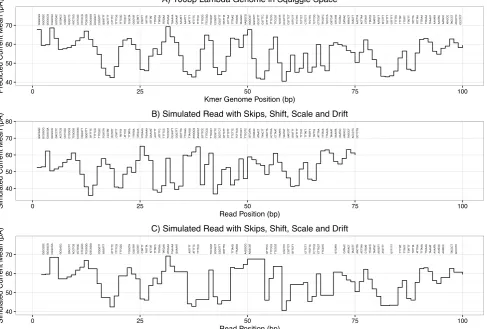
(Fig 1A) (see methods). Given two perfect squiggles it is theoretically possible to match one to
another by simple visual inspection. This process is complicated by the changing dynamics of the
changing behaviours can be captured by three variables, shift, scale and drift (Fig S1A). The base
caller provided by ONT most likely calculates these values using expectation-maximisation but
derives the data to do so from the entire read5. For short nanopore reads z-score normalisation can
be used which overcomes shift and scale, but not drift (Fig S1B). Based on examination of these
parameters in base called reads, we concluded that drift is not a significant problem and so Z-score
normalization can be used with both reference and incoming read fragments.
Nanopore reads also have a low frequency of errors in event detection such that reads contain
event insertions and deletions as well as small time differences (dwells) when translocating
identical DNA molecules (compare Fig1A-C)5. To compensate for the residual differences in signal
between the read and modelled reference, the shift in time and potential insertions/deletions in
events, we use DTW subsequence search. This algorithm is able to measure the similarity between
two temporal sequences which vary in amplitude or speed and has been used in many problems
involving temporal sequence recognition7,8. Thus we can determine the optimal mapping position of
the query sequence to both template and complement reference squiggle and use the distance score
to determine the optimal mapping (see methods).
We tested this approach on synthetic data to determine our ability to uniquely match a
sequence of arbitrary length within a reference. A parameter scan shows any 10mer squiggle from
the lambda reference can be correctly mapped with DTW (Fig S2A). On real data longer query
sequences are required presumably due to the inherent noise. In the absence of normalisation, less
than 40% of real data can be mapped correctly within 50 bp of the known reference position (Fig
S2B). This can be dramatically improved by z-score normalisation for real data (Fig S2 C,D). It is
well known that the naive DTW algorithm has a complexity of O(m*n) where here m is the
improve the search time (Fig S2). We chose 250 events as a conservative balance between search
speed and accuracy (see methods). At current sequencing speeds (70 b/s) 250 events represents
approximately 3.5 seconds of data collection, although some of the data presented here are derived
from the slower SQK5 data at 30 b/s.
Target Enrichment
To test 'Read Until' functionality with the MinION, we developed two applications using
bacteriophage lambda DNA; target enrichment and amplicon sequencing. The choice of lambda is
favourable as the small genome size (48,502 bp) results in a limited total search space of 97,004 bp.
For our first experiment, we enriched for two 5kb regions of the genome, from 10-15 kb and 30-35
kb, rejecting all other reads. As an internal control, we exploited the ability to address each channel
of the MinION flow cell individually, only applying 'Read Until' on even numbered channels.
Adjacent channels are sampling reads from the same pool of molecules allowing for a direct
comparison. We ran the sequencer for 47 hours generating 31,609 reads of which 8,901 were 2D.
This gave a mean coverage of 840X for 2D reads (i.e both template and complement strands have
been sequenced for a single read) across the lambda genome (using the slower SQK5 chemistry).
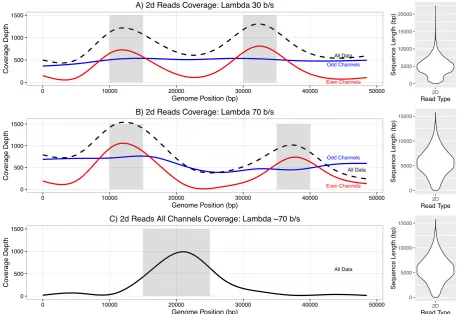
Looking at all reads regardless of channel, two peaks are observable covering the two regions of
enrichment (Fig 2A black dashed line). Splitting the data into odd and even numbered channels
reveals even numbered channels rejecting reads mapping outside the region of interest (Fig 2A red
line). In contrast, reads originating from the entire genome are found within the odd numbered
channels (Fig 2A blue line). The spread of the peaks observable in Fig 2A correlates well with the
mean length of 2D reads in this particular library at 5kb. Repeating this experiment using the faster
70 b/s SQK6 chemistry, selecting for reads from 10-15kb and 30-35kb, shows the same result (Fig
2B). This experiment generated 48,195 reads in 18 hours. To validate our ability to be selective we
selecting those reads mapping within a window of 15-25 kb (Fig 2C). This illustrates one use for
'Read Until': regions for sequencing can be prioritised and once a specific coverage depth or goal
has been achieved, a second experiment can be conducted analysing an alternative region from the
same library. To process the data from the flowcell fast enough these experiments were run using 22
cores (Intel(R) Xeon(R) CPU E5-2690 v3 @ 2.60GHz) on a separate server from that running the
MinION device.
Amplicon Sequencing
The speed of match obtainable by DTW is inherently constrained by the length of the
reference as the algorithm is of O(m*n) complexity6. We thus changed problems to consider
amplicon sequencing on the MinION device, for which a smaller problem space can be defined.
This is an approach to which the MinION in its current form is ideally suited. Indeed, the first major
field study to use the MinION exploited such an approach to rapidly sequence amplicons derived
from the Ebola genome9. For phylogenetic analysis of the Ebola genome, Quick and colleagues
derived an amplicon based strategy to sequence the approximately 19kb Ebola genome using either
11 or 19 amplicons in the field. A challenge for any such field application is to ensure adequate
coverage of every amplicon with as little total sequencing as necessary to minimise the total
resource required and the volume of data to transfer for subsequent analysis.
Several optimisations are possible for amplicon matching. Firstly, sequence that is not from
the start or end of an amplicon can be removed from the reference, resulting in a shorter reference
squiggle and a concomitant increase in the speed of matching. Given that an amplicon can only be
sequenced from a 5' end, the effective reference space can be halved by removing unnecessary
complement sequence. For example, a 900 bp window around the anticipated start site for an 11
mapping to the whole Ebola genome. Scaling this approach up to larger genomes becomes even
more beneficial as the search space is dictated by amplicon number, not genome size. This
reduction in search space enables the 'Read Until' algorithm to run on the same computer as the
MinION device itself, an important point for sequencing in remote locations, without large
computational resources.
Practically sequencing Ebola in a lab environment is limited by the availability of safely
analysable material. We therefore evaluated the feasibility of this strategy using 11 amplicons
spanning 22kb of the bacteriophage lambda genome (see methods). Individual amplicons were
pooled prior to library preparation at approximately equimolar concentrations and a sequencing
library prepared following the standard protocol used by Quick et al1,9. We then performed multiple
short duration runs on a single flow cell to demonstrate the ability to select for specific amplicons.
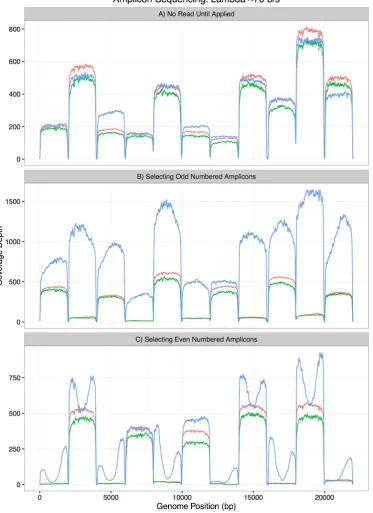
Fig 3A shows a 20 minute run without 'Read Until' applied sequencing from 209 channels,
generating 3,657 reads of which 1,671 were 2D. All 11 amplicons are present within the sequenced
sample although at different levels. We then stopped and restarted this run, applying 'Read Until' on
all channels to exclude the even numbered amplicons from the sequencer (Fig 3B). This was
successful although some leakage was observed on the rejected amplicons as had been seen with the
whole genome selection. We then started a third run using the same library and flowcell selecting
the inverse amplicons and successfully blocked the sequencing of odd numbered amplicons (Fig
3C). To understand the misplaced reads in more depth, we reprocessed them using the same DTW
analysis to sort the reads into individual amplicon groups. Alignment of the base called data to the
reference shows that the sorting is highly accurate, although a small proportion of reads are
An obvious application for this technology is ensuring uniform or minimal coverage over
each amplicon. The challenge here is read counting and overcoming numerous potential sources of
latency within the system. From observation, the MinION device generates a number of read starts
which do not result in read data being written to disk. These may represent short reads, or perhaps
non DNA material blocking a pore. In addition, a read which has been mapped at the start of the
template sequence may not include a hairpin sequence and so result in only a template and not a 2D
read. Thus it is not sufficient to keep track of the observed reads direct from the sequencer, it is also
necessary to monitor the reads as they are written to disk. This could be done by analysing base
called reads but this is subject to delays in read processing by Metrichor and access to the base
calling service at the time of sequencing. We therefore keep track of reads from the initial signal
from the sequencer through to being written to the hard disk. An additional problem became
apparent as the current version of minKnow (0.50.2.15), the software controlling the MinION,
writes reads to disk after some period of buffering. This lag introduces a further delay between a
read completing its translocation through the pore and the data being available on disk for analysis.
To determine our ability to normalise an amplicon library with 'Read Until' in real time we
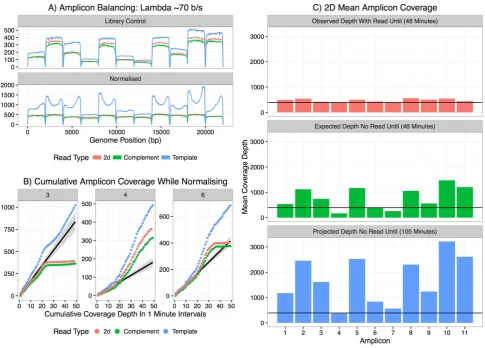
attempted to obtain uniform 2D coverage of our 11 amplicon library. Fig 4A shows the
unnormalised library sequenced for approximately 10 minutes with differential coverage of each
amplicon. We then restarted the run, introducing normalisation and rejecting reads once they had
crossed a specified threshold. Our goal was to ensure at least 200x coverage of each amplicon. The
Read Until script would stop the sequencer once it had detected these coverage levels. To reach this
goal, the sequencer ran for 48 minutes and the relative normalisation can be seen in Fig 4A. Once
base called, the 2D coverage is much greater than 200x. To see if this was consistent with latency
within the system rather than leakiness in blocking of individual amplicons we investigated mean
which the sequencer begins to reject each amplicon. Those with the highest coverage in the library
are rejected first (amplicons 2,3,5,8,10 and 11), whilst those with lowest coverage continue
sequencing until the end of the run (see amplicons 4 and 7). Fig 4B shows examples of the
dynamics observed for each amplicon type. Amplicon 3 accumulates 2D reads for the first 20
minutes of the run, but from that point reads are rejected. Amplicon 4 accumulates 2D reads at a
steady rate until 20 minutes in to the run at which point the rate of its sequencing increases. This is
due to higher sequencing capacity being directed towards Amplicon 4 as other amplicons
sequencing coverage is reached (~350x 2D sequencing). Amplicon 6 sees a similar trajectory
although it reaches its peak after around 35 minutes and then all subsequent reads are rejected.
By extrapolation from the first 15 minutes of data collected during this run it is possible to
compare the observed levels of coverage, with the expected coverage depth after 48 minutes
without 'Read Until' applied (Fig 4C). The horizontal line in these plots indicates the threshold for
coverage depth at which the run completed (including the latency previously described). Similarly
we can show the mean depth of coverage we would expect to see in order to have all amplicons at
this minimal level. This would have taken 105 minutes to achieve and generated thousands of
unnecessary reads slowing the rate of subsequent analysis.
To our knowledge this is the first demonstration of selective sequencing of specific molecules
without prior enrichment during sample preparation. This is also the first demonstration of the
ability to map sequence reads from a nanopore device without first converting the signal into base
sequence. The specific method we describe here, a basic application of DTW from the mlpy library,
is surprisingly accurate. Although the current implementation is not sufficiently fast for large
well described approaches including lower bounding, and computationally by implementation on
GPU or FPGA processors10,11.
Notwithstanding the challenges of searching through large genome space, we demonstrate that
this technique can be applied to amplicon sequencing. Here the experimental design can be used to
optimise the search space such that reads only need to be mapped to a subset of the reference
genome. The ability of nanopore technology to sequence longer amplicons could be further
exploited. A clear advantage of this approach is in viral outbreaks where rapid sequencing can help
in tracking and characterisation of the emerging outbreak. The extreme portability of the MinION
sequencer allows it to be easily deployed to remote locations. However, these locations may have
restricted internet access and so cloud based base calling may be a challenge. 'Read Until' methods
can also be applied post sequencing to sort and pre-select reads to be base called using limited
bandwidth connections.
Exploitation of the real time nature of the minION platform, where reads are available for
analysis as soon as they have passed through the sequencer, has been shown by many groups12-14.
Here we demonstrate true real time analysis and the potential for selective sequencing on a MinION
device with 'Read Until'. The anticipated increasing speed of nanopore sequencing ('fast mode') and
the scaling up of the MinION to 3,000 channels, and the PromethION with 144,000 channels, will
challenge the implementation of 'Read Until' in real time and require algorithmic enhancements and
computational power. Yet 'Read Until' based approaches will enable new approaches to sequencing
in the future, such as exonic sequencing without pre-sequencing target capture, controlled depth of
coverage over entire genomes, novel counting applications for RNA seq and many applications that
Author Contributions
ML conceived and designed the project, implemented the code, ran the sequencing, performed
analysis and wrote the manuscript, MS carried out analysis, SM generated libraries and ran the
sequencing.
Acknowledgements
The authors thank Nick Loman and Josh Quick for helpful discussions, advice and motivation, Teri
Evans for comments on the manuscript and figures and Martin Blythe for discussions. We also
thank Oxford Nanopore Technologies for access to the Read Until API and helpful discussions and
support.
Competing Interests
ML is a member of the MinION access program (MAP) and has received free-of-charge flow cells
and kits for nanopore sequencing and travel and accommodation expenses to speak at Oxford
References
1 Ip, C. et al. MinION Analysis and Reference Consortium: Phase 1 data release and analysis [version 1; referees: 2 approved]. Vol. 4 (2015).
2 Urban, J. M., Bliss, J., Lawrence, C. E. & Gerbi, S. A. Sequencing ultra-long DNA molecules with the Oxford Nanopore MinION. bioRxiv, doi:10.1101/019281 (2015).
3 Timp, W., Comer, J. & Aksimentiev, A. DNA base-calling from a nanopore using a Viterbi algorithm. Biophys J102, L37-39, doi:10.1016/j.bpj.2012.04.009 (2012).
4 Goodwin, S. et al. Oxford Nanopore sequencing, hybrid error correction, and de novo assembly of a eukaryotic genome. Genome Res25, 1750-1756, doi:10.1101/gr.191395.115 (2015).
5 Loman, N. J., Quick, J. & Simpson, J. T. A complete bacterial genome assembled de novo using only nanopore sequencing data. Nat Methods12, 733-735, doi:10.1038/nmeth.3444 (2015). 6 Sankoff, D. & Kruskal, J. B. Time warps, string edits, and macromolecules : the theory and practice of sequence comparison. (Addison-Wesley Pub. Co., Advanced Book Program, 1983). 7 Miodonska, Z., Bugdol, M. D. & Krecichwost, M. Dynamic time warping in phoneme modeling for fast pronunciation error detection. Comput Biol Med, doi:10.1016/j.compbiomed. 2015.12.004 (2015).
8 Skutkova, H., Vitek, M., Sedlar, K. & Provaznik, I. Progressive alignment of genomic signals by multiple dynamic time warping. J Theor Biol385, 20-30, doi:10.1016/j.jtbi.2015.08.007 (2015). 9 Quick, J., Loman, N. J., Duraffour, S., Simpson, J. T. & Severi, E. Real-time, portable genome sequencing for Ebola Surveillance. Nature, doi:10.1038/nature16996 (2016).
10 Müller, M. in Information Retrieval for Music and Motion (Springer-Verlag Berlin Heidelberg, 2007).
11 Sart, D., Mueen, A., Najjar, W., Keogh, E. & Niennattrakul, V. in Data Mining (ICDM), 2010
IEEE 10th International Conference on. 1001-1006.
12 Ashton, P. M. et al. MinION nanopore sequencing identifies the position and structure of a bacterial antibiotic resistance island. Nat Biotechnol33, 296-300, doi:10.1038/nbt.3103 (2015). 13 Greninger, A. L. et al. Rapid metagenomic identification of viral pathogens in clinical samples by real-time nanopore sequencing analysis. Genome Med7, 99, doi:10.1186/ s13073-015-0220-9 (2015).
Figure 1 - Simulated reference and reads in squiggle space. Panel A shows a model squiggle
inferred from the first 100 bp of bacteriophage lambda. Individual kmers are shown above each
event in the squiggle. Panel B shows an example read derived from the same 100 bp region as in A
but incorporating shift, scale and drift, along with randomly skipped kmers. Panel C shows this
same read, but stretched in the time axis to map directly to the original reference.
GGGCGG GGCGGC GCGGCG CGGCGA GGCGA
C GCGA CC CGA CCT GA CCTC A CCTCG
CCTCGC CTCGCG TCGCGG CGCGGG GCGGGT CGGGTT GGGTTT GGTTTT GTTTTC TTTTCG TTTCGC TTCGCT TCGCT
A CGCT A T GCT A TT CT A TTT TA TTT A A TTT A T TTT A TG TT A TGA TA TGAA A TGAAA TGAAAA GAAAA T AAAA TT AAA TTT AA TTTT A
TTTTC TTTTCC TTTCCG TTCCGG TCCGGT CCGGTT CGGTTT GGTTT
A GTTT AA TTT AA G TT AA GG TAA GGC AA GGCG A
GGCGT GGCGTT GCGTTT CGTTTC GTTTCC TTTCCG TTCCGT TCCGTT CCGTTC CGTTCT GTTCTT TTCTTC TCTTCT CTTCTT TTCTTC TCTTCG CTTCGT TTCGTC TCGTCA CGTCA
T GTCA TA TCA TAA CA TAA C A TAA CT TAA CTT AA CTT A A CTT AA CTT AA T TT AA TG TAA TGT AA TGTT A
TGTTT TGTTTT GTTTTT TTTTT
A TTTT A T TTT A TT TT A TTT TA TTT A A TTT AA TTT AAA TT AAAA TAAAA T AAAA TA AAA TA C AA TA CC A TA CCC TA CCCT A CCCTC CCCTCT 40 50 60 70
0 25 50 75 100
Kmer Genome Position (bp)
Predicted Current Mean (pA)
A) 100bp Lambda Genome in Squiggle Space
GGCGGC GCGGCG CGGCGA GCGA
CC
GA
CCTC
A
CCTCG CCTCGC CTCGCG TCGCGG CGCGGG CGGGTT GGGTTT GTTTTC TTTTCG TTTCGC TCGCT
A CGCT A T GCT A TT CT A TTT TA TTT A A TTT A T TTT A TG TT A TGA TA TGAA A
TGAAA TGAAAA GAAAA
T
AA
TTTT
A
TTTTC
TTTTCC TCCGGT CCGGTT CGGTTT GGTTT
A TTT AA G TT AA GG AA GGCG A
GGCGT GTTTCC TTTCCG TTCCGT CCGTTC CGTTCT GTTCTT CTTCTT TTCTTC TCTTCG CTTCGT TTCGTC GTCA
TA CA TAA C A TAA CT TAA CTT AA CTT A A CTT AA CTT AA T TT AA TG TAA TGT AA TGTT A
TGTTT GTTTTT TTTT
A T TTT A TT TT A TTT TA TTT A A TTT AA TTT AAA TT AAAA TAAAA T AAAA TA AAA TA C AA TA CC TA CCCT A CCCTC CCTCTG 40 50 60 70 80
0 25 50 75 100
Read Position (bp)
Sim
ulated Current Mean (pA)
B) Simulated Read with Skips, Shift, Scale and Drift
GGCGGC GCGGCG CGGCGA GCGA
CC
GA
CCTC
A
CCTCG
CCTCGC CTCGCG TCGCGG CGCGGG CGGGTT GGGTTT GTTTTC TTTTCG TTTCGC TCGCT
A CGCT A T GCT A TT CT A TTT TA TTT A A TTT A T TTT A TG TT A TGA TA TGAA A TGAAA TGAAAA GAAAA T AA TTTT A
TTTTC TTTTCC TCCGGT CCGGTT CGGTTT GGTTT
A TTT AA G TT AA GG AA GGCG A
GGCGT GTTTCC TTTCCG TTCCGT CCGTTC CGTTCT GTTCTT CTTCTT TTCTTC TCTTCG CTTCGT TTCGTC GTCA
TA CA TAA C A TAA CT TAA CTT AA CTT A A CTT AA CTT AA T TT AA TG TAA TGT AA TGTT A
TGTTT GTTTTT TTTT
A T TTT A TT TT A TTT TA TTT A A TTT AA TTT AAA TT AAAA TAAAA T AAAA TA AAA TA C AA TA CC TA CCCT A CCCTC 40 50 60 70
0 25 50 75 100
Read Position (bp)
Sim
ulated Current Mean (pA)
[image:13.595.68.556.229.558.2]Figure 2 - Selective enrichment of targeted regions of the lambda genome. Panel A shows selective
enrichment of the lambda genome in two 5kb regions (10-15 kb and 30-35 kb) sequencing with
SQK5 chemistry (30b/s). Read Until is only applied to even numbered channels. (All Channels -
black dashed line, odd numbered channels - blue line, even numbered channels - red line) Panel B
shows selective sequencing using SQK6 chemistry (70 b/s) enriching at 10-15 kb and 35-40 kb.
Read Until is only applied to even numbered channels. Colours as in A. Panel C shows selective
sequencing on all channels of one 10 kb region (15-25 kb). Violin plots show 2D read length for
each library.
Even Channels
Odd Channels All Data
0 500 1000 1500
0 10000 20000 30000 40000 50000
Genome Position (bp)
Co
ver
age Depth
A) 2d Reads Coverage: Lambda 30 b/s
0 5000 10000 15000 20000
2D
Read Type
Sequence Length (bp)
Even Channels
Odd Channels
All Data
0 500 1000 1500
0 10000 20000 30000 40000 50000
Genome Position (bp)
Co
ver
age Depth
B) 2d Reads Coverage: Lambda 70 b/s
0 5000 10000 15000
2D
Read Type
Sequence Length (bp)
All Data
0 500 1000 1500
0 10000 20000 30000 40000 50000
Genome Position (bp)
Co
ver
age Depth
C) 2d Reads All Channels Coverage: Lambda ~70 b/s
0 5000 10000 15000
2D
Read Type
Figure 3 - Selective sequencing of amplicons. Panel A (Top) shows all amplicons sequenced
without Read Until applied. 2D reads are pale red, complement reads are green, template reads are
blue. Panel B (Middle) shows selective sequencing of odd numbered amplicons. 2D reads are
absent from even numbered amplicons. Template reads can be seen for all amplicons. Panel C
(Bottom) shows the inverse relationship where even numbered amplicons are selected for
[image:15.595.101.475.256.770.2]Figure 4 - Normalisation of amplicons using 'Read Until'. Panel A shows coverage over each of the
11 amplicons without 'Read Until' (top pane) and with 'Read Until' applied (bottom pane) trying to
normalise coverage. Pale red - 2D reads, Green - complement, Blue - Template. Panel B shows the
cumulative coverage for three representative amplicons in 1 minute intervals. The black line is
predicted 2D coverage for each amplicon calculated by fitting to the first 15 minutes of data. Panel
C shows the observed 2D coverage after 48 minutes (top pane), the total coverage predicted for
each amplicon based on the first 15 minutes of sequencing (middle pane) and the projected depth if
the reads were allowed to accumulate without 'Read Until' to match the minimum coverage seen