University of Twente
Faculty of Behavioural, Management and Social sciences
Master Thesis
Does the banking system affect banks’ performance?
Islamic vs. conventional banking
Sophie B. Blasig
Business Administration M.Sc.
Financial Management
Examination committee:
First supervisor: Dr. H. C. van Beusichem
Second supervisor: Dr. S. A. G. Essa
i
Acknowledgement
I would like to express my sincere gratitude to Dr. H. C. van Beusichem for his supervision and support. I am grateful for his profound feedback and insightful comments that were pivotal for improving my master thesis.
Furthermore I would like to thank Dr. S. A. G. Essa for his useful remarks and suggestions to finalize the thesis.
I would like to thank everyone that accompanied me during the master degree, especially my family for always supporting me. Further, I want to thank all my friends that I met at university or already know since (primary) school for encouraging me in difficult times.
During my time as a master student I learned a lot in the field of business administration and this thesis allowed me to gain additional knowledge in the field of (Islamic) banking, but I also learned a lot about myself. Conclusively, I can say that this time allowed me to progress personally in many respects.
As a last point, I want to clarify that I do not intend to promote any political opinions.
ii
Abstract
iii
Table of contents
1. Introduction ... - 1 -
2. Literature review ... - 4 -
2.1 Tasks and purposes of banks in general ... - 4 -
2.1.1 Banking in the countries under study ... - 6 -
2.1.2 Differences for Islamic banks ... - 6 -
2.2 The rise of Islamic banking and its scope today ... - 7 -
2.3 Principles and concepts of Islamic banking ... - 10 -
2.4 Comparability of Islamic and conventional banks ... - 18 -
2.5 Literature review and hypothesis development ... - 19 -
2.5.1 Consensus and ambiguities ... - 19 -
2.5.2 Bank performance and its dimensions ... - 20 -
3. Methodology ... - 27 -
3.1 Country selection... - 27 -
3.2 Data collection ... - 27 -
3.3 Operationalization of variables ... - 28 -
3.4 Research methods ... - 29 -
3.4.1 Bivariate analysis ... - 29 -
3.4.2 Multivariate analysis ... - 30 -
4. Data analysis ... - 32 -
4.1 Sample characteristics ... - 32 -
4.2 Descriptive statistics ... - 32 -
4.3 Empirical results ... - 37 -
4.3.1 Correlation ... - 37 -
4.3.2 Logistic regression analysis ... - 39 -
4.3.3 OLS regression analysis ... - 39 -
5. Discussion ... - 50 -
6. Conclusion ... - 54 -
References ... - 56 -
Appendix A: Country information ... - 63 -
Appendix B: Summary of previous research ... - 64 -
Appendix C: Logistic regression with absolute numbers ... - 67 -
iv
Table of tables
Table 1: Share of Muslim population in the countries under study in 2010 ... - 9 -
Table 2: Share of Islamic banking per country in 2015 ... - 9 -
Table 3: Balance sheet of an Islamic and a conventional bank ... - 17 -
Table 4: Studies related to the six dimensions ... - 21 -
Table 5: Variables applied in this study ... - 28 -
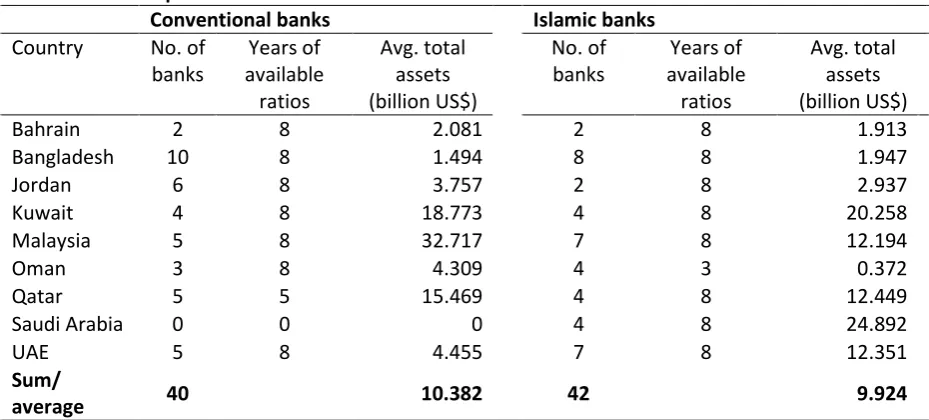
Table 6: The sample ... - 32 -
Table 7: Descriptive statistics ... - 33 -
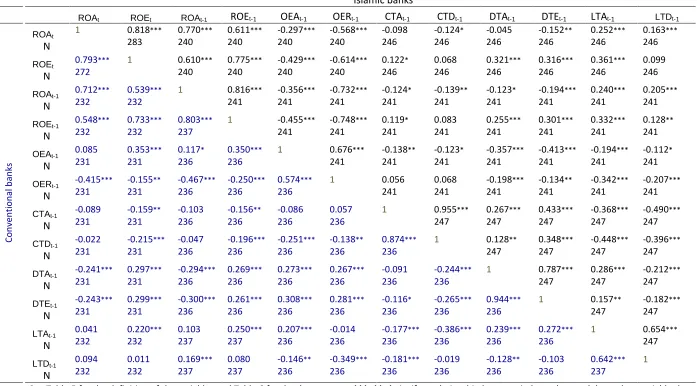
Table 8: Correlations ... - 38 -
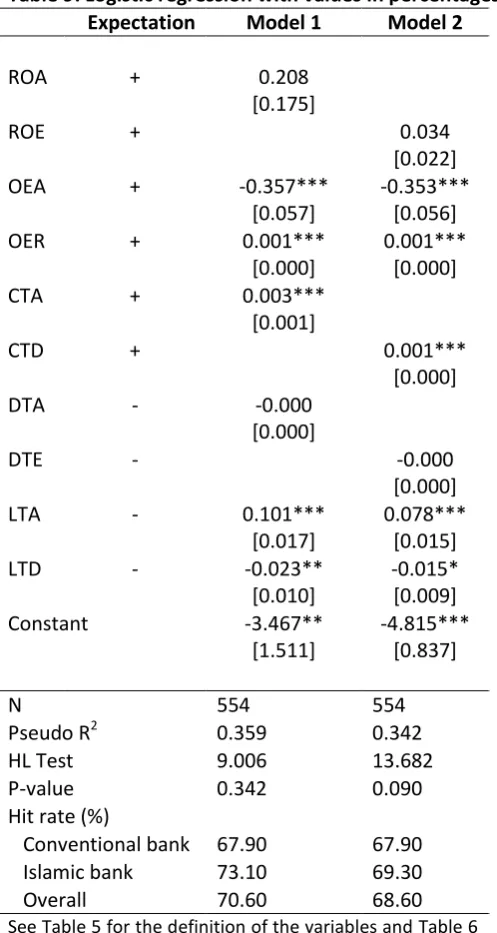
Table 9: Logistic regression with values in percentages ... - 40 -
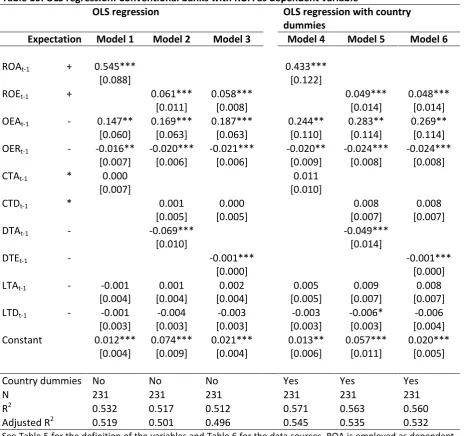
Table 10: OLS regression: Conventional banks with ROA as dependent variable ... - 42 -
Table 11: OLS regression: Conventional banks with ROE as dependent variable ... - 43 -
Table 12: OLS regression: Islamic banks with ROA as dependent variable ... - 46 -
Table 13: OLS regression: Islamic banks with ROE as dependent variable ... - 47 -
Table of figures
Figure 1: Distribution of Islamic banking assets 2010-2014 ... - 8 -Figure 2: ROA between 2008 and 2014 ... - 35 -
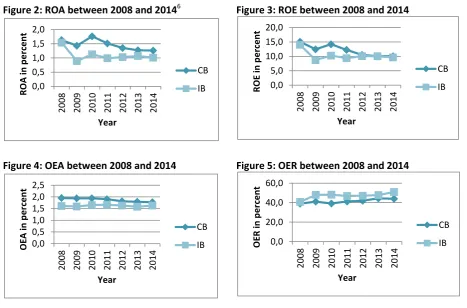
Figure 3: ROE between 2008 and 2014 ... - 35 -
Figure 4: OEA between 2008 and 2014 ... - 35 -
Figure 5: OER between 2008 and 2014 ... - 35 -
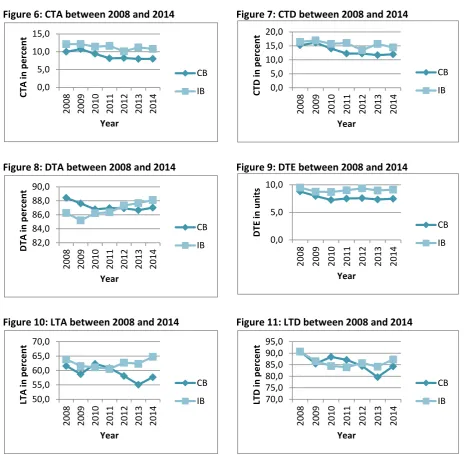
Figure 6: CTA between 2008 and 2014 ... - 36 -
Figure 7: CTD between 2008 and 2014 ... - 36 -
Figure 8: DTA between 2008 and 2014 ... - 36 -
Figure 9: DTE between 2008 and 2014 ... - 36 -
Figure 10: LTA between 2008 and 2014 ... - 36 -
v
List of abbreviations
AAOIFI Accounting and Auditing Organization for Islamic Financial Institutions AOSSG Asian-Oceanian Standard-setters Group
ASEAN Association of Southeast Asian nations
BD Bangladesh
BH Bahrain
CB Conventional bank
CTA Cash-to assets ratio CTD Cash-to-deposits ratio DTA Debt-to-assets ratio DTE Debt-to-equity ratio GCC Gulf Cooperation Council
IASB International Accounting Standards Board
IB Islamic bank
IFSB Islamic Financial Services Board
JO Jordan
KW Kuwait
LTA Loans-to-assets ratio LTD Loans-to-deposits ratio
MY Malaysia
OEA Operating expenses-to-assets ratio
OER Operating expenses-to-operating income ratio OLS Ordinary least squares
OM Oman
QR Qatar
RIA Restricted investment account ROA Return on assets ratio
ROE Return on equity ratio
SME Small- and medium-sized enterprise
SR Saudi Arabia
UAE United Arab Emirates
- 1 -
1. Introduction
Islamic finance is a phenomenon that is increasingly recognized on the world’s financial markets. It is originating in the Middle East where today the growth rates of Islamic financing assets are exceeding those of conventional banking assets (e.g. in Saudi Arabia, Bahrain, Kuwait and Qatar). In 2014, the assets of Islamic banks grew by 34% in the Gulf Cooperation Council (GCC)1 countries (EY, 2015). As a result, Islamic finance is now systemically important in the Middle East but also in Asia (IMF, 2017). In 2015, total worldwide Islamic financial services comprised $1.88 trillion of which $1.497 trillion are Islamic banking assets (IFSB, 2016).
Recently, Saudi Arabia drew the attention of global investors when it announced the issuance of Islamic bonds (‘sukuk’), amounting to $9 billion. According to the Ministry of Finance, investors placed bids of more than $33 billion attesting a grand interest in Islamic financing products not only stemming from the Middle East (Narayanan & Sharif, 2017). Financing in accordance with the Sharia2 is also spreading to non-Muslim countries. For example the London stock exchange designed different indices that cover Islamic financing activities. Especially in the light of the devastating consequences of the subprime mortgage crisis in 2007 in the USA and its development to a global financial crisis which was caused and fuelled by speculative transactions, exorbitant gearing as well as a large gap between savings and expenditure in the USA, Islamic financing is considered as an arising alternative because these procedures are forbidden in Islamic banking (McKibbin & Stoeckel, 2010; Saeed & Izzeldin, in press).
Islamic banks differ from conventional banks as they face a couple of prohibitions imposed by the Sharia. They do not pay or receive interest since it is not allowed to generate money with money (Al-Hares, AbuGhazaleh, & El-Galfy, 2013). Further, they must not transact business with customers that earn money with products which are forbidden in the Islam, e.g. gambling, pork or alcohol. As mentioned before, excessive risk, uncertainty or exploitation is not permitted (El-Hawary, Grais, & Iqbal, 2004; Khediri, Charfeddine, & Youssef, 2015). Risk is further dispersed by the principle of profit and loss sharing according to which both customer and bank bear potential gains or losses. This shall prevent making advantage of the other party and recklessness in managing the funds (El-Hawary et al., 2004; Khediri et al., 2015). Islamic banks claim this principle as one of their key advantages, however, it is often criticized that Islamic banking does not differ from conventional banking and is not more ethical or religious (Khan, 2010). Some even argue that Muslims are exploited by Islamic banks (Khediri et al., 2015). The focus of this research is different. It examines financial reasons to choose or avoid an Islamic bank, for instance the solvency and liquidity of banks that convey security. As Islamic banking became more prominent in recent years, it is an increasingly researched topic. Nevertheless, the extent of academic literature on Islamic finance is still comparatively small (Beck, Demirgüç-Kunt, & Merrouche, 2013). A couple of studies compare Islamic and conventional banks on various dimensions based on accounting ratios but yet the results are diverging and not precise. Jawadi, Cheffou and Jawadi (2016) for instance compare ten conventional and ten Islamic banks on whether they achieve different returns but do not find significant results. Samad (2004) studies the profitability, liquidity and credit risk of both Islamic and conventional banks in Bahrain but the results reveal substantial significant differences in credit risk only. On the contrary, a study also based on
1
The GCC is an economic and political regional agreement. It was established in 1981 and consists of Bahrain, Kuwait, Qatar, Oman, Saudi Arabia and the United Arab Emirates (UAE) (Sikimic, 2015).
- 2 -
financial ratios in the GCC yields that Islamic banks are significantly more profitable than conventional banks (Olson & Zoubi, 2008). Khediri et al. (2015) confirm this in their research on the GCC countries excluding Oman. Further, they also find Islamic banks to be more liquid. In their study on 24 countries Beck et al. (2013) show that Islamic banks are less cost-efficient. Similarly, Johnes, Izzeldin and Pappas (2014) detect that Islamic banks are less efficient in the method of banking; but more efficient in terms of managerial efficiency than conventional banks. On the contrary, Olson and Zoubi (2008) state that Islamic banks are generally less efficient. Another point of deviation is risk management. Some studies find Islamic banks to be better at managing credit risk (Khediri et al., 2015; Samad, 2004). In contrast, Rahman, Rahman and Azad (2015) suggest that conventional banks are better at handling risk and have more advanced risk management techniques in Bangladesh.
Summarizing the previous studies, the differences between conventional and Islamic banks are still ambiguous. Especially in terms of financial ratios, consistent results are lacking thus far. Moreover, the fact that there is no theory yet that explains differences between Islamic and conventional banks constitutes a gap in the literature. This research contributes to the discussion of this topic in the literature and provides starting points for further research as the issue of Islamic banking is expanding and increasingly also addressing non-Muslim countries. Even in non-Islamic countries conventional banks increasingly provide Sharia-compliant services (e.g. Warde, 2000). Thus, it might also be interesting for Western officials to study how Islamic banks are structured and operating in order to monitor potential competitors or even stimulate conventional banks to broaden their offer to attract additional customers.
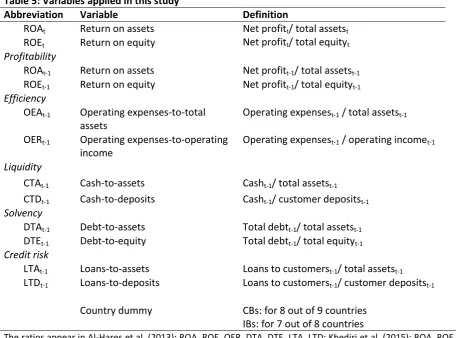
In this thesis I examine whether Islamic and conventional bank performance differs in terms of five dimensions: profitability, efficiency, liquidity, solvency and credit risk. Each is measured by two financial ratios. Additionally, it is assessed whether the financial performance of both bank types is determined equally. Financial performance is measured by return on assets (ROA) and return on equity (ROE). This leads to the following research question:
To what extent do the dimensions of bank performance and the determinants of financial performance (which is measured by ROA and ROE) differ between Islamic and conventional banks in Asian countries?
In order to answer the research question, the following three sub-questions are formulated: Which banking system is outperforming the other?
Which dimensions are able to discriminate between conventional and Islamic banks? Is financial performance determined differently for conventional and Islamic banks?
To answer the first sub-question, a two sample t-test is performed. The latter two sub-questions are resolved by means of logistic and ordinary least squares (OLS) regressions.
The t-test results reveal that conventional banks outperform Islamic banks. Islamic banks are more liquid and perform better in one indicator of efficiency but conventional banks prevail with respect to profitability, solvency and credit risk. Some of the results deviate from the findings in the majority of literature, for instance it is indicated that the financial crisis terminated the predominance in terms of profitability of the mean of Islamic banks in this sample.
- 3 -
The financial performance of both bank types is determined largely similar, though differences exist with respect to three indicators. Operating expenses-to-total assets are deemed to measure efficiency, while a higher ratio signals less efficiency. The financial performance of Islamic banks is negatively affected by higher inefficiency; however that of conventional banks is positively affected. Furthermore, the measures of liquidity, cash-to-total assets and cash-to-customer deposits are positively affecting the financial performance of Islamic banks but do not have a significant relationship with that of conventional banks. At the same, time it becomes apparent that the relationship of the independent variables with financial performance sometimes varies depending on whether ROA or ROE is utilized as the dependent variable. The results further emphasize that there are differences in performance between countries, especially with respect to Islamic banks.
This research makes different contributes to the literature. First, in contrast to the previous literature considered here (e.g. Bashir, 2003) I make use of lagged independent variables in the OLS regressions. It seems reasonable that for instance (in)efficient operations in one year affect the financial performance in the next year. Second, as opposed to an extensive part of the literature that relies on data from Bankscope (e.g. Beck et al., 2013; Johnes et al., 2014; Khediri et al., 2015; Rashwan, 2012; Samad, 2004), a platform that reports data for over 29,000 financial institutions worldwide including 80 Islamic banks in 2005, this research makes use of hand-collected data (Gheeraert, 2014). Scholars detected problems related to Bankscope as for instance interest revenues and expenses reported for Islamic banks (Beck et al., 2013). Moreover, Čihák and Hesse (2008) criticize that data limitations prevent the distinction between profit and loss sharing contracts and other investment contracts and thus impede more detailed analyses. More importantly, Gheeraert (2014) states, that Bankscope labels some banks as Islamic which do not carry out any Islamic operation, whereas a number of important Islamic banks are not included. By hand-collecting the data from the annual reports of the particular banks the data can be checked for (non-)Islamic operations. Third, the latest studies (e.g. Khediri et al., 2015; Siraj & Pillai, 2012) find evidence that Islamic banks were also hit by the financial crisis but later than conventional banks. Moreover, whereas Islamic banks outperformed conventional banks before the crisis, this relationship reversed after 2008 at least with respect to profitability and efficiency (Rashwan, 2012). This research investigates the subsequent years 2008 to 2015 and provides new insights into the consequences of the financial crisis.
- 4 -
2. Literature review
To compare the performance of Islamic and conventional banks, it is pivotal to first understand how banks operate and how both bank types differ in general. This section provides information on the role of banks in general, outlines the development of Islamic banking and its global spread today, and introduces some of the distinct characteristics of Islamic banking. It is also assessed whether a comparison of both bank types is feasible in terms of accounting regulations. The literature review concludes with an examination of the results of previous research and the hypotheses development.
2.1 Tasks and purposes of banks in general
According to Wright (2012), the worldwide technological and economic progress is owed to financial intermediaries. Within the financial system entrepreneurs in need of financing are brought into contact with financial intermediaries and individuals that provide loans. Both entrepreneurs and loan-providers benefit from this business relationship. Loans are also benefitting the economy since money is usually borrowed to make major investments e.g. in real estate or cars. In general, there are different types of financial intermediaries, such as venture capitalists, insurance companies, hedge funds or banks (Hillier, Grinblatt, & Titman, 2011). They are linked with other financial institutions and different markets in a financial system. The financial system as such serves to share risks and facilitates trading and the allotment of funds (Wright, 2012).
Banks as one kind of financial intermediary interact within a national and international banking system. Often, a central bank, responsible for a country’s monetary policy and price stability, oversees the national banks (Deutsche Bundesbank, 2015). Central banks can also be a multinational institution as in case of the European Central Bank for the banks in the euro area in the European Union. Today almost all countries’ banking systems have a central bank including the countries studied here but central banks are not part of this research.
- 5 -
plus equity and reserves (Deutsche Bundesbank, 2015). These liabilities are for instance current or demand deposits that can be withdrawn by the customer at any time. Another deposit would be the savings account that pays varying interest but money can be withdrawn without a financial penalty. Time deposits cannot be withdrawn before an agreed point in time. Usually customers with a time deposit receive a higher and fixed interest than savings account holders (Wright, 2012). A more detailed version of a bank’s balance sheet is given in Sub-section 2.3.
In order to realize this business model the bank has to perform certain tasks. One of them is the issuance of debt or equity to the public for themselves or companies, called underwriting. The bank acts as the underwriter and advises the company which security to issue and at what price. Simultaneously, the bank takes on related risks like being unable to sell all securities (Hillier et al., 2011). El-Hawary et al. (2004) describe four additional purposes. One is the role as broker or intermediary between borrowing and lending clients as explained above.
Another task is to ensure a well-functioning accounting and payment system, and the implementation of payments that are conducted e.g. with bank transfers or via electronic payment transactions (El-Hawary et al., 2004).
The third task of banks is risk transformation. According to Allen and Gale (2000) non-diversifiable risk can be averaged over time so that individuals are less affected. This is called intertemporal smoothing. Banks can establish reserves in times of high ROA and distribute them in times of low ROA. Thus they are able to pay out a relatively stable amount each period and reduce the risk of depositors (Allen, Carletti, & Gu, 2015; Allen & Gale, 2000). For the purpose of further reducing risk, several hedging instruments as currency swaps (to reduce the risk stemming from exchange rate movements) or forward contracts (to hedge against price fluctuations) were created (Hillier et al., 2011). However, nowadays derivatives do not fulfill their original objective anymore, but rather constitute an instrument for speculative transactions (Khan, 2010).
Finally, asset transformation which refers to the transformation of deposits into loans is the fourth purpose of banks. The deposits are typically short-term for commercial banks and transformed into long-term loans (Wright, 2012). Therefore, different aspects as the scale and maturity of the items have to be considered (El-Hawary et al., 2004). In alignment with this, bank employees have to manage assets and liabilities for three reasons. The first is liquidity management: bankers have to ensure that enough resources are available to repay deposits that reach maturity or are withdrawn but on the other hand it has to be guaranteed that not too much cash is unused (Wright, 2012). Often a minimum of reserves is required the central bank and/ or the government. All reserves that exceed this level are called excess reserves. However, since banks major revenue sources loans and reserves do not generate interest, banks avoid having too much cash (Wright, 2012). The second reason is to make profit. Assets have to be managed in such a way that assets are profitable and liabilities should be obtained low-priced. Still, credit risk has to be taken into account here. Banks can charge higher interest rates for riskier loans. In order to estimate the risk involved, banks collect information about the borrowers and so reduce asymmetric information. Often banks specialize in loan target groups and further reduce costs and time invested in customer screening (Wright, 2012). The third reason for managing assets and liabilities is capital adequacy management. It means that banks possess a certain amount of equity to keep operating in times of financial distress but not too much to be unprofitable, similar to liquidity management (Wright, 2012).
- 6 -
funds can be invested or it is assured whether investment opportunities are available. Moreover, the fact that short-term funds are used to make long-term loans creates the risk of maturity mismatch and rather hampers investment in non-liquid assets (van Greuning & Iqbal, 2009). This is different for Islamic banks. Due to the sharing of profit and loss and the special nature of other investment and financing contracts, the money allocated to depositors is linked to the profit generated by the bank’s assets (van Greuning & Iqbal, 2009).
2.1.1 Banking in the countries under study
The practice of commercial banking is prevalent in the GCC countries and Jordan, but an increase in Islamic banking assets is noticeable (Maghyereh, 2004; Turk-Ariss, 2009). Still, these countries are considered as emerging economies with rather poorly developed capital markets and finance mainly originating from banks (Turk-Ariss, 2009). Their banking system is characterized as monopolistically competitive (Turk-Ariss, 2009). So, despite a rather high degree of concentration in the banking sector (e.g. in Qatar the three largest banks represent approximately 70% of the total assets), competition is given (Al-Hassan, Khamis, & Oulidi, 2010). During the last decades many of these countries were subject to interventions as financial liberalization in terms of deregulation and privatization of banks with the purpose of promoting (international) competition (Turk-Ariss, 2010). According to Turk-Ariss (2010), the majority of countries with developing markets promote financial liberalization which fosters the transition to a universal banking system around the world. Likewise, five nationalized banks were operating in Bangladesh until the 1980s when first attempts towards denationalization were undertaken (Samad, 2008). Today, private and foreign banks are in operation as well. Bangladesh, Jordan and the GCC are considered as bank-based systems whereas Malaysia is identified as market-based system (Al Karasneh & Bolbol, 2006; Demirgüç-Kunt & Levine, 1999). In the former, banks are responsible for the provision of financing and connecting investors with companies/ individuals in need of money, as opposed to the latter system where financial markets assume these tasks (Hillier et al., 2011). It corresponds to the argumentation of Turk-Ariss (2009) that capital markets in GCC countries and Jordan are “weak or almost non-existent” (p. 694). In some of these countries the minority of citizens possesses a bank account (see Appendix A). Islamic banks can facilitate financial inclusion, especially in countries with a large and “relatively unbanked Muslim population” (Kammer et al., 2015, p. 8). In addition to private individuals, Islamic banking institutions also promote the access to financing and thus foster the financial inclusion of small and medium-sized enterprises (SMEs) that can provide for economic development (Kammer et al., 2015).
2.1.2 Differences for Islamic banks
Islamic banks differ in their operations in a few respects from conventional banks. Islamic banks mostly perform both commercial and investment banking activities. Still, they apply a model different from a universal banking model. Islamic banks mix the funds received from investment accounts and shareholders and invest them in the same portfolios. Furthermore, the returns of customer deposits depend on the banks ROA instead of interest rates. Thus there arise additional aspects as “the estimation and accrual of ex-post returns and the treatment of intra-period deposit withdrawals” (Saeed & Izzeldin, in press, p. 3).
- 7 -
(Al-Hares et al., 2013; Saeed & Izzeldin, in press). Finally, due to the prohibition of incurring debt without an underlying asset, Islamic banks might be disadvantaged because they cannot rely on quick and cheap debt financing; however, they might also be more stable and rather capable of coping with a financial crisis than conventional banks (Saeed & Izzeldin, in press; van Greuning & Iqbal, 2009). These differences are reflected in different concepts on and sometimes a slightly different structure of the balance sheet of Islamic banks. Sub-section 2.3 introduces these concepts and compares the typical balance sheets of Islamic and conventional banks.
2.2 The rise of Islamic banking and its scope today
The practice of banking is relatively new to the GCC countries, as the first conventional banks opened in the 1950s in Qatar (Khediri et al., 2015; Standard Chartered Bank, n.d.). Similarly, the first private bank in Jordan was established in 1930 (Hudairi, 2014). In Malaysia however, banks are present since 1875 (Hamdan, 2015). The first conventional bank in Bangladesh was the Bank of Hidostan, established 1770 in Calcutta (Cooke, 1863). Bangladesh belonged to British India at that time and later to Pakistan. It became a fully independent country in 1971 (Samad, 2008).
According to Imam and Kpodar (2010), banks in these regions were established by the colonial powers to “support mining, agriculture, manufacturing, and financing of the public sector” (p. 5). When the countries became independent, many banks were nationalized until the governments took efforts in the end of the 20th century to liberalize the financial sector, for instance
in Bangladesh and Jordan (Mghyereh, 2004; Samad, 2008).
The date of the establishment of the first Islamic banking institutions is difficult to identify. Since the end of the 1940s, researchers were investigating the realization of a bank that would comply with the laws of the Sharia (Warde, 2000). The Organization of the Islamic Conference, a transnational entity for discussion about relevant topics, concluded the establishment of the inter-governmental Islamic Development Bank in 1974 with the main task of providing (profit-sharing) financing to the member countries and fostering the emergence of further Islamic banking institutions (Warde, 2000). In 1975, the Dubai Islamic bank was established, agreed upon as first modern and non-governmental Islamic bank by most researchers (e.g. Olson & Zoubi, 2008; Warde, 2000). Kuwait followed with the first Islamic bank in 1977 and then Bahrain (1979) and Qatar (1982) established their first Islamic banks (Wilson, 2012). One year later, Islamic banks in Malaysia and Bangladesh started their operations (Chong & Liu, 2009; “IBBL at a glance”, n.d.). The first Saudi Arabian and Jordanian Islamic banks were established in 1987 (Nazzal, 2015; Wilson, 2012). In Oman, Islamic banking was introduced recently in 2012 (Stubing, 2014). Beforehand, interest-based loan transactions were commonplace. The lending activities of financiers in Islamic countries included interest payments before World War II and already during the 17th century interest-based lending was common in the Ottoman Empire (Khan, 2010). The charge of interest is not only forbidden by the Quran, as Torah and Bible condemn it too (Abou-Zaid & Leonce, 2014). So why did Islamic banks emerge in the 20th century and not earlier? One reason might be that except for Oman, most considered countries did not gain independence before the second half of the 20th century (see Appendix A for country information). Before, the majority of them belonged to the British Empire that probably did not seek the creation of Islamic banks.
- 8 -
shaped by the oil boom in the Middle East which was one of the main trigger of the rise of Islamic banking (Warde, 2000). It also boosted the economic development of the Middle East which resulted in a massive rural-to-urban migration but also in-migration from other countries (Karl, 2004; see Appendix A). Malaysia and Bangladesh implemented financial liberalization policies that aimed at fostering economic growth. In Malaysia the reforms were enacted during the 1970s. Bangladesh gained independence in 1971, and implemented its policies in the 1980s (Murshed & Robin, 2012). Malaysia and Bahrain were the major hubs for Islamic finance at that time (Imam & Kpodar, 2010).
Another factor that most likely contributed to the growth of Islamic finance during the 1970s was the global resurgence of Islam and the resulting demand for financial services that comply with it (Chong & Liu, 2009). Chong and Liu (2009) go so far to state that this is the key reason instead of profit and loss sharing characteristics. Furthermore, until 9/11, many investors from the Middle East deposited their money in the USA. However, after the attacks and the following wars in Iraq and Afghanistan, the USA imposed visa restrictions and froze assets which led customers to withdraw their funds and deposit them in local (Islamic) banks (Badawy, 2005 as cited in Chong & Liu, 2009; Olson & Zoubi, 2008).
[image:14.595.73.504.470.696.2]The oil crisis at the beginning of the 1980s put the economy and banks likewise under pressure. By the end of the decade, the political and economic systems worldwide changed massively and the growth of Islamic banking slowed down (Warde, 2000). Today, Saudi Arabia and Malaysia are major Islamic finance hubs but it has also spread to non-Muslim countries for instance in form of Islamic windows in conventional banks (IFSB, 2016). According to Warde (2000) the fact that conventional banks are increasingly opening their businesses by running Islamic windows (e.g. BNP Paribas) or Islamic subsidiaries (e.g. RHB bank) is evidence that Islamic and conventional banks are converging. Moreover, the offer of Islamic products in Islamic countries and the approach to attract non-Muslim customers decreases the disparity between both bank types.
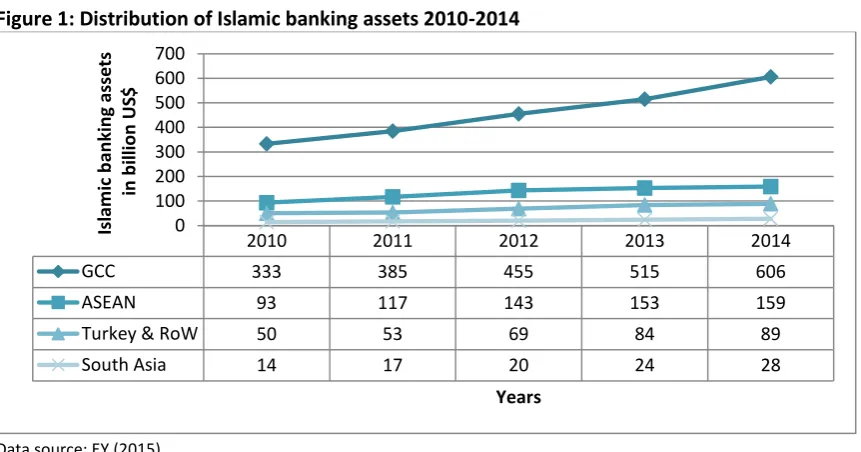
Figure 1: Distribution of Islamic banking assets 2010-2014
Data source: EY (2015)
In 2014, the Islamic banking database created by the World Bank listed Islamic financial institutions (excluding insurance institutions) operating in 58 countries (The World Bank Group, 2014). In absolute numbers, the World Islamic Banking Competitiveness Report 2016 shows that the worldwide share of Islamic banking activities grew over the last five years by 16% from $490 billion to
2010 2011 2012 2013 2014
GCC 333 385 455 515 606
ASEAN 93 117 143 153 159
Turkey & RoW 50 53 69 84 89
South Asia 14 17 20 24 28
0 100 200 300 400 500 600 700
Is
lam
ic
b
an
ki
n
g asse
ts
in
b
ill
io
n
US
$
- 9 -
$882 billion (EY, 2015). Figure 1 shows the share of Islamic banking in billion US$ in different regions worldwide. It can be seen that countries from the GCC region have the largest amount of Islamic banking assets in the first place as it is more than twice as often utilized in the GCC countries than in the rest of the world. Islamic banking assets comprise the banking services and Islamic bonds. The prevalence of Islamic banking assets in GCC countries might be due to the reason that the report only reviews two countries for ASEAN and south Asia but all six countries of the GCC. ASEAN3 has ten member states today; however, this figure only respects Malaysia and Indonesia. South Asia consists of Pakistan and Bangladesh and rest of the world includes Jordan among other countries (EY, 2015). Nevertheless, it can be seen that the amount of money invested in Islamic banking assets nearly doubles in all regions between 2010 and 2014.
[image:15.595.66.534.332.396.2]The countries that I investigate in this research were selected according to different criteria which are elaborated in the methodology section. However, one important condition is that a certain number of Muslims has to live in these countries. Table 1 shows that all countries comprise a Muslim population of more than 60%.
Table 1: Share of Muslim population in the countries under study in 2010
Country Bahrain Bangladesh Jordan Kuwait Malaysia Oman Qatar Saudi Arabia
UAE Muslim
population
70.3% 89.8% 97.2% 74.1% 63.7% 85.9% 67.7% 93.0% 76.9%
Data source: Pew Research Center (2012)
Furthermore, the countries should include both bank types, conventional and Islamic banks. Table 2 depicts the magnitude of Islamic banking in the countries under study on the global and national level. The global share indicates the share of a country in total Islamic banking assets traded worldwide, whereas the national share depicts the extent of Islamic banking assets traded within the countries, next to conventional banking assets. It can be seen that on a global scale, the share of Islamic banking in Malaysia is larger than the share of most of the GCC countries alone.
Table 2: Share of Islamic banking per country in 2015
Country Bahrain Bangladesh Jordan Kuwait Malaysia Oman Qatar Saudi Arabia
UAE Global
share 1.7% 1.6% 0.6% 5.9% 9.3% n/a 5.1% 19.0% 8.1%
National
share 13.5% 19.4% 14.0% 38.9% 23.0% 6.5% 26.1% 49.0% 18.4%
Data source: IFSB (2016)
Moreover, Table 2 gives some indication of how established Islamic banking is in the countries. The numbers for the global share of Islamic banking assets have to be interpreted with caution as for instance Jordan has a share of 0.6%. This does not seem meaningful but one has to keep in mind that Jordan has 7.5 million inhabitants and only 25% of the population older than 15 years possessed a
3 Association of Southeast Asian nations: established in 1967. The member states are Brunei Darussalam,
[image:15.595.67.532.537.622.2]- 10 -
bank account in 2014 compared to Saudi Arabia with 31.5 million inhabitants and 70% having a bank account (see Appendix A).
It strikes to the eye that Bahrain and Kuwait have a similar share of Muslim population but Islamic banking is more common in Kuwait (38.9%) than in Bahrain (13.5%). Moreover, Jordan has a Muslim population of almost 100% but only 14% of its banking assets are Islamic banking assets. Here again, a reason might be that only a quarter of the population older than 15 possesses a bank account at all in a less developed capital market (Maghyereh, 2008; see Appendix A). Nevertheless, there are apparently other influencing factors than religious belief for choosing Islamic or non-Islamic banks. In certain countries Islamic banks are growing faster than conventional banks for instance in Saudi Arabia, Malaysia, Kuwait, Qatar and Bahrain in 2014 (EY, 2015).
Table 2 shows that looking at the countries in particular instead of classifying the countries into groups as in Figure 1, gives a more accurate picture. For example, it is now apparent that the share of Islamic banking of the total banking assets in Oman is lower than in the other countries. It is highly probable that this is due to the reason that Islamic banking was established in Oman in 2012 (Stubing, 2014).
2.3 Principles and concepts of Islamic banking
The Islamic religion does not distinguish between religion and state and similarly not between religion and business. Instead, everything is governed by the Sharia (Chong & Liu, 2009). One principle from the Sharia, important in the context of Islamic banking, is the maximization of human welfare and reduction of distress (Iqbal, 2014).
The Islamic financial system is resting on four main pillars (El-Hawary et al., 2004). The first is risk-sharing, according to which both risk and return of financial transactions have to be shared equally by all parties participating in this deal. Second, the materiality claim requires that the financial transaction taking place needs to at least indirectly involve a real asset. Third, the transactions must not exploit one of the parties involved and fourth, the financial transactions are not allowed to serve the financing of sinful products or activities as gambling, pork products, alcohol, drugs and prostitution (El-Hawary et al., 2004; Khediri et al., 2015). In order to guarantee that Islamic banks stick to these principles, each bank has a Sharia Committee (Khediri et al., 2015). Usually, the Sharia Committee is also expressing its opinion in a section in the annual report.
- 11 -
(2010) “it seems clear that Islamic Banking and Finance is virtually indistinguishable from conventional banking and finance” (p. 817).
Next to the four characteristics introduced above Khediri et al. (2015) distinguish two additional fundamental principles. The first is the prohibition of excessive uncertainty (‘ghrar’), risk and speculative investments (‘maysar’). However, not all risk can be banned or prohibited. As Warde (2000) states: “rather than avoiding risk, financiers must learn to control it” (p. 61).
The second additional principle is the prohibition of interest often referred to as ‘riba’. However, riba means increase and does not only relate to usury (Warde, 2000). In Islamic finance, usury is replaced by a premium that the borrower has to pay additionally to his repayment. This principle is criticized by several researchers as being comparable to conventional interest payments under the pretext of being Sharia-conform. Some even argue that the mark-up is tied to the interest rates of conventional banks. Yusof, Bahlous and Tursunov (2015) however found results that mark-up and conventional bank interest rates are not corresponding, they correlate occasionally but rather due to economic factors that affect interest rates and mark-ups. Tantawi, a former mufti of Egypt, went so far to say that interest payments are virtually more Islamic than risk sharing, because with the former, borrowers receive more information about the actual price they have to pay (AFP, 1995). As mentioned, informing the debtor about the exact price is an important premise in Islamic finance. In Islamic law it is denied that money has an intrinsic value which entails the prohibition of making profit on the basis of trading with money (Al-Hares et al., 2013). As an alternative, several financing means were created, building either on the principle of profit and loss sharing or being defined by fixed fees on capital (Iqbal, Ahmad, & Khan, 1998). These means are introduced now, together with other items that typically appear on the balance sheet of an Islamic bank.
Debt-like financing instruments
In Islamic finance, there are several contracts that enable a client to receive funds from an Islamic bank. The most common contract is the murabaha contract.
‘Murabaha’ financing relates to the mark-up financing which is often used for trade financing (Chong & Liu, 2009). In essence, the bank buys an asset for the customer and sells it to him with a mark-up, either in installments or a single payment (Mansour, Ben Jedidia, & Majdoub, 2015; Oslon & Zoubi, 2008). The mark-up is seen as a fee for providing the service instead of interest payment which would be unlawful (Pollard & Samers, 2007). The bank has to inform the buyer about the price at which he bought the product. Informing the borrower about the price and preventing opaque businesses is important in Islamic finance. Then, a percentage that forms the mark-up is communicated to the buyer and agreed upon (Al-Hares et al., 2013). The risks of the goods, e.g. the customer opts out from the agreement, are borne by the bank until it is shipped to the customer (Ali, 2011). Declared by a fatwa (legal opinion) in 1994, the bank has to possess the good and provide evidence thereof (Mansour et al., 2015; Pollard & Samers, 2007). However, this rule is often broken by Islamic banks as they want the customer to buy the good himself and so avoid commercial risk or the risk that the customer cancels the agreement (Mansour et al, 2015; Pollard & Samers, 2007). The murabaha contract is one of the assets on the balance sheet of an Islamic bank. Sometimes banks conclude murabaha contracts with each other, thus it can also appear as a liability.
- 12 -
al., 1998). It could sell the asset that it holds for the customer and keep the proceeds. Nevertheless, Iqbal et al. (1998) argue that this is one of the main problems of Islamic banks for which specific laws have to be brought out and implemented. (2) Taking an economic perspective, mark-ups resemble the interest payments of conventional banks (Warde, 2000). Pollard and Samers (2007) state that 45% to 65% of Islamic finance transactions worldwide are murabaha contracts. According to other researchers (e.g. Khan, 2010) the number is even higher, around 80%. This would mean that the majority of financing contracts in Islamic banking does not rely on the promoted sharing of profit and loss but on a mechanism that is criticized to copy conventional loans and the related interest payments labeled with an Arabic name. The reasons for the frequent application of murabaha are twofold. First, short-term financing is requested by customers regularly. Therefore, murabaha contracts tend to be more suitable than profit and loss sharing contracts that are arranged for longer terms (Ahmad, 1994). Second, as Islamic banks have to subsist next to conventional banks that receive interest payments Islamic banks try to generate as much return as possible from the mark-up financing. This provides a more certain source of capital than profit and loss sharing contracts and additionally, the mark-ups can initially be defined in a way that the required returns will be generated (Ahmad, 1994).
Murabaha contracts are intended to finance major tangible purchases, as houses or cars but in some cases the funds are used to finance other expenses as salaries for instance (Mansour et al., 2015). Furthermore, as customers sometimes use the funds for other purchases than defined in the contract, the Islamic bank runs the risk of involuntarily financing unlawful products.
‘Ijara’ is comparable to a conventional financial leasing contract (IFRS, 2010; Warde, 2000). An asset is bought by the bank and lend to the lessee. The rental payments are fixed and laid down in the leasing contract; however both parties can stipulate different payments for the future (Iqbal, 2014). Ownership and all related obligations of the assets stay with the bank and it is therefore listed on the balance sheet minus depreciation (Ali, 2011). There are different designs of this contract, for instance the ‘Ijarah-wa-Iktena’ contract includes the purchase of the asset by the lessee at an agreed point in time for an amount agreed beforehand (Al-Hares et al., 2013). The leasing period is written down in the leasing contract. If both parties agree it can be terminated earlier. The lessor assumes the costs related to insurance and maintenance, the lessee only has to pay for damages caused by him (Iqbal, 2014). Sometimes banks charge a certain amount of money to make sure that the customer is accepting the contract, comparable to a security (Iqbal, 2014).
Under a ‘Bai’ salam’ contract, the goods are fully paid when the contract is made and the delivery of the goods takes place in the future at a specified date (Olson & Zoubi, 2008). This constitutes an exception to the Sharia rule that only goods of which one possesses the ownership can be sold, albeit the price should be set as precisely as possible (Iqbal, 2014).
- 13 -
‘Sukuk’ are comparable to conventional bonds or commercial papers as they are certificates of the possession of an asset and can be traded in secondary markets (Iqbal, 2014; Khan, 2010). Since they involve a tangible asset they are often used in lease agreements and constitute a securitization of the underlying good (Ariff & Lewis, 2014; IFRS, 2010). They are traded at face value and return is related to (a fraction of) the underlying asset instead of interest rates. Often the rate of return is additionally related to market indicators as EURIBOR or LIBOR (Ariff & Lewis, 2014; Khan, 2010). The securitized underlying assets can either be “ijara, murabaha, istisnaa or musharaka receivables, or combinations of them, and the rates of return can be fixed, floating or zero coupon” (Ariff & Lewis, 2014, p. 64). In Islamic finance, debt can only be traded at face value but the price of ownership of assets can be negotiated (Obaidullah, 2007). In this way, sukuk related to leasing transactions enable the creation of a secondary market and therefore this type of sakk (singular form) and the other sukuk offer new investment options for both banks and investors (Ariff & Lewis, 2014).
At the same time, the sukuk related to leasing transactions can be seen as a means to elude the materiality convention since often the assets are not transferred or “no new asset is being financed” (Khan, 2010, p. 817). Khan (2010) calls this fictional materiality. Correspondingly, in 2008 the Pakistan Supreme Court ruled that the majority (80%) of the outstanding sukuk worth $80 billion were too similar to conventional bonds and thus not Sharia-compliant (Khan, 2010). Sukuk appear on both sides of the balance sheet either as investment on the asset side, and/ or in case the bank issued sukuk they are listed on the liabilities side.
Profit and loss sharing
The sharing of profit and loss is a fundamental principle in Islamic finance. There are two major contracts that enable clients and banks to share risks and benefits. Sometimes they are also referred to as partnerships. The two contracts described below are to be found on both asset and liabilities side of the balance sheet.
‘Mudaraba‘ is a contract that is concluded between a party providing the financing and a party contributing expertise and knowledge (IFRS, 2010; Al-Hares et al., 2013). The latter is investing the money of the former, acting as an agent. Thus, it is sometimes referred to as agency contract (Ali, 2011). The contract can be terminated at any time except the bank already started to invest the funds or if agreed otherwise (Iqbal, 2014). In case a profit can be generated, it is shared according to a predefined ratio, in case of losses, the first party bears the financial loss and the other party bears the waste in time (IFRS, 2010). The financial losses borne by the bank are limited to the amount of money that was contributed. It is not liable for the losses that the customer might incur, except the bank broke the contract (Ariff & Lewis, 2014). At the outset of Islamic financing, often a two tier mudaraba model was applied in order to decrease the impact of potential financial shocks (Ali, 2011). Therefore, a mudaraba contract was concluded between depositor and bank in which the bank acts as an agent and invests the money in a business. The bank concludes an additional mudaraba contract with the business in which it invests the customers’ funds. Thus, profit or loss that the company generates is shared between bank and company. The return from this is then shared between depositor and bank according to a pre-determined ratio (Ali, 2011). With a two tier mudaraba system the liability side of the balance sheet is able to respond to changes on the asset side and the risk is shared among further individuals and entities. This is contributing to the stability of the economy and the financial system in general (Ali, 2011).
- 14 -
the profit or loss share difficult. Simultaneously, there is a risk of information asymmetry which could lead to adverse selection or a moral hazard (Ali, 2011). This was one of the reasons for the development of another model in Islamic banking that is common these days. In principle it is build up as the two tier mudaraba, but here the bank does not only invest in mudaraba contracts on the asset side but also in murabaha contracts. Thus, this model “retains the stability feature and adds accessibility” (Ali, 2011, p. 6). Often, Islamic banks also invest in ijara and other instruments as described in Table 3 to provide a larger variety of products (Ali, 2011).
‘Musharaka‘ is comparable to a joint venture to which different parties contribute in the form of money, expertise, goods, etc. An example would be one person contributing a fruit tree, and another person being accountable for cultivation and harvests (IFRS, 2010). Profit and losses are shared according to a ratio which is defined by how much each party contributes (Al-Hares et al., 2013). The difference to the mudaraba contract lies in the fact that with a musharaka all partners are entitled to the management of capital in order to maximize profits (Iqbal, 2014). The contract can either be in force for an agreed period or not binding. In the second case, the party that wants to quit informs the other partners and receives his stake in the partnership. Since profits and losses are shared, no partner is liable alone, except he acted against the rules set out in the contract (Iqbal, 2014).
The musharaka contract is seen as the most Islamic way of financing since risks and benefits are justly shared (Wilson, 1997). Mortgage contracts for real estate are often formed as a ‘declining musharaka’. The ownership of the asset in this ‘diminishing partnership’ is shared between bank and client, as opposed to a leasing contract where the lessor retains the ownership for the whole period (El-Gamal, 2000). Here, the bank purchases the real estate and rents it to the client. The monthly payments include a rent payment for the house on the one hand and another payment for buying the share of the bank (El-Gamal, 2000). In an example by Rammal (2004), a house is bought for $150,000. 80% ($120,000) are financed by the bank and 20% ($20,000) are paid by the customer. If the monthly rent is $1,000, $800 (80%) of it is accounted as extra payment in order to buy the banks’ share (Rammal, 2004). Excluding taxes, etc., the customer will attain full ownership of the house after 15 years. Khan (2010) shows that a conventional mortgage loan at 8% interest would result in the exact same payment schedule (excluding taxes and insurance). Often, the rate for the rent installments is derived from the interest rate of conventional banks and some of the Islamic banks seem to openly admit that their rate is not derived from a comparison to other houses in the same area as demanded (Khan, 2010).
- 15 -
debt-like contracts that promise more secure gains and less uncertainty (Pollard & Samers, 2007). As Khan (2010) adds, profit and loss sharing contracts provide space for problems as adverse selection or moral hazard due to information asymmetry. Thus, banks could either reject financially weak customers or customers that doubt the admissibility of certain measures. For instance in Pakistan, subject to a high inflation, clients only repaid the principal and declared the residual settlement to be interest and thus forbidden (Khan, 2010). Islamic banking is mostly common in emerging economies that are usually subject to a higher information asymmetry and less efficient judicial institutions which further reduces the incentive for profit and loss sharing (EL-Hawary et al., 2004; Khan, 2010).
If Islamic banks would rely on sharing profits and losses as they often advertise themselves, one could talk about a model that enables banks to operate fairer and less risky. However, as this is often only a small share of a bank’s activities or not carried out at all, the Islamic banking model indeed resembles the conventional banking model. Nevertheless, a bank has to make sure to remain profitable in order to keep their customers because all Islamic conviction aside, how long would customers be willing to bear the losses of others?
Services
‘Wakala’ is an agency contract in which one person pays another person, usually with a fixed remuneration, for doing a specific task (Ali, 2011). This could be administering a murabaha transaction for the customer for instance. Another common circumstance is that customers can buy units from a mutual fund, set up by the bank for which the agent acts as the investment manager. The difference to the mudaraba contract lies in the fact that losses are exclusively borne by unit holders and no sharing of profits and losses takes place (Iqbal, 2014). Wakala can be found on both sides of the balance sheet.
‘Wadiah’ describes a contract where the bank is responsible for the safekeeping of a good and usually not expects a compensation, sometimes however, the bank charges a fee that covers the cost of administering the good (Ali, 2011). Wadiah is located on the liabilities side of the balance sheet. Non-balance sheet item
‘Zakat’ is a religious tax that is supposed to distribute wealth from the rich to the poor. It is regarded as one of five pillars of the Islam and as opposed to the other instruments it serves an exclusively ethical purpose (Samad, 2004). However, it is an additional tax payment next to the corporate tax and thus leaves Islamic banks in a worse position compared to conventional banks that only pay corporate taxes. It appears on the income statement and is deducted from gross profit. The data collection showed that for some banks it is common to deduct zakat from their dividend payments.
- 16 -
than on the semblance of being Sharia-conform. The second reason is that there are only around 20 Sharia scholars that are licensed to declare products compliant with the Islamic law (Morais, 2007). These scholars are members of 40 to 50 boards. Since Islamic banks are keen on being certificated as Sharia-compliant, they are willing to pay a great deal of money. As a result, Sharia scholars earn $20,000 to $30,000 per board they sit on (Morais, 2007). It is a debatable point whether the scholars have enough time to review the practices of all of these banks and whether their excessive salaries comply with Islamic values. Moreover, an Islamic investment banker admitted that if one scholar does not give his consent, another scholar is contacted and offered money until he approves an operation (Iqbal, 2014).
Taken together, Table 3 provides an example of a balance sheet of an Islamic bank compared to the balance sheet of a conventional bank and shows the location of the relevant concepts described above on the asset and liability side.
According to Yusof et al. (2015), the balance sheets differ in form but not significantly in substance. One of the differences between Islamic and conventional banks is that the former are not exposed to the maturity mismatch of assets and liabilities as mentioned in Sub-section 2.1. Furthermore, Islamic banks do not distribute loans as conventional banks, they rather provide financial assistance to customers via investment and financing contracts that can be seen as equivalent to loans and are treated as such in this analysis (van Greuning & Iqbal, 2009). In the GCC in 2008, the majority of money was invested in murabaha contracts (Ali, 2011). Moreover, derivatives such as futures, forwards and options are forbidden in Islamic finance, since they lack an underlying asset and are mainly used for speculative purposes (Khan, 2010). Islamic banks sometimes report their wakala contracts on their balance sheet and related income and expenses on the income statement. Conventional banks only report their income and expenses from fees and commissions on their income statement.
A further striking difference is that next to liabilities and equity, sometimes the balance sheet comprises an additional term, namely the equity of profit-sharing investment accounts. This distinction is common in Bahrain but for instance in Kuwait the unrestricted investment accounts (URIA) are counted as liabilities. During the data collection process the URIAs were added to the total liabilities in order to achieve coherent data. Current accounts can be withdrawn by the customer if desired and appear under liabilities. Compared to conventional banks current accounts however, depositors do not obtain a return but sometimes ‘gifts’ derived from the bank’s capital are granted to the customers that are similar to interest payments of conventional banks (Ali, 2011; Awadzi, Chartouni, & Tamez, 2015).
- 17 -
Table 3: Balance sheet of an Islamic and a conventional bank
Islamic bank Conventional bank
Assets Assets
Cash and cash equivalents
Placements with banks and other fin. institutions
Cash and cash equivalents
Placements with banks and other fin. institutions Investment in securities (sukuk and shares)
Investment property Investment in subsidiaries Other investments
Investment in securities (bonds and shares) Investment property
Investment in subsidiaries Other investments Financing assets, e.g.:
- Murabaha
- Mudaraba
- Musharaka
- Ijara
- Salam
- Istisna
- Qard
- Fee-based transactions (wakala)
- Others
Loans and advances, e.g.:
- Loans to customers
- Other loans
- Financial leasing assets
- Assets held in joint ventures
- Others
Fixed assets
Intangible assets Other assets
Fixed assets Intangible assets Other assets
Liabilities Liabilities
Placements from banks Customer deposits:
- Current accounts, e.g.: o Wakala
o Wadiah
Placements from banks Customer deposits
- Current accounts, e.g.: o Current accounts
o Safedeposit locker
- Saving and time deposits
o Mudaraba, etc.
- Saving and time deposits
Other liabilities Other liabilities (e.g. liabilities arising in joint ventures)
Equity of profit-sharing investment account
Unrestricted investment account
- Mudaraba
- Musharaka
- Wakala
Profit equalization reserve Investment risk reserve
Owner’s equity Owner’s equity
Share capital Share capital
Reserves Reserves
Retained earnings Retained earnings
Non-controlling interests Non-controlling interests
[Off-balance sheet]
Restricted investment account
- Mudaraba
- Musharaka
- Wakala
Off-balance sheet
[Letters of credit, guarantees] [Letters of credit, guarantees, derivatives]
- 18 -
bank is basically free to act in order to realize its vision of return that can be achieved and the risk that has to be borne therefore, which could discomfort investors (Ali, 2011). Certainly, they can withdraw their funds earlier if they are dissatisfied but this would leave both parties worse off. The bank loses funds to invest and perhaps also a bit of their reputation and the customer cannot benefit from the investment as he initially intended to. Since this account contains attributes of equity instruments like the discretion of the bank about investment spending and attributes of debt instruments such as curtailed investment periods if needed, it takes the form of an in-between item on some of the balance sheets (Ali, 2011). As opposed to the conventional banking system, the claims of investment account holders and those of shareholders are coequal (Karim, 2001). Karim (2001) emphasizes that the unrestricted investment account is not a hybrid of debt and equity items. The profits and losses of restricted investment accounts (RIA) on the other hand, are shared between bank and account holder based on the amount of money contributed. Therefore, only profits or losses generated by RIAs are shared, as opposed to URIAs (Awadzi et al., 2015). The investment targets are agreed upon in advance, so the depositor has a say in where his funds will be invested. However, he is not allowed to withdraw the money earlier (Ali, 2011). Ali (2011) compares these accounts to an equity instrument with limited voting rights such as closed end mutual funds of conventional financial intermediaries. Due to the fact that RIAs have a narrower scope of investment and cannot be withdrawn before maturity, the investor faces a higher risk but at the same time they can also generate higher returns than URIAs (Ali, 2011). It is debatable whether this is in line with the Sharia since the depositor is rewarded for taking on additional risk. RIAs are rather offered to sophisticated or affluent customers as the conditions for investment are stricter (Ali, 2011). Since these accounts are not reported on the balance sheet and not often used as the data collection showed, they are disregarded in this research. Profits or losses related to these accounts are only shared among restricted account holders and are thus not affecting the performance of other deposits and financing contracts.
2.4 Comparability of Islamic and conventional banks
Despite the differing financial products and operations it is important that both bank types are comparable in terms of auditing regulations and practices to achieve valid conclusions. In general, several rules and standards apply for accounting. With these rules it is possible to produce data applicable as basis for comparing a company’s financial results over time or cross-sectional with other companies. Furthermore, it prevents managers from embellishing the financial results (Palepu, Healy, & Peek, 2016). In most countries, listed companies are required to work with independent auditing firms when preparing the financial statements according to commonly adopted standards. These standards are for instance issued by the International Accounting Standards Board (IASB) which is in charge of preparing International Financial Reporting Standards (IFRS). The IFRS foundation carried out research in 143 jurisdictions out of which 119 are currently applying IFRS and in most of the other jurisdictions IFRS are permitted (IFRS Foundation, 2016c).
- 19 -
Consequently, the financial ratios of Islamic and conventional banks as such can be compared when the banks have to comply with the IFRS, or standards based upon them.
In a meeting of the Asian-Oceanian Standard-setters Group (AOSSG) in 2010, it was discussed whether Islamic financial intuitions should be accounting their business differently than conventional institutions subject to the IFRS (IFRS, 2010). The opinions deviate on two particular topics. The first is the time value of money, and its irrelevance when no interest is charged. The second topic is that some claim to rather report the form of the economic transactions than its substance which would constitute a manipulation of accounting data (Chen, 2009). Here, it is argued that reporting the form over the substance of a transaction paves the way for selling conventional banking products under the pretext of being Islamic (Hayat, 2013). However, the Malaysian Accounting Standards Board concludes that “(a) the financial reporting principles in the IFRS do not conflict with Shariah; and that (b) financial reporting is a recording function that would neither sanctify nor nullify the Shariah validity of a transaction” (IFRS, 2010, p.11). The major difference between the reporting of Islamic and conventional banking is the scope of information published (IFRS, 2010).
Besides, there are two institutions for Islamic financial institutions that are publishing accounting standards. The first is the Islamic Financial Services Board (IFSB) which provides new and adjusted Sharia compliant standards. From 2003 onwards, it aims to guarantee stability and health of the Islamic financial system (IFSB, n.d.). Secondly, the Accounting and Auditing Organization for Islamic Financial Institutions (AAOIFI) was established by Islamic banks and the Islamic Development Bank in 1991. It aims at enabling the standardization in accounting of Islamic banks (Iqbal et al., 1998). However, adherence to the regulations set out by the AAOIFI is voluntary and thus its impact might be limited (Iqbal et al., 1998). The majority of banks in the sample requires bank to report financial data in accordance with IFRS and AAOIFI standards. A number of banks in Bahrain, Qatar and Jordan state in the financial statements that they use AAOIFI standards and adhere to IFRS were no AAOIFI standard exists. However, according to Sarea (2012), the central bank of Bahrain requires Islamic banks to comply with both standards and in Jordan and Qatar Islamic banks are required to comply with International Accounting Standards. According to an AOSSG paper (IFRS, 2010), AAOIFI standards and IFRS are not clashing, the main difference is that the former require the disclosure of additional information (IFRS, 2010). Nevertheless, in these cases it is checked that financial statement reporting does not conflict with IFRS reporting.
2.5 Literature review and hypothesis development
To develop hypotheses about the performance of conventional and Islamic banks with respect to each indicator, the knowledge gained from previous studies that compare both bank types is summarized and discussed.
2.5.1 Consensus and ambiguities
- 20 -
2015), business models (Beck et al., 2013), or compliance with international standards (Al-Hares et al., 2013). Many studies focus on the performance of conventional banks compared to Islamic banks (Jawadi et al., 2016; Johnes et al., 2014), differences in profitability of both bank types (Khediri et al., 2015), or how bank performance changes during financial recession (Siraj & Pillai, 2012).
However, the results are mixed: Jawadi et al. (2016) do not find any significant differences in the performance indicators of both bank types leading to the suggestion that Islamic banks are rather competitors for conventional banks than an alternative to the conventional banking system. Their sample comprises 20 banks from 16 countries, where Islamic banks are from Asia but conventional banks also include banks from European countries that are subject to different economic conditions. Khediri et al., (2015) however argue that Islamic banks are more profitable and both types of banks were affected by the global financial crisis but shifted in time which might have been evoked by the trading of tangible assets only and the prohibition of financial speculation in Islamic finance. In their research on six conventional and six Islamic banks, Siraj and Pillai (2012) find similar results and conclude that Islamic banks were less affected by the crisis than conventional banks. Johnes et al. (2014) were looking at the efficiency of both bank types and found that Islamic banks are less efficient considering the method of banking, but more efficient in terms of managerial efficiency.
The differences that exist between Islamic and conventional banks are intensified or mitigated depending on the size of the banks and the country in which they are operating (Beck et al., 2013). The results of Rahman et al. (2015) indicate that conventional banks in Bangladesh make use of more advanced risk management techniques but other results suggest that Islamic banks are better at dealing with credit risk (Khediri et al., 2015; Samad, 2004).
Previous research is partly focused on one country only, for instance Bahrain (Samad, 2004; Sarea, 2012) or Malaysia (Chong & Liu, 2009). When multiple countries are studied, the researchers mostly look at the GCC countries (Al-Hare et al., 2013; Bashir, 2003; Olson & Zoubi, 2008; Saeed & Izzeldin, in press; Yusof et al., 2015).
2.5.2 Bank performance and its dimensions
Bank performance
The goal of this research is to compare Islamic and conventional banks in terms of their (financial) performance by means of five dimensions that are measured by accounting ratios. In this research, bank performance is used as an umbrella term that refers to the quality/ performance of a bank’s operations measured by accounting ratios. Accounting ratios are an appropriate means to assess the prosperity of banks in general as they are capable of analyzing performance in respect of various dimensions (Bashir, 2003). For instance, Al-Hares et al. (2013) argue that investigating the profitability, liquidity, efficiency, solvency and growth of a bank is helpful to assess its performance. Samad (2004) additionally uses credit risk as dimension of bank performance. Similarly, research focusing exclusively on conventional banks brings forward that profitability, liquidity, efficiency and credit risk are important dimensions of bank performance (Kumbirai & Webb, 2010; Lin & Zhang, 2009).