CRC PR E S S
Boca Raton London New York Washington, D.C.
E
DITED
BY
NIAMH NIC DAÉID
Fire
Investigation
This book contains information obtained from authentic and highly regarded sources. Reprinted material is quoted with permission, and sources are indicated. A wide variety of references are listed. Reasonable efforts have been made to publish reliable data and information, but the author and the publisher cannot assume responsibility for the validity of all materials or for the consequences of their use.
Neither this book nor any part may be reproduced or transmitted in any form or by any means, electronic or mechanical, including photocopying, microÞlming, and recording, or by any information storage or retrieval system, without prior permission in writing from the publisher.
All rights reserved. Authorization to photocopy items for internal or personal use, or the personal or internal use of speciÞc clients, may be granted by CRC Press LLC, provided that $1.50 per page photocopied is paid directly to Copyright Clearance Center, 222 Rosewood Drive, Danvers, MA 01923 USA. The fee code for users of the Transactional Reporting Service is ISBN 0-415-24891-4/04/$0.00+$1.50. The fee is subject to change without notice. For organizations that have been granted a photocopy license by the CCC, a separate system of payment has been arranged.
The consent of CRC Press LLC does not extend to copying for general distribution, for promotion, for creating new works, or for resale. SpeciÞc permission must be obtained in writing from CRC Press LLC for such copying.
Direct all inquiries to CRC Press LLC, 2000 N.W. Corporate Blvd., Boca Raton, Florida 33431.
Trademark Notice: Product or corporate names may be trademarks or registered trademarks, and are used only for identiÞcation and explanation, without intent to infringe.
Visit the CRC Press Web site at www.crcpress.com
© 2004 by CRC Press LLC No claim to original U.S. Government works International Standard Book Number 0-415-24891-4
Library of Congress Card Number 2003056517 Printed in the United States of America 1 2 3 4 5 6 7 8 9 0
Printed on acid-free paper
Library of Congress Cataloging-in-Publication Data
Fire investigation / edited by Niamh Nic Daéid. p. cm.
Includes bibliographical references and index. ISBN 0-415-24891-4 (pbk. )
1. Fire investigation. I. Daéid, Niamh Nic, 1967- TH9180.F477 2004
363.37′65—dc21 2003056517
TF1255_Disclaimer Page 1 Tuesday, December 30, 2003 11:10 AM
Contents
List of contributors
Preface
1 An introduction to fires and fire investigation
NIAMH NIC DAÉID
Introduction Types of fires
Fire and combustion
Some relevant properties of materials Heat transfer
Combustion
Development and behaviour of fires in compartments Factors affecting fire growth
Spread of flame to other compartments Conclusion
References
2 Fires from causes other than electrical malfunctions: theory and case studies
CAROLINE MAGUIRE
Introduction Combustion Ignition Sources of ignition of combustible solids
Conclusion References
3 Electricity and fire
JOHN D. TWIBELL
Introduction Electrical circuits, components and protective devices
Faults which might cause fires False attributions
Electrical examinations at the scene Reporting of fires
Conclusion Acnowledgements
References
4 The use of laboratory reconstruction in fire investigation
MARTIN SHIPP
Introduction Why carry out a reconstruction?
Purpose of the reconstruction Types of test or reconstruction Designing the reconstruction Instrumentation
Safety
Conducting the reconstruction Reporting
Costs Case studies
Computer models for the fire investigator Learning lessons from fires
Conclusion
Acknowledgements References
Appendix A: The ‘standard’ fire tests Appendix B: About FRS
Appendix C: Fire test laboratories
5 Modern laboratory techniques involved in the analysis of fire debris samples
RETA NEWMAN
Introduction Sample preparation Sample preparation techniques
Adsorption theory Adsorption techniques Solvent extraction Conclusion References
6 Interpretation of laboratory data
RETA NEWMAN
Introduction Ignitable liquid composition
Instrumental analysis
Ignitable liquid classification
Sample matrix and data interpretation Conclusion
References
7 Sources of interference in fire debris analysis
ERIC STAUFFER
Introduction Concept of interfering products
Different sources of interfering products
Knowledge of polymers and interfering products Practical examples of interpretation of chromatograms and
identification of sources of interferences
Conclusion Acknowledgements
References
Dr Niamh Nic Daéid
Forensic Science Unit University of Strathclyde Royal College
Glasgow, Scotland
Dr Caroline Maguire
Mac Daéid and Associates Consulting Scientists Co. Meath, Ireland
Reta Newman
Pinellas County Forensic Laboratory Largo, FL, USA
Martin Shipp
FRS Building Research Establishment Watford, UK
Eric Stauffer
MME Laboratories Forensic Service Unit Suwanee, GA, USA
Dr John D. Twibell
Department of Forensic Science and Chemistry
Anglia Polytechnic University Cambridge, UK
Contributors
Preface
As with many compilations of work such as this, the time required to pull everything together is always underestimated and this volume has taken somewhat longer than expected to finally appear. All of the authors are extremely busy individuals and it is very much to their credit that they have produced, sometimes at relatively short notice, the very high quality of material that appears within this text.
I hope that this volume will act as a valued document for both practising fire scene investigators and laboratory scientists involved in the analysis of debris recovered from the fire scene, as well as being a general reference text which is informative to those wishing to study the field. The text provides a very basic initial introduction to some of the concepts involved in the phenomena of fire followed by more detailed aspects of fire investigation, specifically those involving non flammable liquid initiated fires. Scene reconstruction and computer modelling is also comprehensively dealt with. The final chapters involve an exam-ination of laboratory based analysis of debris recovered from scenes and their interpretation in light of matrix products which may also be present in a sample.
I would like to acknowledge all the hard work and patience of the contributing authors and ask them for their forgiveness for the necessary nagging and cajoling which the production of this work inevitably involved. I hope they agree that the end result has been worthy of their efforts.
Finally, I would like to dedicate this work to the memory of Diarmuid Mac Daéid who sadly passed away before it was completed.
Niamh Nic Daéid Glasgow
1
An introduction to fires and fire
investigation
Niamh Nic Daéid
Introduction
Fire investigation can occur in two different stages. The first involves examination of the fire scene to determine the cause, origin and development/spread of fire. The second involves laboratory analysis of samples recovered from a fire scene normally when arson is suspected. While both of these may be linked together, they may be activities carried out by different personnel with different backgrounds and experience.
Scene investigation
In order to successfully carry out fire scene investigations, the investigator should have an understanding of a variety of concepts. These include:
● the fundamental practices and methodology involved in fire scene and crime scene
investigation;
● the necessary conditions for a fire to be initiated and maintained;
● knowledge of the dynamics of a fire and factors influencing fire development and
spread;
● knowledge of different types of fuel packages, their auto-ignition temperatures, behaviour
in fires and the level of heat release which they may produce;
● different types of burn and smoke patterns and their interpretation; ● sampling protocols, packaging, etc.
Only with a sound knowledge of these and other factors can an investigator carry out his or her scene investigation efficiently and correctly.
Laboratory analysis
an understanding of the nature of materials including flammable liquids, their pyrolysis and combustion products as well as an ability to interpret the results of their analysis.
This chapter acts as a summary of the phenomena of combustion, the development of fires in compartments and the spread of fire from one compartment to the next. Reference has been made liberally to texts such as Kirk’s Fire Investigation [1] and An Introduction to
Fire dynamics [2] and the reader is referred to these texts for a fuller explanation.
Types of fires
The determination of the type of fire which has occurred often falls to either fire brigade personnel, police officers, scenes of crime officers, forensic scientists or private fire inves-tigators who specialise in fire scene investigation. Deliberate fires or arsons are estimated to account for between 50% and 60% of fires in some parts of the UK [3], with direct finan-cial costs of billions of pounds per annum. Over the last 10 years the number of arson fires in the UK has increased by over 40% and arson fires in vehicles have tripled. The average national detection rate of arson fires remains low at 8% in 2002 (for England and Wales) [4]. Motivations for arson are often varied and complex and can include:
● criminal intent such as covering up other crimes (theft, murder); ● financial gain (insurance claims);
● civil disorder (youth disorder, vandalism);
● malicious intent (grudge/reprisal against a particular race, religion, societal group); ● as part of a series of crimes of a known arsonist;
● acts of terrorism with motivations such as urban unrest, racial or religious hatred or for
political reasons.
Not all fires are deliberately set and many arise from various types of accidental cause. This can include spontaneous combustion of materials, careless discarding of smoking materials, careless use of candles, electrical faults and so on. Many of these causes are dealt with in
Chapters 2 and 3.
Fire investigators
Because of the differing nature of fire scenes, a number of interested parties can be involved. These may include the fire brigade and brigade fire investigation units, the police and assorted support team (forensic scientists, scenes of crime officers, etc.), insurance agents and loss adjusters, various independent fire investigators, and representatives of relevant local authorities in relation to public health and/or safety. Each team on site may wish to carry out an investigation and prepare a report. In the UK the recent Arson Scoping Study [6] has recommended that agencies such as those mentioned should strive to work co-operatively (where practical) in an effort to attempt to reduce the incidents of fire.
Fire and combustion
conditions necessary for combustion to occur are the presence of a fuel, a source of oxygen (air) and heat. There is also the requirement, in most cases, for an initial ignition source to provide sufficient energy to overcome any energy barriers and ignite the fuel present.
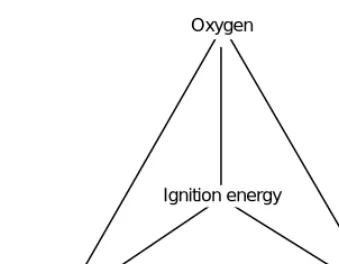
The presence of fuel, oxygen, heat and an appropriate ignition source of sufficient energy comprise the fire diamond or quadrangle (Figure 1.1). Once the fire has been established, fuel, oxygen and heat alone comprise the fire triangle and removal of any of these three conditions results in the suppression of the fire.
Fire is a series of exothermic oxidative reactions involving the fuels present. Most fuels will contain hydrogen and carbon, and water and carbon dioxide are the major products of combustion with other products including carbon monoxide and oxides of sulphur, nitrogen and other compounds which may be present and which contribute to smoke.
Types of Fuel
Most fires will involve combustible solids, though liquid and gaseous fuels are also found. The range of fuels involved is very large and encompasses simple hydrocarbon gases to chemically complex solids, either natural, synthetic or semi-synthetic. These fuels will burn under appro-priate conditions, reacting with oxygen and releasing heat and combustion products. Flame itself is a gas phase phenomenon and flaming combustion of solids and liquids require their initial conversion to a gaseous state. For liquids this is relatively straightforward through boil-ing at the surface. Solids, unless they sublime, must undergo a chemical decomposition process called pyrolysis to produce sufficient low molecular weight volatile components which can enter the gaseous phase. In order to achieve this, a high degree of energy is required and as a consequence the temperature at the surface of burning solids tends to be quite high.
Some relevant properties of materials
Flammability (explosive) limits/range
[image:13.493.130.300.46.178.2]Mixtures of flammable gases or vapours with air will combust only when they are within particular ranges of gas–air concentration. Outside of these limits the fuel–air mixture is either too lean or too rich to ignite. If the fuel–air mixture is confined in a closed system then the mixture must explode to ignite and the explosive limits and flammability limits are
Figure 1.1 The fire quadrangle
Fuel Heat
Oxygen
the same. In an open system other factors such as temperature of the surrounding medium will effect the flammability limits. Table 1.1 illustrates some flammability (explosive) limits of common gases and liquids.
Vapour density [2]
This is a property of a vapour that predicts its behaviour when released in air. It is defined as the density of the vapour relative to the density of air and is calculated by dividing the molecular weight of the gas by that of air (approx. 29). A gas with vapour density greater than 1 is heavier than air and will tend to settle through the air into which it is released until it encounters an obstruction, when it will tend to spread out at this level. A similar situation exists with a gas of vapour density less than one which will spread out at ceiling level. Inevitably there will be some mixing of the gas with air due to diffusion, the degree of which will depend on the difference between the vapour density of the gas and that of air ( 1). The greater the difference, the less diffusion or mixing of the gases will occur.
Vapour density will cause the formation, over time, of a progressively more or less dense layer of gas in a compartment; moreover, if it has a high vapour density the gas may ‘flow’ down stairwells or into cellars in a building. It should also be noted that the vapour density and diffusion rate of the lightest (most volatile) component in a mixture is the one that will determine the spread and ignitability of vapours, not the properties of the bulk liquid.
Flash point
The lowest temperature at which liquid fuel produces a flammable vapour. At the flash point the vapour pressure of the fuel is equal to the fuels’ lower flammability limit. This flash point is quoted as a closed container measurement (closed cup) or an open container measurement (open cup) (Table 1.2).
Fire point/Flame point
[image:14.493.76.379.73.197.2]The lowest temperature at which a liquid fuel produces a flammable vapour in sufficient quantity such that if a source of ignition is introduced the vapour will ignite and is usually a few degrees above the flash point.
Table 1.1 Flammability limits of common gases and liquids (adapted from reference [2])
Substance Lower FL% vol in air Upper FL% vol in air
Table 1.2 Flash point and fire point for some common liquids (adapted from references [1] and [2])
Fuel Open cup (˚C) Closed cup (˚C) Fire point (˚C)
Acetone 20 — —
n-Decane 46 52 61.5 Methanol 11 11 13.5
p-Xylene 27 31 44 Petroleum ether 18 — — Kerosene 38 — — Diesel 52 — — Petrol (100 octane) 36 — — Petrol (low octane) 43 — —
Ignition, auto-ignition temperature (AIT)
The temperature at which a fuel will ignite on its own without any additional source of ignition. All fires (with few exceptions) occur because there is a local high temperature in an area in which there is a fuel–air mixture within its flammability range. This area can be very small, but is one in which the ignition temperature of the fuel is reached or exceeded. The attainment of localised high temperatures is not difficult or uncommon over small areas (e.g. striking a match, or creating a spark) and it is the temperature attained that is the impor-tant factor. So long as the heat energy can be transferred from the source to the fuel igni-tion, fire may result (Table 1.3).
Thermal inertia
The ease with which a material can be ignited will depend on how rapidly its surface tem-perature will rise when exposed to a heat source. Energy is transferred from a heated area
Table 1.3 AIT values (adapted from references [1] and [2])
Fuel Temp (˚C)
of a material to an unheated area of material at a rate dependent on the difference in temperature between the two materials and the physical properties of thermal conductivity (how good the material is at conducting heat energy), density and heat capacity or specific heat (how much heat is necessary to raise the temperature of the material). These three properties give the thermal inertia of the material.
Thermal inertia (WJ/m4K2) is given approximately by the expression: Thermal inertia kc
where k is the thermal conductivity (W/m . K); the density (kg/m3); and c the heat capacity (J/kg . K).
Thermal inertia does not remain static during a fire since once a constant temperature is reached the impact of density and heat capacity become less relative to thermal conductiv-ity. The effect of thermal inertia is most felt in pre-flashover fire situations and has a sig-nificant effect on how fast the surface temperature will rise when affected by a heat flux. The lower the thermal inertia, the faster the surface temperature will rise (Table 1.4).
Heat release rate (HRR)
Heat release rate is a measure of the amount of energy a specific type of fuel can contribute to the heat flux in a fire. HHR (expressed normally in kilowatts) is controlled by the chem-ical and physchem-ical properties of the fuel and the surface area of the fuel package. Typchem-ical HRR values for different types of furniture are shown in Table 1.5.
Heat transfer [1]
The mechanisms of heat transfer have major importance to fire scene investigation as it is through these mechanisms that a fire can spread from its point of origin to other sources of fuel. There are three processes by which heat may be transferred. In most cases one of the three methods tends to predominate but all contribute.
Table 1.4 Thermal inertia values of common materials (adapted from references [1] and [5])
Material Thermal conductivity Density Heat capacity Thermal inertia (W/m . K) (kg/m3) ( J/kg . K) (WJ/m4K2)
Copper 387 8940 380 1.31109
Concrete 0.8–1.4 1900–2300 880 1.33106to 2.02106
Gypsum 0.48 1440 840 5.8 105 Oak 0.17 800 2380 3.2105
Pine (yellow) 0.14 640 2850 2.5105 Polyethylene 0.35 940 1900 6.2105
Polystyrene 0.11 1100 1200 1.4 105 PVC 0.16 1400 1050 2.3105
Conductive heat transfer occurs by the transmission of molecular vibration. It occurs mainly within a solid item. Heat is transferred by direct contact and the rate of transfer is dependent on factors such as the thermal conductivity of the material and the temperature difference between cooler and warmer areas.
Convective heat transfer involves the transfer of heat by physical movement of materials and occurs only in liquids and gases. Hot gases rise and spread heat to nearby ceilings and walls. This can be one of the primary mechanisms by which heat energy is spread during a fire.
Radiative heat transfer is transfer in the form of electromagnetic energy directly from one object to another (e.g. infra red radiation from the sun). All objects having a temperature above absolute zero will radiate heat. Objects will feel cold if they radiate heat faster then they absorb heat and will feel hot if they radiate heat slower than they absorb heat. In envi-ronments where everything is at the same temperature, radiation and absorbance of heat occurs at the same rate. The rate of radiant heat transfer is dependent upon factors such as the temperature of the emitting object/area, the rate of heat release, the temperature of receiving surfaces, the finish and colour of the receiving surface, the angle at which the receiving surface is in respect of the emitting surface. This is one of the main methods of heat transfer before flashover and is a major contributor to fire spread throughout compartments and structures.
Flames are also spread by the direct flame impingement onto nearby surfaces.
Combustion [1,2]
[image:17.493.72.364.73.285.2]The process of combustion of materials is dealt with in more detail in Chapters 2 and 7. A brief introduction is presented here.
Table 1.5 Typical HRR values for different types of furnitures (adapted from references [1,2] and [5])
Item Peak HRR (kW)
Upholstered chair 150–700 Waste paper bin (small 1.5–3 lb) 4–18 Sofa 250–3000 Cotton mattress 40–970 Polyurethane mattress 810–2630 TV set 120–290 Christmas tree 500–650 Latex foam pillow (cotton/polyester) 112 Wardrobe (68 kg, plywood) 3500 Closed curtain (cotton/polyester) 267 Open curtain (cotton/polyester) 303 Wood shelves with video tapes 800 Plastic waste bin (0.63 kg) filled with empty cartons 13 0.61 m2pool of petrol 400
Glowing combustion occurs when solid fuels are not capable of producing sufficient quantities of gas during pyrolysis to sustain a flame. If access to the oxidant (air) is limited, glowing combustion may result. If a smouldering fire is given enough access to the oxidant, the reaction rate may increase, generating more heat possibly giving rise to flaming combustion.
Flaming combustion is the most commonly recognised type of fire encountered and occurs with gaseous fuel sources only. Some of the heat produced by burning is fed back to the fuel, producing more gaseous phase and supporting the flame. The colour of the flame can give some indication of the composition of the fuel. The flame from a pure hydrocarbon gas, mixed with air is blue (e.g. Bunsen burner flame). An orange, yellow, red or white flame is seen when carbon and other solid or liquid by-products of incomplete combustion are present. In solids such as wood, pyrolysis occurs readily under the influence of heat, pro-ducing flammable gases which act as a fuel source for combustion. Such fires are often accompanied by the production of charcoal which may undergo glowing combustion. The degree of flame and/or char production depends on the chemical composition of the fuel present, for example, coal contains less volatile components than wood and as a conse-quence does not produce as much open flame or as much char.
Spontaneous combustion may be described as a process whereby a material self-heats, eventually exceeding its AIT. The process of heat build up may take a considerable amount of time. The driving force behind such combustion is that an exothermic reaction generates heat and if this heat cannot be dispelled it can build up within the fuel mass and raise the temperature. Eventually, the temperature may rise to reach the point of ignition of the entire mass. Some commonly encountered products susceptible to self-heating are drying oils (lin-seed oil, tung nut oil, fish oils) which harden by oxidation of double bonds in their fatty acid constituents. This reaction generates heat. Auto-oxidation of cotton rags soaked in linseed oil can occur with temperatures of 70˚C and within a period as short as 5 hours given the correct conditions [2]. Some enzymatic reactions can be exothermic resulting in self-heating and microorganisms have been known to cause self self-heating in coal refuse piles and particularly in hay stacks. Spontaneous combustion of different materials is discussed in detail in Chapter 2.
Explosive combustion can occur when vapours, dusts or gases, premixed with the appropriate amount of air, are ignited. Because premixing of the fuel and oxidant occur, the entire combustion process occurs almost instantaneously and are recognised as an explo-sion. In some cases the first phase of a fire is an explosion, when flammable gases and air have mixed and become ignited.
Development and behaviour of fires in compartments
A fire develops through a number of fairly predictable stages. Initially a source of ignition is required at a site suitable for flaming combustion to occur. The materials begin to burn in a sustained ignition with an open flame which remains once the initial source of ignition is removed. This ignition is localised to the first fuel ignited. The fire plume emits hot gases generating a heat flux. These gases typically containing soot, water vapour, CO2, SO2 and
Growth period
Convection and radiation spread the flames upwards and outwards from the original fuel package until nearby fuels reach their AIT and become involved in the fire. Radiative heat may spread the fire laterally depending on factors such as the proximity of fuel packages to each other. The fire grows by progressively spreading to involve adjacent combustible items. Hot gases composed of toxic gases, partially combusted pyrolysis products, soot and smoke rise to form a fuel rich layer at the ceiling, the temperature of which steadily increases. The lower part of the room will still be rich in oxygen and the rate of burning within the area continues to increase with a consequent increasing release of heat. As the fuel rich gas layer gets lower it may eventually ignite as some of its constituents may reach their AIT or by direct flame contact. This stage is called flameover and involves a rolling flame front within the hot gas layer (Figure 1.3).
Flashover
Even without flameover occurring the hot gas layer is radiating heat into the room. This causes items in the room to progressively heat up and when the layer reaches a temperature
Figure 1.2 Initiation and free burning
of approximetely 600˚C it is generating approximately 20 kW/m2 [2]. In a normally propor-tioned room this is sufficient to raise the temperature of cellulosic fuels within the room (furniture, carpets, etc.) to their AIT and simultaneously ignite in a process called flashover. Flashover is a transition from a fire involving one fuel package after another to a fire which involves all available fuel in the compartment. At the time of flashover, ventilation in the compartment becomes a restriction on the amount of oxygen available for combustion to occur, and the minimum size fire that can go to flashover in a given room is a function of the ventilation provided through an opening (ventilation factor) (Figure 1.4).
Figure 1.4 Flashover
Figure 1.5 Post-flashover
Post-flashover (steady state burning)
Smouldering
Eventually, as the fuel available becomes exhausted open flaming combustion becomes gradually less and glowing combustion becomes more prevalent. This can also occur if the oxygen levels in a developing fire drops (below c.16%). The fuel may still remain in a heated state and the reintroduction of oxygen can cause the fire to re-ignite with explosive speed. Such a scenario is sometimes called backdraft.
Factors affecting fire growth
The rate of growth and development of a fire is very complex and depends on various fac-tors. Obviously, it will depend upon the available area over which combustion can occur. Rate of development also depends upon the nature of the combustible materials, both their construction and geometry, as well as the location of the ignition source. In order to attempt to understand the spread of a fire it is necessary to know something of how specific materials used in modern building construction respond in fire conditions. The structural responses of the building is in general governed by the loading (weighting) which the structure must bear in various places. There are different types of loads which become important under conditions of fire. These include:
● Fire load – the amount of combustible material in the space containing the fire. ● Design load – the amount of material the component is designed to carry. ● Live load – the amount of load the component actually carries.
● Load resistance – the ability of the component to support the load.
As the temperature of a component of a structure increases, its load resistance decreases and collapse can occur once the load resistance is less than or equal to the imposed load. Structural deformity is an example of reduction in load resistance. The speed of fire growth is very dependent not just on the fuel load within a given compartment but also on the amount of heat release (how much and how fast) which occurs from a given fuel package within the compartment and how this heat affects other fuel packages within the room.
Other effects on the time to steady burning include the orientation and direction of the spread of the flame as this can effect the mode of heat transfer from the flame to unaffected fuel. This means that the angle of fuel source relative to the flame will effect how quickly the flame can spread. Vertical upwards propagation can be extremely rapid, raising the temperature of the surrounding area by radiation and convection, very quickly. Examples would be cur-tains, wall hangings and high stacked storage of combustible items. At the other extreme flame burning vertically downward generally spreads at a slower rate as heat transfer is inefficient.
Generally, the heat transfer required for the ignition of solids is of the order of 10 kW/m2
which is equivalent to a gas layer temperature of approximately 400˚C and the onset of flashover occurs when the hot gas layer imposes radiant energy levels of about 20 kW/m2
(~600˚C). Similar heat transfers are known for the various fire stages of fire growth [2].
Ignition of solids 10 kW/m2
Flashover 20– 40 kW/m2
Developed fires 50 kW/m2
Once flashover has been reached, full room involvement will follow in the majority of cases unless the fire is extinguished. It has been shown that the time to flashover from open flame can be as short as 1–2 minutes in residential fires with contemporary furnishings [7].
The maximum reach of flame is greatly affected by the surrounding space because this in turn affects the amount of available surface of flame into which air can be entrained. Essentially, during steady burning combustion requires a constant amount of entrained air. If the surrounding surfaces impinge on the entrainment of air the flame will grow in height or length to increase air entrainment.
Spread of flame to other compartments
External flaming occurs when burning within a compartment is controlled by the levels of ventilation present. The amount of air is often insufficient to burn all the fuel vapours pro-duced within the confines of the compartment and excess fuel vapours will flow out of the compartment, mix with air and burn. If the fire receives part of its ventilation from an open door within the building, hot combustion products and unburned volatiles will emerge from this opening, heating up fuels in adjoining corridors and compartments. As flames entrain out of the compartment of origin they provide an ignition source for the preheated fuel. In this way fire can spread to the rest of the building through suitable pathways.
Conclusion
The purpose of this chapter was to give a brief and relatively simplistic explanation of how fires happen. It is also intended to equip the reader with some of the physical and chemical values for variables such as vapour density and AITvalues which are required in the under-standing of fire development and behaviour. Some of the concepts touched upon here will be explored in greater depth elsewhere in this volume.
References
1 J. DeHaan (1997) Kirk’s Fire Investigation, 4th edn, Prentice Hall, New Jersey.
2 D. Drysdale (1999) An Introduction to Fire Dynamics, 2nd edn, John Wiley and Son, New York. 3 Department for Transport (2000) Local Government and the Regions, Fire statistics, United
Kingdom, DTLR, London.
4 Arson Control Forum (2002) Leading the Fight Against Arson, the First Annual Report of the Arson Control Forum, London.
5 NFPA 921 (1998) Guide for fire and explosion investigations, National Fire Protection Association, PO box 9101, Quincy, MA 02269-9101, USA.
6 Office of the Deputy Prime Minister (2002) The Burning Issue: Research and Strategies for Reducing Arson, London.
2
Fires from causes other than
electrical malfunctions
Theory and case studies
Caroline Maguire
Introduction
Much of the work of the independent forensic investigator deals with incidents that do not necessarily involve the commission of a crime. They do, however, involve injury to persons, property or the environment, which may result in an action before the civil courts or a sworn hearing before an arbitrator. As an independent fire investigator in the Republic of Ireland, I accept instructions both from the insurance industry and from representatives of private clients. My brief is to investigate the causes of fires, and note any circumstances which may have contributed to the severity of injury to persons or damage to property. The insurer needs to know whether a fire was accidental or deliberate; whether insurance policy condi-tions (warranties) have been fulfilled; whether there has been negligence on the part of their insured or a third party, or contributory negligence on the part of injured parties. Have there been breaches of statutory duty under the civil law, or breaches of planning or bye laws? Has there been compliance with building and fire regulations? Were electrical, gas and oil instal-lations carried out in accordance with recognised standards? Has there been non-disclosure of business carried on or equipment installed in domestic premises? Was all the damage claimed for caused by a particular incident? Was all the property listed actually on the prem-ises? How can such losses be avoided or minimised in the future? The private client looks for evidence to support or defend a claim for damages, or to assist him in a dispute with his insurers.
The investigator must maintain independence and objectivity, while examining, noting, photographing and arranging the preservation of evidence, in the knowledge that every detail may have to be recalled on the witness stand, usually years later. Site and interview notes and photographic negatives must also be preserved; few things lend more weight to testimony than nine-year-old handwritten site notes, complete with original soot and water smudges!
little or nothing left of the physical evidence and the scene may have been demolished and even rebuilt. Work has to begin with reports and photographs produced by police, fire brigade and other investigators, and such physical samples or test reports as may be avail-able. Whatever the nature of the incident, the investigation will centre on the scene of the fire, the structures, materials, processes and personnel involved, identification of possible sources of ignition and evidence of eyewitnesses.
This chapter examines, in some detail, various fire causes other than flammable liquid initiated fires and illustrates these with many case examples.
Combustion
Fire is the chemical combination of oxygen with other molecules in an exothermic reaction. A certain threshold energy is required to initiate production of flammable vapours and trig-ger their combination with oxygen in the process of ignition. This reaction can only occur when the volume of flammable vapours mixed with air lies within a range identified as between the upper and lower limits of flammability for the vapours involved (see Table 2.1). Exothermic energy of combustion is produced as heat and light and the physical products include a range of solid, liquid and gaseous substances. Their composition depends on the chemistry of the original fuel materials, the amount of oxygen available and the tempera-tures reached during the reaction. The dynamics of combustion of gases, liquids and solids are comprehensively dealt with in publications such as NFPA (1976 and later editions) [1], and Drysdale (1985) [2]. Control of combustion, by the deliberate use of fire, has enabled mankind to develop and enjoy greater use of his environment, whether as hunter/gatherer or as denizen of a modern city.
Combustible materials
Most combustible materials are derived ultimately from vegetable matter, the carbon based, naturally occurring, end-products of photosynthesis. The deliberate burning of combustible materials as fuel for defensive, heating, lighting and cooking purposes is a very ancient part of human history. Following a long dependence on keeping alive the embers of naturally occurring fires, our ancestors developed the skill of igniting suitable materials, by friction and other methods still in use. Dried plant materials, the earliest fuels, are still employed in various guises. Wood, whether as waste or deliberately harvested, is still in worldwide use as a fuel. Fossil fuels have come to prominence since the industrial
Table 2.1 Flammable gases in common use
Gas Common name/use Flammable limits Ignition temp (C) Vapour (% volume in air) density
revolution and large-scale incineration of waste materials as fuel is becoming acceptable in industrialised societies today. Although combustion and combustible materials have been part of daily life for millennia, accidental fire, brought about by ignorance, carelessness, or negligence, is still an almost daily occurrence in most communities.
Before considering their behaviour in uncontrolled fires, it is useful to examine the chemical and physical structure of carbon-based materials and some of the situations in which they may be encountered.
Cellulose
In photosynthesis, processes in the green plant cell absorb solar energy and combine atmospheric carbon dioxide with water, producing carbohydrate and returning oxygen to the atmosphere. The immediate end-product is D-glucose, a 6-carbon sugar molecule. Some of
the D-glucose is quickly oxidised within the plant cell to provide chemical energy for the
synthesis of a wide range of complex molecules, including polysaccharides, proteins and oils. Some is stored as starch in specialised tissues and much is incorporated into cellulose, a long-chain condensation product of D-glucose, which is used to build cell structure. Laid
down as a mesh of fibrils, cellulose forms the elastic envelope which is the basis of the green plant cell wall. Stretched, thickened, modified by the accumulation of layers of other carbohydrates, notably lignin (a complex, cross-linked condensation product, of great chemical stability), the cellulose walls become the basis of fibre, wood and storage tissues.
Textile fibres
The single-celled seed hairs of the cotton plant are the raw material of one of the oldest, most common and most versatile of textiles, and the purest form of cellulose in everyday use. Multi-celled stem fibres from a variety of plants are the basis of linen, ramie, jute, hemp and sisal. Textiles based on plant fibres are used in clothing, soft furnishings, interior finishes, floor coverings, cords and ropes, padding, packaging and cleaning materials. Individual textile products are relatively homogeneous in structure, with combustion properties influenced by such features as thickness and closeness of weave and texture of surface finish. The latter characteristic is mainly responsible for the rate at which flame spreads over the surface of textiles. Very thin, loosely woven cottons, or knitted cotton or ramie, tend to have loose fibres, which stand out from the general surface. This promotes a very rapid surface spread of flame or ‘surface flash’ affect when the fabric is exposed to a source of ignition. Fabrics with a raised pile, such as brushed cotton, velvet, corduroy or candlewick, are also subject to rapid surface spread of flame. Standards are now in force in many countries, specifying the minimum fire resistance requirements of fabrics for various end uses [3].
Wood
elements early in the growing season, followed by much narrower summer and autumn cells. In contrast, tropical woods show little difference in cell diameter throughout the year. Some wood, including both temperate and tropical species, is so coarse-grained as to be almost spongy in texture, while other types are fine-grained and dense. The terms ‘hardwood’ and ‘softwood’ tend to be misleading, as the former term is routinely used for the wood of broad-leaved (angiosperm) trees while the latter is applied to conifers, regardless of structure or density. As a tree ages, the inner (older) cells die and empty, to be refilled with tannins and other waste products which darken the wood and increase its density. This ‘heartwood’ retains much of its density on drying, while the water channels of the younger and paler ‘sapwood’ are filled with air when dry. Natural wood is therefore heterogeneous in structure, with much variation even in pieces cut from the same tree.
For structural use, wood is cut along the ‘grain’, that is, parallel to the long axes of the fibres and vessels. Cut into planks, dried, treated with preservative, stained or polished, many different sorts of wood are a principal component of buildings and furniture. Dense, fine-grained conifer woods are mainly used for structural timbers and floors, though oak beams and floors may be encountered in very old buildings and woods such as maple may be used for special purposes. Temperate hardwoods such as oak and beech and the best conifer heartwoods (cedar, pine, etc.) are more likely to be used in good utility furniture and in the decorative finishing of buildings, while tropical and warm-temperate hardwoods are used mainly for fine furniture and veneers (mahogony, rosewood, teak, walnut, etc.).
Wood products
Wood of lesser quality, sliced, chipped, macerated, bound together with synthetic resins, perhaps finished with natural veneers or plastic laminates, is used to produce products such as plywood, blockboard, chipboard, fibreboard and hardboard. These products are more homogeneous than natural wood and have many applications in interior finishing and less expensive furniture ranges for domestic and commercial use. Some high-quality plywoods are used in boat building, roofing and other situations where tensile strength and water resistance are required. Wood-pulp (pine, spruce, etc.) is the raw material of paper, of which vast quantities and many types are in everyday domestic and commercial use.
Other plant products
Stems, roots, leaves, fruits and seeds are all used directly or indirectly for human or animal consumption or as industrial raw materials, and are transported and stored in vast quantities. Plants exploited for human or animal food typically contain large reserves of sugars, starch, oils or proteins and partly processed residues from one industry are often encountered as the raw materials of another.
Animal products
or as contaminants. Wool, a protein fibre, is among the oldest and commonest of textile fibres in general use. Raw wool can be encountered in storage in huge quantities. The processed fibre is used alone or in combination with other animal, plant or manmade fibres in clothing, soft furnishings, carpets and wall coverings. Silk may also be encountered, though in lesser quantities.
Fossil hydrocarbons
In the form of coal, oil, liquefied petroleum gas and natural gas, fossil hydrocarbons are the products of anaerobic decomposition of ancient plant and animal tissues. They are traded and transported worldwide as major commodities for industrial and domestic use. Bulk stor-age and transport, retail storstor-age and sale, and private storstor-age, of flammable liquids and gases are controlled by legislation in most countries. Legislation and codes of practice in the United Kingdom and Ireland are very similar and closely resemble those in other EU member states and in the United States, Canada, Australia and New Zealand. However, small quantities of both flammable gases and liquids are freely available as solvents and spray propellants and their presence is to be anticipated in all types of industrial and domestic settings.
Natural gas has largely replaced coal gas as a bulk fuel. It is pumped from natural sources and supplied at low pressure to home and industrial users through national and international pipelines. It consists mainly of methane and is lighter than air. Liquefied petroleum gases are a by-product of the petroleum industry and are supplied to the user in pressurised con-tainers of various sizes. Commercial propane, which is a mixture rich in propane but also containing butane and various isomers of both, is supplied in fixed bulk tanks and in portable cylinders in sizes from 11 kg/26 l to 47 kg/108 l. Propane must be stored in the open air. Commercial butane is a mixture consisting mainly of butane, but also containing propane and various isomers of both, supplied in sizes up to 11 kg/26 l and may be stored indoors. It is available in small, pressurised cans for camping stoves, lamps and soldering and other types of gas torches, and in cigarette lighters. It is also used as a propellant in aerosol packages of toiletries, air fresheners, stain removers and paints. The constituents of LPG are heavier than air. Butane in aerosol containers, particularly as a propellant for air fresheners, is sometimes used, mainly by juveniles, as a substance of abuse.
Under legislation in the UK, the Irish Republic and elsewhere, flammable liquids which are stored and distributed in bulk as fuels are classified according to the temperature above which they can form flammable mixtures with air. In the Irish Republic, the relevant classes, defined under the Dangerous Substances Act, 1972 [4] are as follows:
● Petroleum Class I: defined as petroleum which at normal atmospheric pressure gives off
a flammable vapour at a temperature of less than 22.8C.
● Petroleum Class II: defined as petroleum which at normal atmospheric pressure gives off
a flammable vapour at a temperature of not less than 22.8C and not more than 60C.
● Petroleum Class III: defined as petroleum which at normal atmospheric pressure gives
off a flammable vapour at a temperature of not less than 60C.
inexperienced users (whether innocent or criminal) and its storage and sale, even in small quantities, is controlled by strict legislation in most jurisdictions. Kerosene is freely available both as a bulk fuel and in small quantities. Diesel is mainly available as a bulk fuel. Apart from their presence in fuels, lower boiling range petroleum fractions such as toluene and xylene have a wide spectrum of uses as solvents, particularly in spray paints, wood finishes, polishes, printing inks, cleaning agents and adhesives. As such, they may be encountered in container sizes from a few ml to 25 l and even 250 l drums in all types of industrial, commercial and residential settings.
Bituminous coal (‘smoky’ coal) is banned for domestic use in many jurisdictions, because of its contribution to air pollution. Various smokeless fuels are permitted for use in open fires and closed stoves. Smokeless fuels for use in open fires may contain a percentage of petroleum coke for ease of ignition, and may be prone to ‘spitting’ of hot particles if this is in the form of ‘shot coke’. The use of peat as a fuel in the form of machine or hand cut sods or manufactured briquettes is common in Ireland. The dried peat is easily ignited and burns with little smoke. Standards and codes of practice are also set down for storage and delivery of some types of solid fuel and for the performance and installation of appliances for the burning of each type of fuel.
Plastics
In addition to their roles as fuels and solvents, petrochemicals provide feed stock for the manufacture of a vast range of synthetic polymers, the reaction products of naturally occur-ring carbon-based molecules. They are generally categorised as either thermoplastic, melt-ing on heatmelt-ing, or thermosettmelt-ing, becommelt-ing or remainmelt-ing solid when heated, characteristics which have a major effect on their behaviour in fires. They are often mixed with inorganic fillers such as glass, asbestos or clays to suit particular end uses. They can also be found in mixtures with organic fibres, as laminates on paper or wood products, in lubricants and as machine parts. Very many have become commonplace as fibres (saturated polyester, nylon 66), packaging film (polyethylene, polyester), storage materials (medium density polyethylene), equipment panels and decorative finishes (acrylics, rigid polystyrenes, melamine formalde-hyde), upholstery foams (polyurethane), building insulation materials (expanded poly-styrene, rigid polyurethane), floor and seat coverings, water pipes, electrical insulation (polyvinyl chlorides) and electrical fittings (urea formaldehyde). Phenolic resins have a large range of applications, including mouldings, adhesives, hard finishes and foams. Glass-reinforced unsaturated polyesters are used as translucent panels in building construction and are moulded to form rigid structures such as pleasure-boat hulls, machine housings and building panels. Polystyrene, polyurethane and phenolic foams are used as insulating cores in steel construction panels.
Ignition
Flaming ignition
combustion. Towards the lower limits of flammability (see Table 2.1) excess of oxygen may result in a very rapid release of energy, with rapid temperature rise and expansion of com-bustion products. If this takes place in a confined space, a gas or vapour explosion may occur. Towards the higher limits of flammability, flaming is accompanied by smoke with much unburned cabonaceous material in the form of soot particles.
Gases
A gas, by definition, exists in the vapour phase at room temperature. Ignition of flammable gases will occur when a gas/air mixture within the limits of flammability is exposed to a level of energy sufficient to initiate the oxidation reaction. The energy can be supplied by a flame, a mechanical or electrical spark, or a heat flux from a hot surface. Thereafter, the reaction will produce sufficient energy to be self-sustaining, as long as the proportion of gas to air remains within the limits of flammability.
The development of flammable gas as a fuel depended on the availability of technology to contain the gas safely and to control the rate of delivery to a suitable burner. Most acci-dental explosions and fires involving gas are brought about by carelessness or misuse, only infrequently by failure of properly installed gas handling equipment.
Liquids
Flammable liquids require an initial energy input to produce an air/vapour mixture within the limits of flammability. The flash point is the lowest temperature at which an ignitable air/vapour mixture can exist in equilibrium with a volatile liquid at atmospheric pressure. To maintain flaming thereafter, sufficient energy has to be available to raise the temperature of the air/vapour mixture above the firepoint [2]. Low flash point liquids require special han-dling because conditions for ignition may exist at or below ordinary ambient temperature.
Burning of less highly flammable liquids is facilitated by absorbing some of the liquid onto a wick of porous material of low heat conductivity. When one end of the wick is dipped into a pool of the flammable liquid and the other end is ignited, liquid is drawn up by cap-illary action to replace that burned off. This is the principle of the simplest oil lamps, first invented thousands of years ago and widely used even in parts of rural Europe down to the Second World War. The simplest lamps used fish or plant oils in a shell or fired clay con-tainer, with wicks of fibre or pith. Tallow and wax candles operate in a similar way, with the run-off of excess wax ensuring that burning remains under control. With enclosed candles, a pool of melted wax can form around the wick and if the heat flux is sufficient, flaming will spread from a too-long wick to the surface of the liquid. It is necessary to keep the wick trimmed to avoid this. The use of candles for decorative effect in the home has become widespread in recent years, particularly among younger people.
Solids – general
The release of volatile substances from the surface of a solid usually requires chemical decomposition. Ignition of solids, therefore, requires a greater initial energy input than ignition of gases or liquids. Combustible materials tend to be of low thermal conductivity (cellulosic materials, plastics), so that heat is not rapidly dissipated from the point of appli-cation and the temperature can rise rapidly to ignition level. In order for burning to continue, the surrounding material must be heated quickly enough to provide a continuous stream of volatile pyrolysis products. The time taken for ignition will depend on the mass and physi-cal structure of the solid, the rate and period of heating and the rate at which heat is lost from the surface. In general, thin layers, loosely woven or loosely packed, with upstanding fibres or ridges on the surface, are more easily ignited by a short exposure to a high energy source such as a flame or spark, than dense, closely packed, tightly woven, smooth surfaced blocks of material of the same chemical composition.
Cellulosic materials
Table 2.2 outlines four stages which have been described in the decomposition of wood on exposure to heat [1].
There is evidence that solid wood and wood products such as fibreboard can be pyrolised by prolonged contact with relatively moderate heat sources, such as hot water pipes. It is suspected that prolonged heating, even at the temperature of boiling water, can lead to the formation of charcoal, which in turn is capable of spontaneous heating. It is suggested that 100C is the highest temperature to which wood can be continuously exposed without risk of ignition and it is advised that only hot water pipes and radiators fired by automatic boilers which cannot be set to permit water temperature above (150F) 66C can be installed adja-cent to combustible materials without safety clearance [2]. It is generally accepted that 70C is the temperature above which chemical oxidation of cellulosic materials begins to take over from microbiological and other external sources of heating in spontaneous ignition sequences [3]. The subject of spontaneous ignition is dealt with separately under ‘Sources of ignition of combustible solids’.
Plastics
Plastics constitute a large part of the fire load in homes, work-places and public buildings and their ignition also depends on the production of flammable pyrolysis products. The
Table 2.2 Stages in the decomposition of wood on exposure to heat
Temperature Reaction
200C Production of water vapour, carbon dioxide, formic and acetic acids – all non-combustible gases.
200–280C Less water and some carbon monoxide – still primary endothermic reaction. 280–500C Exothermic reaction with flammable vapours and particulates. Some secondary
reaction from charcoal formed.
behaviour of a plastic in a fire may depend on whether it is thermoplastic or thermosetting. Thermoplastics tend to melt away from a source of ignition, but when ignited may spread a fire by shedding burning drops. The widely used polystyrene foams are thermoplastic and relatively difficult to ignite, as the polymer shrinks away from the heat source. However, once ignition is established, there is rapid surface spread of flame with dense smoke production. Polyethylene melts away from flame, but when ignited it tends to burn steadily with a low, relatively smokeless flame and sheds burning droplets. Thermosetting plastics produce a rigid char, which may be capable of smouldering either on its own or in contact with another material which provides pilot ignition. In some cases surface char may form an insulating layer, which has a fire retardant effect. Some plastics are self-extinguishing unless continuously exposed to an external heat source. In the case of PVC, this must be at a temperature greater than 470 C. In general, many plastics ignite at temperatures between 400C and 500C.
Textiles
Modern textiles may incorporate both natural and man-made fibres, sometimes three or more in a single blend. Fabrics may be layered or trimmed with other materials, including plastics, in garments or drapes. They may be used as covers for assemblies of several mate-rials in upholstery. They will normally be subjected to detergent and water or solvent-based cleaning during a long or short period of use. This may alter the physical properties of the fabric and diminish the effect of flame-retardant treatments.
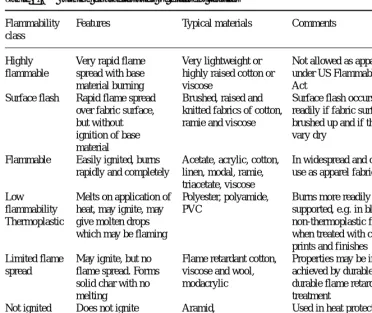
Table 2.3, adapted from PD 2777 : 1994 [3] describes burning characteristics of a range of textile materials when tested singly under BS 5438 : 1989 [6], which measures rate and extent of flame spread. Tests of cover and filling assemblies used in upholstered furniture and bedding are carried out under several separate British and international standards. Research is ongoing to improve means of testing the flammability of textiles to incorporate end use conditions and to agree standards across international boundaries.
Smouldering
Cellulosic materials and some thermosetting plastics are able to form a porous carbonaceous char when heated, where volatile combustion products are produced but are not ignited. The char undergoes smouldering, a self-sustaining non-flaming combustion, and the volatile products condense as tars on cool surfaces. This type of combustion may occur where there is inadequate oxygen to promote flaming ignition of the volatile products and is often an important phase in the development of accidental fires. Drysdale (1985) [2] has described the smouldering process in a horizontal cellulose rod as follows:
● Zone 1 – pyrolysis zone where there is steep temperature rise and an outflow of
com-bustion products (tars, volatile liquids, smoke) from the parent material. In flaming combustion these products burn as the flame.
● Zone 2 – charred zone where temperature reaches a maximum, typically 600 – 750C,
smoke evolution stops and glowing occurs. Oxygen diffusion determines the rate of heat release.
This process can be observed in the burning of a cigarette. In practice, in enclosed spaces, dry wood and other plant materials in which fibrous tissues are preserved, are capable of smouldering indefinitely, for as long as fuel is available and external factors tend to conserve heat. The internal air supply in dried plant tissues undoubtedly supports combustion in sit-uations where it would otherwise fail for lack of oxygen. Personal observation, reinforced by experiment, has identified the following as materials in which smouldering ignition is both easily established and persistent: jute, whether as loose fibres or woven into sacking; cotton, particularly in the form of soft-woven fabrics; soft paper such as kitchen paper, facial/handkerchief tissues or toilet tissue; corrugated cardboard packaging; wood shavings, whether loose as manufacturing waste, as packing, or as filling or stuffing in older types of upholstery; household ‘fluff ’, which is a collection of many types of plant, animal, micro-biological and inorganic debris; sweepings or the contents of vacuum cleaners, which may contain fragments of any or all of the above. These materials provide a tinder in which a short-lived ignition source such as a spark from metal cutting or welding, a small piece of cigarette char or a brief flame contact, can initiate smouldering combustion, capable of developing to involve larger fuel masses.
[image:32.493.40.413.59.372.2]The relatively low ignition temperature of lightweight cellulosic materials means that hot combustion gases can ignite structures such as cotton net curtains and paper lampshades at
Table 2.3 Burning characteristics of different textiles
Flammability Features Typical materials Comments class
Highly Very rapid flame Very lightweight or Not allowed as apparel fabrics flammable spread with base highly raised cotton or under US Flammable Fabrics
material burning viscose Act
Surface flash Rapid flame spread Brushed, raised and Surface flash occurs more over fabric surface, knitted fabrics of cotton, readily if fabric surface is but without ramie and viscose brushed up and if the fabric is ignition of base vary dry
material
Flammable Easily ignited, burns Acetate, acrylic, cotton, In widespread and common rapidly and completely linen, modal, ramie, use as apparel fabrics
triacetate, viscose
Low Melts on application of Polyester, polyamide, Burns more readily when flammability heat, may ignite, may PVC supported, e.g. in blends with Thermoplastic give molten drops non-thermoplastic fibres, and
which may be flaming when treated with certain prints and finishes
Limited flame May ignite, but no Flame retardant cotton, Properties may be inherent or spread flame spread. Forms viscose and wool, achieved by durable or
non-solid char with no modacrylic durable flame retardant melting treatment
Not ignited Does not ignite Aramid, Used in heat protective Polybenzamidizole equipment
some distance from an original fire origin, creating a false impression of multiple fire seats. The metal hooks/wires which support the textiles normally survive.
Sources of ignition of combustible solids
Smokers materials
A common cause of fire in both domestic and industrial settings is lack of care in the handling and disposal of smokers’ materials. Cigarettes and matches are ready sources of ignition, each producing characteristic fire development sequences. The forgotten cigarette falling off an ashtray when its centre of gravity changes and the fire caused by emptying an ashtray onto combustible materials in a waste basket are images used to promote consciousness of fire safety, but such incidents are still all too frequent. Where a match or cigarette char is dropped onto clothing or bedding, the occurrence can have very serious consequences for the smoker. Such accidents may result in serious injury or death, particu-larly if the victims are children or elderly people, perhaps slow to recognise the danger or unable to summon help quickly. Research in the United Kingdom has identified older people as particularly at risk from fires involving clothing and bedding [3]. Younger age groups are also at risk.
A personal friend who liked to smoke while reading in bed, fell asleep with a lighted cigarette in his hand and awoke to find his bedding smouldering. In another case, I was asked to examine a garment which had been ignited by a match flame. The wearer, a young woman, had been attempting to light a cigarette while driving, and had dropped the lighted match onto the floor of the car. It had ignited her lightweight cotton dress and she suffered serious burns before managing to bring the vehicle to a halt and escape. In another case, a 3-year-old girl, left in the family car while her mother unlocked the house door, managed to ignite the fluffy polyester seat cover with a match from a box left under the dashboard. The mother returned to find the vehicle full of smoke and the child with injuries, which eventu-ally resulted in loss of parts of the fingers of both hands and severe facial scarring. Her woollen coat and tights saved the rest of her body from serious injury.
In personal experiments, it was found that freshly lighted filter-tipped cigarettes of standard length would smoulder unattended for between 10 and 20 min, with exposure to air currents tending to accelerate the rate of burning. In a test carried out as part of the investi-gation into a warehouse fire, a half-smoked cigarette was placed on top of a bale of toilet rolls packed in polyethylene film. The lighted end penetrated the outer and inner polyethyl-ene wraps immediately and the paper began to smoulder as soon as the hot char touched it. In a light air current, the paper smouldered for about 10 min, filling the top of the pack with smoke and producing a red glow. After 12 min, the toilet rolls burst into flame and after 14 min the fire was out of easy control. In the test, a hose was used at this stage to douse the flames, but the fire re-ignited several times as soon as the water was turned off.
that it was rising from behind the other woman’s back. She alerted her friend, who sprang from the chair and pulled out the cushion. A hole roughly 100 mm in diameter and 20 mm in depth had been burned where the loose cushion met the padded chair-back. The fire was extinguished with the remaining tea and a jug of water brought by the waiter. The time between the departure of the smoker and first sighting of the smoke column was estimated at about 5 min. The chairs were foam-upholstered, with cotton covers, and pre-dated mod-ern fire-resistance standards. The women agreed that the fire must have been caused by a particle of hot char from the cigarette, falling between the chair-back and the loose cushion. However, none of the three involved had been aware of any fall of char at the time.
The next case is one of many in which hot char was included in waste, where it started a smouldering fire which later spread to other materials. In this instance, what was described as fresh ash was gathered up with a vacuum cleaner. Miss N., in her twenties, lived with her parents and lunched at home every day. Mr N. was very much opposed to smoking and during the investigation expressed his total opposition to smoking in the house. However, Miss N. usually smoked a cigarette at the end of her lunch and in order to preserve family harmony, her mother vacuumed up any evidence in the form of dropped cigarette ash. Mrs N. insisted that she would not suck up a cigarette end, but would clear up particles immediately her daughter dropped them. Afterwards, the vacuum cleaner was put away in a hallway leading to the back door, in an area also used to store newspapers and hang coats. One evening, as the family were watching the news on television, they became aware of unusual sounds in the rear hall and discovered that a fire was in progress. The Fire Brigade were quickly on the scene and brought the outbreak under control. Investigation of the debris indicated that the fire had spread from floor level beside the vacuum cleaner, which was found partially intact under fallen coats. The plastic body of the cleaner was penetrated near the bottom on one side, and the rest had softened and folded over the paper dust bag. When it was cut open, it was found that the cleaner body was smoke-stained on the inside and that there was a pocket of charred dust inside the dust bag, which was still about two-thirds full. It appeared that about 5 hours after the cigarette ash had been gathered up, smouldering dust had melted through the lower part of the plastic body of the cleaner and had come into con-tact with the newspapers. The resulting fire had spread to the coats hanging above, some of which had fallen off their melting plastic hangers, alerting the family and preserving the evidence in the cleaner.
Smoking is prohibited in many workplaces, but breakdown of smoking discipline is often associated with departures from the normal work routine. Any unusual work situation such as overtime, particularly at weekends and if the worker is alone, stocktaking, maintenance work during holiday periods, can lead to a breakdown in normal discipline in relation to smoking regulations. The next two cases illustrate this problem, which has been found to apply at all levels, from shop floor to senior management and boardroom. It should be addressed directly as part of fire safety training.
A four-storey building housing an aircraft maintenance business was the scene of a potentially disastrous fire in the early 1990s. Most of the building consisted of a large air-craft maintenance hangar, with a four-storey stores and administration block to the front. There were two large passenger aircraft in the hangar at the time of the incident.
windows along the external wall. The offices were connected, without fire stops, by an open circulation area along the inner wall. There was a single exit to the lifts and stairwell.
The communal offices were laid out in a number of workstations, grouped in units of four. Each station consisted of an L-shaped desk, with raised back and sides separating it from the stations beside and opposite it. The desk and its ancillary units were constructed of lam-inated and PVC-covered chipboard on steel frames. At one end, there was a shelving unit above the desktop and a drawer unit below it. There was a wastebasket under the other end of the desk. A personal computer stood in the apex of the L-shape and there were also tele-phone facilities on the desk. Each workstation was provided with a standard revolving office chair, upholstered in PVC and polyurethane foam on a steel frame. The wastebasket was of polypropylene and there were various other plastic materials in the PC and telephone equip-ment. Electrical and electronic services were provided in PVC trunking along the base of the outer wall of the office compartment. There were also cable runs above the ceiling, serving security systems (including smoke detectors) and lights.
A female employee was working alone in the office furthest from the stairwell on a Sunday morning. She left her desk at about 11.00 a.m. to go to the canteen. There was a smoke detector above the workstation next to that at which the woman was working. The fire alarm sounded at 11.07 a.m. Coincidentally, an aircraft towing truck in the maintenance hanger suffered an engine misfire, which caused it to emit a cloud of exhaust smoke. It was thought that this had activated the alarm and so the alarm was silenced. The alarm activated again a short time later and was again silenced. At 11.17 a.m., a passer by reported to the reception desk that smoke was issuing from the top floor windows at the front of the building and the emergency services were finally alerted.
Inspection of the scene indicated that the fire started at the workstation at which the staff-member had been working shortly before the first alarm. Examination of the PC and the incoming electrical services uncovered no evidence of malfunction. They had been burned from the outside, as had the conduit in which the electrical wiring was laid. Much of the debris had been removed by the Fire Brigade, but marks on the carpet indicated where the bases of the drawer unit and bin had remained intact. It was clear that the desktop, shelving unit and most of the drawer-unit had been burned away by a fire coming from the direction of the waste bin. The fire had spread into the adjoining workstations and destroyed part of the ceiling immediately over the fire origin, but otherwise damage to the fabric of the building was relatively minor. However, there was widespread and serious smoke logging throughout the entire office floor, resulting in disruption of computer function throughout the offices.
When presented with the evidence, the woman admitted that she had smoked a cigarette at her workstation, although smoking was banned in the area and no services for smoking were provided. She had stubbed out the cigarette on a piece of paper, which she crumpled up with the butt inside and dropped into the waste basket at her desk. She then left the office to go to the canteen. Although failure of staff discipline was responsible for the initiation of this fire, building layout and materials and failure of fire safety procedures contributed to the extent of the loss.
![Table 1.1 Flammability limits of common gases and liquids (adapted fromreference [2])](https://thumb-us.123doks.com/thumbv2/123dok_us/931996.606022/14.493.76.379.73.197/table-flammability-limits-common-gases-liquids-adapted-fromreference.webp)
![Table 1.5Typical HRR values for different types of furnitures (adaptedfrom references [1,2] and [5])](https://thumb-us.123doks.com/thumbv2/123dok_us/931996.606022/17.493.72.364.73.285/table-typical-values-different-types-furnitures-adaptedfrom-references.webp)