Open Access
Research article
The design, implementation and acceptability of an integrated
intervention to address multiple behavioral and psychosocial risk
factors among pregnant African American women
Kathy S Katz*
†1, Susan M Blake
†2, Renee A Milligan
†1, Phyllis W Sharps
†3,
Davene B White
†4, Margaret F Rodan
†1, Maryann Rossi
†5and
Kennan B Murray
†6Address: 1Department of Pediatrics, Georgetown University Medical Center, 2201 Wisconsin Ave NW, Suite 220, Washington DC 20007, USA, 2School of Public Health and Health Services, George Washington University, 2175 K St. NW, Suite 700, Washington, DC 20037, USA, 3Johns Hopkins University School of Nursing, 525 N. Wolfe St., Baltimore, MD 21205, USA, 4Department of Pediatrics, Howard University Hospital, 2041 Georgia Ave NW, Washington DC 20060, USA, 5Office for the Protection of Human Subjects, Children's Hospital National Medical Center, 111 Michigan Avenue, NW, Washington, DC 20010, USA and 6Research Triangle Institute-International, 6110 Executive Blvd, Rockville MD 20850, USA
Email: Kathy S Katz* - [email protected]; Susan M Blake - [email protected]; Renee A Milligan - [email protected]; Phyllis W Sharps - [email protected]; Davene B White - [email protected]; Margaret F Rodan - [email protected]; Maryann Rossi - [email protected]; Kennan B Murray - [email protected]
* Corresponding author †Equal contributors
Abstract
Background: African American women are at increased risk for poor pregnancy outcomes compared to other racial-ethnic groups. Single or multiple psychosocial and behavioral factors may contribute to this risk. Most interventions focus on singular risks. This paper describes the design, implementation, challenges faced, and acceptability of a behavioral counseling intervention for low income, pregnant African American women which integrated multiple targeted risks into a multi-component format.
Methods: Six academic institutions in Washington, DC collaborated in the development of a community-wide, primary care research study, DC-HOPE, to improve pregnancy outcomes. Cigarette smoking, environmental tobacco smoke exposure, depression and intimate partner violence were the four risks targeted because of their adverse impact on pregnancy. Evidence-based models for addressing each risk were adapted and integrated into a multiple risk behavior intervention format. Pregnant women attending six urban prenatal clinics were screened for eligibility and risks and randomized to intervention or usual care. The 10-session intervention was delivered in conjunction with prenatal and postpartum care visits. Descriptive statistics on risk factor distributions, intervention attendance and length (i.e., with < 4 sessions considered minimal adherence) for all enrolled women (n = 1,044), and perceptions of study participation from a sub-sample of those enrolled (n = 152) are reported.
Results: Forty-eight percent of women screened were eligible based on presence of targeted risks, 76% of those eligible were enrolled, and 79% of those enrolled were retained postpartum. Most women reported a single risk factor (61%); 39% had multiple risks. Eighty-four percent of intervention women attended at least one session (60% attended ≥ 4 sessions) without disruption
Published: 25 June 2008
BMC Pregnancy and Childbirth 2008, 8:22 doi:10.1186/1471-2393-8-22
Received: 1 August 2007 Accepted: 25 June 2008
This article is available from: http://www.biomedcentral.com/1471-2393/8/22 © 2008 Katz et al; licensee BioMed Central Ltd.
of clinic scheduling. Specific risk factor content was delivered as prescribed in 80% or more of the sessions; 78% of sessions were fully completed (where all required risk content was covered). Ninety-three percent of the subsample of intervention women had a positive view of their relationship with their counselor. Most intervention women found the session content helpful. Implementation challenges of addressing multiple risk behaviors are discussed.
Conclusion: While implementation adjustments and flexibility are necessary, multiple risk behavioral interventions can be implemented in a prenatal care setting without significant disruption of services, and with a majority of referred African American women participating in and expressing satisfaction with treatment sessions.
Background
While infant mortality rates in the US have shown a decrease of nearly 23% in the past decade, significant dis-parities continue to exist for some racial-ethnic groups, particularly for African-Americans [1]. In Washington DC, with a predominately African American population, the overall infant mortality rate fell from 18.6/1000 live births in 1992 to 11.6/1000 in the year 2003 [2,3]. How-ever, African American infant death rates in DC continued to be nearly three times that of white DC infants and two and a half times that of the US as a whole. [3]. The NIH-DC Initiative to Reduce Infant Mortality in Minority Pop-ulations, a congressionally mandated community-based research program, was created to address the high rate of infant mortality and morbidity in Washington, DC. The study described in this manuscript, DC-HOPE, was initi-ated in 2000.
The NIH-DC Initiative
The NIH-DC Initiative in Washington, DC, is a collabora-tion among four academic research institucollabora-tions (Chil-dren's National Medical Center, Georgetown University, George Washington University, Howard University), a data coordinating center (RTI International) and the National Institutes of Health (National Institute of Child Health and Human Development, National Center on Minority Health and Health Disparities). Phase II (1997– 2003) of the DC Initiative focused on a multiple risk fac-tor intervention trial, Healthy Outcomes of Pregnancy Education (DC-HOPE), to reduce behavioral and psycho-social risks for adverse infant health outcomes among pregnant minority women in Washington DC. This rand-omized intervention trial targeted four risk factors with demonstrated associations with preterm delivery, low birth weight, and infant mortality: maternal cigarette smoking, environmental tobacco smoke exposure (ETSE), depression, and intimate partner violence (IPV). Addi-tionally, an educational component addressing reproduc-tive behavioral health risks such as unintended pregnancy and sexually transmitted infections (STIs) was included with any one of these four risks.
Although multiple risk factors are associated with increased morbidity and mortality for many health out-comes, most health promotion interventions tend to apply single rather than multiple risk behavior approaches [4,5]. Multiple risk behavior interventions in communities, primary care and school settings, have pri-marily focused on the prevention of cardiovascular and cancer disease risks [6-9]. Such interventions may result in a complexity of design that can make it difficult to achieve full integration. While interventions that focus on multi-ple factors contributing to health outcomes may be more effective, they can also increase participant burden by emphasizing change in several behaviors at once [5]. Although interventions to prevent poor pregnancy out-comes may have significant population benefits, few mul-tiple risk factor interventions have been designed or tested for efficacy in prenatal care settings.
Evidence points to the importance of addressing interac-tions between lifestyle behaviors, the social environment, and health outcomes. Conclusions drawn from reviews of primary care interventions highlight the following: 1) behavioral counseling interventions are underutilized in healthcare settings [10], 2) behavioral counseling inter-ventions in primary care settings may help people change when risk behaviors are linked [10], 3) intervention strat-egies should focus on ways to facilitate adoption of imple-mentation practices into routine health care [11], and 4) addressing multiple risk factors simultaneously versus sequentially may be more effective [6].
of the intervention on pregnancy outcome and risk reduc-tion will be described in separate papers.
Methods
Conceptual Framework for Integrated Intervention Development
This integrated intervention was built on a conceptual framework that posits the interactive role of the individual and the social environment, with overarching contextual factors which may influence psychosocial stresses, health behaviors and pregnancy outcomes. African American minority racial status and low income socioeconomic sta-tus were considered as overarching contextual variables that may be associated with daily stresses and major life events, and which can significantly impact psychosocial status (See Figure 1). The presence of positive social sup-ports can serve to mediate the impact of these stressful life events on psychosocial status and facilitate positive emo-tional coping and problem solving skills. Absent support or negative social support (e.g. an abusive partner) may make a woman more vulnerable to poor psychological outcomes such as depression. Psychosocial status can also impact health behaviors, which can in turn affect preg-nancy outcomes and child morbidity. These behaviors may have both positive and negative consequences and include such things as use of alcohol, drugs and tobacco, and contraceptive use. Psychosocial stresses may contrib-ute to adverse health care behaviors such as delayed pre-natal care initiation, inadequate attention to reproductive behavioral health issues, and can impact physiological responses as well, furthering the risks for poor infant health outcomes.
As proposed, this framework attempts to address multiple levels of influence and includes some, but not all, of the constructs found in social ecological models of behavior
change [12,13]. The DC-HOPE intervention combined elements from social ecological, transtheoretical and cog-nitive behavioral treatment models to address multiple existing risks simultaneously. Risk interventions all addressed negative aspects of relationships that contrib-uted to risk status and how to identify or develop support-ive ones. All intervention components had elements addressing coping and problem solving skills. Finally, interventions for smoking and depressive symptoms used cognitive behavioral strategies to revise perceptions that sustained the woman's risk status. For many women, these psychosocial and behavioral risks may overlap, and multiple risks may be present in an individual during pregnancy [14]. By intervening on a single risk factor, treatment might be unsuccessful because other risks con-tinue to serve as barriers to the desired change [15].
Development of the Risk Specific Intervention Components
Tobacco Smoke Product Exposure Cigarette Smoking
The adverse effects of tobacco smoke exposure on infant health outcomes are dose-dependent for both active [16] and passive smoke exposure [17,18]. Cigarette smoking during pregnancy adversely affects reproductive health outcomes including intrauterine growth retardation, small-for-gestational-age, preterm birth, stillbirth, sponta-neous abortion, and placental abruption [19-21]. Women who quit smoking early in pregnancy have infants with birth weights close to non-smoking mothers [16,22]. However, benefits can occur even when women quit smoking in their third trimester [23,24].
One of the most successful interventions for pregnant smokers was the Smoking Cessation or Reduction in Preg-nancy Program Treatment (SCRIPT) trial. Based on Social Cognitive Theory [25], the SCRIPT trial increased quit rates from 2% to 20% and significant reduction rates from 7% to 30% [26-29]. Other studies have applied the Tran-stheoretical Model [30] to interventions with pregnant women, with its emphasis on tailoring advice to a woman's stage of readiness for behavior change [31] often through the use of motivational interviewing [15,32]. Some studies found no differences in quit rates or reduc-tion [32,33], whereas others found small to modest effects [34-37].
Cognitive Behavioral Therapy (CBT) interventions have gained widespread application in the treatment of sub-stance abuse, and smoking in particular, but have been less frequently reported among pregnant populations [38-40]. Abstinence rates following group-based CBT inter-ventions with non-pregnant adult smokers ranged from 33–69% [41-43], whereas cessation rates reported among pregnant women were generally lower.
Schema for DC-HOPE Conceptual Framework
Figure 1
The DC-HOPE smoking intervention component com-bined elements from several of these theoretical models and treatment approaches. In keeping with the conceptual framework of the study, the intervention was designed to address positive and negative aspects of social relation-ships, negative cognitions and positive coping strategies to encourage cessation or reduction of risk. Women who currently or had recently smoked (within 6 months of becoming pregnant) were assigned to the active smoking intervention. This intervention included content address-ing both active smokaddress-ing and smoke exposure, whether or not the women also met criteria for environmental tobacco smoke exposure (ETSE). Consistent with SCRIPT and The Counseling and Behavioral Interventions Work Group of the United States Preventive Services Task Force (USPSTF) recommendations, a five-step behavioral coun-seling approach (The Five A's) was used to include: 1) Ask about smoking status, 2) Advise to quit, 3) Assess willing-ness to quit, 4) Assist in ways to quit, and 5) Arrange for follow-up [10,44]. Adapted SCRIPT materials were pre-sented at the first visit, and included viewing a 6-minute version of the "Commit to Quit" videotape, and giving women "A Pregnant Woman's Guide to Quit Smoking" for home use. At each intervention visit, assessments were made of current stage of change and strategies used to quit or reduce smoking or avoid ETSE since the last visit. Smoking cessation content thereafter was tailored to a woman's progress along the continuum of change using a collapsed version of the five stages of change [31]: 1) Pre-contemplation + Pre-contemplation; 2) Preparation; and 3) Action + maintenance. CBT approaches were used, along with motivational interviewing [36,40], to encourage women to consider how their thoughts and feelings affect behavior and to promote progression across stages. Partic-ipants were also encouraged to self-monitor smoking hab-its and identify common smoking triggers, including ETSE. Once identified, women were encouraged to avoid triggers and educated in the use of alternative coping and behavioral change strategies. Counselors provided rein-forcement for successive changes toward smoke avoid-ance and smoking cessation/reduction, as well as skills practice and role plays for negotiation with partners and household members who smoked.
Environmental Tobacco Smoke Exposure (ETSE)
Adverse effects of prenatal ETSE include low birth weight and other negative health outcomes [17,21,45-52]. Evi-dence for the adverse effects of prenatal ETSE has been most consistent in relation to birth weight [17,21,45-50], but there is some support for associations between higher ETSE levels and preterm delivery, small-for-gestational age babies, and fetal death [17,21,45,51,52]. Consistent with studies of cigarette smoking [53-56] adverse effects of ETSE were higher among African American women [21].
Few studies have focused on prevention of ETSE during pregnancy, despite evidence that women, especially recently quitters, continue to be exposed to smoke by part-ners, family members and friends [33,57]. The ETSE inter-vention component, addressing passive smoke exposure, used in this study paralleled the active smoking content both in terms of theoretical concepts and prevention strat-egies. Whereas current or recent smokers received the smoking intervention (which included content address-ing both active smokaddress-ing and passive smoke exposure), non-smokers who were exposed to smoke received a spe-cific ETSE intervention. The focus for women who reported ETSE during pregnancy included 1) ETSE avoid-ance and reduction, and 2) changing the surrounding environment through negotiation skills and creating household smoking bans. All women randomized to the intervention group, irrespective of risk status, received information at their first postpartum session about the risks of ETSE for their newborn infants, and how to pro-tect their infants from harm.
Depression
approaches and success rates varied, with some studies demonstrating treatment versus usual care differences postpartum [66-68], but the majority of others did not [69-72]. Several of the above intervention studies applied CBT approaches [66,69,71], two tested an Interpersonal Therapy model [67,68], and at least one highlighted the potential importance of taking an individual vs. group-based approach to CBT [71]. However, it was unclear how the three successful interventions [66-68] differed from the others, one implemented 5–8 individual CBT coun-seling sessions in women's homes, whereas the other two, with very small samples, tested group-based interpersonal therapy interventions. Depressive symptoms seem to abate during the course of pregnancy for most women, irrespective of intervention, making it difficult to deter-mine specific treatment effects [70,73].
Past studies have described the complexity of implement-ing psychotherapeutic approaches to depression treat-ment in primary care particularly with minority populations [74]. Continued disparities in access to men-tal health care for minorities and some socioeconomic groups, supports the importance of testing the feasibility of such interventions in primary care settings [75]. A group-based CBT intervention developed by Miranda and Munoz [76] was successful with depressed primary care patients and with a low-income, ethnic minority obstet-ric/gynecological population.
This treatment model represents a good fit with the con-ceptual framework of DC-HOPE in addressing negative cognitions and relationships that contribute to depressive symptoms in minority women. The syllabus, treatment manual and support materials developed as part of the Miranda and Munoz [76] treatment model were adapted for use in the DC-HOPE intervention. The original group therapy model was adapted in DC-HOPE to an individual treatment format that consisted of an 8-session sequence delivered at the clinic in conjunction with prenatal visits. The prenatal care visit intervention sessions focused on secondary prevention of depressive symptoms during pregnancy, and two postnatal booster sessions addressed possible increased depression vulnerability in the post-partum period. CBT strategies for mood management, increasing pleasurable activities, and increasing positive social interactions were the major focus of the depression intervention. Each session focused on skill development of cognitive strategies for revising negative cognitions. Homework assignments, such as planning and carrying out a pleasurable activity, were designed to allow for skill practice in the woman's real-life settings between inter-vention sessions.
Intimate Partner Violence
It is estimated that 2 million women, annually, are the vic-tims of physical, emotional and sexual violence by an inti-mate partner such as a husband, ex-husband, boyfriend, or ex-boyfriend [77,78]. Among African American women between the ages of 15–24 years, IPV is a leading cause of death and non-lethal injury [79]. Three to 19% of preg-nant women experience adverse pregnancy outcomes either for themselves or their unborn infants attributable to IPV [80]. Maternal consequences include traumatic injury, miscarriage, late entry into prenatal care, poor weight gain, and increased risk for STIs [81,82]. Neonatal consequences include fetal injury, low birth weight, and preterm delivery [83-87]. Mental health problems, partic-ularly depression, may overlap with intimate partner vio-lence for women [88]. Behavioral health problems associated with IPV for women include use of drugs, alco-hol and cigarettes [84,89,90] which increase risks for poor pregnancy outcomes [91].
Despite evidence for adverse infant health outcomes, few IPV prevention interventions have been conducted during pregnancy [92]. IPV interventions have, however, been designed to be delivered in other medical settings, such as the structured IPV intervention developed by Parker and colleagues [80], which was based upon Dutton's Empow-erment theory [93]. This brochure-based intervention includes assessment strategies for health care providers, information for women about IPV, and options for her development of a personal safety plan. Women presented with the Parker intervention reported the adoption of sig-nificantly more safety behaviors at 6 and 12 months post-partum as compared to women provided only with a listing of community resources [80].
over a 10-session sequence in developing a safety plan and considering options to remaining with her partner.
Reproductive Behavioral Health Risks
Relationships among unintended pregnancies, sexually transmitted infections (STIs), and infant morbidity/mor-tality are compelling. Risky behaviors such as unprotected sex or having multiple sexual partners increase the chance of acquiring STIs and unintended pregnancies [94,95]. Unprotected sexual intercourse is associated with unin-tended pregnancy, short interpartum intervals and STIs, all of which can result in poor perinatal outcomes [96-98].
Because of the empirical support for the relationship of pregnancy planning and STIs on reproductive outcomes, the DC-HOPE intervention included a brief, informa-tional prevention component which was provided to all intervention participants, irrespective of a woman's risk status at each of the 10-session visits. All intervention women received basic information about reproductive tract anatomy and physiology, how STIs are spread, the risk of STIs during pregnancy, pregnancy and STI preven-tion oppreven-tions, and days for pregnancy risk during the men-strual cycle. Women were encouraged to discuss with their doctors those strategies that would work best for them in preventing a subsequent unplanned pregnancy.
Format of the Integrated, Multiple Risk Factor Intervention
Prenatal Session Characteristics
The original models for the risk-specific components of the intervention varied as to the number of sessions required for delivery of the content. The complete depres-sion intervention sequence was originally the longest, involving 8 prenatal sessions and 2 postpartum sessions. The other risk intervention components: smoking, ETSE, and IPV, thus were modified so they could be similarly delivered over a 10-session sequence. Women identified as having a given risk received content related to that risk factor at each session. Four prenatal sessions were hypo-thetically considered as the minimum number of sessions for exposure to the intervention content that might pro-duce any effect.
A counselor, called a Pregnancy Advisor (PA), sought to keep the overall session length to 45 minutes maximum. Discussion of any particular risk factor in the integrated counseling series was allotted no more than 30 minutes. The content of other risk factor discussions was adjusted accordingly so that the total session time remained within 45 minutes. This was not a problem for women with one or two risks, but did present some difficulties for women with all 3 risks. To address this issue for women with all 3 risks, the counselor varied the time spent on a particular
risk in any given session, so that all risks would eventually be fully addressed over time.
All PAs followed a standardized sequence at each session for the order in which information was presented to women with multiple risks. Cigarette smoking and/or ETSE, the risk with the greatest prevalence in the study group, was presented first. When indicated, depression was the next topic in the sequence followed by IPV for those at risk. The reproductive behavioral health compo-nent which was presented to all women, regardless of other risks, was a concise and focused discussion during the closing few minutes of each session. The sequence of risk presentation was adjusted, as necessary, to address any critical issues that the woman reported.
Homework assignments called "take home tasks" were included as part of each risk component. These were designed to carry over treatment goals between sessions. For smoking, these might include keeping track of the time and situation in which the woman smoked over a several day period. For IPV it might be taking steps in a safety plan such as discussing a code word with a trusted neighbor that would indicate that the woman was in dan-ger and needed help. For depression, setting a specific time for an activity that brought the woman pleasure might be the assignment. These tasks were negotiated with the woman in keeping with what she thought she could do and provided as a written reminder at the conclusion of the session.
Bulleted visual text, supporting the issues targeted during the session, was presented to the woman on a computer screen. The visual support materials were developed in Microsoft PowerPoint format. A menu of the targeted risk factors, and hyperlinks for specific session numbers on the computer allowed the PA to quickly access the materi-als for the designated session. The PA materi-also had a treatment manual to guide her presentation of the content of each session. The woman's active participation was encour-aged, but the PA tactfully limited non-curriculum based discussion.
The intervention occurred concurrently with prenatal care visits, to reduce time burden and maximize participation. The intervention office space was contiguous with regular prenatal care clinic space and efforts were made to mini-mize any disruptions to the clinic flow. Intervention ses-sions were delivered during a woman's wait for her medical examination or following her visit with health-care providers.
hope that the woman would reschedule the clinic visit to enable them to meet together for an intervention session.
Postpartum sessions
A maximum of two intervention sessions were provided in the postpartum period within 8 weeks of delivery. These sessions were designed to reinforce risk specific intervention goals and support women through the post-partum period. Irrespective of reported risk, each woman was guided in filling gaps in her support network. Her plan for maintaining good reproductive health was reviewed, barriers identified, and solutions discussed. Smoking risk, ETSE, depression and/or intimate partner violence intervention goals were updated in keeping with the postpartum environment. At the first postpartum visit, strategies to prevent ETSE for the newborn infant were dis-cussed with all women.
The Counseling staff
Pregnancy Advisors (PAs) were hired to deliver the inter-vention over the course of the study. The majority of the PAs had Masters Degrees in counseling disciplines (e.g., community health, marriage and family, or psychology) and experience in interpersonal counseling, health educa-tion or behavior change; two PAs were RNs. This level of experience was considered necessary for application of CBT approaches. All PAs, but two, were African American or Hispanic and had experience in counseling minority inner city populations. All PAs received three weeks of intensive training focused on the background issues (e.g., epidemiology of infant health risks), intervention ration-ale (e.g., theoretical models and evidence for prior inter-vention effectiveness), and protocols for the delivery and content for each risk factor and intervention session. The PAs additionally received training from a variety of research collaborative team members with expertise in cultural competence, suicide risk, and motivational inter-viewing techniques. An intervention training manual with support materials was designed to help prepare the PA for her performance during intervention delivery.
Weekly supervision sessions with a licensed clinical psy-chologist and input from the risk specialists on the research team were provided to PAs. Particular obstacles with patients – and sometimes with clinic staff – were addressed at these meetings. Periodic direct observations and review of audiotaped transcripts of the PA's interven-tion sessions were made by the supervisory team. Feed-back was provided to the PAs on enhancing patient rapport and presentation style, and adhering with fidelity to the content in the intervention manual.
A mental health consultation team of psychiatrists and clinical psychologists was on call to respond to concerns of the PAs or telephone interviewers about acute mental
health status issues, especially suicidal ideation, of study participants.
Recruitment and Retention of Subjects
Participants were recruited at six prenatal care clinics in Washington, D.C from July 2001 to October 2003. Three were hospital-based prenatal care clinics serving low income women, two were university-based medical center prenatal clinics serving a somewhat broader socioeco-nomic range of minority women, and one was a Medicaid managed-care clinic serving primarily African American women [98]. Institutional review boards at Howard Uni-versity, RTI International, and NIH approved the study.
Several strategies were implemented in Project DC-HOPE to promote successful recruitment and retention of study participants [99]. These strategies included features of the study design which included delivery of the interventions during regularly scheduled clinic visits, consistent contact with study participants, financial incentives, recruitment training, cooperation from clinic staff, computerized tracking of study participants, and continuous monitoring of study progress [99]. While the study team recognized the need for empirical research comparing the effective-ness of different approaches to recruitment and retention, as well as the importance of examining factors and meth-ods most sensitive to the needs of ethnic and racial minor-ities [100], no particular theoretical models were used for recruitment and retention, nor were alternative recruit-ment or retention strategies tried and tested for efficacy. Instead, practical methods demonstrated to be important in community-based research including reliance on and respect for the clinic infrastructure and staff, hiring cultur-ally sensitive staff, and maintaining rapport and sensitiv-ity to participant experiences were used.
enrollment by 28 weeks gestation, and reporting one or more of the designated psychosocial and behavioral risk factors for poor pregnancy outcomes.
Eligible women were then consented to participate in the study and completed the baseline questionnaire by tele-phone interview. After completion of this teletele-phone inter-view, women were randomized to receive either the integrated intervention or usual care. Site and risk-specific block randomization of participants was conducted.
Measures
A-CASI Screening measure
The A-CASI was designed to identify women reporting risks targeted for intervention. Questions were drawn from previously validated screening measures. Criteria for smoking risk included having smoked within the 6 months before or since becoming pregnant, or any ETSE during pregnancy, as determined by items adapted from the Smoke-Free Families (SFF) core screening questions to assess smoking and ETSE in pregnant and parenting women [101]. Depressive symptoms were screened using the BDI-FastScreen for Medical Patients, a 7-item reduced version of the widely used Beck Depression Inventory, with a score ≥4 meeting criteria for risk [102]. A cut-off of ≥4 was found to yield 98% maximum clinical efficiency with 97% sensitivity and 99% specificity among outpa-tients when screening for major depression [103]. IPV was identified by the Abuse Assessment Screen (AAS), a meas-ure designed and validated for use in pregnancy [104], if a woman reported physical or sexual abuse by a partner in the previous year.
Main Study Assessments
While data on intervention impacts and outcomes will not be presented in this paper, a brief description may be helpful to grounding results from assessments presented in this paper to the larger study context.
During the full study, intervention impacts and outcomes were assessed via telephone interviews, biomarker assess-ments, and medical record abstractions. Interviews were conducted at baseline (prior to randomization). Partici-pant demographic and background characteristics were obtained on the baseline telephone interview and a bat-tery of baseline measures associated with risk were admin-istered. Measures included were smoking and ETSE abstinence items from the Smoke-Free Families (SFF) core questionnaires [101], the 20-item Hopkins Symptom Checklist-Depression Scale (HSCL-D), a depression symptom screening tool widely used in research studies of depression treatment in primary care [105,106], and the frequency of physical assault and sexual coercion (partner to self), assessing IPV as measured by the Conflict Tactics Scale (CTS) [107,108]. Mediating variables such as
self-efficacy, coping, and social and environmental support, and possible confounds such as substance use, were also assessed during the structured telephone interviews.
Depending on a woman's week of gestation at enroll-ment, either one or two prenatal follow-up interviews were completed during the second and third trimester and one postpartum follow-up interview was completed 6–10 weeks following delivery. All interviews were completed by telephone. Additionally, saliva cotinine samples were collected on a schedule that paralleled the telephone interviews to validate self-reported cigarette smoking and ETSE. Infant morbidity/mortality related data (e.g., pre-maturity and low birth weight) were collected through infant and maternal medical records abstractions, as well as through maternal self-report during the telephone interviews.
Intervention Participation and Implementation
The Data Coordinating Center facilitated the collection and monitoring of process evaluation measures through a computerized and centralized data monitoring system [99]. Recruitment, screening, enrollment, and retention statistics, and participant contact information were updated regularly. The PAs reported on delivery of core intervention content and the time spent on each risk fac-tor at each intervention session in order to assess treat-ment fidelity and adherence to intervention protocols, as well as facilitate the interpretation of findings associated with treatment intensity and dosage in relation to treat-ment outcome. Such information was deemed necessary to determine whether the interventions were being deliv-ered as intended and prescribed, and to ensure treatment fidelity [109,110]s. Completion of all study assessments were similarly monitored once women were enrolled (e.g., telephone interviews, saliva cotinine, and medical records abstractions). The Data Coordinating Center ana-lyzed these data and provided periodic reports to investi-gators to monitor study progress. Portions of these data are reported in this paper.
Participant Satisfaction and Intervention Acceptability
of study participation and prenatal care in general. Ques-tions for both intervention and control women focused on their perceptions of: 1) the information and skills received during general prenatal care; 2) the information they received about the study prior to enrollment; 3) their experiences with study staff members and procedures at recruitment and during the study (e.g., recruitment, inter-views, saliva assessments; and 4) their satisfaction with their overall study participation and prenatal care services in general. Women assigned to the intervention group were additionally asked questions to assess their percep-tions of: 1) intervention content, materials and home-work assignments; 2) level of client burden; 3) quality of their relationship and interactions with the PA, 4) inter-vention participation levels; and 4) satisfaction with the intervention content and PA.
Analysis
Descriptive statistics of participant demographic and background characteristics (from the baseline telephone interview), and the risk factor distribution (as identified on the ACASI screener) were computed. Means, standard deviations, and percentages were also calculated to assess intervention implementation using full study data col-lected through the centralized data monitoring system; statistics calculated included the number of intervention sessions attended, the mean length of interventions ses-sions stratified by the number of risk factor content areas covered, and implementation fidelity (as measured by the number of intervention sessions where all required risk factor content was fully or partially covered). Descriptive statistics were also calculated for the debriefing subsample of women to assess women' perceptions of study partici-pation and satisfaction with the level of care received (for women in both groups), and acceptability and usefulness of the intervention overall, and the content related to each risk factor (for women in the intervention group only). Chi-square test statistics and analysis of variance proce-dures were used for all comparisons between the interven-tion and usual care groups. Between group comparisons were made in demographic characteristics, the distribu-tion of identified risk factors, and in reladistribu-tion to percep-tions of study participation for the subsample. A qualitative description of the obstacles encountered dur-ing program implementation and participant safety and adverse events is also provided.
Results
Participant Characteristics and Risk Distribution
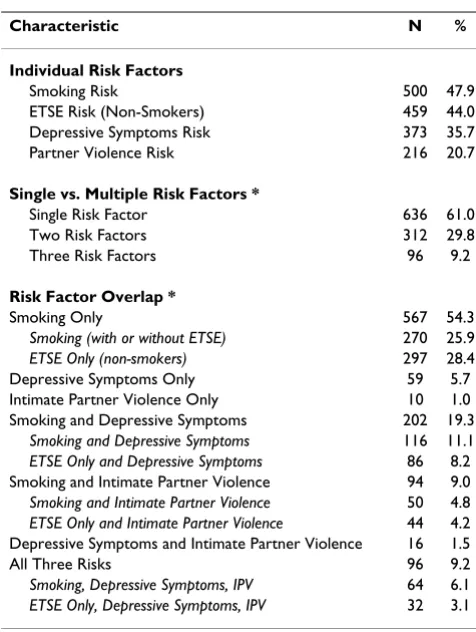
Of the 1,070 women successfully enrolled in DC-HOPE, a small number of other minorities were enrolled and ran-domized, but only the 1,044 Black/African American women are included in this paper. The distribution of risk factors among the enrolled African American study partic-ipants is shown in Table 1.
Ninety-two percent of women screened in with tobacco risk (either as active smokers or having ETSE), followed by depressive symptoms (36%), and IPV risk (21%). Sixty-one percent screened in with only Sixty-one risk factor (tobacco, depressive symptoms, or IPV), 30% had two, and 9% had all three risks. There was considerable risk overlap among risks; the highest being for smoking and depressive symptoms (with or without IPV).
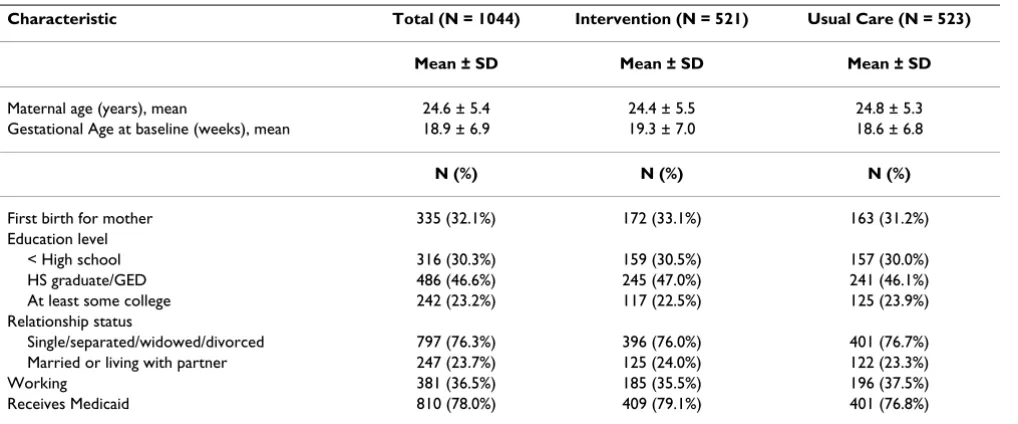
Women who participated in the study were, on average, 25 years old and were at 19 weeks of gestation at the time of the baseline interview. The majority was single, sepa-rated, widowed or divorced (76%). Over half of the women had other children (68%), were not working (64%), and received Medicaid (78%). Table 2 provides demographic characteristics of the study population as reported on the baseline interview. As a result of success-ful randomization, no differences were found for mater-nal characteristics or risk factor distribution between intervention and usual care groups.
Table 1: Risk factor distribution among African American women enrolled in the intervention study (N = 1044)
Characteristic N %
Individual Risk Factors
Smoking Risk 500 47.9
ETSE Risk (Non-Smokers) 459 44.0
Depressive Symptoms Risk 373 35.7
Partner Violence Risk 216 20.7
Single vs. Multiple Risk Factors *
Single Risk Factor 636 61.0
Two Risk Factors 312 29.8
Three Risk Factors 96 9.2
Risk Factor Overlap *
Smoking Only 567 54.3
Smoking (with or without ETSE) 270 25.9
ETSE Only (non-smokers) 297 28.4
Depressive Symptoms Only 59 5.7
Intimate Partner Violence Only 10 1.0
Smoking and Depressive Symptoms 202 19.3
Smoking and Depressive Symptoms 116 11.1
ETSE Only and Depressive Symptoms 86 8.2
Smoking and Intimate Partner Violence 94 9.0
Smoking and Intimate Partner Violence 50 4.8
ETSE Only and Intimate Partner Violence 44 4.2
Depressive Symptoms and Intimate Partner Violence 16 1.5
All Three Risks 96 9.2
Smoking, Depressive Symptoms, IPV 64 6.1
ETSE Only, Depressive Symptoms, IPV 32 3.1
As reported elsewhere [99], a total of 849 women com-pleted the study, for a retention rate of 79%; five percent dropped out and 12% were lost-to-follow up. Women retained in the study and those not retained were not sta-tistically different with regard to most sociodemographic characteristics and the targeted risk factors [99], however, women retained were slightly more likely to be married or living with a partner than those not retained (25% vs. 17%; p < .05).
Intervention Participation and Implementation
Intervention Attendance and Visit Characteristics for All Intervention Women
The 521 women randomized to the intervention group attended a total of 2,417 intervention sessions. On aver-age, each participant attended 4.6 intervention sessions out of a possible 10 recommended sessions. Four ses-sions, hypothetically, was considered a minimum ade-quate exposure to the intervention. As shown in Table 3, 85 women (16%) did not attend any sessions (but were retained in the study if they agreed to complete the tele-phone evaluations), while 313 (60%) attended four ses-sions or more. The average length of an intervention session was 35.6 minutes overall. Consistent with most women having a single risk factor, one targeted risk topic was covered in the majority of sessions. The length of ses-sions covering one risk lasted on average 31 minutes, and increased with the number of risk topics covered to 45 and 55 minutes respectively when two and three risks were covered. All sessions included general and reproductive behavioral health risk content totaling no more than 5 minutes. In sessions where "0" or no risk content was
cov-ered, as happened in 84 sessions (4%), either the partici-pant refused to discuss the targeted risk factor content, or an urgent issue took precedence over the targeted risk top-ics.
Women assigned to the usual care group met with their primary care providers as per standard clinic practice.
Implementation Fidelity of Pregnancy Advisors for All Intervention Sessions
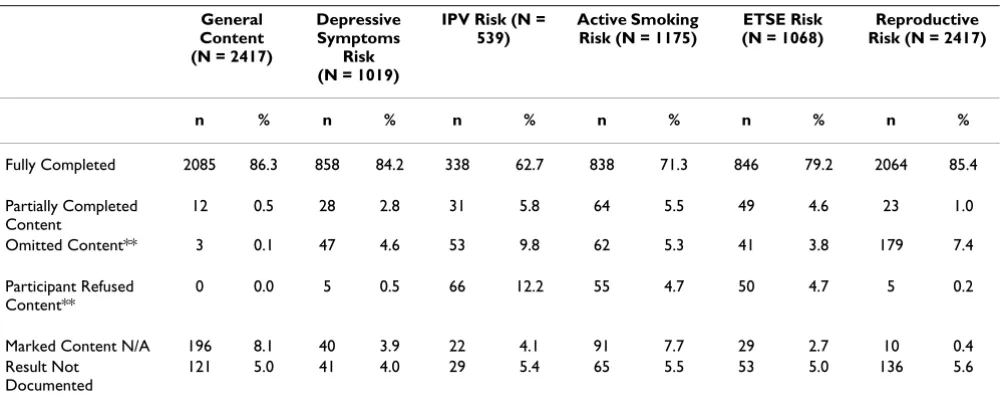
Data on delivery of required risk factor content, as self-reported by the PAs, for the intervention sessions that par-ticipants attended were assessed. On average, 77% of ses-sions were completed as prescribed; that is, where all risk factor content was "fully" covered (data not shown). As can be seen in Table 4, the required general and risk spe-cific intervention content was "fully" or "partially" cov-ered in over 80% of the sessions attended for nearly all of the risk factor content areas. Approximately 10% of the sessions had to be abbreviated. For 32% of intervention sessions, there was some type of interruption.
The IPV and active smoking risk factor components were the areas of intervention presentation that were most often incomplete. The IPV intervention content was least likely to be covered fully/partially (in only 68% of the ses-sions), followed by the active smoking risk factor (in only 77% of sessions). PAs were instructed to omit content if women refused or expressed strong resistance, which hap-pened most frequently in the IPV (22%) and active smok-ing risk sessions (10%), and for active smoksmok-ing, to cover passive smoking instead. In 36% of the sessions where
Table 2: Demographic Characteristics of Study Participants
Characteristic Total (N = 1044) Intervention (N = 521) Usual Care (N = 523)
Mean ± SD Mean ± SD Mean ± SD
Maternal age (years), mean 24.6 ± 5.4 24.4 ± 5.5 24.8 ± 5.3
Gestational Age at baseline (weeks), mean 18.9 ± 6.9 19.3 ± 7.0 18.6 ± 6.8
N (%) N (%) N (%)
First birth for mother 335 (32.1%) 172 (33.1%) 163 (31.2%)
Education level
< High school 316 (30.3%) 159 (30.5%) 157 (30.0%)
HS graduate/GED 486 (46.6%) 245 (47.0%) 241 (46.1%)
At least some college 242 (23.2%) 117 (22.5%) 125 (23.9%)
Relationship status
Single/separated/widowed/divorced 797 (76.3%) 396 (76.0%) 401 (76.7%)
Married or living with partner 247 (23.7%) 125 (24.0%) 122 (23.3%)
Working 381 (36.5%) 185 (35.5%) 196 (37.5%)
Receives Medicaid 810 (78.0%) 409 (79.1%) 401 (76.8%)
Table 4: Number and Percentage of Sessions Attended Where the Pregnancy Advisors Covered Required Risk Factor Content *
General Content (N = 2417)
Depressive Symptoms
Risk (N = 1019)
IPV Risk (N = 539)
Active Smoking Risk (N = 1175)
ETSE Risk (N = 1068)
Reproductive Risk (N = 2417)
n % n % n % n % n % n %
Fully Completed 2085 86.3 858 84.2 338 62.7 838 71.3 846 79.2 2064 85.4
Partially Completed Content
12 0.5 28 2.8 31 5.8 64 5.5 49 4.6 23 1.0
Omitted Content** 3 0.1 47 4.6 53 9.8 62 5.3 41 3.8 179 7.4
Participant Refused Content**
0 0.0 5 0.5 66 12.2 55 4.7 50 4.7 5 0.2
Marked Content N/A 196 8.1 40 3.9 22 4.1 91 7.7 29 2.7 10 0.4
Result Not Documented
121 5.0 41 4.0 29 5.4 65 5.5 53 5.0 136 5.6
NOTE: Percentages may not add to 100% due to rounding.
* Pregnancy advisors reported at each session whether the topic was covered "fully" (meaning they completed the entire script and slides for that risk factor area), "partially" (meaning they were only able to complete part of the content), and if they were not able to complete the content at all, they indicated the reasons for non-completion.
** PA's were instructed to omit content if a woman refused or expressed strong resistance, and for women who refused to discuss smoking cessation or reduction, to cover ETSE content instead.
Table 3: Intervention Session Attendance and Length of Sessions by the Number of Risk Factor Topics Covered
Characteristic N %
Number of Prenatal & Postpartum Intervention Sessions Attended
None 85 16.3
1 – 3 Sessions 123 23.6
4 – 6 Sessions 144 27.6
7 – 9 Sessions 129 24.8
10 or more Sessions 40 7.7
Total Number of Women in Intervention Group 521 100.0
N * Mean ** ± SD
Length of Intervention Sessions by the Number of Targeted Risk Factor Topics Covered ***
0 risk factor topics covered **** 84 13.2 ± 8.5
1 risk factor topic covered 1458 30.7 ± 10.1
2 risk factor topics covered 654 44.7 ± 13.3
3 risk factor topics covered 166 54.4 ± 14.3
Total Number of Sessions Attended 2362 35.6 ± 14.5
* There was incomplete data for 55 of the n = 2417 sessions: 22 without information on risk topics covered, and 33 additional sessions with incomplete data on session length.
** Average length of time per session is reported in minutes and includes all content covered: general, one or more of the three designated risk factor topics & reproductive risk coverage.
*** The maximum number of targeted risk factor topics that could be covered in any session was three: depressive symptoms, IPV, and tobacco risk (for smokers vs. non-smokers).
active smoke content was omitted or where women showed resistance or refused (n = 117 sessions), the PAs addressed ETSE content instead (data not shown).
Overall Study Experiences and Challenges
Risk Reassessments for All Intervention Women
Periodic risk reassessments at 8 week intervals were con-ducted by the PA with intervention women to identify any new risks that the participants had developed or were will-ing to acknowledge since the original screenwill-ing. In all, 68 women (13%) added a new risk during the course of the intervention. Depression was the most commonly acknowledged risk on reassessment, with 50 women being identified as having depressive symptoms. Twelve women were subsequently identified as being at risk for intimate partner violence, seven women were identified as being at risk for active smoking, and three women were identified as being at risk for passive smoking through these reassessments (note that some women may have added more than one risk so are represented in more than one category of newly identified risk).
Obstacles Encountered During Intervention Implementation
Increasing access to needed mental and behavioral health services through co-location within a primary healthcare setting was a goal of the study. About 80% of the sample attended at least one intervention session, and 60% com-pleted at least 4 sessions. Relationships of counseling staff with the health providers in the clinics were generally good. Every attempt was made not to have intervention sessions interfere with clinic procedures and flow. Research team members participated in staff meetings at each clinic site prior to implementation at that site. Clinic staff was oriented to the goals and procedures of the study and their questions answered. The area of greatest confu-sion for the clinic personnel was in understanding the ran-dom assignment of the study design. Staff often wished to refer patients to the intervention and often assumed if a woman were participating in the study, that she was receiving additional services. Because the clinic staff mem-bers were not informed of a patient's study arm assign-ment, the research team reminded them that they must continue providing the guidance and education to all women, that they usually do during prenatal care.
While the PAs' complete delivery of content for specific risk related intervention components was successful in the majority of sessions, some obstacles were encountered that affected content presentation. Even when women attended the intervention sessions, and some of the topics were covered, the PAs were not always able to adequately address all of the risk components for women with multi-ple risks. Problems in delivery of the full content occurred for a number of reasons. Approximately 10% of the ses-sions had to be abbreviated (e.g., because women had to
leave or the PA had conflicting appointments with other participants). For 32% of intervention sessions, there were other distractions or interruptions (e.g., women had to return to complete a clinic procedure, or a child accompa-nying the mother was disruptive) that may have interfered with intervention delivery as well as participant receipt of the material.
Intervention adjustments had to be made to both the IPV and the active smoking intervention components after the first few months in the field due to the difficulties encoun-tered in delivery of that content for some women. Rather than risk increased drop-out rates from forced discussions of topics that might be unwanted or uncomfortable for participants to address, we elected to adjust the require-ments for intervention coverage in these two areas. For both components, the PAs were instructed to make every effort to complete the content as it was originally designed for all women at risk. If a woman simply did not want to discuss their experiences or this issue any further, or if the PA felt that the relationship might be jeopardized, they were instructed to alter the delivery. For the IPV compo-nent, the PAs were instructed to omit the content entirely if it became too sensitive for women to discuss. For the active smoking component, which focused on both smok-ing cessation and significant reduction, the PAs were instructed to pursue a harm reduction strategy, and to cover the ETSE prevention topics instead. Decisions to omit the IPV or the smoking risk factor content were always made in consultation with intervention supervi-sors. The door was always left open to women for further discussions of IPV and smoking cessation or reduction, if and when women felt ready.
Participant Safety and Adverse Events During Implementation
exclusionary criterion for enrollment. Women who responded on screening that they would like to kill them-selves, would kill themselves if they had a chance, or had a plan for taking their own life were immediately excluded from the study. Since screening was administered in the OB/GYN clinic, women who reported suicidal thoughts at that time were immediately identified to the clinical care provider designated by the site for this purpose. The number of women who reported suicidal ideation at screening was small [N = 2]. Suicidal ideation disclosed by enrolled intervention women to a PA was reported to the study's intervention supervisor and to the designated clinic staff member; the latter being responsible for refer-ral. This occurred in two instances at an initial interven-tion session, in two women during the course of intervention and in two women in the postpartum period (one of whom had not attended any prenatal intervention sessions). Suicidal thoughts were disclosed during the phone evaluations in 13 baseline, five prenatal follow-up and 10 postpartum interviews. Women who responded during the phone interview as being distressed at least moderately by thoughts of ending their lives, a question on the Hopkins Symptom Checklist-Depression Scale (the depressive symptom scale used on the repeated meas-ure evaluation battery) were immediately referred by the telephone interviewer to the mental health team of psy-chiatrists and clinical psychologists, who were on call to respond to these incidents. These consultants followed up by phone with participants, whether in the intervention group or identified by telephone interview, for whom there was concern. The woman's level of suicidal risk was determined, and subsequent contact made to the desig-nated clinic staff person to initiate referral or, in one instance, contact emergency services to intervene. If women were considered to be suicidal, they were discon-tinued from the study after notification to the medical provider and provision of appropriate psychiatric referral. During the course of the study, eight enrolled women were excluded because of suicide risk. There were two reported incidents of contemporaneous intimate partner violence involving enrolled woman resulting in brief hos-pitalizations for evaluation of any effects on the preg-nancy. At the time of disclosure, one incident had already been reported by the woman to police and medical per-sonnel, and in the other, the woman chose not to take any actions. While there is no mandatory reporting require-ment for IPV in Washington DC, the women were encour-aged to discuss the issues with their doctors and the clinic social work staff. Contact information was provided for domestic violence hotlines and for emergency shelter should these be needed. These incidents were filed with the Institutional Review Board as adverse events.
Debriefing Subsample Findings
Overall Perceptions and Satisfaction with Study Participation and Services
A 20% subsample (n = 183) of women were randomly identified to complete a postpartum telephone debriefing interview after completion of their participation in the study. Eighty-three percent (n = 152) of this group were able to be contacted by phone and completed the view. No significant differences were found between inter-vention and usual care women in debriefing completion or refusal rates.
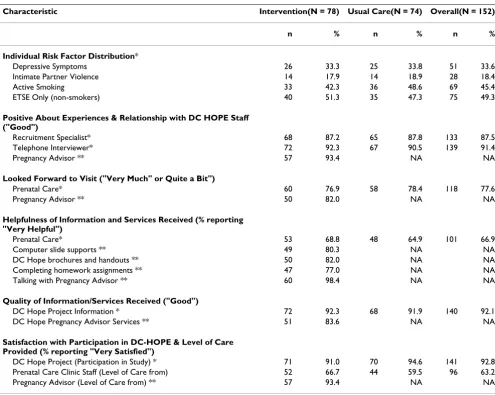
As can be seen in Table 5, the risk factor distribution for women in the subsample was similar to the distribution of risk factors for the full sample of women displayed in Table 1. Both the intervention and usual care women were quite positive about their overall participation and experi-ences during the DC-HOPE study; both groups thought the DC-HOPE recruitment (88% overall) and telephone interview staff (91% overall) were respectful and courte-ous, felt the pre-enrollment information they received about study participation was good (92% overall), and were satisfied with DC-HOPE study participation in gen-eral (93% ovgen-erall). Women in both groups were also interviewed about their general prenatal care experiences. Most looked forward to their prenatal care (PNC) medical visits (76% overall), found the quality of PNC informa-tion and services they received to be helpful and good (67% overall), and were satisfied with their prenatal care services (63% overall). No significant differences existed between intervention and usual care women in this regard.
Women in the intervention group were quite positive about their relationship with the PA. The overwhelming majority found talking to the PA to be very helpful (98%), were satisfied with the level of care they received from the PA (93%), and looked forward to their visits together (82%). Over 80% of intervention women perceived the educational materials and the quality of the services they received to be "very helpful" or "good" (e.g., 82% found the brochures and materials and 80% found the slides to be helpful). Slightly fewer women found the homework assignments to be helpful (77%). In sum, the majority seemed to find the intervention experience rewarding and very useful. Where comparable questions were asked about PNC experiences (e.g., looking forward to the visit, and satisfaction with level of care), the DC-HOPE infor-mation and services were rated favorably by more inter-vention women than was their prenatal care.
Subsample Participation in the Intervention
distribu-tion of the debriefing subsample in terms of their inter-vention attendance, and their reasons for not attending any or fewer sessions are presented in Table 6.
Perhaps most important among these data were women's reasons for non-participation, which are presented sepa-rately for the seventeen women who did not attend any of the sessions and for the 18 women who attended at least one, but less than the minimum number established (1– 3 sessions). Top reasons given by women who did not attend any sessions were that the PA had not informed or advised them to come back (41%), they did not feel they needed/wanted to participate in the intervention (29%), and the sessions were too long (24%). Women who attended 1–3 sessions reported they were not sure or did not know why (22%), similarly reported that sessions were too long (17%), and/or enrolled late in pregnancy, delivered early, stopped attending after giving birth, or
only participated when they went to the prenatal care clinic (17%).
Subsample Intervention Participant Perceptions and Satisfaction with Each Risk Factor Component
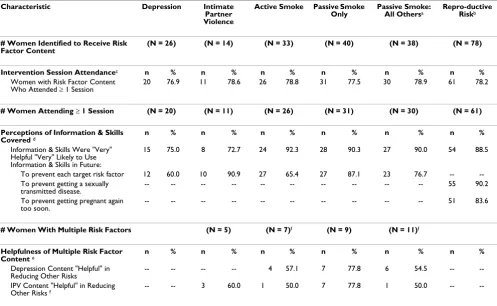
The perceived helpfulness of the various risk factor session content is shown in Table 7, along with perceptions of the likelihood of continuing to use the information and skills received, for all intervention women in the debriefing subsample who attended at least one intervention session (n = 61), and for women presenting with multiple risk fac-tors. Most intervention women reported that the informa-tion and skills they received for each specific risk factor was "very helpful", and despite the small numbers of women, there were several significant differences in the perceived helpfulness of each risk factor component. The active smoking, ETSE and reproductive health risk factor intervention components were perceived by more women
Table 5: Debriefing Subsample Participants: Risk Factors and Perceptions of Study Participation by Group
Characteristic Intervention(N = 78) Usual Care(N = 74) Overall(N = 152)
n % n % n %
Individual Risk Factor Distribution*
Depressive Symptoms 26 33.3 25 33.8 51 33.6
Intimate Partner Violence 14 17.9 14 18.9 28 18.4
Active Smoking 33 42.3 36 48.6 69 45.4
ETSE Only (non-smokers) 40 51.3 35 47.3 75 49.3
Positive About Experiences & Relationship with DC HOPE Staff ("Good")
Recruitment Specialist* 68 87.2 65 87.8 133 87.5
Telephone Interviewer* 72 92.3 67 90.5 139 91.4
Pregnancy Advisor ** 57 93.4 NA NA
Looked Forward to Visit ("Very Much" or Quite a Bit")
Prenatal Care* 60 76.9 58 78.4 118 77.6
Pregnancy Advisor ** 50 82.0 NA NA
Helpfulness of Information and Services Received (% reporting "Very Helpful")
Prenatal Care* 53 68.8 48 64.9 101 66.9
Computer slide supports ** 49 80.3 NA NA
DC Hope brochures and handouts ** 50 82.0 NA NA
Completing homework assignments ** 47 77.0 NA NA
Talking with Pregnancy Advisor ** 60 98.4 NA NA
Quality of Information/Services Received ("Good")
DC Hope Project Information * 72 92.3 68 91.9 140 92.1
DC Hope Pregnancy Advisor Services ** 51 83.6 NA NA
Satisfaction with Participation in DC-HOPE & Level of Care Provided (% reporting "Very Satisfied")
DC Hope Project (Participation in Study) * 71 91.0 70 94.6 141 92.8
Prenatal Care Clinic Staff (Level of Care from) 52 66.7 44 59.5 96 63.2
Pregnancy Advisor (Level of Care from) ** 57 93.4 NA NA
as being helpful than the psychosocial intervention com-ponents (i.e., depression and IPV). Significant differences were found in Chi-square test comparisons between the perceived helpfulness of the reproductive health and the depression or intimate partner violence (p ≤ .01 for both comparisons), between the ETSE and the depression (p ≤
.01) or intimate partner violence (p ≤ .05) content, and between the active smoking and the depression (p ≤ .01), but not the smoking or intimate partner violence content.
Fewer intervention women indicated that in the future they would be "very likely" to use the information and skills they received than found the sessions helpful, except in relation to the IPV intervention component, for which more women indicated they would be "very likely" to use the information/skills in the future than felt the interven-tion was "very helpful" (91% vs. 73%). Women responded to the reproductive health content by express-ing a significantly greater likelihood of usexpress-ing the informa-tion they received to prevent future STIs than to prevent pregnancy (90% vs. 84%; Chi-square = 48.12, df = 6; p ≤
.001). More women at risk for ETSE than those with active smoking risk in conjunction with another risk factor, found the receipt of the depression or the intimate partner violence content helpful to them in reducing environ-mental tobacco smoke exposure.
Discussion
Despite interest in developing effective approaches to identify and intervene on multiple adverse health behav-iors, little is known about the most effective ways to reduce complex risk [4,5,111]. In this paper, we describe one intervention approach that may serve to increase understanding of necessary considerations in attempts to address psychosocial and behavioral risk factors presented by pregnant women in prenatal care settings. Previous investigators have also cited important issues to consider when planning and implementing such an approach [4,5]. While this intervention study was not designed to empirically test or answer these questions directly, we describe the decisions that went into the selection of mul-tiple risk behaviors, the conceptual framework applied, and theoretical constructs and models thought to be com-mon or unique across behaviors that could be addressed simultaneously in conjunction with prenatal care visits. We also provide important information on intervention adherence and implementation fidelity, and describe the challenges faced during implementation.
This study demonstrates the feasibility of incorporating a computerized screening procedure for psychosocial and behavioral risk factors into prenatal care settings serving low income African American women. One of the
Table 6: Debriefing Subsample Participants: Number and Percentage of Intervention Group Sessions Attended & Reasons for Non-Attendance
Characteristic N %
Number of Sessions Attended
None 17 21.8
1–3 18 23.1
≥ 4 sessions 43 55.1
Total 78 100.0
Attended No Sessions(N = 17) Attended 1–3 Sessions(N = 18)
n % n %
Reasons for Not Attending Sessions
Not informed/advised to come back 14 41.2 2 5.6
Not interested/does not need risk topics 10 29.4 2 5.6
No time/sessions too long 8 23.5 6 16.7
Moved from area 4 11.8 4 11.1
No Comment/Not sure 2 5.9 8 22.2
Miscarriage 2 5.9 0 0.0
Reproductive Health Reasons (e.g., premature delivery, late PN care entry, stopped after delivery).
0 0.0 6 16.7
Only attended when had prenatal care 0 0.0 6 16.7
Knew information already 0 0.0 4 11.1
Convenience; location 0 0.0 4 11.1
acknowledged problems in addressing needs of unders-erved populations is the failure of primary care providers to identify psychosocial health risks despite recommenda-tion by American College of Obstetrics and Gynecology [112,113]. The use of the ACASI screening technique in this study was well accepted by the study population, pro-vided a sense of confidentiality for their responses and minimized administrative time for clinic personnel. Screening resulted in the identification of the pregnancy risks of smoking, ETSE, depressive symptoms and inti-mate partner violence that were present in a substantial portion of this urban African American population. Re-screening at later points during the pregnancy may also be warranted because additional risks were declared follow-ing initial screenfollow-ing in this study. Subsequent reportfollow-ing of risks, either through formal reassessment or in discussion with PAs or phone interviewers, may have been due to greater openness once a relationship developed with the counselor or other study staff, because of new risk
devel-opment over the course of pregnancy, or within subject variations in risk factors across trimesters as has been found elsewhere for cigarette smoking and other sub-stance use [114,115].
Despite the need, at times, to remain beyond the comple-tion of the prenatal clinic visit to participate in the inter-vention, 60% of the intervention group completed at least 4 of the recommended 10 intervention sessions. This con-trasts with the less than 50% percent of women in primary care with mental health problems that pursue recom-mended mental health services when they are not co-located within a primary care setting [116]. However, will-ingness to participate in sessions was variable across the group. Some women found it difficult to remain for a longer time to complete the intervention after their medi-cal visit. As reported anecdotally by the PAs, some partici-pants avoided the PA when she attempted personal contact with them or did not appear for their intervention
Table 7: Debriefing Subsample Participants: Perceptions of Target Risk Factor Content Among Women Attending Any Intervention Sessions.
Characteristic Depression Intimate
Partner Violence
Active Smoke Passive Smoke Only
Passive Smoke:
All Othersa Repro-ductive Riskb
# Women Identified to Receive Risk Factor Content
(N = 26) (N = 14) (N = 33) (N = 40) (N = 38) (N = 78)
Intervention Session Attendancec n % n % n % n % n % n %
Women with Risk Factor Content Who Attended ≥ 1 Session
20 76.9 11 78.6 26 78.8 31 77.5 30 78.9 61 78.2
# Women Attending ≥ 1 Session (N = 20) (N = 11) (N = 26) (N = 31) (N = 30) (N = 61)
Perceptions of Information & Skills Covered d
n % n % n % n % n % n %
Information & Skills Were "Very" Helpful "Very" Likely to Use Information & Skills in Future:
15 75.0 8 72.7 24 92.3 28 90.3 27 90.0 54 88.5
To prevent each target risk factor 12 60.0 10 90.9 27 65.4 27 87.1 23 76.7 -- --To prevent getting a sexually
transmitted disease.
-- -- -- -- -- -- -- -- -- -- 55 90.2 To prevent getting pregnant again
too soon.
-- -- -- -- -- -- -- -- -- -- 51 83.6
# Women With Multiple Risk Factors (N = 5) (N = 7)f (N = 9) (N = 11)f
Helpfulness of Multiple Risk Factor
Content e n % n % n % n % n % n %
Depression Content "Helpful" in Reducing Other Risks
-- -- -- -- 4 57.1 7 77.8 6 54.5 -- --IPV Content "Helpful" in Reducing
Other Risks f -- -- 3 60.0 1 50.0 7 77.8 1 50.0 --
--a At the postpartum visit, all intervention women received information about environmental tobacco smoke exposure risks for their new baby irrespective of risk
levels. This column represents all women who were not in the passive smoke only intervention group.
b All intervention group women were provided reproductive risk information irrespective of risk levels. c Extent women who were required to receive risk factor content attended ≥ 1 intervention session.
d Extent women with each risk factor perceived the intervention information and skills covered as being "Very" helpful or who reported they would be "Very"
Likely to continue to use the skills and information in the future.
e Extent women with multiple risk factors who perceived that receiving the depression or IPV content helped them to reduce the other target risk factors "Quite
a bit."