Electronic Thesis and Dissertation Repository
11-8-2013 12:00 AM
Two dimensional angular domain optical imaging in biological
Two dimensional angular domain optical imaging in biological
tissues
tissues
Eldon Ng
The University of Western Ontario
Supervisor
Jeffrey J.L. Carson
The University of Western Ontario
Graduate Program in Medical Biophysics
A thesis submitted in partial fulfillment of the requirements for the degree in Master of Science © Eldon Ng 2013
Follow this and additional works at: https://ir.lib.uwo.ca/etd
Part of the Optics Commons
Recommended Citation Recommended Citation
Ng, Eldon, "Two dimensional angular domain optical imaging in biological tissues" (2013). Electronic Thesis and Dissertation Repository. 1796.
https://ir.lib.uwo.ca/etd/1796
This Dissertation/Thesis is brought to you for free and open access by Scholarship@Western. It has been accepted for inclusion in Electronic Thesis and Dissertation Repository by an authorized administrator of
TWO DIMENSIONAL ANGULAR DOMAIN OPTICAL IMAGING IN BIOLOGICAL TISSUES
(Thesis format: Integrated Article)
by
Eldon Ng
Graduate Program in Medical Biophysics
A thesis submitted in partial fulfillment of the requirements for the degree of
Master of Science
The School of Graduate and Postdoctoral Studies The University of Western Ontario
London, Ontario, Canada
ii
Abstract
Optical imaging is a modality that can detect optical contrast within a biological
sample that is not detectable with other conventional imaging techniques. Optical
trans-illumination images of tissue samples are degraded by optical scatter. Angular Domain
Imaging (ADI) is an optical imaging technique that filters scattered photons based on the
trajectory of the photons. Previous angular filters were limited to one-dimensional arrays,
greatly limiting the imaging capability of the system.
We have developed a 2D Angular Filter Array (AFA) that is capable of acquiring
two-dimensional projection images of a sample. The AFA was constructed using rapid
prototyping techniques. The contrast and the resolution of the AFA were evaluated. The
results suggest that a 2D AFA can be used to acquire two-dimensional projection images of a
sample with a reduced acquisition time compared to a scanning 1D AFA.
Keywords
Optical imaging, angular domain imaging, angular filter array, trans-illumination
imaging, contrast analysis, resolution analysis, structured illumination, digital light
iii
Co-Authorship Statement
This section describes the contribution from various authors for the work completed
in Chapters 2 and 3 as well as Appendices 1 and 2.
Chapter 2: E. Ng, J. J. L. Carson. “Angular domain imaging with a 2D angular filter array,” Article in preparation for submission to Applied Optics.
Dr. Carson aided in the project design and the experimental direction. I aided in the
design and the construction of the angular filters. I designed and conducted the experiments,
analyzed the results, and wrote the manuscript.
Chapter 3: E. Ng, J. J. L. Carson. “Two-dimensional angular domain imaging with a 3D printed angular filter,” Article in preparation for submission to Applied Optics.
Dr. Carson aided in the project design and the experimental direction. I designed and
constructed the imaging system. I designed and conducted the experiments and I analyzed the
results and wrote the manuscript.
Appendix A: E. Ng, F. Vasefi, B. Kaminska, J. J. L. Carson, “Three-dimensional angular domain optical projection tomography,” SPIE Annual Meeting, Symposium on
Biomedical Optics (BiOS) 7897-0V, (2011).
Dr. Carson aided in the project design and the experimental direction. Dr. Vasefi
provided insight on angular domain imaging. I designed and constructed the imaging system.
I wrote the software needed to conduct the experiments and to automate image acquisition. I
designed and conducted the experiments analyzed and interpreted the results and wrote the
manuscript.
Appendix B: E. Ng, F. Vasefi, J. J. L. Carson, “Multispectral angular domain imaging with a tunable pulsed laser,” SPIE Annual Meeting, Symposium on Biomedical
iv
Dr. Carson aided in the project design and the experimental direction. Dr. Vasefi
provided insight on angular domain imaging and multispectral imaging. I designed and
constructed the imaging system. I wrote the software needed to conduct the experiments and
to automate image acquisition. I designed and conducted the experiments analyzed and
v
Acknowledgements
Dr. Carson, the passion that you show towards your life inside and outside of the lab
is inspiring. I would not be where I am today without your mentorship and motivation.
Dr. Mo-Reza, you have kept my stomach full and happy for the past few years. Thank
you for all of your help.
Dr. Vasefi, you have taught me a great deal over the years. It was a great experience
to work alongside you and to cultivate new ideas together.
To all the people at the Carson Lab, you have made the past few years fun and
exciting. Thank you Astrid, Michelle, Pinhas, Michael, Gen, Ivan, Pantea, Avery, Phil,
Esther, Candice, and Camilla.
Finally, I would like to acknowledge the financial support provided by UWO, SPIE,
the Translational Breast Cancer Research Unit, Canadian Institutes of Health Research, and
vi
Table of Contents
Abstract ... ii
Keywords ... ii
Co-Authorship Statement... iii
Acknowledgements ... v
Table of Contents ... vi
Table of Figures ... xv
List of Appendices ... xx
List of Abbreviations and Symbols... xxi
Preface... xxiii
Chapter 1 ... 1
1 Introduction ... 1
1.1 Medical Imaging ... 2
1.2 Optical Imaging ... 3
1.3 Light Tissue Interactions... 3
1.4 Overview of Optical Imaging Modalities ... 6
1.4.1 Optical Coherence Tomography ... 6
1.4.2 Time domain imaging ... 7
vii
1.4.4 Hybrid optical ultrasound imaging ... 8
1.5 Angular Domain Imaging (ADI) ... 9
1.5.1 Fourier-based ADI ... 10
1.5.2 Lensless ADI ... 11
1.5.3 ADI simulations ... 12
1.6 Previous AFA design ... 15
1.6.1 Silicon AFA fabrication process ... 15
1.6.2 Chemically etched AFAs ... 16
1.6.3 Deep Reactive Ion Etching AFAs ... 16
1.6.4 Internal reflections ... 16
1.7 ADI Illumination sources ... 18
1.8 Previous ADI studies ... 19
1.8.1 Hybrid ADI systems ... 19
1.8.2 Background scatter estimation ... 19
1.8.3 Deep illumination ADI ... 20
1.8.4 Tomographic ADI ... 21
1.8.5 Fluorescence ADI ... 22
1.8.6 Multispectral and Hyperspectral ADI ... 22
viii
1.10Thesis objective and scope ... 25
1.11References ... 26
Chapter 2 ... 31
2 Angular domain imaging with a 2D angular filter array ... 31
2.1 Introduction ... 31
2.1.1 Optical trans-illumination imaging ... 31
2.1.2 Angular Domain Imaging (ADI) ... 32
2.1.3 Dependence of ADI on illumination geometry ... 33
2.1.4 Dependence of ADI contrast on AFA aspect ratio ... 33
2.1.5 Background scatter estimation in ADI ... 34
2.1.6 Objective and approach... 35
2.2 Methods... 36
2.2.1 Fabrication of the 2D AFA ... 36
2.2.2 Illumination and detection ... 37
2.2.3 Imaging Target ... 38
2.2.4 Image collection ... 39
2.2.5 Analysis of fabricated 2D AFAs ... 39
2.2.6 Contrast with sparsely structured illumination ... 39
ix
2.2.8 Background scatter correction ... 40
2.2.9 Image Analysis... 40
2.3 Results ... 41
2.3.1 Fabrication of the 2D AFA ... 41
2.3.2 Contrast with sparsely structured illumination ... 41
2.3.3 Dependence of contrast on aspect ratio ... 43
2.3.4 Background scatter estimation ... 44
2.4 Discussion ... 46
2.4.1 General ... 46
2.4.2 Fabrication of the 2D AFA ... 47
2.4.3 Contrast with structured illumination ... 48
2.4.4 Contrast with varying acceptance angle ... 49
2.4.5 Background scatter estimation ... 51
2.5 Conclusions and future work ... 52
2.6 Acknowledgements ... 52
2.7 References ... 53
Chapter 3 ... 55
3 Two-dimensional angular domain imaging with a 3D printed angular filter array ... 55
x
3.1.1 Optical trans-illumination imaging ... 55
3.1.2 Angular Domain Imaging (ADI) ... 56
3.1.3 Two-Dimensional AFA ... 57
3.1.4 AFA Scanning ... 58
3.1.5 Structured illumination ... 58
3.1.6 AFA channel crosstalk ... 59
3.1.7 Objective and approach... 59
3.2 Methods... 60
3.2.1 AFA fabrication ... 60
3.2.2 Illumination and detection ... 62
3.2.3 Imaging Targets ... 63
3.2.4 System resolution experiments ... 64
3.2.5 Channel crosstalk experiments ... 65
3.2.6 Tissue imaging experiments ... 65
3.2.7 Image processing and analysis ... 66
3.3 Results ... 69
3.3.1 Channel crosstalk ... 69
3.3.2 Knife edge resolution ... 70
xi
3.3.4 Chicken breast target... 73
3.4 Discussion ... 76
3.4.1 Channel crosstalk ... 76
3.4.2 Knife edge resolution ... 76
3.4.3 4 rods absorption target ... 78
3.4.4 Chicken breast target... 79
3.5 Conclusions and future work ... 81
3.6 Acknowledgements ... 82
3.7 References ... 82
Chapter 4 ... 85
4 Discussion and future work ... 85
4.1 Summary of work ... 85
4.1.1 System design ... 85
4.1.2 Experimental studies ... 86
4.2 Improvements and limitations ... 86
4.2.1 Benefits ... 86
4.2.2 Limitations ... 87
4.3 Illumination and detection improvements ... 88
xii
4.3.2 Structured light... 89
4.3.3 Detection ... 90
4.4 AFA design improvements ... 90
4.4.1 Discontinuous Walls ... 91
4.4.2 AFA size & resolution ... 91
4.5 Experimental design improvements ... 93
4.5.1 Tissue samples ... 93
4.5.2 Attenuating targets ... 94
4.6 Applications ... 95
4.6.1 Small animal imaging ... 95
4.6.2 Tissue sample imaging ... 96
4.7 Conclusions ... 96
4.8 References ... 97
Appendix A ... 98
A Three dimensional angular domain optical projection tomography ... 98
A.1 INTRODUCTION ... 98
A.1.1 Trans-illumination imaging ... 98
A.1.2 Angular domain imaging ... 99
xiii
A.2 Experimental Setup and methods... 101
A.2.4 Illumination and detection ... 101
A.2.5 Imaging target ... 101
A.2.6 Image pre-processing ... 102
A.2.7 Tomographic reconstruction ... 104
A.3 Results and discussion ... 106
A.3.8 Projection data ... 106
A.3.9 Slice reconstructions ... 107
A.3.103D image representation ... 109
A.4 Conclusions and future work ... 110
A.5 Acknowledgements ... 111
A.6 References ... 111
Appendix B ... 113
B Multispectral angular domain imaging with a tunable pulsed laser ... 113
B.1 INTRODUCTION ... 113
B.1.1 Trans-illumination optical imaging... 113
B.1.2 Angular domain imaging ... 114
B.1.3 Multispectral angular domain imaging ... 115
xiv
B.2.1 Illumination and detection ... 116
B.2.2 Imaging target ... 117
B.2.3 Image pre-processing ... 117
B.3 Results and discussion ... 119
B.4 Conclusions and Future work ... 122
B.5 Acknowledgements ... 123
B.6 References ... 123
xv
Table of Figures
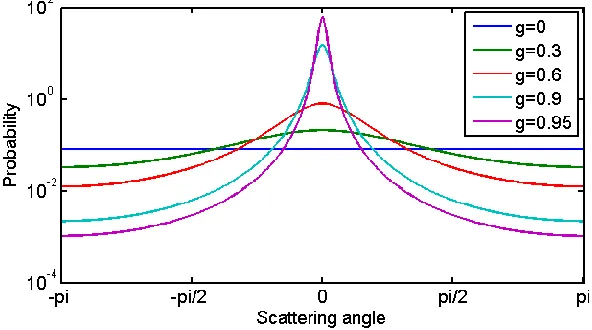
Figure 1-1: Henyey-Greenstein scattering function with different anisotropy factors (g=0,
0.3, 0.6, 0.9, 0.95) ... 4
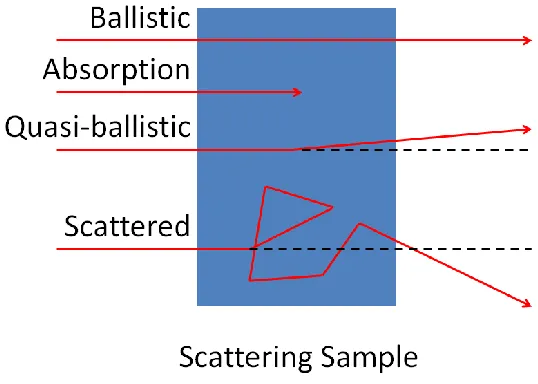
Figure 1-2: Possible photon paths through a scattering sample ... 6
Figure 1-3: Fourier-based ADI ... 11
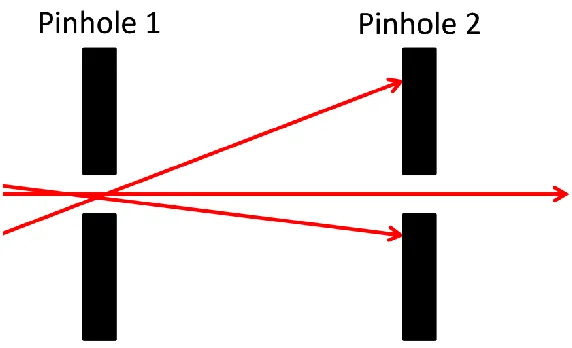
Figure 1-4: Angular domain imaging with two aligned pinholes ... 12
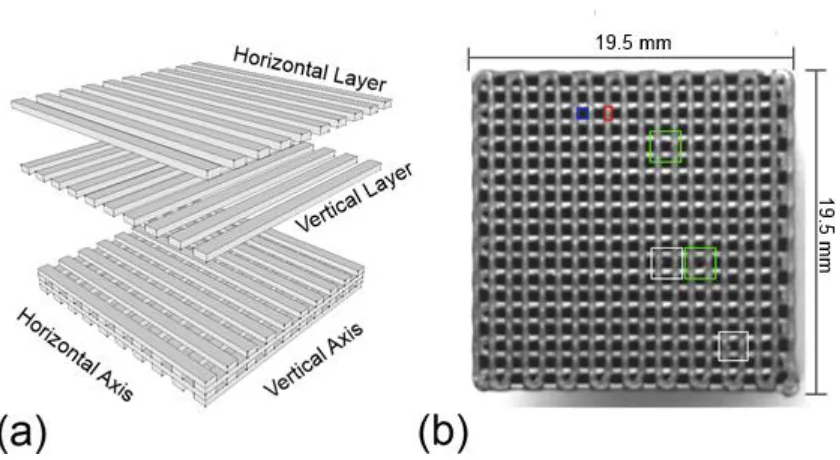
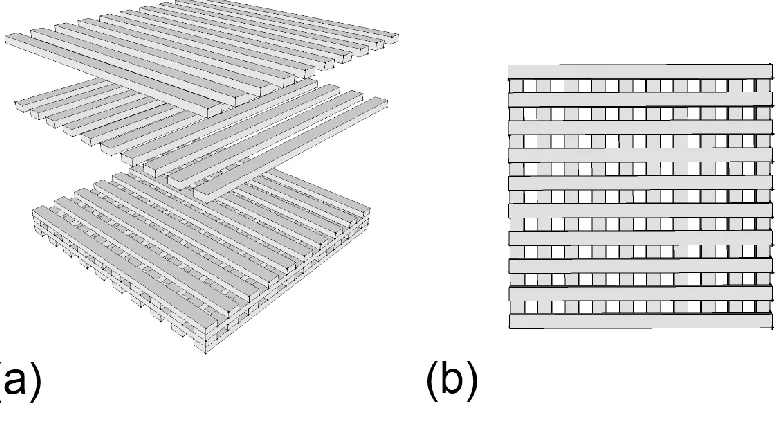
Figure 2-1: Two-dimensional angular filter array made from 3D prototyping. (a) 3D rendering of the AFA construction process with alternating horizontal and vertical parallel walls. Rendering not to scale. (b) Top view photograph of the AFA. Blue outline: channel aperture, red outline: channel wall. White outline, defective channels due to imperfections in plastic deposition. Green outline, channels with rounded edges. ... 37
Figure 2-2: Schematic of the AFA-based ADI setup. Pulsed illumination at 780 nm from a laser (L) was spectrally filtered with a 780 ± 5 nm bandpass filter (SF), restricted with a 1 mm aperture (A) and collimated, expanded, and spatially filtered with collimating optics (C.O.). The collimated light passed through an illumination mask (I.M.), then through the sample (S) and the 2D AFA (AFA). The light was then detected with a CCD camera (C). ... 38
Figure 2-3: Raw AFA images of a 0.9 mm attenuating target in 0.5 % Intralipid® dilution at 1 cm path length collected with a 2D AFA 12 cm in length. (a) No illumination mask, (b) 3 cm illumination mask. Field of view was 8 mm x 8 mm. ... 42
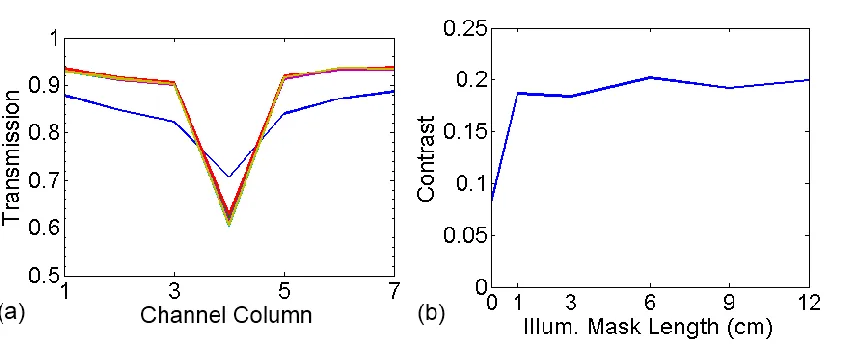
Figure 2-4: Transmission (a) and contrast (b) of a 0.9 mm attenuating target in 0.5 %
Intralipid® dilution at 1 cm path length with a 12 cm 2D AFA and varying
xvi
no mask, dark green: 1 cm mask, red: 3 cm mask, teal: 6 cm mask, purple: 9 cm
mask, olive green: 12 cm mask. ... 43
Figure 2-5: Transmission (a) and contrast (b) of a 0.9 mm attenuating target in 0.5 %
Intralipid® dilution at 1 cm path length with a 3 cm illumination mask and varying 2D AFA lengths. (a) blue: no AFA, green: 1 cm AFA, red: 3 cm AFA,
teal: 6 cm AFA, purple: 9 cm AFA, yellow: 12 cm AFA. ... 44
Figure 2-6: (a-c) AFA images of a 0.9 mm attenuating target in Intralipid® dilution at 1 cm path length collected with a 15 cm 2D AFA and 3 cm illumination mask after
background subtraction. (a) 0.5% Intralipid®, (b) 0.6% Intralipid®, (c) 0.7% Intralipid® d) Transmission at varying Intralipid® concentrations at 1 cm path length, blue: 0.5% green: 0.6%, red: 0.7%. ... 46
Figure 3-1: Two-dimensional angular filter array fabricated with 3D printing. (a) Exploded
3D rendering of the 2D AFA fabrication details with alternating horizontal and
vertical parallel walls. (b) Top view of the AFA. ... 61
Figure 3-2: Schematic of the ADI setup. Laser: 780 nm pulsed diode laser, Collimating
Optics: Lens-pinhole spatial filter, beam expander and collimator, DLP: 608 x
684 pixel DLP chip (Texas Instruments), Beam Expander: 4x beam expander,
Sample: Cuvette filled with a scattering medium, AFA: 2D Angular filter array,
Camera: CCD Camera with telecentric lens ... 63
Figure 3-3: Images (a, c) and point spread functions (b, d) of a single illuminated channel in
chicken (a, b) and Intralipid® (c, d). (a) Image of a point illumination through 10 mm chicken tissue. FOV = 8 mm x 8 mm (b) Normalized projections of a point
illumination through 6 mm (blue), 8 mm (green), 10 mm (red). (c) Image of a
point illumination through 0.65% Intralipid®. FOV = 8 mm x 8 mm (d) Normalized projections of a point illumination through 0.45% (blue), 0.55%
xvii
Figure 3-4: Knife edge submerged in Intralipid® (a) 0.65% Intralipid® blue: quasi-ballistic subtraction profile of knife edge averaged from 0.5 mm x 15 mm central region
in the image, red: fitted profile using dual logistic function. (b) Fitted edge spread
functions for the knife edge submerged in 0.45% (blue), 0.55% (green), 0.65%
(red), 0.75% (teal) Intralipid®. ... 71
Figure 3-5: 4 rods (0.2, 0.5, 0.7, 0.9 mm) submerged in (a) 0.6%, (b) 0.7%, (c) 0.75%
Intralipid®. Images are quasi-ballistic images obtained by subtracting the background estimation image from the original image. (d) One-dimensional
profiles obtained by averaging across 1 mm height, blue (0.6%), red (0.7%),
black (0.75%). The field of view was 15 mm x 8 mm. ... 73
Figure 3-6: 4 rods ((a, c, e, g):0.2, 0.5,(b, d, f, h):0.9, 0.7 mm) positioned at the illumination
side of a 1 cm cuvette containing a chicken breast slab. Images (a, b) are
quasi-ballistic images obtained by raster scanning a structured illumination pattern. The
column by column average (c:blue, d:blue) of (a, b) respectively, and the column
by column average of the corresponding breast tissue with the rods removed
(c:red, d:red). Trans-illuminated photographs of the imaging target collected from
the illumination side (e, f) and from the detection (g, h) side of the target. The
field of view was approximately 15 mm x 8 mm. ... 74
Figure 3-7: 0.5 mm rod positioned at the central depth position of a 1 cm cuvette containing a
chicken breast slab. Image (a) is a quasi-ballistic image obtained by raster
scanning a structured illumination pattern. (c) Column by column average of (a).
Trans-illuminated photographs of the imaging target collected from the
illumination side (b) and from the detection (d) side of the target. The field of
view was approximately 15 mm x 8 mm. ... 75
Figure A-1 a) Cartoon of AFA: 80 µm x 80 µm x 2 cm, 200 elements. Channel count and
dimensions are not to scale. b) SEM image (top removed) of a reflection-trapped
xviii
Figure A-2: Experimental Setup. Laser: Thorlabs 808 nm diode laser, ASL: Aspheric Lens,
P: Pinhole, Collimating Optics: f = -6 mm, f = 100 mm cylindrical lens, Cuvette:
1 cm path length, AFA: element size 80 µm x 80 µm x 2 cm, 200 elements,
Camera: Mightex TCE-1304-U. ... 101
Figure A-3: Imaging target, 4 truncated cones & cylinders. a) top view, b) side view, c) three
dimensional rendering. All measurements are in millimeters. ... 102
Figure A-4: a) Projection of a 0.5 mm graphite rod placed in the center of a 1 cm path length
cuvette, submerged in 0.5% Intralipid®. Red: raw camera signal. Blue dashed: Signal re-binning. Blue: Defective channel removed by averaging signal from
neighboring channels. FOV ~2 mm. b) Projection of graphite rod in (a) displayed
in absorption units. FOV ~1 cm. c) Sample projection of imaging target, slice
#25, ~1.2 mm from cone tips. Target diameter ~360 μm. ... 103
Figure A-5: Sinograms of the imaging target suspended in 0.5% Intralipid® dilution, 60 projections. Field of view is ~1 cm. a) Slice #25 ~1.2 mm from cone tips, target
diameter: ~360 μm b) slice #125 ~9.2 mm from cone tips, target diameter: ~1.4
mm. ... 107
Figure A-6: 2D reconstructions of the 4 cone imaging target suspended in 0.5% Intralipid® dilution at 2 axial slices. a & b) Slice #25 ~1.2 mm from cone tips with filtered
backprojection and iterative reconstruction methods, respectively. c & d) slice
#125 ~9.2 mm from cone tips, reconstructed with filtered backprojection and
iterative reconstruction methods, respectively. ... 108
Figure A-7: 3D reconstruction of the 4 cones imaging target using a) filtered backprojection
and b) iterative reconstruction. The field of view for each slice is ~1 cm x 1 cm.
... 110
Figure B-1: a) Schematic of an AFA (channel count and dimensions not to scale). b) SEM
xix
Figure B-2: Experimental Setup. Laser: Continuum Surelite OPO, SF: Spectral Filter,
Collimating Optics: f = 125 mm, f = 150 mm, Cuvette: 1 cm path length, AFA:
element size 80 µm x 80 µm x 2 cm, 200 elements, Camera: Mightex
TCE-1304-U. ... 117
Figure B-3: a) Projection of a 0.7 mm graphite rod placed in the center of a 1 cm path length
cuvette, submerged in 0.25% Intralipid®; blue: raw camera signal; black: Signal re-binning; red: Signal with no absorbing target. FOV ~2mm. b) Projection of
graphite rod in (a) displayed in absorption units. FOV ~1.5cm. ... 119
Figure B-4: a) Contrast of a 0.7 mm absorbing rod submerged in 4 levels of scattering at
varying wavelengths. blue: 0.15%; green: 0.2%; red: 0.25%;teal: 0.3%
Intralipid®. b-d) Computed absorption for 0.7 mm absorbing rod at Intralipid® dilutions of (b) 0.2%, (c) 0.25%, (d) 0.3%. blue: 480nm; green 520 nm; red 560
xx
List of Appendices
A - Three dimensional angular domain optical projection tomography ... 98
xxi
List of Abbreviations and Symbols
1D, 2D, 3D One, two, three dimensional
ABS Acrylonitrile Butadiene Styrene
ADI Angular domain imaging
AFA Angular filter array
cm Centimeter
CT Computed tomography
CW Continuous wave
DOT Diffuse optical tomography
DRIE Deep reactive ion etching
DTCC 3-diethylthiatricarbocyani
EMCCD Electron multiplied charged coupled device
FDM Fused deposition modelling
fs Femtosecond
FWHM Full width at half-maximum
g Anisotropy factor
HG Henyey-Greenstein
HDMI High-definition multimedia interface
ICG Indocyanine Green
xxii MEMS Microelectromechanical systems
mm Millimeter
MRI Magnetic resonance imaging
NIR Near infrared
nm Nanometer
OCT Optical coherence tomography
PET Positron emission tomography
ps Picosecond
PTS Photon transport simulator
RTAFA Reflection trapped angular filter array
s Second
SCARA Selective compliance assembly robot arm
SLR Single-lens reflex
SLS Selective laser sintering
SPECT Single-photon emission computed tomography
SVD Singular value decomposition
US Ultrasonogrpahy
UV Ultraviolet
μm Micrometer
xxiii
Preface
This thesis summarizes the work completed through the duration of my MSc degree
at the University of Western Ontario and Lawson Health Research Institute. This thesis
consists of 4 chapters and 2 appendices. Chapter 1 discusses optical imaging the context of
medical and biological imaging. The background of trans-illumination optical imaging is
presented and the principles behind angular domain imaging and the angular filter array are
described. The chapter concludes with a review of the various approaches, applications, and
developments for angular domain imaging.
Chapters 2 and 3 are based on manuscripts in preparation for submission to
peer-reviewed journals that were written over the course of my degree. The first publication
focused on the design of the novel angular filter array and the optimization of the various
design parameters to obtain images with the highest contrast for a particular imaging task. A
method for structuring the illumination is presented. Chapter 3 describes a resolution analysis
of the angular filter arrays presented in Chapter 2. Chapter 3 also introduces a scanning
mechanism that can be implemented to improve the resolution of the images collected.
Chapter 4 provides a summary and discussion of the project. Chapter 4 also discusses
potential areas where the system can be improved.
Appendices A and B discusses advancements that were made to angular domain
imaging. The experiments performed in Appendices A and B were conducted with the
previous generation one-dimensional angular filter array. Appendix A discusses the
acquisition of three-dimensional images by performing tomography. Appendix B
demonstrates the collection of images at multiple wavelengths using a tunable light source.
The various improvements can be applied to the two-dimensional angular filter array
discussed in Chapters 2, 3, and 4. Both appendices were published as conference
1
Chapter 1
1
Introduction
This chapter includes a brief introduction of optical-based medical imaging. Angular
domain imaging is an optical imaging modality which illuminates a sample with a light
source, and detects the light exiting the sample with an optical angular filter. In order to
understand angular domain imaging, optical scatter in biological tissue will be described in
detail. The two main approaches to angular domain imaging will then be described in detail.
Various other approaches to optical imaging through scattering media will be discussed as
well.
Angular domain imaging has been studied extensively in the past. Several prototypes
of angular filters have designed and improved upon. Angular domain imaging has also been
combined with other scatter discrimination techniques such as polarization and time domain
imaging. It has been extended to collect three-dimensional images via tomography.
Additionally, multi-spectral and hyper-spectral light sources have been employed to image
spectral targets, and to detect fluorescence through scatter. A brief summary of previous
angular domain imaging studies will be presented.
The objective of this work was to develop a two-dimensional angular filter array to
acquire two-dimensional angular domain images with minimal scanning. Previous angular
domain imaging systems utilized a one-dimensional angular filter, which was inefficient at
acquiring two-dimensional or three-dimensional images. By extending the angular filter to
two-dimensions, two-dimensional images can be acquired significantly faster, and with
minimal scanning. The development of the two-dimensional angular filter represented a
significant hurdle as conventional fabrication technologies used to construct the
one-dimensional angular filter could not easily construct two-one-dimensional objects. This chapter
will discuss the various hurdles associated with the construction of the two-dimensional
angular filter, and it will also discuss the novel fabrication methods used to construct the
2
their imaging performance was quantified by evaluating the contrast (Chapter 2) and
resolution (Chapter 3) of known absorbing objects embedded in various scattering samples.
This chapter includes background relevant to the understanding of technical details
introduced in Chapters 2 and 3.
1.1
Medical Imaging
The growing need for improving medical diagnoses has necessitated the development
of various medical imaging modalities. Current medical imaging technologies include
magnetic resonance imaging (MRI), x-ray computed tomography (CT), ultrasonography
(US), single photon emission computed tomography (SPECT), and positron emission
tomography (PET). The numerous medical imaging technologies have differing strengths and
capabilities. The various imaging resolutions, contrast mechanisms, sensitivities and
specificities are all factors which are accounted for when selecting an imaging modality for a
specific task.
Generally, MRI provides strong contrast between varying soft tissues. It is capable of
imaging at a large range of depths and resolutions including whole body imaging and small
animal imaging. However, it is often associated with a high cost due to the expensive
equipment, and relatively long acquisition times. CT is capable of generating high contrast
images between bone and soft tissues but it is often incapable of detecting soft tissue
abnormalities. SPECT and PET are capable of functional imaging by imaging radio-labeled
molecules which have been introduced to a subject. However, the resulting images often lack
anatomical detail, and often rely on a second imaging modality to serve as an anatomical
reference. CT, SPECT and PET all utilize ionizing radiation, which can potentially be
harmful if used excessively. Ultrasonography is capable of detecting various tissue densities
in real time. Many tissue abnormalities are often not associated with different tissue
3
1.2
Optical Imaging
Optical imaging is an emerging medical imaging modality which is currently being
explored as it utilizes a different contrast mechanism from the other commonly used medical
imaging modalities. Optical absorption and scatter provide sources of contrast which cannot
be detected with other imaging modalities. Multispectral imaging can help identify tissue
structures and abnormalities, and potentially measure oxygen saturation or molecular
concentrations. While scatter can often serve as a source of contrast for many optical imaging
modalities, it is a limitation for most optical imaging techniques. Optical scatter often limits
optical imaging to relatively small penetration depths (microns to centimeters). In general,
for purely optical imaging modalities, penetration depth can be increased at the expense of
resolution. For example, ballistic optical imaging can image thin objects at high resolutions,
while diffuse optical tomography can image through thick specimens, but at a reduced
resolution [1,2].
1.3
Light Tissue Interactions
Light travelling through a scattering medium such as a biological tissue sample, can
either pass through unperturbed, or interact with the sample through absorption or scattering
processes. An absorption process is described as the extraction of energy from light by a
molecular species (Figure 1.2, absorption). A scattering process can be described as a change
in the direction of light. Light scattering can be caused by a multitude of processes. For
example, a mismatch in the index of refraction between sub-cellular organelles and the
surrounding cytoplasm can be a source of optical scatter [3].
It is important to note that when light scatters in tissue, the scattering is anisotropic.
Scattering events in tissue tend to be forward directed. The scattering phase function for
tissue is typically modeled after the Henyey-Greenstein function (Eq. 1-1) [4]. The function
models the angular scattering distribution with the use of the average of the cosine of the
4 2
2 3/2
1 1
( )
4 (1 2 cos( ))
HG
g P
g g
whereg 2 0cos( )PHG( ) sin( )d
Eq. 1-1In the Henyey-Greenstein function, g ranges from [-1,1] and describes the possible
scattering directions from perfect backscattering (g = -1) to isotropic scattering (g = 0) to
complete forward scattering (g = 1). Typical values of anisotropy range from 0.6 to 0.99 for
biological tissues, and are wavelength dependent [5]. The phase functions of varying
scattering values (g) are displayed in Figure 1-1.
Figure 1-1: Henyey-Greenstein scattering function with different anisotropy factors (g=0, 0.3, 0.6, 0.9, 0.95)
While optical imaging can refer to any imaging at wavelengths from ultraviolet to
near infrared, several optical imaging techniques tend to restrict the imaging wavelength to
the tissue optical window, a small range in the near infrared spectrum from 700 to 1100 nm.
Within this wavelength band, intrinsic optical absorbers are at a minimum. Below 700 nm,
hemoglobin is highly absorbing, and beyond 1100 nm, light is absorbed by water. The lack of
intrinsic absorbers in this diagnostic window allows light to penetrate further in the imaging
5
When a photon of light passes through a scattering sample, there is a possibility that
the photon will not interact with the scattering sample, and pass through the sample
unperturbed (Figure 1-2, ballistic). Unscattered photons, also called ballistic photons, are of
particular interest in optical trans-illumination imaging as ballistic photons can be used to
generate high resolution images. The probability a photon passing through a sample
unscattered is dependent on the scattering nature of the sample, and the thickness of the
sample. Generally, the number of ballistic photons decreases exponentially with thickness.
When imaging through thin tissue samples, (1-2 mm), it becomes difficult to detect ballistic
photons. For tissue samples thicker than 2 mm, virtually no ballistic photons remain [6].
Light scatters through tissue in a forward directed nature. Consequently, when a
sample is illuminated, a small subset of the photons exiting the sample will have undergone a
series of small angle scattering events. These photons are termed quasi-ballistic or snake
photons (Figure 1-2, quasi-ballistic). This subset of photons can potentially be used to
generate higher resolution images compared to purely scattered photons. Theoretically, these
quasi-ballistic photons are able to travel farther through a scattering sample compared to
ballistic photons due to the relaxed nature of their classification. Consequently, when
imaging a relatively thick tissue sample, (2 mm - 2 cm) quasi-ballistic imaging of a sample is
possible, whereas a purely ballistic imaging system will be either unable to generate an
image, or will require a significantly long acquisition time to acquire an image. For many
imaging applications, the tradeoff between resolution and imaging depth or acquisition speed
is often desirable, resulting in considerable interest to develop a quasi-ballistic optical
imaging system.
When a photon scatters within the scattering sample, the path that it travels through
the sample is generally not recoverable. A typical detector will be able to detect the position
at which the photon exits the sample, and a sophisticated detector may even be able to
measure the time the photon travelled within the sample. Multiply scattered light imaging
such as Diffuse Optical Tomography (DOT) utilizes this information to create general
inferences on the probable path of the photon using probability theories and simulated
6
using multiply scattered light (Figure 1-2, scattered). However, the uncertainty in the images
greatly reduces the potential resolution of an image generated with scattered light.
Figure 1-2: Possible photon paths through a scattering sample
1.4
Overview of Optical Imaging Modalities
Optical imaging techniques can be classified into two groups: purely optical imaging
modalities and hybrid optical imaging modalities. A purely optical imaging modality probes
and detects with light, whereas a hybrid optical imaging modality combines optical imaging
with another method for probing or detecting.
1.4.1 Optical Coherence Tomography
Optical Coherence Tomography (OCT) is currently one of the most advanced optical
imaging modalities. It is commercially available, and it has already been applied extensively
for ophthalmic imaging to obtain images of the retina [7]. OCT relies on optical
interferometry to obtain high resolution superficial images of a target. A low coherence beam
of light is split into a reference beam and a sample beam. The reference beam passes through
an optical path with an adjustable path length, while the sample beam is used to illuminate
7
and the resulting interference pattern is analyzed. Constructive interference occurs when the
path length of the sample arm is similar to the path length of the reference arm (within the
coherence length of the illumination source). The sample arm is scanned in two axes and the
reference path length is scanned in one axis to generate a three-dimensional image of the
target. Alternatively, a full field illumination scheme can be employed to collect
three-dimensional images by scanning only the reference arm [8]. The short coherence length
serves as a scatter rejection mechanism as only photons that have travelled a similar path
length as the reference arm are imaged. Multiply scattered photons typically travel longer
distances before reaching the detector compared to a non-scattered photon. Due to the
efficiency of the scatter rejection, OCT produces high resolution images (~10 µm typical or
1-2 µm for ultrahigh-resolution OCT) [7,9]. However, it is limited to superficial depths (2-3
mm) due to the lack of ballistic photons at larger depths.
1.4.2 Time domain imaging
Like OCT, time domain imaging discriminates between scattered photons and
unscattered photons by the path length of the photon [10-12]. In time domain imaging, the
path length is measured by the time of flight of a particular photon. Given that the speed of
light is relatively constant through an imaging sample, the time of flight can be used to
deduce the path length of the photon. In time domain imaging, an ultrafast light source (fs) is
combined with an ultrafast detector (fs or ps resolution) to capture images of photons which
have travelled within a given range of path lengths. The detector is controlled by a delay
generator which can vary the time delay of the detector, and correspondingly vary the path
length of the detected photons. When a time gate corresponding to the theoretical time of
flight of an unscattered photon is employed, a near ballistic image will be generated. When
the time gate is relaxed to an extent, a quasi-ballistic image can be obtained. Finally, with a
long time gate, a scatter image can be obtained. A typical time domain ballistic imaging
system is capable of imaging through a thin sample (< 1 mm tissue) with a diffraction-limited
resolution, or through a slightly thicker sample (3.5 mm tissue) in the quasi-ballistic or snake
regime with a resolution of ~200 µm [13]. Using this method, the bone within a human finger
8
of the equipment required for a typical system. Femtosecond light sources and picosecond
cameras are 10-100 times the cost of a comparable continuous wave (CW) light source and
detector. An optical Kerr cell detection scheme significantly reduces the cost of the detector,
but still requires an ultrafast illumination source.
1.4.3 Diffuse optical tomography
Diffuse optical tomography probes a sample with a series of sources and detectors
[2]. Based on the geometry and scattering properties of the sample, the potential paths of a
large population of photons can be modeled using various photon propagation theories or
simulated via Monte Carlo simulations. A typical DOT system operates in the multiply
scattered regime, where photons undergo several large angle scattering events before
reaching the detector. In this regime, thick tissue samples can be imaged (3 cm – 10 cm). Due
to the use of multiply scattered photons, the resolution of a typical DOT system (~1 cm) is
much larger than an optical ballistic or quasi-ballistic system.
1.4.4 Hybrid optical ultrasound imaging
In addition to purely optical imaging modalities, several hybrid optical imaging
technologies have been developed. Photoacoustic and acousto-optic imaging both combine
ultrasonic imaging with optical imaging [14]. In photoacoustic imaging, a high powered short
pulse of light is used to illuminate a sample. An optically absorbing object embedded within
the sample will then absorb the pulse of light and convert the optical energy to heat. The
rapid heating form the short light pulse will cause a thermoelastic expansion of the target
resulting in the emission of a pressure wave. The pressure wave can then be detected with an
ultrasonic detector, and the position of the target can be triangulated via various
reconstruction algorithms.
Acousto-optic imaging utilizes a continuous wave laser as an illumination source. The
illumination passing through the scattering sample will form a speckle pattern. The sample is
then probed with a focused ultrasound transducer which ultrasonically tags a small region in
9
the scatterers within the sample, resulting in a modulation of the speckle pattern at the
ultrasound frequency. By analyzing the modulation, the system is able to measure the optical
properties of a small region within the sample [15]. A purely optical imaging system is
unable accomplish this precise sampling of an imaging volume. In both photoacoustic and
acousto-optic imaging systems, the high resolution of ultrasound is combined with the high
contrast of optical imaging.
1.5
Angular Domain Imaging (ADI)
Angular domain imaging is a continuous wave method of quasi-ballistic imaging.
Unlike time domain imaging, it does not require expensive instrumentation, and is relatively
simple to implement. In angular domain imaging, the different types of photons, ballistic,
quasi-ballistic, and scattered are differentiated by the angle at which the photon deviates from
the initial illumination beam. Ballistic photons are unscattered by the imaging sample, and
can therefore be found exiting the sample at the same angle at which it entered the sample.
Quasi-ballistic photons undergo a few forward directed scattering events, and can be found at
small angles with respect to the illumination direction. Finally scattered photons have
undergone multiple large angle scattering events and can be found at large angles with
respect to the illumination direction.
One common design flaw is apparent in angular domain imaging. Quasi-ballistic
photons can be found near the axis of illumination. However photons exiting the sample near
the axis of illumination are not necessarily quasi-ballistic photons. Assuming that the
imaging sample is sufficiently scattering, scattered photons can be found at a wide range of
angles with respect to the axis of illumination. Consequently, a small portion of the scattered
photons will exit the sample at or near the same angle at which they entered the imaging
sample. One major weakness of an angular domain imaging system is the inability to
distinguish between quasi-ballistic photons, and multiply scattered photons which have
scattered back to the axis of illumination.
Angular domain imaging can be performed using one of two methods. The first
10
use of a lensless collimator. There are subtle differences between the two methods.
Regardless of the method, the effectiveness of the angular filtration is dependent on the
precise positioning of the angular filter in ADI.
1.5.1 Fourier-based ADI
A Fourier-based ADI setup utilizes a converging lens and an aperture to perform
angular filtration [11,16-20]. The aperture is positioned on the back focal plane of the
converging lens. The light emitting from the aperture is then projected onto an imaging
detector. The inclusion of a convex lens allows for the measurement of the Fourier image at
the focal plane of the lens. An aperture positioned at the focal plane acts as a Fourier filter.
The light emitting from the aperture is then transformed back to a real image which is then
imaged with a detector. In the Fourier domain, the spatial frequency of large biological
inclusions is much lower than the spatial frequency of the small random scatterers in a
scattering medium. Consequently, the large biological inclusions will be represented near the
center of the Fourier plane, while the high frequency scatter component will be located far
from the center of the Fourier plane. By selecting an appropriate aperture size, the large
biological inclusions can potentially be distinguished from the scatter photons. Alternatively,
from the perspective of ADI, parallel rays of light will be focused by the converging lens to
the focal point. Non-parallel light will focus elsewhere on the focal plane. A well-positioned
aperture at the focal plane will reject photons that are not parallel with the optical axis
(Figure 1-3). Using ray tracing simulations, the effective acceptance angle of a lens pinhole
11
Figure 1-3: Fourier-based ADI
One interesting limitation of the lens aperture method to ADI is the scatter rejection
of a pinhole is linked directly with the Fourier frequency. By using a smaller pinhole, the
system will conceivably reject more high frequency scattered light. However, the rejection of
high frequency scattered light also imposes a restriction on the potential resolution of the
image as the high frequency Fourier component may be required to form a faithful image. A
second limitation of the lens aperture method is the use of a lens in the filtration step. A lens
is commonly associated with various aberrations (e.g. spherical, chromatic), and as a result
cause deviations between the theoretical and experimental performance. In addition,
chromatic aberrations may limit the ability to image at multiple wavelengths of light,
potentially preventing multi-spectral or hyper-spectral imaging.
1.5.2 Lensless ADI
A lensless collimator can refer to a variety of designs. The simplest collimator
consists of a pair of aligned pinholes separated by a distance (Figure 1-4). The first pinhole
serves to restrict the light entering the collimator to a small aperture, while the second
pinhole passes only light which has travelled in the axis of the collimator. The acceptance
angle of this collimator is dependent on the size of the pinhole as well as the spacing between
the pinholes. A larger pinhole and a shorter spacing will result in a larger acceptance angle,
while a smaller pinhole and a larger spacing will result in a smaller acceptance angle. This
simple design only allows for the imaging of a single point. Consequently, a two-dimensional
12
Figure 1-4: Angular domain imaging with two aligned pinholes
In order to parallelize the acquisition process, a series of pinholes can be used instead
of a single pinhole. To prevent crosstalk between the pinholes, a lattice structure must be
placed between the two arrays of pinholes. This design is the basis of a Söller collimator in
x-ray imaging, or an Angular Filter Arx-ray (AFA) in optical imaging [21]. Much like the pair of
pinholes, the acceptance angle of the AFA is based on the aspect ratio of the optical channel.
1.5.3 ADI simulations
Angular domain imaging using a lensless angular filter has been extensively studied
by two research groups: the Chapman group at Simon Fraser University and our group, the
Carson group, at the Lawson Health Research Institute. Previously, Monte Carlo simulations
were conducted by the Chapman group to study the theoretical performance of an
angle-based scatter rejection imaging method [22,23]. Monte Carlo simulations are considered the
gold standard for simulating photon transport through a scattering medium as it is capable of
simulating arbitrary complex geometries. The major drawback to the Monte Carlo method is
the significant computational resources required to generate a statistically acceptable result.
Previous simulations were conducted on a custom software package, Photon Transport
Simulator (PTS), which was designed to model the effects of the various angular filters. In
PTS, the photon transport modeling through a scattering medium was based on a previous
13
Extensive simulations were conducted to test the theoretical performance of an ADI
system. The first simulation tested the fundamental basis of ADI, and the principle of angular
selection as a quasi-ballistic photon discriminator. A typical quasi-ballistic photon will
exhibit a shorter path length through a scattering sample compared to a multiply scattered
photon. A Monte Carlo simulation was performed to examine whether smaller angular
deviations at the exit face of a sample corresponded to photons with shorter path lengths. The
results indicated that for intermediate scattering levels, a smaller acceptance angle
corresponded to a smaller mean photon path length. At higher scattering levels, this effect
was not observed, suggesting that there is a fundamental limit of ADI and ADI systems are
expected to fail when the scattering of the sample is beyond a particular limit [22]. The
simulation conclusions were consistent with the results of a separate study which
demonstrated that photons exiting the sample at smaller angles are related to the early
arriving photons in a time domain system. In this study, the temporal point spread function
was observed to decrease when a smaller acceptance angle was utilized. Measurements were
conducted with various combinations of Intralipid® concentration and optical cell thicknesses, with the product of the concentration and the length held constant at the equivalent of 2%
Intralipid® and 10 mm cell thickness [11]. Intralipid® is a lipid emulsion that serves as a convenient phantom to simulate optical scatter in biological tissue [25]. In a separate study,
projection images of a target embedded in a scattering medium were collected with a
collimated light beam. Image contrast was found to be greatly improved with the addition of
a Fourier angular gate after the scattering medium [10]. Another study reported the imaging
of 0.25 mm black bars submerged in a 5.5 cm thick optical cell filled with 2.5% Intralipid® with the use of a Fourier gate [16].
A second simulation was conducted by the Chapman group to test the theoretical
resolution of a micro-channel array [22]. One concern of the micro-channel array was the
potential relation between channel size and the resolution of the imaging system. A Monte
Carlo simulation was conducted where an object smaller than the size of the channel was
imaged through a scattering medium. The results indicated that the object was clearly
resolvable for lower scattering levels. Higher scattering levels were unable to be tested with
14
indicate that the resolution of an AFA image is dependent on the resolution of the detector
(camera) and not dependent on the size of the channels.
A third simulation conducted by the Chapman group tested the theoretical acceptance
angle for an individual AFA channel. When a photon of light strikes the wall of the AFA, it
can either be absorbed by the AFA or reflected. The probability of reflection increases as the
angle of incidence with the wall increases (i.e. a photon that strikes the wall at a glancing
angle has a higher probability of reflecting compared to a normally incident photon). Internal
reflections increase the effective acceptance angle of an AFA compared to the theoretical
acceptance angle of that AFA. The theoretical acceptance angle can be computed
geometrically (Eq. 1-2) and is representative of the acceptance angle of the AFA under the
assumption that all photons striking the walls of the channels attenuate. For a typical angular
filter with an aspect ratio (collimator length / collimator diameter) of 200, the theoretical
acceptance angle is 0.28°. Due to internal reflections, simulation studies show that the
acceptance angle for a silicon-based AFA with an aspect ratio of 200 is approximately 2.3º
[23].
1 collimator diameter
tan ( )
collimator length
Eq. 1-2
A fourth simulation was conducted by the Chapman group to test the effect of
aperture size on acceptance angle. For a micro-channel based collimator, the size of the
aperture can potentially be changed without changing the acceptance angle by increasing the
length of the channel correspondingly. A simulation was conducted where the aspect ratio of
the channel was held constant at 200, while the diameter of the channel was varied from 10
µm to 100 µm. The simulation results demonstrated that the acceptance angle of the
micro-channel array was constant for the various micro-channel diameters, suggesting that the acceptance
angle was indeed dependent on the aspect ratio of the channels and was not dependent on the
size of the channel itself. The results also indicated that for smaller channels (< 100 µm
diameter), the overall efficiency of the channel was decreased. This effect was attributed to
diffraction effects from smaller sized channels. The results suggest that to optimize AFA
15
1.6
Previous AFA design
Several collimator designs that fit the AFA description have been described
previously in the literature [21]. However, the specifications and fabrication methods are
often omitted in these studies. One silicon-based AFA design has been replicated in multiple
studies by the Chapman and Carson groups [19,22,23,26-43]. The silicon-based AFA design
utilizes MEMS-based fabrication techniques to create a series of channels in a silicon wafer.
The first design was constructed using a chemical isotropic etchant. The second design
replaced the chemical isotropic etchant with a Deep Reactive Ion Etching (DRIE) machine
for added control during the etching process.
1.6.1 Silicon AFA fabrication process
The silicon-based AFAs were constructed by first allowing the growth of a layer of
silicon dioxide (SiO2) on a silicon wafer to act as a masking layer. A photoresist was then
spin coated on the wafer and exposed with a UV lithography process to transfer a mask
pattern onto the photoresist. The developed photoresist was used as a mask to etch the
underlying SiO2 layer. The patterned SiO2 layer was then used as a mask for etching the
silicon wafer via a chemical isotropic etchant or a DRIE machine. Finally, the SiO2 layer was
removed, leaving a series of micro-channels embedded in a silicon wafer. The wafer was
then diced to expose the entrance and exit faces of the micro-channels. A second silicon
wafer was then positioned on top of the micro-channels to enclose the top surface of the
channels.
1.6.2 Chemically etched AFAs
The chemically etched AFAs resulted in a series of micro-channels with a
circular cross section due to the isotropic nature of the etchant. In this design, the
semi-circular channels each had a radius of 25 µm and a length of 1 cm. Neighboring channels
were spaced periodically at 100 µm. The acceptance angle of the channels can be computed
geometrically under the assumption that no internal reflections occur. For this design, the
16
chemical etching process was the poor reproducibility of the fabrication. The etch rate was
sensitive to the agitation of the sample container. In addition, the resulting semicircular
channel cross section suffered from a low fill factor due to the changing wall thicknesses
between channels [34].
1.6.3 Deep Reactive Ion Etching AFAs
One method of improving the fill factor was changing the fabrication process to etch
micro-channels with a square cross section. DRIE allows for anisotropic etching of the
silicon wafer. In addition, the DRIE method was highly reproducible and resulted in channels
with excellent uniformity across the entire area of the silicon wafer. By utilizing the DRIE
method, the sizes of the micro-channels were highly customizable. AFAs with a wide range
of channel sizes (20 µm x 20 µm to 80 µm x 80 µm) and channel lengths (0.5 cm to 2.0 cm)
were constructed and a series of experiments were conducted by the Carson group to evaluate
the contrast of each AFA [43]. The DRIE method was determined to be superior to the
previous isotropic etching method for reproducibility and AFA design.
1.6.4 Internal reflections
In addition to highly reproducible fabrication, the DRIE method allowed for another
improvement over the chemical etching method. One concern of the AFA collimator was the
potential for photons to strike the walls of the channels at glancing angles, and reflect. An
internal reflection will increase the effective acceptance angle of the channel, and result in an
angular filter with poorer contrast and resolution performance. In previous studies by the
Chapman group and the Carson group, two main approaches were used to attempt to
minimize the internal reflections within the AFA.
The first approach was to deposit a thin layer of optically absorbing material on the
surface of the micro-channels to improve the absorption of the photons that strike the walls
of the AFA. A carbon arc evaporator system was first used to deposit a thin layer (30 - 40 nm)
on the surface of the AFA. Preliminary studies were conducted where successive images of
17
rotations allowed for the measurement of the internal reflections. The rotation studies
indicated that the internal reflections were subdued to an extent when a carbon layer was
deposited on the AFA however this result was never quantified by the author of the study
[27]. One drawback of the evaporation method was the high level of debris generated,
leading to the partial or full occlusion of several AFA tunnels. This deposition method was
later improved by the Carson group with the use of a carbon sputter deposition process
instead of an evaporation deposition process [42]. The sputter deposition method provided
higher uniformity and excellent adhesion.
The second approach to minimize internal reflections was to reduce the angle of
incidence of photons striking the walls of the AFA. This was accomplished by altering the
smooth surface of the AFA walls. In the first design, the surface of the AFA was roughened
by including an additional etching step to the fabrication process. The AFA was wet etched
using a NH4OH solution [27]. Preliminary experiments suggested that the roughened walls
decreased the internal reflections within the channels, but this effect was not quantified. One
weakness of the etching process was the uneven etching across the entire AFA. This problem
was addressed in the second design of the wall roughening process. In the second design by
the Carson group, a periodic wall pattern was incorporated into the lithography mask [40,42].
Ridges 2.5 µm tall were positioned at 20 µm intervals along the length of the AFA channels.
The new AFA design was termed the Reflection Trapped AFA or (RTAFA). The ridges were
designed to reduce the angle of incidence of any photon striking the walls of the channel to
promote the absorption of the scattered light. The ridges also contained the scattered photons
within the AFA to an extent. The new RTAFA design was demonstrated to improve the
contrast of a resolution target suspended in a scattering medium compared to a conventional
AFA design. For example, a 50% increase in image contrast was observed when utilizing a
60 µm x 60 µm x 1.5 cm RTAFA over a conventional AFA when imaging through a 0.3%
Intralipid® dilution at a 2 cm optical path length [40]. Due to the nature of the fabrication process, the RTAFA only exhibited patterned vertical walls. The patterning of the top and
bottom surfaces of the square channels would require additional lithography masks, and
18
1.7
ADI Illumination sources
AFA-based ADI has been demonstrated with various illumination sources. For
trans-illumination imaging, three main qualities are considered. The first is the imaging
wavelength. Several biological targets are detectable at specific wavelengths. Much of the
preliminary work in ADI has been conducted with tissue mimicking phantoms and
wavelength independent targets. Consequently much of the early work in ADI was conducted
at a multitude of arbitrary wavelengths. One particular study of interest by the Chapman
group evaluated the performance of the ADI system at three wavelengths in the visible and
near infrared spectrum [37]. Several attempts have also been made to combine ADI with a
hyper-spectral light source. A study was conducted by the Carson group, with a Quartz
Tungsten Halogen lamp, which emits light over a continuous range of wavelengths
simultaneously [39]. An additional study published by the author was conducted with a
wavelength tunable light source (Appendix B) [29].
In trans-illumination imaging, the collimation of the illumination source generally
improves the quality of the resulting images [20,44]. Typically laser light sources can be
highly collimated, and are suitable for ADI. A lamp typically generates light from a large
filament, resulting in a source that is difficult to collimate efficiently.
In trans-illumination imaging, the geometry of the illumination source is also an
important factor to consider. Generally, extended light sources perform poorer when
compared to a scanning point light source. This is due to the potential for light to scatter into
a neighboring area. A raster scanning point illumination system will be able to account for
optical smearing due to scatter, while a full field image collects all the data simultaneously,
and is therefore unable to intrinsically remove the excess scatter. In a previous study
performed by the Chapman group, when a sample was illuminated with a line of light, image
19
1.8
Previous ADI studies
1.8.1 Hybrid ADI systems
ADI has been studied extensively over the past decade. Several attempts have been
made to combine ADI with a complimentary scatter rejection method to improve the
performance of ADI at higher scattering levels. The Carson group examined the
depolarization of light as a method to distinguish between ballistic and multiply scattered
photons [38]. In addition to polarization gating, the Carson group utilized time gating in
conjunction with ADI. An ultrafast pulsed laser (270 ps) was combined with a picosecond
gated camera to provide time gating alongside the angular gating from ADI. Contrast was
demonstrated to improve for a given scattering level, however the system was unable to
image at scattering levels beyond the limit for ADI-only systems [40].
1.8.2 Background scatter estimation
When imaging near the scattering limit with ADI, it is possible to improve the
contrast of images by estimating the background scatter signal. A typical ADI image contains
signal from two components, a quasi-ballistic component and a background scatter
component. The quasi-ballistic component is the information containing component, and the
source of contrast in the image. The background scatter is present due to the imperfect nature
of angular filtration based imaging at high scattering levels. At high scattering levels,
multiply scattered photons can potentially scatter back into the axis of illumination and
contribute to a background signal in the image. The background signal in an image reduces
image contrast. One method of improving the image contrast is to estimate the background
signal through various methods, and then subtract the background signal from the original
image to obtain a better approximation of a quasi-ballistic image. In the combined angular
and polarization gating experiment mentioned previously, the background scatter was
estimated by obtaining an image with the analyzer and the polarizer positioned in the crossed
position. The crossed polarization image was not expected to contain any quasi-ballistic
20
hybrid time-angular domain imaging system mentioned previously, a scatter estimation
image was obtained by imaging the sample at a late gate delay where no quasi-ballistic
photons were expected to be detected [31]. In ADI systems described by the Carson group,
the scattered component was measured by introducing an optical wedge into the illumination
path. An optical wedge was expected to deviate the illumination by an angle larger than the
acceptance angle of the AFA. As a result, when an image was collected with a scattering
sample, the image was expected to contain only the scattering component [38]. The principle
of scatter estimation has been applied to various other trans-illumination imaging systems
including the use of a differentiometer to measure the difference between on axis and off axis
light [45] and the use of a diffuser in the illumination path to destroy the collimation of the
light, and obtain a scatter only image [46,47].
1.8.3 Deep illumination ADI
While some ADI studies have been focused on improving the imaging performance
of ADI, other studies have been focused around finding potential applications for ADI. One
example involves a significant change in the imaging setup from a trans-illumination imaging
system to a reflection-based imaging system [36,48]. One of the main drawbacks of
trans-illumination ADI is the limitation of sample thickness. ADI has only been successful at
imaging samples with a small optical thickness (6 reduced mean free paths) [40]. This
corresponds to a tissue thickness of approximately 6 mm, and significantly limits the
application of ADI in a clinical setting. By switching the setup to collect reflected images,
the ADI system will be able to capture images of samples up to 3 mm below the surface of a
sample. This may potentially find applications in dermatology or endoscopy. Light scattering
in tissue has been described to be forward directed. However, there is a small portion of light
that undergoes backscattering. The backscattering was used as an illumination source for
deep illumination ADI. Using this ADI setup, two-dimensional absorbing targets were
21
1.8.4 Tomographic ADI
Optical trans-illumination imaging is similar in principle to x-ray planar imaging.
X-ray planar imaging has been successfully extended to collect three-dimensional images via
computed tomography. Optical tomography has already been previously demonstrated with
time domain imaging [49]. As a result, a natural extension of ADI was to collect tomographic
images of a sample and to reconstruct the images to obtain three-dimensional images of a
sample. In an initial study conducted by the Carson group, two attenuating rods of 0.9 mm
diameter were submerged in a 2 cm optical cuvette filled with a 0.3% Intralipid® dilution. The two rods were imaged at 200 projections and successfully reconstructed. The author
conducted a follow-up study where a series of four cylindrical rods ranging from 0.2 mm to
0.9 mm diameter suspended in a 0.6% Intralipid® dilution at 1 cm path length were imaged and successfully reconstructed with 60 projections. Two hex keys 1.2 mm wide and 2 mm
wide were also reconstructed when placed in the same scattering solution. Finally a 2 cm
diameter grape was imaged, and the seeds of the grape were successfully reconstructed [30].
The author conducted another study which involved the collection of three-dimensional
angular domain images via rotation and scanning. A custom resolution target with four
truncated cones varying in diameter from 1.2 mm to 0.2 mm was constructed and positioned
in a scattering sample. The structure was successfully reconstructed in three dimensions [32].
1.8.5 Fluorescence ADI
While conventional ADI utilizes absorbing targets within a scattering medium as
sources of contrast, a fluorescent target can be used as an optical source within the scattering
sample itself. In one study conducted by the Carson group, two 1.2 mm diameter tubes filled
with 3-diethylthiatricarbocyanin (DTTC, 20 µM) were positioned at a depth of 1 mm in a
cuvette filled with 1% Intralipid® dilution. The tubes were successfully resolved when using an AFA. The tail of a hairless SKH1 mouse (6 weeks old) was also imaged after the injection
of an optical bone marker (IRDye® 800CW BoneTag). The vertebrae of the mouse were resolved [35]. A second study conducted by the Carson group demonstrated the possibility of