1872
The Surface Domination Number in Plane Graphs
K.A.Kamagnchari 1, Dr.K.Amuthavalli 2, Dr.V.Mohanaselvi 3
PG and Research Department of Mathematics
,
Government Arts College, Ariyalur-621713, Tamil Nadu1Department of Mathematics, Government Arts and Science College, Vepanthattai,Perambalur-621116, Tamil Nadu2
PG and Research Department of Mathematics, Nehru Memorial College(Autonomous), Puthanampatti,Tiruchirappalli-621007, Tamil Nadu3
Email: [email protected], [email protected], [email protected]
Abstract-The domination concept in simple graph is extended to the surface of the plane graph and hence introduced the surface domination in plane graphs. Let be a plane graph where and are respectively denote the vertex, edge and surface set of with order m, size n and face r. Then a surface subset is said to be a surface dominating set of if every surface in there exist at least one surface in such that they are adjacent in . Also, the surface dominating set is characterized and the bounds of the parameters are presented in basic theoretical terms.
Index Terms-Plane graph; Surface Domination; Surface Domination Number.
1. INTRODUCTION
Let be a simple graph. A graph is said to be embedded in a surface when it is drawn on so that no two edges intersect. In 1758, Euler discovered the planar graph from the investigation of polyhedra and given a result that for any spherical polyhedron with vertices, edges and faces, 2 which is known as Euler Polyhedron Formula. A plane map is a connected plane graph together with all its faces. A graph is planar if it can be embedded in a plane. A plane graph where and are respectively denote the vertex, edge and surface set of is a graph drawn in the plane in such a way that no pair of edges intersect. Since plane graph is embedded in the plane gives every plane graph is a planar graph. The regions defined by a plane graph referred as its faces. The unbounded region is called the exterior face and the surface bounded by a cycle is called the interior face of Hence has exactly one exterior face. A face is said to be surface if it is not an exterior face. All the interior faces are named as surfaces. Two surfaces are said to be adjacent if they have the same edge as their one of the boundary else they are said to be non-adjacent. The face of is the number of surfaces in .
In 1958, Berge defined the concept of the domination number for a graph calling that as "Coefficient of External Stability". In 1962, Ore used the name "dominating set" and "domination number"
for the same concept. In 1977, Cockayne and Hedetniemi extended many results about dominating sets in graphs. For a complete review on the topic domination and its related parameter appears in [6]. A dominating set of vertices in a graph is called a dominating set of G if every vertex in is adjacent to a vertex in D. The domination number denoted as is the minimum cardinality of all dominating sets of G.
In [9], Mitchel and Hedetniemi introduced edge domination in graphs. A set F of edges in a graph
G is called an edge dominating set of G if every edge in is adjacent to at least one edge in . The edge domination number denoted as is the minimum cardinality of all edge dominating sets of G. The degree of a vertex is the number of edges incident with and is denoted by . The minimum and maximum degree among all the vertices of G is denoted by and . The degree of an edge , where is defined as and is denoted by The minimum and maximum degree among all the edges of G is denoted by and . The degree of a surface of a plane graph is the number of edges in the boundary of the surface s and is denoted by . The minimum and maximum degree among all the surfaces of is denoted by and . A plane graph is said to be connected if there exist a path between any two vertices otherwise disconnected.
1873 In this paper, we introduced the surface
domination for plane graphs and hence defined the surface dominating set and the corresponding surface domination number. Further, we characterized the surface dominating sets and found its bounds.
2. PRELIMINARIES
Definition 2.1 Let be a plane graph with vertex set , of order , edge set of size and surface set of face r denoted by graph. A surface number of a surface in is the number of surfaces adjacent with either by vertices or by edges and is denoted by .
Definition 2.2. A surface in is a mono surface if exactly one vertex of is common with any other surfaces in . Hence 1.
Definition 2.3. A surface in is said to be an island if either of its vertices or edges are not common with any other surfaces in . Hence .
Definition 2.4. Let be a plane graph, then for any surface , the open neighbourhood or neighbourhood of is the set and closed neighbourhood of is a set .
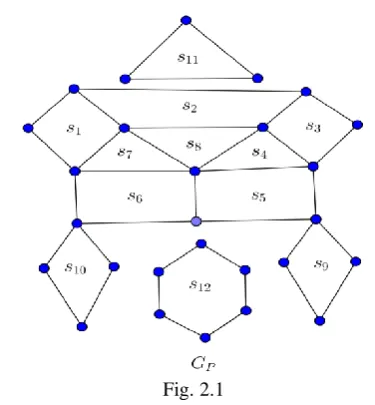
[image:2.595.325.495.340.449.2]Example 2.5.
Fig. 2.1
For the above graph in Figure 2.1 we have, the surface number of every surfaces are
4, 5,
6, 7,
1, 0. The mono surfaces of are and .
The islands are and .
The open and closed neighbourhood set of is and .
Also note that, the open and closed neighbourhood set of a mono surface is and . For the island there is no open and closed neighbourhood set.
Definition 2.6. A plane graph without mono surface is called simple plane graph.
Observation 2.7. In a plane graph , a surface which has a surface number one need not be a mono surface.
For example, in the following plane graph in Figure 2.3 we have, , but they are not mono surfaces.
Fig. 2.2
Remark 2.8.
Through out this paper, we consider a plane graph is surface structured graph. It means that consist of only cycles in which the cycles are detached or attached by another cycle either by edges or by vertices. Hence minimum two edges are needed to make a disconnected plane graph with two component to become a connected plane graph.
Theorem 2.9. (Euler's theorem on surfaces): If is a connected plane graph with at least two surfaces then, 1 .
Proof: Let the surface set of be such that has number of vertices and number of edges for 1 . Let be the number of mono surfaces in . Then the following cases arises in .
case (1): 0.
In this case the connected plane graph becomes simple plane graph.
[image:2.595.85.273.510.713.2]1874 Therefore, ∑
∑ .
Since all surfaces are cycle gives ∑ ∑ .
Hence 1.
case (2): .
In this case has face , where is a number of non-mono surfaces.
Then has ∑ number of vertices, ∑ number of edges and number of surfaces.
Therefore, ∑ ∑ .
Hence 1.
case (3): .
In this case all the surfaces in are mono surfaces. Then has ∑ number of vertices, ∑ number of edges and number of surfaces.
Therefore, ∑ ∑ .
Hence 1.
Corollary 2.10. For any plane graph with components, .
Proof: Since every component is a connected plane graph then by the above Theorem 2.9 we have, 1. Hence for the component
1, for 1 . Therefore, for components we have, ∑ ∑ ∑ ∑ . It gives .
3. SURFACE DOMINATION
Definition 3.1. Let be a plane graph. A surface set
is said to be a surface dominating set of if for every surface in there exist at least one surface in R such that and are adjacent. The surface domination number is defined as the minimum number of surfaces that dominates the graph and is denoted by .Example 3.2.
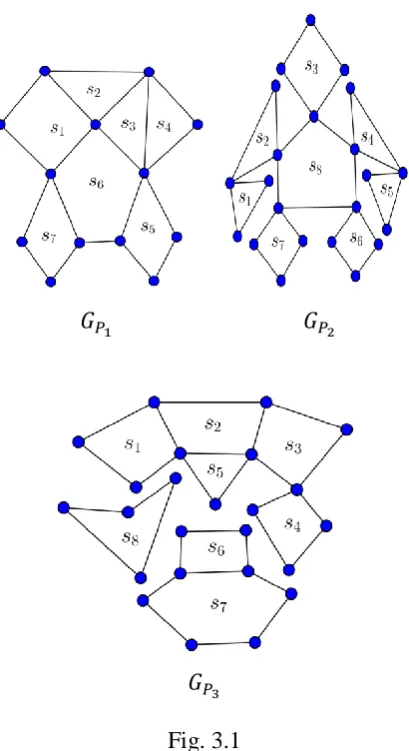
For graph in Figure 3.1 we have
are some surface dominating set. Since has minimum cardinality gives ( ) Also, note that graph
is a graph with all surfaces are mono surfaces and graph is disconnected.
Fig. 3.1
Definition 3.3. A surface dominating set R of is minimal surface dominating set if no proper subset of R is a surface dominating set of .
For graph in Figure 3.1 the sets and are minimal surface dominating sets.
Remark 3.4. For the study of the surface domination number throughout this paper we consider the plane graph has at least one surface dominating set.
Theorem 3.5. Let be a simple connected plane graph. Then a surface dominating set R of is a minimal dominating set if and only if for each surface one of the following condition holds:
(i) is a mono surface or an island.
(ii) There exist an surface such that or .
[image:3.595.314.519.105.481.2]1875 Proof: Assume R is a minimal dominating set of .
Then for every surface in R, is not a surface dominating set and hence there will be some surface in is not surface dominated by any surface in . This gives either or . If then is a mono surface or an island. If surface then is not surface dominated by , but is surface dominated by elements of , then is adjacent only to the surface s in gives or . If there is a surface in and then the surfaces can be disjoint or connected. If it is connected it can be connected by a vertex or edges. If and are not adjacent then, they have a common vertex. Conversely, assume the conditions (i), (ii) and (iii) hold. Suppose R is not a minimal dominating set. Then there exist a surface in such that is a surface dominating set. Then (i) does not hold. If is a surface dominating set then every surface in is adjacent to at least one surface in then we have that (ii) and (iii) does not hold. This contradicts our assumption and hence the converse.
Theorem 3.6. Let be a simple connected plane graph. Then for every minimal surface dominating set
R in , is also an surface dominating set of .
Proof: Let R be a minimal surface dominating set of . Suppose is not a surface dominating set. Then there exists a surface in such that is not surface dominated by any surface in . Since is a simple connected plane graph, is surface dominated by at least one surface in which contradict the surface minimality of . Hence is a surface dominating set.
From the definition of minimal surface dominating set and minimum surface dominating set we have the following theorem is obvious.
Theorem 3.7. Every minimum surface dominating set in is a minimal surface dominating set.
The converse of the above theorem is not true. For example, in the plane graph in Figure 3.1, the surface set is a minimal surface dominating set, but it is not a minimum surface dominating set.
The following theorem gives the surface domination number in terms of face value:
From the definition of surface domination number the following bounds are obvious.
Theorem 3.8. is a plane graph with at least one surface, then 1 .
Theorem 3.9. For any connected plane graph, the surface domination number is if and only if all its surfaces are mono surface.
Proof: Let be a connected plane graph with surfaces. Since all the surfaces are mono surfaces and the surfaces are connected each other only by a vertex and not by edges. No two surfaces are adjacent. Then all the surfaces are in the minimum surface dominating set and hence .
On the otherhand, suppose , let be a minimum surface dominating set with cardinality . Now, prove that has only mono surfaces. Conversely, assume that has at least one non mono surface. Since is connected gives has at most surfaces which contradict the minimality of . Hence all the surfaces in are mono surfaces.
Theorem 3.10. For any (m, n, r) simple connected plane graph , .
Proof: Let R be a minimal surface dominating set of . By Theorem 3.6, is a surface dominating set of . Hence | | | | , where | | and | | are cardinality of and cardinality of .
Theorem 3.11. For any simple connected (m, n, r)
plane graph ,
, where is a
maximum surface degree of .
Proof: Let R be a surface dominating set with cardinality . Then it is obvious that | | . It gives
.
Theorem 3.12.[5] If is any planar graph with 3, then 3 6. Furthermore, if has no triangles, then 2 4.
1876 Proof: Since is a connected plane graph.
Then, by Theorem 2.9 and Theorem 3.12, we have and 3 6 gives 2 5 . Similarly, if has no triangles, then 2 4 gives 3.
Theorem 3.10 and 3.13 gives the following results.
Corollary 3.14. For any simple connected plane graph , 2 5 2 and with no triangles, 3 2.
4. CONCLUSION:
In this paper the surface domination is introduced and the corresponding surface dominating set and surface domination number are defined for simple graph. Also, the characterizations of the surface dominating set are presented. Also the bounds and exact values of the surface domination number are given. Further, the surface domination parameter can be extended by studying the properties like independent, connected and disconnected, etc.
(A.1)
REFERENCES
[1] Arumugam,.S,; Velammal,.S. (1998): 'Edge domination in graphs', Taiwanese Journal of Mathematics, 2(2), pp.173-179.
[2] Berge, C. (1962): Theory of Graphs and its Applications, Methuen, London.
[3] Cockayne, E.J.; Hedetniemi,.S.T. (1977): 'Towards a theory of domination in graphs', Networks, 7, pp.247-261.
[4] Douglas B.West, Introduction to Graph Theory,
Edition, University of Illinois-Urbane-
PHI-Pvt. Ltd., New Delhi.
[5] Harary, F. (2001): Graph Theory, Addison-Wesley Publishing company.
[6] Haynes, T.W.; Hedetniemi, S.T.; Slater, P.J. (1998): Fundamentals of Domination in Graphs. Marcel Dekker, New York.
[7] John Clark Derek Allan Holton, A First Look At Graph Theory, Allied publ., Ltd.
[8] Kulli, V.R. (2010): Theory of Domination in Graphs, Vishwa International Pub., India.
[9] Mitchell, S & Hedetniemi, S.T. (1977): 'Edge domination in trees', Congr. Numer. 19, pp.489-509.