
Cation Binding in Nickel Pincer-Crown Ether Systems
ByStewart Heath Kerr
Submitted to the Department of Chemistry as supplement to the requirements for the degree of
Bachelor of Science in Chemistry with Honors
at the
University of North Carolina at Chapel Hill
_______________________________________ Faculty Advisor
Abstract
2
Contents
1 Introduction
2 Results and Discussion
2.1 Synthesis and characterization of (κ3-15c5NCOPiPr)Ni(Br)
2.2 Investigation of cation-crown binding interactions of (κ3-15c5NCOPiPr)Ni(Br)
2.3 Synthesis and characterization of (κ3-18c6NCOPiPr)Ni(Br)
2.4 Investigation of cation-crown binding interactions of (18c6NCOPiPr)Ni(Br) 2.5 Investigation of halide effects on cation-crown interactions
2.6 Investigation of reversible cation binding
3 Conclusion
3
1. Introduction
Enzymes selectively and efficiently catalyze a wide array of biochemical reactions that occur
in living organisms and are vital to life. Fundamental functions such as digestion, metabolism,
and cell signaling are all made possible by enzymes. Many of these processes are regulated by
simple external stimuli, such as redox reactions modulated by Fe2+ and increased structural stability by Ca2+.1 The phenomena of metal ions modulated enzyme folding is an example of a biological process that uses simple parts to accomplish difficult tasks. In this case, an ion binds
to an enzyme in an allosteric site to change its shape and allow it to perform a slow or otherwise
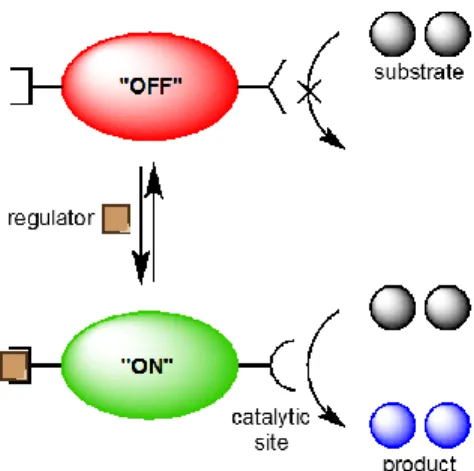
impossible function (Figure 1).2 Researchers have long sought to mimic the controllable,
efficient reactivity of enzymes with goals of understanding the basic mechanism of their
operation and developing man-made analogues capable of catalyzing reactions relevant to drug
discovery, manufacturing, and synthesis of a wide range of natural products.3 Much
advancement in this field has focused on the development of precious metal catalysts based on
palladium and platinum. However, catalysts based on nickel, a less expensive and more
earth-abundant metal, have not been thoroughly investigated even though they can carry out many of
the same chemical reactions.4 Furthermore, fundamental studies of the reactivity of these precious metal catalysts can be performed with cheaper, analogous nickel complexes. With
demand for inexpensive chemical building blocks and consumer products (i.e. pharmaceuticals,
plastics, and fuels) only increasing, new, less expensive ways to efficiently produce these
4
Figure 1. Depiction of allosteric regulation of an enzyme. Adapted from Wiester et al.3
Inspired by ion-regulated enzymes in nature, the Miller lab has designed and synthesized
a new pincer-crown ether homogenous catalyst framework with built in aza-crown-ether cation
receptor (Figure 2).5
Figure 2. Pincer-crown ether ligand framework attached to a Ni(II) metal center.
Pincer ligands have been known to increase the stability and reactivity of metal
complexes, and crown ethers are known to interact strongly with cations.6,7 In pincer systems, the ligand is able to easily move between a bound form that is stable against decomposition and
an unbound form that is highly reactive – this type of reactivity stems from the hemilabile nature
of the pincer ligand (Scheme 1). Hemilability of this type can exist in two states – static and
dynamic. Static hemilability functions similarly to the allosteric regulation depicted in figure 1;
5 Dynamic hemilability is characterized by rapid, reversible binding of a regulator species in
equilibrium – allowing for quick interconversion between coexisting “on” and “off” states.8 This
rapid equilibrium between the two states allows for tunable hemilability proportional to amount
of regulator species added. Using the affinity of crown ethers for cations, dynamic hemilability
can be achieved from the pincer-crown ether moiety through establishing equilibrium of added
salts in solution.
Scheme 1. Adapted from Kita et al.5
The Miller lab has shown that when metalated with Ir, the pincer-crown ether ligand
promotes controllable accelerations in H–D exchange reactivity in the presence of alkali metal
cations lithium and sodium. It is hypothesized that this enhanced reactivity arises from the two
previously discussed components of the pincer-crown ether system: cation-crown interactions
and dynamic hemilability. Specifically, cations interact with the crown ether macrocycle of the
ligand thereby inducing dynamic hemilability and allowing for the opening of a coordination site
leading to increased reactivity. Both cation-crown interactions and dynamic hemilability are vital
to the success of this tunable homogenous catalytic system. While the observed
6 hemilability are not currently well defined. Reported herein are cation binding studies with
similar nickel pincer-crown ether complexes undertaken in an effort to better understand the
fundamental interactions of alkali metal cations with the pincer-crown ether ligand framework
7
2. Results and Discussion
2.1. Synthesis and characterization of (κ3-15c5NCOPiPr)Ni(Br). First, a new method of
synthesizing the precursor of the pincer-crown ether ligand, (15c5NCOH), was explored as a way
of increasing synthetic efficiency. The previous method of synthesizing (15c5NCOH)was
successful, but involved a multistep reaction utilizing highly reactive reagents.5 The newly
explored method makes use of a simple reductive amination reaction with a relatively weak
hydride source to give the desired product with little to no direct reduction of the aldehyde
starting material.9,10 A sodium bicarbonate quench followed by extraction and purification using
silica column chromatography allows for higher overall isolated yields of pure product in
comparison to the previous method. This synthesis was carried out on a 200 mg scale but has
since been successfully performed on larger scales, highlighting the utility of this method. The
preligand was then phosphinated using chlorodiisopropyl phosphine according to a previously
published procedure.5 Metalation of the pincer-crown ether ligand containing the aza-15-crown-5
macrocycle, (15c5NCOPiPr)H, was accomplished using previously reported synthetic methods.11 A heated toluene solution of the ligand and NiBr2(DME) (DME = dimethoxyethane) at 65 °C was
stirred for 3 h in the presence of 3.0 equiv of NEt3 (Scheme 2). The bromide complex (κ3 -15c5NCOPiPr)Ni(Br) was isolated in high yield using this procedure adapted from Zargarian, who
reported the first nickel NCOP complexes using related ligands featuring simple secondary or
8
Scheme 2.
Figure 3. 1H NMR of (κ3-15c5NCOPiPr)Ni(Br) in CD3CN.
2.2. Investigation of cation-crown binding interactions of (κ3-15c5NCOPiPr)Ni(Br).
The reactivity of the pincer-crown ether complex (κ3-15c5NCOPiPr)Ni(Br) with alkali metal cations was investigated next. Previous studies in the group had suggested that cations interact
with the crown ether arm, producing a noticeable change in reactivity.5 Smooth upfield shifts of the resonance corresponding to the methylene linker protons between the phenyl backbone and
the aza-crown-ether arm, which are located around at a chemical shift of around 4.4 ppm,
9 equilibrium binding process was occurring (Scheme 3).
Scheme 3.
In order to gauge the strength of cation-crown interactions, it was first necessary to
determine their stoichiometry. To do this, the method of continuous variations, also known as a
Job’s plot, was employed.12 The concentration of both (κ3-15c5NCOPiPr)Ni(Br) and the cation was
varied while the total concentration of both in solution remained constant. This yields a range of
differences in mole fractions of the host and guest species that can be used, in conjunction with
the various chemical shifts of the methylene linker protons as the mole fraction is varied, to
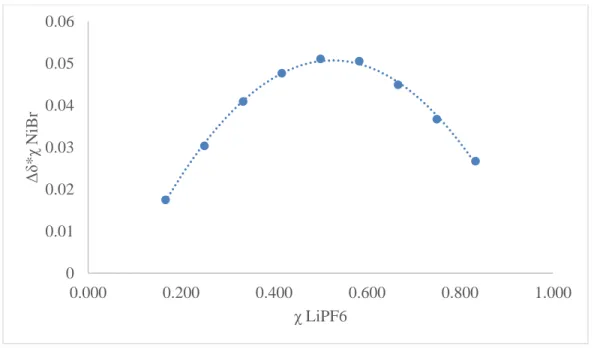
determine binding stoichiometry. Maxima at a mole fraction of 0.5 indicate 1:1 binding between
(κ3-15c5NCOPiPr)Ni(Br) and the cation while maxima at 0.33 and 0.66 represent 2:1 and 1:2
binding respectively.12 A detailed account of the method of continuous variation procedure is
given in the experimental section. Job’s plots were constructed for interactions between (κ3
-15c5NCOPiPr)Ni(Br) and Li+, Na+, and K+ salts. Monitoring the change in chemical shift of the
methylene linker proton in the 1H NMR spectra as salt content is varied affords some qualitative
measure of cation binding strength. For Na+ and K+ salts, the change in chemical shifts were small and quantitative analysis was inconclusive. However, the Job’s plot for the interaction of
10 binding stoichiometry (Figure 4). Based on this result, cation-crown interactions were assumed
to be 1:1 for Na+ and K+ as well.
Figure 4: Job’s plot of (κ3-15c5NCOPiPr)Ni(Br) and LiPF6. A maximum at 0.5 χ LiPF6 indicates
one-to-one binding stoichiometry.
Having elucidated the stoichiometry between cations and the nickel pincer crown-ether
moiety, the strength of the interaction between (κ3-15c5NCOPiPr)Ni(Br) and alkali metal salts was probed next using a modified titration technique. Solutions containing 10 mM (κ3
-15c5NCOPiPr)Ni(Br) in CD
3CN were titrated with 0.5, 1, 2, 4, 6, 8, and 10 equivalents of various
salts and monitored via 1H NMR spectroscopy. Smooth shifts of the methylene linker resonance were observed with increasing salt concentration and a binding isotherm was constructed for
each salt (Figure 5). This technique was followed for all further titrations and full procedural
details are given in the experimental section. 0
0.01 0.02 0.03 0.04 0.05 0.06
0.000 0.200 0.400 0.600 0.800 1.000
Δδ
*
χ
N
iB
r
11 Figure 5 Left) NMR data for the titration of (κ3-15c5NCOPiPr)Ni(Br) with LiPF6,increasing equivalents
from top (0 eq) to bottom (8 eq), Right) LiPF6 binding isotherm at 298 K.
First, the effect of the salt’s counter anion on binding of the cation was explored under
the hypothesis that more coordinating counter ions would reduce cation-crown interactions. To
test this, (κ3-15c5NCOPiPr)Ni(Br) was titrated with two Li+ salts; LiOTF and LiPF6. A binding
isotherm plot of chemical shift of the methylene linker protons versus concentration of each Li+ salt was constructed (Figure 6). Qualitatively, reaching the chemical shift plateau quicker,
represented by a steeper slope at low salt concentrations, reflects stronger interactions between
the salt and the crown-ether. From figure 6, it appears that the interactions between the two Li+
salts are roughly equal with LiPF6 perhaps exhibiting a slightly stronger interaction. 4.05
4.1
4.15
4.2
4.25
4.3
4.35
4.4
0.000 0.020 0.040 0.060 0.080 0.100
δ
(p
p
m)
12
Figure 6 Binding isotherms of (κ3-15c5NCOPiPr)Ni(Br) with LiOTf and LiPF6 salts.
In order to further probe the effect of the counter anion on cation-crown interactions,
crystal structures of the two complexes were compared. X-ray crystallography data for the LiOTf
adduct [(15c5NCOPiPr)NiBr][LiOTf] had been collected previously in the lab and their method of crystallization proved useful in growing crystals of the LiPF6 complex. Crystals of
[(15c5NCOPiPr)NiBr][LiPF6] were grown using slow vapor diffusion of diethyl ether into a
concentrated d-chloroform solution. The resulting crystal structure is shown in figure 7. The
hypothesis that the LiPF6 adduct would exhibit a stronger interaction with the crown than the
analogous LiOTf complex, due to the less coordinating nature of the PF6 anion, could be
indicated by shorter oxygen-lithium lengths and a longer lithium-fluorine length in the crystal
structure of the LiPF6 complex relative to the LiOTf complex. Upon comparing the structures of
the two crystals, the average Li-Ocrown bond lengths were indeed slightly shorter for the LiPF6
adduct, while the Li-F bond is actually slightly shorter than the Li-O bond in the LiOTf adduct
(Table 1). Given that the Job’s plot between the two adducts were similar and that the crystal
4.050 4.100 4.150 4.200 4.250 4.300 4.350 4.400
0.000 0.050 0.100 0.150
13 structures of the two species varied only slightly, anion effects were deemed to be minimal
compared to other factors, such as choice of cation and crown ether size, affecting cation-crown
interactions.
Figure 7 Crystal structure of [(κ3-15c5NCOPiPr)Ni(Br)][LiPF6] with ellipsoids drawn at the 50%
14
Table 1. Selected bond lengths (Å) and angles (deg) of the two Li+ adducts.
[(κ3-15c5NCOPiPr)Ni(Br)][LiPF
6] [(κ3-15c5NCOPiPr)Ni(Br)][LiOTf]
Li-X* 1.928 (10) 1.933 (10)
Avg. Li-Ocrown 2.0047 (8) 2.058 (11)
Ni-N 2.046 (4) 2.0451 (5)
Ni-Br 2.360 (10) 2.3598 (11)
Ni-C 1.851(5) 1.857(6)
Ni-P 2.1086(13) 2.1085(16)
N-Ni-C 83.375 83.8
N-Ni-Br 100.964 100.94
*Li-X indicates the bond between the lithium and anion where X represents F and O respectively.
Having determined that counter anion effects play a minimal role in cation-crown
interactions, the effect of the cation itself was studied. Further titrations of KPF6 and NaBArF
with (κ3-15c5NCOPiPr)Ni(Br) were performed and binding isotherms of each cation were constructed (Figure 8). From this data, it is clear that Li+ interacts most strongly with the
15c5-aza-crown ether moiety of the nickel complex. Using the program BindFit, developed by
Thordarson et al.,13 binding equilibrium constants were calculated from the NMR data for each
salt (Table 2). As expected from the Job’s plot data, the aza-15-crown-5 macrocycle exhibits a
much stronger interaction with Li+, up to a ten-fold increase, while having very little interaction with both Na+ and K+. This is likely due to better matching between the small Li+ cation and the
small aza-15c5-crown ether macrocycle as similar selectivity is observed with free 12c4-crown
15 interactions for this system and allows for a more informed design of future studies of tunable
dynamic catalysis for these pincer-aza-15c5-crown ether systems.
Figure 8 Binding isotherms for (κ3-15c5NCOPiPr)Ni(Br) titrated with various alkali metal salts.
Table 2. Equilibrium constants for the binding of various metal cations with 15c5NiBr.
Complex Keq (M-1)
[(κ3-15c5NCOPiPr)Ni(Br)][LiOTf] 91
[(κ3-15c5NCOPiPr)Ni(Br)][NaBArF] 2
[(κ3-15c5NCOPiPr)Ni(Br)][KPF
6] 1
2.3. Synthesis and characterization of (κ3-18c6NCOPiPr)Ni(Br). Presumably, increasing
the size of the aza-crown ether moiety attached to the Ni center will have some effect on
cation-crown interactions. Furthermore, having additional e- donors could facilitate more dynamic hemilabile binding between the crown and metal center. Thus, a macrocycle with an additional
oxygen provides an interesting comparison to (κ3-15c5NCOPiPr)Ni(Br). In order to probe the effect
of a larger aza-crown ether, an analogous aza-18-crown-6 nickel complex, (κ3 -4.050 4.100 4.150 4.200 4.250 4.300 4.350 4.400
0.000 0.050 0.100 0.150 0.200
16
18c6NCOPiPr)Ni(Br) was synthesized and studied. The method used to metalate (15c5NCOPiPr)H
was easily adapted to the (κ3-18c6NCOPiPr)Ni(Br) analogue and resulted in high yields (Scheme
4). Full synthetic details are given in the experimental section. NMR spectra of (κ3
-18c6NCOPiPr)Ni(Br) were similar to that of the 15c5 analogue with the appearance of four
additional protons in the crown ether region. Again, the methylene linker resonance between the
crown ether and the aryl backbone provides a smooth chemical shift that can be used as a handle
to monitor the interaction of cations with the crown.
Scheme 4
2.4. Investigation of cation-crown binding interactions of (18c6NCOPiPr)Ni(Br).
Once again, determination of binding stoichiometry was required before quantitative
analysis could occur. A Job’s plot for (κ3-18c6NCOPiPr)Ni(Br) was constructed using each cation
Li+, Na+, and K+ and again found to be 1:1. Following the study of binding stoichiometry, titrations of (κ3-18c6NCOPiPr)Ni(Br) with LiOTf, NaBArF, and KPF
6 were performed.
Immediately, it was clear from the titration experiments that the aza-18-crown-6 moiety exhibits
much stronger cation-crown interactions than the aza-15-crown-5 as much smaller
concentrations of salts yielded more significant changes in the chemical shift of the methylene
linker resonance. Binding isotherm plots were constructed (Figure 9) and binding equilibrium
cation-17 crown interactions quite substantially. For the larger aza-18-crown-6, Na+ binds over ten-fold more strongly than K+ and Li+. Again, this is likely due to a better fit of the Na+ ion into a
five-donor aza-crown ether system as a similar trend in cation binding is observed for free
15-crown-5 in CH3CN, which has a larger cavity and the same number of available oxygen atoms as (κ3 -18c6NCOPiPr)Ni(Br).14 The binding equilibrium of NaBArF with (κ3-18c6NCOPiPr)Ni(Br) is the
largest binding equilibrium constant that has been observed for this nickel pincer-crown ether
system and is the focus of ongoing studies both thermodynamically and catalytically.
Figure 9 Binding isotherms for (κ3-18c6NCOPiPr)Ni(Br)titrated with various alkali metal salts.
Table 3. Equilibrium constants for the binding of various metal cations with 18c6NiBr.
Complex Keq (M-1)
[(κ3-18c6NCOPiPr)Ni(Br)][LiOTf] 34
[(κ3-18c6NCOPiPr)Ni(Br)][NaBArF] 1257
[(κ3-18c6NCOPiPr)Ni(Br)][KPF
6] 60
4.000 4.100 4.200 4.300 4.400 4.500 4.600
0.000 0.050 0.100 0.150
18
2.5. Investigation of halide effects on cation-crown interactions. Having investigated
the effect of anions, cations, and macrocycle size on cation-crown interactions, it was evident
that all of these play some role, whether it is large in the case of cation choice and macrocycle
size or small in the case of anionic effects. Yet, all of these factors are in close proximity and
clearly connected to either the cation or the crown ether. The ability to allosterically control
crown interactions, without altering the crown or salt, would be a nifty tool to tune
cation-crown interactions and would also grant some information as to interactions of the pincer-cation-crown
ether framework as a whole. To this end, the effect of the fourth ligand, which up to this point
had been Br, was explored by substituting for different halides.
The pincer-crown ether ligand (15c5NCOPiPr)H was metalated using NiCl2(DME)
analogously to the synthesis of (κ3-15c5NCOPiPr)Ni(Br)to yield the chloride complex (κ3
-15c5NCOPiPr)Ni(Cl). The 1H NMR and 31P{1H} spectra of the Cl species were similar to that of
the Br species, with a noticeable shift in the benzylic methylene linker 1H resonance relative to that of the bromide complex. An analogous iodo-substituted complex (κ3-15c5NCOPiPr)Ni(I) was
synthesized according to the Finkelstein reaction.15 An acetone solution of (κ3
-15c5NCOPiPr)Ni(Br)and 4.4 equiv of KI was allowed to stir for 3 days to form the iodo-substituted
complex. Again, the 1H and 31P{1H} spectra of (κ3-15c5NCOPiPr)Ni(I) were similar to that of both
19 cation-crown interactions to still be 1:1, the two newly synthesized complexes were titrated with
LiOTF and binding equilibrium constants were calculated (Figure 10, Table 4).
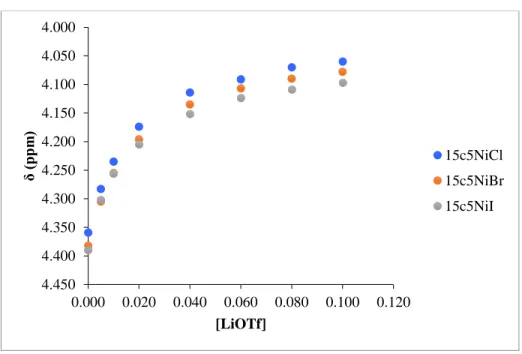
Figure 10 Binding isotherms constructed from the titrations of the three different halogenated nickel pincer-crown ether complexes with LiOTf.
Table 4. Equilibrium constants for the binding of LiOTf with the Br, Cl, and I species.
Complex Keq (M-1)
[(κ3-15c5NCOPiPr)Ni(Br)][LiOTf] 91
[(κ3-15c5NCOPiPr)Ni(Cl)][LiOTf] 92
[(κ3-15c5NCOPiPr)Ni(I)][LiOTf] 117
While the Br and Cl complexes appear to have similar affinity for LiOTf, the I complex
exhibits significantly higher interaction with LiOTf. By changing to a larger more electron rich
halide, perhaps the Li+ is able to bridge the crown ether oxygens and iodine, using it as a fifth electron donor and stabilizing its cation-crown interactions. Previous crystallographic data
collected by the lab had shown this to occur with [(κ3-18c6NCOPiPr)Ni(Br)][NaBArF] indicating that it was possible. To test this hypothesis, crystals of [(κ3-15c5NCOPiPr)Ni(I)][LiOTf] were grown by slow vapor diffusion of diethyl ether into a saturated DCM solution at -30 °C. X-ray
4.000 4.050 4.100 4.150 4.200 4.250 4.300 4.350 4.400 4.450
0.000 0.020 0.040 0.060 0.080 0.100 0.120
20 crystallography data was collected and a crystal structure was determined (Figure 11). The
crystal structure shows that no bridging interaction is occurring. Furthermore, the bond distances
and angles show that it is, in fact, very similar to the [(κ3-15c5NCOPiPr)Ni(Br)][LiOTf] complex, except that the Ni-I bond is longer (as to be expected). While no bridging interaction appears to
be taking place, it is possible that the increased electron density brought into the system by the
iodide allows the crown ether oxygens to interact with Li+ slightly stronger, as supported by shorter average Li-Ocrown bonds and a longer Li-OTf bond. Further studies are required to test
this hypothesis, but it appears that cation-crown interactions can be tuned, albeit modestly, by
changing the fourth ligand.
21
Table 5. Selected bond lengths (Å) and angles (deg) of the Br and I complexes.
[(κ3-15c5NCOPiPr)Ni(I)][LiOTf] [(κ3-15c5NCOPiPr)Ni(Br)][LiOTf]
Li-OTf 1.942 (10) 1.933 (10)
Avg. Li-Ocrown 2.053 (8) 2.058 (11)
Ni-N 2.053 (4) 2.0451 (5)
Ni-X 2.536 (10) 2.3598 (11)
Ni-C 1.864(5) 1.857(6)
Ni-P 2.118(13) 2.1085(16)
N-Ni-C 83.55 83.8
N-Ni-X 101.77 100.94
*Ni-X indicates the bond between the lithium and halide where X represents I and Br respectively.
The titrations and subsequent equilibria studies have allowed for the optimization of
cation-crown interactions for this system, leading to a more informed study of tunable dynamic
catalysis. Furthermore, one might imagine that catalysis can be easily tuned by increasing or
decreasing macrocycle size and the cation that is chosen to interact with the crown. However,
cation-crown interactions are only the first step in designing these tunable catalytic systems; the
pincer-crown ether system must also establish dynamic hemilability. Research into this area is
preliminary and is not touched on in this report, however, reversibility between two cation
binding regimes involving the hemilabile nature of the ligand is explored.
2.6. Investigation of reversible cation binding. Similar to the titration studies, (κ3 -15c5NCOPiPr)Ni(Br) was used as a starting point for these investigations. The charged complex,
[(κ4-15c5NCOPiPr)Ni][PF
6], was synthesized by stirring (κ3-15c5NCOPiPr)Ni(Br) and AgPF6 in
pincer-22 crown ether ligand exhibits tetradentate coordination by weakly binding nickel through the
oxygen adjacent to the nitrogen.
Scheme 5
In theory, this weak nickel-oxygen bond in the tetradentate state is easily displaced by substrate
in non-coordinating solvents which can then undergo a catalytic transformation. Future studies
are needed in order to gauge how readily this hemilability occurs.
Upon solvating the cationic tetradentate species with MeCN, the complex [(κ3
-15c5NCOPiPr)Ni(NCCD
3)][PF6] is formed. Subsequent study of the acetonitrile bound species was
conducted revealing that the neutral and cationic species display markedly different binding
affinities for cations. The neutral (κ3-15c5NCOPiPr)Ni(Br) exists in a “strong binding” regime in CD3CN (LiOTf, Ka = 91 M–1) whereas the cationic species [(κ3-15c5NCOPiPr)Ni(NCCD3)][PF6]
exists in a “weak binding” regime (LiPF6, Ka = 12 M–1). This is expected as switching to the
tetradentate coordination mode removes an oxygen donor that has been shown, through x-ray
crystallography, to interact with the cation. Simple halide abstraction should therefore result in
the ability to switch between these two regimes. Accordingly, addition of AgPF6 to a J-Young
tube containing (κ3-15c5NCOPiPr)Ni(Br) and 10 equivalents of LiOTf led to an immediate color
change from golden yellow to pale yellow consistent with formation of the cationic species [(κ3
-15c5NCOPiPr)Ni(NCCD
23 linker resonance corresponding to the Ni species in the 1H NMR spectrum of the reaction
mixture (δ 4.08 to δ 4.15, Figure 12). These specific chemical shifts fall on the previously
collected binding isotherm curves at the appropriate Li+ concentration, indicating that binding has shifted from the strong to the weak regime. Addition of a stoichiometric amount of tetra-n
-butylammonium bromide (NBu4Br) to the tube led to the expected color change back to golden
yellow and reversion of the shift corresponding to the methylene linker resonance. An identical
experiment was performed with (κ3-18c6NCOPiPr)Ni(Br) yielding the same result. It is important
to note that under these experimental conditions, the complex may exist as the OTf– bound complex (κ3-15c5NCOPiPr)Ni(OTf). However, the OTf- bound complex was synthesized using
halide abstraction and NMR data is consistent with anion displacement by CD3CN.These results
indicate that modulation is fully reversible and cation binding can both be diminished and
enhanced through the addition and removal of a charge-generating reagent to the neutral species
(Scheme 6). It is worth noting that in this system there are two types of reversibility present,
equilibrium and chemical. Rapid interconversion of the two states occurs in the case of
equilibrium reversibility between the cation-free and cation-bound complexes. Consistent with
titration studies, at any point in time there exists some amount of complex in both the free and
bound states. Conversely, reversibility between the acetonitrile and bromide bound species
occurs upon addition of halide abstracting agents and brominating agents respectively, but the
24 for conversion between the two binding regimes in discrete steps rather than an averaging of
their cation affinities.
25
Scheme 6
This reversible modulation of binding is reminiscent of highly efficient
allosterically regulated enzymes found in nature. In this system, halide abstraction or addition to
the primary coordination sphere of the transition metal results in marked differences in binding
properties of the crown ether in the secondary coordination sphere. Thus, the abstracting the
halide and converting to the cationic species allows for modulation of cation-crown interactions
in a strong and reversible manner. While this experiment did not outright show hemilability
between the tetradentate and tridentate species, it does demonstrate that the pincer-crown ether
ligand is able to undergo clean, reversible transformations, which are necessary for dynamic
hemilability. Attempts to show hemilability to bind different substrates upon addition of alkali
salts to [(κ4-15c5NCOPiPr)Ni][PF
26
3. Conclusion
A vast array of nickel pincer-crown ether complexes were synthesized and characterized
using NMR and crystallographic methods. The cation-crown interactions of these various nickel
species was determined to be 1:1 using the method of continuous variations. Modified titration
methods were used to gauge the strength of cation crown interactions across numerous factors:
anion identity, cation identity, macrocycle size, and proximal ligand effects. It was found that
both cation identity and macrocycle size play a large role in cation-crown interactions, with the
smaller aza-15-crown-5 exhibiting stronger interactions with the smaller Li+ ion and the larger aza-18-crown-6 exhibiting stronger interactions with the larger Na+ ion. In either case, anion
effects were deemed to be minimal in comparison. Furthermore, the identity of the fourth ligand
demonstrated a minor but significant effect on cation-crown interactions. These results can be
used to design pincer-crown ether systems with optimized cation-crown interactions.
Next, the hemilabile nature of (κ3-15c5NCOPiPr)Ni(Br) was explored through the synthesis of the tetradentate species [(κ4-15c5NCOPiPr)Ni][PF6] via simple halide abstraction. This complex
was characterized, confirming a switch to the tetradentate coordination mode. Titration
experiments with the tetradentate complex showed that its interactions with cations were
significantly less than the neutral, tridentate complex – resulting in two different binding regimes
for this complex. Reversible switching between the two regimes was achieved by addition and
removal of a charge generating, halide abstracting agent - showing that cation-crown interactions
can be modulated significantly and reversibly. Dynamic hemilability requires clean, reversible
27
4. Experimental
Method of continuous variations (Job’s plot). In a glovebox, a 12 mM stock solution of
(15c5NCOPiPr)NiBr (2) was prepared by dissolving 51.9 mg (0.090 mmol) in 7470 µL of acetonitrile in a 20 mL scintillation vial. A 48 mM stock solution of NaBArF4 was prepared by
dissolving 224.7 mg (0.254 mmol) of NaBArF4 in 5280 µL of acetonitrile in a 20 mL scintillation
vial. Vials were charged with 100, 150, 200, 250, 300 350, 400, 450, and 500 µL of
(15c5NCOPiPr)NiBr stock solution. To these vials, 125, 112.5 100, 87.5, 75, 62.5, 50, 37.5, and 25
µL of NaBArF4 stock solution respectively was added. The resulting solution was concentrated to
dryness in vacuo to yield a yellow film. Each film was dissolved in 600 µL of acetonitrile-d and
analyzed by 1H NMR (600 Mhz). Analogous procedures were followed for each Job’s plot study.
General procedure for titration experiments. In a glovebox, a 12 mM stock solution of
(15c5NCOPiPr)NiBr (2) was prepared by dissolving 51.9 mg (0.090 mmol) in 7470 µL of acetonitrile in a 20 mL scintillation vial. A 48 mM stock solution of NaBArF4 was prepared by
dissolving 224.7 mg (0.254 mmol) of NaBArF4 in 5280 µL of acetonitrile in a 20 mL scintillation
vial. Aliquots of 62.5, 125, 250, 500, 750, 1000, and 1250 µL of NaBArF4 stock solution were
added to separate 20 mL scintillation vials. Each vial was then charged with 500 µL of
(15c5NCOPiPr)NiBr (2) stock solution, resulting in solutions which contained 0.5, 1, 2, 4, 6, 8, and 10 equivalents of NaBArF4 to (15c5NCOPiPr)NiBr respectively. Solvent was removed in vacuo to
yield a yellow-orange film. Each film was dissolved in 600 µL of acetonitrile-d and analyzed by
1H NMR (600 Mhz). The chemical shift of the methylene protons between the aza-crown-ether
28 the program BindFit to yield binding constants. Analogous procedures were followed for all
titrations.
Reversibility experiment. In a glovebox, solutions of (15c5NCOPiPr)Ni(Br) (14.1 mg, 12.0 mM), LiOTf (23.2 mg, 48.0 mM), AgOTf (15.6 mg, 21.9 mM), and NBu4Br (15.6 mg, 22.0
mM) were prepared in acetonitrile. A 1:10 solution of (15c5NCOPiPr)Ni(Br) to LiOTf was
prepared and evaporated to dryness. Separate vials were charged with 1.1 equivalents of AgOTF
and NBu4Br respective to (15c5NCOPiPr)Ni(Br) and evaporated to dryness. Using a J. Young tube,
an initial NMR of the 1:10 solution of (15c5NCOPiPr)Ni(Br) to LiOTf was taken in CD3CN. The
solution was returned to the glovebox and added to 1.1 equivalents of dried AgOTF. An NMR of
the resulting pale yellow solution with white precipitate was taken. The solution was returned to
the glovebox and added to 1.1 equivalents of dried NBu4Br. The solution regained its original
yellow color and a final NMR was taken. The chemical shift of the ArCH2N “methylene linker”
protons was monitored and compared. This process was repeated for the 18-crown-6 analogue
using solutions of (18c6NCOPiPr)Ni(Br), NaBArF, AgPF6, and NBu4Br.
Synthesis
General Considerations. Standard vacuum line and glovebox techniques were utilized
to maintain a N2 atmosphere during manipulation of all compounds, unless otherwise noted.
Organic solvents were dried and degassed with argon using a Pure Process Technology solvent
system and stored over 3 Å molecular sieves. Under standard glovebox operating conditions,
pentane, diethyl ether, benzene, toluene, and tetrahydrofuran were used without purging, so
traces of those solvents were present in the atmosphere and in the solvent bottles. 1H, 31P, 19F and
13C NMR spectra were recorded on 400 or 600 MHz spectrometers. NMR characterization data
29 Cambridge Isotopes Laboratories. Acetonitrile-d3 (CD3CN), benzene-d6 (C6D6), chloroform-d
(CDCl3), and methylene chloride-d2 (CD2Cl2) were freeze−pump−thaw-degassed three times,
dried by passage through a small column of activated alumina, and stored over 3 Å molecular
sieves. 1H and 13C chemical shifts are reported in parts per million relative to residual protio
solvent resonances. All 31P resonances are reported relative to 85% H3PO4 external standard (δ
0). All 19F resonances are reported relative to C6F6 (δ –164.9). The following compounds were
synthesized according to literature procedures: (15c5NCOPiPr)H, NaBArF, and LiBArF. A slightly
modified literature procedure was used to synthesize (15c5NCOPiPr)Ni(Br) and is detailed below. LiOTf was dried under reduced pressure at 100 ˚C for 24 h prior to storage in a N2 glovebox. All
other reagents were commercially available and used without further purification. Elemental
analyses were performed by Robertson Microlit Laboratories (Ledgewood, NJ).
Single-crystal X-ray diffraction data were collected on a Bruker Smart Apex-II
diffractometer at 100 ± 2 K with Cu Kα radiation (λ = 1.54175 Å). Diffraction profiles were
integrated using the SAINT software program. Absorption corrections were applied using
SADABS. The structure was solved using direct methods and refined using the XL refinement
package via the least-squares method. Hydrogen atoms were generated theoretically and refined
isotropically with fixed thermal factors.
Synthesis of m-(Aza-15-crown-5)methylphenol. A 200 mL Schlenk flask was charged
with 0.3512 g (2.88 mmol) 3-hydroxybenzaldehyde, 0.4187 g (1.91 mmol) 1-aza-15-crown-5,
and 15 mL THF. The mixture was allowed to stir for one hour and then 0.8103 g (3.82 mmol)
sodium triacetoxyborohydride was added portion-wise over 24 hours. The reaction was stirred
for an additional 24 hours and then quenched with aqueous saturated NaHCO3. The product was
30 crude product was purified using a short silica plug. Unreacted aldehyde and the directly reduced
byproduct 3-hydroxymethylphenol were eluted with a 60/40 DCM/EtOAc mobile phase until
TLC showed no remaining traces of alcohol. The product was then eluted with an 85/10/5
DCM/NEt3/MeOH mobile phase. Fractions containing the product were combined and the
solvent was removed to yield an off-white oil which was dried over P2O5 overnight (0.5152 g,
82.8% yield). Spectroscopic data matched that previously published.
Synthesis of (15c5NCOPiPr)Ni(Br). This procedure was slightly modified from a
previously published procedure. In a glovebox, a 200 mL Schlenk flask was charged with 208.3
mg (0.675 mmol) of NiBr2(DME) and 10 mL of toluene. In a separate flask, 296.6 mg (0.672
mmol) of (15c5NCOPiPr)H was stirred with 0.281 mL (2.02 mmol) of NEt3 in 15 mL of toluene
for 10 min, and then the resulting mixture added dropwise to the stirring suspension of
NiBr2(DME). The flask was sealed and heated at 65 ° C for 12 h. After heating, the solution was
filtered via cannula under N2, and the filtrate was evaporated to dryness. The resulting yellow oil
was extracted with toluene and filtered. Diffusion of pentane into a saturated toluene solution at
-30 ˚C yielded yellow crystals that were washed with 3 × 5 mL of pentane and dried under
vacuum (213.7 mg, 54.9% yield). 1H NMR (600 MHz, C6D6): δ 1.18 (dd, 3 JHP = 14 Hz, 3 JHH =
7 Hz, 6H, CH(CH3)2), 1.50 (dd, 3 JHP = 17 Hz, 3 JHH = 7 Hz, 6H, CH(CH3)2), 2.23 (m, 2H,
CH(CH3)2), 3.16 (m, 2H, crown-CH2), 3.24 (m, 4H, crown-CH2), 3.31 (m, 4H, crown-CH2), 3.40
(m, 2H, crown-CH2), 3.63 (m, 2H, crown-CH2), 3.80 (m, 2H, crown-CH2), 4.07 (m, 2H,
crown-CH2), 4.14 (m, 2H, crown-CH2), 4.47 (s, 2H, ArCH2N), 6.52 (d, 3 JHH = 7 Hz, 1H, ArH), 6.63 (d,
3 JHH = 8 Hz, 1H, ArH), 6.90 (t, 3 JHH = 8 Hz, 1H, ArH). 13C{1H} NMR (150 MHz, C6D6): δ
16.58 (d, 2 JCP = 2 Hz, CH3), 17.99 (d, 2 JCP = 4 Hz, CH3), 28.16 (d, 1 JCP = 24 Hz, CH), 56.89
31 crown-CH2), 70.58 (s, crown-CH2), 107.58 (d, 3 JCP = 13 Hz, CAr), 115.38 (d, 4 JCP = 2 Hz,
CAr), 126.68 (s, CAr), 142.08 (d, 2 JCP = 33 Hz, CAr), 153.35 (s, CAr), 165.58 (d, 2 JCP = 11,
CAr). 31P{1H} NMR (161 MHz, C6D6): δ 200.4. Anal. Calcd for C23H39O5NPNiBr: C, 47.70; H,
6.79; N, 2.42. Found: C, 47.60; H, 6.50; N, 2.38.
Synthesis of (15c5NCOPiPr)Ni(Cl). The procedure described above for the preparation of
(15c5NCOPiPr)Ni(Br) was used to prepare (15c5NCOPiPr)Ni(Cl) from 145.4 mg (0.662 mmol) NiCl2(DME), 291.8 mg (0.661 mmol) (15c5NCOPiPr)H, and 0.230 mL (1.65 mmol) NEt3. The
crude product was isolated as a red-yellow oil and was recrystallized from a saturated toluene
solution layered with pentane at -30 ˚C to yield yellow crystals that were washed with pentane
and dried in-vacuo (170.3 mg, 44.5% yield).1H NMR (600 MHz, C
6D6): δ 1.17 (dd, J = 14.4,
7.0 Hz, 6H, CH(CH3)2), 1.47 (dd, J = 17.4, 7.2 Hz, 6H, CH(CH3)2), 2.13 (m, 2H, CH(CH3)2),
3.29 (m, 12H, crown-CH2), 3.55 (m, 2H, crown-CH2), 3.69 (m, 2H, crown-CH2), 4.06 (m, 2H,
crown-CH2), 4.17 (m, 2H, crown-CH2), 4.42 (s, 2H, ArCH2N), 6.50 (d, J = 7.4 Hz, 1H, ArH),
6.59 (d, J = 7.9 Hz, 1H, ArH), 6.88 (t, J = 7.7 Hz, 1H, ArH).13C{1H} NMR (151 MHz, C
6D6): δ
16.89 (s, CH(CH3)2), 17.95 (d, J = 4.6 Hz, CH(CH3)2), 28.07 (d, J = 23.5 CH(CH3)2), 57.00 (s,
crown-CH2), 66.04 (s, ArCH2N), 69.75 (s, crown-CH2), 70.66 (s, crown-CH2), 70.95 (s,
crown-CH2), 70.98 (s, crown-CH2), 107.95 (d, J = 13.0 Hz, CAr), 115.72 (s, CAr), 126.94 (s, CAr), 140.80
(d, J = 34.2 Hz, CAr), 153.68 (s, CAr), 166.26 (d, J = 10.9 Hz, CAr).31P{1H} NMR (162 MHz,
C6D6): δ 197.65 (s). Anal. Calcd for C23H39O5NPNiCl: C, 51.67; H, 7.35; N, 2.62. Found: C,
51.79; H, 7.22; N, 2.55.
Synthesis of (15c5NCOPiPr)Ni(I). In a glovebox, a vial was charged with 117.0 mg (0.202
mmol) of (15c5NCOPiPr)Ni(Br), 148.7 mg (0.896 mmol) of KI, and 8 mL of acetone. The solution
32 oil was extracted with benzene, filtered, and pumped to dryness. The crude product was
recrystallized by layering a saturated toluene solution with pentane and placing in a -30 ˚C
freezer. The mother liquor was decanted after 48 hours and the isolated yellow crystals were
washed with pentane (88.5 mg, 70.0% yield).1H NMR (600 MHz, C
6D6):1.16 (dd, J = 14.5, 7.0
Hz, 6H, CH(CH3)2), 1.50 (dd, J = 17.3, 7.2 Hz, 6H, CH(CH3)2), 2.32 (m, 2H, CH(CH3)2), 3.26
(m, 12H, crown-CH2), 3.74 (m, 2H, crown-CH2), 3.95 (m, 2H, crown-CH2), 4.06 (m, 4H,
crown-CH2), 4.52 (s, 2H, ArCH2N), 6.53 (d, J = 7.4 Hz, 1H, ArH), 6.67 (d, J = 7.8 Hz, 1H, ArH), 6.92
(t, J = 7.7 Hz, 1H, ArH). 13C{1H} NMR (151 MHz, C
6D6): δ 16.94 (s, CH(CH3)2), 18.89 (d, J =
3.0 Hz, CH(CH3)2), 29.26 (d, J = 25.7 Hz, CH(CH3)2), 57.69 (s, crown-CH2), 64.76 (s, ArCH2N),
69.95 (s, crown-CH2), 70.44 (s, crown-CH2), 70.74 (s, crown-CH2), 107.75 (d, J = 13.1 Hz, CAr),
115.70 (s, CAr), 127.05 (s, CAr), 145.41 (d, J = 31.6 Hz, CAr), 153.73 (s, CAr), 165.21 (d, J = 10.8
Hz, CAr).31P{1H} NMR (243 MHz, C6D6): δ 203.81 (s). Anal. Calcd for C23H39O5NPNiI: C,
44.12; H, 6.28; N, 2.24. Found: C, 44.32; H, 6.09; N, 2.18.
Synthesis of (18c6NCOPiPr)Ni(Br). The procedure described above for the preparation of
(15c5NCOPiPr)Ni(Br) was used to prepare (18c6NCOPiPr)Ni(Br) from NiBr2(DME),
(18c6NCOPiPr)H, and NEt3 as yellow crystals. 1H NMR (600 MHz, C6D6): δ 1.20 (dd, J = 14.5,
7.0 Hz, 6H, CH(CH3)2), 1.52 (dd, J = 17.3, 7.2 Hz, 6H, CH(CH3)2), 2.24 (m, 2H, CH(CH3)2),
3.25 (m, 8H, crown-CH2), 3.43 (m, 5H, crown-CH2), 3.56 (m, 6H, crown-CH2), 3.67 (m, 2H,
crown-CH2), 4.03 (m, 2H, crown-CH2), 4.10 (m, 2H, crown-CH2), 4.61 (s, 2H, ArCH2N), 6.63
(d, J = 7.9 Hz, 2H, ArH), 6.66 (d, J = 7.4 Hz, 2H, ArH), 6.93 (t, J = 7.6 Hz, 1H ArH). 13C{1H}
NMR (151 MHz, C6D6): δ 16.98 (s, CH(CH3)2), 18.38 (d, J = 3.9 Hz, CH(CH3)2), 28.55 (d, J =
24.2 Hz, CH(CH3)2), 57.48 (d, J = 1.9 Hz, crown-CH2), 65.88 (d, J = 1.7 Hz, ArCH2N), 69.58 (s,
33 crown-CH2), 107.83 (d, J = 13.1 Hz, CAr), 115.96 (d, J = 2.0 Hz, CAr), 127.02 (s, CAr), 142.30 (d,
J = 33.2 Hz, CAr), 154.49 (s, CAr), 165.85 (d, J = 10.8 Hz, CAr). 31P{1H} NMR (243 MHz, C6D6):
δ 198.80 (s). Anal. Calcd for C25H43O6NPNiBr: C, 48.18; H, 6.96; N, 2.25. Found: C, 48.44; H,
6.70; N, 2.32.
Synthesis of [(15c5NCOPiPr)Ni][PF6]. In a glovebox, a solution of 25.0 mg (0.0430
mmol) [(15c5NCOPiPr)NiBr] in 4 mL CH2Cl2 was slowly added to a stirring solution of 12.6 mg
(0.0498 mmol) AgPF6 in 3 mL CH2Cl2 in a 20 mL vial covered with foil. After 1 hour, 4 mL of
pentane was added to the mixture and the resulting solution was filtered. The solvent was
removed in-vacuo to yield a yellow oil. The oil was triturated with Et2O overnight and then the
solution was decanted to yield a yellow powder (19.9 mg, 80.0% yield). 1H NMR (600 MHz,
CDCl3): δ 1.33 (dd, J = 14.4, 6.9 Hz, 6H, CH(CH3)2), 1.51 (dd, J = 19.0, 7.3 Hz, 6H, CH(CH3)2),
2.25 (m, 2H, CH(CH3)2), 3.19 (m, 2H, crown-CH2), 3.56 (m, 2H, crown-CH2), 3.65 (m, 4H,
crown-CH2), 3.75 (m, 6H, crown-CH2), 3.95 (m, 4H, crown-CH2), 4.16 (s, 2H, ArCH2N), 4.29
(m, 2H, crown-CH2), 6.43 (d, J = 8.3 Hz, 1H, ArH), 6.52 (d, J = 7.5 Hz, 1H, ArH), 6.97 (t, J =
7.8 Hz, 1H, ArH).13C{1H} NMR (151 MHz, CDCl
3): δ 16.66 (d, J = 2.9 Hz, CH(CH3)2), 17.54
(d, J = 5.8 Hz, CH(CH3)2), 28.58 (d, J = 24.1 Hz, CH(CH3)2), 54.61 (s, crown-CH2), 64.83 (s,
ArCH2N), 68.64 (s, crown-CH2), 69.31 (s, crown-CH2), 69.46 (s, crown-CH2), 75.02 (s,
crown-CH2), 109.27 (d, J = 12.1 Hz, CAr), 116.78 (s, CAr), 128.35 (s, CAr), 130.72 (d, J = 30.3 Hz, CAr),
152.61 (s, CAr), 165.82 (d, J = 8.2 Hz, CAr).31P{1H} NMR (162 MHz, CDCl3): δ 197.42 (s),
-143.06 (hept, J = 712.8 Hz, PF6). Anal. Calcd for C23H39F6NNiO5P2: C, 42.88; H, 6.10; N, 2.17.
Found: C, 42.78; H, 5.92; N, 2.17.
Synthesis of (15c5NCOPiPr)Ni(OTf). In a glovebox, a vial was charged with 67.3 mg
34 33.7 mg (0.131 mmol) of AgOTf in a foil-wrapped vial. The reaction was allowed to stir for 1
hour then 4 mL pentane was added. The resulting solution was filtered and evaporated to
dryness, yielding a yellow oil. Diffusion of pentane into a saturated toluene solution of the crude
mixture at -30 °C yielded yellow crystals that were washed with 3 × 3 mL of pentane and dried
under vacuum (36.9 mg, 49.0% yield). 1H NMR (600 MHz, CD
2Cl2): δ 1.33 (dd, J = 14.3, 7.0
Hz, 6H, CH(CH3)2), 1.50 (dd, J = 19.0, 7.3 Hz, 6H, CH(CH3)2), 2.29 (m, 2H, CH(CH3)2), 3.23
(m, 2H, crown-CH2), 3.56 (m, 2H, crown-CH2), 3.64 (m, 6H, crown-CH2), 3.72 (m, 4H,
crown-CH2), 3.91 (m, 4H, crown-CH2), 4.23 (s, 2H, ArCH2N), 4.33 (m, 2H, crown-CH2), 6.44 (d, J =
8.0 Hz, 1H, ArH), 6.55 (d, J = 7.5 Hz, 1H, ArH), 6.98 (t, J = 7.6 Hz, 1H, ArH). 13C{1H} NMR
(151 MHz, CD2Cl2): δ 16.46 (d, J = 2.7 Hz, CH(CH3)2), 17.47 (d, J = 6.1 Hz, CH(CH3)2), 28.48
(d, J = 23.8 Hz, CH(CH3)2), 54.85 (s, crown-CH2), 64.53 (d, J = 2.2 Hz, ArCH2N), 69.00 (s,
crown-CH2), 69.23 (s, crown-CH2), 69.67 (s, crown-CH2), 74.14 (s, crown-CH2), 108.99 (d, J =
12.1 Hz, CAr), 116.63 (d, J = 2.2 Hz, CAr), 128.18 (s, CAr), 130.59 (d, J = 30.7 Hz, CAr), 152.82
(s, CAr), 165.92 (d, J = 8.3 Hz, CAr). 31P{1H} NMR (243 MHz, CD2Cl2): δ 196.73 (s). 19F{1H}
NMR (376 MHz, CD2Cl2): δ -76.81 (s). Anal. Calcd for C24H39F3NNiO8PS: C, 44.46; H, 6.06;
35
References
1. Page, M. J.; Di Cera, E. Phys. Rev. 2006, 86, 1042-1092.
2. Nelson, D. M.; Cox, M. M. Lehninger Principles of Biochemistry, 4th Ed.;W. H.
Freeman: 2004.
3. Wiester, M. J. Angew. Chem. Int. Ed.2011, 50, 114.
4. Tasker, S. Z.; Standley, E. A.; Jamison, T. F. Nature2014, 509, 299-309.
5. Kita, M. R.; Miller, A. J. M. J. Am. Chem. Soc. 2014, 136, 14519.
6. Moulton, C. J.; Shaw, B. L. J. Chem. Soc., Dalton Trans. 1976, 1020.
7. Pedersen, C. J.; Frensdorff, H. K. Angew. Chem. Int. Ed. 1972, 11, 16.
8. Bassetti, M. Eur. J. Inorg. Chem. 2006, 2006, 4473.
9. Spasyuk, D. M.; Zargarian, D.; van der Est, A. Organometallics 2009, 28, 6531.
10. Abdel-Magid, A. F.; Carson, K. G.; Harris, B. D.; Maryanoff, C. A.; Shah R. D. J. Org.
Chem. 1996, 61, 3849.
11. Smith, J. B.; Miller, A. J. M. Organometallics. 2015, 34, 4669.
12. Renny, J. S.; Tomasevich, L. L.; Tallmadge, E. H.; Collum, D. B. Angew. Chem. Int. Ed.
2013, 52, 11998 – 12013.
13. Thordarson, P. Chem. Soc. Rev. 2011, 40, 1305. www.supramolecular.org
14. Liu, Y.; Han, B.; Inoue, Y.; Ouchi, M. J. Org. Chem. 1998, 63, 2144.
15. Finger, G. C.; Kruse, C. W. J. Am. Chem. Soc. 1956, 78, 6034.

![Figure 7 Crystal structure of [(κ 3 - 15c5 NCOP iPr )Ni(Br)][LiPF 6 ] with ellipsoids drawn at the 50%](https://thumb-us.123doks.com/thumbv2/123dok_us/8331449.2210249/13.918.353.611.294.625/figure-crystal-structure-ncop-ipr-lipf-ellipsoids-drawn.webp)


![Figure 11 Crystal structure of [(κ 3 - 15c5 NCOP iPr )Ni(I)][LiOTf] with ellipsoids drawn at the 50%](https://thumb-us.123doks.com/thumbv2/123dok_us/8331449.2210249/20.918.308.562.519.846/figure-crystal-structure-ncop-ipr-liotf-ellipsoids-drawn.webp)

