• No results found

Systematic evaluation of the descriptive and predictive performance of paediatric morphine population models

N/A
N/A
Protected

Academic year: 2020

Share "Systematic evaluation of the descriptive and predictive performance of paediatric morphine population models"

Copied!
15
0
0

Loading.... (view fulltext now)

Full text

(1)

RESEARCH PAPER

Systematic Evaluation of the Descriptive and Predictive

Performance of Paediatric Morphine Population Models

Elke H. J. Krekels&Johan G. C. van Hasselt&Dick Tibboel&Meindert Danhof&Catherijne A. J. Knibbe

Received:22 September 2010 / Accepted: 17 November 2010 / Published online: 14 December 2010 #The Author(s) 2010. This article is published with open access at Springerlink.com

ABSTRACT

Purpose A framework for the evaluation of paediatric population models is proposed and applied to two different paediatric population pharmacokinetic models for morphine. One covariate model was based on a systematic covariate analysis, the other on fixed allometric scaling principles. Methods The six evaluation criteria in the framework were 1) number of parameters and condition number, 2) numerical diagnostics, 3) prediction-based diagnostics, 4)η-shrinkage, 5) simulation-based diagnostics, 6) diagnostics of individual and population parameter estimates versus covariates, including measurements of bias and precision of the population values compared to the observed individual values. The framework entails both an internal and external model evaluation procedure.

Results The application of the framework to the two models resulted in the detection of overparameterization and misleading diagnostics based on individual predictions caused by high shrinkage. The diagnostic of individual and population parameter estimatesversus covariates proved to be highly informative in assessing obtained covariate relationships. Based on the frame-work, the systematic covariate model proved to be superior over the fixed allometric model in terms of predictive performance.

Conclusions The proposed framework is suitable for the evaluation of paediatric (covariate) models and should be applied to corroborate the descriptive and predictive properties of these models.

KEY WORDS model evaluation . morphine . paediatric

pharmacokinetic population modeling

ABBREVIATIONS IQR inter quartile range M3G morphine-3-glucuronide M6G morphine-6-glucuronide MPE mean prediction error

NPDE normalized prediction distribution error PD pharmacodynamics

PK pharmacokinetics PMA postmenstrual age PNA postnatal age

RMSE root mean square error RSE relative standard error

INTRODUCTION

Whereas many diagnostic and validation tools are available for the evaluation of population models in the adult population, these tools may not always directly suffice in the paediatric population due to the heterogeneity of this special population and the scarcity of the datasets. In this study, a framework including six evaluation criteria is presented for the systematic assessment of the descriptive and predictive properties of paediatric (covariate) models that takes these specific issues into consideration.

In paediatric population pharmacokinetic (PK) models, the influence of the many physiological changes that take E. H. J. Krekels

:

J. G. C. van Hasselt

:

M. Danhof

:

C. A. J. Knibbe

Division of Pharmacology

Leiden/Amsterdam Center for Drug Research Leiden, The Netherlands

E. H. J. Krekels

:

D. Tibboel

:

C. A. J. Knibbe Department of Pediatric Surgery

Erasmus MC-Sophia Children’s Hospital Rotterdam, The Netherlands

C. A. J. Knibbe (*)

Department of Clinical Pharmacy, St. Antonius Hospital P.O. Box 2500, Nieuwegein 3430 EM, The Netherlands e-mail: [email protected]

(2)

place in the paediatric age range are reflected in covariate relationships that are usually based on body-weight and/or age. However, since body-weight and age are naturally correlated in the paediatric population, there is a debate on how to incorporate the influence of the physiological changes in paediatric population PK models. Body-weight and age may be regarded as regular covariates whose predictive properties on PK parameters are evaluated together with other covariates in a systematic covariate analysis by formally testing them for significance and only retaining them in the model if they statistically improve the

model fit (1–3). Alternatively, body-weight can be included

a priori into paediatric PK models by the use of a body-weight-based allometric equation with a fixed exponent of 0.75 for clearance and 1 for distribution volume. These equations can subsequently be augmented by estimated

age-based functions of various forms (3–5).

In recent years, two different population PK models for morphine and its two major pharmacologically active metabolites, morphine-3-glucuronide (M3G) and morphine-6-glucuronide (M6G), in children younger than

3 years have been published (1,4). The model by Knibbeet

al.(1) was developed using a systematic covariate analysis.

The model by Bouwmeesteret al.(4) was developed using

fixed allometric scaling principles in conjunction with estimated age-based functions. As these models were developed using similar datasets, these models provide both an example for the assessment of the developed framework for the evaluation of paediatric (covariate) models, as well as an opportunity to directly compare the performance of these two fundamentally different paediatric covariate models.

MATERIALS AND METHODS

Models and Data

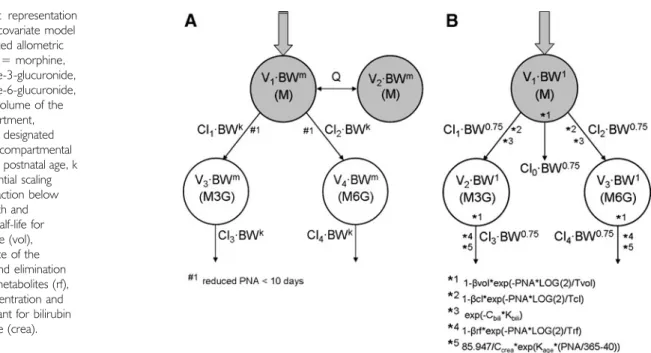
Figure 1 shows a schematic representation of the two

models that are evaluated in the current analysis. In the

model by Knibbeet al.(1), the maturation of the formation

and elimination clearances of the morphine glucuronides was found to be best described by a body-weight-based exponential equation with an estimated exponent of 1.44. Within this exponential equation, the formation clearance of the glucuronides was found to be significantly reduced in neonates younger than 10 days. Distribution volumes were estimated to scale linearly with body-weight. This model will be referred to as the systematic covariate model.

In the model by Bouwmeesteret al.(4), body-weight was

included a priori using an allometric equation with fixed

exponents of 0.75 for clearance and 1 for distribution volume. Three exponential equations based on postnatal

age (PNA) augmented the model: one equation for distribution volumes, one for the formation of the morphine metabolites and one for the elimination of the metabolites. Bilirubin concentration and creatinine concentrations were also incorporated into the model as covariates for the formation and elimination of the glucuronides, respectively. This model will be referred to as the fixed allometric model.

The systematic covariate model (Knibbe et al. (1)) was

developed using two datasets (6,7), while the fixed

allome-tric model (Bouwmeesteret al.(4)) was developed using only

one of these two datasets (6). To allow for a direct

comparison, the systematic covariate model was refit with the data from the one common dataset. This dataset will be referred to as the internal dataset of this study and consists of post-operative term neonates, infants and children up to the age of 3 years on a continuous or intermitted

intravenous morphine regimen (6).

For the external evaluation of the two paediatric covariate models in the current analysis, five previously

published datasets (7–11) were used. These external

data-sets included the same patient population as the internal dataset with the exception that their PNA ranged up to only 1 year instead of 3 years. In addition, two external

datasets included preterm neonates (7,8), which is a

younger age range than the age range in the internal

dataset (6) used for model building. An overview of all

datasets is given in TableI.

Model Evaluation

All model fitting and model-based simulations in the current study were performed using NONMEM VI (ICON, Ellicott City, MD).

The framework for the evaluation of paediatric popula-tion models is composed of the following six evaluapopula-tion criteria and tools:

1) Total number of parameters and condition number of the model: The latter was obtained by taking the ratio of the largest and smallest eigenvalue of the covariance matrix of the estimate from the NONMEM output. 2) Numerical diagnostics by means of a bootstrap analysis

using the PsN software package (12): One hundred

datasets were resampled with replacement from the internal dataset and refit to the models. The parameter estimates for fixed and random effects obtained in every separate run were summarized in terms of mean and relative standard errors (RSE) for each parameter. Runs that did not minimize successfully were excluded from the analysis.

3) Prediction-based diagnostics by means of basic

goodness-of-fit plots: Both the individual and

(3)

concentrations that were actually observed in these data-sets. Plots were made for both the internal and external datasets and for the population as a whole as well as for

stratified subsets based on age (0–1 month, 1 month–

1 year, 1–3 years). Mirror plots were created to serve as a

reference for these predictedversusobserved plots (13).

4) η-shrinkage as defined by Karlssonet al.(13), which was

calculated for all model parameters for which inter-individual variability was estimated.

5) Simulation-based diagnostics by means of normalized

prediction distribution errors (NPDE) (14): Both the

internal and merged external datasets were simulated 1,000 times with inclusion of the inter-individual variability and residual error. Using the NPDE

add-on package for R (versiadd-on 1.2) (15), a cumulative

distribution was assembled for each observation with the 1,000 simulated concentrations; subsequently, the value of the cumulative distribution at the observed concentration was determined. An inverse function of the normal cumulative density function was then

applied to these data to obtain what are called the normalized prediction distribution errors. The NPDEs

are presented in a total distribution, versus time and

versus the concentration. This analysis was also per-formed on the population as a whole and on the stratified subsets described in item 3.

6) Individual and population parameter estimates versus

the most predictive covariate in the model: In both models, body-weight was the most predictive cova-riate. Total morphine clearance was defined as the

sum of Cl1and Cl2for the systematic covariate model

(see Fig. 1a) and of Cl0, Cl1, and Cl2 for the fixed

allometric model (see Fig. 1b). The elimination

clearances of the metabolites (Cl3 and Cl4) and the

distribution volume of the central morphine

compart-ment (V1) were directly compared between the two

models.

To numerically quantify the bias and precision of the model-predicted parameter values compared to the observed parameter values in the internal datasets,

Table I Overview of the Internal Dataset (Int.1) and the External Datasets (Ext.1–5) Used for Model Building and External Model Evaluation

Dataset Patient population Number of

patients

Postnatal age in days (median, IQR)

Body-weight in g (median, IQR)

Int.1.(6) Post-operative term neonates, infants and children. 183 97 (8–286) 4,700 (3,100–8,000) Ext.1.(9) Post-operative term neonates and infants 28 14 (0–70) 3,100 (2,550–4,000) Ext.2.(10) Post-operative term neonates and infants 9 10.5 (3–135) 3,800 (3,000–5,000) Ext.3.(11) Term neonates and infants on artificial ventilation 12 13 (6–80) 3,050 (2,675–6,900) Ext.4.(7) Preterm and term neonates on artificial ventilation 63 0.4 (0.2–0.5) 1,180 (862.5–1,760) Ext.5.(8) Preterm neonates on artificial ventilation 41 1 (1–2) 1,035 (892.5–1,295) Int.internal dataset,Ext.external dataset,Mmorphine,M3Gmorphine-3-glucuronide,M6Gmorphine-6-glucuronide

(4)

Mean Prediction Error (MPE, Eq. 1) and the Root

Mean Square Error (RMSE, Eq. 2) were calculated

for both models.

MPE¼

PðpredictedobservedÞ»100 observed

n ð1Þ

RMSE¼

ffiffiffiffiffiffiffiffiffiffiffiffiffiffiffiffiffiffiffiffiffiffiffiffiffiffiffiffiffiffiffiffiffiffiffiffiffiffiffiffiffiffiffiffiffiffiffi P

ðpredictedobservedÞ2 n

s

ð2Þ

In these equations, predicted parameter values were the population predicted values for each indi-vidual by both models, and the observed parameter

values were the individually observed post hoc

param-eter values for that individual. MPE and RMSE were calculated separately for the strata described before.

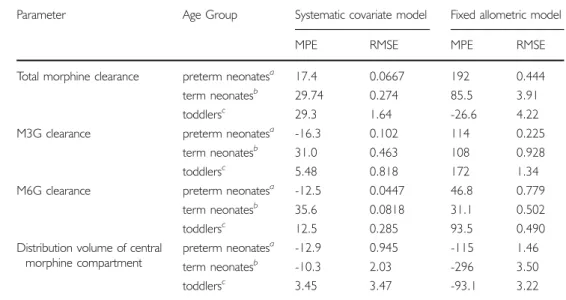
A table with MPE and RMSE was also constructed for the external datasets. This table was also stratified based on age with the following strata: preterm neonates (PNA <1 month and postmenstrual age (PMA) at birth <36 weeks), term neonates (PNA <1 month and PMA

at birth≥36 weeks), toddlers (PNA 1 month–1 year).

RESULTS

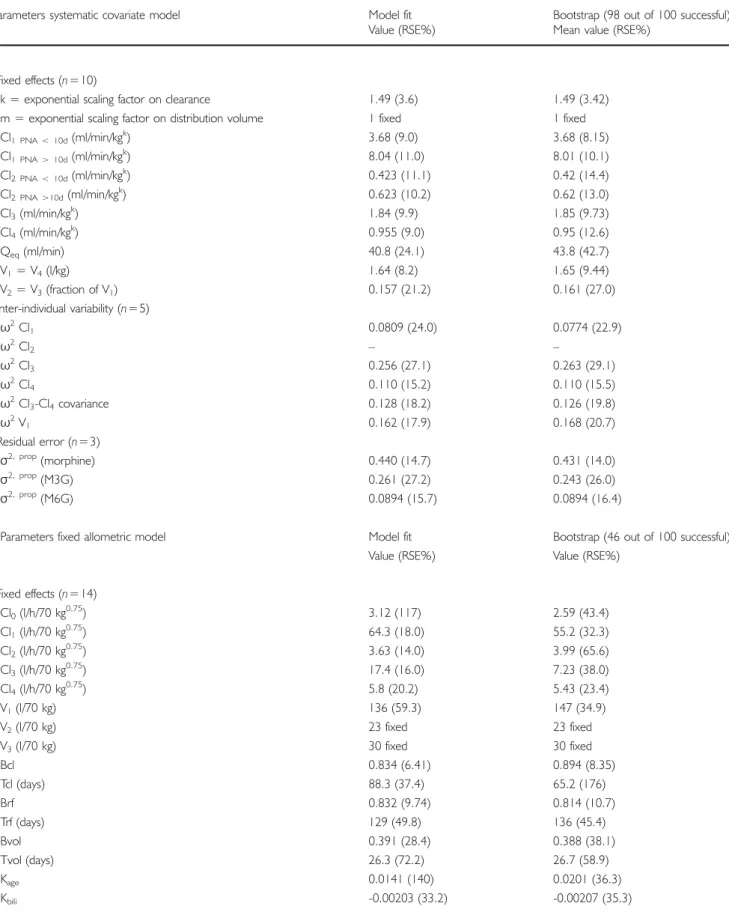
Table II (A and B) lists the parameter estimates as

obtained with the fit of the internal dataset by the systematic covariate model and the fixed allometric model, respectively.

With a total of 18 model parameters, the systematic covariate model described the fixed and random effects with fewer parameters than the fixed allometric model, which contains 35 model parameters. The condition number of the systematic covariate model was 293, which is well below the critical value for the indication of serious

ill-conditioning of 1,000 (16). For the fixed allometric

model, the condition number was 10,698, which is more than ten-fold higher than the critical value.

In TableII (A and B) the parameter estimates obtained

with the bootstrap analyses are presented as well. The parameter estimates of the bootstrap deviated more from the values obtained in the initial model fit for the fixed allometric model compared to the systematic covariate model. For both the model fit and the bootstrap procedure with the fixed allometric model, the overall precision of the parameter estimates was lower than the systematic covariate model as expressed by the higher relative standard error (RSE) of the parameter estimates. Additionally, for the boot-strap, using the fixed allometric model only 46 out of

100 model refits minimized successfully, whereas 98 out of 100 model refits successfully minimized using the systematic covariate model.

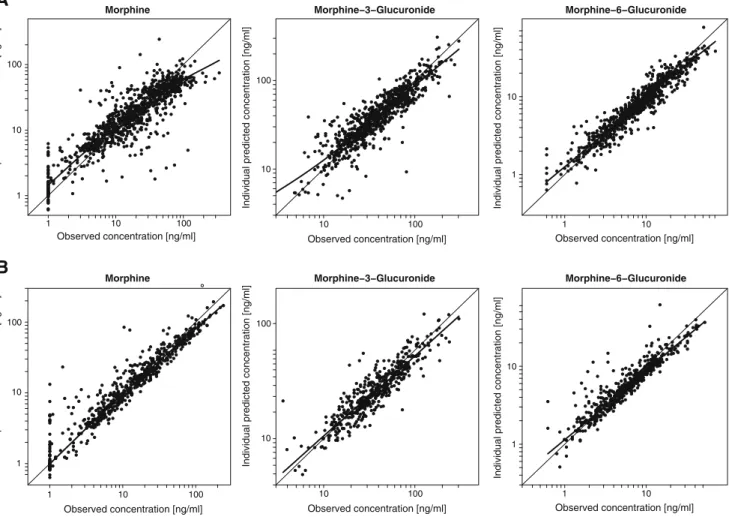
Figure 2 shows the individual predicted concentrations

versus observed concentrations for morphine and its metab-olites as obtained with the internal dataset for both the systematic covariate model (A) and the fixed allometric model (B). This figure shows a slightly better description of individual concentrations by the fixed allometric model compared to the systematic covariate model, especially for the mother compound morphine.

Figure 3 shows the population predicted concentrations

versusobserved concentrations obtained with the internal as well as the five external datasets. This figure shows the systematic covariate model to be superior to the fixed allometric model in the predictions of population concen-trations in the datasets. The predictions for the systematic covariate model are only slightly biased, and since this bias is also observed in the mirror plots (data not shown), this is not indicative of model misspecification. For the fixed allometric model, on the other hand, significant bias towards under-prediction can be observed that did not correspond to trends observed in the mirror plots (data not shown).

For both models, stratification into the different age

groups of the plots of the predicted versus observed

concentrations showed no differences in model perfor-mance (data not shown).

Table III shows the percentage of η-shrinkage for the

parameters for which inter-individual variability was iden-tified in each of the two models. Both models have parameters for which shrinkage is relatively high (>20%), indicating that the individual data in the internal dataset is not rich in information about these parameters.

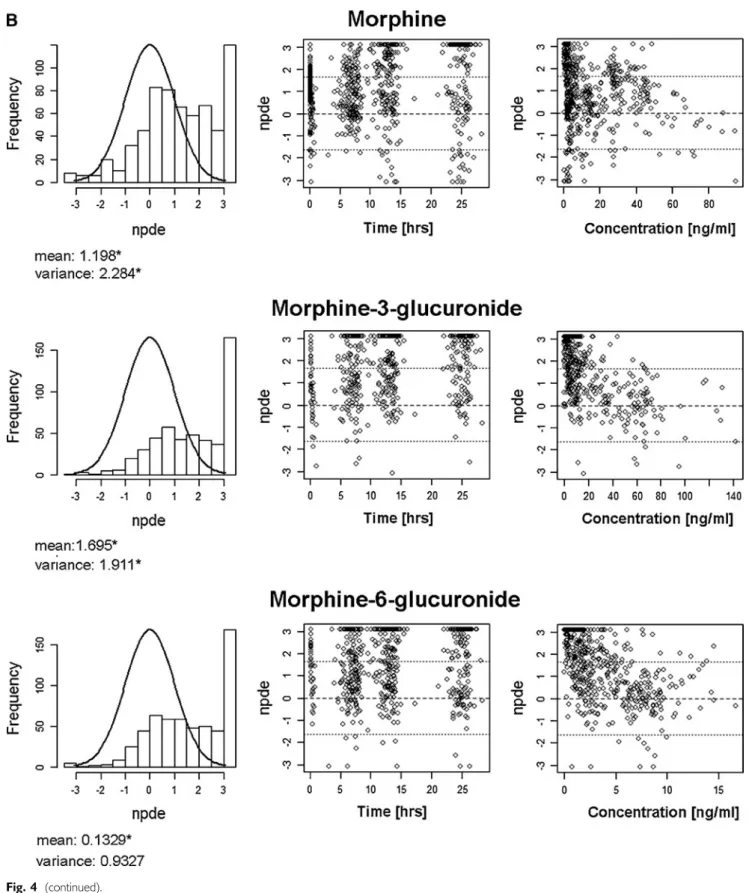
For both models, the results of the NPDE analysis with

the internal dataset are depicted in Fig. 4. For the

systematic covariate model, no trends in time or versus

concentration are observed. The mean of the distribution of NPDEs is close to 0, while the variance is slightly lower than 1. The trends observed in the plots for the fixed allometric model are indicative of an under-prediction, which appears to be relatively constant over time but to increase with decreasing concentrations.

The results of the NPDE analysis with the external datasets confirmed the results obtained with the internal dataset for both models (data not shown). Stratification into different age groups also revealed similar results for the three age groups for each of the models (data not shown).

The plots of the individual post hoc parameter estimates

(5)

Table II Parameter Estimates from the Model Fit, Number of Model Parameters and Parameter Estimates from the Bootstrap Procedure for the Systematic Covariate Model (A) and for the Fixed Allometric Model (B) Obtained with the Internal Dataset. Parameter Names are Explained in Fig.1

Parameters systematic covariate model Model fit Bootstrap (98 out of 100 successful) Value (RSE%) Mean value (RSE%)

A

Fixed effects (n=10)

k = exponential scaling factor on clearance 1.49 (3.6) 1.49 (3.42) m = exponential scaling factor on distribution volume 1 fixed 1 fixed Cl1 PNA < 10d(ml/min/kgk) 3.68 (9.0) 3.68 (8.15)

Cl1 PNA > 10d(ml/min/kgk) 8.04 (11.0) 8.01 (10.1)

Cl2 PNA < 10d(ml/min/kgk) 0.423 (11.1) 0.42 (14.4)

Cl2 PNA >10d(ml/min/kgk) 0.623 (10.2) 0.62 (13.0)

Cl3(ml/min/kgk) 1.84 (9.9) 1.85 (9.73)

Cl4(ml/min/kgk) 0.955 (9.0) 0.95 (12.6)

Qeq(ml/min) 40.8 (24.1) 43.8 (42.7)

V1= V4(l/kg) 1.64 (8.2) 1.65 (9.44)

V2= V3(fraction of V1) 0.157 (21.2) 0.161 (27.0)

Inter-individual variability (n=5)

ω2Cl

1 0.0809 (24.0) 0.0774 (22.9)

ω2Cl

2 – –

ω2Cl

3 0.256 (27.1) 0.263 (29.1)

ω2Cl

4 0.110 (15.2) 0.110 (15.5)

ω2

Cl3-Cl4covariance 0.128 (18.2) 0.126 (19.8)

ω2

V1 0.162 (17.9) 0.168 (20.7)

Residual error (n=3)

σ2, prop

(morphine) 0.440 (14.7) 0.431 (14.0)

σ2, prop

(M3G) 0.261 (27.2) 0.243 (26.0)

σ2, prop

(M6G) 0.0894 (15.7) 0.0894 (16.4)

Parameters fixed allometric model Model fit Bootstrap (46 out of 100 successful) Value (RSE%) Value (RSE%)

B

Fixed effects (n=14)

Cl0(l/h/70 kg0.75) 3.12 (117) 2.59 (43.4)

Cl1(l/h/70 kg0.75) 64.3 (18.0) 55.2 (32.3)

Cl2(l/h/70 kg0.75) 3.63 (14.0) 3.99 (65.6)

Cl3(l/h/70 kg0.75) 17.4 (16.0) 7.23 (38.0)

Cl4(l/h/70 kg0.75) 5.8 (20.2) 5.43 (23.4)

V1(l/70 kg) 136 (59.3) 147 (34.9)

V2(l/70 kg) 23 fixed 23 fixed

V3(l/70 kg) 30 fixed 30 fixed

Βcl 0.834 (6.41) 0.894 (8.35)

Tcl (days) 88.3 (37.4) 65.2 (176)

Βrf 0.832 (9.74) 0.814 (10.7)

Trf (days) 129 (49.8) 136 (45.4)

Βvol 0.391 (28.4) 0.388 (38.1)

Tvol (days) 26.3 (72.2) 26.7 (58.9)

Kage 0.0141 (140) 0.0201 (36.3)

(6)

Table II (continued)

Parameters systematic covariate model Model fit Bootstrap (98 out of 100 successful) Value (RSE%) Mean value (RSE%)

Inter-individual variability (n=16)

ω2

Cl0 1.37 (104) 1.80 (69.9)

ω2

Cl1 0.346 (20.9) 0.916 (74.9)

ω2

Cl2 0.675 (29.3) 1.21 (75.8)

ω2

Cl3 0.185 (20.8) 0.764 (41.7)

ω2

Cl4 0.545 (32.1) 1.39 (87.6)

ω2

V1 0.351 (29.1) 1.54 (121)

full omega block on all eta’s except Cl0 Data not shown Data not shown

Residual error (n=5)

σ2, prop morphine 0.128 (11.6) 0.503 (105)

σ2, add M3G(ng/ml) 50.3 (36.2) 136 (217)

σ2, prop M3G 0.118 (27.0) 2.21 (80.0)

σ2, add M6G(ng/ml) 0.198 (26.0) 1.31 (148)

σ2, prop M6G 0.0925 (16.9) 0.249 (53.0)

Morphine

Morphine

Observed concentration [ng/ml]

Individual predicted concentration [ng/ml]

Individual predicted concentration [ng/ml]

1 10 100

1 10 100

10

1 100

10

1 100

Observed concentration [ng/ml]

Morphine−3−Glucuronide

Morphine−3−Glucuronide

Observed concentration [ng/ml]

Individual predicted concentration [ng/ml]

10 100

Individual predicted concentration [ng/ml]

10 100

10 100

Observed concentration [ng/ml]

10 100

Morphine−6−Glucuronide

Morphine−6−Glucuronide

Observed concentration [ng/ml]

Individual predicted concentration [ng/ml]

1 10

Individual predicted concentration [ng/ml]

1 10

10 1

Observed concentration [ng/ml] 10 1

A

B

(7)

the systematic covariate model, total morphine clearance is

composed of Cl1 and Cl2 (see Fig. 1a), which both have

different population values for children older and younger than 10 days, resulting in two different lines of population parameter estimates. For the fixed allometric model, total

morphine clearance is composed of Cl0, Cl1 and Cl2(see

Fig.1b). The larger number of additional covariates (age,

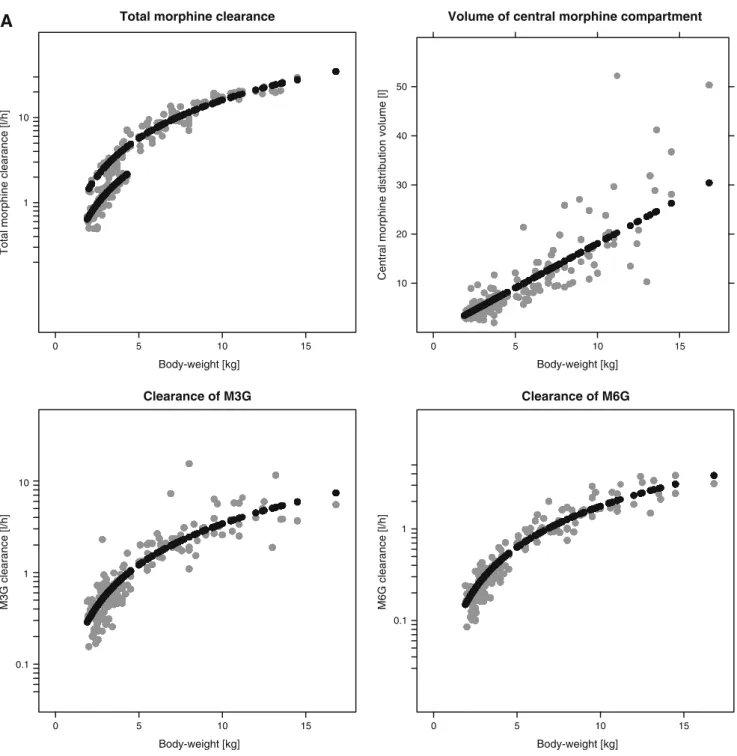
and bilirubin and creatinine concentration) on the struc-tural parameters in the fixed allometric model results in scattered lines for the population parameter estimates of this model. This figure shows that for the systematic covariate model, the population predicted values describe

the individualpost hocvalues without bias for all parameters,

whereas for the fixed allometric model, the population

predicted values are biased compared to the individualpost

hoc values for all parameters.

Table IV numerically quantifies the bias (MPE) in the

population predicted parameter values compared to the individually observed parameter values for both models. The RMSE in this table quantifies the precision of the population prediction. It can be seen that for the systematic covariate model, mean bias in the population predictions stays well below 25% and remains relatively constant over the age ranges for all parameters. For the fixed allometric model, bias in the population predictions reaches up to 250%, and, especially in the clearance of the metabolites,

Morphine

Morphine

Observed concentration [ng/ml]

Population predicted concentration [ng/ml]

1 10 100

Population predicted concentration [ng/ml]

0.1 1 100

10

1 100

Observed concentration [ng/ml]

10

1 100

Morphine−3−Glucuronide

Morphine−3−Glucuronide

Observed concentration [ng/ml]

Population predicted concentration [ng/ml]

10 100

Population predicted concentration [ng/ml]

100

10 100

Observed concentration [ng/ml]

10 100

Morphine−6−Glucuronide

Morphine−6−Glucuronide

Observed concentration [ng/ml]

Population predicted concentration [ng/ml]

1 10

Population predicted concentration [ng/ml]

10 1

Observed concentration [ng/ml]

10 1

10

1

0.1

100

10

1

0.1

A

B

Fig. 3 Population predicted concentrationsversusobserved concentrations including loess curves of morphine and its metabolites for the systematic covariate model (A) and fixed allometric model (B). Data points in black originate from the internal dataset and data points in grey from the external datasets. Different symbols are used for different external datasets:■= Ext. 1(9),●= Ext 2(10),♦= Ext 3(11),* Ext 4(7),▲= Ext 5(8).

Table III Percentageη-Shrinkage in Both Models for the Parameters for Which Inter-individual Variability was Identified

Cl0 Cl1 Cl2 Cl3 Cl4 V1

Systematic covariate model (%) – 29.6 – 8.26 5.76 30.3

(8)
(9)

an increasing trend towards over-prediction is observed with increasing age.

Table V shows the mean bias and precision in the

predictions of the model parameters in the external dataset

(10)

remains below 35.6%, whereas for the fixed allometric model, the values are between 26.6% and 296%.

DISCUSSION

In childhood, many physiological changes take place in quick succession, and the paediatric population is very heteroge-neous. Additionally, studies in this population are often

performed during routine clinical practice, which increases the variability in both dosing and sampling schemes, while due to limitations in sample size and frequency, often only sparse data are obtained. All these factors influence the evaluation of population and covariate models for this young population. In the current study, a framework of six different evaluation criteria is proposed for the evaluation of paediatric models. Most tools in the framework are not necessarily new, but in the context of paediatric model, evaluation adaptations to the

Total morphine clearance

Body-weight [kg]

Total morphine clearance [l/h]

1 10

0 5 10 15

Volume of central morphine compartment

Body-weight [kg]

Central morphine distribution volume [l]

10 20 30 40 50

0 5 10 15

Clearance of M3G

Body-weight [kg]

M3G clearance [l/h]

0.1 1 10

0 5 10 15

Clearance of M6G

Body-weight [kg]

M6G clearance [l/h]

0.1 1

0 5 10 15

A

Fig. 5 Individualpost hocparameter estimates (grey) and population predicted parameter estimates (black) for total morphine clearance (Cl1+ Cl2for the

(11)

standard methods are sometimes required, or a shift in emphasize on the various tools is essential.

As an example, two previously published paediatric population PK models for morphine that were based on the same dataset but fundamentally different covariate models were evaluated with this framework. The systematic covariate model was developed by regarding body-weight and age as regular covariates in a

system-atic covariate analysis (1). The fixed allometric model

was based on allometric principles including body-weight

a priori using exponential functions with fixed exponents

and estimating an age-based function (4).

In itself, the number of parameters in a model is not an evaluation criterion; however, according to the rule of parsimony, a model should have the lowest possible number of parameters. Large deviations of bootstrap parameter values from the original value, low precision in parameter estimates as expressed by high RSE values in the model fit and bootstrap procedures, small number of successful bootstrap runs and a condition number higher than 1,000 are all Total morphine clearance

Body-weight [kg]

Total morphine clearance [l/h]

1 10

0 5 10 15

Volume of central morphine compartment

Body-weight [kg]

Central morphine volume [l]

10 20 30 40 50

0 5 10 15

Clearance of M3G

Body-weight [kg]

M3G clearance [l/h]

0.1 1 10

0 5 10 15

Clearance of M6G

Body-weight [kg]

M6G clearance [l/h]

0.1 1

0 5 10 15

B

(12)

generally indicative of model inaccuracy, model instability,

and ill-conditioning (16–19). Testing covariates for

signifi-cance and only retaining a covariate when it significantly improves the model adheres to the rule of parsimony and does not introduce specific assumptions into the model, and the resulting model is always supported by data. In the current example, it is shown that the systematic covariate model performs well on all the criteria of ill-conditioning. In case covariates in a model are not formally tested for significance, there is a risk of over-parameterization. The results for the fixed allometric model in this example suggest the fixed allometric model to be an unstable model for which precise parameter estimates cannot be obtained. It should also be noted in this respect that with the increased number of fixed and random model parameters in the fixed allometric model, the degrees of freedom in this model are increased as well. More degrees of freedom improve the

description of data by a model, but do not necessarily improve the predictions by that model.

As stated before, paediatric PK analyses are often based on sparse data. This is an important aspect to consider when evaluating paediatric population PK models, because when data are uninformative due to scarcity, the estimated variability parameters may shrink to zero, causing the

individualpost hocparameter estimates to move towards the

population predictions. This shrinkage phenomenon makes individual parameter estimates and the diagnostics based

on them less reliable or even misleading (13,20). Population

predictions, however, are solely based on the fixed effects described in the structural and covariate model. As the random effects are not considered in the population predictions, diagnostics based on population predictions are not sensitive to shrinkage and are therefore more reliable than individual predictions. The two models in the Parameter Age group Systematic covariate model Fixed allometric model

MPE RMSE MPE RMSE

Total morphine clearance neonatesa 4.26 0.426 10.8 0.922

toddlersb -0.74 1.65 12.7 5.00

infantsc 4.63 3.28 -2.56 7.90

M3G clearance neonatesa 19.7 0.291 -19.5 2.50

toddlersb 1.85 0.888 23.8 15.5

infantsc 14.5 3.82 188 9.03

M6G clearance neonatesa 12.5 0.0784 -69.0 0.825

toddlersb 0.262 0.230 100 5.27

infantsc 4.93 0.852 253 2.84

Distribution volume of central morphine compartment

neonatesa 23.2 1.30 90.6 2.93

toddlersb 15.9 3.43 22.4 7.26

infantsc 5.90 9.27 9.35 13.4

Table IV Bias (MPE) and Preci-sion (RMSE) of the Predicted Parameter Values in the Internal Datasets Stratified by Age Group

MPEmean prediction error,RMSE root mean square error a

neonates, PNA <30 days,n=61 btoddlers, PNA = 1 month-1 year,

n=87

cinfants, PNA >1 yearn=35

Parameter Age Group Systematic covariate model Fixed allometric model

MPE RMSE MPE RMSE

Total morphine clearance preterm neonatesa 17.4 0.0667 192 0.444 term neonatesb 29.74 0.274 85.5 3.91

toddlersc 29.3 1.64 -26.6 4.22

M3G clearance preterm neonatesa -16.3 0.102 114 0.225 term neonatesb 31.0 0.463 108 0.928

toddlersc 5.48 0.818 172 1.34

M6G clearance preterm neonatesa -12.5 0.0447 46.8 0.779 term neonatesb 35.6 0.0818 31.1 0.502

toddlersc 12.5 0.285 93.5 0.490

Distribution volume of central morphine compartment

preterm neonatesa -12.9 0.945 -115 1.46 term neonatesb -10.3 2.03 -296 3.50

toddlersc 3.45 3.47 -93.1 3.22

Table V Bias (MPE) and Preci-sion (RMSE) of the Predicted Parameter Values in the External Datasets Stratified by Age Group

MPEmean prediction error,RMSE root mean square error a

preterm neonates, (PNA <30 days and PMA at birth <36 weeks),n= 80

b

term neonates, (PNA <30 days and PMA at birth≥36 weeks),n=40 c

(13)

current study illustrate how diagnostics based on individual predictions can be misleading when shrinkage is high, as was the case for some of the parameters in both models

(Table III). The plots of the individual predicted versus

observed concentrations in Fig.2 inadvertently suggest the

fixed allometric model to perform better than the system-atic covariate model, since, especially for morphine, the data points are closer to the line of unity. However, in

Fig. 3, large differences in the predictive performance

between the two models are revealed for both the internal and external datasets when considering population pre-dicted concentrations instead of the individual prepre-dicted concentrations. For the systematic covariate model, there are no signs of model misspecification. The fixed allometric model, on the other hand, shows significant bias towards under-prediction throughout the total concentration range. Since diagnostics based on population predictions are generally more reliable, these should always be included in the evaluation of paediatric (covariate) models.

Simulation-based diagnostics known as posterior predic-tive checks (PPC) are diagnostics that create a reference distribution of an observation of interest by performing multiple model simulations with inclusion of both fixed and random effects and subsequently compare the actual

observations to this reference distribution (21). A visual

predictive check (VPC) is a commonly used and easily interpretable form of a PPC that graphically presents the

reference distribution and observed data (22). A VPC can

be used for the evaluation of paediatric models as well; however, when data are obtained during routine clinical practice and variability in individual dosing and sampling

schemes are high, the NPDE methodology (14) is often

easier to perform and interpret. Shrinkage does not

influence the results of simulation-based diagnostics (13).

The results of the NPDE analysis of the models in the current example demonstrate that the systematic covariate model can quite accurately predict median concentrations for morphine and the glucuronides, but that it slightly predicts the variability in the overall dataset. This over-prediction of the variability is constant over time and over the concentration range. If this model were to be used in simulation exercises, the predictions would be unbiased, and the inferences made on the variability in the population would be on the conservative side, as the variability is predicted to be higher than it actually is. Based on the trend towards under-prediction by fixed allometric model, it can be concluded that significant bias in the predictions would occur if this model would be used in simulation exercises. The under-prediction of concentrations by the fixed allometric model increases the risk of overdosing when deriving morphine doses based on this model. These NPDE results substantiate the results obtained in the population

predictedversusobserved plots in Fig.3.

Due to the heterogeneity in the paediatric population, it is very important to not only perform diagnostics on the population as a whole, but to also look at various subpopulations by stratifying the datasets based on body-weight or age. For both models in the example, stratifica-tion showed the same descriptive and predictive performance in all age groups. For the systematic covariate model, the predictive performance of the model was adequate in all age ranges. The trends towards under-prediction identified for the fixed allometric model was also similar across all age ranges. Despite the fact that stratification of the diagnostics did not reveal new informa-tion in the current examples, this adjustment of the various validation tools remains imperative for the detection of previously unidentified age-related misspecifications.

To corroborate the obtained covariate relationships in paediatric models, the plots of individual and population

parameter values versus the covariate presented here in

Fig.5, together with a numerical representation of bias and

precision in Table IV, have proven to be highly

informa-tive. Even in case of high shrinkage, this diagnostic will enable the identification of bias in the population predic-tions of parameters. In this study, in both models, body-weight was the most important covariate for clearances and distribution volumes. For the systematic covariate model, population predicted parameter values are adequately centered in the range of individual predicted values for all parameters and across the entire body-weight and age ranges. However, for the fixed allometric model, the population predicted parameter values are biased com-pared to the individual predicted values. For some parameters, this bias exists over the total weight and age ranges; for others, only over part of these ranges. The

results in the plots in Fig. 5 and Table IV provide an

explanation for the adequate individual concentration predictions by the fixed allometric model and the highly biased population predictions by this model, as observed with the other evaluation tools. Structural model misspeci-fications in the population parameter values result in biased population predictions that are corrected by the error models to yield good individual predictions. This type of diagnostic is hardly ever published; however, the informa-tion contained in these plots and tables is crucial and should become a standard diagnostic tool with paediatric popula-tion PK models.

Especially in drug development, population PK models in paediatric subpopulations are often used for extrapola-tions to younger age ranges. When a model is used for this purpose, the obtained covariate relationships should be thoroughly evaluated, for instance by using the diagnostic

in Fig.5and TableIV. In the current study, two out of five

(14)

the internal dataset. For both models, the results of the various tools in the framework were similar irrespective of the age range in the dataset that was used, indicating that the inclusion of a new patient population in the external validation did not influence to overall results.

A systematic covariate analysis is a data-driven ap-proach; therefore, the extrapolation potential of the

result-ing model cannot be knowna priori. It is clear that for the

systematic covariate model in the current analysis extrap-olations to older (heavier) children is not possible as the body-weight-based exponential equation for clearance predicts rapidly increasing clearances at higher weight

ranges. Figure 5 indicates that for this model, population

parameter predictions are unbiased in the lower weight ranges, suggesting that extrapolation to smaller children could be possible. The extensive evaluation procedures in the current example prove this to be the case in this particular example.

It is claimed that the allometric equations used in the

fixed allometric model are based on ‘sound biological

principles’ (23) and that the methodology based on these

equations therefore yields mechanistic models that can be used for extrapolations outside the studied age or weight ranges. It is argued that the influence of size (parameterized by body-weight) and maturation (parameterized by age) on the parameters in paediatric population PK models are disentangled by using the fixed allometric equations

augmented by age-based functions (5,24). However, the

theory of allometry is based on the empirical observation that over a wide weight range, metabolic rates of animal

species increase with body-weight to the power of 0.75 (25).

The fixed allometric exponents have no biological or physiological meaning, although reports exist that propose

possible physiological explanations (26–28). Conversely, a

large body of evidence exists against the existence of one

unique value for the allometric clearance exponent (29–35)

and against the application of these allometric equations in

human paediatric PK models (36,37). Additionally, the

maturation function based on age only reflects a mathe-matical residue of the age effect that remains after the inclusion of the correlated covariate body-weight. In the current study, in the fixed allometric model, the model-predicted increase in clearance comes to a plateau with increasing body-weight. Therefore, this model cannot be excluded for extrapolations to higher weight ranges. The predictive properties of this model in preterm neonates is very poor, albeit comparable to the predictions in the older children that comprised the learning dataset. As a result, the extrapolation potential of fixed allometric models in general can neither be confirmed nor disputed based on the results in the current study.

CONCLUSION

The framework of six evaluation criteria proposed in the current study takes into consideration the specific issues encountered in the evaluation of paediatric population models. The application of this framework to two models for morphine and its two major metabolites in children younger than 3 years with fundamentally different covariate models demonstrates how to detect over-parameterization, which is a risk with models based on sparse data. Additionally, it illustrates the importance of diagnostics that are based on population predictions rather than individual predictions, as high shrinkage due to sparse data may yield misleading individual prediction-based diagnos-tics. Finally, the diagnostic comparing population parame-ter predictions with individually observed parameparame-ter values proved to be highly informative in assessing obtained covariate relationships, as in the current example it detected the cause of model misspecification by the fixed allometric model. Stratification of the various diagnostics did not yield much additional information in the current examples; however, due to the heterogeneity of the paediatric population, this adaption of standard validation tools may be of value for other paediatric models.

The differences observed in model performance between the systematic covariate model and the fixed allometric model in the current study do not imply that any of the two methodologies for covariate model development is superior over the other. The current study does, however, highlight the importance of corroborating results in evaluation procedures. It also illustrates that information in data should not be ignored and that one should never be guided by theories alone.

ACKNOWLEDGMENTS

We would like to thank Dr. Caroline van der Marel, Dr. Richard van Lingen, Dr. Anne Lynn and Dr. Imti Choonara for kindly sharing their data with us.

This study was performed within the framework of Dutch Top Institute Pharma project number D2-10.

The work of C.A.J. Knibbe is supported by the Innova-tional Research Incentives Scheme (Veni grant, July 2006) of the Dutch Organization for Scientific Research (NWO).

All authors declare no conflict of interest.

(15)

REFERENCES

1. Knibbe CA, Krekels EH, van den Anker JN, et al. Morphine glucuronidation in preterm neonates, infants and children younger than 3 years. Clin Pharmacokinet. 2009;48(6):371–85. 2. Peeters MY, Prins SA, Knibbe CA, et al. Propofol

pharmacoki-netics and pharmacodynamics for depth of sedation in non-ventilated infants after major craniofacial surgery. Anesthesiology. 2006;104(3):466–74.

3. de Cock RF, Piana C, Krekels EH, Danhof M, Allegaert K, Knibbe CA. The role of population PK-PD modelling in paediatric clinical research. Eur J Clin Pharmacol. 2010. 4. Bouwmeester NJ, Anderson BJ, Tibboel D, Holford NH.

Developmental pharmacokinetics of morphine and its metabolites in neonates, infants and young children. Br J Anaesth. 2004;92 (2):208–17.

5. Anderson BJ, Allegaert K, Holford NH. Population clinical pharmacology of children: modelling covariate effects. Eur J Pediatr. 2006;165(12):819–29.

6. van Dijk M, Bouwmeester NJ, Duivenvoorden HJ,et al. Efficacy of continuous versus intermittent morphine administration after major surgery in 0–3-year-old infants; a double-blind randomized controlled trial. Pain. 2002;98(3):305–13.

7. Simons SH, van Dijk M, van Lingen RA,et al. Routine morphine infusion in preterm newborns who received ventilatory support: a randomized controlled trial. JAMA. 2003;290(18):2419–27. 8. van Lingen RA. Pain assessment and analgesia in the newborn: an

integrated approach. 2000.

9. van der Marel CD, Peters JW, Bouwmeester NJ, Jacqz-Aigrain E, van den Anker JN, Tibboel D. Rectal acetaminophen does not reduce morphine consumption after major surgery in young infants. Br J Anaesth. 2007;98(3):372–9.

10. Lynn AM, Nespeca MK, Bratton SL, Shen DD. Intravenous morphine in postoperative infants: intermittent bolus dosingversus

targeted continuous infusions. Pain. 2000;88(1):89–95.

11. Choonara I, Lawrence A, Michalkiewicz A, Bowhay A, Ratcliffe J. Morphine metabolism in neonates and infants. Br J Clin Pharmacol. 1992;34(5):434–7.

12. Lindbom L, Pihlgren P, Jonsson EN. PsN-Toolkit–a collection of computer intensive statistical methods for non-linear mixed effect modeling using NONMEM. Comput Meth Programs Biomed. 2005;79(3):241–57.

13. Karlsson MO, Savic RM RM. Diagnosing model diagnostics. Clin Pharmacol Ther. 2007;82(1):17–20.

14. Brendel K, Comets E, Laffont C, Laveille C, Mentre F. Metrics for external model evaluation with an application to the population pharmacokinetics of gliclazide. Pharm Res. 2006;23(9):2036– 49.

15. Comets E, Brendel K, Mentre F. Computing normalised prediction distribution errors to evaluate nonlinear mixed-effect models: the npde add-on package for R. Comput Meth Programs Biomed. 2008;90(2):154–66.

16. Montgomery DC, Peck EA. Introduction to linear regression analysis. New York: Wiley; 1982.

17. Dartois C, Lemenuel-Diot A, Laveille C, Tranchand B, Tod M, Girard P. Evaluation of uncertainty parameters estimated by different population PK software and methods. J Pharmacokinet Pharmacodyn. 2007;34(3):289–311.

18. Ette EI. Stability and performance of a population pharmacoki-netic model. J Clin Pharmacol. 1997;37(6):486–95.

19. Efron B, Tibshirani R. Bootstrap methods for standard errors, confidence intervals, and other measures of statistical accuracy. Statist Sci. 1986;1(1):54–75.

20. Savic RM, Karlsson MO. Importance of shrinkage in empirical bayes estimates for diagnostics: problems and solutions. AAPS J. 2009;11(3):558–69.

21. Yano Y, Beal SL, Sheiner LB. Evaluating pharmacokinetic/ pharmacodynamic models using the posterior predictive check. J Pharmacokinet Pharmacodyn. 2001;28(2):171–92.

22. Holford N. The visual predictive check—superiority to standard diagnostic (Rorschach) plots. PAGE 14 Abstr 738. 2005. (www. page-meeting.org/?abstract=738)

23. Anand KJ, Anderson BJ, Holford NH,et al. Morphine pharma-cokinetics and pharmacodynamics in preterm and term neonates: secondary results from the NEOPAIN trial. Br J Anaesth. 2008;101(5):680–9.

24. Anderson BJ, Holford NH. Mechanism-based concepts of size and maturity in pharmacokinetics. Annu Rev Pharmacol Toxicol. 2008;48:303–32.

25. Kleiber M. Energy Metabolism. Annu Rev Physiol. 1944;6:123–54. 26. West GB, Brown JH, Enquist BJ. A general model for the origin of allometric scaling laws in biology. Science. 1997;276(5309):122–6. 27. West GB, Brown JH, Enquist BJ. The fourth dimension of life: fractal geometry and allometric scaling of organisms. Science. 1999;284(5420):1677–9.

28. Mcmahon T. Size and shape in biology. Science. 1973;179 (79):1201–4.

29. Dodds PS, Rothman DH, Weitz JS. Re-examination of the “3/4-law”of metabolism. J Theor Biol. 2001;209(1):9–27.

30. Mahmood I. Application of fixed exponent 0.75 to the prediction of human drug clearance: an inaccurate and misleading concept. Drug Metabol Drug Interact. 2009;24(1):57–81.

31. Agutter PS, Wheatley DN. Metabolic scaling: consensus or controversy? Theor Biol Med Model. 2004;1:13.

32. Bokma F. Evidence against universal metabolic allometry. Funct Ecol. 2004;18:184–7.

33. Glazier DS. Beyond the‘3/4-power law’: variation in the intra-and interspecific scaling of metabolic rate in animals. Biol Rev. 2005;80(4):611–62.

34. White CR, Cassey P, Blackburn TM. Allometric exponents do not support a universal metabolic allometry. Ecology. 2007;88(2):315–23. 35. Kolokotrones T, Van S, Deeds EJ, Fontana W. Curvature in

metabolic scaling. Nature. 2010;464(7289):753–6.

36. Mahmood I. Prediction of drug clearance in children from adults: a comparison of several allometric methods. Br J Clin Pharmacol. 2006;61(5):545–57.

Figure

Table I Overview of the Internal Dataset (Int.1) and the External Datasets (Ext.1–5) Used for Model Building and External Model Evaluation
Table II Parameter Estimates from the Model Fit, Number of Model Parameters and Parameter Estimates from the Bootstrap Procedure for the Systematic Covariate Model (A) and for the Fixed Allometric Model (B) Obtained with the Internal Dataset
Fig. 2 Individual predicted concentrations versus observed concentrations including a loess curve of morphine and its metabolites in the internal dataset Predictions by the systematic covariate model are depicted in panel A, and predictions by the fixed al
Fig. 3 Population predicted concentrations versus observed concentrations including loess curves of morphine and its metabolites for the systematic covariate model (A) and fixed allometric model (B)
+5

References

Related documents

[10] Raspollini MR, Amunni G, Villanucci A, Baroni G, Boddi V, Tadei G: Prognostic significance of microvessel density and vascular endothelial growth factor expression in

We undertook a simulation study to examine the effectiveness of our proposed SP variance estimation approach and compare its performance to other existing methods in estimating

Selection for a genotype with high forage yield both green mass and dry mass in the second cut, allow to obtain high crude protein, less fiber, structural polysaccharides such

Uterine receptivity and implantation: The regulation and action of insulin-like growth factor binding protein-1 (IGFBP-1), HOXA10 and forkhead transcription factor-1 (FOXO-1) in

In this study, we have examined patients with neck swellings, followed by high-resolution ultrasound and further evaluation using FNAC, further imaging, biopsy

The program takes a social empowerment approach by providing participants with tools to take greater control over their food access, salt and fat intake, and physical health

Understanding informal institutions could influence and guide how the Elected Council decides to move forward in strengthening institutional arrangements and