47 |
P a g e
International Journal of Pharmaceutical
Development & Technology
e ISSN - 2248 - 910X
www.ijpdt.com
Print ISSN - 2248 - 9096PHOSPHOLIPON AS A BINDER IN THE FORMULATION OF
4-ACETOMIDOPHENOL TABLETS
Galadima HI
1*, Mbah CC
1, Emenike IV
2, Moh’d AS
3, Timothy SY
41
Department of Pharmaceutical Technology and Raw Materials,
National Institute for Pharmaceutical Research and Development Idu, Abuja, Nigeria.
2Department of Pharmaceutics and Pharmaceutical Microbiology, Faculty of Pharmaceutical Sciences,
Gombe State University, Gombe, Nigeria.
3
Department of Pharmacology and Therapeutics, Faculty of Pharmaceutical Sciences, Gombe State University, Gombe, Nigeria.
4Department of Pharmacology and Toxicology, Faculty of Pharmacy, University of Maiduguri, Maiduguri, Nigeria.
ABSTRACT
Pharmaceutical manufacturing inform of liposomal delivery has one of the most important approaches to improve the cellular uptake and subsequent bioavailability of drugs and as such phospholipon was chosen as a binder and studied for its effectiveness by comparing with microcrystalline cellulose and corn starch using wet granulation method. Wet granulation method using phospholipon, corn starch and microcrystalline cellulose as a binder was employed. The compressed tablets were evaluated for the following physicochemical characteristics; general appearance, weight variation, friability, hardness, disintegration and in vitro drug release studies. The release pattern of 1% dispersion of phospholipon in water has met the USP specification, in which more than 80 % of paracetamol tablet was released at 30 minutes. The release pattern of the drug was observed to be time dependent at the duration of time used. In addition, the amount of drug released by phospholipon and corn starch at 60 minutes interval was greater than 100%. The tablets obtained in this study have an approximate average weight which is within the limit of the percentage deviation allowed by USP. The tablets showed a slight variation in diameter and thickness which is within the BP limits and hence negligible. In the present study, the observed hardness for phospholipon and MCC were within the USP specification (4 to 8 kgF), whereas for corn starch, the value were above the USP specification. The percentage friability of the MCC was similar to that of the phospholipon, whereas for corn starch, the value was lower. The disintegration time of phospholipon was found to be higher than the two formulations. The binding capacity of phospholipon at low concentration for drug delivery especially in the formulation of paracetamol tablets was assessed and found to be better than microcrystalline cellulose and corn starch. This amply justifies the current use of phospholipon as a binder in many pharmaceutical formulations.
Keywords: Phospholipon, 4-acetomidophenol, Binder, Tablet.
INTRODUCTION
Phospholipon are well established lipoid branches which consist of natural and hydrogenated lecithin fraction and phospholipids. It has a wide range of pharmaceutical application as solubilizers for parenterals, emulsifier and in preparation of mixed micelles, liposomes and micro emulsions. Solid lipid microparticles (Phospholipon) were developed recently and have so far been considered a promising drug carrier system, especially with a view to giving the incorporated active substance a sustained-release profile [1]. Compared with other carriers such as liposomes and microparticles that have been studied for controlled release of incorporated drug, phospholipon combine several of those carriers’ advantages and have been found to be
physiologically and physicochemically stable and devoid of organic chemical in the preparation [2]. Mixtures of Beeswax and Phospholipon (P90G) as solidified reverse micellar solutions (SRMS142) have widely been employed in drug delivery such as gentam [3]. Pharmaceutical Manufacturing is an important enterprise and oral tablet manufacturing is the most significant of all, because more drugs are made as tablets than any other dosage form. The way of tablet manufacturing has been undergoing change in recent years and is likely to head in new directions. A binder plays a great role in the determination of disintegration time, friability, hardness, dissolution and entire bioavailability of tablets [4,5]. As a result of this development the choice of a good binder is necessary. The oral route of administration is
48 |
P a g e
the most common route of administering drugs, because ofits safety, convenience and most economical [6]. Paracetamol is a safe and effective analgesic with antipyretic effects, although its anti-inflammatory effect is weak. It may cause severe hepatic necrosis when overdosed. This study therefore seeks to evaluate the use of
phospholipon as a binder in the formulation of
4-acetomidophenol tablets.
MATERIALS AND METHODS
Preparation of the binder, drug and other excipients
Direct compression method was initially employed, but due to the low compressibility and friable nature of the formulated tablets, wet granulation finally was employed. The steps involved in this process include: weighing, size reduction, mixing, wetting, wet screening, drying, drying screening, mixing / lubrication and compression. The required quantity of 4-acetomidophenol with other excipients were triturated. A dispersion of phospholipon (binder) was made in hot distilled water. A solution of the prepared binder was added to the mixed powders with stirring. The wet mass was passed through 8 mesh screen to obtain wet granules, the moist granules was dried in an oven for 1 hr. After drying, the granules were reduced in size by passing it through a smaller mesh screen. Talc was added as a lubricant to the dried granules before compression.
Evaluation of the formulated tablets
General appearance: The compressed tablets were found to be white, smooth, circular and odourless with elegant pharmaceutical appearance.
Weight variation: The compressed tablets were assessed for weight uniformity in which 20 tablets were weighed individually and collectively. From the collective weight, average weight was calculated. Each tablet weight was then compared with the average weight to ascertain whether it is within a permissible limit or not.
Friability: Erweka Hausenstamm German friability test apparatus was used to determine the friability of the tablets. Four reweighed tablets were placed in the apparatus, the machine was operated at 50 rpm for four minutes, after which the tablets were reweighed and the percentage friability was calculated.
Hardness: The hardness of the tablets was determined by German Hausenstamm hardness tester No: 65770, D-6072 Driesch. The plunger was placed in contact with the tablets and a zero reading was noted. The plunger was then forced against a spring by turning a threaded bolt until the tablet fractured. As the bolt compressed the tablet, a pointer rides along a gauge in the barrel to indicate the force, and the values obtained were immediately recorded.
Disintegration: Five tablets from each sample were utilized
for disintegration studies at 37oC ± 1oC using Erweka
GmbH Hausenstamm German disintegration apparatus (ZT-4 N0: 68395). The disintegration time was taken to be the time when no granules of any tablet were left on the mesh of the apparatus. The time for each tablet was recorded and the
mean of the disintegration time in minute for each sample was calculated.
In vitro drug release studies (Dissolution testing): In vitro drug release studies were undertaken using USP apparatus I (basket method) by Erweka-German DT GmbH N0: 67026. In all the experiments, 5 ml of sample was withdrawn at 2, 5, 10, 15, 30, 45 and 60 minutes interval and were immediately replaced with fresh medium to maintain sink condition. The withdrawn samples were filtered, diluted and assayed spectrophotometrically at 257 nm.
RESULTS ANALYSIS
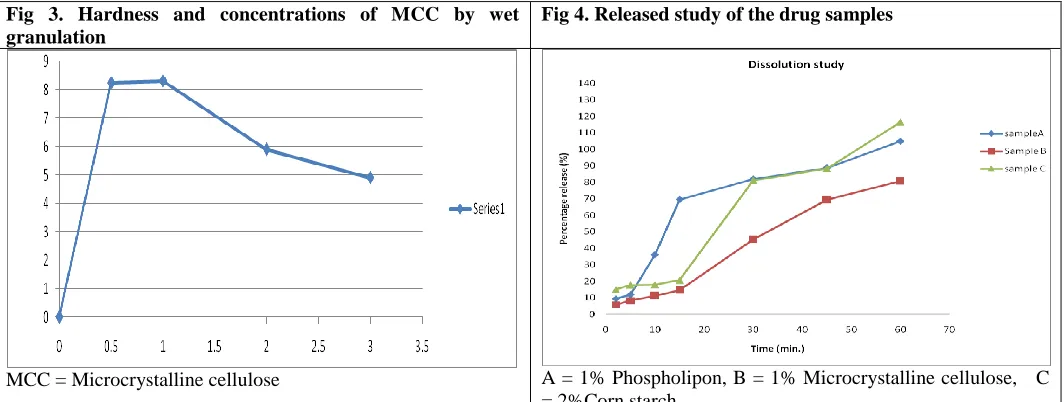
The official working formula based on USP [7] for the quantities of binders required for formulating a tablet containing paracetamol, sodium carboxymethyl cellulose and talc were 0.5, 0.06 and 0.24 respectively for phospholipon (1%), microcrystalline cellulose (1%) and corn starch (2%) (Table 1). The mean hardness (kgf) of the binder phospholipon at 1%, 2%, 3% and 5% were 0.50, 0.80, 0.95 and 1.20 kgf respectively for the trial formulation by direct compression at pressure 9, whereas for microcrystalline cellulose the hardness were 0.50, 0.75, 0.75 and 0.75 kgf respectively for the same percentages. The mean hardness for corn starch at 1%, 2%, 3% and 5% were 0.50, 1.00, 1.20 and 1.50 kgf respectively by direct compression at pressure 9 (Table 2). The mean hardness (kgf) of the binder phospholipon by wet granulation at reduced pressure of 8 at 0.5%, 1%, 2% and 3% were 5.00, 6.50, 5.98 and 3.98 kgf respectively (Figure 1), whereas for microcrystalline cellulose the hardness were 8.23, 8.30, 5.90 and 4.90 kgf respectively at the same percentage range (Figure 2). The mean hardness for corn starch at 0.5%, 1%, 2% and 3% were 5.20, 5.40, 7.30 and 5.75 kgf respectively by wet granulation at pressure 8 (Table 3 and Figure 3).
49 |
P a g e
USP specification in which more than 80% of the drug isexpected to be released after 30 minutes, whereas 1% MCC did not meet up the specification. In addition, the amount of drug released by phospholipon and corn starch at 60 minutes interval is greater than 100% (Table 7 and Figure 4).
All the tablets has an approximate average weight of 600 mg ± 5% which is within the limit of the percentage deviation allowed by USP (2003) for tablets weighing 325 mg and above. Examination of the tablets showed a slight variation in diameter and thickness which is within the BP limits i.e. 5 % and hence negligible. In the present study, the
observed hardness for phospholipon and MCC are within the USP specification (4 to 8 kgF), whereas for corn starch, the hardness was above the USP specification. The percentage friability of the MCC is similar to that of the phospholipon, whereas for corn starch, the value is lower and the overall friability results in relation to hardness show that the greater the hardness, the less the percentage friability. The disintegration time of phospholipon was found to be higher than that of the two formulations, whereas the two binders have shown a similar disintegration time (Table 8).
Table 1. Working formula*
Ingredients Quantity per Tablet (g)
Phospholipon (1%) MCC (1%) Corn starch (2%)
Paracetamol 0.5 0.5 0.5
Na-CMC 0.06 0.06 0.06
Talc 0.24 0.24 0.24
Na-CMC = sodium carboxymethyl cellulose, MCC = Microcrystalline cellulose *= Martindale, 2003
Table 2. Trial formulation showing the Mean hardness of the binders by direct compression
Binders Mean hardness (kgf)
1 % 2 % 3 % 5 %
Phospholipon 0.50 0.80 0.95 1.20
MCC 0.50 0.75 0.75 0.75
Corn starch 0.50 1.00 1.20 1.50
MCC = Microcrystalline cellulose
Table 3. Mean of the trial formulations by wet granulation method at pressure 8
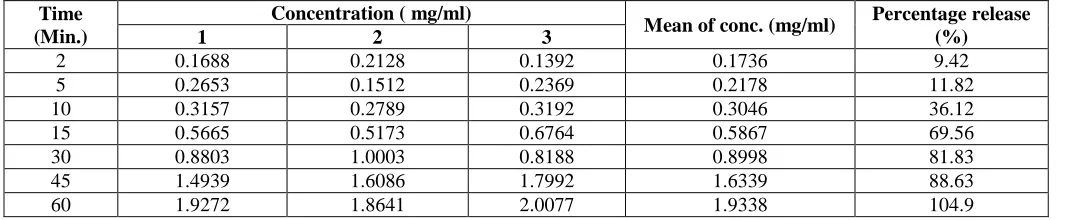
Table 4. Released pattern of 1% dispersion of phospholipon in distilled water
Table 5. Released pattern of 1% dispersion of MCC in distilled water
Binders Mean hardness (kgF)
1.0% 2.0 % 3.0 % 5.0 %
Phospholipon 5.00 6.50 5.98 3.98
MCC 8.23 8.30 5.90 4.90
Corn starch 5.20 5.40 7.30 5.75
Time (Min.)
Concentration ( mg/ml)
Mean of conc. (mg/ml) Percentage release (%)
1 2 3
2 0.1688 0.2128 0.1392 0.1736 9.42
5 0.2653 0.1512 0.2369 0.2178 11.82
10 0.3157 0.2789 0.3192 0.3046 36.12
15 0.5665 0.5173 0.6764 0.5867 69.56
30 0.8803 1.0003 0.8188 0.8998 81.83
45 1.4939 1.6086 1.7992 1.6339 88.63
60 1.9272 1.8641 2.0077 1.9338 104.9
Time (min.)
Concentration (mg/ml)
Mean of conc. (mg/ml) Percentage release (%)
1 2 3
2 0.0820 0.0758 0.1592 0.1057 5.73
5 0.1022 0.1093 0.2470 0.1528 8.29
10 0.1056 0.1478 0.3714 0.2083 11.29
50 |
P a g e
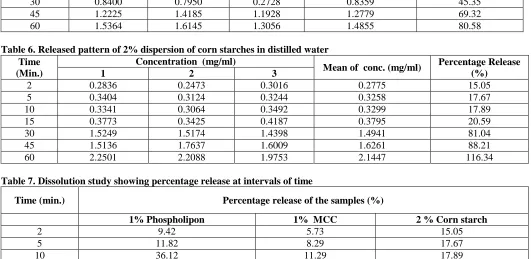
Table 6. Released pattern of 2% dispersion of corn starches in distilled water Time
(Min.)
Concentration (mg/ml)
Mean of conc. (mg/ml) Percentage Release (%)
1 2 3
2 0.2836 0.2473 0.3016 0.2775 15.05
5 0.3404 0.3124 0.3244 0.3258 17.67
10 0.3341 0.3064 0.3492 0.3299 17.89
15 0.3773 0.3425 0.4187 0.3795 20.59
30 1.5249 1.5174 1.4398 1.4941 81.04
45 1.5136 1.7637 1.6009 1.6261 88.21
60 2.2501 2.2088 1.9753 2.1447 116.34
Table 7. Dissolution study showing percentage release at intervals of time
Time (min.) Percentage release of the samples (%)
1% Phospholipon 1% MCC 2 % Corn starch
2 9.42 5.73 15.05
5 11.82 8.29 17.67
10 36.12 11.29 17.89
15 69.56 14.59 20.59
30 81.83 45.35 81.05
45 88.63 69.32 88.21
60 104.9 80.58 116.34
MCC =Microcrystalline cellulose
Table 8. Compendial and non-compendial test for 4-acetomidophenol tablets prepared by different binders
Parameters Phospholipon (1%) MCC
(1%)
Corn starch (2%)
Weight uniformity (g) 0.594 ± 0.009 0.592 ± 0.011 0.595 ± 0.009
Diameter uniformity (mm) 12.60 ± 0.024 12.72 ± 0.039 12.67 ± 0.010
Thickness uniformity (mm) 5.97 ± 0.040 6.11 ± 0.036 6.22 ± 0.053
Average hardness (KgF) 6.36 7.85 9.2
Average friability (%) 0.80 0.84 0.4
Average disintegration (min) 28 : 45 25 : 42 25 : 48
Data for weight, diameter and thickness uniformity are expressed in Mean ± SD
30 0.8400 0.7950 0.2728 0.8359 45.35
45 1.2225 1.4185 1.1928 1.2779 69.32
60 1.5364 1.6145 1.3056 1.4855 80.58
Fig 1. Hardness and concentration of phospholipon by wet granulation
51 |
P a g e
DISCUSSION
The mean hardness of phospholipon (test binder), microcrystalline cellulose and corn starch (control binders) by direct compression at pressure 9 at 1%, 2%, 3% and 5% during the trial formulation fails to give an appropriate hardness. However, the trial formulation by wet granulation at reduced pressure of 8 at 0.5%, 1%, 2% and 3% yielded an optimum tablet hardness for the three binders especially phospholipon. This is in agreement with report of Ngwuluka and his colleagues [8] in which the formulation and evaluation of paracetamol tablets manufactured using the
dried fruit of Phoenixdactylifera Linn as an excipient was
conducted. Wet granulation is a pharmaceutical process of tabletting which provides better uniformity of content especially for low drug concentrations, controls product bulk density as well as compaction of even high drug contents [9]. Furthermore, it improves flow and handling, appearance, mixture’s resistance to segregation and reduces variation in tablet dissolution [10-12]. The release pattern of 1% dispersion of phospholipon in water, in which the result obtained, has met the USP [7] specification again agrees with the reports of Ngwuluka [13] and Chalapathi [14] in which the granules manufactured with date palm and
Manihot esculenta starch had good flow properties and
satisfactory compressibility which led to tablets with less variation in uniformity. The examination of the tablets in the present study that showed a slight variation in diameter and thickness even though within the USP acceptable limits is in agreement with several literature reports in which similar observations were made [15]. All tablets requires a certain amount of strength or hardness to withstand mechanical shocks of handling during manufacturing, packaging, shipping and handling by the end user, as a result adequate tablet hardness and resistance to powdering and friability are necessary requisites for consumer acceptance [16]. In the present study, the observed hardness for phospholipon and MCC are within the USP specification (4 to 8 kgF), whereas for corn starch, the hardness was the above the USP
specification. The percentage friability of the MCC is similar to that of the phospholipon, whereas for corn starch, the value is lower and the overall friability results in relation to hardness show that the greater the hardness, the less the percentage friability. As the hardness increase gradually there is a mark able decrease in percentage friability in all samples. The possible reason for this is that at high compression force granules are packed strongly together and there is low degree of crumbling during friability [17]. The disintegration time of phospholipon was found to be higher than that of the two formulations, whereas the two binders have shown a similar disintegration time. The rate of dissolution determines the rate and extent of absorption and subsequent therapeutic outcome of a drug. The factors that affect dissolution include type and concentration of binder, hardness, surface area, distance of diffusion, solubility of the drug, manufacturing process (wet granulation, dry granulation or direct compression) and diluents [18, 19].
CONCLUSION
The paracetamol tablet formulated with
phospholipon was found to be better in term of its dissolution and hardness qualities than corn starch and microcrystalline cellulose respectively. Phospholipon had better binding properties than that of microcrystalline cellulose and corn starch. This amply justifies the use of phospholipon as a binder in pharmaceutical formulations.
ACKNOWLEDGEMENT
The authors are sincerely thankful to staff of the
Department of Pharmaceutics and Raw material
development, National Institute for Pharmaceutical
Research and Development Idu, Abuja for their technical assistance and support. My special thanks go to Mr Abuh, Mr Ledou, Mrs Abigail, Mr Hassan, Pharm Patricia, Mrs Theresa and Mrs Akubo for their professional advice and technical support.
Fig 3. Hardness and concentrations of MCC by wet granulation
Fig 4. Released study of the drug samples
MCC = Microcrystalline cellulose A = 1% Phospholipon, B = 1% Microcrystalline cellulose, C
52 |
P a g e
REFERENCES
1. Pouton CW. Formulation of poorly water soluble drugs for oral administration: Physicochemical and physiological issues and
the lipid formulation classification system. Eur. J. Pharm. Sci., 29, 2006, 278-287.
2. Attama AA, Muller-Goymann CC. Investigation of surface-modified solid lipid nanocontainers formulated with a
heterolipid-templated homolipid. Int. J Pharm., 334, 2007, 179-89.
3. Mumuni AM, Esimone CE. Phospholipon 90H (P90H)-based PEGylated microscopic lipospheres delivery system for
gentamicin: an antibiotic evaluation. Asian Pacific J. Trop. Biomed., 2(11), 2012, 889-894.
4. Hyanjo K, Gopi V, Fassihi R. Compactability and characteristization of particles for tableting operations using a compaction
simulator. Int. J. Pharm., 161, 1988, 149-159.
5. Bangudu AB. The theory of tablet compression. Afr. J. Pharm. Sci., 23(1), 1993, 1-12.
6. Adams MJ, Mullier MA, Seville JPK. Agglomerate strength measurement using a uniaxial confined compression test.
Powder Technology, 78(1), 1994, 5-13.
7. US Pharmacopeia. National Formulary USP 23/NF 18. United States Pharmacopeial Convention. Inc., Rockville, MD, 1995.
8. US Pharmacopeia. National Formulary USP. United States Pharmacopeial Convention. Inc., Rockville, MD, 2003.
9. Ngwuluka NC, Idiakhoa BA, Nep EI, Ogaji I, Okafor IS. Formulation and evaluation of paracetamol tablets manufactured
using the dried fruit of Phoenixdactylifera Linn as an excipient. Research in Pharmaceutical Biotechnology, 2(3), 2010,
25-32.
10. Faure A, York P, Rowe RC. Process control and scale-up of pharmaceutical wet granulation processes: a review. Euro. J.
Pharmaceut. Biopharm., 52(3), 2001, 269-277.
11. Kristensen HG, Schaefer T. Granulation: A Review on Pharmaceutical Wet-Granulation. Drug Dev. Ind. Pharm., 13(4-5),
1987, 803-872.
12. Westerhuis JA, Coenegracht PMJ. Multivariate modelling of the pharmaceutical two-step process of wet granulation and
tableting with multiblock partial least squares. J. Chemometrics, 11(5), 1997, 379-392.
13. McConville JT, Ross AC, Chambers AR, Smith G, Florence AJ, Stevens HNE. The effect of wet granulation on the erosion
behaviour of an HPMC-lactose tablet, used as a rate controlling component in a pulsatile drug delivery capsule formulation.
Euro. J. Pharmac. Biopharmac., 57(3), 2004, 541-549.
14. Chalapathi V, Yuvaraj TV, Jaganathan A. Formulation of paracetamol tablets using a novel binder isolated from Manihot
esculenta L and its evaluation. International Journal of ChemTech Research, 2(1), 2010, 406-411.
15. Yalkowsky SH, Bolton S. Particle Size and Content Uniformity. Pharmaceutical Research, 7(9), 1990, 962-966.
16. Fichtner F, Rasmuson Å, Alderborn G. Particle size distribution and evolution in tablet structure during and after compaction.
Inter. J. of Pharmacy, 292(1-2), 2005, 211-225.
17. Rohrs BR, Amidon GE, Meury RH, Secreast PJ, King HM, Skoug CJ. Particle size limits to meet USP content uniformity
criteria for tablets and capsules. J. Pharm. Sci., 95(5), 2006, 1049-1059.
18. Virtanen S, Antikainen O, Räikkönen H, Yliruusi J. Granule size distribution of tablets", J. Pharmac. Sci., 99(4), 2010,
2061-2069.
19. Zhang F, Lonirice JM. Properties of sustained release tablet prepared by hot-melt extrusion. Pharm. Dev and Tech, 4(2),
1999, 241-250.