http://www.sciencepublishinggroup.com/j/sjph doi: 10.11648/j.sjph.20190701.13
ISSN: 2328-7942 (Print); ISSN: 2328-7950 (Online)
Model and Non-Model Mothers Are Similar Over Significant
Aspects of Maternal-Child Health Behaviors in Rural
Contexts of Central Ethiopia: Diffusing Healthy Behaviors
Yohannes Kebede
1, *, Gemechis Etana
1, Eshetu Girma
21Department of Health, Behavior and Society, Faculty of Public Health, Institute of Health, Jimma University, Jimma, Ethiopia
2
School of Public Health, Addis Ababa University, Addis Ababa, Ethiopia
Email address:
*
Corresponding author
To cite this article:
Yohannes Kebede, Gemechis Etana, Eshetu Girma. Model and Non-Model Mothers Are Similar Over Significant Aspects of Maternal-Child Health Behaviors in Rural Contexts of Central Ethiopia: Diffusing Healthy Behaviors. Science Journal of Public Health.
Vol. 7, No. 1, 2019, pp. 10-24. doi: 10.11648/j.sjph.20190701.13
Received: January 17, 2019; Accepted: February 16, 2019; Published: March 11, 2019
Abstract:
Background: Health Extension Program (HEP) was launched-innovative community health service since 2002 in Ethiopia. Since then, families were graduated as models for the HEP. Maternal and child Health (MCH) was one of the major packages in HEP. This study intended to compare model and non-model families (MFs and NMFs) on MCH behaviors. Method: Correlational study was conducted between mothers' model status and MCH service use in Sebeta Hawas district, Oromia special zone surrounding Finfine. A total of 305 samples were involved in the study from both MFs and NMFs. We applied simple random sampling. A pretested and structured questionnaire adopted from literatures together with discussion guides was used. It mainly composed of utilization of Family Planning (FP), antenatal care (ANC), delivery care (DC), postnatal care (PNC) and immunization. Quantitative data was analyzed using Statistical Package for Social Sciences (SPSS) version 16. We used frequency tables to describe model status. Odds Ratio (OR) was used to identify demarcations between MFs and NMFs. Finally, quantitative and qualitative findings was triangulated. Result: The study showed statistically significant key variations between MFs and NMFs over family size, knowledge of (ANC, delivery complications and PNC) and utilization of (FP and ANC visits). These variables were positively linked with being from MFs. For example, 114/201 (56.7%) current FP users, 120/222 (54.1%) any ANC visitors, and 56/82 (68.3%) repeated (>=4) ANC visitors were from MFs compared to NMFs (PV<0.001). However, mothers from MFs & NMFs had no variation on delivery, PNC & immunization utilization. Closure of health posts at work time, inaccessible institutional delivery service (for MFs) and perceived invulnerability to delivery complications (for NMFs) hampered the MCH behaviors. Conclusion: Though MFs and NMF were similar over some MCH service knowledge and utilization, they vary over FP and ANC. MFs can be advocate for enhancing adoption and diffusion of earlier stage MCH behaviors. However, beyond the control contexts hindered MFs from playing their role of modeling late stages MCH behaviors (DC/ PNC/immunization). Therefore, HEP designers and implementers shall work on system challenges and create separate models for those behaviors and assign new name.Keywords:
HEP, MCH, Mothers, Model Families, Sebeta-Hawas District, Ethiopia1. Introduction
Since Alma-Ata declaration, nearly for the last four decades, primary Health care (PHC) services have become major global health and economic concern [1]. Based on PHC approach, Ethiopia ministry of health (MOH) has formulated four consecutive phases of comprehensive Health
country including the recent addition of maternal and neonatal health. One of the focused strategies under implementation starting from the HSDP II has been the training and deployment of new health workforce at grass root levels–the female Health Extension workers (HEWs) who provide health services at village settings [2-6].
The Health Extension Program (HEP) is an innovative health service delivery approach with defined package health services targeting households (HHs) through Primary Health Care Unit (PHCU) platform that comprises of one health center with 5 satellite health posts within the radius of 10 KMs [4-5]. It was first launched in 2002/3 in five regions of the country. It was designed to improve the health status of families by providing healthy living knowledge and skills that empower the HHs to take responsibility that lead them to healthy life styles. Accordingly, each village (locally named as ganda) will have one health post serving 16 HEP packages under 4 thematic areas. Theme 1: Disease Prevention and Control (Prevention and control of HIV/AIDS & other sexually transmitted infections (STIs), TB and Malaria and First Aid emergency measures). Theme 2: Family Health (MCH-Maternal and child health, Family planning, Immunization, Nutrition, Adolescent reproductive health). Theme3: Hygiene & Environmental Sanitation (Excreta disposal, Solid & liquid waste disposal, Water supply and safety measures, Food hygiene and safety measures, Healthy home environment, Control of insects & rodents, Personal
hygiene) and Theme 4: Health Education and
Communication (cross cutting)[6]. The program packages have been rendered by the HEWs, through outreach (like home visits) and in-the-health post activities. Creating model families (MFs) for HEP packages has been one of the strategies to enhance adoption of the HEP packages into the social system and healthy behaviors [4-6].
This study focused on MCH (ANC, PNC, delivery services, FP and immunization) services utilization, of the HEP packages [6]. It was well noted that MCH packages had direct effect in achieving global goals by reducing maternal and child Mortality. One of the targets of the sustainable Development Goals (SDGs) has been to reduce the under-five mortality rate by two-thirds within 1990-2015 [7-12]. In fact, under-five mortality was declined by 47 % (166 to 88 deaths per 1,000 live births) over the last decade in Ethiopia (2000-2011, EDHS). So do maternal mortality reduced by 72% [13-16]. Now, the HEP can be taken as the main vehicle for bringing key maternal, neonatal and child health interventions into effect in Ethiopian community, especially in rural contexts. Additionally, evidences indicate MCH services use has been a critical challenge in numerous African countries, needing improvement for achievement of the SDGs [26-31]. Many studies conducted in various settings in Ethiopia showed MCH aspects: family planning, antenatal care, delivery care, post-natal care, and immunization were low and needed improvement expectedly through the new program, the HEP strategies [17-25].
One of the approach in HEP is identification and training of model families that have acceptance and credibility by the
community, as early adopters of desirable health practices to become role models in line with the packages. Model families help to diffuse health messages leading to the adoption of the desired practices and behaviors by the community. In fact, one of the strategies for improved health behavior at individual, family and community level is working on selected units of individuals, families or community, empowering them and using them as advocate. Once these targets fulfill some features for effective models, they can be utilized for expansion of healthy living knowledge, principles and actions. However, the modalities through which these models were produced/selected, named and used in HEP strategies, determine the level of effectiveness on production of healthy behaviors among targeted groups or community [32].
According to the HEP, some families who received some forms of education and brought some improvement at household (HH) levels: kept sanitation, hygiene, properly disposed wastes, built toilets and the like becomes graduated as models families [6]. Formally speaking, model families were those households who received certificate from district health office that declared them as model family. And, non-model families were those households living in the same setting who didn’t receive any certificate that claimed so. Once the families were declared model, the HEWs use them as models for the rest of the HEP packages. In fact, the mechanisms for selection of the model families looked inconsistent sometimes when checked against observable changes in the HHs. Plus; these models were not produced at least for each HEP theme separately. It seems some of them were getting the names that they did not deserve.
Therefore, the researchers question if families named as model really exhibit variations in MCH service knowledge and use. And, to look if they can at least act as early adopters by providing some features of models for the rest of the women in their surroundings. Therefore, it is timely and appropriate to compare MCH services knowledge and utilization between mothers from model and non-model families in Sebeta Hawas district Oromia special zone surrounding Finfine and suggest strategies to go for effective health behavior expansion in community for family health theme and beyond.
2. Method
2.1. The Study Design and Setting
urban and 37 rural. In the district, there were about 24,074 households with total population of 132,294 (66,133 men and 64,161 women) based on 2007 estimation. About 94.44% of the population resides in rural parts of the district. The district is bounded by South west Showa in the south and West, Walmera and Addis Ababa in the North and Akaki district in the East [33]. A total of 6 health centers and 40 satellite health posts surrounding the health centers (one for every ganda/village) were present in the district providing primary health care services at grass root level. Regarding health man power there were 74 HEWs and 82 higher health professionals including nurses, health officers and few general practitioners. We conducted this study in seven selected rural villages of the district between November 20 and December 5, 2015.
2.2. Population
For this study, mothers from model and non-model households located in a randomly selected seven (out of 37) rural villages of Sebeta Hawas district were considered. Woman in a reproductive age range (15-49 years), who lived in the locality for at least six months and has at least one exposure for delivery (giving birth) in the last five years were included. History of delivery that has been within the last five years was considered because the concept of model families was introduced into the community even few years after launch of health extension program in 2002/3. Women from rural settings were approached because the HEP was initially designed for rural areas and the urban programs had been introduced only recently. In addition, modeling has been perceived as best way of diffusion of MCH behaviors in rural setting where interpersonal communication is accessible sources of influence.
2.3. Sample Size
We calculated the sample size using EpI-info applying two population proportions formula: [n=[Zα/2+Zβ]2*[P1 (1-P1)+P2(1-P2)/(P1-P2)2]. We considered the following assumptions: proportion of non-model families who use ANC in rural Ethiopia (P1=0.34[Ethiopian DHS, 2011)(We assumed the ANC figure as reported by EDHS-2011 for rural areas represent non-model families, ANC yielded higher sample size compared to other maternal health indicators), proportion of model families who use ANC was unknown and assumed to be (P2=50%), level of significance (α=5%), standard reliability coefficient at 95% confidence level (Z 1-α/2=1.96), the 80% power to detect significant difference when it happens (Zβ=0.84) and one to one ratio for MFs and NMFs. Finally considering 10% non-response rate the calculation yielded to a total of 322 sample size (each of 161 for MFs and NMFs). For the qualitative part of the study, four focused group discussions (FGDs) were conducted with mothers (two FGDs each for MFs and NMFs). In each FGD, 6–10participantswere participated. A total of 34 mothers were involved in all the FGDs. Additionally, we conducted four key informant interview (KIIs) with 1 health office head, 1
MCH head, 1 HEWs supervisor at district level and 1 HEWs at village level.
2.4. Sampling Techniques
First, 7 of the rural gandas found in the district were randomly selected. Based on the finding from one published work on HEP in rural areas [25], about 22% of the households (HHs) across the rural gandas were expected to be model families. Accordingly, equal proportion of samples to each of the 7 gandas were allocated i.e. a total of 46 HHs (with equal proportion for MFs and NMFs per ganda). Then, equal samples to each of the three lowest area administrative structures (interchangeably named as got or zoni) were further allocated functioning under gandas i.e. 8, 8, 7 HHs keeping proportions for MFs and NMFs across the gares. In order to facilitate random selection, separate sampling frame for MFs and NMFs was first established altogether with their specific ganda and got locations through the assistance of the HEWs. Then, computer generated simple random sampling was applied to select the sample units using the sampling frames. Then, mothers who fulfilled the inclusion criteria were involved in the study. One more visit was tolerated for those closed houses that were randomly selected, otherwise treated as non-response. For qualitative approach the 4 KIIs were selected because they were strategically positioned experts to provide adequate responses about mothers, including their model-status and possible variations against MCH services. The FGDs were recruited from four gandas relatively distantly located from health centers near to the study setting, where more mothers from model families deliver compared to non-model ones. Here, place of delivery was assumed as best comparator that demarcate between mothers of model families from the non-model ones, as delivery service was not given at health post levels. Purposive (criteria sampling) was used to select mothers whose age range was between 18-49 years (younger and older), who showed variation in number of children they have (limited and many) and from different gares under gandas to participate in the FGDs.
2.5. Instrument and Measurement
English into Afan Oromo local language and back translated into English to keep the instrument internally consistent. The Afan Oromo version was used for data collection. Complimentarily, qualitative interview guides were used to engage our interviewees and discussants for prolonged time between 30 and 60 minutes. For KIIs, three main concepts were used: 1) overall weakness and strength for health extension program, 2) MCH services utilization status, reasons, challenges in general and 3) demarcation between model and non-model families in particular concerning MCH behaviors. Furthermore, for the FGDs we used guides that elicited discussion among mothers based on three main MCH related dimensions: 1) perceptions and knowledge, 2) experiences, reasons and utilization, and 3) forms and ranges of challenges and expected solutions.
2.6. Outcome Variables
MCH service utilization by mothers was considered as outcome variable of interest to see variations between MFs and NMFs. These include use of FP, ANC, DC, PNC and child immunization. More mothers from MFs were expected exhibit MCH behaviors than mothers from NMFs. No variation means MFs cannot help to diffuse MCH behaviors that have been promoted by the HEP through model HHs production strategies. And, more importantly suggest devise new approach for formation of the models.
2.7. Data Collection Procedures
The data were collected by three trained diploma holder nurses. The randomly selected houses were traced by the assistance of the HEWs as local guiders. Three trained bachelor degree holder health professionals supervised the data collection. Potential challenges during data collection period was discussed on during training. The data were cleaned every day before submission to immediate supervisors. The investigators conducted the KIIs and FGDs by themselves.
2.8. Statistical Analysis
SPSS version 16 software was used for data analysis. Data cleaning and editing was carried out regularly through the course of the survey and after data entry. Missing data were excluded during analysis. Mothers who mentioned more than half of the HEP services were considered as knowledgeable about HEP. Mothers who were using any FP methods were taken as FP users. Mothers who visited HF at least once during last pregnancy were treated as ANC users. In fact, a minimum of four visits were also used for further analysis. Mothers who gave their last delivery at health institutions within the last five years were considered utilized skilled delivery services. Mothers who visited HF for checkup within 6 weeks after delivery were PNC users. And, mothers who immunized their last child were immunization users. Mothers who claimed knowing and using FP, ANC, PNC, and skilled delivery places and immunization were asked for details to display possible further variations. Frequency
tables and percentages were used to describe MCH services use both for MFs and NMFs. Binary logistic regression analysis was executed to compare mothers based on model status. Variables with zero values in any of the comparison cells were excluded during logistic regression analysis. NMFs were consistently reference of interpretation compared to the MFs. We used adjusted Odds Ratio (OR) with 95% confidence interval (CI), and P-values (<5%) to declare predictors of model status (MFs or NMFs) in the contexts of socio-demographic features, MCH related knowledge and utilization. Thematically analyzed findings from qualitative data were mixed to support the quantitative findings.
2.9. Ethical Considerations
The approval for this study was secured from Jimma University Public health and medical science ethical review committee. Then, Zonal health office was communicated through the support letter received from the ethical review committee. Finally, further support letter were obtained from zone to Sebeta Hawas district. The participants were adequately informed about the purpose of, potential risk and benefits, and right to withdraw from the study. Absence of direct risks and benefits was mentioned for participants because of their involvement in the study. In fact, we informed them that their responses are very important to inform the HEP strategies. The participants declared they understood information sheet read out for them before giving their consent. The involvement in the study was entirely based on oral informed consent. Privacy was kept during the study. The responses were kept confidential, as we did not use personal identifiers anywhere in the report.
3. Result
3.1. Socio-Demographic Characteristics of the Respondents
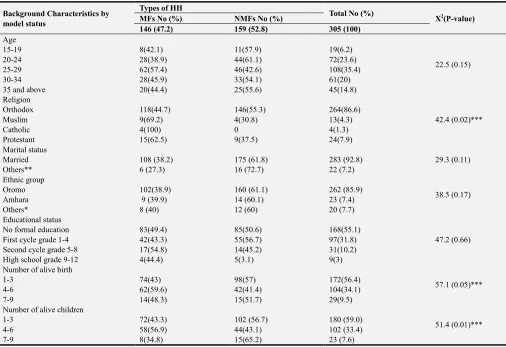
Table 1. Background characteristics of respondents, Sebeta Hawas district, OSZSF, December 2015 (N=305).
Background Characteristics by model status
Types of HH
Total No (%)
X2(P-value)
MFs No (%) NMFs No (%)
146 (47.2) 159 (52.8) 305 (100)
Age
22.5 (0.15)
15-19 8(42.1) 11(57.9) 19(6.2)
20-24 28(38.9) 44(61.1) 72(23.6)
25-29 62(57.4) 46(42.6) 108(35.4)
30-34 28(45.9) 33(54.1) 61(20)
35 and above 20(44.4) 25(55.6) 45(14.8)
Religion
42.4 (0.02)***
Orthodox 118(44.7) 146(55.3) 264(86.6)
Muslim 9(69.2) 4(30.8) 13(4.3)
Catholic 4(100) 0 4(1.3)
Protestant 15(62.5) 9(37.5) 24(7.9)
Marital status
29.3 (0.11)
Married 108 (38.2) 175 (61.8) 283 (92.8)
Others** 6 (27.3) 16 (72.7) 22 (7.2)
Ethnic group
38.5 (0.17)
Oromo 102(38.9) 160 (61.1) 262 (85.9)
Amhara 9 (39.9) 14 (60.1) 23 (7.4)
Others* 8 (40) 12 (60) 20 (7.7)
Educational status
47.2 (0.66)
No formal education 83(49.4) 85(50.6) 168(55.1)
First cycle grade 1-4 42(43.3) 55(56.7) 97(31.8)
Second cycle grade 5-8 17(54.8) 14(45.2) 31(10.2)
High school grade 9-12 4(44.4) 5(3.1) 9(3)
Number of alive birth
57.1 (0.05)***
1-3 74(43) 98(57) 172(56.4)
4-6 62(59.6) 42(41.4) 104(34.1)
7-9 14(48.3) 15(51.7) 29(9.5)
Number of alive children
51.4 (0.01)***
1-3 72(43.3) 102 (56.7) 180 (59.0)
4-6 58(56.9) 44(43.1) 102 (33.4)
7-9 8(34.8) 15(65.2) 23 (7.6)
*Gurage, Tigre and Silte, ** widowed, divorced, *** statistically significant, **** reference group, Abbreviations: HH: Household, OSZSF: Oromia special zone surrounding Finfine.
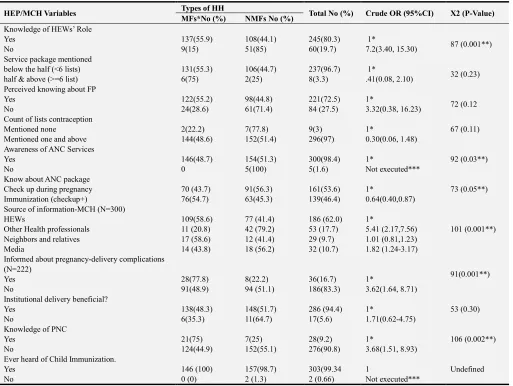
3.2. Mothers’ Knowledge About HEP and MCH Services and Model Status
This study assessed distribution of knowledge or awareness related HEP, HEWs and MCH services among respondents aimed to see variations in proportion based on model status. Table 2 conveys the details. About four in five mothers claimed to be oriented about the activities of the HEWs as community HEP workers. 137/245 (55.9%) of them were model families (pv<0.001). 237 out 245 (96.7%) mothers who claimed knowing the roles of HEWs, could mention <6 activities in connection with HEWs’ role from the following lists: nutrition, family planning, antenatal care, immunization, institutional delivery, breast feeding, latrine use, housing condition (how to keep house clean), personal hygiene, environmental sanitation, HIV/AIDs, Tuberculosis and Malaria). Though 296 (97%) of mothers mentioned at least one FP methods, only 221 (72.5%) confidently declared they about FP. 122/221 (55.2%) were from model families (pv=0.12). Overwhelmingly, 300 (98.4%) were claimed to be aware of ANC services. In fact, 139/300 (46.3%) mentioned ANC package involves other services like immunization for healthy pregnancy not just checkup. 76/139 (54.7%) were model families (pv <0.05). Predominantly, 286 (94.4%)
mothers perceived skilled birth attendances as beneficial. 11/17 (64.7%) who perceived institutional delivery as not beneficial were from non-model families (pv= 0.3). Minority, 36/222 (16.7%), of the respondents who ever visited health post for ANC reported they were informed about pregnancy-delivery complications. However, greater proportion (28=77.8%) of those informed were MFs (pv<0.001). The FGDs also showed that mothers from both groups had no objection about the benefit of delivering at HF but conceived invulnerability to complication; they perceived it as rare occasion. For example, one woman from NMFs who delivered her five children at home said, “it is good to deliver at HF. No objection for that. Women could be best supported at HF if complication is present. But, I delivered all my children at home without encountering any problem. Saint
Merry made easy my labor easy”. Another woman from MFs
said, “…...I have attended ANC services both with HEWs at health post and nurses at health center. Though, they told me to deliver at health institution, I delivered my baby at home with support of traditional birth attendant without
complication, difficulty and soon”. And, 303 (99.3%)
need to visit HF(starting from day 1 through 6 weeks) after delivery takes on the major share, 276(90.8%).21/28 (75%) of mothers who were aware of PNC were from model families (pv <0.002). Pertaining to source of information about MCH services, majority of the respondents, 186 (62.0%) heard from the HEWs. But, greater proportion of those mothers who claimed hearing from other health
professionals and media were significantly from NMFs (Pv<0.001). Overall, report of knowing activities of HEWs as community worker for HEP, knowledge of ANC packages, awareness about PNC and source of information showed significant variation in proportions between mothers from MFs and NMFs (pv <0.005).
Table 2. Awareness and Knowledge about HEP and MCH services, Sebeta Hawas district, OSZSF, December 2015 (N=305).
HEP/MCH Variables Types of HH Total No (%) Crude OR (95%CI) X2 (P-Value)
MFs*No (%) NMFs No (%)
Knowledge of HEWs’ Role
Yes 137(55.9) 108(44.1) 245(80.3) 1*
87 (0.001**)
No 9(15) 51(85) 60(19.7) 7.2(3.40, 15.30)
Service package mentioned
below the half (<6 lists) 131(55.3) 106(44.7) 237(96.7) 1*
32 (0.23)
half & above (>=6 list) 6(75) 2(25) 8(3.3) .41(0.08, 2.10)
Perceived knowing about FP
Yes 122(55.2) 98(44.8) 221(72.5) 1*
72 (0.12
No 24(28.6) 61(71.4) 84 (27.5) 3.32(0.38, 16.23)
Count of lists contraception
67 (0.11)
Mentioned none 2(22.2) 7(77.8) 9(3) 1*
Mentioned one and above 144(48.6) 152(51.4) 296(97) 0.30(0.06, 1.48)
Awareness of ANC Services
92 (0.03**)
Yes 146(48.7) 154(51.3) 300(98.4) 1*
No 0 5(100) 5(1.6) Not executed***
Know about ANC package
73 (0.05**)
Check up during pregnancy 70 (43.7) 91(56.3) 161(53.6) 1*
Immunization (checkup+) 76(54.7) 63(45.3) 139(46.4) 0.64(0.40,0.87)
Source of information-MCH (N=300)
101 (0.001**)
HEWs 109(58.6) 77 (41.4) 186 (62.0) 1*
Other Health professionals 11 (20.8) 42 (79.2) 53 (17.7) 5.41 (2.17,7.56)
Neighbors and relatives 17 (58.6) 12 (41.4) 29 (9.7) 1.01 (0.81,1.23)
Media 14 (43.8) 18 (56.2) 32 (10.7) 1.82 (1.24-3.17)
Informed about pregnancy-delivery complications (N=222)
91(0.001**)
Yes 28(77.8) 8(22.2) 36(16.7) 1*
No 91(48.9) 94 (51.1) 186(83.3) 3.62(1.64, 8.71)
Institutional delivery beneficial?
53 (0.30)
Yes 138(48.3) 148(51.7) 286 (94.4) 1*
No 6(35.3) 11(64.7) 17(5.6) 1.71(0.62-4.75)
Knowledge of PNC
106 (0.002**)
Yes 21(75) 7(25) 28(9.2) 1*
No 124(44.9) 152(55.1) 276(90.8) 3.68(1.51, 8.93)
Ever heard of Child Immunization.
Undefined
Yes 146 (100) 157(98.7) 303(99.34 1
No 0 (0) 2 (1.3) 2 (0.66) Not executed***
*Reference group, ** statistically significant, ***not executed (zero cells produce undefined odds), Abbreviations: HH: Household, OSZSF: Oromia special zone surrounding Finfine.
3.3. Mothers’ MCH Service Utilization and Model Status
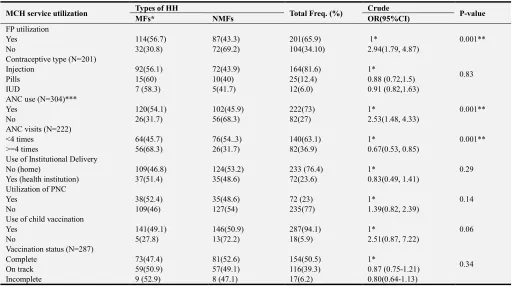
Table 3 displayed distribution of mothers’ use of FP, ANC, DC, PNC and Immunization among model and non-model families. 201 (65.9%) of the respondents were using FP. 114/201 (56.7%) were model families (pv <0.001). Majority of, 164/201 (81.6%), the respondents used injectable contraceptive. Though MFs seems to use pills and IUD (intrauterine device) more than NMFs, percentage variation was not significant (pv=0.83). 222 (73%) of the respondents used ANC during their last pregnancy. 120/222 (54.1%) of them were model families (pv<0.001). 82/222 (36.9%) of the
ANC users visited HF at least four times, of whom 56 (68.3%) were model families (pv <0.001). Overwhelmingly, 233 (76%), the respondents were delivered their last deliveries they made within the past five years. Slightly higher, 37/72 (51.4%) of the deliveries made at HF were among model families (pv=0.29). Seventy (23%) of the respondents were used PNC services at HF, of them 38 (54.3%) were model families (pv =0.14). And, 287 (94.1%) used child vaccination service. Higher proportion, 13/18 (72.2%) of mothers who did not immunize their children
were from non-model families, though slightly
Table 3. Maternal and child health services utilization, Sebeta Hawas, OSZSF, Ethiopia, December 2015 (No=305).
MCH service utilization Types of HH Total Freq. (%) Crude P-value
MFs* NMFs OR(95%CI)
FP utilization
0.001**
Yes 114(56.7) 87(43.3) 201(65.9) 1*
No 32(30.8) 72(69.2) 104(34.10) 2.94(1.79, 4.87)
Contraceptive type (N=201)
0.83
Injection 92(56.1) 72(43.9) 164(81.6) 1*
Pills 15(60) 10(40) 25(12.4) 0.88 (0.72,1.5)
IUD 7 (58.3) 5(41.7) 12(6.0) 0.91 (0.82,1.63)
ANC use (N=304)***
0.001**
Yes 120(54.1) 102(45.9) 222(73) 1*
No 26(31.7) 56(68.3) 82(27) 2.53(1.48, 4.33)
ANC visits (N=222)
0.001**
<4 times 64(45.7) 76(54..3) 140(63.1) 1*
>=4 times 56(68.3) 26(31.7) 82(36.9) 0.67(0.53, 0.85)
Use of Institutional Delivery
0.29
No (home) 109(46.8) 124(53.2) 233 (76.4) 1*
Yes (health institution) 37(51.4) 35(48.6) 72(23.6) 0.83(0.49, 1.41)
Utilization of PNC
0.14
Yes 38(52.4) 35(48.6) 72 (23) 1*
No 109(46) 127(54) 235(77) 1.39(0.82, 2.39)
Use of child vaccination
0.06
Yes 141(49.1) 146(50.9) 287(94.1) 1*
No 5(27.8) 13(72.2) 18(5.9) 2.51(0.87, 7.22)
Vaccination status (N=287)
0.34
Complete 73(47.4) 81(52.6) 154(50.5) 1*
On track 59(50.9) 57(49.1) 116(39.3) 0.87 (0.75-1.21)
Incomplete 9 (52.9) 8 (47.1) 17(6.2) 0.80(0.64-1.13)
*Reference group, ** statistically significant, *** 1 missing, Abbreviations: HH: Household, OSZSF: Oromia special zone surrounding Finfine.
3.4. Predictors of Mothers’ Model Status: Were the Models Really Exhibited Differences
Table 1-3 described variations in percentages over some of the socio-demographic characteristics, knowledge/awareness related to HEP&MCH services, and utilization of MCH behaviors (pv <0.05). Religion, having 4-6 and 7-9 alive children, being oriented about the activities of HEWs, awareness for ANC packages, getting informed about delivery complication, awareness for PNC visit within 6 weeks after delivery, source of MCH information, FP utilization, ANC ever visit and ANC visit frequency were variables that initially produced variation in proportions between the MFs and NMFs. Utilization of delivery care, PNC and child immunization services, perceived benefit of institutional delivery, awareness about child immunization, age, and educational level were not demarcated between NMFs and MFs (see table 2). Accordingly, these variables were pulled into further adjustment analysis to identify the variables that strongly demarcated between NMFs and MFs. Table 4 displayed predictors for being MCH model. After adjustment; MFs were found to be different from NMFs based on number of alive children they had, orientation with HEW activities, utilization of FP, frequency of ANC visits, knowledge of ANC packages, awareness of PNC service, perceived informed level of pregnancy/delivery complication and media as source of MCH information. Details were put as follows:
In this study, the only socio-demographic characteristics that predicted mothers’ model status were number of live
their activities and communication they were making than do the NMFs (Table 4). In fact, it was unknown whether model status facilitated the attachment or vice versa.
NMFs and MFs had also shown differences in MCH service utilization. To begin with family planning; NMFs were averagely four folds more likely [(AOR (95% CI): 3.89 (1.98, 7.63)] not to use FP service at the time of the study.
Mothers from NMFs, at their earlier stage of continuum of MCH behaviors, i.e. early in pregnancy, were averagely two times more likely [(AOR (95% CI): 2.22 (1.24-4.67)] to claim missing any visit for ANC compared to MFs. Furthermore, the NMFs were averagely 67% less likely [(AOR (95% CI): 0.33(0.17, 0.64)] to report making at least four ANC visits compared mothers from MFs (Table 4).
Table 4. Predictors of being model for MCH behaviors, Sebeta Hawas district, OSZSF, December 2015 (N=305).
Predictor variable Types of HH Crude OR (95%CI) Adjusted OR
(95%CI) MFs* No (%) NMFs No (%)
Religion (N=304)**
Orthodox 118 (44.7) 146 (55.3) 1 1
Muslim 9 (69.2) 4 (30.8) 0.36 (0.22,0.86) 0.76 (0.36, 1.24)
Protestant 15 (62.5) 9 (37.5) 0.49 (0.37,0.92) 0.87 (0.47, 2.32)
Know the role of HEWs
Yes 137(55.9) 108(44.1) 1 1
No 9(15) 51(85) 7.2(3.4, 15.3) 4.83 (1.99, 11.69)
FP utilization
Yes 114(56.70 87(43.3) 1 1
No 32(30.8) 72(69.2) 2.94(1.79, 4.87) 3.89 (1.98, 7.63)
ANC visit (N=304)**
Yes 120 (54.1) 102 (45.9) 1 1
No 26 (31.7) 56 (68.3) 2.53(1.48, 4.33) 2.22 (1.24,4.71)
ANC visit frequency (N=222)
<4 64(45.7) 76(54.3) 1 1
>=4 56(68.3) 26(31.7) 0.67(0.53, 0.85) 0.33(0.17, 0.64)
Know ANC package
Checkup alone 70 (43.7) 91 (56.3) 1 1
Checkup+(immunization) 76 (54.7) 63 (45.3) 0.64 (0.40,0.87) 0.82 (0.68,0.93)
Know PNC (within 6 weeks)
Yes 21 (75) 7 (25) 1 1
No 124 (44.9) 152 (55.1) 3.68(1.51, 8.93) 2.75 (1.41, 6.75)
Source of MCH information (N=300)***
HEWs 109 (58.6) 77 (41.4) 1 1
Other health professionals 11 (20.8) 42 (79.2) 5.41 (2.17,7.56) 3.24 (0.96, 4.21)
Neighbors & relatives 17 (58.6) 12 (41.4) 1.01 (0.81,1.23) 1.52 (0.87, 3.21)
Media 14 (43.8) 18 (56.2) 1.82 (1.24,3.17) 1.56 (1.19, 2.86)
Informed about pregnancy or delivery complications (N=222)
Yes 28 (78.4) 8(21.6) 1 1
No 91(48.9) 95(51.1) 3.62(1.64, 8.71) 0.26(0.10, 0.67)
Number of live birth
1-3 74(43) 98(57) 1 1
4-6 62(59.6) 42(1.4) 0.51 (0.41,0.85) 0.38(0.02, 7.03)
7-9 14(48.3) 15(51.7) 0.81 (0.76,1.12) 0.94 (0.54, 2.72)
Number of alive children
1-3 72(43.3) 102(56.7) 1 1
4-6 58(56.9) 44(43.1) 0.54 (0.39,0.74) 0.89 (0.45, 0.94)
7-9 8(34.8) 15(65.2) 1.32 (1.15,2.23) 1.27 (0.89,3.27)
*reference group,** catholic removed from analysis (zero cells), *** missing (5), Abbreviations: HH: Household, OSZSF: Oromia special zone surrounding Finfine.
In congruent to quantitative findings, the FGDs showed mothers from both groups were not using delivery, PNC and immunization services i.e. they were similar on those MCH outcome behaviors. In fact, the IDIs and FGDs expressed variation points between MFs and NMFs on each of later stages MCH behaviors: DC, PNC and immunization service utilization. Accordingly, we discuss each behavior as follows (refer to table 5 for details):
3.4.1. Delivery Service Utilization
Across to the FGDs women’s none- use of delivery service was generally characterized by: First: no intention and plan
environments (inaccessibility) to realize their intention. Therefore, the MFs and NMFs were slightly different on mechanisms through which they ended up not delivered at HF.
Less perceived relevance of HF for delivery (more common mentioned by NMFs) was facilitated by two main reasons. First, perceived adequacy of TBAs to manage deliveries: the TBAs were perceived as wise women, blessed handed, healer with just a touch, pain killer, child position and status assurer, long-lived experts with accumulated generational credentials, and more importantly still relied on especially by the non-model families. In fact, the model families were more likely to manifest a sort of modesty against the skills of TBAs, and tend to deny their use anymore. The second was perceived invulnerability to delivery complications: the use of HF seemed to happen only when delivery process gets complicated i.e. no anticipated complication- no institutional delivery. Closely linked with this idea and more importantly, most discussants perceived minimal chances of experiencing delivery complications (especially among NMFs). This idea was emanated from two relevant sources: past safe delivery experiences of their own (giving births without complications) and generational experiences (of getting safe assistance from local experts-the TBAs and storyline that their grandpas were giving births so safely). In fact, HF was believed to be more effective to manage complication than TBAs, even by the non-model families, if that happened at all. Accordingly, seemingly one of the good opportunities to deal with women for improved MCH behaviors was the non-objection of HF as a potential place for skilled birth attendances, because of perceived skill to manage complications by health workers.
On the other hand, the MFs were more critically challenged with past experience of disrespect by health workers during the past deliveries at HF, and inaccessibility. Perceived lack of concern and respect from health workers was adversely influencing MCH services. Experiences women faced during their or their relatives’ past deliveries at HF affected their preference of places for successive deliveries. Health workers who were not caring, respectful
and responsive pushed even the MFs away from delivering at HF. Women reported they needed support, caring and encouraging words and actions at the moment of their delivery, not disgrace. The experiences of disgust at HF led the women to foster their reliance on TBAs-who were perceived to be caring, encouraging and respectful. And, on top of this, inaccessibility claims for institutional delivery had a sort of hierarchical aspects that affected use of MCH services: lack of readiness for delivery, urgent nature of labor, no road departure to wait for vehicle (beyond the control), no transportation and no finance.
3.4.2. The PNC and Child Immunization Service Utilization
Both shared similar elements to display variations between the two groups, as they both happen after delivery. Across the FGDs with both groups: low level of awareness about PNC/immunization, post-partum social norms and closed health post occasions interacted with the services utilization. With regarding to awareness for the services; discussants from both groups confused immunization with PNC i.e. they perceived PNC visit was meant for child vaccination. And, PNC use was reported to happen after 45 days. In fact, this was commonly stated among women from NMFs. The post-delivery traditional practices were high likely to link with consecutive MCH services utilization: PNC and child immunization. Though both groups shared the practices and beliefs, the MFs claimed closed health occasions as reasons for not getting MCH services after delivery. Women approached believed to be powerful persons available in their locality, referred to as ‘hammachiisaa’-literary means the one who takes newborns up in arms, who were supposed to bless their newborns. They also were supposed to stay at home for forty days after delivery-this was to prevent ‘michii’-literary means allergy. The worst point was women might not have visited HF when they faced signs that sought medical consultation, like post-partum hemorrhage. Mostly, MFs claim that absence of the HEWs from their station: closure of HPs was a challenge to uptake of MCH services and products like child vaccines (including family planning), even after repeated visits..
Table 5. Shows matrix of qualitative findings, from across the FGDs and IDI, Sebeta Hawas, OSZSF, Ethiopia, December, 2015 (N= 38 individuals across 4 FGDs and 4 IDIs).
Major themes: MCH contexts under which modeling operates
Descriptions for the major themes (data based) Supportive quotations (from the interviews)
1. System challenges for MCH Use
System: comprised of poor follow up and supervision of HEP, and work burden, additional unplanned assignment, turnover and replacement of HEWs
For example, District officials, the MCH team leader said, “to be a model family one has to attend three months thorough training and have to put in to practices at least 80% of the total packages… in some cases people are forced to fulfil what is expected from them without being convinced and back slide latter.”
HEW said, “ ….compromised quality of the services, HEP was rushing to increase number of model families and offering training to be given for three months in a month being certified for the sake of report only. The models might have not further strengthened and followed till they exhibit different behaviors”
The HEWs said, “…the model families need follow up and supervision from senior staff of the health center and from
1.1. Follow up/ supervision for HEWs and models
Follow-up challenge: Limited work on improving behaviors of model families themselves and their level of influence. Slight effort from district health office made to follow this issue (only training). Registration and location of the number of model families not well kept. Even tracking of MFs was not as easy as mentioned by districts. Only few of the certified models could be inconsistently noted so through observation. Minimal follow support given to HEWs regarding her work on and through models.
Major themes: MCH contexts under which modeling operates
Descriptions for the major themes (data based) Supportive quotations (from the interviews)
HHs were too many to be reached by 2 HEWs assigned for each village. The packages were also too many. During out-reach the HEWs were not found in-the-health post. This challenged getting the services like child immunization, family planning etc.
the district.”
District health office head said, “…We need if we could get to more than 2 HEWs for each village. They have too many jobs...”
The HEWs also said, “our expected jobs are not much compared with our number. We are supposed to stay in clinic and conduct out-reaches too. The packages are too many”
1.3. Additional and too many unplanned tasks assigned
Too many unplanned tasks imposed: HEP has been rendered by HEWs. And, the HEWs were found to elapse most of their times on meeting for unplanned activities at village and district levels. The meetings at times could last for a week or two, even extended. This competed over time with the routine tasks they were supposed to provide at health post. The meeting agendas could be farfetched at times from routine expected activities of HEP
For example, The HEW supervisor said, “…most of HEWs were not found at the health post though they were supposed to be as per the HEP guideline. They spent half of the working time on travel which was aggravated by unplanned emergency assignments vested on them from the districts including frequent meetings.”
1.4. Turnover and replacement
HEWs turnover and replacement: Each health post was supposed to recruit 2 HEWs. But, HEWs were leaving their job claiming with burnouts and heavy work load vested on their shoulder with smaller number of them; there were then many health posts running by only one HEW and even some have none
HEW supervisor said, “…the main reason for HEWs leaving their job was burnout and heavy tasks, too many works. The problem was no or delayed replacement when they left.”
2. Health care providers & MCH
2.1. Lack of concern and respect: health center workers
Health care providers: health workers at HC and HEWs at HP Concern and respect: Experiences women faced during their or their relatives’ past deliveries at HF determined their successive deliveries to happen at home, even seek the assistance from the TBAs. Health workers who were not caring, respectful and responsive pushed even the MFs away from delivering at HF. Women reported they needed support, caring and encouraging words and actions at the moment of their delivery, not disgrace. The experiences of disgust at HF led the women to foster their reliance on TBAs-who were perceived to be caring, encouraging and respectful.
For example, one FGD discussant woman of age 28 from MFs said, “…My elder sister was in labor. We took her to the health center and the nurse appeared after long waiting. During examination she was speaking impolitely…”
Another discussant from MFs said, “….But there is a lot of care from TBAs and you get a lot of encouraging words when you give birth at home among your family members who respect and care for you….”
2.2. Absence of HEWs: Closed health posts
Closed health posts: occasions for health posts was a challenge to uptake of MCH products like family planning and child vaccines. Sometimes, the health post remained close after repeated visits. In fact, the closure could be attributed to reasons ranging from system and strategy related (workload, outreach, too many meetings, etc) to HEWs’ related (reluctance, lived in town and burnout).
One mother from MF said, “my neighbor told me that she visited health post two times for family planning and missed them from office and obliged to go to Sebeta town. Now I decided to use private clinics and Sebeta health center.”
Another mother of age 37 from NMF said “My child is about three months and a week now and not yet vaccinated. I took my child to health post and didn’t get HEWs there. Latter my friends informed me that she have had meetings at district. Latter after a month they came my-home while I was away from home with my baby for work and missed each other. She toldmy neighbor to be back after a week. Again when I was back I visited them and didn’t appear for another a month and they seem very busy. They also live in towns to just in the village”
3. Mothers’ view, experiences related to MCH utilization 3.1. Misconception on MCH:
Views & experiences: Many of women’s views on MCH challenges relate to delivery and post delivery services. This included: misconceptions on service packages, inaccessibility (urgent labor, distance, finance, too much beyond control) and
post-delivery traditional practices. For example, one FGD discussant woman from NMFs said,
“There is no transportation to go to health institution once the labor set on, and we don’t worry for we do have the TBAs unless complication occurs.”
Another mother of age 31 from NMFs said, “it is good to deliver at health institution and I have no objection for that, but I didn’t encounter any problem when I delivered five of my children at home, because I saint Mary made my labor easier.” Another mother from MFs said, “...I have attended antenatal care services both from HEWs and nurses. I was told during ANC to deliver at health institution; but no complication and difficulty during my labor and I delivered soon by the support of TBAs at my home.”
3.1.1. No complication-no institutional delivery
No complication-no HF delivery: Many occasions exacerbated mothers’ lack of delivery at HF: perceived to be skillful TBAs were present in their vicinity, urgent onset of labor, perceived invulnerability to complication (no or rare), they were located at a distant. Many women from NMFs perceived the surplus of HF pertaining to delivery was management of delivery complications, if any
3.1.2. PNC confused with child immunization
PNC confused with child vaccine: Many discussants from both groups confused child vaccination on the 6th week with PNC service. They were also mentioning that PNC was aimed to provide child vaccination service. This was commonly stated among women from NMFs.
3.2. Perceived skills and respectful care from TBAs
Major themes: MCH contexts under which modeling operates
Descriptions for the major themes (data based) Supportive quotations (from the interviews)
still relied on especially by the non-model families. In fact, the model families were more likely to manifest a sort of modesty against the skills of TBAs, and tend to deny their use anymore. They were also claimed as respectful
3.3. Inaccessibility (delivery services) Urgent labor and readiness
3.3.1. No road to join vehicle
Multiple hierarchical inaccessibility aspects: (commonly stated by MFs
Inaccessibility (urgent labor and lack of readiness): Though it is a natural phenomenon for labor to happen unexpectedly, lack of psychological or financial readiness for it was a challenging aspect. For some woman home delivery happened due to urgent nature
3.3.2. No transport-road access
3.3.3. No finance-take vehicle
and timing of labor, not just because of lack of psychological readiness. They might have used every required package till the moment of labor and decided to deliver at HF. But, the labor could come in mid-night- The time they perceive being out of support and they did not access anything at ease.
3.4. Traditional practices
3.4.1. “Hammachiisaa”: as post-partum competitor for PNC and child immunization
Inaccessible-just beyond control (road access): Many mothers especially from MFs claimed that they have no problem of evidence. They reported that they received awareness creation trainings about ANC, immunizations, institutional delivery, etc. And, delivering at HF happens just because it was beyond their control to manage visiting HF as of distance, not knowledge or reluctance:
For example, one woman from NMFs stated, “…after delivery, we were supposed to go to health posts to immunize our new-born, we had to go till 45 days. We don’t need to go for ourselves. We were finished, now we gave birth….”
For example,
One woman of age 25 from NMF group said “we do have TBAs and I, all my relatives and the villagers gave birth on her hand; she has a blessed hand and no need of going to health institution unless complication occur.”
Another woman from NMF said, “…I confirmed that those traditional healers are so wise and know all the position of the baby. Their hands were curing whenever they touch.
For example, one woman from MFs said, “I was not ready when my labor set on…I also did not have cash on my hand….finally I delivered at home.”
Inaccessible-transportation: Next to access to road, access to transport will be the next challenge that could delay, especially when the time labor was inconvenient. Some women perceive the benefit of institutional delivery and even prefer to get their delivery attended there. But, they may simply lack transport.
3.4.2. Local massage by TBAs
Inaccessible-finance: Lack of financial readiness was a critical challenge women were mentioning specially from MFs. It especially worsens home delivery occasions when it added urgency of labor. Here road accessed and transport was potentially available but still no many to pay for. The accustomed practices: included ranges of traditional practices both before and following delivery event those were high likely to link with consecutive MCH services utilization: PNC and child immunization. Women approached spiritually believed to be powerful persons available in their locality, referred to as ‘hammachisaa’-literary means the one who takes up in arms, who were supposed to take the new-born in arms and give blessing. They also were supposed to stay at home for forty days after delivery-this was to prevent ‘ michii’-literary means allergy, not even go for child vaccination. The worst was women might not have visited HF when they faced signs that sought medical consultation, like post-partum haemorrhage.
Another woman of 23 from MFs reported, “I attended ANC services four times at Sebeta Health center and very pleased for the care I got from the nurses. I was told not to give birth at home in order to avoid too much bleeding during delivery so that I and my baby will be kept safe. But unfortunately my labor was at night time, it was hard time for both of us and this way I delivered at home.”
For example, one woman of age 21 from MFs explained, “…We were well trained by HEWs one by one on
vaccination, antenatal care and institutional delivery… But I gave birth my two children at home because my house is very far from the road departure and there was difficulty to travel being on labor up to the point of road.”
During pregnancy women visited TBAs sometimes they felt pain and improper child position. Then, they received massage service they loved.
For example; one FGD discussant woman of age 27 from MFs said, “As my sister over there
said, I know the benefit of institutional delivery and I prefer to give birth there. I gave birth to my middle child in health center where I attended my antenatal care but I didn’t get transportation for the first and last child whom I gave birth at home.”
For example; one mother from MFs reported, “I was not ready when my labor set on and I did not have cash on hand. The labor did not give me time to search money for credit. This was how I gave birth at home…and my life was endangered due to too much bleeding and I was not conscious when I was taken to health center after a week.”
Major themes: MCH contexts under which modeling operates
Descriptions for the major themes (data based) Supportive quotations (from the interviews)
arms. This is believed to keep the baby healthier and grow productive as an adult” Another woman from NMFs said, “….we did not go out. When we give birth at home, we receive an advice. We were restricted to go out until forty days for fear of spirit strike locally called “michii”. Even they might not come out, when they fill ill signs.” For example, one mother of age 29 from NMFs said, “It is usual thing to attend abdominal massage service given by Traditional healers in order to avoid abdominal cramp during pregnancy. I had used for two of my pregnancies and I got relief soon after the services.”
Abbreviations: FGDs: Focus Group Discussion, IDI: In-depth Interview, OSZSF: Oromia Special Zone Surrounding Finfine.
4. Discussion
One of the approaches of HEP was training of model families who were expected to help diffuse health messages leading to the adoption of the desired practices and behaviors by the community, mothers of reproductive age groups. The production of the model families starts with training and through close support and follow-up it achieves the goal of modeling MCH behaviors: FP, ANC, DC, PNC and child immunization. This study produced evidences about model and non-model families targeting to MCH utilization behaviors and that can inform achievement of the HEP strategies. In order to easily demonstrate variations between the two groups, we categorized FP/ANC use as early stage utilization behaviors and the DC/PNC/Child immunization as later stage utilization behaviors on the continuum of MCH service utilization behaviors. This category was intended because this study found out that models had exhibited explicitly differently on behaviors that happen before or early in pregnancy and while they didn’t on behaviors that were late in pregnancy or post. Major findings were discussed with closely related evidences, guidelines and behavior change theories to search for implications.
Accordingly, we first introduced major findings as follows. This study generally observed differences between MFs and NMFs against respondents’ background, knowledge or awareness of HEP/HEWs’ role/MCH services and MCH utilization practices. The observed variations between MFs and NMFs were captured through both quantitative and qualitative findings. In fact, there were similarities between the two groups against some MCH relevant knowledge and practices. Number of live children the mothers had was the only background characteristics that demarcated the groups. The major demarcation between the two groups in terms of MCH practices was family planning and antenatal care utilization. Though qualitative aspects of the study observed variations in commitments to engage on the later MCH behaviors, practically no statistically significant differences were observed on DC, PNC and immunization between the groups. The study found out that the model families were more informed about role of HEW as HEP worker, ANC, pregnancy-delivery complications and PNC compared to
non-models. The HEWs were significantly mentioned to be source of MCH information for model mothers compared to other sources; other health professionals and media which in turn were commonly mentioned by the non-models.
never aware of child immunization..
In this study, though mothers from model families and non-model families had shown differences on early stage MCH utilization behaviors, they did not on later MCH utilization behaviors. This means utilization of FP and ANC services were significantly better attached to mothers from model family than non-model ones while utilization of DC, PNC and child vaccination were not significantly explicitly attached to being model. The variations on early stage MCH utilization behaviors between the two groups were perhaps because of two things: the trainings the model families received and the utilization of these services did not require too much resource: time, money, and access to the service outlet points-health posts unlike services in late pregnancy period-delivery or post. Mothers from model families converted their knowledge into commitments and actual utilizations of FP and ANC services compared to the non-models. Therefore, they can help diffuse the utilization of those services. Similarities of both groups on later stage MCH utilization behaviors could be because these services required too much resource to access the services: time, money, vehicles infrastructures needed for delivery services including facility and roads. In fact, similarities on PNC and immunization services may be attributed to competing traditional practices like forbidden going out after giving births and closure of health posts as of workload, unplanned tasks and meetings the HEWs attended. Many studies conducted on MCH services utilization behaviors (FP, ANC, DC, immunization services utilization) documented that knowledge, commitments/intention; traditional beliefs and accessibility of services determine use of MCH services [17-24]. Another study identified limited number of HEWs, often closed health posts were critical challenges to MCH service utilization [25]. Basically FP and ANC can be utilized at health post level i.e. at ganda closer to where the mothers live while skilled institutional delivery services were rendered at health center level i.e. located at more distant settings away from where rural mothers live. The HSDP I-IV and HEP guidelines clearly specified that health posts and HEWs were not well equipped and skilled for rendering skilled birth attendance services. Mothers were expected to travel to health centers where the skilled/institutional delivery services were rendered [3-6, 36-37]. Qualitative findings clearly put hierarchical inaccessibility aspects that hidden possible demarcations between the two groups though model families seemed be better committed to use the services. Plus to that there were challenging multi-level contexts through which MCH service were delivered and within which frame the model families were expected to carry out their modeling tasks (refer to table 5). Therefore, health system contexts handicapped mothers from modeling especially the later stage MCH utilization behaviors. Model families were challenged with contexts beyond their control.
The findings carried relevant messages for HEP
designers and implementers that deemed further
discussion over its implications for improvement of MCH practices among mothers. The study portrayed that women
from model families were having practices that can be observed and adopted by other women around at times before or early in pregnancy. They can be used for enhancing FP and ANC utilization. According to DOI theory, Social cognitive theory (SCT) and other behavioral theories, models (in this case, model families) were intended to exhibit healthier roles, practices, experiences that we needed others to give attention to, observe, adopt and later become advocate themselves. In this case, we purposely were supposed to invest resources over these models in a way we like others will most probably follow either because the target behavior has overtly conveyed benefits to the target audiences or become a new social norms to comply with [32, 34-35]. Nonetheless, system challenges were significantly responsible for similarities between the two groups though variations were expected. The above theories (DOI and SCT) clearly specified complexity of the systems and incompatibility of service delivery outlets and mechanisms can pose critical hindrances to adoption of service (MCH) utilization and its further diffusion among members of target population in a given community [32, 34-36]. Finally, this study was not without limitations. Firstly, findings in this study were not thoroughly compared with other studies because of limited access to similar literatures. Up to our knowledge there were deficit of comparative studies that focused on variations in health service use based on model status and similar contexts. Therefore, we used general evidences that did not compare both groups. Secondly, the scope of this study was limited to look at MCH service utilization demarcation points between model and non-model families. It was not aimed to determine factors that influenced specific MCH behaviors separately for both groups. Thirdly, this study was limited to one district of OSZSF, though it included many villages. Regarding potential sources of bias, this study could have exposed to social desirability bias; may hide variations through misclassification as any mother needs to be positively evaluated against MCH services utilization.
5. Conclusion
practices for late stage MCH behaviors. MCH service delivery system had bottleneck features that disabled conversion of commitments and intentions model mothers had in order to use delivery, PNC and immunization services. Hierarchical inaccessibility aspects: services outlets, distance, transport and finance were critical challenges for modelling specifically delivery service utilization. Closure of health posts at work time because of factors related health system and health extension workers were challenges especially for post-natal care and child immunization utilizations. Thereof, we claim the findings of this study as urgent given that MCH behaviors, particularly skilled birth attendances, has been identified by different stakeholders as relevant strategy to reduce maternal and child mortality rates. Therefore, this study calls for earnest work to improve late stage maternity service utilization behaviors in general and facilitating modeling strategies that can enhance the services utilization in particular. Furthermore, the HEP designers and implementers should work to aiming to produce model mothers distinctly for delivery care, postnatal care and child immunization services and provide them reinforcing names.
List of Abbreviations
ANC: Antenatal Care, AOR: Adjusted Odds Ratio, COR: Crude Odds Ratio, DC: Delivery Care, EDHS: Ethiopia Demographic Health Survey, FP: Family Planning, HEP: Health Extension Program, HEWs: Health Extension Workers, HC: Health Center, HP: Health Post, PNC: Postnatal Care, MCH: Maternal and Child Health, MFs: Model Families, NMFs: Non-model Families, OR: Odds Ratio, OSZSF: Oromia Special Zone Surrounding Finfine, PHCU: Primary Health Care Unit
Declarations
Ethics approval and consent to participate: Jimma Univeristy Public health and medical sciences ethical comittee.
Consent for Publication
Not applicable.
Availability of Data and Material
The datasets used analyzed during the current study are available from the corresponding author on reasonable request.
Competing Interest
The authors declare they have no competing interest.
Funding
Jimma University financially supported this study. Jimma
University funds researches for academic purposes.
Authors’ Contributions
YKL and GER conceived the idea. GER, YKL, EG designed the study. YKL drafted the manuscript. EG and GER participated in the critical review of the manuscript. All authors gave their final approval of the version of the manuscript submitted for publication.
Acknowledgements
The authors acknowledge Sebeta Hawas district health office for facilitating this study. Our gratitude also goes to participants who were involved in this study. At last but not the least we are thankful for data collectors.
References
[1] John J Hall and Richard Taylor: Health for all beyond 2000: the demise of the Alma-Ata Declaration and primary health care in developing countries, Med J August 2003; 178 (1): 17-20.
[2] Ministry of Health: 1986. Comprehensive Health Service Directory. Addis Ababa.
[3] Ministry of Health. 1985. Primary Health Care Review. Addis Ababa.
[4] Federal Democratic Republic of Ethiopia Ministry of Health. Health Sector Development Program IV 2010/11 – 2014/15 October 2010.
[5] Health Extension and Education Center. Federal Ministry of Health Addis Ababa, Ethiopia June 2007.
[6] Federal Ministry of Health of Ethiopia: Health extension program in Ethiopia. Addis Ababa: Health Education Center, 2007.
[7] World Health Organization. 2005. World Health Report 2005: Make Every Mother and Child Count. World Health Organization, Geneva.
[8] Improved access to maternal health services. WHO 98.7. Geneva: WHO. World Health Organization (WHO). 1998.
[9] Better health in Africa: Experience and lessons learned. Washington, D. C.: World Bank. World Bank. 1994a.
[10] Countdown to 2015 decade report (2000–10): taking stock of maternal, newborn, and child survival.
[11] The United Nations Children's Fund (UNICEF). Ethiopia Statistics. Basic Indicators 2012:Re-trievedon February 17,2012:http://www.unicef.org/infobycountry/ethiopia_statisti cs.html.
[12] The Millennium Development Goals Report 2012. United Nations; New York, 2012.