Journal of Applied Linguistics and Language Research Volume 5, Issue 3, 2018, pp. 247-255
Available online at www.jallr.com ISSN: 2376-760X
* Correspondence: Seyede Khadijeh Mirbazel, Email: Mirbazel1392 gmail.com © 2018 Journal of Applied Linguistics and Language Research
Dogs’ Nature for Learning Human Languages
Seyede Khadijeh Mirbazel *
Department of English Language, Faculty of Humanities, Rasht Branch, Islamic Azad University, Guilan, Iran,
Masoumeh Arjmandi
Assistant Professor in TESOL, Department of English Language, Faculty of Humanities, Rasht Branch, Islamic Azad University, Rasht, Iran
Abstract
There is a lingering question of how dogs comprehend human language. The most evidences declare that the cognitive abilities of dogs differ in significant ways from other animals that have had prolonged contact and/or training with humans. This analytical paper is a case study which aims at speculating about the significance of dog’s ability to recognize and comprehend human language sounds, speech and vocabulary in a natural situation not tutoring. This paper considers the relationship between Chomsky’s innateness hypothesis for human and dog’s ability to learn human language. The researchers of this study believe that the in-built program in dogs’ brains is like LAD in human brains. Concluding that dogs are able to comprehend, communicate and respond to language stimuli when their masters use language like a human child. However, the researchers of this study observed that the dogs’ nature for learning human language was very fast during their first three months of life - through naturally not training - little by little, there was a reduction rate.
Keywords: Human language learning, LAD, receptive skills, Sound waves
INTRODUCTION
Each language user is able to decode, encode and analyze lexical and functional words, intonation signals, and discourse markers in his/her communication context with others. Generally, most of time, language users do these works naturally because they naturally acquire their mother tongue. In the case of using second/third language, they are able to do things through a formal learning situation during a training period of time or natural exposure to that language. How about animals like dogs to analyze human language words without formal teaching. Hence, the basic questions are: How do dogs’ brains analyze human language lexical, intonational, and functional inputs? How do dogs’ neural mechanisms distinguish, process and detach the human language inputs?
surprisingly able to discriminate, process and comprehend human language sounds, morphemes and utterances. There is no need to teach them by any instructional devices, there is no need to employ a trainer for training human language to them, because dogs acquire human language naturally and easily only by their ears and eyes within a short period of time. Which language a dog learns depends on its owner’s language and its environment, if its owner’s language is Korean, Chinese, Arabic, Iranian, Spanish or something else, the dog will learn its owner’s language. There is a similarity between children natural language learning exposing to their parents’ language and the dogs natural language learning exposing to their masters’ languages. Both children and dogs acquire language through listening first, just one difference, children are able to produce spontaneously what they hear but dogs are not due to their vocal tract system. In accordance with Chomsky’s innateness hypothesis, this paper seeks to find an answer for this question: Are dogs born with a built-into capacity for learning human language in their brains like human?
In this regard, Andics, Gabor, Gacsi, Farago, Szabo and Mikloski (2016) investigated how dogs understand human languages by means of a MIR machine, the results of their study proved that dogs use the left hemisphere of their brain to process words, similar to humans. Andics et al. (2016, p. 2) reported:
LITERATURE REVIEW
Word processing in humans is lateralized to the left hemisphere (LH) of the brain (Binder, Desai, Graves & Conant, 2009). According to acoustic theories, this is caused by LH bias for rapidly changing signals which is not unique to humans (Poeppel, 2003; Wetzel, Ohl & Scheich, 2008). In contrast, functional theories assume LH bias for word or lexical representations of meaning, independent of acoustics (Shtyrov & Pigko, 2005). Nonhuman neural evidence for word processing is scarce. LH bias for broadly defined meaningfulness has been found for processing familiar, conspecific sounds (Poremba, Malloy, Saunders, Carson, Herscovitch & Mishkin, 2004). The comparison of human and nonhuman neural mechanisms for processing spoken words may reveal how speech-related hemispheric asymmetries and lexical representations emerged during evolution. Some studies demonstrated that processes like categorization and concept formation, which are also essential for language processing, can be found in a range of animals (Zentall & Wasserman, 2012). Comparative studies have also demonstrated that animals can use ordinal as well as transitional information to learn about linear strings of items (Chen & ten Cate, 2015), and that some species can detect nonadjacent relations among items (Sonnweber, Ravignani & Fitch, 2015).
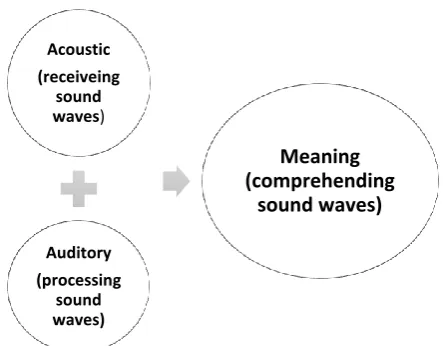
Figure 1. Acoustic, auditory sounds and meaning in dogs’ mental processing According to Figure 1, firstly, dogs receive their masters’ words (sound waves), then their brains immediately discriminate their masters’ sounds from other sounds to process the words, and finally comprehend the meaning of words. This includes the basic commands such as "sit," "stay," and "go," as well as a range of other terms, assuming they're tangible words and not abstract ideas (Bloom, 2004). In this regard, Rico (1994 - 2008) was a Border collie dog who made the news after being studied by animal psychologists Juliane Kaminski and colleagues from the Max Planck Institute for Evolutionary Anthropology in Leipzig after his owners reported that he understood more than 200 simple words. Kaminski, Call and Fischer (2004) wrote in Science that these claims were justified: Rico retrieved an average of 37 out of 40 items correctly. Rico could also remember items' names for four weeks after his last exposure (Kaminski et al., 2004). Foremost, another border collie named Chaser has attained the vocabulary of a 3-year-old child, Chaser learned the names of 1,022 objects, and she demonstrated that she understood the meanings of those separate names, categories and commands in a series of hundreds of fetch trials. Chaser also understands the basic concepts behind nouns and verbs, and can make appropriate matches between the two (Bickerton, 1984).
The link between dogs’ nature of human language learning and human innateness hypothesis
Despite the complexity of human language, children are able to accurately acquire a language within a short period of time. Moreover, research has shown that language acquisition among children (including the blind and the deaf) occurs in ordered developmental stages (Laurence, 2001). This highlights the possibility of humans having an innate language acquisition ability. The innateness hypothesis is an expression coined by Hilary Putnam to refer to a linguistic theory of language acquisition which holds that at least some knowledge about language exists in humans at birth. This hypothesis supports linguistic nativism and was first proposed by Noam Chomsky (1972). Facts about the complexity of human language systems, the universality of language acquisition, the facility that children demonstrate in acquiring these systems. Linguistic nativism is the theory that humans are born with some knowledge of language. One acquires a language in a natural way—not entirely through learning—with natural development.
Acoustic (receiveing
sound waves)
Auditory (processing
sound waves)
Meaning (comprehending
Furthermore, this hypothesis asserts children are born knowing what human languages are like. It is obvious that particular languages are not innate and must be learned. Any child, regardless of ethnic background, will learn perfectly whatever language it is exposed to, and an isolated child prevented from any exposure to language will learn no language at all. The innateness hypothesis supports language nativism and several reasons and concepts have been proposed to support and explain this hypothesis. In his work, Chomsky introduced the idea of a language acquisition device (LAD) to account for the competence of humans in acquiring a language.
Language acquisition device: According to Chomsky, humans are born with a set of language learning tools referred to as the LAD. The LAD is an abstract part of the human mind which houses the ability for humans to acquire and produce language (Volkmar, 2013). Hence, according to Chomsky, the LAD explains why children seem to have the innate ability to acquire a language and accounts for why no explicit teaching is required for a child to acquire a language (Volkmar, 2013).
In the light of the innateness hypothesis, it seems that dogs’ brains are also programed to learn human languages. A newborn dog who is exposed to a language can learn more words at around five months of age than a newborn child at the same age. However, dogs show that they have communicational abilities as soon as they are born and live with human. It does not mean they have linguistic abilities but rather their human language learning abilities. Here, the main questions are: do dogs innately have human language knowledge? Are dogs born with a set of language learning tools like LAD? The reason for forming these questions is that dogs are able to acquire human language vocabulary and grammar naturally in natural situation without formal language teaching with natural language development merely through listening to and seeing human behavior while speaking to them. Likewise, dogs are able to be bilinguals like children and adults when their masters uses different languages.
Dogs’ ability to comprehend the intended meaningof their masters’ speech
as social interaction of dogs with people around them who dogs comprehend their speech and intended meaning. In fact, there may be as many differences between the natural performance or meaningful responses of dogs and other animals to the variety of stimuli in their human interactions which are mostly in the form of a woof, whimper or tail-wag. In this respect, the researchers of this paper represent their collected data in the following part which was gathered during one year.
CASE STUDY
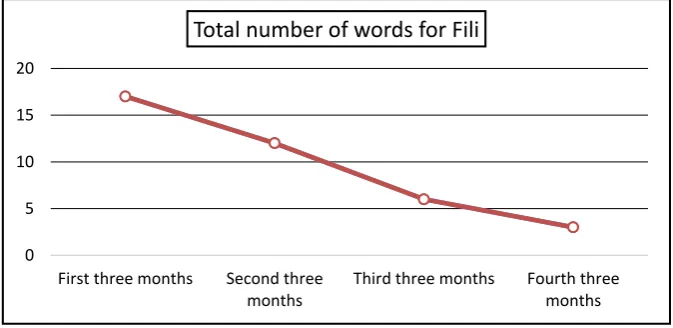
In spite of all the efforts in the field of animals learning, few researches have tried to investigate the stunning ability of dogs to comprehend and recognize the words of human languages. The data collection of this research lasted one year and was based on three dogs’ abilities to learn their masters’ language which was reported through a check list by their masters. The ethnic of each dog was different: Border collie (Juli, a male dog), German shepherd (Sezar, a male dog), and Siberian husky (Fili, a female dog). This research was started when those three dogs were newborns and it was ended when they were one years old. Each of three dogs lived with Iranian families who speak Persian. Regarding the natural way of human language learning, the dogs’ masters were asked not to give their dogs any formal training of vocabulary (nouns or verbs) learning during this research period. So, those three dogs received natural human language learning from their environment merely through listening and seeing. All three dogs were able to learn language components, and there was no priority for learning them (i.e., verbs and nouns). They learned commonly some words and infinitive sentences rapidly in their first and second month of their lives such as be quiet, go to your place, sit down, eat, come here, ball, and next months (up to twelfth) such as don’t woof, go back, Take, eat slowly, all family members’ names, bring your ball, hand me, come down from the chair, go to yard, don’t yowl. The following Table 1 shows the total number of words which Juli, Sezar, and Fili learned during the first year of their lives.
Table 1. Total number of words learned by three dogs
Dogs Total words in the first three months
Total words in the second three months
Total words in the third three month
Total words in the fourth three months
Total words
Juli 15 10 4 2 31
Sezar 19 14 8 4 45
Fili 17 12 6 3 38
Figure 1. Juli’s total words
Figure 2. Sezar’s total words
Figure 3. Fili’s total words
In sum, this research concluded that the dogs have a built-into capacity (like LAD in human) in their brains for language learning as well as comprehending and responding to human languages which helps them behave accurately.
0 5 10 15 20
First three months Second three months
Third three months Fourth three months
Total number of words for Juli
0 5 10 15 20
First three months Second three months
Third three months
Fourth three months
Total number of words for Sezar
0 5 10 15 20
First three months Second three months
Third three months Fourth three months
CONCLUSION
Accordingly, dogs as listeners are able to decode human language words (as codes), and comprehend human voices. In this case, as soon as their ears receive human speech in the form of sound waves, their brains activate to process what they hear. Dogs’ brain also are able to discriminate human sounds, and recognize the intonation, tone and pitch of the speech sounds uttered by the speakers in one way listening model. While it is sometimes asserted that dogs’ woofs, whimpers or tail-wags may convey more information than their vocalizations, these assertions are based on intuition rather than fact, almost nothing is known about the possible “pragmatic” content of dogs’ nonverbal performances. Similarly, nothing is known about the development of dogs’ nature of human language learning and their communicative behaviors in the interaction with their masters / owners or others.
REFERENCES
Andics, A., Gabor, M., Gacsi, T., Farago, A., Szabo, D., & Mikloski, A. (2016). Neural mechanisms for lexical processing. Science 10.1126/science.aaf3777
Andics, A., Gácsi, M., Faragó, A., Kis, A., & Miklósi, A. (2014). Voice-sensitive regions in the dog and human brain are revealed by comparative fMRI. Curr. Biol. 24, 574-578. Medline doi:10.1016/j.cub.2014.01.058
Bickerton, D. (1984). The language bioprogram hypothesis. Behavioral and brain sciences, 7(2), 173-188.
Binder, J. R., Desai, R. H., Graves, W. W., & Conant, L. L. (2009). Where is the semantic system? A critical review and meta-analysis of 120 functional neuroimaging studies. Cereb. Cortex, 19, 2767-2796. Medline doi:10.1093/cercor/bhp055
Bloom, P. (2004). Can a dog learn a word? Science, 304(5677), 1605-1606.
Chen, J., & ten Cate, C. (2015). Zebra finches can use positional and transitional cues to distinguish vocal element strings. Behavioral Processes, 117, 29-34. CrossRefPubMedGoogle Scholar
Chomsky, N. (1972). Language and mind. New York: Harcourt Brace Jovanovich.
Collier, K., Bickel, B., van Schaik, C. P., Manser, M. B., & Townsend, S. W. (2014). Language evolution: Syntax before phonology? Proc. R. Soc. B Biol. Sci., 281, 20140263.
Cook, V., & Newson, M. (2007). Chomsky's universal grammar (4thed.). Massachusetts:
Blackwell Publishers Inc.
Kaminski, J., Call; J., & Fischer, J. (2004). Word learning in a domestic dog: Evidence for "fast mapping . Science, 304 (5677), 1682-3. doi:10.1126/science.1097859
Laurence, S. (2001). "The Poverty of the Stimulus Argument". The British Journal for the Philosophy of Science. 52(2): 217-276. doi:10.1093/bjps/52.2.217
Pepperberg, I. M., & Shive, H. R. (2001). Simultaneous development of vocal and physical object combinations by a grey parrot (Psittacus erithacus): Bottle caps, lids, and labels. J. Comp. Psychol, 115, 376-384. Medline doi:10.1037/07357036.115.4.376 Poeppel, D. (2003). The analysis of speech in different temporal integration windows:
Poremba, A., Malloy, M., Saunders, R. C., Carson, R. E., Herscovitch, P., & Mishkin, M. (2004). Species-specific calls evoke asymmetric activity in the monkey’s temporal poles. Nature 427, 448-451. Medline doi:10.1038/nature02268
Shtyrov, Y., Pihko, E., & Pulvermüller, F. (2005). Determinants of dominance: Is language laterality explained by physical or linguistic features of speech? Neuroimage 27, 37-47. Medline doi:10.1016/j.neuroimage.2005.02.003
Sonnweber, R., Ravignani, A., & Fitch, W. T. (2015). Non-adjacent visual dependency learning in chimpanzees. Animal Cognition, 18(3), 733-745.
Volkmar, R. (2013). Encyclopedia of Autism Spectrum Disorders. New York, NY: Springer New York.
Wetzel, W., Ohl, F. W, & Scheich, H. (2008). Global versus local processing of frequency modulated tones in gerbils: An animal model of lateralized auditory cortex functions. Proc. Natl. Acad. Sci. U.S.A. 105, 6753-6758. Medline doi:10.1073/pnas.0707844105
Yip, M. J. (2006). The search for phonology in other species. Trends Cogn. Sci. 10, 442-446. Medline doi:10.1016/j.tics.2006.08.001