R E V I E W
Open Access
Inter- and transgenerational epigenetic
inheritance: evidence in asthma and COPD?
Susanne Krauss-Etschmann
1,2, Karolin F Meyer
3,4, Stefan Dehmel
1and Machteld N Hylkema
3,4*Abstract
Evidence is now emerging that early life environment can have lifelong effects on metabolic, cardiovascular, and pulmonary function in offspring, a concept also known as fetal or developmental programming. In mammals, developmental programming is thought to occur mainly via epigenetic mechanisms, which include DNA methylation, histone modifications, and expression of non-coding RNAs. The effects of developmental programming can be induced by the intrauterine environment, leading tointergenerational epigenetic effects from one generation to the next. Transgenerational epigenetic inheritance may be considered when developmental programming is transmitted across generations that were not exposed to the initial environment which triggered the change. So far, inter- and transgenerational programming has been mainly described for cardiovascular and metabolic disease risk. In this review, we discuss available evidence that epigenetic inheritance also occurs in respiratory diseases, using asthma and chronic obstructive pulmonary disease (COPD) as examples. While multiple epidemiological as well as animal studies demonstrate effects of‘toxic’intrauterine exposure on various asthma-related phenotypes in the offspring, only few studies link epigenetic marks to the observed phenotypes. As epigenetic marks may distinguish individuals most at risk of later disease at early age, it will enable early intervention strategies to reduce such risks. To achieve this goal further, well designed experimental and human studies are needed.
Keywords:Epigenetics, Transgenerational inheritance, Asthma, COPD
Review
Introduction
Asthma and chronic obstructive pulmonary disease (COPD) are chronic lung diseases, both thought to re-sult from a complex interplay of genetic factors and environmental exposures. These gene-environment in-teractions, in general, are now known to be mediated by epigenetic mechanisms such as histone modifica-tions [1], DNA methylation [2] and hydroxyl methyla-tion [3], chromatin remodeling [4], and expression of non-coding RNAs [5]. Epigenetic events are uniquely susceptible to endogenous and exogenous factors and most commonly take place during the prenatal period as the epigenome plays a vital role in embryonic develop-ment and tissue differentiation [6,7]. Epigenetic changes
are different from genetic changes as they do not involve alterations of the DNA sequence and hence are, in principle, reversible [8]. As they were found to be inherit-able, epigenetic events can be long lasting and passed on to the next generation. This is not limited to the first gen-eration of the progeny but can involve the grandchildren and even further generations [9]. Mechanisms on epigen-etic inheritance have been extensively reviewed recently [10-14] and will be discussed only briefly in this review.
Definition of inter- and transgenerational inheritance In this review, we describe evidence from epidemio-logical and experimental studies for asthma and COPD which suggest that epigenetic inheritance does occur. However, epigenetic marks can only be retained and transmitted from one generation to the next when re-programming of the germ line fails to remove epigenetic signatures that are required during development. The ef-fects of developmental programming can be induced by the intrauterine environment (cigarette smoke, nutrition, and stress) which not only affect the fetus (F1) but also * Correspondence:[email protected]
3Department of Pathology and Medical Biology, University of Groningen,
University Medical Center Groningen, Hanzeplein 1, Groningen, The Netherlands
4
University of Groningen, GRIAC Research Institute, University Medical Center Groningen, Hanzeplein 1, Groningen, The Netherlands
Full list of author information is available at the end of the article
the germ line of the fetus (F2), leading to so-called inter-generational epigenetic effects. When developmental programming is transmitted across generations beyond F3, it is considered to be transgenerational and can not be explained by direct environmental exposure anymore. Only a few studies provide evidence for transgenera-tional epigenetic inheritance, which was mainly trans-mitted down the paternal line [9].
Epigenetics in asthma
Asthma is a common chronic inflammatory disorder of the airways, of which the prevalence has increased dra-matically during the last two to three decades. Asthma is characterized by recurring episodes of airflow obstruc-tion, intermittent chest symptoms such as wheezing, coughing, and shortness of breath, as well as bronchial hyperresponsiveness (BHR) [15,16]. In the developed world, approximately 50% of asthma patients suffer from the allergic phenotype of disease [17] in which type 2 helper T cell (Th2) activation is dominant, resulting in an increased level of Th2 cytokines, such as interleukin (IL)-4, IL-5, and IL-13, a decreased level of Th1 cyto-kines, such as interferon-gamma (IFN-γ), and an im-paired function of regulatory T cells (Tregs).
Genetic sequence variations are associated with risk for asthma [18-23] but are per se unable to explain the escalating incidence of chronic inflammatory disorders during the past decades. Over time, it became evident that DNA variation can be associated with modified re-sponses to environmental challenges [22]. However, gen-etic variants can also affect epigengen-etic signatures through differential DNA methylation of CPG sites [23,24]. Inter-estingly, a three-way interaction of genetic variations, DNA methylation and environmental exposure was first demonstrated by Salamet al. [25], who showed that ex-posure to particulate matter and methylation levels of the NOS2 promoter haplotypes jointly influenced levels of ex-haled nitric oxide. Thus, epigenetic mechanisms in inter-action with genetic variants might confer further flexibility towards environmental exposures.
Nonetheless, it remains an open question why envir-onmental exposures interact with gene variations and thereby possibly bear potential to modify disease risks during critical developmental windows only. As outlined in the introduction, it has been hypothesized that envir-onmental influences during vulnerable developmental periods may lead to lasting changes of the epigenome resulting in altered functionality of the lung and/or the immune system. So far, the majority of human studies have looked at associations of epigenetic modifications -for technical reasons mainly DNA methylation - with respiratory disease.
For example, genome-wide DNA methylation was ana-lyzed in isolated peripheral monocytes from adult patients
with eosinophilic, paucigranulocytic, or neutrophilic asthma
versus healthy controls. While nine genes (TBX5, RBP1, NRG1, KCNQ4, PYY2, FAM19A4, SYNM, ME1, AK5) were hypermethylated and common to all asthma pheno-types, single in silicoconstructed networks were charac-teristic for the different asthma phenotypes [26].
In addition, using candidate gene approaches, a num-ber of genes related to asthma and involved in oxidative stress, immunity, and lipid metabolism were investi-gated. In an analysis of 12 genes implicated in oxidative stress pathways, higher methylation of protocadherin-20 (PCDH-20) was observed in sputa from adult smokers with asthma compared to non-asthmatic subjects with a similar smoking history and without COPD [27]. Methyl-ated paired box 5 protein transcription factor (PAX-5a), although not being associated with asthma risk, inter-acted synergistically with PCDH-20. In another study, adrenergic-receptor beta-2 (ADRB2) 5′-UTR methyla-tion was analyzed in whole blood from 60 children with mild asthma and 122 children with severe asthma. Here, higher methylation was positively related to severity of asthma, in a dose-dependent manner [28]. In addition, children with severe asthma and exposure to higher levels of indoor NO2 correlated positively with ADBR2
methylation, indicating the latter may directly or indir-ectly modify the effect of NO2on asthma severity. This
observation was recently challenged by Gaffinet al.[29] who reported an inverse relation between average CpG methylation of ADBR2 with asthma severity in periph-eral blood or saliva from 177 elementary school children with physician-diagnosed asthma, enrolled in the School Inner-City Asthma Study. The participants of both studies were of comparable age and similar diagnostic criteria for asthma were applied; however, as also emphasized by the authors, different regions of the ADRB2 gene were ana-lyzed. This highlights the necessity to ensure that altered methylation affects gene expression and function and is not an epiphenomenon.
addressing epigenetic changes in relevant target tissues [31] while DNA methylation of STAT5A and CRIP1 in airway epithelial cells distinguished asthmatic children from non-asthmatic atopics and healthy controls, these differences were not observed in PBMC. Similarly, cell-specific DNA methylation at the A disintegrin and metalloprotease 33 (ADAM33) gene promoter, which has been implicated in severe asthma, differed consider-ably between epithelial cells and fibroblasts and resulted in altered gene regulation [32].
In peripheral B cells, the promoter region of prostaglan-din D2 (PGD2) - an arachidonic acid-derived metabolite supporting Th2 cell differentiation and eosinophilia -was found to be hypomethylated from children with physician-diagnosed asthma compared to healthy con-trols [24]. Of note, the authors showed that hypomethy-lation was a) related to DNA variants and b) confirmed that this resulted in higher PGD2 expression levels sup-porting the functional relevance of these epigenetic changes.
Studies on epigenetics in asthma may have been ham-pered, as over the years, different clinical subgroups have been described. Hierarchical cluster analysis has demon-strated that there are at least five phenotypes which seg-regate according to age of onset, atopy, pulmonary function, requirement for medications, and a number of other factors [33]. However, in most published studies, rigorous phenotyping of patients is lacking.
Epigenetics in COPD
COPD is a life-threatening lung disease, mainly caused by cigarette smoking although other inhaled noxious particles and gases may contribute [34]. This leads to chronic airway inflammation, airway remodeling, and emphysema of the lung parenchyma. These lung path-ologies lead to obstruction of lung airflow that interferes with normal breathing and is not fully reversible upon treatment [35]. Also for COPD, the evidence of epigenetic changes is emerging. Epigenetic modifications in bronchial epithelium and sputum have been linked to health status in patients with COPD [36,37] and cigarette smoking [38,39]. In addition, epigenetic regulation was found to be critically important in chronic remodeling [40], as well as in small airway pathology. In small airway epi-thelial cells (SAE) of nine ex-smoking patients with COPD, hundreds of genes were found predominately hypermethylated relative to SAE of ex-smoking individ-uals without COPD, which was associated with lower lung function [41]. Furthermore, as reviewed in [42], the expression of the different epigenetic patterns in various muscles of patients with COPD was found to explain skeletal muscle dysfunction, a possible systemic manifestation of this lung disease, especially in advanced stages of COPD.
Additionally, an epigenome-wide analysis in peripheral blood cells demonstrated a large number of differentially methylated genes, including the aryl hydrocarbon recep-tor repressor (AHRR) [43], which was confirmed to-gether with F2RL3 later in an independent study [44]. Of note, differential methylation of the AHRR was also found in cord blood from children after prenatal smoke exposure [45] (see below) and was shown to persist until early infancy [46], demonstrating that there is at least in some instances a prolonged epigenetic memory of envir-onmental insults.
Temporal changes of DNA methylation
Although the examples above illustrate that epigenetic changes occur in asthma and COPD, they bear the risk of reverse causation as epigenetic modifications are in-ducible and may represent a response to the pathology rather than being its root. Therefore, temporal changes of epigenetic marks as well as the timing of exposure and outcome need to be investigated during the life course. Temporal persistence of epigenetic DNA modifi-cations were observed in adults after extended periods of smoking cessation in adults, which may explain the prolonged health risks after cigarette smoking. Thus, dif-ferential methylation of F2RL3 and GPR15 was shown to be significantly associated not only with current smoking but also with time since quitting smoking, in a dose-response relationship [47]. Similarly, Tsaprouni et al.
reported reduced peripheral blood DNA-methylation which was only partially reversible after smoking cessa-tion [48]. In addicessa-tion, pet keeping and tobacco smoke exposure was shown to limit increase in CD14 methyla-tion from 2 to 10 years of age in 157 children from the prospective Environment and Childhood Asthma birth cohort, partly explaining the diverging CD14 allele asso-ciations with allergic diseases detected in different envi-ronments [49].
have lost the disease by the age of 18. Thus, the study shows not only an interaction between IL-4R gene vari-ants and DNA methylation in relation to asthma but also an effect of temporal change of DNA methylation on asthma transition between ages 10 and 18.
Prenatal exposures and epigenetic changes related to asthma or COPD risk
Numerous prenatal exposures such as maternal asthma or atopy, maternal nutrition or obesity during pregnancy, maternal gestational stress, and pollutants have been brought into context with respiratory disease. Among these, maternal smoking during pregnancy is one of the most important risk factors for impaired lung function development and asthma risk [51-53]. Since childhood asthma was shown to increase the risk for adult airflow obstruction by 20-fold [54], prenatal smoke exposure is also a potential risk factor for COPD.
Maternal smoking has been linked with genome-wide higher methylation of peripheral blood. In 92 adult women from a birth cohort dating back to 1959 (New York participants of the‘National Collaborative Perinatal Project’) methylation of repetitive elements (LINE1-M1, Sat2-M1, Alu-M2), which are markers of global methyla-tion in the identical blood samples, showed an inverse association between prenatal smoke exposure and Sat2 methylation [55]. In addition, an inverse dose-response re-lationship was observed between cord blood cotinine levels and global cord blood DNA hypomethylation in 30 newborns [56].
Breton et al. observed lower DNA methylation levels of the short interspersed nucleotide element AluYb8 in buccal cells from 348 prenatally exposed kindergarten and elementary school children [57]. Hypomethylation of LINE-1 was only seen in prenatally exposed children who were glutathione S-transferase (GST) M1 null, while methylation was higher in those with GSTM1. Thus, variants in detoxification genes may modulate the effects of prenatal exposure via differential epigenetic marks.
In candidate gene approaches, significant, albeit small differences in methylation of Neuropeptide S Receptor 1 (NPSR1) were observed in whole blood samples from adults with severe asthma and children with physician-diagnosed allergic asthma of a Swedish Birth cohort (BAMSE). In children, the NPSR1 methylation status was influenced by prenatal smoke exposure [58]. Pre-natal smoke exposure throughout pregnancy was further associated with higher DNA methylation of the pater-nally expressed insulin-like growth factor 2 (IGF2) in cord blood when compared to samples from infants born to mothers who quit smoking in early pregnancy. There was a clear gender difference as methylation levels differed most significantly in male offspring [59].
Within the Isle of Wight birth cohort, Patil et al.
analyzed the interaction of six CpG sites in the IL-13 promoter with two functional gene variants of IL-13 in 245 female participants at the age of 18 years. The au-thors demonstrated a) an interaction of one functional IL-13 gene variant, rs20541, and maternal smoking dur-ing pregnancy with DNA methylation at one CpG site and b) that the interaction of this CpG site with another functional SNP affected airflow limitation and airway re-activity [2]. The authors propose a two-stage model where exposures first interact with so called methylation quantitative trait loci, that is, gene variants affecting sus-ceptibility to DNA methylation, thereby modifying gene regulation. The response to subsequent environmental challenges potentially interacting with other gene vari-ants within the same gene in a second stage would then be affected by the presence or absence of the epigenetic modification established during the first stage.
In an epigenome-wide association study (EWAS), lower cord blood DNA methylation of cytochrome P450 aryl-hydrocarbon-hydroxylase (CYP1A1) gene and hypermethylation of most investigated CpG sites of the aryl hydrocarbon receptor repressor gene (AHRR) were demonstrated in 1,062 prenatally smoke-exposed children of the Norwegian Mother and Child Cohort Study (MoBa) [45]. Both molecules play an important role in metaboliz-ing xenobiotics and were also modified in adult smokers [60]. Thus, prenatal tobacco smoke exposure may predis-pose to altered responses towards xenobiotics in later life via lasting epigenetic modifications which could affect the risk for pulmonary disease. In contrast to the findings in cord blood, the identical CYP1A1 CpG sites were hypo-methylated in placentae of smoking women with higher CYP1A1 mRNA expression [61]. Further changes of glo-bal DNA methylation in placental tissue from smoking mothers have been reported [62,63].
Another recent large EWAS identified and partly newly confirmed 185 CpG sites with altered methylation among FRMD4A, ATP9A, GALNT2, and MEG3, in whole blood of infants of smokers within 889 newborns from the Norway Facial Clefts Study.
GTF2H2D genes and 101 unique CpG sites were concord-ant between lung and placental tissue analyses. Gene Set Enrichment Analysis demonstrated enrichment of specific disorders, such as asthma and immune disorders, suggest-ing a role for DNA methylation variation in the fetal ori-gins of chronic diseases [65].
Besides maternal smoking, prenatal exposure to air-borne pollutants has been suggested as risk factor for asthma. High prenatal exposure to polycyclic aromatic hydrocarbons (PAH) has been reported to be associated with higher methylation of an enzyme involved in fatty acid metabolism termed acyl-CoA synthetase long-chain family member 3 (ACSL3) in cord blood DNA and matched fetal placental tissues [66]. The relation of ACSL3 function with asthma is not known. In a subse-quent study, the authors reported hypermethylation of the IFNγ promoter in cord blood DNA in association with maternal PAH exposure [67]. Higher levels of prenatal dichlorodiphenyldichloroethylene, a metabolite from the pesticide DDT, were associated with DNA hypomethyla-tion at age 4 years of a CpG site in the arachidonate 12-lipoxygenase (ALOX12) gene and associated with persist-ent wheezing in 6-year-old children from two independpersist-ent Spanish cohorts. ALOX12 DNA methylation was further associated with genetic polymorphisms [68].
Intrauterine exposure to a farming environment has further been associated with decreased risk for asthma and allergies. The CD14 promoter region was differently methylated in placentae from women living on a farm compared to non-farming women [69].
In a birth cohort, cord blood Treg cell counts were in-creased with maternal farming exposures during preg-nancy and associated with higher FOXP3 expression [70]. FOXP3 hypomethylation was increased with mater-nal consumption of farm milk. More recently, the Pro-tection against allergy: study in rural environments (PASTURE) study was used to investigate methylation patterns of ten asthma candidate genes in cord blood and at age 4.5 years. ORMDL1 and STAT6 were hypo-methylated in cord blood DNA from farmers’ offspring, while regions in RAD50 and IL-13 were hypermethy-lated [71]. An association with asthma was only seen in non-farming offspring for hypermethylated cord blood ORMDL3 and STAT6. Irrespective of the exposure or disease status, methylation of several asthma and allergy-related genes changed over time (IL-4, IL-13, ORMDL3, RAD50), indicating their involvement in developmental processes, while Treg-related genes (FOXP3, RUNX3) remained unchanged.
Exposures beyond the mother: what about fathers and ancestors?
Studies based on historical records of a small population in North Sweden (Överkalix) reported that the mortality
rate of men is linked to food supply of the father’s father in mid-childhood, while the mortality rate of women was exclusively related to food supply of their father’s mother [72]. Data from the Avon Longitudinal Study of Parents and Children (ALSPAC) indicate an association of grandmaternal smoking with increased birth weight, birth length, and BMI in grandsons of non-smoking mothers but not in granddaughters. The same group of authors reported an association of paternal prepubertal smoking with greater BMI of their sons [73].
To date, there is very limited evidence for an exclusive establishment of risk for respiratory disease via the mother. Li et al. reported in 2005 that a grandchild’s asthma risk is increased if the grandmother smoked cig-arettes during her pregnancy, even if the mother did not smoke [74]. So far, this issue has been investigated again in the ALSPAC where such an association was seen for the paternal, but not the maternal, grandmother [75]. Interestingly, this relation was stronger for granddaugh-ter than for grandson’s asthma risk indicating again gender-specific effects. Epigenetic alterations were not investigated in these studies. Also in the Norwegian Mother and Child Cohort Study, grandmother’s smoking when pregnant with the mother was not associated with cord blood DNA methylation in the grandchild at loci associated with maternal smoking during pregnancy [76]. This however, does not exclude the possibility that the grandmother’s smoking is associated with DNA methylation in the grandchild in other areas of the genome.
Experimental intergenerational epigenetics
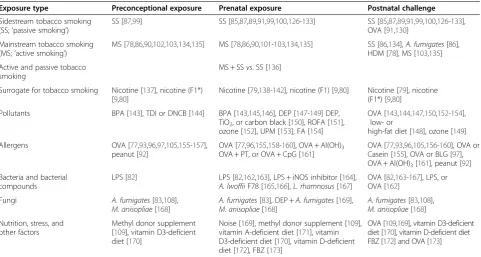
Animal models facilitate to investigate epigenetic inherit-ance across generations. So far, a number of prenatal exposure scenarios including maternal exposure to aller-gens [77], tobacco [78], nicotine [79,80], pollutants [81], bacteria or bacterial compounds [82], fungi [83], and maternal stress [84] have been investigated in intergen-erational animal models for asthma risk (Table 1). Several studies report reduced lung function [78,84-87] and/or altered lung structure [78,87-89]. In addition, expression of genes with known or so far unknown rela-tionship to asthma was investigated [90,91]. However, there is currently a paucity of studies aiming to investigate underlying epigenetic mechanisms [80,92]. Although sev-eral models included exposures during the preconcep-tional period [77,93-97], very few addressed effects on asthma risk during this period only [93,98].
ovalbumin (OVA) sensitization and challenge at the age of 10 weeks, lung function was impaired in both male and female offspring. Microarray analysis, only performed in lungs from female offspring, revealed a number of downregulated genes. Those are related to asthma and immune responses and include CCL8, CCL11, CCL24, IL4, IL6, IL10, IL13, IL1β, TNFą, and others. In a similar second hit scenario, dams were ex-posed to ETS from 2 weeks prior to conception until weaning of the pups. Airway reactivity was moderately increased in exposed offspring at baseline but in-creased dramatically together with Th2 cytokines and IgE after repeated intratracheal Aspergillus (A.) fumi-gatus instillation as compared to non-exposed con-trols. BHR, but not allergic sensitization, was mediated by increased expression of M1, M2, and M3 muscarinic receptors and the phosphodiesterase-4D5 isozyme as shown in inhibitor experiments [99].
Upregulation of Th2 cytokines and molecules along the Th2 pathway was further confirmed in another set of experiments with prolonged postnatal ETS exposure followed by repeated intratracheal A. fumigatus chal-lenges. In contrast, goblet cell metaplasia and the ex-pression of mucus-related genes were downregulated. The authors propose that prenatal ETS may alter the ability of mucociliary clearance [87]. In another study, pre-natal ETS exposure followed by postpre-natal re-exposure was
associated with impaired lung function, elevated pro-inflammatory cytokines in BALF and with morphological changes of the lungs. Here, the mRNA levels of metallo-proteases ADAMST9 and MMP3 were upregulated, suggesting a profibrotic milieu with predisposition for ob-structive pulmonary disease [100].
In an animal model foractive smoking, similar to the human situation, active smoking during second and third trimester of pregnancy negatively affected birth weight and lung volume in murine offspring [101]. In addition, Singh et al. showed, in animals prenatally exposed to active maternal smoke exposure, BHR devel-opment following postnatal exposure to a single intratra-cheal injection ofA. fumigatusextract in early adulthood. Interestingly, the increased BHR was not associated with more leukocyte migration or mucus production in the lung but was causally related to lower lung cyclic adeno-sine monophosphate levels, modulated by increased phosphodiesterase-4 enzymatic activity in the lung [86]. However, increased BHRwasrelated to airway inflamma-tion or mucus producinflamma-tion in a different (ETS) model for maternal smoke exposure, investigated by the same re-search group [87].
In children, Haleyet al.[102] investigated the effect of intrauterine smoke exposure on the expression of runt-related transcription factors (RUNX)1-3 which have crit-ical roles in immune system development and function.
Table 1 Overview of experimentalin uteroexposure models
Exposure type Preconceptional exposure Prenatal exposure Postnatal challenge
Sidestream tobacco smoking (SS;‘passive smoking’)
SS [87,99] SS [85,87,89,91,99,100,126-133] SS [85,87,89,91,99,100,126-133], OVA [91,130]
Mainstream tobacco smoking (MS;‘active smoking’)
MS [78,86,90,102,103,134,135] MS [78,86,90,101-103,134,135] SS [86,134],A. fumigates[86], HDM [78], MS [103,135]
Active and passive tobacco smoking
MS + SSvs. SS [136]
Surrogate for tobacco smoking Nicotine [137], nicotine (F1*) [9,80]
Nicotine [79,138-142], nicotine (F1) [9,80] Nicotine [79], nicotine (F1*) [9,80]
Pollutants BPA [143], TDI or DNCB [144] BPA [143,145,146], DEP [147-149] DEP, TiO2, or carbon black [150], ROFA [151], ozone [152], UPM [153], FA [154]
OVA [143,144,147,150,152-154], low- or
high-fat diet [148], ozone [149]
Allergens OVA [77,93,96,97,105,155-157], peanut [92]
OVA [77,96,155,158-160], OVA + Al(OH)3 OVA + PT, or OVA + CpG [161]
OVA [77,93,96,105,156-160], OVA or Casein [155], OVA or BLG [97], OVA + Al(OH)3[161], peanut [92]
Bacteria and bacterial compounds
LPS [82] LPS [82,162,163], LPS + iNOS inhibitor [164], A. lwoffiiF78 [165,166],L. rhamnosus[167]
OVA [82,163-167], LPS, or OVA [162]
Fungi A. fumigates[83,108],
M. anisopliae[168]
A. fumigates[83], DEP +A. fumigates[169], M. anisopliae[168]
A. fumigates[83,108], M. anisopliae[168]
Nutrition, stress, and other factors
Methyl donor supplement [109], vitamin D3-deficient diet [170]
Noise [169], methyl donor supplement [109], vitamin A-deficient diet [171], vitamin D3-deficient diet [170], vitamin D-deficient diet [172], FBZ [173]
OVA [109,169], vitamin D3-deficient diet [170], vitamin D-deficient diet FBZ [172] and OVA [173]
In addition, genetic variations in RUNX1 were ated with BHR in asthmatic children and this associ-ation was hypothesized to be modified by intrauterine smoke exposure. Indeed, 17 out of 100 RUNX1 single-nucleotide polymorphisms (SNPs) were significantly associated with methacholine responsiveness, and the association with one of the SNPs was significantly modified by a history of intrauterine smoke exposure. Quantitative PCR analysis of immature human lung tissue suggested an increased expression of RUNX at the pseudoglandular stage of lung development after intrauterine smoke exposure. The intrauterine smoke effect on RUNX expression was further investigated in a mouse model. In this model, intrauterine smoke ex-posure additionally altered RUNX expression in lung tissue samples at postnatal days (P)3 and P5, in the al-veolar stage of lung development. In an additional mouse study from this group, abnormal alveolariza-tion, induced by intrauterine smoke exposure, was fur-ther associated with altered retinoic acid pathway element expression in the offspring [103]. Disrupted RUNX expression and retinoic acid signaling could therefore partly explain the consistent identification of maternal smoking as a risk factor for pediatric asthma.
Data from our own lab also indicate an effect of maternal smoking on gene transcription and lung devel-opment. Blacquiére et al. demonstrated that active smoking from 3 weeks prior to conception until birth re-sulted in lower expression of encoding forkhead box a2 (FOXA2), frizzled receptor 7 (FZD-7), epidermal growth factor (EGF), β-catenin (CTNNB1), fibronectin (FN1), and platelet-derived growth factor receptor alpha (PDGFRą) in neonatal offspring [90]. These genes are members of, or related to, the Wnt/β-catenin pathway, which plays an important role in lung branching morphogenesis [104]. In addition, in adult non-smoking F1 progeny from these non-smoking mothers, in-creased deposition of collagen III and smooth muscle layer thickening around the airways was found [78]. These characteristics of lung remodeling are typical for obstructive lung diseases such as asthma and COPD. The observed lung remodeling was associated with an increase in methacholine responsiveness, which is a risk factor for accelerated lung function decline in the general population and development of COPD. Since these striking differences were observed inadult mice that were not exposed to cigarette smoke after birth, it suggests that persistent smoke-induced epigenetic changes occurred in embryonic lungs during pregnancy.
Numerous studies investigated the effect of maternal sensitization and/or asthma phenotype in the offspring [96,105-107]. In some instances, combinations of aller-gen and pollutants were used [108]. Fedulovet al. dem-onstrated in 2011 that adoptive transfer of dendritic cells
(DCs) from allergen-naive neonates from asthmatic mothers into 3-day-old mice from non-asthmatic mothers conferred increased allergen responsiveness resulting in heightened BHR and allergic inflammation. While the phenotype of ‘asthma-susceptible’DCs was largely unaltered, DCs showed enhanced allergen-presentation activity in vitro and a global increase in DNA methylation. The ‘asthma-transferring’ ability seemed to be restricted to DCs, as other investigated immune cell types did not show this ability [93]. In a model of maternal peanut food allergy, offspring exhib-ited higher peanut-specific IgE and histamine levels with more severe anaphylaxis after suboptimal oral peanut challenge compared to prenatally non-exposed offspring [92]. Pyrosequencing revealed hypomethylated IL-4 CpG sites in splenocytes and DNA methylation levels correlated inversely with IgE levels.
Experimental transgenerational epigenetics
Evidence for transgenerational transmission of asthma risk beyond the F1 generation was demonstrated by Hollingsworth et al. who were the first to describe the effect of dietary methyl donors on the risk for allergic airway disease via epigenetic mechanisms [109]. In this work, methyl supplementation of pregnant and weaning dams increased the severity of allergic airway disease in the offspring but not in the mothers. There was a less prominent effect on airway eosinophilic inflammation and IgE-level in the F2 generation, and this effect was transmitted paternally. The modified risk was associated with altered DNA methylation of several genes including RUNX3, in phenotypic extremes of the F1 progeny. As mentioned earlier, RUNX3 is known to regulate T cell development and to downregulate airway eosinophilia. Nonetheless, work in mice indicates that the risk of aller-gic airway disease can a) be modified through epigenetic mechanisms and b) during vulnerable developmental periods only. Preconceptional exposure to intranasal A. fumigates, in earlyvslate pregnancy, resulted in lower IgE in grand-offspring who were re-exposed in young adult-hood [83]. BALF eosinophils were increased or decreased depending on the timing of allergen exposure during preg-nancy of the grandmothers. Pyrosequencing of lung DNA showed hypomethylated IL-4 CpG sites after early A. fumigatus exposure, whereas IFNγ was hypomethylated independent of the timing of exposure. The results from the epigenetic studies do not accord very well with the data on airway eosinophilia. However, the work demon-strates again that maternal exposures can affect the sec-ond generation and that the effects may depend from the timing of exposure during pregnancy.
corresponds to the great-grandchildren and is thus the first generation to be totally unexposed to the original agent. In this model, exposure of F0 dams resulted in abnormal pulmonary function, as well as altered ex-pression of the remodeling marker fibronectin in F3. Interestingly, this transgenerational effect was sex-specific occurring exclusively in males. In the F2 generation, global DNA methylation was increased in the testes, but de-creased in the ovaries, and was not changed in the lungs. H3 acetylation was increased in the lungs and testes, and H4 acetylation decreased in the lungs while it increased in the testes and ovaries, suggesting that epigenetic informa-tion predisposing to asthma may be transmitted through the germ line in this model. However, it remains unclear whether the transgenerational effect is being carried through the male or female germ line.
Potential mechanisms leading to transgenerational inheritance
Reprogramming of the epigenome A major barrier to transgenerational inheritance is developmental repro-gramming. During this process, DNA methylation, his-tone variants and their modifications, as well as small RNAs are all reset. This is required to remove epigenetic signatures acquired during development or imposed by the environment. It enables the zygote to acquire the totipotent state needed for the differentiation into all cell types. In mice, there are at least two rounds of genome-wide DNA methylation reprogramming. The first occurs just after fertilization, in the zygote and early cleavage stages, to erase gametic (sperm and oocyte) epigenomic marks. The next major reprogramming process occurs in the cells that will form the germ line of the develop-ing embryo to achieve an epigenetic state distinct from somatic cells. In each reprogramming window, a specific set of mechanisms regulates erasure and re-establishment of DNA methylation [13,14]. Still, there is strong evidence for persisting transmission of the DNA methylation through the gametes to the next generation at a small number of loci in the mouse [110]. In a study investigating DNA methylation during early development of the mouse embryonic lineage in vivo, analysis of around 1,000 CpG islands (CGIs) within ovulated eggs showed that 15% are methylated [111]. The level of methylation was higher (25%) in sperm but the proportion of individual CpG sites methylated in CGIs in sperm was lower. By the blastocyst stage many of these methylated CGIs show some loss of methylation but not to the very low levels predicted by the accepted model for epigenetic reprogramming [112]. These were non-imprinted, non-repetitive genes (retrotransposons).
Parental imprintingParental imprinting, also known as genomic imprinting, is the process by which genes are
expressed on only one of the two parental inherited chromosomes (either from the mother or father). During gamete formation, following germ line reprogramming where the paternal and maternal somatic programs are erased, parent-specific imprints are laid down in the germ line by epigenetic mechanisms [11,113]. Imprinting is displayed in only a few hundred genes in the human genome, of which most of them are located in clusters that are regulated through the use of insulators or long non-coding RNAs. However, as the imprint or memory lasts one generation, parental imprinting is not considered to be an example of transgenerational inheritance [10].
Chromatin proteins and epigenetic inheritance Dur-ing mammalian spermatogenesis, chromatin in differen-tiating germ cells is extensively remodeled, with the majority of nucleosomes being removed and ultimately exchanged by highly basic proteins named protamines. The remaining nucleosomes, unlike protamines that are exclusively re-replaced by maternal nucleosomes in the zygotes, may potentially direct certain processes of de-velopment and are thus a potential source for epigenetic inheritance through the paternal germ line [114]. There-fore, the genomic loci associated with retained nucleo-somes in sperm are of great interest and have been investigated by several groups [115-118]. This has recently led to some debate on the genome-wide localization of these nucleosomes and their modification and/or variant states [119]. Two independent studies provided evidence that in mammalian sperm, nucleosomes are retained predominantly within distal gene poor regions and are depleted significantly in promoters of genes for devel-opmental regulators [117,118]. However, these obser-vations contradict a previous report that the retained
nucleosomes in human sperm are significantly
enriched at loci of developmental importance, includ-ing imprinted gene clusters, microRNA clusters, and HOX gene clusters [116]. More precise knowledge of the genome-wide distribution of the nucleosomes retained in mammalian spermatozoa is important to clarify their functional significance.
of protein-coding genes and direct post-transcriptional repression. Expression of miRNAs is controlled by DNA methylation of promoter-associated CpG sites of miRNA genes, as well as post-translational histone modifications [122].
Human spermatozoa are known to contain a large range of RNA molecules, including over 100 miRNAs [5,120,123,124]. Interestingly, in the spermatozoa of smokers, a total of 28 known human miRNAs were significantly differentially expressed compared with non-smokers. Ten out of the twenty-eight miRNAs had validated targets. These altered miRNAs predominantly mediated pathways vital for healthy sperm and normal embryo development, particularly cell death and apop-tosis. Of interest is that in addition, 25 components of the epigenetic machinery (different modulators of DNA methylation and histone modification, such as DNMT3A, DNMT3B, and several HDACs) were shown to be targets of the altered miRNAs [5]. This means that these miRNAs could act as potential epi-miRNAs by mediating changes in DNA methylation and/or histone modification. In this way, miRNAs could affect phenotypes in future progeny.
Also in oocytes (mouse), different classes of ncRNAs have been described [125].
Conclusions
Although a number of human studies have reported an association of prenatal smoke exposures with epigenetic changes in relation to asthma and COPD, there is very few human data available regarding the effect of grand-parental exposures on disease risk in grandchildren and even less with information on epigenetic events. In addition, all available epidemiological studies address in-tergenerational rather than true transgenerational propa-gation of risk for respiratory disease. Although the few data from experimental animal models show evidence for transgenerational inheritance, also for early nutri-tional environmental exposures, further investigations in these models are clearly needed to unravel the under-lying mechanisms. Moreover, large, well-characterized cohort studies would be needed to explore whether transgenerational inheritance indeed also occurs in humans. It will be important to investigate epigenetic signatures over time in birth cohorts and, where pos-sible, across generations and to validate them in inde-pendent cohorts. Other important knowledge gaps that need to be addressed in the future are the need to understand the functional consequences of differen-tially methylated genes: even though some studies can associate subtle changes with phenotype, these may still represent an epiphenomenon. On the other hand, small changes could be important when multiple genes along a given pathway are affected. Also, epigenetic regulation is likely to differ in men and women, but
this gender-specific difference has received little atten-tion so far. In this respect, animal models can facilitate inter- and transgenerational research and may allow preclinical testing of interventions preventing devi-ation of epigenetic signatures to interrupt propagdevi-ation of disease risks.
Abbreviations
A:Aspergillus; ACSL3: acyl-CoA synthetase long-chain family member 3; ADAM33: A disintegrin and metalloprotease 33; ADRB2: adrenergic-receptor beta-2; AHRR: aryl hydrocarbon receptor repressor; Al(OH)3: aluminum
hydroxide; ALOX12: arachidonate 12-lipoxygenase; BALF: bronchoalveolar lavage fluid; BHR: bronchial hyperresponsiveness; BLG: beta-lactoglobulin; BPA: bisphenol A; COPD: chronic obstructive pulmonary disease;
CYP1A1: cytochrome P450 aryl-hydrocarbon-hydroxylase; DEP: diesel exhaust particles; DNCB: dinitrochlorobenzene; EWAS: epigenome-wide association study; FA: formaldehyde; FBZ: fenbendazol; GST: glutathioneS-transferase; HDM: house dust mite extract; IFN: interferon; IGF2: insulin-like growth factor 2; IL-4: interleukin 4; miRNA: microRNA; MoBa: Norwegian Mother and Child Cohort Study; MS: mainstream smoke; ncRNA: non-protein coding RNA; NPSR1: neuropeptide S receptor 1; OVA: ovalbumin; PAX-5a: box 5 protein transcription factor; PGD2: prostaglandin D2; piRNA: Piwi-interacting RNA; PT: pertussis toxin; ROFA: residual oil fly ash; RUNX: runt-related transcription factors; siRNA: small interfering RNAs; SNP: single-nucleotide polymorphisms; SS: sidestream smoke; TDI: toluol-2,4-diisocyanat; Th2: type 2 helper T cell; TiO2: titanium dioxide; Treg: regulatory T cell; UPM: urban particulate matter.
Competing interests
The authors declare that they have no competing interests.
Authors’contributions
SK and MH drafted the manuscript, KM and SD scrutinized and commented on the manuscript. SD drafted the table. All authors read and approved the final manuscript.
Acknowledgements
We apologize to those colleagues whose references we may have omitted from this discussion. Due to space restrictions and our focus, we were unable to include all articles on this interesting and diverse subject matter. This work was supported by grants from the Netherlands Lung Foundation (LF3.2.11.013) and COST BM1201.
Author details
1Comprehensive Pneumology Center, Helmholtz Center Munich and
Children’s Hospital of Ludwig-Maximilians University, Max-Lebsche-Platz 31, 81377 Munich, Germany.2Priority Area Asthma & Allergy, Leibniz Center for Medicine and Biosciences, Research Center Borstel and Christian Albrechts University Kiel, Airway Research Center North, Member of the German Center for Lung Research, Parkallee 1-40, Borstel, Germany.3Department of Pathology and Medical Biology, University of Groningen, University Medical Center Groningen, Hanzeplein 1, Groningen, The Netherlands.4University of Groningen, GRIAC Research Institute, University Medical Center Groningen, Hanzeplein 1, Groningen, The Netherlands.
Received: 27 January 2015 Accepted: 9 April 2015
References
1. Luo M, Xu Y, Cai R, Tang Y, Ge MM, Liu ZH, et al. Epigenetic histone modification regulates developmental lead exposure induced hyperactivity in rats. Toxicol Lett. 2014;225(1):78–85.
2. Patil VK, Holloway JW, Zhang H, Soto-Ramirez N, Ewart S, Arshad SH, et al. Interaction of prenatal maternal smoking, interleukin 13 genetic variants and DNA methylation influencing airflow and airway reactivity. Clin Epigenetics. 2013;5(1):22. -7083-5-22.
3. Severin PM, Zou X, Schulten K, Gaub HE. Effects of cytosine hydroxymethylation on DNA strand separation. Biophys J. 2013;104(1):208–15.
5. Marczylo EL, Amoako AA, Konje JC, Gant TW, Marczylo TH. Smoking induces differential miRNA expression in human spermatozoa: a potential transgenerational epigenetic concern? Epigenetics. 2012;7(5):432–9. 6. Knopik VS, Maccani MA, Francazio S, McGeary JE. The epigenetics of
maternal cigarette smoking during pregnancy and effects on child development. Dev Psychopathol. 2012;24(4):1377–90.
7. de Planell-Saguer M, Lovinsky-Desir S, Miller RL. Epigenetic regulation: the interface between prenatal and early-life exposure and asthma susceptibility. Environ Mol Mutagen. 2014;55(3):231–43.
8. Goldberg AD, Allis CD, Bernstein E. Epigenetics: a landscape takes shape. Cell. 2007;128(4):635–8.
9. Rehan VK, Liu J, Sakurai R, Torday JS. Perinatal nicotine-induced transgenera-tional asthma. Am J Physiol Lung Cell Mol Physiol. 2013;305(7):L501–7. 10. Daxinger L, Whitelaw E. Understanding transgenerational epigenetic
inheritance via the gametes in mammals. Nat Rev Genet. 2012;13(3):153–62. 11. Lecomte V, Youngson NA, Maloney CA, Morris MJ. Parental programming:
how can we improve study design to discern the molecular mechanisms? Bioessays. 2013;35(9):787–93.
12. Aiken CE, Ozanne SE. Transgenerational developmental programming. Hum Reprod Update. 2014;20(1):63–75.
13. Heard E, Martienssen RA. Transgenerational epigenetic inheritance: myths and mechanisms. Cell. 2014;157(1):95–109.
14. Cowley M, Oakey RJ. Resetting for the next generation. Mol Cell. 2012;48(6):819–21.
15. Holgate ST, Arshad HS, Roberts GC, Howarth PH, Thurner P, Davies DE. A new look at the pathogenesis of asthma. Clin Sci (Lond). 2009;118(7):439–50. 16. Anderson GP. Endotyping asthma: new insights into key pathogenic
mechanisms in a complex, heterogeneous disease. Lancet. 2008;372(9643):1107–19.
17. Pearce N, Pekkanen J, Beasley R. How much asthma is really attributable to atopy? Thorax. 1999;54(3):268–72.
18. Beghe B, Barton S, Rorke S, Peng Q, Sayers I, Gaunt T, et al. Polymorphisms in the interleukin-4 and interleukin-4 receptor alpha chain genes confer susceptibility to asthma and atopy in a Caucasian population. Clin Exp Allergy. 2003;33(8):1111–7.
19. Moffatt MF, Gut IG, Demenais F, Strachan DP, Bouzigon E, Heath S, et al. A large-scale, consortium-based genomewide association study of asthma. N Engl J Med. 2010;363(13):1211–21.
20. Kabesch M, Schedel M, Carr D, Woitsch B, Fritzsch C, Weiland SK, et al. IL-4/ IL-13 pathway genetics strongly influence serum IgE levels and childhood asthma. J Allergy Clin Immunol. 2006;117(2):269–74.
21. Cookson WO, Moffatt MF. Genetics of complex airway disease. Proc Am Thorac Soc. 2011;8(2):149–53.
22. Bieli C, Eder W, Frei R, Braun-Fahrlander C, Klimecki W, Waser M, et al. A poly-morphism in CD14 modifies the effect of farm milk consumption on allergic diseases and CD14 gene expression. J Allergy Clin Immunol. 2007;120(6):1308–15. 23. Soto-Ramirez N, Arshad SH, Holloway JW, Zhang H, Schauberger E, Ewart S,
et al. The interaction of genetic variants and DNA methylation of the interleukin-4 receptor gene increase the risk of asthma at age 18 years. Clin Epigenetics. 2013;5(1):1. -7083-5-1.
24. Isidoro-Garcia M, Sanz C, Garcia-Solaesa V, Pascual M, Pescador DB, Lorente F, et al. PTGDR gene in asthma: a functional, genetic, and epigenetic study. Allergy. 2011;66(12):1553–62.
25. Salam MT, Byun HM, Lurmann F, Breton CV, Wang X, Eckel SP, et al. Genetic and epigenetic variations in inducible nitric oxide synthase promoter, particulate pollution, and exhaled nitric oxide levels in children. J Allergy Clin Immunol. 2012;129(1):232–9. e1-7.
26. Gunawardhana LP, Gibson PG, Simpson JL, Benton MC, Lea RA, Baines KJ. Characteristic DNA methylation profiles in peripheral blood monocytes are associated with inflammatory phenotypes of asthma. Epigenetics. 2014;9(9):1302–16.
27. Sood A, Petersen H, Blanchette CM, Meek P, Picchi MA, Belinsky SA, et al. Methylated genes in sputum among older smokers with asthma. Chest. 2012;142(2):425–31.
28. Fu A, Leaderer BP, Gent JF, Leaderer D, Zhu Y. An environmental epigenetic study of ADRB2 5′-UTR methylation and childhood asthma severity. Clin Exp Allergy. 2012;42(11):1575–81.
29. Gaffin JM, Raby BA, Petty CR, Hoffman EB, Baccarelli AA, Gold DR, et al. Beta-2 adrenergic receptor gene methylation is associated with decreased asthma severity in inner-city schoolchildren: asthma and rhinitis. Clin Exp Al-lergy. 2014;44(5):681–9.
30. Runyon RS, Cachola LM, Rajeshuni N, Hunter T, Garcia M, Ahn R, et al. Asthma discordance in twins is linked to epigenetic modifications of T cells. PLoS One. 2012;7(11), e48796.
31. Stefanowicz D, Hackett TL, Garmaroudi FS, Gunther OP, Neumann S, Sutanto EN, et al. DNA methylation profiles of airway epithelial cells and PBMCs from healthy, atopic and asthmatic children. PLoS One. 2012;7(9), e44213.
32. Yang PJ, Li RN, Huang CC, Wang TH, Ko YC, Huang MS, et al. The methylation patterns of a disintegrin and metalloproteinase 33 gene (ADAM33) in adult asthma. Int Arch Allergy Immunol. 2013;161(1):74–80. 33. Corren J. Asthma phenotypes and endotypes: an evolving paradigm for
classification. Discov Med. 2013;15(83):243–9.
34. Celli BR, MacNee W. Standards for the diagnosis and treatment of patients with COPD: a summary of the ATS/ERS position paper. Eur Respir J. 2004;23(6):932–46.
35. Rycroft CE, Heyes A, Lanza L, Becker K. Epidemiology of chronic obstructive pulmonary disease: a literature review. Int J Chron Obstruct Pulmon Dis. 2012;7:457–94.
36. Meek PM, Sood A, Petersen H, Belinsky SA, Tesfaigzi Y. Epigenetic change (GATA-4 gene methylation) is associated with health status in chronic obstructive pulmonary disease. Biol Res Nurs. 2014;17(2):191–8. 37. Bruse S, Petersen H, Weissfeld J, Picchi M, Willink R, Do K, et al. Increased
methylation of lung cancer-associated genes in sputum DNA of former smokers with chronic mucous hypersecretion. Respir Res.
2014;15:2. -9921-15-2.
38. Belinsky SA, Palmisano WA, Gilliland FD, Crooks LA, Divine KK, Winters SA, et al. Aberrant promoter methylation in bronchial epithelium and sputum from current and former smokers. Cancer Res. 2002;62(8):2370–7. 39. Sato T, Arai E, Kohno T, Takahashi Y, Miyata S, Tsuta K, et al. Epigenetic
clustering of lung adenocarcinomas based on DNA methylation profiles in adjacent lung tissue: Its correlation with smoking history and chronic obstructive pulmonary disease. Int J Cancer. 2014;135(2):319–34. 40. Hagood JS. Beyond the genome: epigenetic mechanisms in lung
remodeling. Physiology (Bethesda). 2014;29(3):177–85.
41. Vucic EA, Chari R, Thu KL, Wilson IM, Cotton AM, Kennett JY, et al. DNA methylation is globally disrupted and associated with expression changes in chronic obstructive pulmonary disease small airways. Am J Respir Cell Mol Biol. 2014;50(5):912–22.
42. Barreiro E, Gea J. Epigenetics and muscle dysfunction in chronic obstructive pulmonary disease. Transl Res. 2015;165(1):61–73.
43. Monick MM, Beach SR, Plume J, Sears R, Gerrard M, Brody GH, et al. Coordinated changes in AHRR methylation in lymphoblasts and pulmonary macrophages from smokers. Am J Med Genet B Neuropsychiatr Genet. 2012;159B(2):141–51.
44. Shenker NS, Ueland PM, Polidoro S, van Veldhoven K, Ricceri F, Brown R, et al. DNA methylation as a long-term biomarker of exposure to tobacco smoke. Epidemiology. 2013;24(5):712–6.
45. Joubert BR, Haberg SE, Nilsen RM, Wang X, Vollset SE, Murphy SK, et al. 450 K epigenome-wide scan identifies differential DNA methylation in newborns related to maternal smoking during pregnancy. Environ Health Perspect. 2012;120(10):1425–31.
46. Novakovic B, Ryan J, Pereira N, Boughton B, Craig JM, Saffery R. Postnatal stability, tissue, and time specific effects of AHRR methylation change in response to maternal smoking in pregnancy. Epigenetics. 2014;9(3):377–86. 47. Zhang Y, Yang R, Burwinkel B, Breitling LP, Brenner H. F2RL3 methylation as
a biomarker of current and lifetime smoking exposures. Environ Health Perspect. 2014;122(2):131–7.
48. Tsaprouni LG, Yang TP, Bell J, Dick KJ, Kanoni S, Nisbet J, et al. Cigarette smoking reduces DNA methylation levels at multiple genomic loci but the effect is partially reversible upon cessation. Epigenetics. 2014;9(10):1382–96.
49. Munthe-Kaas MC, Bertelsen RJ, Torjussen TM, Hjorthaug HS, Undlien DE, Lyle R, et al. Pet keeping and tobacco exposure influence CD14 methylation in childhood. Pediatr Allergy Immunol. 2012;23(8):747–54.
50. Zhang H, Tong X, Holloway JW, Rezwan FI, Lockett GA, Patil V, et al. The interplay of DNA methylation over time with Th2 pathway genetic variants on asthma risk and temporal asthma transition. Clin Epigenetics. 2014;6(1):8. -7083-6-8. eCollection 2014.
52. Upton MN, Smith GD, McConnachie A, Hart CL, Watt GC. Maternal and personal cigarette smoking synergize to increase airflow limitation in adults. Am J Respir Crit Care Med. 2004;169(4):479–87.
53. Svanes C, Omenaas E, Jarvis D, Chinn S, Gulsvik A, Burney P. Parental smoking in childhood and adult obstructive lung disease: results from the European Community Respiratory Health Survey. Thorax. 2004;59(4):295–302. 54. Aanerud M, Carsin AE, Sunyer J, Dratva J, Gislason T, Jarvis D, et al.
Interaction between asthma and smoking increases the risk of adult airway obstruction. Eur Respir J. 2015;45(3):635–43.
55. Flom JD, Ferris JS, Liao Y, Tehranifar P, Richards CB, Cho YH, et al. Prenatal smoke exposure and genomic DNA methylation in a multiethnic birth cohort. Cancer Epidemiol Biomarkers Prev. 2011;20(12):2518–23. 56. Guerrero-Preston R, Goldman LR, Brebi-Mieville P, Ili-Gangas C, Lebron C,
Witter FR, et al. Global DNA hypomethylation is associated with in utero exposure to cotinine and perfluorinated alkyl compounds. Epigenetics. 2010;5(6):539–46.
57. Breton CV, Siegmund KD, Joubert BR, Wang X, Qui W, Carey V, et al. Prenatal tobacco smoke exposure is associated with childhood DNA CpG methylation. PLoS One. 2014;9(6), e99716.
58. Reinius LE, Gref A, Saaf A, Acevedo N, Joerink M, Kupczyk M, et al. DNA methylation in the Neuropeptide S Receptor 1 (NPSR1) promoter in relation to asthma and environmental factors. PLoS One. 2013;8(1), e53877. 59. Murphy SK, Adigun A, Huang Z, Overcash F, Wang F, Jirtle RL, et al.
Gender-specific methylation differences in relation to prenatal exposure to cigarette smoke. Gene. 2012;494(1):36–43.
60. Harlid S, Xu Z, Panduri V, Sandler DP, Taylor JA. CpG sites associated with cigarette smoking: analysis of epigenome-wide data from the Sister Study. Environ Health Perspect. 2014;122(7):673–8.
61. Suter M, Abramovici A, Showalter L, Hu M, Shope CD, Varner M, et al. In utero tobacco exposure epigenetically modifies placental CYP1A1 expression. Metabolism. 2010;59(10):1481–90.
62. Wilhelm-Benartzi CS, Houseman EA, Maccani MA, Poage GM, Koestler DC, Langevin SM, et al. In utero exposures, infant growth, and DNA methylation of repetitive elements and developmentally related genes in human placenta. Environ Health Perspect. 2012;120(2):296–302.
63. Suter M, Ma J, Harris A, Patterson L, Brown KA, Shope C, et al. Maternal tobacco use modestly alters correlated epigenome-wide placental DNA methylation and gene expression. Epigenetics. 2011;6(11):1284–94. 64. Markunas CA, Xu Z, Harlid S, Wade PA, Lie RT, Taylor JA, et al. Identification
of DNA methylation changes in newborns related to maternal smoking during pregnancy. Environ Health Perspect. 2014;122(10):1147–53. 65. Chhabra D, Sharma S, Kho AT, Gaedigk R, Vyhlidal CA, Leeder JS, et al. Fetal
lung and placental methylation is associated with in utero nicotine exposure. Epigenetics. 2014;9(11):1473–84.
66. Perera F, Tang WY, Herbstman J, Tang D, Levin L, Miller R, et al. Relation of DNA methylation of 5′-CpG island of ACSL3 to transplacental exposure to airborne polycyclic aromatic hydrocarbons and childhood asthma. PLoS One. 2009;4(2), e4488.
67. Tang WY, Levin L, Talaska G, Cheung YY, Herbstman J, Tang D, et al. Maternal exposure to polycyclic aromatic hydrocarbons and 5′-CpG methylation of interferon-gamma in cord white blood cells. Environ Health Perspect. 2012;120(8):1195–200.
68. Morales E, Bustamante M, Vilahur N, Escaramis G, Montfort M, de Cid R, et al. DNA hypomethylation at ALOX12 is associated with persistent wheezing in childhood. Am J Respir Crit Care Med. 2012;185(9):937–43. 69. Slaats GG, Reinius LE, Alm J, Kere J, Scheynius A, Joerink M. DNA
methylation levels within the CD14 promoter region are lower in placentas of mothers living on a farm. Allergy. 2012;67(7):895–903.
70. Liu J, Lluis A, Illi S, Layland L, Olek S, von Mutius E, et al. T regulatory cells in cord blood–FOXP3 demethylation as reliable quantitative marker. PLoS One. 2010;5(10), e13267.
71. Michel S, Busato F, Genuneit J, Pekkanen J, Dalphin JC, Riedler J, et al. Farm exposure and time trends in early childhood may influence DNA methylation in genes related to asthma and allergy. Allergy. 2013;68(3):355–64.
72. Kaati G, Bygren LO, Pembrey M, Sjostrom M. Transgenerational response to nutrition, early life circumstances and longevity. Eur J Hum Genet. 2007;15(7):784–90.
73. Miller LL, Pembrey M, Davey Smith G, Northstone K, Golding J. Is the growth of the fetus of a non-smoking mother influenced by the smoking of either grandmother while pregnant? PLoS One. 2014;9(2):e86781.
74. Li YF, Langholz B, Salam MT, Gilliland FD. Maternal and grandmaternal smoking patterns are associated with early childhood asthma. Chest. 2005;127(4):1232–41.
75. Miller LL, Henderson J, Northstone K, Pembrey M, Golding J. Do grandmaternal smoking patterns influence the etiology of childhood asthma? Chest. 2014;145(6):1213–8.
76. Magnus MC, Haberg SE, Karlstad O, Nafstad P, London SJ, Nystad W. Grandmother’s smoking when pregnant with the mother and asthma in the grandchild: the Norwegian Mother and Child Cohort Study. Thorax. 2015;70(3):237–43.
77. Nygaard UC, Hansen JS, Groeng EC, Melkild I, Lovik M. Suppression of allergen-specific IgE in offspring after preconceptional immunisation: maternal, paternal and genetic influences. Scand J Immunol. 2013;77(2):92–103.
78. Blacquiere MJ, Timens W, Melgert BN, Geerlings M, Postma DS, Hylkema MN. Maternal smoking during pregnancy induces airway remodelling in mice offspring. Eur Respir J. 2009;33(5):1133–40.
79. Wongtrakool C, Wang N, Hyde DM, Roman J, Spindel ER. Prenatal nicotine exposure alters lung function and airway geometry through alpha7 nicotinic receptors. Am J Respir Cell Mol Biol. 2012;46(5):695–702. 80. Rehan VK, Liu J, Naeem E, Tian J, Sakurai R, Kwong K, et al. Perinatal nicotine
exposure induces asthma in second generation offspring. BMC Med. 2012;10:129. -7015-10-129.
81. Manners S, Alam R, Schwartz DA, Gorska MM. A mouse model links asthma susceptibility to prenatal exposure to diesel exhaust. J Allergy Clin Immunol. 2014;134(1):63–72.
82. Blumer N, Herz U, Wegmann M, Renz H. Prenatal lipopolysaccharide-exposure prevents allergic sensitization and airway inflammation, but not airway responsiveness in a murine model of experimental asthma. Clin Exp Allergy. 2005;35(3):397–402.
83. Niedzwiecki M, Zhu H, Corson L, Grunig G, Factor PH, Chu S, et al. Prenatal exposure to allergen, DNA methylation, and allergy in grandoffspring mice. Allergy. 2012;67(7):904–10.
84. Lim R, Fedulov AV, Kobzik L. Maternal stress during pregnancy increases neonatal allergy susceptibility: role of glucocorticoids. Am J Physiol Lung Cell Mol Physiol. 2014;307(2):L141–8.
85. Joad JP, Ji C, Kott KS, Bric JM, Pinkerton KE. In utero and postnatal effects of sidestream cigarette smoke exposure on lung function,
hyperresponsiveness, and neuroendocrine cells in rats. Toxicol Appl Pharmacol. 1995;132(1):63–71.
86. Singh SP, Barrett EG, Kalra R, Razani-Boroujerdi S, Langley RJ, Kurup V, et al. Prenatal cigarette smoke decreases lung cAMP and increases airway hyperresponsiveness. Am J Respir Crit Care Med. 2003;168(3):342–7. 87. Singh SP, Gundavarapu S, Pena-Philippides JC, Rir-Sima-ah J, Mishra NC,
Wilder JA, et al. Prenatal secondhand cigarette smoke promotes Th2 polarization and impairs goblet cell differentiation and airway mucus forma-tion. J Immunol. 2011;187(9):4542–52.
88. Ji CM, Plopper CG, Witschi HP, Pinkerton KE. Exposure to sidestream cigarette smoke alters bronchiolar epithelial cell differentiation in the postnatal rat lung. Am J Respir Cell Mol Biol. 1994;11(3):312–20. 89. Ji CM, Royce FH, Truong U, Plopper CG, Singh G, Pinkerton KE. Maternal
exposure to environmental tobacco smoke alters Clara cell secretory protein expression in fetal rat lung. Am J Physiol. 1998;275(5 Pt 1):L870–6. 90. Blacquiere MJ, Timens W, van den Berg A, Geerlings M, Postma DS, Hylkema
MN. Maternal smoking during pregnancy decreases Wnt signalling in neonatal mice. Thorax. 2010;65(6):553–4.
91. Rouse RL, Boudreaux MJ, Penn AL. In utero environmental tobacco smoke exposure alters gene expression in lungs of adult BALB/c mice. Environ Health Perspect. 2007;115(12):1757–66.
92. Song Y, Liu C, Hui Y, Srivastava K, Zhou Z, Chen J, et al. Maternal allergy increases susceptibility to offspring allergy in association with TH2-biased epigenetic alterations in a mouse model of peanut allergy. J Allergy Clin Immunol. 2014;134(6):1339–45. e7.
93. Fedulov AV, Kobzik L. Allergy risk is mediated by dendritic cells with congenital epigenetic changes. Am J Respir Cell Mol Biol. 2011;44(3):285–92. 94. Fedulov AV, Kobzik L. Immunotoxicologic analysis of maternal transmission
of asthma risk. J Immunotoxicol. 2008;5(4):445–52.
96. Fusaro AE, Brito CA, Victor JR, Rigato PO, Goldoni AL, Duarte AJ, et al. Maternal-fetal interaction: preconception immunization in mice prevents neonatal sensitization induced by allergen exposure during pregnancy and breastfeeding. Immunology. 2007;122(1):107–15.
97. Uthoff H, Spenner A, Reckelkamm W, Ahrens B, Wolk G, Hackler R, et al. Critical role of preconceptional immunization for protective and nonpathological specific immunity in murine neonates. J Immunol. 2003;171(7):3485–92.
98. Lim RH, Kobzik L. Maternal transmission of asthma risk. Am J Reprod Immunol. 2009;61(1):1–10.
99. Singh SP, Mishra NC, Rir-Sima-Ah J, Campen M, Kurup V, Razani-Boroujerdi S, et al. Maternal exposure to secondhand cigarette smoke primes the lung for induction of phosphodiesterase-4D5 isozyme and exacerbated Th2 responses: rolipram attenuates the airway hyperreactivity and muscarinic receptor expression but not lung inflammation and atopy. J Immunol. 2009;183(3):2115–21.
100. Xiao R, Perveen Z, Paulsen D, Rouse R, Ambalavanan N, Kearney M, et al. In utero exposure to second-hand smoke aggravates adult responses to irritants: adult second-hand smoke. Am J Respir Cell Mol Biol. 2012;47(6):843–51.
101. Larcombe AN, Foong RE, Berry LJ, Zosky GR, Sly PD. In utero cigarette smoke exposure impairs somatic and lung growth in BALB/c mice. Eur Respir J. 2011;38(4):932–8.
102. Haley KJ, Lasky-Su J, Manoli SE, Smith LA, Shahsafaei A, Weiss ST, et al. RUNX transcription factors: association with pediatric asthma and modulated by maternal smoking. Am J Physiol Lung Cell Mol Physiol.
2011;301(5):L693–701.
103. Manoli SE, Smith LA, Vyhlidal CA, An CH, Porrata Y, Cardoso WV, et al. Maternal smoking and the retinoid pathway in the developing lung. Respir Res. 2012;13:42. -9921-13-42.
104. Mucenski ML, Wert SE, Nation JM, Loudy DE, Huelsken J, Birchmeier W, et al. beta-Catenin is required for specification of proximal/distal cell fate during lung morphogenesis. J Biol Chem. 2003;278(41):40231–8.
105. Victor JR, Muniz BP, Fusaro AE, de Brito CA, Taniguchi EF, Duarte AJ, et al. Maternal immunization with ovalbumin prevents neonatal allergy development and up-regulates inhibitory receptor Fc gamma RIIB expression on B cells. BMC Immunol. 2010;11:11. -2172-11-11.
106. Leme AS, Hubeau C, Xiang Y, Goldman A, Hamada K, Suzaki Y, et al. Role of breast milk in a mouse model of maternal transmission of asthma susceptibility. J Immunol. 2006;176(2):762–9.
107. Herz U, Joachim R, Ahrens B, Scheffold A, Radbruch A, Renz H. Prenatal sensitization in a mouse model. Am J Respir Crit Care Med. 2000;162(3 Pt 2):S62–5.
108. Corson L, Zhu H, Quan C, Grunig G, Ballaney M, Jin X, et al. Prenatal allergen and diesel exhaust exposure and their effects on allergy in adult offspring mice. Allergy Asthma Clin Immunol. 2010;6(1):7. -1492-6-7.
109. Hollingsworth JW, Maruoka S, Boon K, Garantziotis S, Li Z, Tomfohr J, et al. In utero supplementation with methyl donors enhances allergic airway disease in mice. J Clin Invest. 2008;118(10):3462–9.
110. Borgel J, Guibert S, Li Y, Chiba H, Schubeler D, Sasaki H, et al. Targets and dynamics of promoter DNA methylation during early mouse development. Nat Genet. 2010;42(12):1093–100.
111. Smallwood SA, Tomizawa S, Krueger F, Ruf N, Carli N, Segonds-Pichon A, et al. Dynamic CpG island methylation landscape in oocytes and preimplantation embryos. Nat Genet. 2011;43(8):811–4.
112. Morgan HD, Santos F, Green K, Dean W, Reik W. Epigenetic reprogramming in mammals. Hum Mol Genet. 2005;14 Spec No 1:R47-58.
113. Barlow DP, Bartolomei MS. Genomic imprinting in mammals. Cold Spring Harb Perspect Biol. 2014;6:a018382.
114. Hisano M, Erkek S, Dessus-Babus S, Ramos L, Stadler MB, Peters AH. Genome-wide chromatin analysis in mature mouse and human spermatozoa. Nat Protoc. 2013;8(12):2449–70.
115. Brykczynska U, Hisano M, Erkek S, Ramos L, Oakeley EJ, Roloff TC, et al. Repressive and active histone methylation mark distinct promoters in human and mouse spermatozoa. Nat Struct Mol Biol. 2010;17(6):679–87. 116. Hammoud SS, Nix DA, Zhang H, Purwar J, Carrell DT, Cairns BR. Distinctive
chromatin in human sperm packages genes for embryo development. Nature. 2009;460(7254):473–8.
117. Carone BR, Hung JH, Hainer SJ, Chou MT, Carone DM, Weng Z, et al. High-resolution mapping of chromatin packaging in mouse embryonic stem cells and sperm. Dev Cell. 2014;30(1):11–22.
118. Samans B, Yang Y, Krebs S, Sarode GV, Blum H, Reichenbach M, et al. Uniformity of nucleosome preservation pattern in Mammalian sperm and its connection to repetitive DNA elements. Dev Cell. 2014;30(1):23–35. 119. Saitou M, Kurimoto K. Paternal nucleosomes: are they retained in
developmental promoters or gene deserts? Dev Cell. 2014;30(1):6–8. 120. Jodar M, Selvaraju S, Sendler E, Diamond MP, Krawetz SA. The presence, role
and clinical use of spermatozoal RNAs. Hum Reprod Update. 2013;19(6):604–24.
121. Maccani MA, Knopik VS. Cigarette smoke exposure-associated alterations to non-coding RNA. Front Genet. 2012;3:53.
122. Vrba L, Garbe JC, Stampfer MR, Futscher BW. Epigenetic regulation of normal human mammary cell type-specific miRNAs. Genome Res. 2011;21(12):2026–37.
123. Ostermeier GC, Goodrich RJ, Moldenhauer JS, Diamond MP, Krawetz SA. A suite of novel human spermatozoal RNAs. J Androl. 2005;26(1):70–4. 124. Krawetz SA. Paternal contribution: new insights and future challenges. Nat
Rev Genet. 2005;6(8):633–42.
125. Watanabe T, Takeda A, Tsukiyama T, Mise K, Okuno T, Sasaki H, et al. Identification and characterization of two novel classes of small RNAs in the mouse germline: retrotransposon-derived siRNAs in oocytes and germline small RNAs in testes. Genes Dev. 2006;20(13):1732–43.
126. Wang L, Joad JP, Zhong C, Pinkerton KE. Effects of environmental tobacco smoke exposure on pulmonary immune response in infant monkeys. J Allergy Clin Immunol. 2008;122(2):400–6. 406.e1-5.
127. Yang Z, Knight CA, Mamerow MM, Vickers K, Penn A, Postlethwait EM, et al. Prenatal environmental tobacco smoke exposure promotes adult atherogenesis and mitochondrial damage in apolipoprotein E−/−mice fed a chow diet. Circulation. 2004;110(24):3715–20.
128. Gandley RE, Jeyabalan A, Desai K, McGonigal S, Rohland J, DeLoia JA. Cigarette exposure induces changes in maternal vascular function in a pregnant mouse model. Am J Physiol Regul Integr Comp Physiol. 2010;298(5):R1249–56.
129. Mukhopadhyay P, Horn KH, Greene RM, Michele PM. Prenatal exposure to environmental tobacco smoke alters gene expression in the developing murine hippocampus. Reprod Toxicol. 2010;29(2):164–75.
130. Penn AL, Rouse RL, Horohov DW, Kearney MT, Paulsen DB, Lomax L. In utero exposure to environmental tobacco smoke potentiates adult responses to allergen in BALB/c mice. Environ Health Perspect. 2007;115(4):548–55.
131. Wu ZX, Hunter DD, Kish VL, Benders KM, Batchelor TP, Dey RD. Prenatal and early, but not late, postnatal exposure of mice to sidestream tobacco smoke increases airway hyperresponsiveness later in life. Environ Health Perspect. 2009;117(9):1434–40.
132. Westbrook DG, Anderson PG, Pinkerton KE, Ballinger SW. Perinatal tobacco smoke exposure increases vascular oxidative stress and mitochondrial damage in non-human primates. Cardiovasc Toxicol. 2010;10(3):216–26. 133. Rajini P, Last JA, Pinkerton KE, Hendrickx AG, Witschi H. Decreased fetal weights in rats exposed to sidestream cigarette smoke. Fundam Appl Toxicol. 1994;22(3):400–4.
134. Singh SP, Razani-Boroujerdi S, Pena-Philippides JC, Langley RJ, Mishra NC, Sopori ML. Early postnatal exposure to cigarette smoke impairs the antigen-specific T-cell responses in the spleen. Toxicol Lett. 2006;167(3):231–7. 135. Gaworski CL, Carmines EL, Faqi AS, Rajendran N. In utero and lactation
exposure of rats to 1R4F reference cigarette mainstream smoke: effect on prenatal and postnatal development. Toxicol Sci. 2004;79(1):157–69. 136. Esposito ER, Horn KH, Greene RM, Pisano MM. An animal model of
cigarette smoke-induced in utero growth retardation. Toxicology. 2008;246(2–3):193–202.
137. Wongtrakool C, Grooms K, Ping XD, Rivera H, Ward J, Roser-Page S, et al. In utero nicotine exposure promotes M2 activation in neonatal mouse alveolar macrophages. Pediatr Res. 2012;72(2):147–53.
138. Witschi H, Lundgaard SM, Rajini P, Hendrickx AG, Last JA. Effects of exposure to nicotine and to sidestream smoke on pregnancy outcome in rats. Toxicol Lett. 1994;71(3):279–86.
139. Liu J, Sakurai R, O’Roark EM, Kenyon NJ, Torday JS, Rehan VK. PPARgamma agonist rosiglitazone prevents perinatal nicotine exposure-induced asthma in rat offspring. Am J Physiol Lung Cell Mol Physiol. 2011;300(5):L710–7.